Archive for the Uncategorized Category

Final Phenology Update- May 2025

Posted in Uncategorized on May 4, 2025 by hfuller1

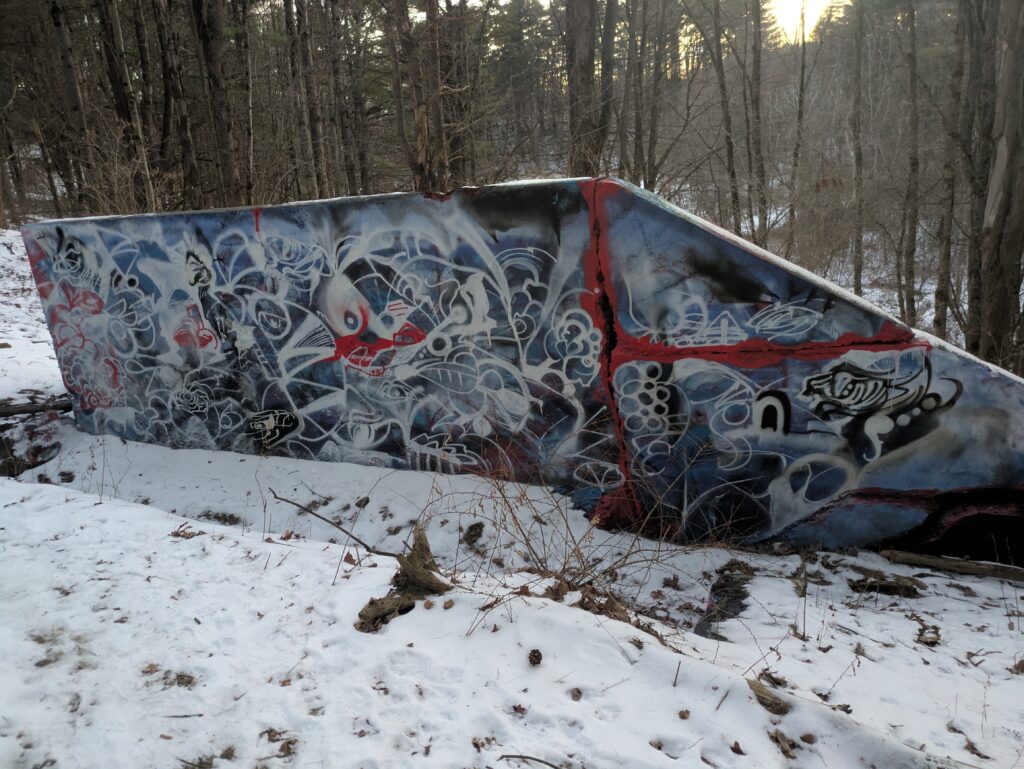
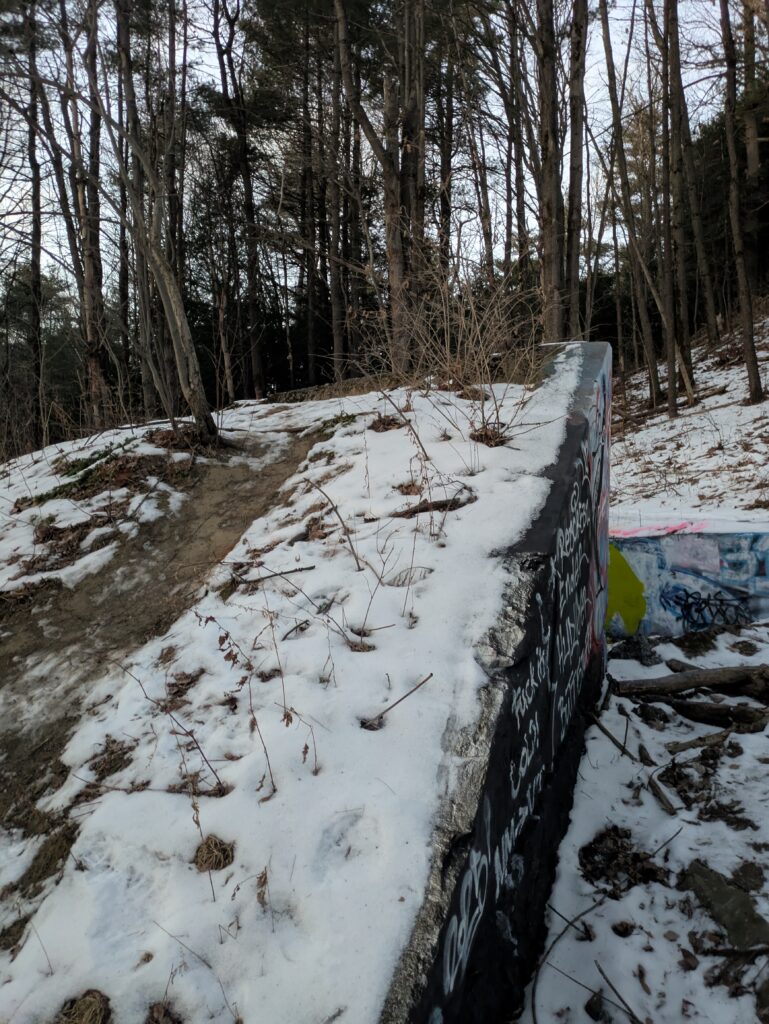
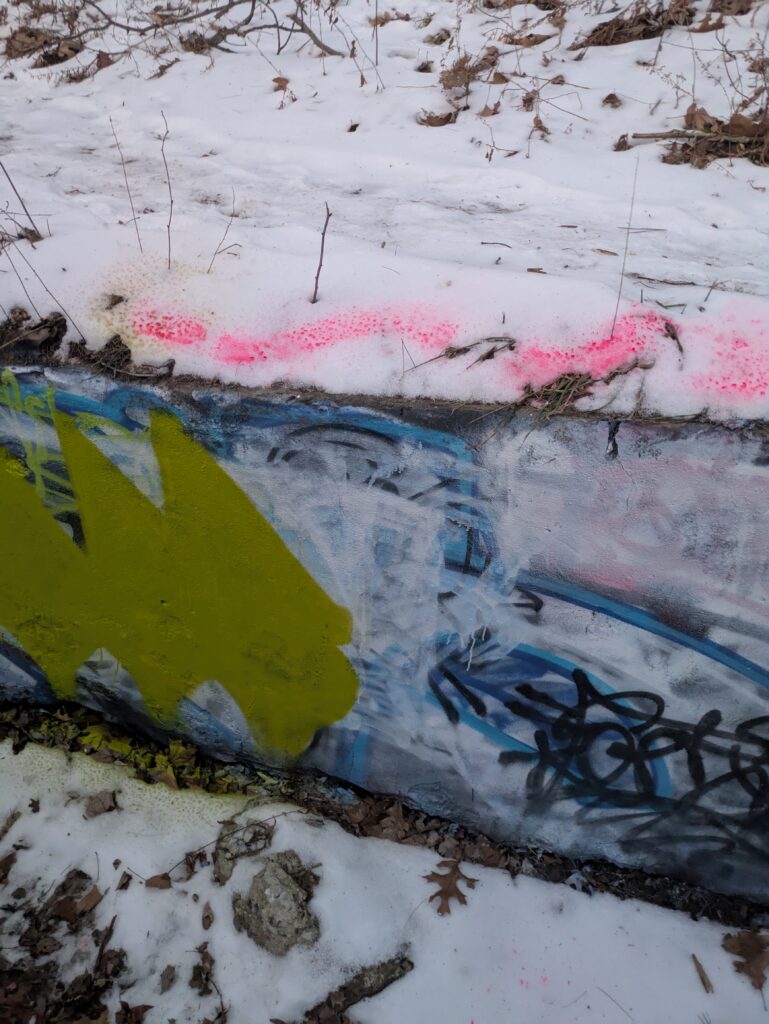
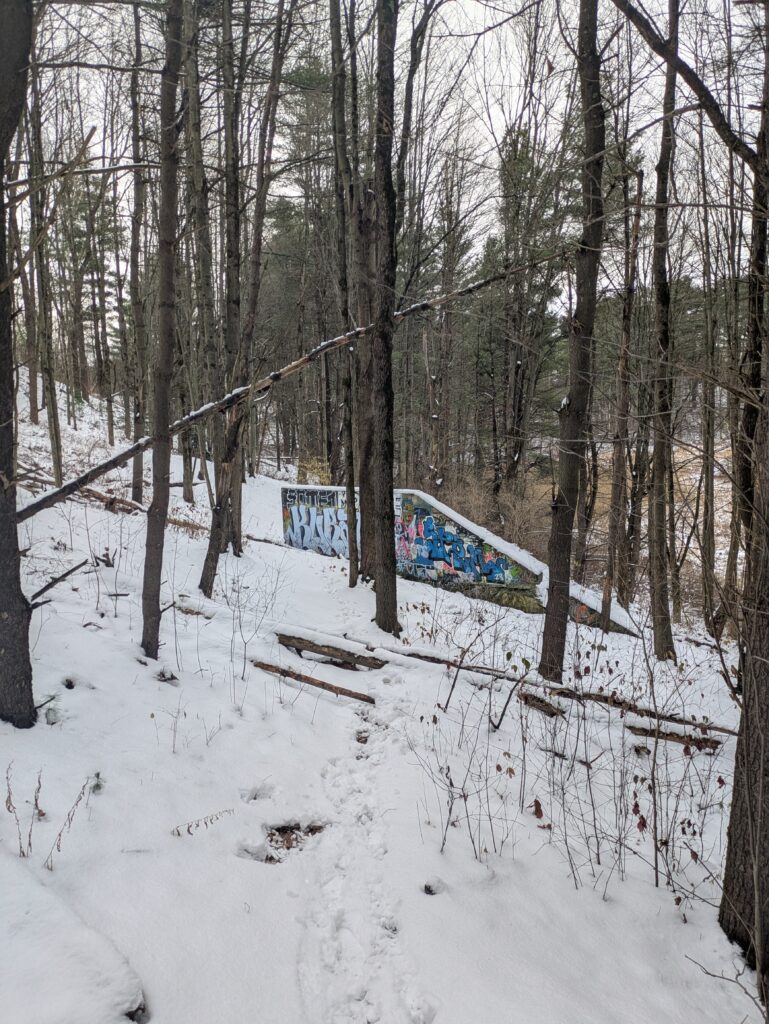
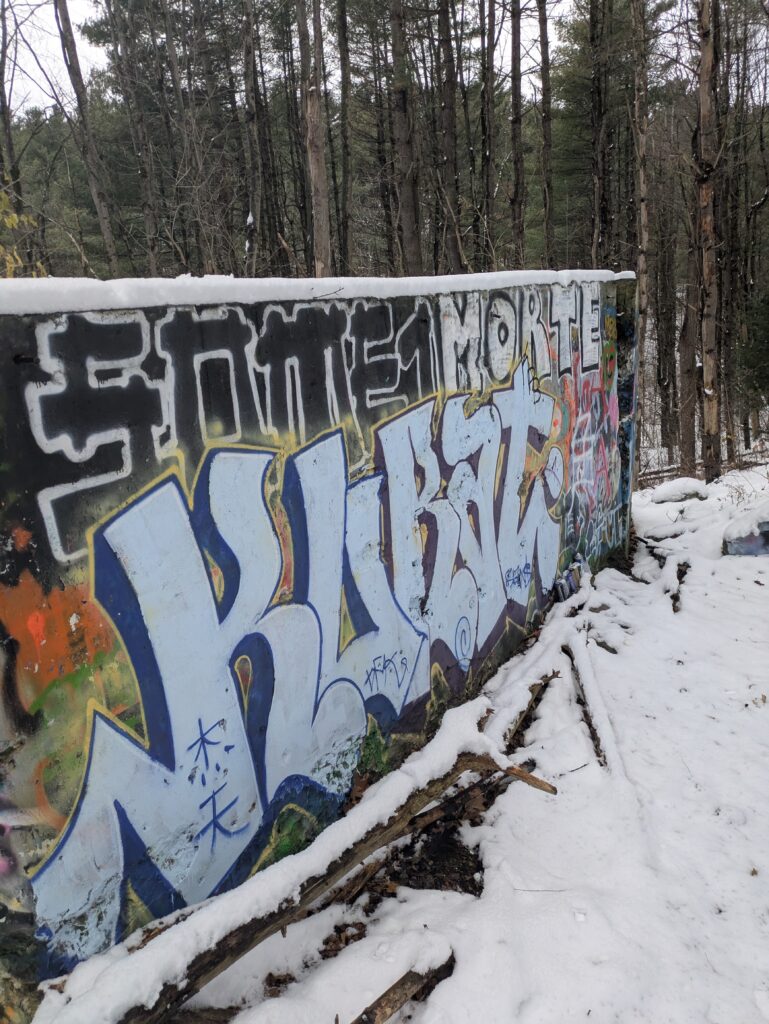
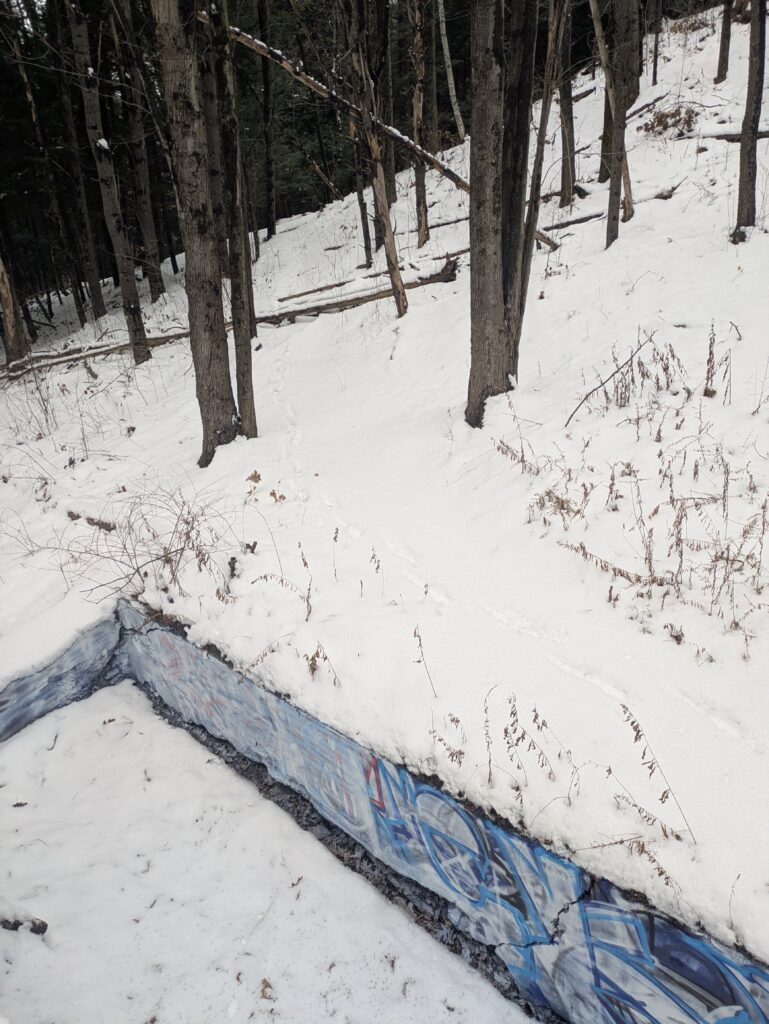
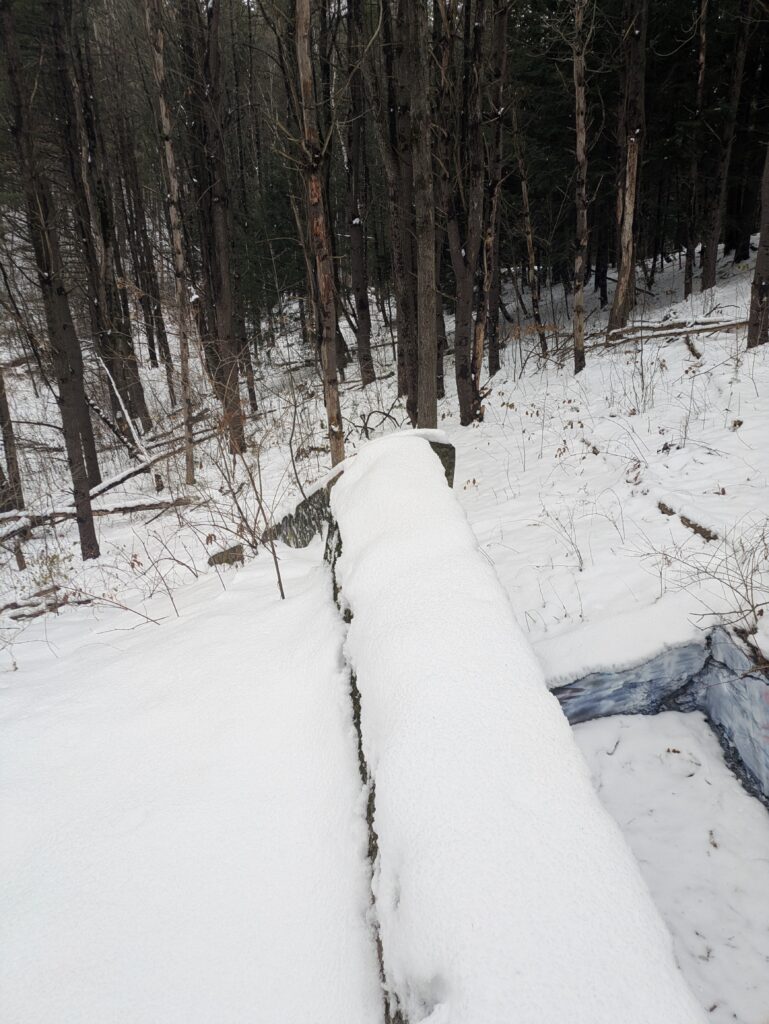
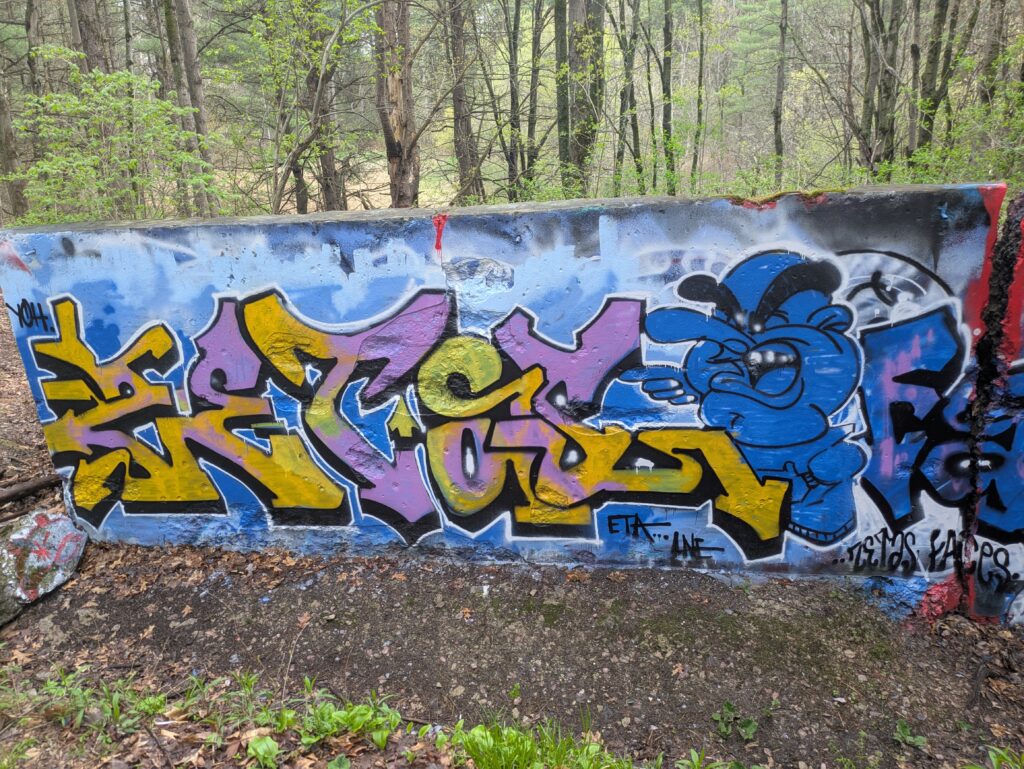
The Bunker has greatly changed over my year of connection. Most strikingly, the face of the concrete has undergone a multitude of paintjobs as graffiti artists left their mark. The contrast between human culture plastered onto the wall and the natural background should make The Bunker stick out like a sore thumb. Instead, they flow together. Humans and nature have collaborated to take the area back from its military roots; humans leaving it as an art piece, complete with stencils condemning ICE on campus, and nature slowing taking over and reclaiming it.
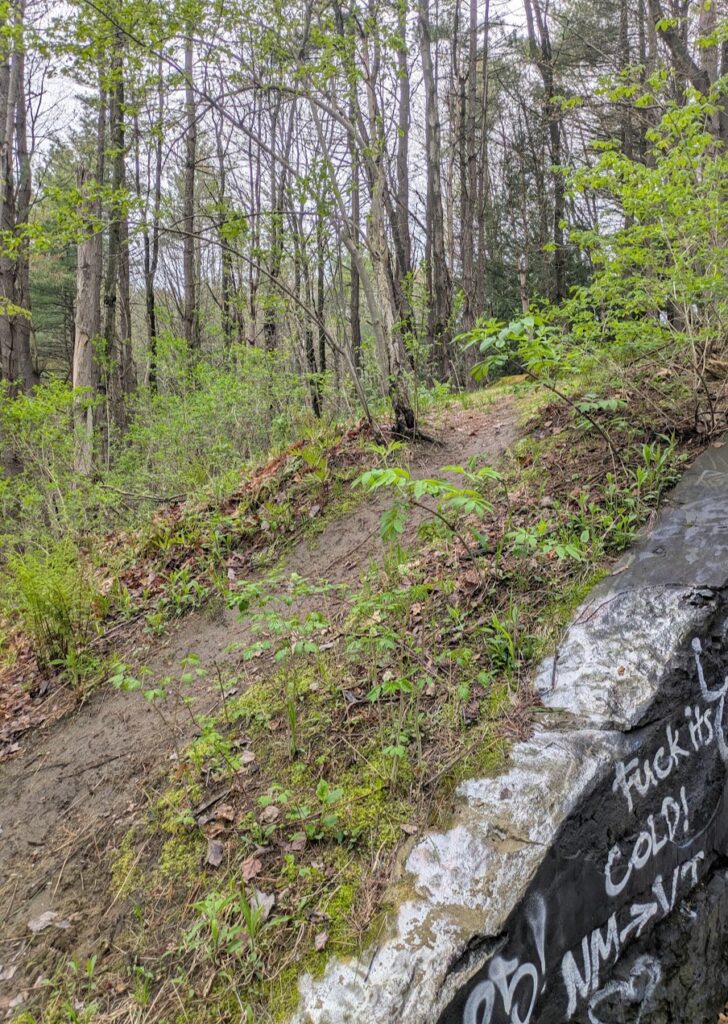
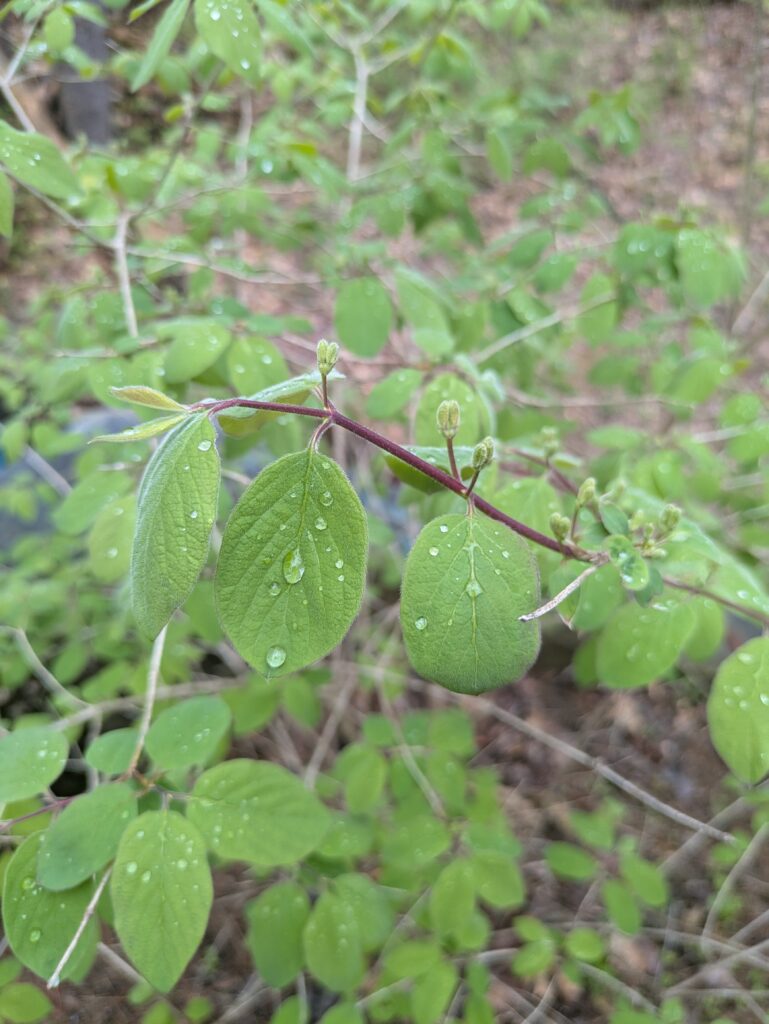
However, while the paint has changed the bones of the structure has not. Since the regrowth of spring, The Bunker has returned to a similar state as its summer phenology. The same invasive species, primarily being Honeysuckle and Crabapple, strongly cling to its spine and resist native dwellers. Overall, The Bunker has come full circle as the seasons have rotated.
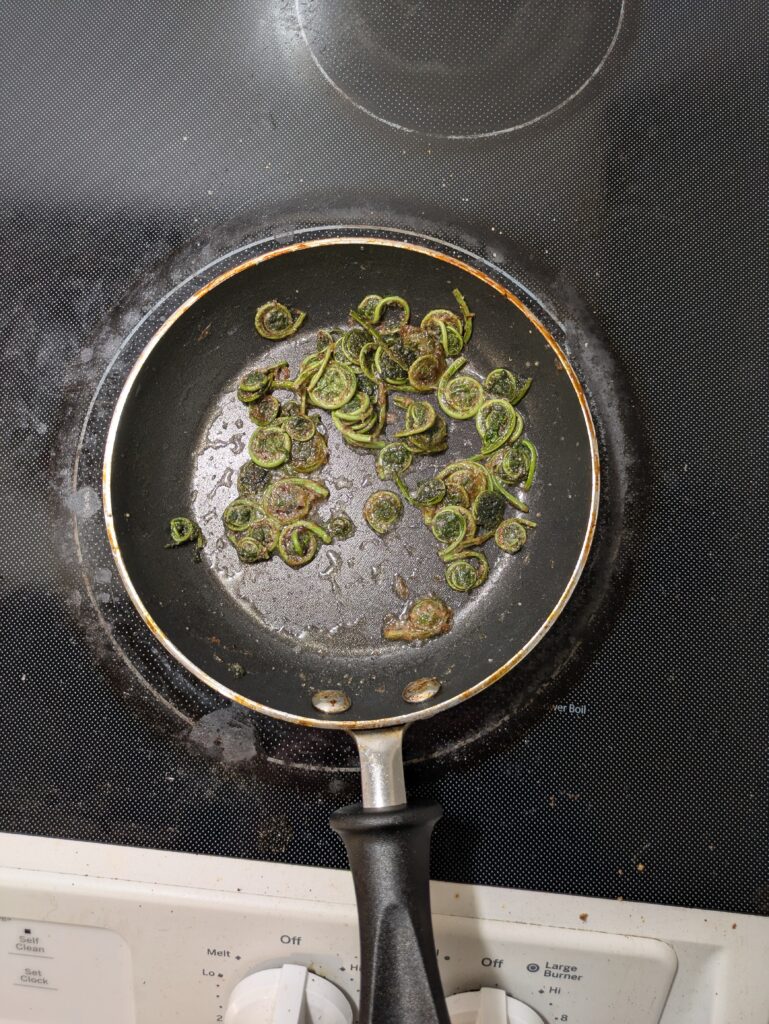
Truly, the landmark of The Bunker has grown a deep connection with me. From sitting alone, legs dangling off the side, on warm summer evenings, to trekking out to it in the midst of winter, to collecting fiddleheads, I feel as though I have become a part of The Bunker’s long history. All in all, The Bunker has become a significant foundation to my feeling of place here at UVM.
Phenology Walk

Posted in Uncategorized on May 4, 2025 by hfuller1

I participated in the phenology walk assignment on March 26, 2025.

My walk was in the earliest stage of Spring. Snow was still melting and temperatures were still freezing. The trees I examined had no signs of change since winter. They were all at the same phenophase; leafless, bud less, and with completely bare branches (aside from some dead leaves clinging on from last fall).

Afterwards, I developed my understanding of phenology by reading recent new publications from the USA National Phenology Network. A more complete picture of the timing of spring taught me about Spring predicting algorithms. They function by taking examples of phenological evidence and comparing them to the timing of previous years. The examples are taken from observations like the ones I made. The simple act of documenting the phenological stage of a few species can be used to develop powerful algorithms that can predict the coming of Spring.

iNaturalist BioBlitz

Posted in Uncategorized on April 28, 2025 by hfuller1

For this year’s BioBlitz, I explored a small natural area to the side of North Prospect Street.

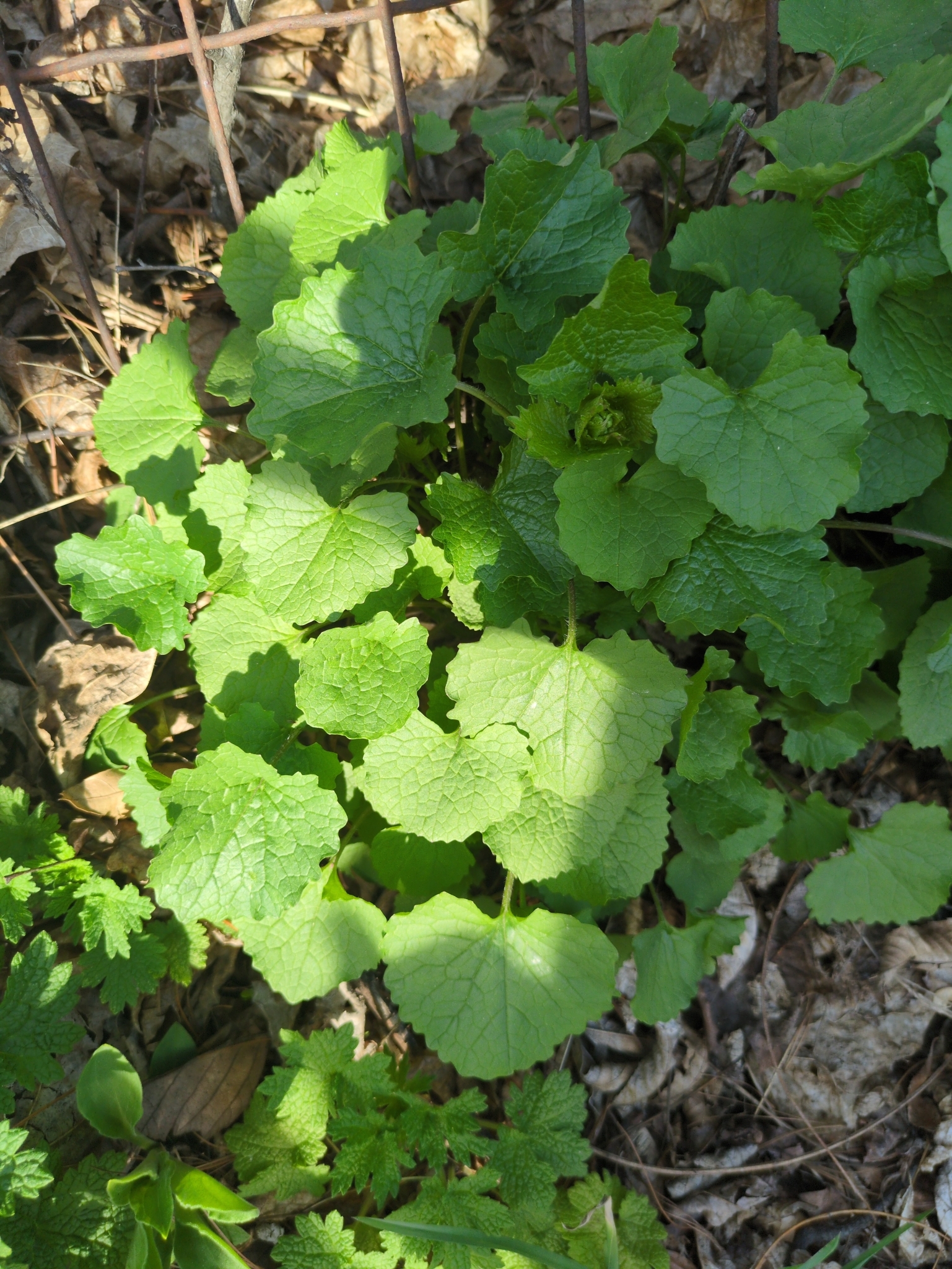
The area I explored was overrun with invasive species, primarily Garlic Mustard and Buckthorn.

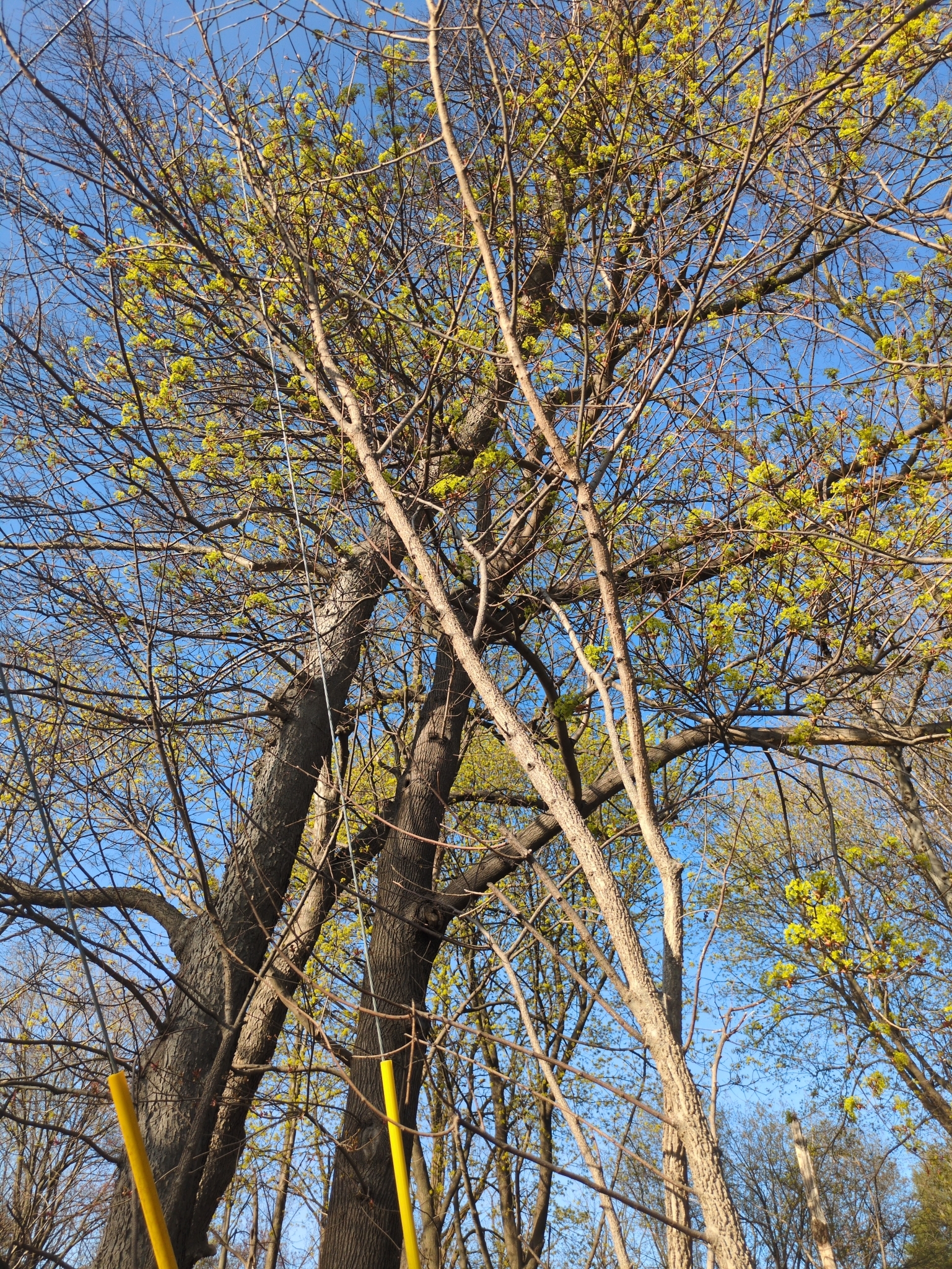
The area was also filled with a tree I was unable to identify. It was blossoming with a vibrant yellow color.

I encountered and logged four species for the BioBlitz. They were buckthorn, garlic mustard, the unknown tree, and an American Elm on campus. INaturalist made it easy to identify the majority of these and log them into my lab section’s datatbase.

Looking at the global challenge report, I was impressed with how many submissions were submitted. When I checked there were over 2,400,000 observations. I was most surprised that La Paz in Bolivia had the most submissions by a large margin. The second place was San Antonio which has over twice La Paz’s population. Overall, the global commitment to from thousands of people across the world was outstanding and sends a message that people care for the world even though our governments don’t.

Signs of Wildlife in Burlington- Feb 2025

Posted in Uncategorized on February 24, 2025 by hfuller1

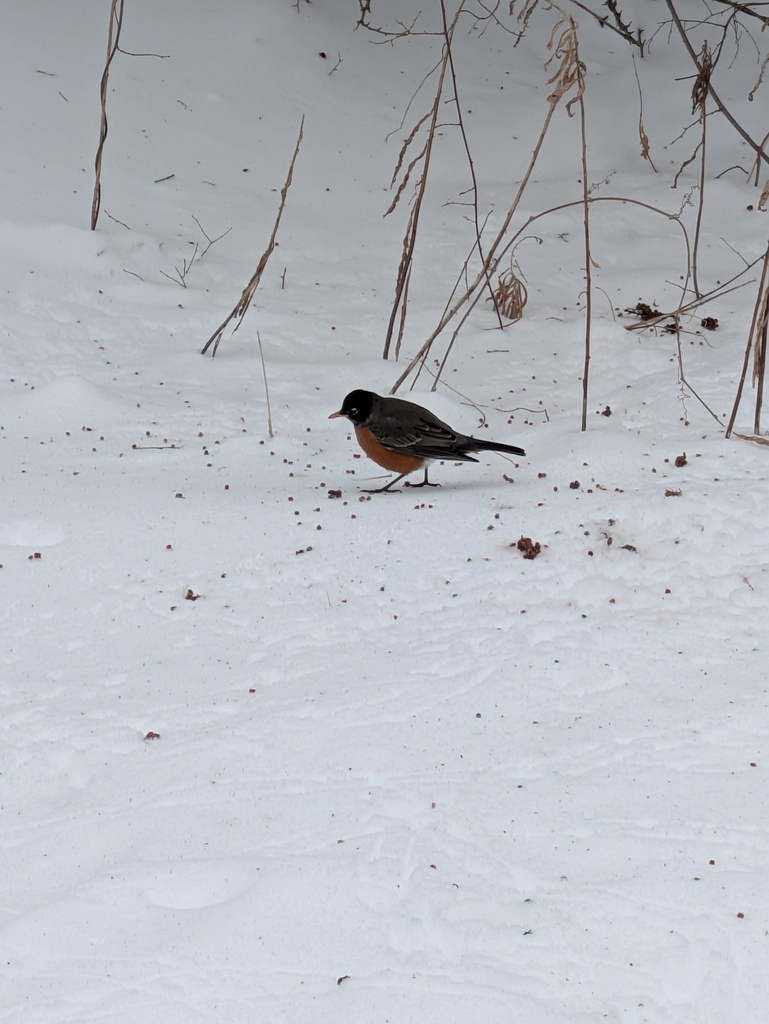
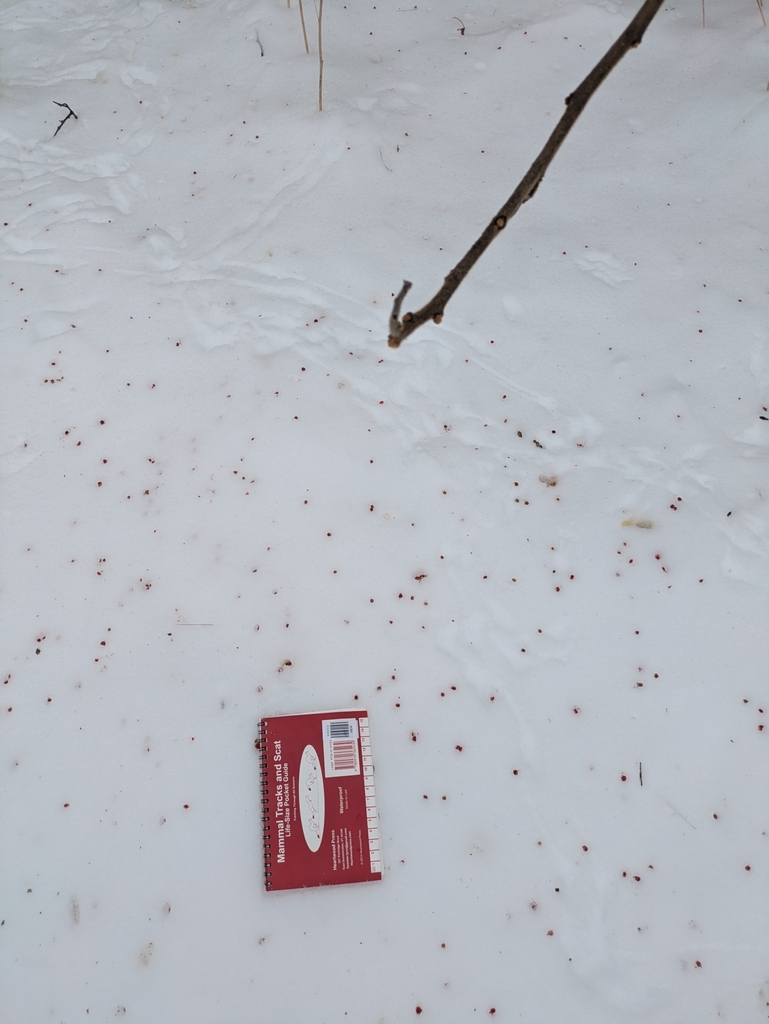
For this month’s phenology assignment, I decided to head over to Rock Point. On the walk there, through the bike path, I found a few sets of tracks and spotted many birds. Specifically, the first tracks I saw were a jumbled mess of prints left by a bird. They circled around some seeds dropped by a nearby shrub. Identifying these prints as American Robin required no guesswork since I spotted at least five of them feeding on the seeds shortly before I arrived.

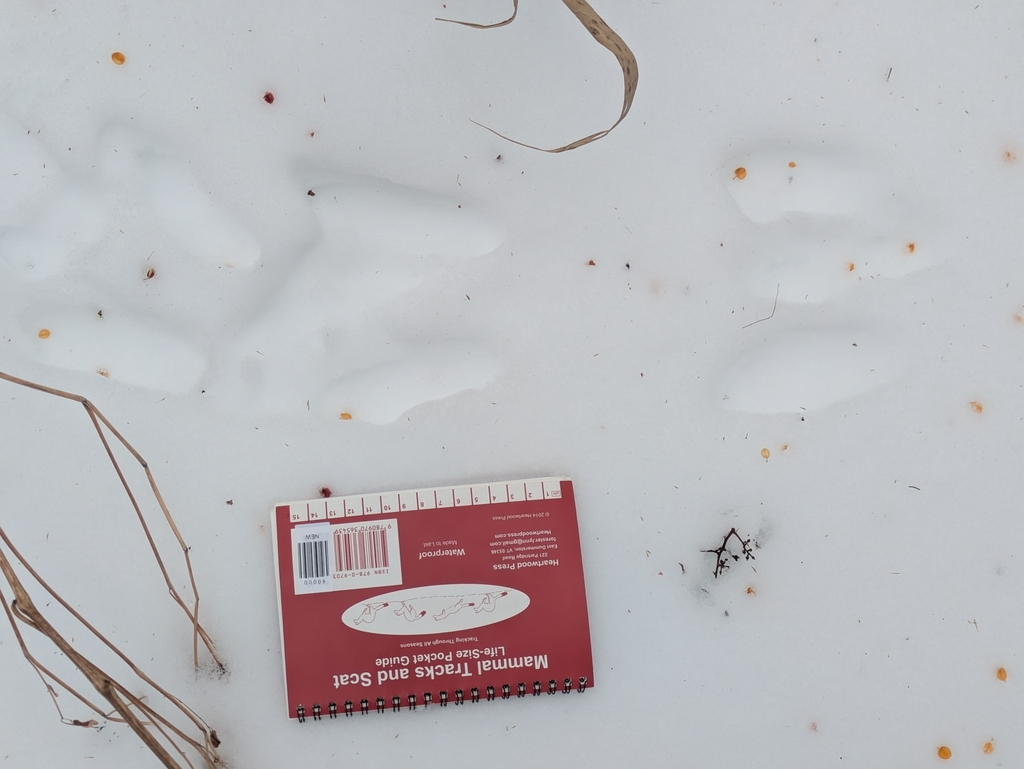
These tracks were located on the side of the bike path as well. They are in a bounding pattern with the front feet (9cm) significantly larger than the rears (5cm). I believe these are from a cottontail rabbit due to the size and pattern of the prints matching. At first I thought they were squirrel tracks, but discounted that due to the hind prints being offset instead of parallel.

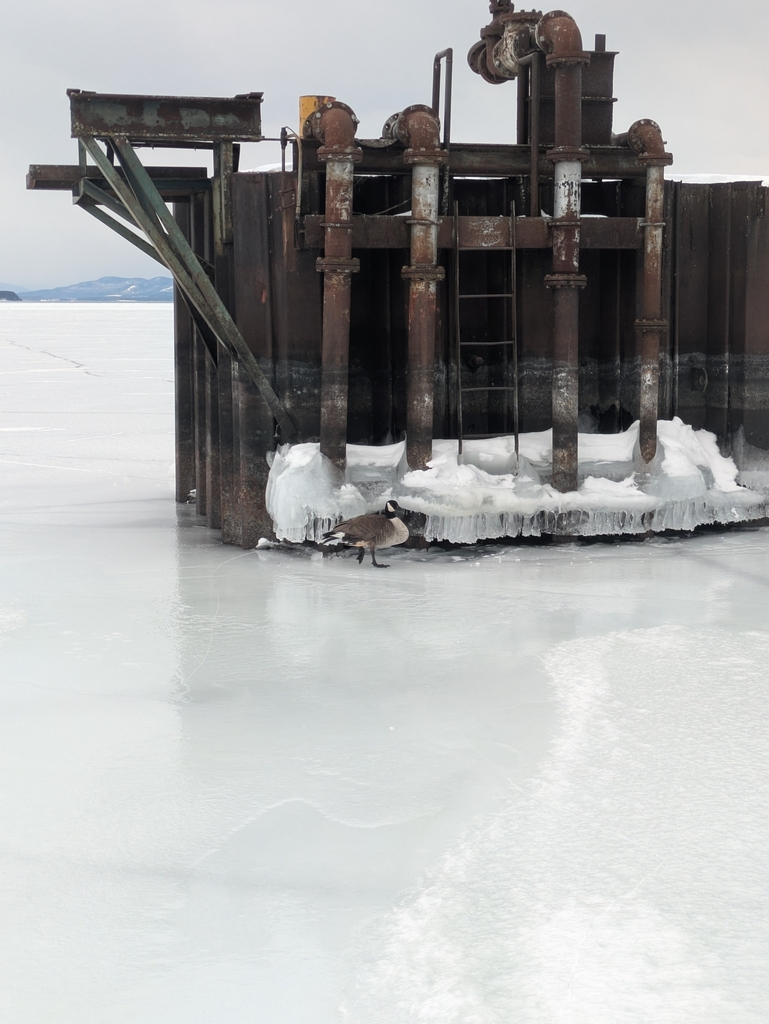
At Rock Point I only encountered a few tracks, but they were too damaged by additional snowfall to identify. However, I had another animal encounter heading back downtown by crossing the frozen lake. Here I saw a Canadian Goose.

Recording these observations through iNaturalist was super easy. The pictures I took seamlessly uploaded and were logged with no hassle. After uploading, users confirmed some of my observations. Overall, it is a great tool for data to be logged.

January’s Return

Posted in Uncategorized on January 30, 2025 by hfuller1

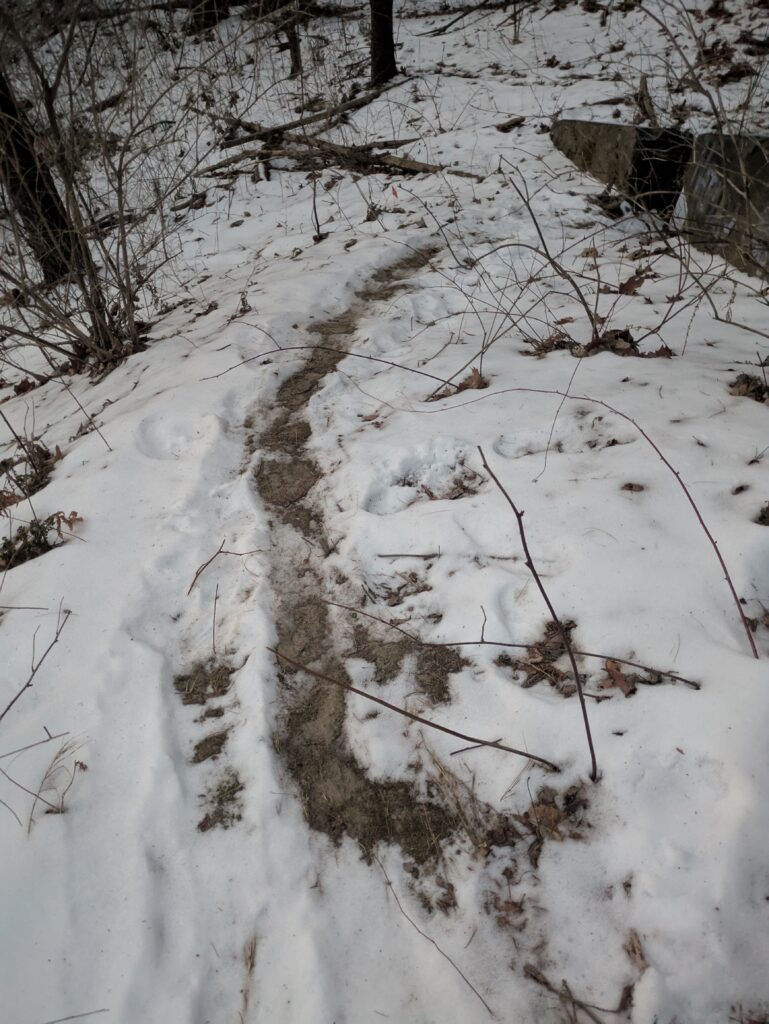
In the natural sense, there has been very little difference between now and December. The snow present has been around for over a week, yet there is no scat, noticeable tracks, or any other proof of animal presence. The entire remains void of noticeable life. Any evidence of animals has been obliterated from being trampled by shoes and boots.

The only differences I found were human created.

Evident by the residual spray paint on the snow, The Bunker has gotten a fresh paint job within the last few days. I wonder if the increased human presence by whoever painted it as well as the smell of the drying paint is what has led to a decrease in animal presence?

Final Update-December

Posted in Uncategorized on December 8, 2024 by hfuller1

Phenology at Home- November

Posted in Uncategorized on December 2, 2024 by hfuller1

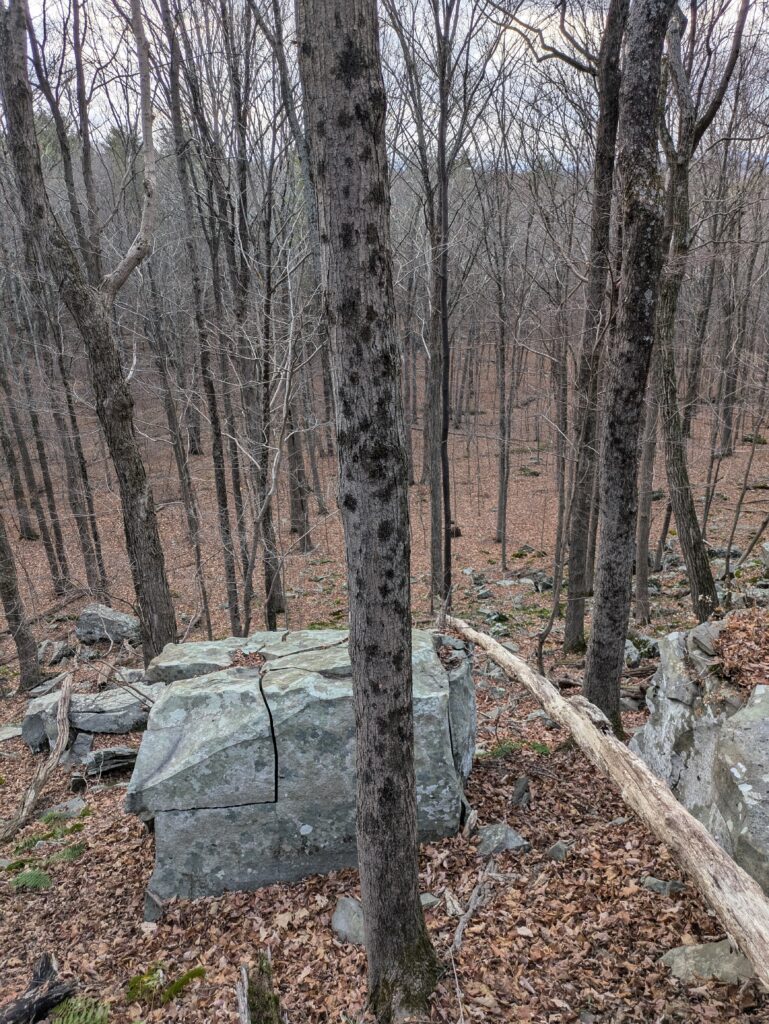
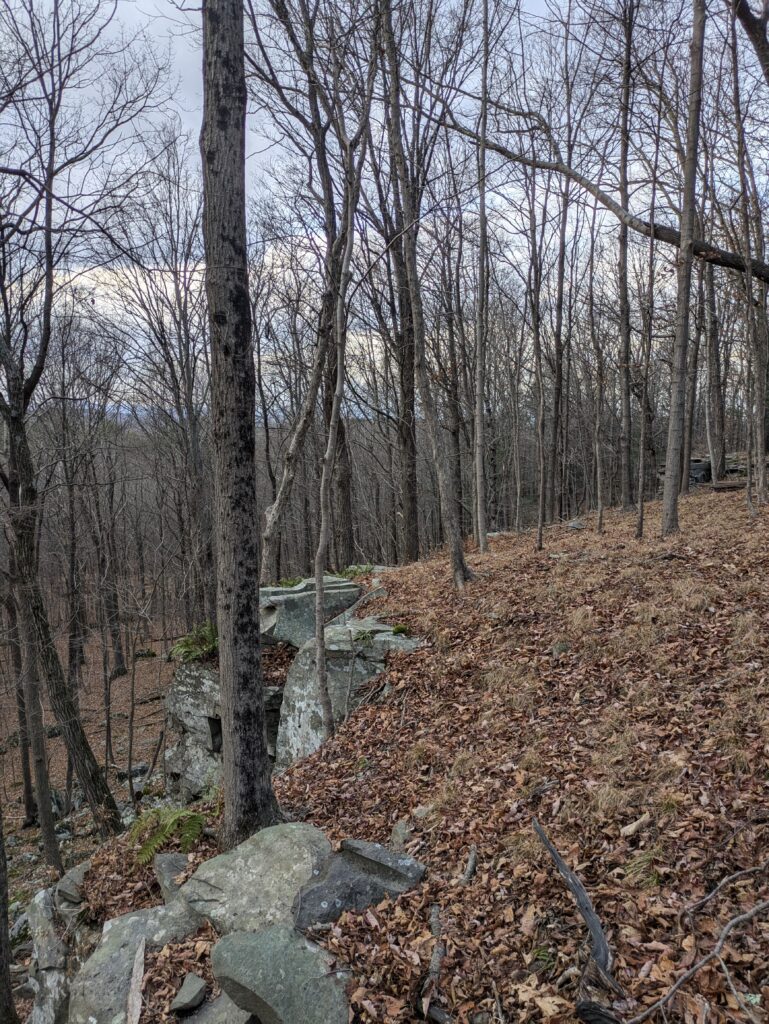
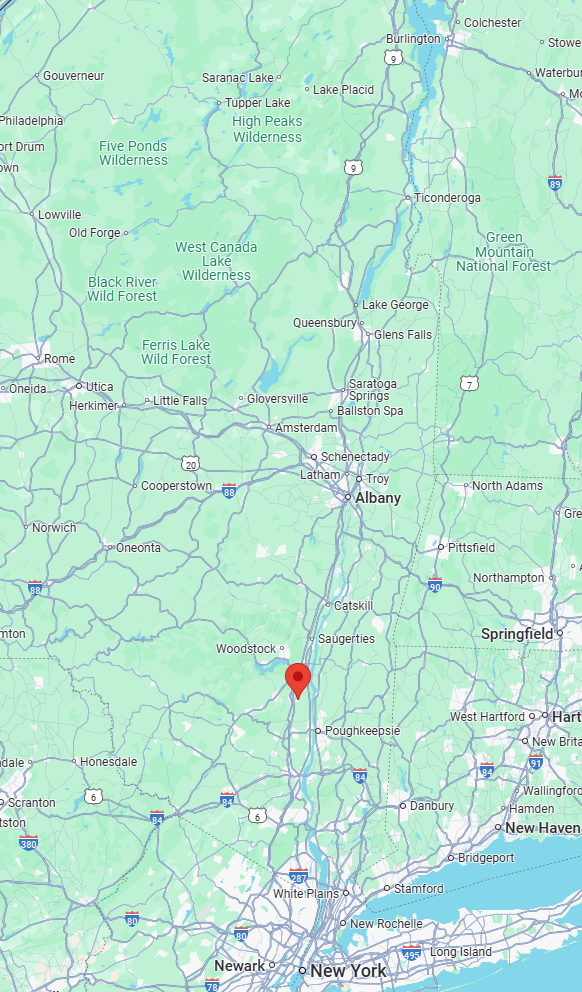
This wild area is found mere footsteps from my backdoor. Shown here is the initial drop off that opens up to an expansive array of native New York trees. The geology here holds a special place in my heart, especially the cubic boulder with the smaller cube cut from the side. As a child I would climb upon it, gaze into the seemingly never ending forest, and absorb nature in its fullest.

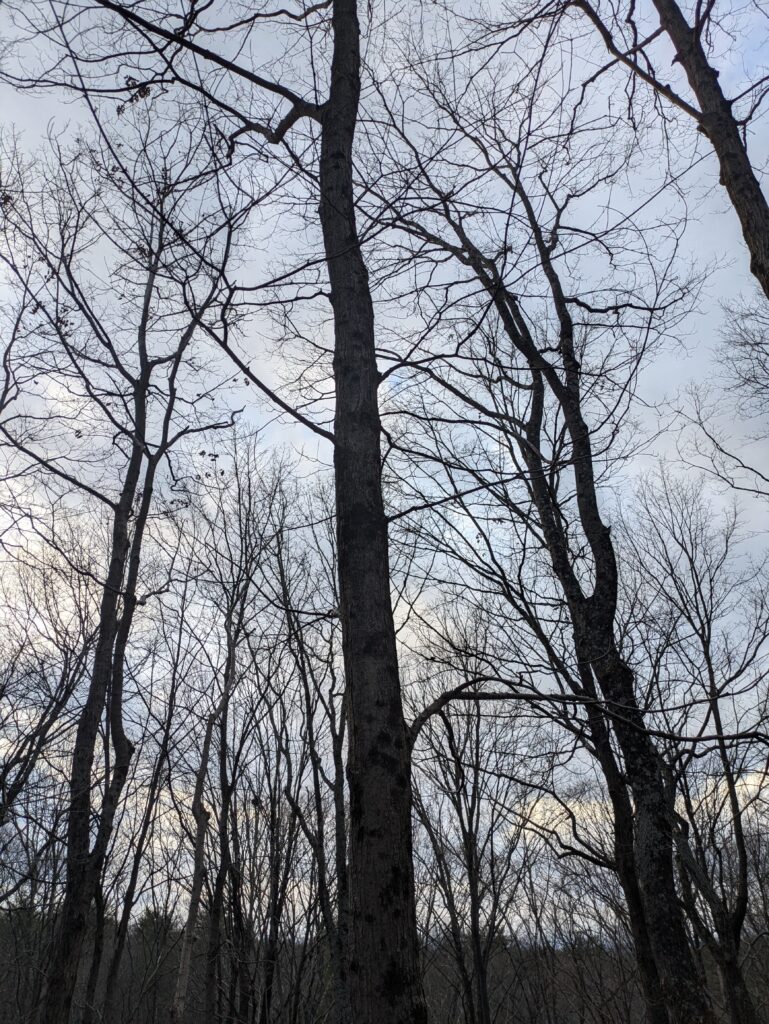
In comparison to the phenology of Centennial Woods in Burlington, my area at home is quite similar. Like at my location in Burlington, all of the trees have long since shed their leaves. The tree species are similar as well, with my observations that this forest contains sugar maples, red maples, northern red oaks, white oaks, and American beeches. A major difference to Burlington is the lack of human influence. After its deforestation and use as agricultural land long ago, this area has remained essentially untouched. Nowadays, the current owners preserve the land and only allow access to local residents. This has helped prevent the spread of invasive plant species into the area. Thus, my home area is unafflicted by the species like the honeysuckle and crabapple found in Centennial Woods.

My Experience-October

Posted in Uncategorized on November 6, 2024 by hfuller1

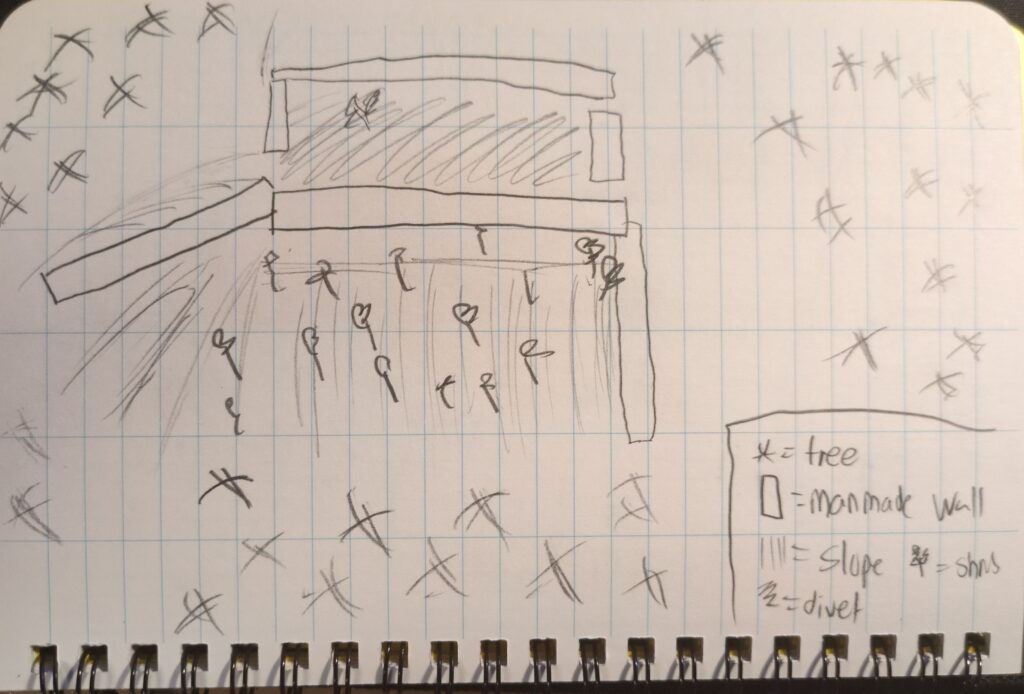
Sitting, my legs dangling off this concrete relic of war, I experience a juxtaposition of separate worlds. The artifact of destruction underneath me is surrounded by a circle of trees, calming down, shedding their leaves, and preparing for dropping temperatures and shortening days. The contrast of bunker, built in preparation for an offensive attack overseas, and the trees building defenses in preparation for a war against winter, is representative of the differences of humans and nature. Humans find power in destruction, while nature finds power in growth.

This concept is further expressed at The Bunker through a new war, the war of native and non-native species. After this area was left abandoned, presumably after World War One, the first plant species to emerge from the unfertile soil were most likely hardy invasives. These plants, especially honeysuckle and crabapple, were able to grow without competition in the previously heavily trafficked, barren soil. Since these plants can grow faster, use less nutrients, and have a longer growing season (as witnessed by the invasives being the only plants on The Bunker itself still having leaves) than plants native to the area, they have been able to control The Bunker and win the war.

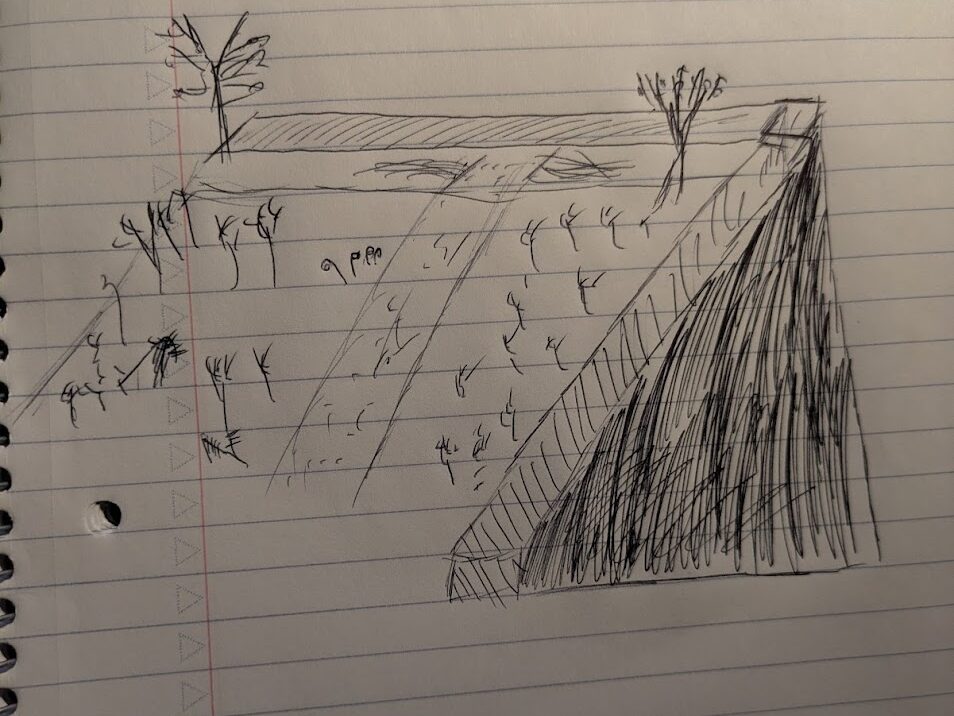
Caption:

All of the shaded sections of the sketch mark the man-made sections of lifted dirt that make up The Bunker. Surrounding The Bunker is a circle of trees, with only invasive shrubs sustaining on The Bunker itself.

Skip to toolbar