
I visited the Maillet, Sommes, and Morgan Land to find a new spot for my phenology project. This is conservation land in my hometown, Reading, Massachusetts. From the moment I heard about this assignment we would be doing over Thanksgiving break, I knew that I wanted to go to this conservation land to find my new phenology spot. The reason for this is that I studied this conservation land in my environmental club back in high school. I was able to get involved with the planning of the land as they were doing renovations to prevent flooding in towns downstream of the river crossing through Reading, the Aberjona River. Through my club, I was able to meet with many environmental leaders, from a hometown level to Massachusetts conservationists at conferences. I felt I could only honor this location and all the research, community outreach, and education I did by making it my new phenology spot!
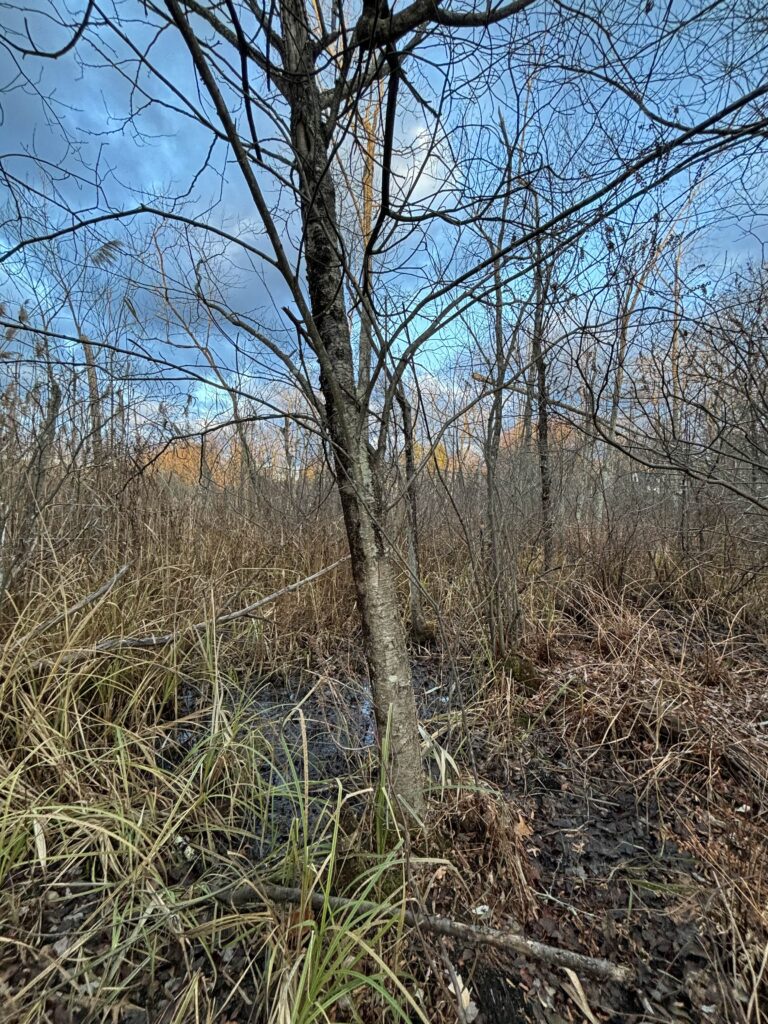
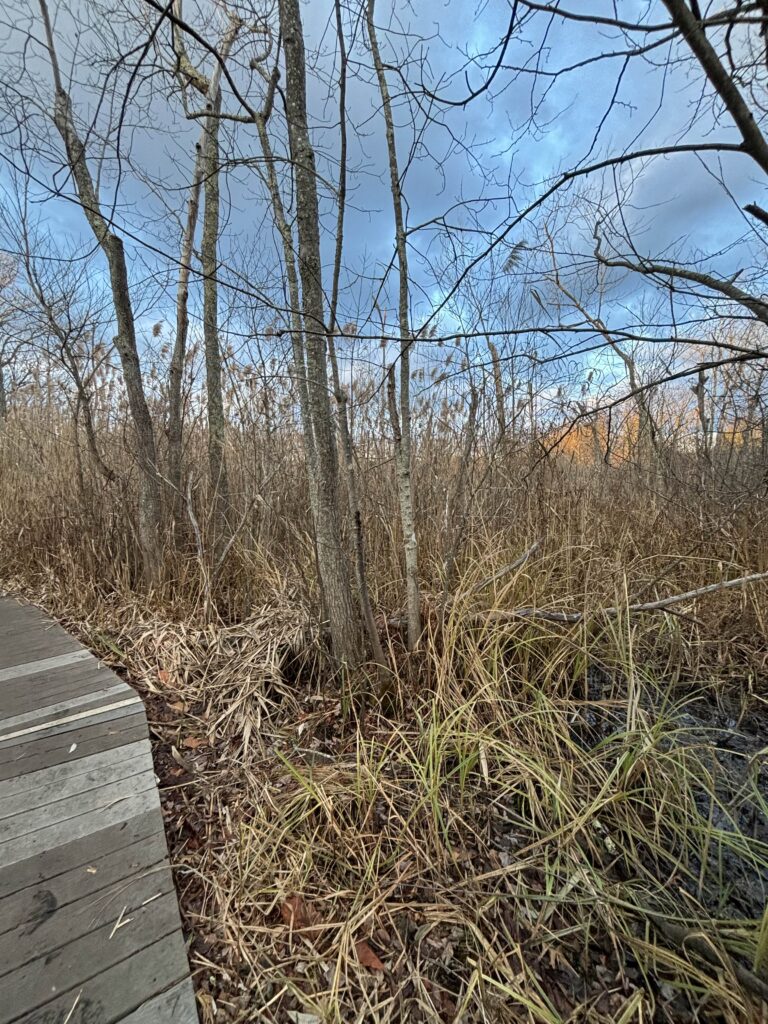
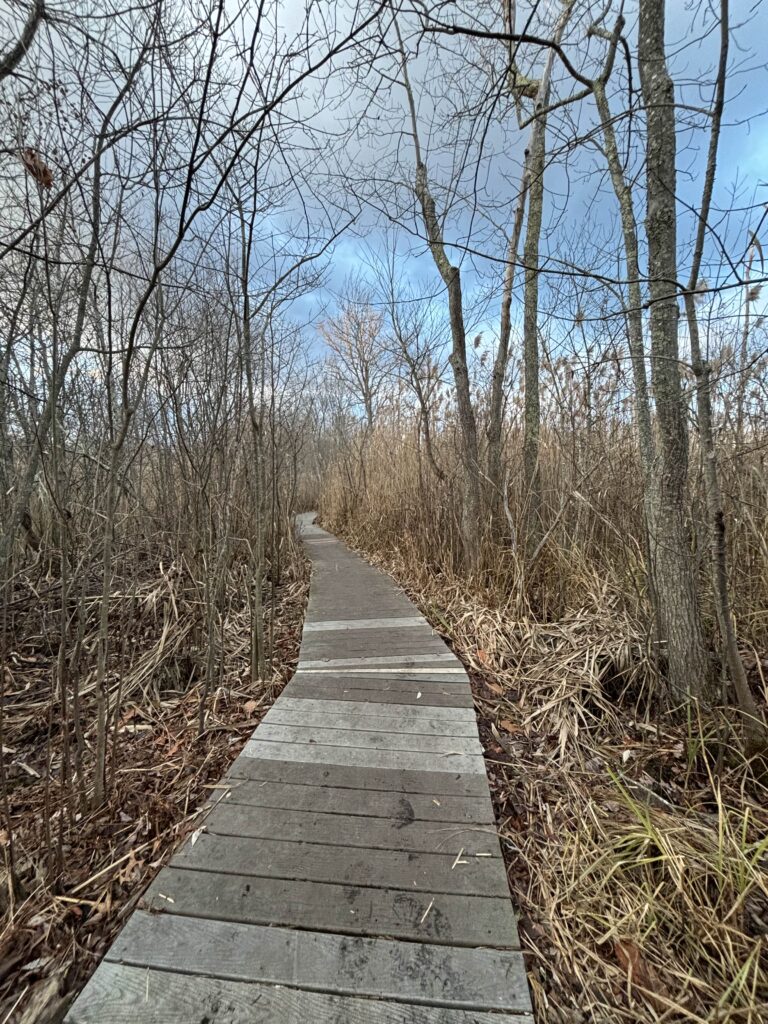
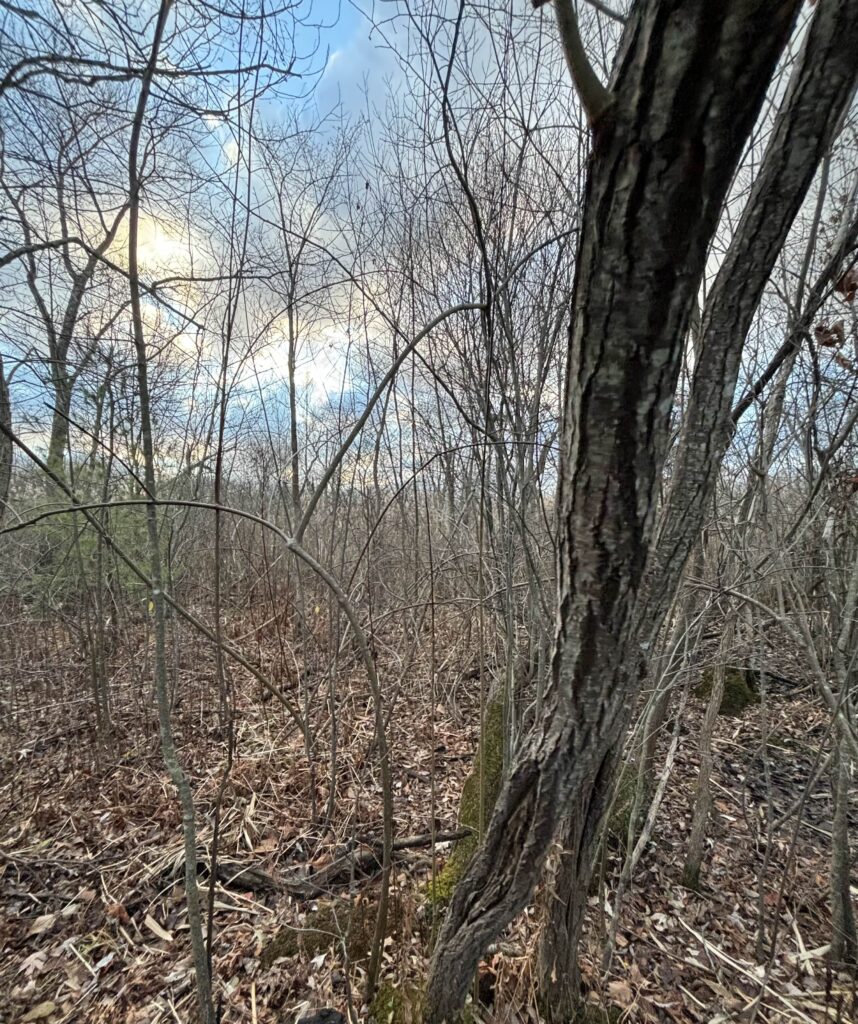
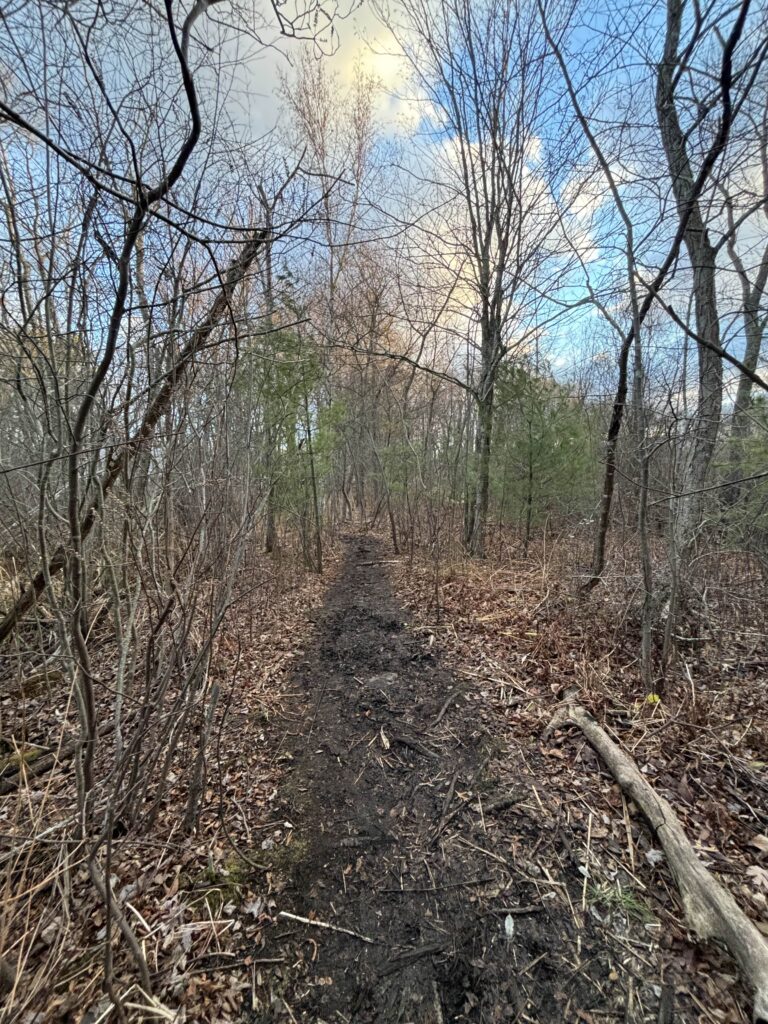
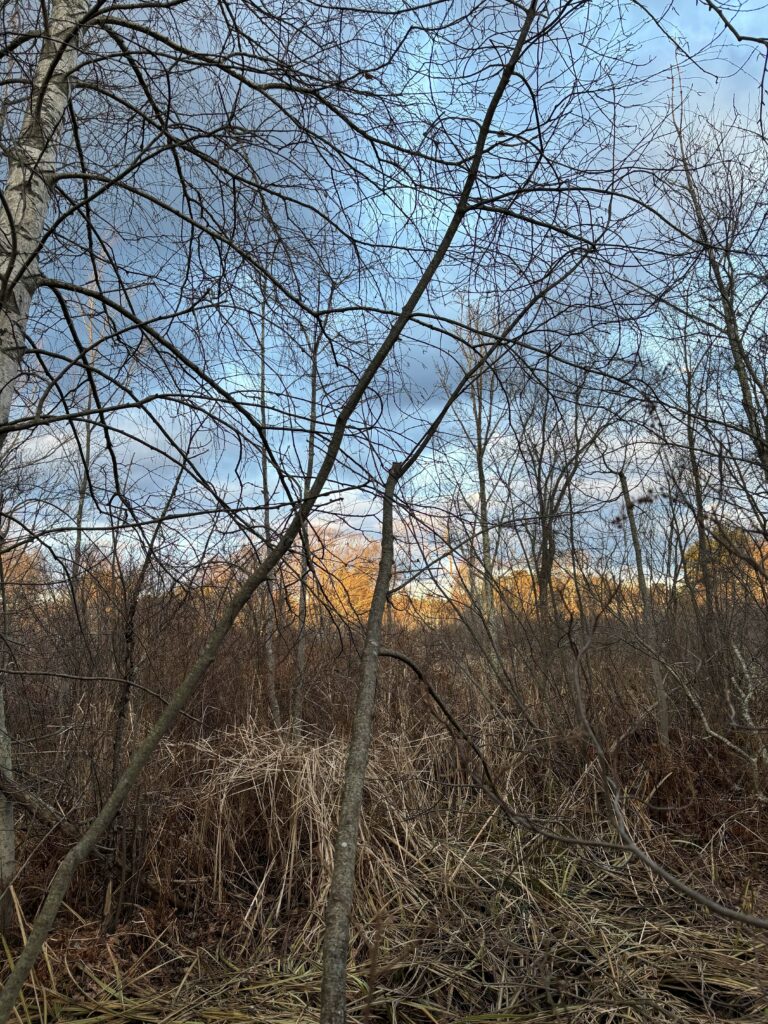
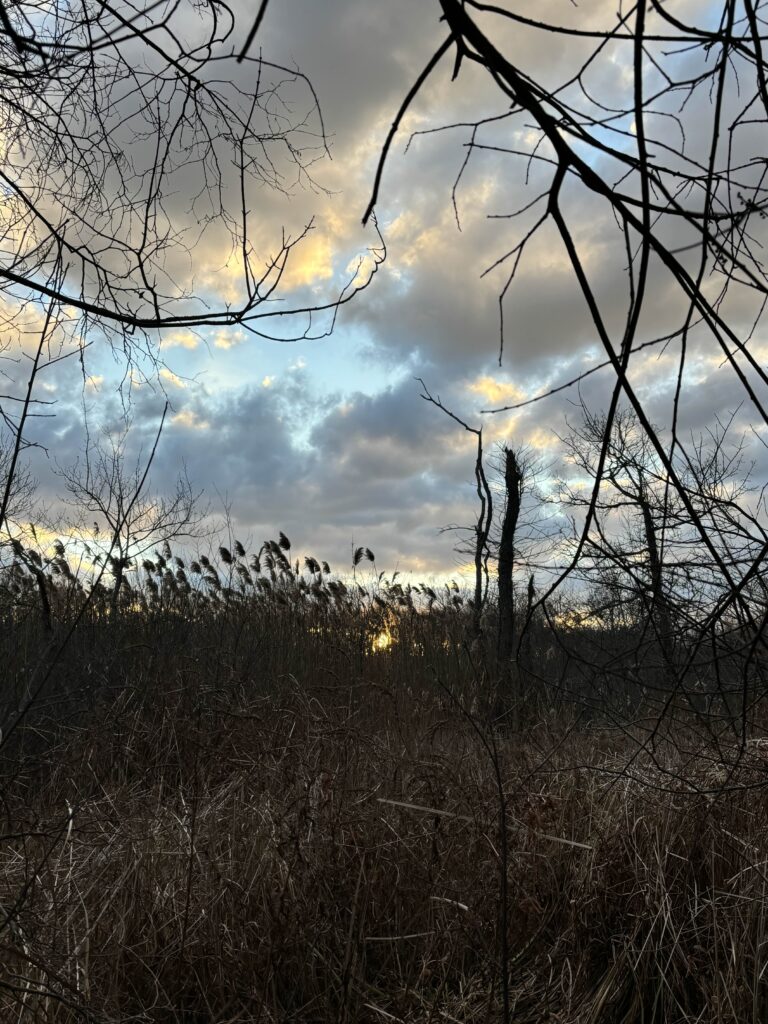
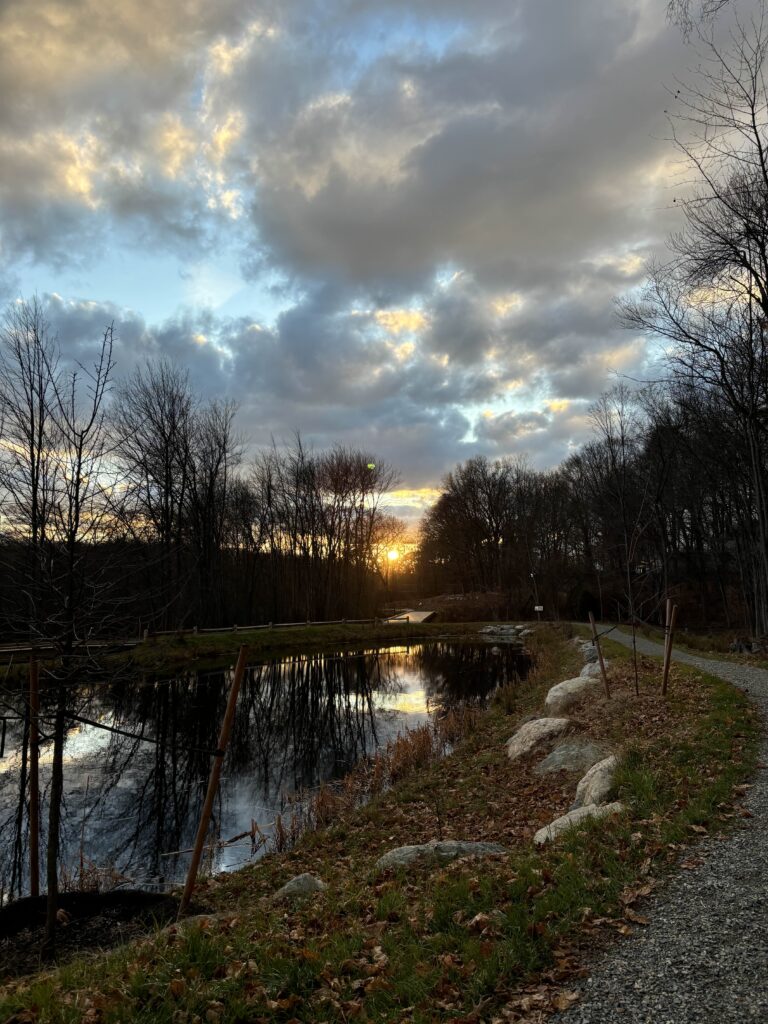
I took these photos of my phenology spot! The photo with the small pond is one of the constructed wetland areas in the conservation land that is specifically designed to hold large amounts of stormwater runoff as well as provide a habitat for migrating birds and native plants! Throughout my hike, I saw so many different native plants! I have included a full list of woody plants and vegetation I found below:
- Witch Hazel
- Joe Pye Weed
- Cardinal Flower
- Spice Bush
- Sensitive Fern
- Blue Flag Iris
- Arrowwood
- Wild Bergamont
- Swamp Milkweed
- Red Maple
- River Birch
- Sugar Maple
- Swamp White Oak
- Northern Red Oak
- Speckled Alder
- Tupelo
- Eastern White Pine
- Black Cherry
I found a lot of similar species at this new phenology spot when comparing it to my phenology spot in Burlington, Vermont. The species they had in common were Northern Red Oak, Red Maple, Sugar Maple, and Eastern White Pine. I noticed that the only similarities in species were that of trees, in other words, there were no similar small vegetation. However, both spots had a source of water: My phenology spot located in Burlington, Vermont had the Centennial Brook running through it, while my phenology spot located in Reading, Massachusetts had the Aberjona River nearby by as well as small wetlands surrounding my spot. Surrounding the wetlands was an invasive plant called common reed. This provides difficulties to birds looking to perch as the plant is too weak to support their weight. I noticed that many birds in my phenology spot would attempt perching on these reeds, fail, and fly back to a taller tree. It was really interesting seeing them do this over and over again!
Below is an overview of the Maillet, Sommes and Morgan Land area and hearted is my phenology spot!
