A UVM blog Phenology Project

Posts

NR 1020 End Game Final Phenology Blog, 5/4/25

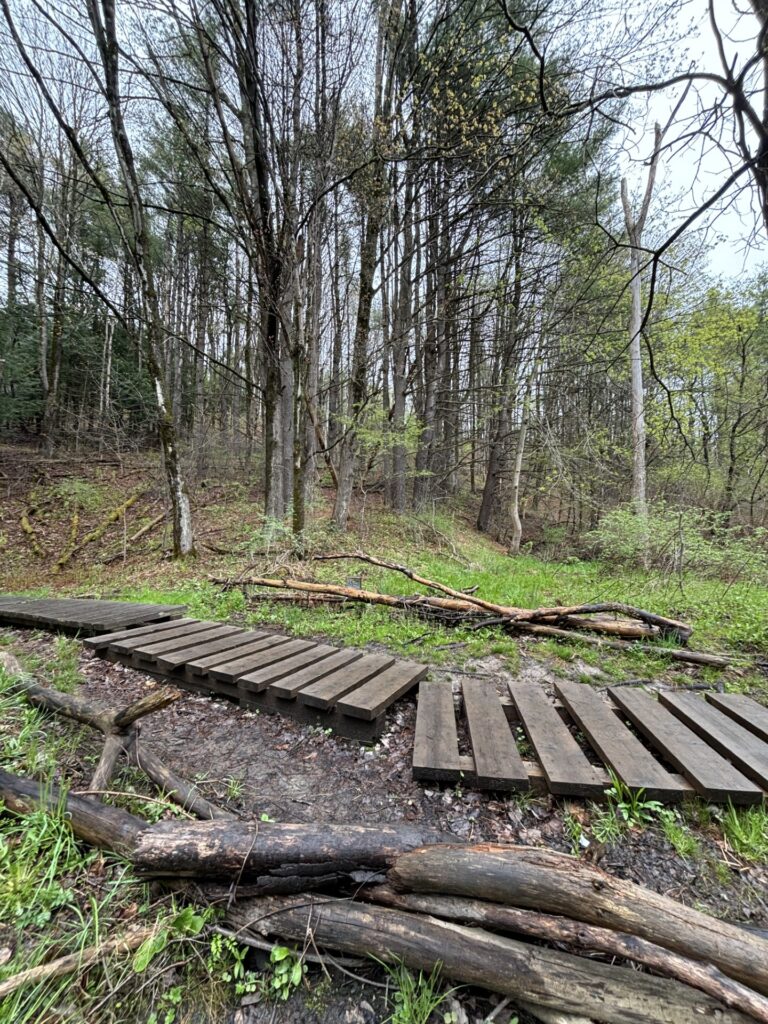
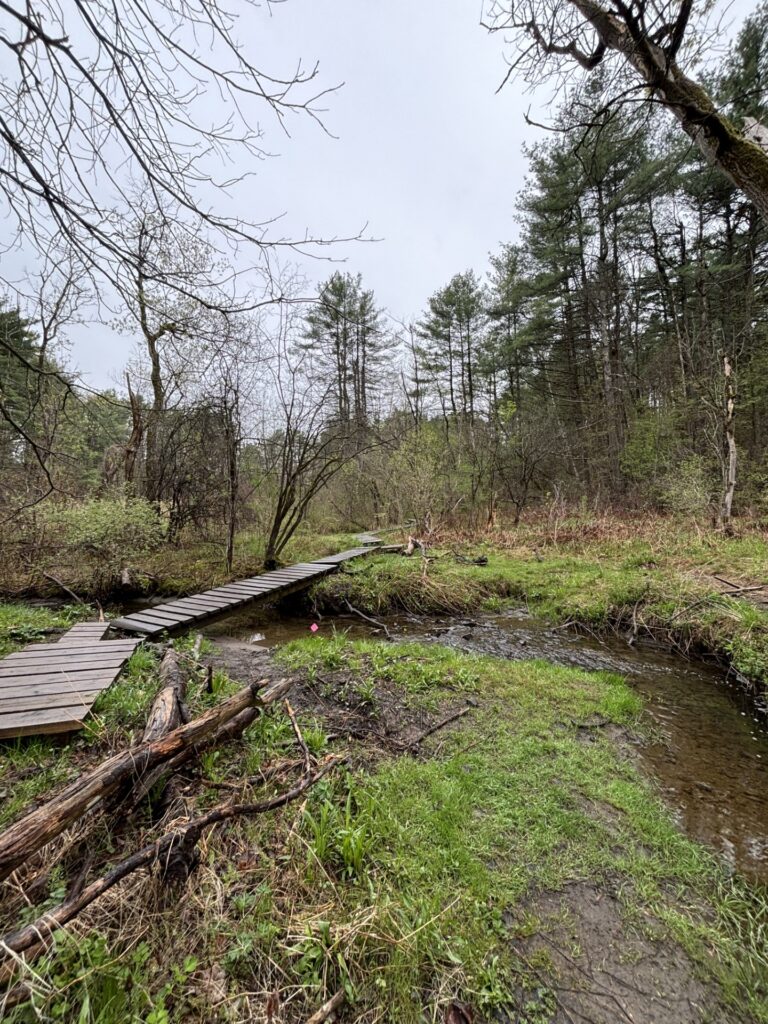
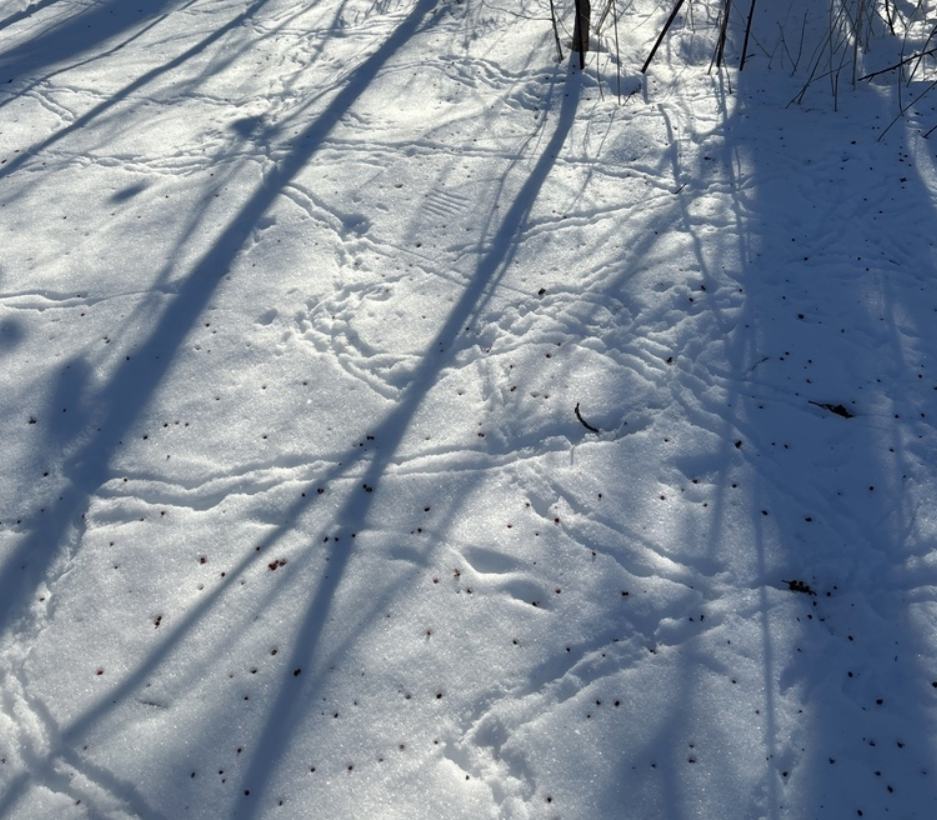
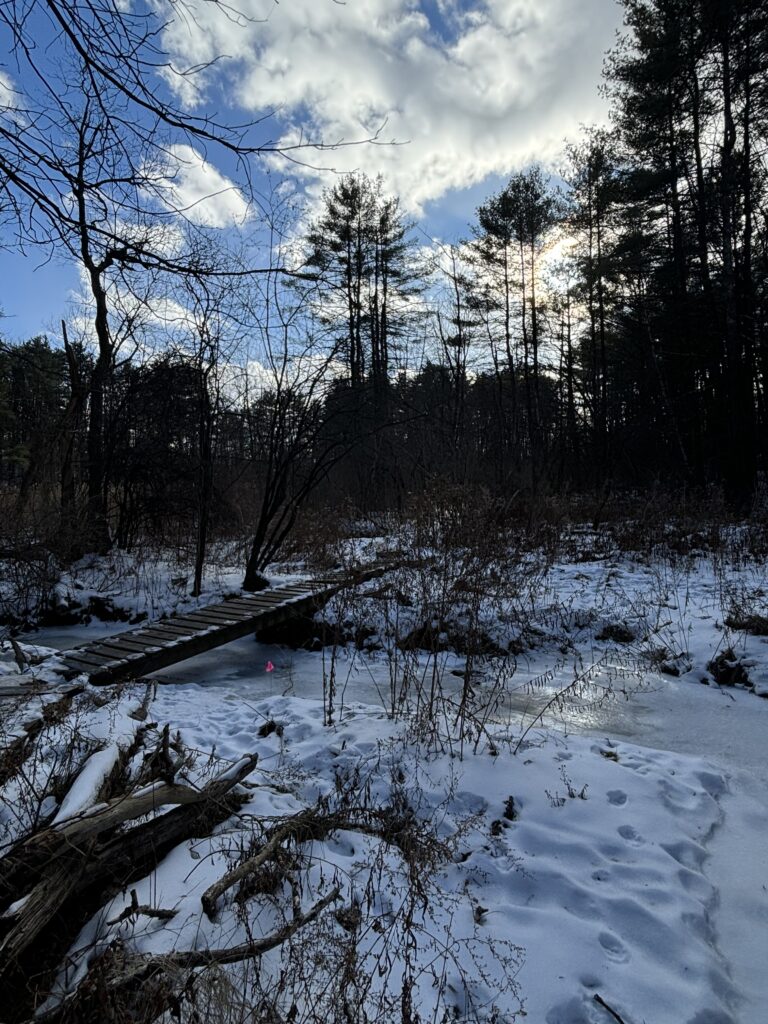
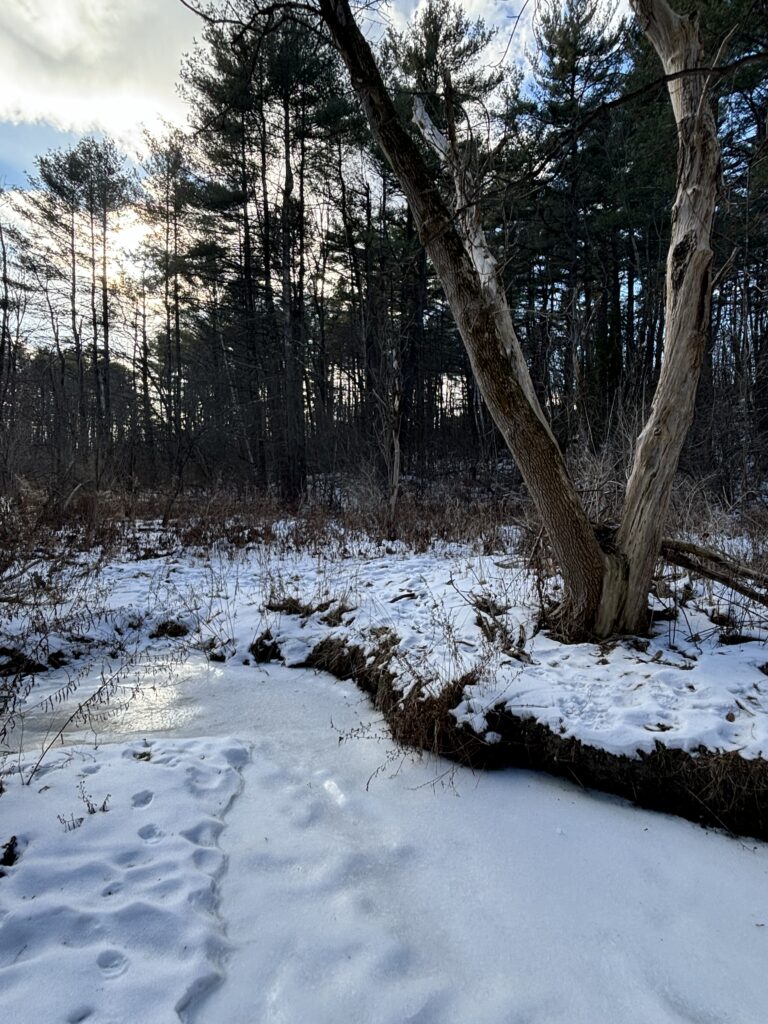
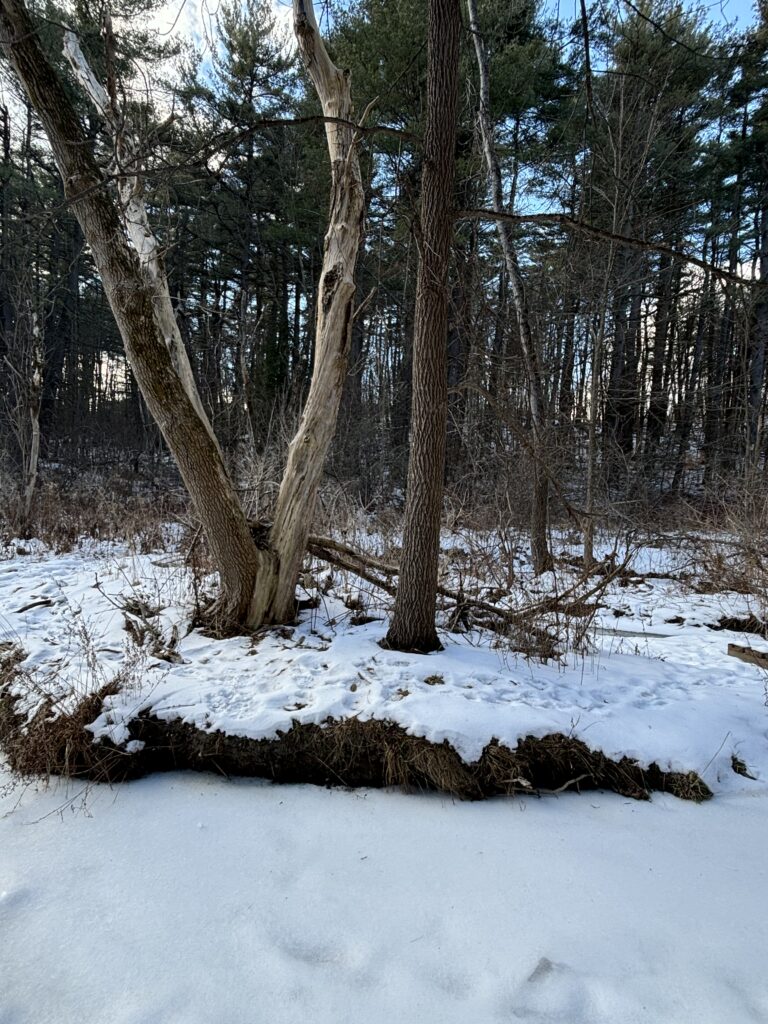
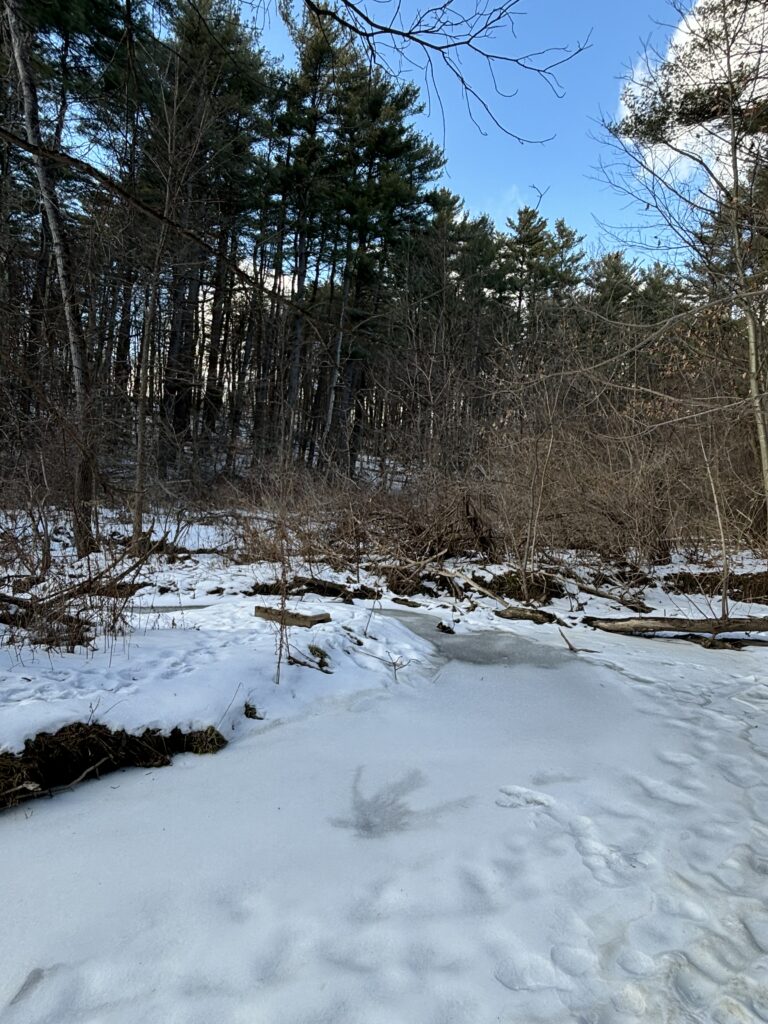
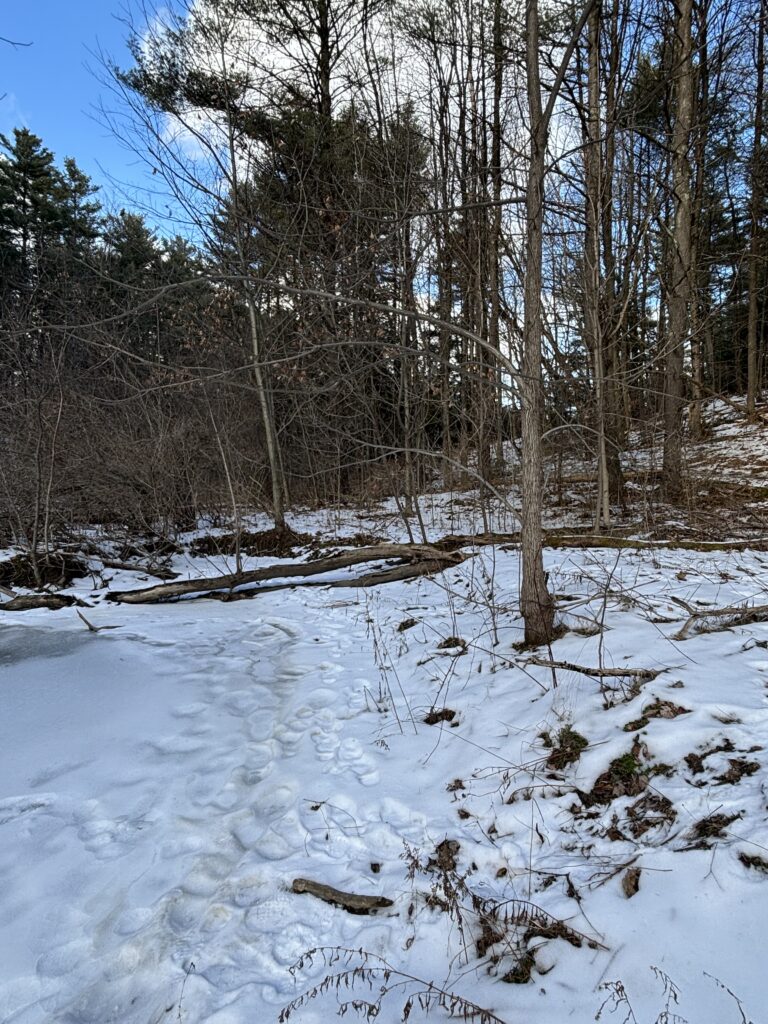
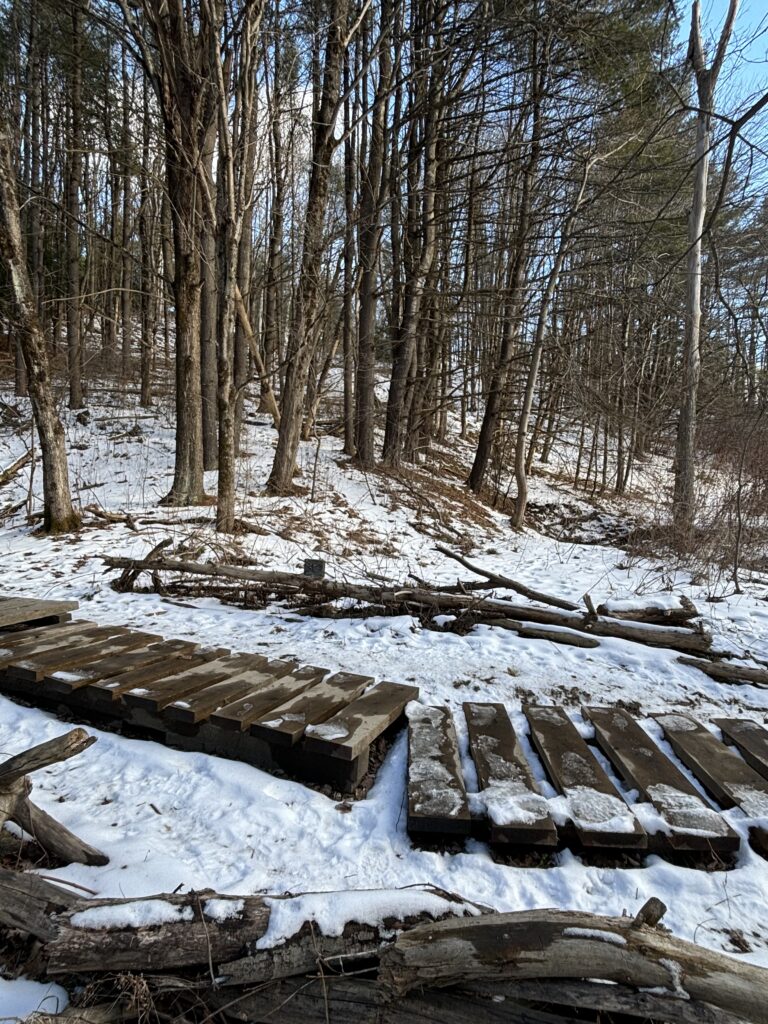
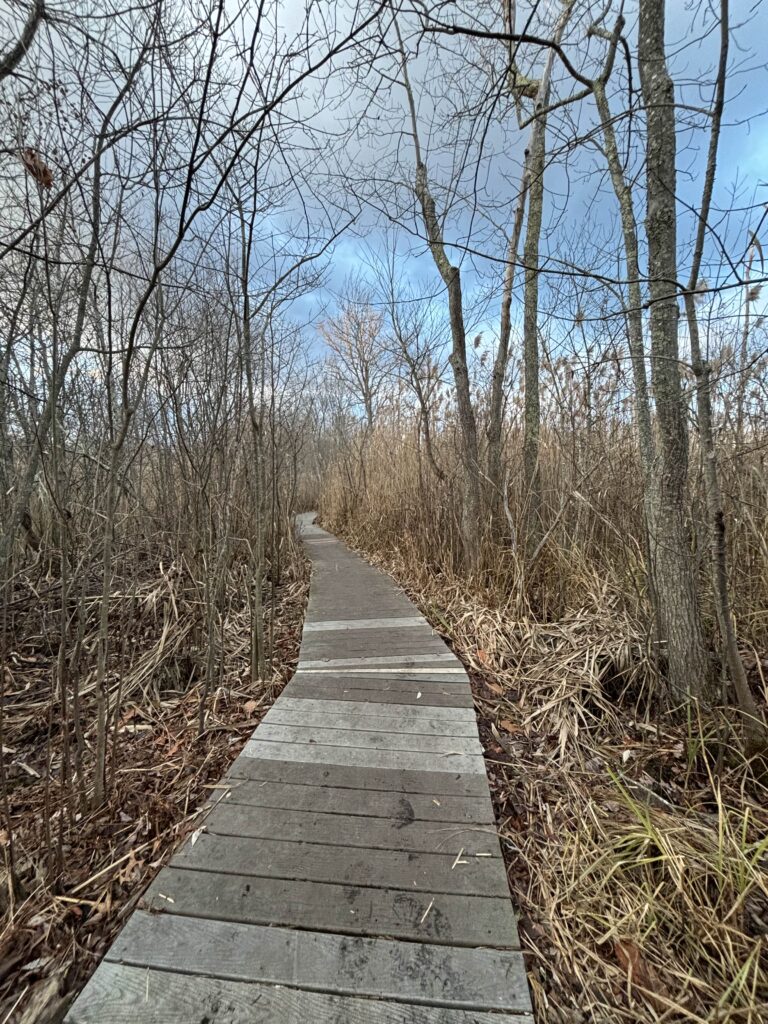
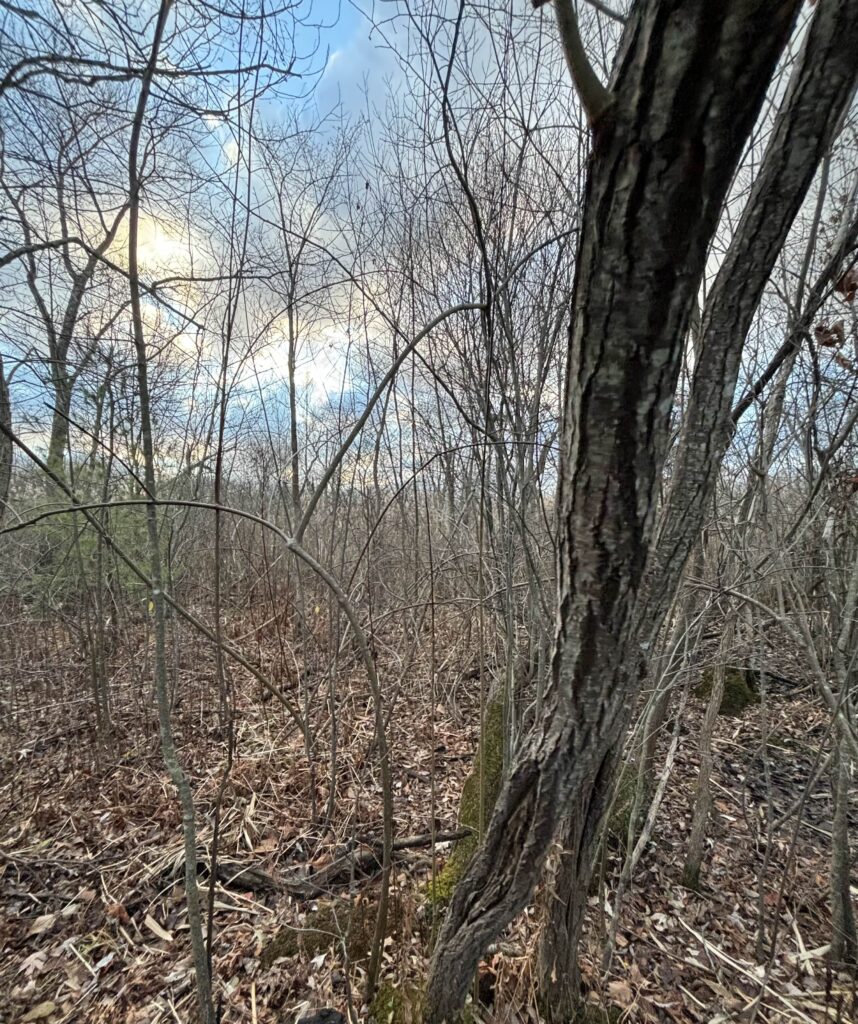
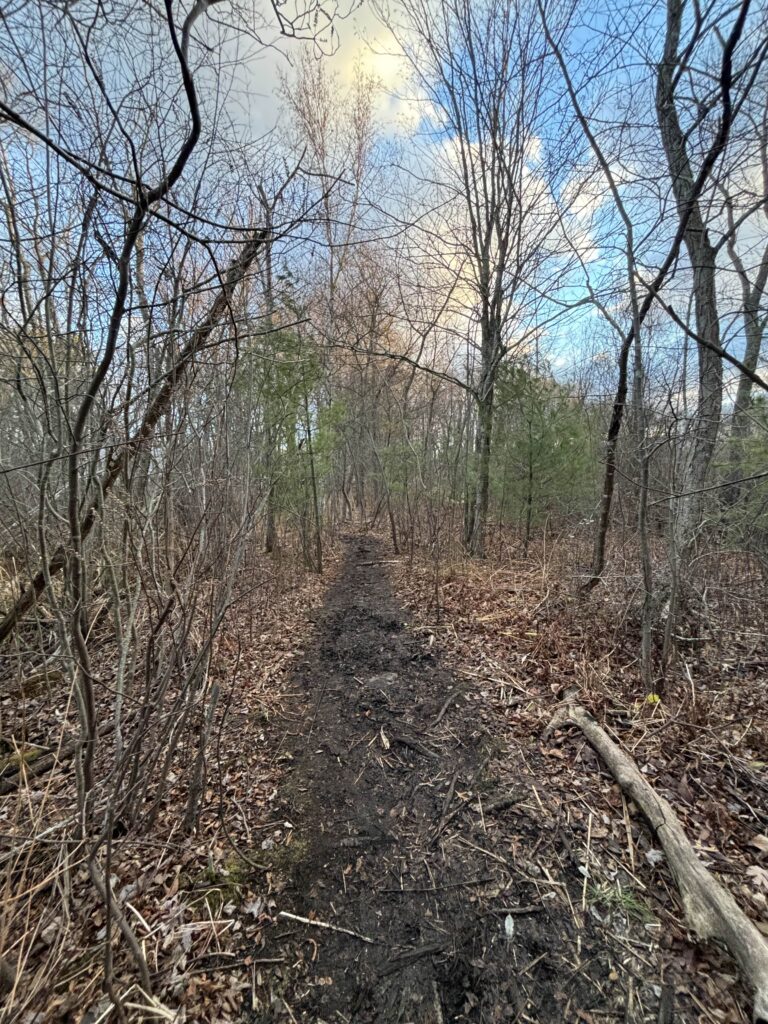
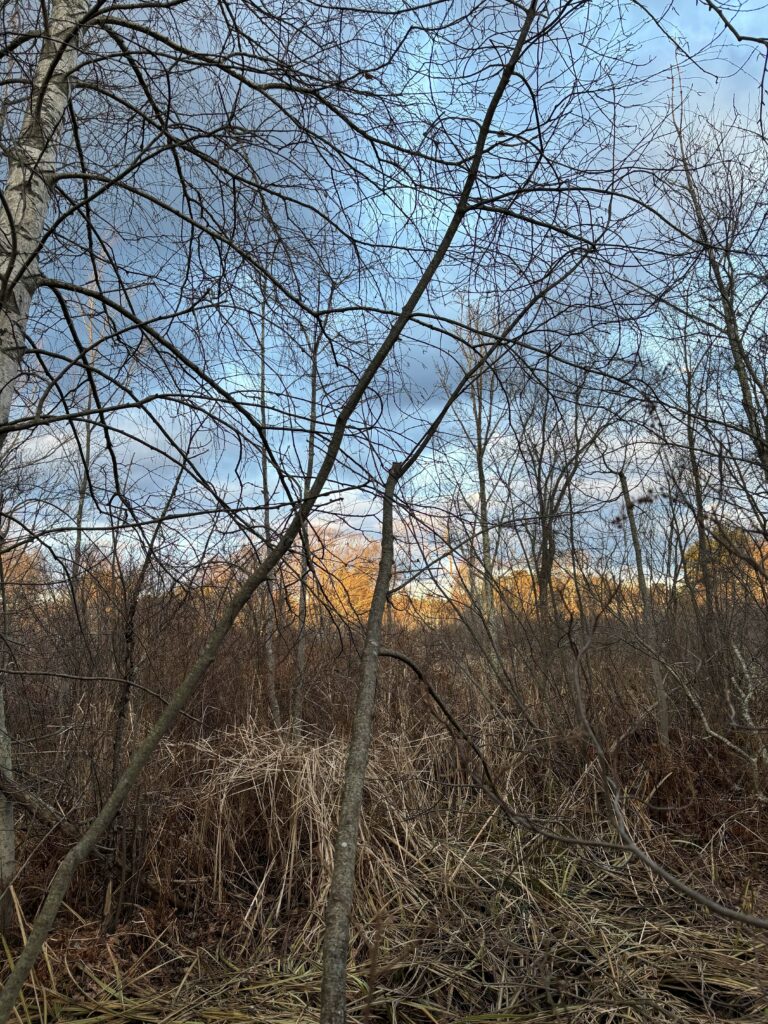
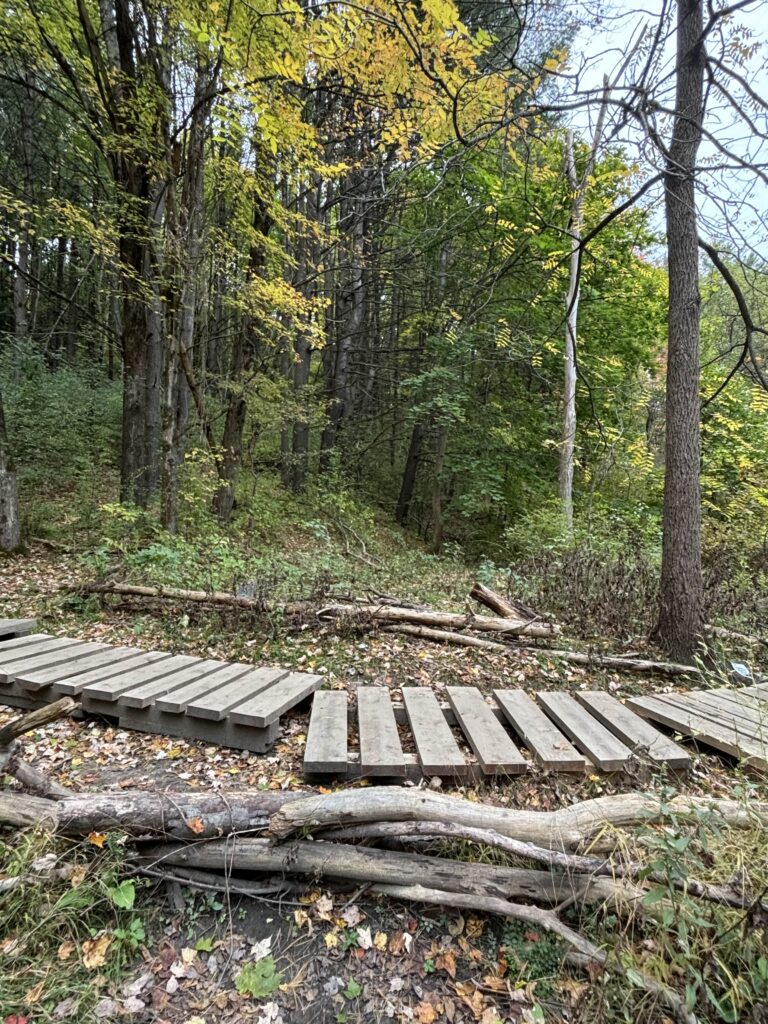
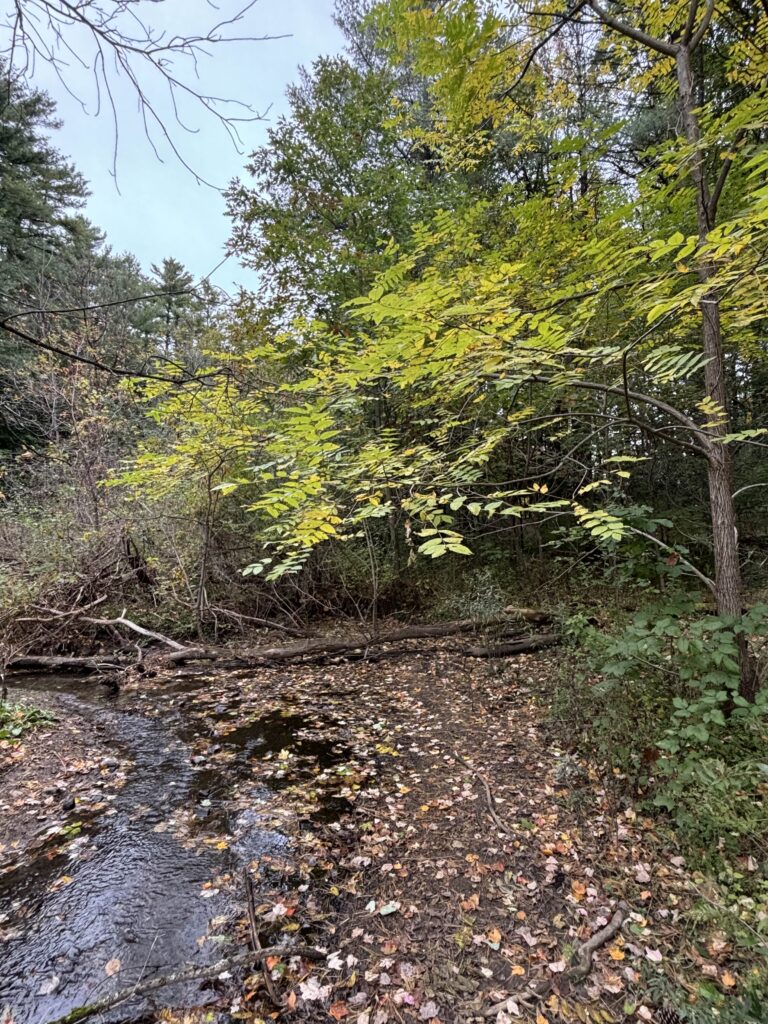
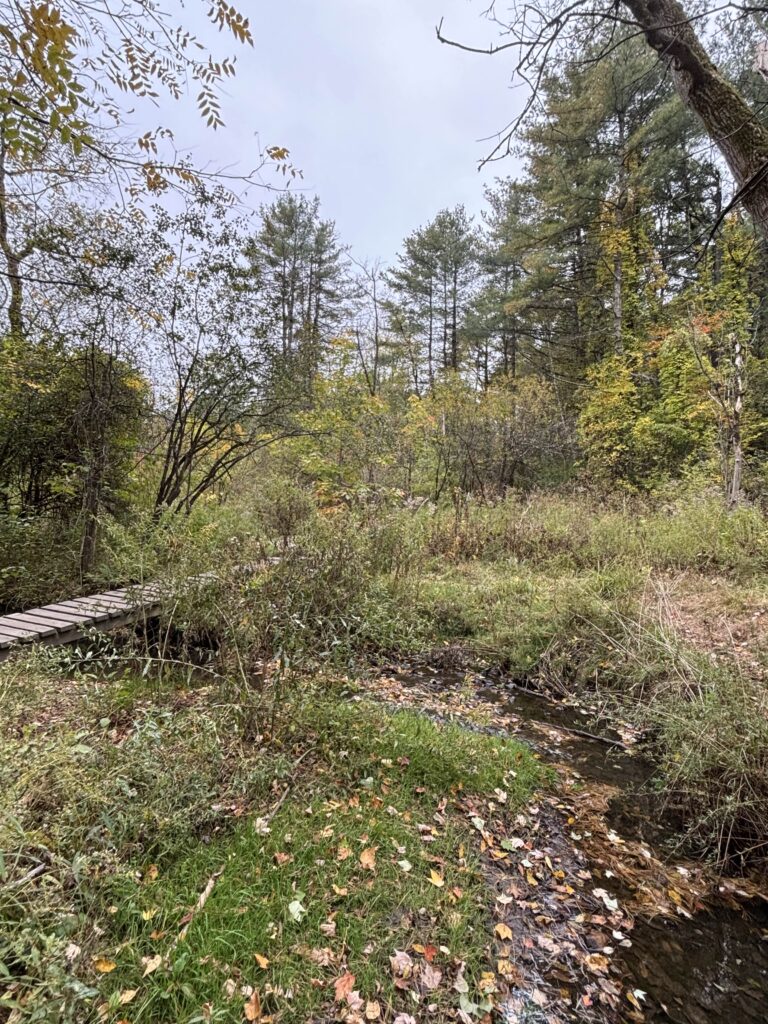
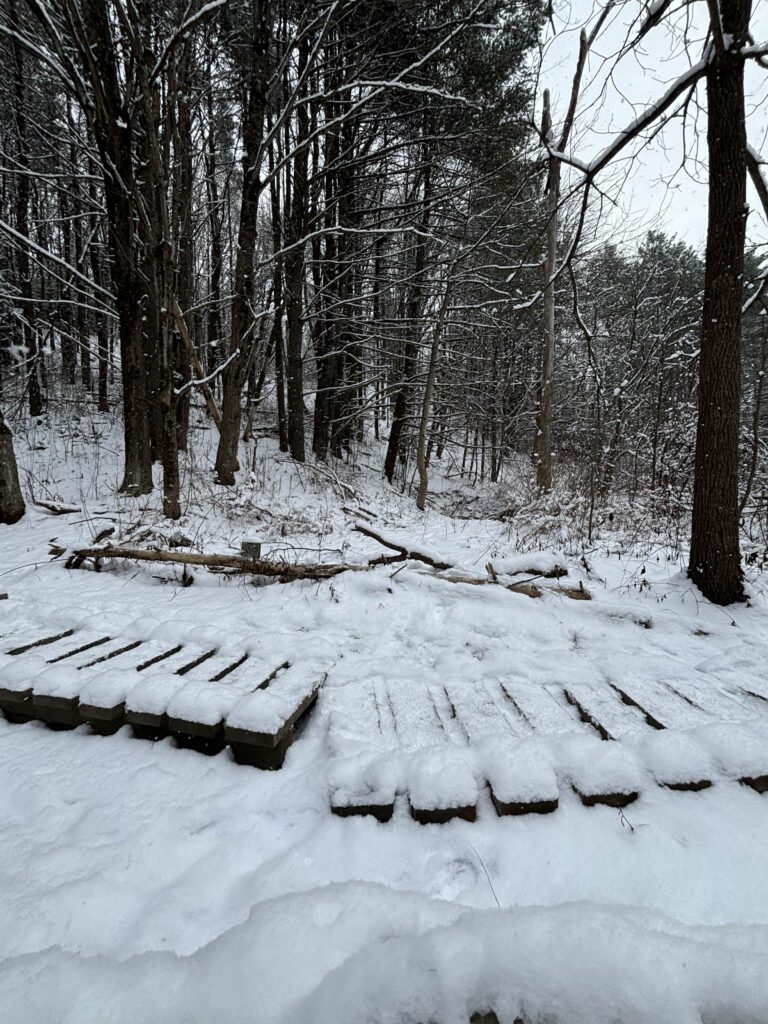
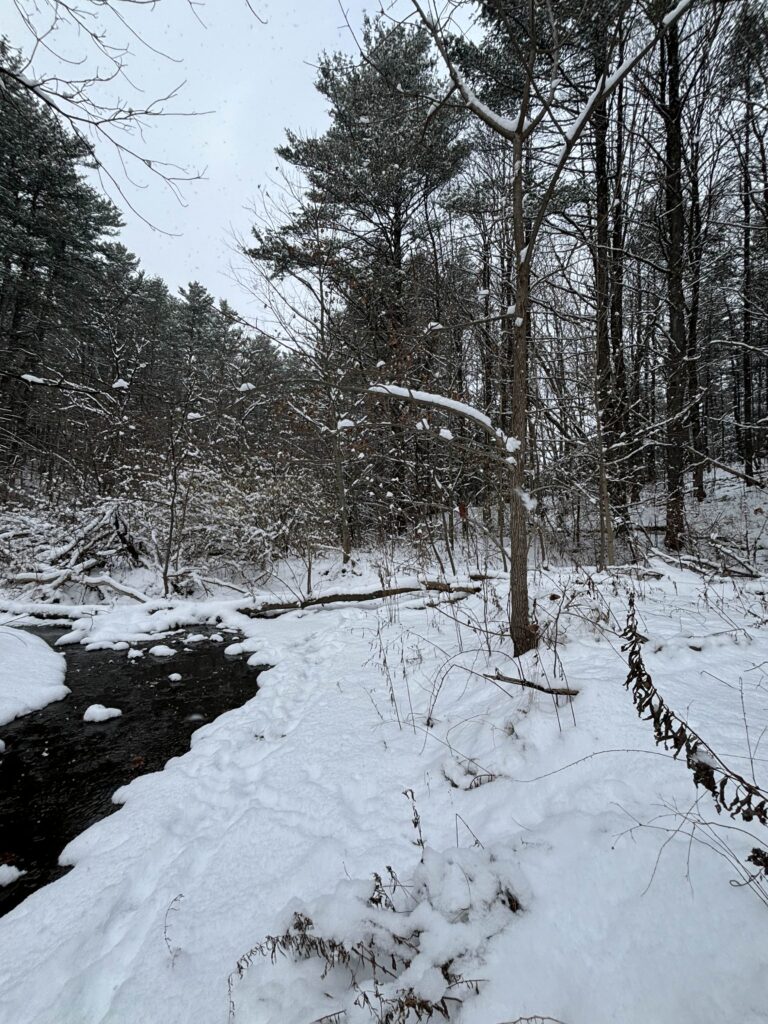
As I sit at my spot, I feel a wave of contentment wash over me. Throughout the past two semesters, I’ve come to this spot consistently to do these phenology blogs and enjoy nature. It’s very sentimental being back here for the last time this semester, and posting my final blog. I’ve realized that my spot has become as if a second home to me here in Vermont. It’s a place I can always access and find peace and comfort in. Hearing the stream pass by makes me think of this first year at UVM.
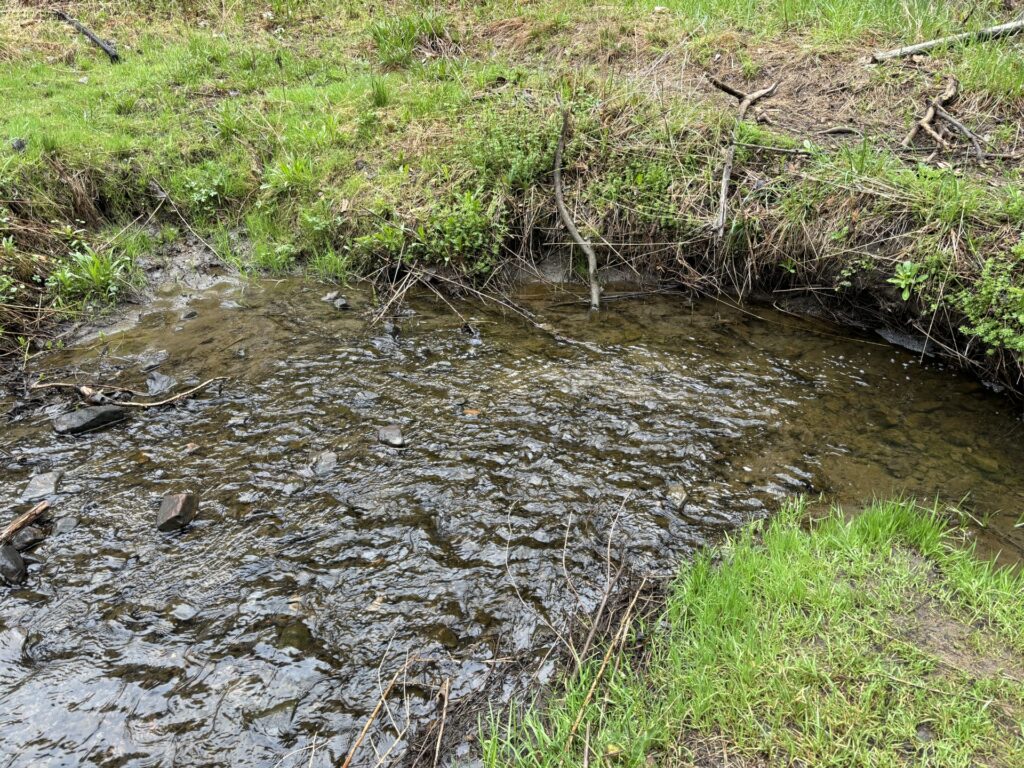
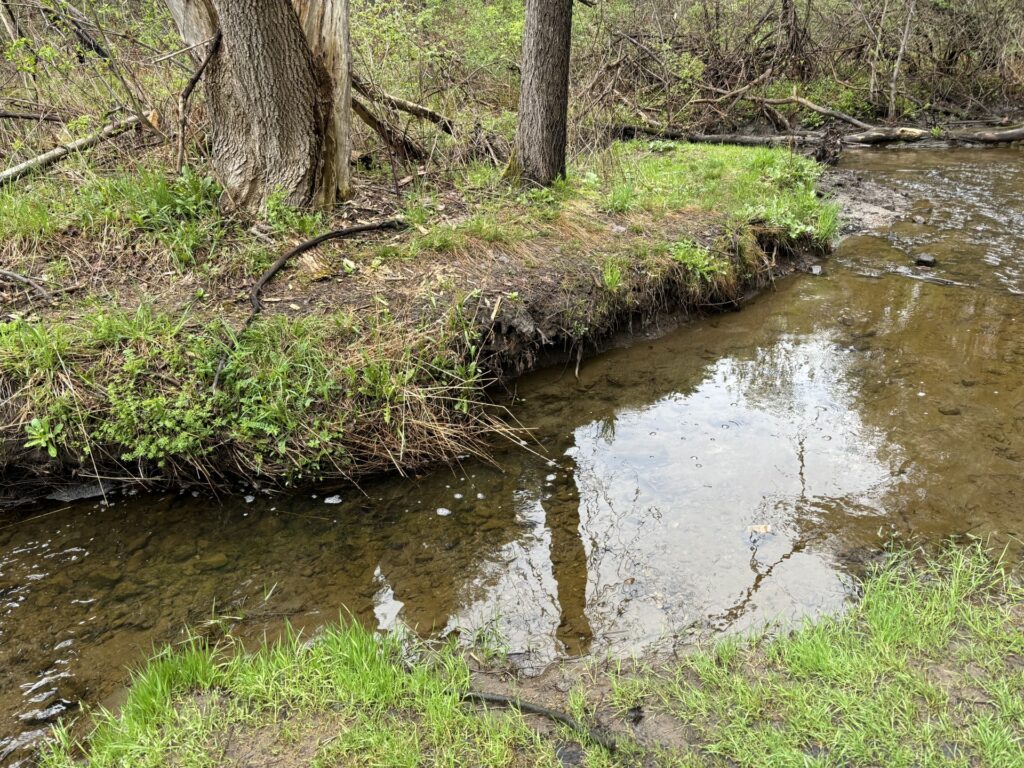
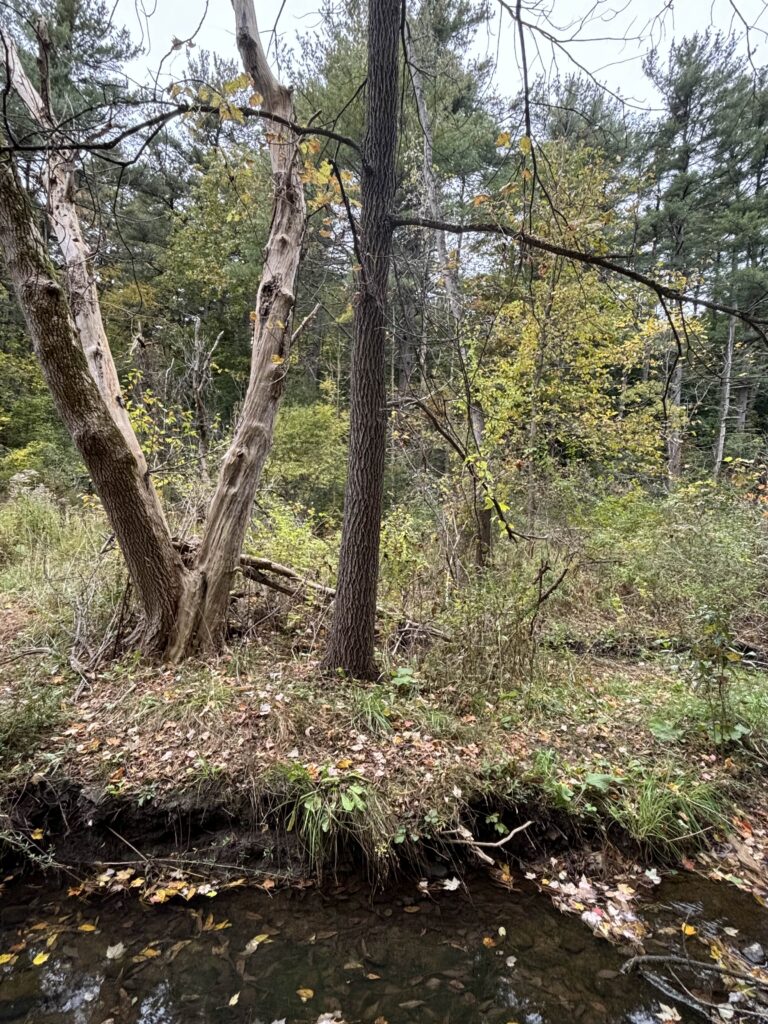
It’s a winding path, endless to the eye, flowing in different directions at different speeds. There’s interruptions like sticks and rocks throughout, making for an interesting ripple in the water’s face. The reflective aspect draws humans in, as if a natural mirror to see themselves in. To see how they’ve changed. I’ve changed a lot since my first blog, just as my spot has. This is where I consider nature and culture intertwined. There’s something about this raw connection to nature, the peace that is found by simply sitting in the forest. I find myself being a part of this spot. I’ve spent so much time discovering all sorts of nooks and crannies here, discovering the flora and fauna species surrounding the area. I’ve heard so many bird species in my time sitting here today alone.
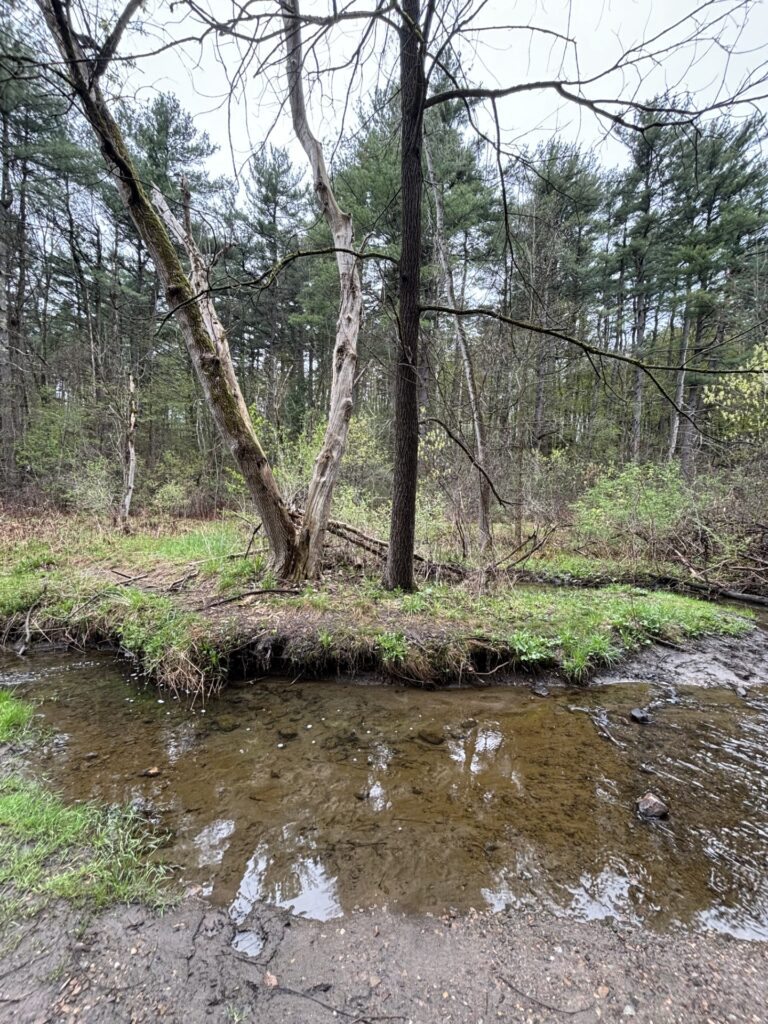
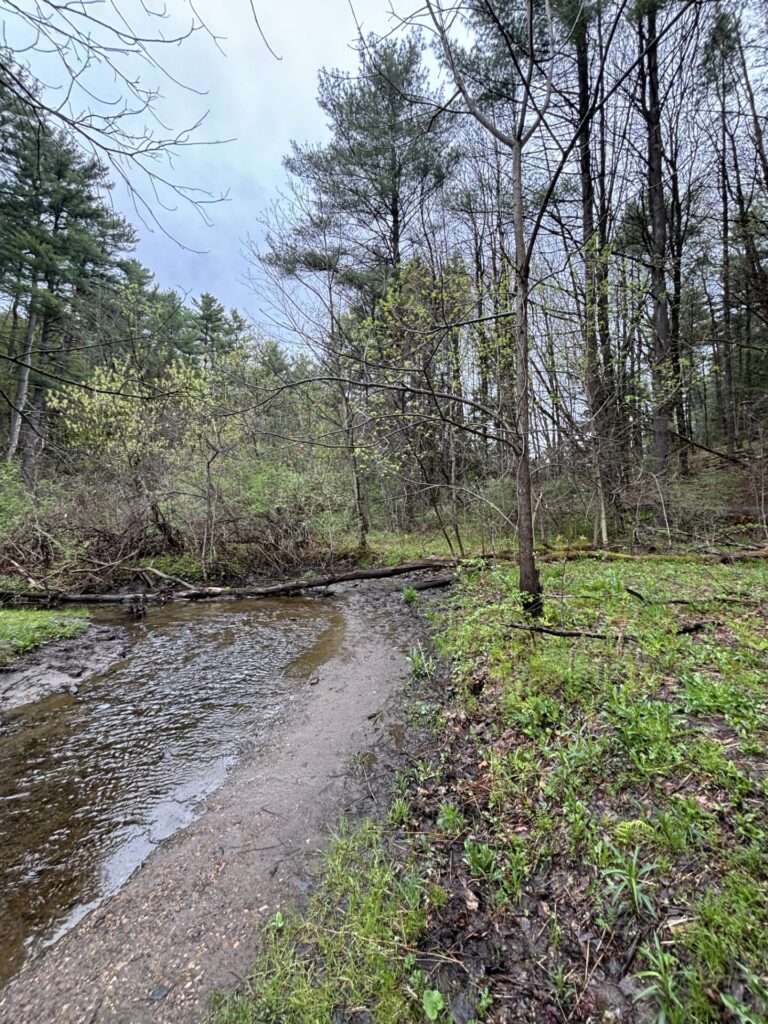
I don’t ever want to leave this place, as insignificant as it may be to others, I’ve really grown an attachment to it and its story. It’s so much more than just a little area of the woods to walk by. If you look a little closer, you may just find that the bubbles in the water dissipate two yards away from the wall of dirt they curve by, or that the snag located in the middle holds all sorts of bugs and birds’ stories in its wood. Everything in this place is alive. I am alive, and that connection alone truly makes this place impactful. So I sit here, and think about all that I’ve done in my first year at UVM and all that I’ll do in the future, knowing that in this moment I am at peace and will always have a spot to go to. And to that, I wish all my readers a good farewell. Thank you for reading my blogs.

Signing off for good,

Hailey
Phenology Blog, 4/28/25

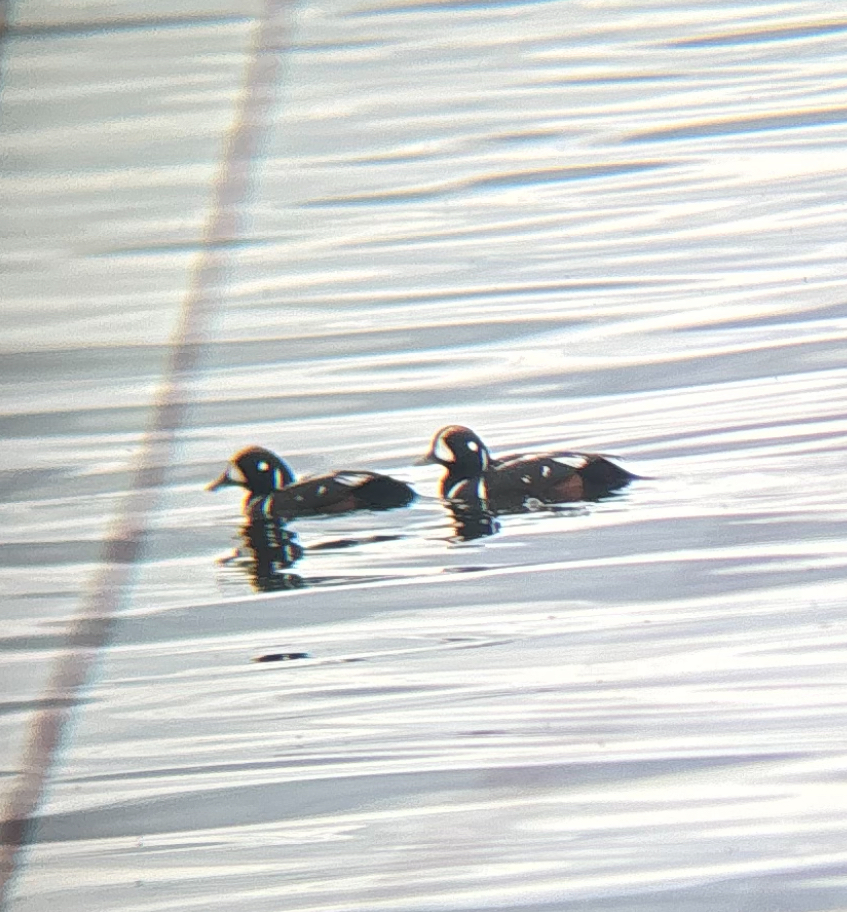
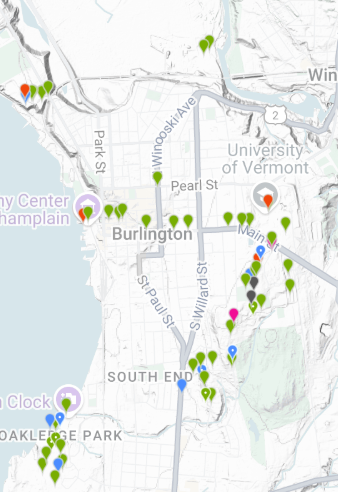
For this four-day urban BioBlitz adventure, I explored many different parks of the Greater Burlington area. Currently as I write this, I am outside at Kieslich Park, the park I did my service project last semester at for NR lab. Just this place alone was so cool to go back to and see the progress made to restore the area. I am able to enjoy my time out in nature here listening to all sorts of interesting birds, some rare ones like the Northern Parula or Nashville Warbler. I also ventured to the Intervale for Spectacular Nature day! I volunteered at the INautralist table, getting a chance to share this amazing app and the BioBlitz Challenge with those who were unaware of it. I also took a trip to Redstone quarry with some people in my lab group (Shout out to Bec, our amazing TA for taking us outside of lab!!!). I also went down to the Burlington waterfront, walked around campus, and went to Oak Ledge! At Oak Ledge, I saw the two harlequin ducks that have been spotted around! It was such an amazing experience I will never forget. Below is a map from my adventures.

I really enjoyed using INautralist for this BioBlitz Challenge! I will definitely be participating in the BioBlitz Challenge again next year! The app is so easy to use and really helps you identify plant and animal species you may not be confident on. I love how there is a community aspect to it where other people can suggest ID’s for your photos. As of right now, my lab group is in the lead and projected to win! It’s been such a fun experience doing this challenge with friends in my lab group.

I encountered a total of 134 species. Currently I am ranked #1 in the amount of species in my lab group. Throughout the weekend I have been going back and forth between first and second ranking for observations and species for the Greater Burlington area.

As of right now, San Antonio Metro Area in Texas is in the lead! This is really interesting as I remember in class, Chris and Walt talked about how the City of Cape Town typically wins every year. However, the City of Cape Town is in 15th place right now for observations. Cochababma, Bolivia has the most species!


Included below are some photos from my adventures out to participate in the BioBlitz Challenge! This includes the amazing Harlequin ducks spotted at Oak Ledge!

Harlequin Ducks!!!
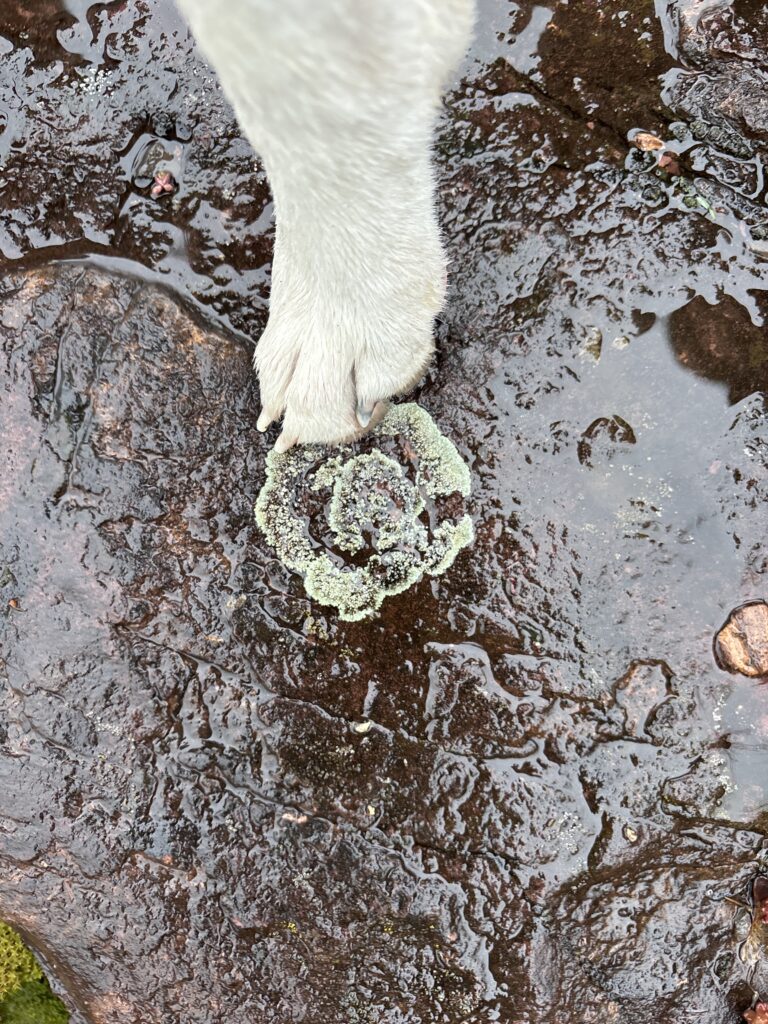
Mountain Lichens (Ft. Mona, Bec our TA’s Dog!!!)
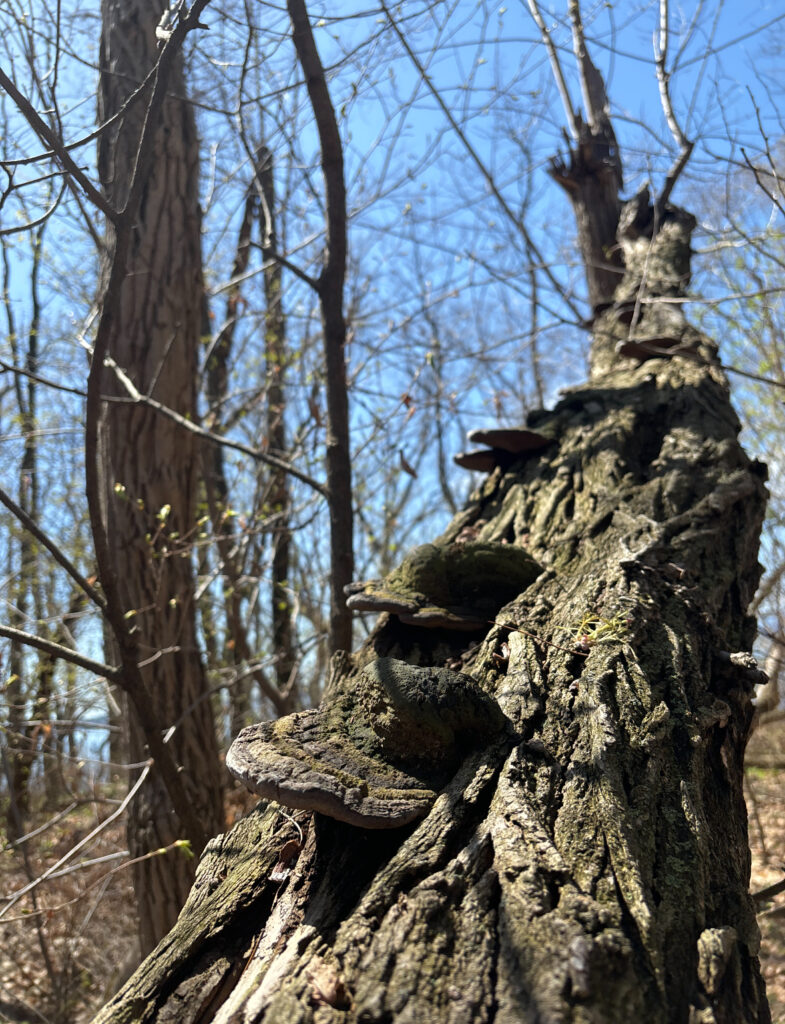
Kingdom Fungi
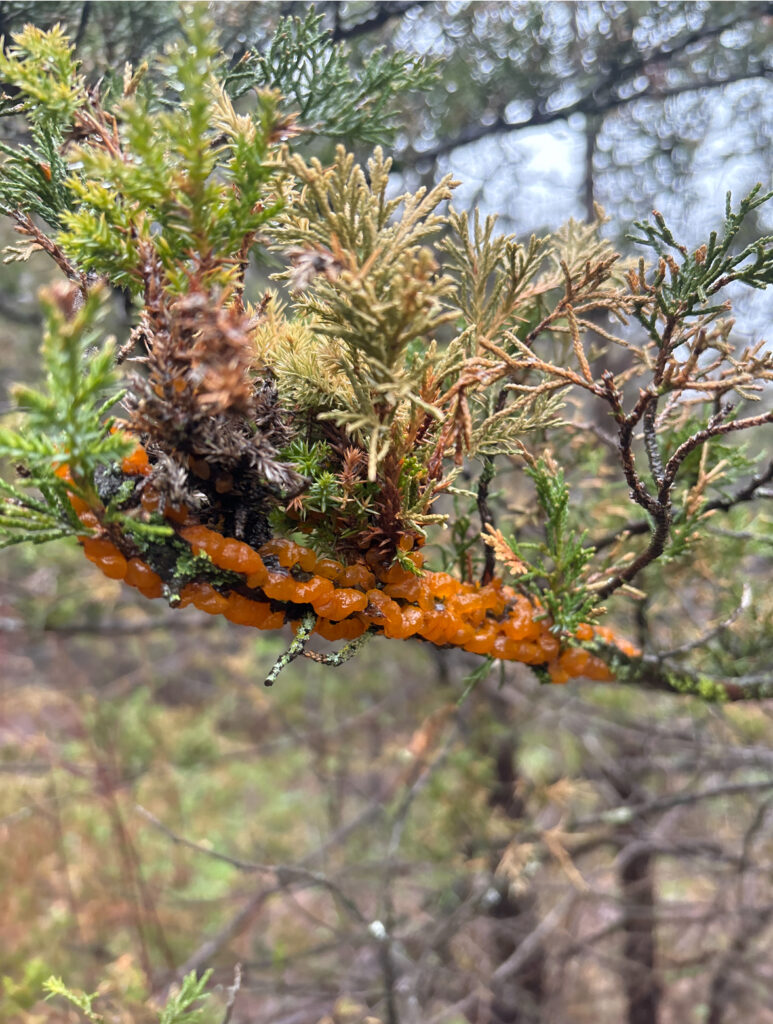
Cedar Rusts
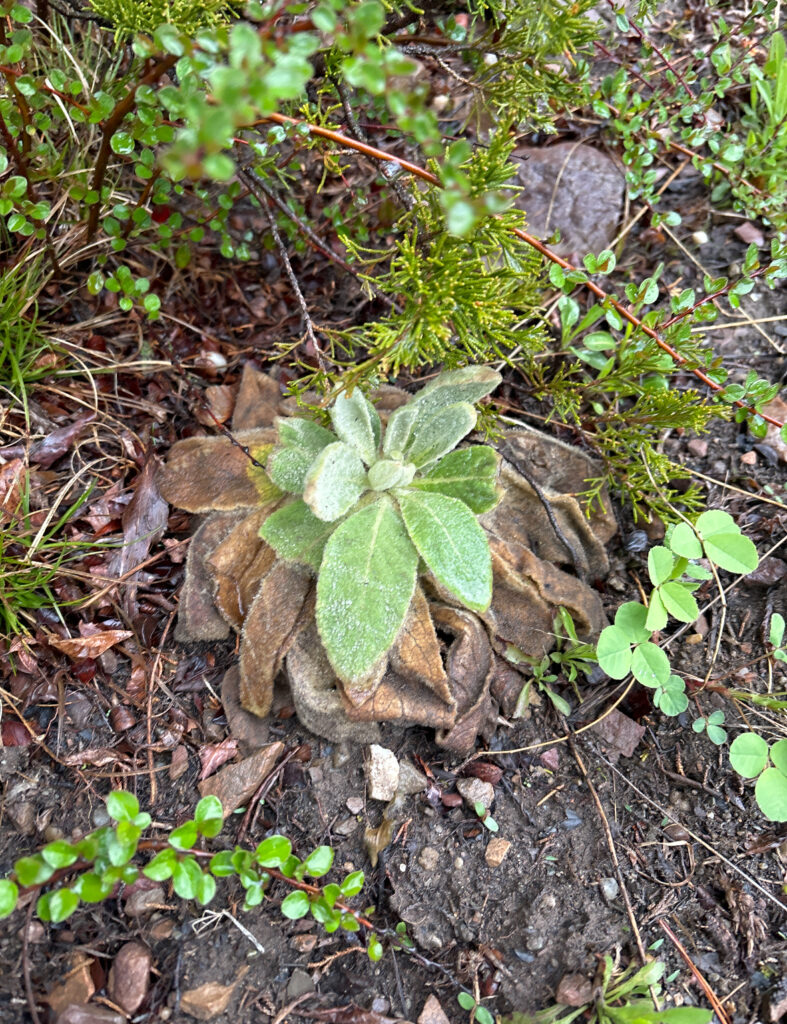
Mulleins

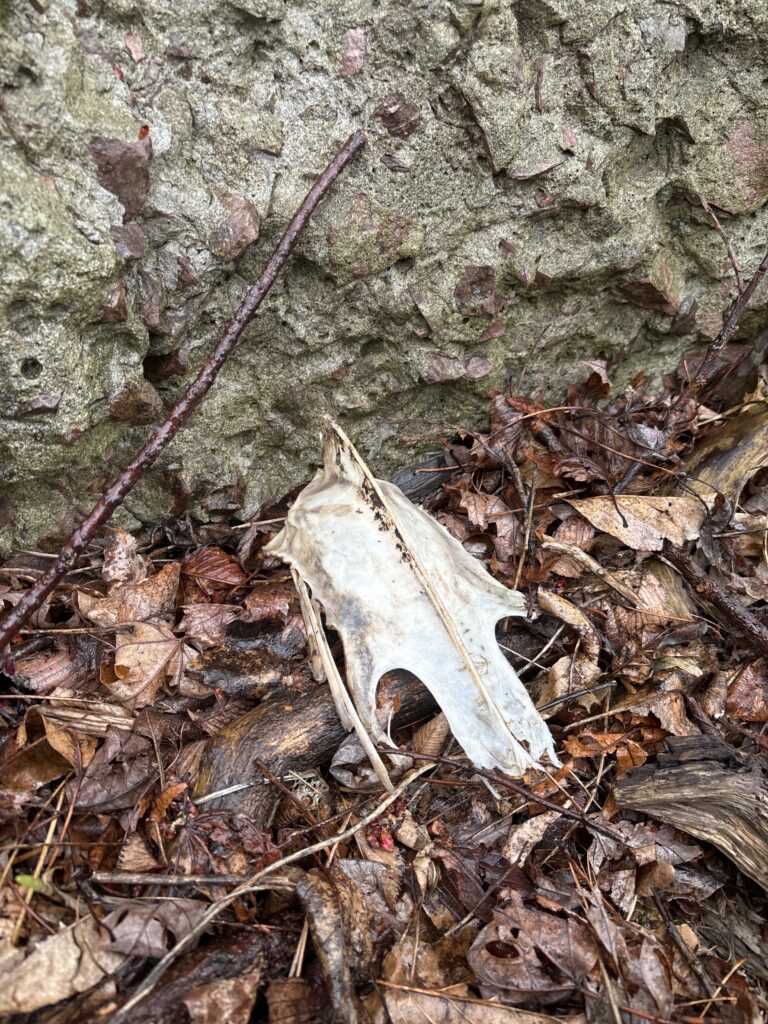
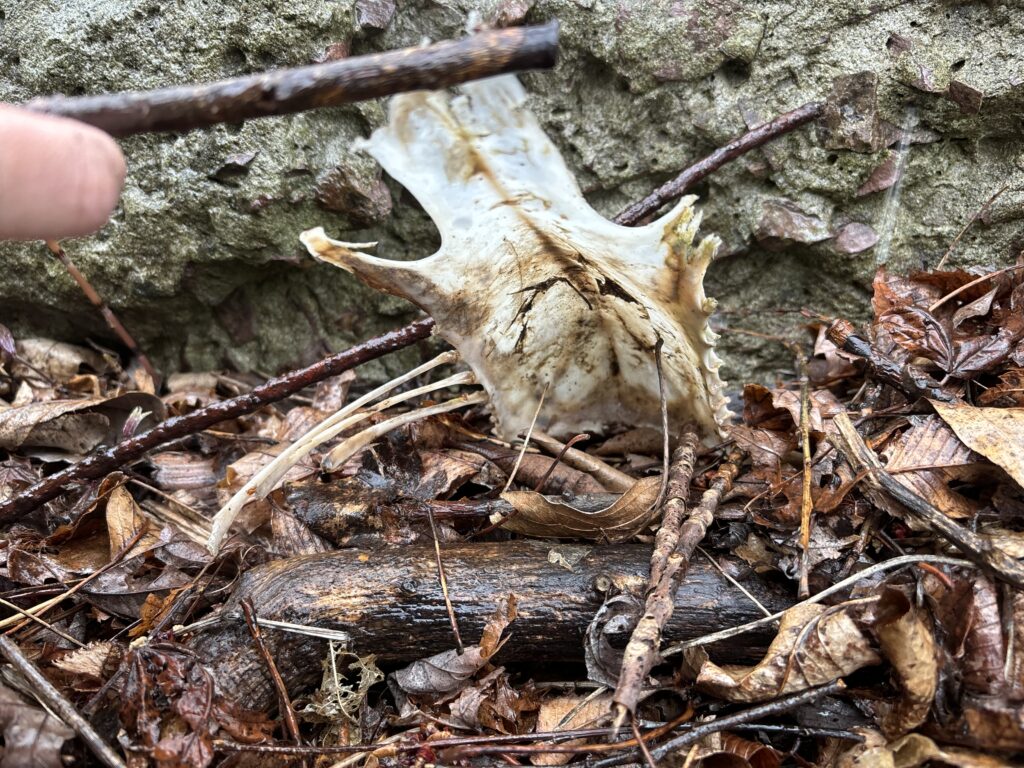
Loon Keel Bone!!!

Phenology Blog, 3/30/25

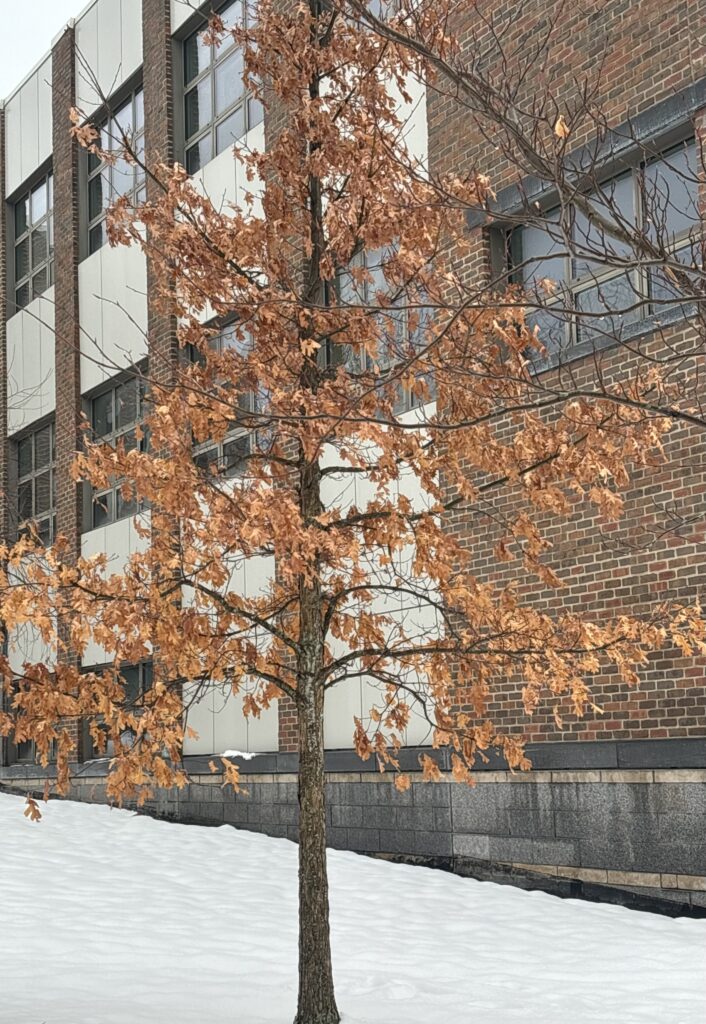
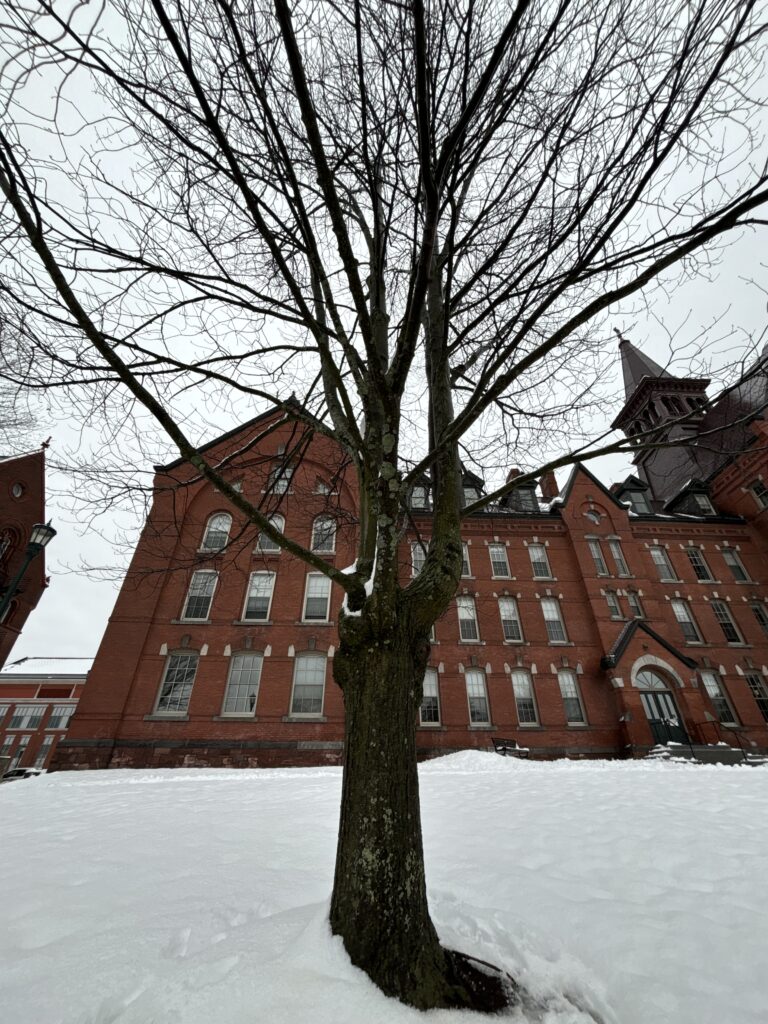
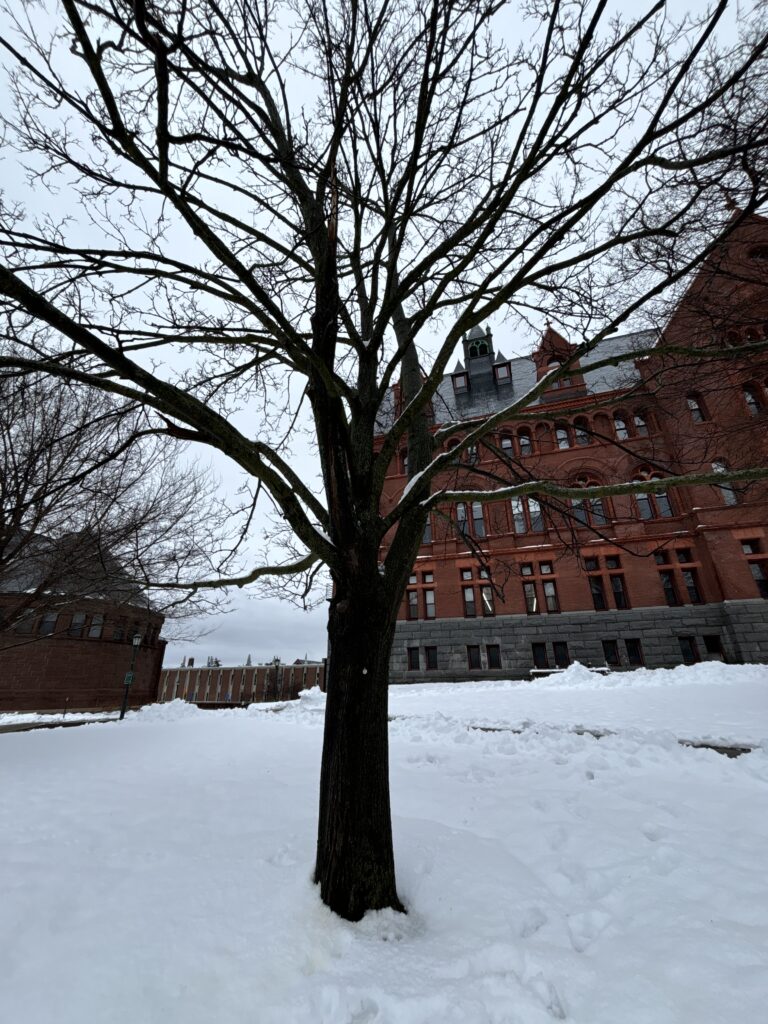
On March 30th, I set out to explore campus on a phenology walk to observe the phenophases of five different tree species. The temperatures are just starting to warm up, but keeping us in a cold winter feel with a few inches of snow on the ground. The tree species observed were red oak, sugar maple, white oak, red maple, and norway maple. As I walked around campus searching for these trees, I readied my Nature’s Notebook app. This app lets you mark the phenophases in an easy to use format. All phenophase signs are to be answered by yes or no’s and collected a wide variety of data. The options included breaking leaf buds, leaves, increasing leaf size, colored leaves, falling leaves, flowers or flower buds, open flowers, pollen release, fruits, ripe fruits, and recent fruit or seed drop. 

The phenophases present in the five tree species are listed below:

  • Norway maple
    • N/A, no phenophases were observed at the time
  • Red oak
    • Had a few old, dead leaves attached from last season
  • White oak
    • Had most old, dead leaves attached from last season
  • Sugar maple
    • Some buds were breaking, but not all
  • Red maple
    • A lot of buds were breaking, but not all

I have attached photos from the walk below. It was really interesting to observe the different phenophases of the tree species so early on in the spring!

Red Oak
Sugar Maple
White Oak
Red Maple
Norway Maple

After exploring NPN’s website, I found a pheno forecast for insect pests and invasive species. It was really interesting to read about as these forecasts predict the timing of key life cycle stages in these species so that we can better manage them in agricultural and natural resource management practices.
Phenology Blog, 2/24/25
To explore the greater Burlington area, I took a trip down to Lake Champlain’s waterfront. When I arrived at the water, I took in the fresh air, feeling how the warmer air surrounded me. It was in the thirties and everyone had the same idea of heading down to the waterfront. There were so many people exploring the lake on its frozen surface. I would say that at least fifty people were out on the ice exploring. This was one of the first big signs of spring approaching, signs of life and community appearing once again. 

I first took a trip to the backside of the ECHO center in hopes of spotting some waterfowl. On the frozen ice, I spotted a mallard sleeping right outside the docking area of the Marcelle Melosira! While I couldn’t get a great picture due to distance, I am positive this is a mallard as I am familiar with waterfowl ID. The day after I explored the waterfront I tabled at Wintervale doing Winooski River Waterfowl! 

After spotting the mallard, I made my way down the waterfront more, headed towards Rock Point. I found many American Robins and spotted a ring-billed gull. I think the biggest trouble I had white trying to record observations using the INaturalist app was taking quality photos from far away. 

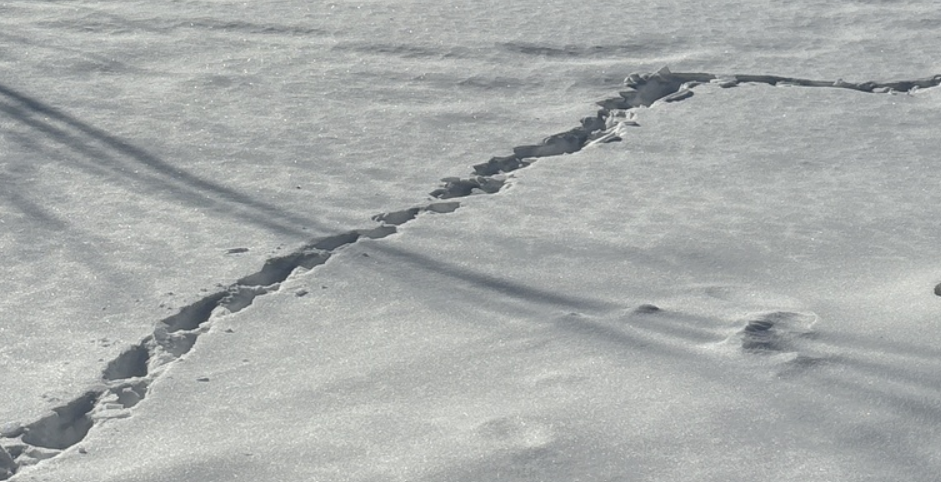
After encountering these birds, I found what I believe to be house sparrow tracks, shown in the left image below. I believe these are house sparrow tracks and not another species of bird due to the very small sized tracks and commonality for sparrows to eat seeds off low plants like these ones. I also passed by many dog tracks, shown in the right image below. I believe these to be dog tracks and not another species due to the trail shape. This trail was all over the place, coming off of the biking path and returning to the biking path in a zigzag shape. This is evidence that a dog was the one who made these tracks as domestic dogs do not need to conserve their energy by walking strategically like wild animals do. 

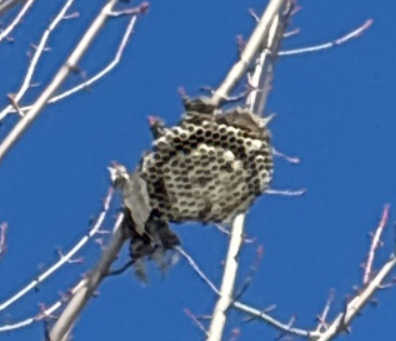
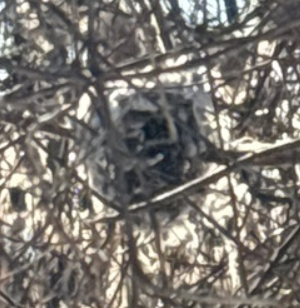
As I continued down the bike path, I noticed a variety of nests and hives! I found what I believe is a yellowjacket hive, pictured below in the left photo. I originally uploaded this photo to INautralist under the general “ants, bees, wasps, and sawflies” family as I was unsure on what type of hive it was, but a member of the INautralist community came to the ID of “aerial yellowjacket.” I saw many similar hives on my walk as well! There were a few nests up in the trees that I spotted. One of them is pictured below in the right photo. I am unsure on what species of bird lives or lived in this hive, but I wanted to document it and its location for future reference. It was hard to get a closer look at it as it was further back in a bushy area. 

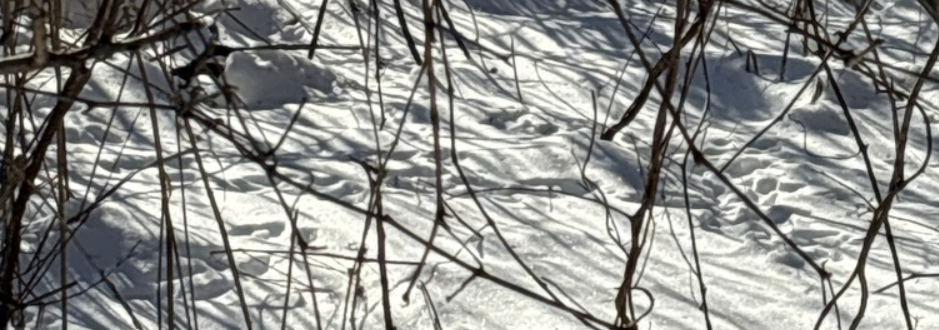
As I was looking around in this bushy area I found the nest in, I spotted what I believe to be an eastern cottontail. These tracks are very distinct due to the pattern of large feet landing in front of smaller feet. The tracks are depicted below, however I could not get a great photo due to distance.

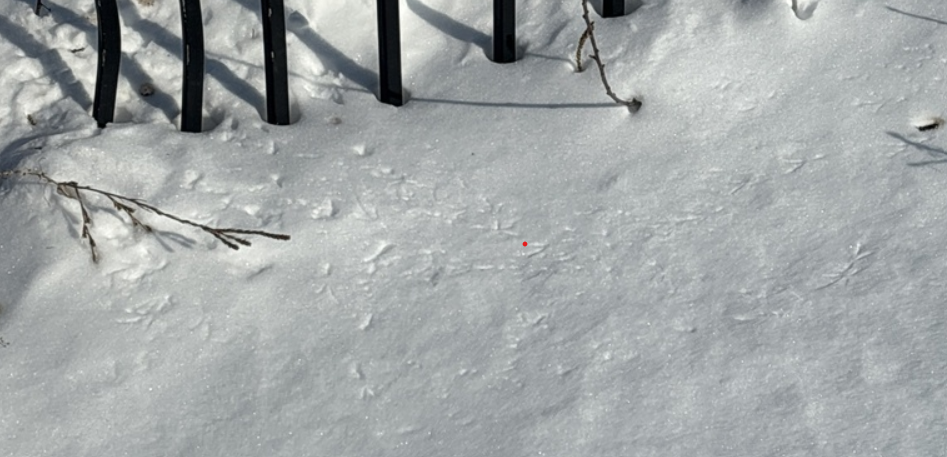
Finally, as my journey wrapped up after exploring the area for a couple hours, I ran into what I believe to be american robin tracks. There were wing imprints in the snow and many tracks surrounding a small bush. This was a cool sighting as there were countless tracks all over the place!

Overall, this was a very fun spot to surround my phenology blog on! INautralist was a great tool to use when finding signs of wildlife. I really like how other people of the INautralist community can comment on a posted photo and help to ID things. I enjoyed being able to see everyone else’s phenology findings through the NR1020 Wildlife sign in Burlington as well!

Phenology Blog, 1/27/25

I hear the wind, trees creaking, black capped chickadees, and footsteps cracking branches in the distance. On my walk over to my spot, I see nuthatches and hear a hairy woodpecker. It was a beautiful time of day where the sun was hitting the ground, streaming through the trees and glistening. When I arrived at my phenology spot, the first thing I noticed was the sun shimmering on the frozen over creek.

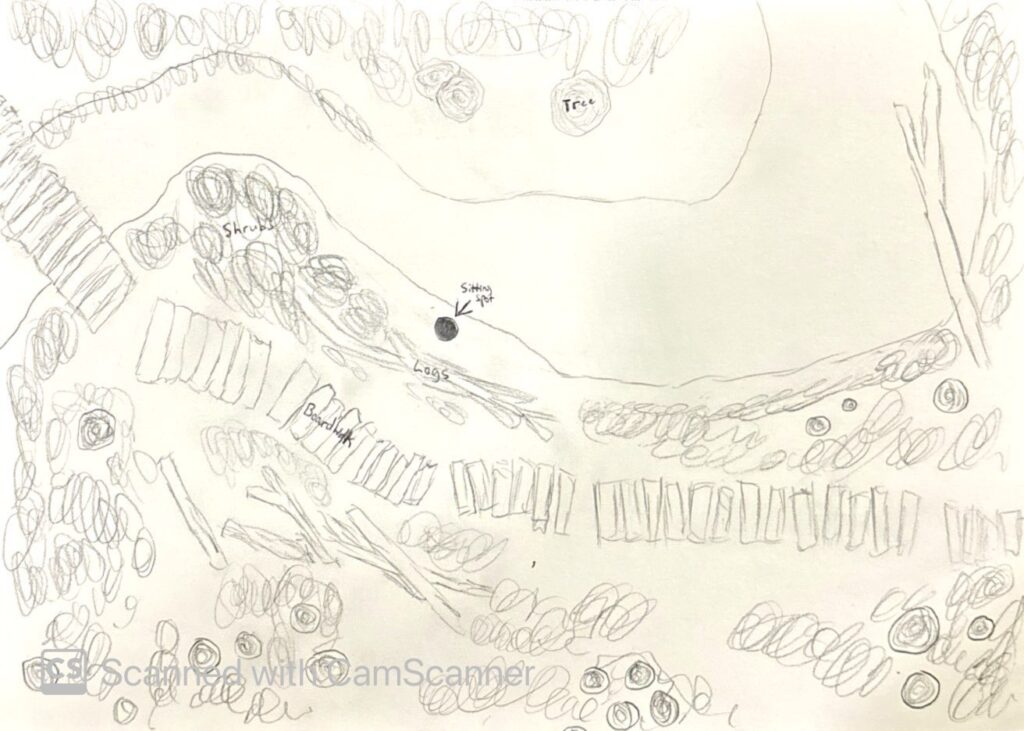
Phenology Spot Overview

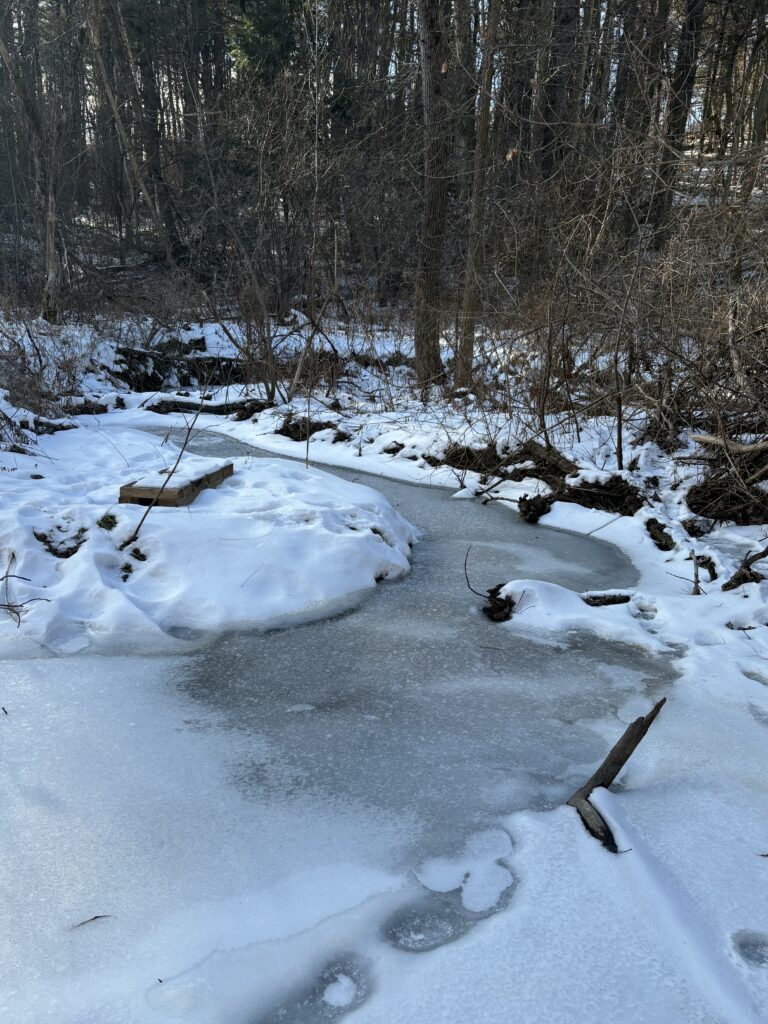
There’s not a lot of changes to my sight in the sense of wildlife, I can’t find many tracks, and the ones I can find are of dogs only. Human tracks seem to cover most of my area, even where the ground seems so off trail no one would bother adventuring there. I think it’s interesting in that sense, the way humans think and interact with the environment. The winter snow reveals all of our thoughts and patterns of walking, it shows us where others have explored out of curiosity. I do think that humans go off trail more in the winter because of the phenological changes occurring. I’m sitting in the woods at my phenology spot as I write this and I can’t help but notice visitors of the woods walking by, discovering the creek bed had been frozen, and without a second thought, stepping onto it. The frozen water gives us more opportunities to explore what’s beyond the river, it lets us experiment with the thickness of the ice. There were two people in particular walking by that reminded me of human curiosity. They reached the creek and when they realized it had frozen over, they immediately hopped onto it and started stomping around in the distance, sliding across the ice, and exploring more off trail. As I continue to write this, yet another person is exploring off trail on the same path the other two took. When the snow coats the ground it forms more rogue trails that other people tend to follow. I think it’s interesting to think about in this sense, the way humans will go off the main path if they see footprints in the snow. It’s almost a testament to how many of us are followers versus leaders. The photos below depict the tracks I found with the tracks guide for size reference.

Dog Tracks in the Snow

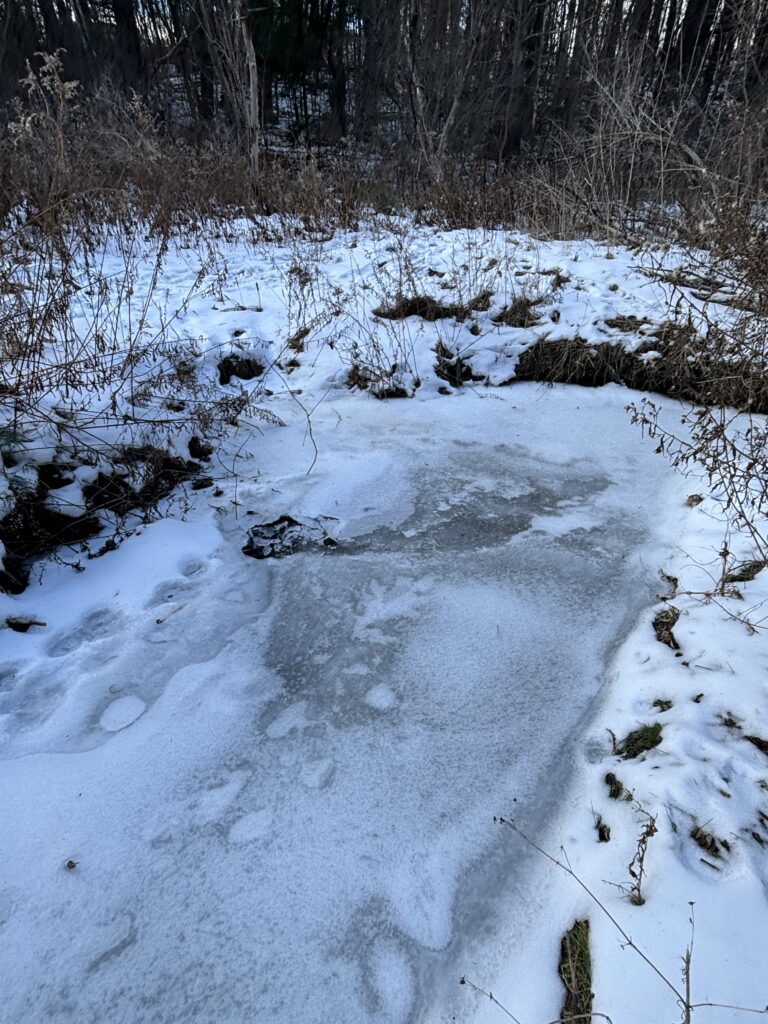
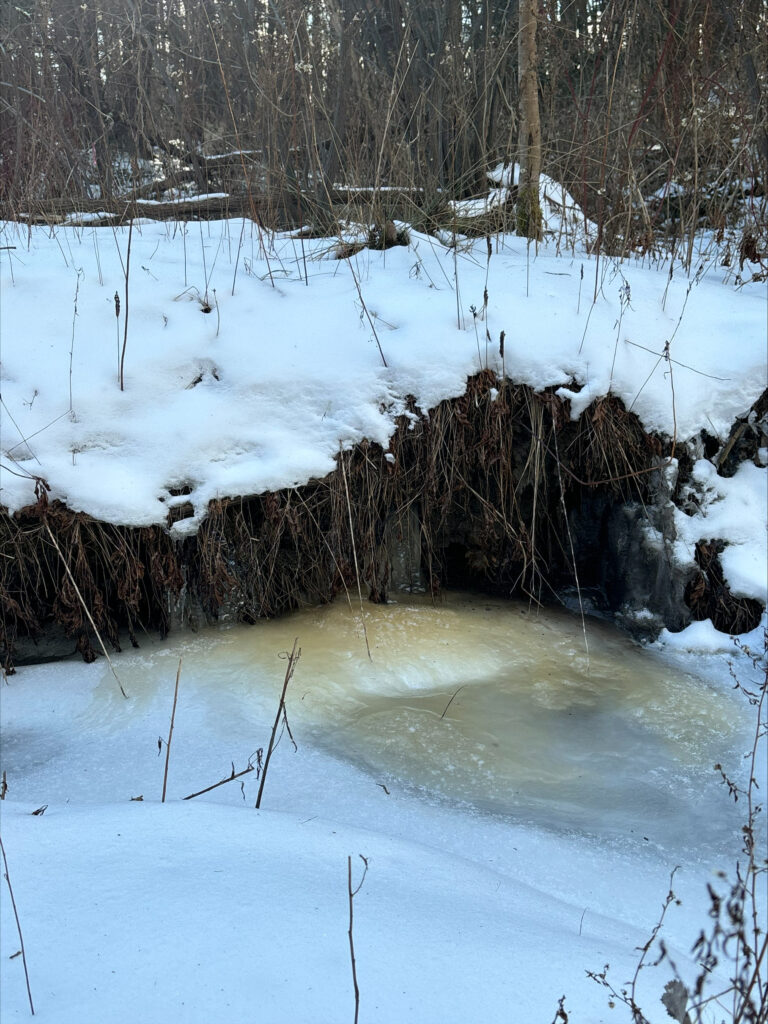
I looked around my spot for more animal tracks and other signs of wildlife activity, however I could only find dog tracks. Due to Centennial being a public forest, there are a lot of people walking through the trails and along my phenology spot. My location is right off the main trail, so many people walked by while I was visiting my phenology spot. I saw two dogs go off trail wandering around the snow, this leads me to confirm the reality of the tracks in my spot. The biggest phenological change that occurred was the creek freezing over. I looked around further out from the center of my phenology spot searching for tracks and came across a part of the creek that was frozen in an amber color. I am very curious as to what this may be, as there are many possible reasonings for this pigment in the water. The photo below depicts this amber ice.

Amber Water Seeping Out of Ground, Frozen

Phenology Blog,12/8/24

Final blog of the semester!!!

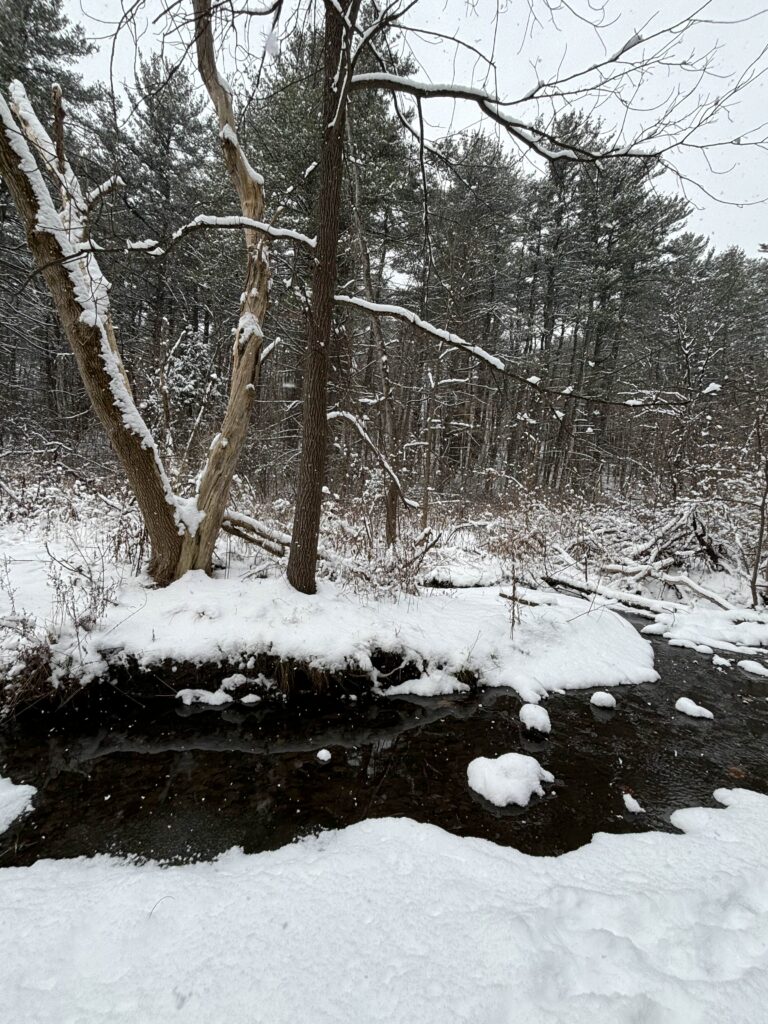
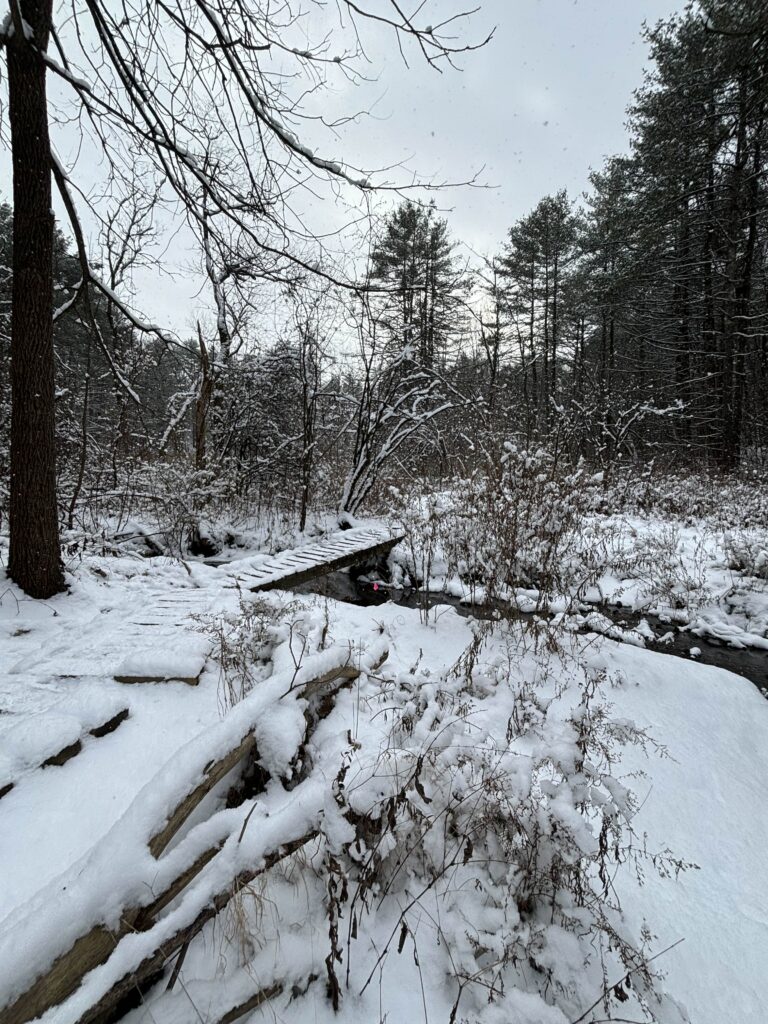
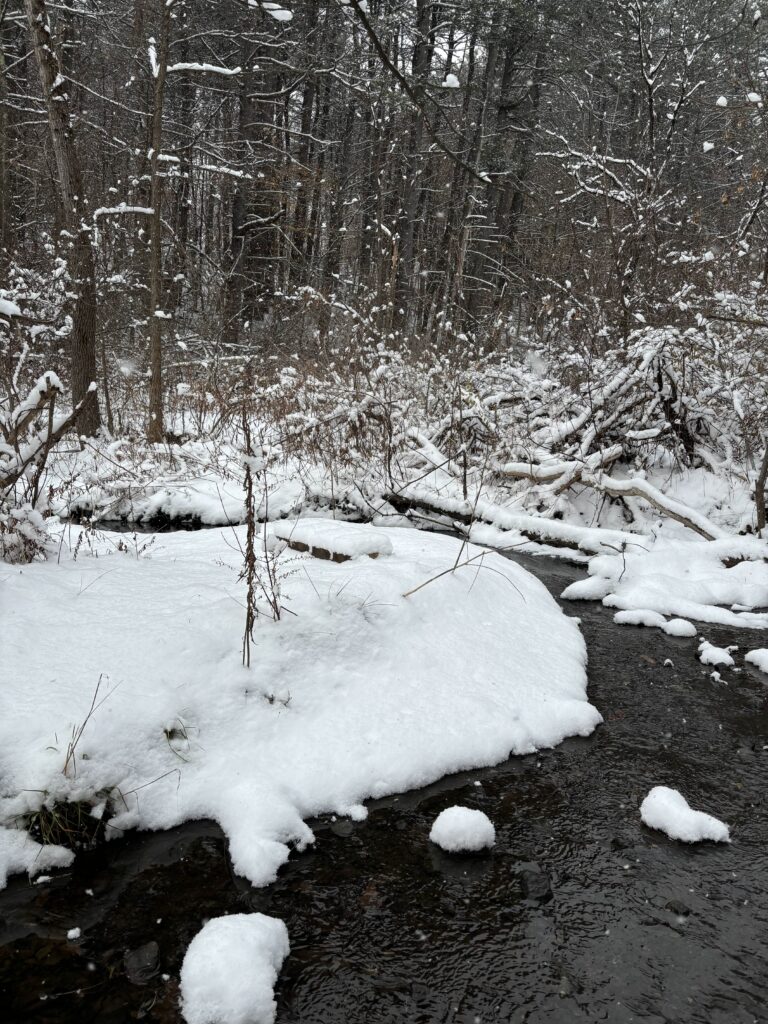
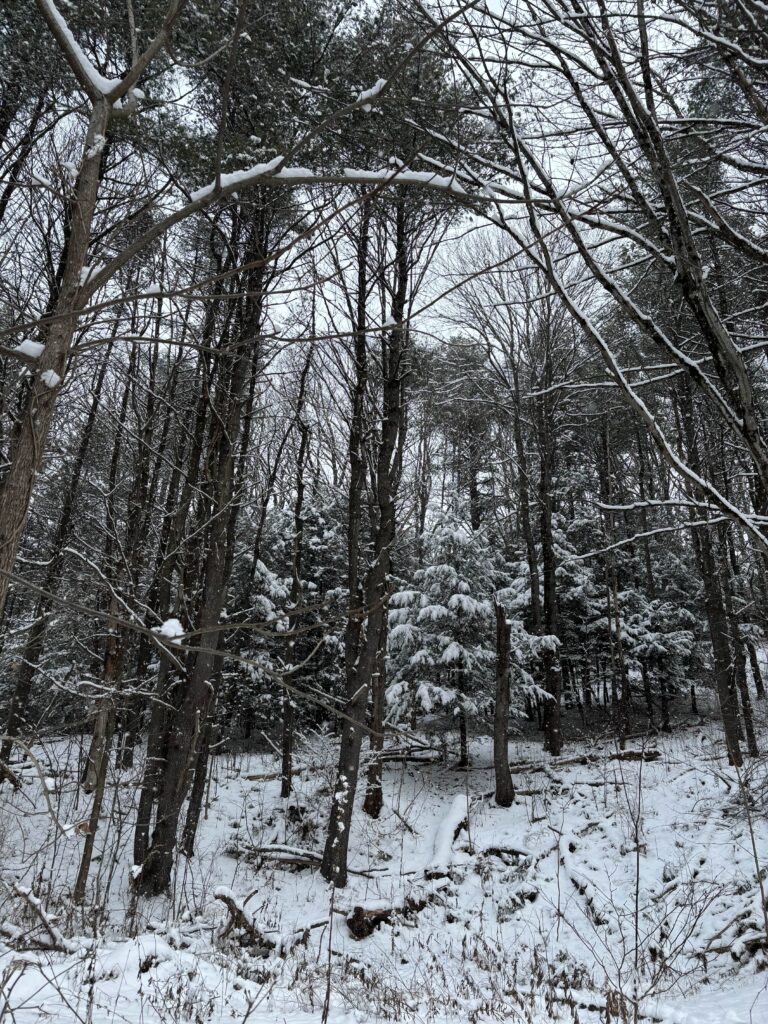
As I returned to my phenology spot for the last time this semester, I came to a point of reflection. The snow had just started sticking to the ground the night before visiting, so I was eager to see my location coated in a fresh coat of fluffy snow. Let’s just say it did not disappoint! The walk over to my spot in Centennial was pretty alone as soft and gentle snow fell from the sky, but it was even more gorgeous when I finally got into the forest and reached my location. The river was lined with bright shiny snow, the flakes falling from the sky melting into its water. Everything looked so different as the snow dampened the street sounds in the distance, and the planes in the sky, and left the simple sounds of nature with me. I always love it when it’s snowing because it feels like time stops for a bit, it slows down my thinking and makes me at peace. This was such a great feeling coming to my spot for the final time this semester.

As I explored my newly snow-covered phenology spot, I noticed some foliage change. Most of the trees were bare of leaves, however, dead leaves were clinging onto the White Oaks around my spot as well as Eastern White Pines, the only conifer in my phenology spot. Out of all the small vegetation, ironweed held its dead leaves on the most. All other small vegetation was dead. The dwarf honeysuckle held its leaves at a yellow color, showing that this is a persistent species. The fall leaf litter is now covered by an inch or two of snow which will speed up the process of decomposition. There are signs of decomposition in the water, much like previous times I have visited my spot. I did not observe any animal tracks besides dog prints, however, I saw a bird nest in the far distance away from my phenology spot. Animal activity had decreased a lot, I did not see the typical birds or squirrels I saw at my spot before. I did however see many gaggles of Canadian geese fly overhead on my way to my spot and as I was sitting at my spot.


The aspect of my phenology spot that I enjoyed the most was the peacefulness of it all; hearing the brook run as the snow quietly falls, dampening the world around me. I definitely can say my phenology spot has been best while it’s snowing. It becomes so much more peaceful. This spot has brought me to a standstill every time I show up. It’s finals week currently and I was so stressed about all the tasks and studying I needed to do, but when I arrived at my spot I came to peace. This spot has helped me slow down my thoughts and enjoy nature. It makes me feel so grounded and calm, and I see myself visiting this spot in the years to come!

Phenology Blog, 12/2/24

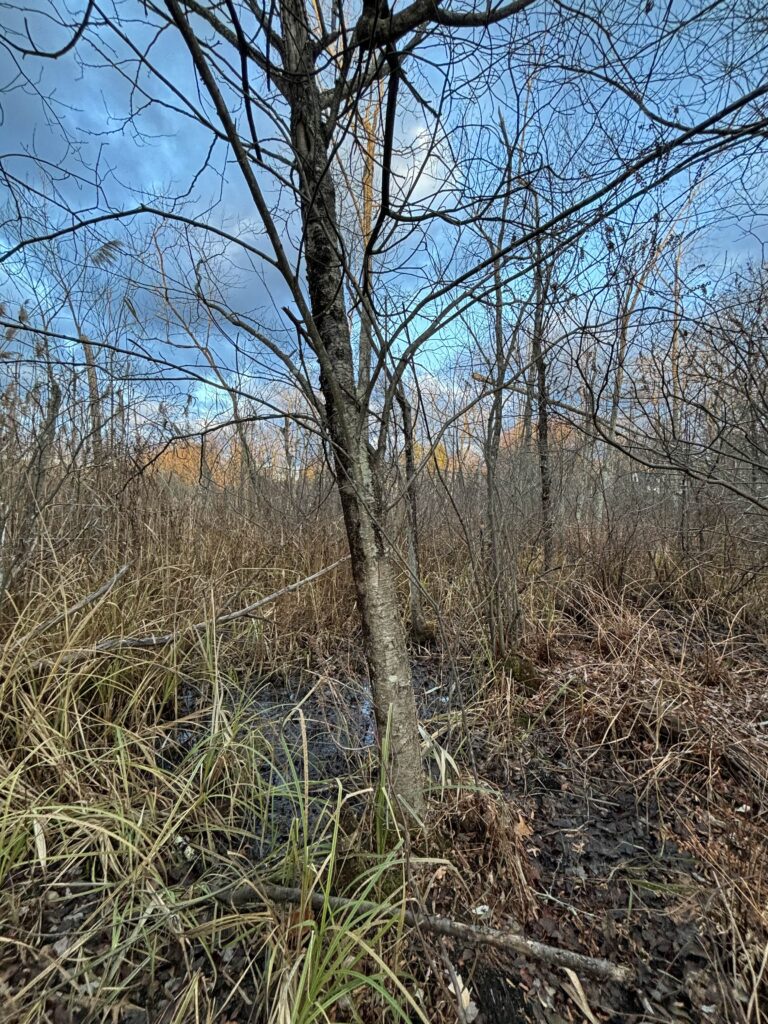
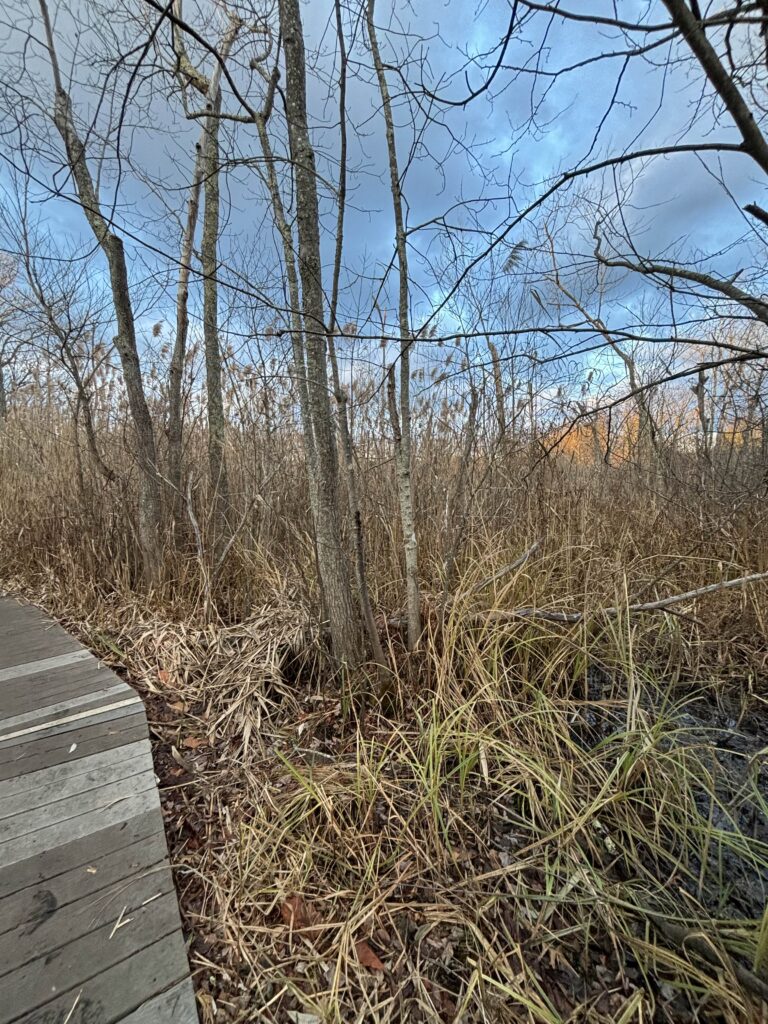
I visited the Maillet, Sommes, and Morgan Land to find a new spot for my phenology project. This is conservation land in my hometown, Reading, Massachusetts. From the moment I heard about this assignment we would be doing over Thanksgiving break, I knew that I wanted to go to this conservation land to find my new phenology spot. The reason for this is that I studied this conservation land in my environmental club back in high school. I was able to get involved with the planning of the land as they were doing renovations to prevent flooding in towns downstream of the river crossing through Reading, the Aberjona River. Through my club, I was able to meet with many environmental leaders, from a hometown level to Massachusetts conservationists at conferences. I felt I could only honor this location and all the research, community outreach, and education I did by making it my new phenology spot!

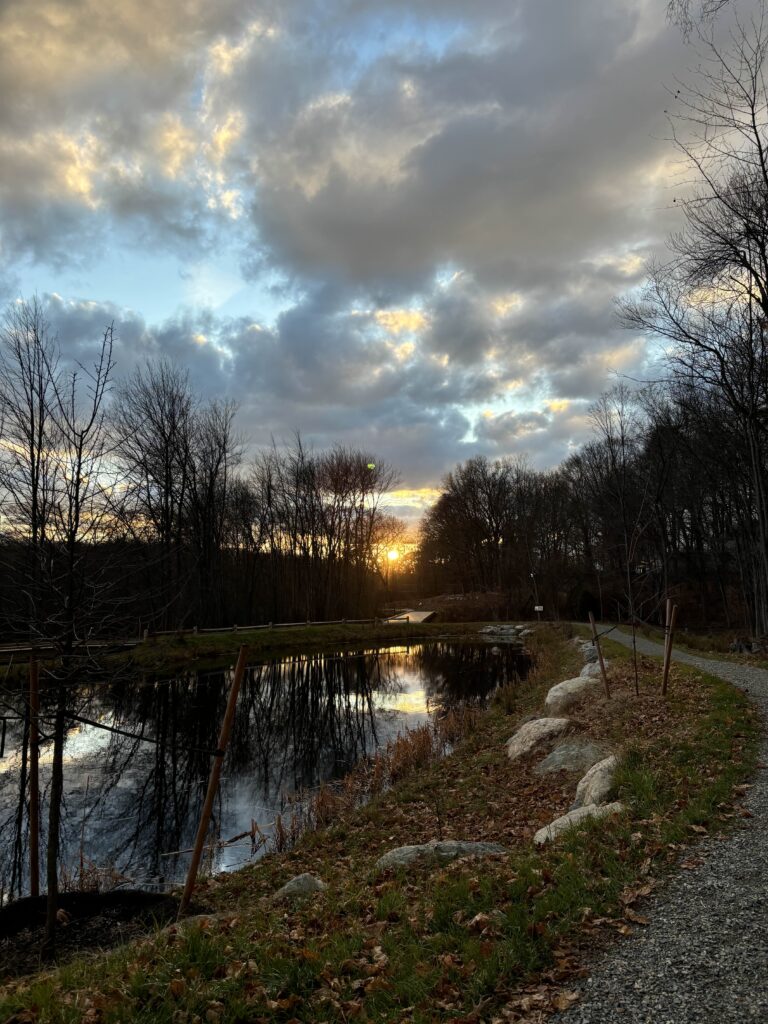
I took these photos of my phenology spot! The photo with the small pond is one of the constructed wetland areas in the conservation land that is specifically designed to hold large amounts of stormwater runoff as well as provide a habitat for migrating birds and native plants! Throughout my hike, I saw so many different native plants! I have included a full list of woody plants and vegetation I found below:

  • Witch Hazel
  • Joe Pye Weed
  • Cardinal Flower
  • Spice Bush
  • Sensitive Fern
  • Blue Flag Iris
  • Arrowwood
  • Wild Bergamont
  • Swamp Milkweed
  • Red Maple
  • River Birch
  • Sugar Maple
  • Swamp White Oak
  • Northern Red Oak
  • Speckled Alder
  • Tupelo
  • Eastern White Pine
  • Black Cherry

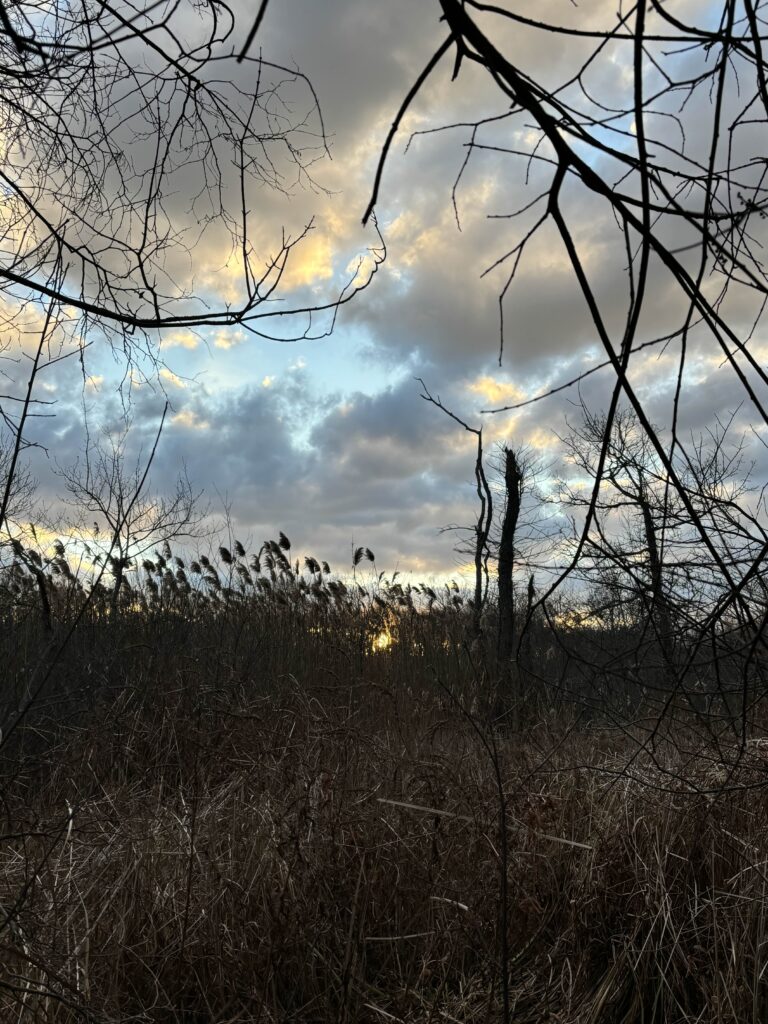
I found a lot of similar species at this new phenology spot when comparing it to my phenology spot in Burlington, Vermont. The species they had in common were Northern Red Oak, Red Maple, Sugar Maple, and Eastern White Pine. I noticed that the only similarities in species were that of trees, in other words, there were no similar small vegetation. However, both spots had a source of water: My phenology spot located in Burlington, Vermont had the Centennial Brook running through it, while my phenology spot located in Reading, Massachusetts had the Aberjona River nearby by as well as small wetlands surrounding my spot. Surrounding the wetlands was an invasive plant called common reed. This provides difficulties to birds looking to perch as the plant is too weak to support their weight. I noticed that many birds in my phenology spot would attempt perching on these reeds, fail, and fly back to a taller tree. It was really interesting seeing them do this over and over again!

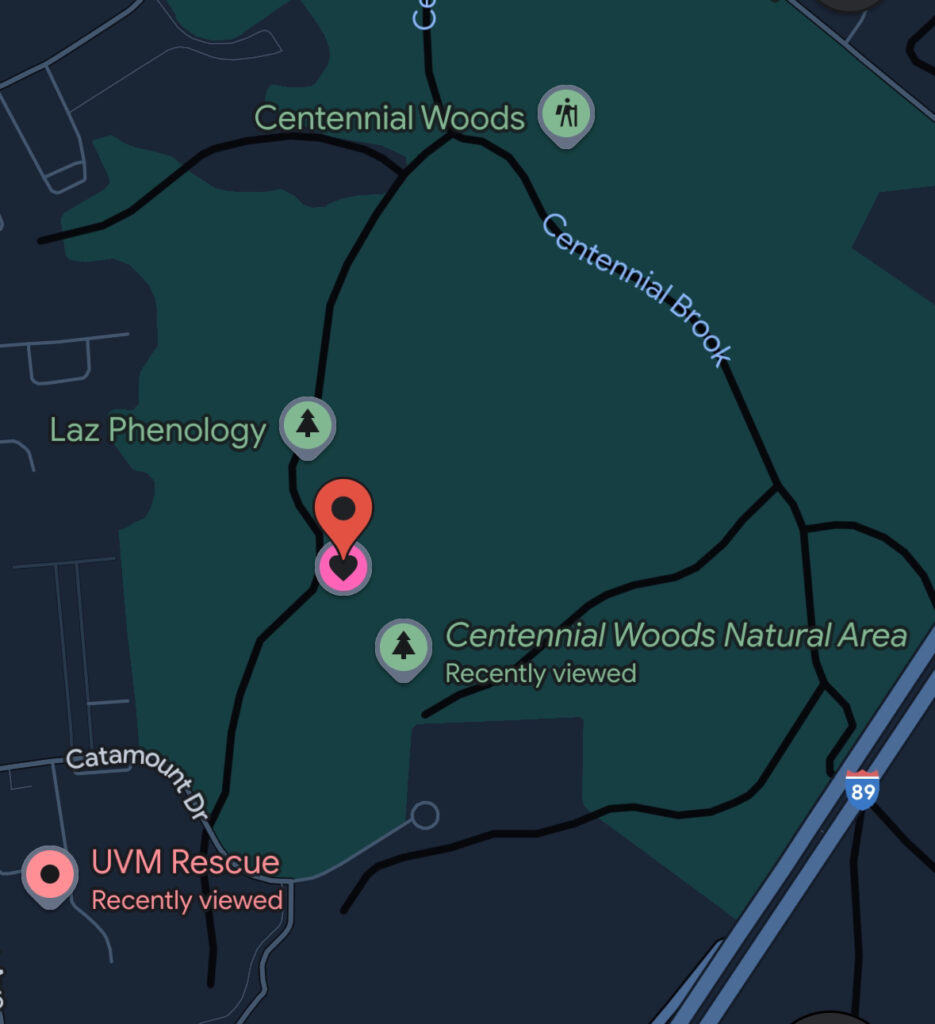
Below is an overview of the Maillet, Sommes and Morgan Land area and hearted is my phenology spot!

Phenology Blog – 11/3/24

As I returned to my phenology spot, I felt a sense of peace. Every time I go on a walk in Centennial Woods now, I feel a connection to my spot. Being able to sit at my spot for 15 minutes, I started to notice many patterns in my location. One pattern in particular I noticed was the way the stream ran. When sitting in the middle of my phenology spot, the far left end of the brook had fast-flowing water, shown by the ripples in the water. Towards the center of the brook in my location, the water was very still, until picking back up when hitting large rocks on a small decline. I found the pattern of the brook so interesting because I noticed the differences the water stream made at each segment. In the middle of the brook where the water was more stagnant, I noticed lots of algae and oil in the water, while the flowing parts of the brook had less build-up. 

Going back to my phenology spot, I noticed a few changes in the area. The Eastern Black Walnut trees no longer have leaves on them, making the spot much more sparse. There are a few Northern Red Oak trees in the area that have changed color now. This tree species stands out now as most of the other trees are bare of leaves. The leaves on the Northern Red Oaks are completely red now, hinting at the winter season approaching. The Eastern White Pines also stand out more, as it is a conifer and will not lose its leaves. 

Phenology Intro

Welcome to my phenology blog!

My location is in Centennial Woods. As I took a nature walk one morning looking for the perfect phenology spot, I walked down the main path of Centennial Woods just across from the Burlington Police Station. I continued down the path past the biodiversity planting project, headed for the brook. I had a spot in mind from previous walks through Centennial, so I immediately knew where I wanted to do my phenology project. I walked about five minutes into the woods to get to my spot. I knew this was the perfect location as I observed the brook running smoothly by and the enormous Eastern White Pines arching over in the distance. I am interested to see how the brook changes over the seasons!

Woody Plants and Vegetation:

As I observed the natural area, I came across many species of woody plants and other vegetation! I found that there was mostly Northern Red Oaks, Red Maples, Eastern White Pines, Black Walnuts, Calico Asters, and Ironweeds. The full list of species found is listed below:

  • Black Walnut
  • Northern Red Oak
  • Black Raspberry
  • Ironweeds
  • American Beech
  • Box Elder
  • Red Maple
  • Sugar Maple
  • Eastern White Pine
  • Calico Asters
  • Meadow Buttercup
  • Burdock
  • Dwarf Honeysuckle

INaturalist Observations

Skip to toolbar