April 24th
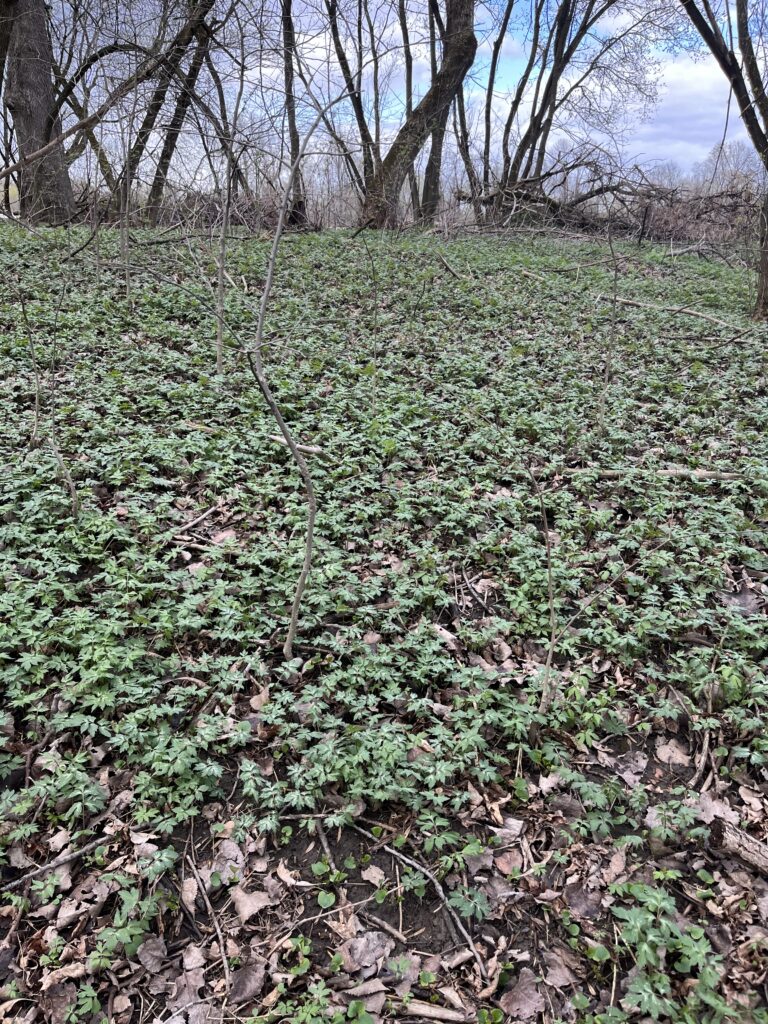
My phenology site has changed dramatically from over the winter. There is now no snow, the duckweed that was on the pond has grown back, turning the surface of the water green, and there are still no leaves on trees, although many buds are starting to open. There is a carpet of small green plants on the forest floor, mainly composed of garlic mustard, an invasive species. There are no new fallen trees and no major human or storm-caused changes. Some of the landmarks I’ve become familiar with are the fallen boxelder tree in front of the pond, the large eastern cottonwood trees still standing tall, and the shape of the pond, which hasn’t grown or shrunk noticeably over the winter.
Nature and culture intertwine in this space in several ways. This land is part of the Intervale, a community farm supported by people. The farm creates a habitat for many bird species, and while I was sitting observing the area, I heard a downy woodpecker, northern cardinal, and many white throated sparrows. The trails on the farm present a space for people to interact and get to know these ecosystems by the Winooski River better. Just visiting my phenology spot over the past year has made me grow attached to it, and want to integrate the natural world into my life more. Finally, this land used to belong to the Abenaki, who made the area their home and intertwined every living thing into their culture and respected the natural world as a whole.
I don’t consider myself a part of my place, however I do think of myself as an observer, someone who watches but doesn’t intervene in the natural processes of this spot. I’m not part of this place because I do not consider it my home, I don’t spend much time there, and I’m not a part of the land like the birds, squirrels, and deer. I do, however, want to keep returning to this spot to watch as it changes back into the way it looked in the fall, and I value my time spent here this year.