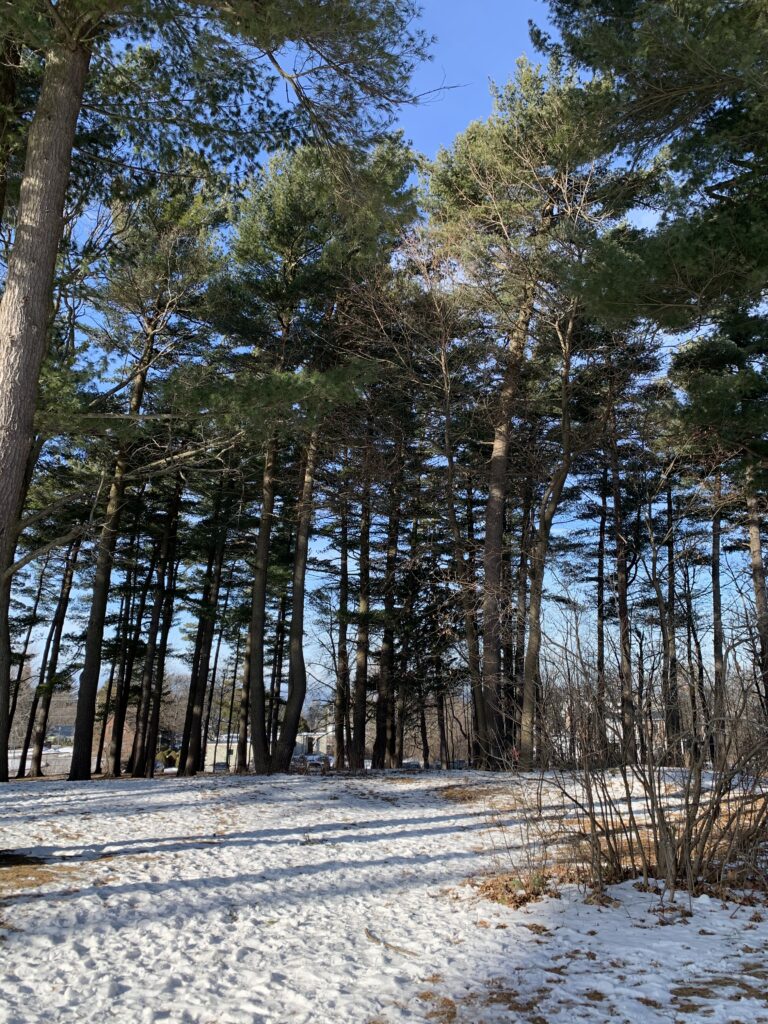
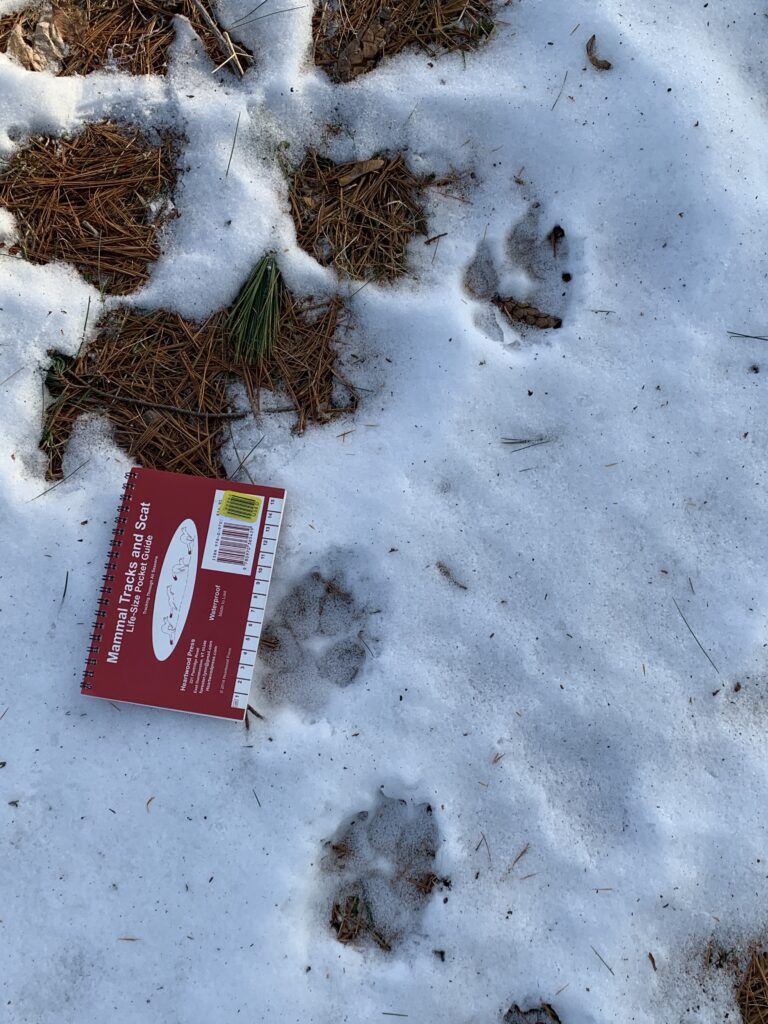
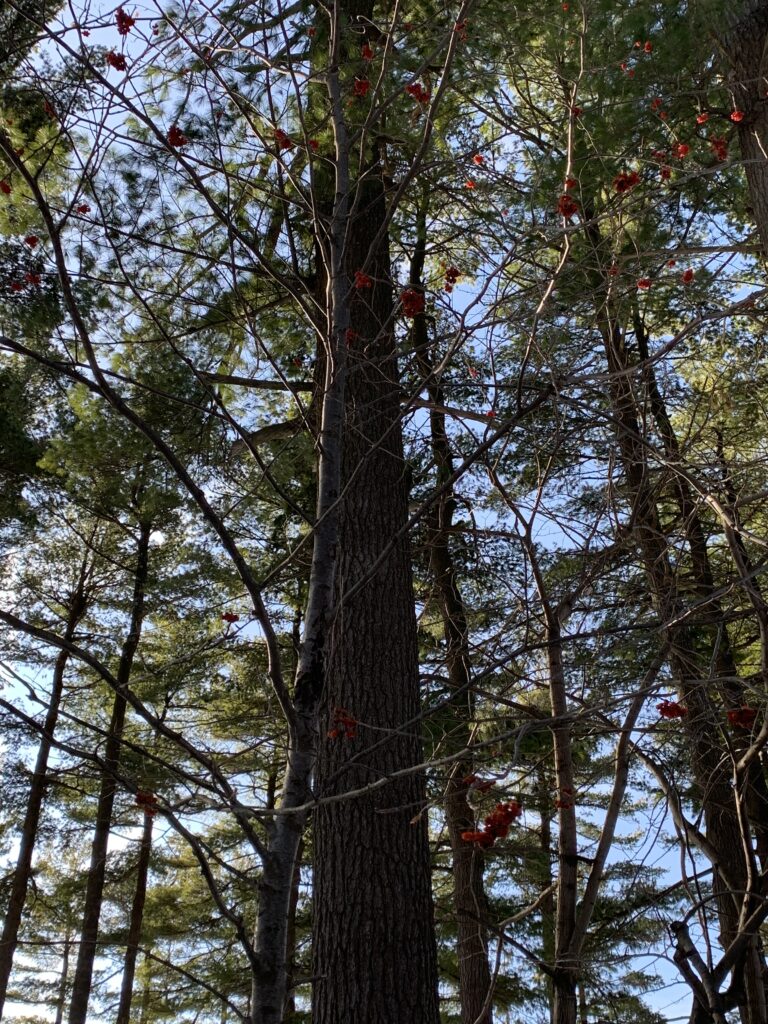
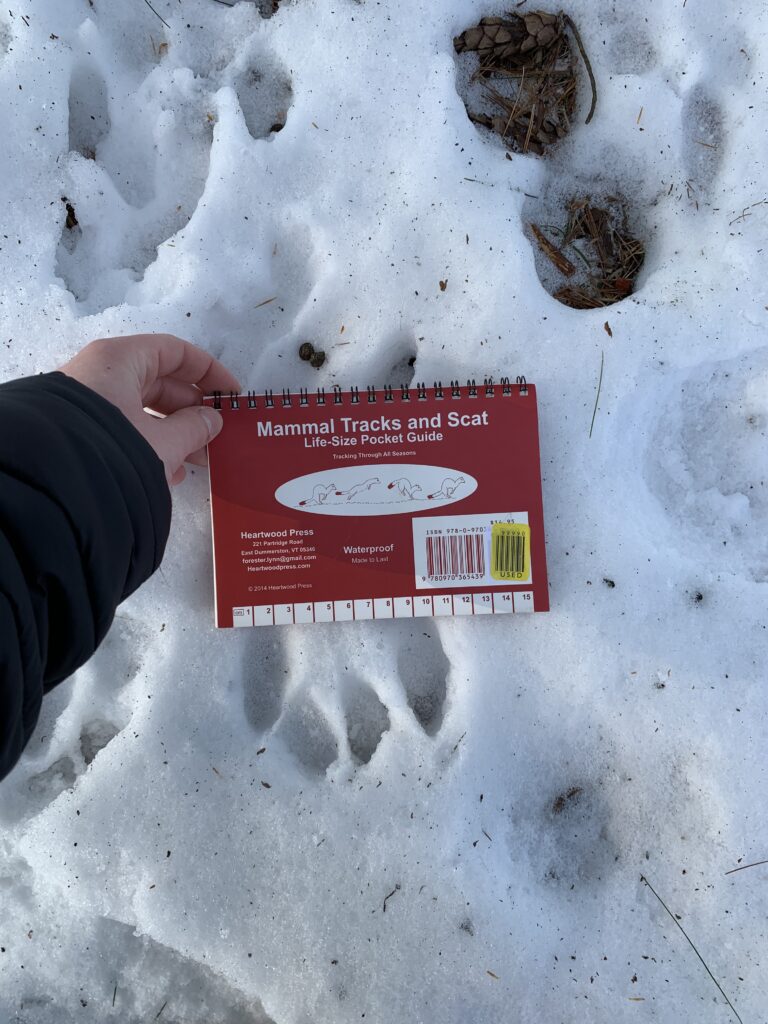
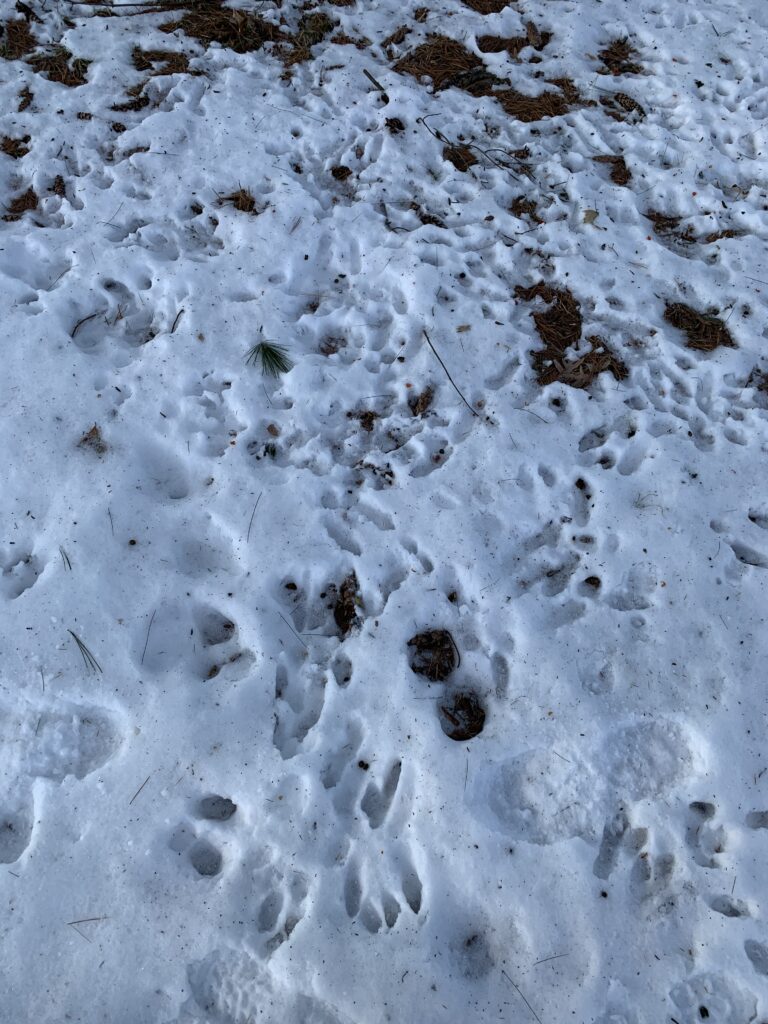
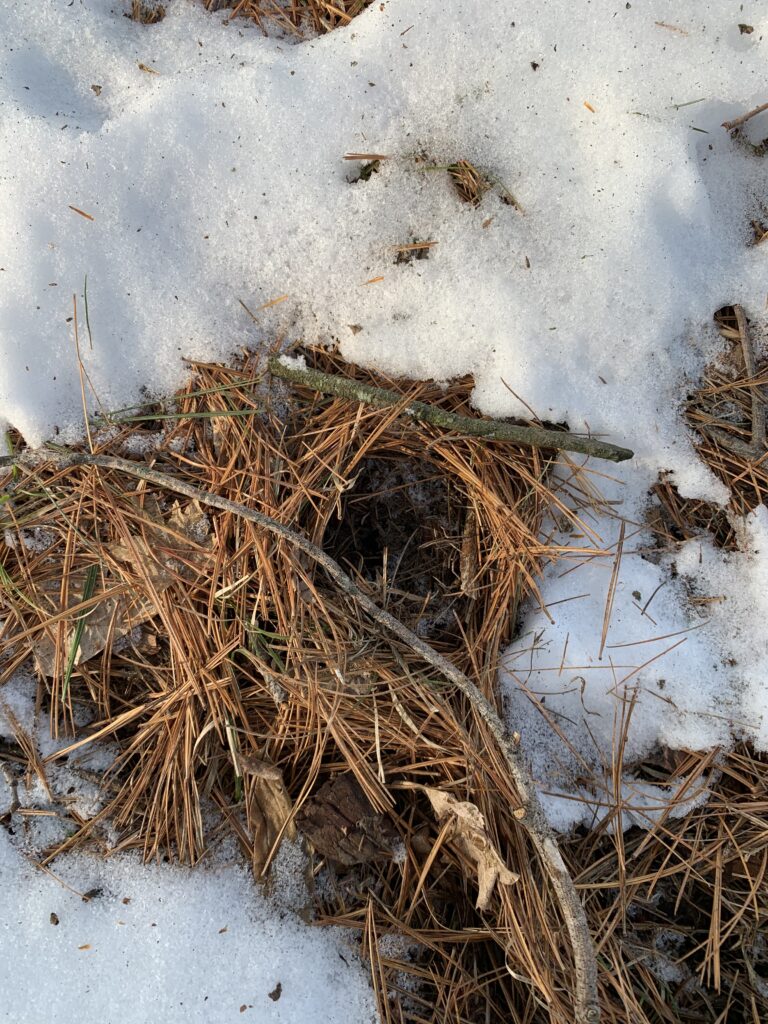
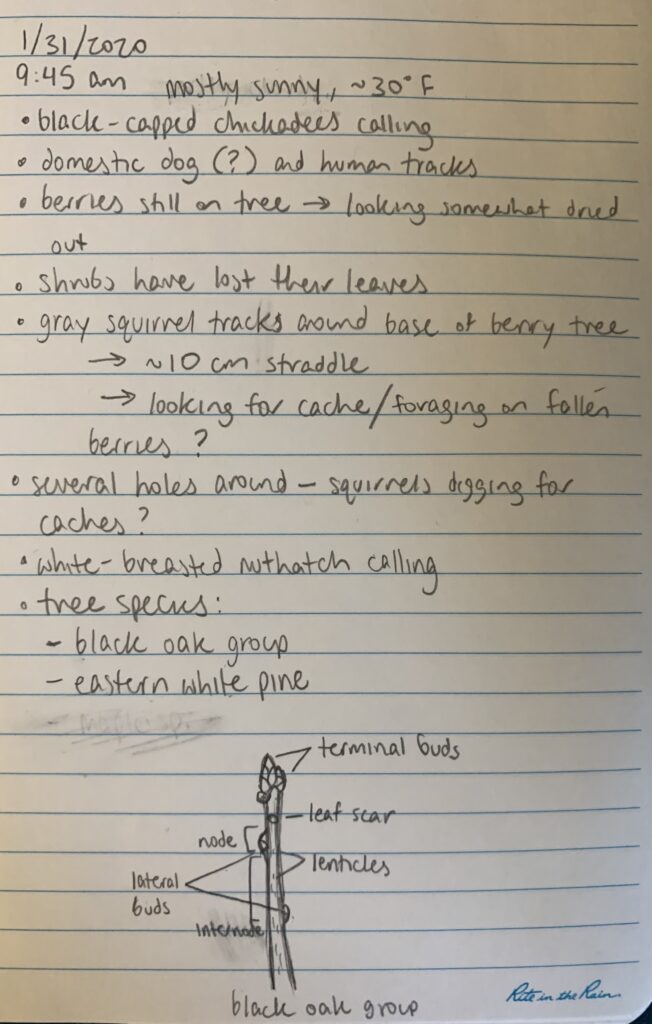
During this visit to my place, I was pleasantly surprised to find several indications of wildlife activity. Around the base of the berry tree, there was a mass of wildlife tracks. Since the tracks were all so clustered together, it took me some time to find a distinct track, but once I did, I quickly identified it as a galloper, and after measuring the track, I was able to identify it as a gray squirrel track. I measured the straddle at around 10 cm, then used the Mammal Tracks and Scat guide to quickly identify the tracks as gray squirrel tracks, as gray squirrels typically have a straddle between 10-14 cm (Levine). I also noticed several canine tracks, but upon measuring them, I determined that they were most likely from a domestic dog, as they measured in at about 10 cm long, quite a bit longer than the average red fox track which is only 5-7 cm (Levine). I also spotted several shallow holes in the area, likely from squirrels looking for their caches.
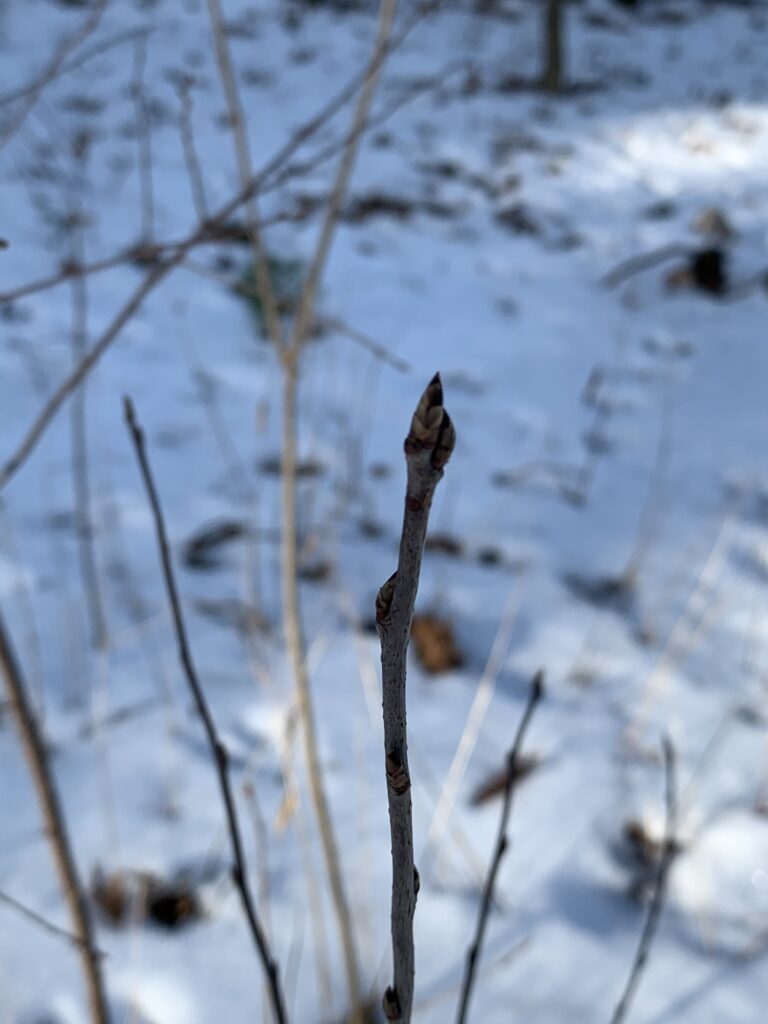
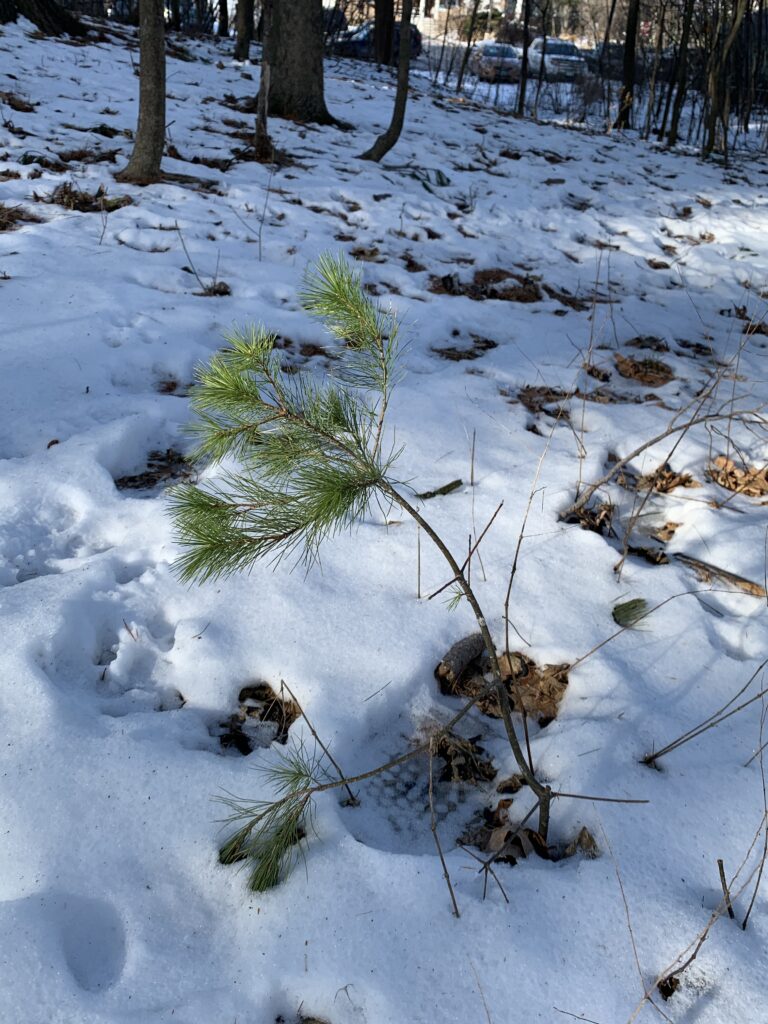
Unfortunately, there were not many twigs in the area that I was able to identify. After attempting to identify several odd twigs that didn’t appear to be on the twig identification handout, I was finally able to locate several black oak group and eastern white pine twigs.
Since my last visit, the shrubs have finally lost all of their leaves. I also noticed that the tree berries looked wrinkly and slightly dried out. Nothing appears to be eating them, making me wonder if they’re even edible.
Reference List
Levine, Lynn. (n.d.). Mammal tracks and scat: Life-sized pocket guide.