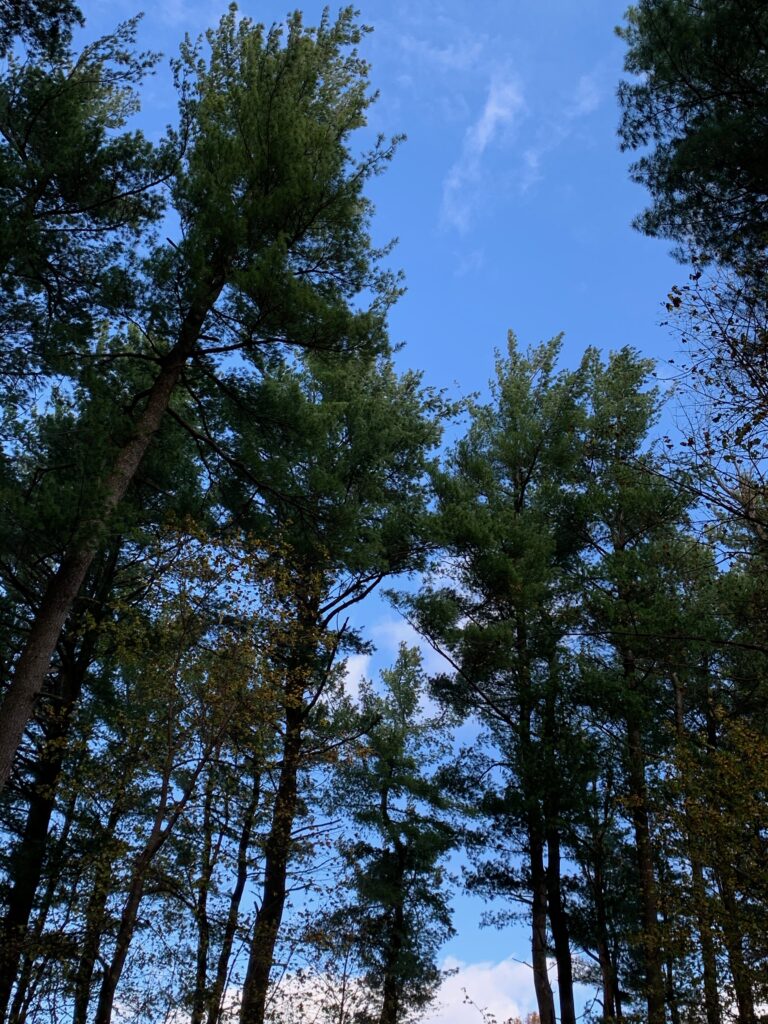
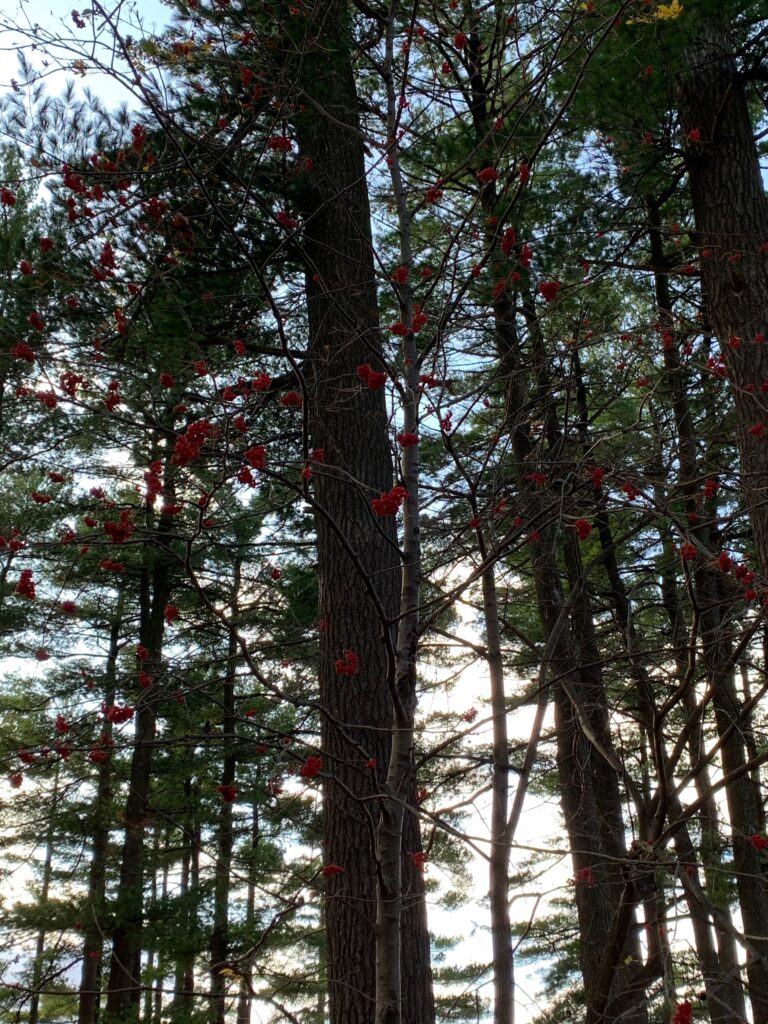
For this prompt, the six species I observed were eastern white pine, gray squirrel, black-capped chickadee, Norway maple, a fruit-bearing tree (winterberry or red chokeberry), and various woody ground-level shrubs. These organisms have a dramatic impact on the area in many different ways. In their own way, each and every organism allows this spot to exist in the way it does. Animals such as squirrels and chickadees eat and spread seeds, allowing plants to reproduce and spread successfully. In turn, these plants such as low-lying shrubs provide shelter for these animals to forage. Fallen needles from the white pines make up the majority of the soil’s O horizon, making the soil slightly acidic and impacting the kinds of plants that can grow in the area. As one of the few large deciduous trees in the area, the Norway maples are a large contributor of leaves that are dropped and then decomposed and integrated into the soil.
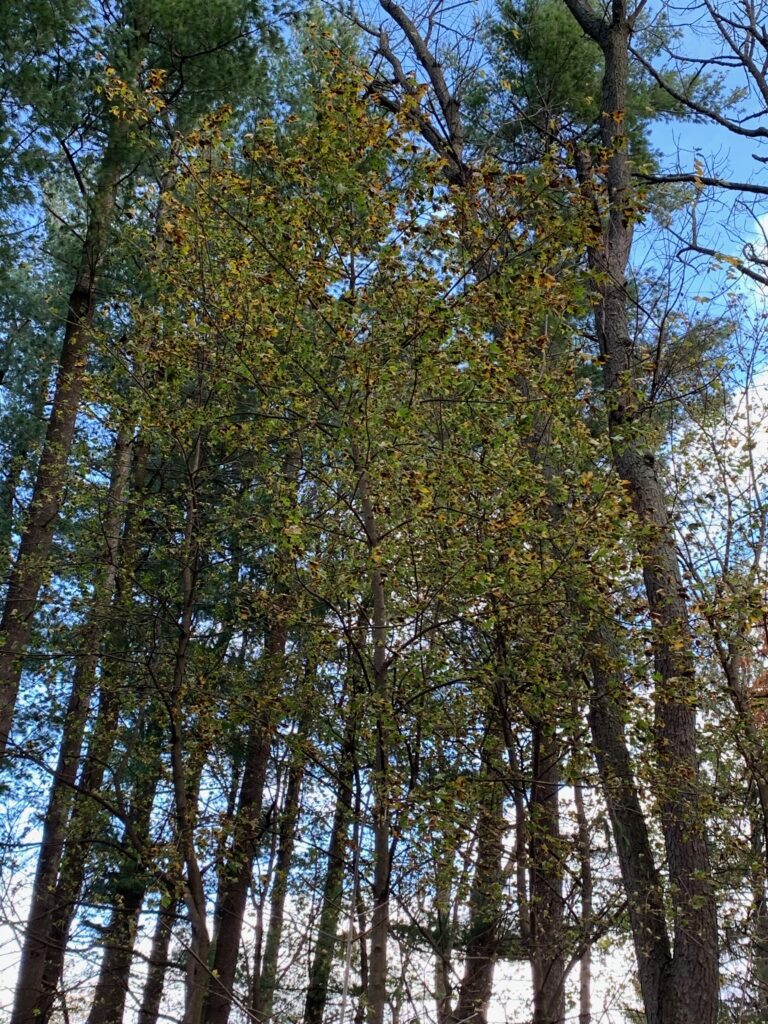
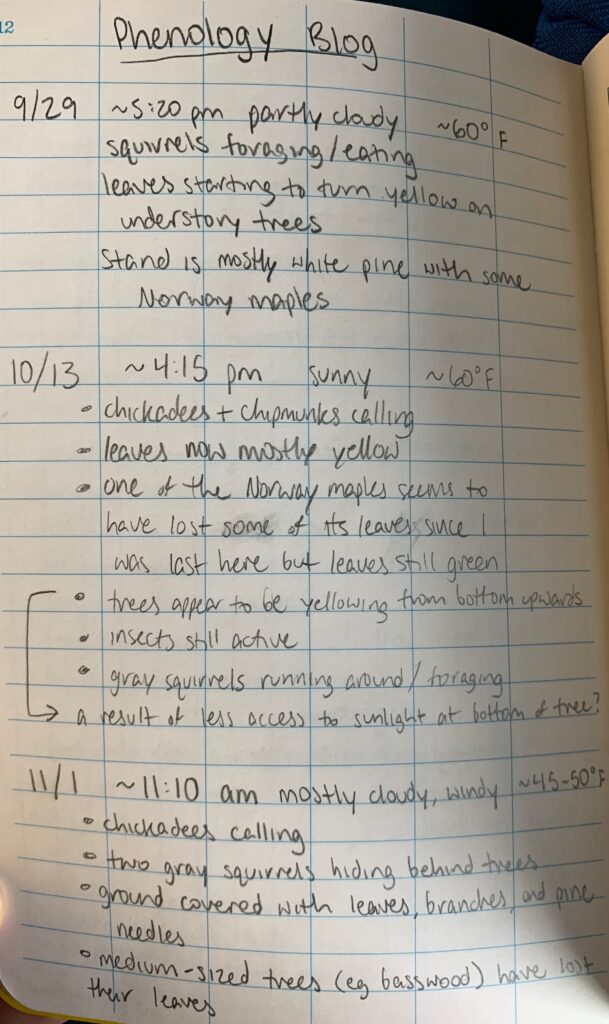
Since I was last in the spot, the medium-sized trees, such as the basswood, have dropped their leaves. The smaller understory shrubs and the Norway maples still have mostly green leaves. I had expected all of the deciduous trees to have lost their leaves by now, so this finding was quite surprising.
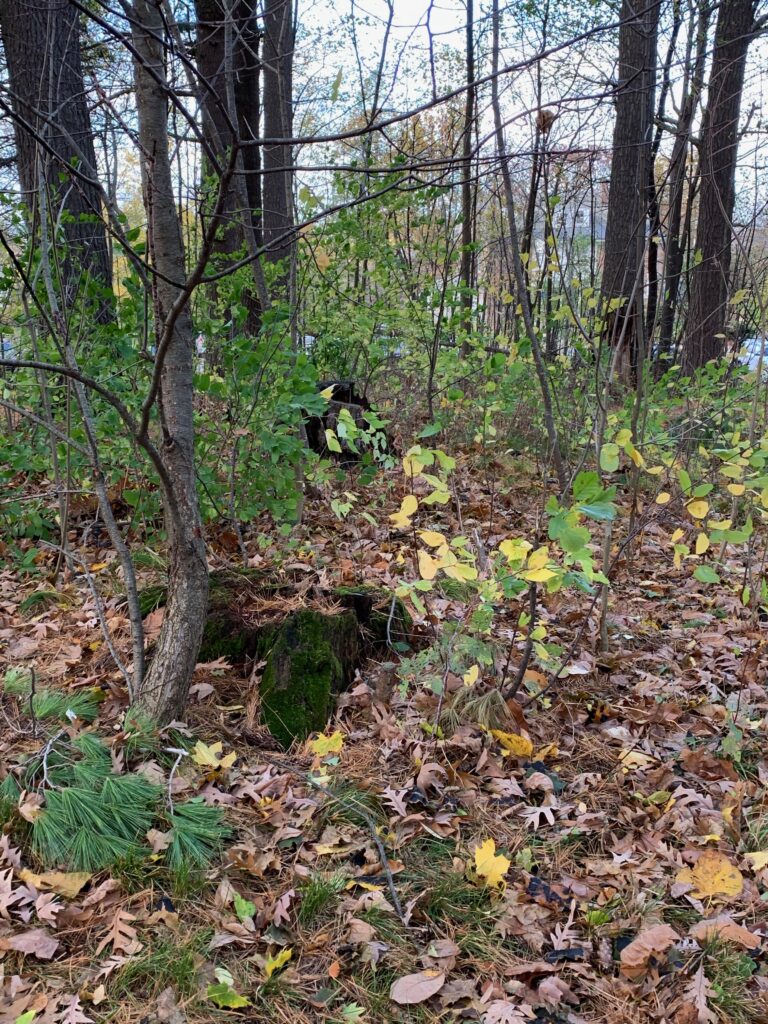
The ground is still covered in pine needles, as well as many pine branches broken off presumably by the heavy rain last night. Though the medium-sized trees have dropped their leaves, I did not notice any dramatic increase in the number of deciduous leaves on the ground.
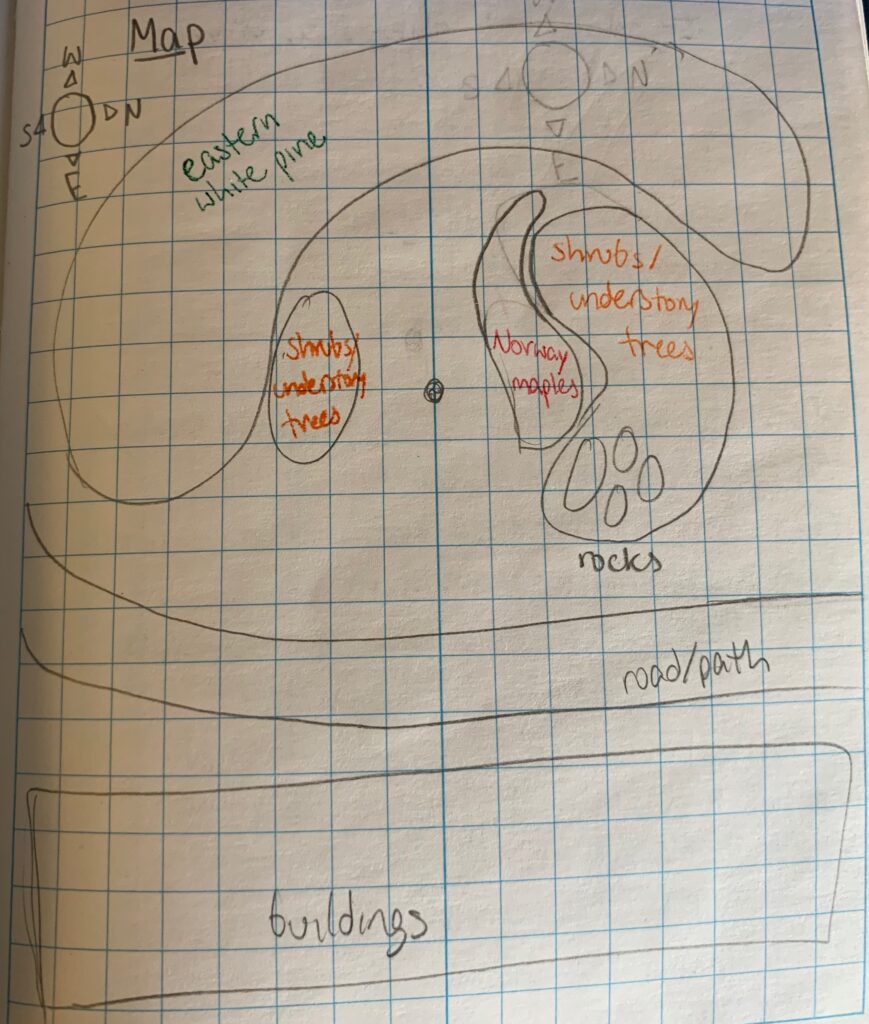
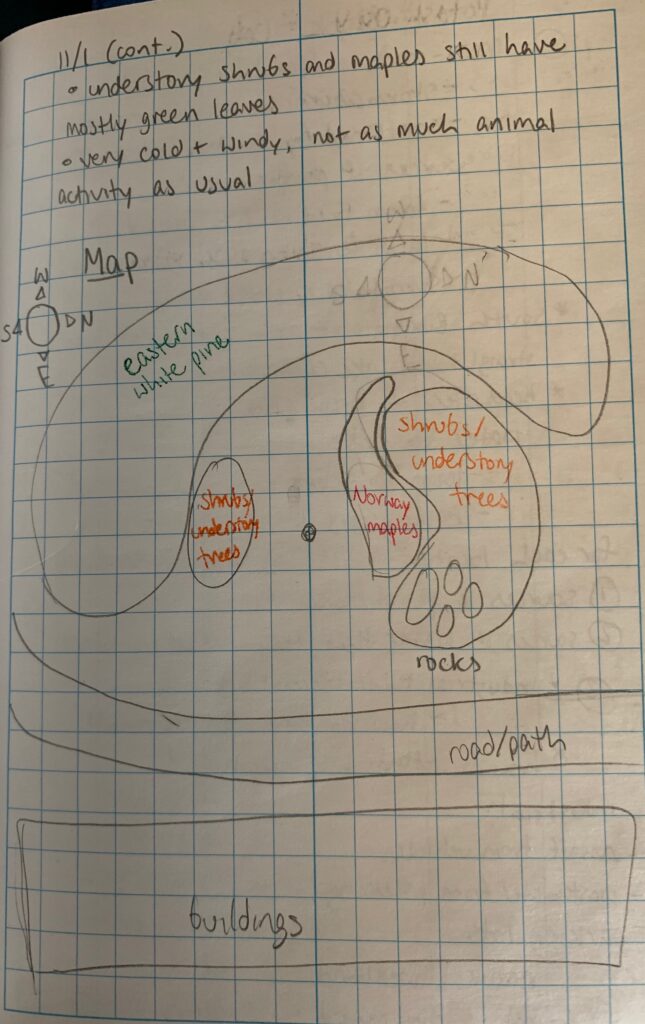
Through drawing this map, I believe I have a better image and understanding of the place as a whole. Drawing the map allowed me to take a step back and truly think about the layout of my spot. Obviously I knew that my spot was very close to human establishments, but drawing this map reinforced this idea for me, and made me realize just how much of an influence these establishments have of my spot through their close proximity.