Feeds:
Posts
Comments

Prompt 6: Survival

The animal I am focusing on for this prompt is the black-capped chickadee. Black-capped chickadees are year-round residents, remaining in their general breeding area throughout the winter. According to Naturally Curious, chickadees are most active in early morning; at night, their body temperature drops significantly in order to save valuable energy (Holland, 2019, p. 413). During the winter, chickadees also undergo a shift in their diet; “During the summer months seeds and berries make up only about 10 to 20 percent of the chickadee’s diet. The rest is primarily caterpillars. In the winter, their seed consumption jumps to 50 percent, with insects and spiders making up the rest” (Holland, 2019, p. 413). Adult chickadees’ main predators are bird-eating owls and hawks. 

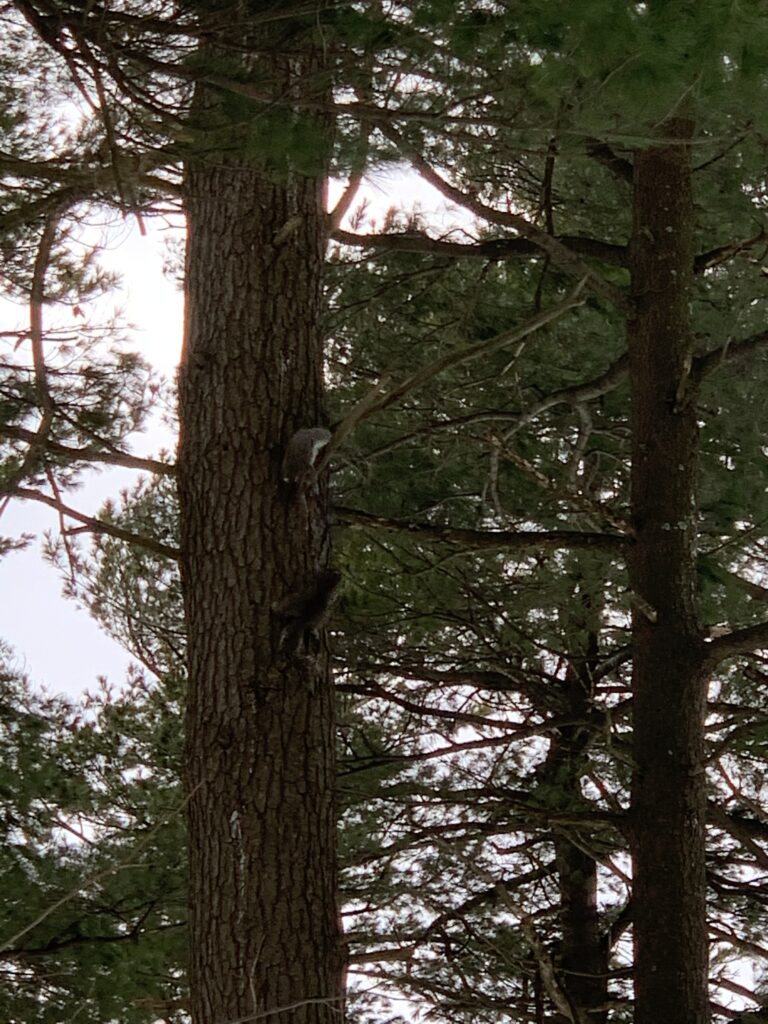
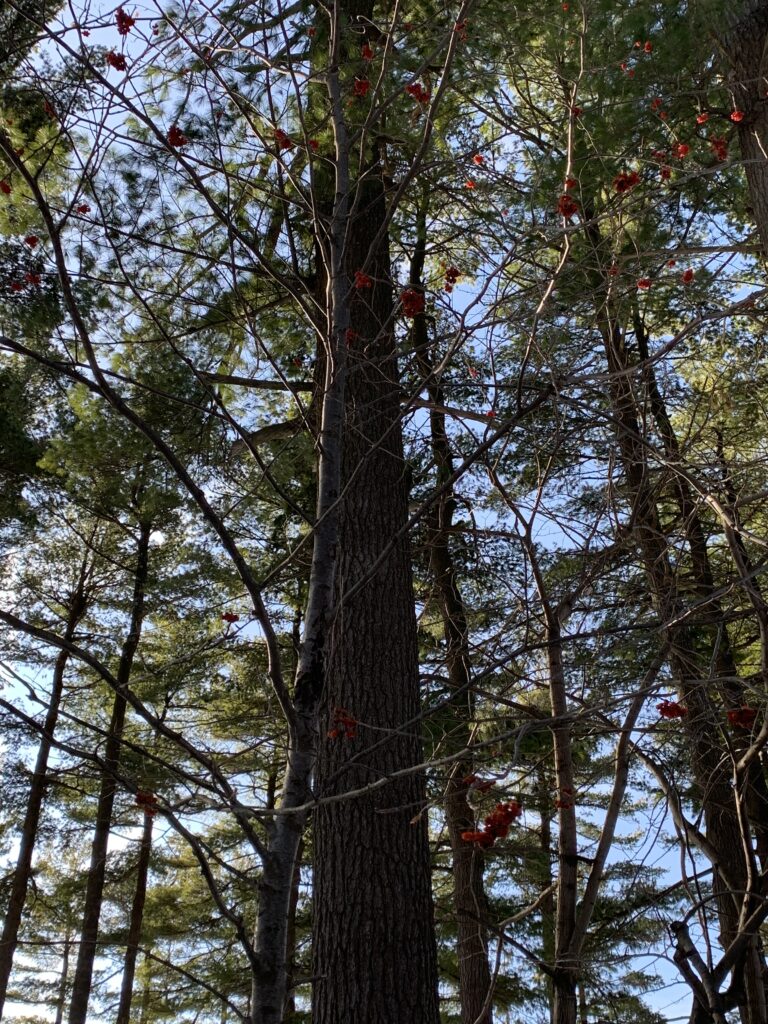
Black-capped chickadees have a very important interaction with the eastern white pines found in my phenology spot. As stated before, chickadees feed primarily on seeds during the winter; this includes seeds from conifers such as white pines. In my spot I have frequently encountered flocks of chickadees combing through the trees, likely searching for cached food. Chickadees also form flocks with birds of various other species, such as titmice and nuthatches. I have definitely heard at least a few nuthatches calling while at my place, evidence of these mixed flocks. 

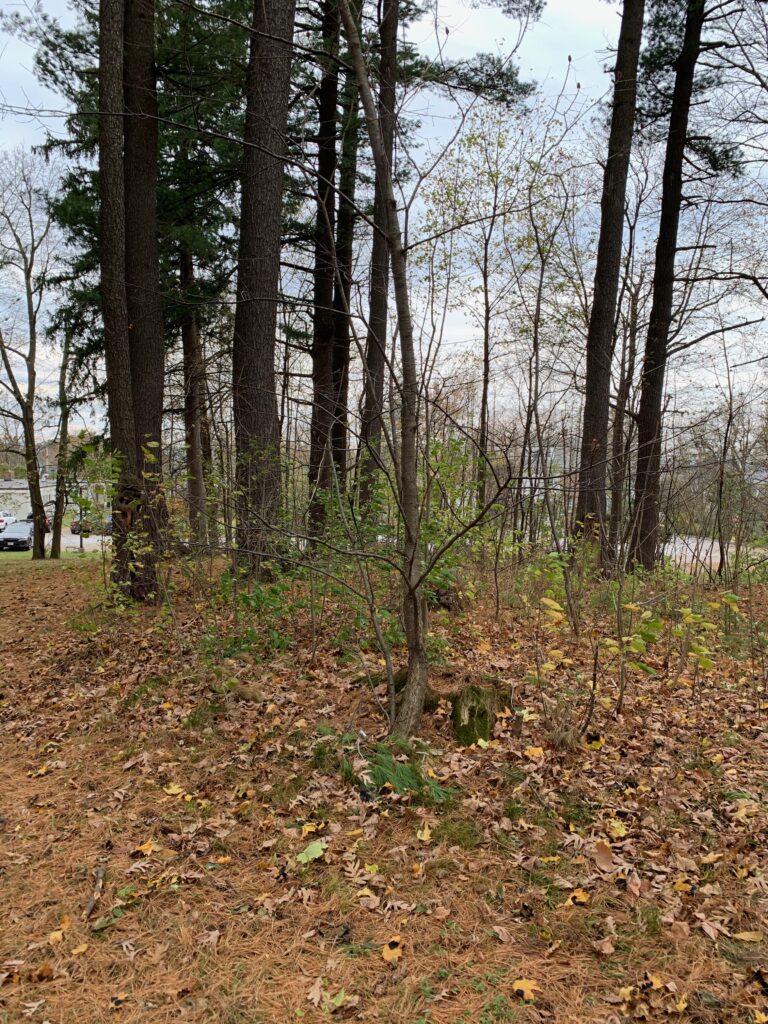
In terms of phenology, not much has changed overall. Recent weather appears to have had some impact- there were many fallen twigs and branches, likely from recent winds. Animal activity seems to have decreased substantially since last semester and even since my visit earlier this month. Many animals may be taking refuge in more sheltered area; my spot is quite open to the elements. 

Reference List 

Holland, M. (2019). Naturally Curious: A photographic field guide and month-by-

month journey through the fields, woods, and marshes of New England. Trafalgar

Square Books. 
Prompt 5: Endurance

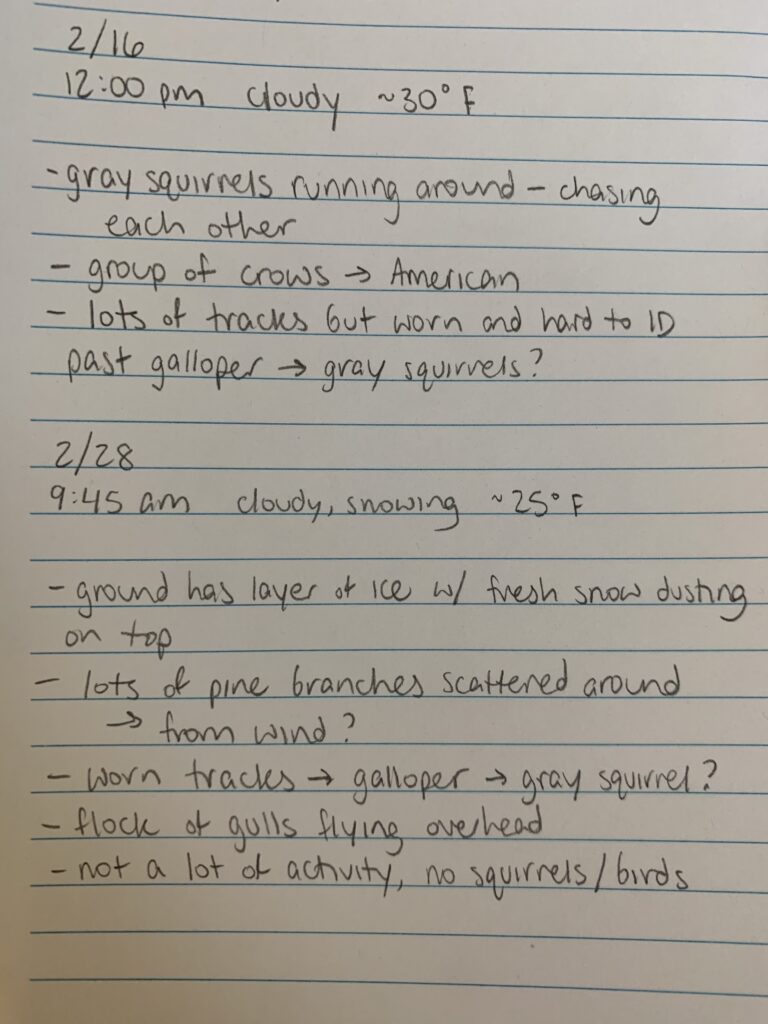
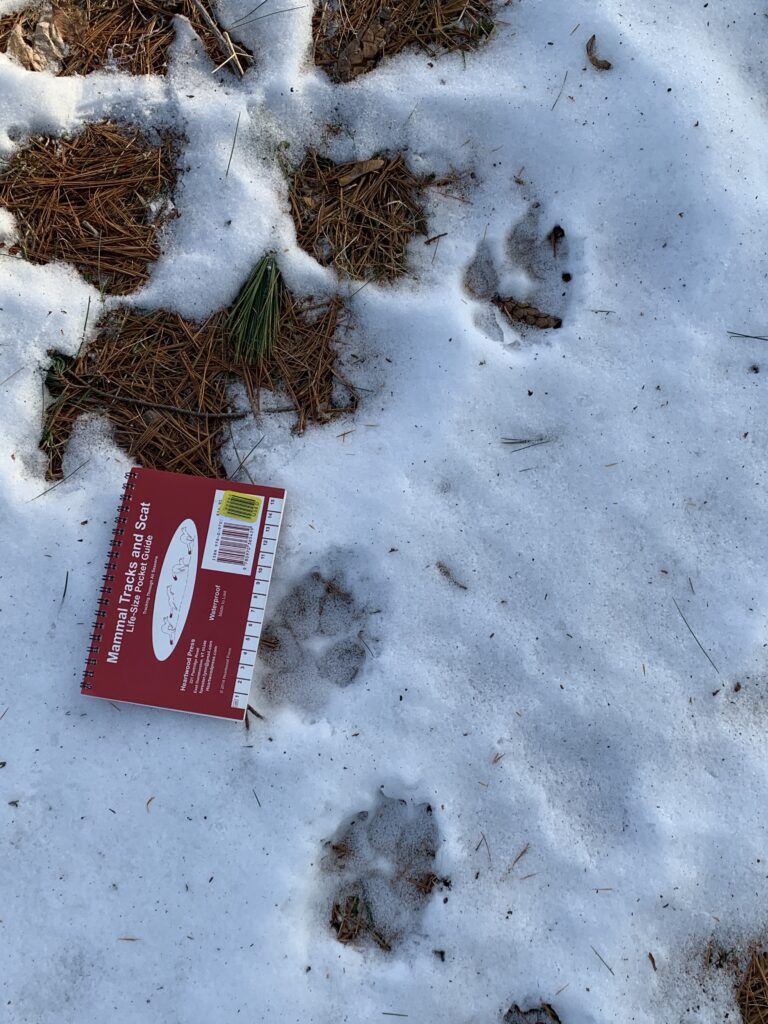
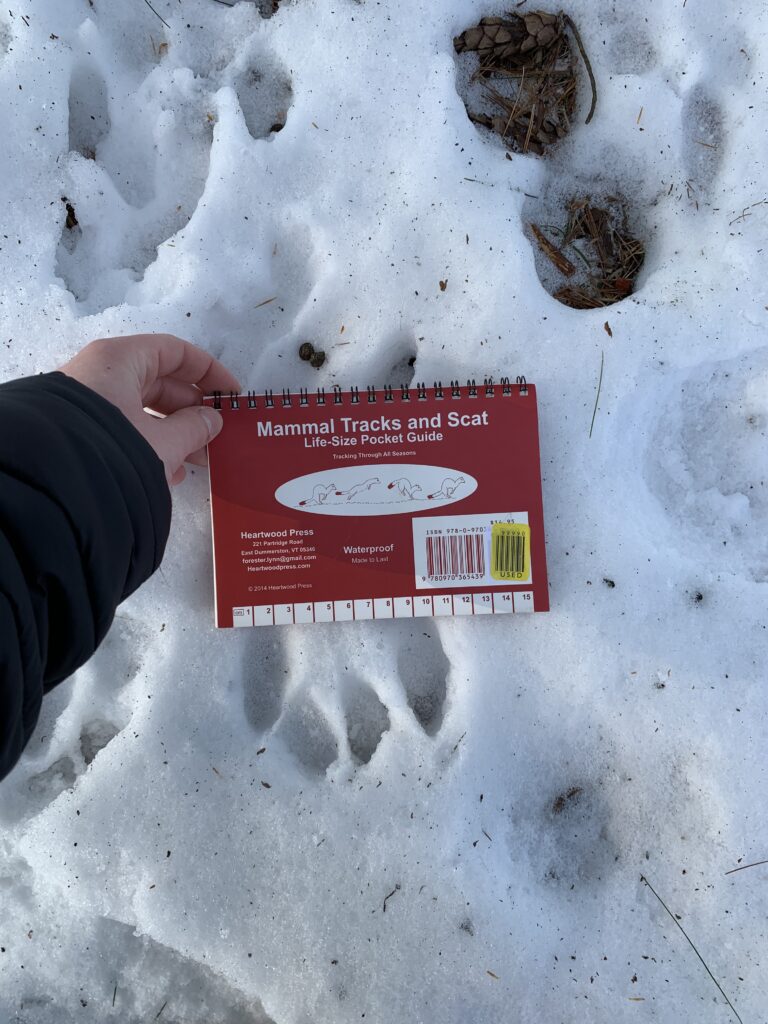
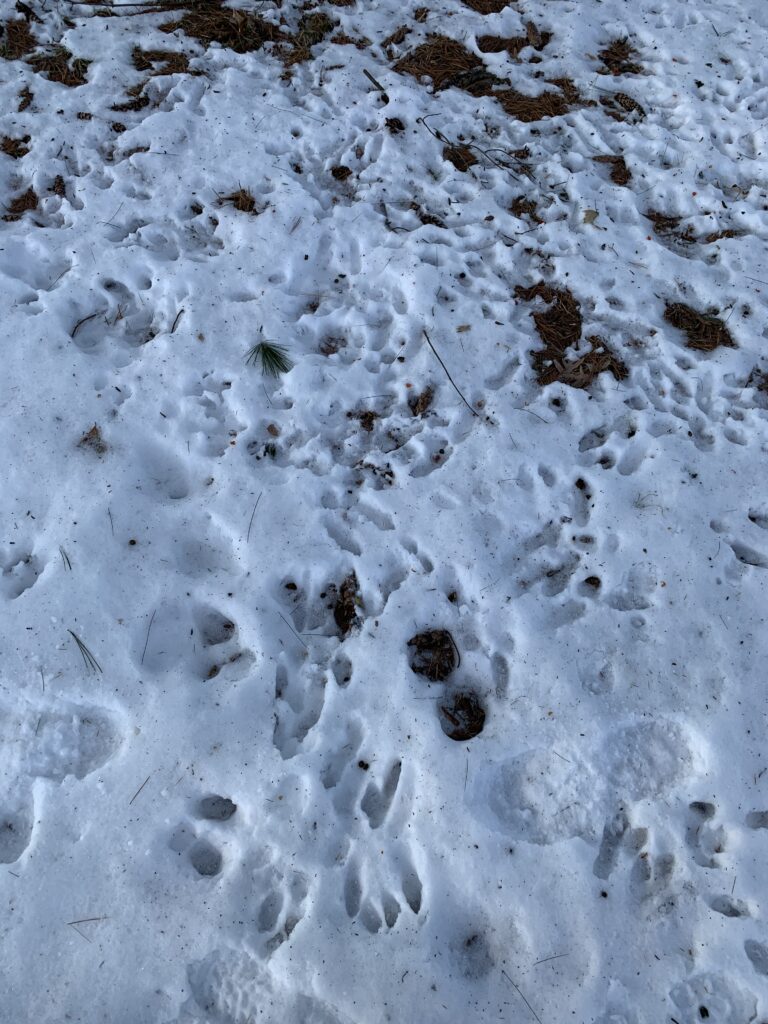
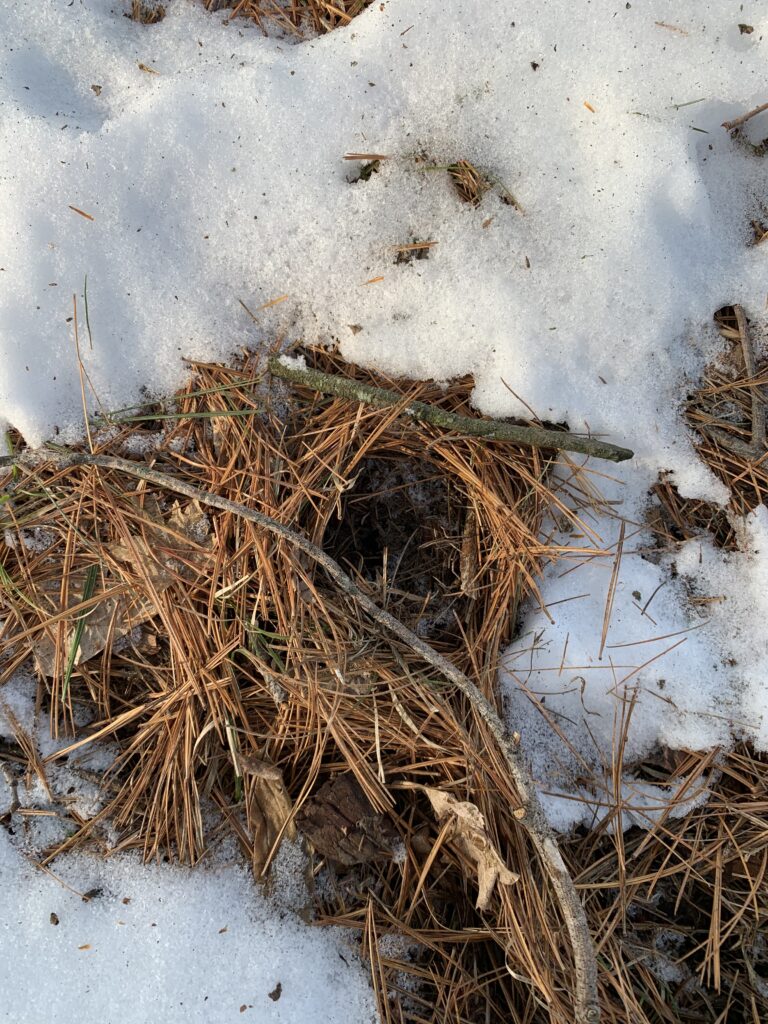
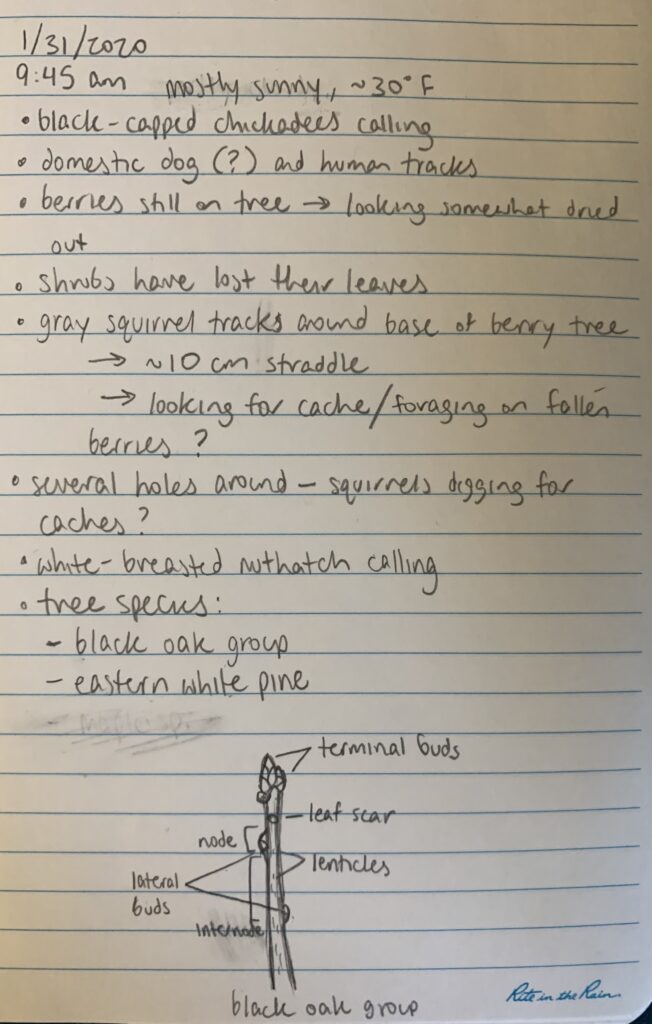
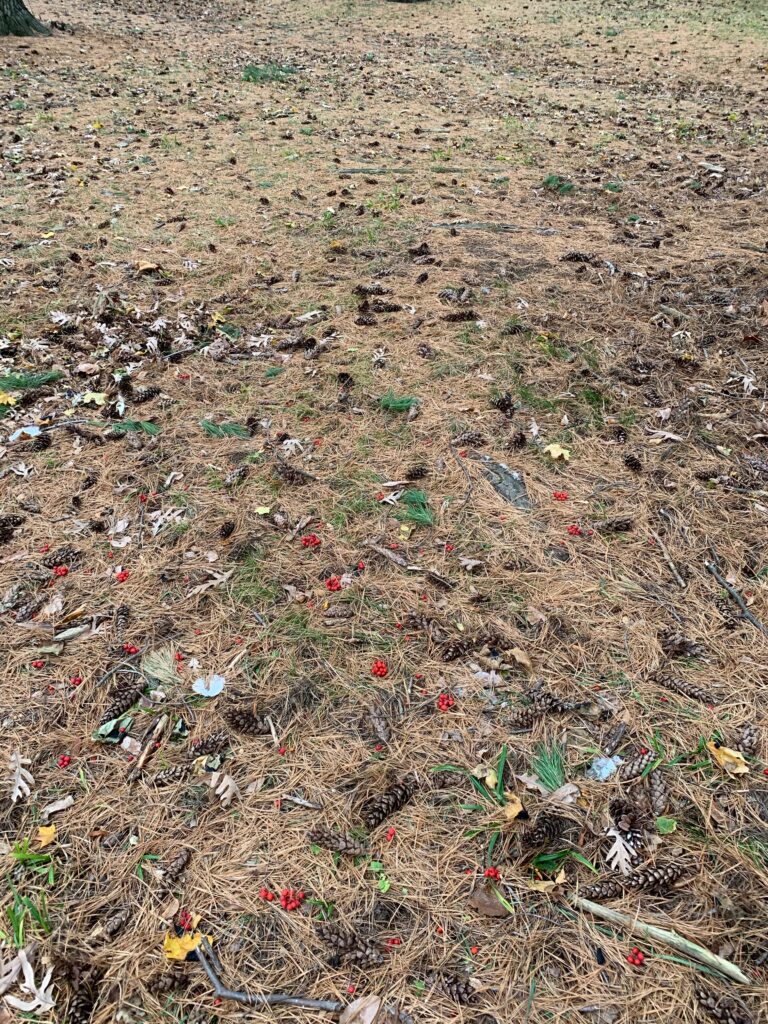
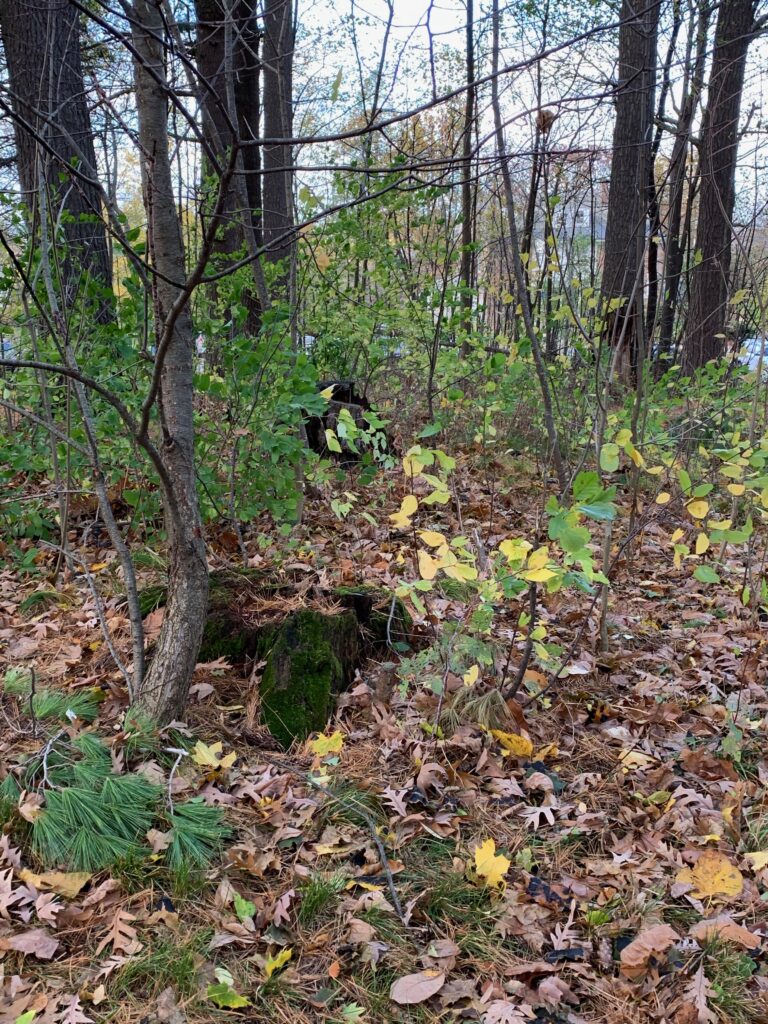
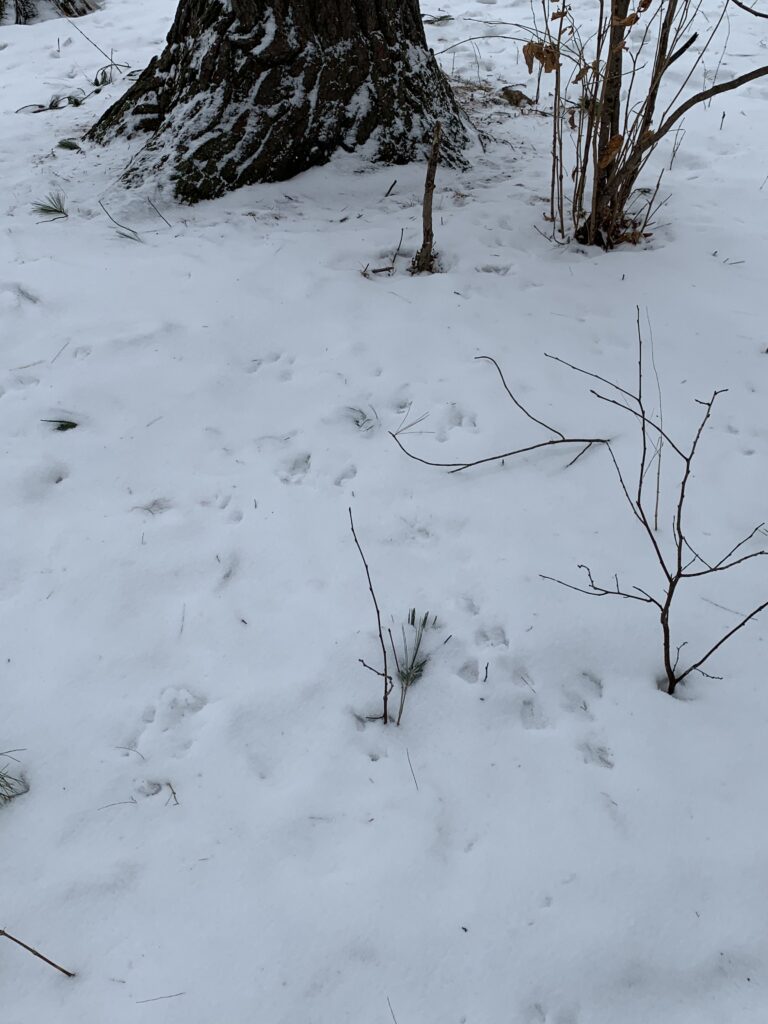
During this visit to my place, I was pleasantly surprised to find several indications of wildlife activity. Around the base of the berry tree, there was a mass of wildlife tracks. Since the tracks were all so clustered together, it took me some time to find a distinct track, but once I did, I quickly identified it as a galloper, and after measuring the track, I was able to identify it as a gray squirrel track. I measured the straddle at around 10 cm, then used the Mammal Tracks and Scat guide to quickly identify the tracks as gray squirrel tracks, as gray squirrels typically have a straddle between 10-14 cm (Levine). I also noticed several canine tracks, but upon measuring them, I determined that they were most likely from a domestic dog, as they measured in at about 10 cm long, quite a bit longer than the average red fox track which is only 5-7 cm (Levine). I also spotted several shallow holes in the area, likely from squirrels looking for their caches. 

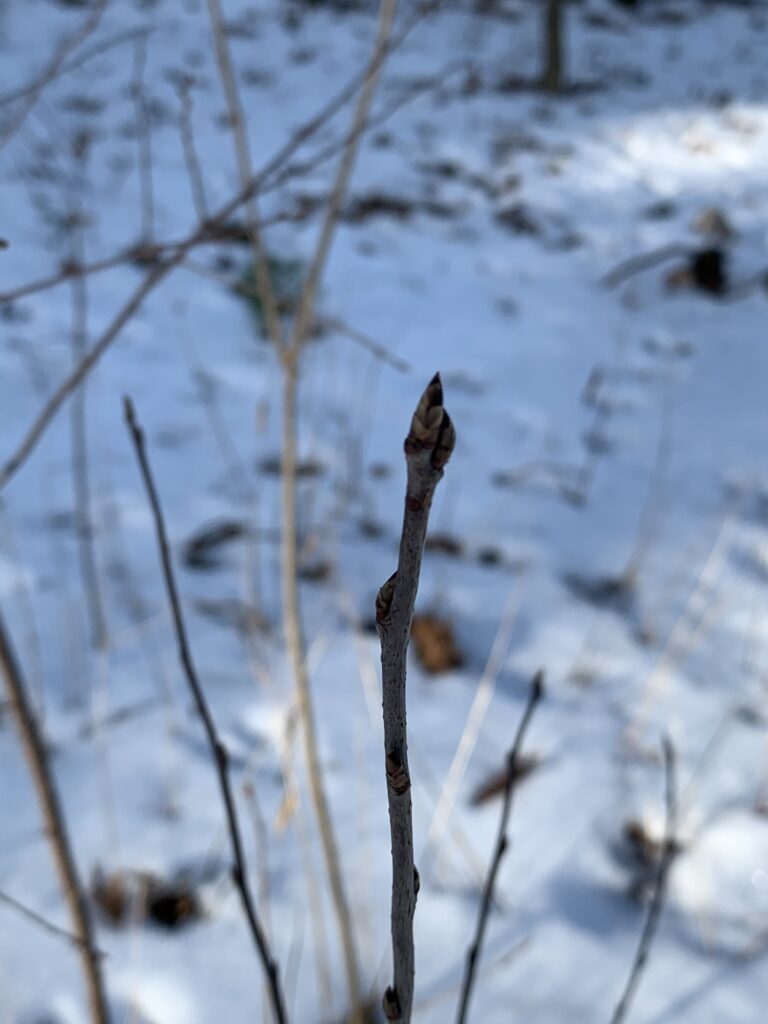
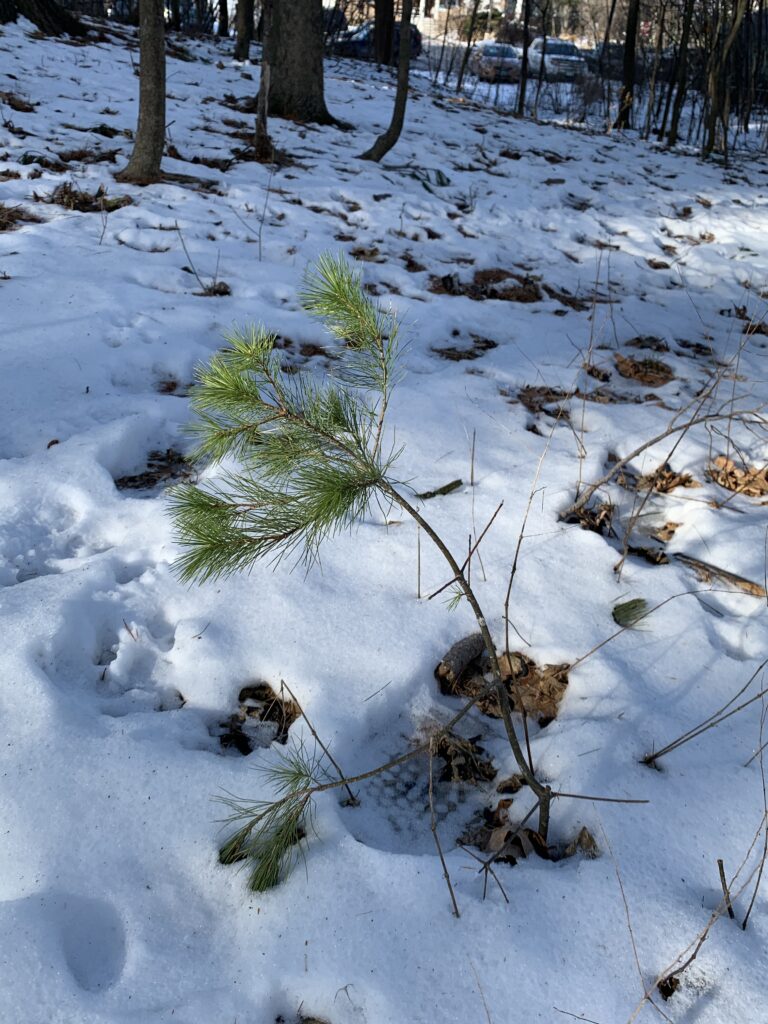
Unfortunately, there were not many twigs in the area that I was able to identify. After attempting to identify several odd twigs that didn’t appear to be on the twig identification handout, I was finally able to locate several black oak group and eastern white pine twigs. 

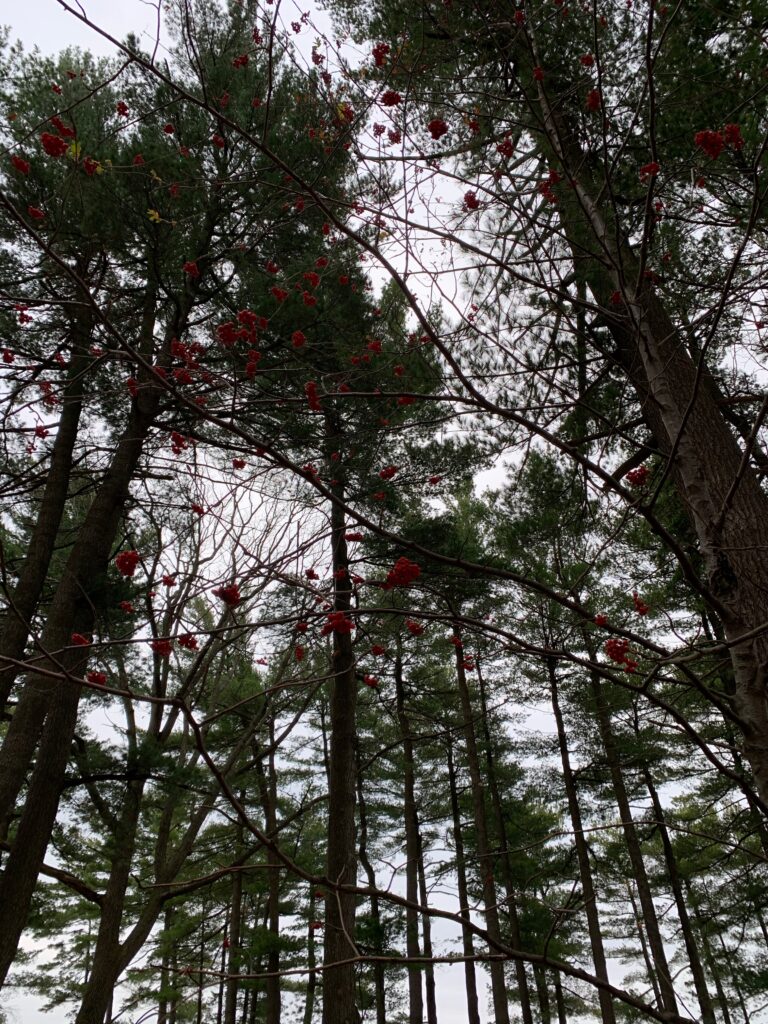
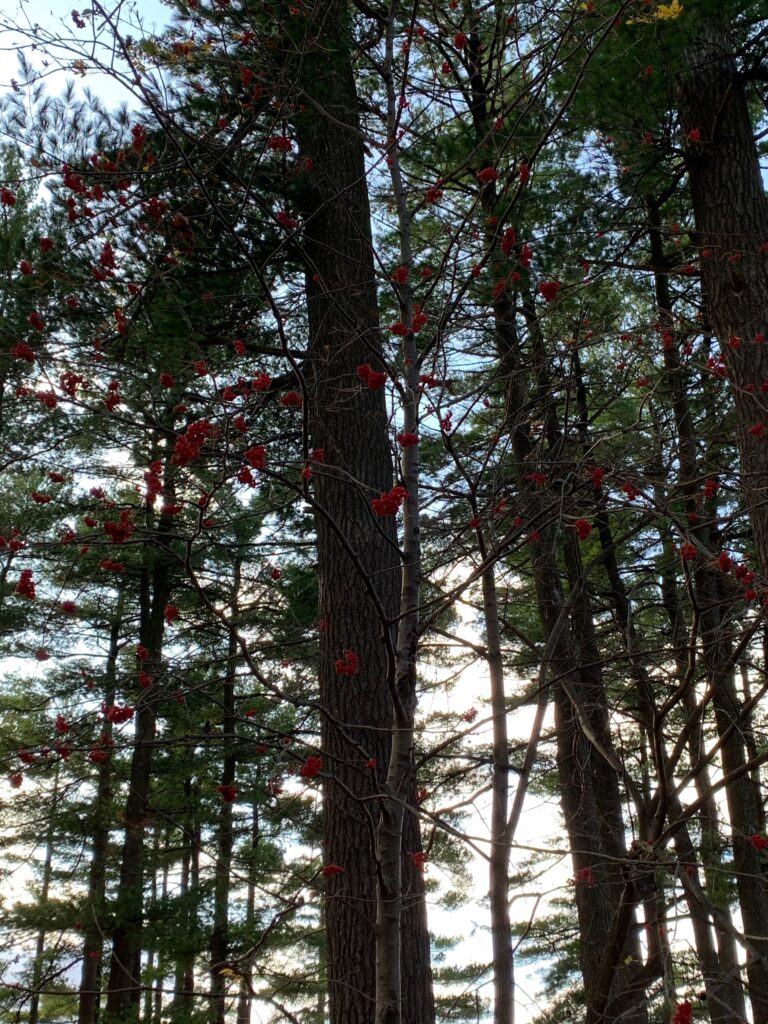
Since my last visit, the shrubs have finally lost all of their leaves. I also noticed that the tree berries looked wrinkly and slightly dried out. Nothing appears to be eating them, making me wonder if they’re even edible. 

Reference List

Levine, Lynn. (n.d.). Mammal tracks and scat: Life-sized pocket guide.

Prompt 4: Sense of Place

Our discussions of sense of place during both lecture and lab have inspired me to think about my own sense of place, and how I interact with the places I live in or visit. 

I’m from a mostly rural area in central New Jersey, with many farms and small towns. This relative closeness to nature, I believe, has very strongly influenced my passion for the environment. At the same time, I was still immersed in the human aspect of my hometown, because of my close proximity to friends and neighbors. I believe this provided a healthy balance of people and the environment that inspired me to appreciate and protect both. 

I believe the fact that I’ve lived in the same place for my whole life has also influenced my sense of place there. This has allowed me to form a stronger connection with this place, because it’s the only home I’ve ever had before coming to Vermont. The fact that I’ve lived in the same house my whole life also means that I’ve never really had to consider my sense of place before, because that place has never changed, and I had never had to form a new sense of place before coming to Vermont. 

As I’ve gotten older, I believe my sense of place has gotten stronger, especially after coming to UVM. I’ve also noticed that, since coming to Vermont, my sense of place has, in some ways, expanded. Before, my “place” was simply my hometown. Now, I’ve noticed that though my sense of place is still strongest in my hometown, I have a stronger connection to the state as a whole. 

Through our discussions of sense of place, I’ve also noticed that my connection to my hometown is mostly due to my friends and family that live there and the experiences I’ve had there. People have had a large part in shaping my place-meaning in my hometown, and I believe that, for the most part, these people have helped foster a positive sense of place. 

I believe that the fact that I have a positive sense of place in my hometown has benefitted me greatly. My positive connection to my hometown has provided a steady foundation for me to grow as a person. Because of the positive meaning and connection in my hometown, I never had to worry about finding my place or feeling like I didn’t fit in. Growing up, this benefitted me immensely, and allowed me to grow and find myself without this added stress. 

Prompt 3: Phenology and Place

Since I have started this blog, there have been many changes in this place. These changes themselves have been mostly physical, but I believe that they have led to important changes in the overall character of this place. As the seasons have changed, I feel as though my relationship with this place has changed as well. When I first started this blog, I saw this place as much more active and dynamic. There were always people and wildlife running around, making the place seem much more hospitable, in a way. Now, as the weather has changed dramatically, this place feels much more static. Though I know there are still lots of important processes and changes occurring at this place, the overall decrease in activity since I started this blog has definitely changed my relationship with this place in a somewhat negative way. 

I think this place has allowed me to become more familiar with the UVM campus and New England as a whole. Growing up in the Mid-Atlantic, I was extremely unfamiliar with the New England area before coming to UVM. Though I obviously still have lots to learn, I feel like this place has definitely given me the opportunity to become more familiar with the area, and has helped me form my own sense of place while adjusting to college life in a completely new area. 

For me personally, I do not think that the history of my place has a huge impact on my sense of place. Since I am not familiar with the exact history of how my place came to be how it is today, this history has relatively little impact on how I perceive and interact with this place. However, I do believe that if I were to learn more about the history of my place- such as how it was used before it became part of UVM, and how UVM acquired it- I would gain a deeper understanding of my place as a whole, which would most likely improve my relationship with this place. 

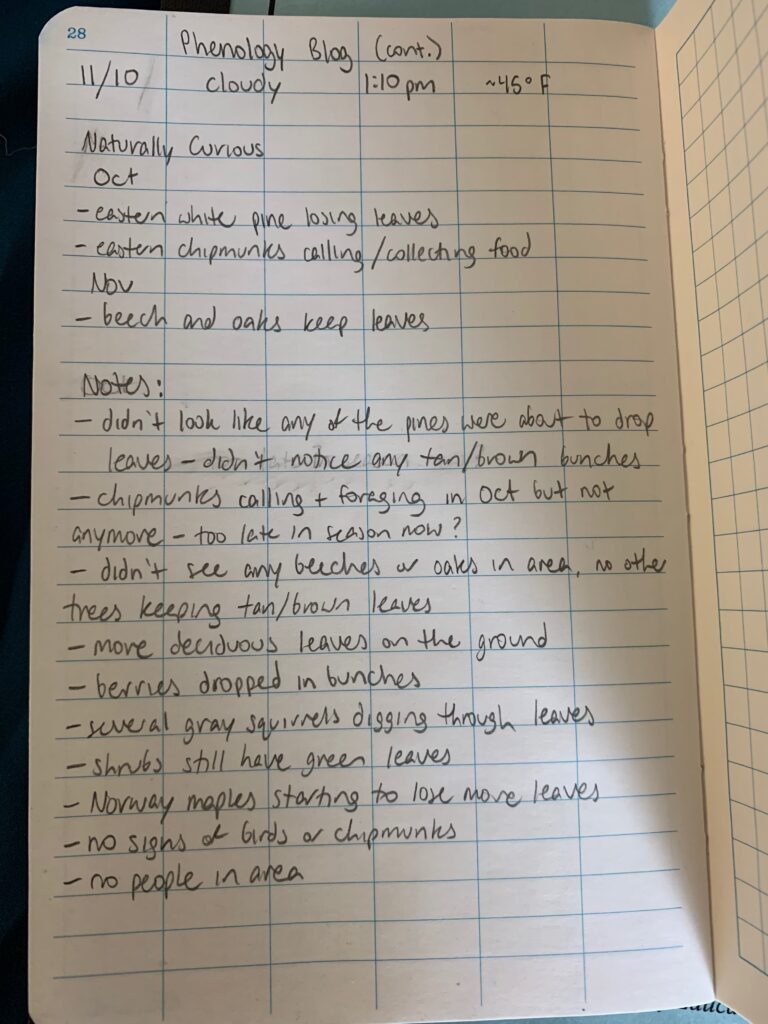
11/10

1:10 pm, cloudy, ~45ºF

Naturally Curious

Oct

  • eastern white pines losing leaves
  • eastern chipmunks calling/collecting food

Nov

  • beech and oaks keep leaves

Notes:

  • didn’t look like any of the pines were about to drop leaves – didn’t notice any tan/brown bunches
  • chipmunks calling + foraging in Oct but not anymore – too late in season now?
  • didn’t see any beeches or oaks in area, no other trees keeping tan/brown leaves
  • more deciduous leaves on ground
  • berries dropped in bunches
  • several gray squirrels digging through leaves
  • shrubs still have green leaves
  • Norway maples staring to lose more leaves
  • no signs of birds or chipmunks
  • no people in area

For this prompt, the six species I observed were eastern white pine, gray squirrel, black-capped chickadee, Norway maple, a fruit-bearing tree (winterberry or red chokeberry), and various woody ground-level shrubs. These organisms have a dramatic impact on the area in many different ways. In their own way, each and every organism allows this spot to exist in the way it does. Animals such as squirrels and chickadees eat and spread seeds, allowing plants to reproduce and spread successfully. In turn, these plants such as low-lying shrubs provide shelter for these animals to forage. Fallen needles from the white pines make up the majority of the soil’s O horizon, making the soil slightly acidic and impacting the kinds of plants that can grow in the area. As one of the few large deciduous trees in the area, the Norway maples are a large contributor of leaves that are dropped and then decomposed and integrated into the soil. 

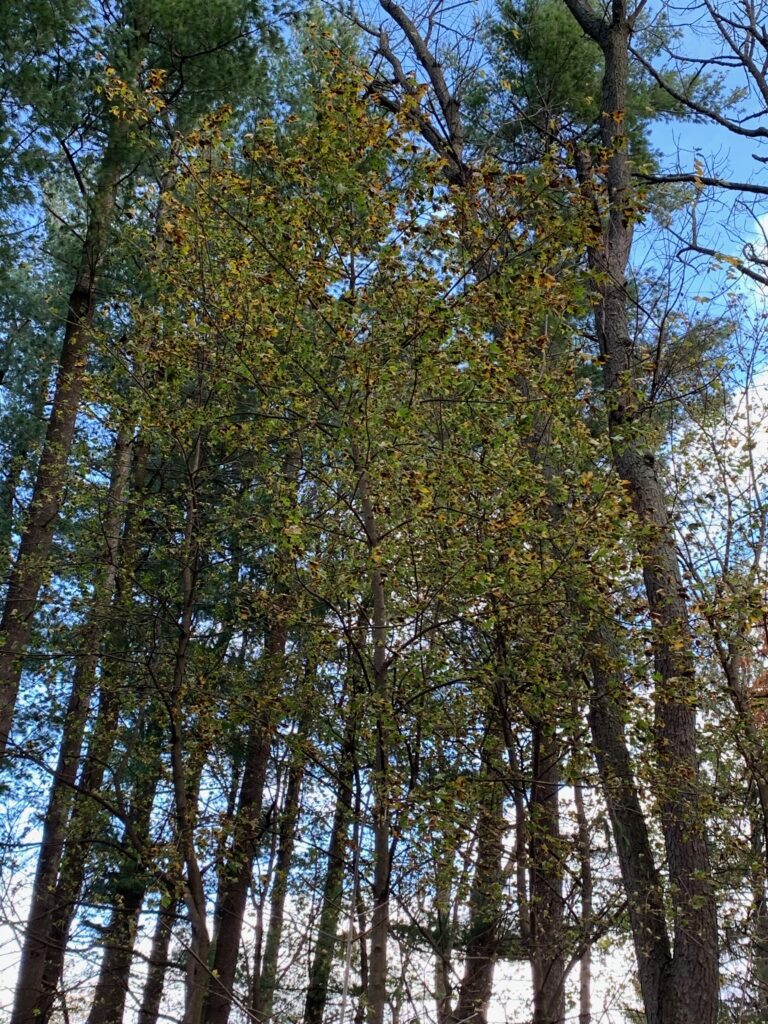
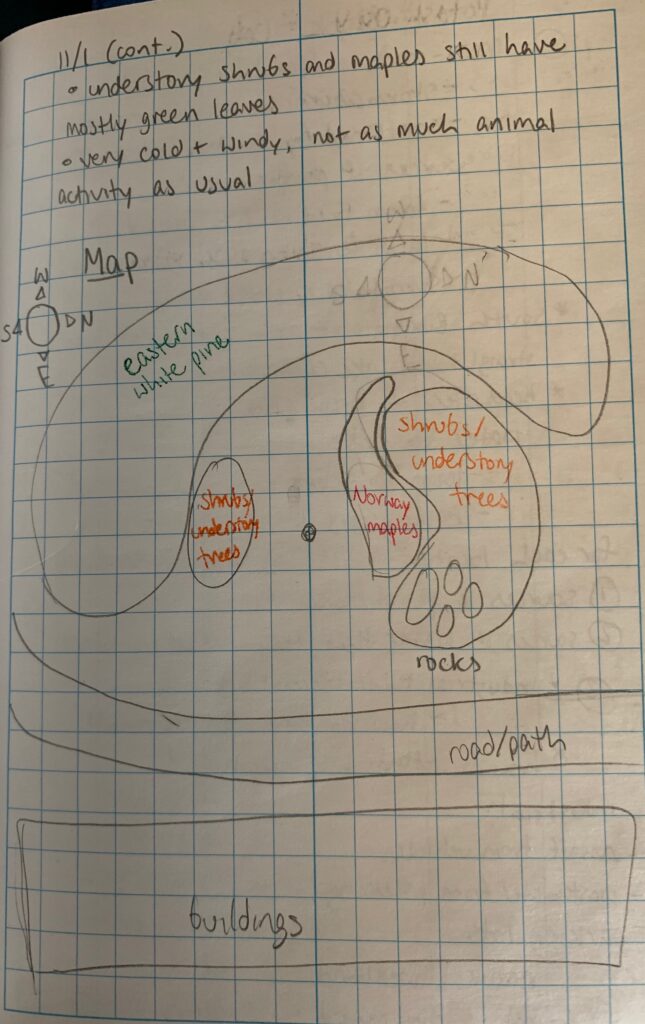
Since I was last in the spot, the medium-sized trees, such as the basswood, have dropped their leaves. The smaller understory shrubs and the Norway maples still have mostly green leaves. I had expected all of the deciduous trees to have lost their leaves by now, so this finding was quite surprising. 

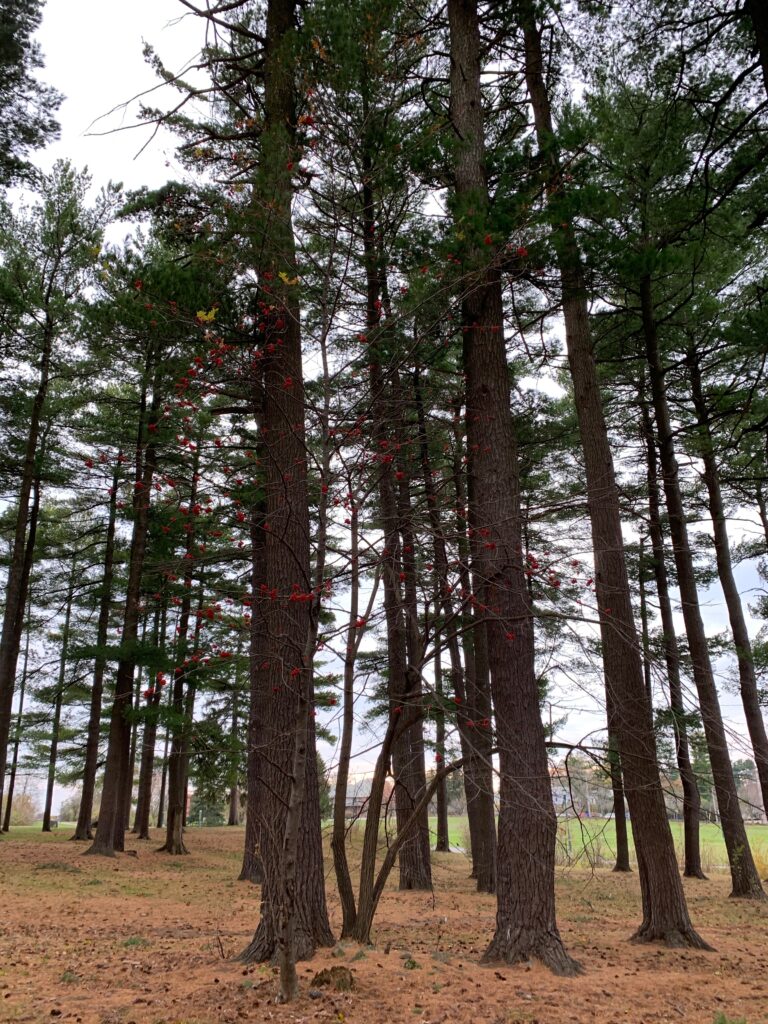
The ground is still covered in pine needles, as well as many pine branches broken off presumably by the heavy rain last night. Though the medium-sized trees have dropped their leaves, I did not notice any dramatic increase in the number of deciduous leaves on the ground. 

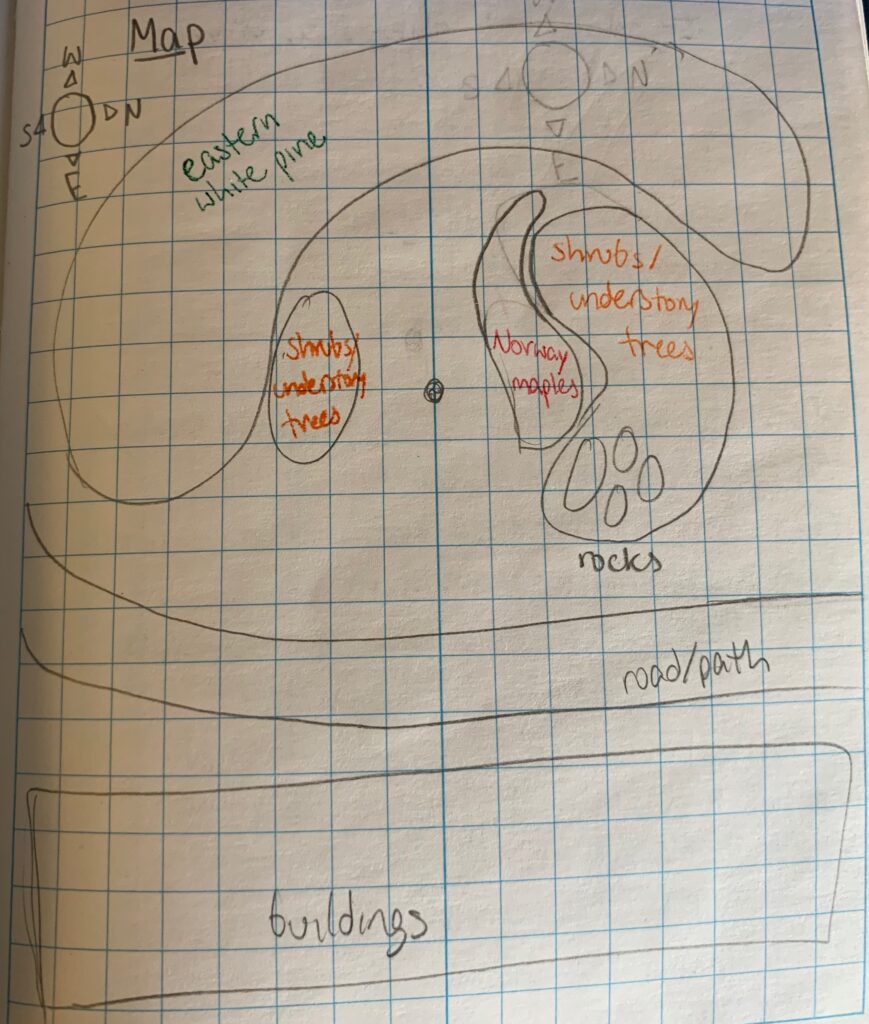
Through drawing this map, I believe I have a better image and understanding of the place as a whole. Drawing the map allowed me to take a step back and truly think about the layout of my spot. Obviously I knew that my spot was very close to human establishments, but drawing this map reinforced this idea for me, and made me realize just how much of an influence these establishments have of my spot through their close proximity.

While looking for a place for this blog, I knew I wanted to choose a place relatively close to human activity. I was curious to see what- if any- effect this proximity to people would have on this place, and how these effects might impact the change in seasons in this place. 

Despite its small size and abundance of human activity, this place is as active and dynamic as any. I find it quite admirable that nature has found a way to thrive in peaceful coexistence with human activity. I think that it is extremely important to recognize that humans are more intricately connected to the environment than we might think. Our actions have an impact on the world around us, and the environment impacts us, too. It was important for me to choose a spot that could demonstrate that it is possible for people to live in harmony with the environment. 

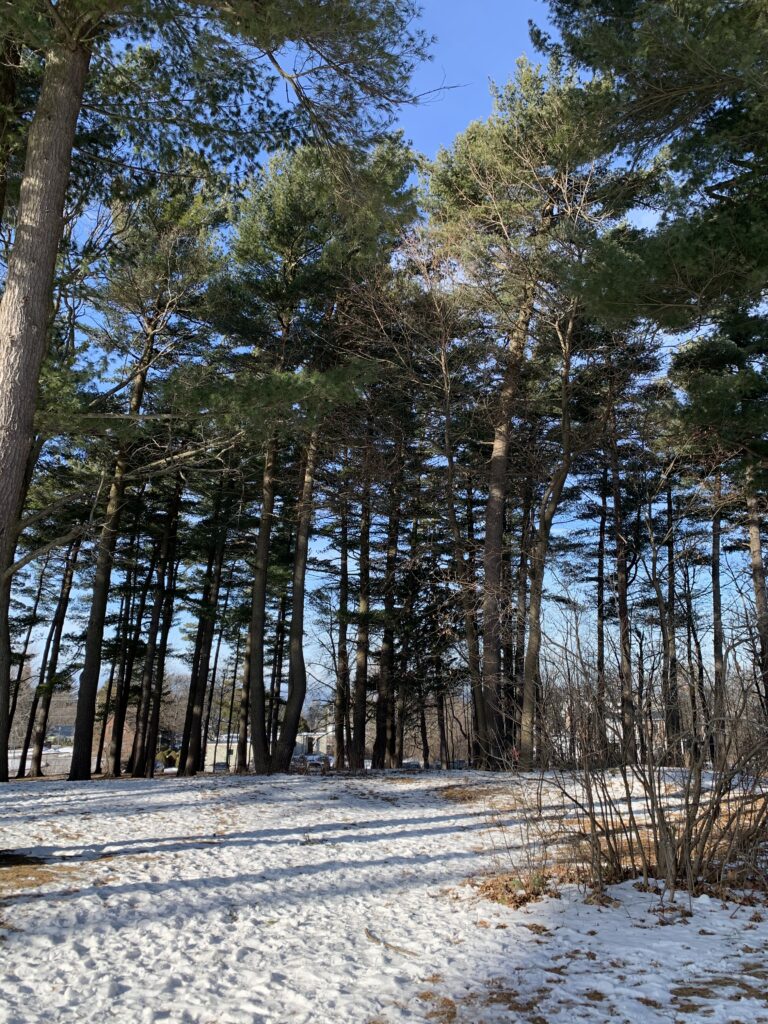
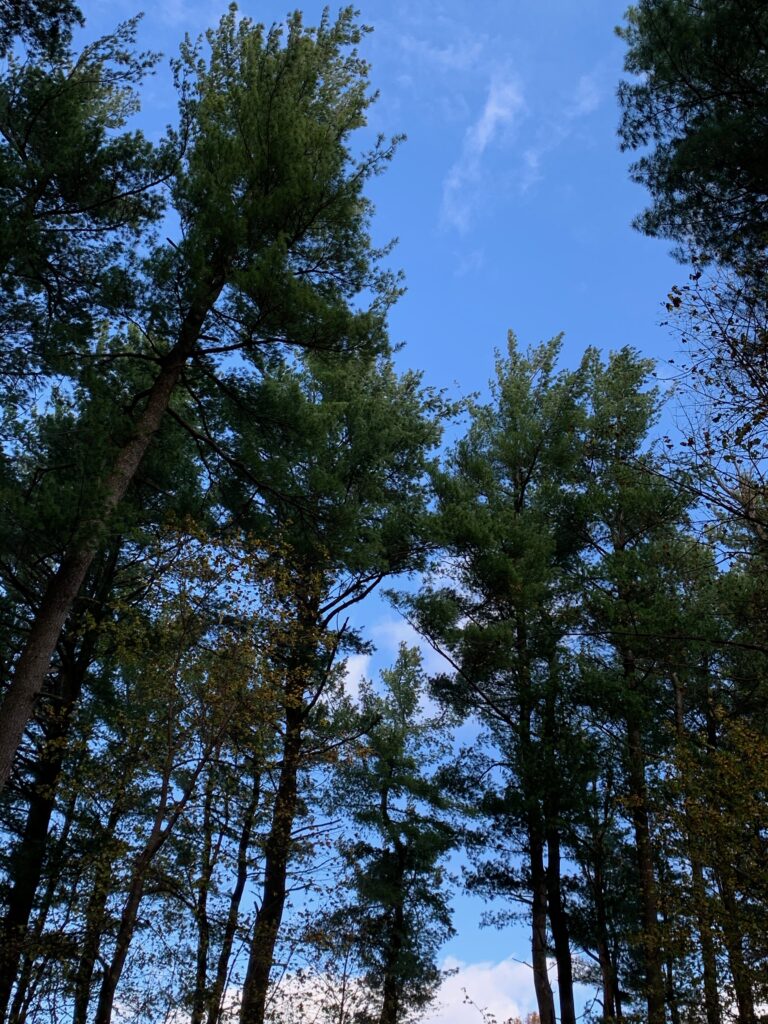
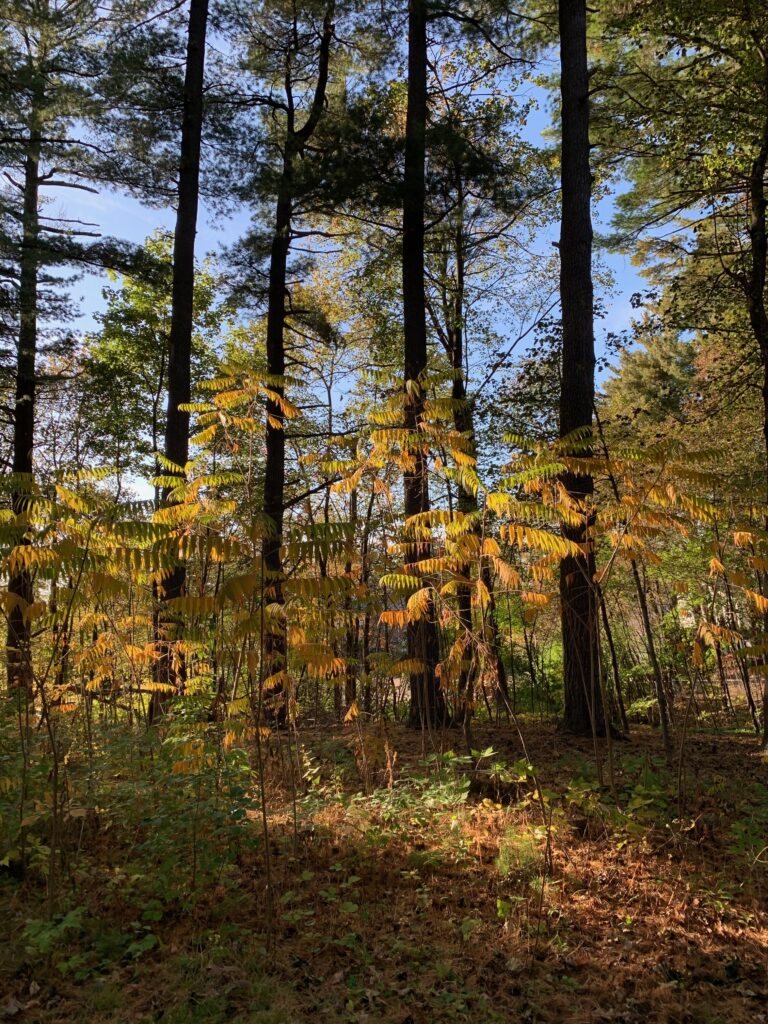
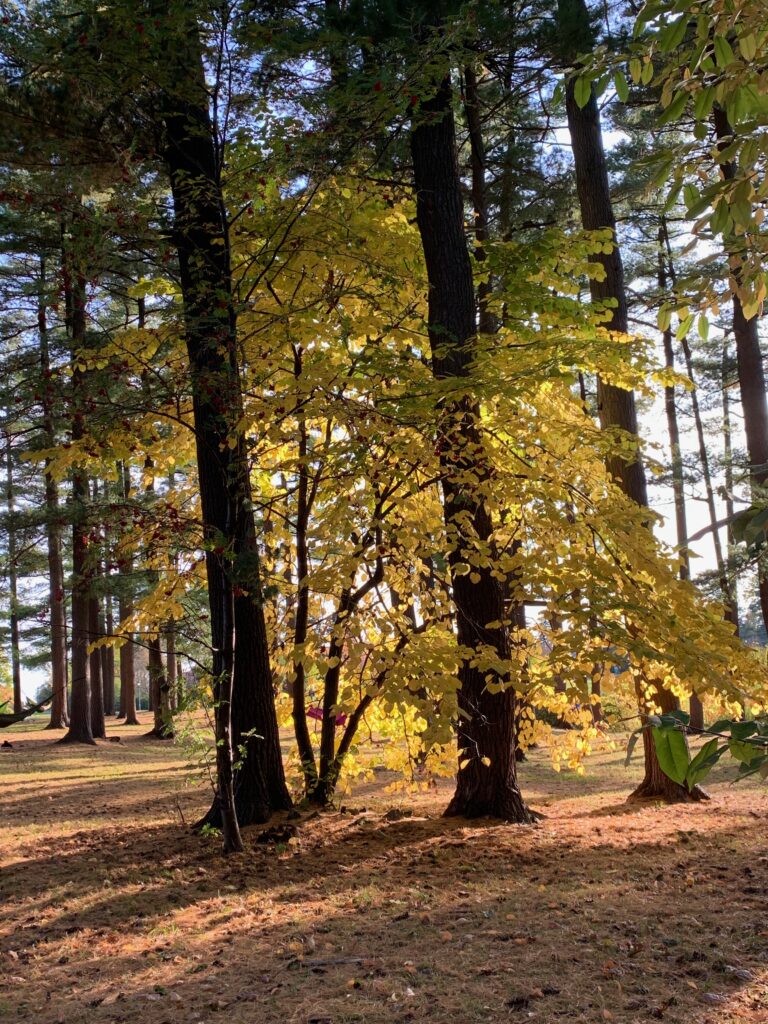
The place itself is a small stand of trees mostly consisting of eastern white pines and Norway maples. There is also a small cluster of shrubs in the middle of the stand, as well as a medium-sized basswood across from these shrubs between two pines. 

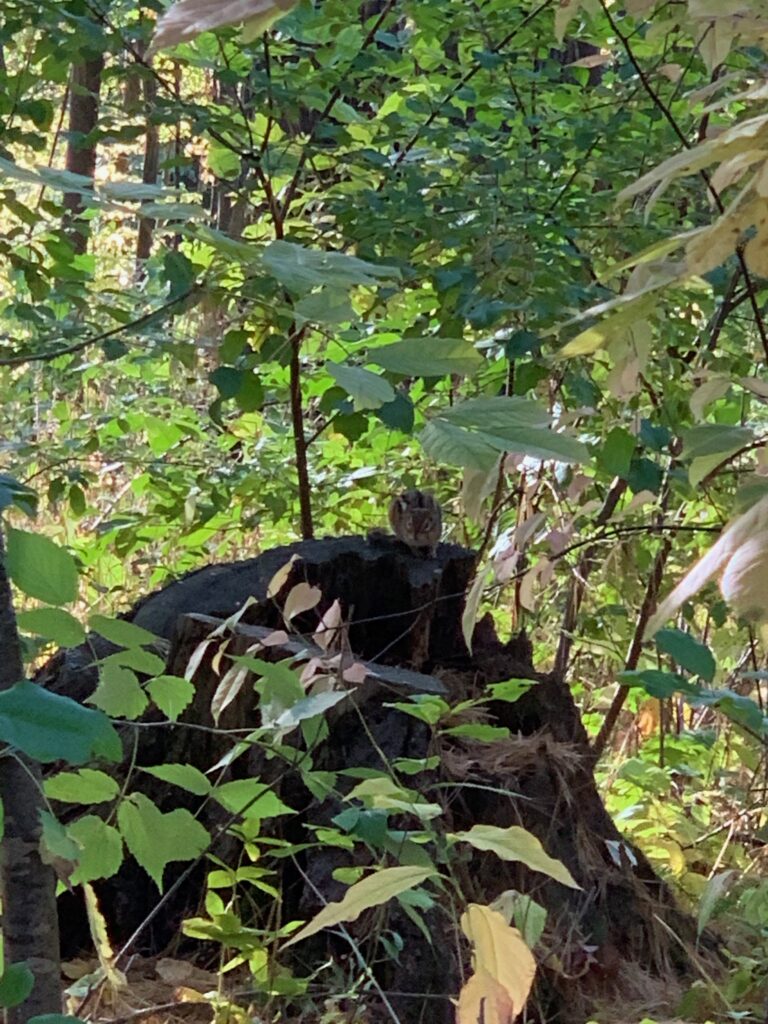
This place is full of activity- it seems to be a very popular hangout spot, and both times I’ve been there, there have been multiple hammocks strung up between the pines. The wildlife in the area also appears to be quite active and not at all bothered by their human neighbors. Squirrels, chipmunks, and chickadees are always running around, and there were more than a few insects buzzing around. 

So far, my two trips out to my spot have been quite similar. The weather and temperature were very similar both days- generally sunny and around 60º F. I am especially excited to see how my spot has changed with the colder weather. I predict that many of the deciduous trees such as the shrubs and Norway maples will have lost at least most of their leaves by now. Human activity may decrease with the cool autumn weather, but I predict that the wildlife will be just as active, frantically stashing up for the coming winter. 

Field Notes:

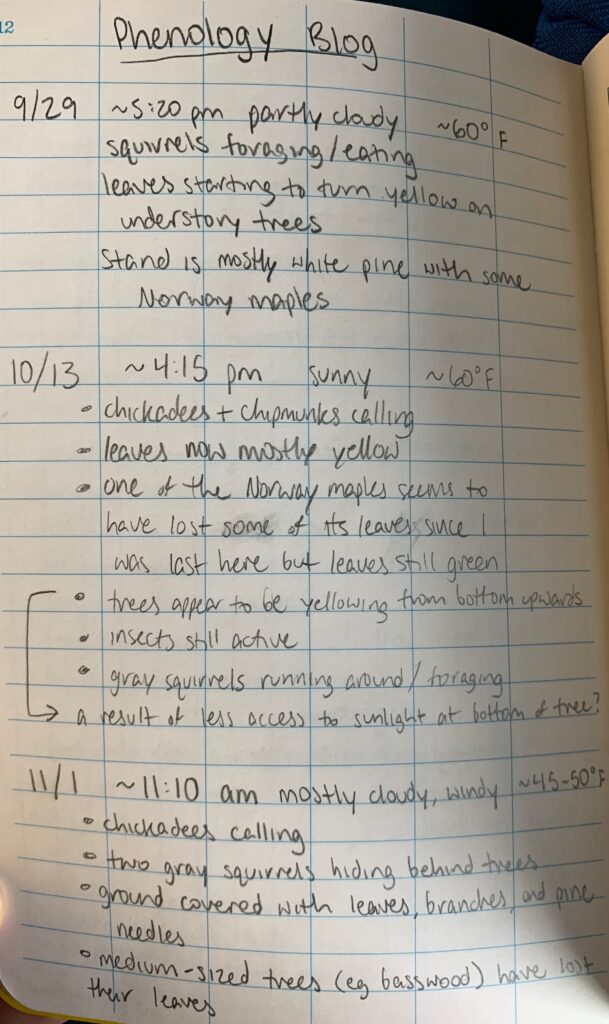
9/29

5:20 pm. Partly cloudy. ~60º F

  • squirrels foraging/eating
  • leaves starting to turn yellow on understory trees
  • stand is mostly white pine with some Norway maples

10/13

4:15 pm. Sunny. ~60º F

  • chickadees + chipmunks calling
  • leaves now mostly yellow
  • one of the Norway maples seems to have lost some of its leaves since I was last here but leaves still green
  • trees appearing to be yellowing from bottom upwards – a result of less access to sunlight at bottom of tree?
  • insects still active
  • gray squirrels running around/foraging

Skip to toolbar