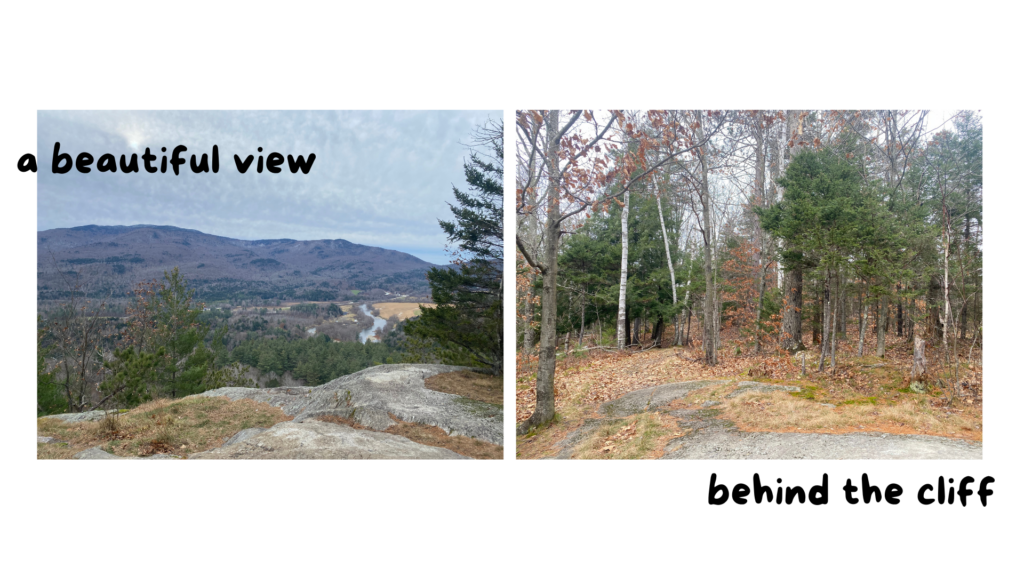
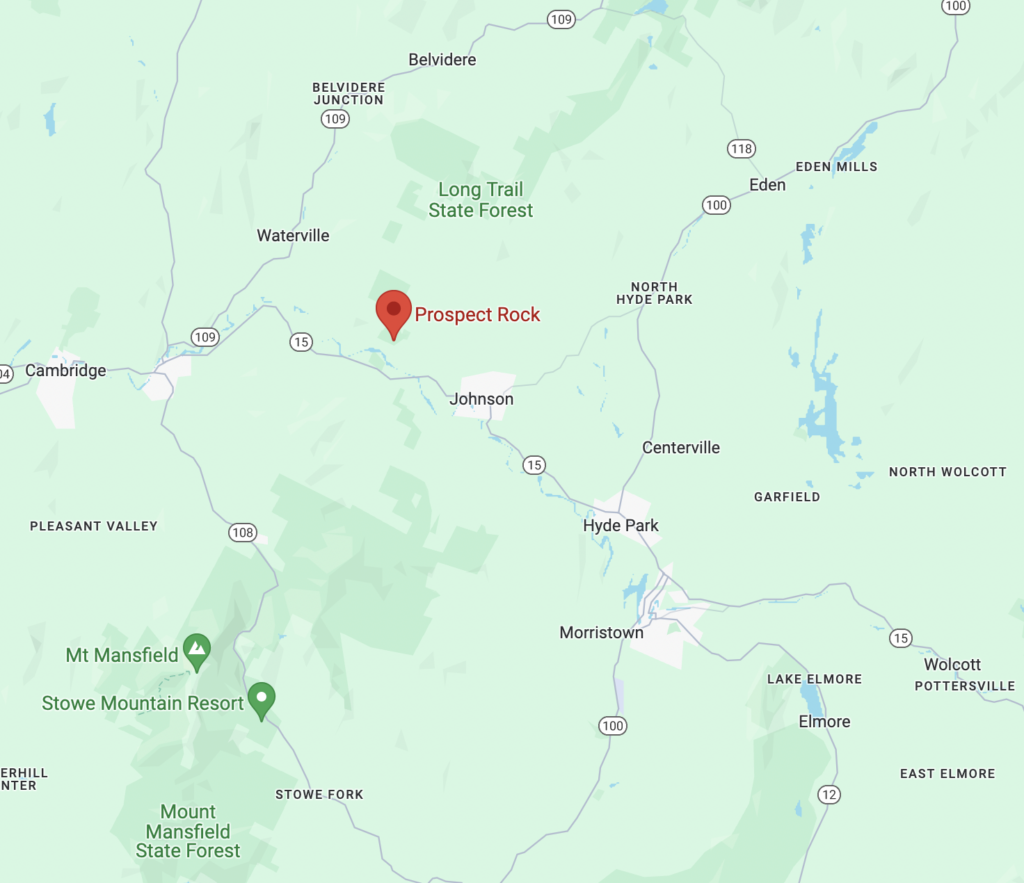
I spent Thanksgiving break in beautiful Fairfax, Vermont. For my new phenology spot, I chose the top of Prospect Rock. It’s located off the Long Trail in Johnson, VT. It’s just a short, if steep, mile long hike to get to the top. Prospect Rock is also a rare place where hawks go to nest during the summer.
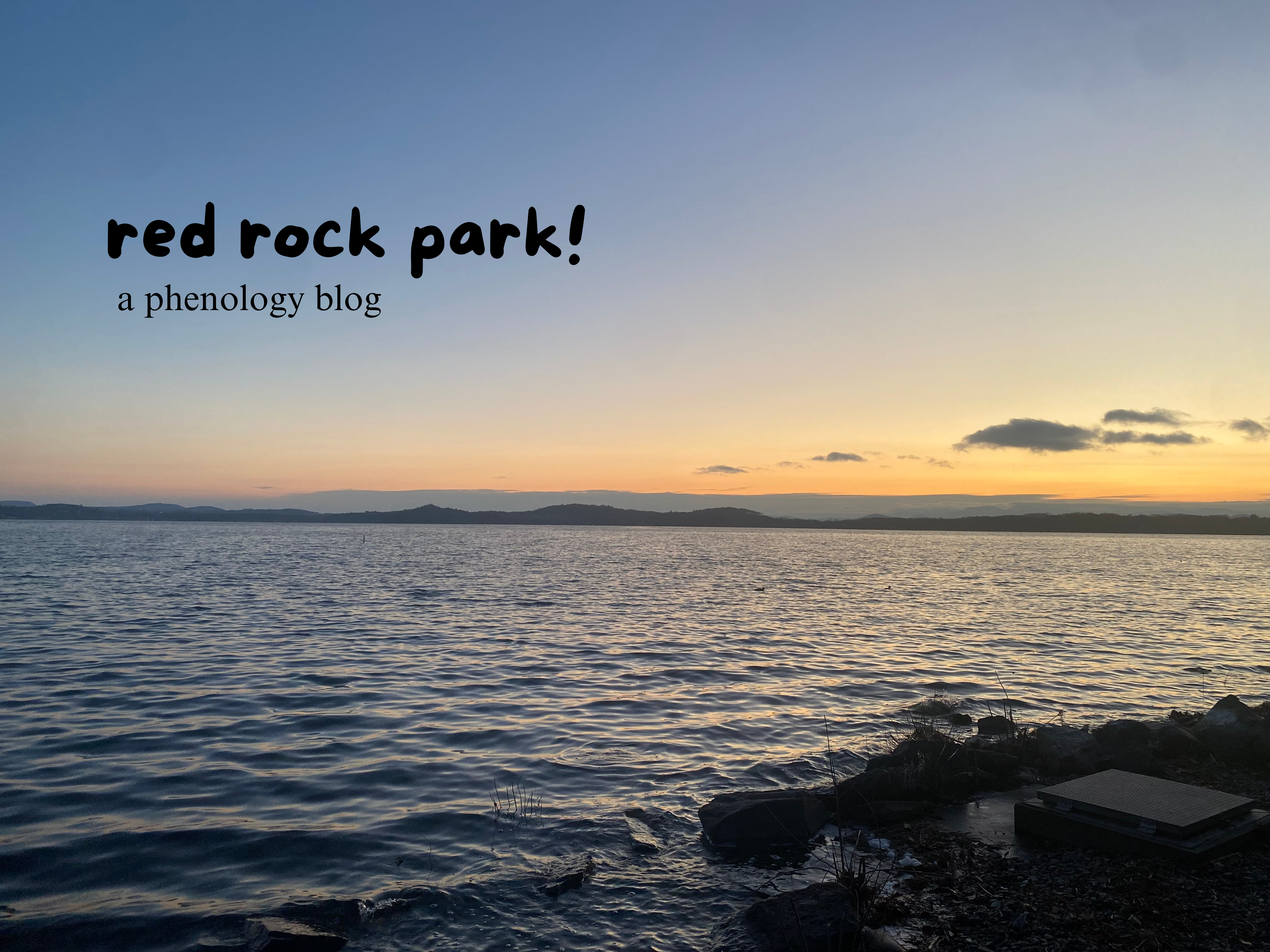
At the top, the view across the valley was stunning. The surrounding vegetation was primarily made up of Norway Spruces, Eastern White Pines, Red Oaks, and Paper Birches. I noticed that as the elevation increased, there seemed to be a decrease in the number of birches and an increase in the coniferous trees. This is one explanation for why my new place has such different phenology- the higher elevation impacts both soil conditions and shade conditions. Paper birch, for example, is very shade intolerant, so it’s much more suited to the open mountain of Prospect Rock than the dense forests of Red Rocks Park.
Another difference was the terrain, which was mostly made up of rock with some patches of soil. This made it so that trees could only grow in certain spaces and had to fight for that space.