goodbye.

It was sad to say goodbye to my phenology spot this week. It was absolutely beautiful outside and it was actually, finally, spring.

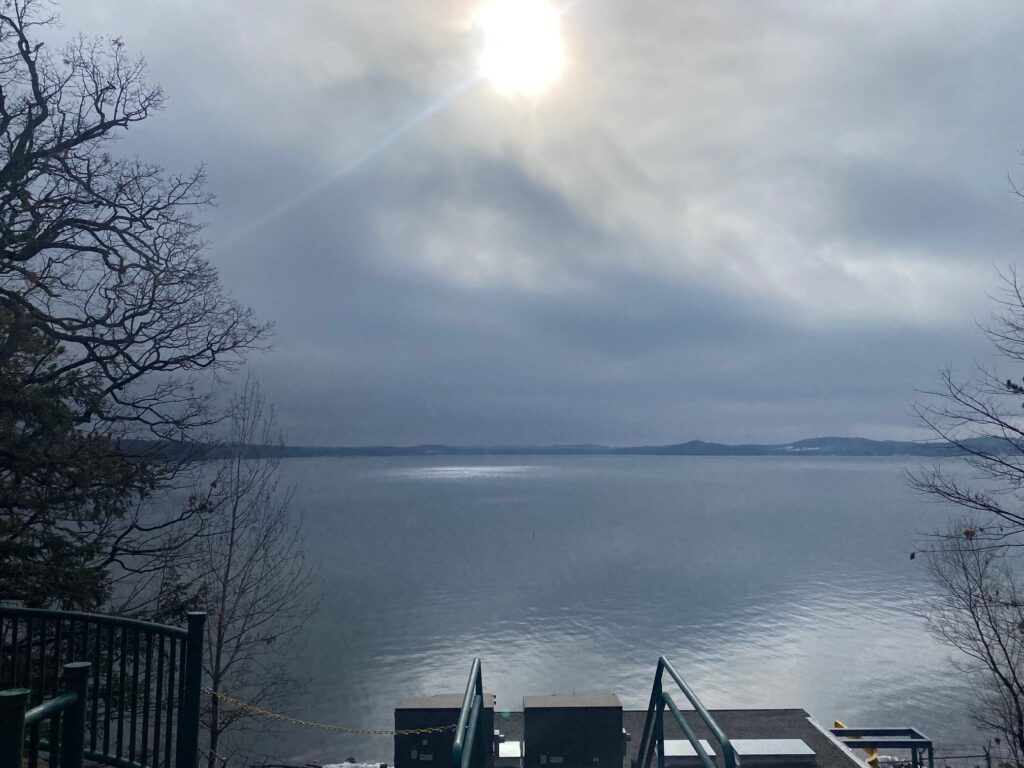
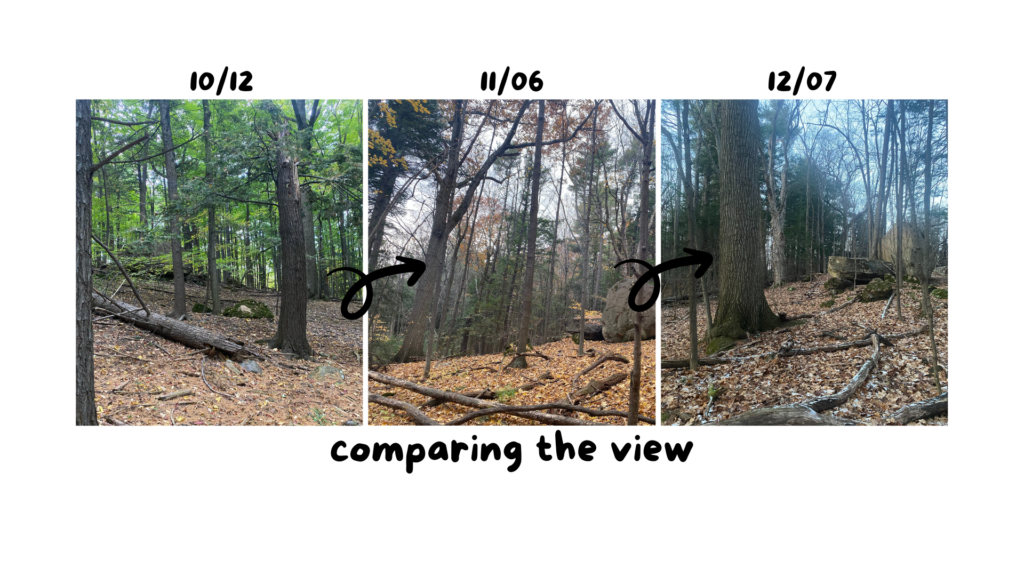
The site has changed a lot since I started going here. It doesn’t really follow normal seasonal patterns, as you can see below, where it looks like some of the images have been swapped. This checks out with ice out dates getting later and later every year.
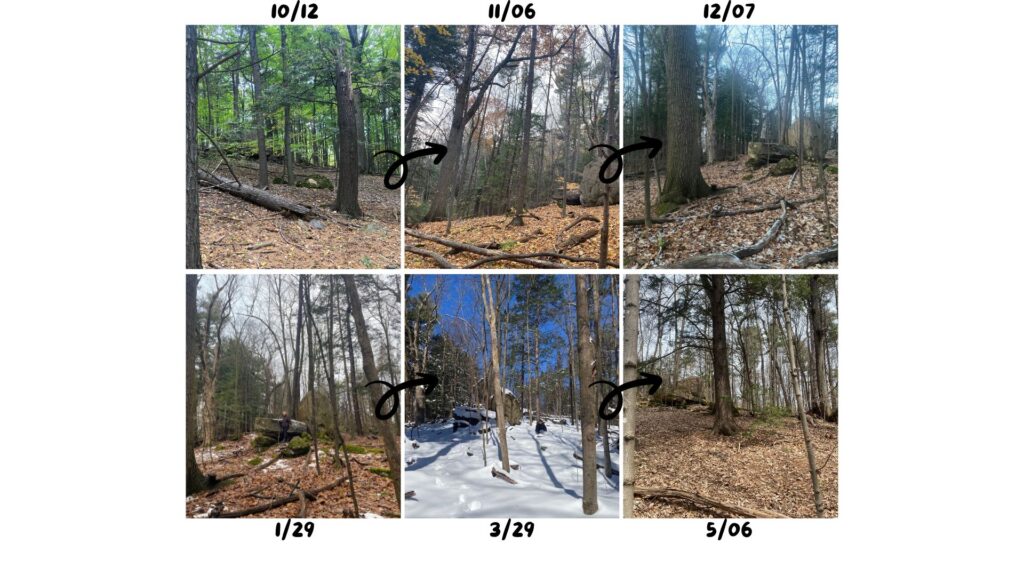
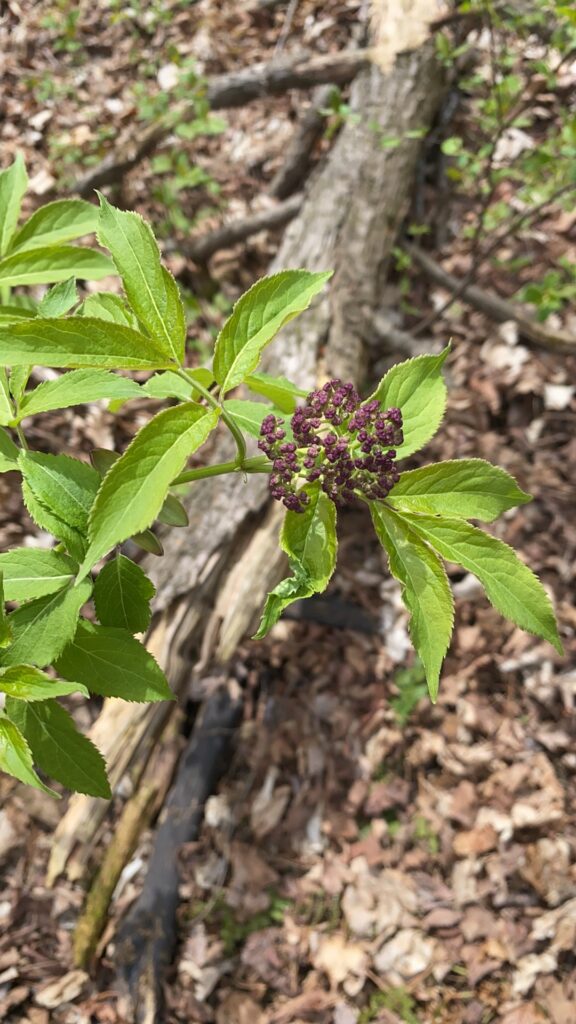
Throughout the whole year, the understory has stayed very sparse. It is one of the only areas of this natural community (maple-ash-hickory-oak forest) that behaves this way. It also means that it was hard to observe too many seasonal changes in smaller plants. I did find a patch of red-berried elder over by the rock ledge that I’d never noticed before.
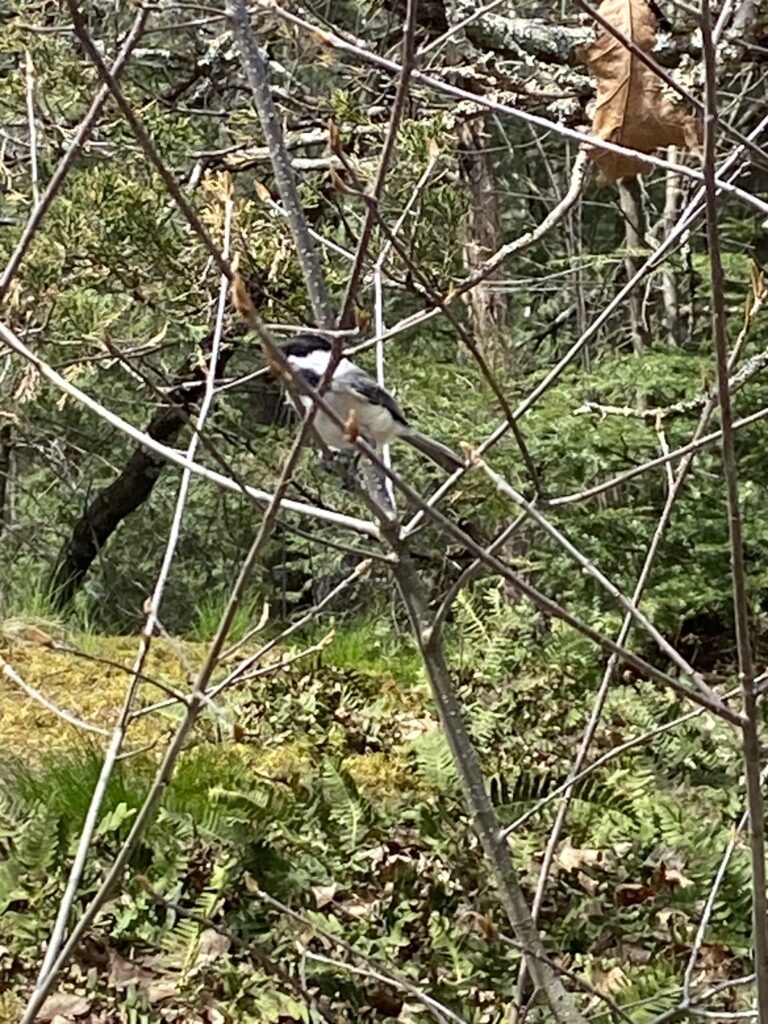
Most of the life that I observed as the weather warmed was sounds of birds in trees and the occasional small mammal. Speaking of birds, I was finally able to catch one on camera. There were several black-capped chickadees in this tree.
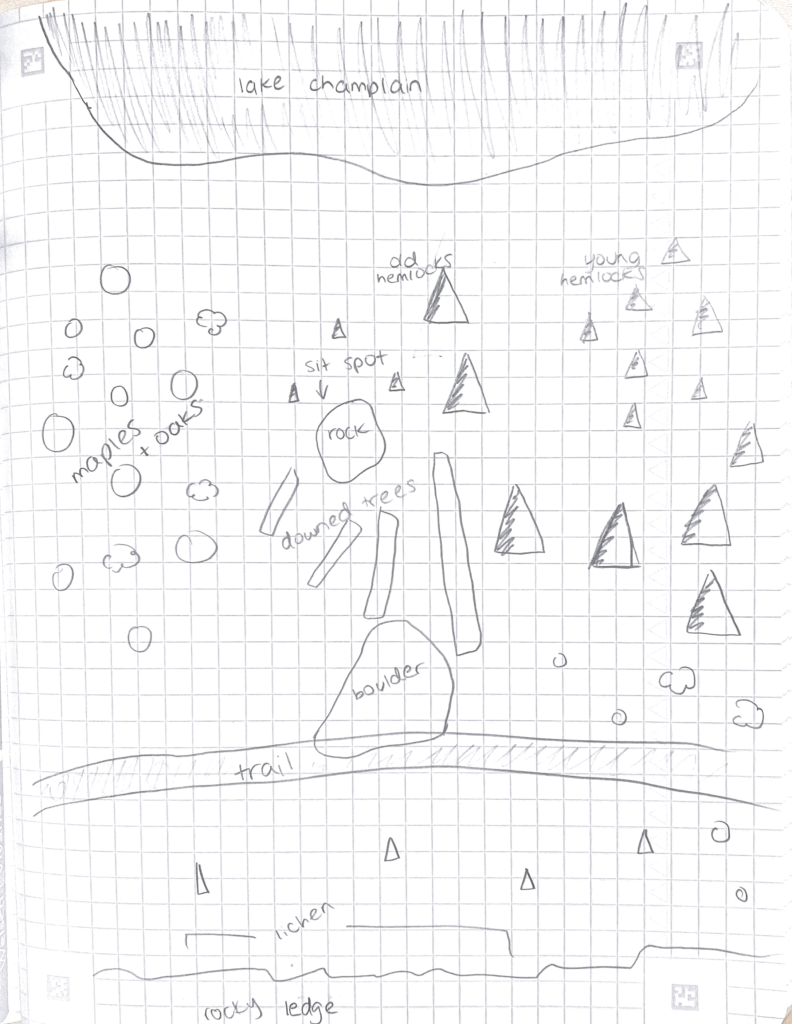
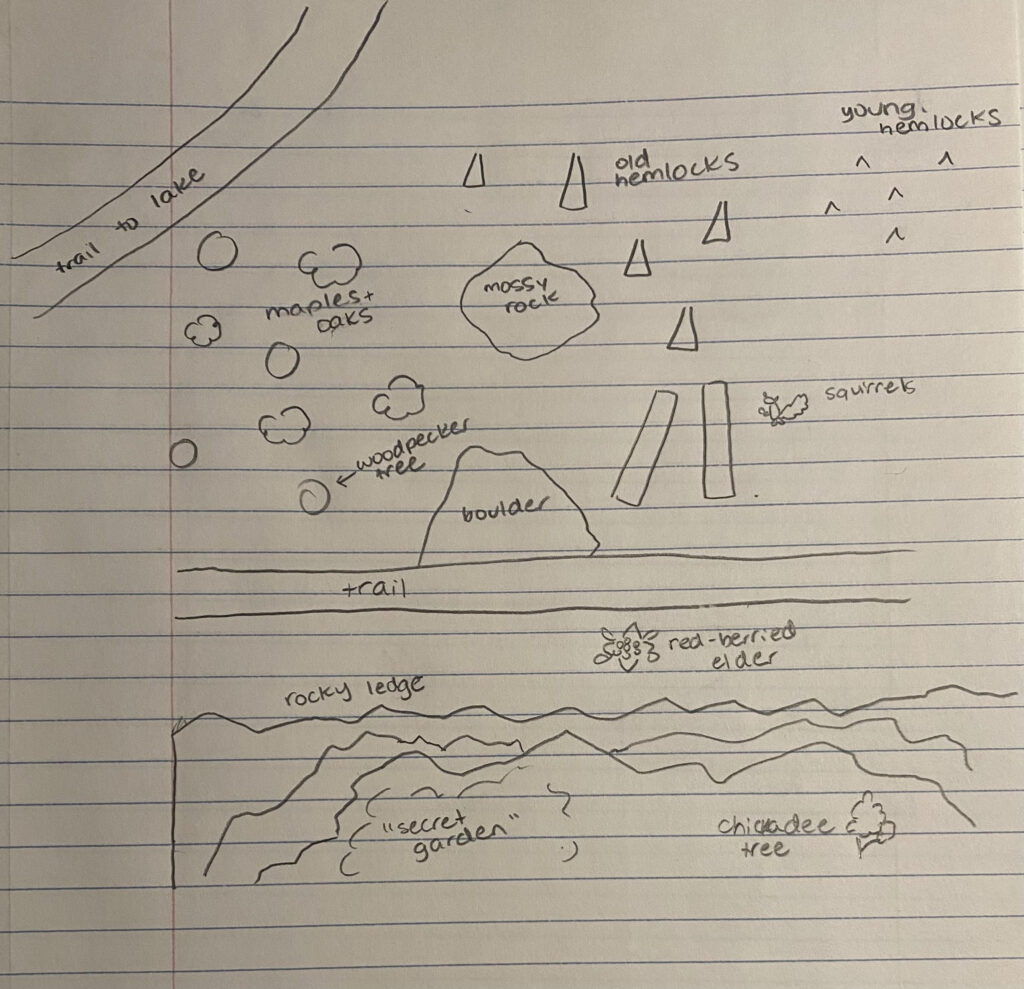
I composed a sit-sketch showing the location of everything, which I’ve remade here for easier readability. Of the landmarks in my site, my favorite is the large mossy rock in the center of it. I really enjoy sitting on the rock and listening to the sounds of nature. I also like the rock ledge to the back of the spot. I climbed pretty far up it this week, which is really fun because you can stand at the same height as the tree tops and remain completely hidden. I’ve marked this area as the ‘secret garden’.
There is a lot of interconnection between nature and culture here. Red Rocks Park serves as a place where everyone can have access to the beauty of nature. It is very accessible, and is right by a bus stop, so anyone could theoretically visit. I think it’s important for social and human health that we preserve city natural areas like this one.

I don’t view myself as a part of my place. I don’t feel as much like an intruder as I did when I first started visiting, due to how familiar I am with the landscape. However, I do feel like I am just a visitor, and I’m lucky to get to experience this beautiful place even if only for short periods of time. I want to protect my spot. I think the reason the ‘secret garden’ area of my spot is so amazing to me is because it feels somewhat untouched by humans, as it’s difficult to reach from the trail without some difficult climbing.

This has been such a fun class and such a fun project!

Signing off,

Greta
city nature challenge 🌿

April 27, 2024 –

Location: Red Rocks Park

Species Encountered: 11

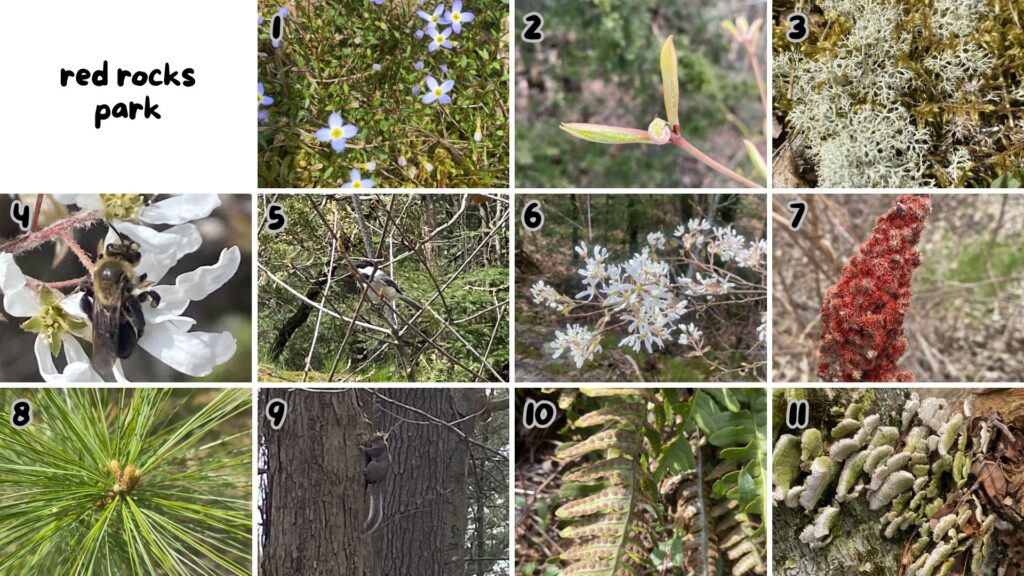
On Saturday, I explored Red Rocks Park in South Burlington. This is also the site of my phenology project. I’m not sure if it’s because spring is underway or because I haven’t been paying close enough attention before, but it felt like Red Rocks Park had more species of plants, birds, and small mammals than ever. 

I encountered and logged the following species on iNaturalist: 

  1. Either an azure bluet or a thyme-leaved bluet. Unfortunately the way to tell them apart is the leaves and leaf stalks, which I did not get a clear picture of. 
  2. Striped maple.
  3. Some sort of reindeer lichen. I was not able to identify which. 
  4. Some species of mining bee. I originally thought it was a bumble bee, but then I learned that mining bees are slightly smaller and less hairy. 
  5. Black-capped chickadee. 
  6. Some sort of serviceberry (common serviceberry?) 
  7. Staghorn sumac
  8. Eastern white pine
  9. Eastern gray squirrel 
  10. Rock polypody 
  11. Some sort of polypore. I think it’s a mossy maze polypore but I’m not entirely sure. 

I also saw a woodpecker, a chipmunk, a sparrow, and a wren but I wasn’t quick enough to get a picture. 

I had such a fun time looking for different organisms and logging them on iNaturalist. I think it’s a great platform for the ecology community and for citizen science. I really like that it’s a place to learn, and people from all over will help you identify something if you can’t figure out what it is. I think I will definitely use it in the future. 

Taking a look at the Global City Nature Challenge, I found it interesting that some of the cities with the highest rankings of most observations and species found were densely populated urban areas. It just goes to show that biodiversity can be found all around us, and there is nature everywhere if you know where to look for it. 

false spring

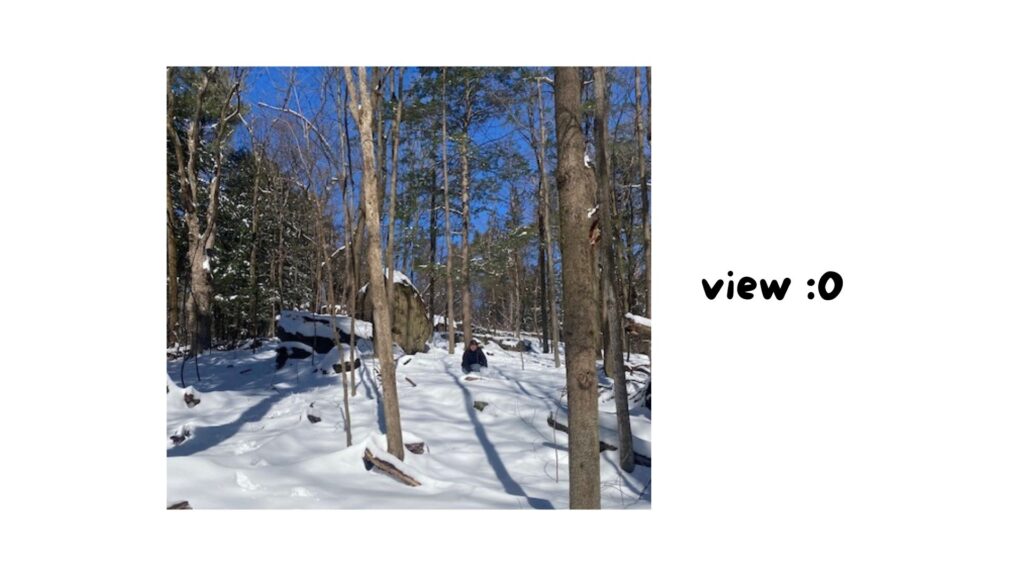
We were back at Red Rock Park this week, and the snow was deeper than I’ve ever seen it. I could tell it was a symptom of a false spring. We saw pretty warm weather a few weeks ago before heavy snow hit us yesterday. Today, although there was heavy snow cover, the weather was warm and pleasant. However, because of all the snow, it was difficult to look for signs of spring.

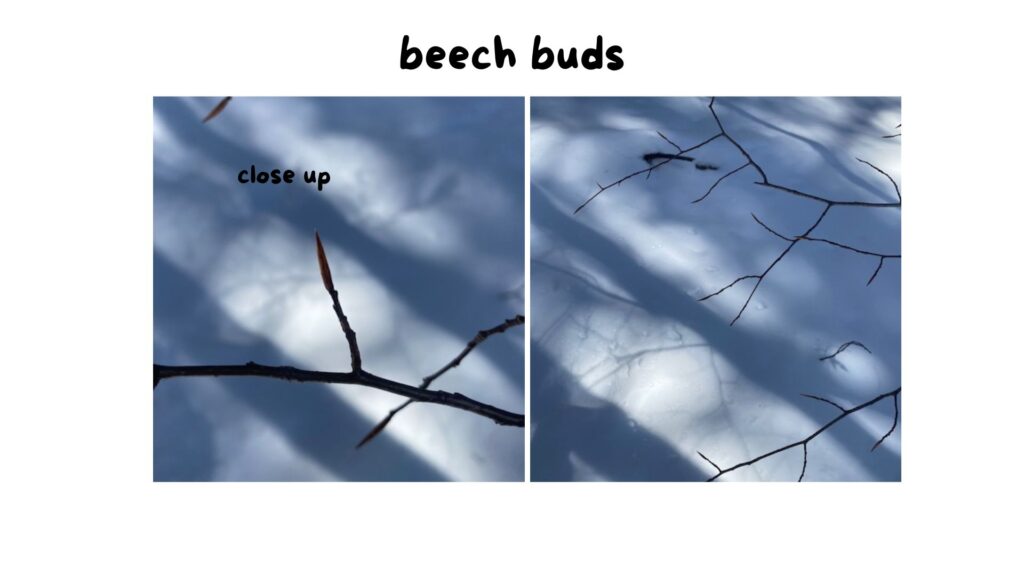
The first thing I checked for was signs of swelling buds on the trees. The buds of this beech tree were easy to see, but I did not spot any signs of emerging life.

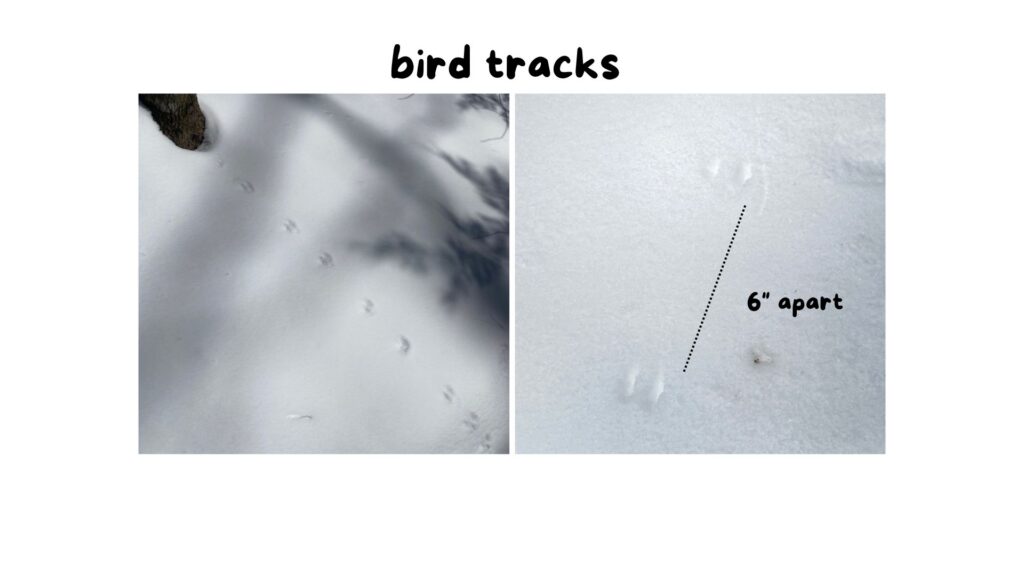
The next thing I checked for was tracks. Because the snow was very deep, it was difficult to make out tracks of heavier animals that would sink deeper into the snow bank. However, I did find many bird tracks going from tree to tree as birds hopped along the surface of the snow.

I wasn’t able to spot any birds, but I did hear them all around. Below is an audio clip of the bird calls. I can’t quite identify them, but I can tell that there are at least two or three distinct calls.

mud mysteries

I of course completed my tracking project right before we finally got some snow for the first time in a few weeks. The lack of snow on the ground made tracking difficult. However, besides finding a number of dog prints that we briefly thought were bobcats, it was a successful journey.

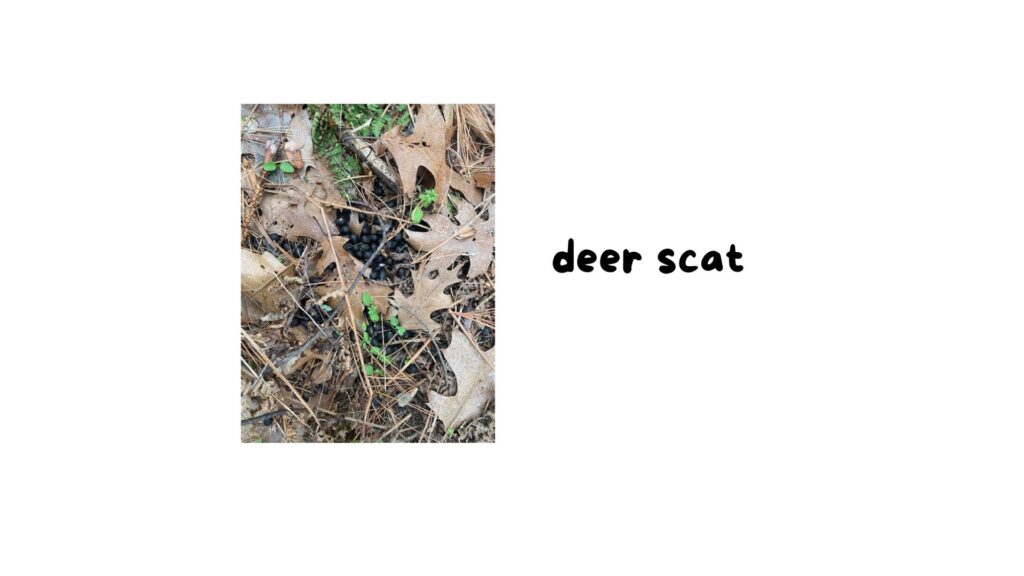
On Tuesday, I headed down to Centennial Woods. It’s probably a classic spot for most people but I actually haven’t been since last semester. I searched for about 10 minutes before I found anything. A little ways off the trail, I found some scat. I thought at first it might belong to a rabbit, due to its round shape. However, due to its larger size, I realized it was a white-tailed deer. There were four or five other piles of deer scat within the same five foot radius, so I figure the deer must come to this area often.

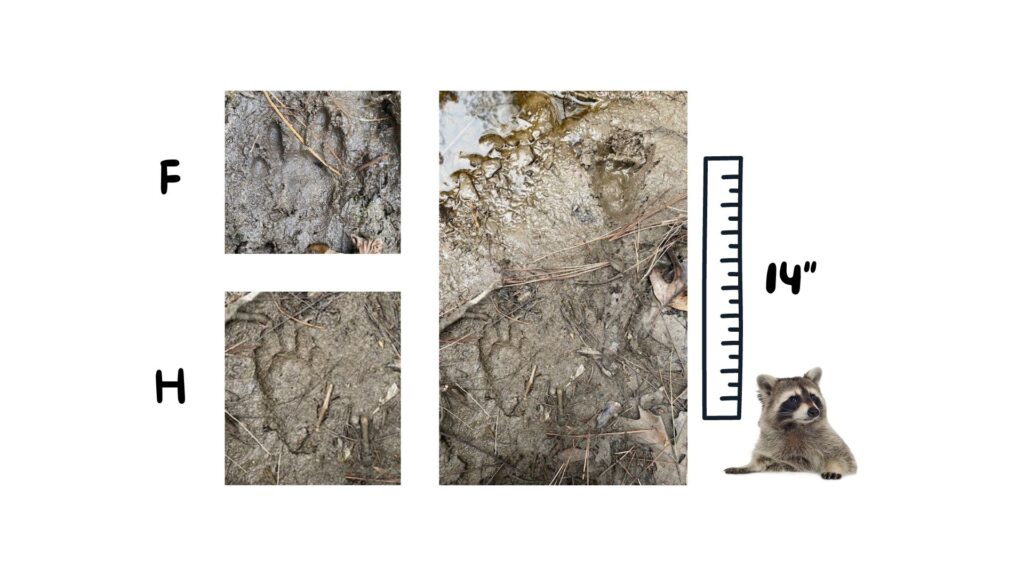
I had much better luck now that I was off the trail. I followed the stream for a little while, figuring that it was likely that animals would need to stop and get some water. Plus, the dirt would be muddy by the bank, leading to easier to identify tracks. After searching for a while, I found some prints. I tried to follow them to the other side of the stream, but the ground was covered in ferns, so no prints would have been left. I identified these prints to belong to a raccoon. I also considered that they might be from a porcupine, but I noticed that these prints were bigger and had five fingers on the front paw instead of four. It seemed to be pretty average sized, with a 14 inch pace.

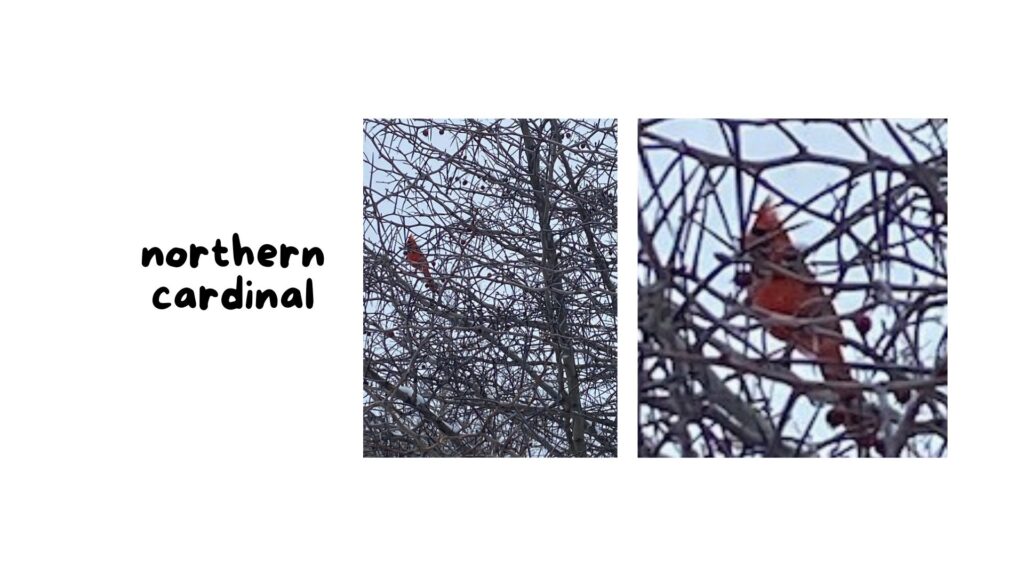
I’d been hearing bird calls the whole time I was in the woods, but I was unable to identify any. However, on my way back, I noticed some rustling in a nearby tree and spotted this Northern Cardinal perched on one of the branches. I was able to get pretty close to him without scaring him away.

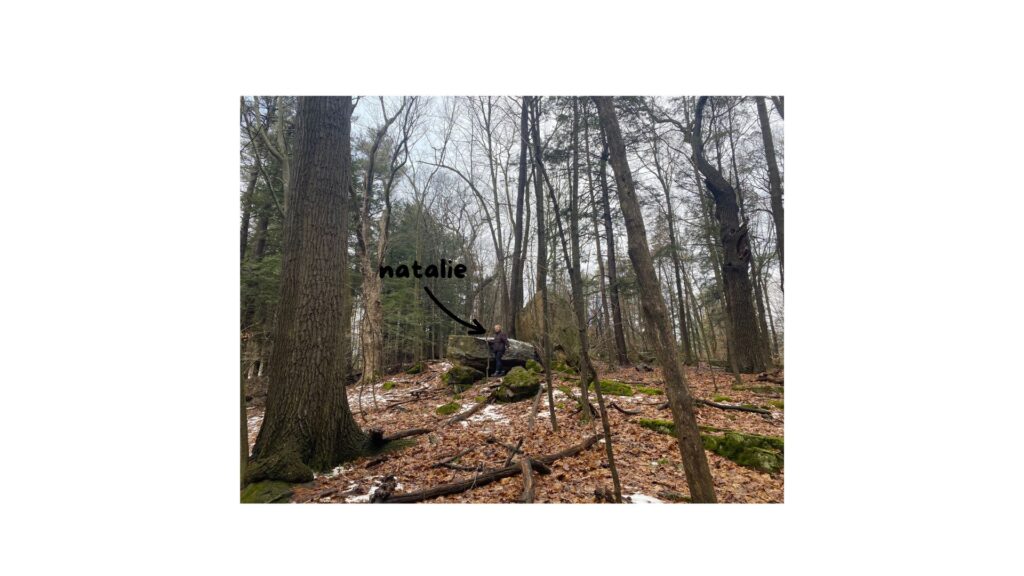
Once I got back, I posted the picture of the cardinal, along with some pictures of a few mushrooms I spotted along the way (Pear-shaped Puffball and Lumpy Bracket) on iNaturalist. It was very easy to do with the app, although I had to estimate the location at which I took the pictures a bit. Everything got confirmed to be Research Grade! My friend, Natalie, posted the deer scat and raccoon prints, which were also confirmed. It was really cool to see that we were contributing to such a big project and that our identifications had been correct.

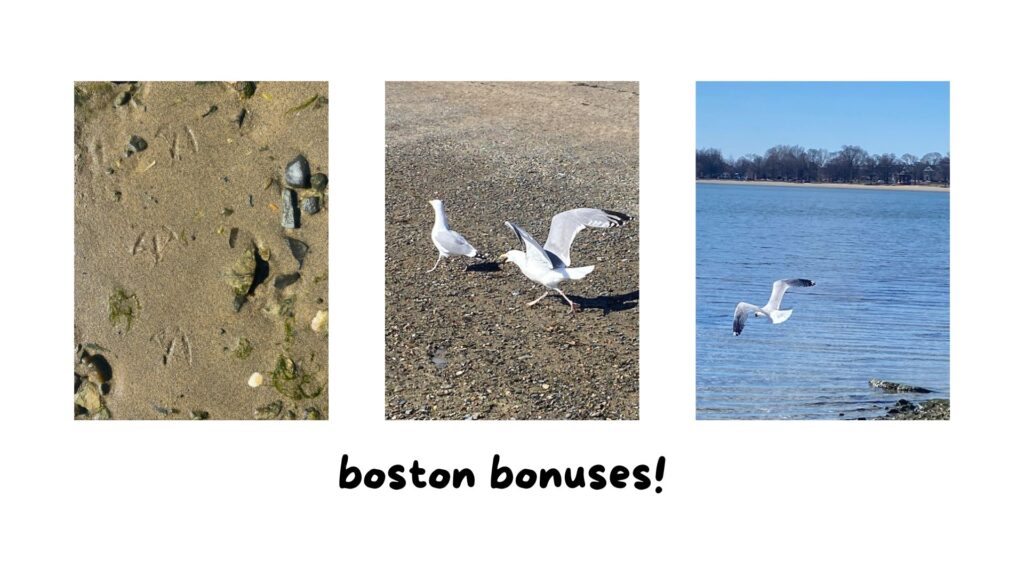
P.S. I ventured outside of Burlington to Boston, MA for the long weekend. Here’s my bonus findings of some friendly seagulls!

aaaaand we’re back!

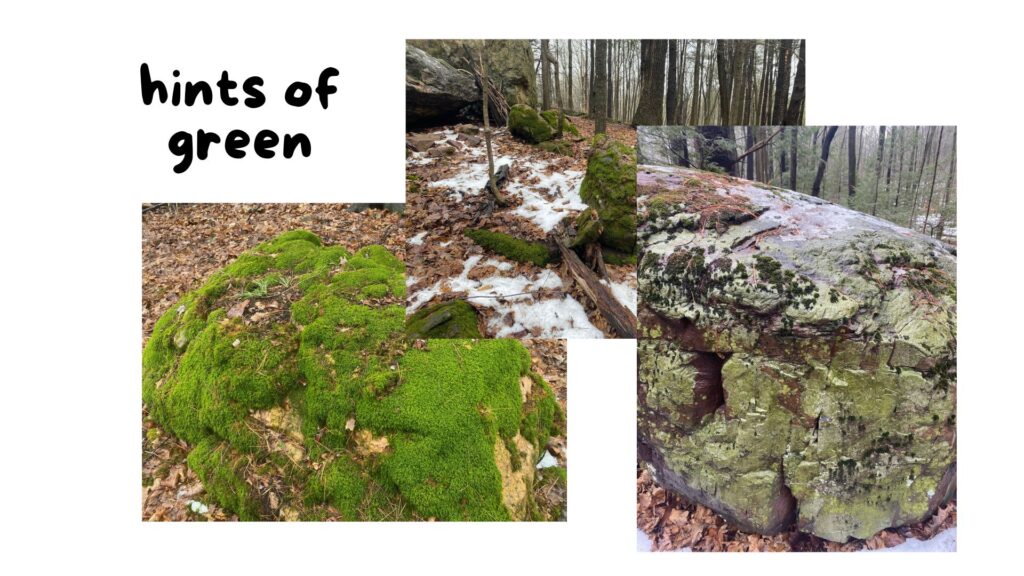
Today I arrived back at Red Rock Park for the first time in over a month. I missed her a lot. There were a lot of people and a lot of dogs out enjoying the nice weather. It was also surprisingly green. I checked in on my lichen rock, which seems to be doing well despite the cold. I’m not sure if this is in my mind but the moss felt super vibrant as well. Either way, it made me excited for spring to finally arrive.

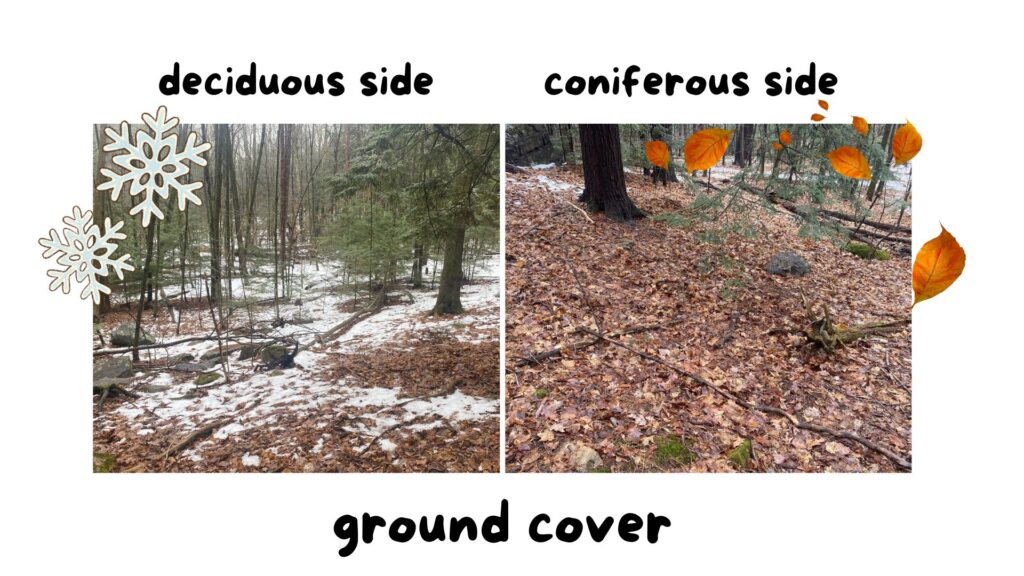
The goal of today was tracking. Unfortunately, it’s been uncharacteristically warm these past few days, so there wasn’t much snow to be seen. My site is split in half between deciduous and coniferous stands, and it seemed the coniferous side had significantly less snow on the ground. This seemed to be a pattern all throughout the park. I think this is caused by a combination of 1) the denser tree canopy and 2) the thick layer of needles covering the ground.

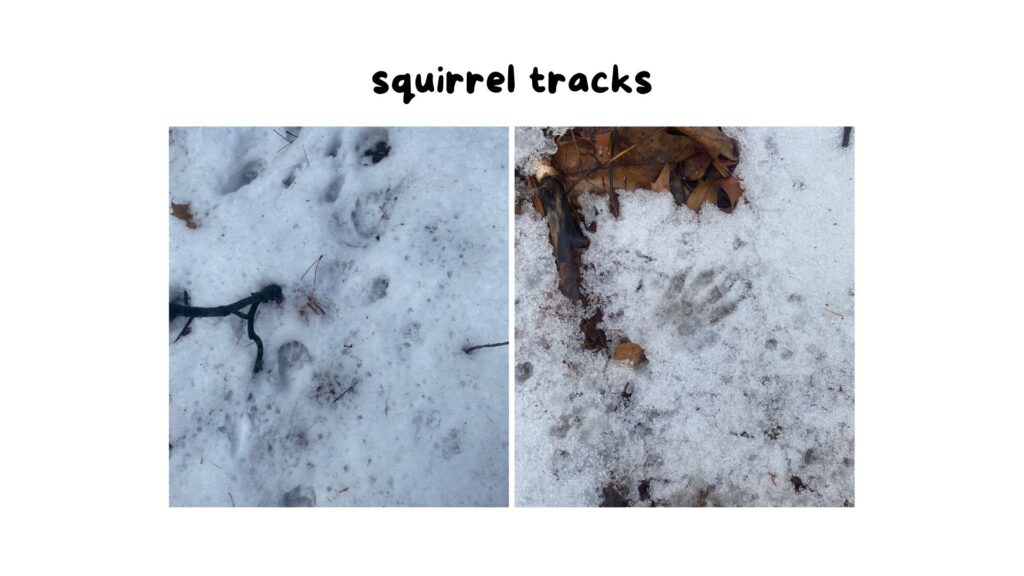
I headed over to the deciduous side to get to tracking. I found several squirrel tracks. This was unsurprising, as I’d seen quite a few scurrying about. However, they’re speedy little guys and I was unable to capture a good picture.

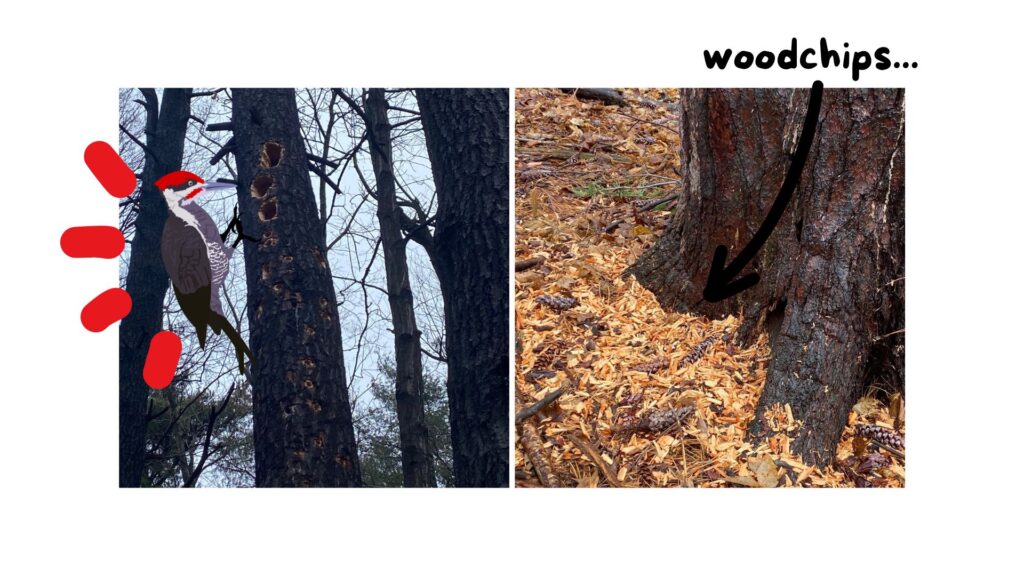
Another new development (and new sign of life): it seemed a woodpecker had made its home in one of the trees just off the path. I didn’t spot him, but I did see plenty of evidence of him having been there.

We rounded the trip off by walking down the hill to the shoreline. I was happy to see the water was super clear. A perfect place to sit and enjoy the silence and sounds of nature.

winter is coming, etc.

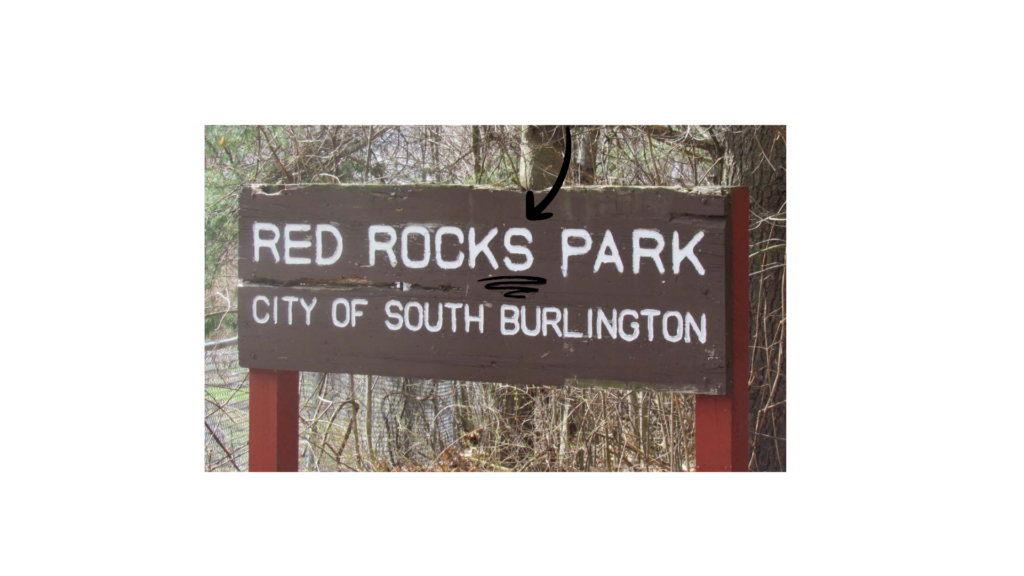
Winter has arrived at Red Rock Park. With it has come a harrowing realization. Natalie Albert has informed me that the park has been called “Red Rocks Park” this entire time.

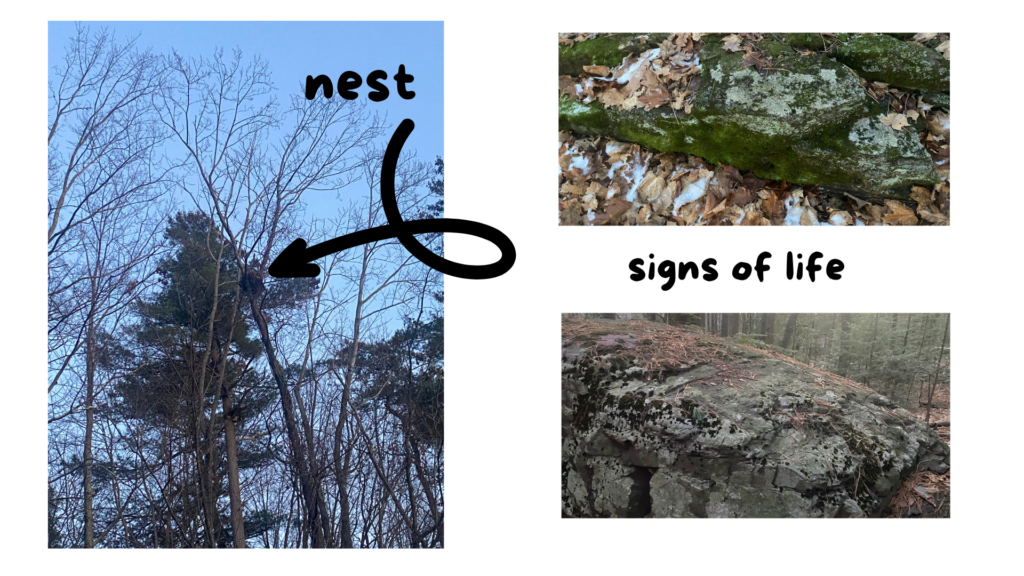
There’s a noticeable chill in the air. The hardwood trees are completely bare of leaves. Frost has begun to appear on the patch Eastern Hemlocks. However, there’s still life here, if you know where to look. Underneath a thin layer of snow and ice, there’s an abundance of moss covering many logs and rocks. The lichen, too, seems to be doing well. The dry winter air has caused it to somewhat dehydrate, but it persists through the cold. 

I could hear bird calls all throughout the forest, and even spotted a few nests. I wish there had been more snow on the ground, and I’m certain I would’ve seen tracks, too.

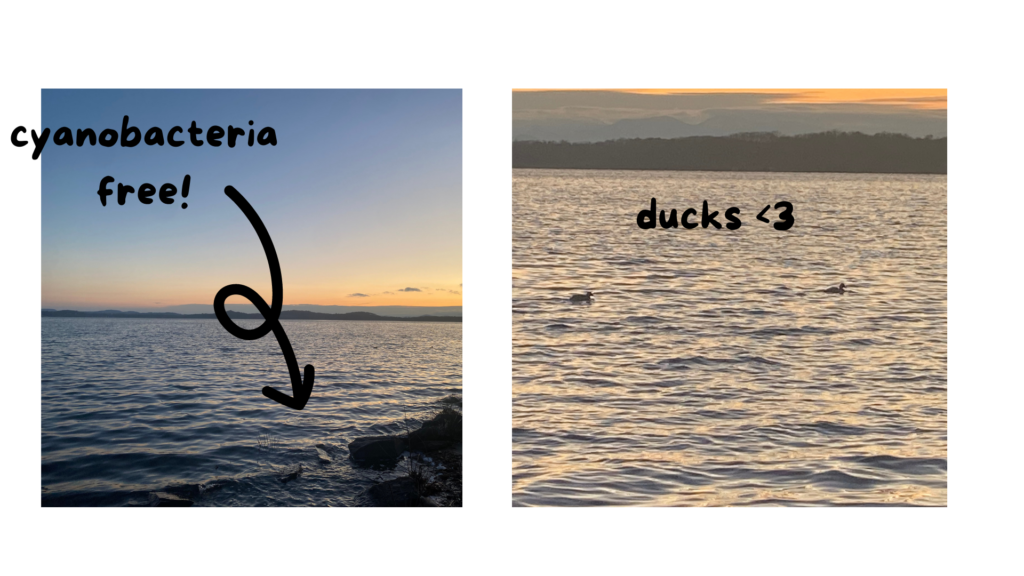
In good news, the algae bloom that covered the shoreline the last time I was here has completely disappeared. I also spotted two ducks swimming into the sunset.  

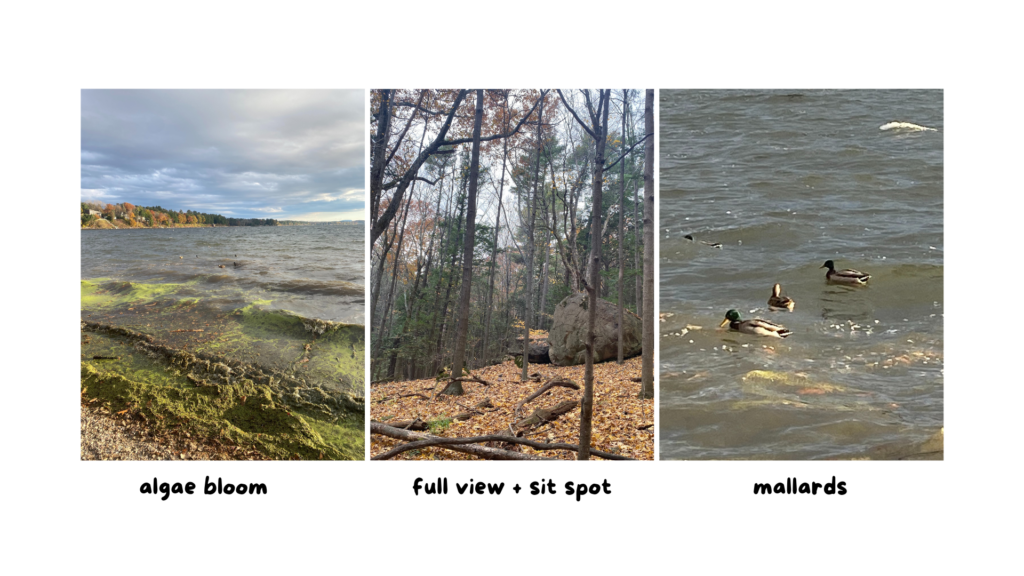
As I say goodbye to my phenology spot for the final time this semester, I thought it’d be nice to look back on my favorite parts of my spot. I love the view over the water, seeing the mountains in the horizon. It reminds me of how small I am in the grand scheme of things. I love the changing leaves, and the many different kinds of trees that can be seen here. I love going for walks down the trails and finding new places to explore.

I will miss you, Red Rock Park. Until next semester.

a new place – prospect rock

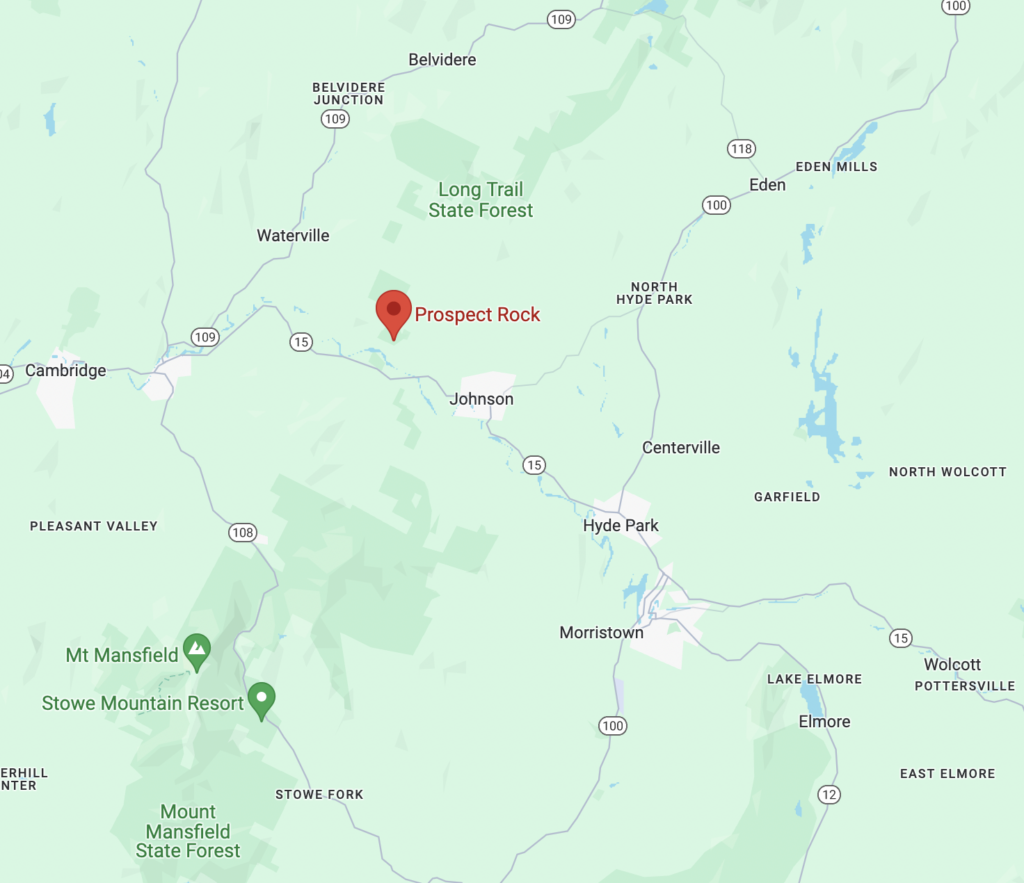
I spent Thanksgiving break in beautiful Fairfax, Vermont. For my new phenology spot, I chose the top of Prospect Rock. It’s located off the Long Trail in Johnson, VT. It’s just a short, if steep, mile long hike to get to the top. Prospect Rock is also a rare place where hawks go to nest during the summer.

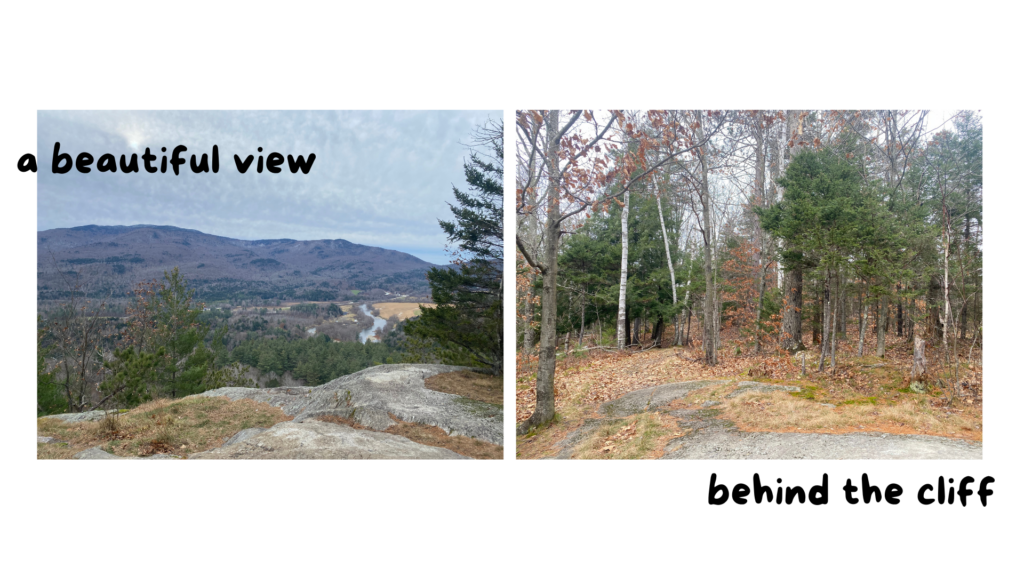
At the top, the view across the valley was stunning. The surrounding vegetation was primarily made up of Norway Spruces, Eastern White Pines, Red Oaks, and Paper Birches. I noticed that as the elevation increased, there seemed to be a decrease in the number of birches and an increase in the coniferous trees. This is one explanation for why my new place has such different phenology- the higher elevation impacts both soil conditions and shade conditions. Paper birch, for example, is very shade intolerant, so it’s much more suited to the open mountain of Prospect Rock than the dense forests of Red Rocks Park.

Another difference was the terrain, which was mostly made up of rock with some patches of soil. This made it so that trees could only grow in certain spaces and had to fight for that space.

changing leaves

Back at my phenology spot, it was immediately clear to that fall had been in full swing in the time that I’d been gone.

I picked a nice secluded spot on a rock to sit for about 15 minutes to make a sketch of my area, shown below.

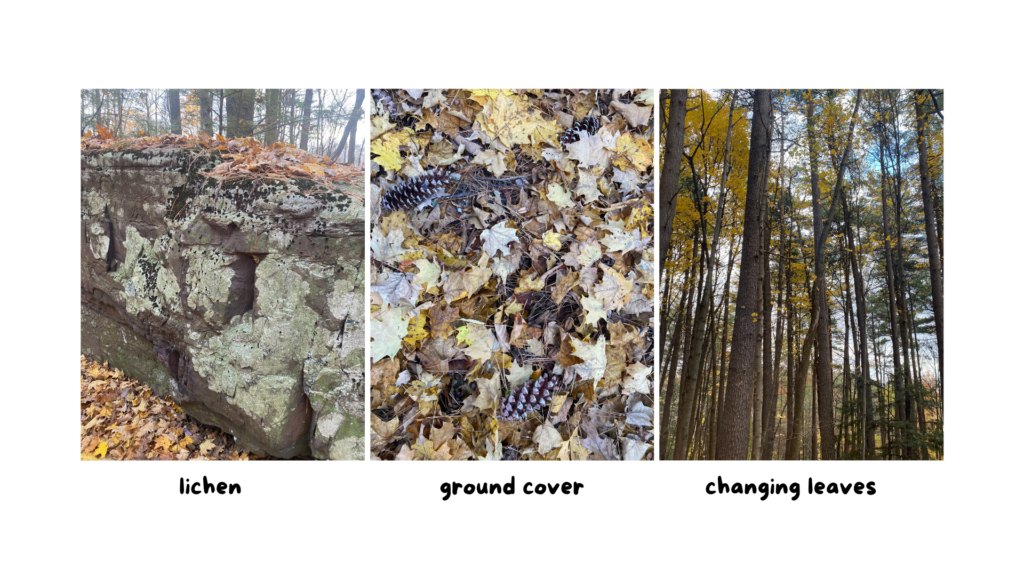
The most obvious change was the leaves – the maples were fully orange-yellow, and the oaks were almost completely bare. I think I just barely missed the best foliage. Still, it was beautiful. The ground cover had also changed a lot. What was once 70% pine needles was now covered by about 90% fallen leaves. The pines also began to shed their cones.

When I went back to visit the rocky ledge where I’d spotted a small bit of lichen last time, I found that it had spread quite a bit.

Later, I walked down to the lake to go see if there were any ducks around, and spotted four swimming pretty close to the shore – two males and two females. I was also surprised to see that algae had begun to cover the entire shoreline.

first blog post!

Place location

First blog post!

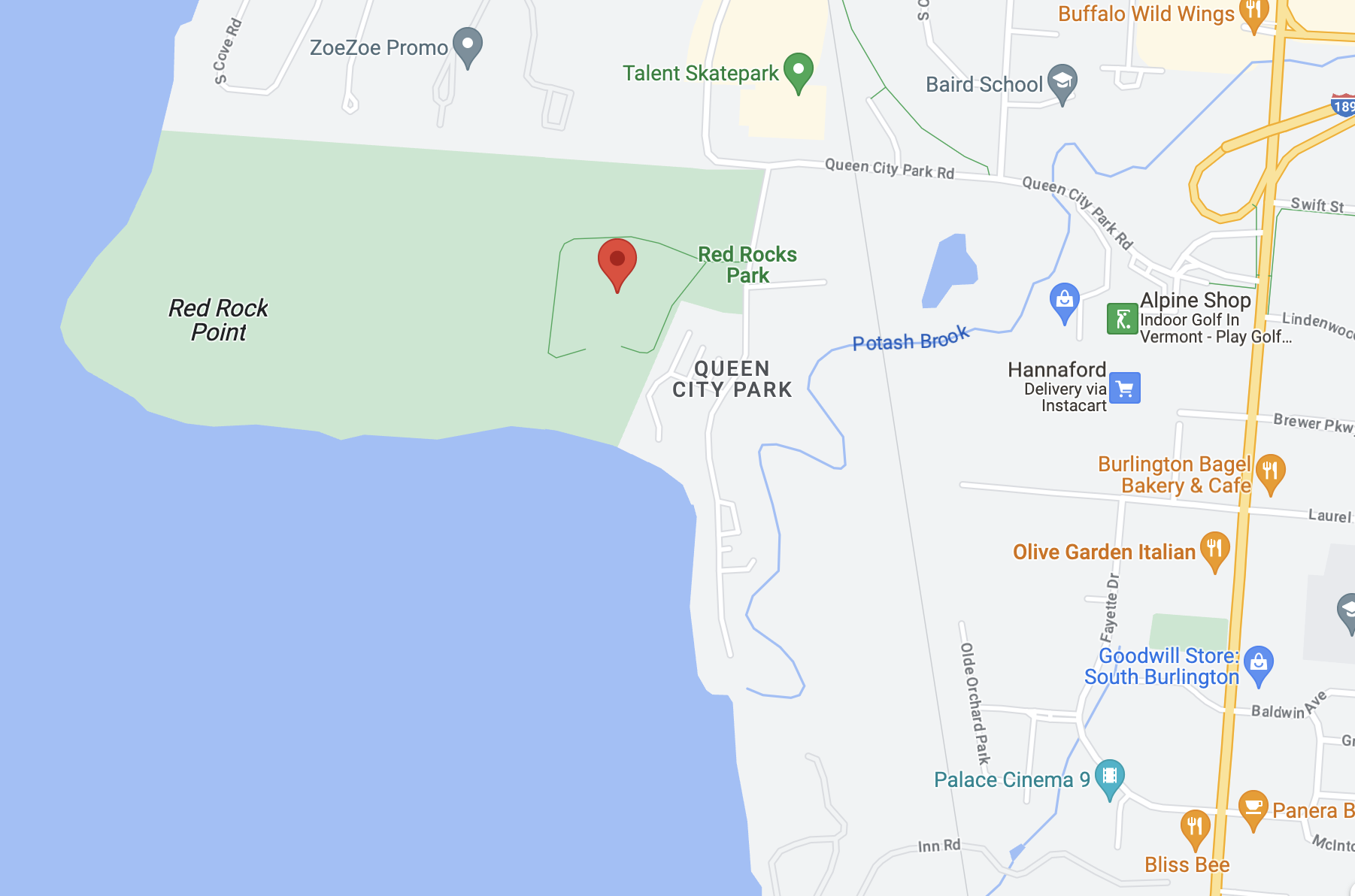
My place is Red Rocks Park. It’s located in South Burlington and takes about fifteen minutes to get there by bus – I took the 2 from the UVM Medical Center to Pearl Street and then the 5 to almost the end of the line. It got me feeling really good at public transport. Once you get to the parking lot, you need to walk about a quarter mile to actually get to the trailhead. Then, take the left pathway up about 100 yards until you see a large boulder that marks the central point of the area.

I chose this place because I wanted to investigate how that proximity to Lake Champlain impacted the natural systems within Red Rocks Park.

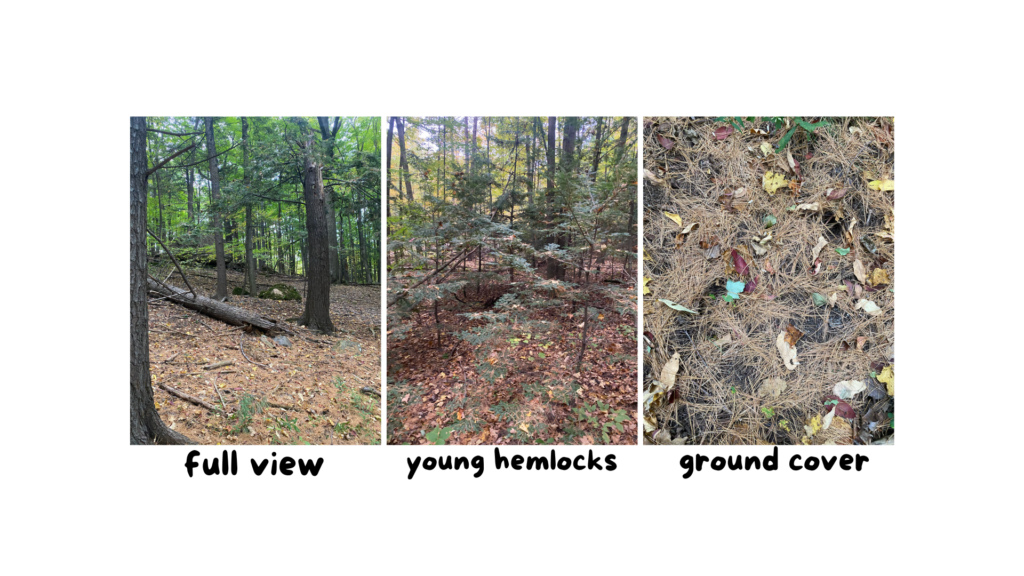
The park itself is made up of primarily maples, ashes, hickories, and oaks. However, my chosen area seemed to have more pines than usual. When I looked at the ground in other areas of the park, it was covered in acorns. Here, though, the forest floor was made up of mostly pine needles, downed trees, and few fallen leaves from sporadic oaks and maples. There were also a few young hemlocks farther away from the trail.

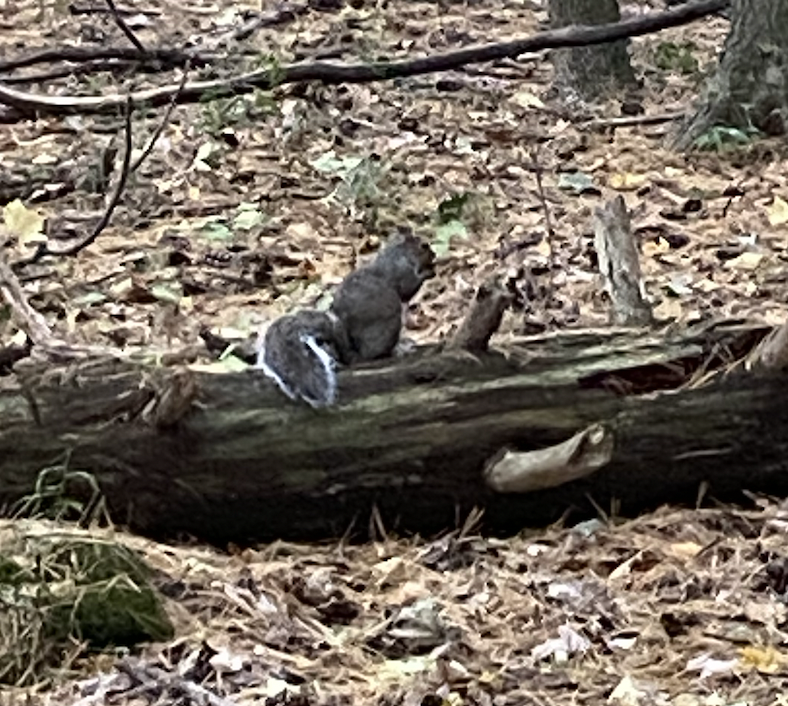
We also spotted this little guy eating an acorn.

Gray squirrel