Wrapping up the Year with the City Nature Challenge

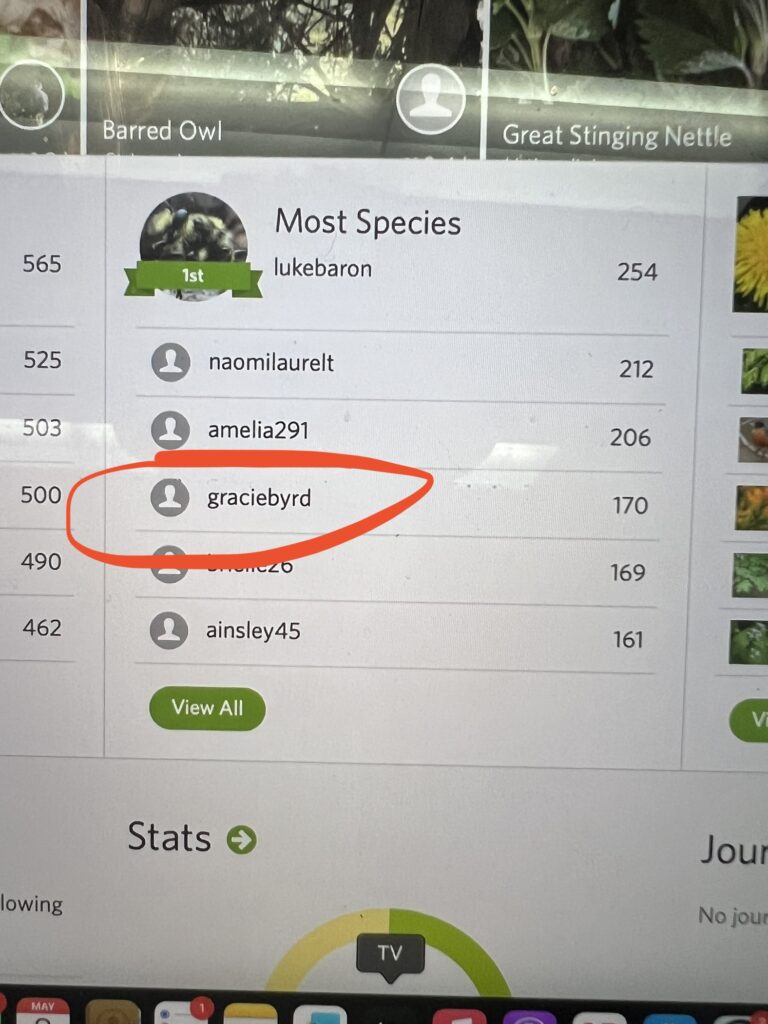
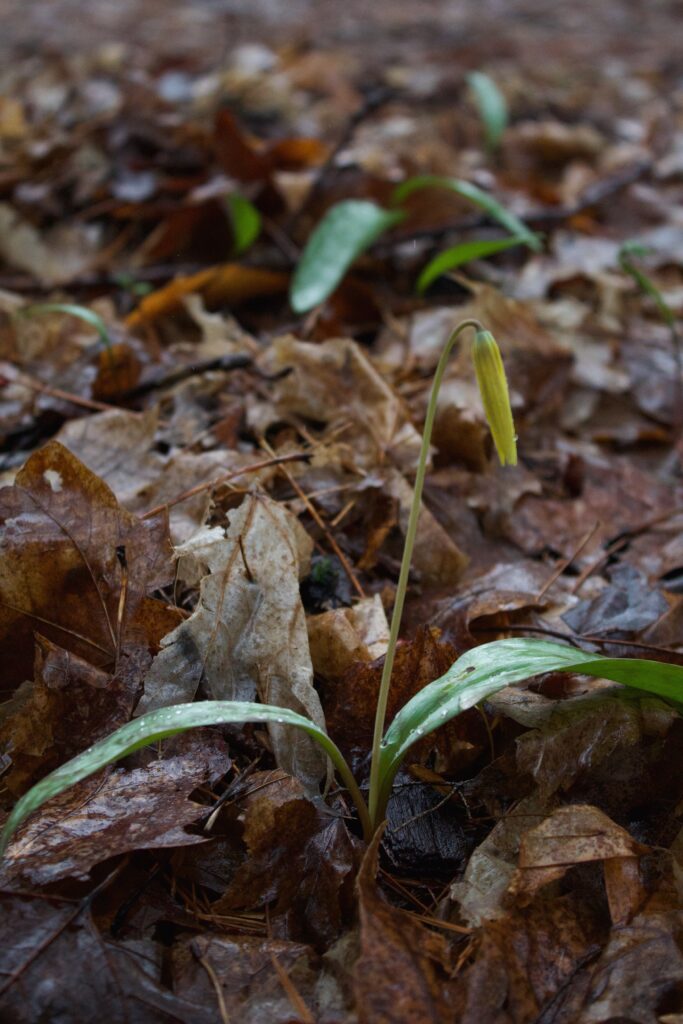
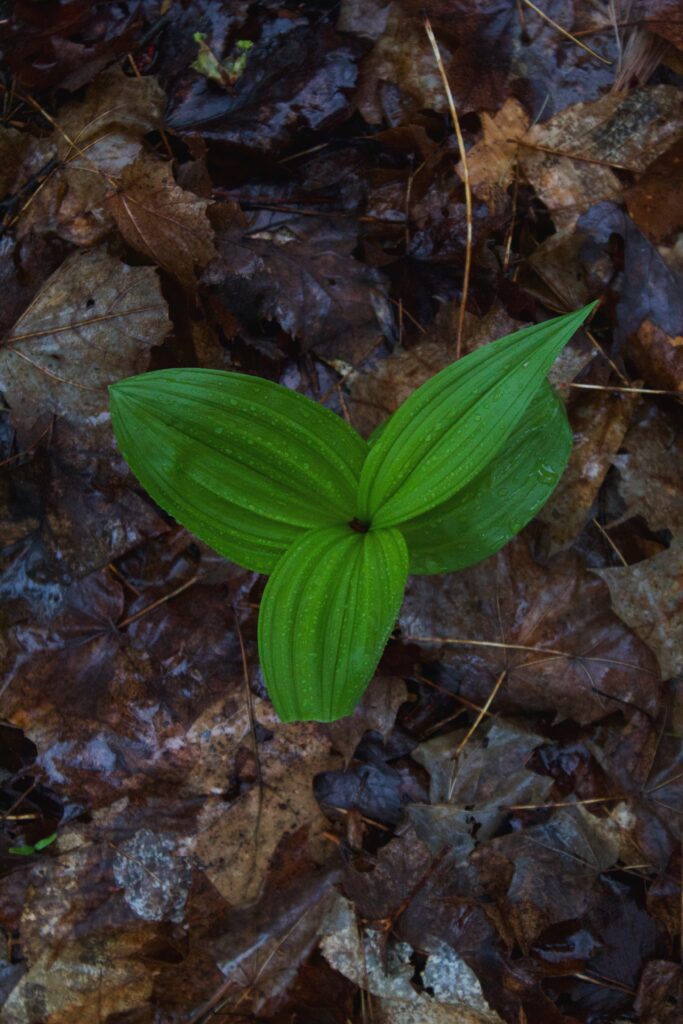
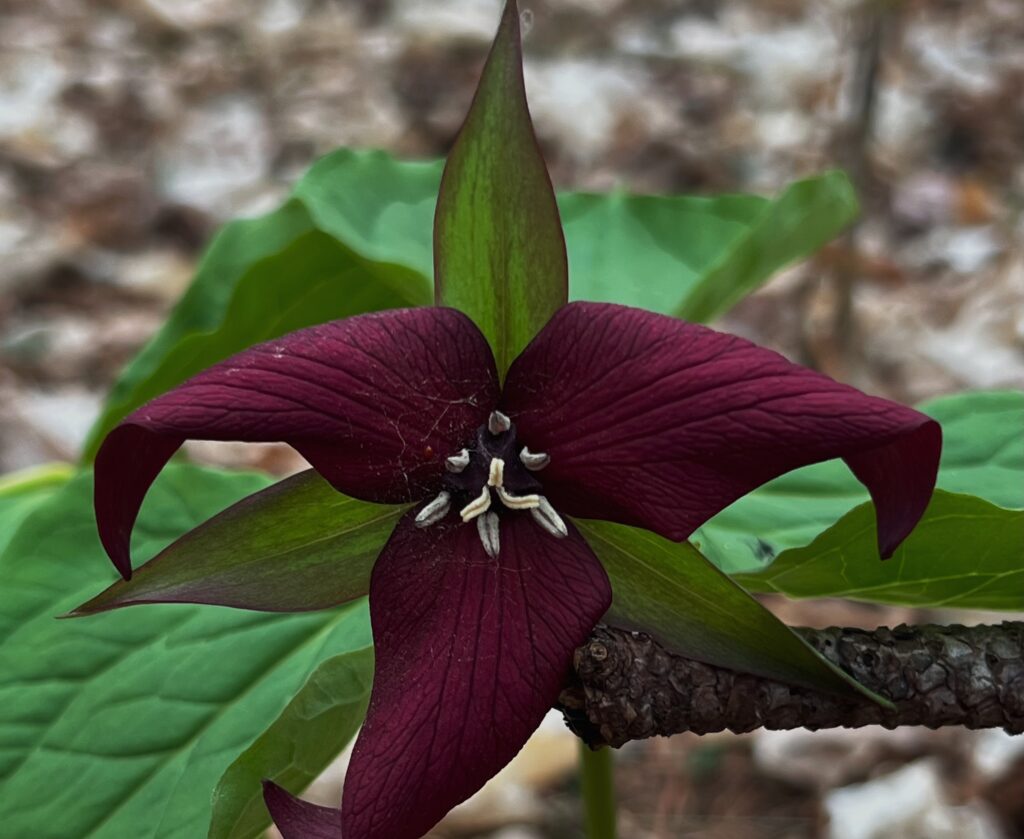
Over this past weekend, from last Friday, April 28, to yesterday, May 1, I joined hundreds of local residents in the Greater Burlington area in documenting as many species as I could in the area and uploading my results to iNaturalist. I started off the challenge pretty strong by documenting the species that surrounded me on UVM’s campus. On the overall leaderboard for this day, I ended the day by finishing first for the most observations, and second for the most species. On the second day, it was a little bit harder to hold my ranking because more and more people were beginning to participate, however, I visited Rock Point Commons to participate in their nature celebration, and while doing so, frequently uploaded my new findings to iNaturalist. Because of Rock Point’s great species diversity, I was able to hold my first place ranking overall once again, for the second day in a row. However, on the third day, I quickly dropped down two places. In order to bump up my status, I visited the Intervale and the spectacular nature day celebration they held and documented even more species, finishing off the day in second place. By Monday afternoon, however, I dropped down to 5th place regardless of the fact that I was continuing to upload my findings around UVM’s campus, and by the time the challenge ended, I ranked 8th in observations. However, I also ranked fourth in the number of species I observed, which I would consider a win.
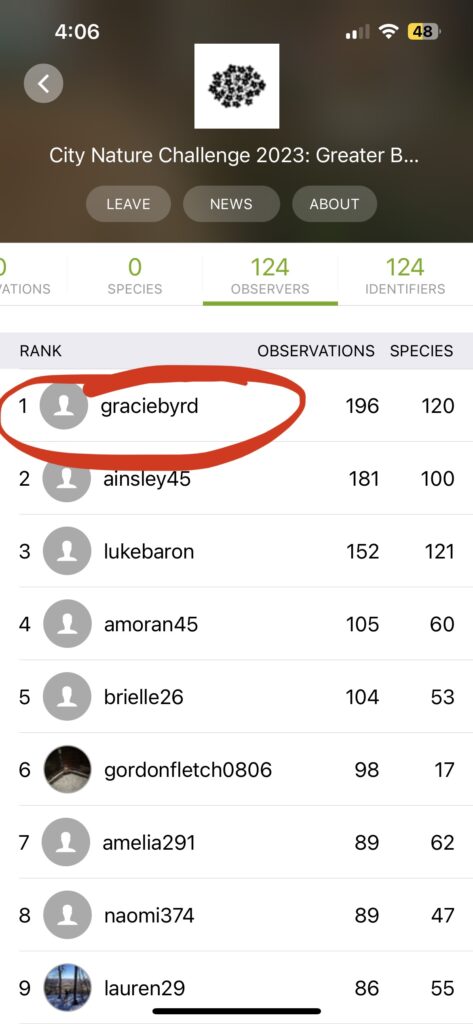
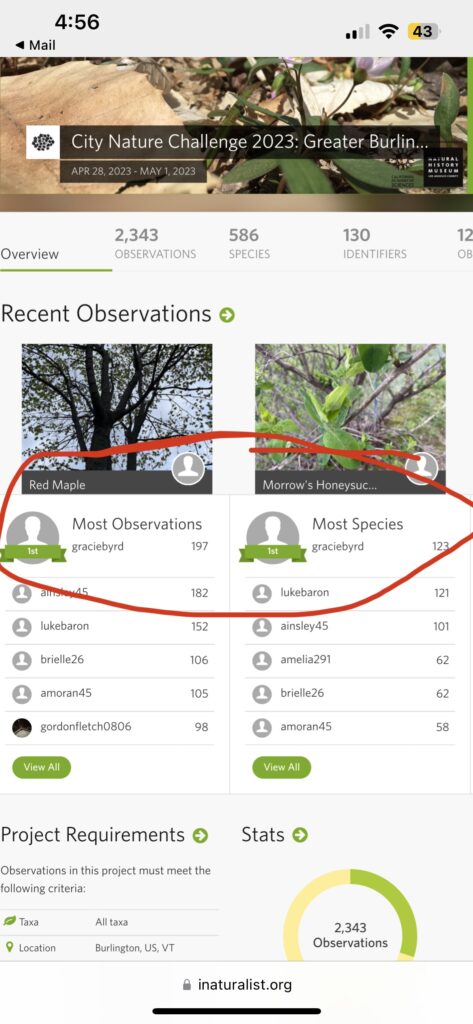
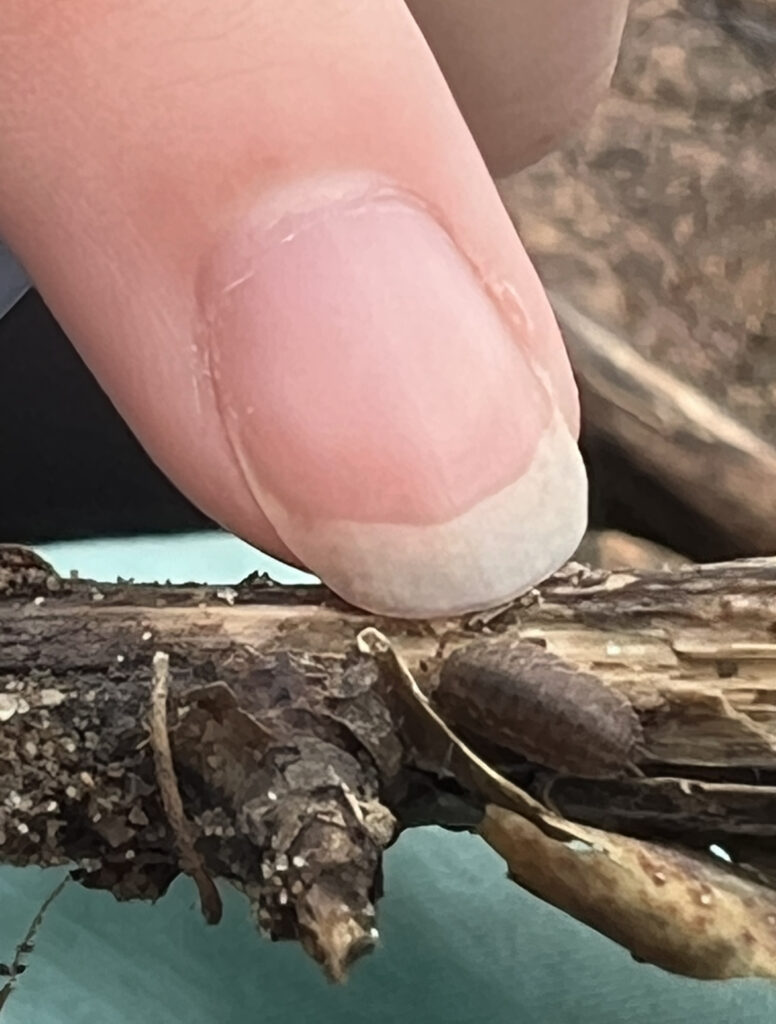
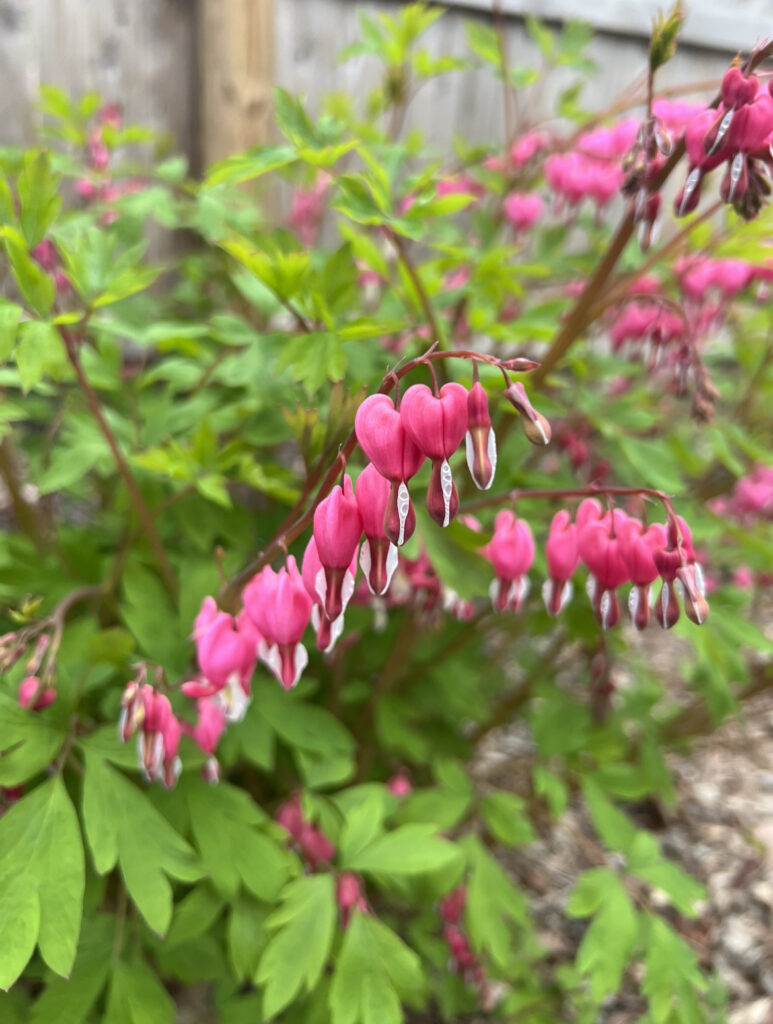
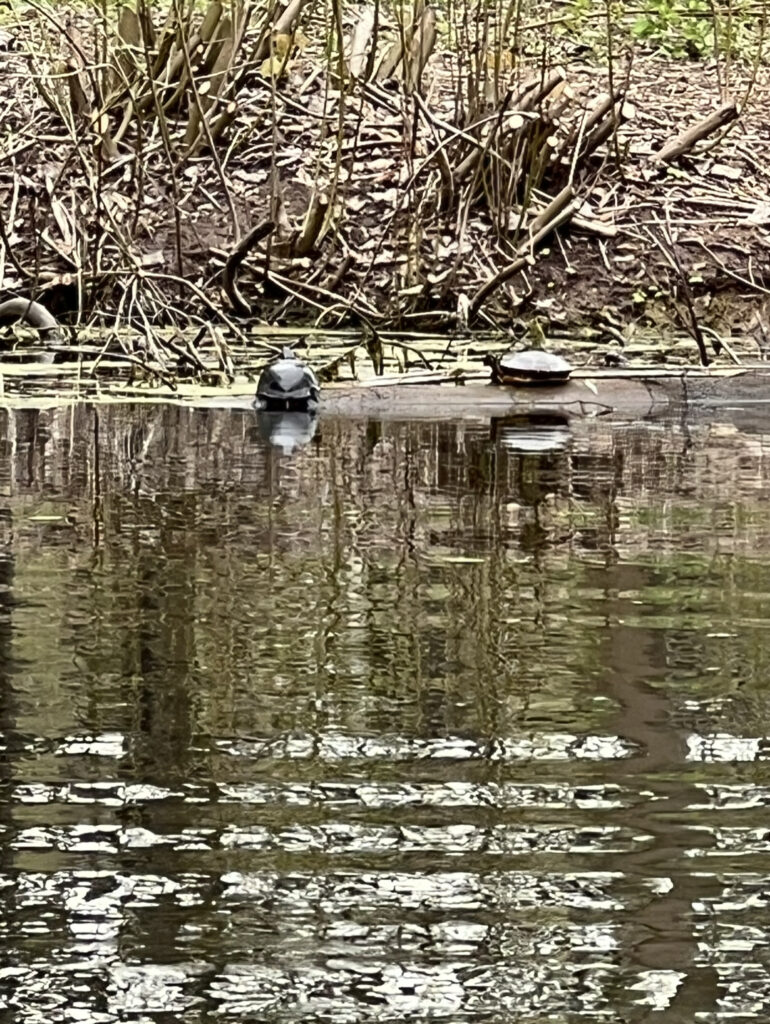
Overall, I ended up encountering 170 species, which were mostly plants. I really liked using iNaturalist for this challenge, it made me feel really connected to both the nature that surrounds me and the people in the area that surround me. One thing I notice and found interesting while watching the global leader board during this challenge was that cities as big as New York City barely had double the amount of observations that Burlington had. I figured they would have knocked us out of the park because of how big their population is compared to ours, however they were not that much higher than us on the leader board. I had a lot of fun doing this challenge and I hope it gains more and more popularity in the coming years.
My Last Trip to Potash Brook

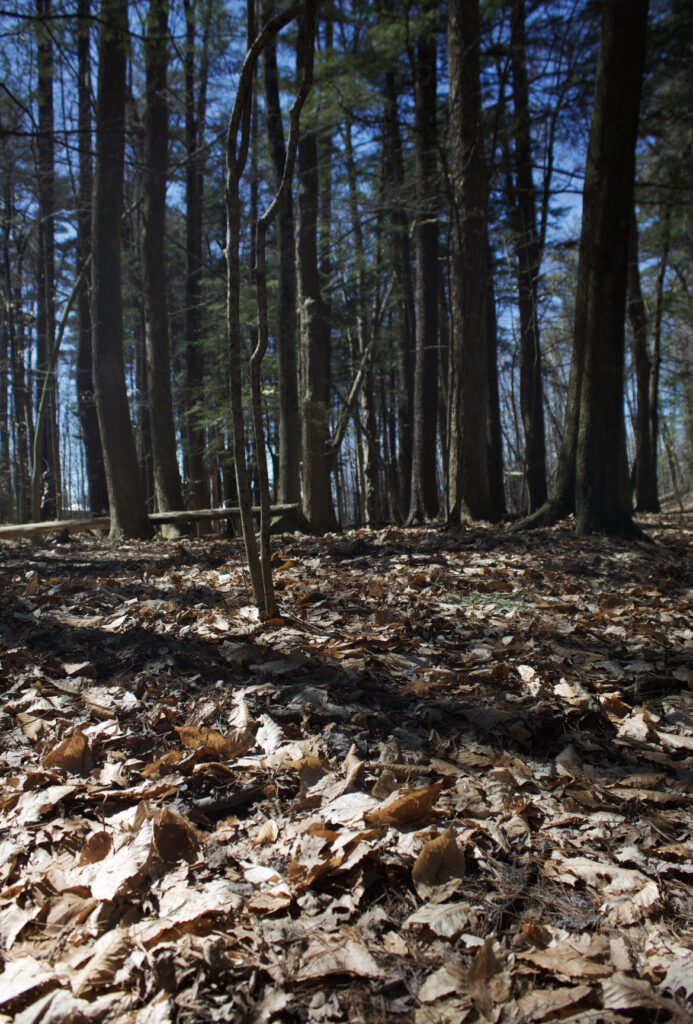
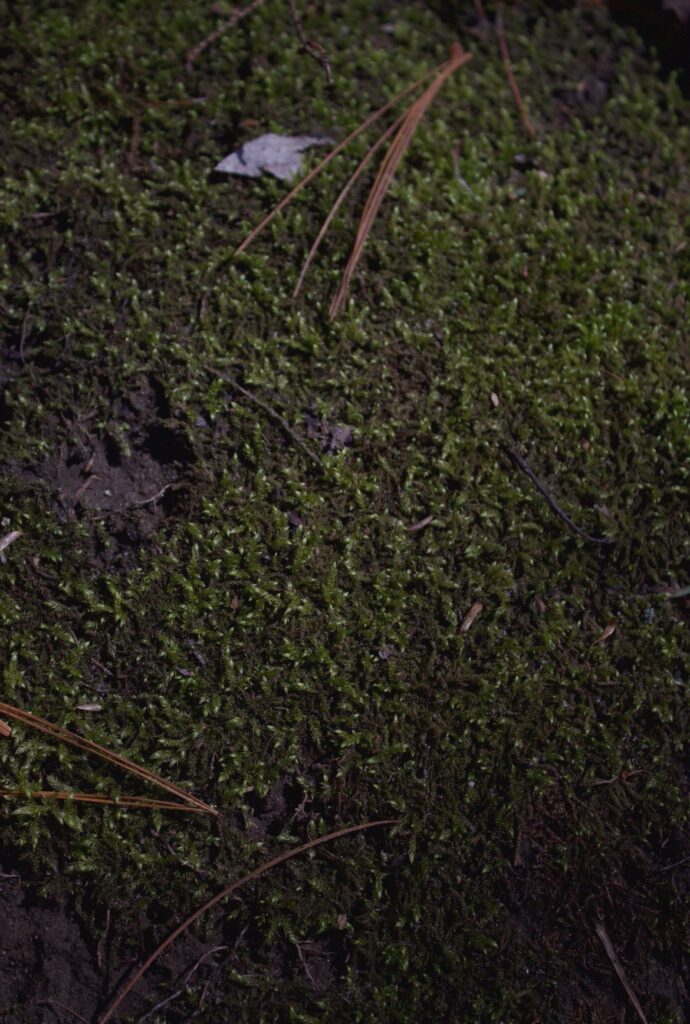
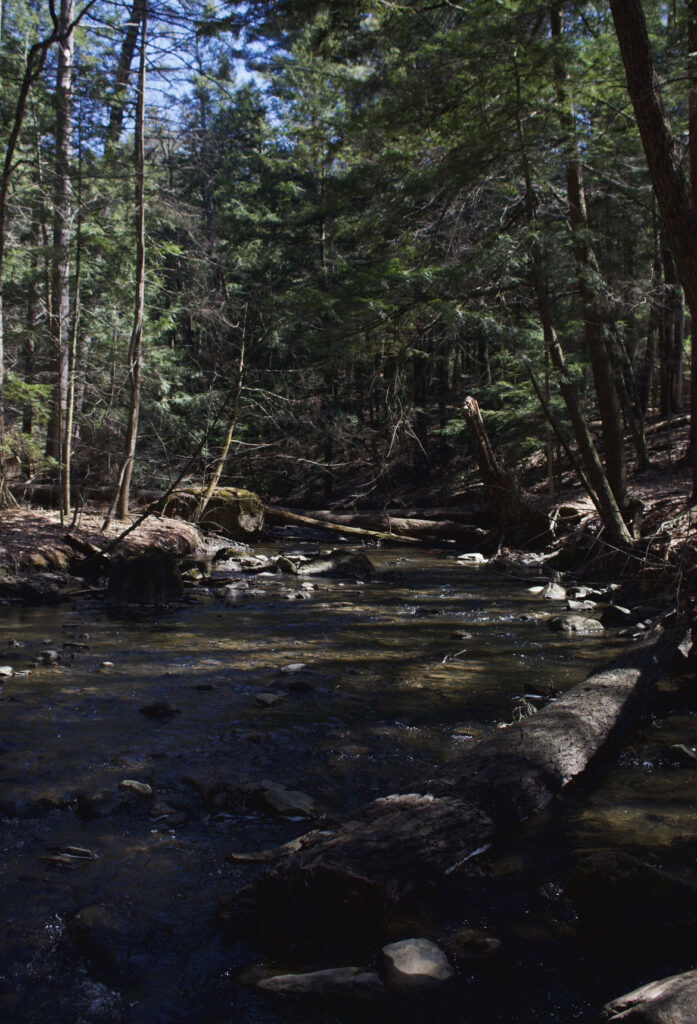
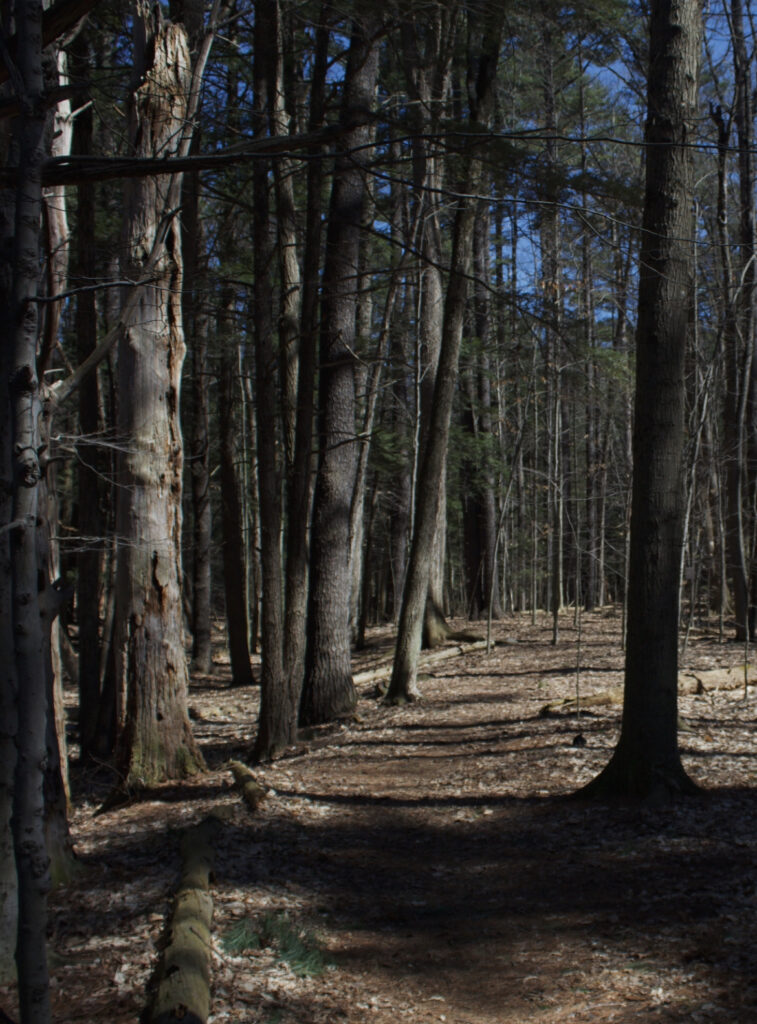
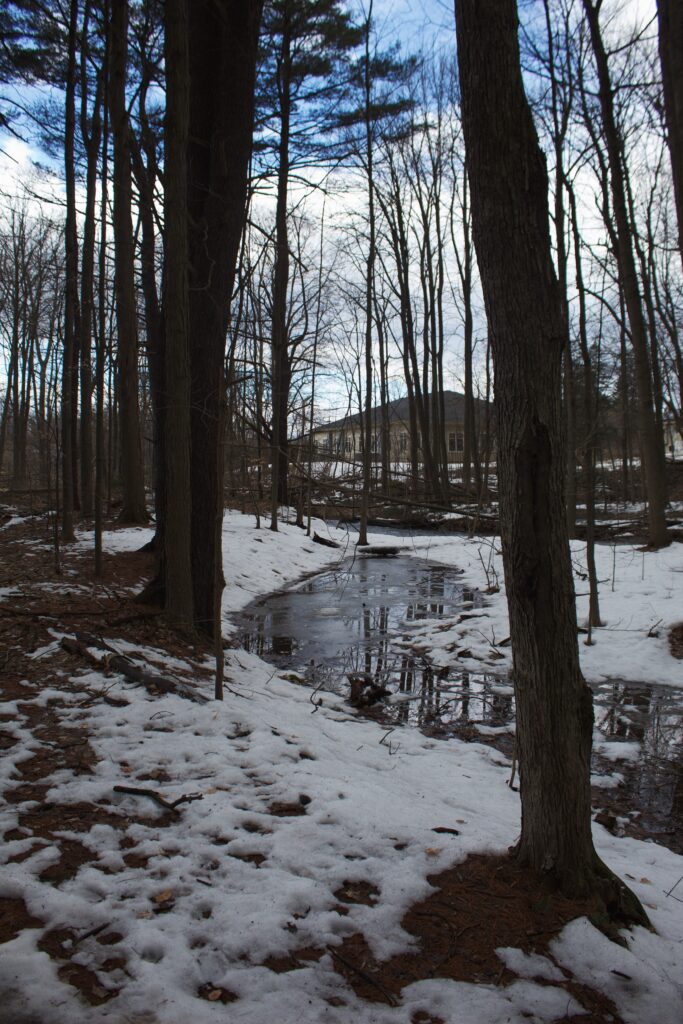
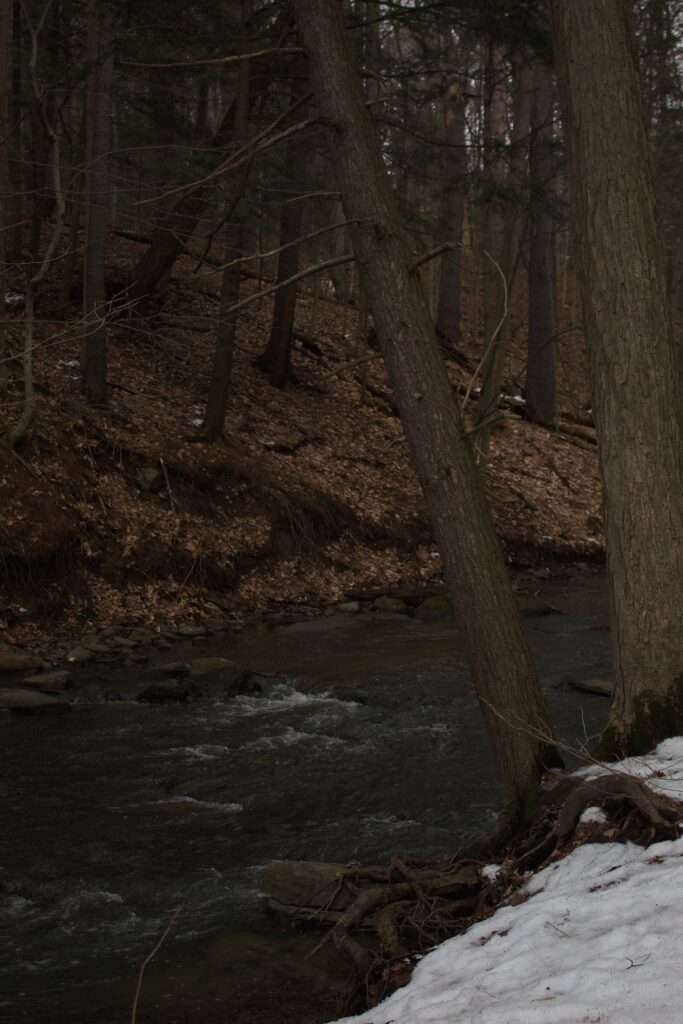
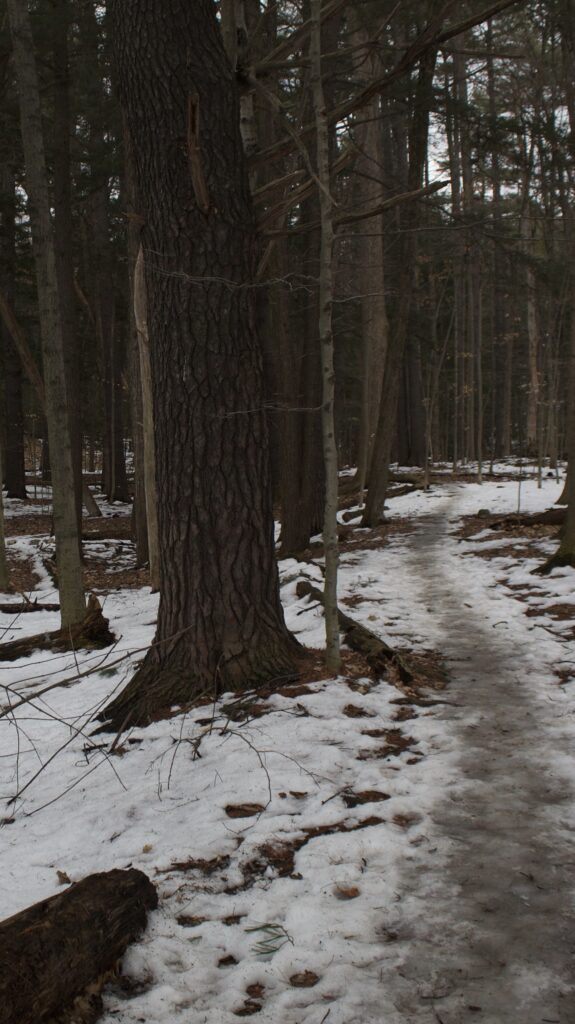
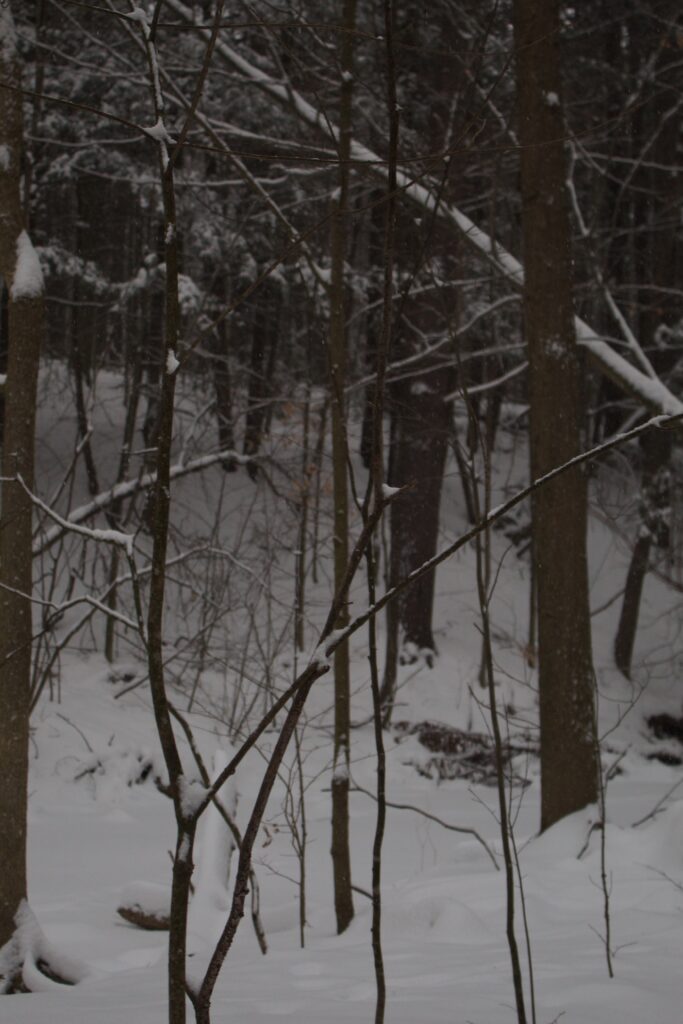
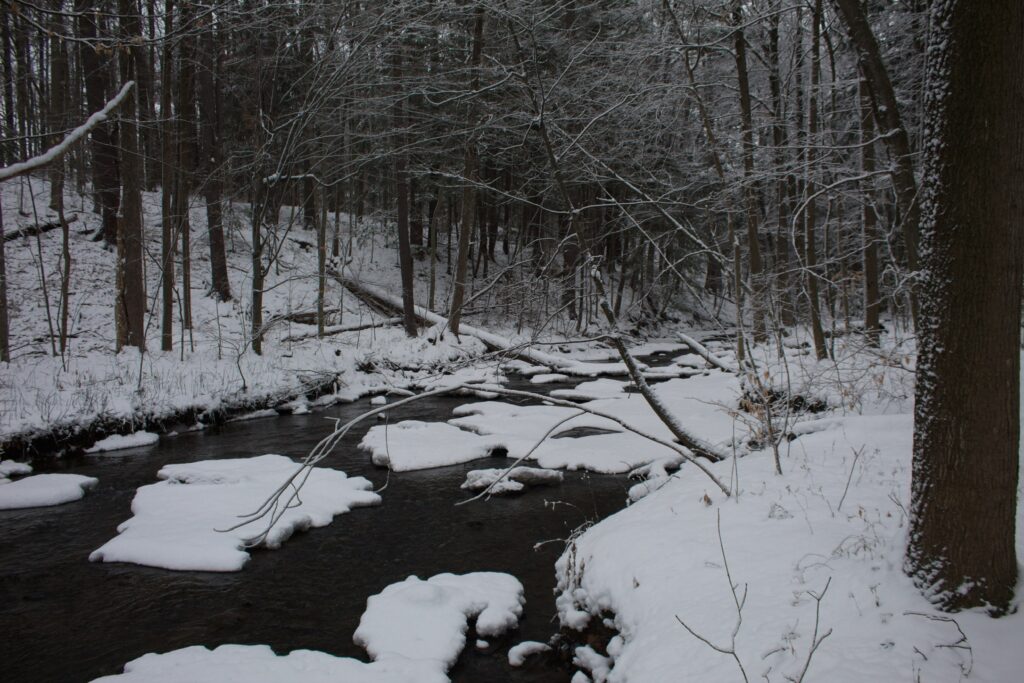
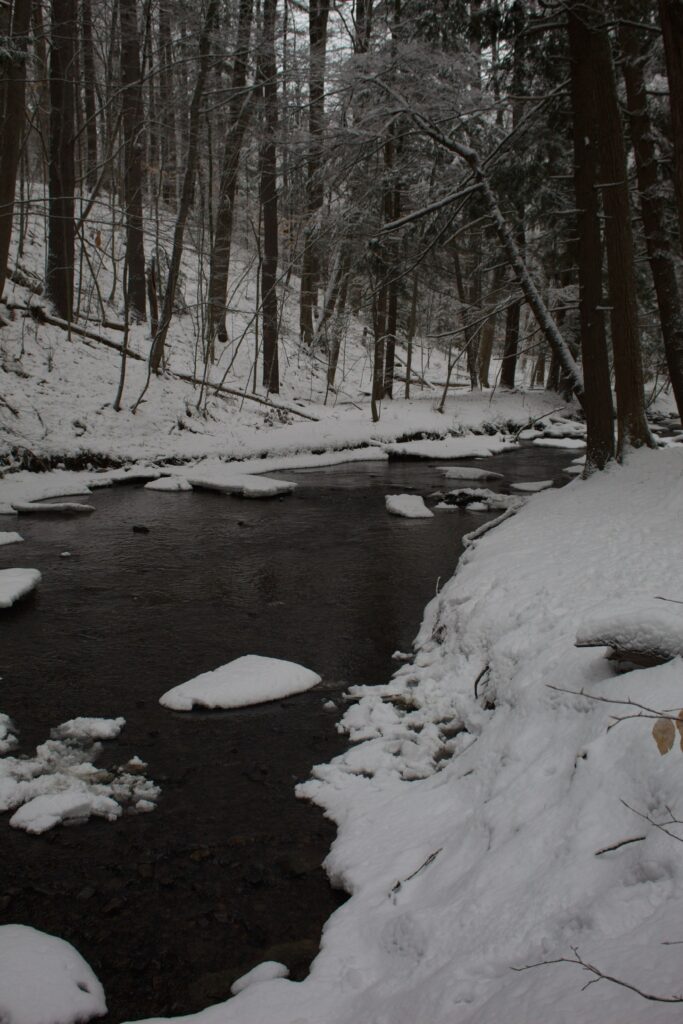
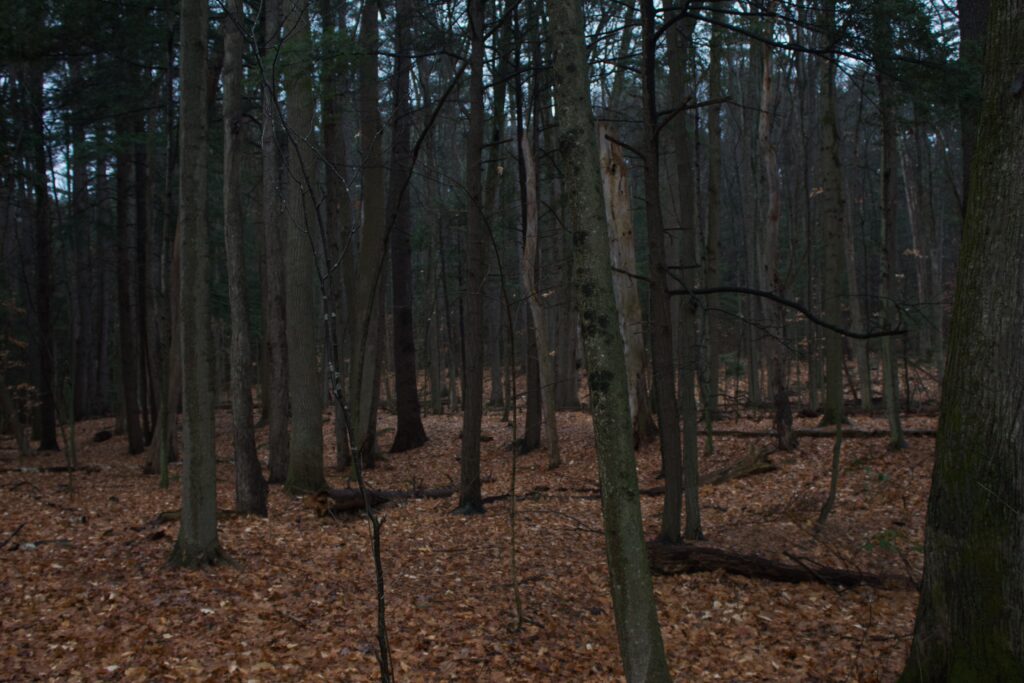
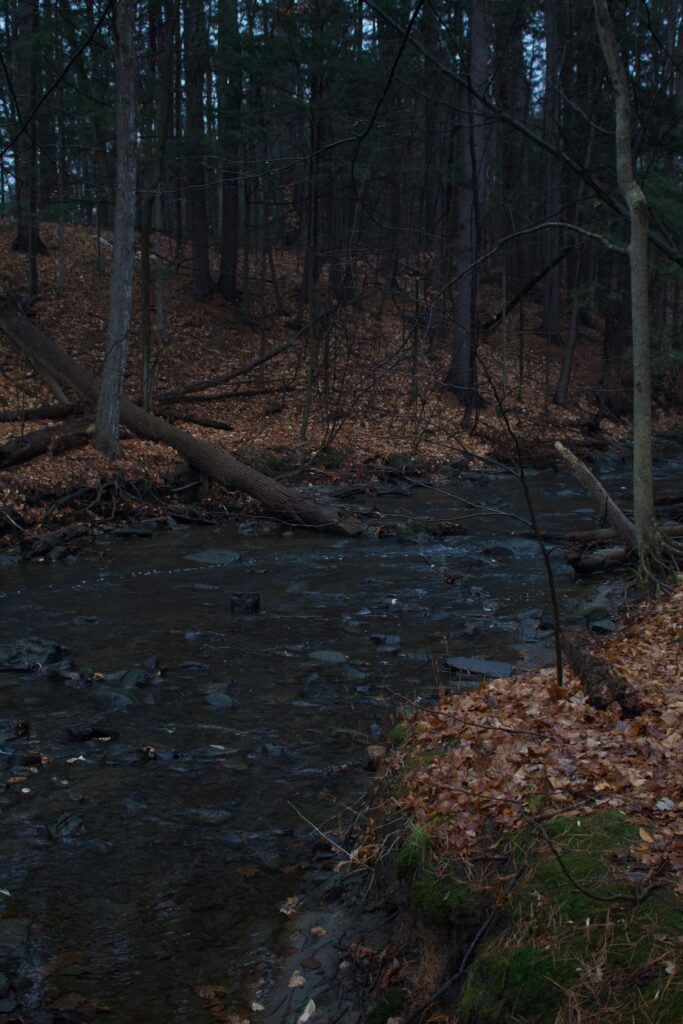
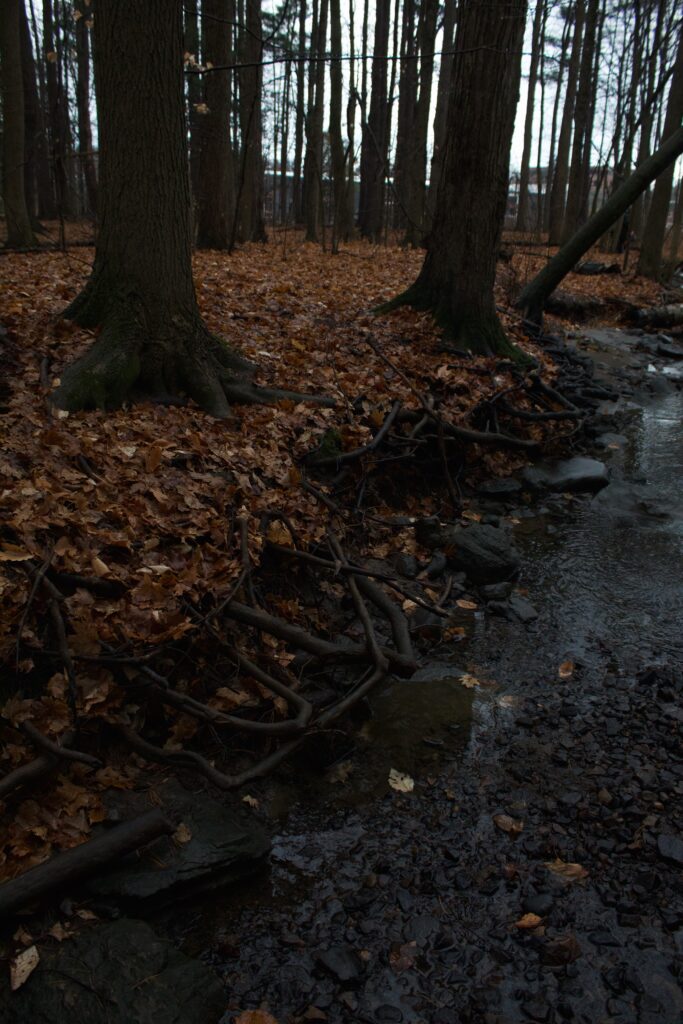
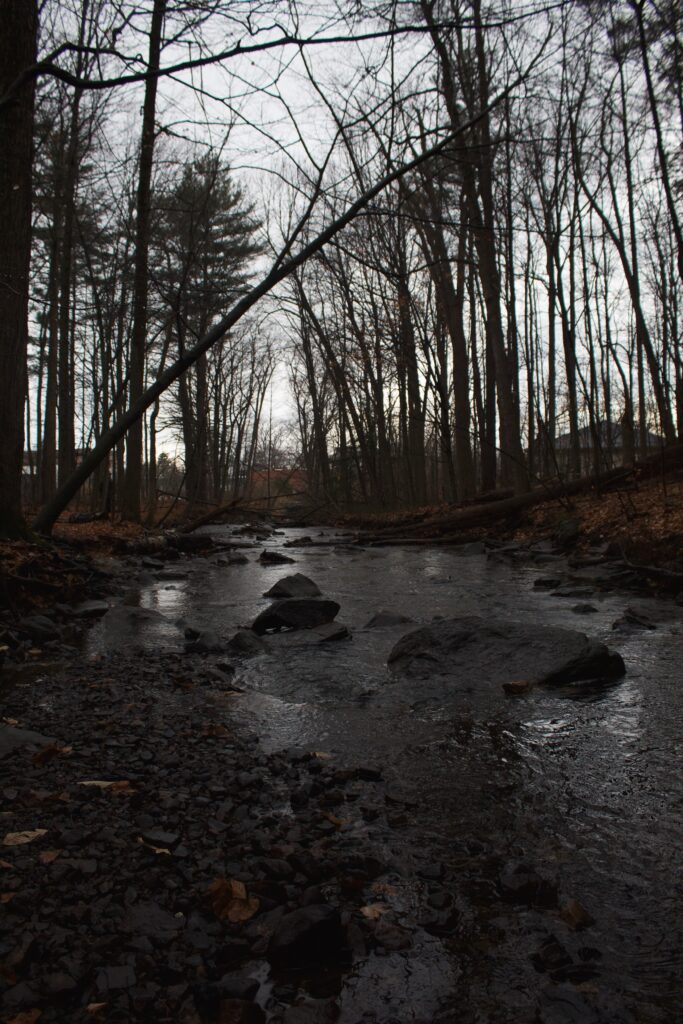
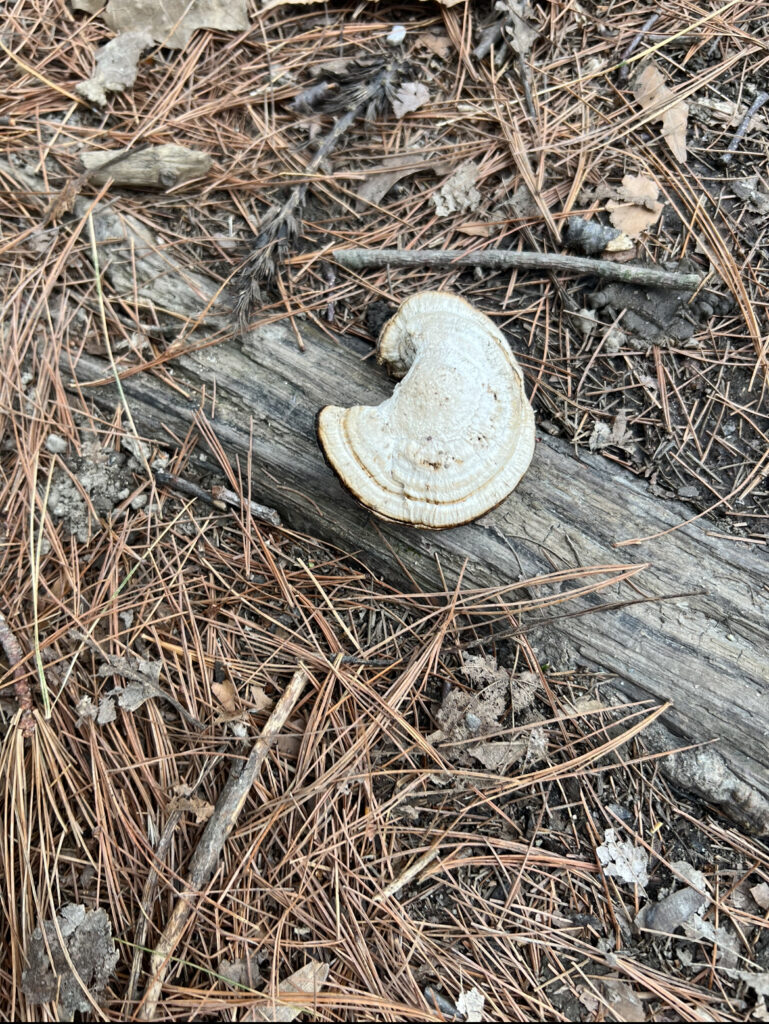
Today, I took my last trip to Potash Brook. I have really enjoyed spending time here throughout these past two semesters watching how the natural area changes throughout each season. This site has gone from having dry soils and being full of greenery to having its ground be blanketed by large amounts of leaves and being full of orange, yellow, and red foliage, to going through stick season, to being covered in a layer of snow and ice, and then finally to mud season with budding trees and greenery. Most of the large phenological changes here throughout the year have been due to storms instead of humans. Every time the water of the Brook had risen or was moving much faster than it normally did, a storm had occurred a few days prior, or snow had started melting. Most of the fallen logs and trees in this area were also due to strong winds from recent storms. The phenological changes that were human-caused were not as noticeable as the storm-caused changes, however there were still human-caused changes, such as litter. The dumpsters that belong to Klinger’s Bread Company and Domino’s are close to the Brook, so there has been quite a bit of litter that has blown over. However, I also noticed that some of the litter had been cleaned up each week.
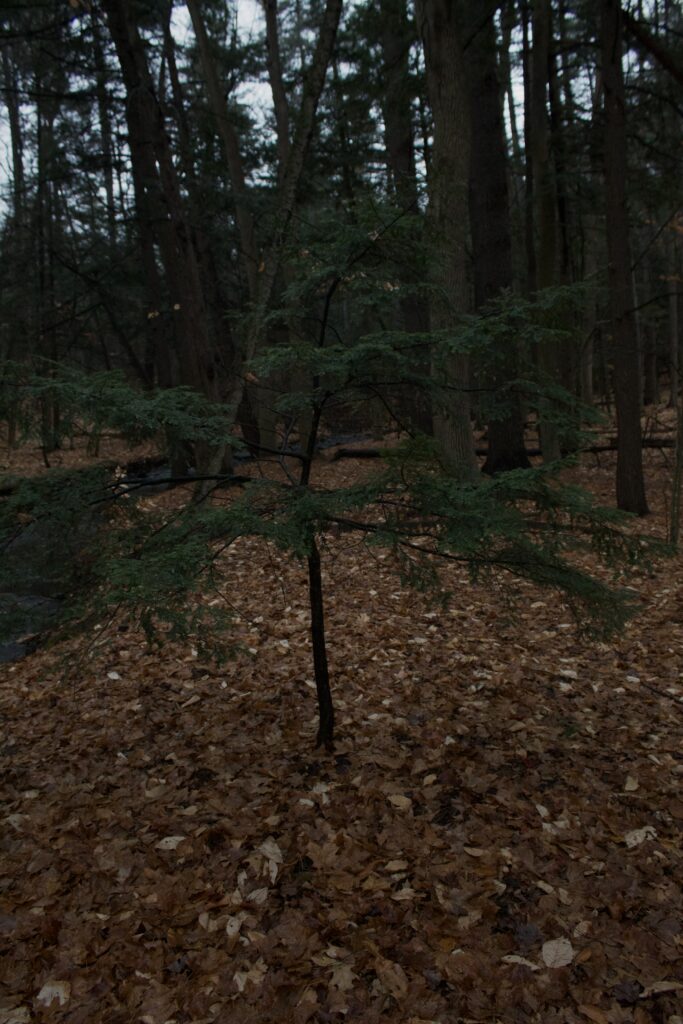
The major and minor landmarks I became familiar with over these past two semesters have been the Brook, the shoreline of the Brook, the American Beech tree sapling that I posted about previously, and the small stream that ran off from the Brook at the beginning of the trail. It became easier to see changes in these landmarks seasonally, the more changes I noticed each time I visited. This made me feel more connected to nature because I knew that the average passer-by would most likely not notice.

Nature and culture intertwine here due to its proximity to stores and other businesses in the area. The things these businesses do directly influence this natural area and can affect the health of it. It has been really interesting seeing how diverse and beautiful this environment and comparing it to how close it is to such an industrialized area.

Now that I have reached the end of this project, I can say that I do consider myself a part of this place. I have watched this area grow and change phonologically throughout these semesters, and I, too, have changed and grown over the seasons as well. I really felt connected to this place while I was observing the phenological changes and I was surprised about how close this project made me feel to nature overall. I definitely plan to visit this area when I return to UVM for my sophomore year because of how connected to this area I have felt.

Some More Tree Phenology at Potash Brook

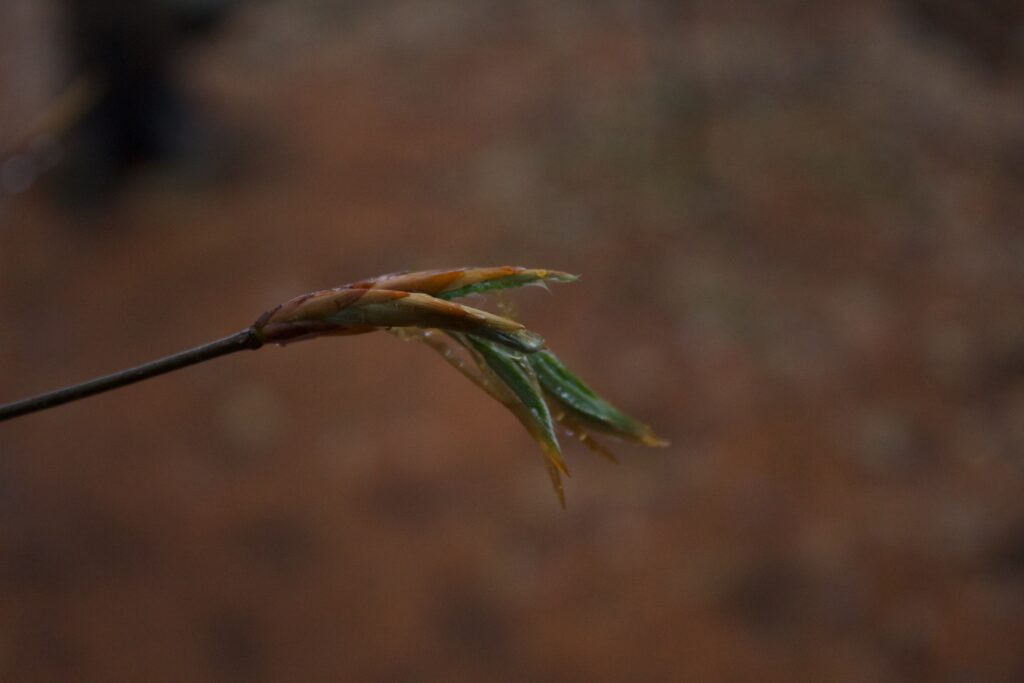
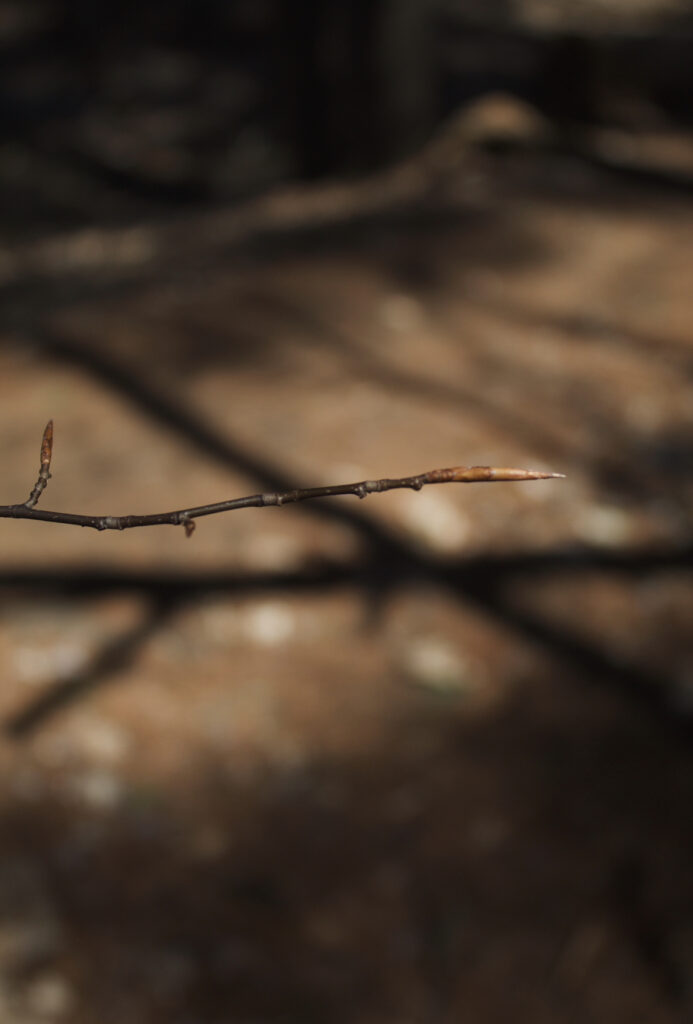
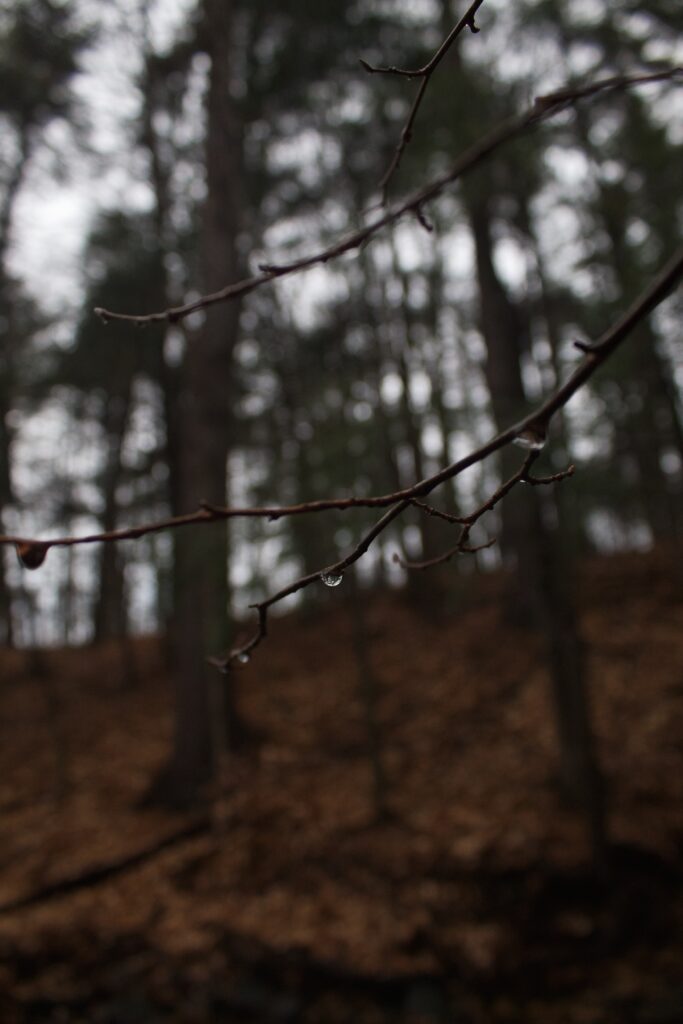
Today, I returned to my American Beech tree at Potash Brook and made some phenological observations. Immediately upon approaching the tree, I noticed that the buds appeared to be lighter in color and shaper looking. This leads me to believe that the leaves will be emerging soon. I also noticed that the protective sheaths that were covering the buds four weeks ago were completely gone and the bud and twig around it appeared much more smooth. In the natural area surrounding the brook, I noticed a lot of other phenological changes. There were far more buds visible on other trees. The shoreline of the brook was also visible and not nearly as muddy as it was two weeks ago. I also noticed that the ground felt less squishy under the leaves of the trail, giving me hope for the coming warm weather. The weather has also completely changed since the last time I visited the area. It was considerably warmer today and the sky was completely clear and sunny. There was also no snow remaining anywhere in the area. Though it will be my last visit to the brook, I look forward to my final trip to Potash when the weather gets even warmer.

American Beech Tree Phenology at Potash Brook

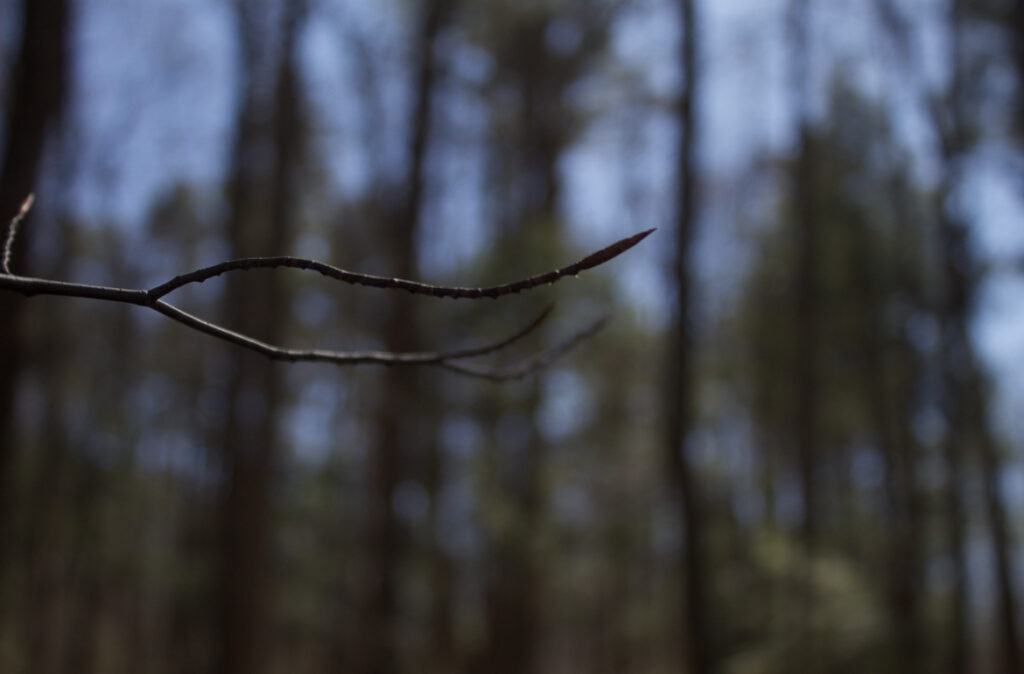
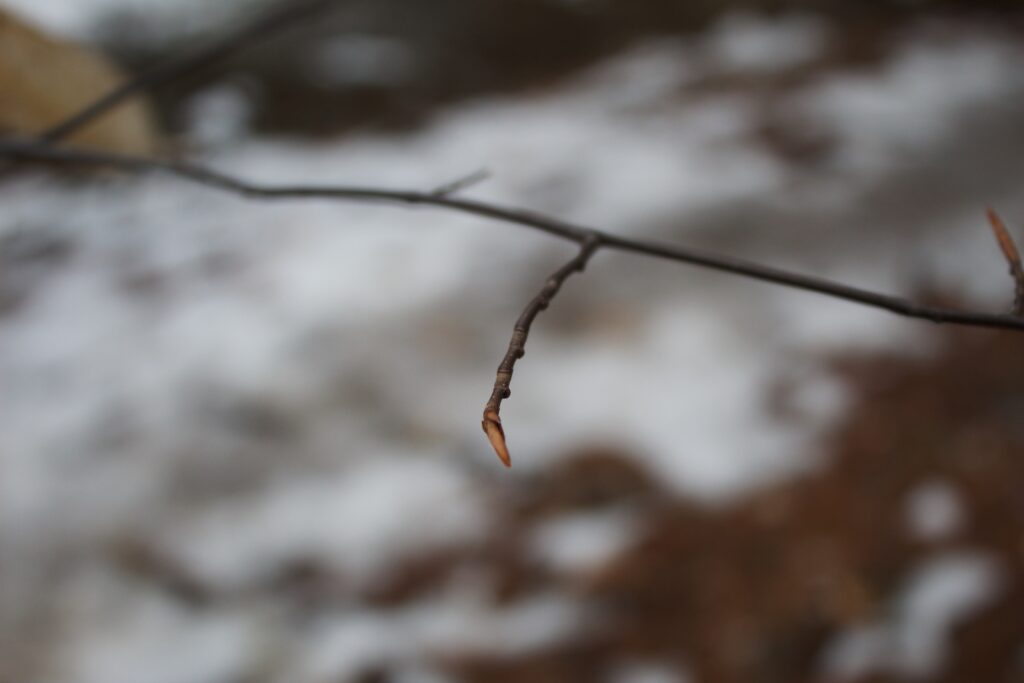
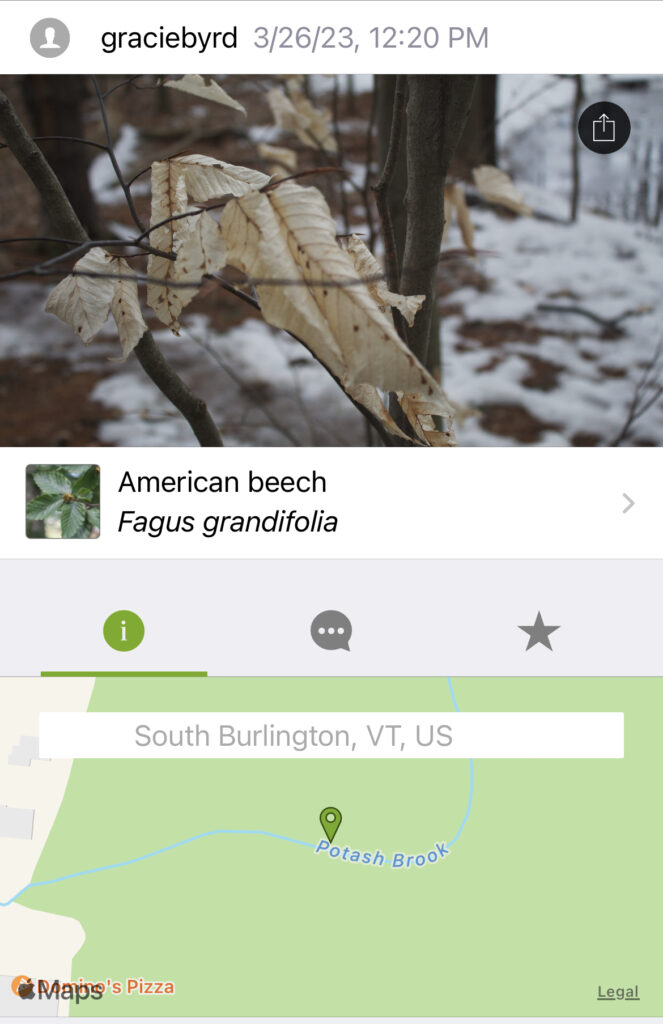
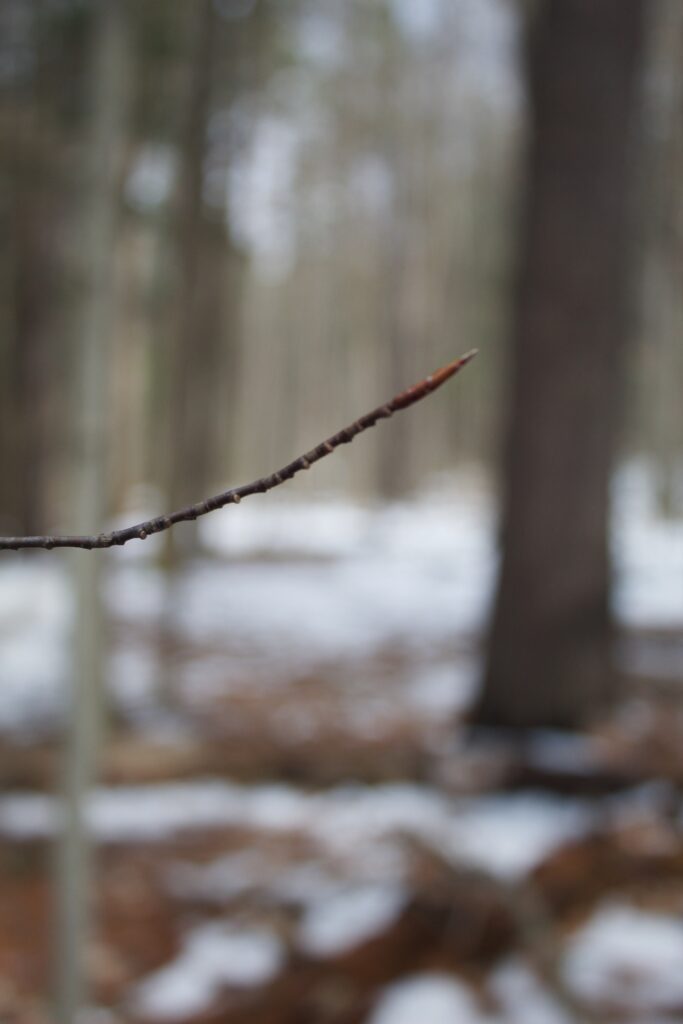
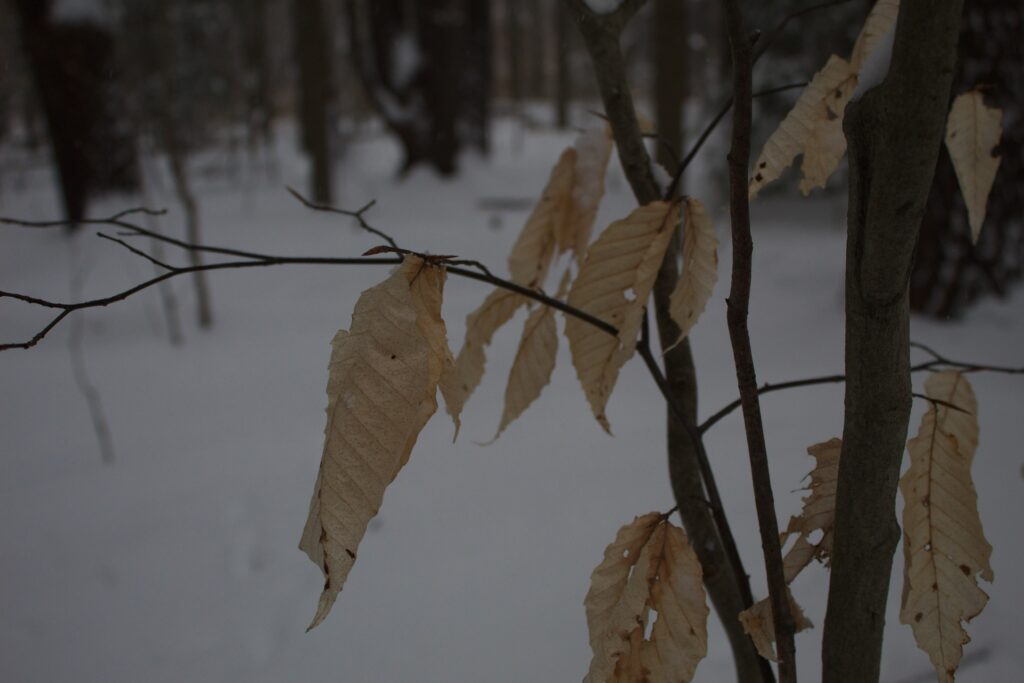
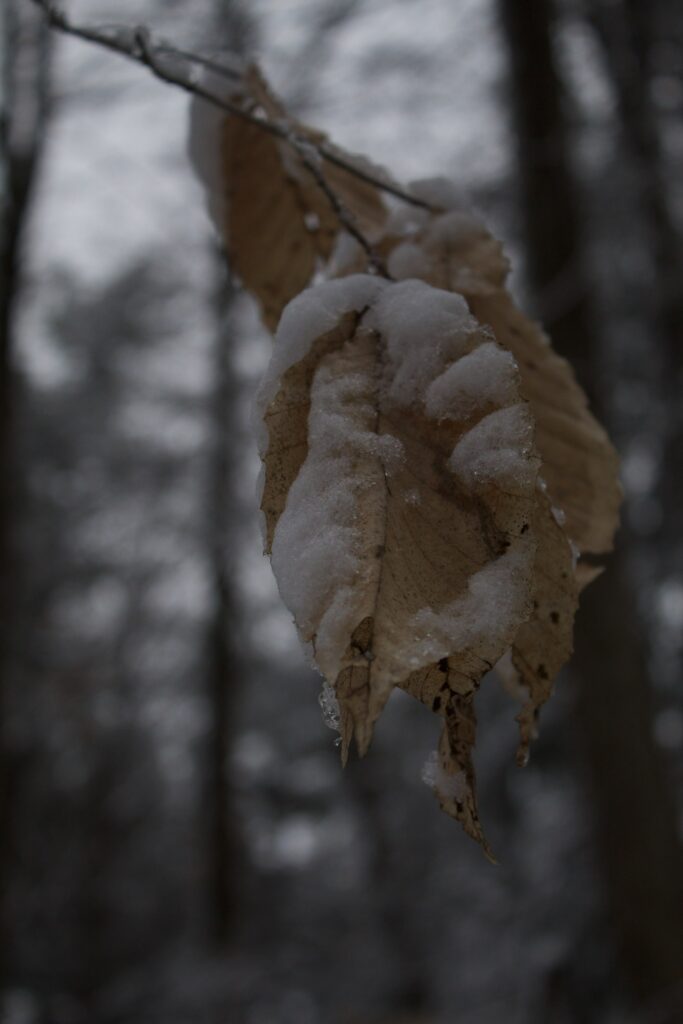
This week I made my return to Potash Brook to examine the American Beech tree I picked out about four weeks ago. The tree still had some of its pale, yellow leaves clinging to the branches, which surprised me since it is almost time for the trees to have green new leaves. I also noticed that the buds on the tree looked slightly more developed and longer than they did the last time I saw them. They seemed to lose their scaly shields that protected their tips, so it seems like the leaves could be budding soon. Once again, I have uploaded a picture to iNaturalist, which is pictured below.

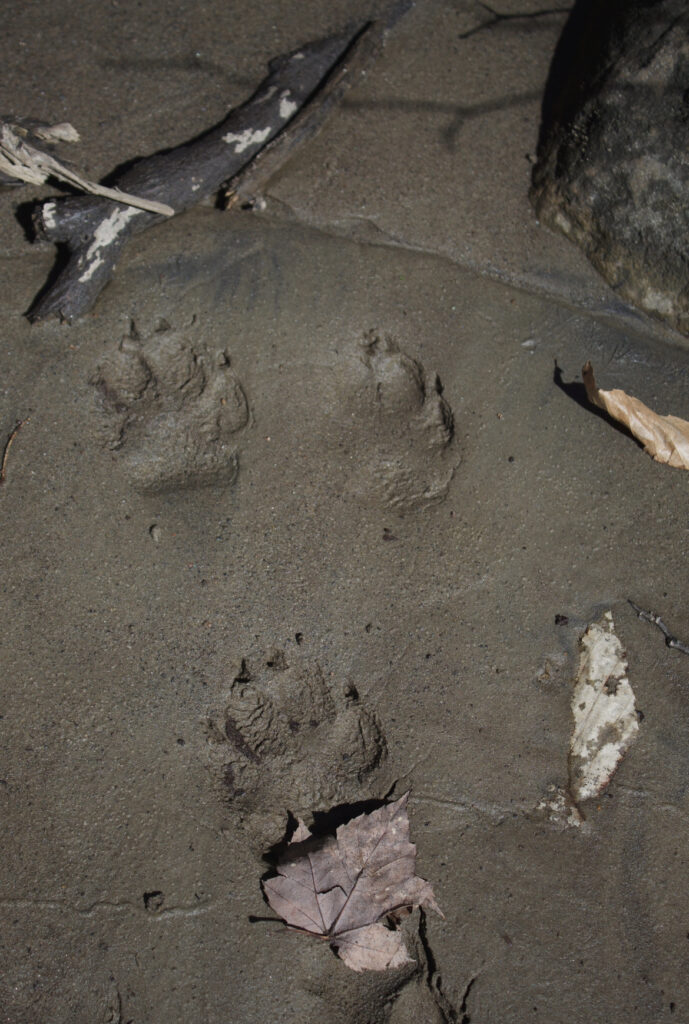
As for the rest of my trip to Potash Brook, there was considerably less snow than my last visit and much more mud and puddles of water. I also noticed that the trail that is in the area had been compressed to a solid chunk of ice from people walking over it to see the brook. The ravine that I usually walk down to get to the brook was transformed into its own little stream because of the snow melt. I also noticed that the water of the brook was much higher and moving pretty fast because of snow melt too. None of the trees have any leaves yet, however, I noticed that all of the trees seem to be starting to budding. I also noticed that most of the animal tracks that were present in the area had melted quite a bit and just turned to indistinguishable holes in the icy snow that has been left over. The snow also seemed much more icy and less powdery than it did last time I visited. Since spring time finally came, I was very happy to visit Potash Brook in the warmer weather with less snow. I can’t wait to return in the coming weeks as the weather continues to warm up and the plants start to bloom.

Phenology at Morgan Park

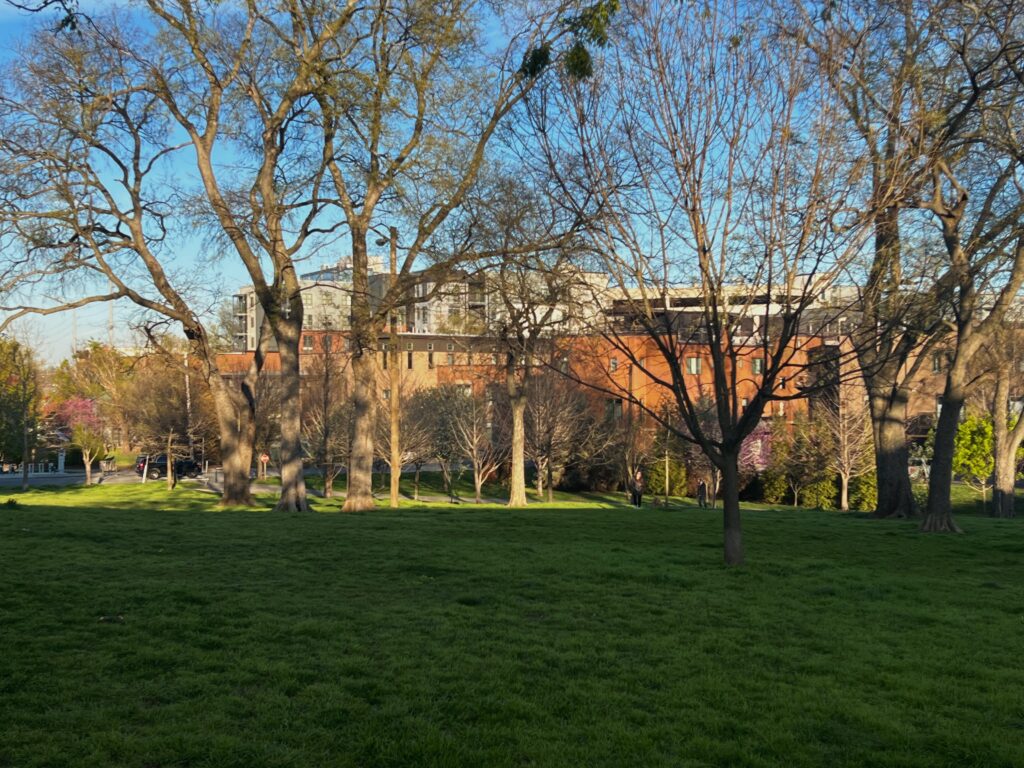
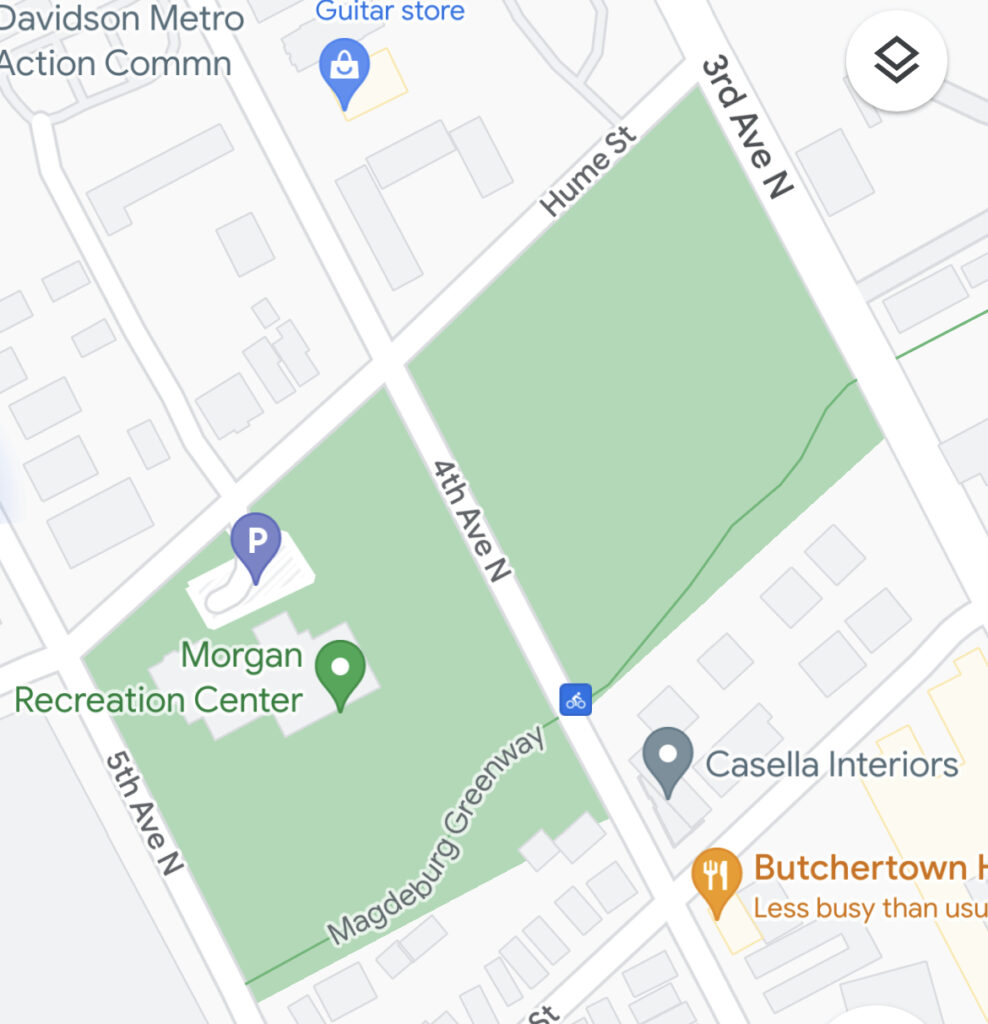
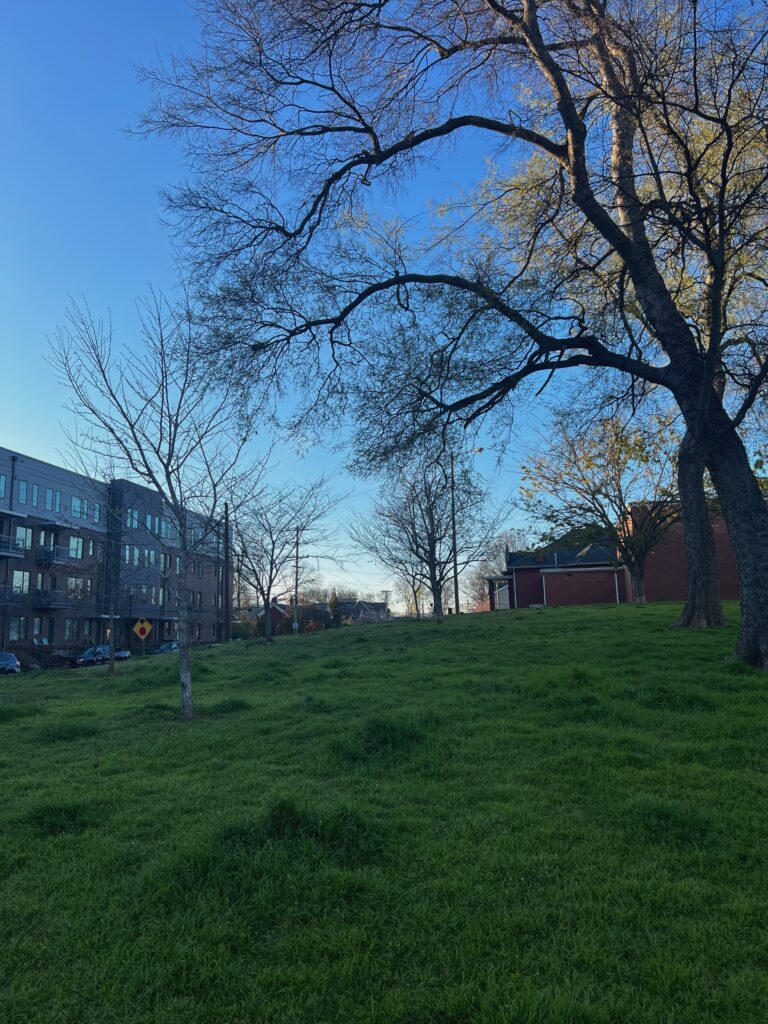
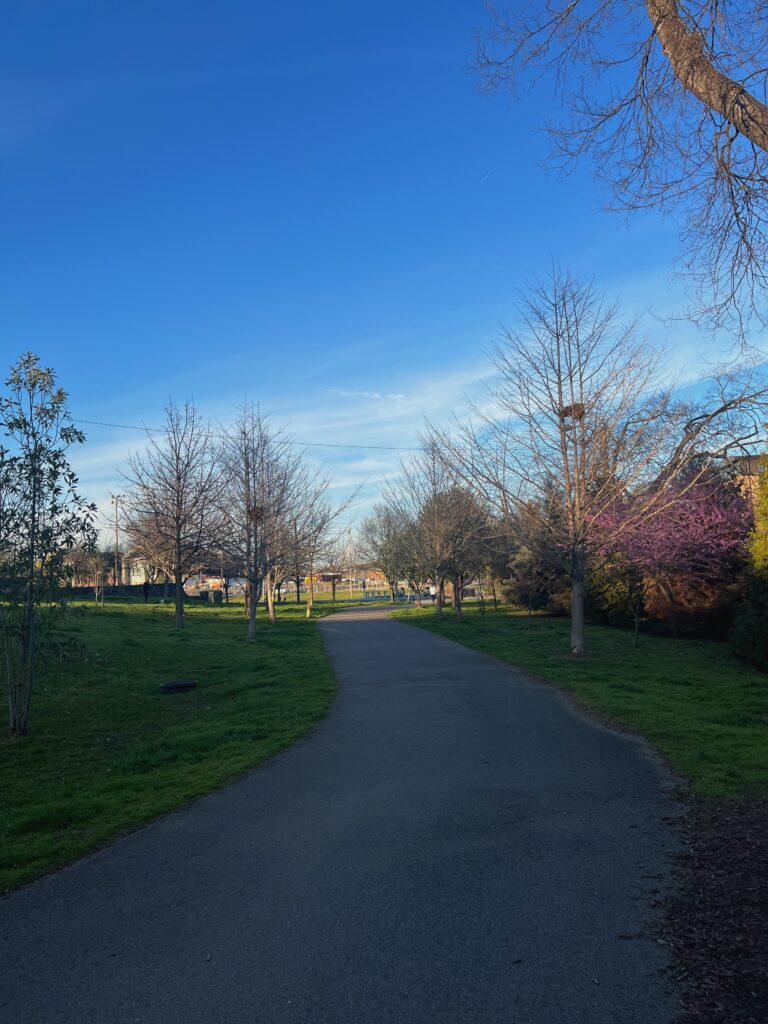
For my the second half of my spring break, I traveled back home to visit my parents in Nashville, Tennessee. Their house is across the street from a city park called Morgan Park. I grew up going to this park throughout my childhood so I was curious to see what I would notice about the environment surrounding me after learning more about phenology. Even though Nashville is considerably warmer than Burlington right now, there is currently a cold front going through the South, making the early Spring weather feel much cooler than it usually is around this time. It was around 54 degrees when I visited this park yesterday and made my phenological observations. Morgan park is only about 1 mile from downtown Nashville, so it is very different than my site at Potash Brook. This area is surrounded by many busy roads, apartment complexes, houses, and other businesses and frequented by both people and pets on a regular basis. It is considerably more polluted than Potash Brook and a lot busier because of this. Below is a map of the park.

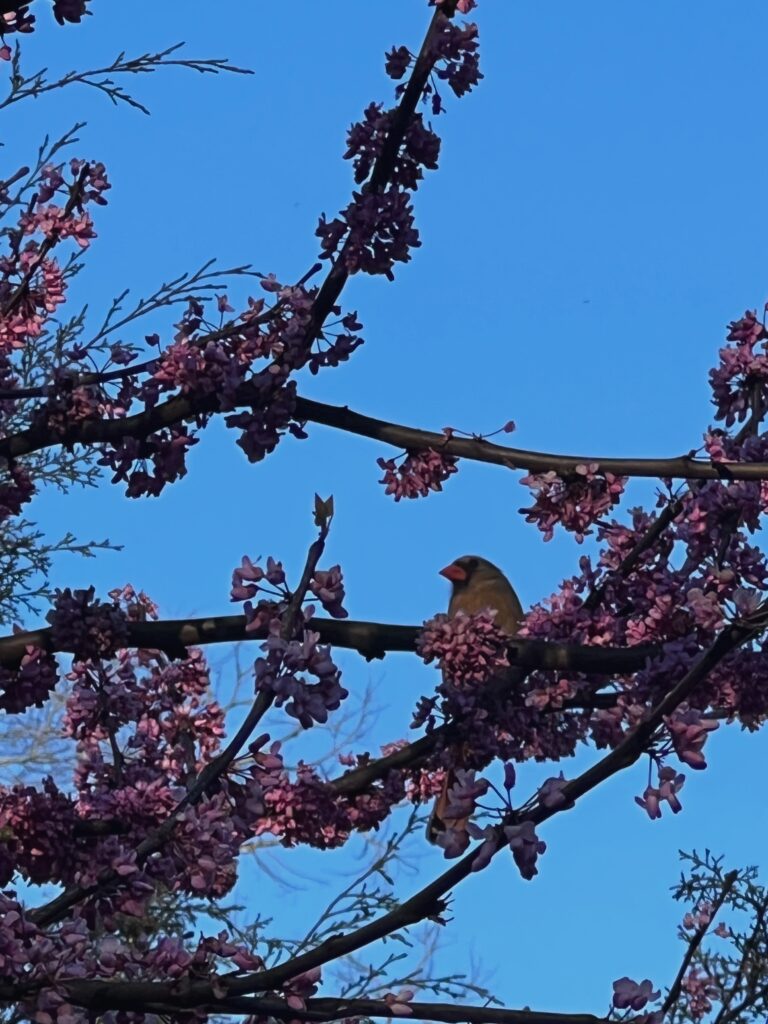
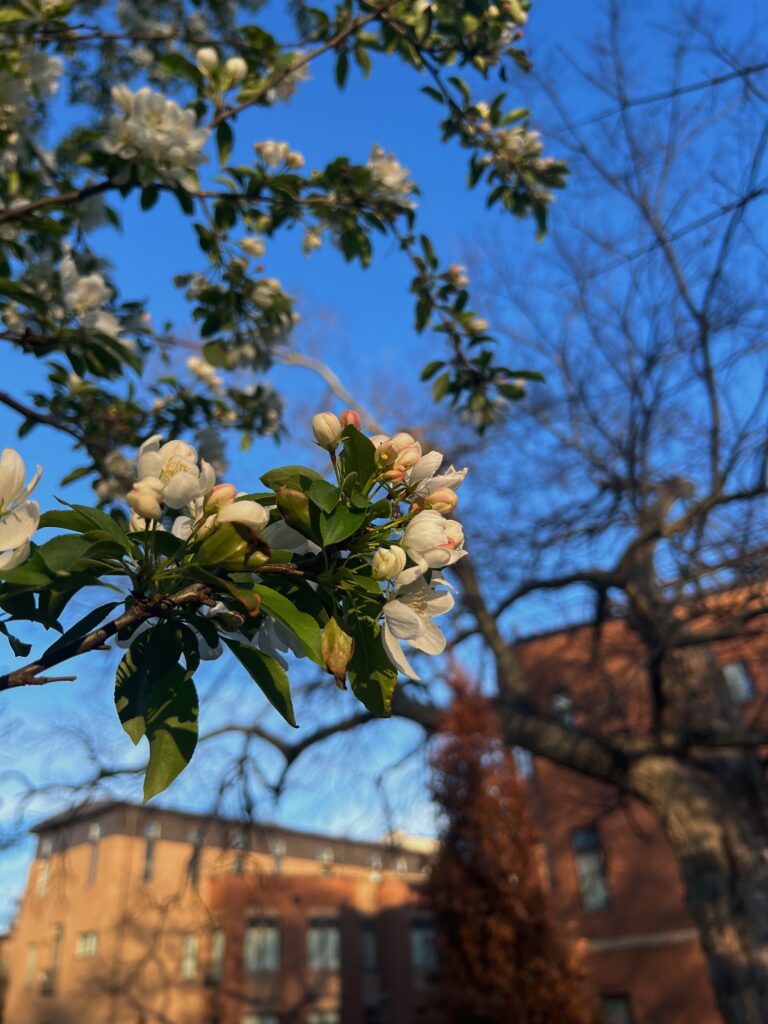
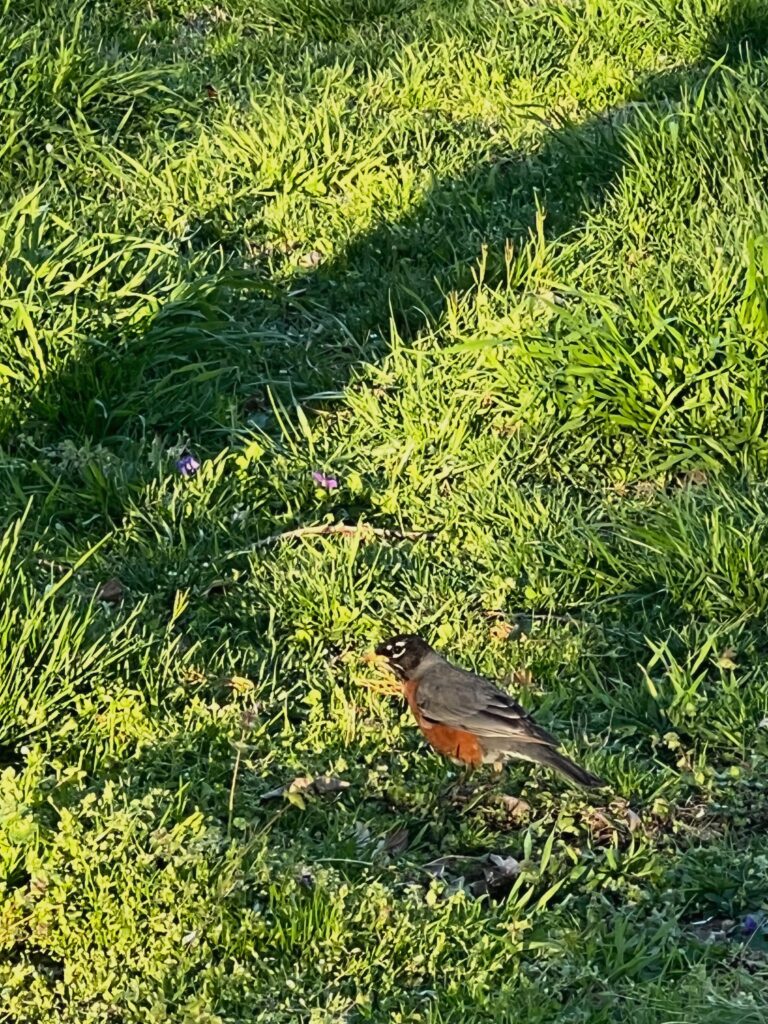
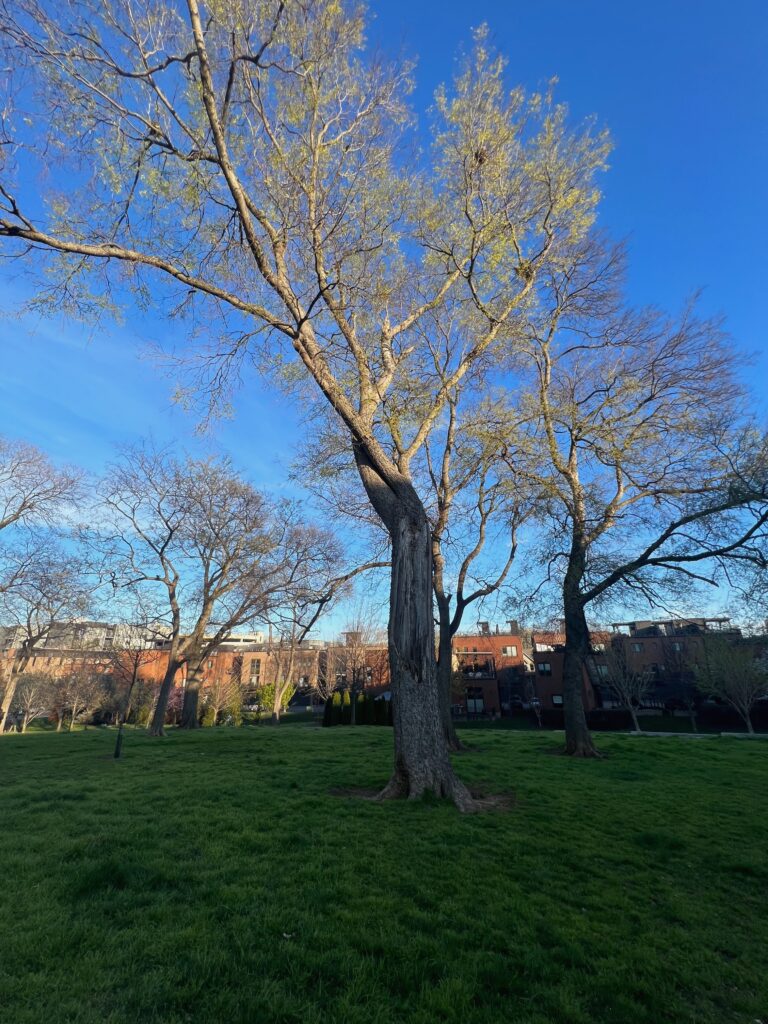
Phonologically speaking, Morgan Park is very different than Potash Brook. There is no visible source of natural water that cuts through the park. The nearest body of water is the Cumberland River, however this water is very polluted, especially considering it is the area of the river that the waste water management company in Nashville uses. However, there is a nearby sulfur spring that is piped into the park that was very popular among the locals in the early 20th century. These drinking fountains were capped in the 90’s due to health concerns, then redesigned as an ornamental water fountain in the early 21st century for the park. So sulfur water still pumps to this day, however no one ever drinks from the fountain. As for the woody vegetation of the site, many of the trees are flowering and blooming. Nashville has different tree species than Burlington. The species in my site included cherry trees, hackberries, Chinese fig trees, ginkgos, shingle oaks, and crepe myrtles. None of the species I found were any of the focal species we studied in Burlington which demonstrates how different the climate and weather patterns are between these two places. There are also different bird species here than there are in Burlington. The birds I saw were robins, mockingbirds, cardinals, and slate-colored Juncos, and I saw many nests throughout the park. It seemed like the birds were far more active in Nashville than they were when I left Burlington last week. After spending an hour at this site, I was surprised by how much more I noticed after learning more about phenology and natural history.

Tree ID at Potash Brook with iNaturalist

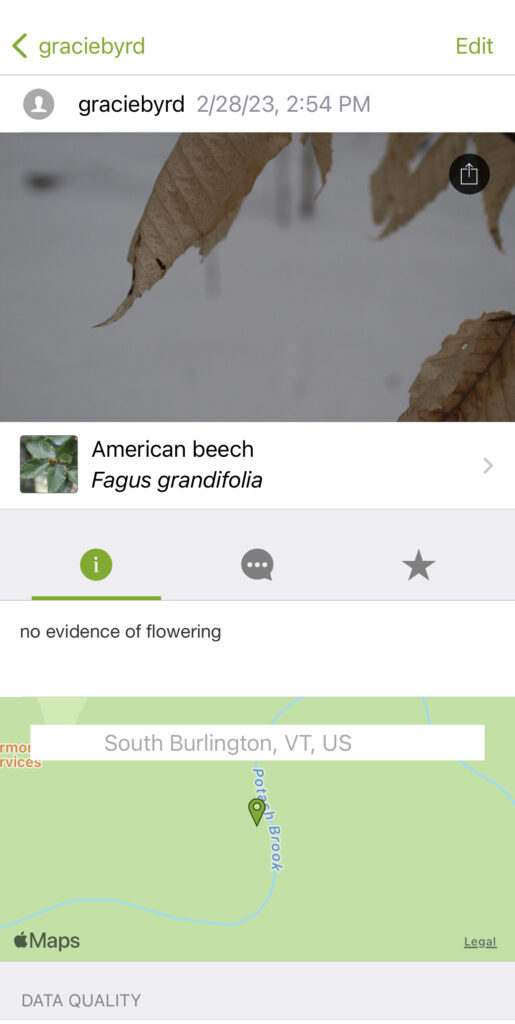
This week, I went back to Potash Brook for winter tree identification and more practice using iNaturalist. I had some trouble uploading my picture to iNaturalist this time around using it because I could not figure out how to use the phenology feature or where it was, and I also was not sure if I needed to add my post to a particular project on the app. However, after uploading my image, I was more confident in my identification skills because the suggested species from the app was what I had identified the tree as, which was American Beech.

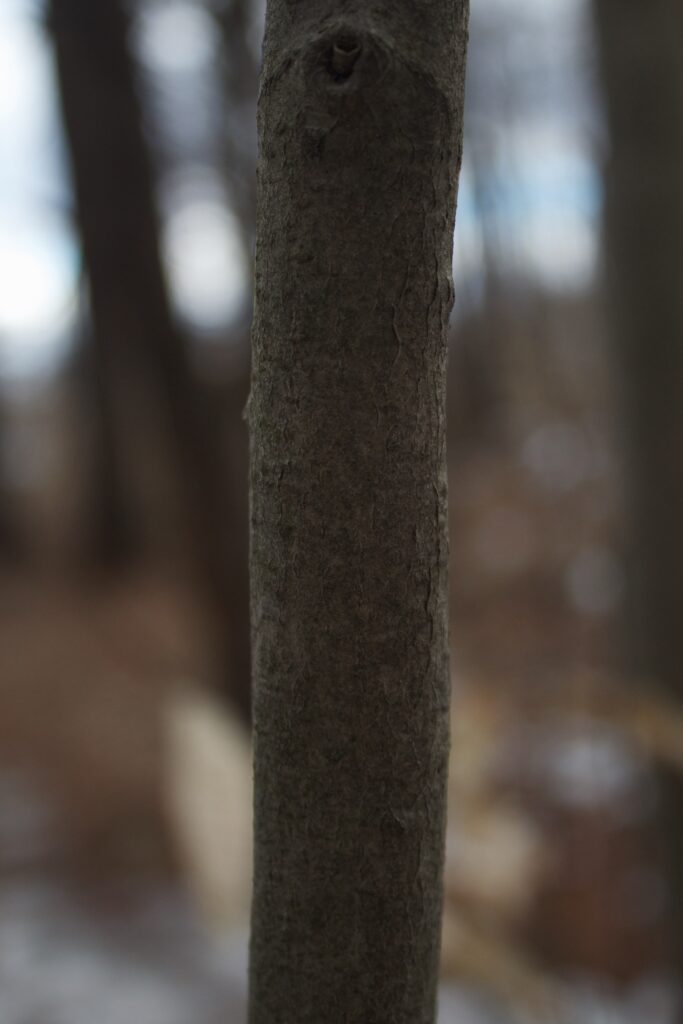
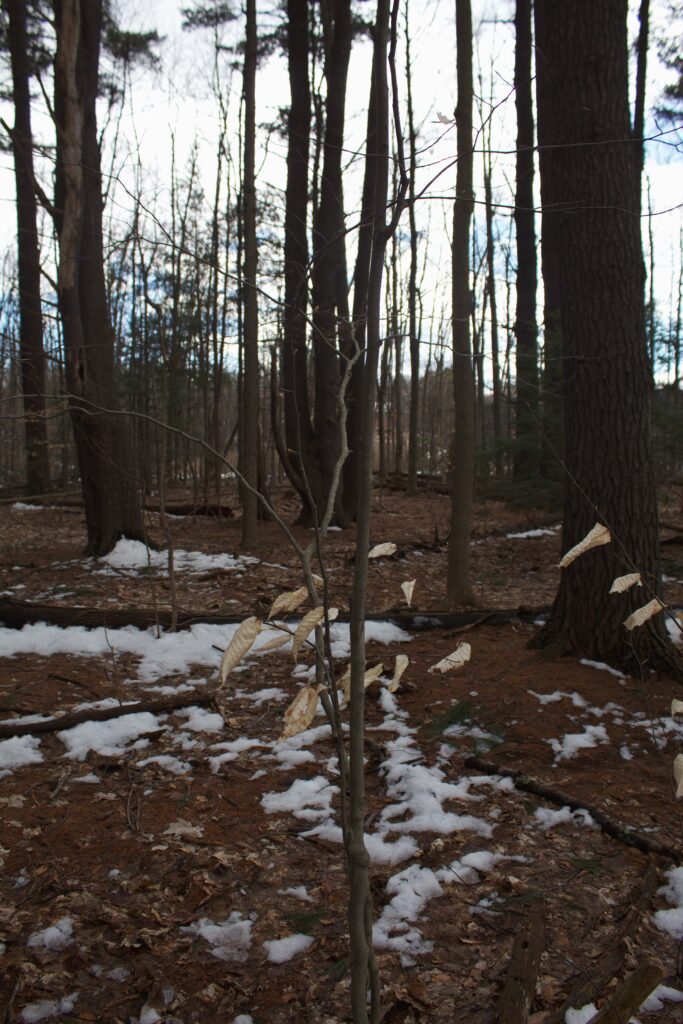
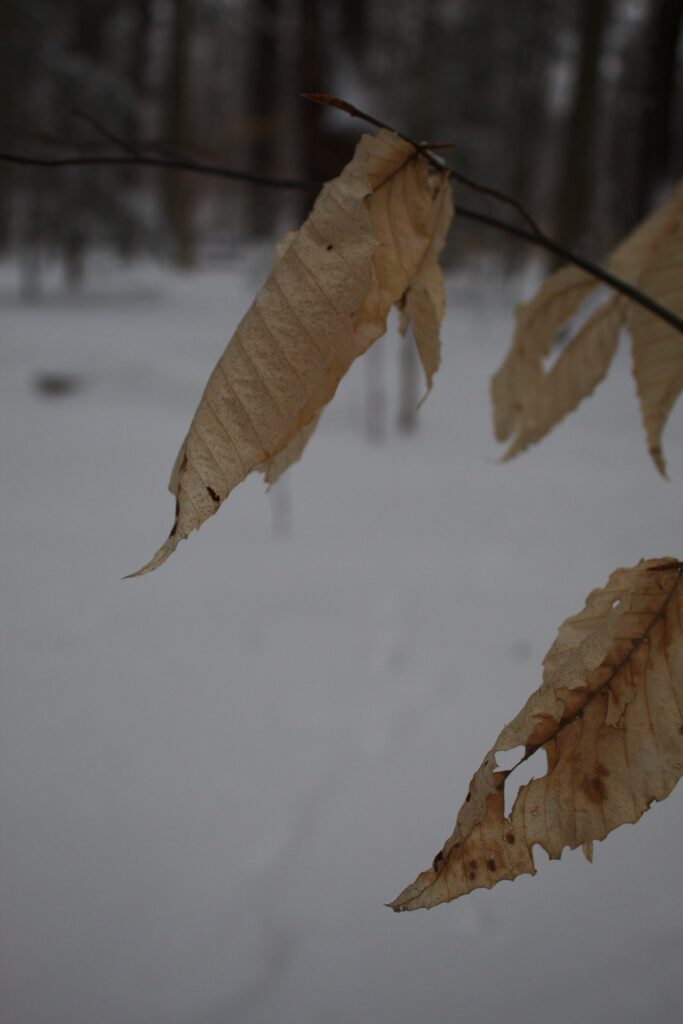
I identified this tree species as an American Beech mostly by the twigs. After I guessed that it was American Beech from its twigs, I noticed that it had a few leaves on the other side of the sapling and I was able to confirm that it was, in fact, an American Beech tree. I also know that Beech trees tend to be the trees that hold on to their leaves the longest in the winter, so it made sense why some pale yellow leaves were still clinging on. These leaves were pretty damaged from the cold weather, though, so it took me a little bit longer to identify the tree. I look forward to returning to Potash Brook and observing the tree in the next coming weeks.

Exploring Burlington using iNaturalist

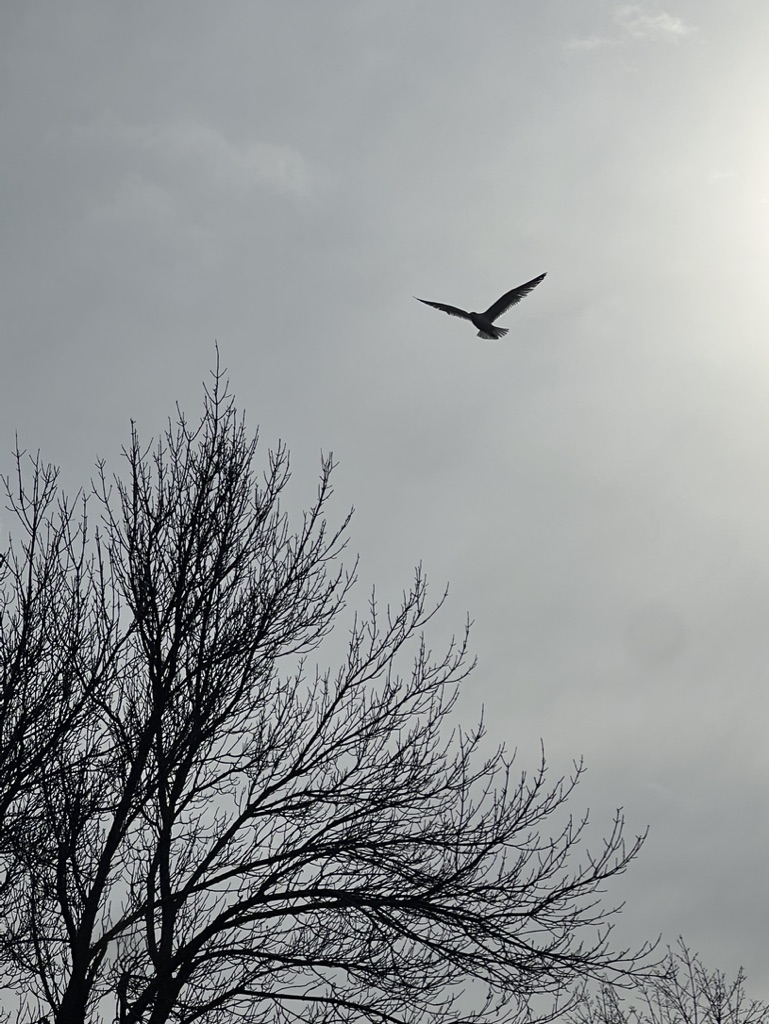
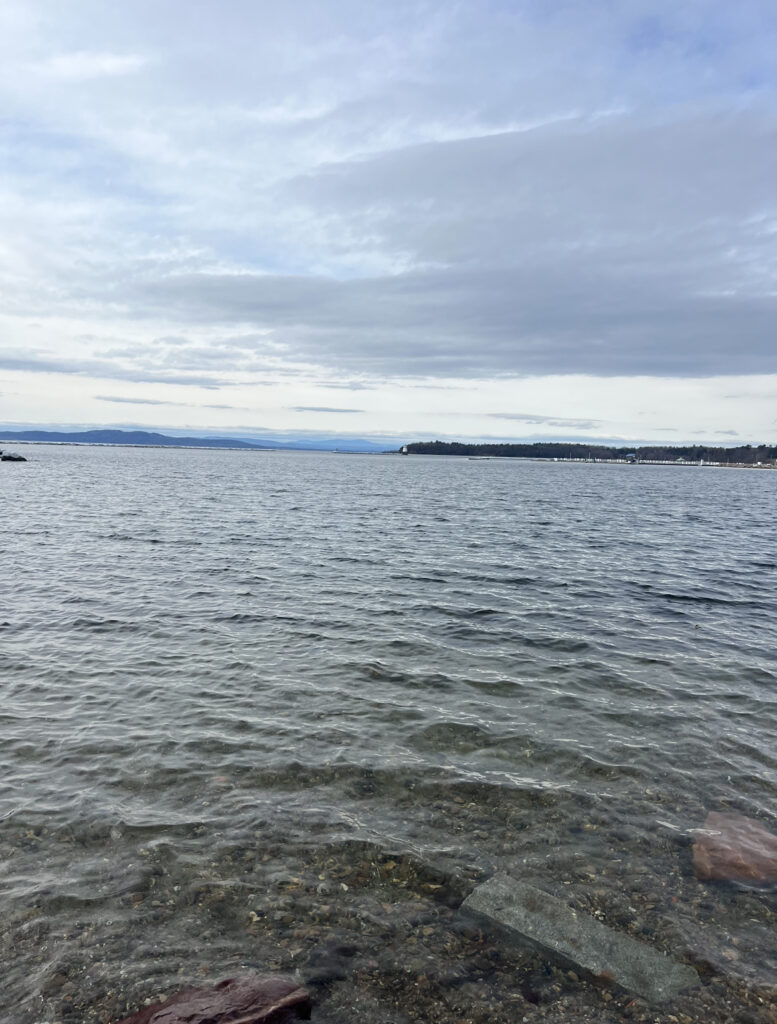
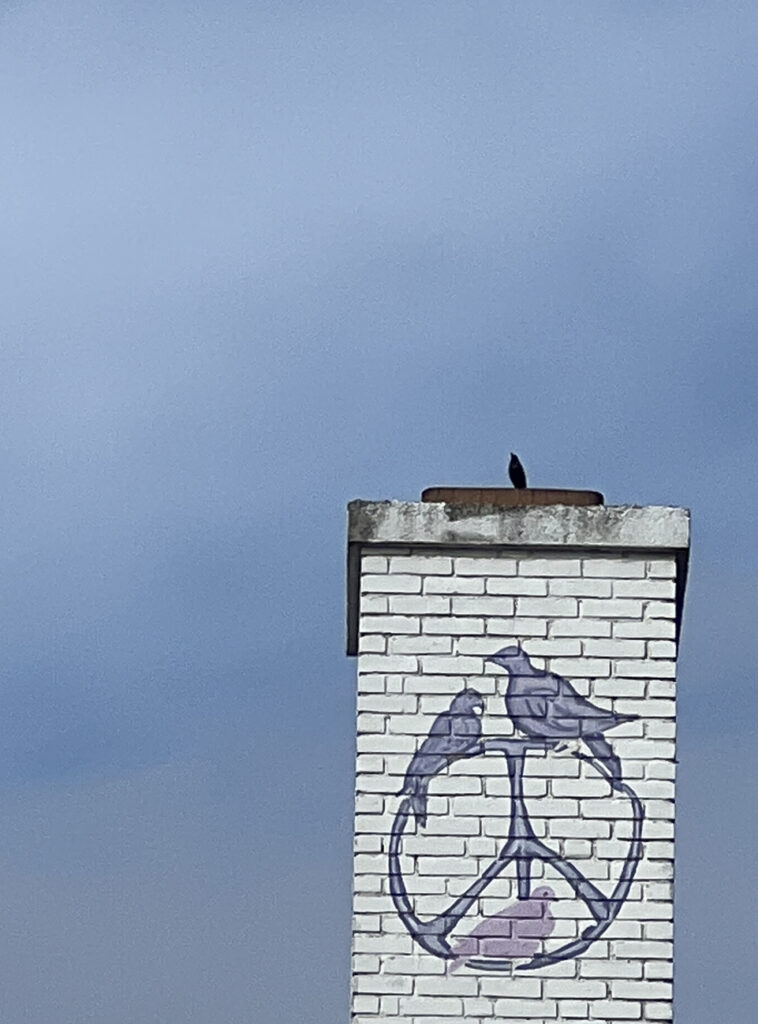
This week, I made a trip down to Burlington Waterfront Park to observe signs of wildlife in the city using iNaturalist. I noticed on my walk there that there did not seem to be many signs of wildlife. The snow had melted and the mud was too walked on to see any tracks. There were not any squirrels where I went as well which I was surprised by. Once I got to the lake, however, I did notice a crow sitting on a chimney top. I chose to identify it as a crow and not a raven because it had a small, straight beak. Ravens have long, curved beaks. As I got closer to the lake, I noticed large flocks of seagulls overhead. None of them were landing, but they did swoop close to the ground and the lake. I was surprised by the fact that they were returning so soon because it is the middle of February. It has been unseasonably warm this week, though, so I believe that could have something to do with it. Using the iNaturalist app was surprisingly easier than I thought. It looked a lot more complicated in class and I thought that I would struggle to figure out how it worked or how to join the class project section. It was very easy to use though and I think it is a really cool app that so many people can use to identify and track animals in their community.

Return to Potash Brook

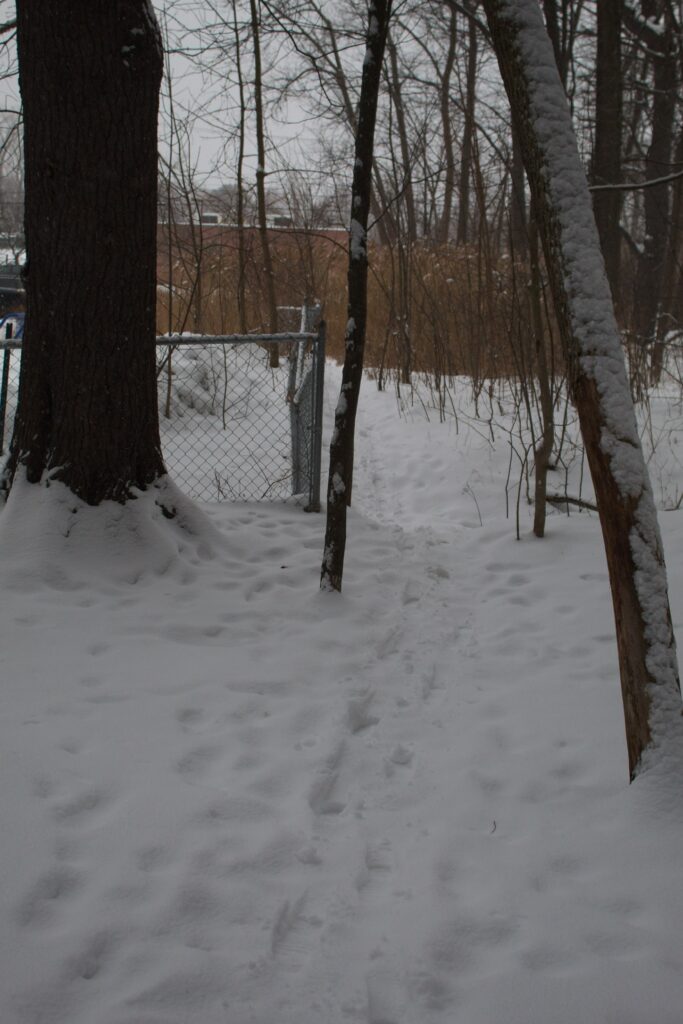
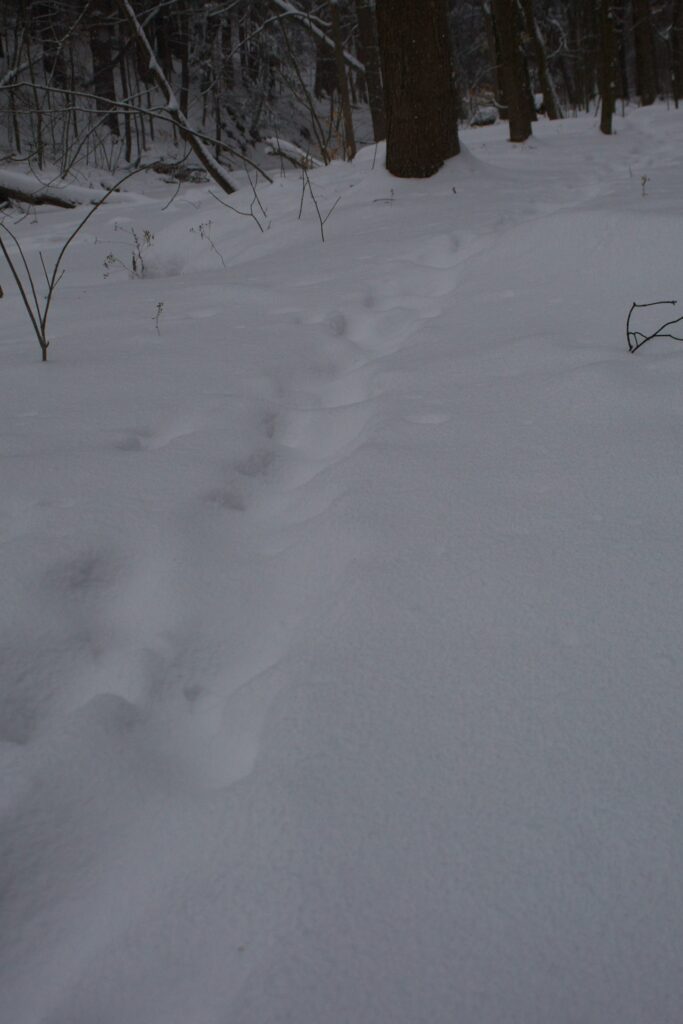
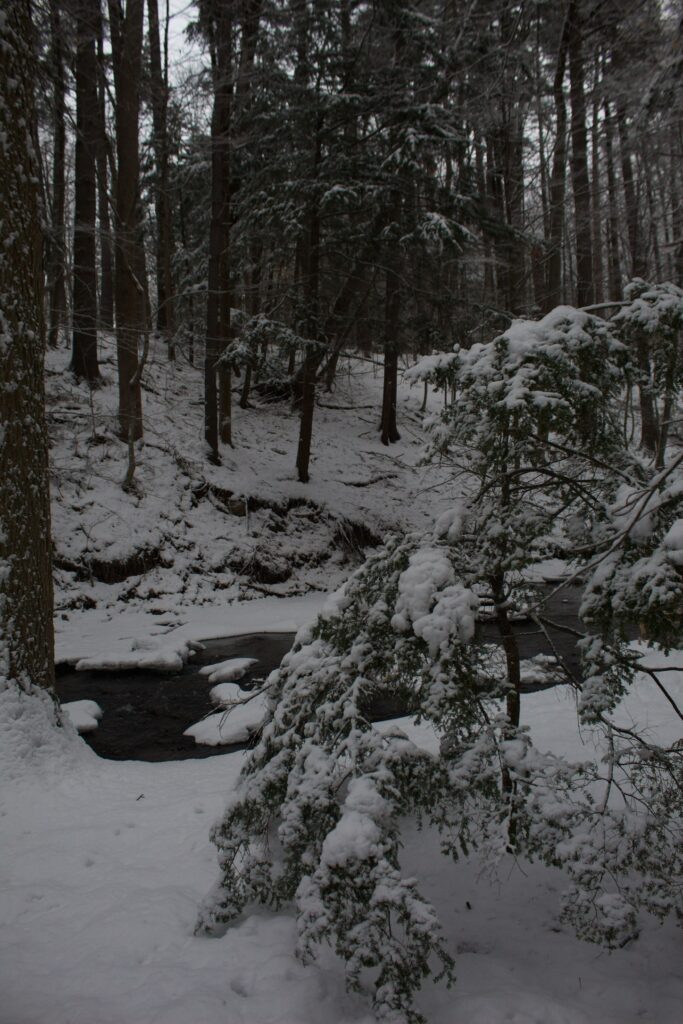
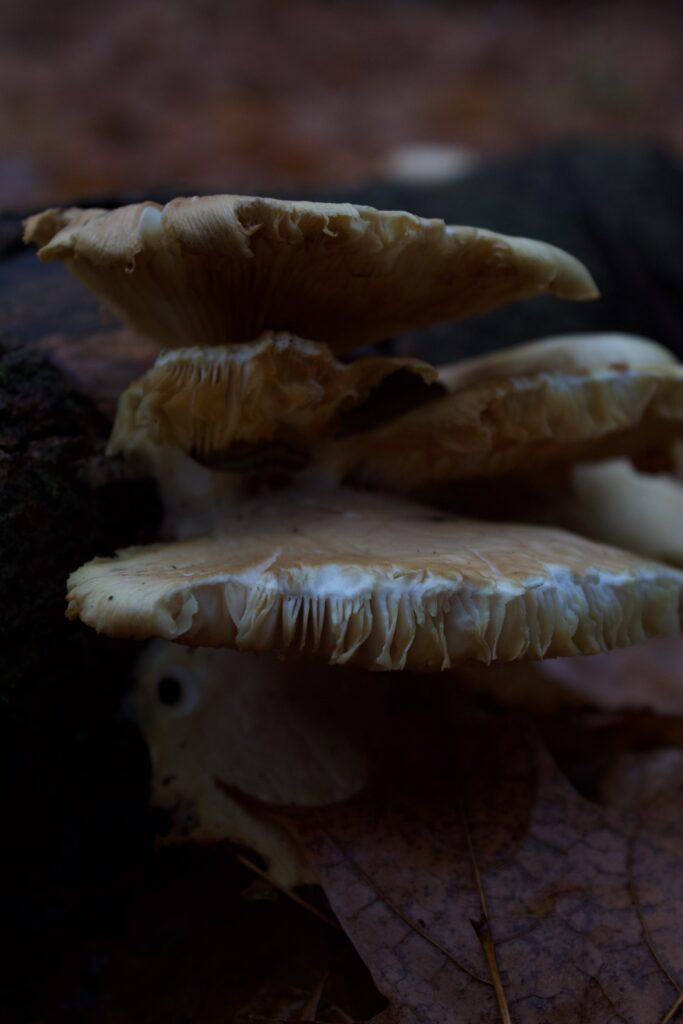
This past weekend I made my much anticipated return to my spot at Potash Brook in the East Woods Natural Area. I was shocked to see just how different it looked from my last visit over a month ago. Snow and ice blanketed everything surrounding me. I was in awe of it all. Since I am from the South, I am pretty inexperienced when it comes to snow and ice. There is usually a little bit of a rocky shore on the edge of the brook that I sit on when I visit this site, so I started immediately making my way down to that area. Once I got there, I took a big step forward and, much to my surprise, my food punched a hole through a big sheet of ice and I slipped into the water. After a few more slips into the brook, I finally managed to scramble away from the shore and catch my bearings. I went back over to what I had thought was the rocky shore of the brook and as I was examining it I realized that the water had risen due to snow melt, washed away the shore, and froze over enough to create a thin piece of ice that looked like land. I looked upstream and noticed that all of the rocks that used to poke out of the surface of the water had also been covered by large sheets of ice and then topped with a few inches of snow. As I was examining the water I noticed that it was moving much faster than it was in December. This was also due to the snow melt. I walked away from the edge of the brook and wandered a little bit farther into the woods. I noticed many footprints left by hikers and some dogs. I did not notice any more animal prints though. I also observed that pale yellow leaves of American Beech trees were still clinging on to their branches and that the coniferous trees were still full and withstanding the harsh winter winds. Usually when I visit Potash I hunt for cool mushrooms and photograph them, however due to the depth of the snow, I could not find any. This visit was the coldest of the ones that I have taken to the brook, but it was also one of the most interesting to me because of how the snow and ice had altered the environment.

Last Trip to Potash Brook

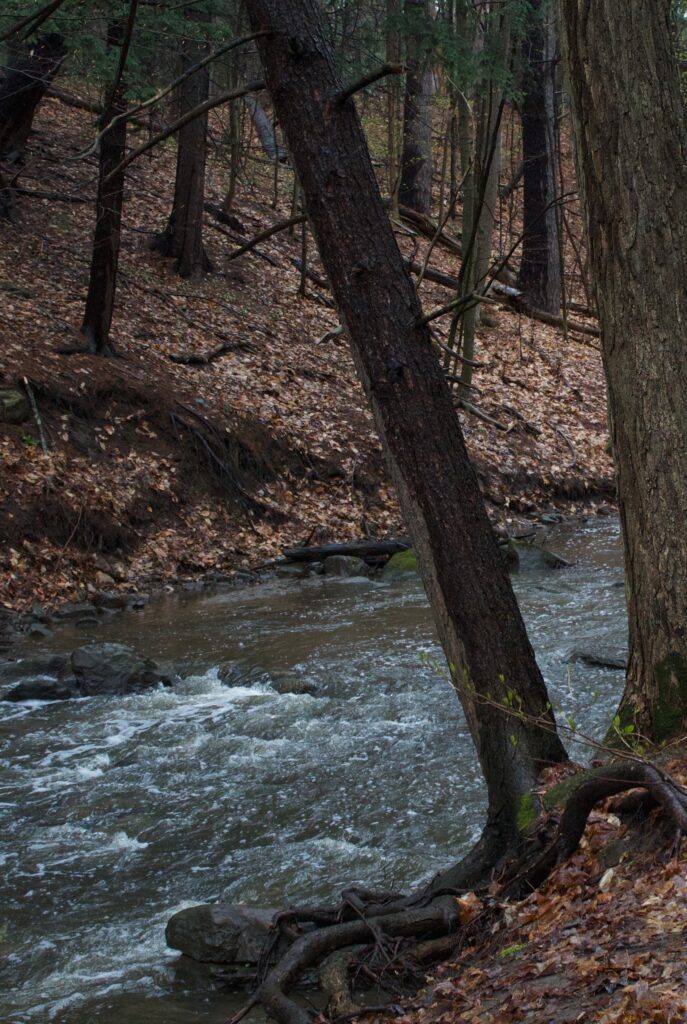
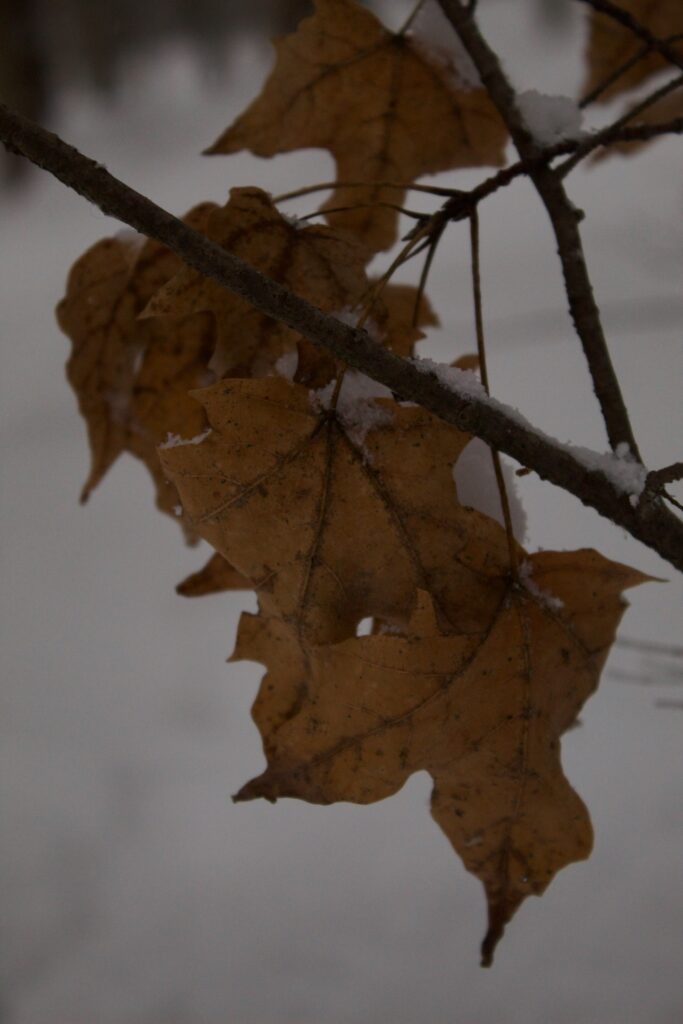
This weekend, I took my last visit to Potash Brook this semester. While I was there, I noticed a few changes since the last time I visited in November. There were no more leaves on any of the trees this time and the fall foliage that had fallen on the ground seemed to decrease from the last time I was there, indicating the presence of decomposition. Persisting vegetation included ferns and some deciduous saplings. I was surprised to see that mushrooms were continuing to thrive in this area as well. Unlike my previous post, there were no wildlife sightings or signs of wildlife in the area. This was the first time I visited the site immediately after rainfall. The leaves were soaked and decomposing, the once sandy soil had turned to mud, and the brook was flowing higher and faster than it normally flows. The temperature was cooler and it appeared that a couple more branches and logs had fallen into the brook from the opposite bank. I have really enjoyed visiting this natural area throughout this semester and observing its phenological changes and phases and taking photos and notes of these changes. I enjoyed studying the brook and the vegetation the most. I hope that Potash Brook can continue to be part of a protected area and one day no longer be considered an impaired stream due to its pollutants. I hope to continue to visit this area throughout my time at UVM.

A Quick Look at Shelby Park

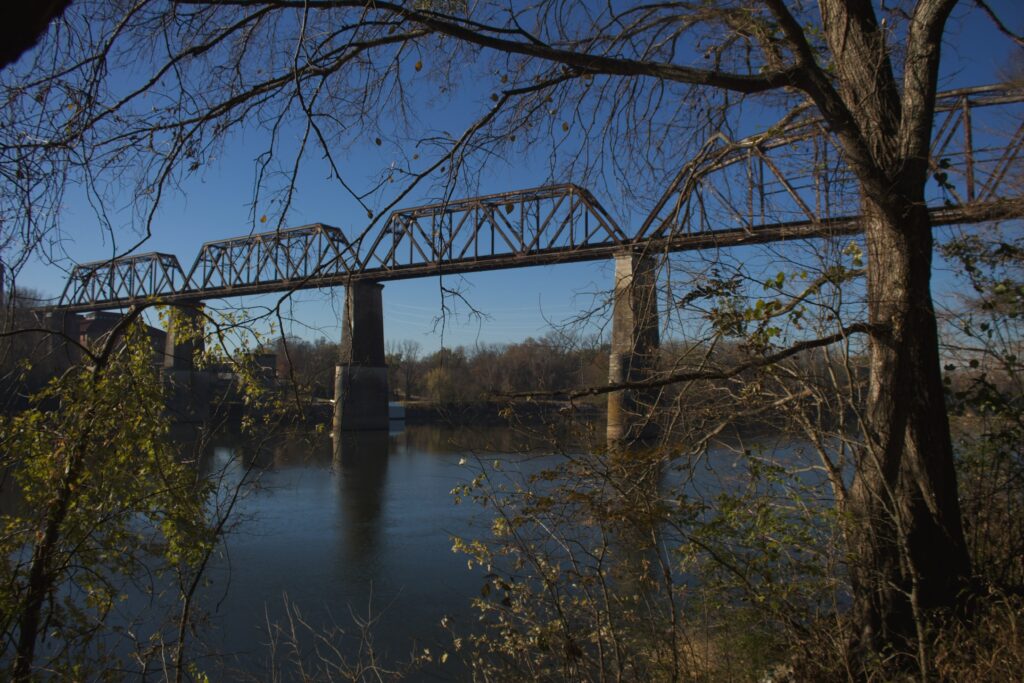
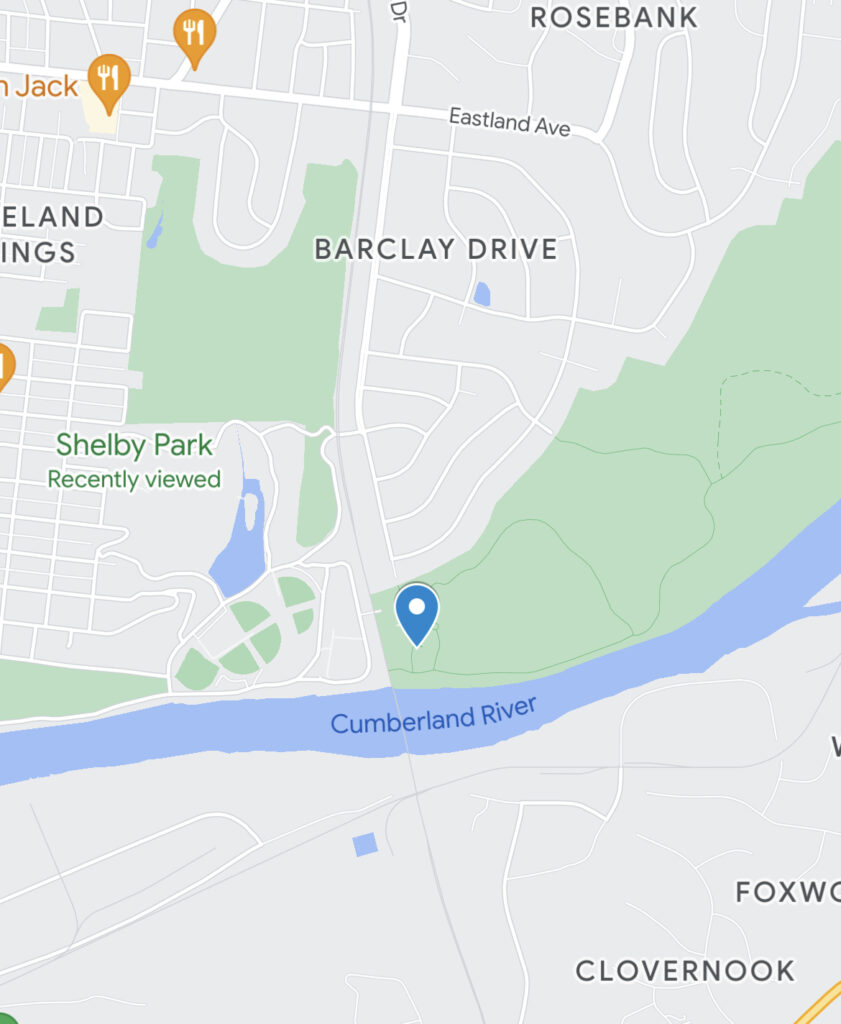
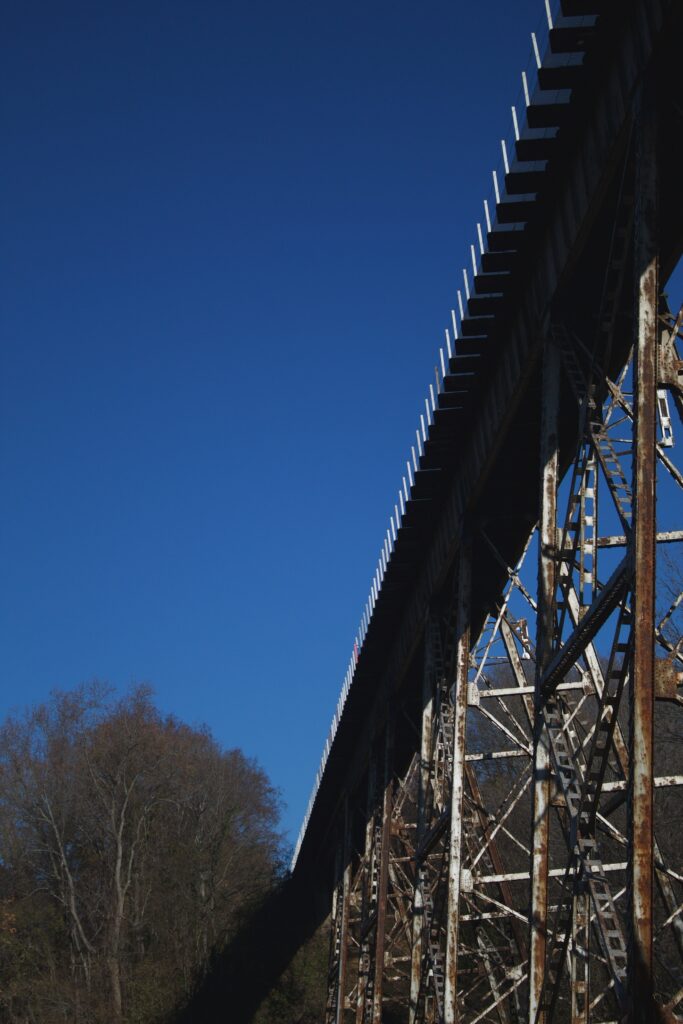
This week for Thanksgiving break, I traveled home to Nashville, Tennessee to see my family. During my trip home, I visited Shelby Park, located about two miles east of downtown Nashville and on the banks of the Cumberland River. The park is multi-use and expands over 1200 acres. The park consists of playgrounds, baseball fields, golf courses, hiking trails, and an abandoned airpark that people use for biking, skating, and other forms of recreation and has a railway cutting right through it. This park happens to be one of my favorite to visit when I am home because of its uniqueness and proximity to the city. Below is a hyperlink and an image of a Google Map of the area of the park that I visited.

Map of Thanksgiving Site

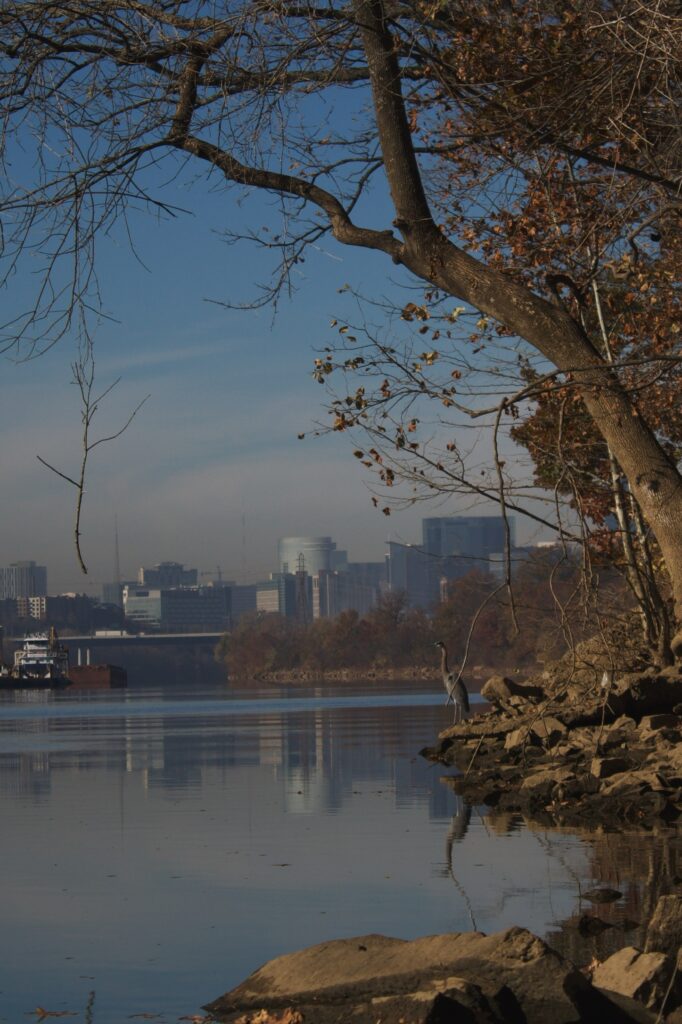
Similarly to the site that I have been studying in Burlington, Shelby Park is heavily influenced by the human impacts from the community around it. There are many impervious surfaces both in and surrounding the park, similarly to how Potash Brook is surrounded by impervious surfaces. Many of the pathways in the park have been paved over for bikers to utilize and there are roads and parking lots scattered throughout the park as well as an old abandoned airpark with paved tarmacs. Because of all of these impervious surfaces, there is a considerable amount of runoff that affects the park and its natural areas. The Cumberland River, like Potash Brook, cuts right through my site. The river goes through all of the city of Nashville and it is known for being some of the dirtiest and most polluted water in the city. During my visit to Shelby Park, I saw many signs warning people of the pollutants on the boat ramp. One of the largest signs near the end of the boat ramp strongly warns against eating any sort of catfish found in the river. Another sign warned that the river was known as an infested water because of the presence of an invasive species of fish known as Asian Carp. While Potash Brook is considerable healthier than the Cumberland River, both are considered impaired, with at least 28% of the water that passes through Middle Tennessee classified as impaired. Though Potash Brook and Shelby Park have many similarities, there are quite a few differences with wildlife and vegetation. I usually never see any wildlife when I visit Potash Brook, but while visiting Shelby Park, I encountered a family of four deer, flocks of geese, a heron, and many other species of birds. The vegetation was also different, many trees were still holding onto their leaves and there were not as many maple trees or coniferous trees as there is in Burlington. Overall though, I was surprised by the similarities between Potash Brook and Shelby Park.