

Macroinvertebrates (animals without a backbone that one can see without a microscope) are central towards stream habitats due to their key role in the cycling of nutrients. Macroinvertebrates can also serve an important role as bioindicators of stream water quality (Shimba & Jonah 2016). Certain taxa including mayflies, caddisflies, and stoneflies are particularly sensitive to physical and chemical shifts in freshwater systems. (Tampo et. Al., 2021). When assessing these sensitive taxa, species richness, abundance, and physical characteristics are all common water quality assessment parameters centered around macroinvertebrate bioindicators (Carter et. Al., 2017).
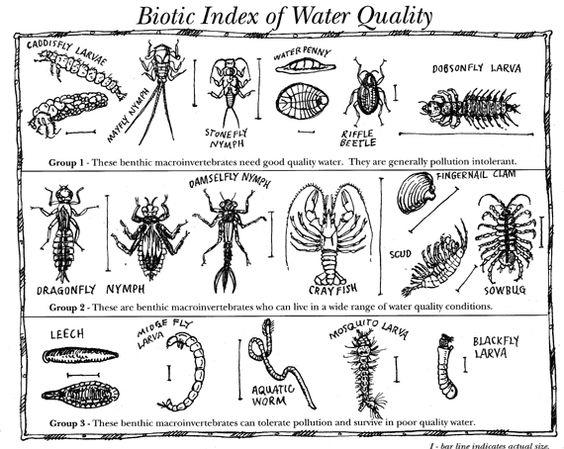
By finding macroinvertebrates in Group 1, that would indicate high quality water and low amounts of pollution. Macroinvertebrates in Group 3 would indicate poor quality water due to their ability to tolerate pollution.
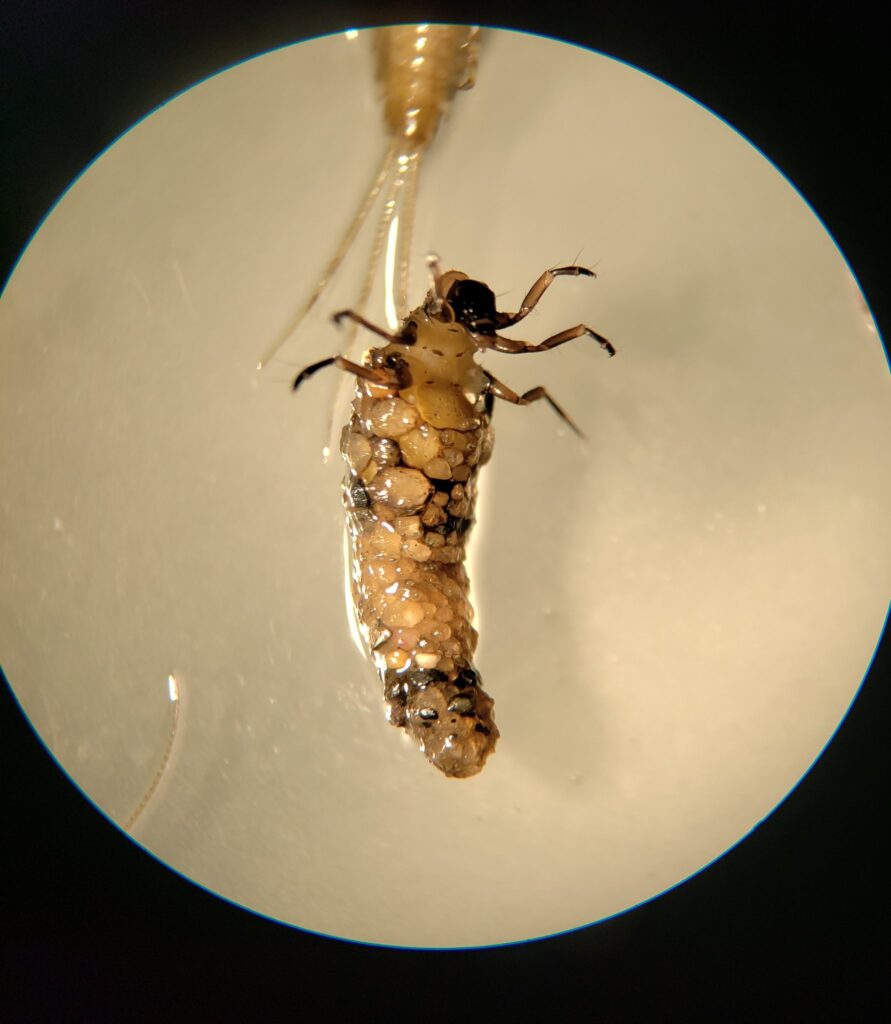
Caddisfly found from Brown Brook VT being analyzed under a microscope.
Agricultural or urban shifts in land use can have varying effects on nearby waterways, including an increase in nutrients through runoff from impervious surfaces (Goonetilleke et. Al., 2004). Understanding the complex relationship between stream land use, water quality, and macroinvertebrate health can help predict future effects of land use change on proximal stream ecosystems.
Currently, urbanization displays an increasing threat towards macroinvertebrate populations. Increased pollutants from human induced causes lower quality water, directly changing stream population structure and altering nutrient cycling.
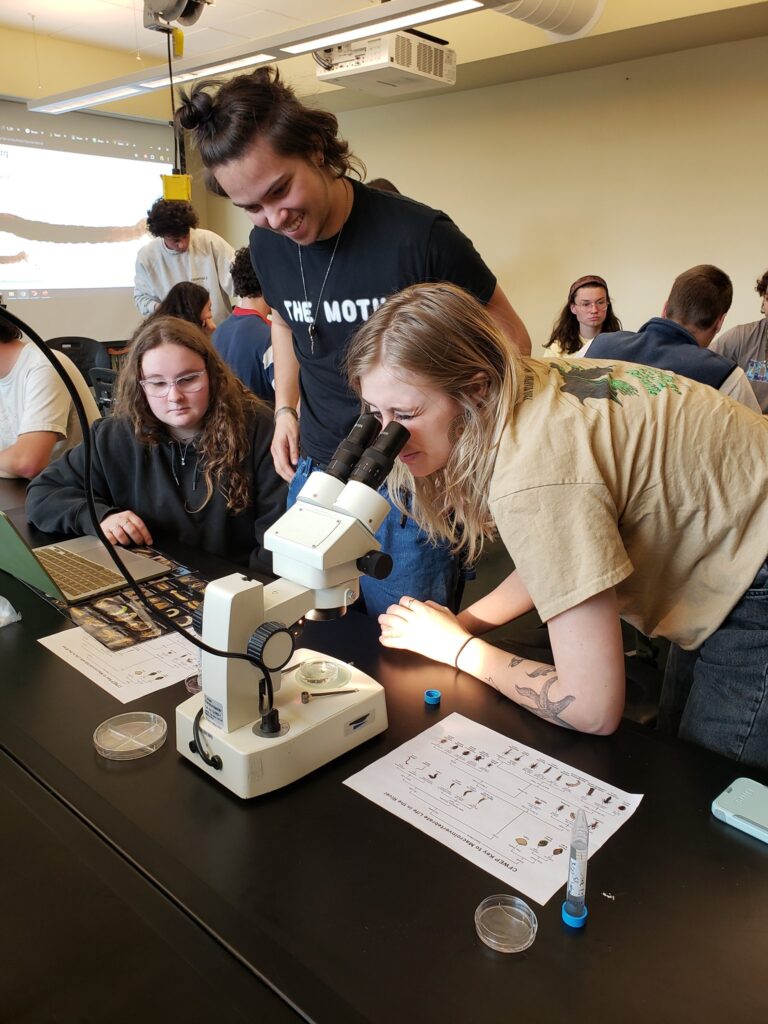
Daisy analyzing macroinvertebrates in the stream ecology lab.
Through our stream ecology labs, we directly observed changes in macroinvertebrate population structures. By comparing a stream in an urban area to one in a forested area, we found Group 1 macroinvertebrates in significantly high quantities.
For more resources about macroinvertebrates we reccoment checking out the following sites:
High quality images of macroinvertebrates – https://www.macroinvertebrates.org/
EPA factsheet on macroinvertebrates – https://www.epa.gov/system/files/documents/2021-07/parameter-factsheet_macroinvertebrates.pdf