NR 1010/1020 Phenology Blog 2024-2025 Genevieve Cowles
Final Phenology Visit
May 1, 2025
Unfortunately, despite significant efforts to troubleshoot, I am finding myself unable to upload media to my site, and therefore unable include pictures in theis final post. I would like you to imagine four lovely shots of my phenology site, each representing a season. My December 7th post found below has three representative photos for summer, fall, and winter. Additionally imagine a lovely sketch of a very large and beautiful sweet birch, accompanied by a photo of this tree at my site.
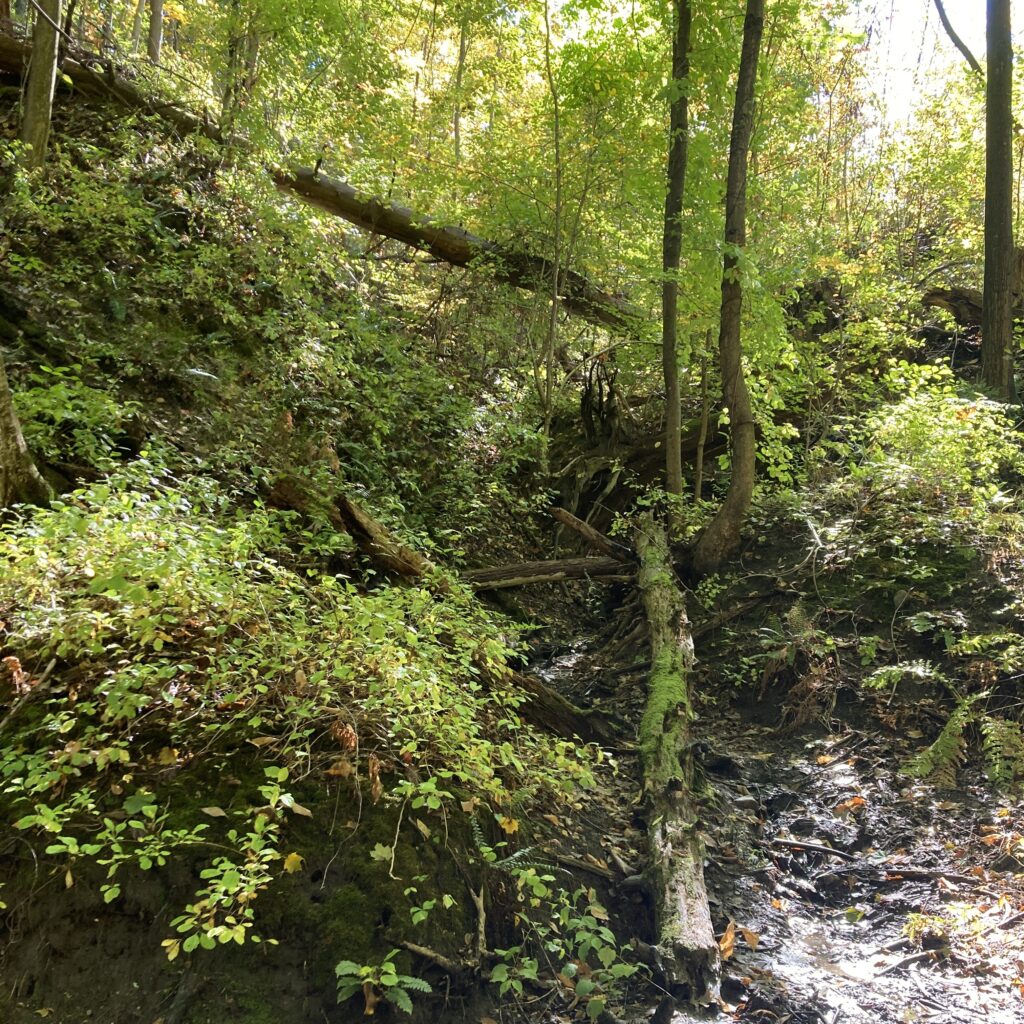
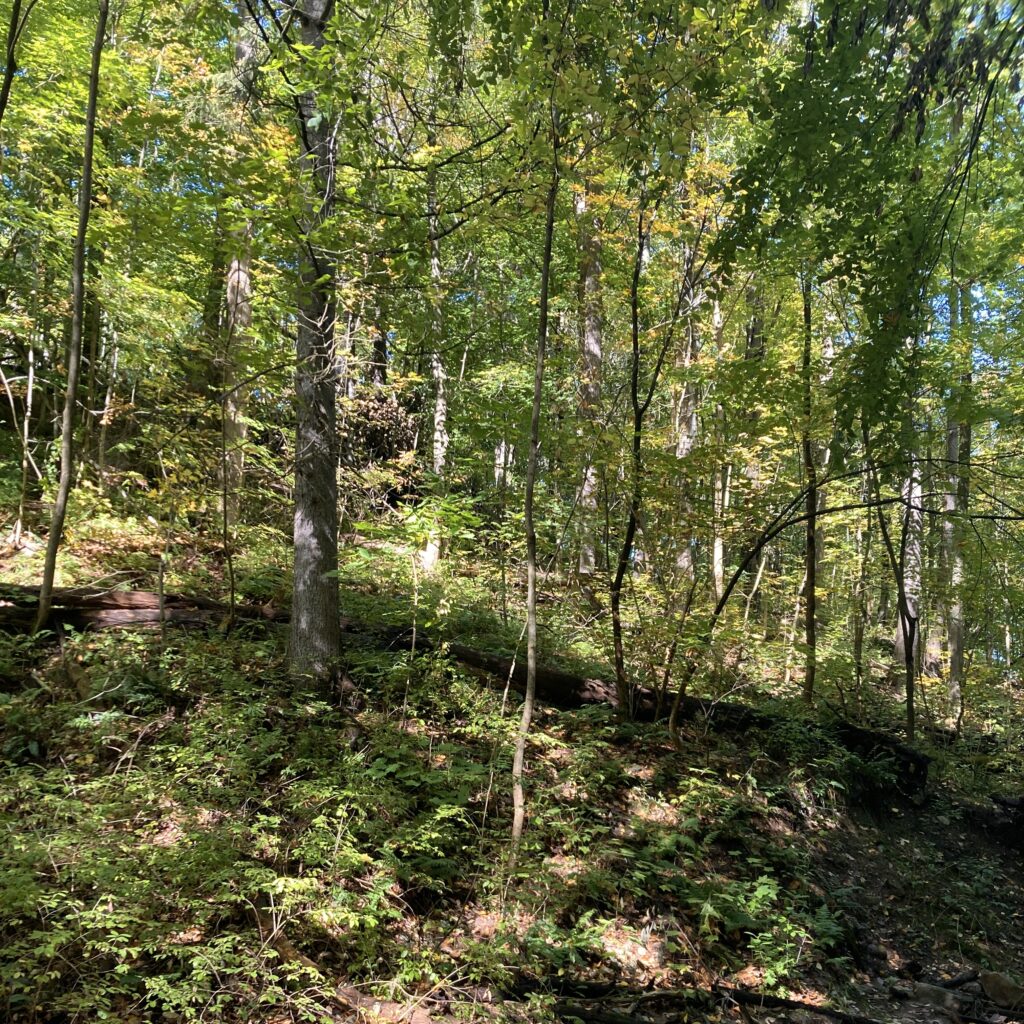
My site has changed drastically over time, yet I feel that in my most recent visit it seems quite similar to the moment when I discovered it. On that first summer day in September when I discovered my site, it was characterized by a burbling creek, vibrant green trees, and lots of downed woody debris shaped the composition of the site. My visit today revealed a very similar scene. The creek has slightly changed course, and come trees have come down while other fallen logs have begun to blend back into the forest floor, however for the most part my site feels very similar to how it was upon my very first visit. This isn’t due to a lack of change altogether. With fall, large amounts of leaf litter covered the forest floor, and filled the creek, creating a large slower path of water. Then in winter the repeated melting and freezing of the water created a large lake of ice, covering my entire phenology site. Despite these changes, the site has come back in the spring very similar to how it started.
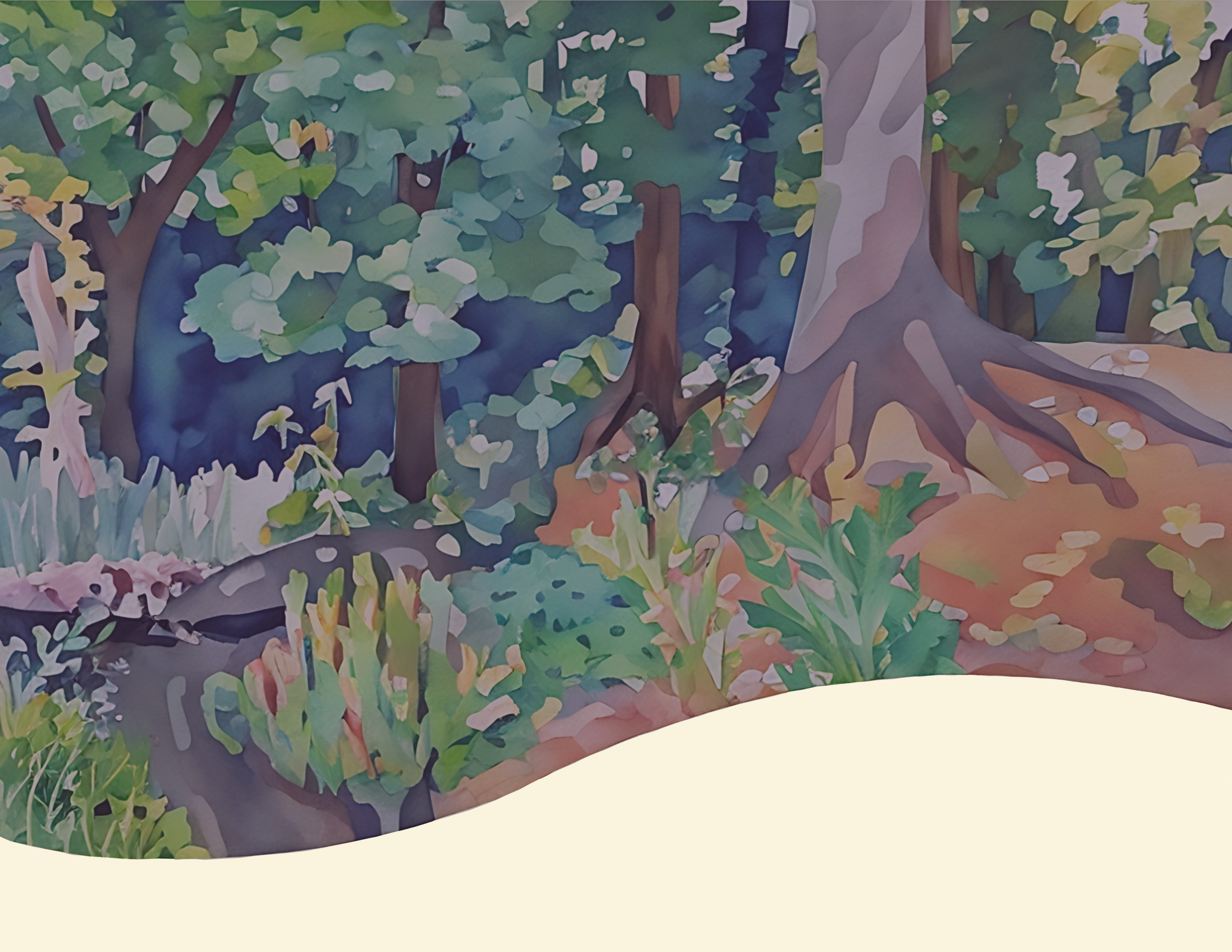
Throughout my time spent visiting my phenology site, I have become quite familiar with the area, and a few distinct landmarks stand out to me. The most notable are a large sweet birch just to the left of the center of my site, a set of boulders to the right, and a large downed log that guides the water, creating a small pool. These features are ones that I have become quite familiar with, and I have always been sure to check in on how they have changed with the passing of time. I chose to sketch the tree while at my site; there is not much about this tree specifically that makes it any more notable than those that surround it, but I find the sprawl of its roots and placement on the hill very beautiful. I think my drawing better reflects how I see the tree, as a powerful and graceful pillar of the landscape, while the photo shows the reality of a slanting tree whose roots are slowly eroding from the hill where it stands. Becoming familiar with my area, and recognizing different landmarks that are special only to me have made my experience visiting my phenology site more fun and personal.
Something interesting happened on this final visit to my phenology spot. While I normally feel peacefully alone at my site, today I ran into someone else as I waded down the creek. There is lots of evidence of human influence on the site, with structures created out of branches and paths where people have clearly walked, but it still felt somewhat shocking to actually run into someone else at the site. It solidified the idea that others also find this site as a place to connect to nature and have enjoyed exploring the area. This demonstrated to me the tie between nature, my site, and culture, the common human enjoyment of the area. I was happy to be reassured that even while I am absent this summer, my phenology spot will continue to be visited and enjoyed.
I feel uncertain about whether or not I am part of my phenology site. Things there will go on without me just the same as they do while I am there, with my presence making no difference in the path the water choses to take, or which trees remain standing. This makes me lean towards the idea that I am not fundamentally part of my place. However, I do feel that the place is, in a way, part of me. My many visits to my phenology spot over the course of this year have provided opportunities to explore, learn, and observe. I know that I will continue to return to this spot, revisiting all my favorite features of the site. My many return to my phenology spot may have no influence on the landscape that is present there, but the landscape has had an influence on my, and in that way I would consider my phenology sop a part of myself.
Burlington City Nature Challenge
April 28, 2025
I explored a variety of locations for the city nature challenge this weekend. On Friday I went birding before my first class, I started of strong with my first 15 species, all birds. Then that evening I walked down to the waterfront and recorded the variety of plants that I saw on the way. The following morning I went on another walk. This time I didn’t have my camera (it was a bit too rainy) so instead I opted for audio recordings of a few more birds, and some additional plant species. Sunday I dedicated quite a bit of time to recording on iNaturalist. I woke up at seven and went to Centennial Woods. Then, I went on a walk with my lab group in the afternoon to the redstone quarry; this was somewhere I had not been before, so it was very fun to explore. Then that evening I went to the pines to get a bit of birding in before the sunset. Finally, on Monday I spent a few hours in the woods behind Trinity, and then a few hours in the pines again. I managed to get to a variety of places, at various times of day. I can definitely say that the city nature challenge motivated me to go to more new locations than I normally would have.
My experience using iNaturalist was amazing. It is very user friendly, and has extremely impressive identification capabilities. I also appreciate that other people will identify things that I am unsure about, or confirm my identifications. As of 8:00 PM on Monday night, I have made 208 observations or 82 different species (although I do hope to get a few more tonight). I also enjoyed looking at other cities that have been participating. I checked out my home city and they are beating us here in Burlington (although they do have a significantly higher population than Burlington). It was very fun to look around at what observations had been made near my home.
Below I have included photos from a few of my more notable observations, and a map of all the observations I made as part of the City Nature Challenge.
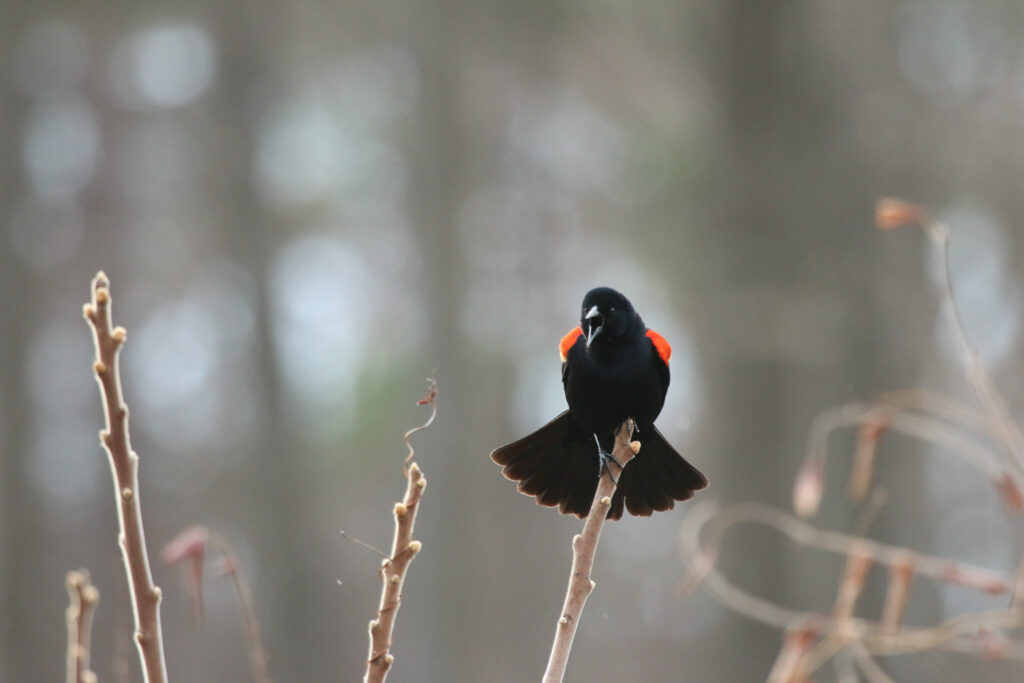
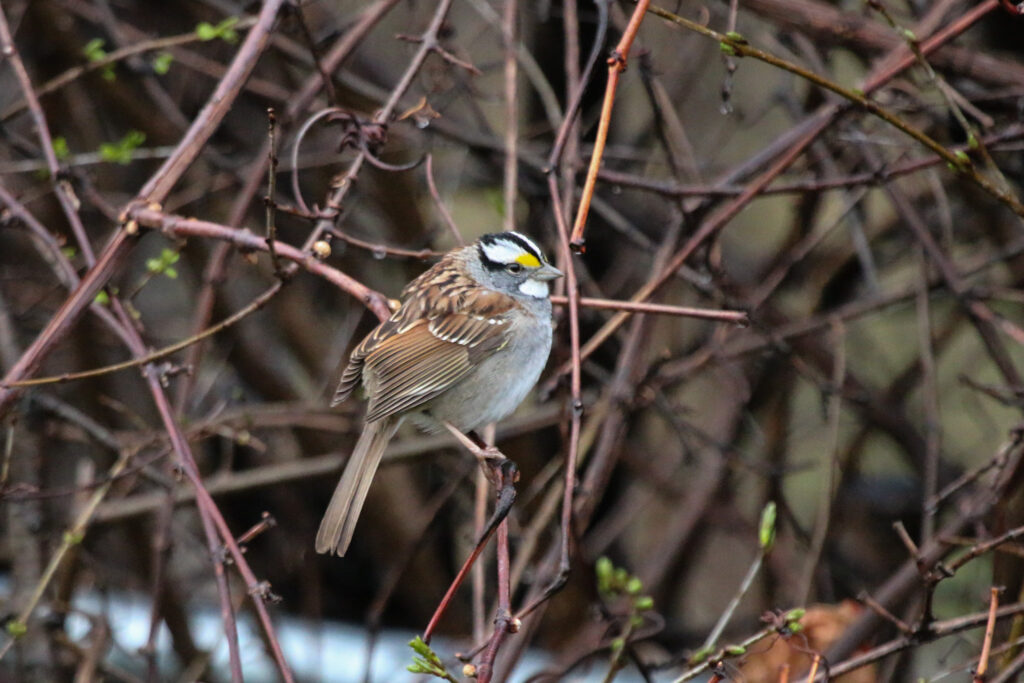

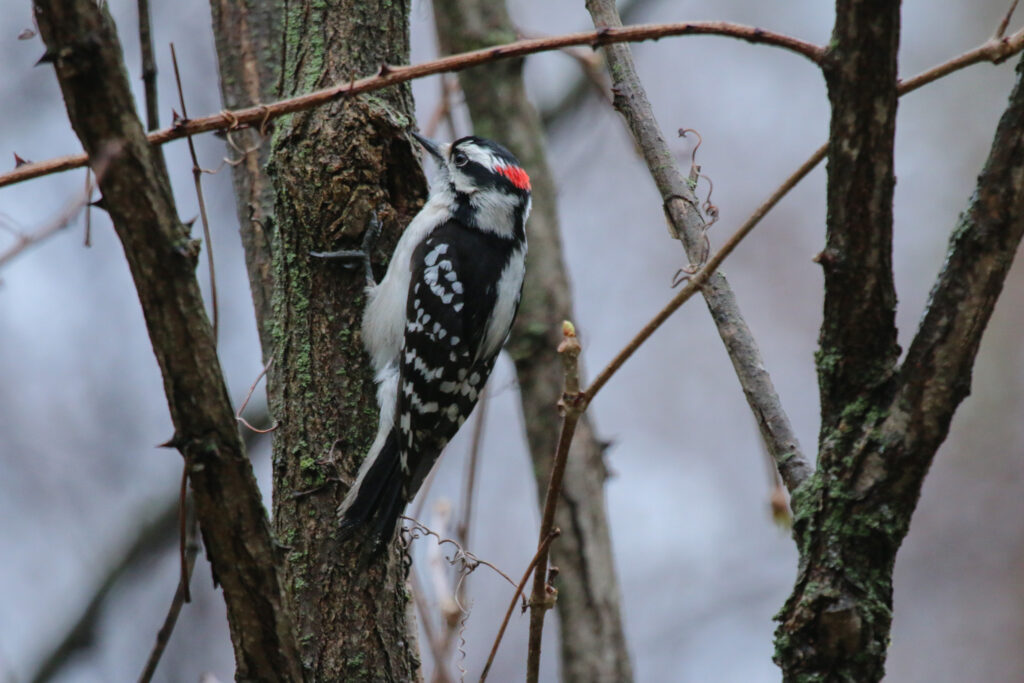
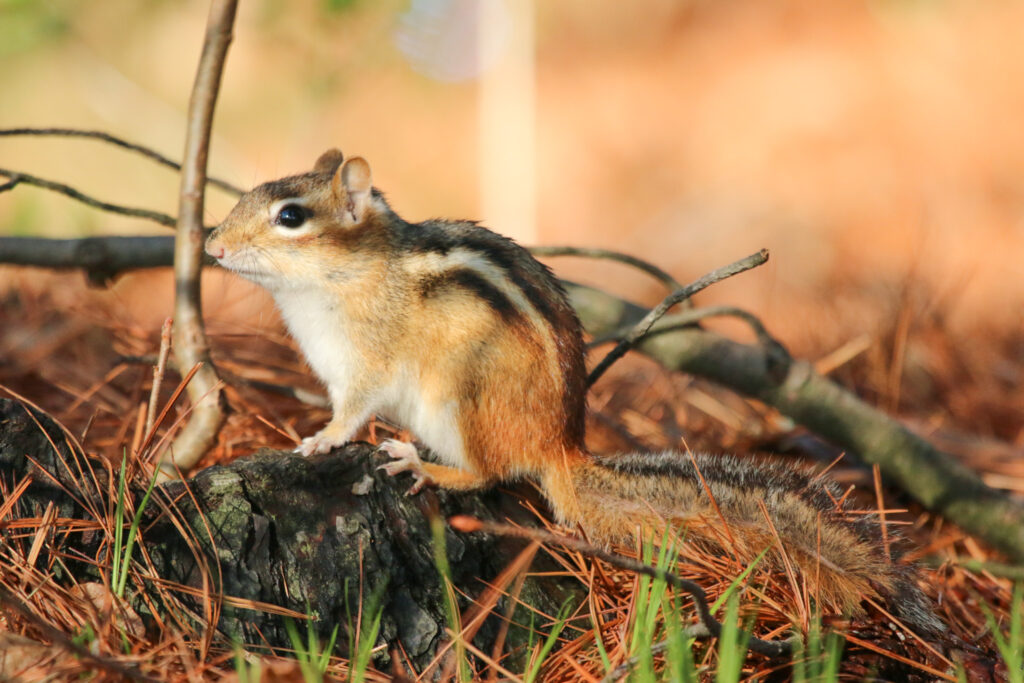

Nature’s Notebook Phenology on Campus
March 30, 2025
Just last week, most of the snow around campus had melted, and it felt like spring was just around the corner. However, with the weekend came more snow, and winter has returned. This early in the year, I did not expect to find many signs of life amongst deciduous trees, and I was correct in that assumption. I observed five different tree species around campus: red oak, sugar maple, white oak, red maple, and Norway maple. When I arrived at each tree, I observed 11 phenophases for each individual. All the phenophases were answerable by a yes or no, and are as follows: breaking leaf buds, leaves, increasing leaf size, colored leaves, falling leaves, flowers or flower buds, open flowers, pollen release, fruits, ripe fruits, and recent fruit or seed drop.
Of the 11 phenophases, most trees were negative for almost all of them. The Norway maple exhibited none of the phenophases. The red and white oaks showed none of the phenophases, aside from some leaves left over from last season; the white oak had an estimated 75% of its leaves left from the fall, while the red oak only had only a few leaves. The sugar maple and the red maple were beginning to show breaking buds, but had no other visible phenophases. The red maple showed many more breaking buds than the sugar maple, which had only a few of the early buds breaking. This shows the pattern that both oak species held onto some leaves through the winter, and that the maples were quicker to break buds than the oaks (not including the Norway maple). Below I have included pictures of each tree from my observations.
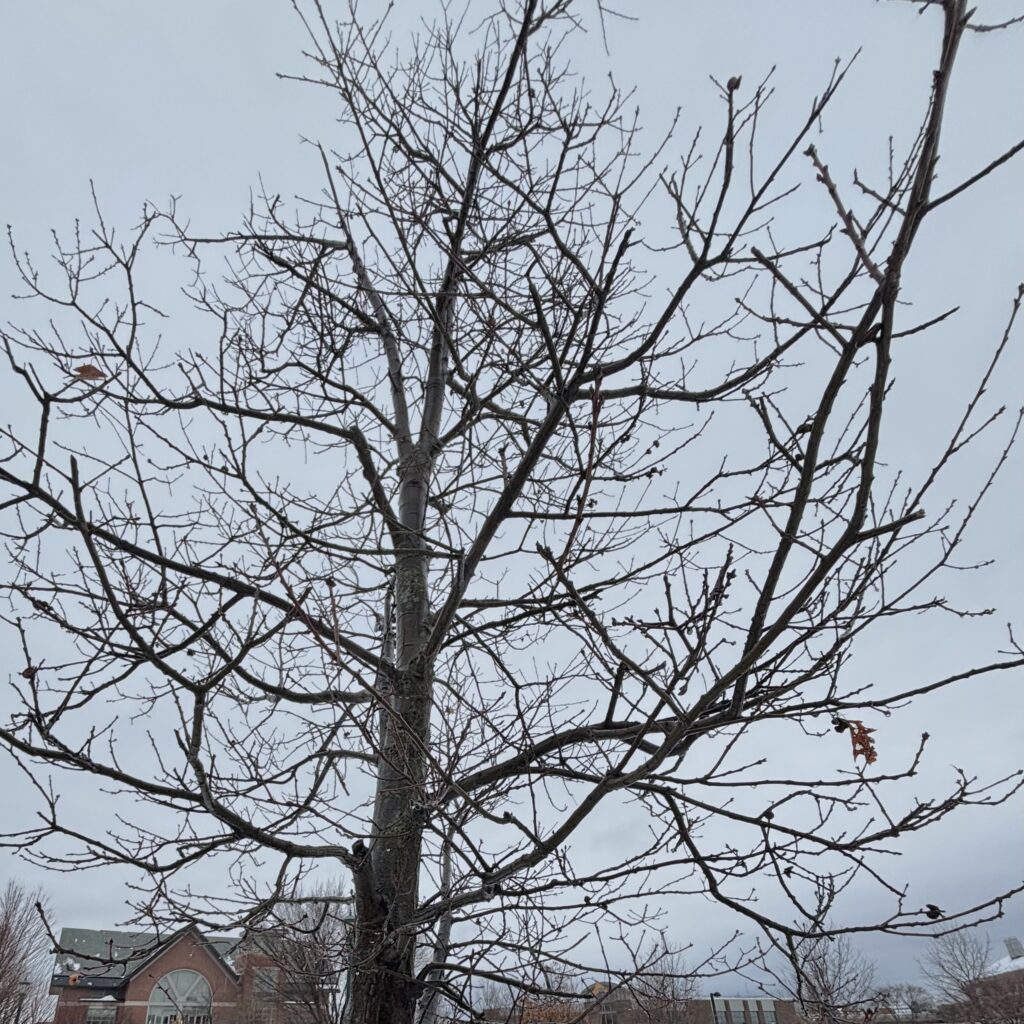
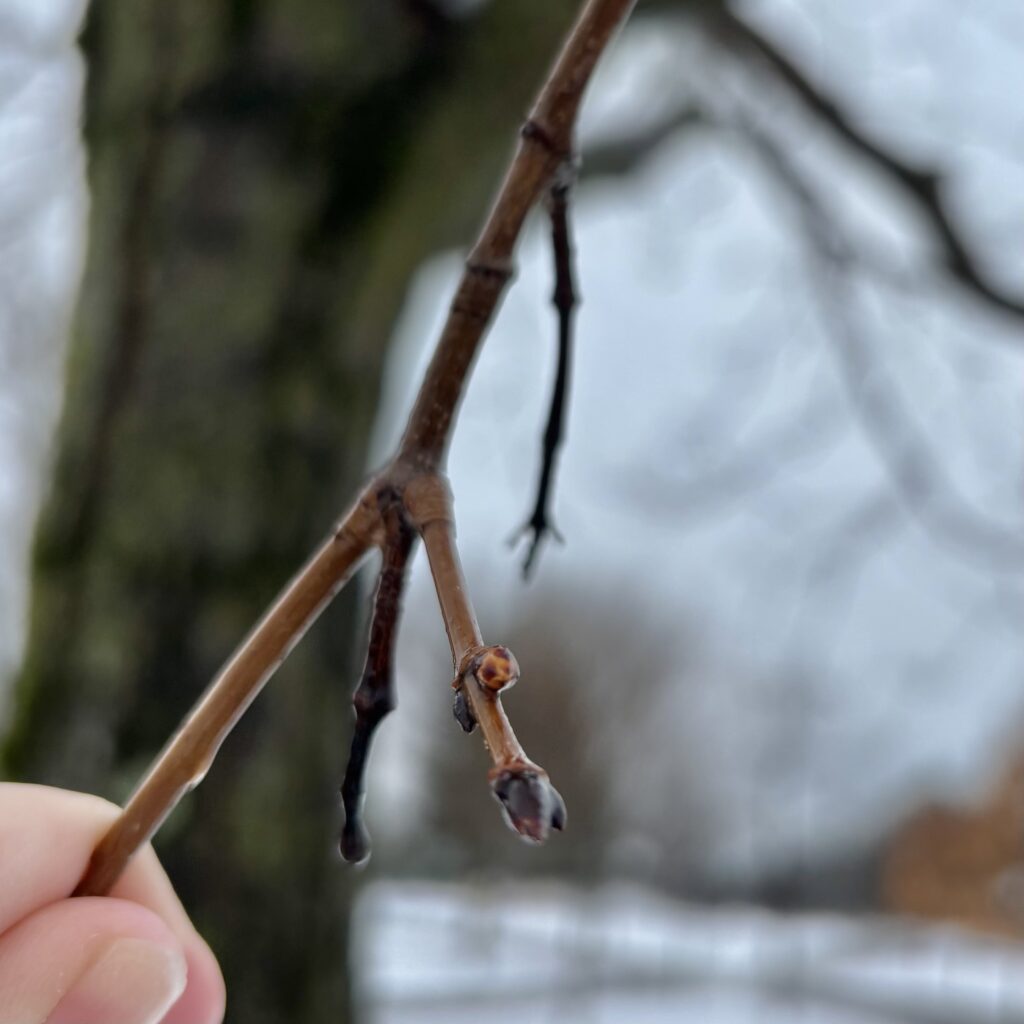
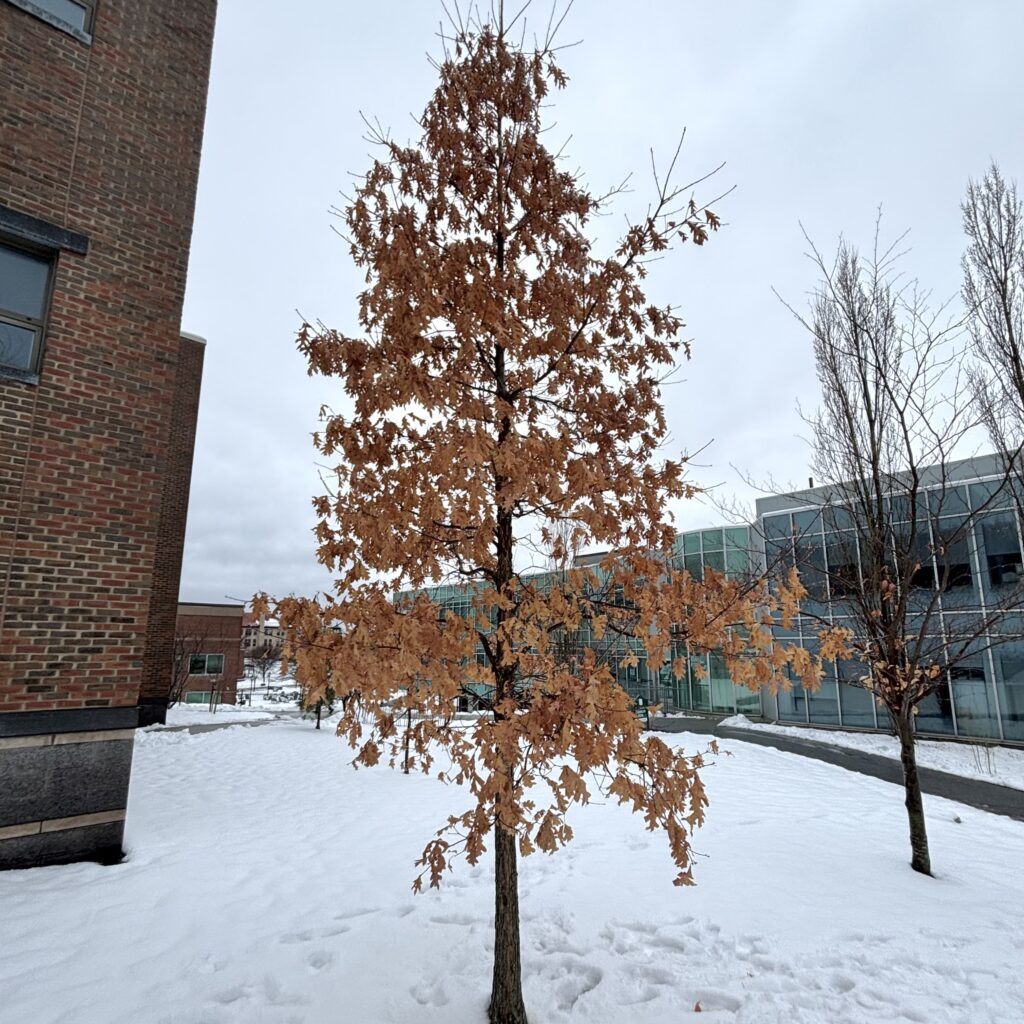
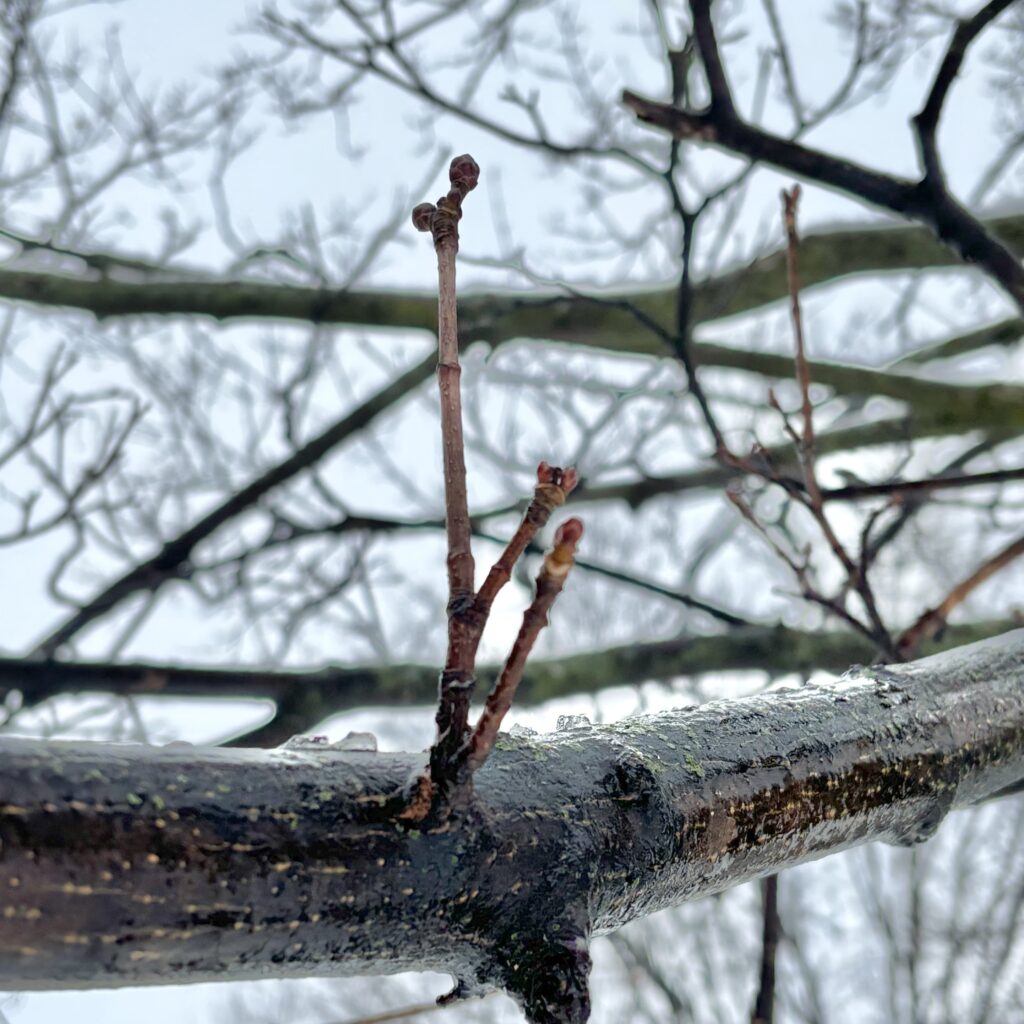
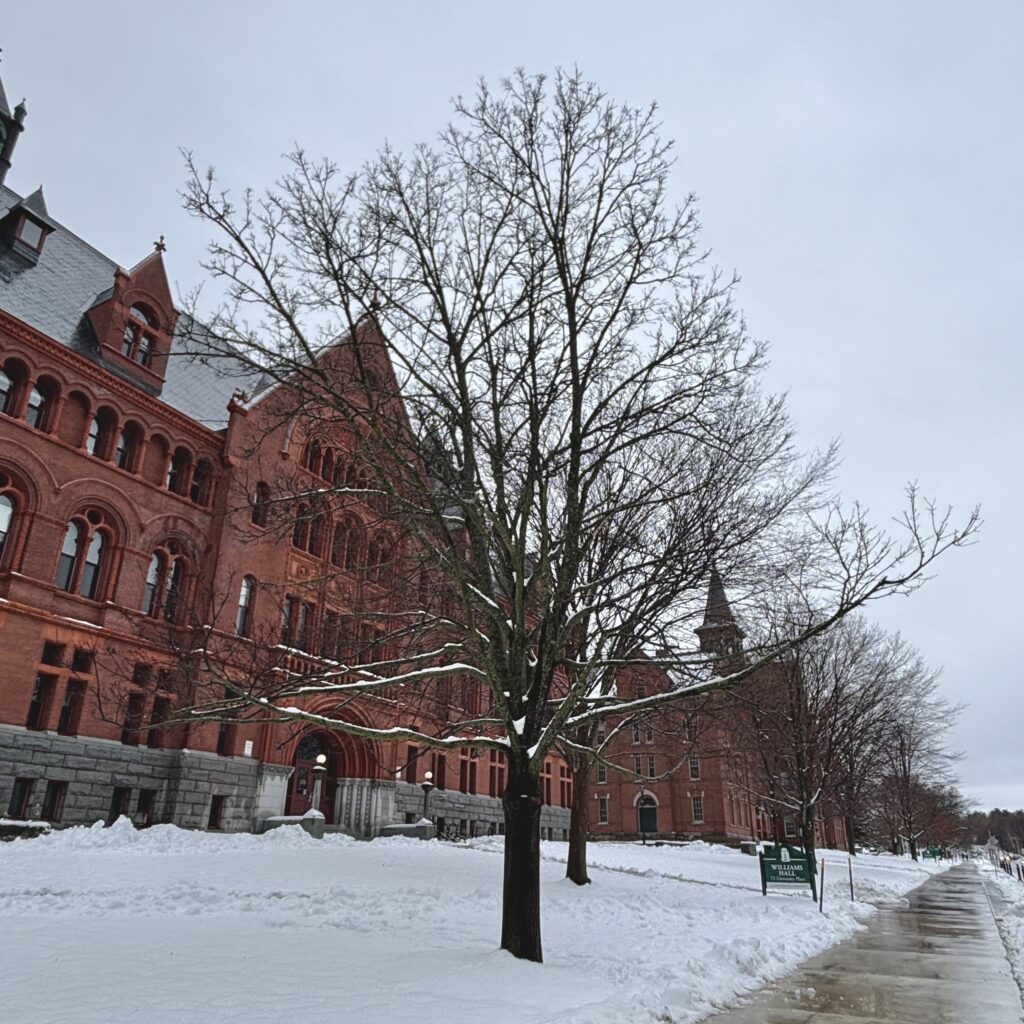
After making my observations of each trees phenophases, I came home to explore the National Phenology Network’s website. After looking around the NPN’s website a bit, I came across an article on how different plant and animal species are responding to climate change. I found this article very interesting, and I was impressed by the use global data to come to broader conclusions about the effects of climate change. After reading the article, I learned the importance of large scale data collection when researching phenology. I also learned how this data can be applied to research issues like climate change.
Phenology of Burlington
February 22, 2025
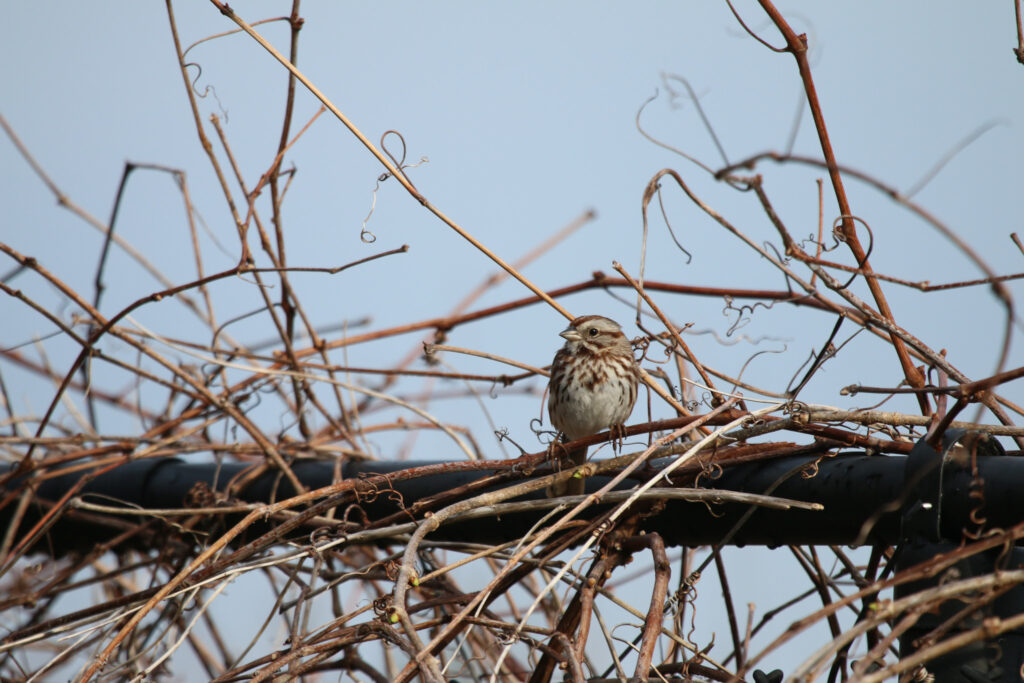
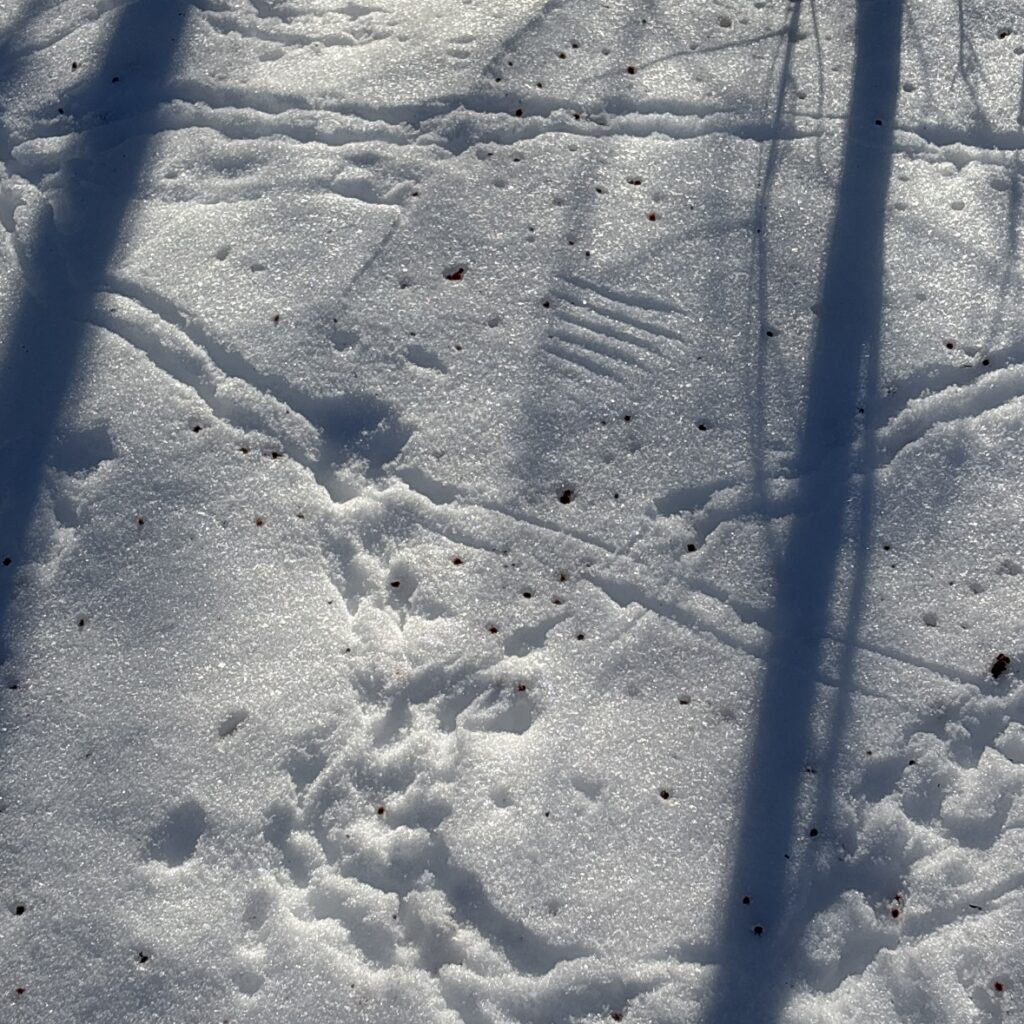
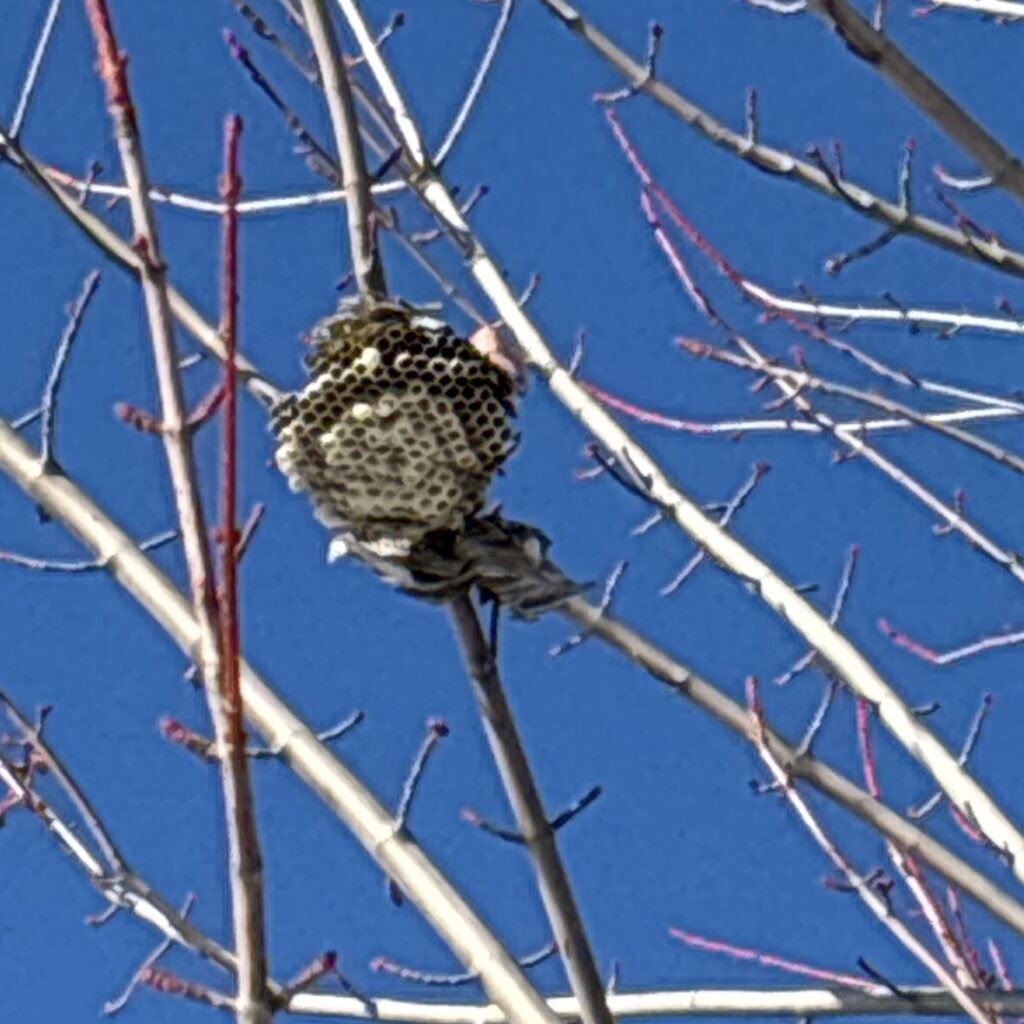
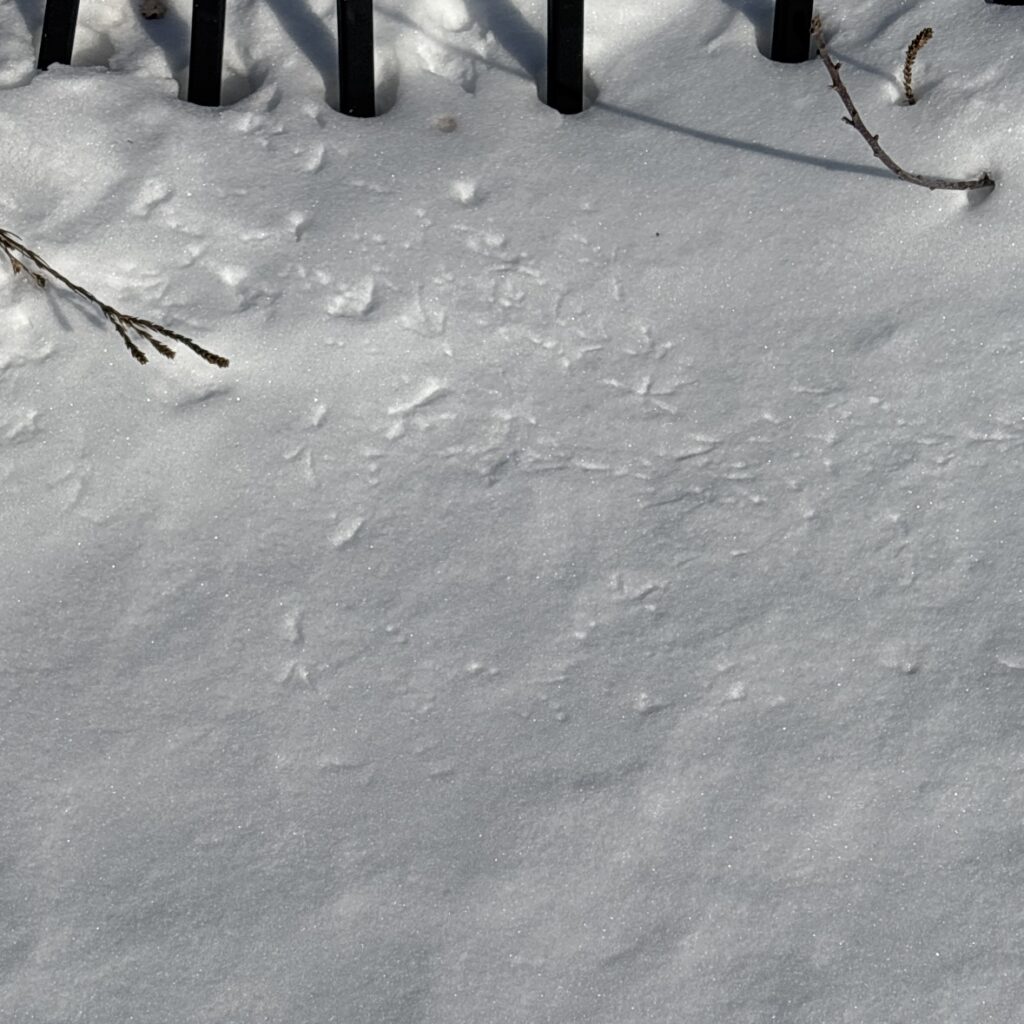
To better explore the urban wildlife of Burlington, I went down to the waterfront with a few friends. We had a few bird sightings, and encountered various signs of live. I included some of the more notable tracks below, as well as a winter wasp/yellow jacket/hornet nest. I identified the first photo as wing and foot prints of an American Robin. This was my ID because of the distinctive digging patterns, and the size of the wing prints. Of the limited birds that are here at this time of year, a robin was the best fit for these signs. This was also below a sumac plant, which is something I know robins to eat in the winter. I don’t actually have a specific species ID for the nest I saw, but I suspect that it may be a yellow jacket nest. I am hoping to get some feedback on iNaturalist in the next few days for this ID. Finally, I included a photo of some bird tracks below. I attribute these to house sparrows, due to the size, and the location. The plants in the area, and the ground foraging seems to fit best with house sparrows, their was also some near by vegetation that seemed likely as a food source for for house sparrows. Their were a variety of other identifications I made, but I chose to just include only the most notable ones. Overall, I really enjoyed the experience, and searching for signs of life in the city. I think iNaturalist was a very good tool in this case, and continues to be user friendly.
Signs of Squirrels
January 24, 2025
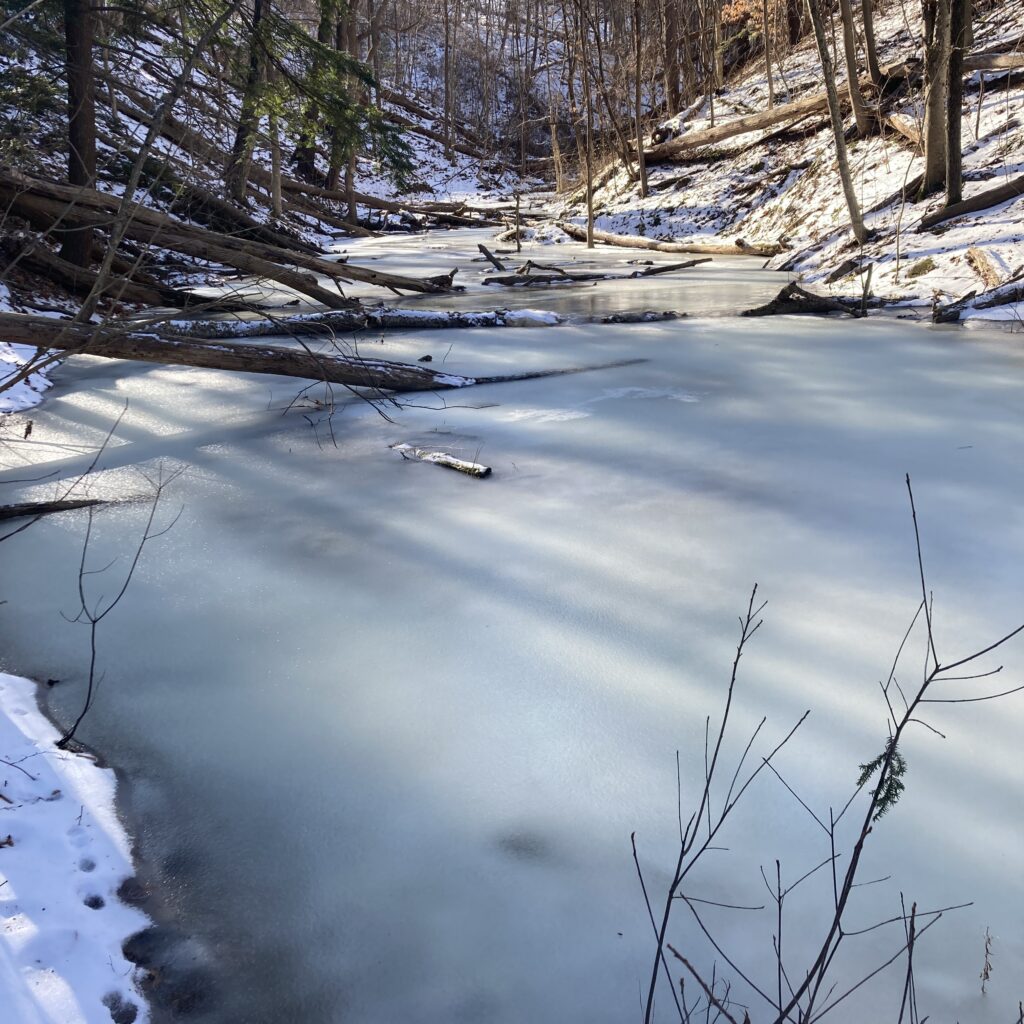
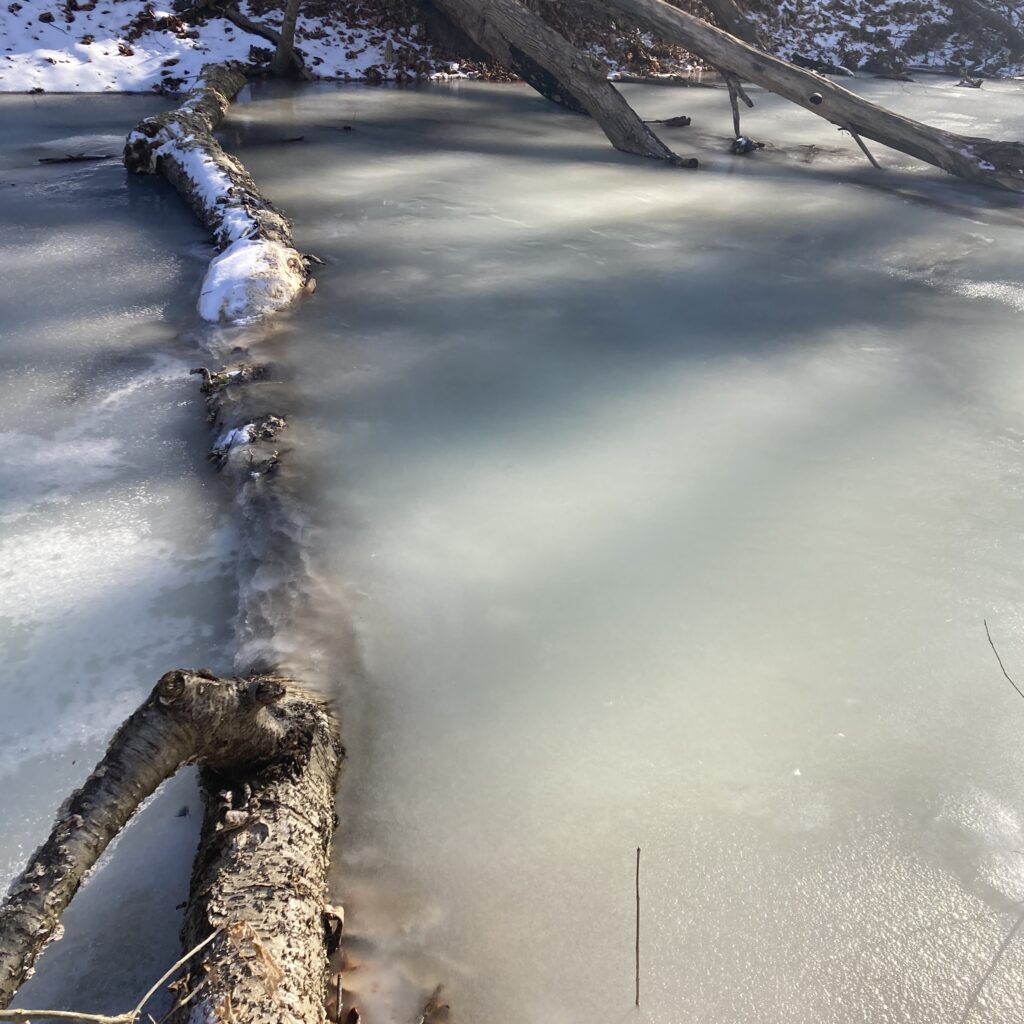
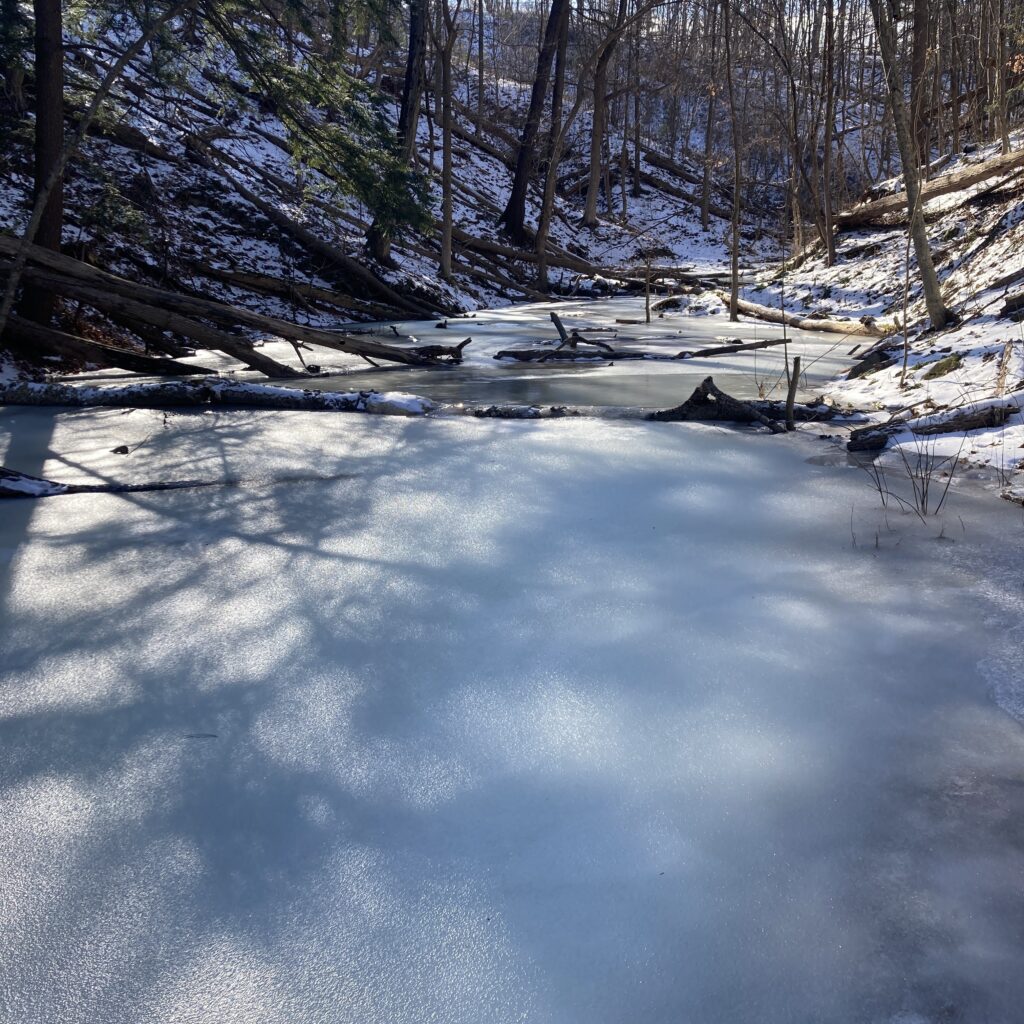
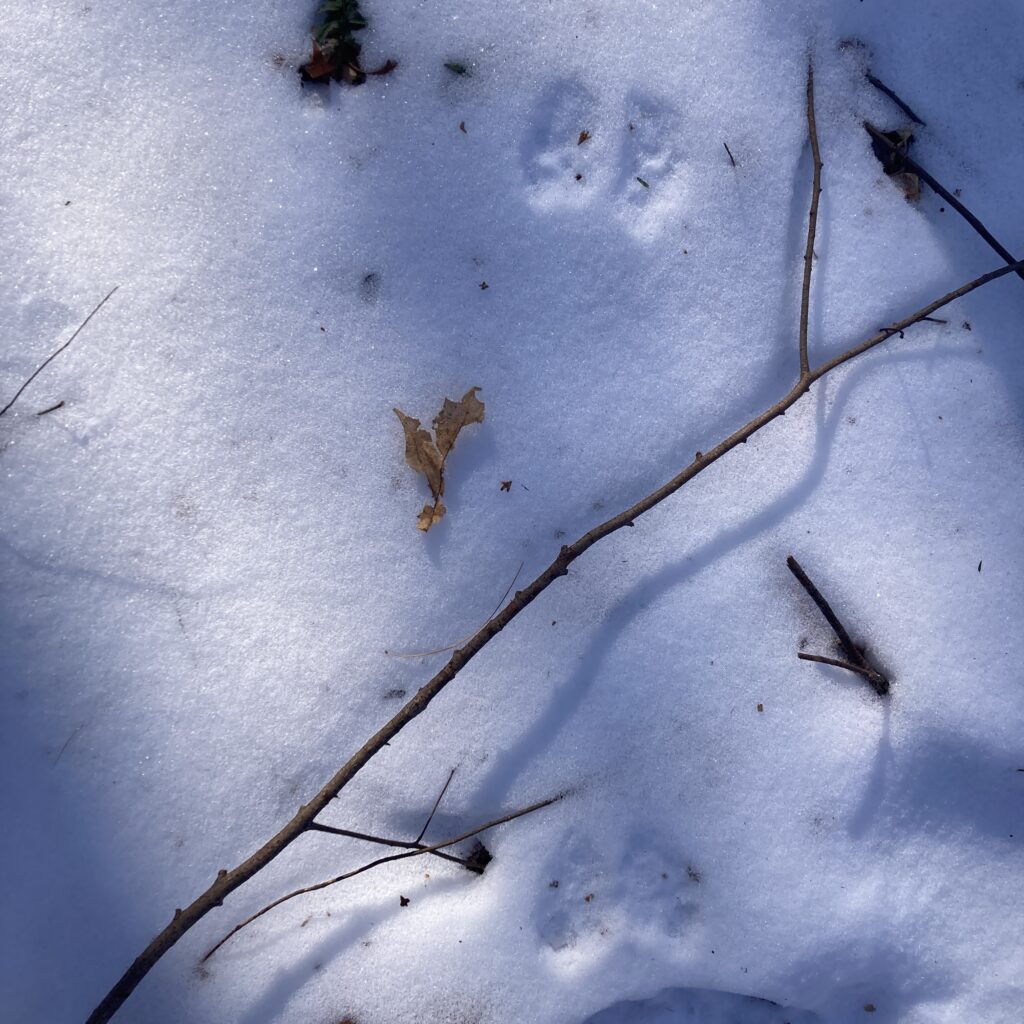
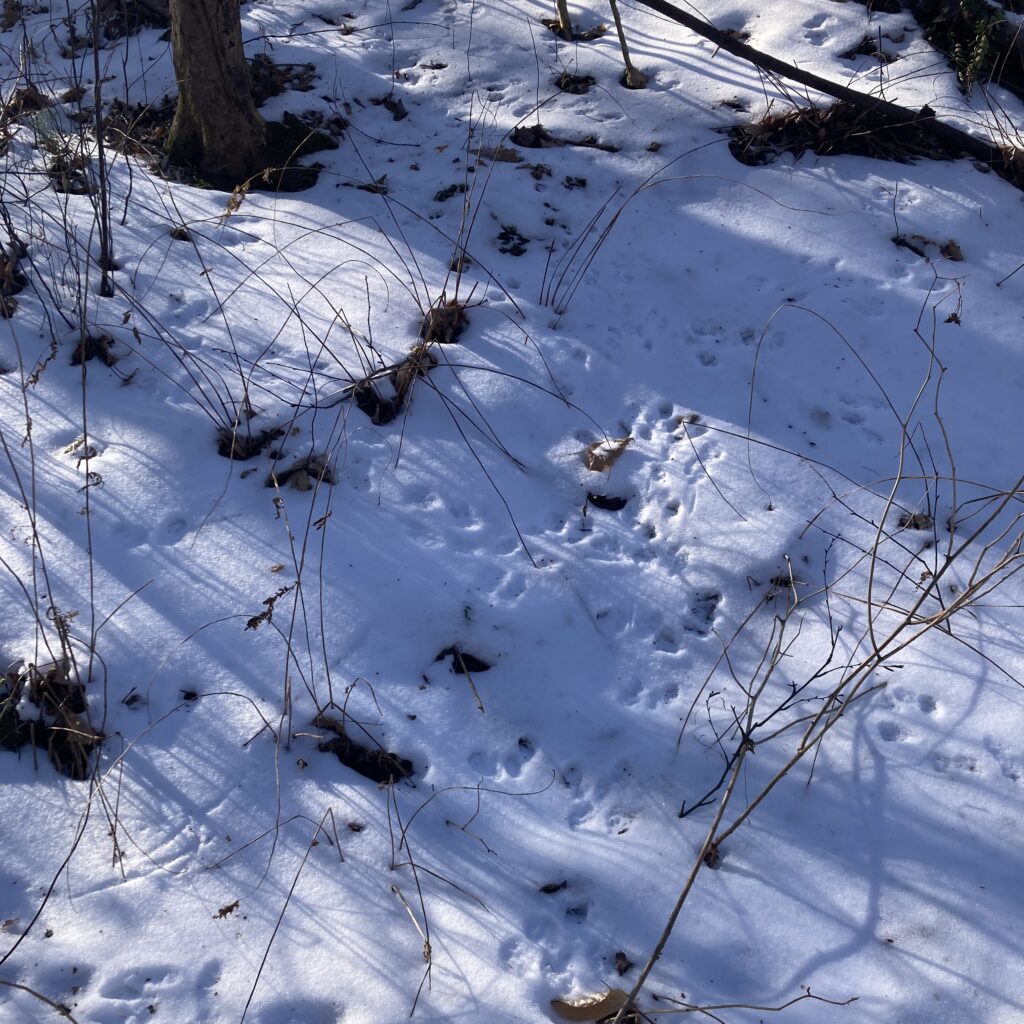
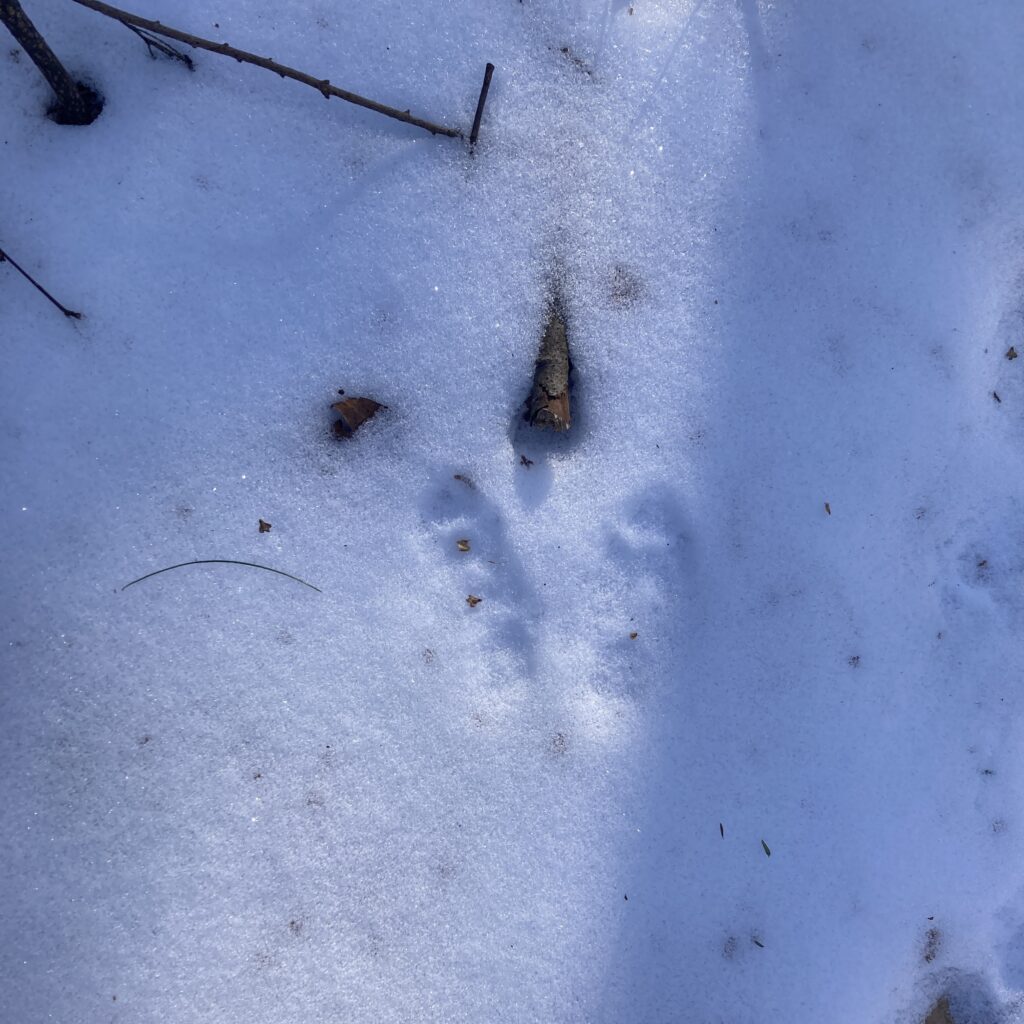
This was my coldest visit by far, and surprisingly icy. I was hoping to search for tracks and other signs of animal life in the snow, but instead I was confronted by a large, mushy, and partially frozen pond. At first appearances I thought the ice was solid enough to walk across, but it was not. I managed to get across a narrower part in a few steps, but didn’t feel confident enough to walk all the way to the center of my phenology spot. Unfortunately the steep slopes that surround my spot made it very difficult to go around the ice so I had to settle on a very limited range of movement. The only tracks I saw appeared to be that of squirrels, and I also saw quite a few squirrels in the area. Aside from the ice, not much has changed since last I was here. The vegetation (or lake there of) appears the same, and I didn’t notice any additional major developments.
Snow
December 7, 2024
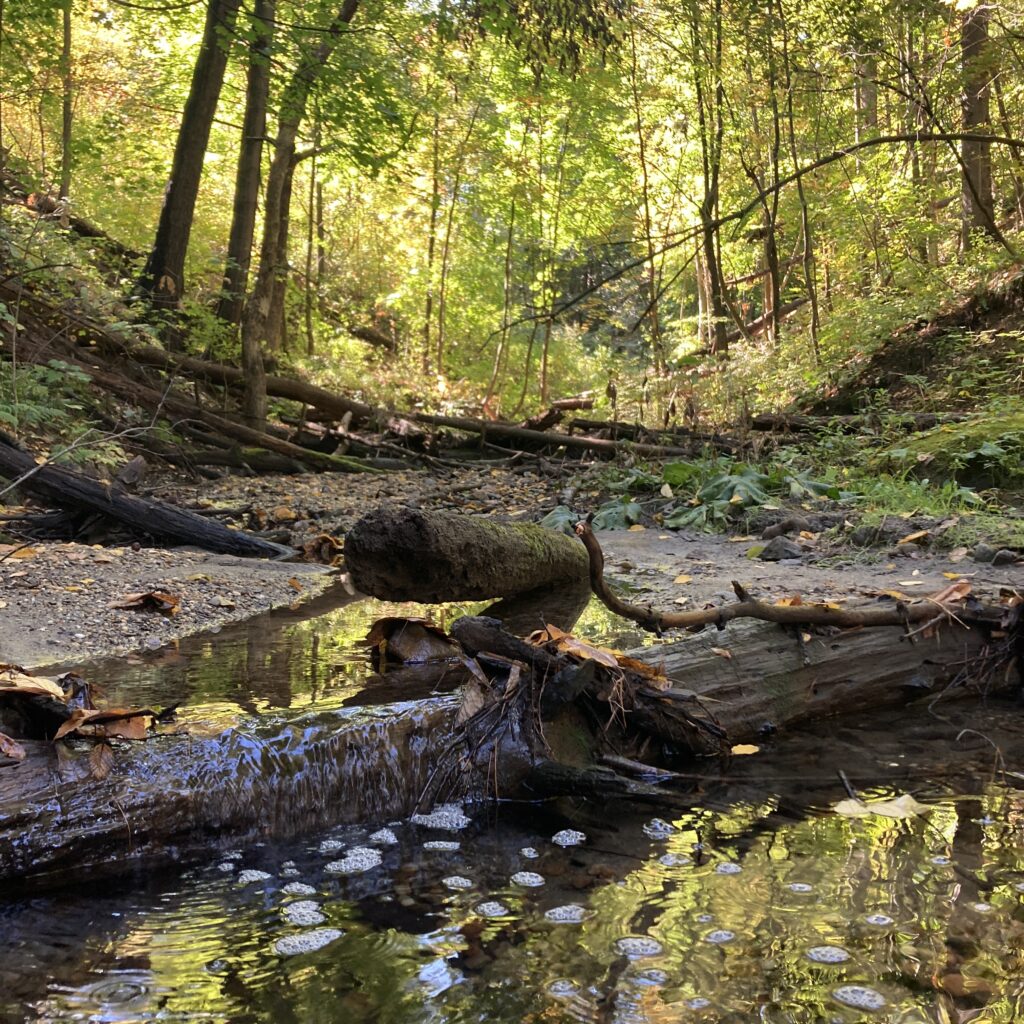
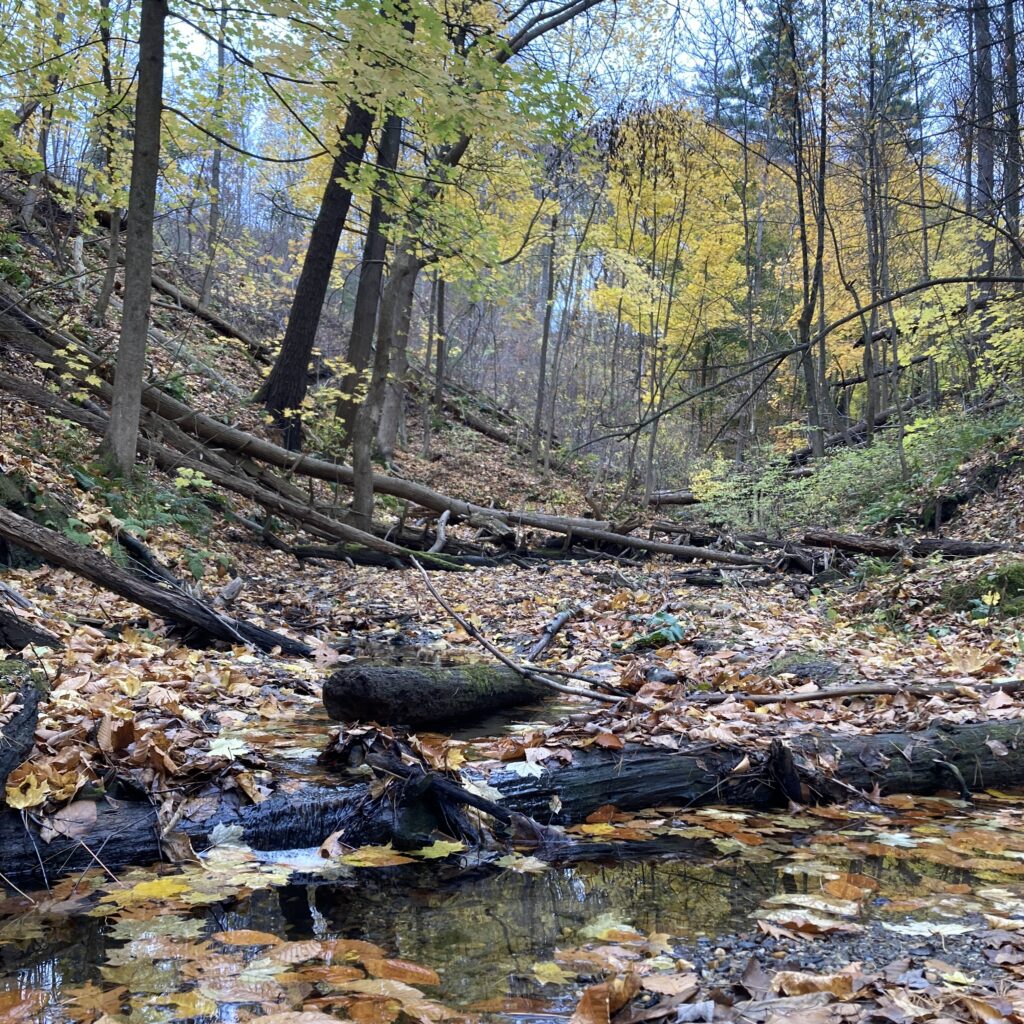
I thought yesterday would be my final visit to my phenology spot, but when I woke up to snow this morning I knew I had to go see how my site had changed. Below I have attached a photo for each season, all taken from about the same place. I did not spot any tracks or signs of wildlife (except for the normal birds and squirrels).
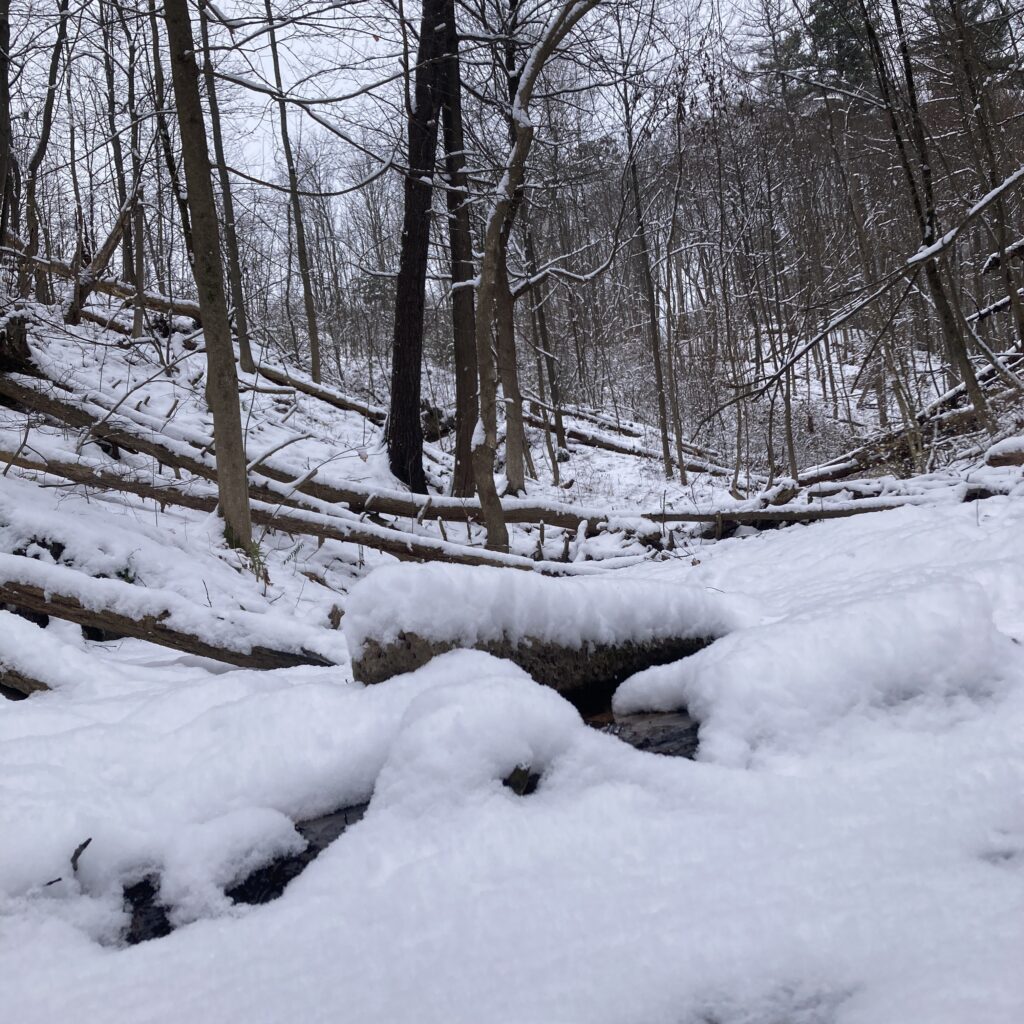
Winter Approaches
December 6, 2024
It has been over a month since I have visited my Burlington phenology site, and lots has changed. Any leaves that remained on the trees in November have fallen to the ground, and there is hardly any green vegetation in sight. The leaf litter has visibly aged, it is less abundant and much browner. The few conifers in the area hang on to their green needles, a handful of tired ferns persist, and moss still covers the damp rocks and logs, but otherwise the woods are barren. The lack of vegetation makes the area feel exposed; it is much more open without the dense cover provided by the leaves that were once here. This did make it easier to spot any signs of life up in the trees, but there was little to see. I observed mostly chickadees, as well as a few white breasted nuthatches, a tufted titmouse, and a brown creeper. There were also a few distant squirrels. I didn’t find any signs of any additional species, although I suspect that some snow on the ground may reveal tracks of more species. The water is still flowing about the same as it was a month ago, although most of it now has a very thin layer of ice. I look forward to returning to my site when winter is in full swing to further observe changes to the area.
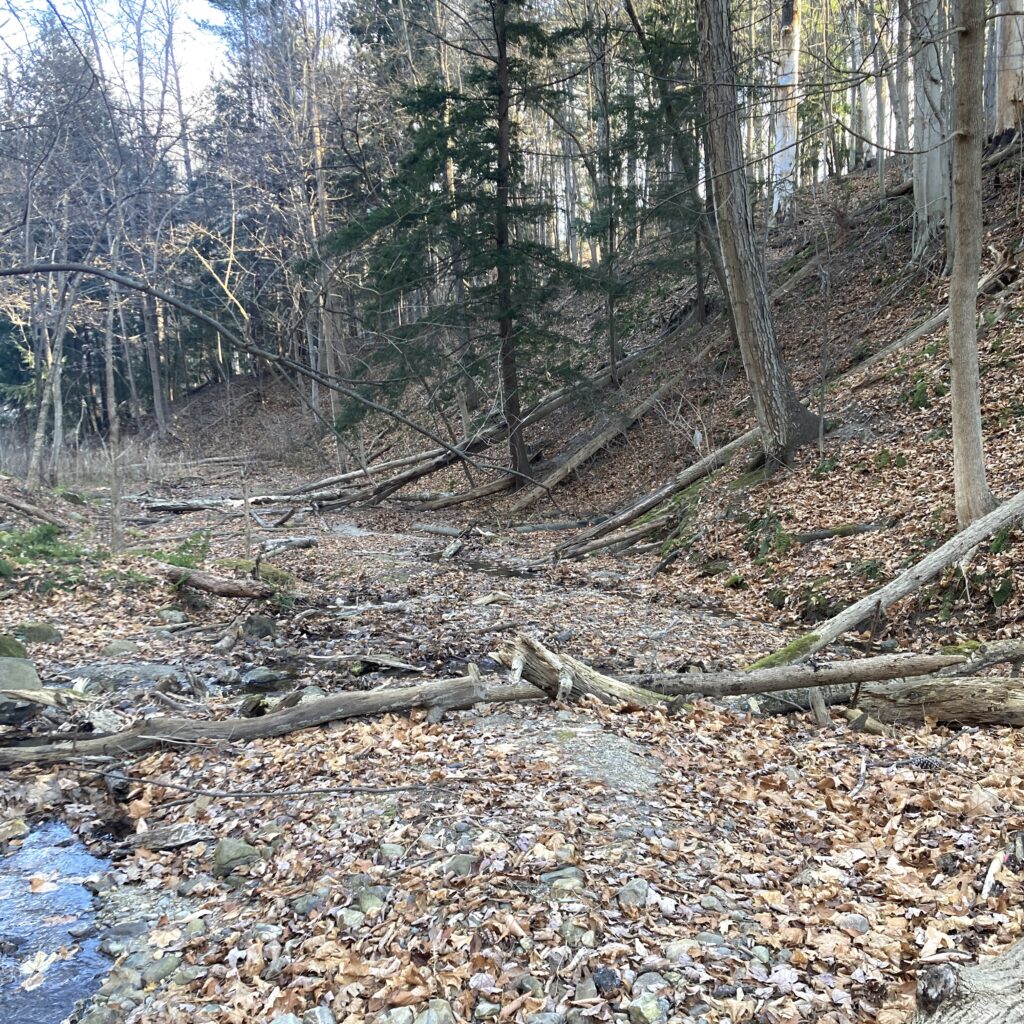
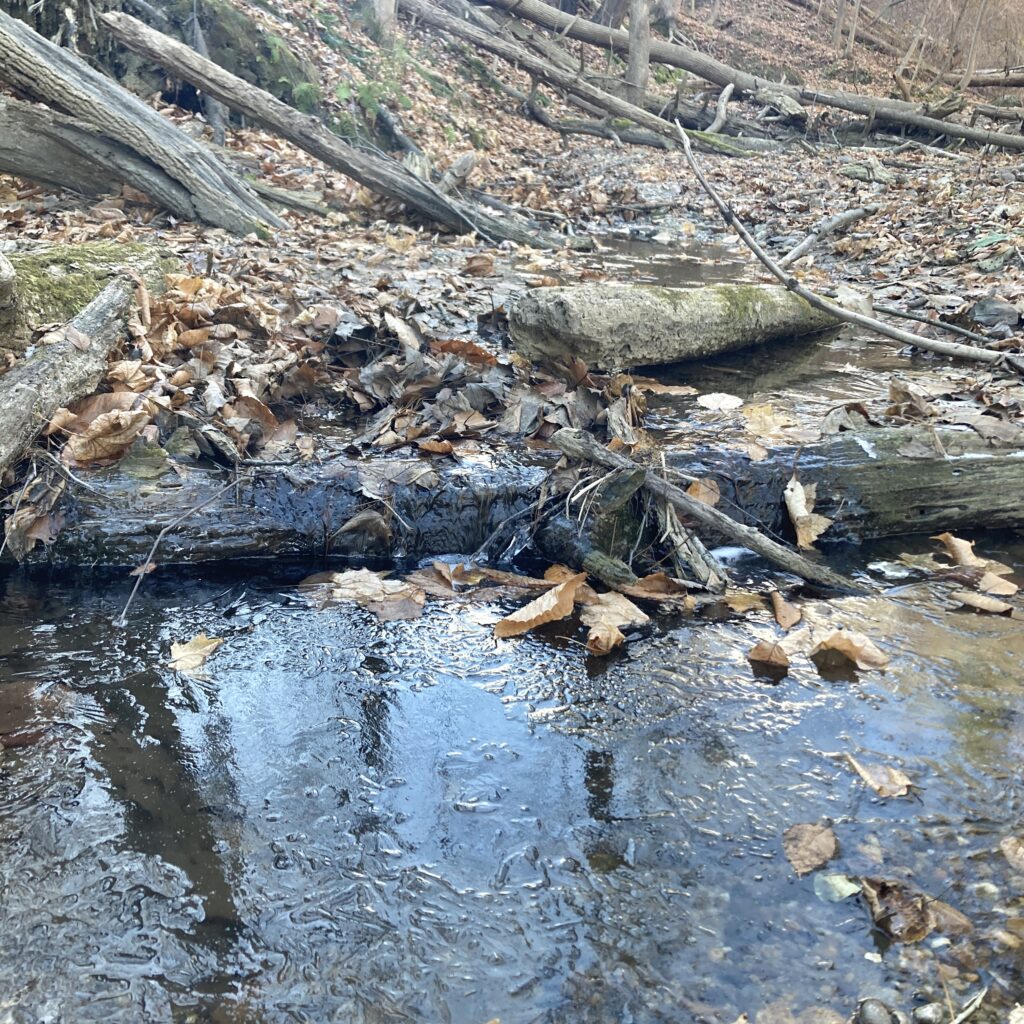
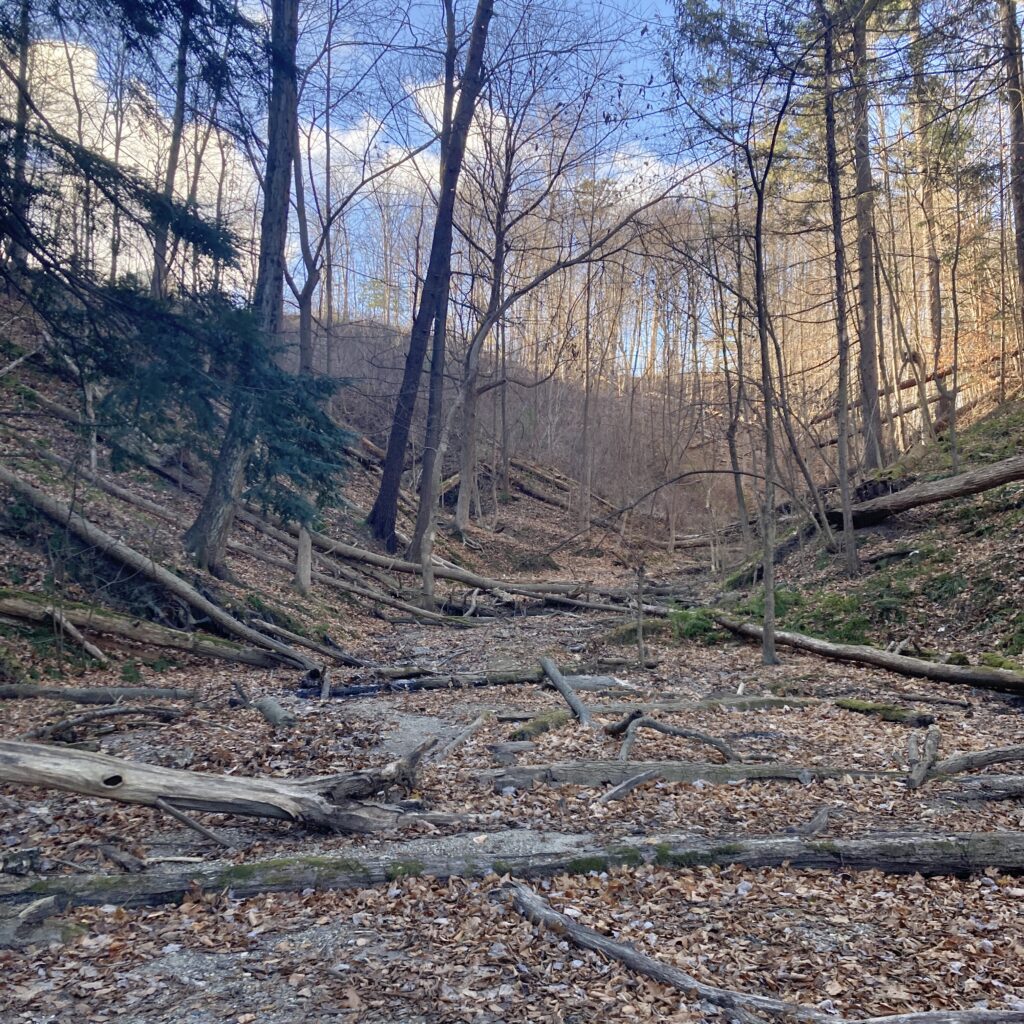
California Phenology
November 26, 2024
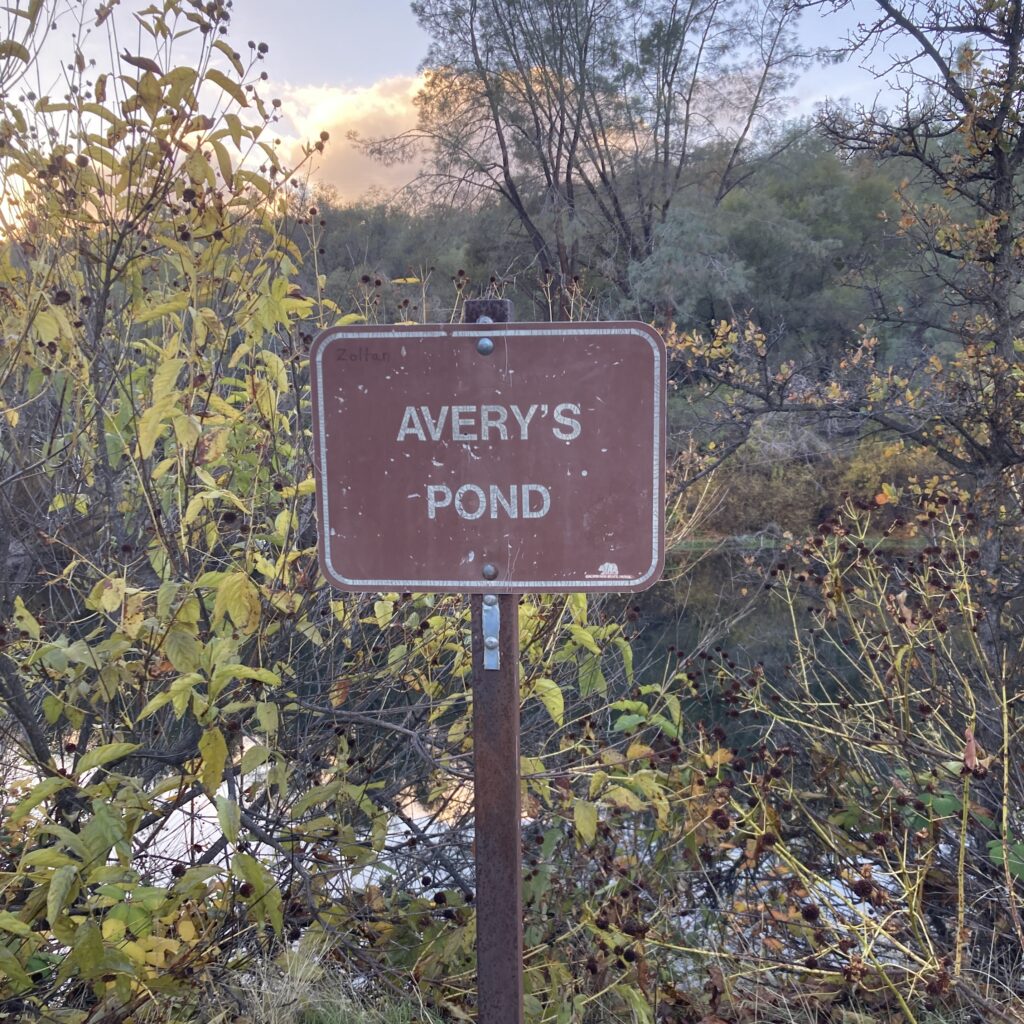
I chose this place because it is somewhere I have been coming my whole life, meaning that I am very familiar with the phenology of the area. The specific spot I chose is down along the North fork of the American River, close to Mormon Ravine. You get here be taking a short trail, about two and a half miles round trip, to Avery’s Pond. From there you can continue down towards the river, then along it. At a glance this location seems extremely dissimilar to my phenology spot in Burlington, but upon further investigation the two have a lot in common. I looked at this new phenology spot on a much larger scale, and in this way it mirrors my spot in Burlington. The valley formed by the American River slowly carving away the hillsides is similar to the small indent in the landscape that houses the trickle of water in my Burlington spot. I also felt that the rock formations that guide the American River through the landscape are similar to the small boulders that determine the flow of the creek on my site at school. The difference in climate leads to a large difference in vegetation, but the two are both surrounded by woods of a sort. The species composition surrounding the American River was rich in blue, valley, and live oaks, and a few pines with an understory containing, among other things, manzanita, buckeye, and blackberry. This leads to a very different looking forest than you find in New England, but a forest none the less.
The biggest natural process present in this area is the the river itself. As the river carved its way through the landscape it formed many of the greater patterns we see today, and it continues to influence the location of sandbars and rocky beaches. The other main influence on this landscape, which is not a natural one, is the Folsom Dam. The dam means that water levels change drastically throughout the year as the water in Folsom Lake is released or conserved. These constant changes impact the structure of the river bank, and limits the ability of ecosystems to develop along temporary shores. While the river looks very river like now, the water level will be much higher and appear as more of an extension to Folsom Lake at other times of year. This explains why the map below shows my chosen phenology spot as underwater, as the map models a higher water level in the area.
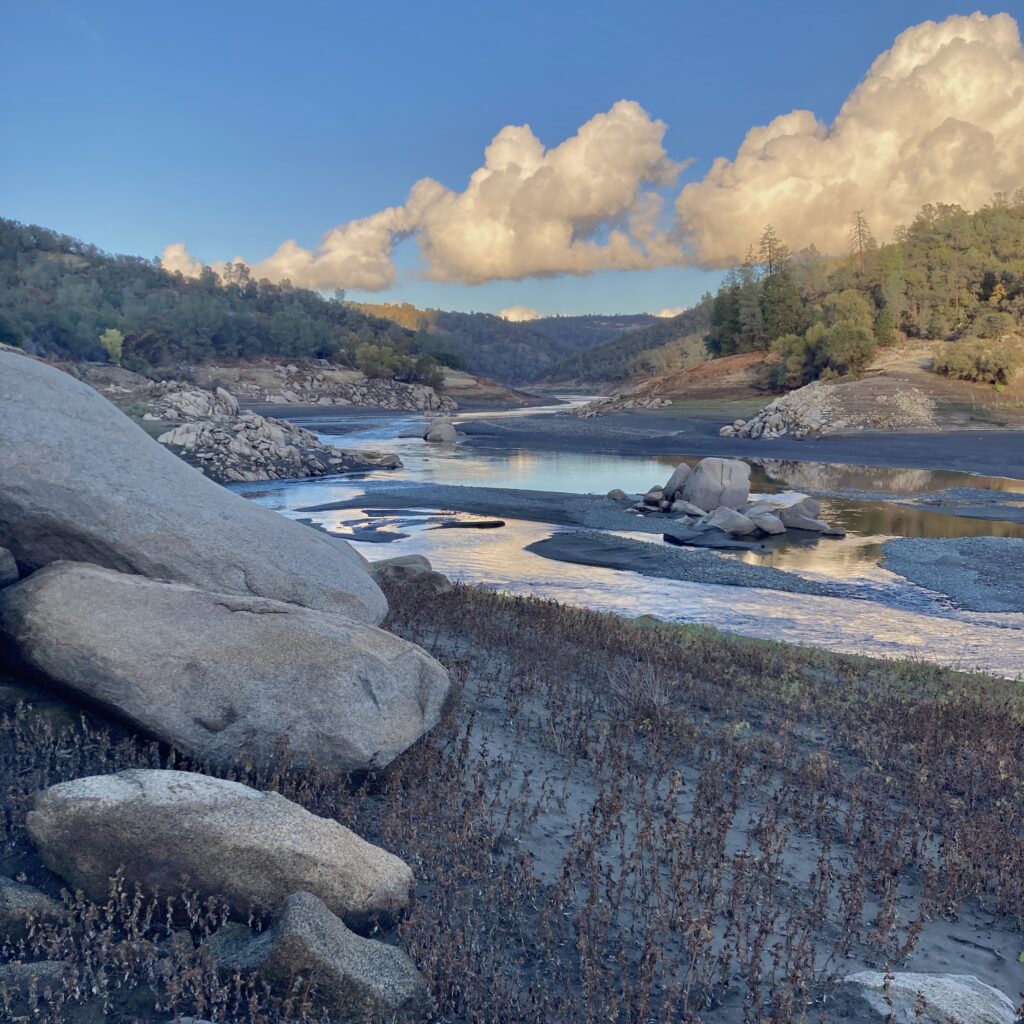
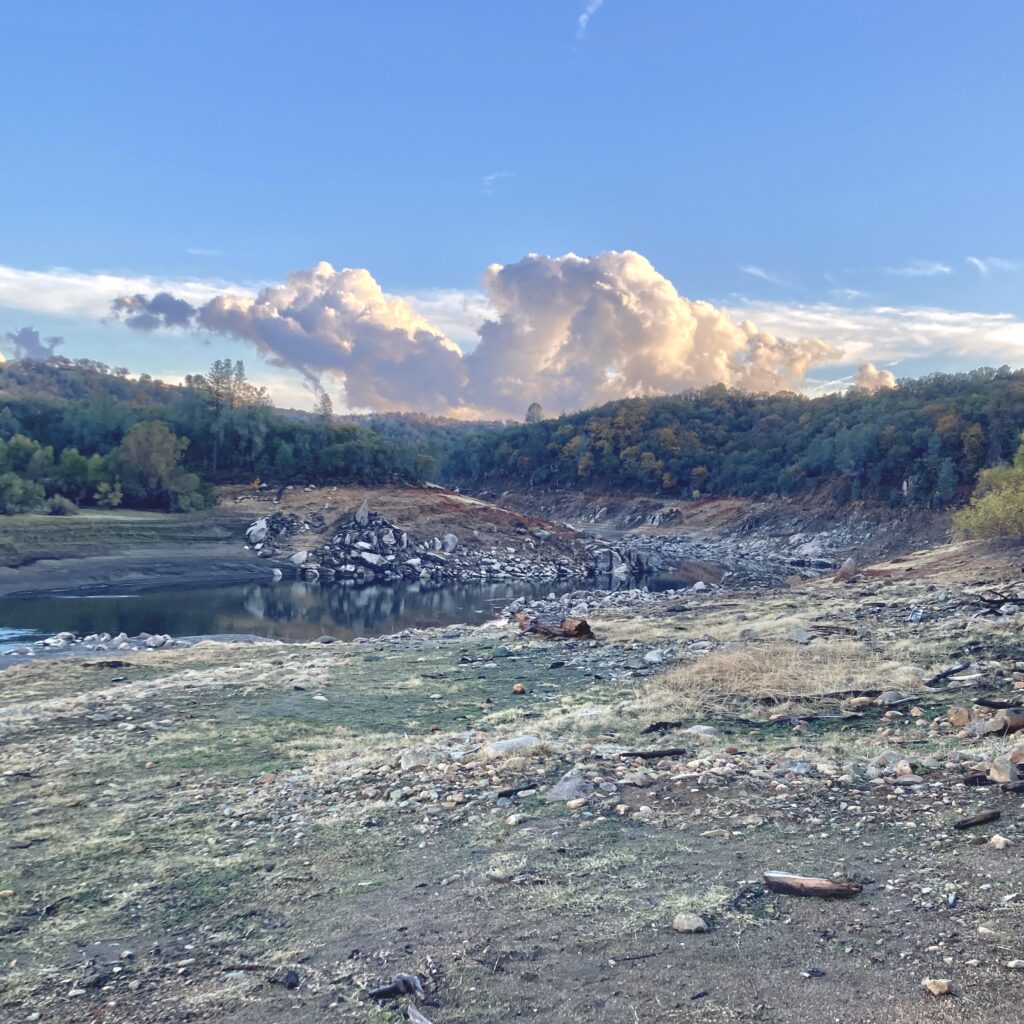
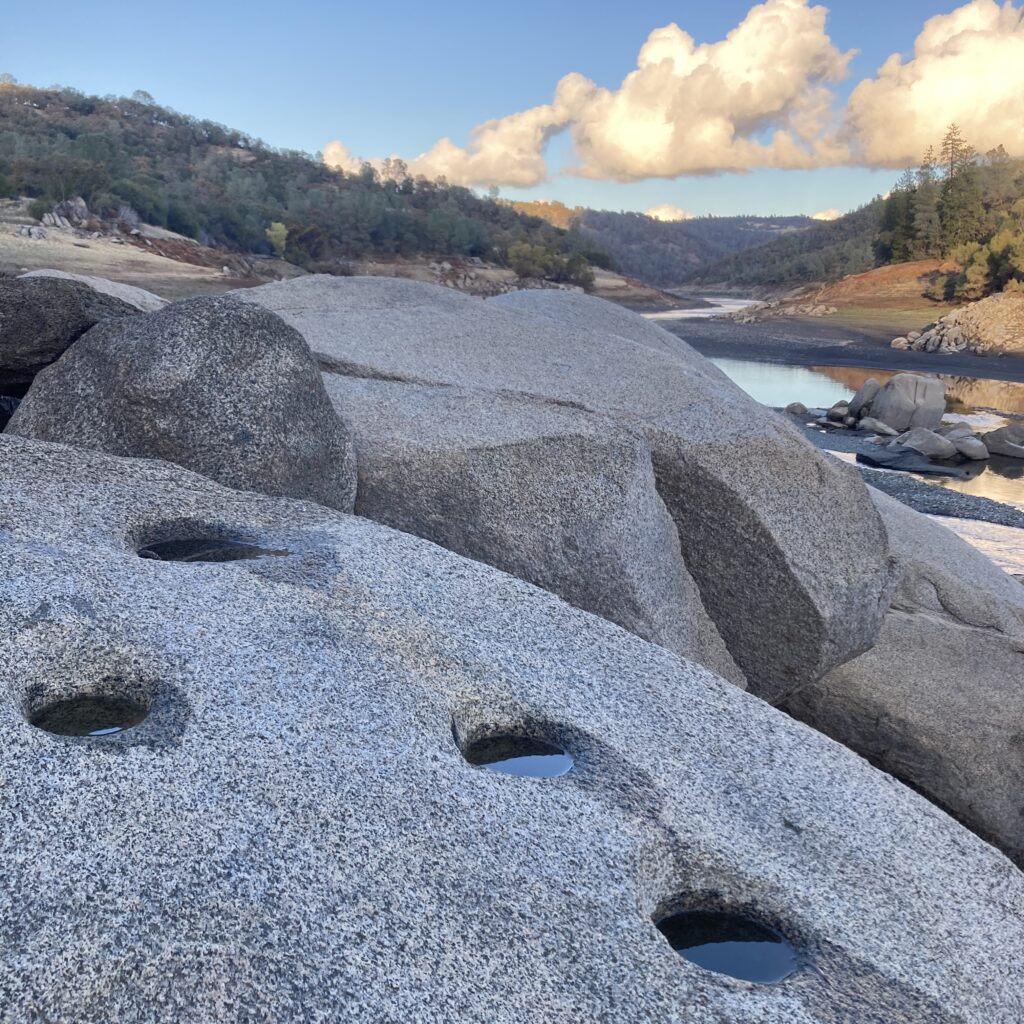
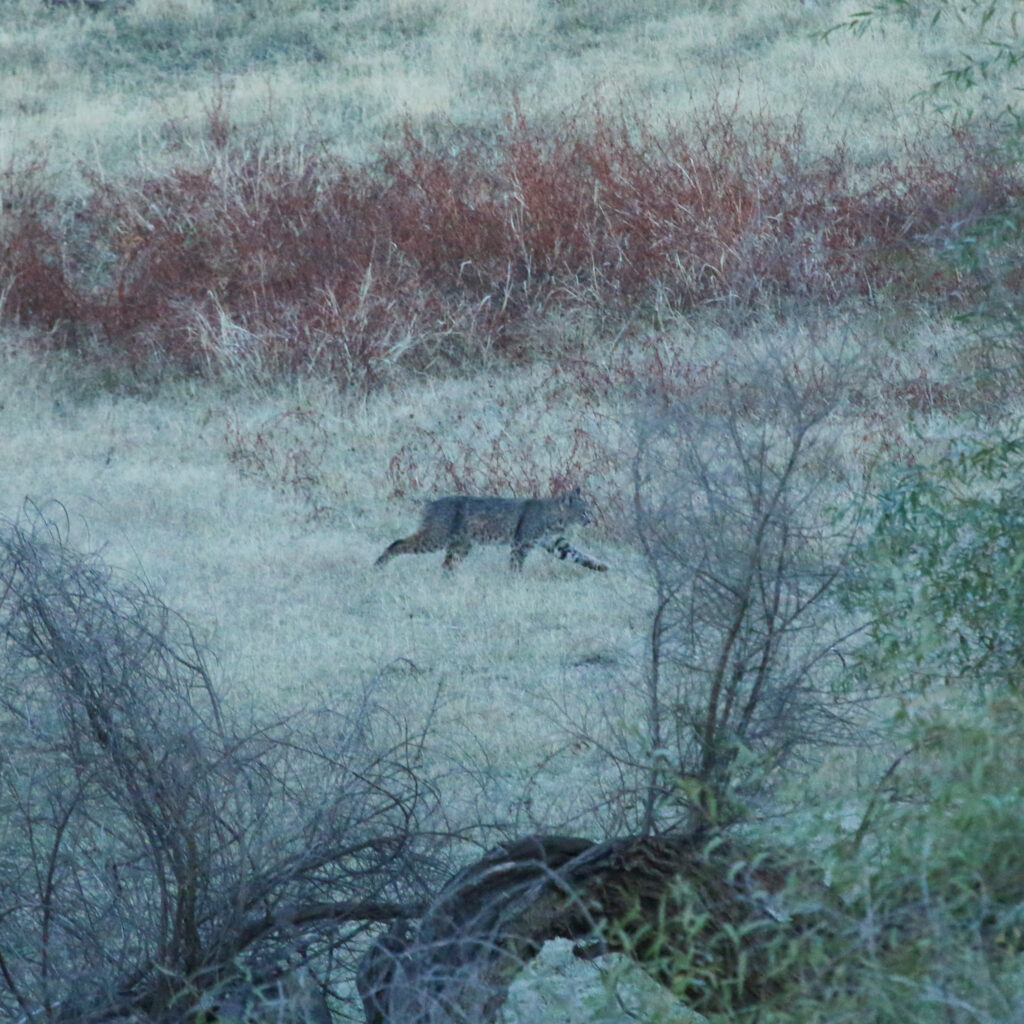
This location also tells an excellent story of land use over the years. Along the river bank there is a distinct set of granite boulders marked by their deep wells. These are grinding stones worn into the rocks over decades, perhaps centuries, of use by local Indigenous groups. Acorns were a staple food of this area, and were pounded into a flour that was then leached of the harmful tannic acid and cooked into the base for many foods. These grinding stones can be found throughout the region. The American River was a significant site in the period of the gold rush, and was subsequently settled by Europeans. Avery’s Pond represents this time period of colonization. Ira Avery came to California from Maine with his father in 1853 when he was 15 years old. After a variety of working ventures, Avery bought his new father in laws’ orchard, located along the American River. Avery’s pond is a former irrigation pond constructed here to supply water to the orchard. This orchard grew persimmons, cherries, and pears, with Avery focusing especially on cultivating the Hyakume and Hachiya persimmon varieties. The original reason my family and I came out to Avery’s Pond on this day was in search of a cutting from a Hachiya persimmon tree, a variety we don’t yet have. We have a quince tree grown from a cutting near Avery’s pond and knew of both this quince tree and one persimmon tree in the area, but upon further exploration around the pond it quickly became clear that there were a lot more than just the one persimmon tree. We found many fruiting persimmon trees, a second quince tree, and a pecan tree. These trees are likely remaining from the time this land spent as an orchard, or seeded from old orchard trees. Finally, the land today is used as a recreational area. Nature has taken back much of the cultivation that once occurred, and a happy ecosystem is indicated by the biodiversity of plants and animals. The most notable animal we spotted was a bobcat, pictured below.
More Info on Ira Avery (starting on page 567)
Changing Seasons
November 2, 2024
It’s 40 out this morning, but my phone says the wind chill is making it feel more like 30. As I pause to add a layer and put on some mittens, I consider turning around and coming back when its a bit nicer out, but I press on towards the stormy clouds and biting breeze. As I reach the woods, it is clear that a lot has changed since last I visited. Almost all the trees have lost their leaves, with the exception of the white pines, Norway maples, and a few American beech that are holding on to the last of their orangey brown leaves. The color pallet has shifted, while their is still some green undergrowth present, most of the the bright emerald and chartreuse hues have been replaced by yellows and oranges. The path the water takes as it flows through this divot in the landscape has also changed. The carpet of fallen leaves has caused the shallow stream to pool up in some areas, and change course in others.
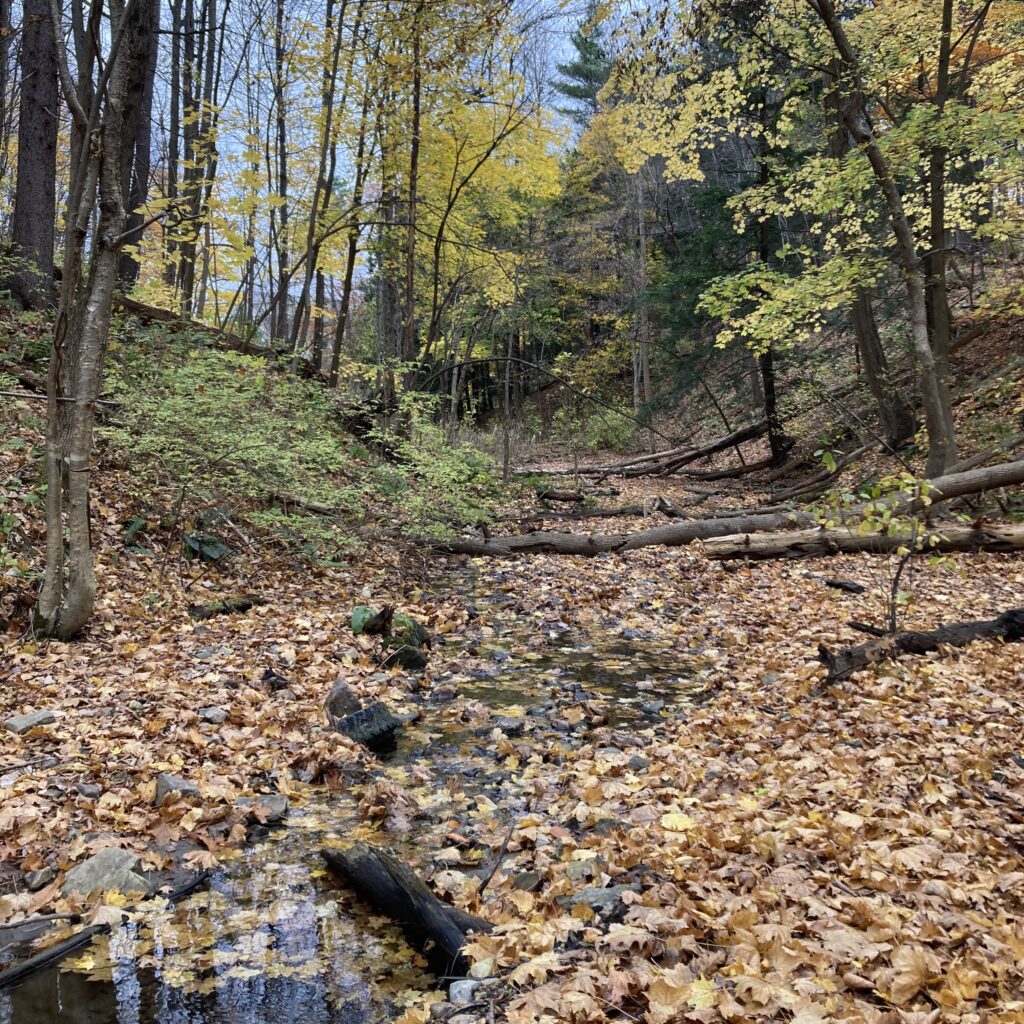
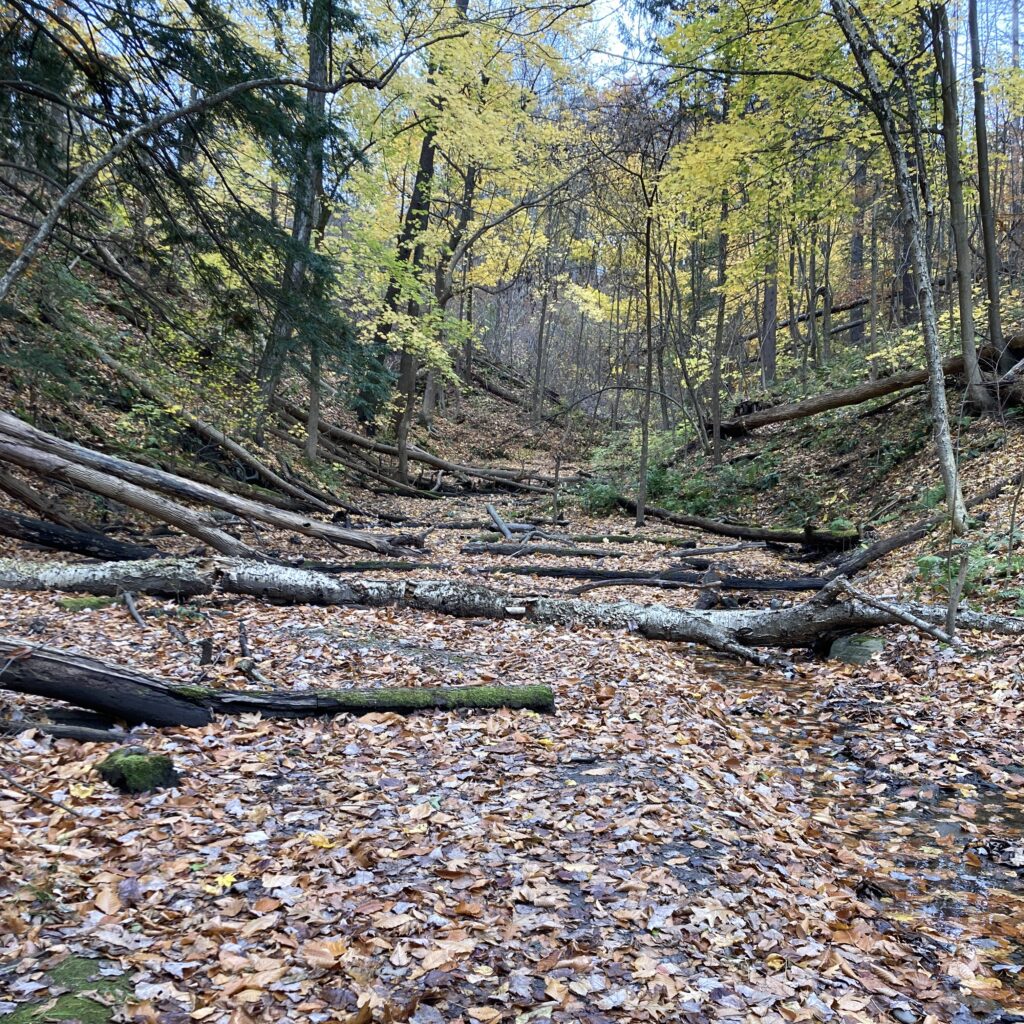
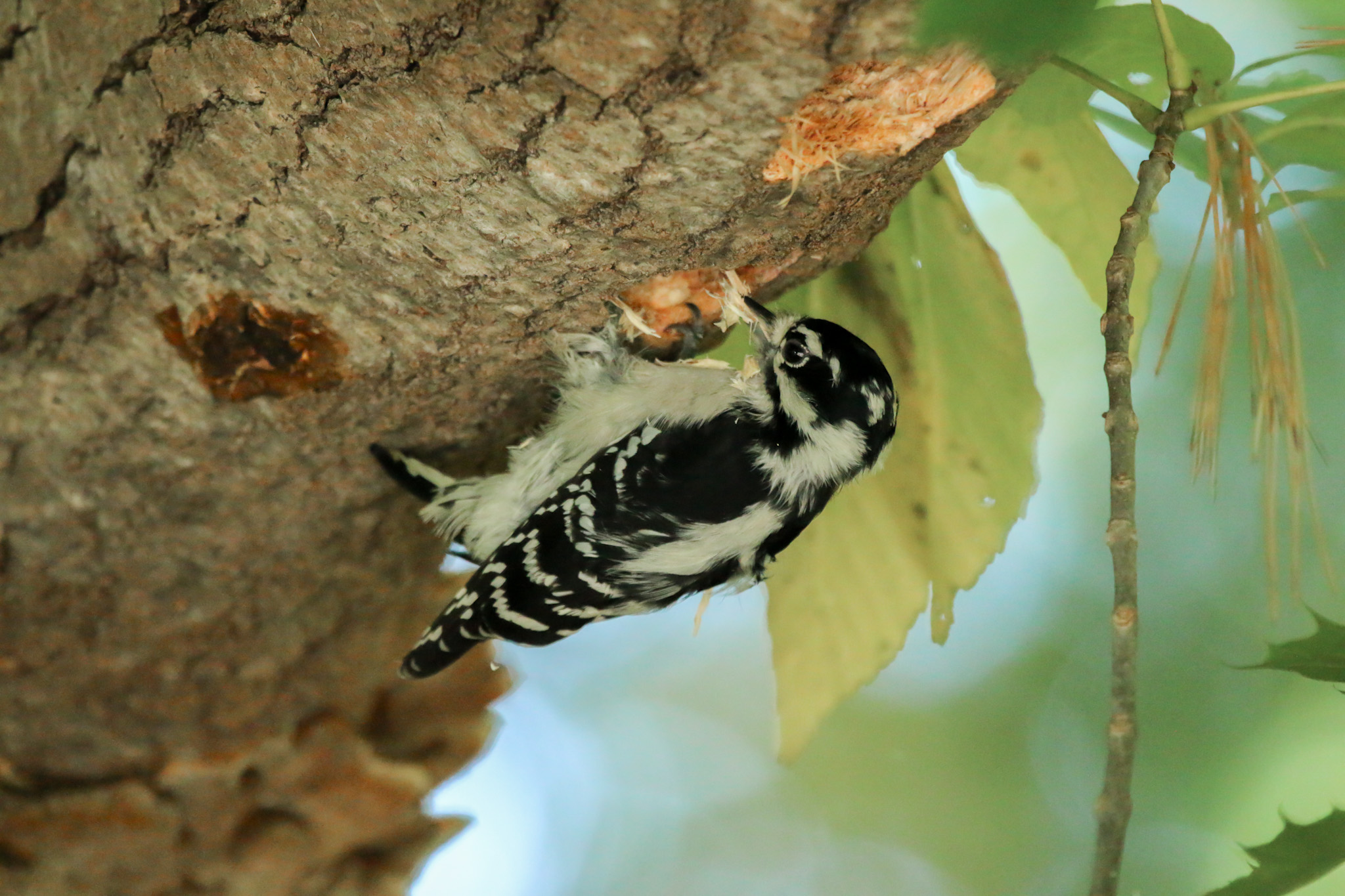
As I settle down in the middle of my site, raindrops begin to fall from the sky. I close my eyes and listen to the rain pattering onto already damp leaves as the creek burbles and a distant downy woodpecker calls. 15 minutes later my nose is freezing and my hair slightly damp, but the light drizzle has abated and the clouds have begun to brighten above. In these few minutes, I was able to put aside my unrelated thoughts and enjoy the moment. I observed the goings-ons of the areas; squirrels foraging for any remaining nuts and seeds, chickadees and kinglets flitting from branch to branch, and leaves drifting down from above. It is very refreshing to engage in my chosen site and get to know it just a little bit better.
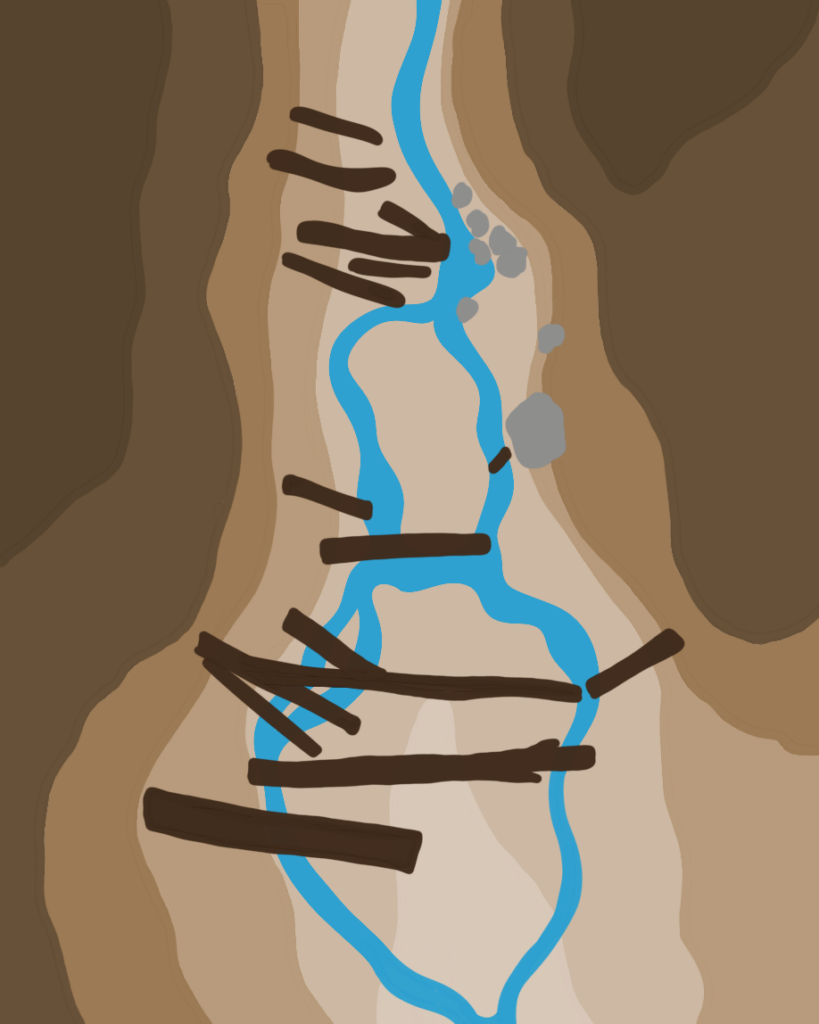
Before leaving, I get out my sketch book to draft a map of the area. Walking from one end to the other, I note the route the water takes as it flows through my site. I draw the major fallen trees in the area, as well as the rocks that influence the flow of the stream. I add some rough topo lines in an effort to show the way the hills slope up on either side of the stream. Then, with cold fingers and an approximate sketch of the area I decide it’s time to head home. Upon my return to my room, I draw out a more detailed and exact map on my tablet. I have included both the original, and the refined sketch below.

Woody Plants & Vegetation
October 5, 2024
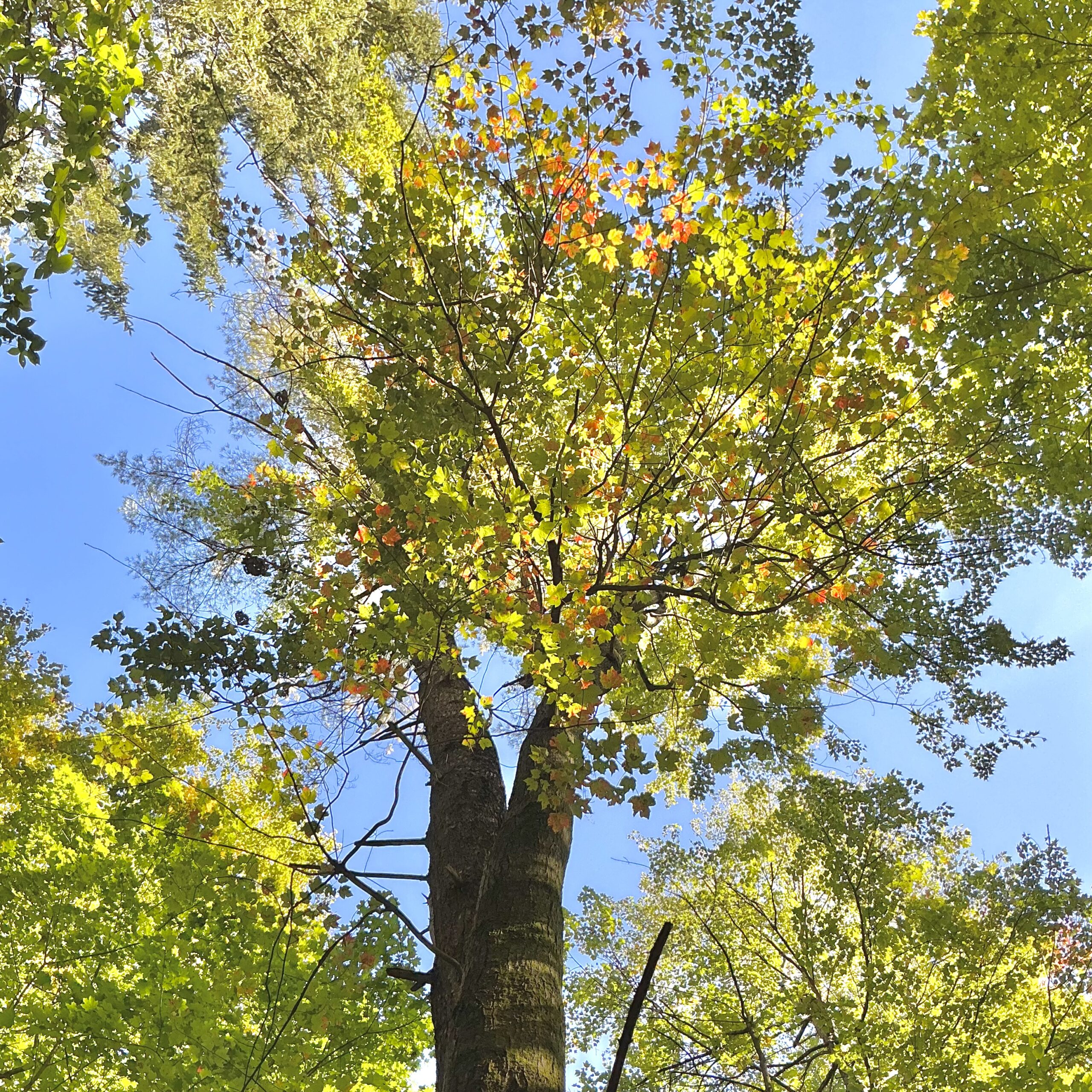
As I walked to my location early this morning, I watched Canada geese fly overhead and Eastern grey squirrels cache acorns for the winter. With leaves changing colors, and temperatures dropping, fall is in full swing and the animals know it. Upon arriving at my site I first stopped to sit and observe the subtle goings ons in the area. From the blue jays calls piercing the air, to water striders hovering on the still pools of the stream, the forest is alive. I then begin to categorize the vegetation in the area. The stream bed remains mostly clear of trees and other vegetation, housing primarily fallen logs and mossy rocks. As I move up the hills on either side, their are a variety of tree species, and undergrowth. The majority of the trees seemed to be Norway maples and sweet birch. Mixed in are red maples, white ash, yellow birch, American elms, American beech, an Eastern Hemlock, and a few large white spruce and Eastern white pines. Surrounding the large tree trunks is a covering of saplings, ferns, buckthorn, Eastern leatherwood, purple-flowered raspberries, and other leafy undergrowth.
Choosing My Place
September 27, 2024
While I had originally envisioned a site along the Winooski River, after walking the River Walk to Salmon Hole trail I decided that the choices there would not suit my needs very well. On my way back from the river, I took a shortcut back to campus via Hildred Drive, and discovered the small patch of woods that would become my phenology site. This location is secluded enough that I can observe phenological patterns free from human disturbance, yet easy to access and close to campus. It offers both forest and stream bed communities, allowing for a variety of habitat and species to observe.
From where I live on Redstone Campus, this location is very straight forward to walk to. I leave my dorm, passing by The Pines and U-Heights, then crossing under Main Street to arrive in the Davis Center. From there I cut across the Andrew Harris Commons then head North past the Medical Center. Once I reach Colchester Avenue, I take a right, then a left onto Fletcher Place. At the end of this road, I take a right into the parking lot and follow along the edge of the woods until I reach the entrance to the short trail that connects this parking lot to Hildred Drive. I walk down the trail until I reach a small boardwalk where I take a left onto a smaller trail that leads to a wide clear area of the stream bed. This is my phenology spot.