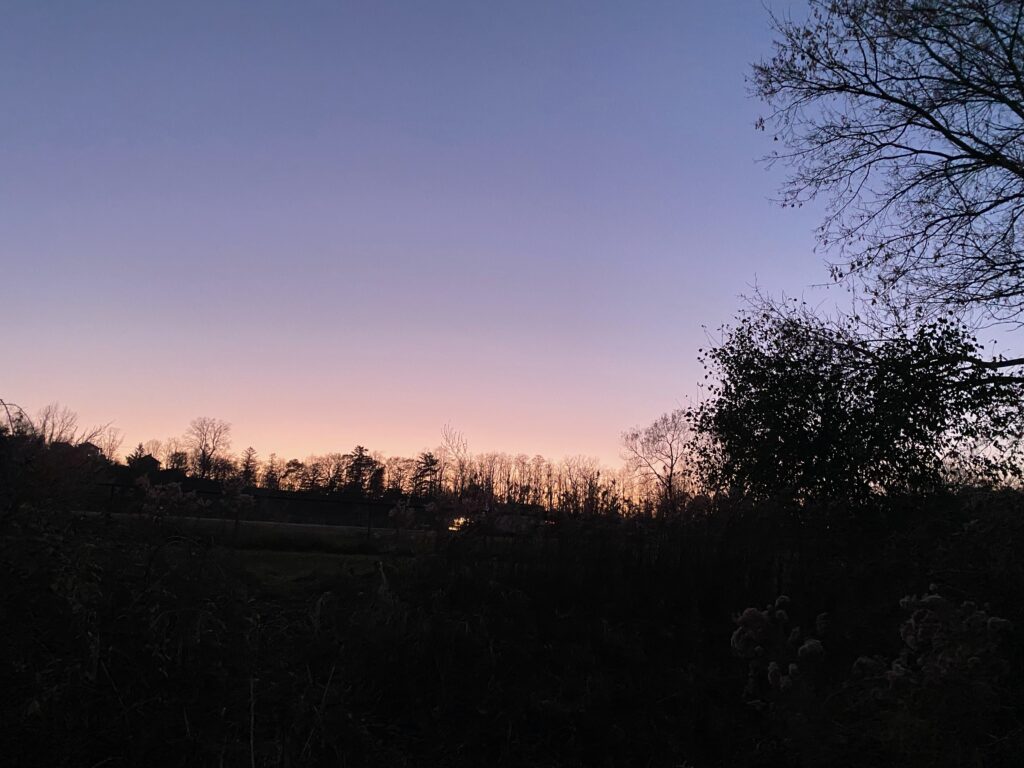
The phenology spot I chose in my home town is a small wetland located near my neighborhood and old school. The wetland isn’t too large, it’s roughly the size of a soccer field. The area is dominated by small woody plants and shrubs, although there were a few larger trees as well. The largest trees in the area were birches planted along the dirt path leading to the site, although there was multiple ashes and a few boxelders closer to the water. There were also a few young pines and barberry shrubs along the path. The area had some grasses and weeds, although most of the ground was covered in wet, decomposing leaves that had been freshly shed. Historically, the site has had a problem with an overgrowth of aquatic plants on the surface of the lake. I’m not entirely sure what species of plant it is, but it has slowly been taking over the wetland for the past couple of years. The condition of the plants has worsened such that a thick layer of the small plants ranging between a half an inch and a full inch thick has developed across the water’s entire surface. The plants were so thick that I watched a small sparrow walk across the surface.
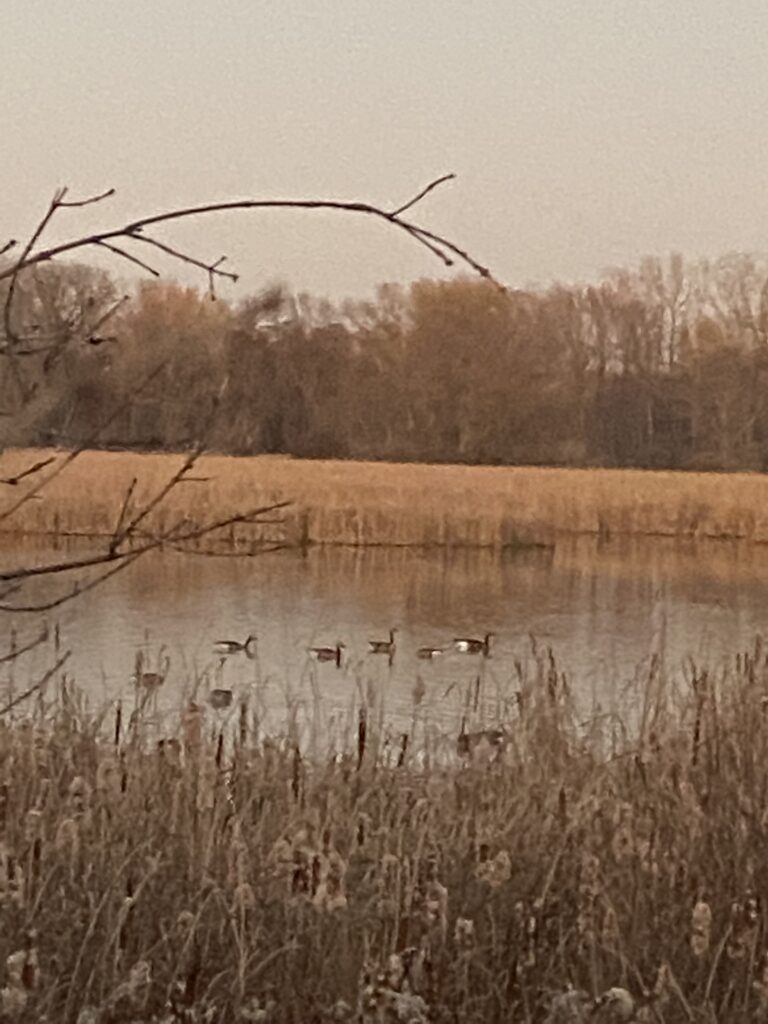
Other than the sparrow, a few other small birds were seen quickly or heard through their calls. The only bird I could identify through its call was a chickadee, although there were multiple other species present. I also witnessed a huge flock of between 20 and 30 geese fly overhead, although none stopped. When I visited the site again a few days later earlier in the day, many ducks were sited along the edges of the wetland. Three male mallards were seen and around 8 younger female mallards.
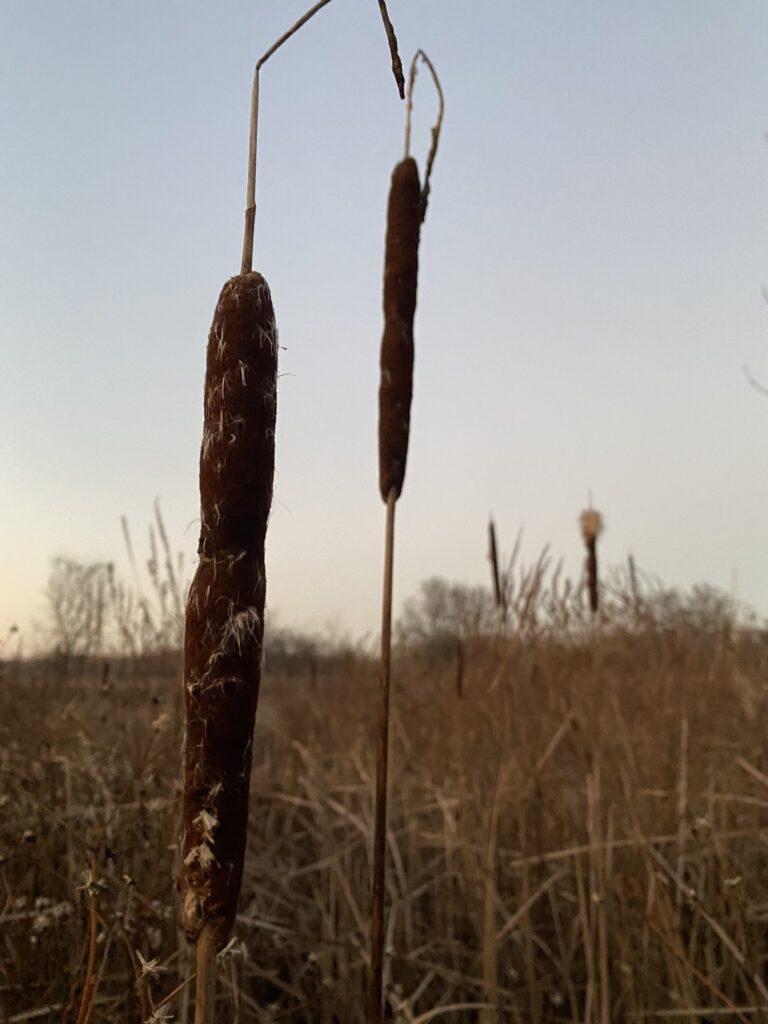
This site is similar to my Burlington site in the sense that both are centered around some small body of water. Similarly, both bodies of water are dealing with a type of plant growth on the surface, with my Portland site being covered in an aquatic plant and my Burlington site having a few small algal blooms. Both sites have a range of birdlife, although it seemed that my Portland site had a wider range of species and was potentially a more ideal habitat given the number of birds seen and heard. Geese, although likely different species, were spotted at both sites. Although the vegetation was largely different, a few similarities include a high frequency of smaller bushes and a few ashes present at both locations. My Burlington site was dominated by reed plants, such as cattails and bulrushes, although no reed plants or longer grasses were present at all near my Portland site. The cold, overcast, and damp weather I experienced in Portland when visiting my site reminded me of the weather conditions of my Burlington site on my most recent visit, as both sites are reflecting the slow transition to winter.
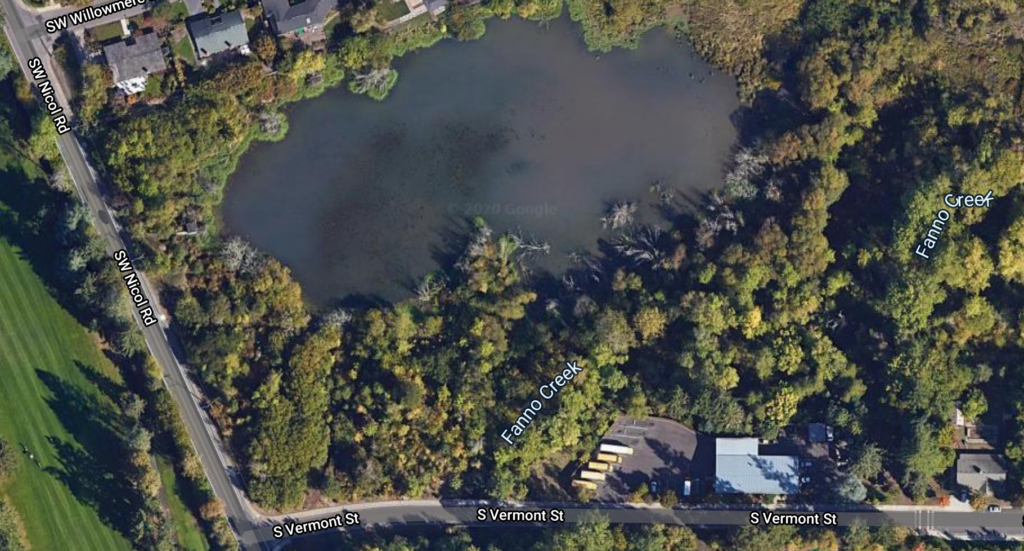
An overview of my site on Google Maps. The entrance to my site is a trail that veers off of Vermont street and goes right around Fanno Creek, and is noticeable by a thinning of the trees in the area. This photo was taken before the aquatic plants began to take over. My neighborhood is north, where there are a few houses noticeable, and my school is south. Right past Vermont street is my high school’s soccer field, with the school buildings further down. To the left is a golf course.
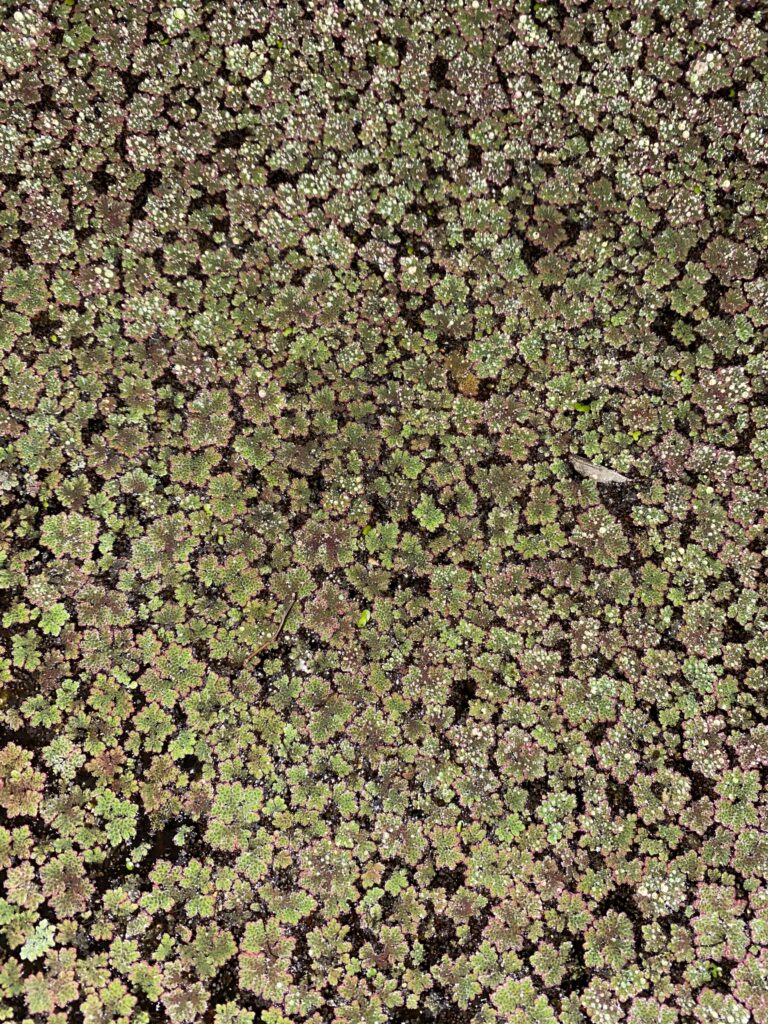
A close up of the aquatic plants on the wetland’s surface. Since this was taken near the edge of the lake, it is much thinner than the rest of the plants towards the middle of the water. In this photo, the individual plants can be seen in their small clusters.
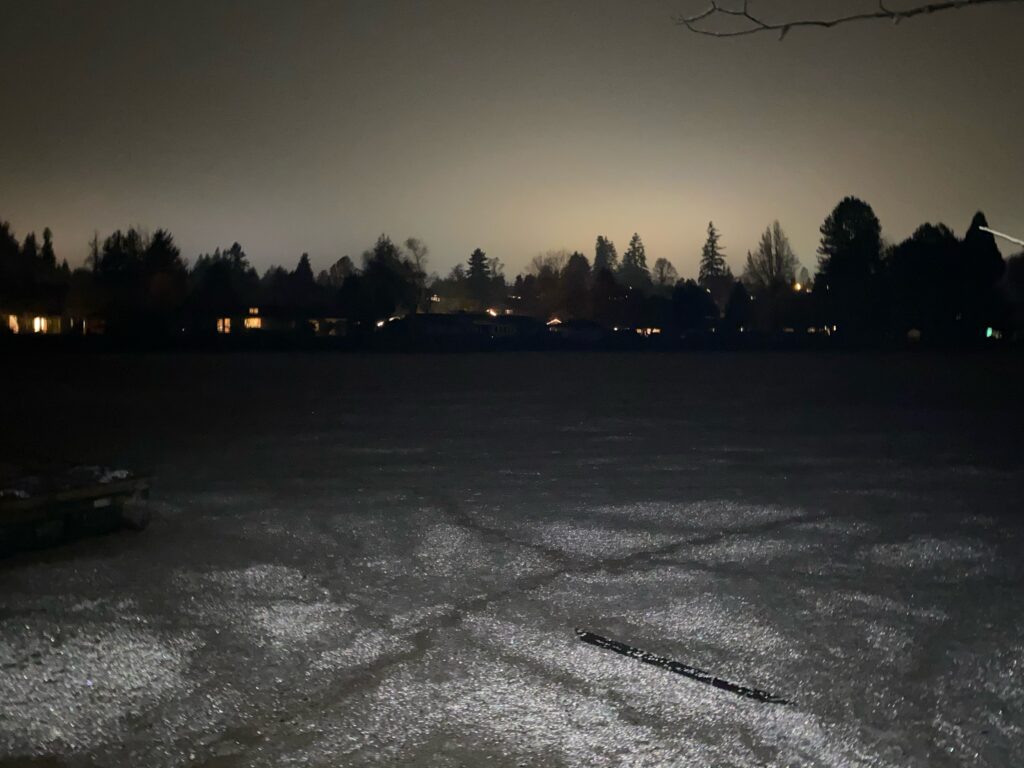
A photo of the wetlands at night. The white layer along the surface of the water that looks a little bit like snow is the plant growth. You can clearly see through this photo the severity of the issue, as well as the plant’s nature to group into denser clumps. The neighborhood can be seen on the far side, as well as some larger pines along the horizon.
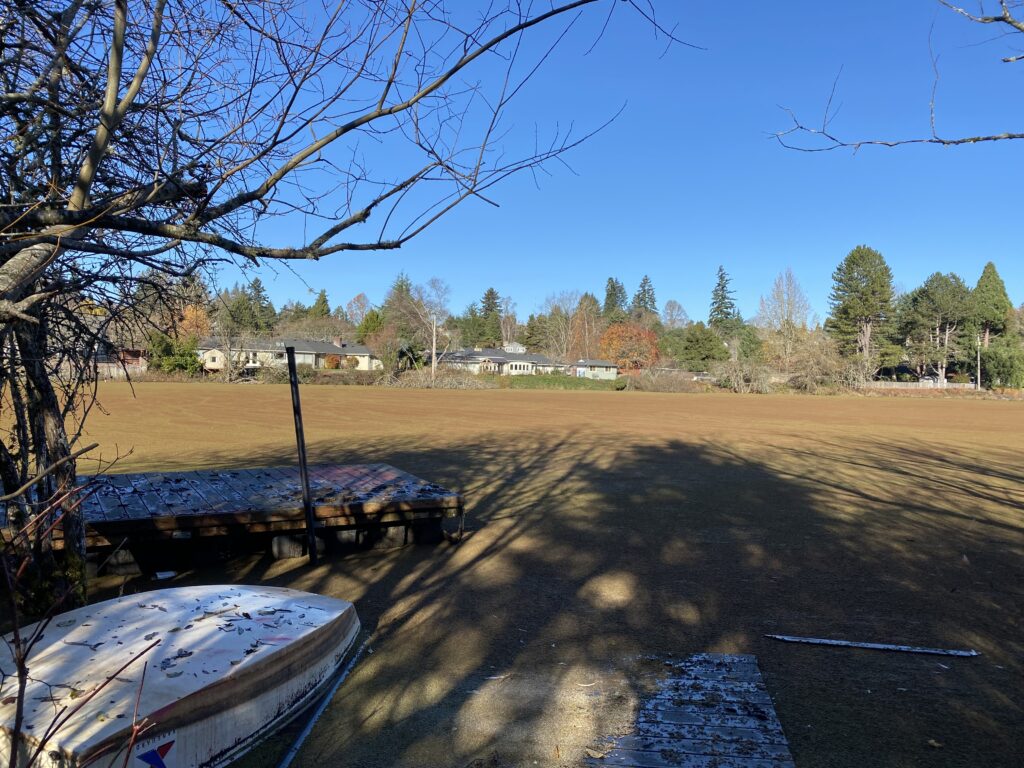
The wetlands during the day, with the plant growth more visible. Also noticeable in the picture are wooden docks and an overturned boat, both examples of human interference with my site.
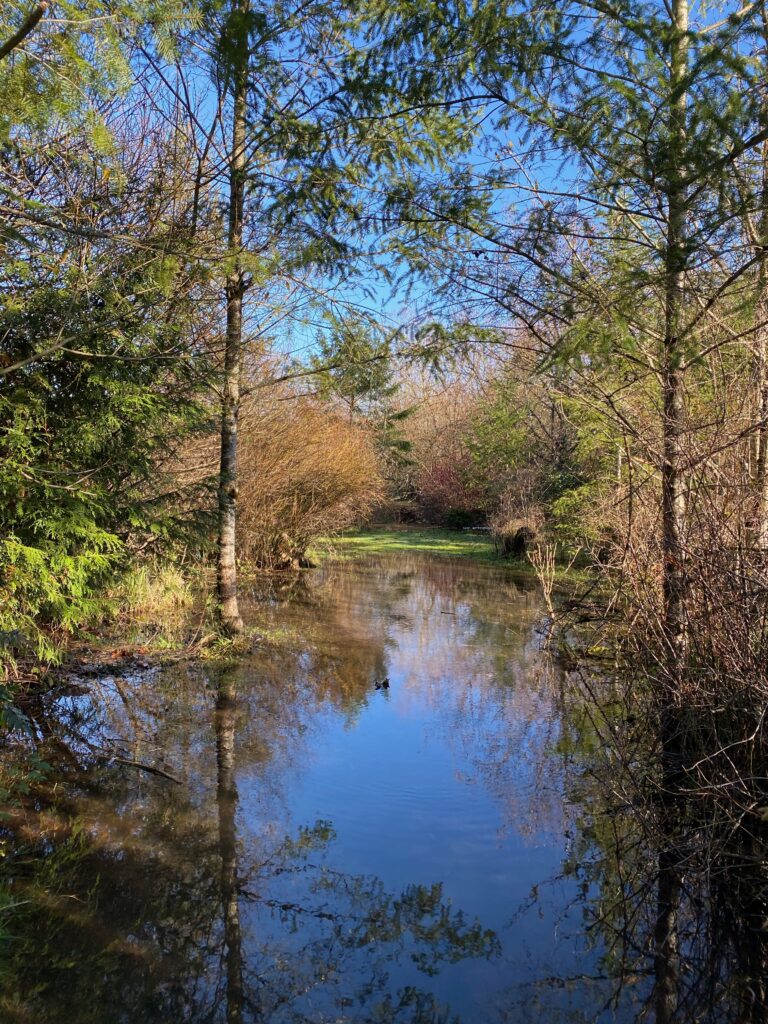
Overflowing of the wetlands into the nearby grassy land as a result of increased rain throughout the fall and early winter season, causing flooding.