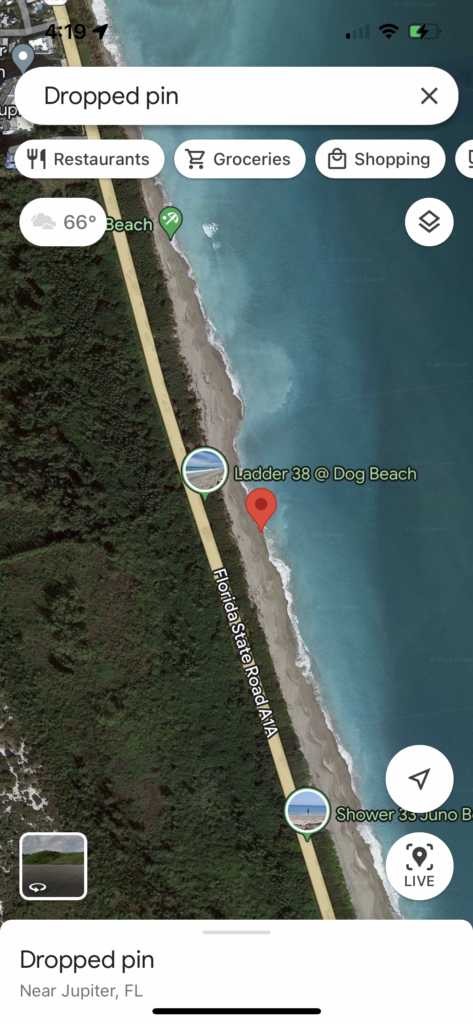
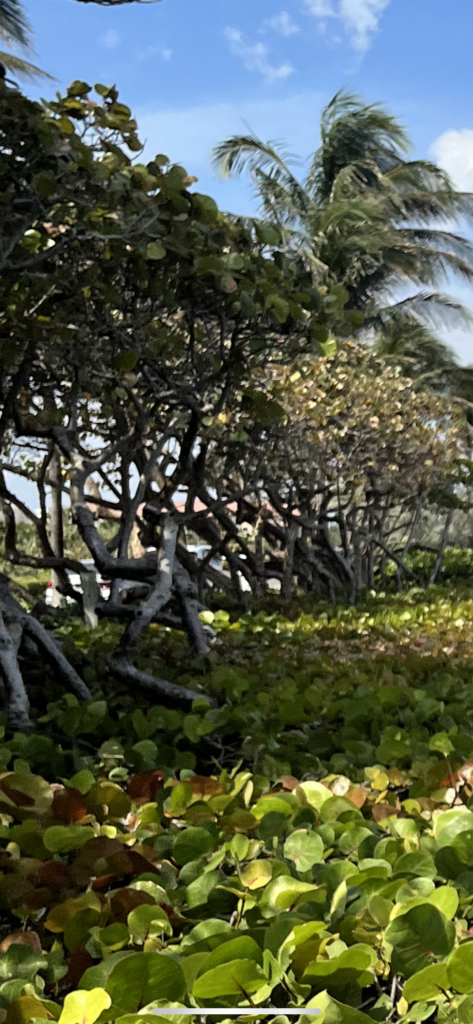
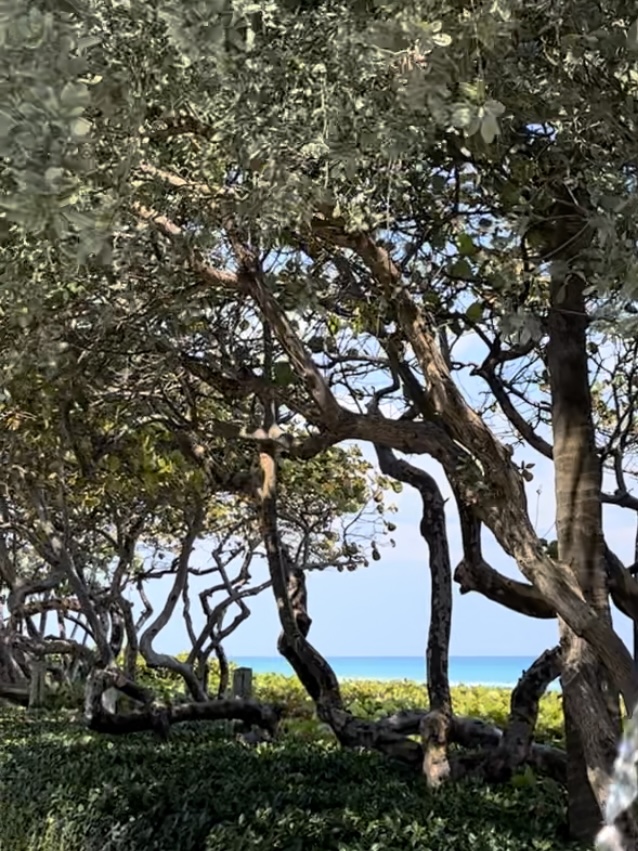
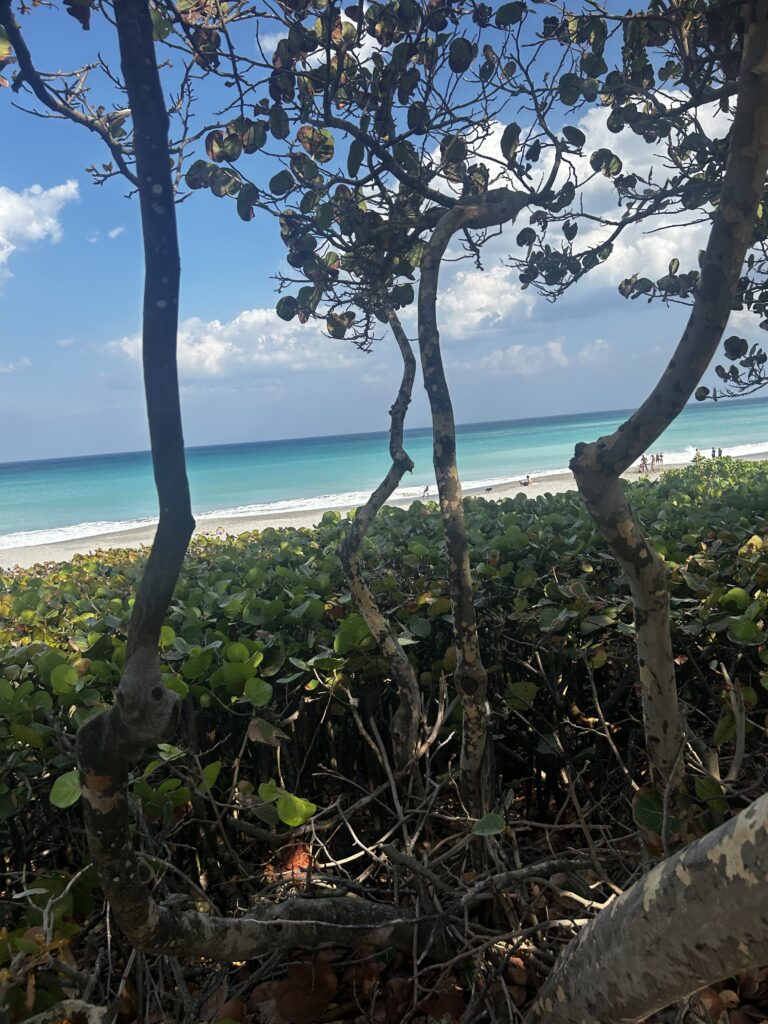
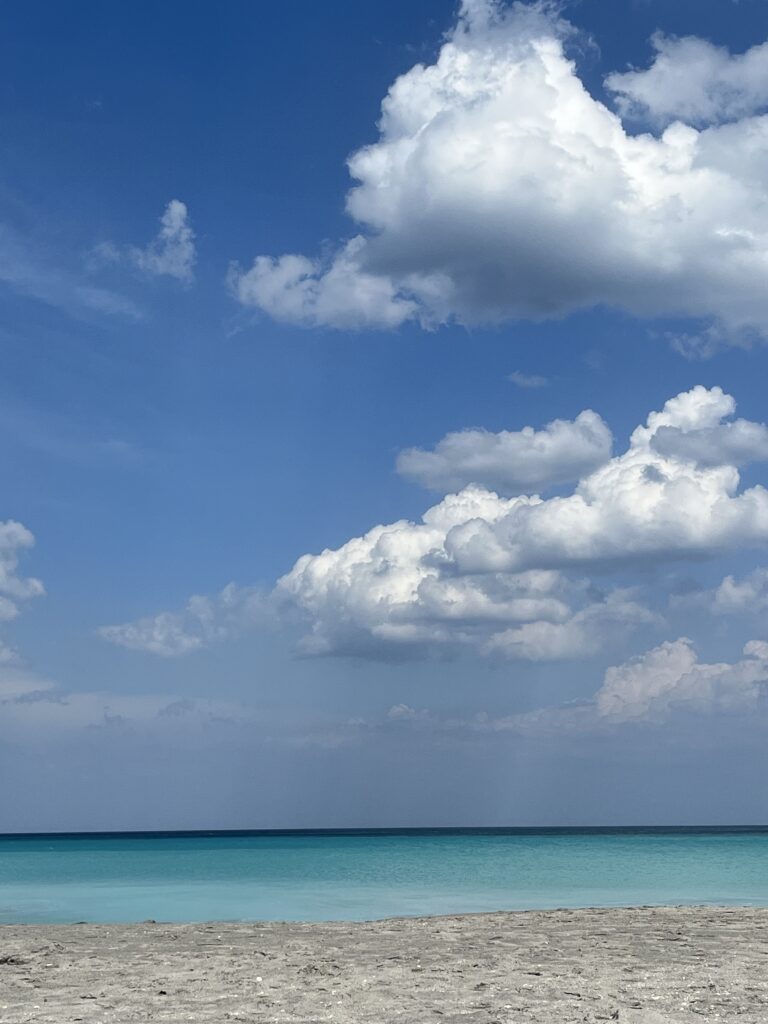
A stark contrast to my phenology spot in Centennial Woods, my spring break spot in Jupiter, Florida served as an interesting (and much warmer) comparison. Situated on the east coast of Florida, this beach and its surrounding areas are comprised of a thin bed of sandy marine sediments that sit a top limestone. This is different from the surficial geology of silt, sand, and clay found at my spot in Burlington as it was the result of glacial retreat. Not only are the surficial geologies different, but the entire climate itself. Jupiter has a trade-wind tropical rainforest climate, which is very humid and very warm year round. Burlington is also classified as humid but a continental climate. These very different climates result in very different ecologies as seen in the plant and animal life. During my time in Jupiter I noticed many brown pelicans and seagulls. Each time I noticed the pelicans they were flying low over the ocean, most likely in search of their next meal. I have yet to see a seagull at my spot in Centennial Woods and I know that a brown pelican will not venture this far north from the warm coasts. Additionally, the plant life along the ocean is very different from the plants in Burlington. There were no deciduous trees, conifers, or ferns which are very common at my spot. Instead there were many coconut palms, seagrapes, beach naupaka, and inkberry. These plants are all salt tolerant as they thrive right off of the ocean, and they act as stabilizers for the sand dunes. All of the plants were green and thriving, just as they do all year long, but the seagrapes were not producing any of their fruit. Overall, this phenology spot was very different than the one I’m used to but it was a warm and welcome change!