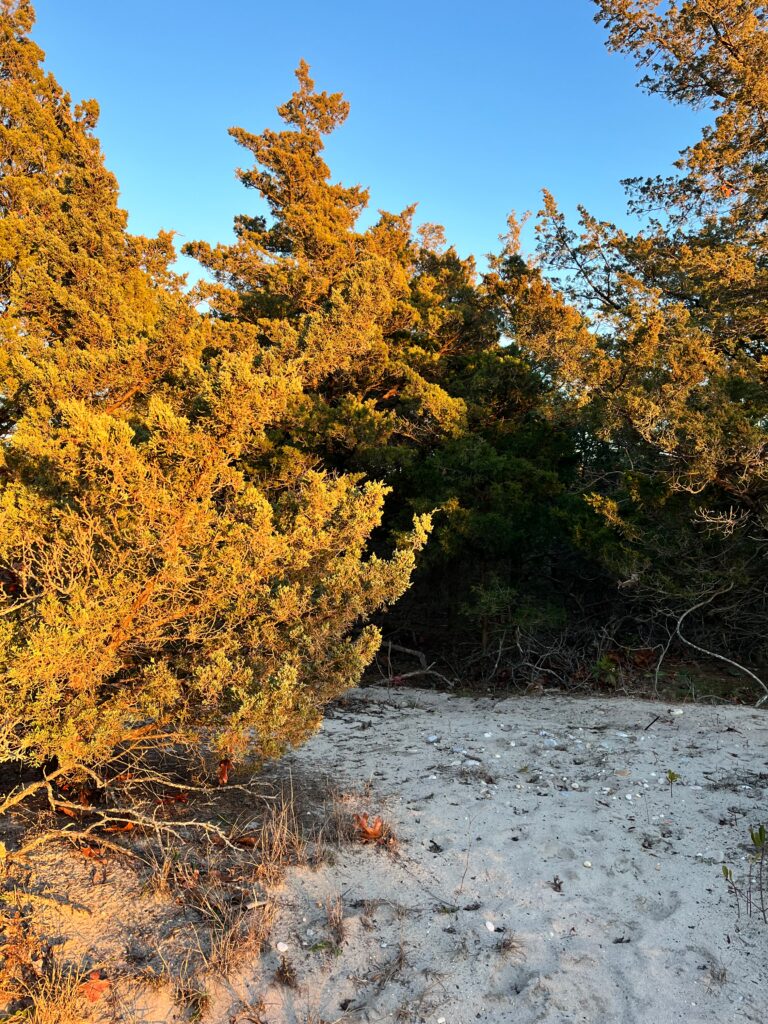
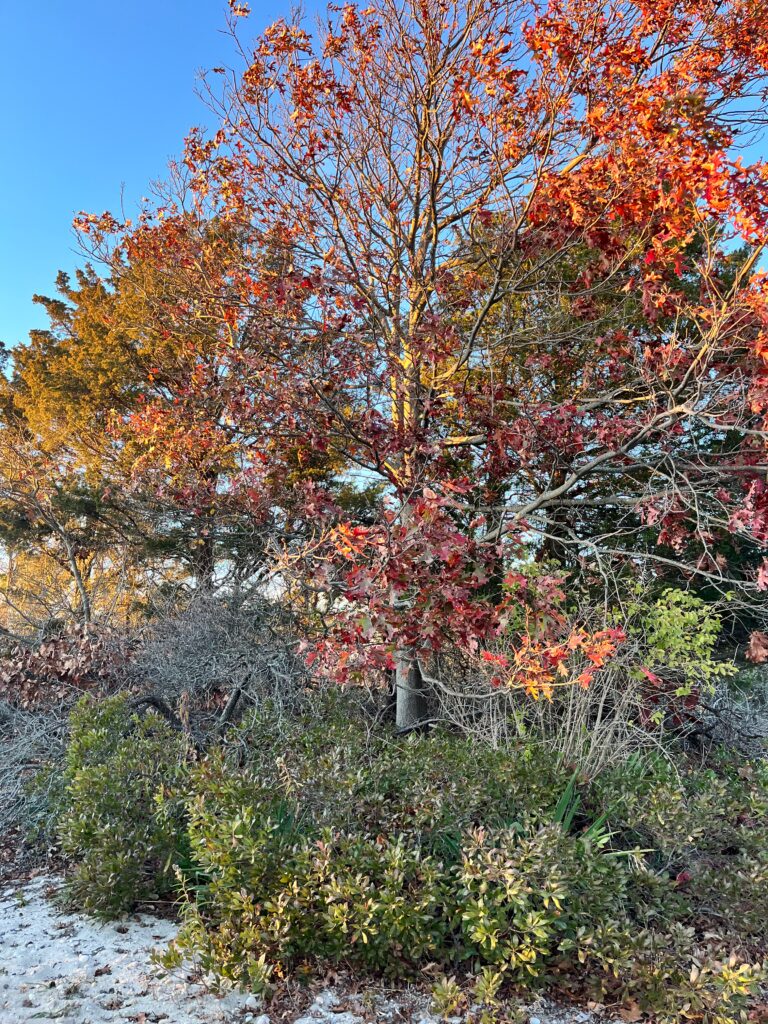
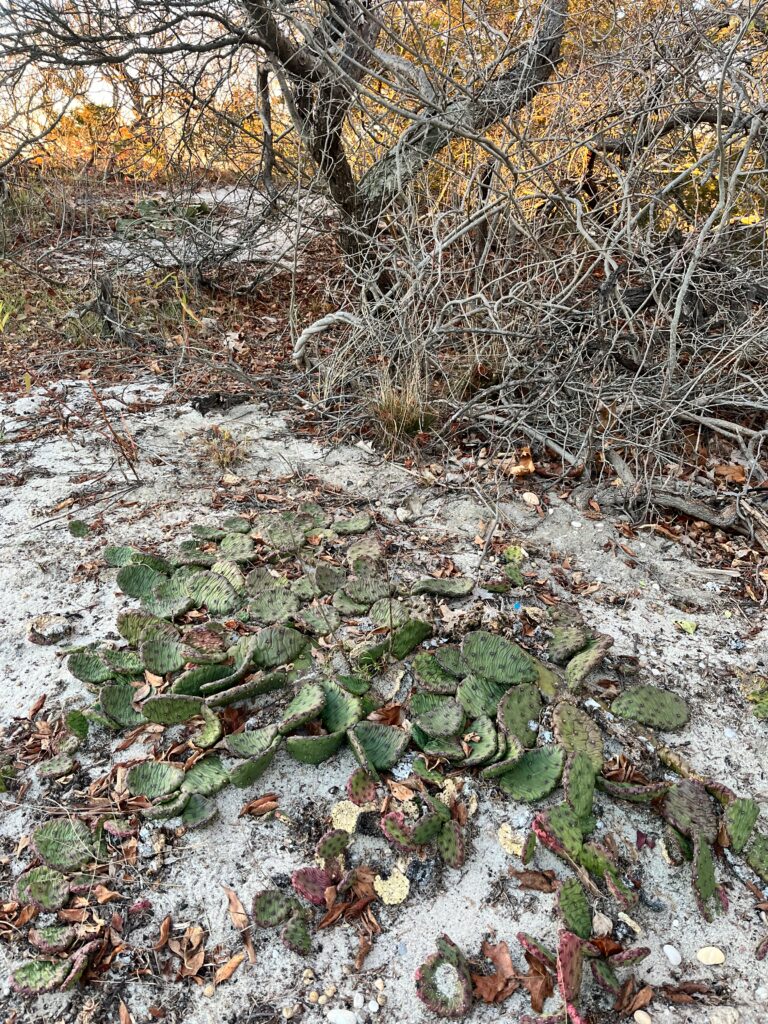
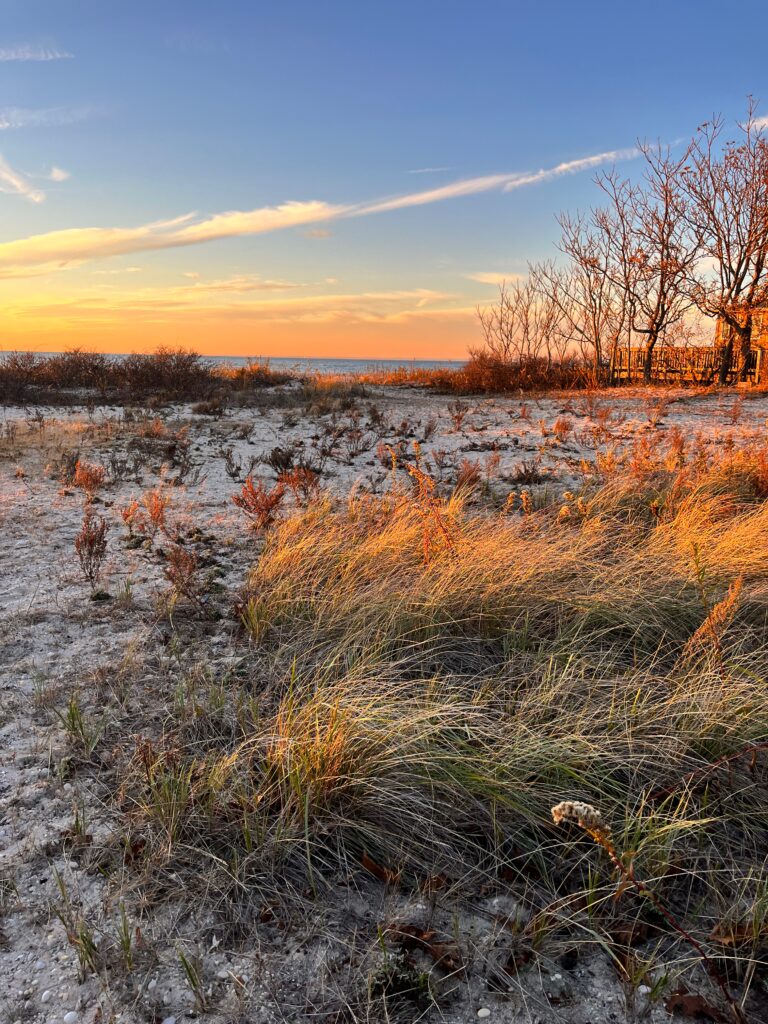
The coastal ecosystem found at West Meadow Beach along the shores of Long Island differs greatly from the woods of Burlington in both ecological and phenological ways. The main plant species that can be found at my spot are American beachgrass, beach plum, seaside goldenrod, eastern red cedar, prickly pear cactus, and salt meadow cordgrass. Most of these species, especially prickly pear, the only cactus native to Long Island, are not found anywhere in Centennial Woods. These species grow in a succession of micro-habitats, uniquely adapted to withstand the harsh environmental conditions of the seaside. For example, the leaf blades of American beachgrass catch sand that piles up around the base and the plant grows taller to build up dunes. However, I did find a northern red oak which can also be found in Centennial Woods, but these trees had more leaves on them than those in Burlington. Part of what makes the species so different here is that the wind and salt-spray off the ocean takes the moisture out of the soil so the plants that can thrive here need to be adapted to that condition. Temperatures here are warmer than Vermont but signs of winter are showing as both the air and water temperatures drop.
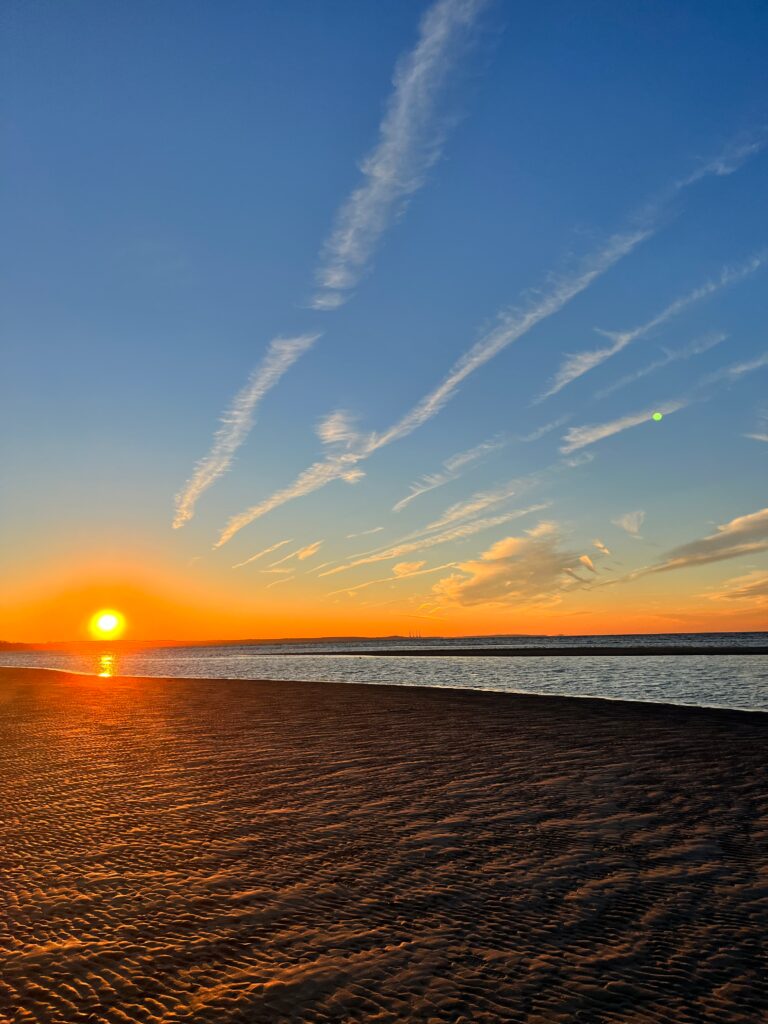
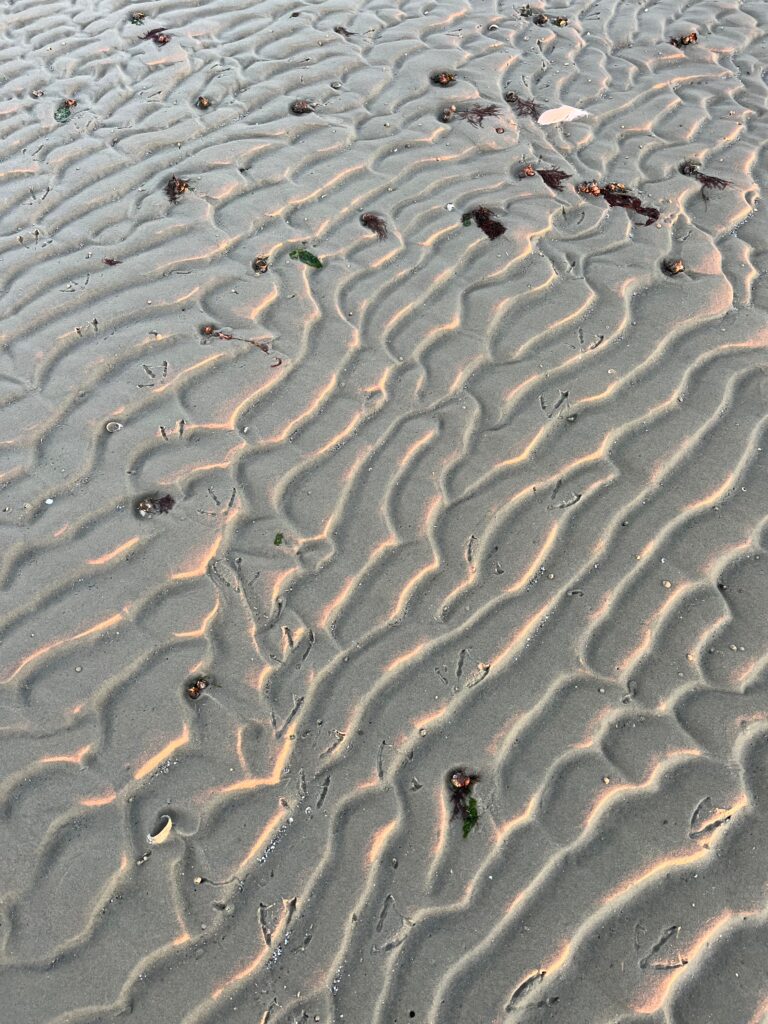
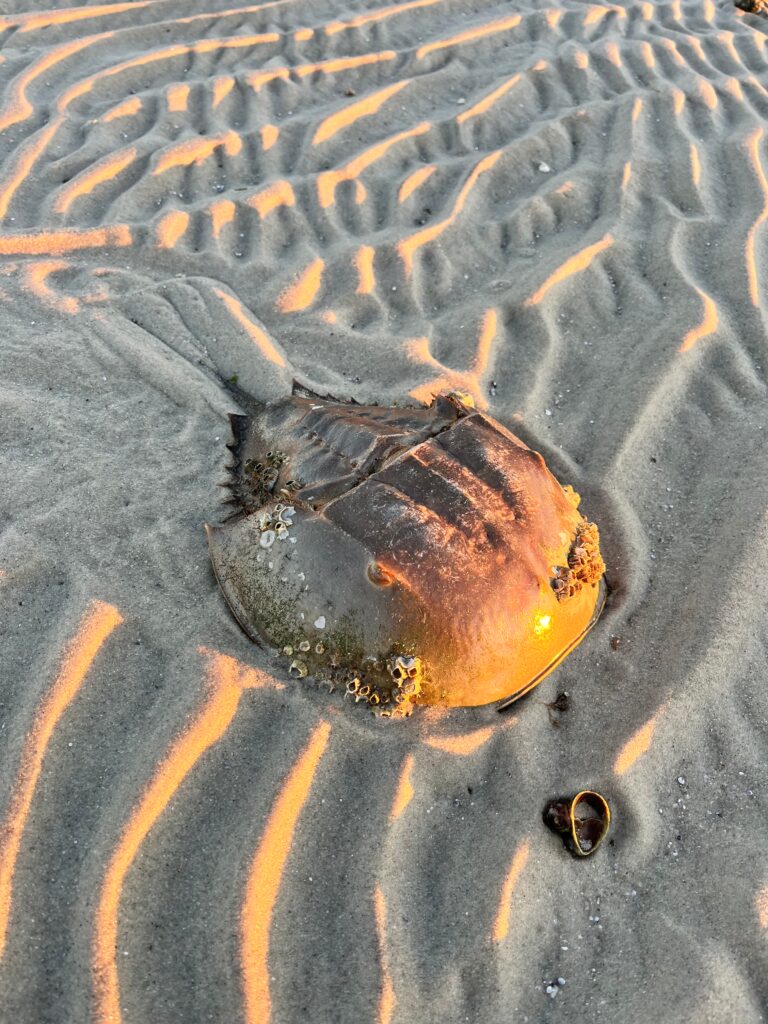
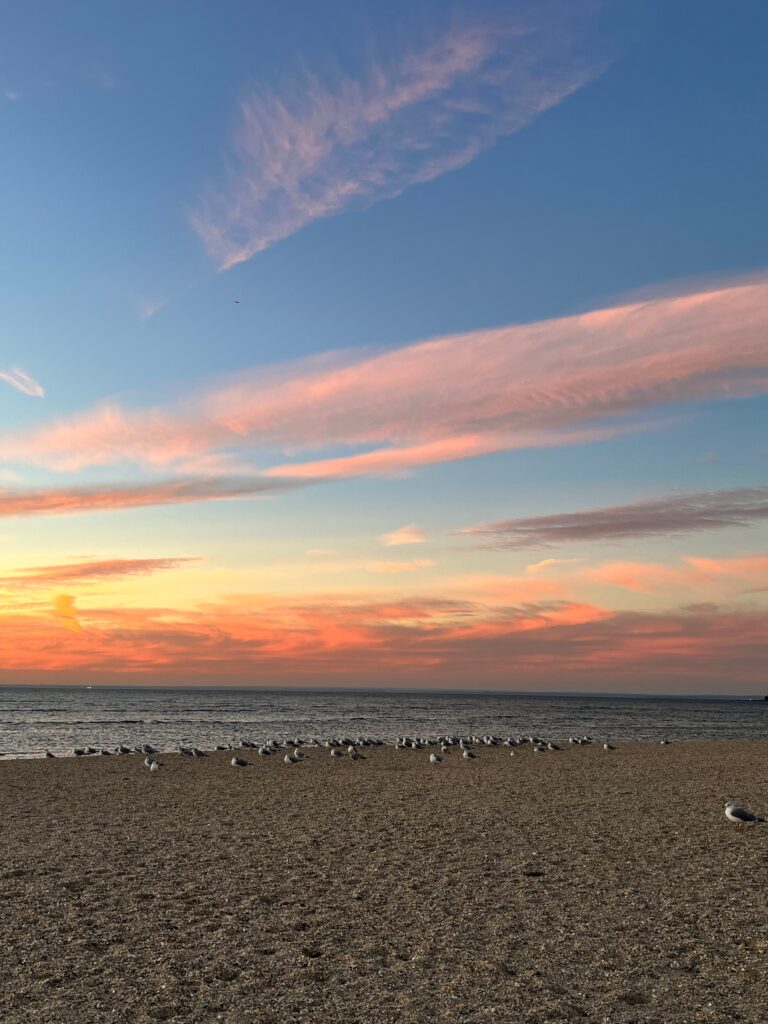
The ecology at West Meadow Beach also differs significantly, with no species bearing resemblance to the species I have found in Centennial Woods. Although Piping Plovers are not present this time of year, this endangered species uses my spot on the upper beach to nest every summer. They eat the worms and small crustaceans found in the sand during the warmer months and have to wait 30 days until their new chicks can fly. Other migratory species that spend their summers on Long Island include monarch butterflies, black-bellied plovers, and stripped bass. In November, the insects are no longer abundant and many of the birds have left, however, seagulls are still present as well as horseshoe crabs. Usually when I go to the beach I only find remains of these crabs, but on this visit I was lucky enough to find a live crab because it was low tide and I could walk out further. It is clear that the species found at my spots are vastly different, but interesting and important to their own ecosystems. And although I didn’t leave a gift at my spot, I did pick up some unpleasant gifts left by other patrons of the beach.