Located on the eastern edge of the University of Vermont’s campus, Centennial Woods provides easy access to the various sights, sounds, and smells Vermont’s wild has to offer. Over the course of the phenological year, this blog will be a place where I document the changes in land as temperature fluctuates, animals move, and plants grow. Specifically, I will focus on a plot of land near Centennial Brook, a flood plain surrounded by a dense and diverse forest. Thank you for visiting this blog and I hope we can enjoy this lands journey throughout the year together!
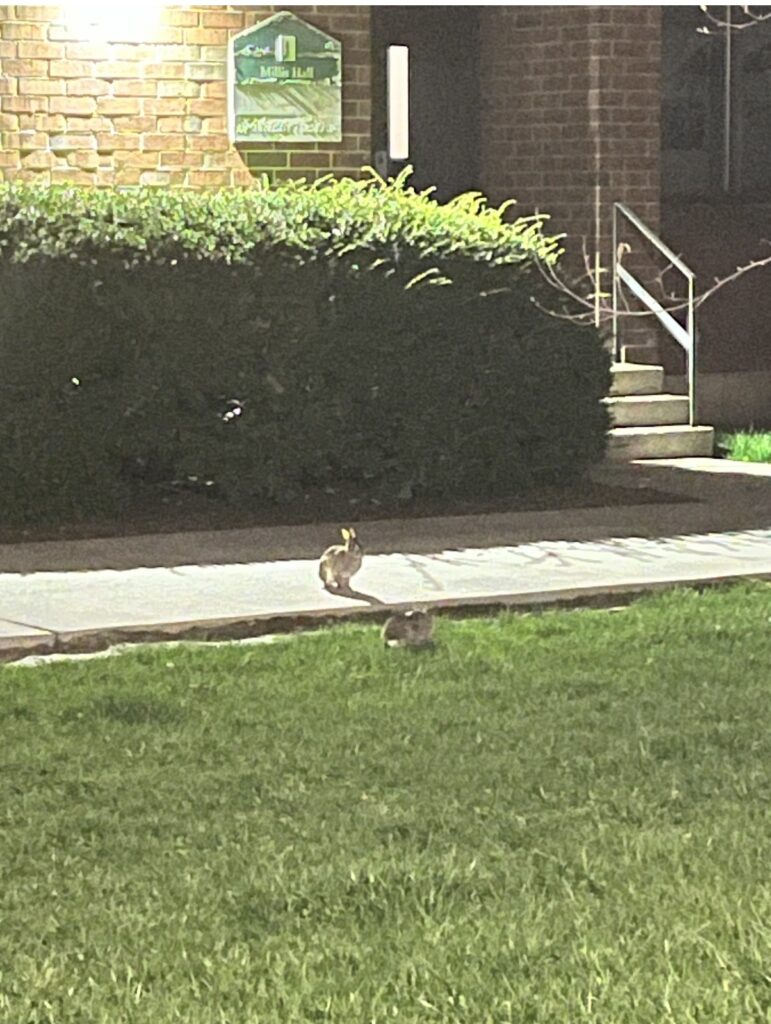
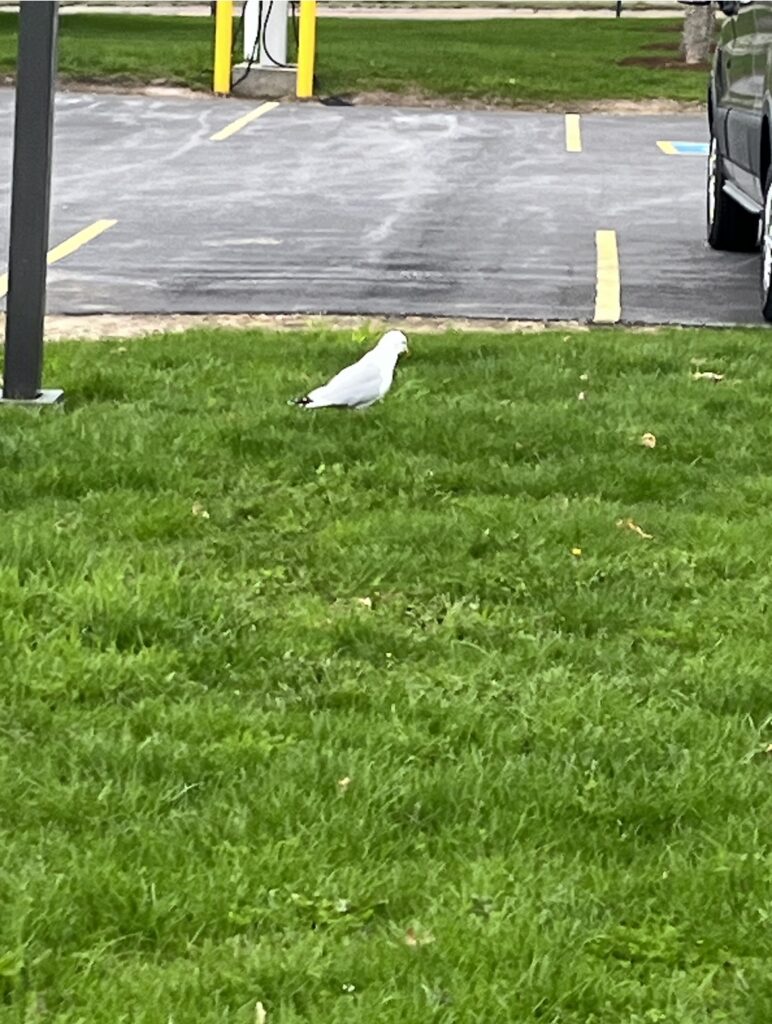
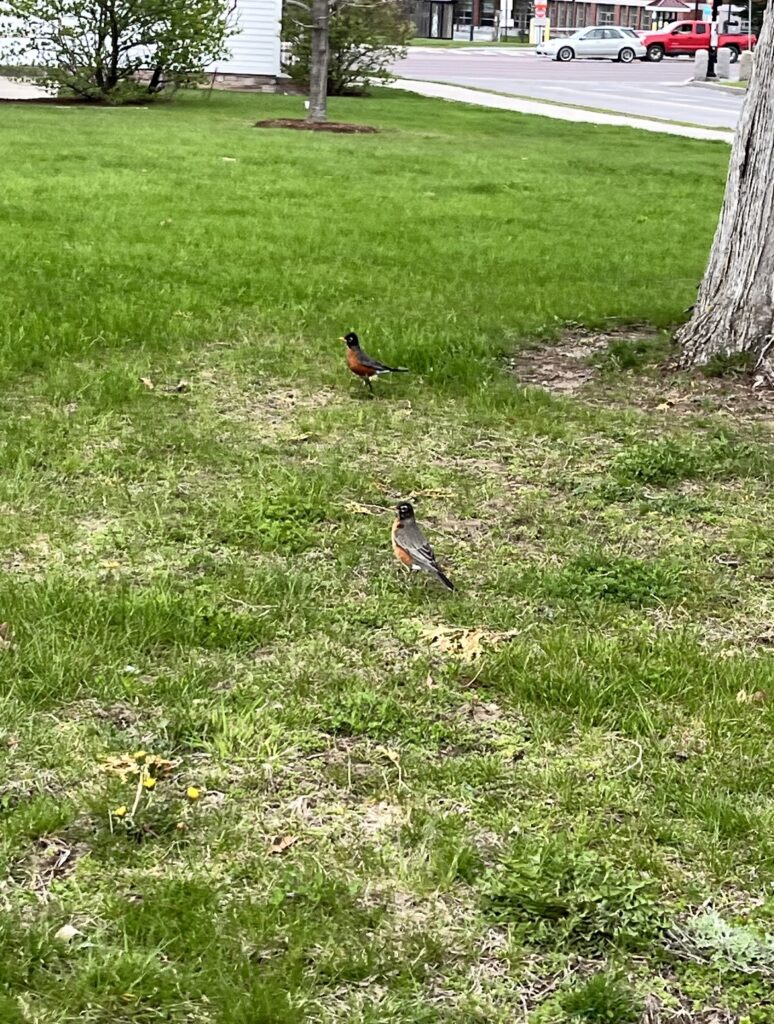
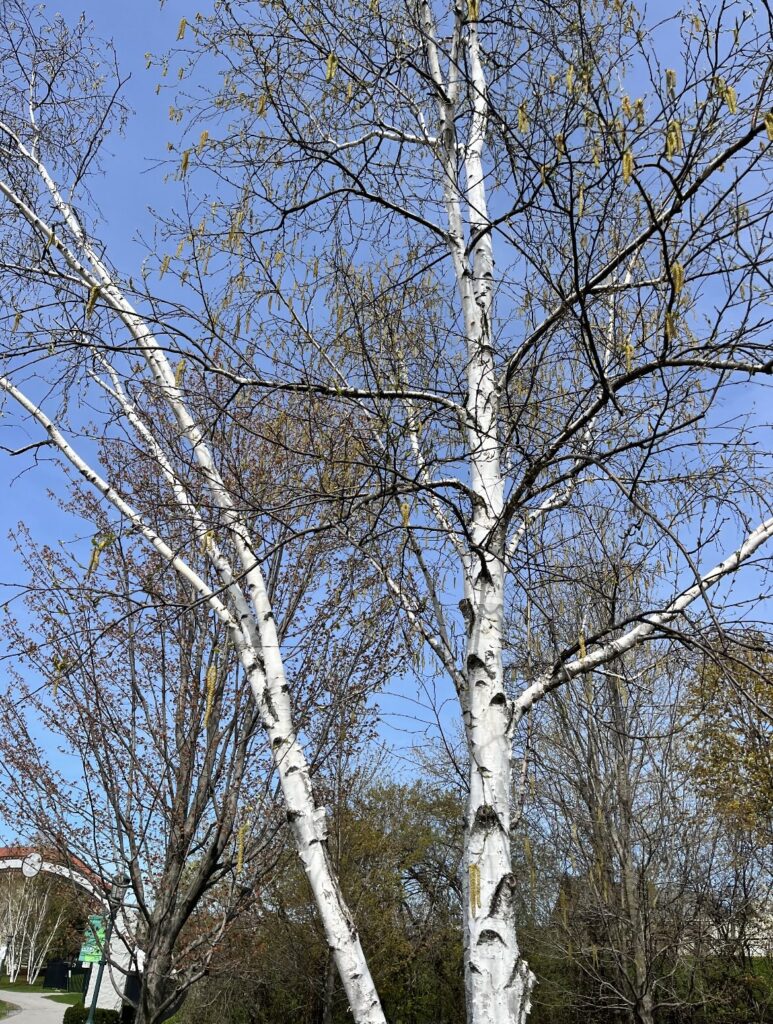
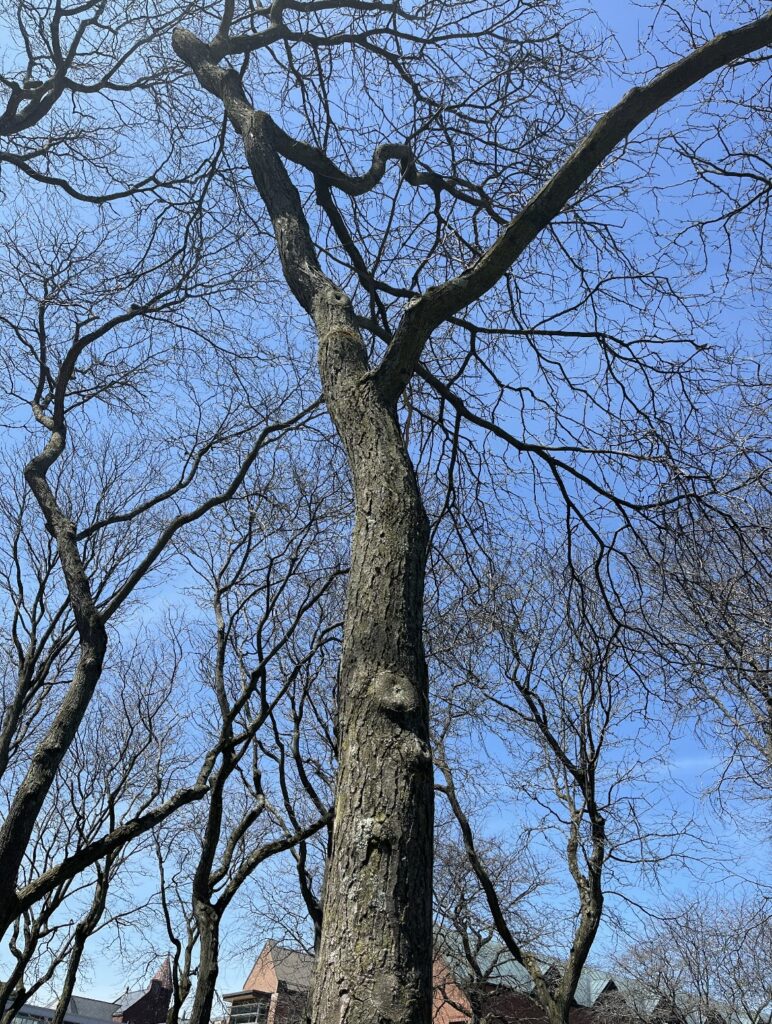
During this four-day urban bioblitz, I mostly explored the natural areas that are on the campus of UVM, with some explorations of the nearby neighborhoods. Using iNaturalist was especially fun during this event as I had not used it much before. I appreciated how the app gave suggestions on the species I observed, which usually confirmed my predictions. I also enjoy how it connects me with others in the Greater Burlington Area who are able to comment on my own observations. Personally, I encountered countless species over this four day period, but I only uploaded 7 of them. These 7 species included thornless honey locust, dandelions, paper birch, daffodils, American robin, ring-billed gull, and eastern cottontail. In looking through the observations of other cities, I was suprised at which cities were in the lead and which ones were not. I saw that some cities with great biodiversity were not as active in the challenge as other cities were. Additionally, I was just in awe of all of the different species I was seeing throughout the world, that people are able to encounter on an everyday basis. This challenge has definitely inspired me to use iNaturalist when I’m home as well as participate in the next BioBlitz!
Posted in Uncategorized | Leave a Comment »
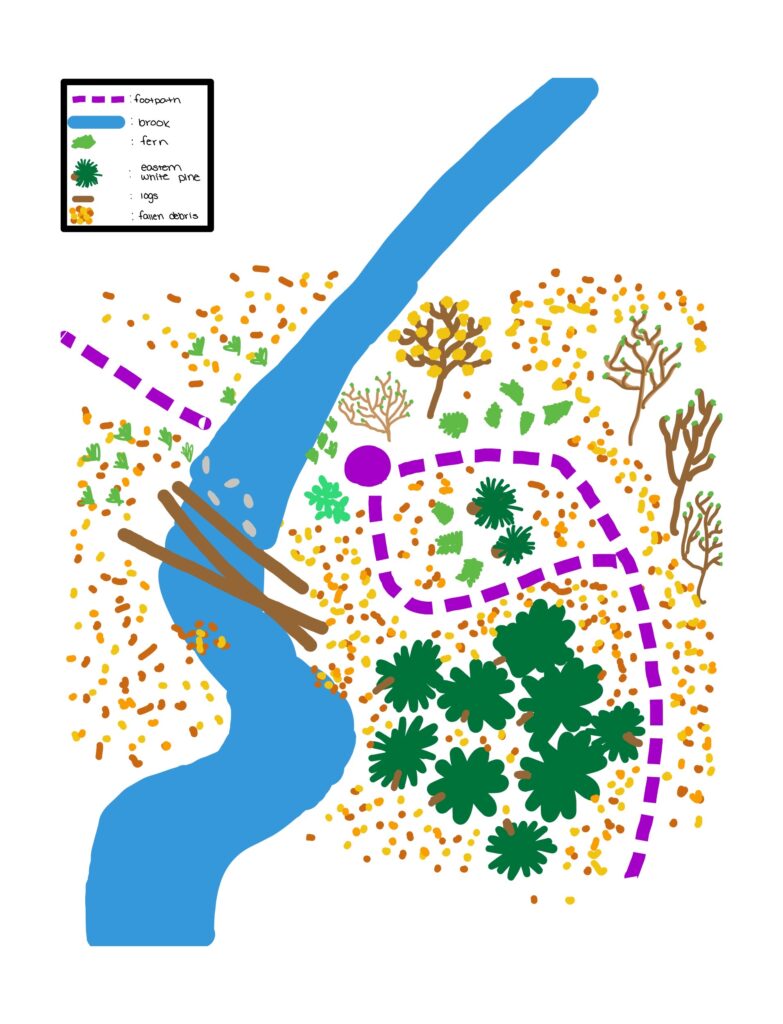
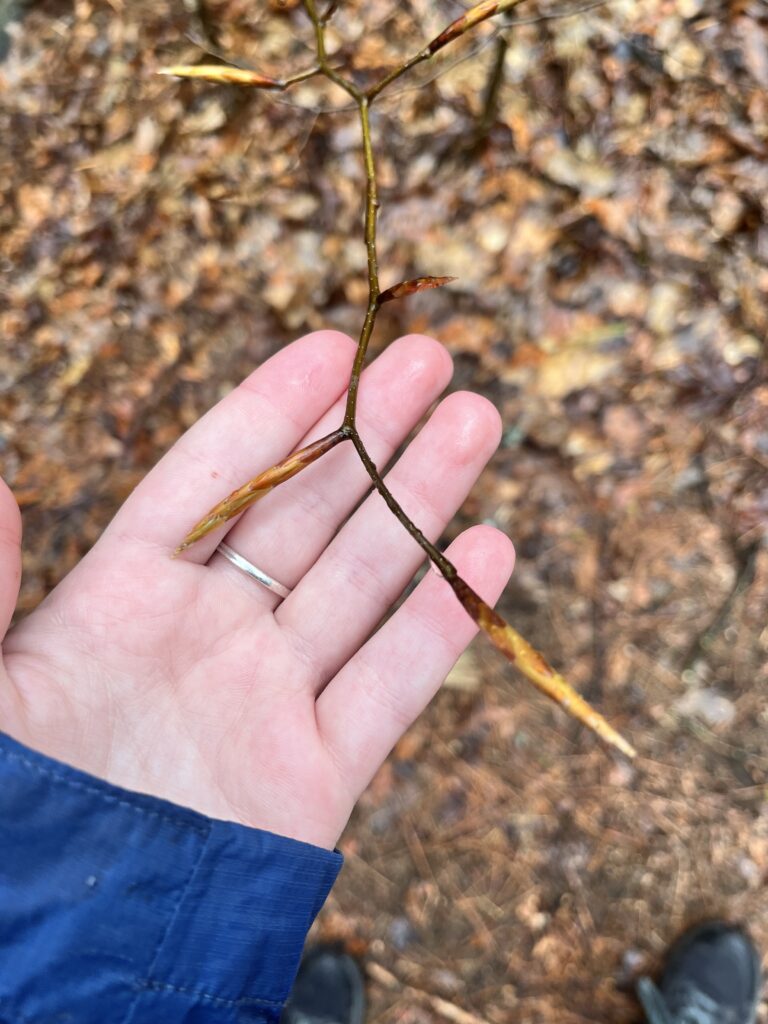
Today I took a final, rainy walk into Centennial Woods to visit my spot one last time. Before I went down by the brook, I stopped by the American Beech I’ve been watching and it finally has some progress with its buds! When I finally went down to my spot, I didn’t notice any major changes since the beginning of the year. The same logs are over the brook, all the trees are standing, and there is no new growth. The barberry at the edge has leaves again, and the ferns are still bright green even though they have been pushed down by weeks of snow. Some weeds are starting to pop up at various locations throughout the site, and trees like the Norway maple, red maple, and yellow birch are beginning to bud. One difference I did notice was that the stream is flowing much faster and there is new debris in the water. I’ve become familiar with the eastern white pines at my site as well as the barberry that lines the path. Nature and culture intertwine on this path as it is a way for diverse groups of people to have access to my spot, as well as Centennial Woods as a whole. I would consider myself part of my place because I am so familiar with it now, and have seen it through a number of changes. I will miss seeing my spot over the summer, but I am sure that I will come back and visit in the fall.
Posted in Uncategorized | Leave a Comment »
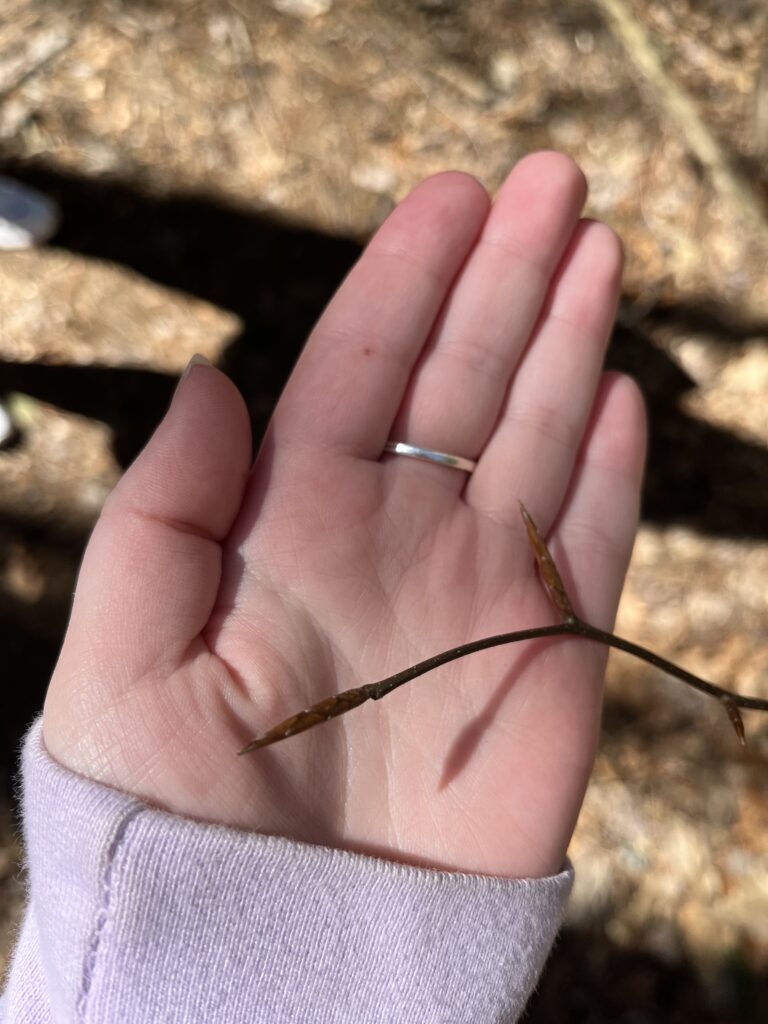
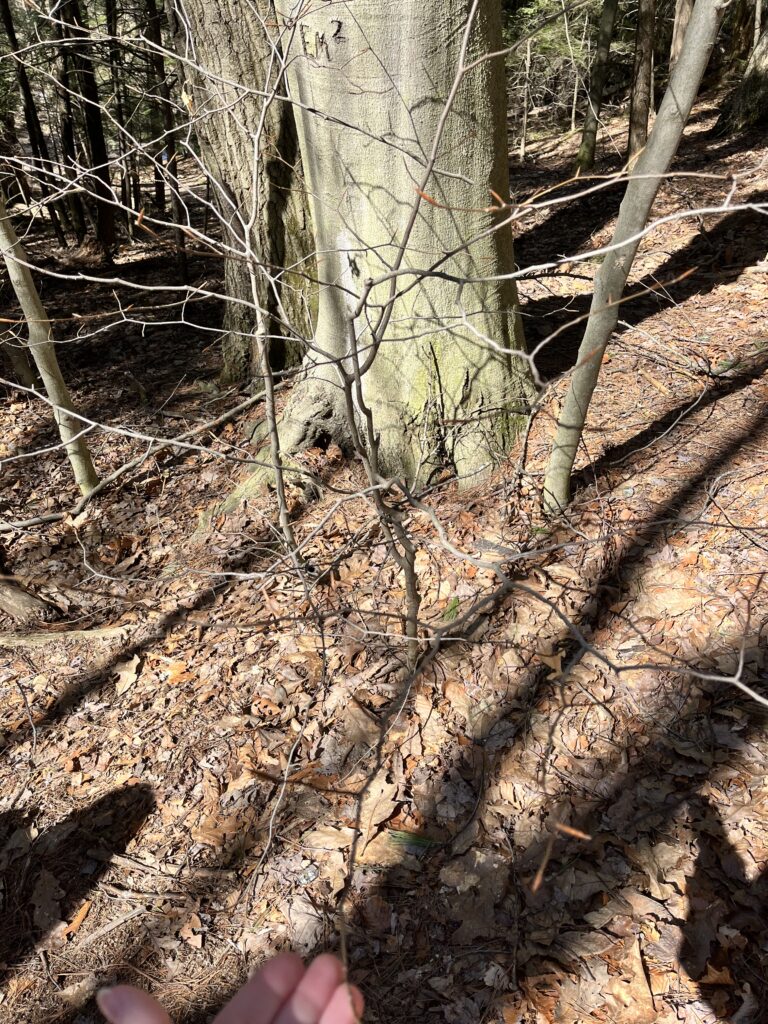
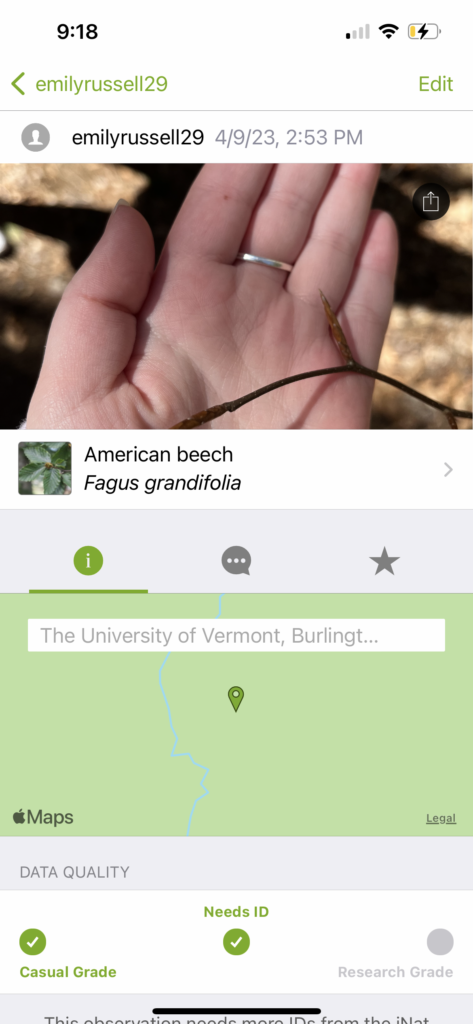
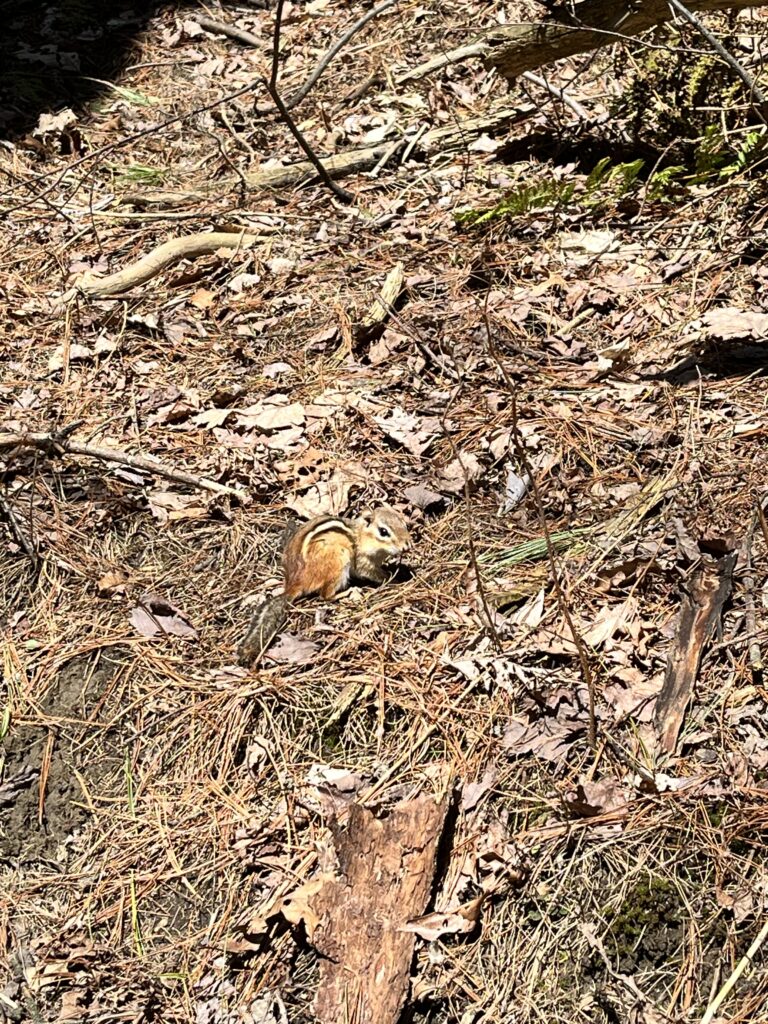
It was such a warm and sunny day to go back into Centennial Woods and revisit my American Beech! I was excited to finally hear the birds again, and I was even lucky enough to spot some squirrels and chipmunks. I forgot how nice it is to walk down the trails when it isn’t covered in ice, and you’re afraid you’ll slip and fall. Today, there wasn’t one pile of snow or ice, some plants are beginning to sprout, and there were various small streams leading down to the brook. After a much easier walk up the muddy hill, I found my American Beech looking almost exactly the same as the last time I was here. The buds were a similar brown color with white tips, but they had grown significantly. Other than the size of the buds, they look the same, so I look forward to when they develop further and open into leaves.
Posted in Uncategorized | Leave a Comment »
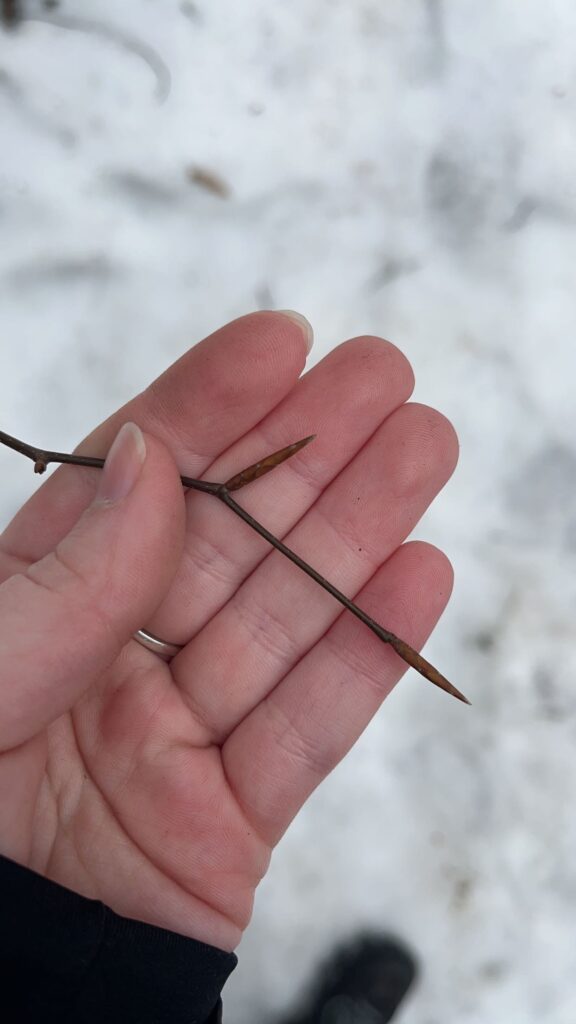
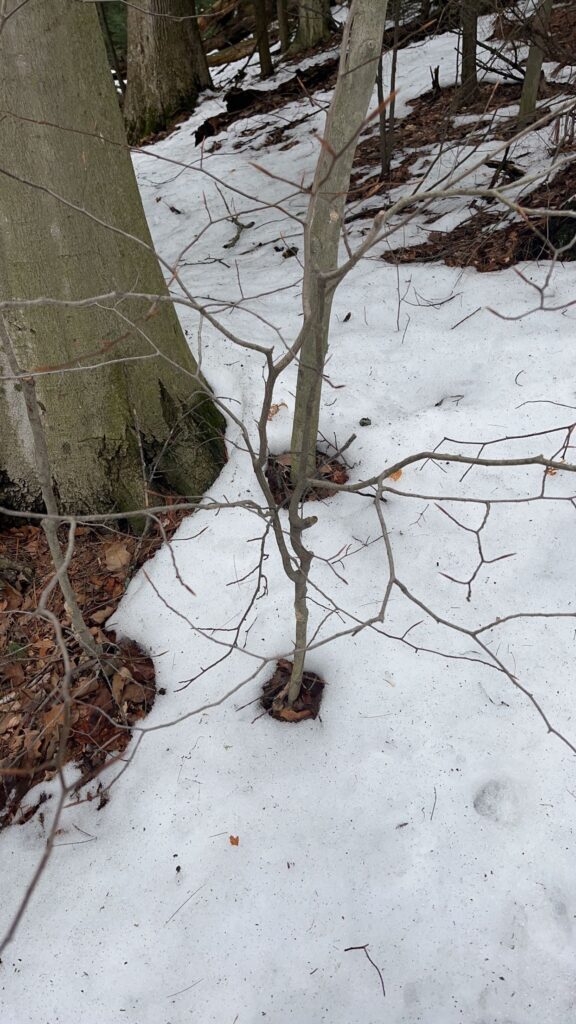
I got to go back into Centennial Woods today to visit the American Beech I’ve been observing, which was very fun! I’m starting to notice the beginning signs of spring and I’m enjoying being able to see the ground again. My walk to the tree was very nice until I had to go uphill where the ice hadn’t melted yet, but once I carefully maneuvered up the hill, I was at my spot. The first thing I noticed about the American Beech is that the buds are a slightly lighter color. I also noticed that there is only one single leaf left on the tree that persisted throughout the winter. Other than that, there were no other significant changes in the tree. I’m excited to revisit this tree in a couple of weeks when the weather is (hopefully) warmer and there could be some significant changes!
Posted in Uncategorized | Leave a Comment »
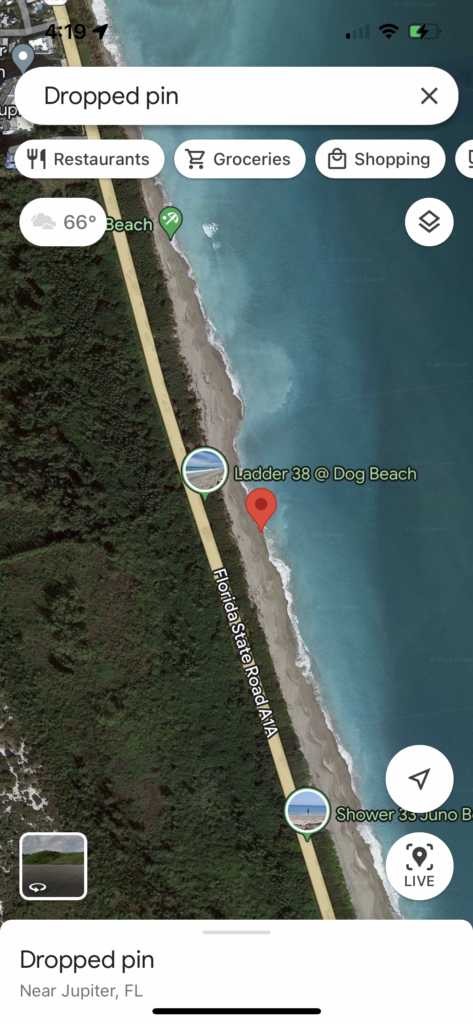
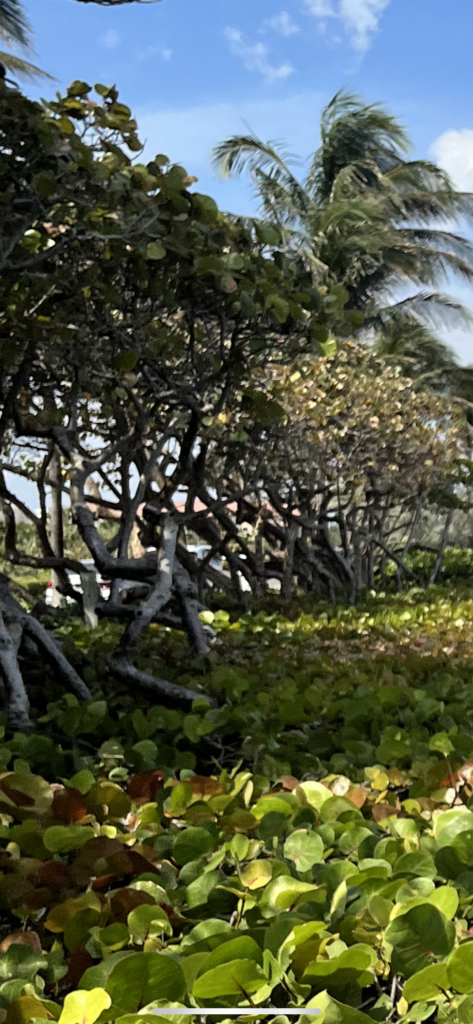
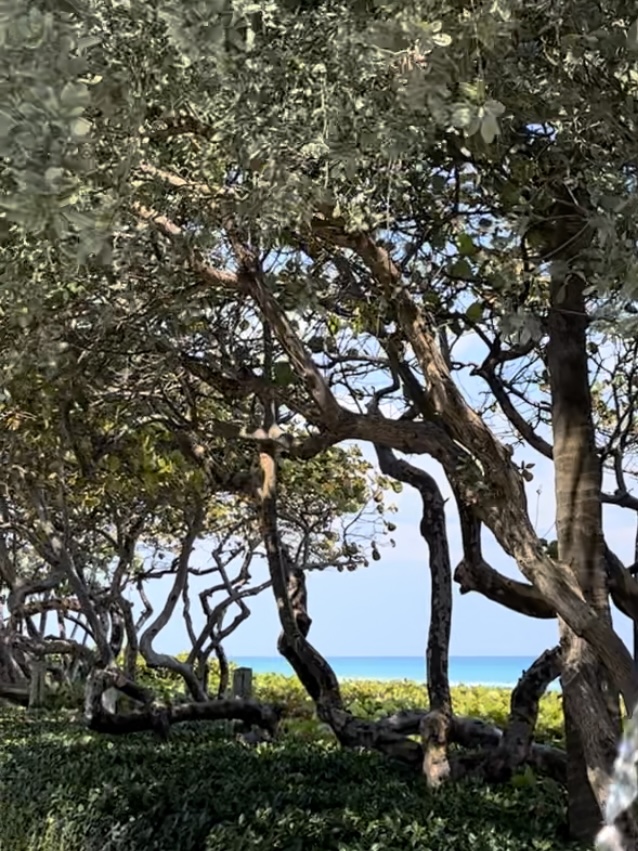
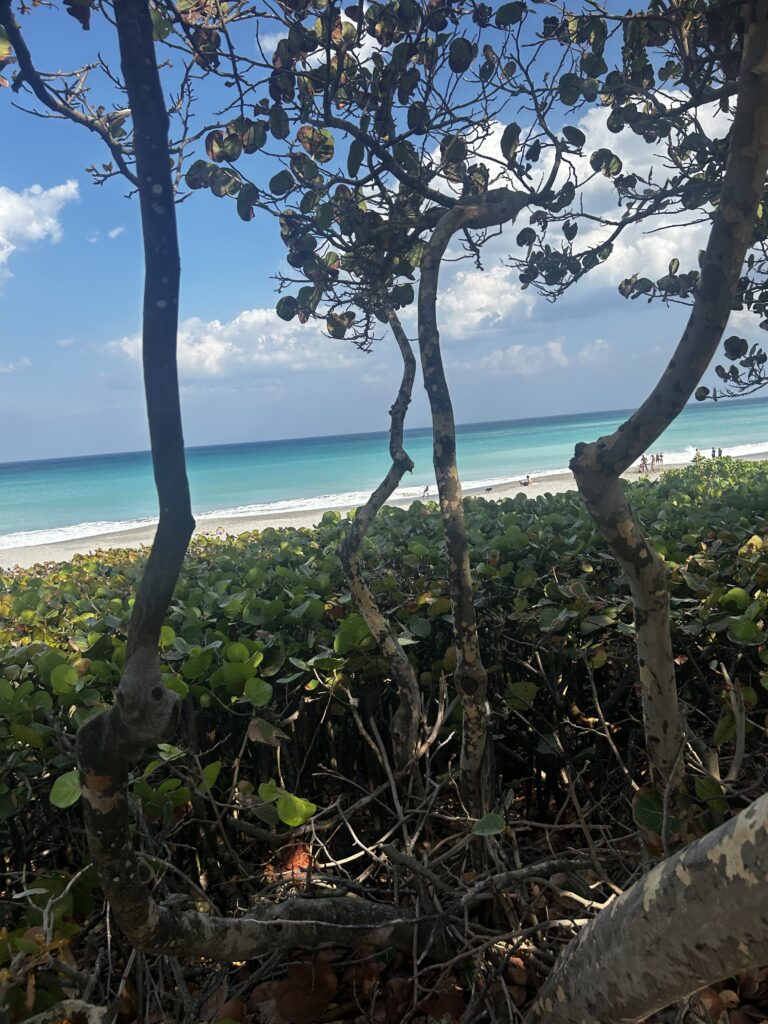
A stark contrast to my phenology spot in Centennial Woods, my spring break spot in Jupiter, Florida served as an interesting (and much warmer) comparison. Situated on the east coast of Florida, this beach and its surrounding areas are comprised of a thin bed of sandy marine sediments that sit a top limestone. This is different from the surficial geology of silt, sand, and clay found at my spot in Burlington as it was the result of glacial retreat. Not only are the surficial geologies different, but the entire climate itself. Jupiter has a trade-wind tropical rainforest climate, which is very humid and very warm year round. Burlington is also classified as humid but a continental climate. These very different climates result in very different ecologies as seen in the plant and animal life. During my time in Jupiter I noticed many brown pelicans and seagulls. Each time I noticed the pelicans they were flying low over the ocean, most likely in search of their next meal. I have yet to see a seagull at my spot in Centennial Woods and I know that a brown pelican will not venture this far north from the warm coasts. Additionally, the plant life along the ocean is very different from the plants in Burlington. There were no deciduous trees, conifers, or ferns which are very common at my spot. Instead there were many coconut palms, seagrapes, beach naupaka, and inkberry. These plants are all salt tolerant as they thrive right off of the ocean, and they act as stabilizers for the sand dunes. All of the plants were green and thriving, just as they do all year long, but the seagrapes were not producing any of their fruit. Overall, this phenology spot was very different than the one I’m used to but it was a warm and welcome change!

Posted in Uncategorized | Leave a Comment »
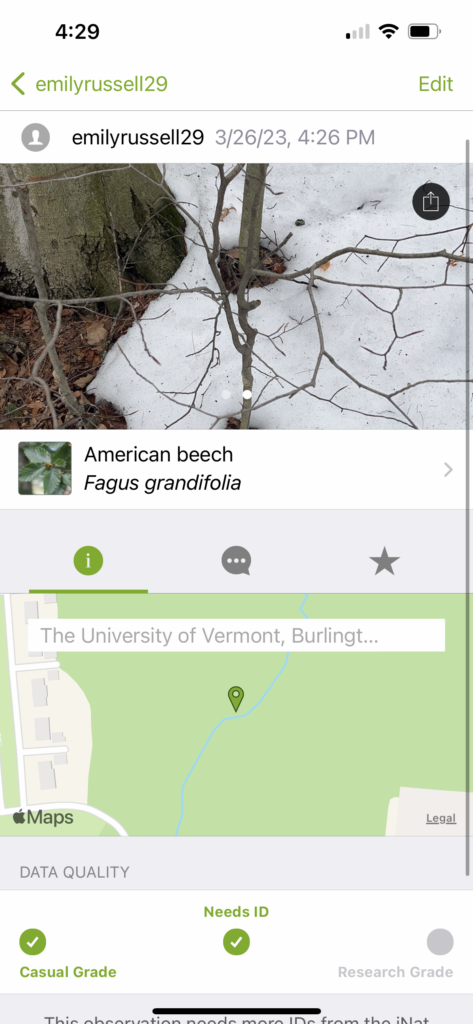
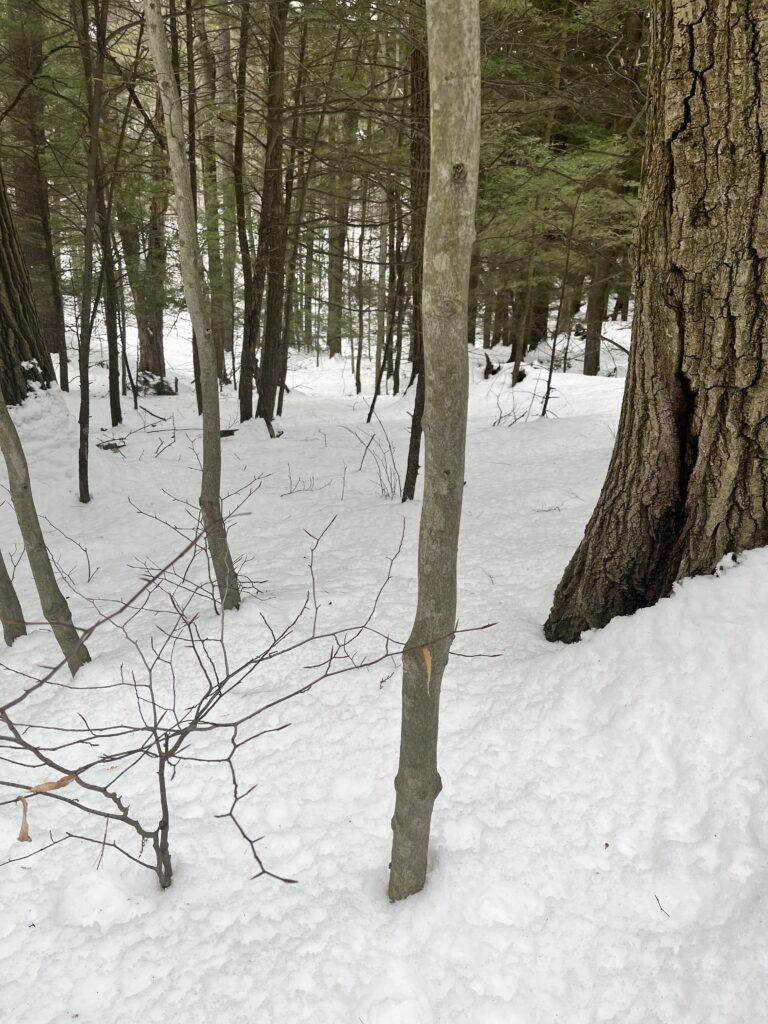
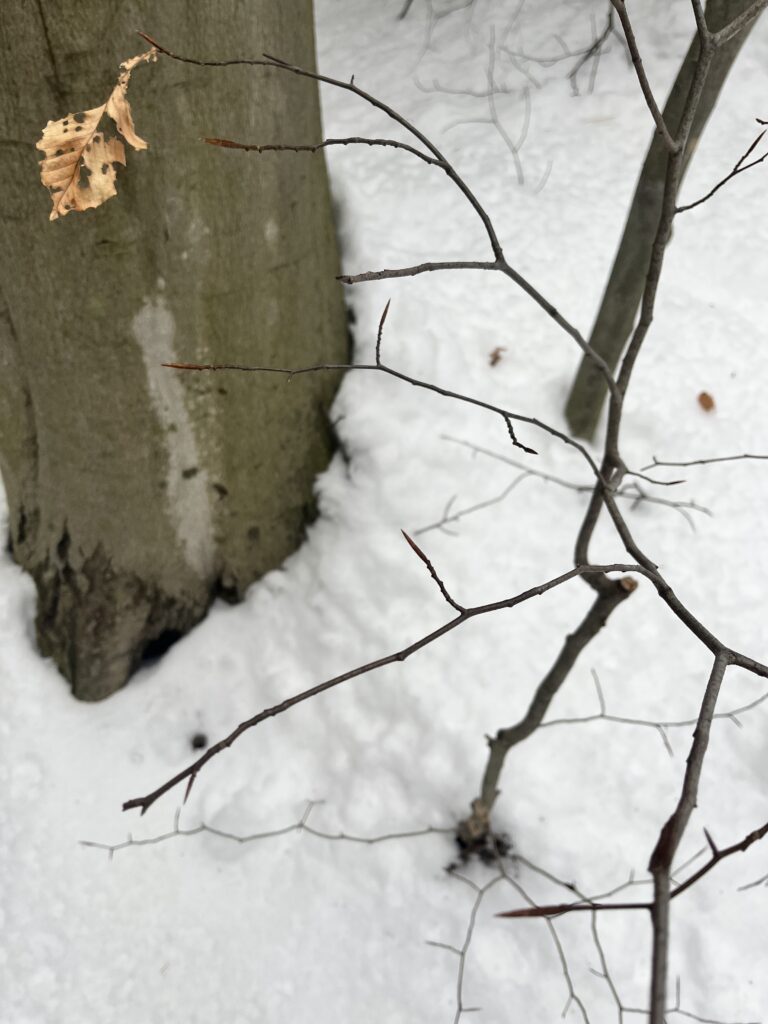
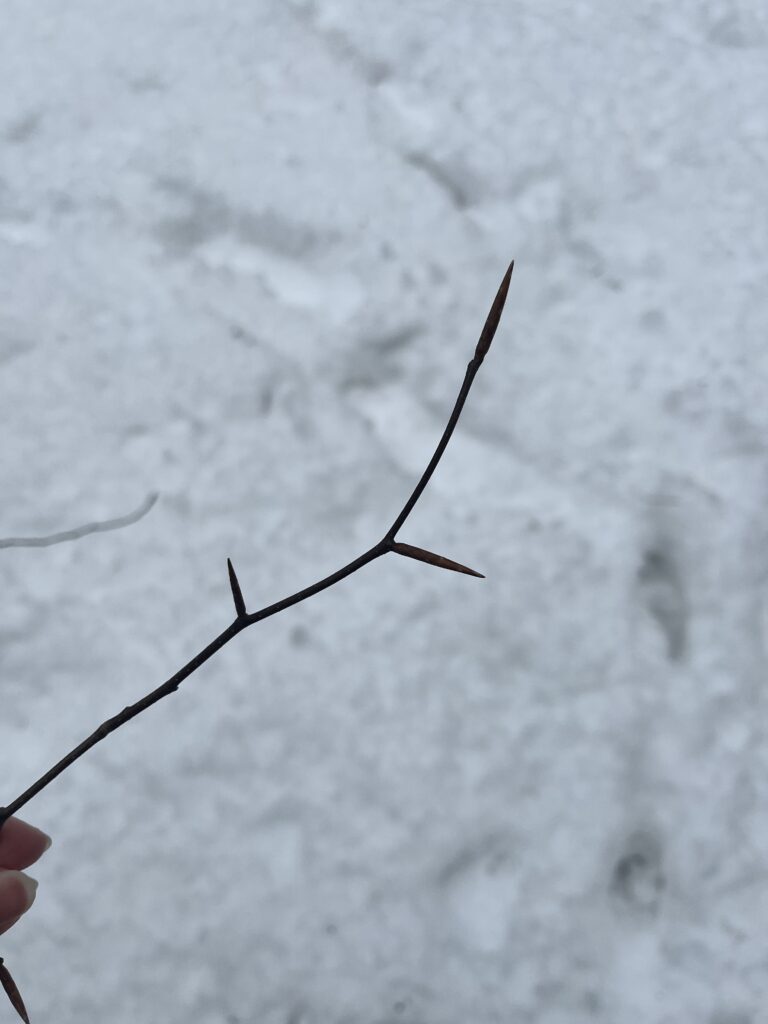
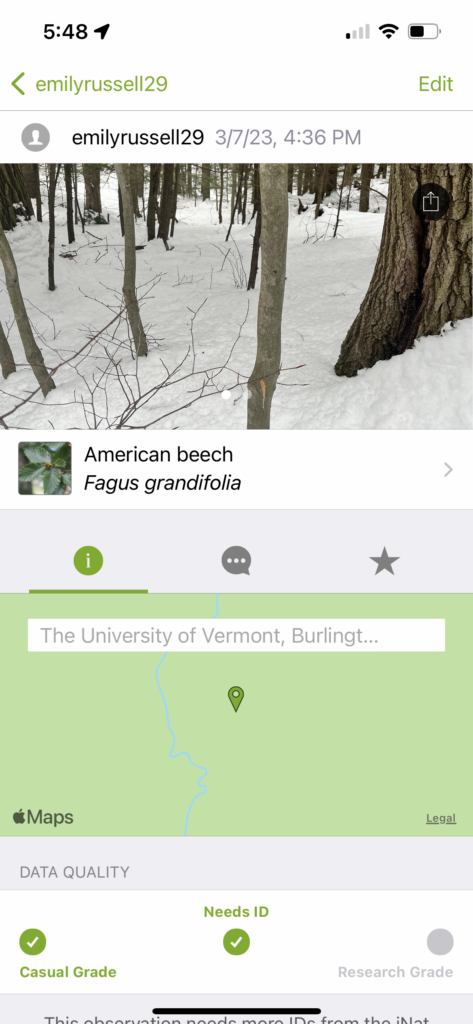
Today I took a cold and windy walk into Centennial Woods in search of trees to upload to iNaturalist. When looking for specific tree species, I decided to try to find a paper birch because it would be the easiest to identify. I was able to find one fairly quickly, but the twigs were not accessible so I decided to then search for a different species. Up the hill from my phenology spot, right off the trail, I found a small American Beech. I was able to quickly tell that it was not its lookalike, a young maple, because there was a singular leaf that had persisted all winter. Other key identification factors that I used were that the bark was smooth, the branches sprouted in an alternate fashion, and that it had spear shaped buds. This young tree had no evidence of flowering or fruiting but the buds were developing.
Posted in Uncategorized | Leave a Comment »
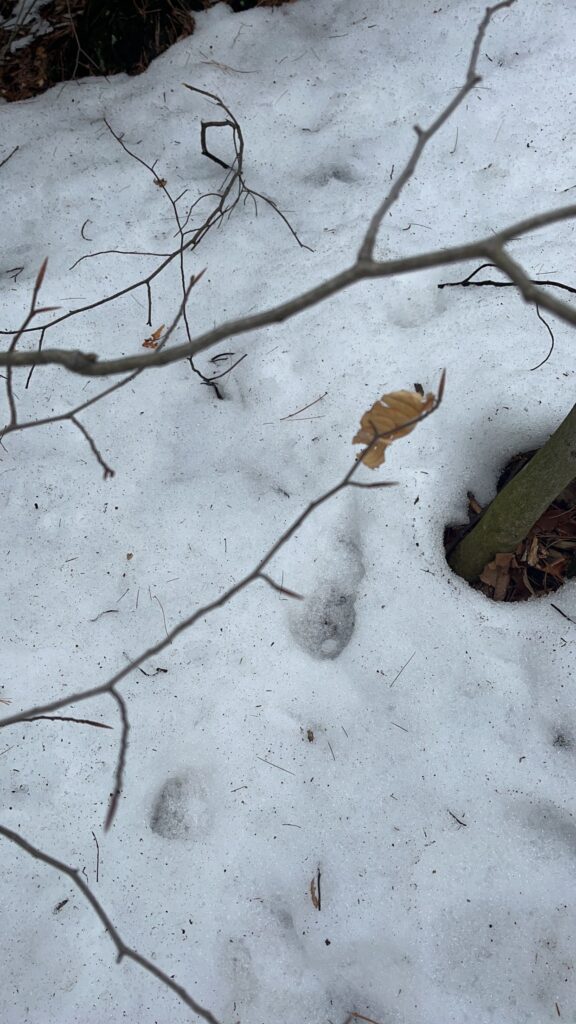
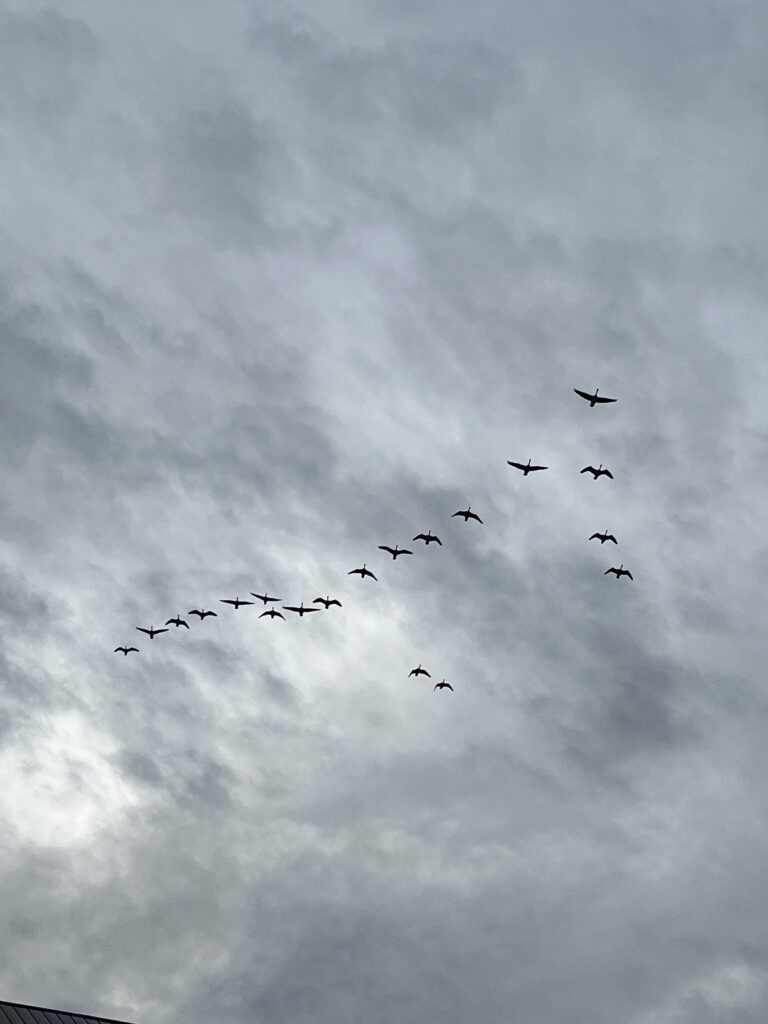
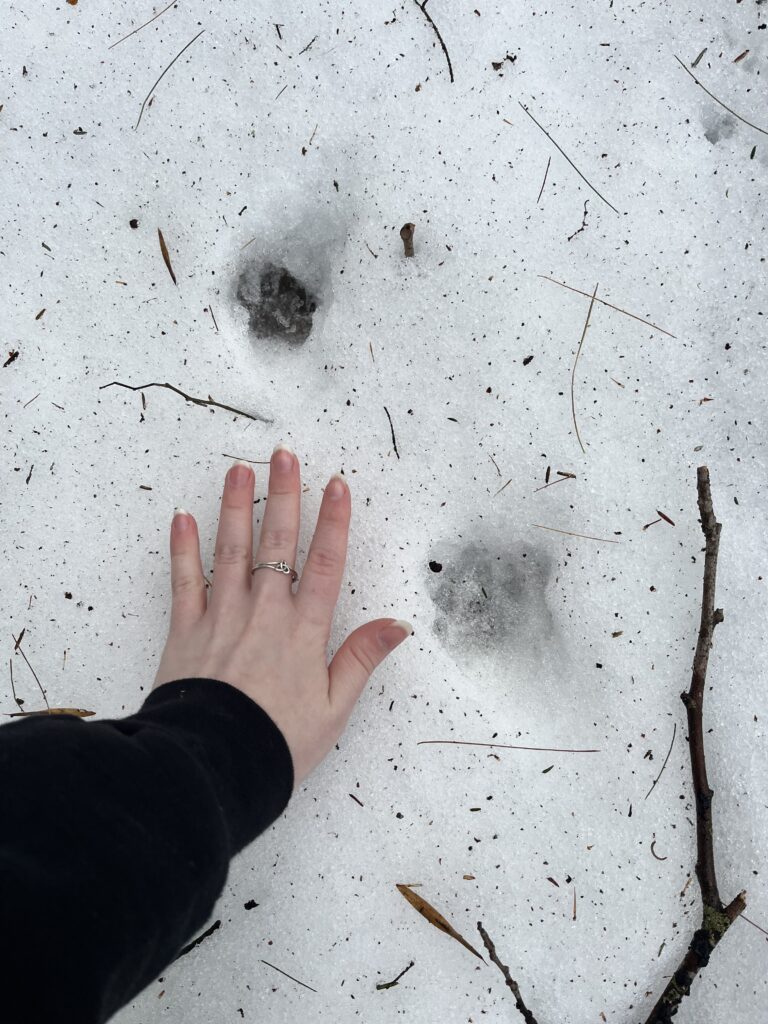
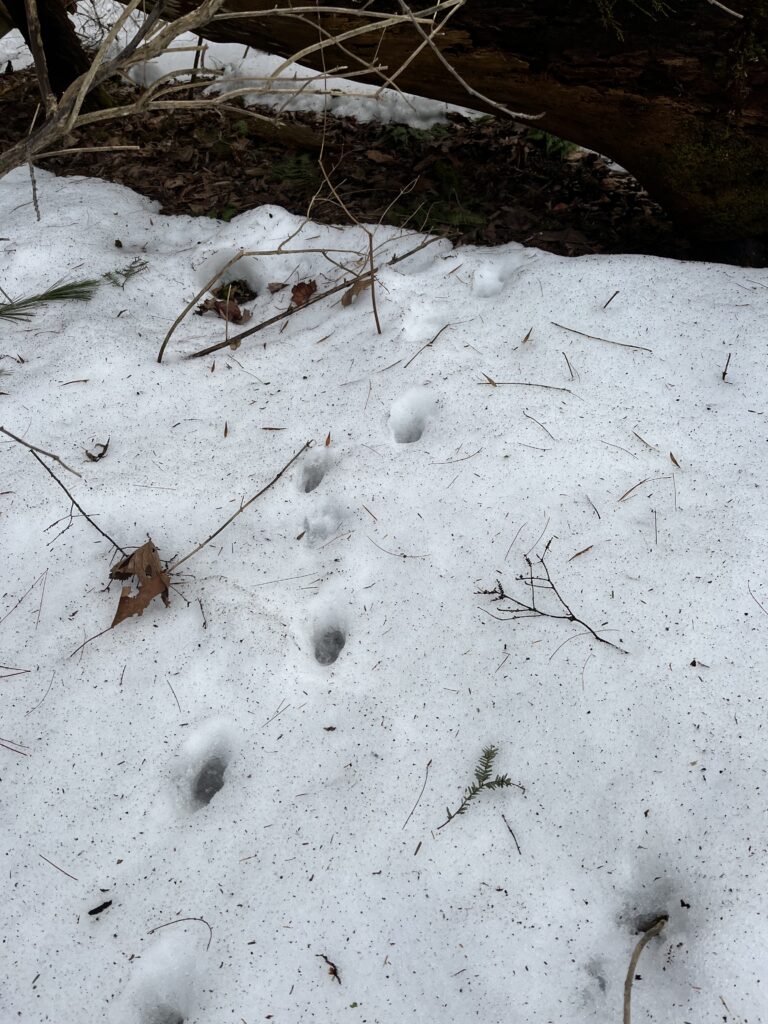
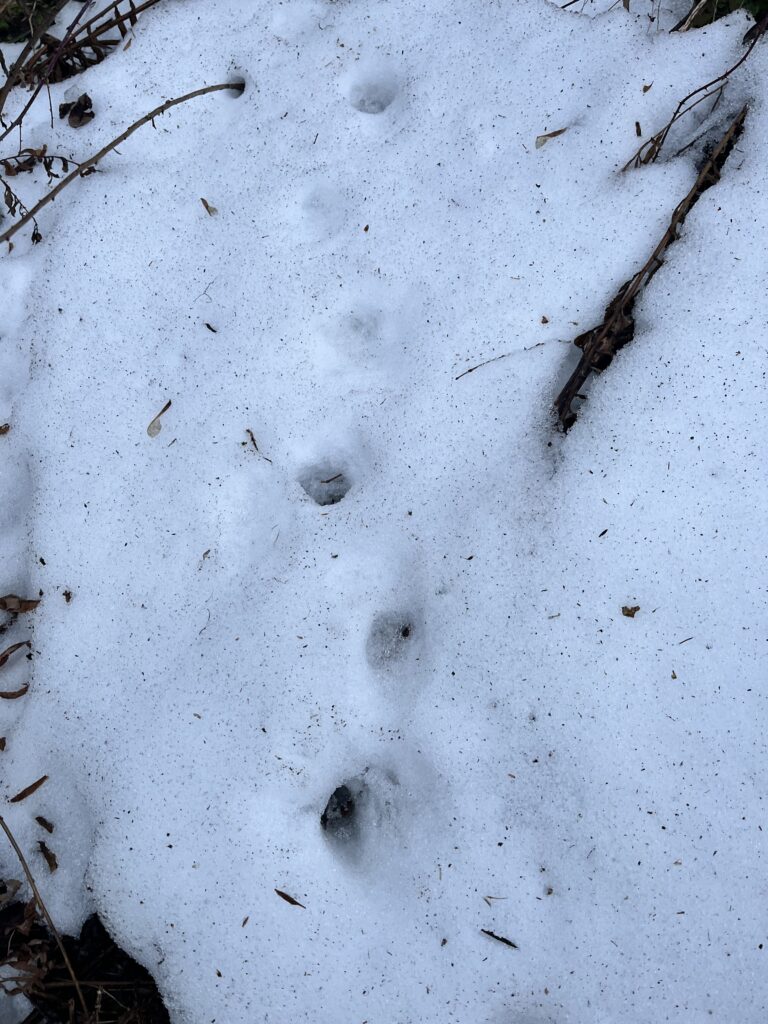
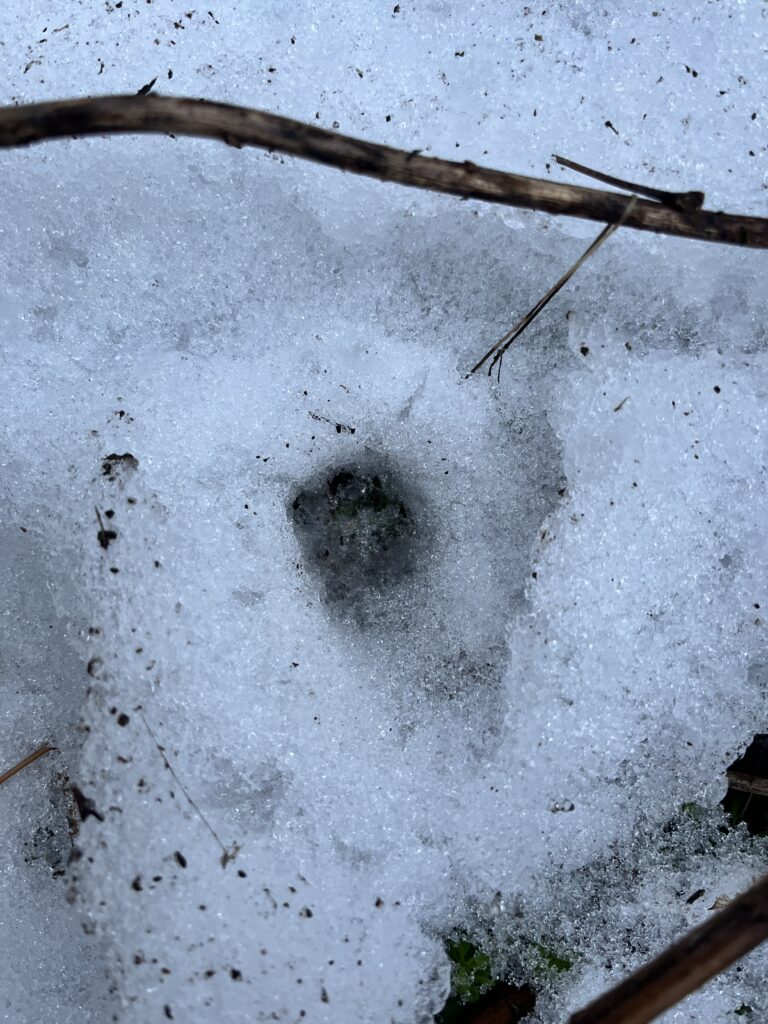
For this assignment I went both downtown to the Waterfront and back into Centennial Woods. I first tried to find tracks near Lake Champlain, but much of the area was covered in ice and no prints could be found. The prints that I did find in the park near the water were a variety of dog prints, which I didn’t upload to iNaturalist. Having no luck finding wildlife prints near the lake, I thought to search more inland. Remembering how many tracks I saw at my phenology spot recently, I decided to explore the rest of Centennial Woods in search of signs of wildlife. Immediately, I noticed a flock of Canadian Geese flying overhead. Once in the woods I went down near the brook because there was still snow there, and found a variety of tracks. Next to the water I found a set of tracks that ended up going under a log. I narrowed down this set of tracks to the red fox because of the diagonal walking patterns, there was an ‘x’ across the paw, there were visible claws, and the heel pad was large. The next set of tracks I found further away from the brook was similar but slightly smaller, the heel pad was smaller, and there were no visible claws so I decided on a gray fox. I enjoyed recording these observations on iNaturalist because I could see what everyone else discovered in the Burlington area.
Posted in Uncategorized | Leave a Comment »
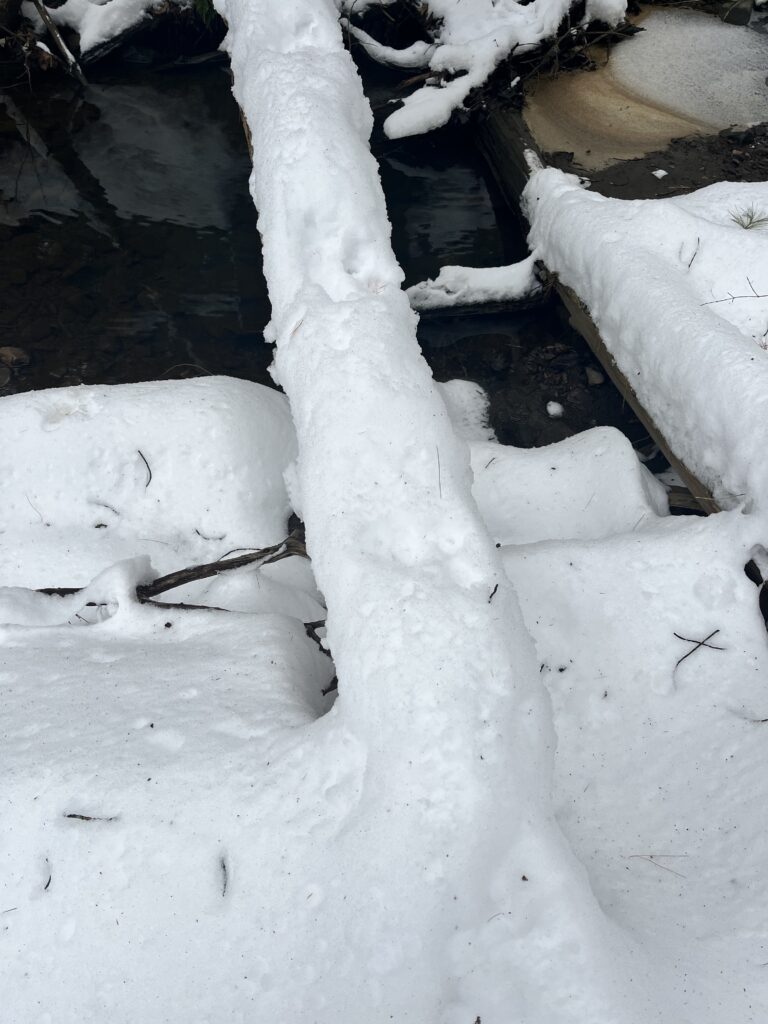
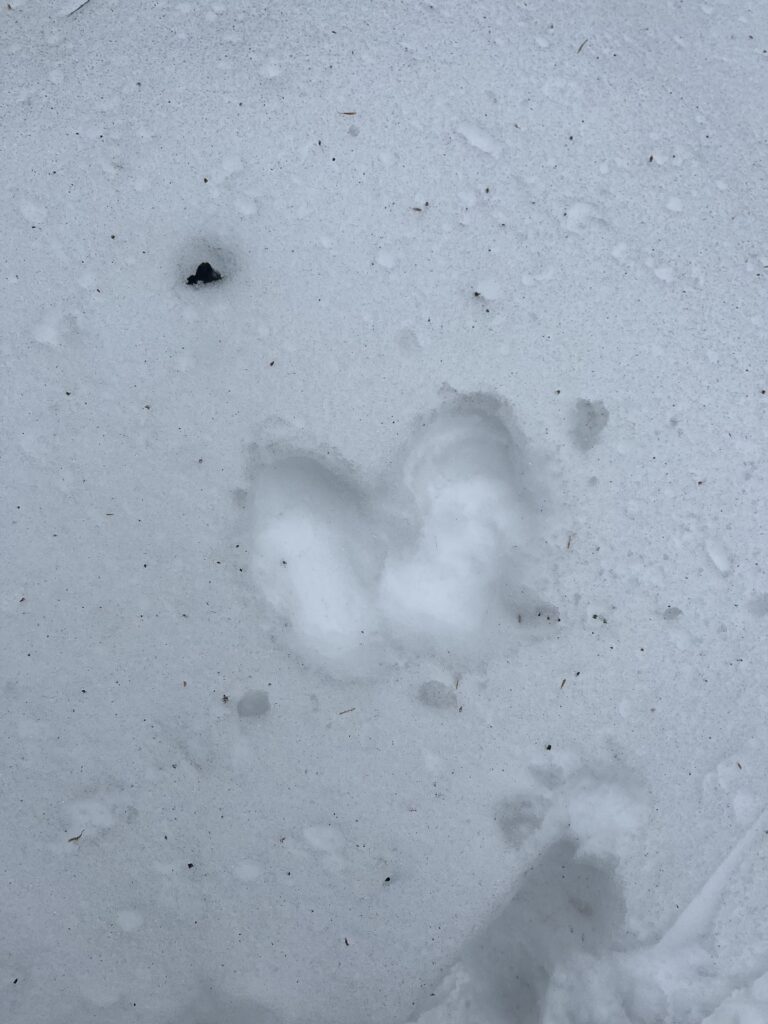
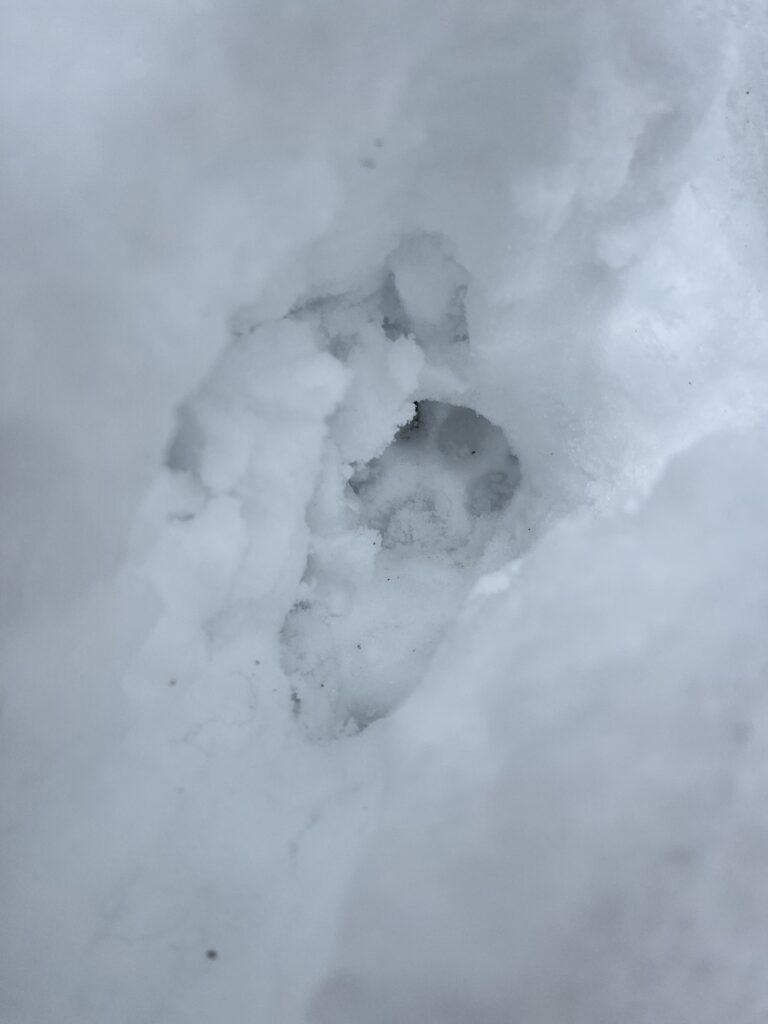
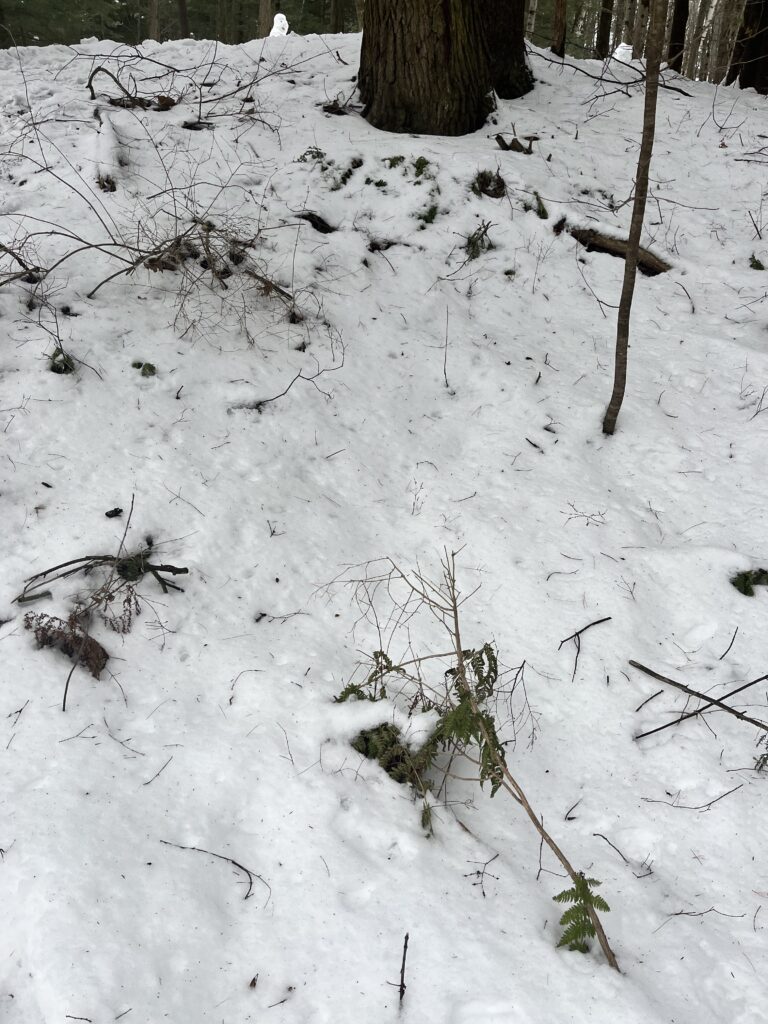
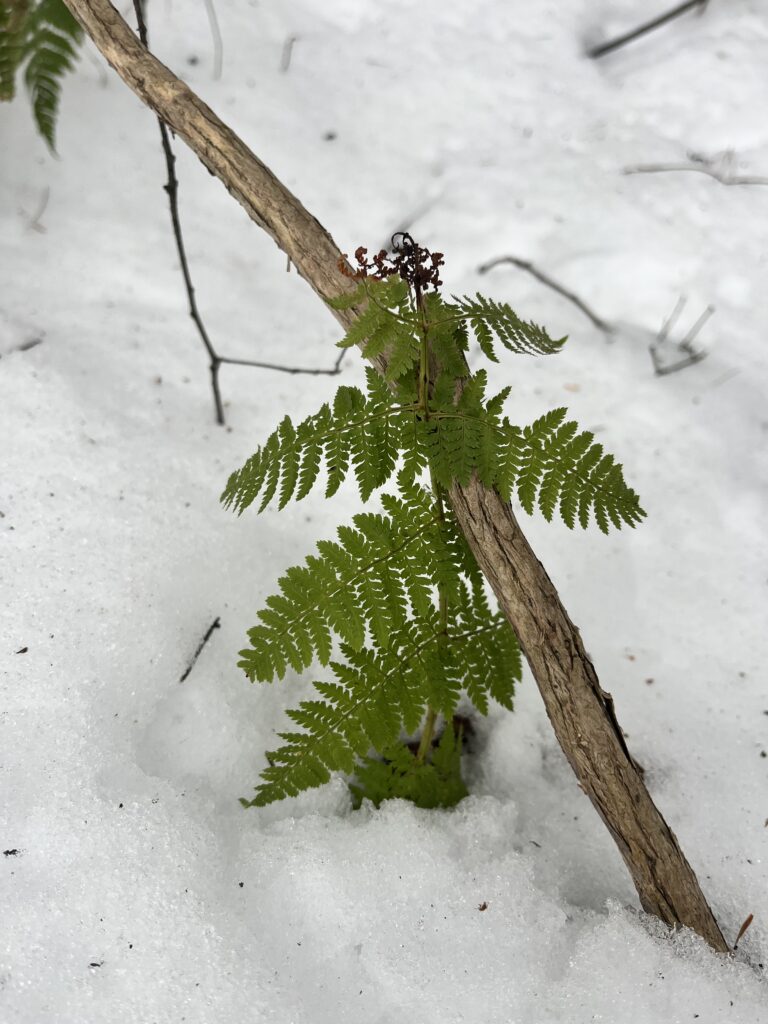
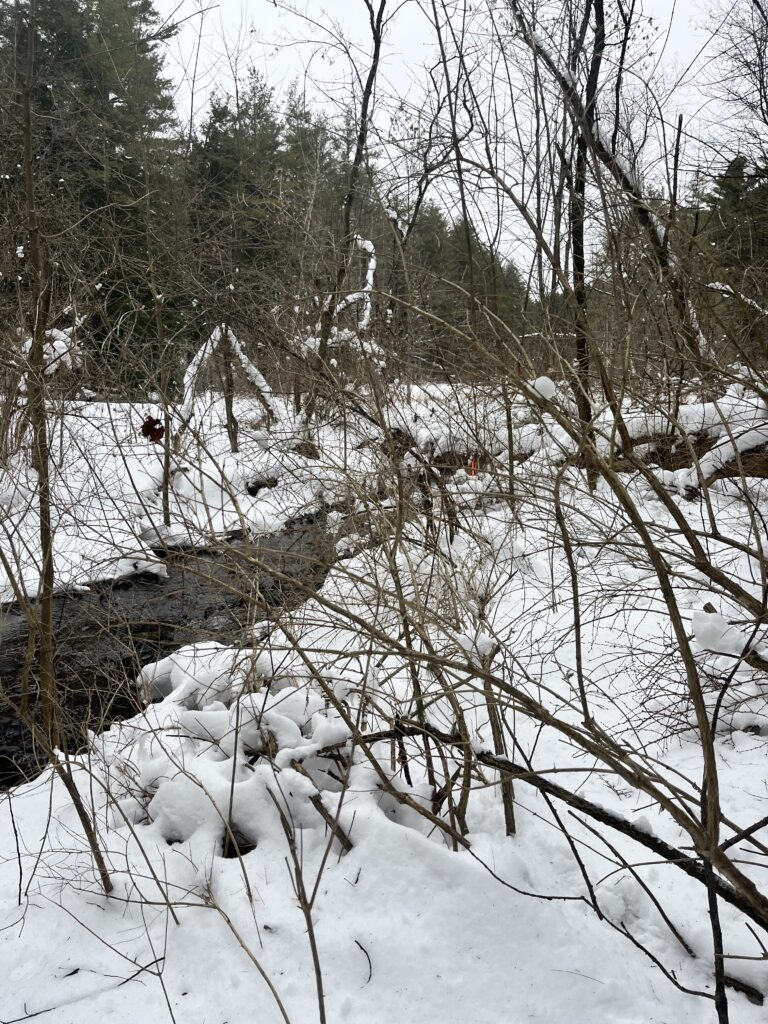
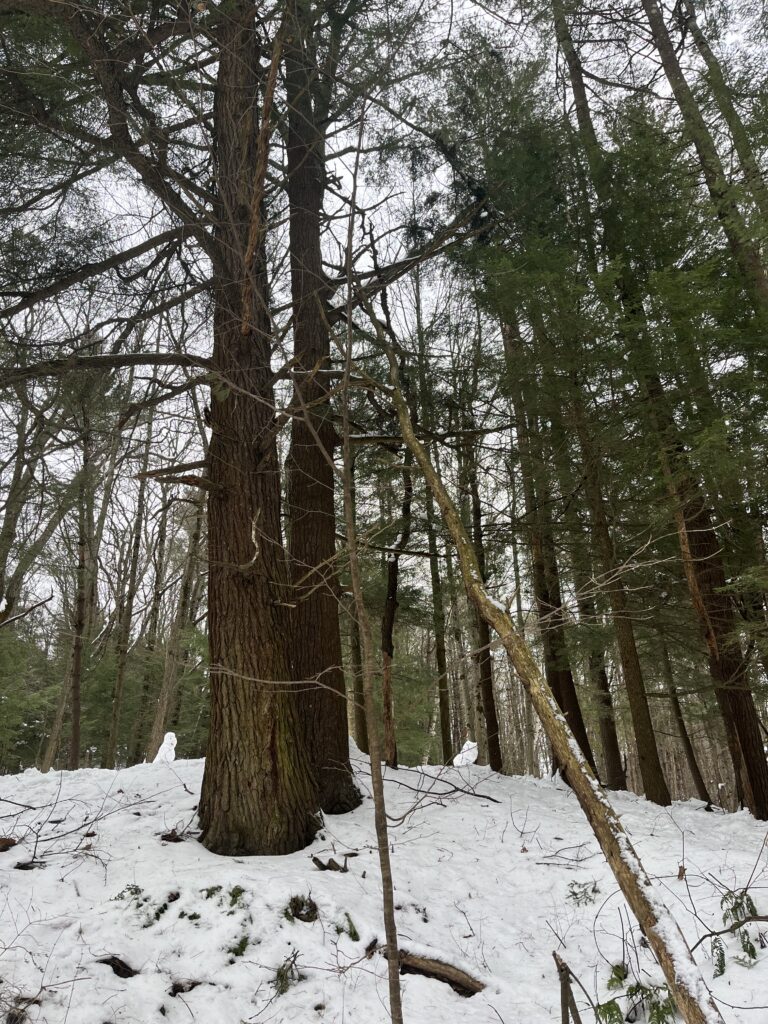
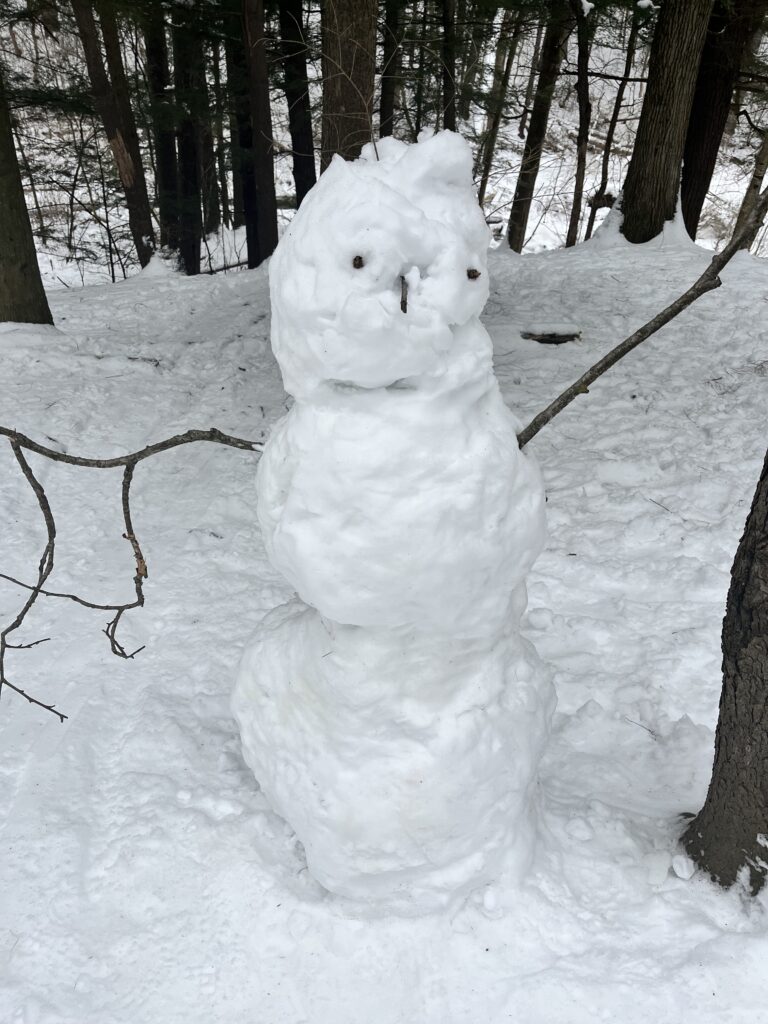
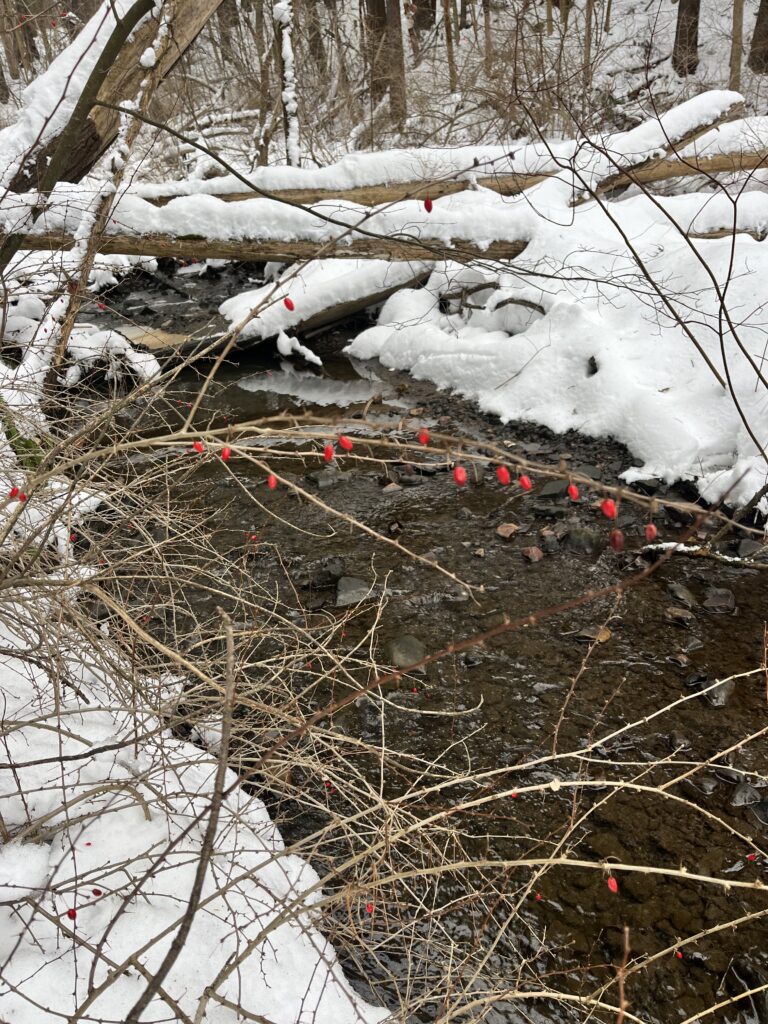
I was so excited to visit my spot for the first time in over a month today! The new snow that covers the ground made my spot both more beautiful and dangerous. It has completely transformed the landscape into a winter wonderland, as well as made the trails difficult and icy. Once I reached my spot I was surprised to see that not much has changed since my last visit. All of the trees are still bare, and the barberry bush next to the brook still has numerous berries that cling to it. The ferns which have persisted throughout last semester are finally starting to wither, while some newer ones poke out of the snow, catching your eye with their bright green color. Behind the ferns, the eastern white pines still stand tall and green, again, being eye catching in contrast to the snow. The brook itself was flowing quietly and steadily enough for me to cross through it and examine some animal tracks. First, I found squirrel tracks on top of a fallen log that reaches across the brook. It didn’t take long for me to find the maker of the tracks himself scurrying up a tree nearby. I also found some mystery tracks near the water from what I believe to be a rabbit. While looking at these tracks I heard and saw a pair of black-capped chickadees in the canopy above the brook. I saw no other signs of life at my spot other than many dog prints and a trio of snowmen.
Posted in Uncategorized | Leave a Comment »
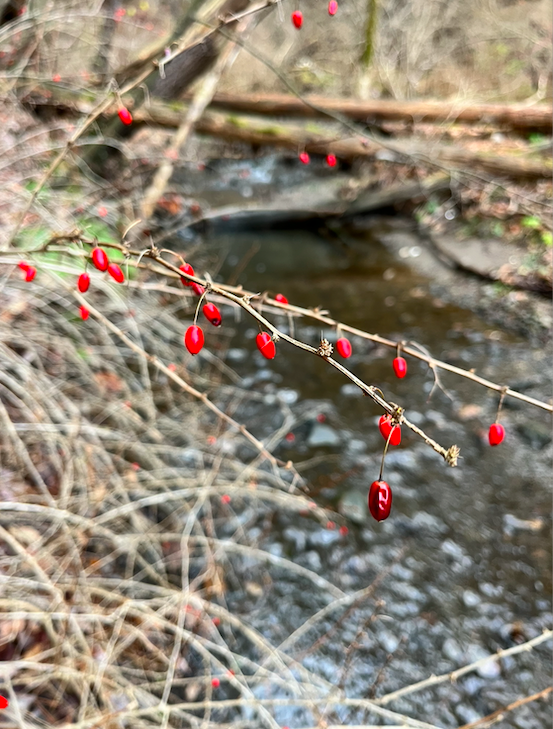
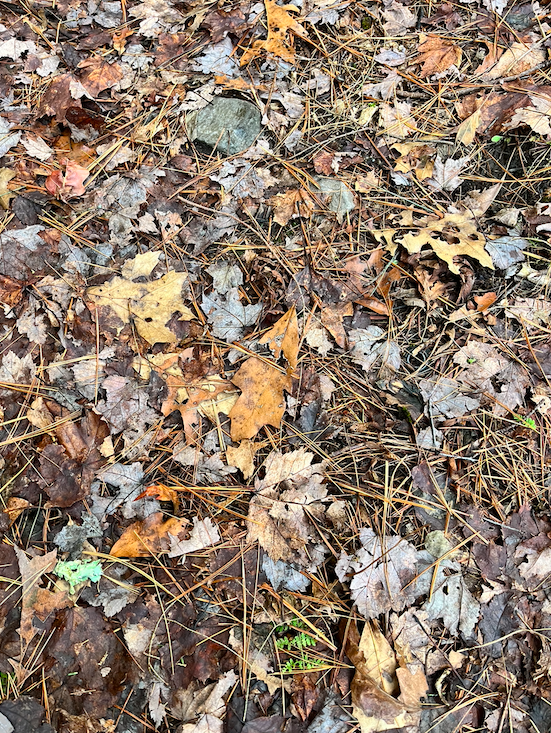
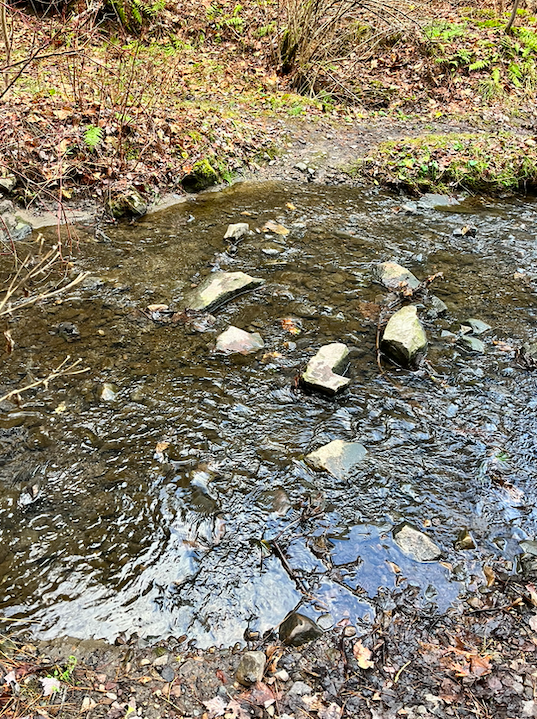
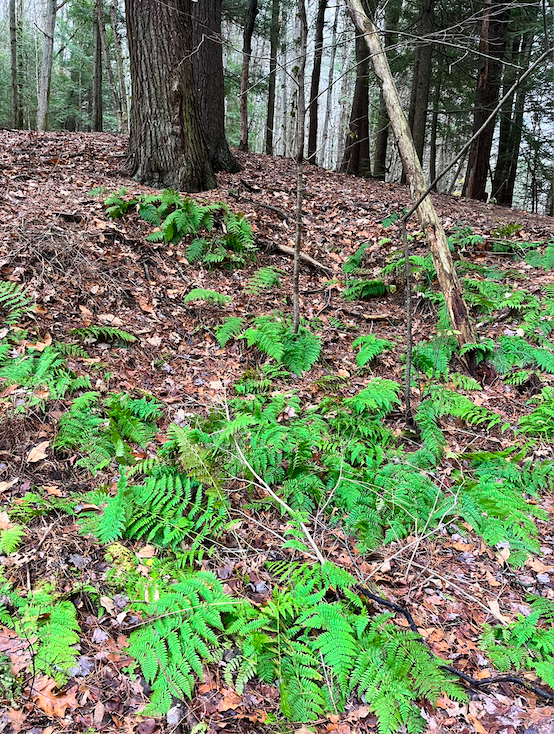
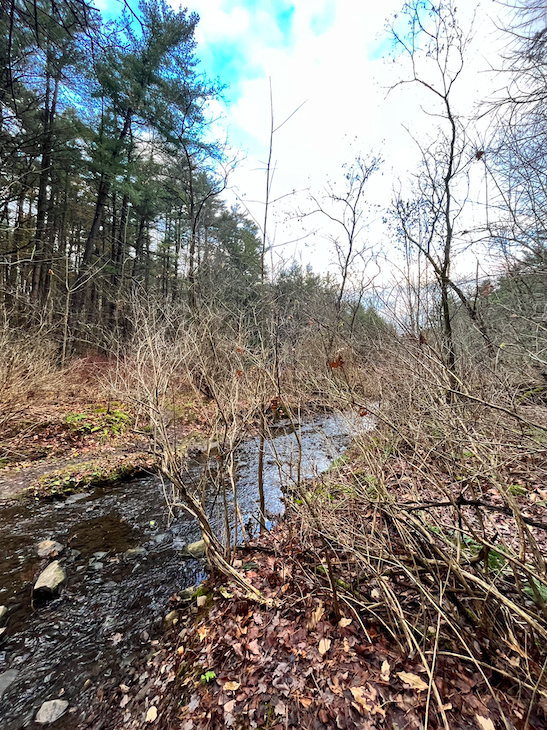
Today I visited my spot for the last time this semester! It was overcast and about 38º but once I was surrounded by trees, it seemed to get warmer. Every single leaf has dropped from the trees in my area and completely cover the ground, but I noticed that my walking through the leaves is not as loud as my last visit. Additionally, the brook was flowing much stronger due to a lack of fallen materials in the water and the leaves on the ground had holes and were broken apart. Perhaps it’s because of the recent rain, or maybe decomposers are hard at work breaking down the mushy leaves. Contrastingly, the ferns on the hill in my spot are still bright green and thriving! I expected them to last longer than the other species but as of right now they look as though they will last all winter! The barberry bush alongside the brook is the only other plant species that is displaying signs of life, as it has numerous red berries that stand out in comparison to the rest of my spot. I looked around the bank to find scat or tracks but there were none to be found. I additionally looked and listened for signs of birds but I only saw a single crow fly overhead. The woods are definitely quieting down in preparation for the months to come. I love that my spot is a combination of both the quiet and noisy aspects of the woods. I can enjoy the background noise of the brook while also enjoying the peace and quiet from the mature hardwood forest to my back. It fosters an environment of reflection where I can observe what’s around me as well as hear the wildlife.
Posted in Uncategorized | Leave a Comment »
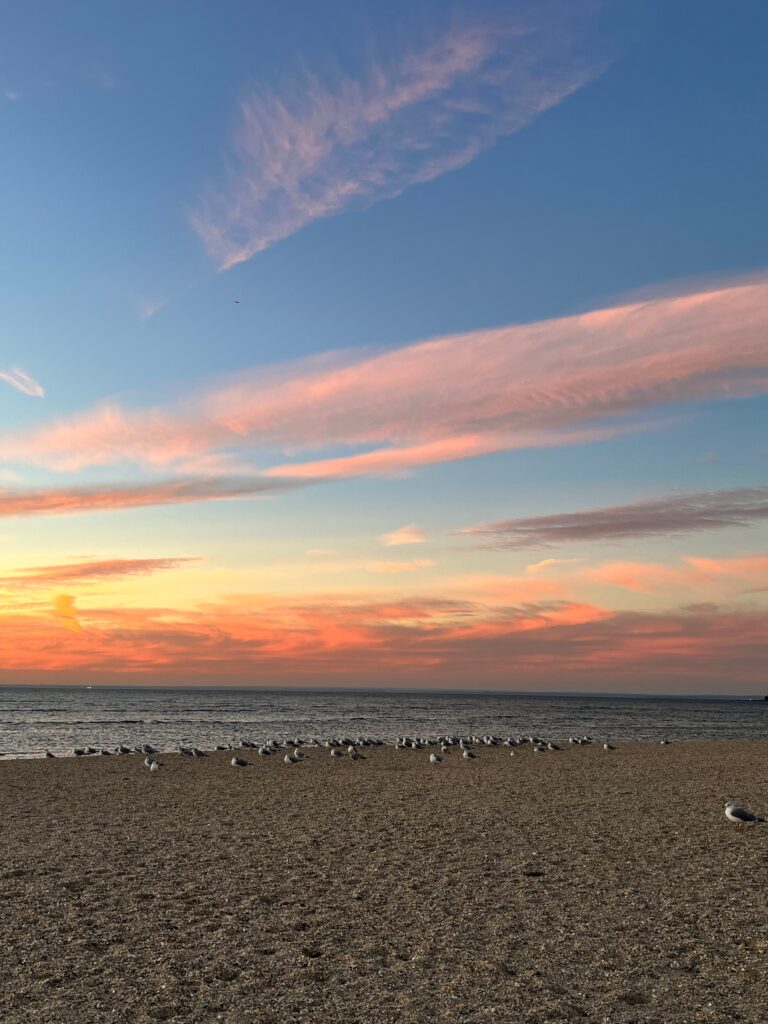
The coastal ecosystem found at West Meadow Beach along the shores of Long Island differs greatly from the woods of Burlington in both ecological and phenological ways. The main plant species that can be found at my spot are American beachgrass, beach plum, seaside goldenrod, eastern red cedar, prickly pear cactus, and salt meadow cordgrass. Most of these species, especially prickly pear, the only cactus native to Long Island, are not found anywhere in Centennial Woods. These species grow in a succession of micro-habitats, uniquely adapted to withstand the harsh environmental conditions of the seaside. For example, the leaf blades of American beachgrass catch sand that piles up around the base and the plant grows taller to build up dunes. However, I did find a northern red oak which can also be found in Centennial Woods, but these trees had more leaves on them than those in Burlington. Part of what makes the species so different here is that the wind and salt-spray off the ocean takes the moisture out of the soil so the plants that can thrive here need to be adapted to that condition. Temperatures here are warmer than Vermont but signs of winter are showing as both the air and water temperatures drop.
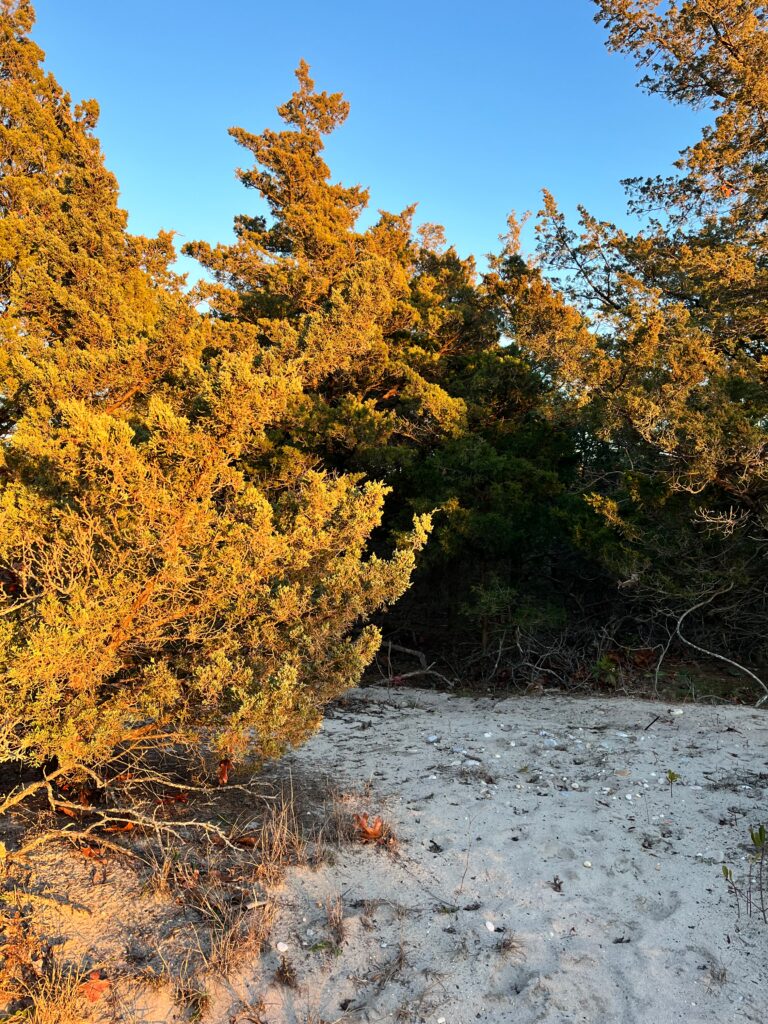
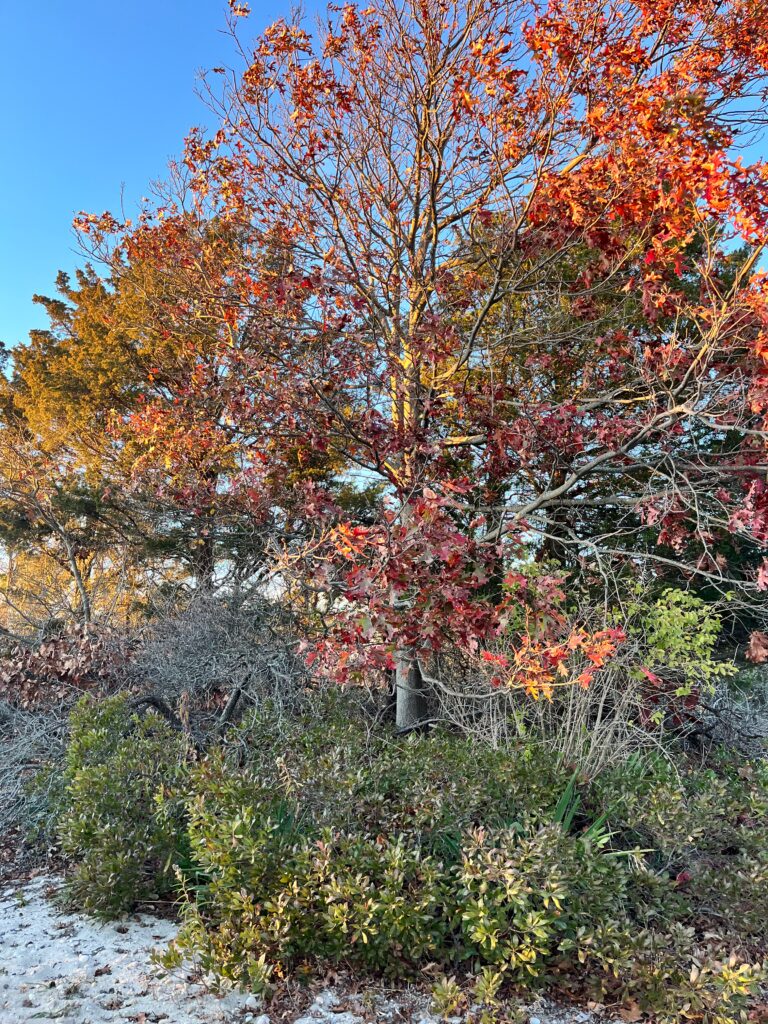
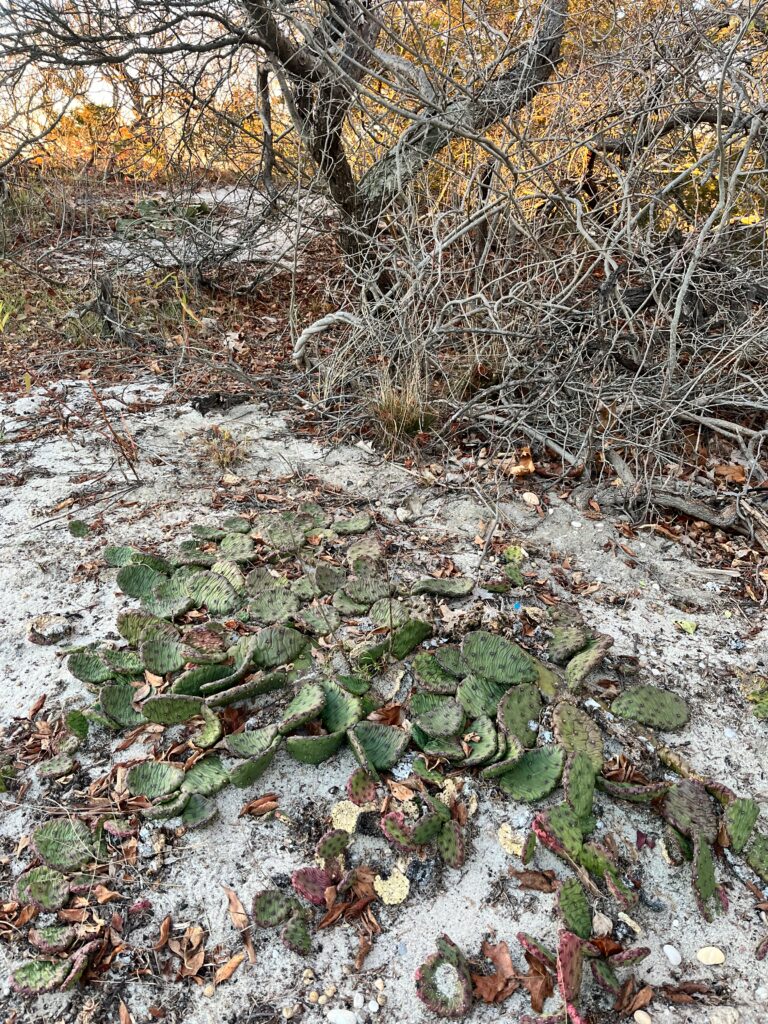
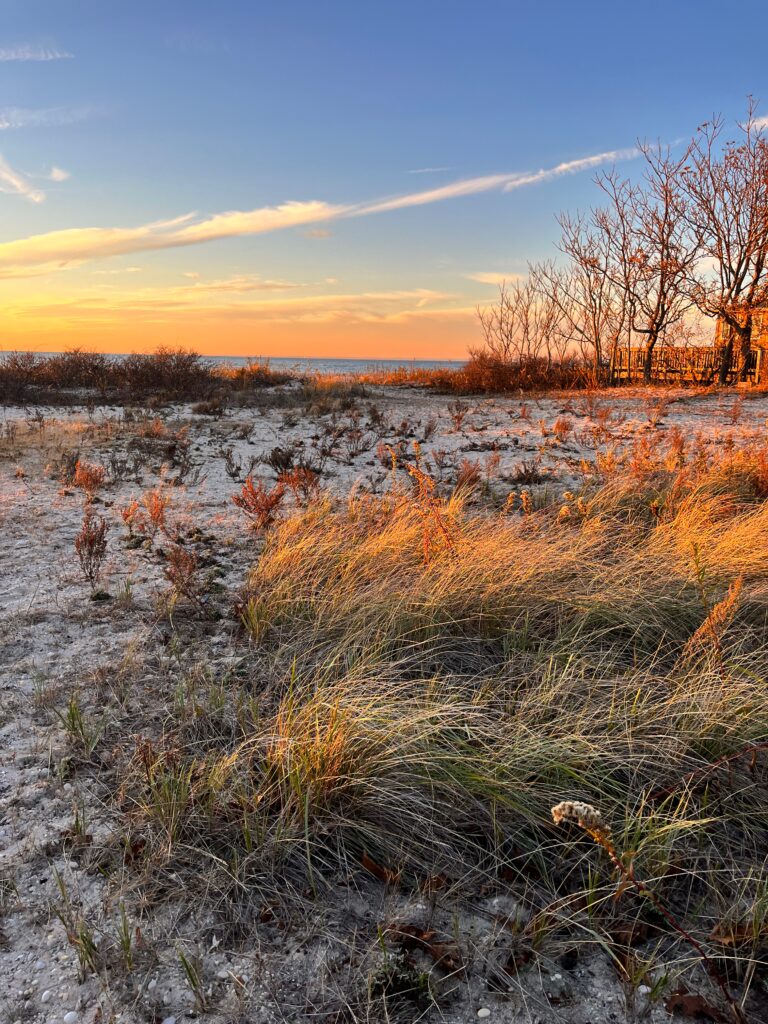

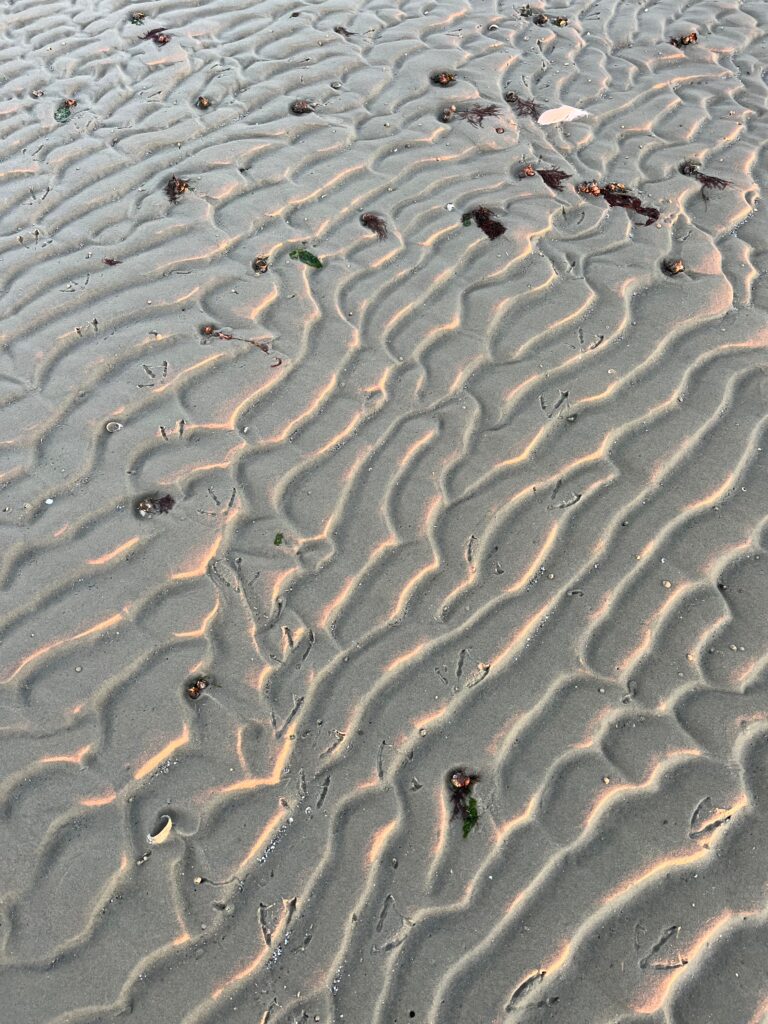
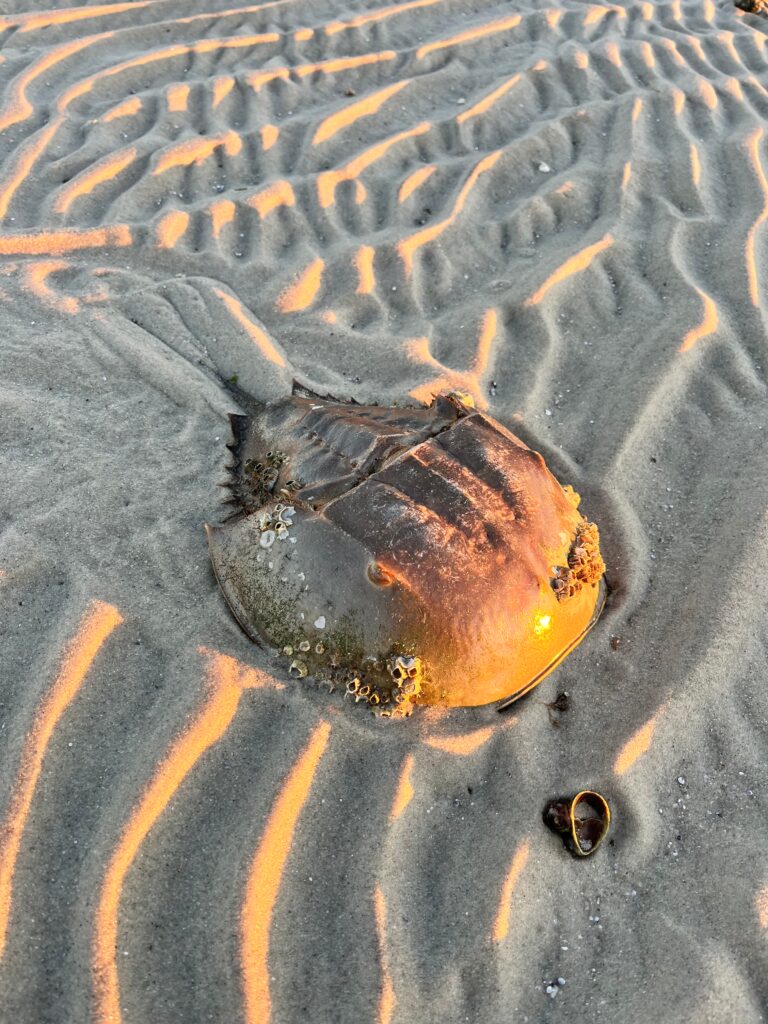
The ecology at West Meadow Beach also differs significantly, with no species bearing resemblance to the species I have found in Centennial Woods. Although Piping Plovers are not present this time of year, this endangered species uses my spot on the upper beach to nest every summer. They eat the worms and small crustaceans found in the sand during the warmer months and have to wait 30 days until their new chicks can fly. Other migratory species that spend their summers on Long Island include monarch butterflies, black-bellied plovers, and stripped bass. In November, the insects are no longer abundant and many of the birds have left, however, seagulls are still present as well as horseshoe crabs. Usually when I go to the beach I only find remains of these crabs, but on this visit I was lucky enough to find a live crab because it was low tide and I could walk out further. It is clear that the species found at my spots are vastly different, but interesting and important to their own ecosystems. And although I didn’t leave a gift at my spot, I did pick up some unpleasant gifts left by other patrons of the beach.
Posted in Uncategorized | Leave a Comment »
Recent Comments
Categories
-
-
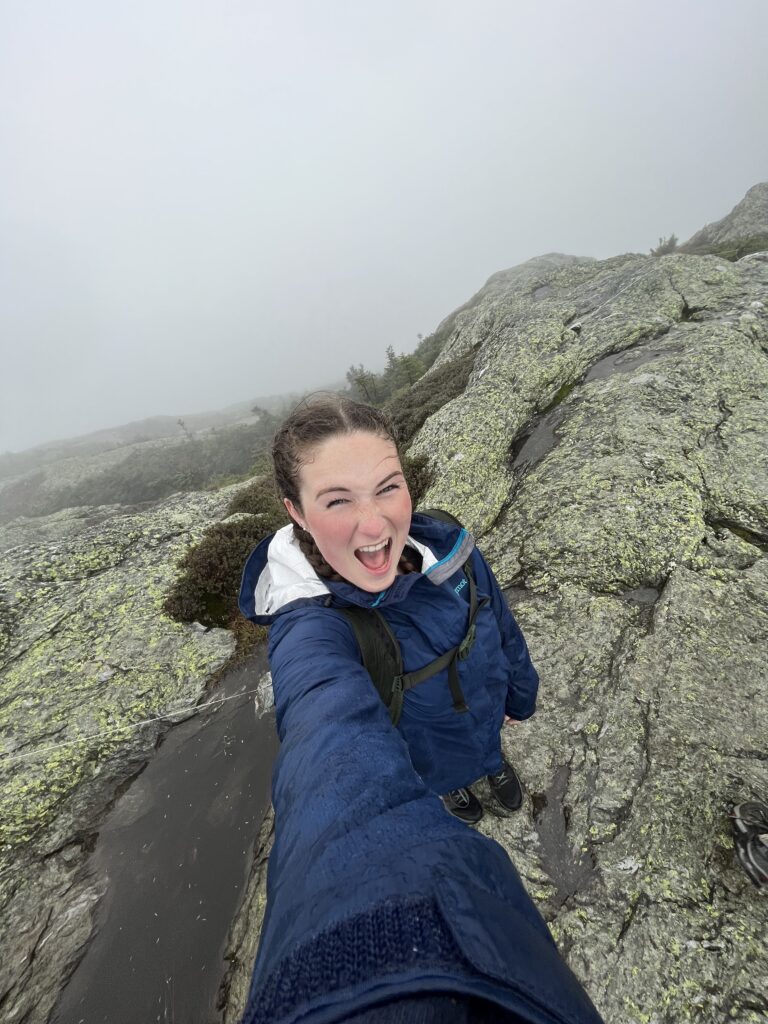
Hi guys! My name is Emily and I'm from Long Island New York! I'm a Wildlife Biology major and I'm very passionate about wildlife conservation. Some fun facts about me are that I'm allergic to gluten, I love to travel, and I have two dogs:) Welcome to my phenology blog!