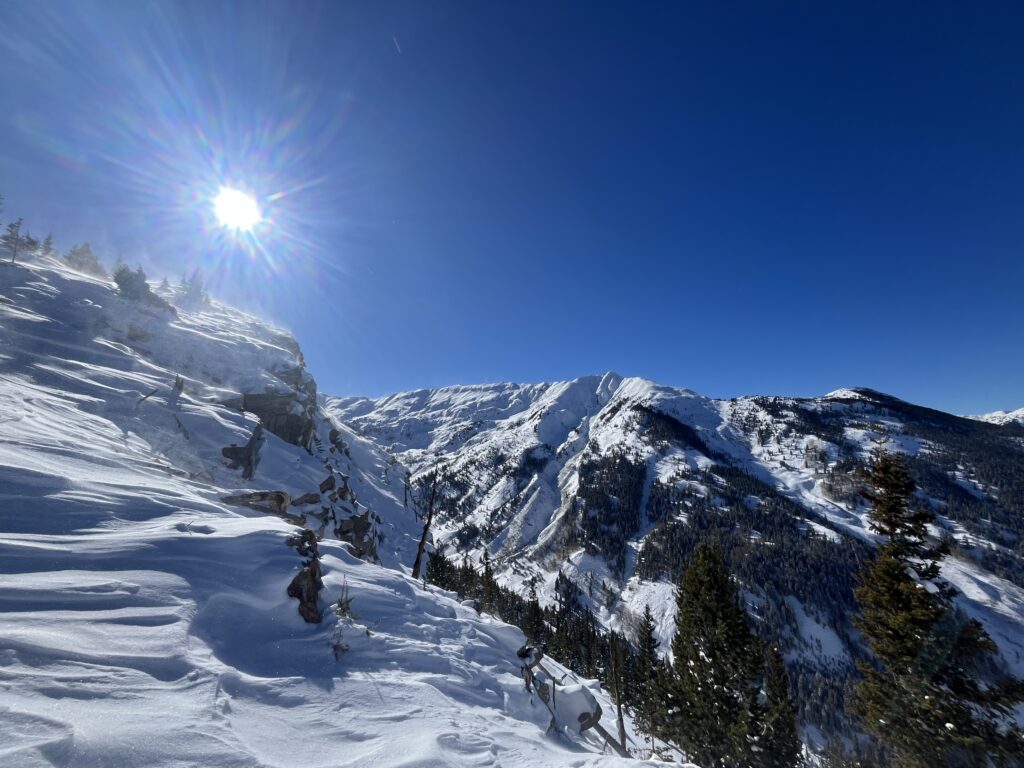
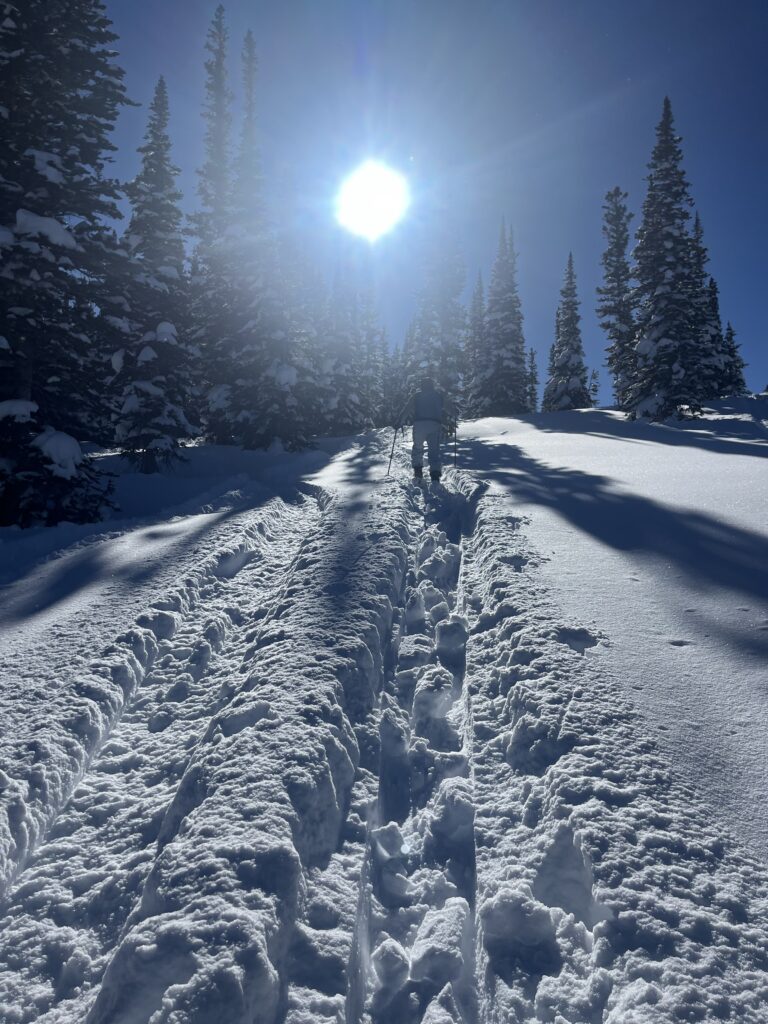
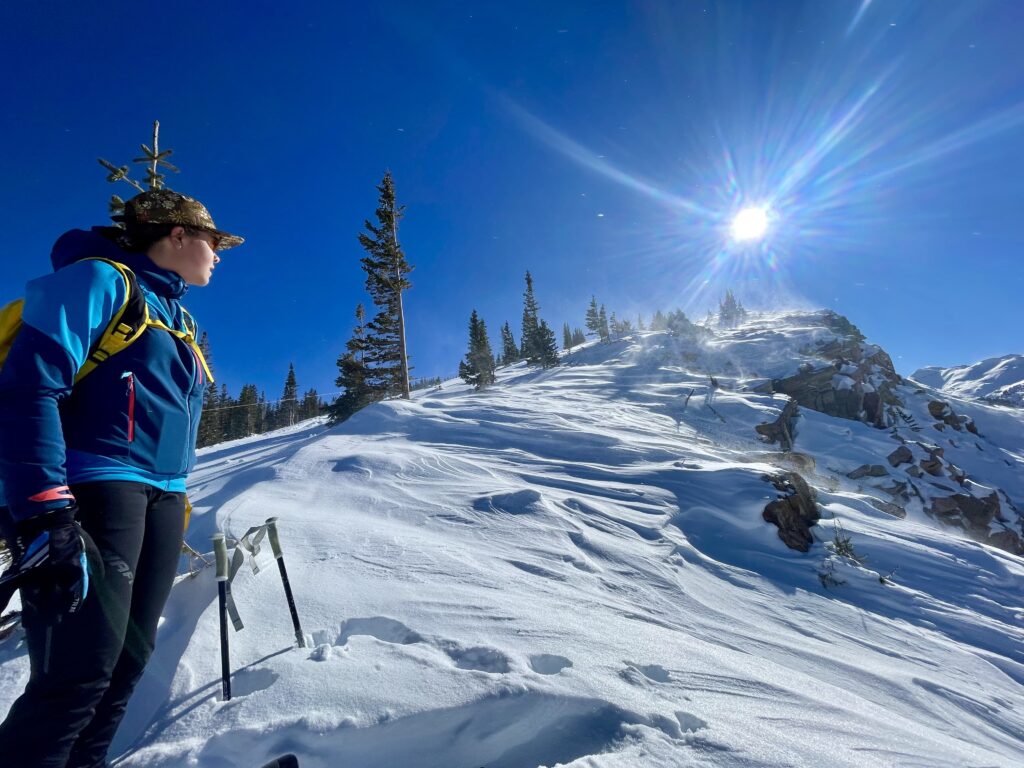
Snowmass Ski Resort in Snowmass Village, CO –> Sneaky’s ski run off of the Big Burn portion of the mountain.
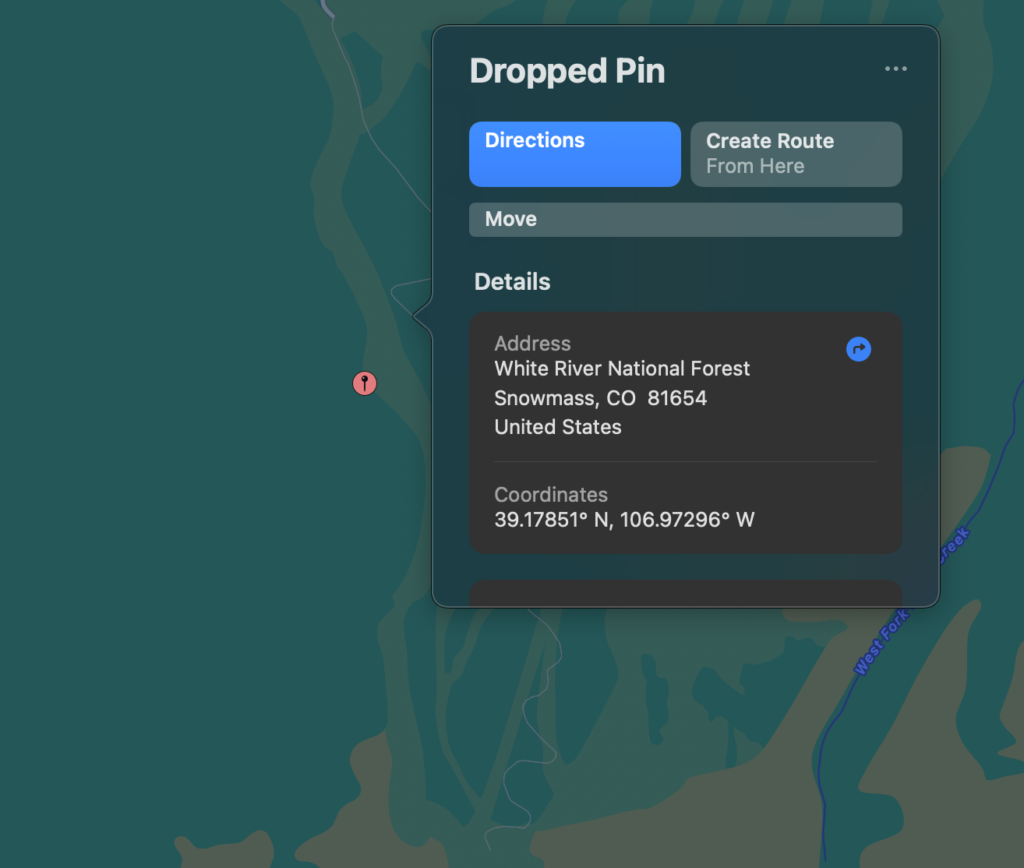
Comparison of the ecology and phenology between this spot and the Spear Street Recreational Path
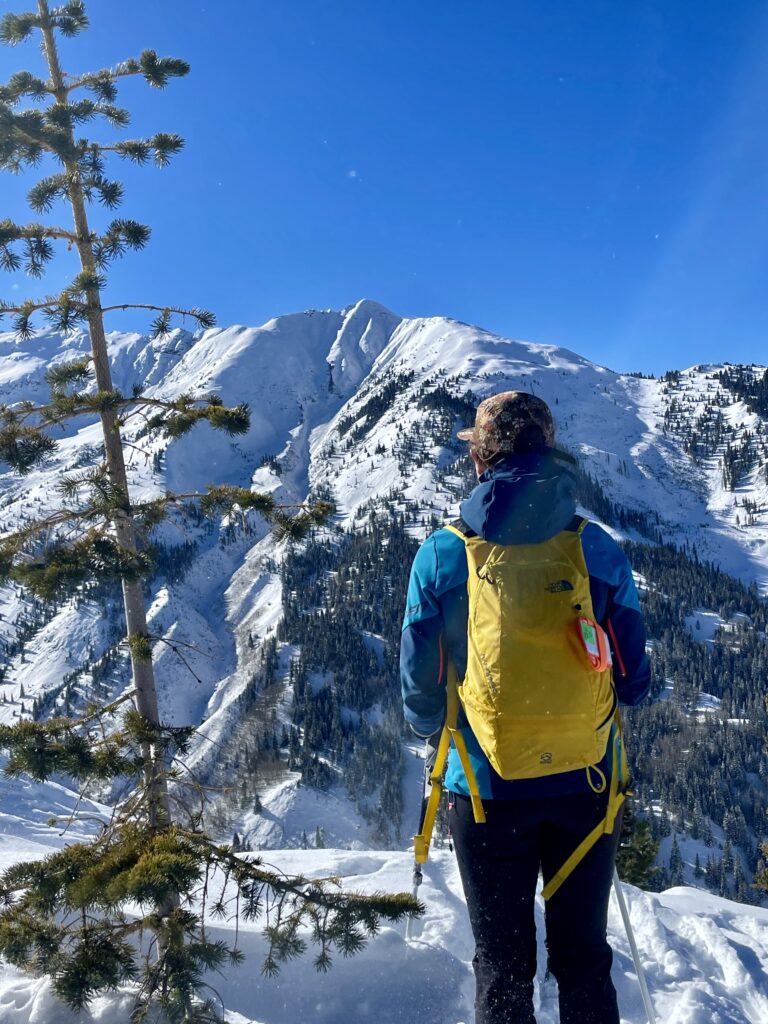
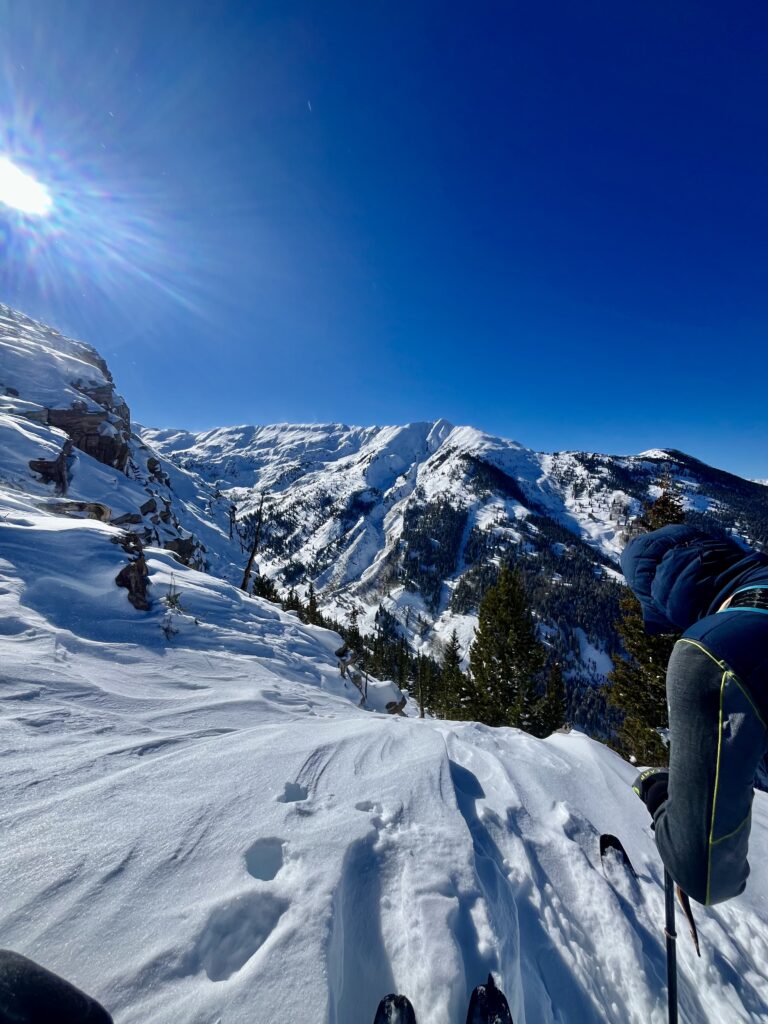
I have grown up skiing right around this ridge line on one of my favorite parts of Snowmass Mountain called the Big Burn. My dad and I have been on countless adventures in this area, strapping our skins to the bottom of our skis and gaining over 2000ft in elevation just to reach this point. Skinning is one of my favorite forms of exercise because not only does it allow for a full body workout, but it provides a slowed down environment to be present in nature and connect with the people around you over this shared niche sport. After my dad and I reached our stopping point on November 29th, 2024, we ventured out to the cliffs edge and spent time in silence gazing at the majestic peak that towered in front of us. Garrett’s peak can be seen from many different angles across my hometown and is the main lookout point for all ski runs from the Big Burn. My dad has skied the peak many years ago and every time I look at this peak, I picture us skiing it together one day.
After spending a significant amount of time in both my phenology place in Burlington and this new place on my home ski mountain in Colorado, I have noticed that these two places are vastly different. Near Garretts, there is little to no vegetation as this area stands at around 11,200ft in elevation, almost above tree line. There are sparse coniferous trees scattered throughout the area but due to the dramatic cliff line, there is not much structure for plants to hold onto. Additionally, there is about 40 inches of fresh snow laying on top of the frozen ground which automatically makes this place vastly different from my phenology spot in Burlington that I studied throughout the fall months. Unlike my Burlington phenology place, the Big Burn receives an immense amount of sun due to the sunny nature of Colorado, and being close to tree line, there are no tall trees to block the sun from reaching the understory. However, one similarity between these two places is that the most abundant tree species are both types of coniferous. In Burlington the majority species is Eastern Hemlock however in Colorado it is Blue Spruce and Pine. Additionally, both places are on public land however they share the simplicity and quietness of nature showing the importance of protecting public lands and national forests for everyone to enjoy equally.
Although these places are vastly different from each other, they both have unique characteristics that display the beauty in difference and how two places that share almost nothing in common can still both hold a special place in my life.