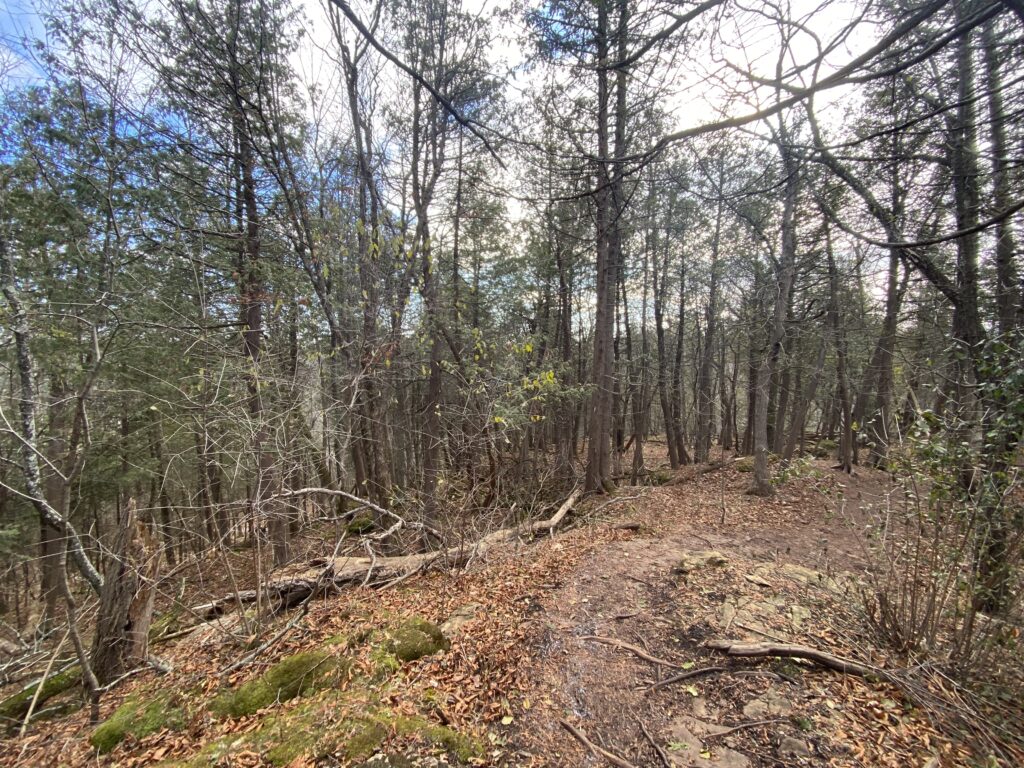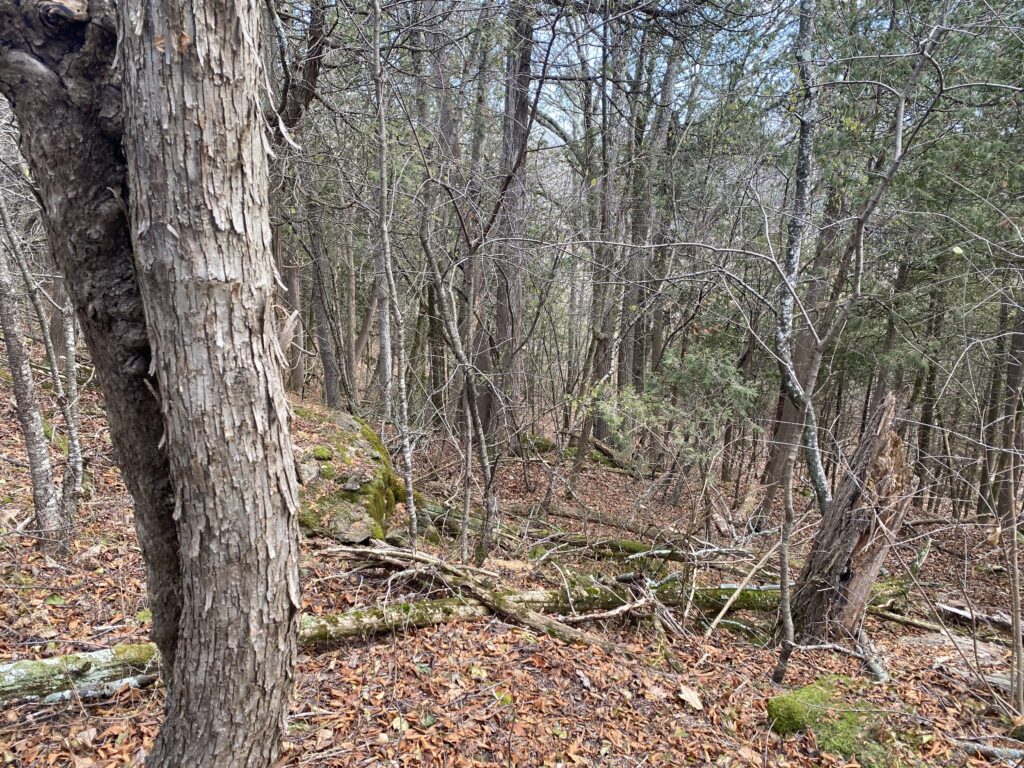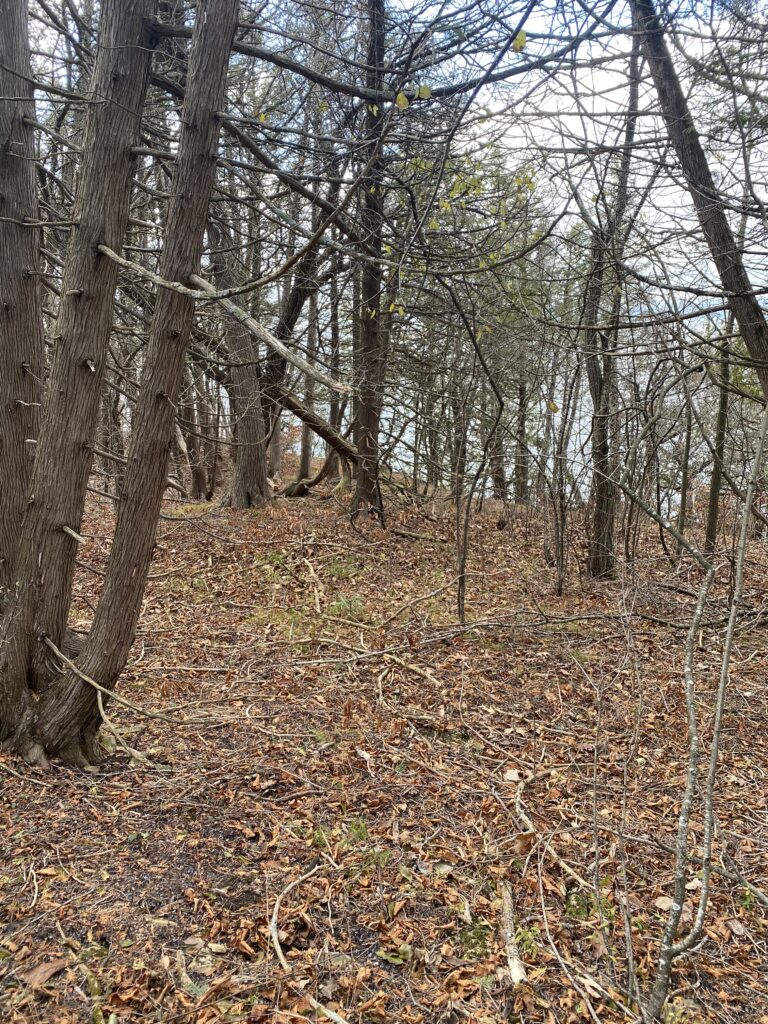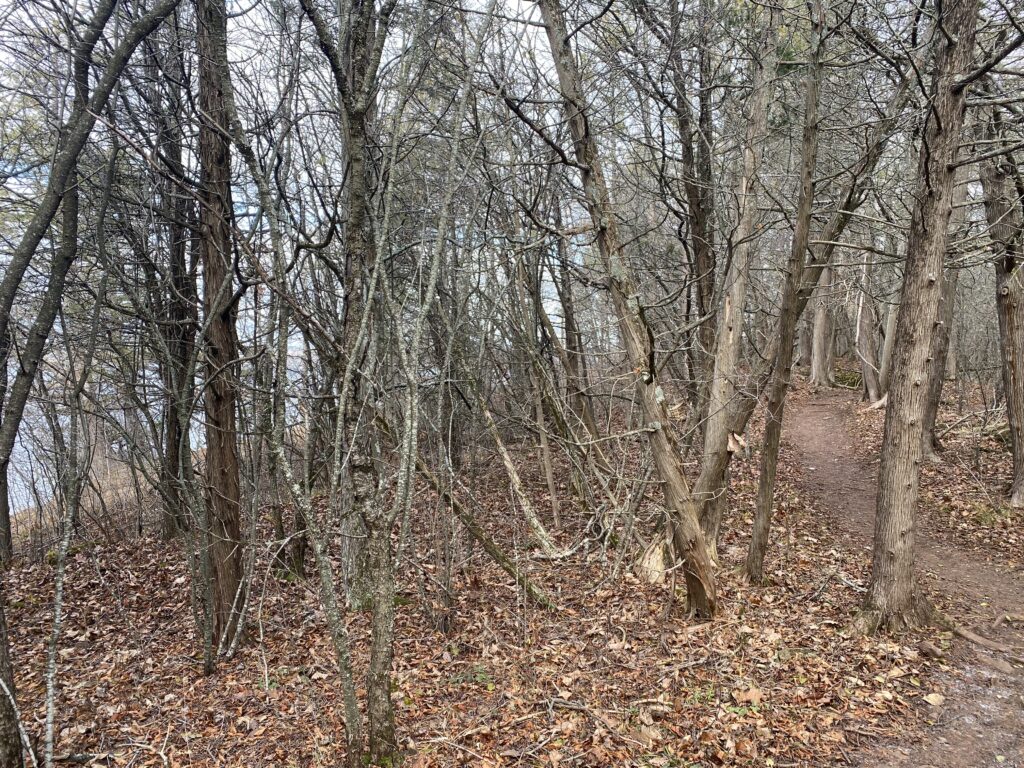
Alas, even the trees in the limestone bluff natural community have lost the vast majority of their leaves, and the rustling of the wind through the trees has gone silent in their absence. Only the pines, hemlocks, spruces, and cedars remain green. A few shrubs cling desperately to their leaves, save for the mountain laurel. There is little motion in the trees, as most of the animals have hidden themselves away to conserve energy. However, life has not disappeared entirely. Every now and again, you’ll see a squirrel dart through the trees, a mouse scurry across the trail, or a bird flying up above. If you’re lucky, you’ll maybe even see bigger rodents and mammals, perhaps even a deer or a fox, looking for a meal amongst the slim pickings. The ground is littered with leaves and other organic debris, providing ample food for decomposers. There were mushrooms growing on old, decaying stumps, as well as on the ground.
It was nice to come to Rock Point throughout the fall and into the onset of winter. The place is incredibly unique, boasting ecological and geological phenomena which don’t occur anywhere else in the northeast. Perhaps my favorite part about coming to Rock Point is finding a new place to explore in the park every time. While I used the same spot to observe phenological changes, I found myself taking a little extra time each trip to find my way around and see what there is to see. I can’t wait to come back to Rock Point to see how the place changes in the winter and spring.