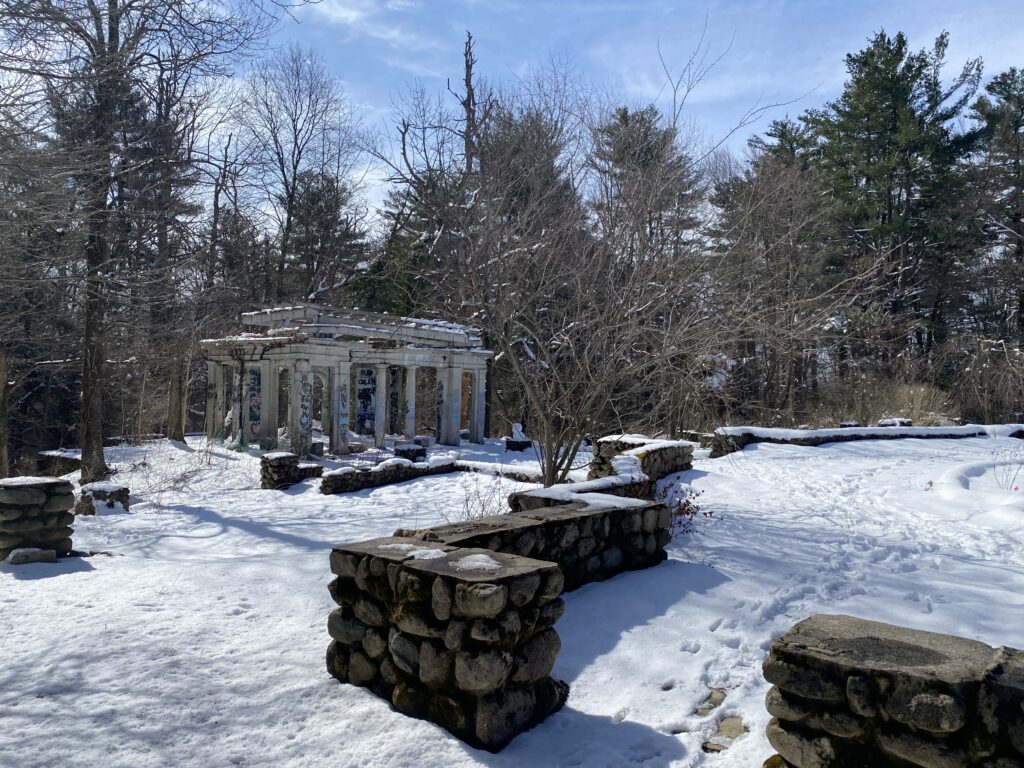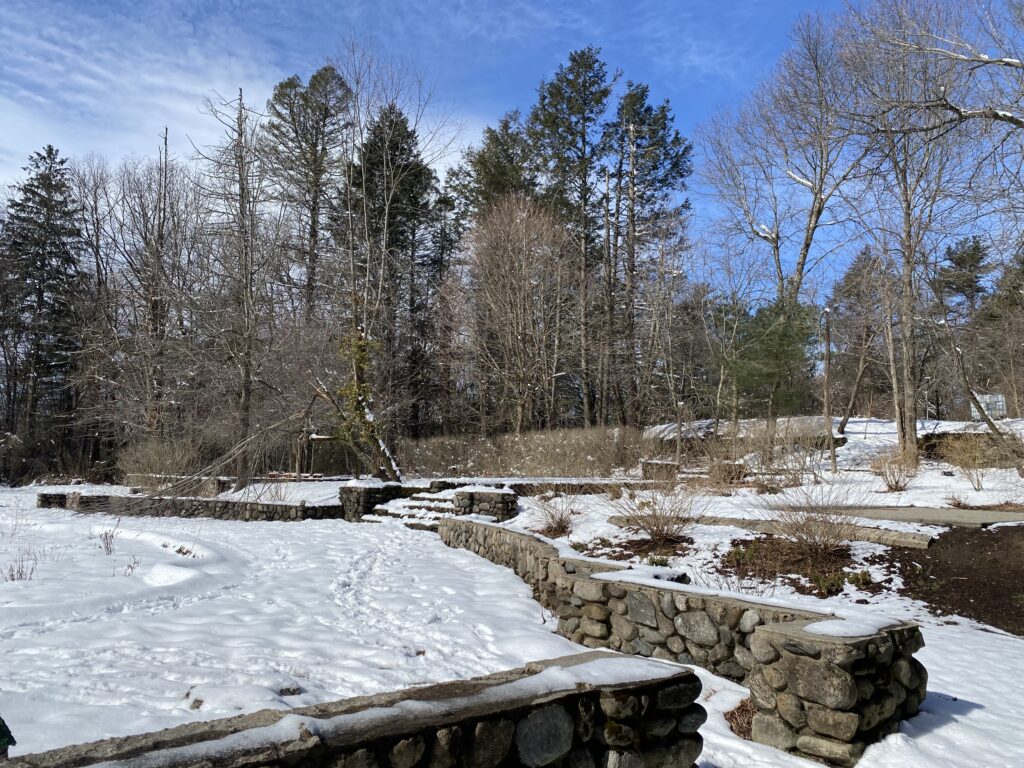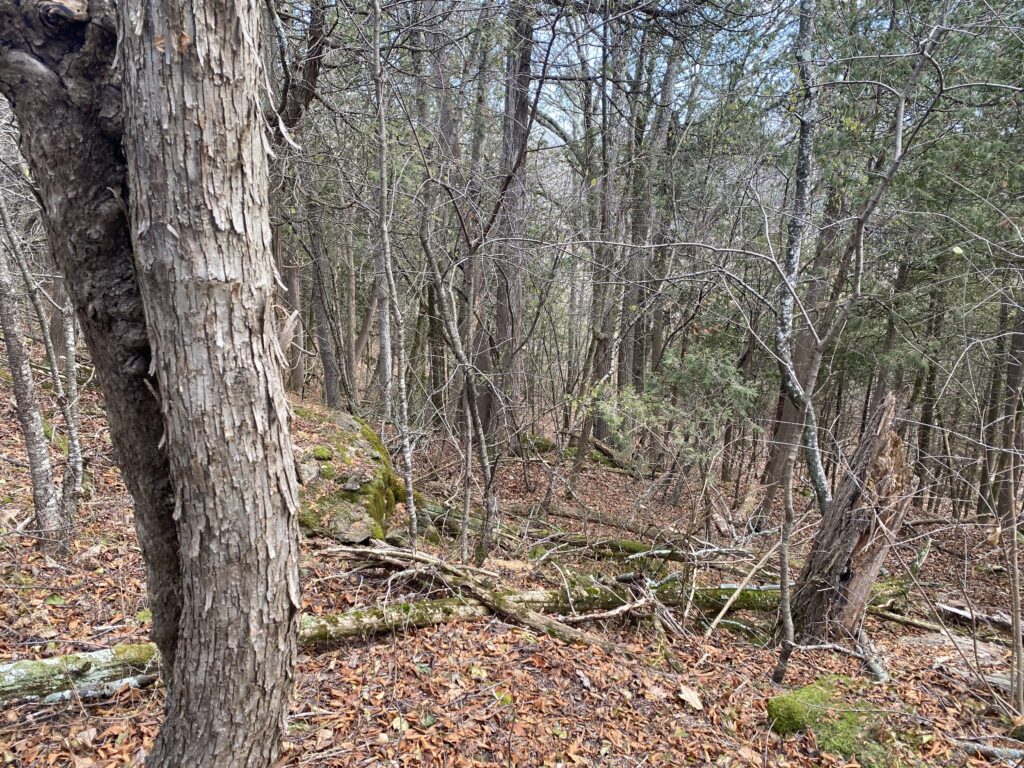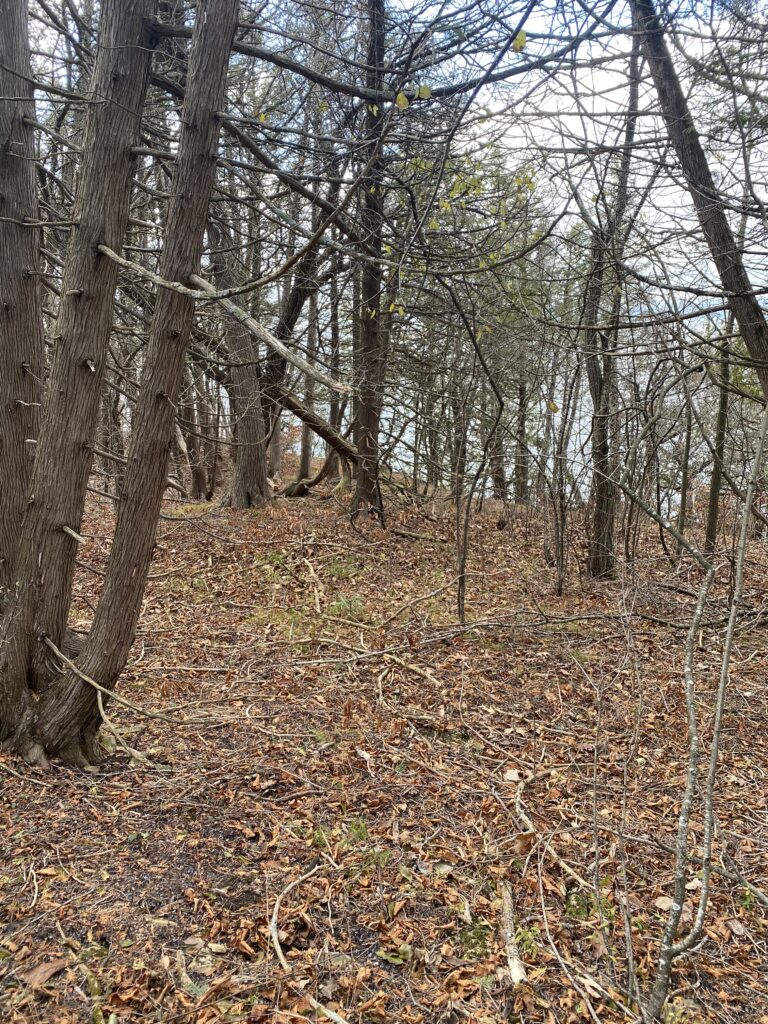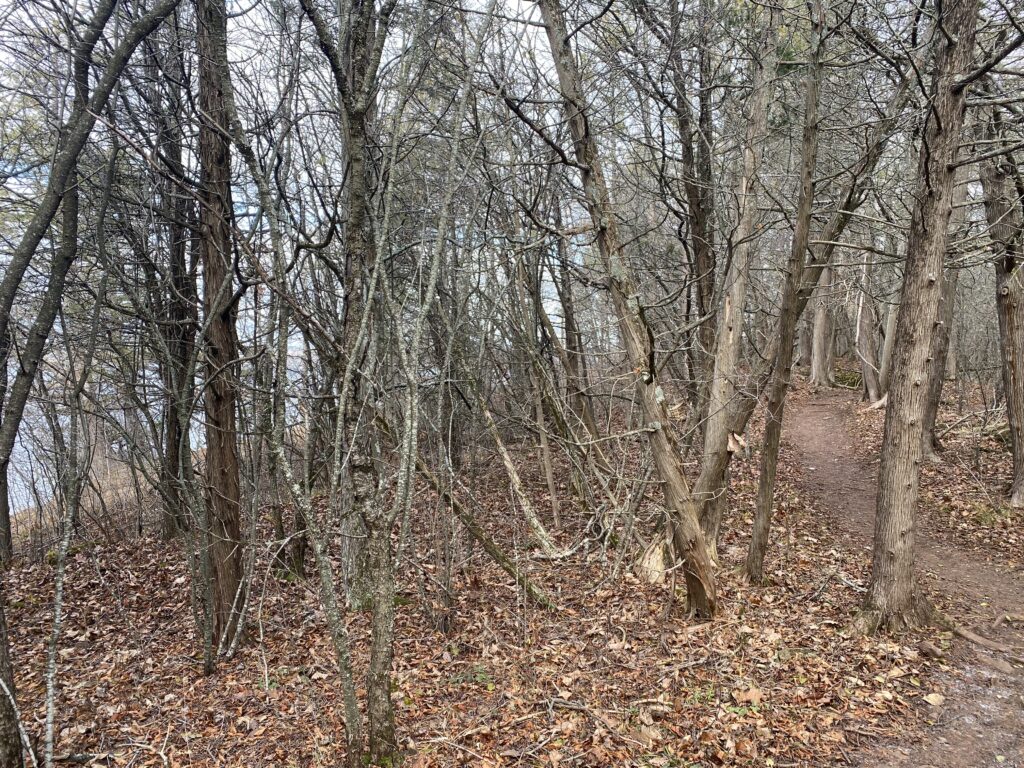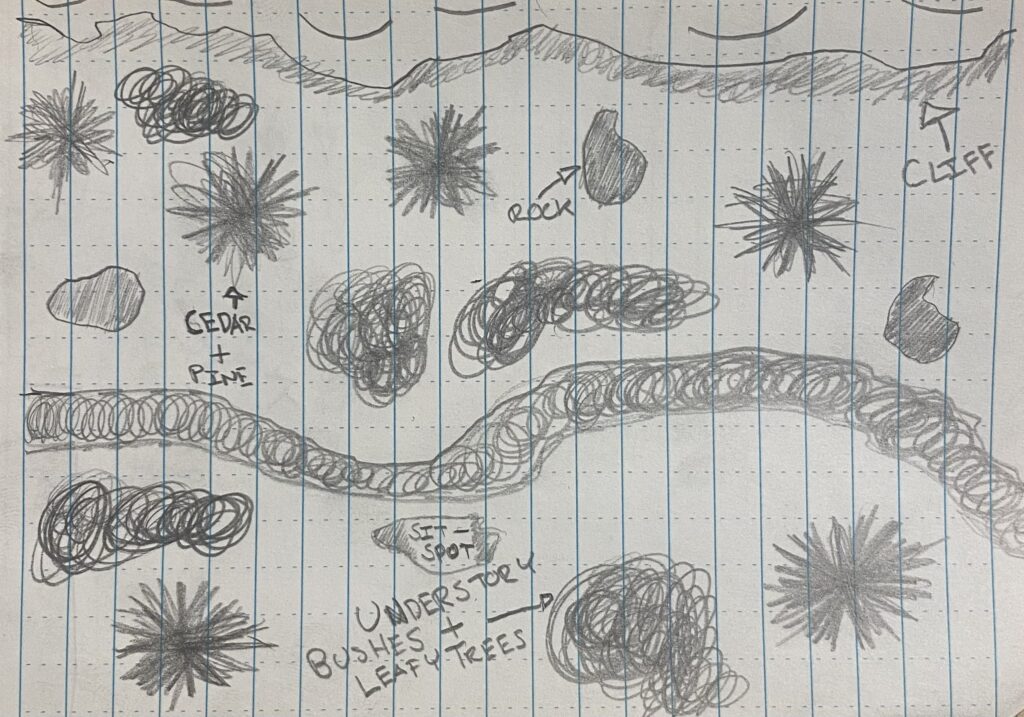
While we were discovering the unique features of Rock Point in my Natural History lab, we learned about the special limestone bluff cedar-pine forest that was within; that these unusual ecosystems only occur on limestone bluffs overlooking water, and that they have longer growing seasons due the moisture from Lake Champlain. Naturally, I was curious to see how the transition to fall would look here in the cedar-pine forest compared to how the transition would look on campus.
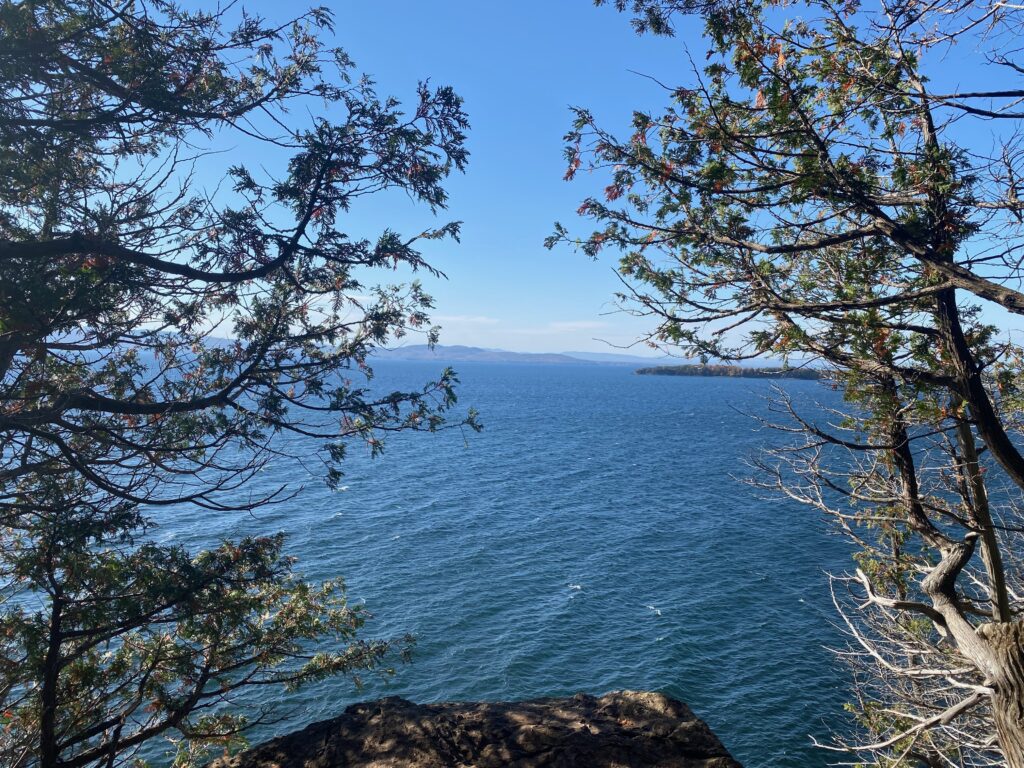
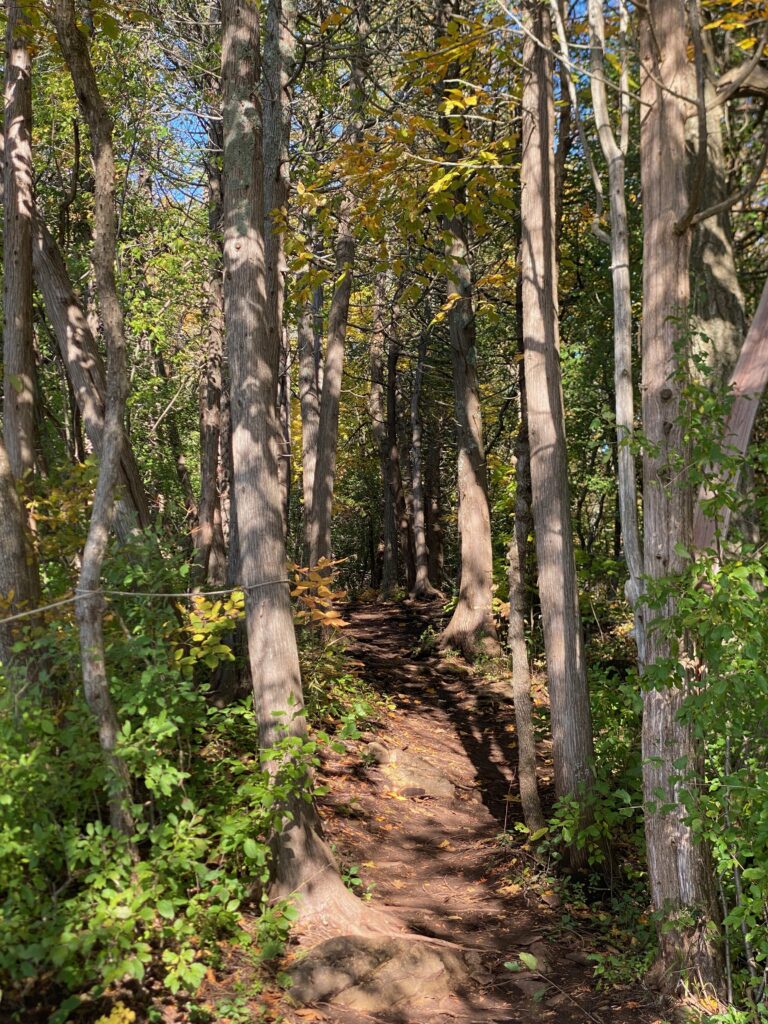
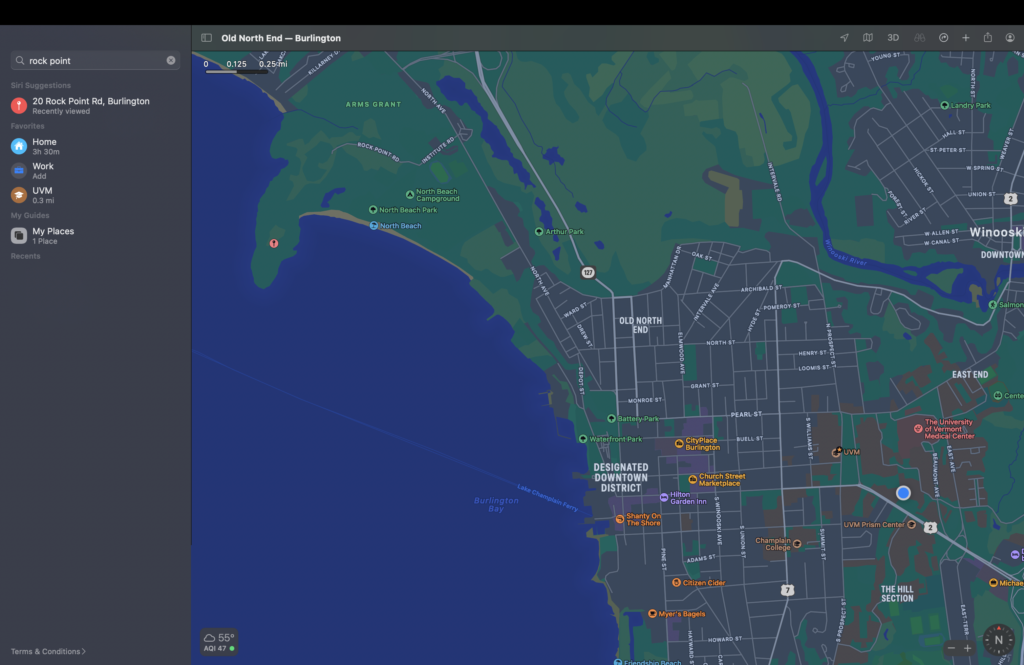
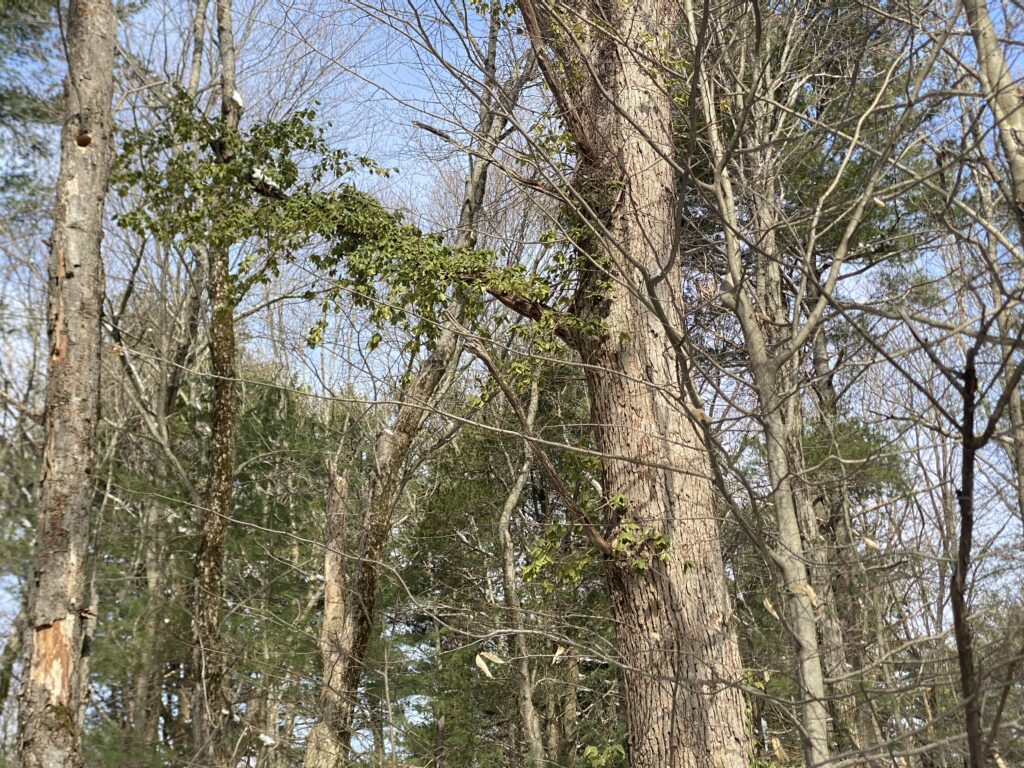
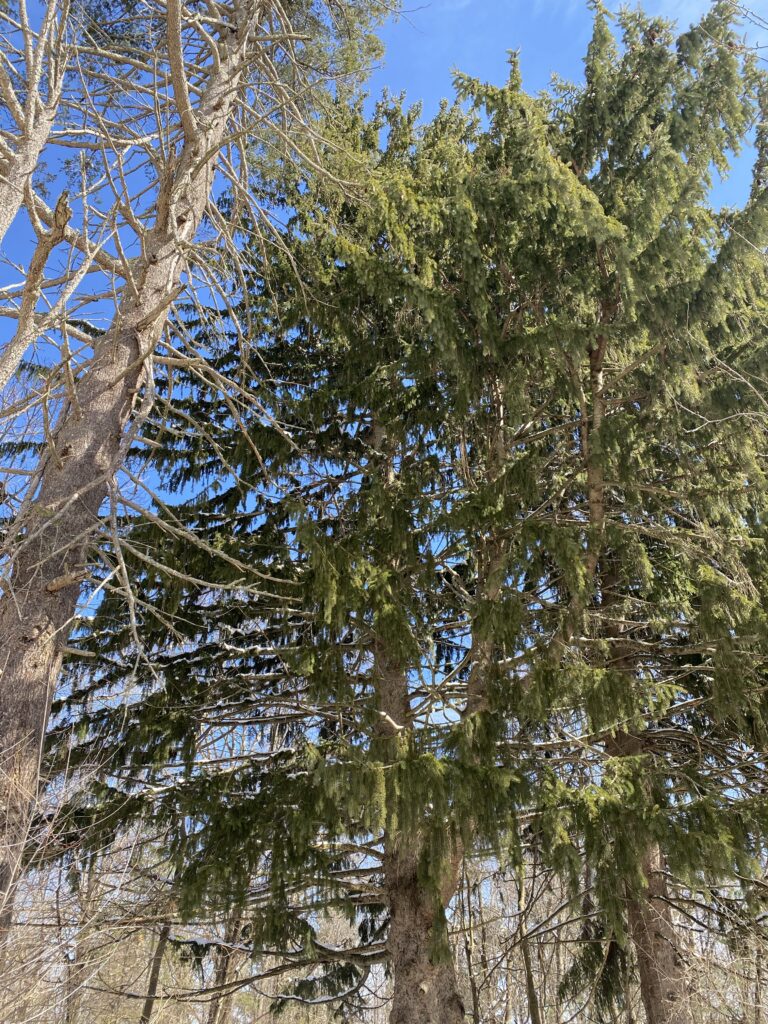
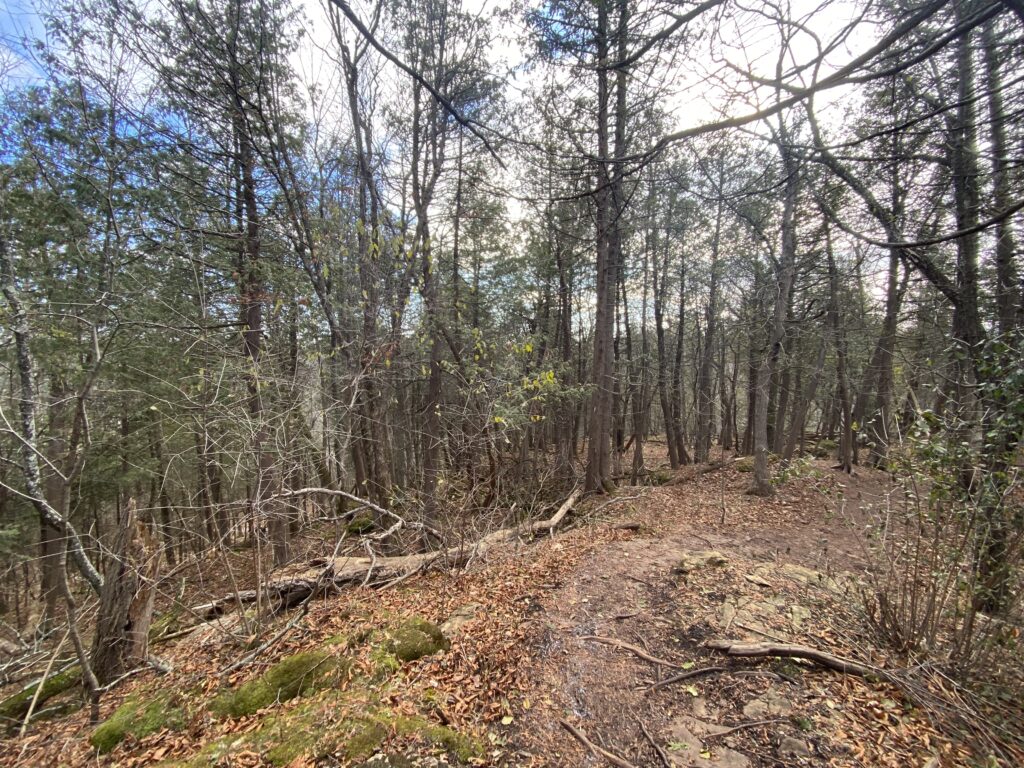
And so I walked to Rock Point this past weekend, wondering what I would find. I walked northwards along the bike path, all the way to the bridge over the campground, before cutting through and reaching the park gates. Naturally, I began wandering aimlessly, gently and slowly drifting towards the cedar-pine forest. I stopped plenty to admire the beautiful westward view of the Adirondacks, and the sun slowly creeping closer to their peaks. When I finally arrived, I was treated with the best view I had seen yet and a forest rich in plant life. As the name would suggest, the most common woody plant species in the forest were pines and cedars. However, the understory was ripe with deciduous plants! Even more interestingly, the woody plants were still mostly green, despite the fact that woody plants outside the limestone bluff forests had lost most of their leaves already.