
2025 May Phenology Assignment #5
- How has your site changed over time?
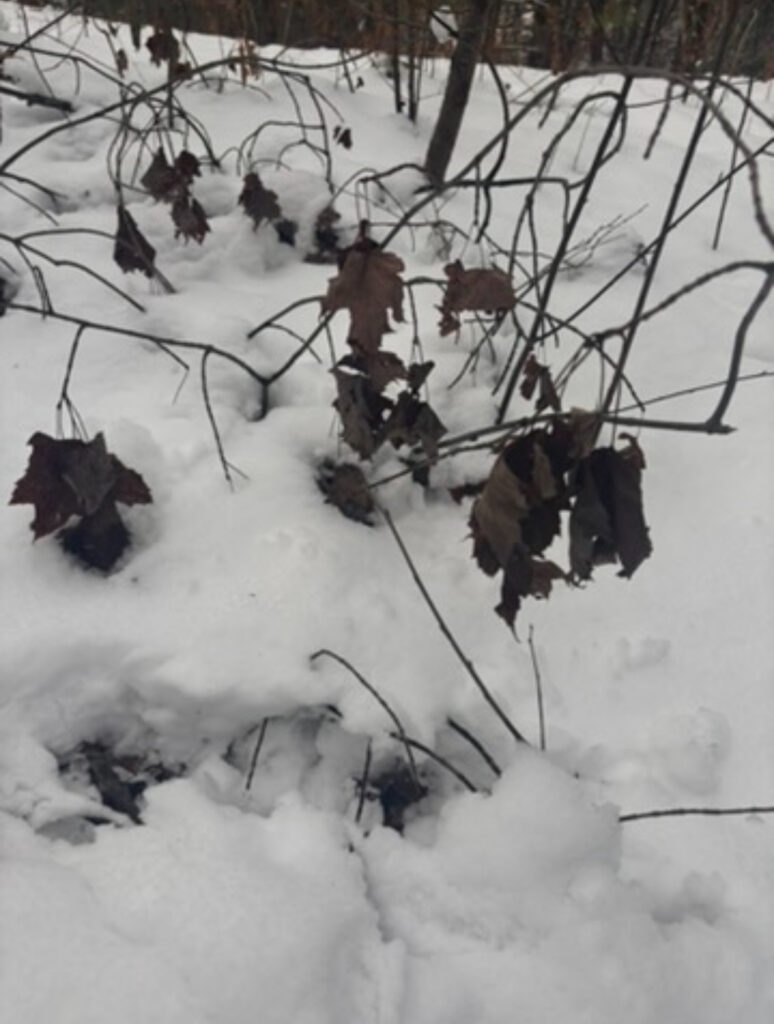
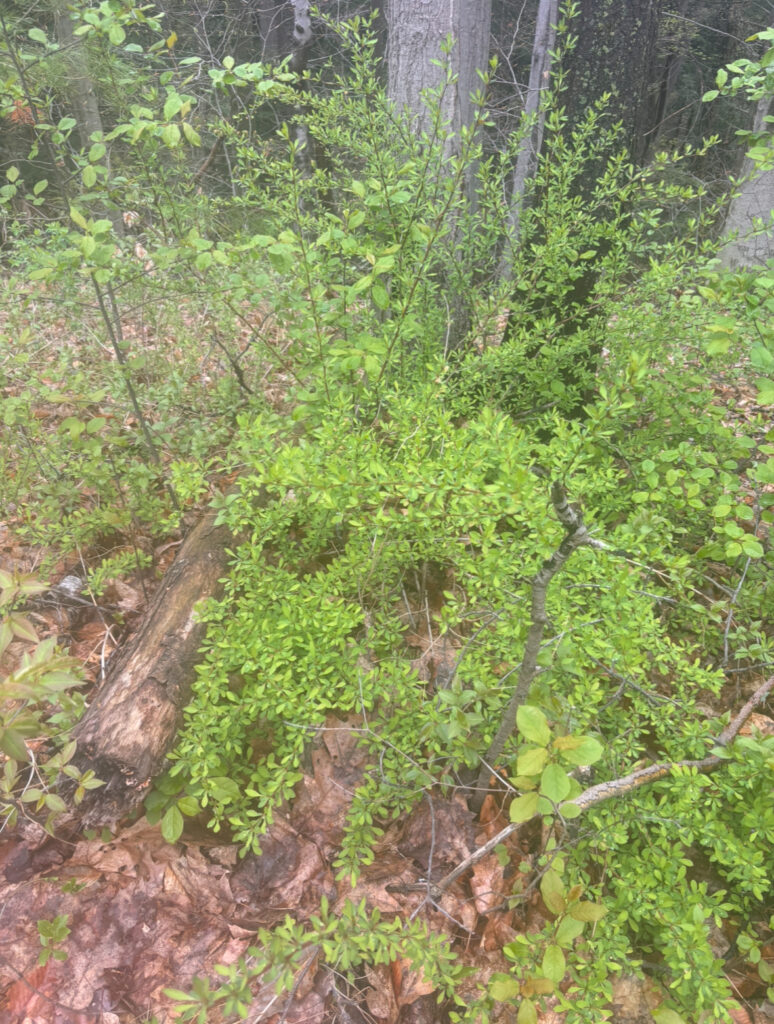
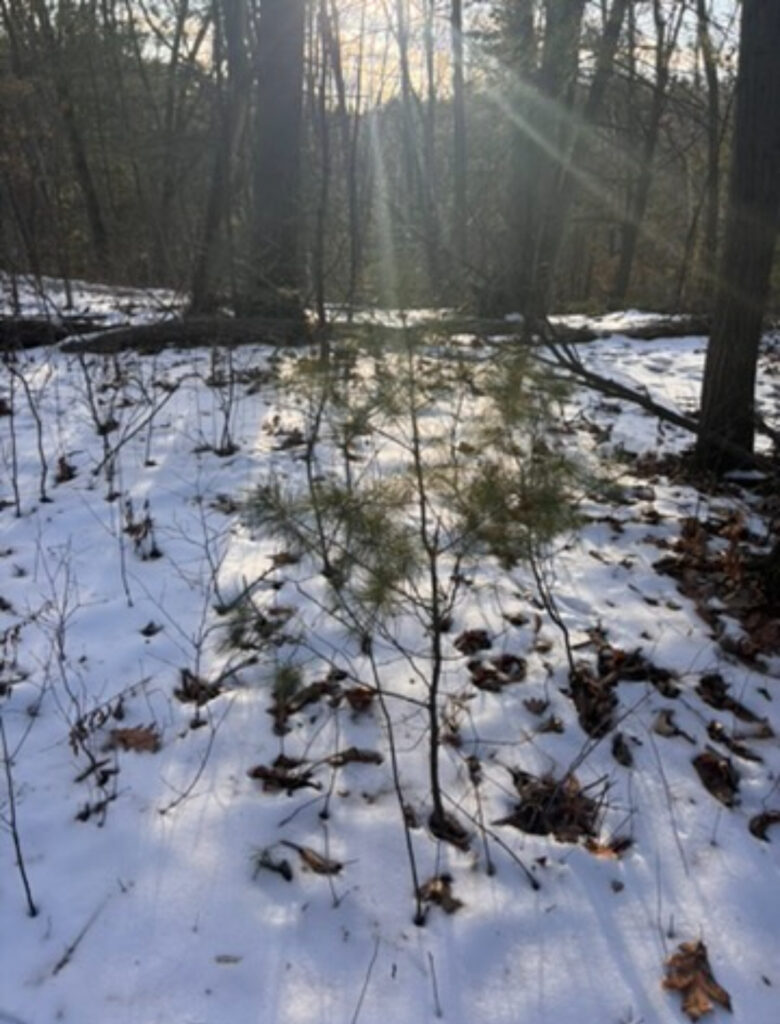
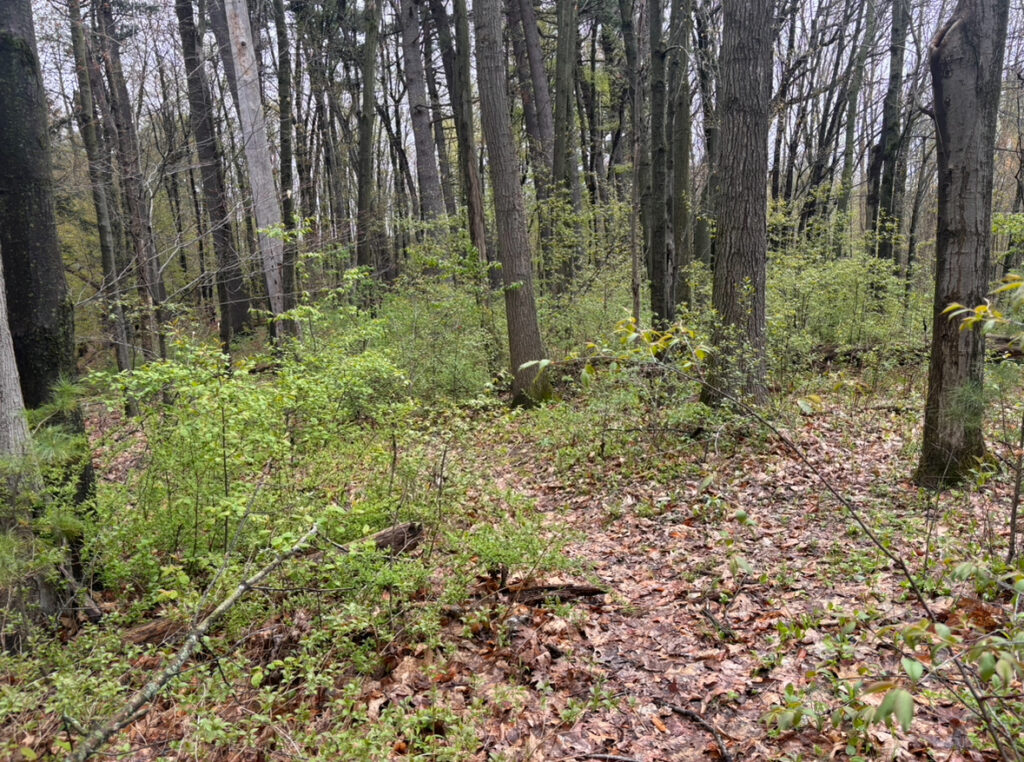
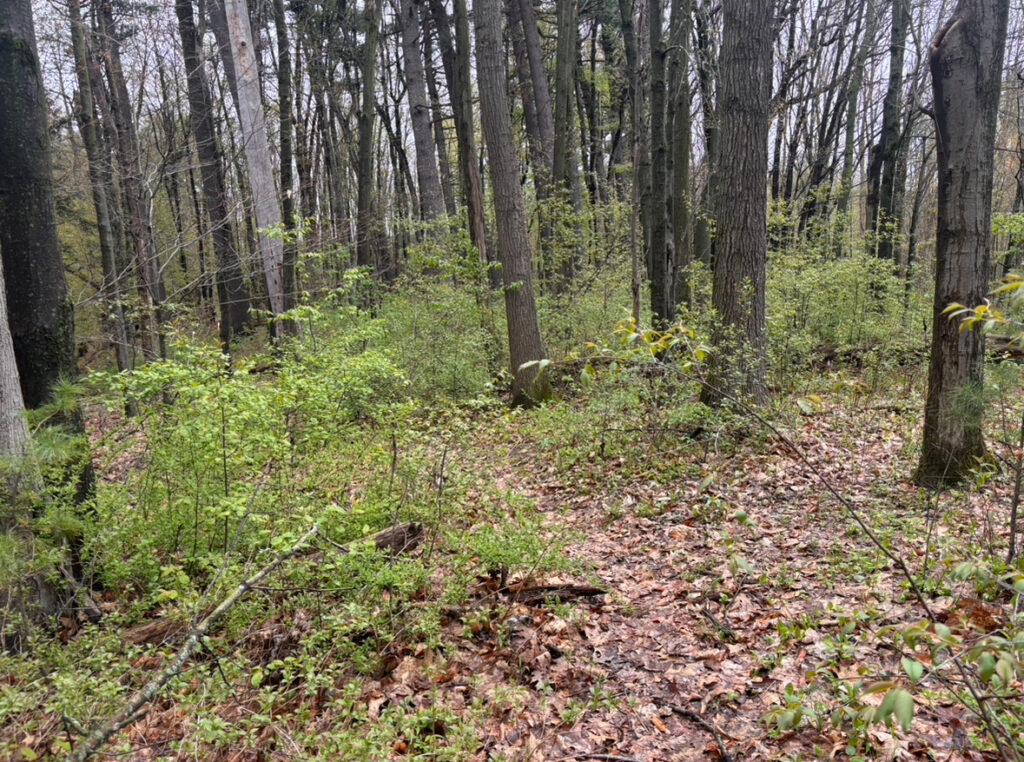
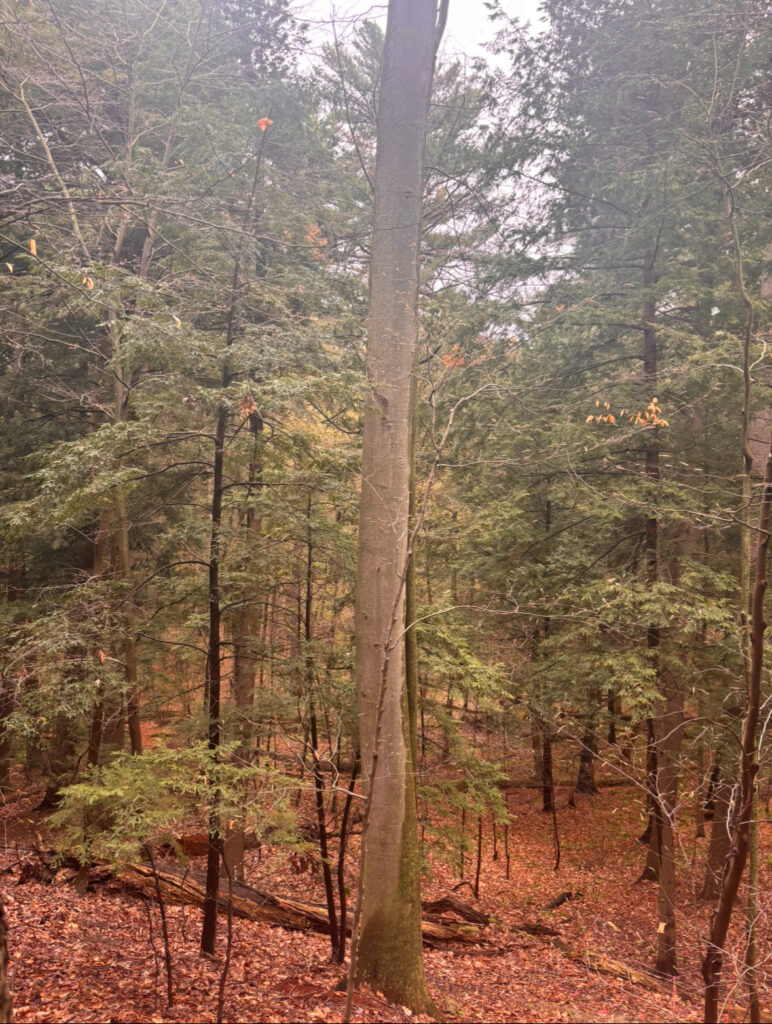
I have been coming to this site in Centennial Woods since October 2024, which is about half a year. I have seen the forest surrounding my spot change from beautiful greens and oranges with leaf cover on most trees in the fall, to a quiet and barren snowy landscape in the winter where the only colorful life was the evergreen trees that stay the same all year. But now, in early May, the forest floor is teeming with life, with all kinds of saplings, ferns, bushes, and grasses. The old big trees like the oaks and beeches are starting to become green again and grow new leaves, and there are young maple and beech trees that have already grown their spring leaves. The forest around my spot is becoming a bright green all over again, and it’s amazing to see. It feels like I’ve been a spectator to time passing in my little Centennial Woods spot. It’s pretty cool to actually see and realize phenology happening.
- What are the major and minor landmarks you’ve become familiar with?
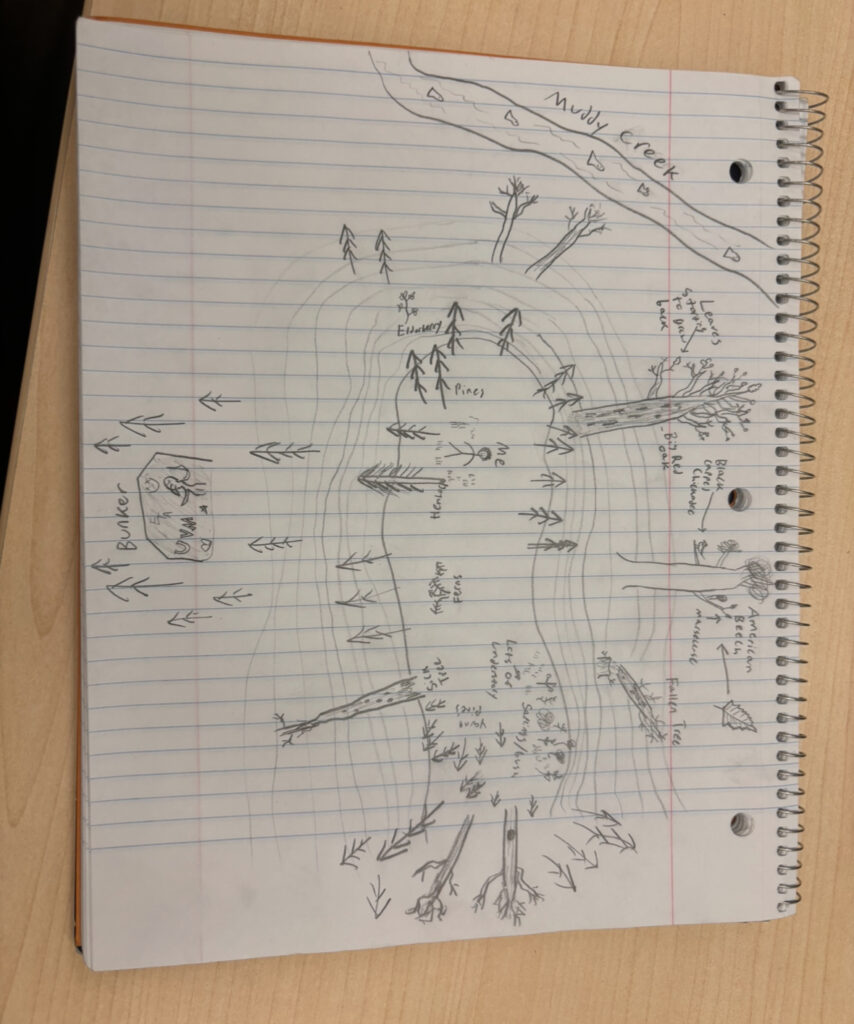
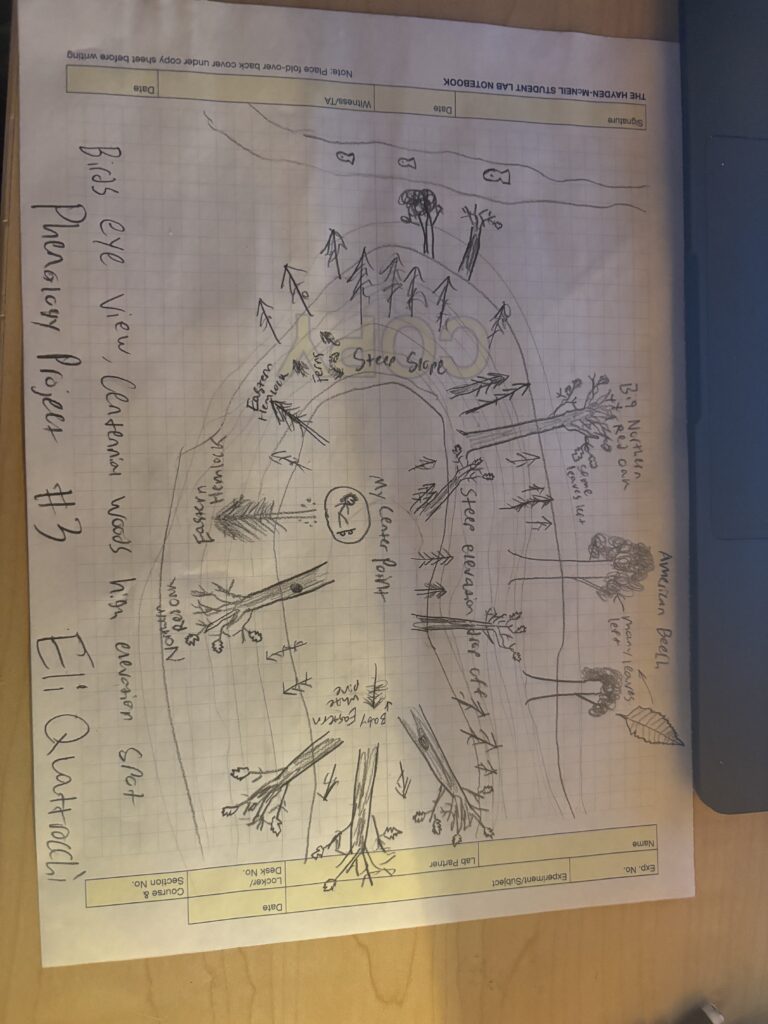
Some of the major landmarks around my spot are the old bunker wall covered in graffiti down the south side of the hill, the muddy creek toward the northwest of my spot, the big red oak tree right in front of me, the big American beech tree to the right of it that has kept some of its leaves all year long, the fallen tree to the northeast, and the sick tree with lots of holes in it on the other side of the fallen tree.
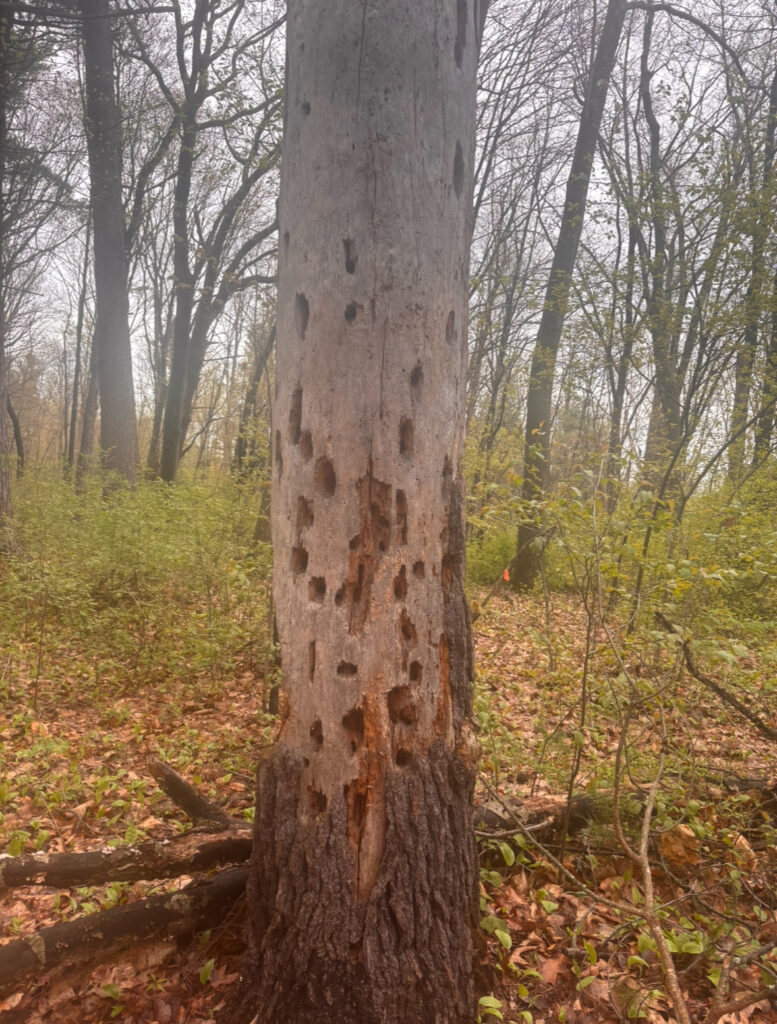
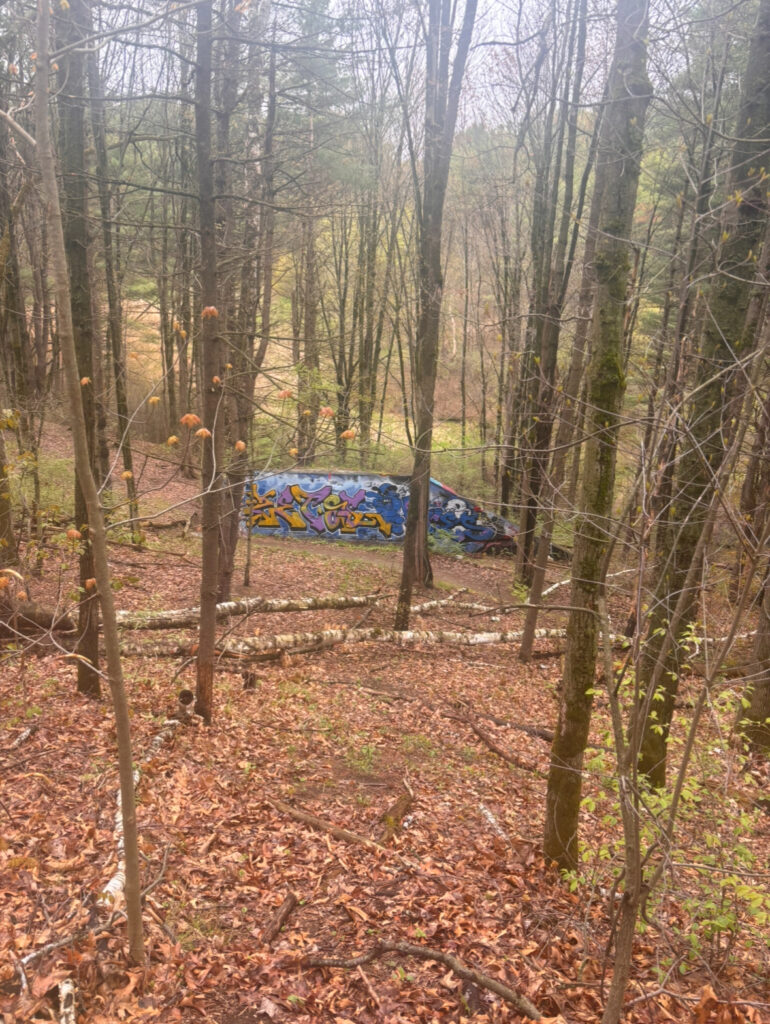
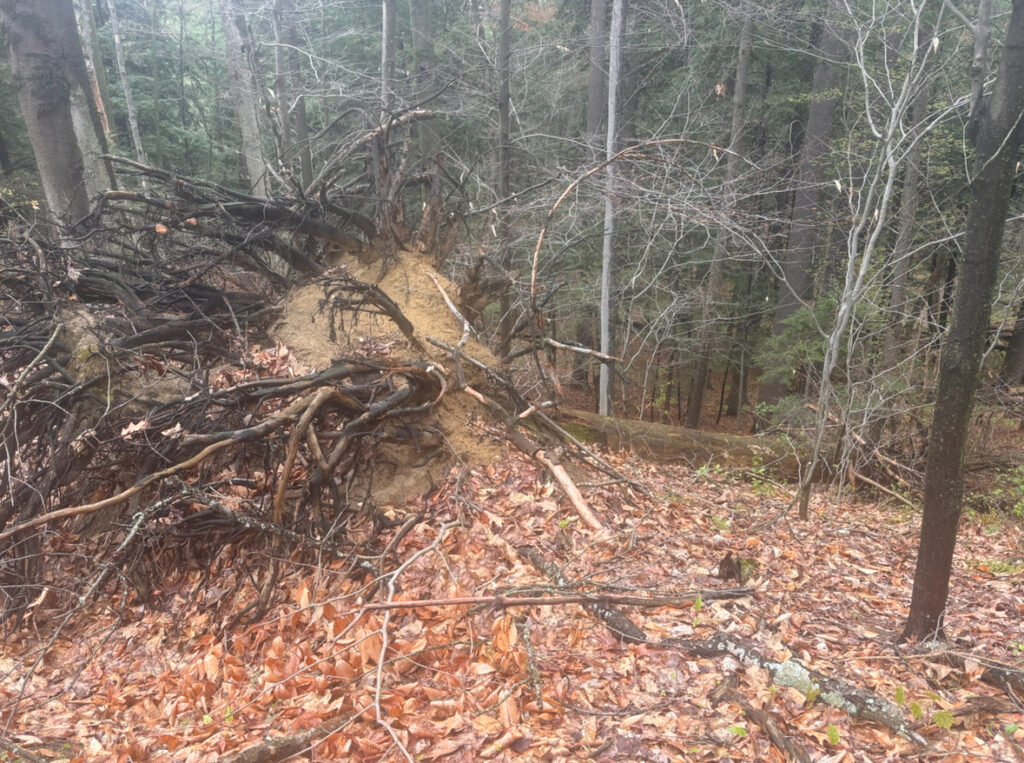
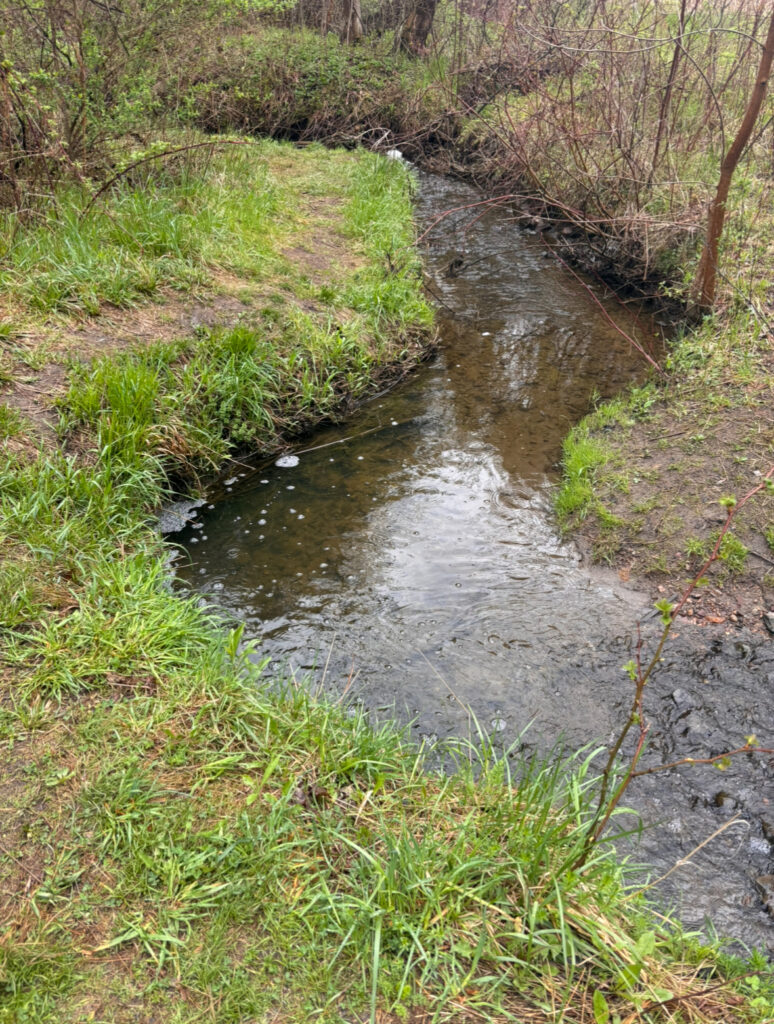
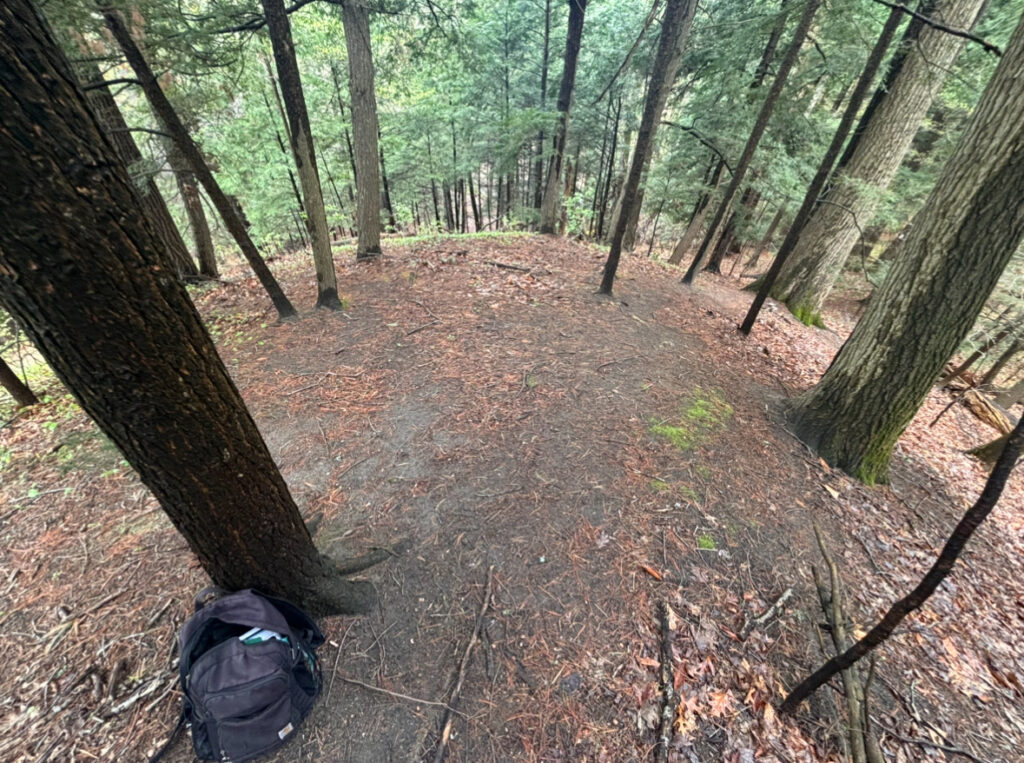
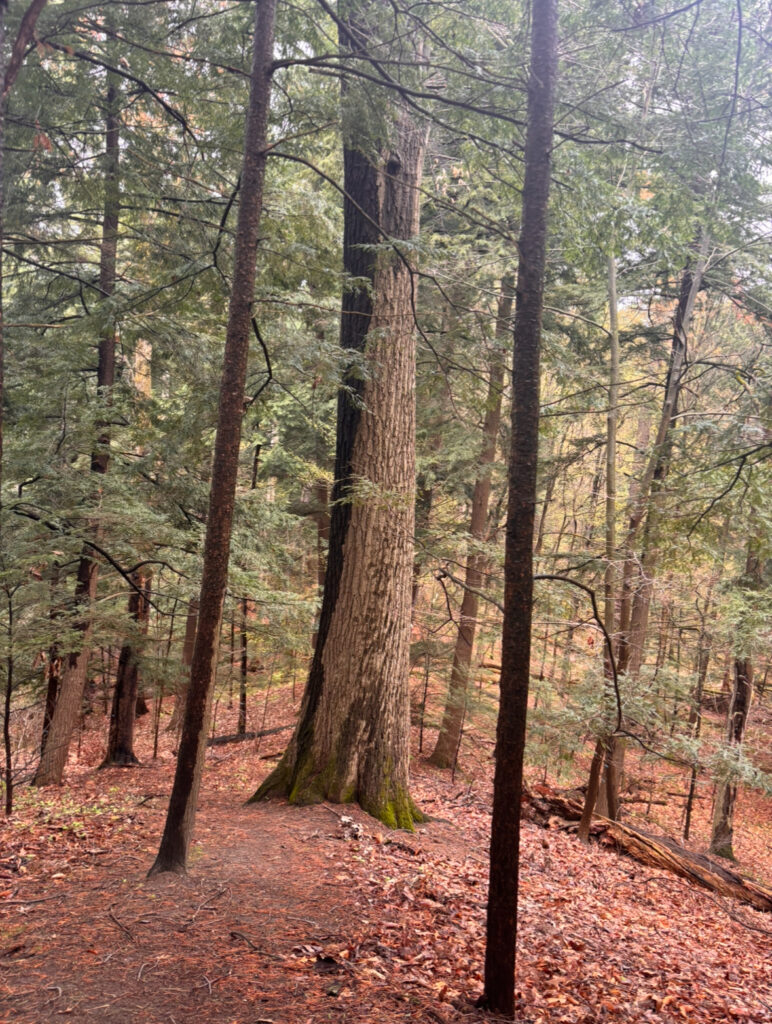
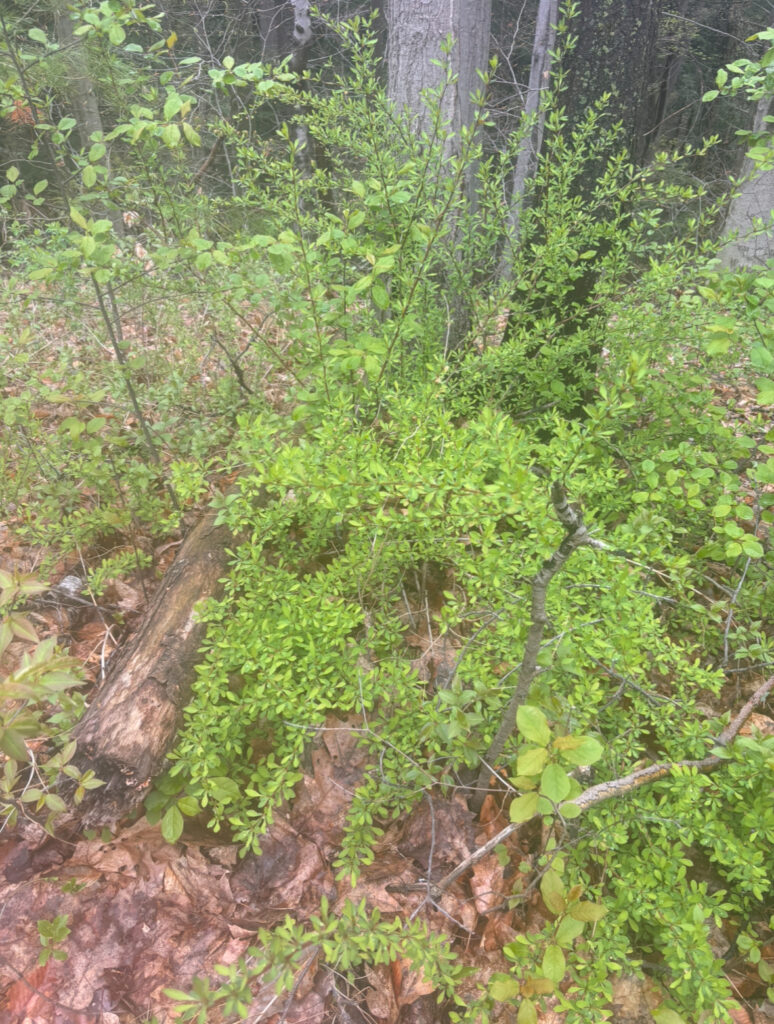
Some of the smaller landmarks that I still love are all the baby saplings and pine and fir trees that form a circle near the sick tree, the ferns on the ground near where I sit, the saplings near the fallen tree, and the beech tree with engravings in it on the trail path right before you make the left to go up to my spot.
- In what ways do nature and culture intertwine here?
Centennial Woods is a public nature area right here in Burlington, and it’s super close to the city and to my dorm at UVM, which is something I really appreciate and you don’t get in many other urban areas. It is a place where anyone can come walk, explore, and just enjoy being in nature. I’ve seen people walking dogs, taking photos, doing classwork, or just sitting quietly here and its really special in that way.
It’s also important to remember that this land was originally Abenaki land, and there’s cultural history and meaning here that goes way deeper. I don’t know too much about it honestly but it’s something we should respect and acknowledge when we’re out here, that we now get to appreciate this beautiful place that was once purely native land.
- Do you consider yourself a part of your place? Why or why not?
Yeah, I do consider myself a part of my Centennial Woods spot. Over the past six months, I’ve spent a lot of time just observing what’s going on here like watching the leaves change colors, fall, and then now grow back, seeing birds come and go with the seasons, and noticing how the saplings have grown much taller.
But it’s not just about what I’ve seen there it’s also how I feel when I’m here. This spot has become a place I go when I’m stressed or overwhelmed, and it always helps me clear my head. When im dealing with something personal or painful, I can come to my spot and sit down to clear my head. Or I can just easily walk over and spend some time in my spot when I’m bored. It’s quiet and peaceful, and it reminds me to slow down. I’ve built a connection with this place by being here, observing, and coming back over and over. It feels like a place I know now, and a place that accepts me. So I’d say I’m definitely a part of it.
Sketch:
2025 April Phenology Assignment #4
- What areas of Greater Burlington did you explore during this four-day urban BioBlitz?
I mainly explored the natural and green spaces around the university during the four-day challenge. I spent a few hours on the Waterman Green, the Redstone Hall Green, and the Redstone Dorms Green. I climbed trees, took photos, and just slowed down and observed a bit to try and spot different animals and plants. Even though I didn’t venture too far off campus, I realized how much life and animal activity is going on in these small green spaces that we usually just walk by without noticing.
- How was your experience using iNaturalist?
Using iNaturalist was great as it always is. My dad first showed me the app over three years ago, and I’ve been using it consistently ever since. It makes it feel like a real life scavenger hunt, and I almost always learn something new when using it, even if I’m just identifying a common plant or bird.
- How many species did you encounter?
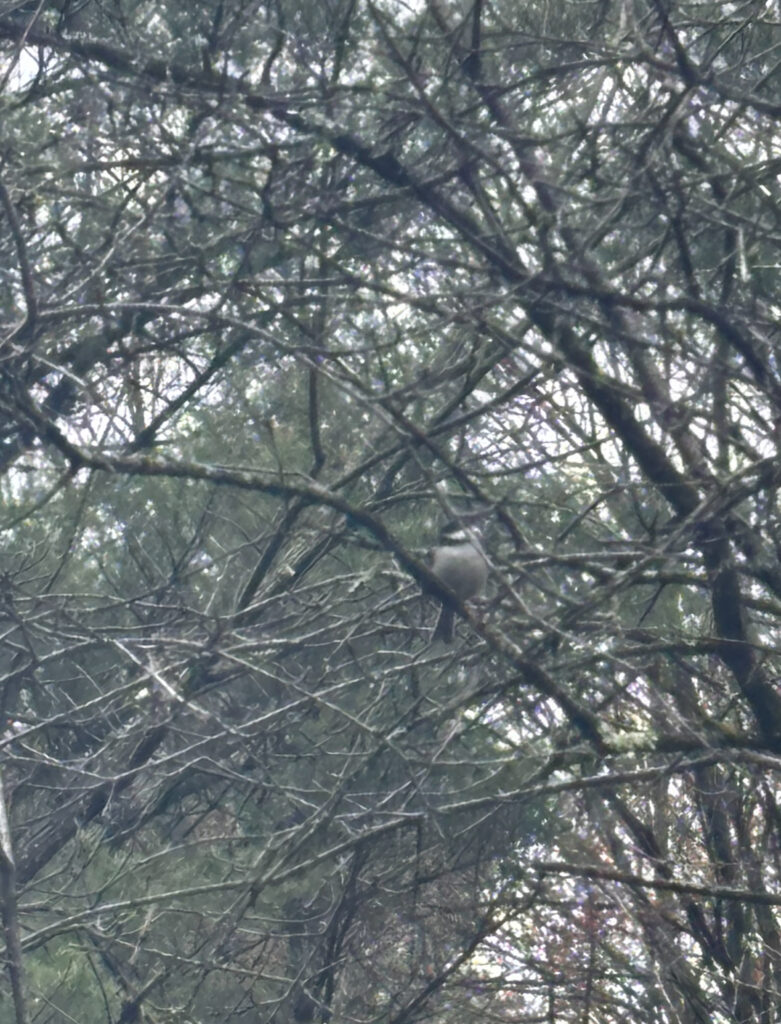
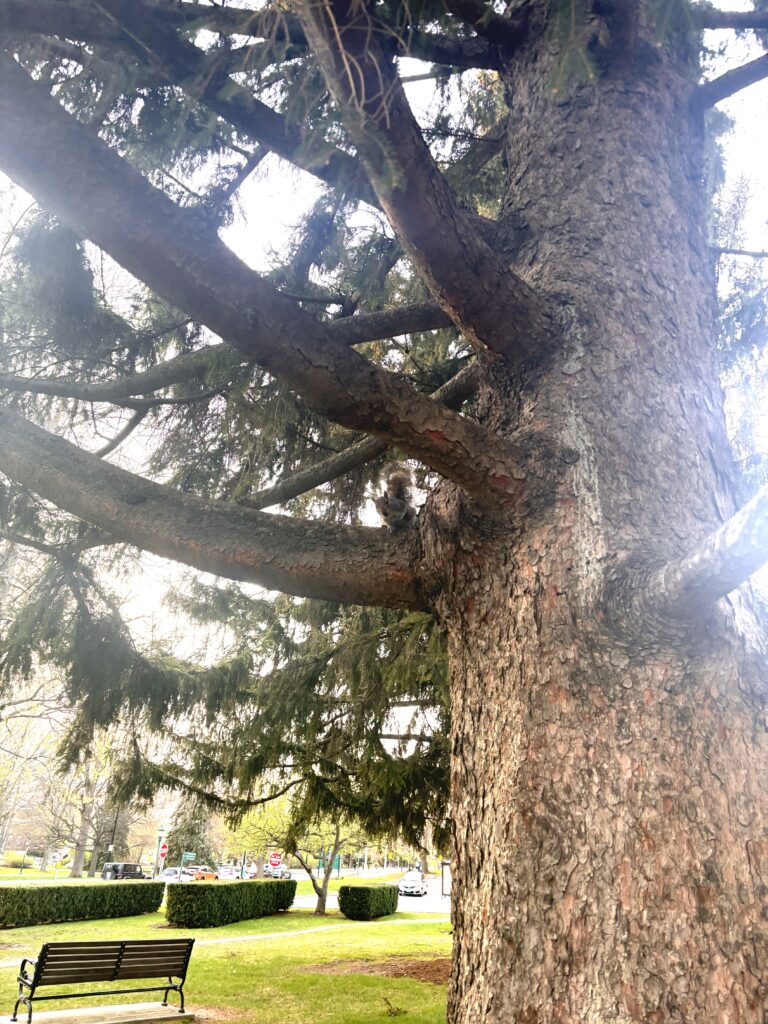
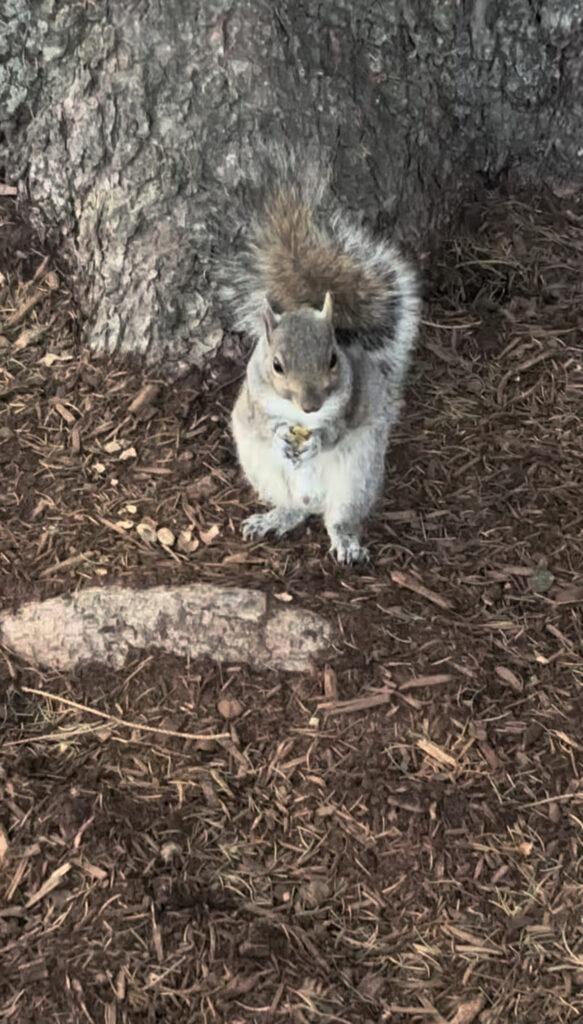
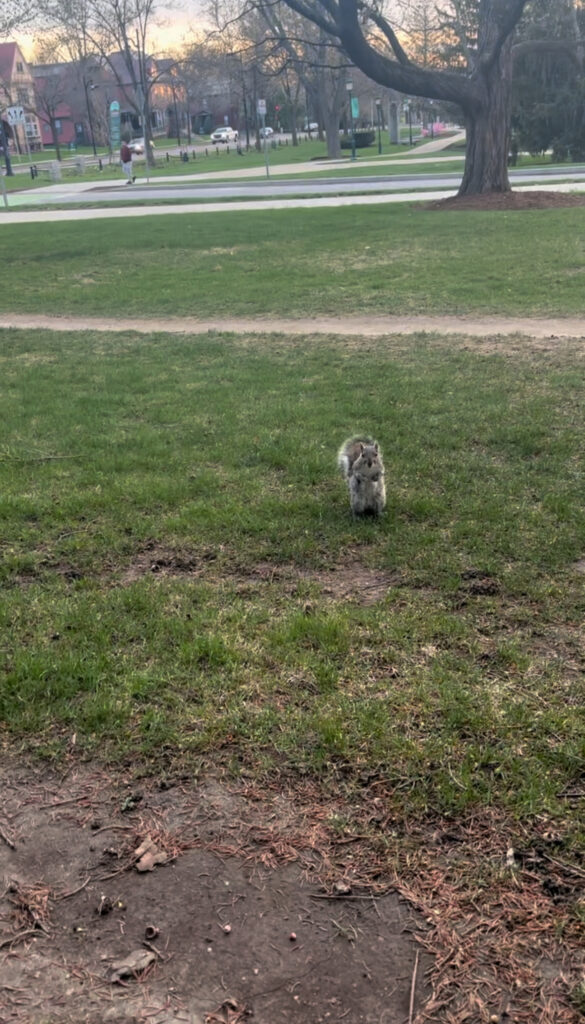
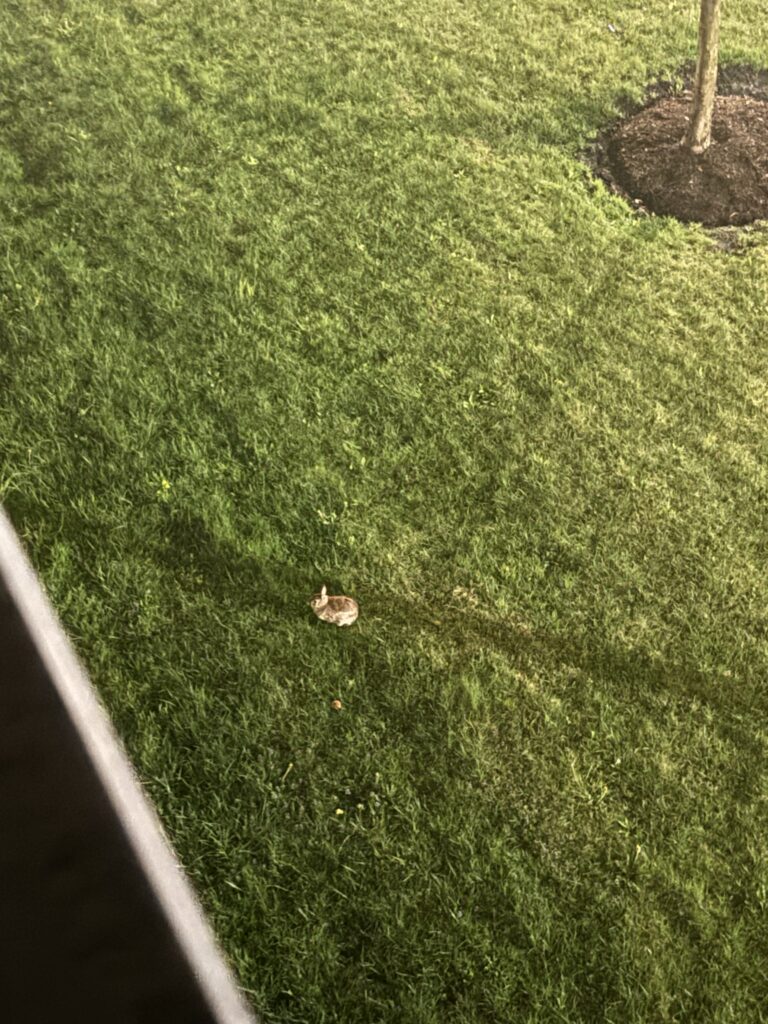
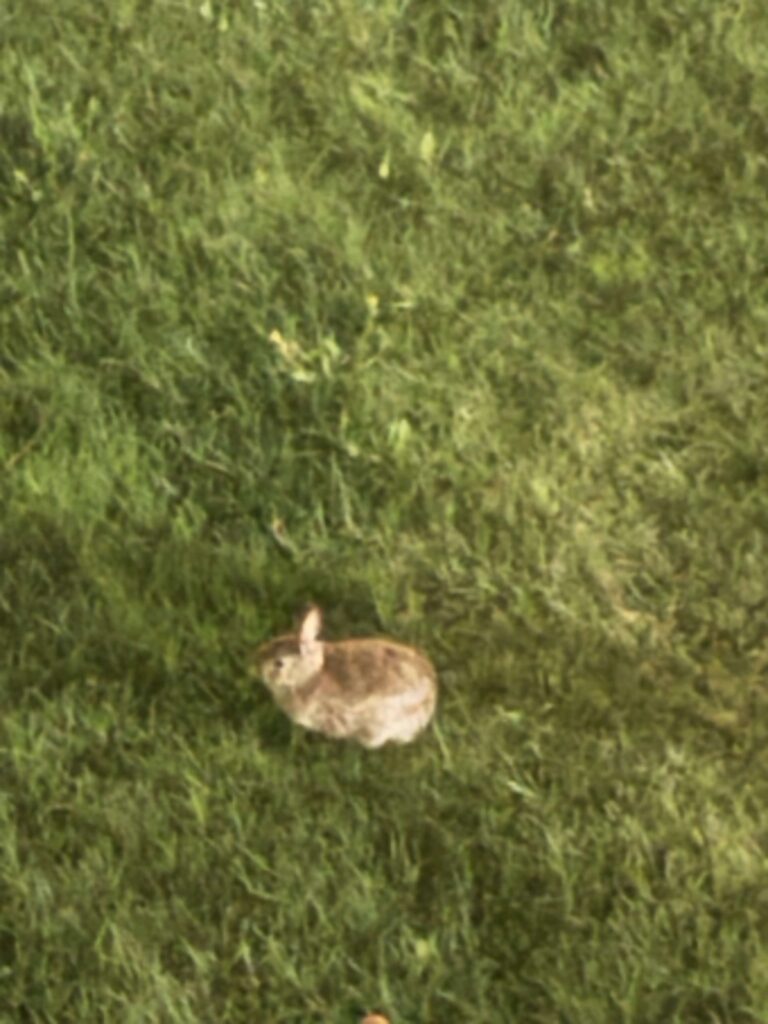
I focused mostly on birds and saw over eight different species during the BioBlitz. I only managed to get good pictures of two though, which were a seagull and an American robin. I also met a super friendly squirrel near Morrill Hall who seemed to want to be in the photo, and I spotted a rabbit right outside my dorm window. Even though I didn’t rack up a huge species count, it was fun just to notice all the little things and activity happening around me.
- What did you find interesting about reports coming in from other cities participating globally?
I thought it was really cool to see how different the reports looked depending on location. In warmer places, people were already seeing blooming flowers, pollinators, and even reptiles. Meanwhile, up here in Vermont, most of the sightings were early birds, budding trees, and signs that spring had just started. It made me think about how the timing of the seasons is very different across the world and how phenology is a global thing, even though I have only been focusing on it in Burlington.
- Please include photos/maps as a part of your posting.
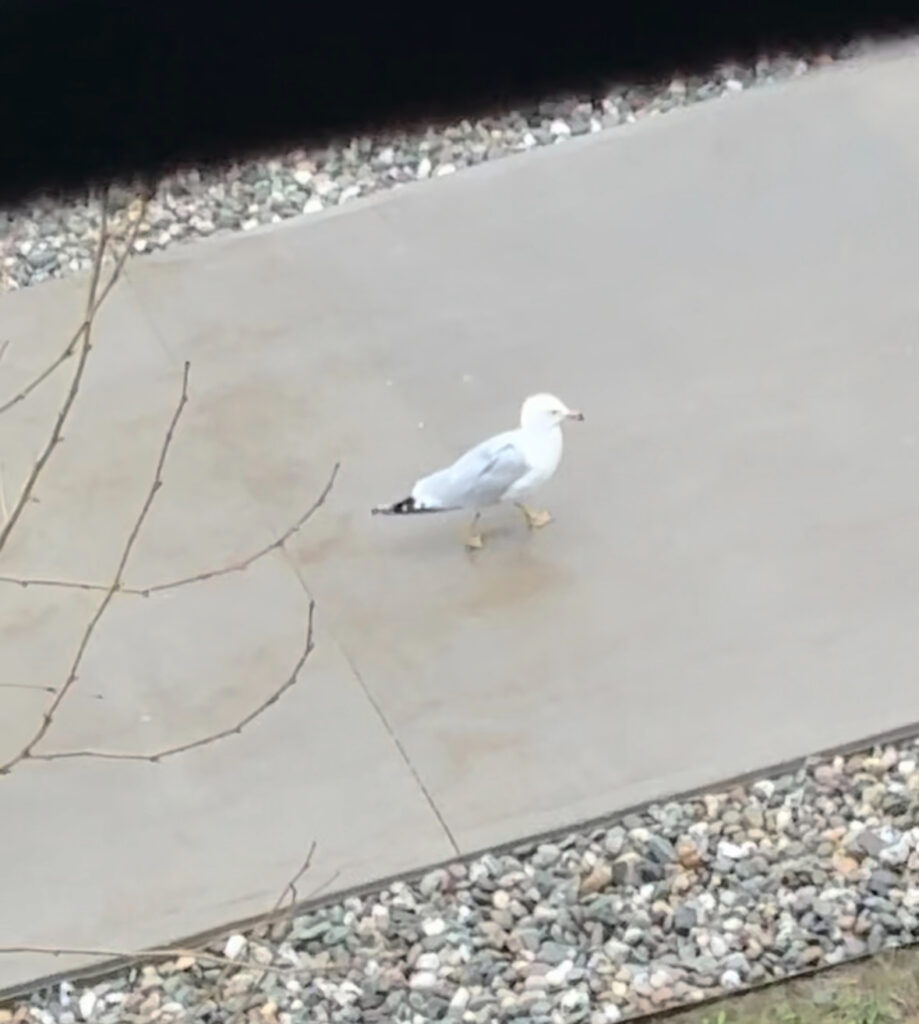
2025 April Phenology Assignment #3
Phenology Walk – Spring 2025
Date of Data Collection: April 16, 2025
On April 16th, I went out to do my phenology walk on a pretty cold and off and on rainy day. Even though it wasn’t the nicest weather, it was cool to see some early signs of spring starting to show on the trees.
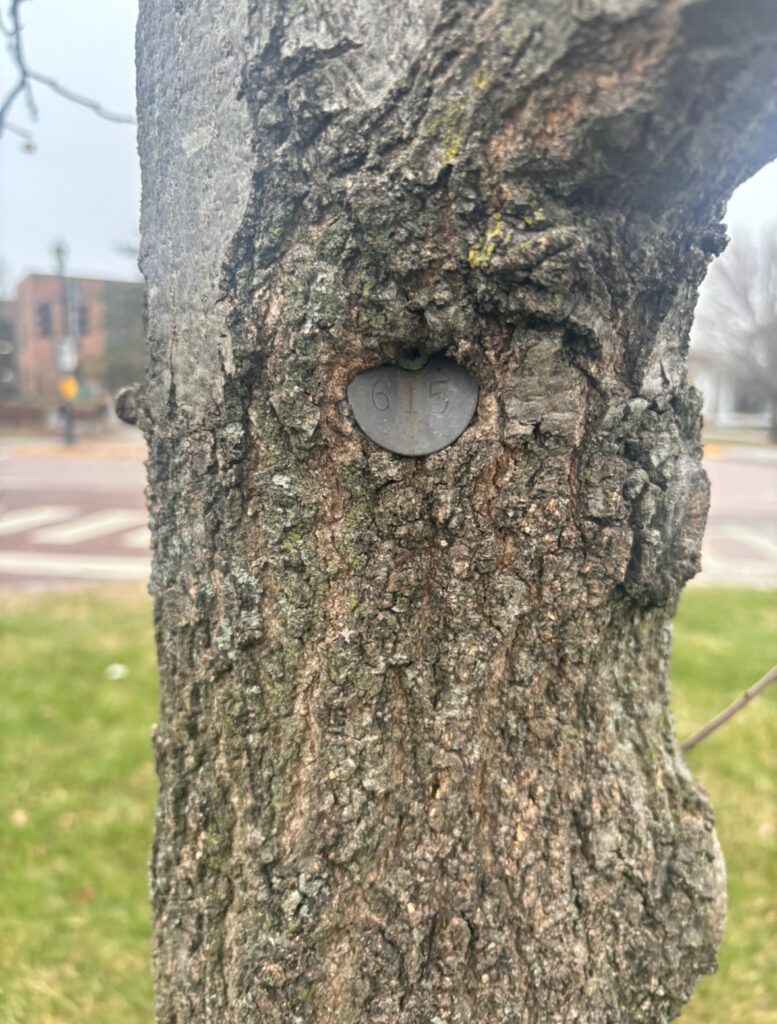
The first tree I looked at was a Red Oak (#615). It had a lot of breaking leaf buds (around 101–1000), but they were barely opening, like you could tell they were getting close but not really there yet. There weren’t any leaves yet, just a few leftover acorns from before. Some buds and tiny fruits were starting to grow too, but not much.
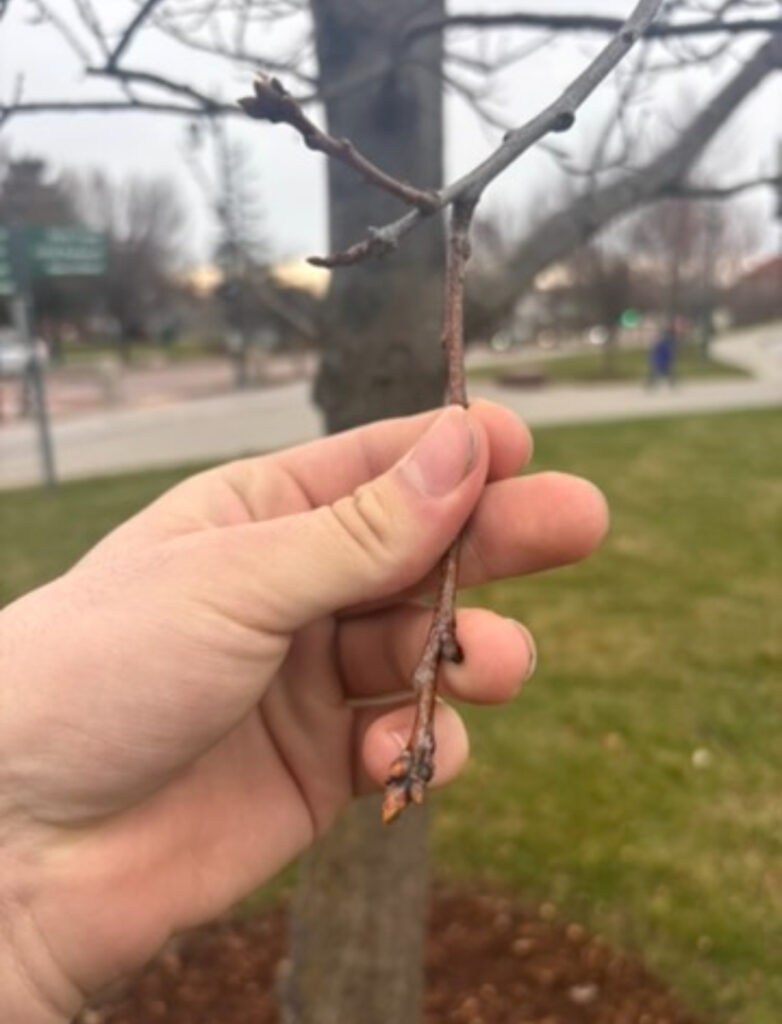
Next, I checked the Sugar Maple (#618). It also had about 101–1000 leaf buds, again barely breaking open. This one was starting to release pollen and had a few flowers and buds forming, but nothing big yet.
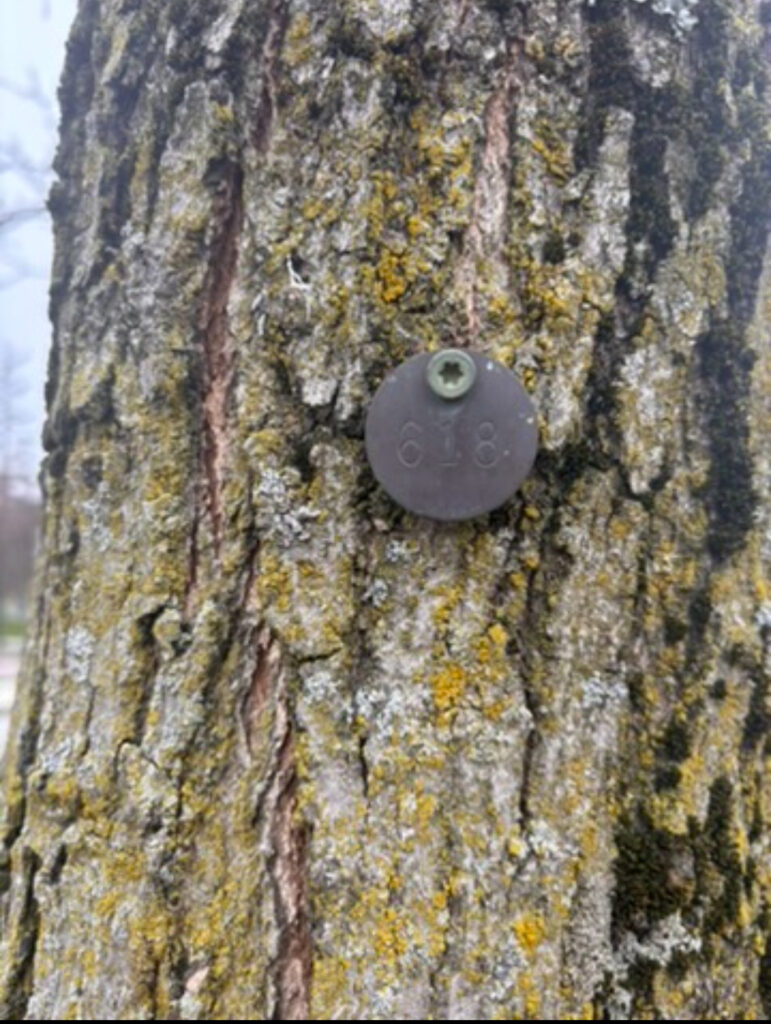
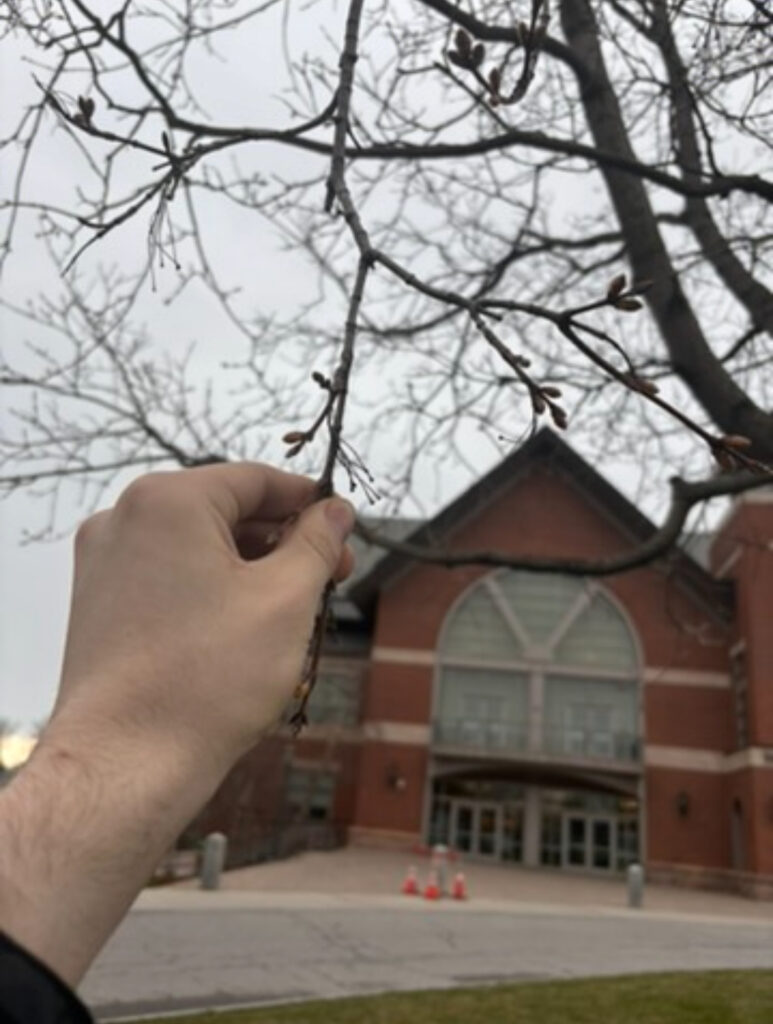
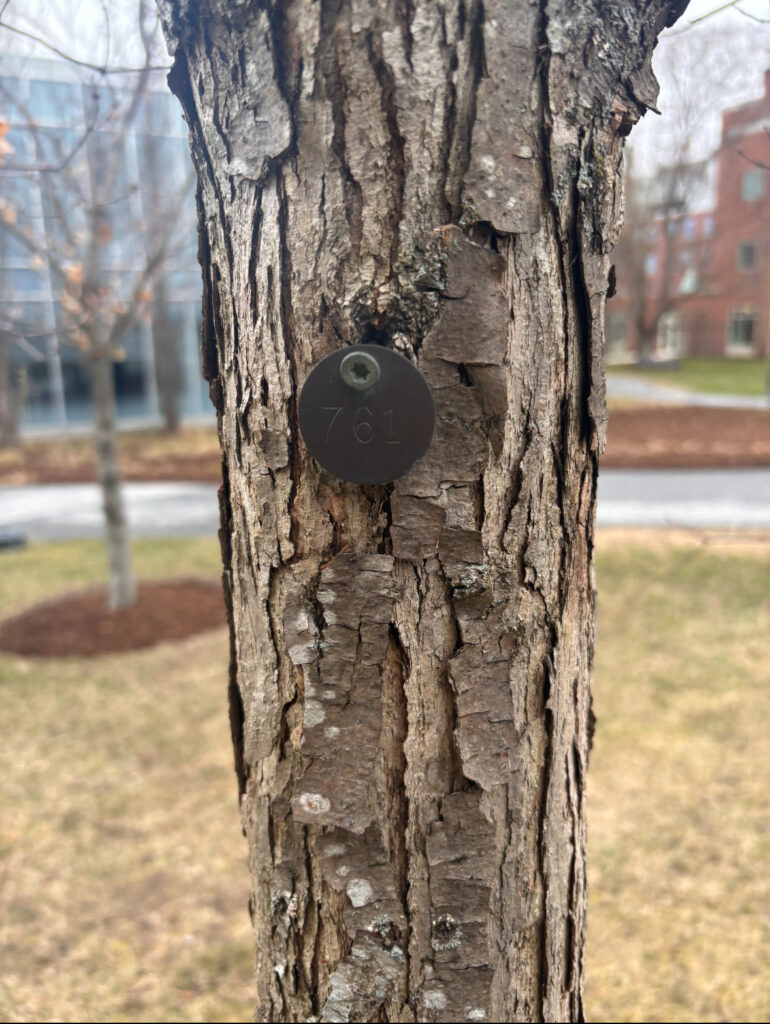
After that, I visited the White Oak (#761). It had fewer breaking buds (around 11–100), and they were even smaller compared to the other trees. A bunch of old oak leaves were still hanging onto the branches, which made it look less “springy” than the others.
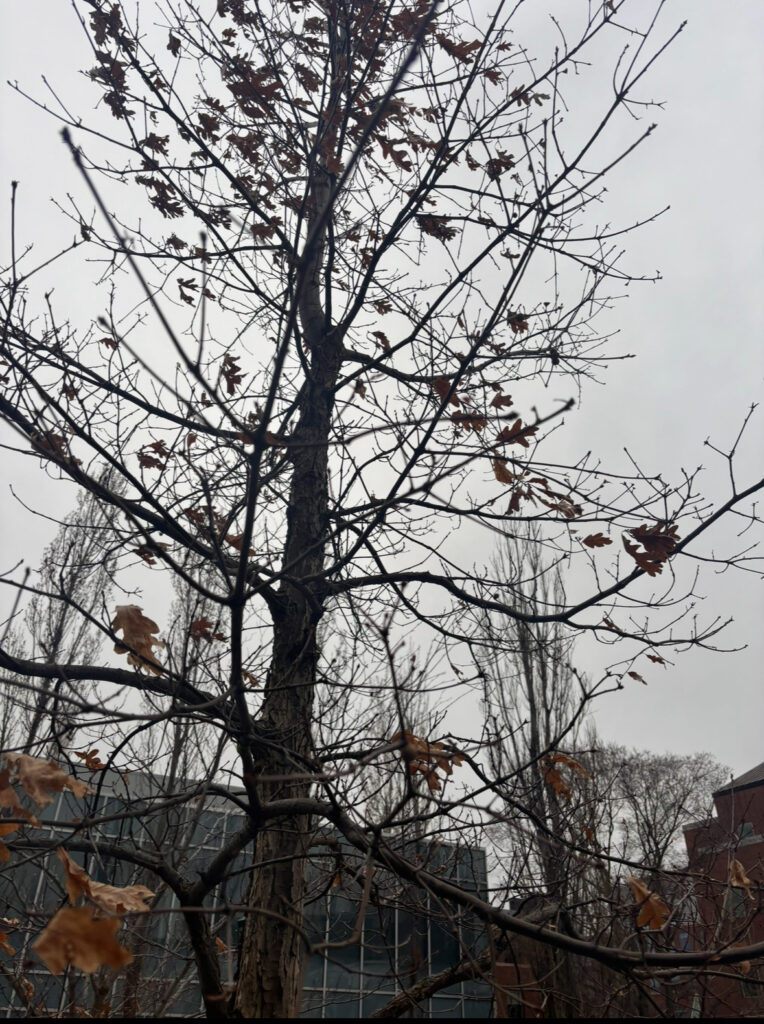
The fourth tree was a Red Maple (#280). This one looked a lot more active, it had a ton of breaking leaf buds (1000–10,000) that were a little bigger than the others. It also had a lot of little red stringy flowers and fruits already growing, with about 101–1000 fruits starting to pop out. This tree definitely seemed the furthest along out of all of them.
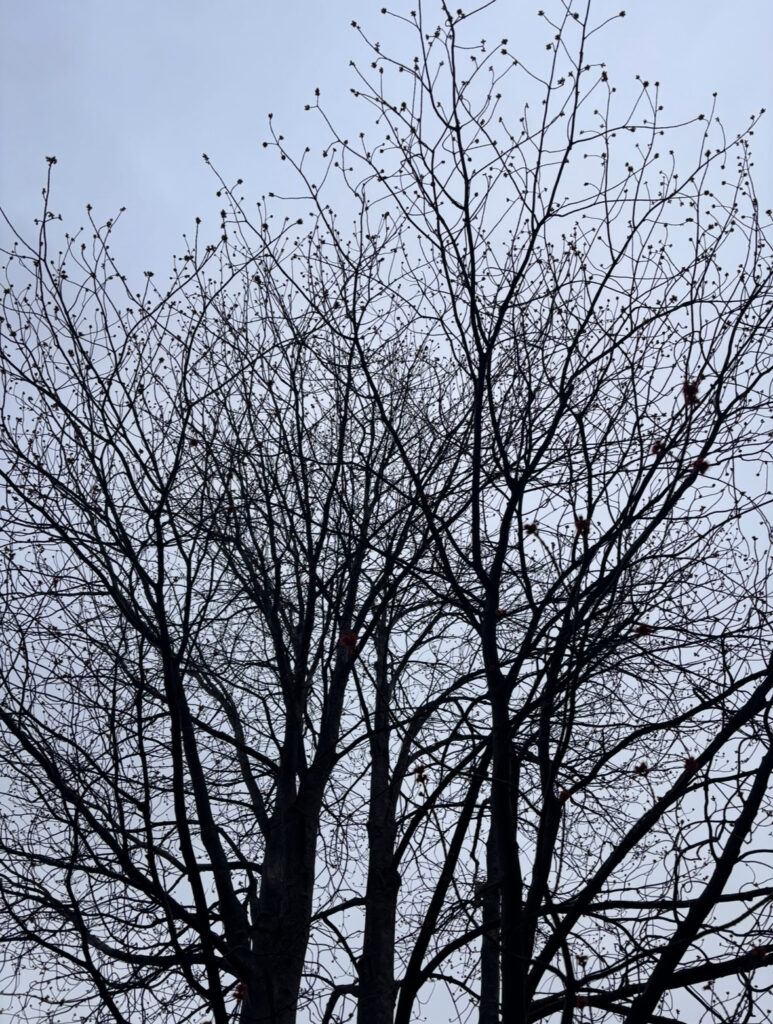
Finally, I looked at the Norway Maple (#3621). It had over 1000 breaking leaf buds and about 500 flower buds starting to grow. This tree was also well on its way to growing back.
When I explored the USA National Phenology Network website afterward, I learned that phenology data like ours helps scientists track how plants and animals are responding to climate change. One interesting thing I found and realized was that warmer springs are causing trees to leaf out earlier across the U.S., which can throw off the timing for migrating birds and pollinators. Since Vermont’s climate is already changing, the data we collected on campus trees could actually help show how these seasonal shifts are happening right here.
2025 February Phenology Assignment #2
For this outdoor wildlife spotting assignment, I visited places like Stowe resort, Bolton Valley, the Intervale Center, Centennial Woods, and just kept my eyes peeled when walking around campus. I saw a few very cool animals and some tracks that I tried to make id’s on using inaturalist, which was great as usual.
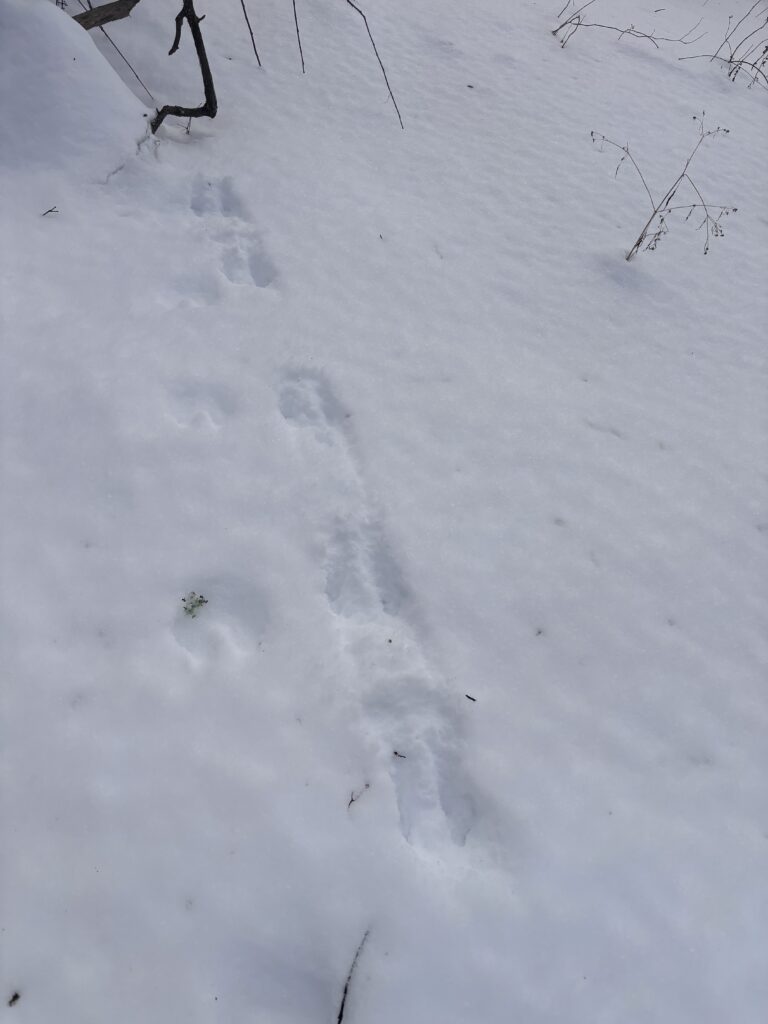
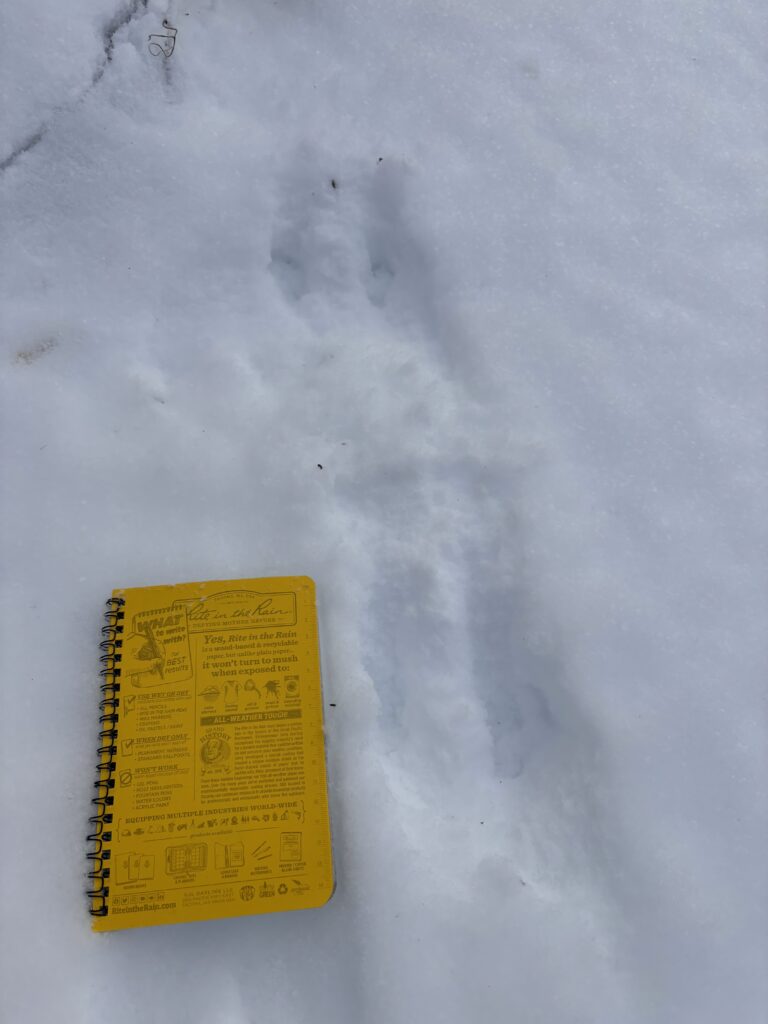
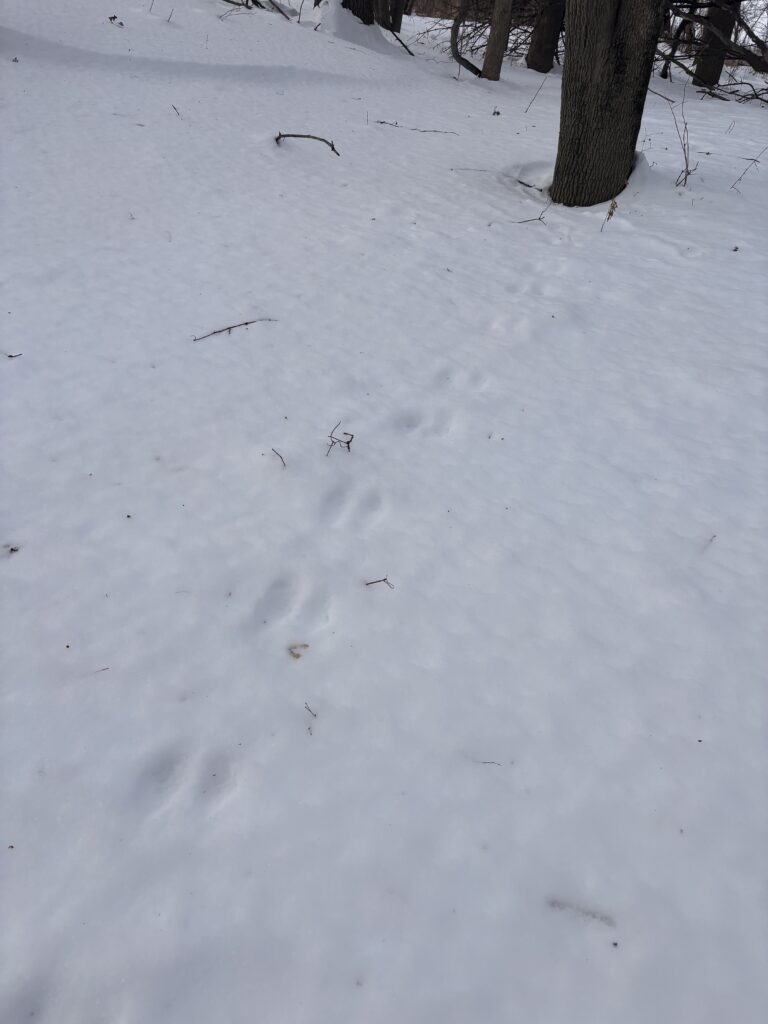
(I identified these tracks as a Cottontail Rabbit based on their distinct hopping pattern, with two large hind prints behind two smaller front ones. The size (1.5–3 inches) and spacing between jumps matched a rabbit’s movement.)
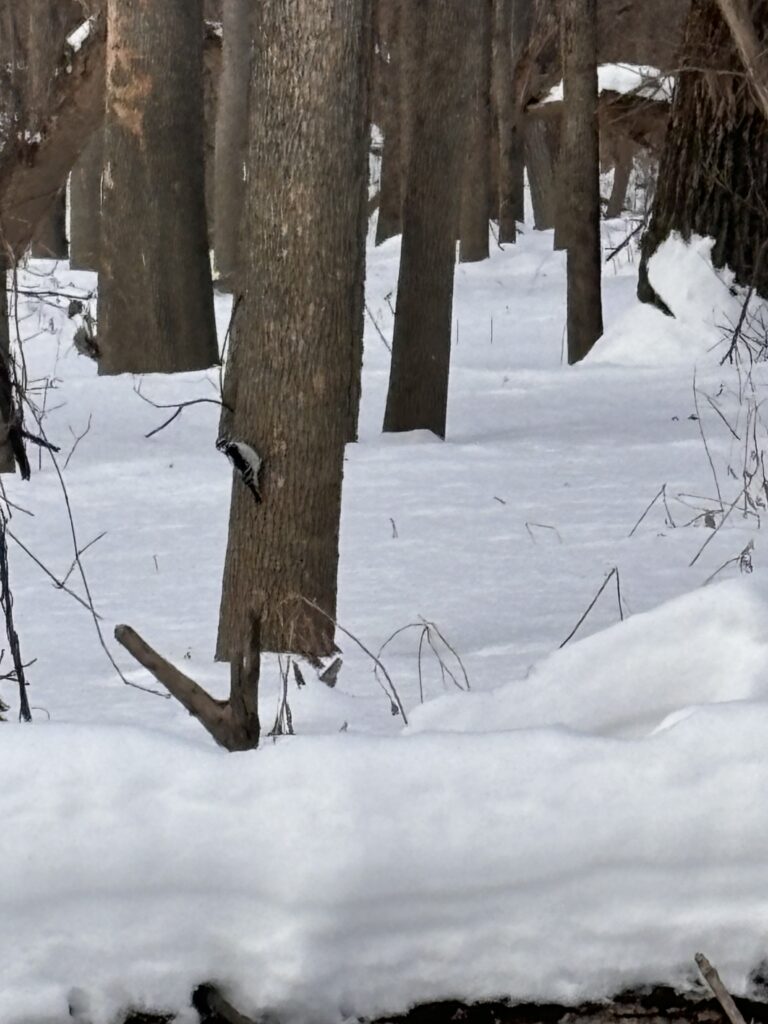
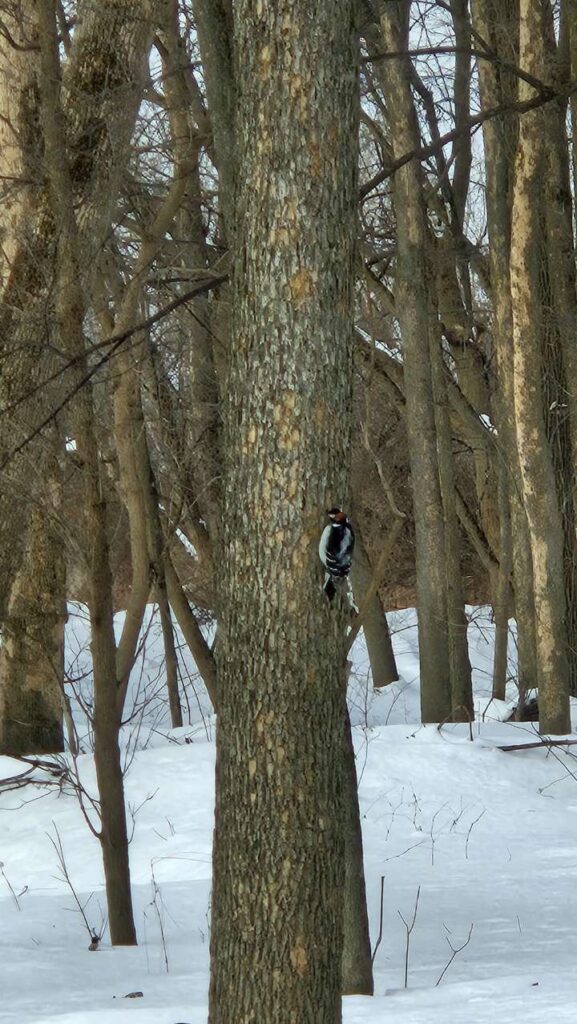
(I saw this woodpecker absolutely demolishing this tree, I identified the woodpecker as a Downy Woodpecker because it was small with a short bill and black-and-white feathers, and a smaller red spot on its head. I also noticed its quick tapping on the tree and a high pitched call.)
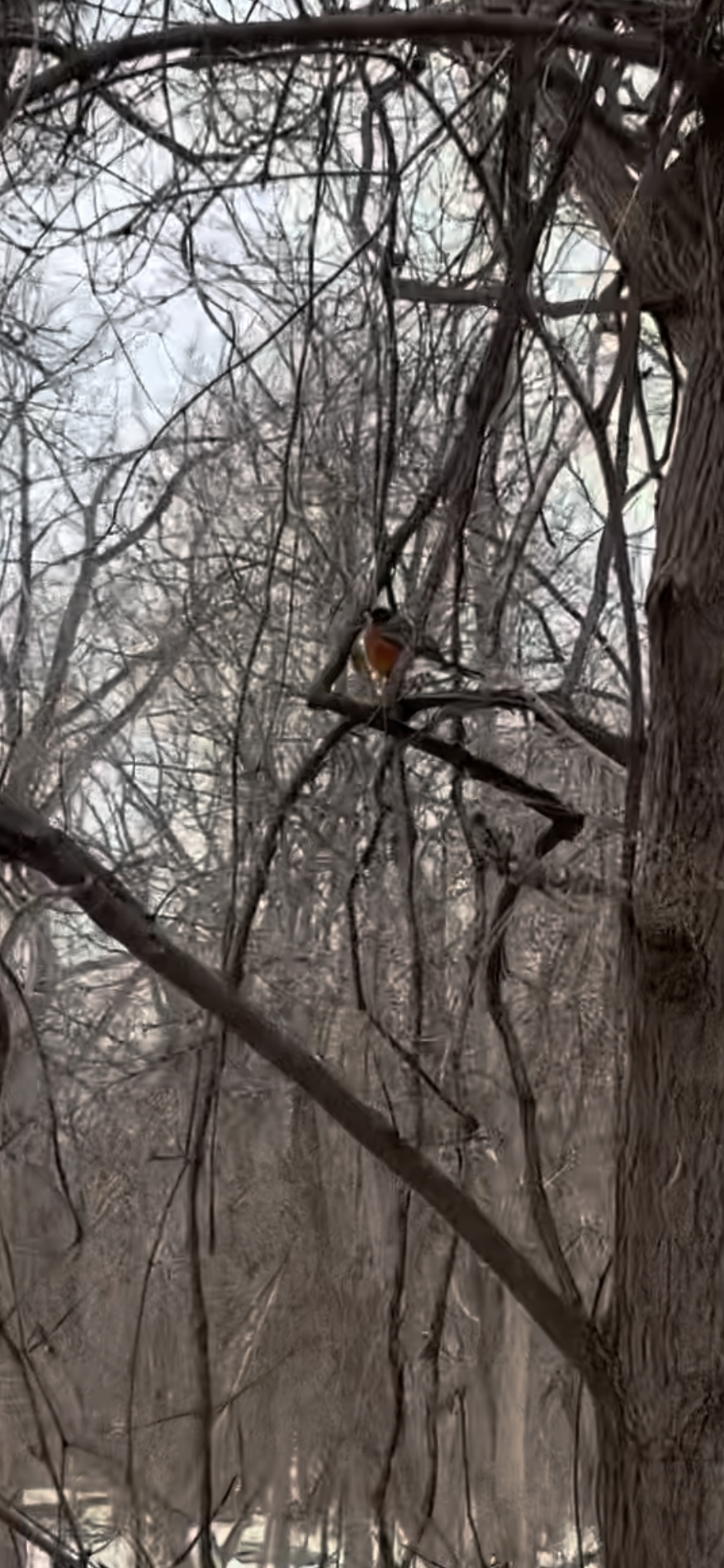
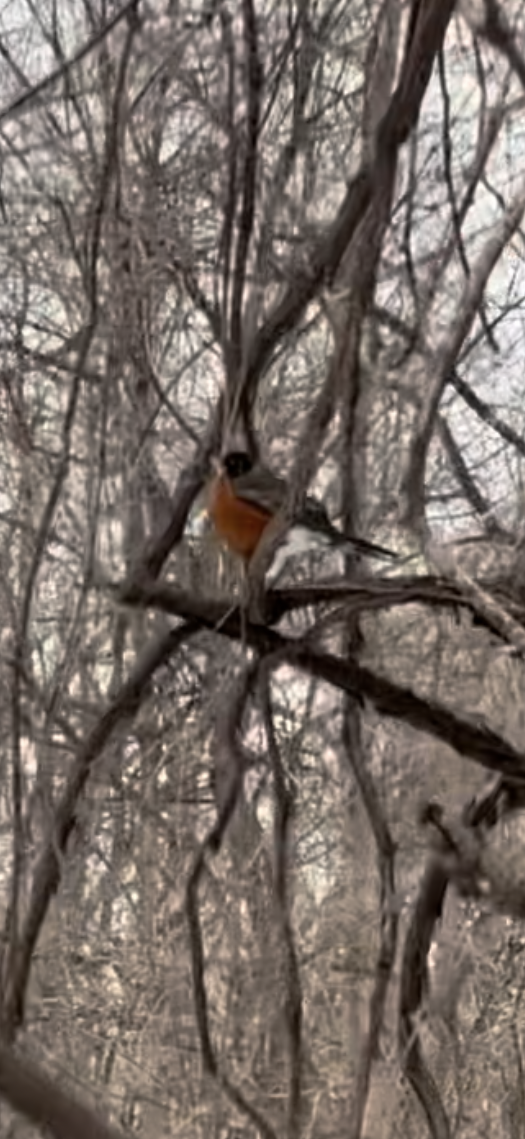
(I noticed this American Robin by its distinct orange breast, gray back, round shape, hopping motion, and familiar tweeting).

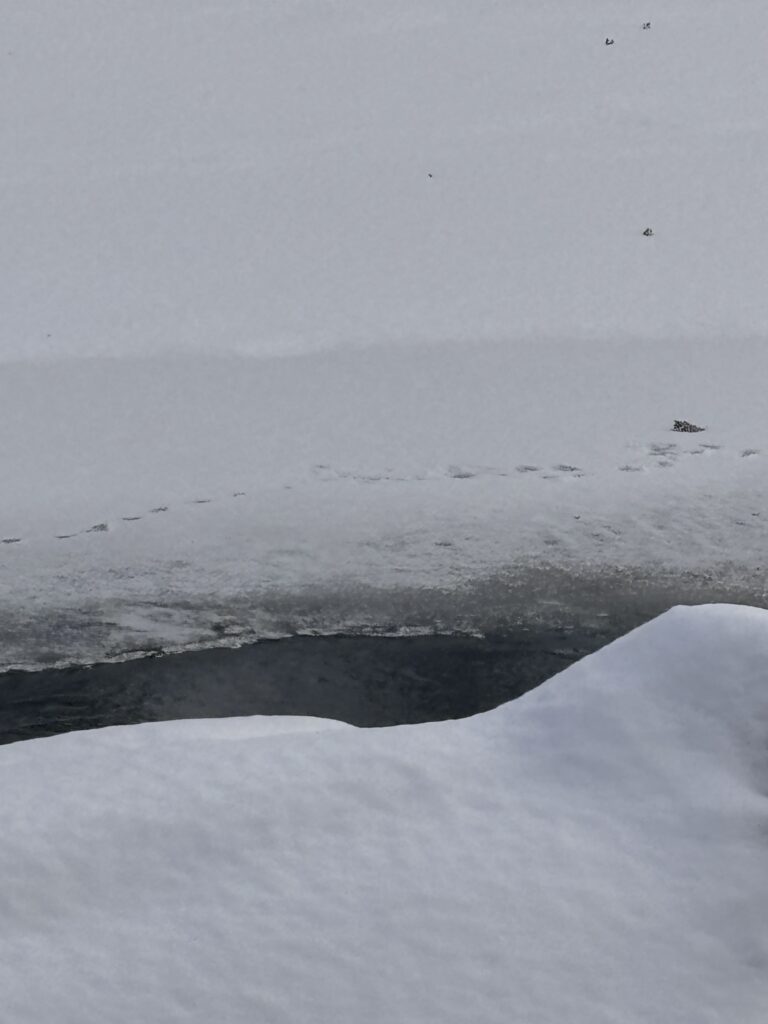
(I saw these tracks in the distance on the frozen Winooski River, I think they belong to some large bird that was walking on the ice. They were probably looking for fish or just relaxing on the ice and then took off directly from the ice based on the tracks just stopping after they circled around. I am guessing these tracks belong to a Red Tailed Hawk, or maybe a Great Horned Owl)
2025 January Phenology Assignment #1
I am back to my spot in Centennial Woods!
Returning to Centennial Woods for the first time since early December, I noticed a few changes in the area as winter has continued in my absence. I didn’t find any animal tracks in the snow, but I did observe more bird activity this time around. I heard some interesting calls echoing through the woods from some kind of small bird which I want to ID by the call, and I also spotted a raven flying overhead, which was pretty cool in the quiet snowy area.
(audio recording with some bird calls scattered throughout it^)
The snow from earlier in the season still covered the ground, and the creeks and ponds were completely frozen over this time around after many weeks of sub zero temperatures. The icy ground even made walking challenging I was slipping all over the place, which made me appreciate how different the woods are during the middle of winter.
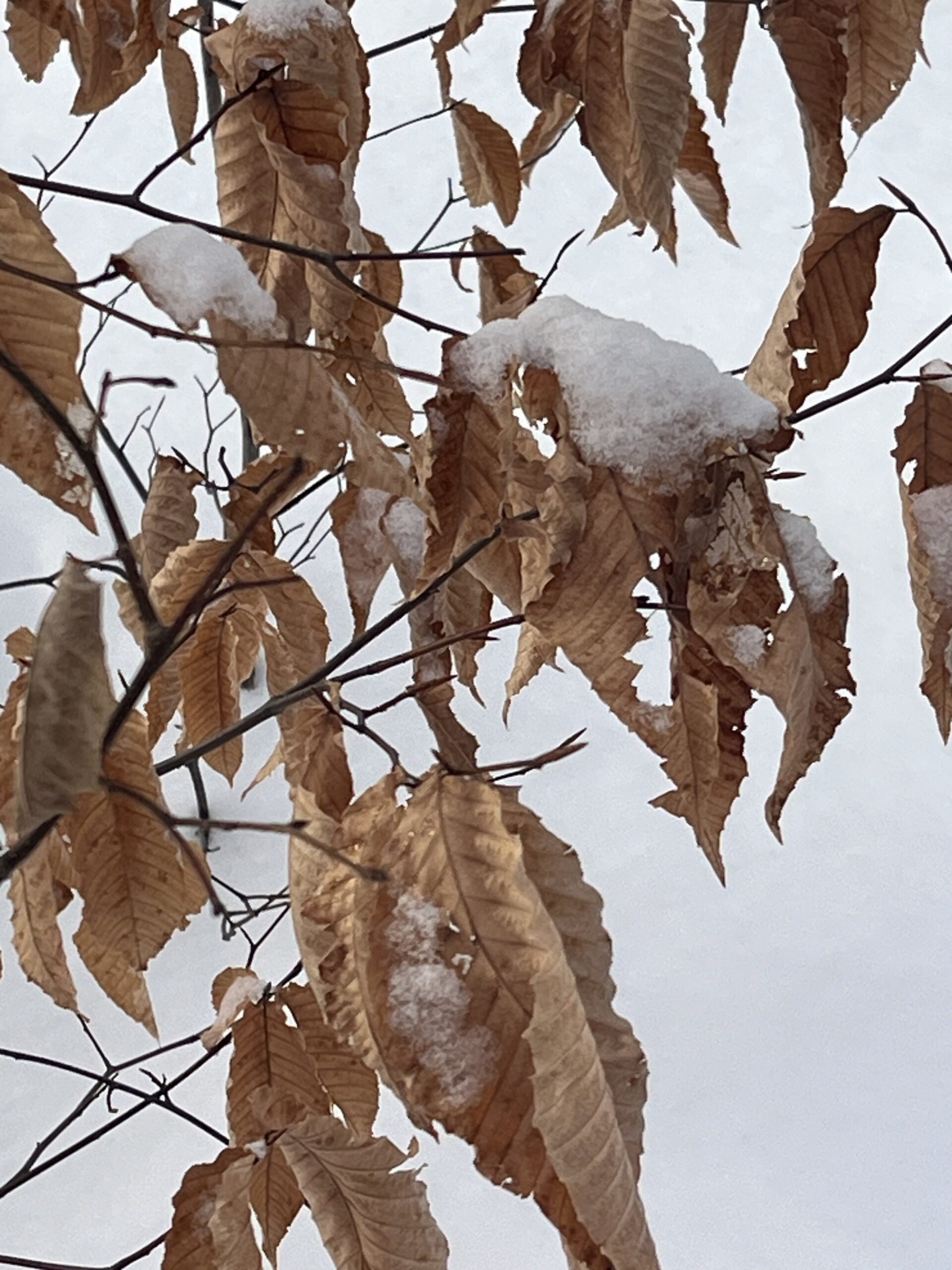
Almost all of the deciduous trees have now shed their leaves, leaving the forest looking more open, cold, and bare. But, the evergreens like the eastern white pine and the hemlocks, are still colorful and pretty with their green needles providing contrast to the white snow, the lack of leaves on the other trees makes the evergreens look even more vibrant and special, which led me to get some cool pictures. Interestingly, the American beeches still had a few of their leaves clinging on, creating a delicate golden-brown hue in the bare setting, and this is due to Marcescence which I talked about earlier in this project.
Overall, it’s pretty fascinating to see how Centennial Woods evolves with the seasons, even in the deep cold of late January. I’ll be curious to observe how the wildlife and vegetation change as we move to spring.
here are some cool pics I got from yesterday…
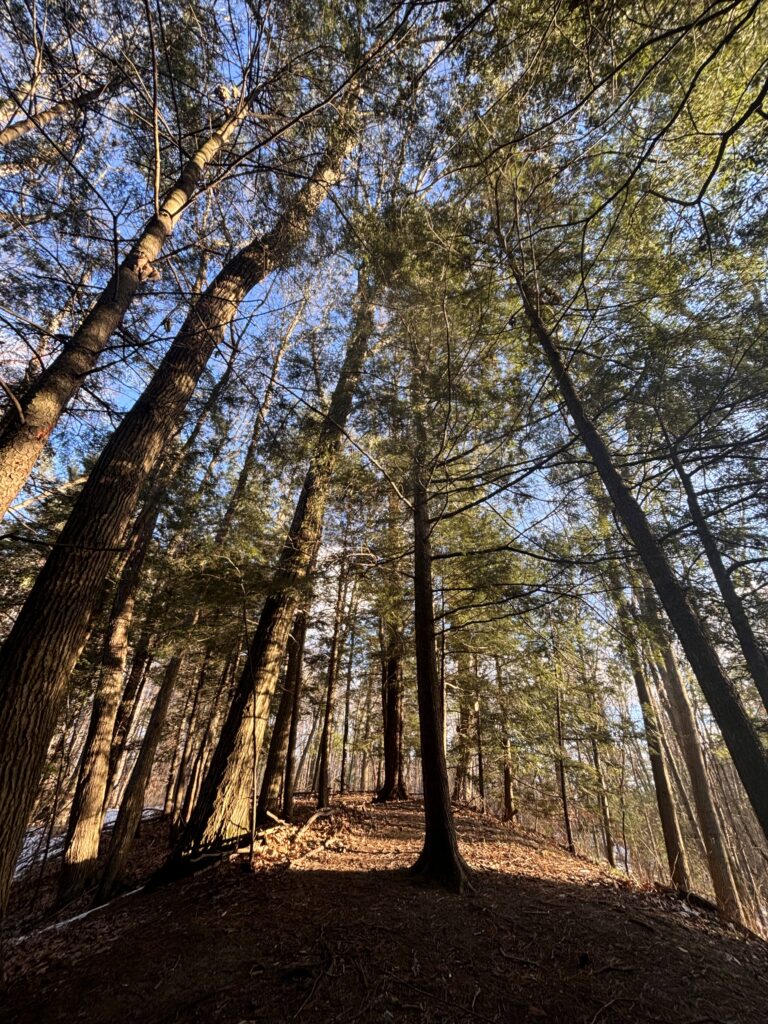
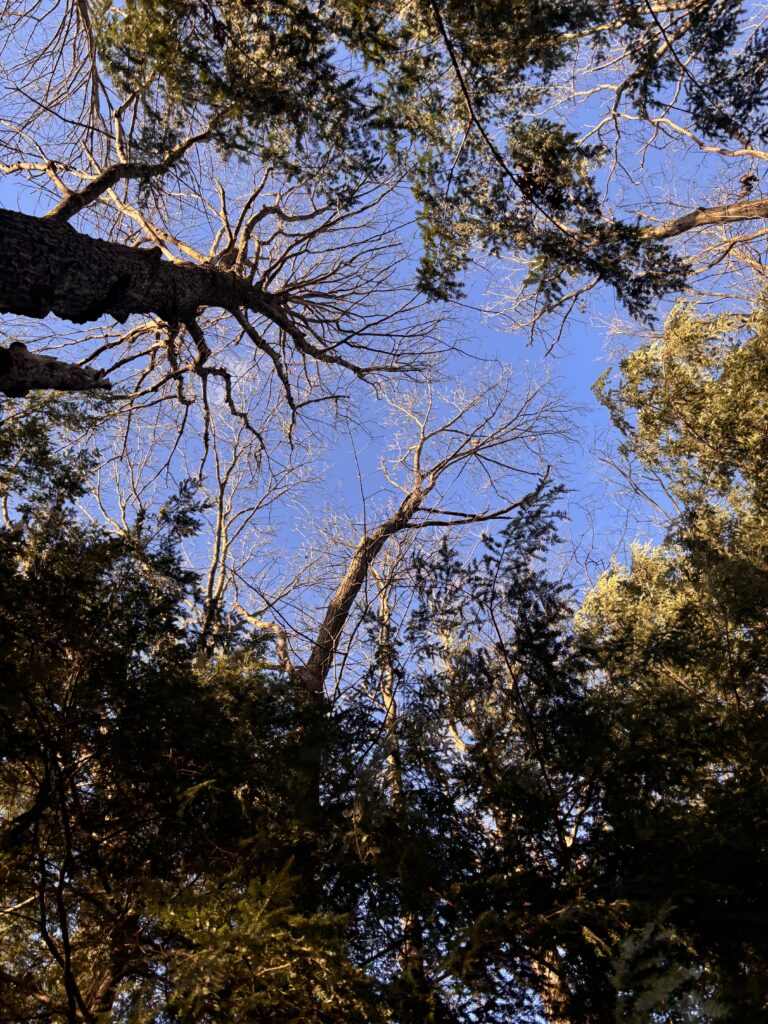
(The beautiful Evergreens)
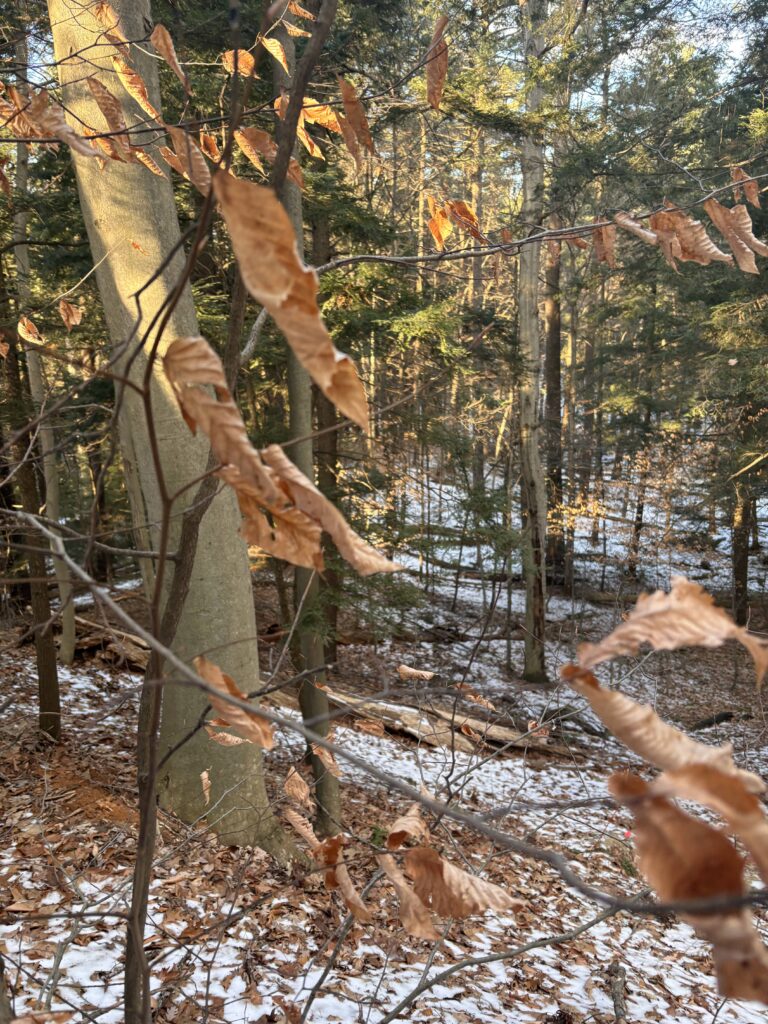
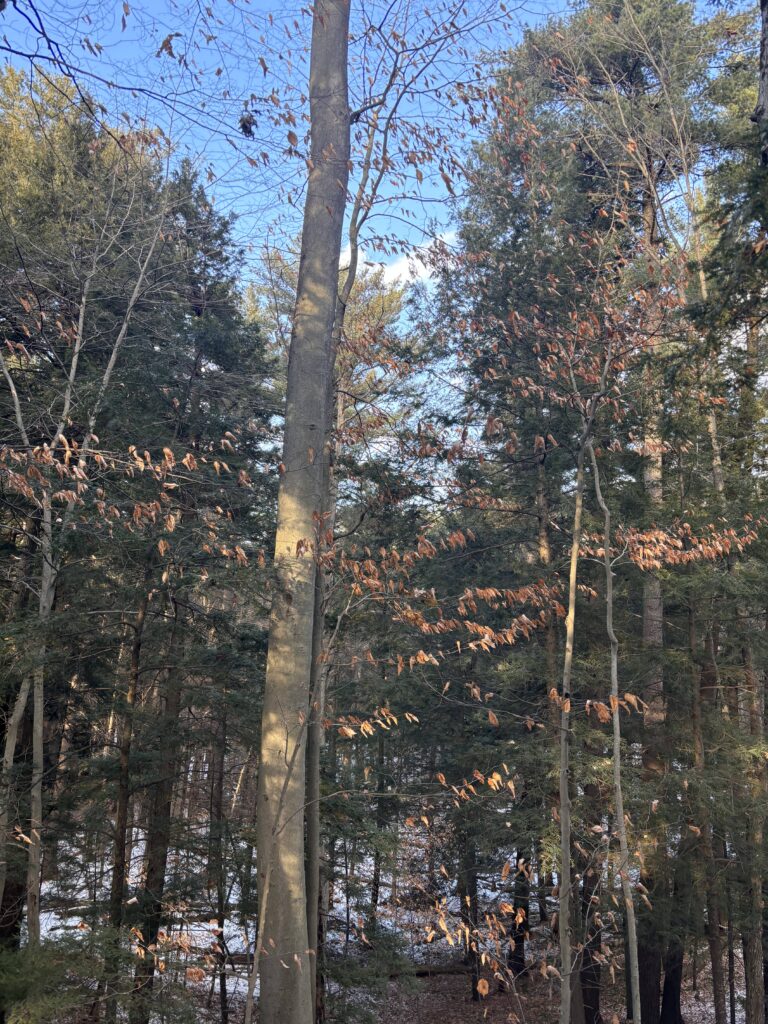
(Marcescence in action)
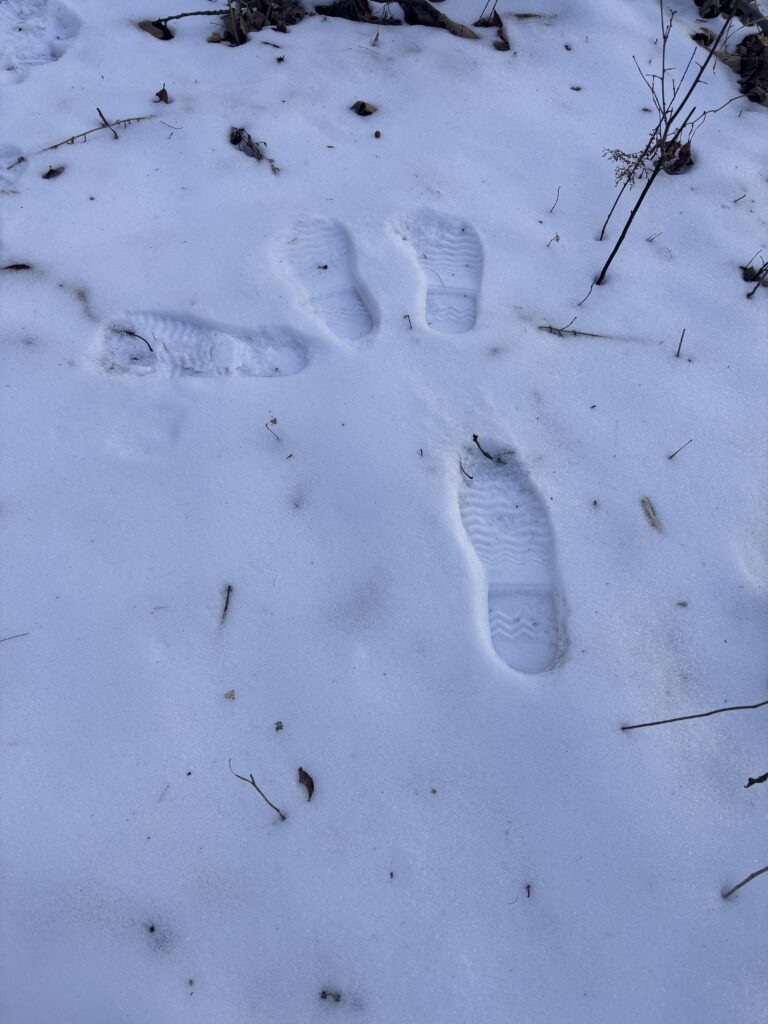
Human tracks spotted
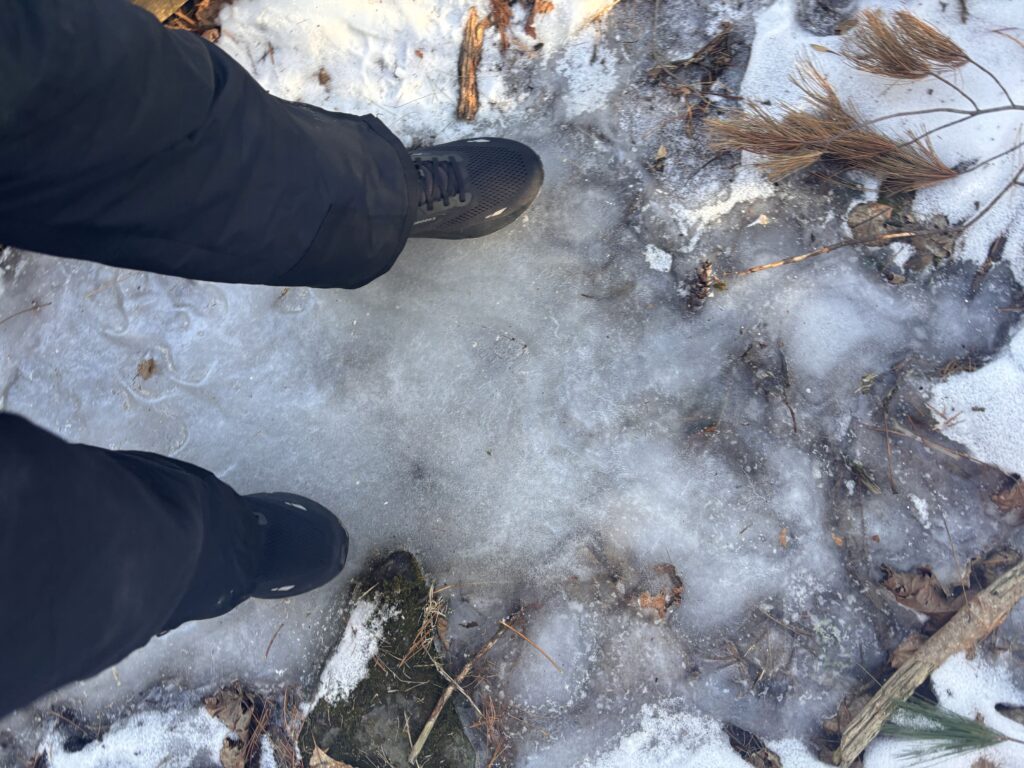
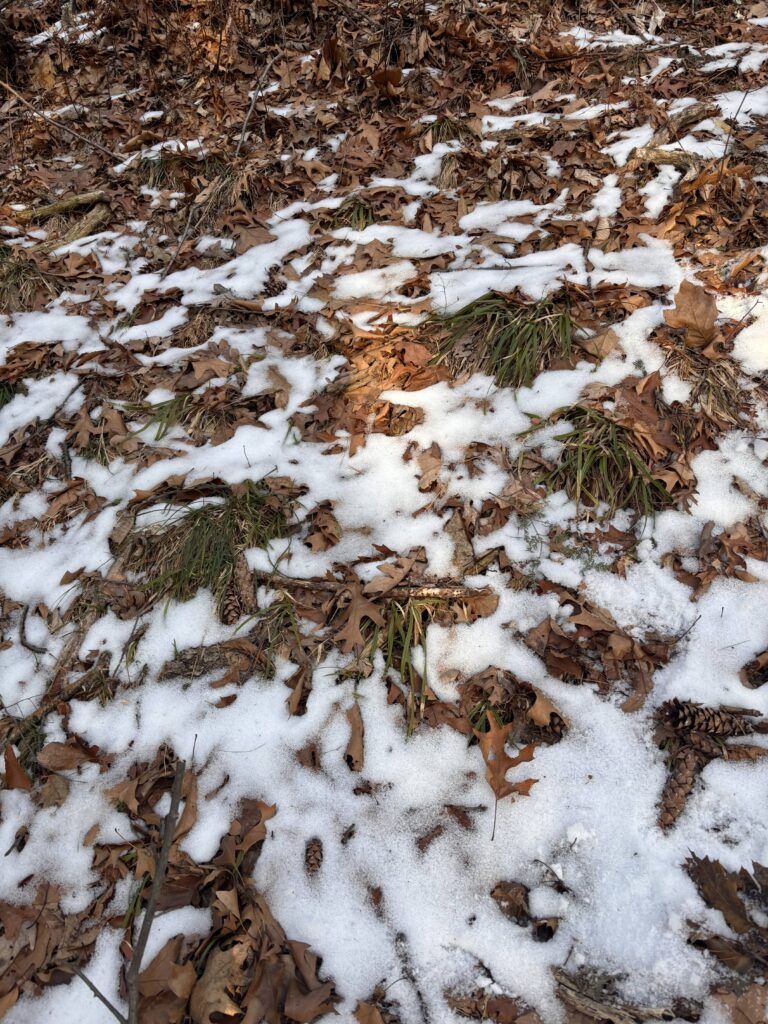
Icy and Snowy ground
Phenology Assignment 2/3
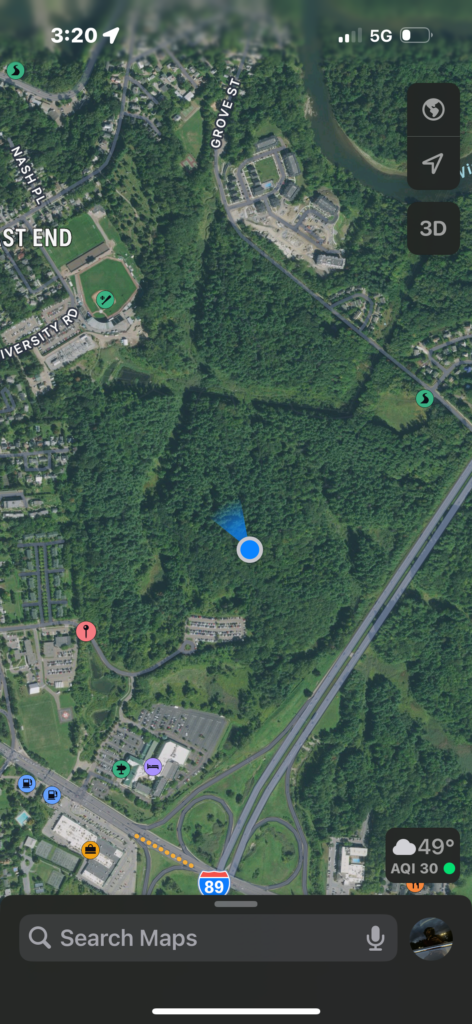
I chose a spot in the Centennial Woods. This is one of the first natural areas I visited in Vermont at the beginning of this school year for the self-guided centennial woods assignment and I remember walking along the path until I got to the highest elevation, I remember finding an area that seemed like the peak of a hill where you were among the top trees of the forest and all the trees surrounding you started from lower elevations. I get to this place by skateboarding from class on some day of the week, spending an hour or so there, and then skateboarding back to my dorm.
^ An image of a Google map showing your location.
https://maps.app.goo.gl/YfoBNsqkyWdCcezb6
A description of the vegetation
I visited my spot on October 25th and then again today on November 4th. When I first picked it on October 25th and was looking around it was late fall but there was still quite an abundance of green leaves and tree cover in the canopy. Many of the oaks still had some of their leaves, the beeches had all their leaves and some were still green, and there was a ton of green in the understory.
Nov 4th 3pm 46 degrees – When I returned today on November 4th, I noticed a significant color change and a lot more leaves on the ground. The green I saw today was solely from evergreen trees like the many hemlock and pine in these woods. The red oaks had a few leaves left but they were all either red or dark yellow, and the beech leaves were all a beautiful golden red color.
In this spot, I picked there are lots of northern red Oaks, eastern Hemlocks, and American Beeches. There are few but some eastern white pine, and maple.
A list of the most common woody plants with links to iNaturalist observations embedded
At least one original photo or sketch on your block
Photos from October (made large for great visibility of colors and foliage)


Photos from 11/4/24


Part #3
- Sight: calming dark greens are all around from the many eastern hemlocks at this sight, beautiful golden-red leaves rustle in the wind on the American beech trees not falling yet, light brown and red oak leaves fall down all around me, and the wind blows leaves through the air.
- Sound: I hear the wind howling, and rustling the leaves. And I can hear a few birds singing but its more quiet than I expected.
- Touch: The dirt is silky and sandy, the bark on the trees is dry and cold, the oak leaves are brittle and dry, the texture of the hemlock needles are soft and not too prickly.
- Smell: I can smell a slight hint of a pine/juniper-type scent in the air, the air is cool and crisp, I can almost tell through scent that winter is on the horizon.
Birds eye map – Eli Q
Pieces, Patterns, and Processes…
When I came to my phenology spot today the midterm was on my mind, and I thought I would try to look into the pieces, patterns, and processes in Centennial Woods. it’s pretty cool to see how all the parts of any ecosystem come together and function together.
Pieces:
The “pieces” of the woods are the separate parts that make up the ecosystem like
- Vegetation: Trees like American beech, hemlocks, pines, and oaks, and also ferns and shrubs, mosses, and other ground plants.
- Wildlife: Even though animal activity definitely slowed down a lot and I never saw much, the woods certainly support birds, rabbits squirrels, and decomposers like insects and fungi
- Physical Features: The ridge where I often sit, fallen logs, leaf litter, and trees/rocks contribute to the landscape
- Water Sources: Small streams or puddles that support wetland plants
- Soil Composition: The soil in the woods includes organic matter from decaying leaves and plants minerals, moisture, and living organisms like fungi, bacteria, and earthworms. It is super important.
Patterns:
The “patterns” are how these pieces interact over time or in the area
- Seasonal Changes: The change from colorful leaves and a vibrant forest in the fall to bare trees In the winter is a seasonal pattern. Leaf litter accumulation and decomposition follow a typical cycle as the seasons go on
- Vegetation Distribution: Larger trees like oak hemlock and beech dominate the canopy, while plants like ferns, shrubs and mosses fill the understory
- Animal Movement: Trails and tracks can indicate animal use of the space, showing where wildlife is most active
- Sunlight Patterns: The changing hours of sunlight, especially in the morning or late afternoon, shows me how gaps in the canopy or changes in sunlight patterns shape the growth of plants in these woods, especially the ones in the understory.
Processes:
The “processes” is the natural cycles and interactions happening in these woods, because of all the pieces being put together
- Decomposition: fallen leaves breaking down provides nutrients to the soil, supporting plant growth and the forest’s nutrient cycle and future life
- Water Flow: Rainwater and runoff create small streams and influence plant growth and their distributing
- Food Web Dynamics: Even though I wasn’t really able to observe this, these woods are part of a larger food web where plants, insects, birds, and other animals rely on each other and predate/compete with each other.
- Adaptation: Seasonal shifts force animals to adapt, with some of them migrating, hibernating, or changing their activity levels to conserve energy
- Habitat: Soil provides a home for so many microorganisms, insects, and burrowing animals.
- Growth: Soil quality affects where certain plants thrive, influencing the distribution of trees, shrubs, and ground cover. For example, the impressive amount of hemlocks around my spot makes me think that the soil pH might be a bit low because hemlocks do best at 5-6 pH.
In Centennial Woods, these pieces, patterns, and processes work together to create an awesome and dynamic ecosystem. Observing this idea in my spot gives me a deeper appreciation for how everything is connected, even in the quiet months of winter.
Phenology Project Part #4 – Home Spot
The spot close to home I chose for this segment of the phenology project was Lake Artemesia which I visited with my friend Liam on Friday and spent some good time at. Lake Artemesia is a very cool place, its is a pretty big, and serene lake in College Park, Maryland. The lake is surrounded by trails, wetlands, and trees. The cool thing is that it used to just be gravel pits, and it was excavated by the metro company for its gravel in the 1980s, but over time it naturally filled with water and eventually, a 38 acre lake was formed. Now the lake is full of fish, ducks, turtles, and ospreys. It is honestly a great spot for walking, biking, fishing, and just relaxing and enjoying the views. The lake is also close to DC but is still very peaceful without many people crowding the lake, so it’s a good spot to visit if you want to escape into nature. I love this lake, it’s been one of my favorite places to explore since I started fishing there in 2022, and I would recommend it if you are ever in the DC Metro area.
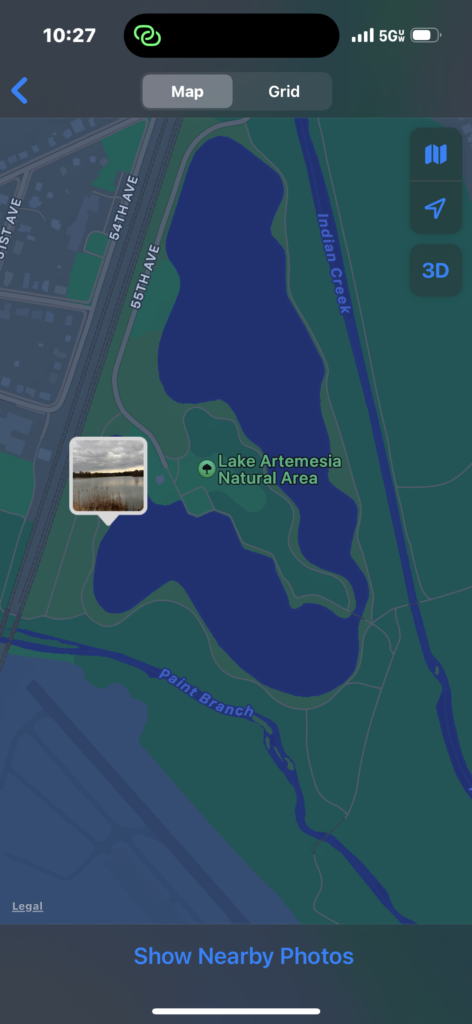
Comparison
Lake Artemesia and Centennial Woods are different in some ways and similar in others but both places are full of life. Lake Artemesia in Maryland is a lot of trees, water, and wetlands, with ducks, turtles, fish, and plants like cattails. Its seasons are milder with spring coming early and winters not being super cold. Some of the most common trees I noted during my time at the lake on Friday were red maple, sycamore, box elder, tulip trees, red oak, and white oak. And, all of these trees in this Maryland spot still had most of their leaves, as compared to the Vermont trees which were losing most of their leaves weeks ago and are probably completely bare now, aside from the evergreens. Centennial Woods in Vermont is a forest with lots of trees like maples, oaks, pines, and beeches and also animals like deer and squirrels. It definitely has colder winters, later springs, and in a way it has bigger moments like extra colorful fall leaves and more snowy winters. Both of these spots , Lake Artemesia and Centennial Woods are examples of nature in urban areas, Lake Artemesia was once gravel pits used for building the D.C. Metro, and the train line still runs right next to it. Over time, it was naturally formed into a beautiful wetland full of wildlife. Centennial Woods, surrounded by neighborhoods the University of Vermont and the city of Burlington, is a quiet and peaceful forest in the middle of a somewhat busy area. Both places show how important and special it can be to have natural spaces in or near cities for people and wildlife.
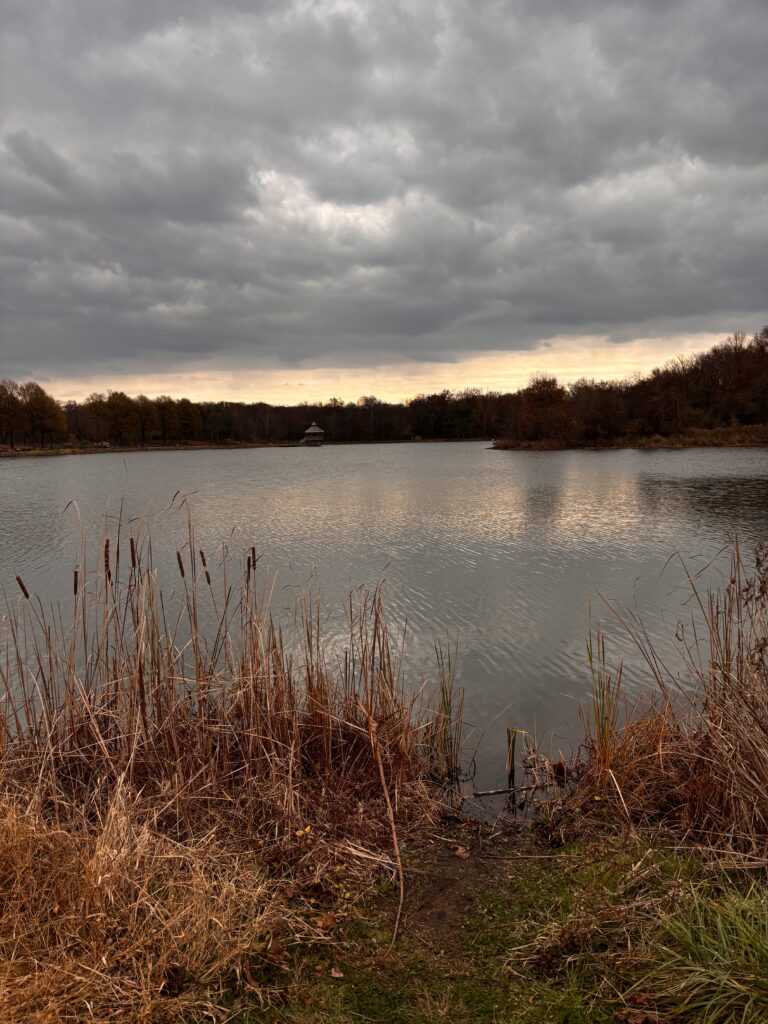
Lake Artemesia with a few cattails in the foreground.
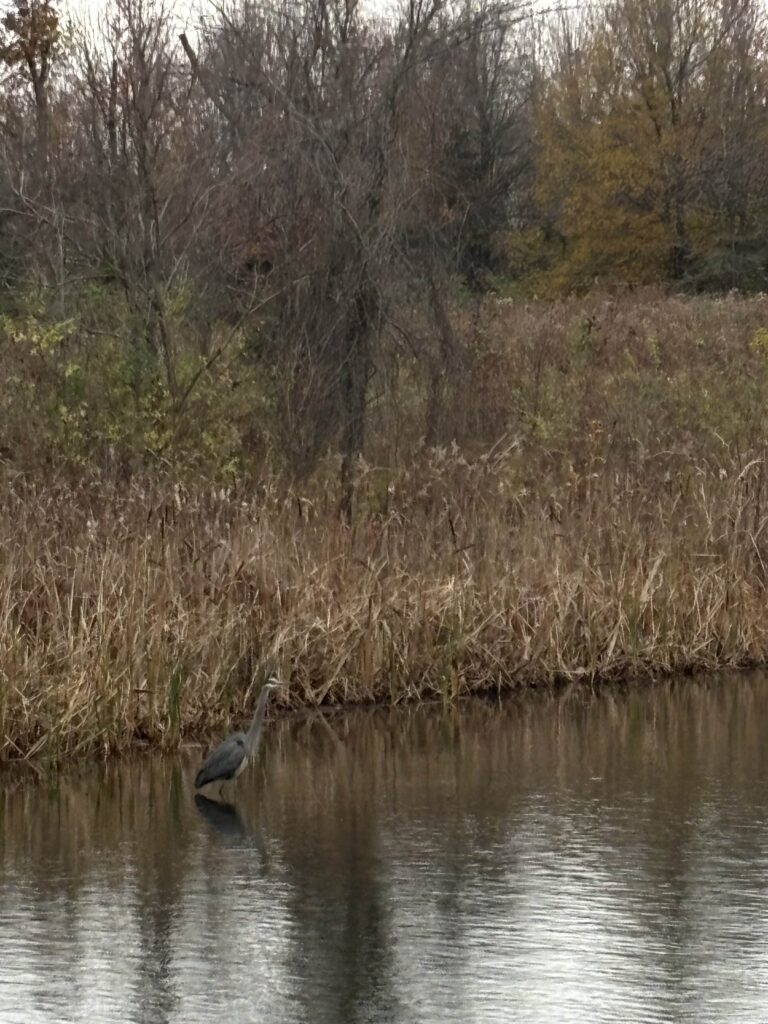
A Blue Herring standing by the bank of Lake Artemesia, waiting for a meal to swim by.
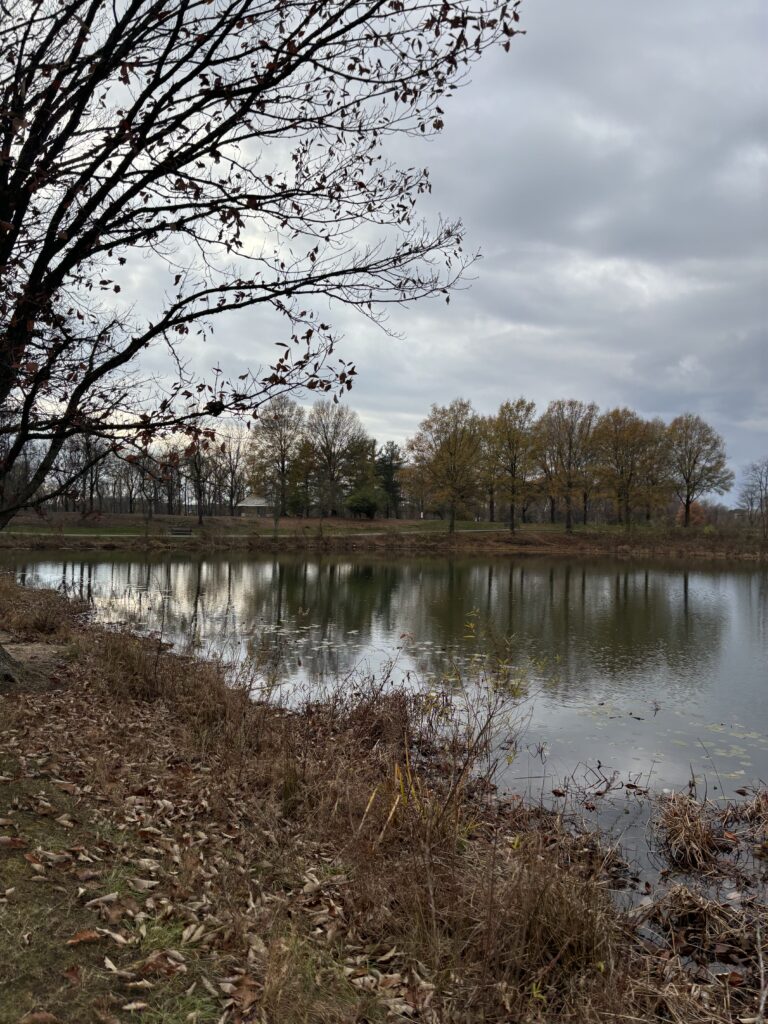
Another view of the lake with a Red Oak in the foreground and Lili pads on the water.
Phenology Project Part #5 12/8/2024
Date: 12/8/24
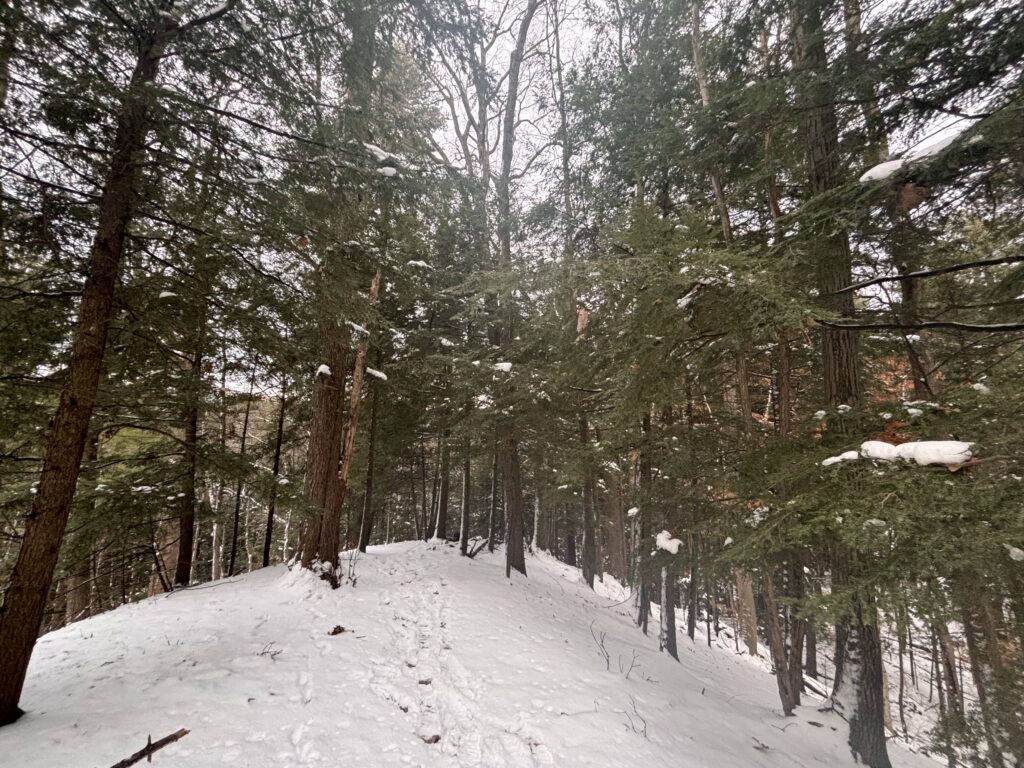
Today I walk back to my phenology spot through the snowy forest of Centennial Woods after a few weeks of absence from it, the quiet of the woods especially due to all the snow sound absorption, is very peaceful. When I reach my specific spot at the elevated ridge I take a moment to look around at the beautiful and natural area…
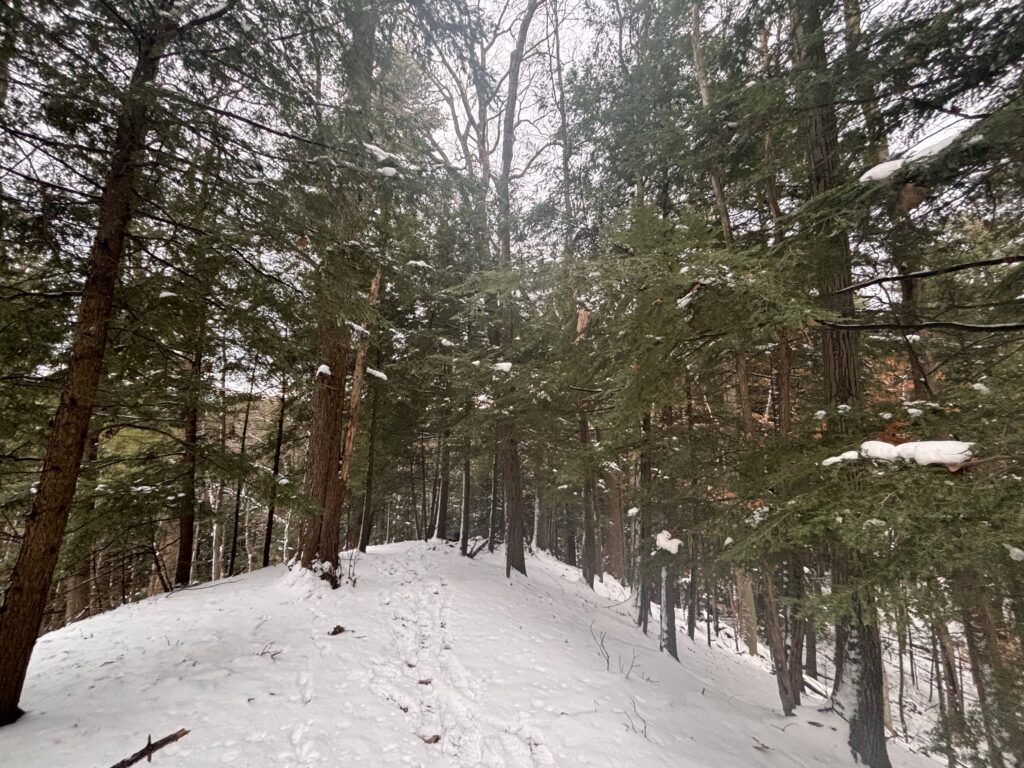
The mighty oaks have lost all their leaves, which now rest beneath the snow.
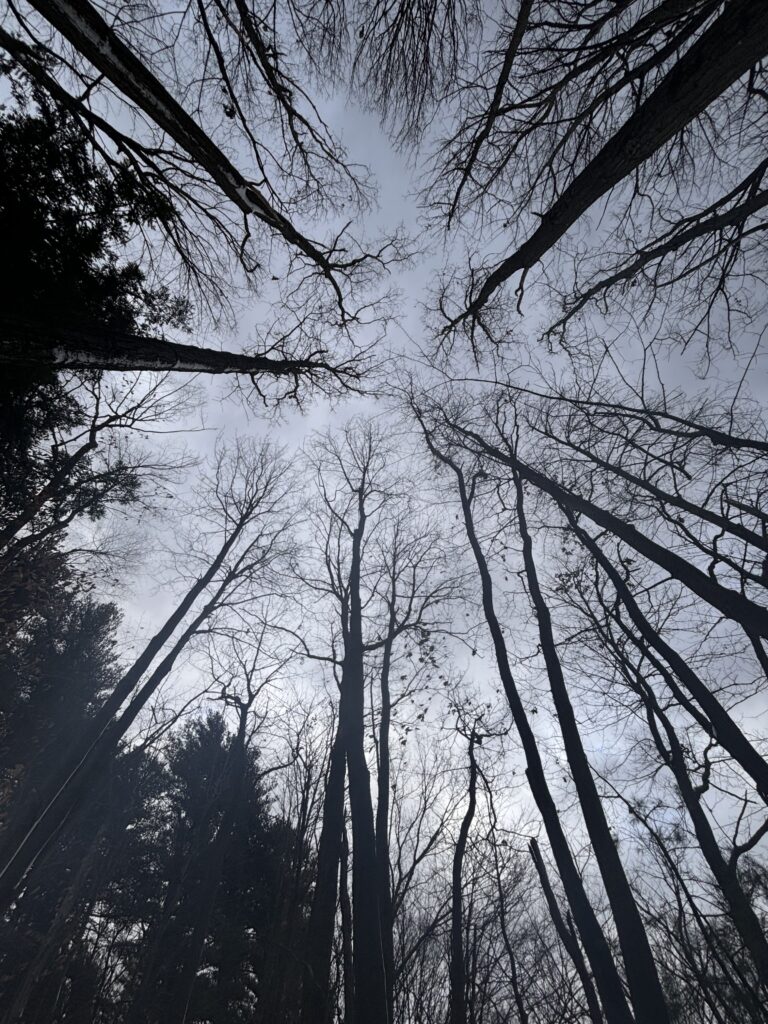
But, the beech trees golden leaves still hold on, adding a bit of color other than the evergreen to the forest, and there is a reason for this…
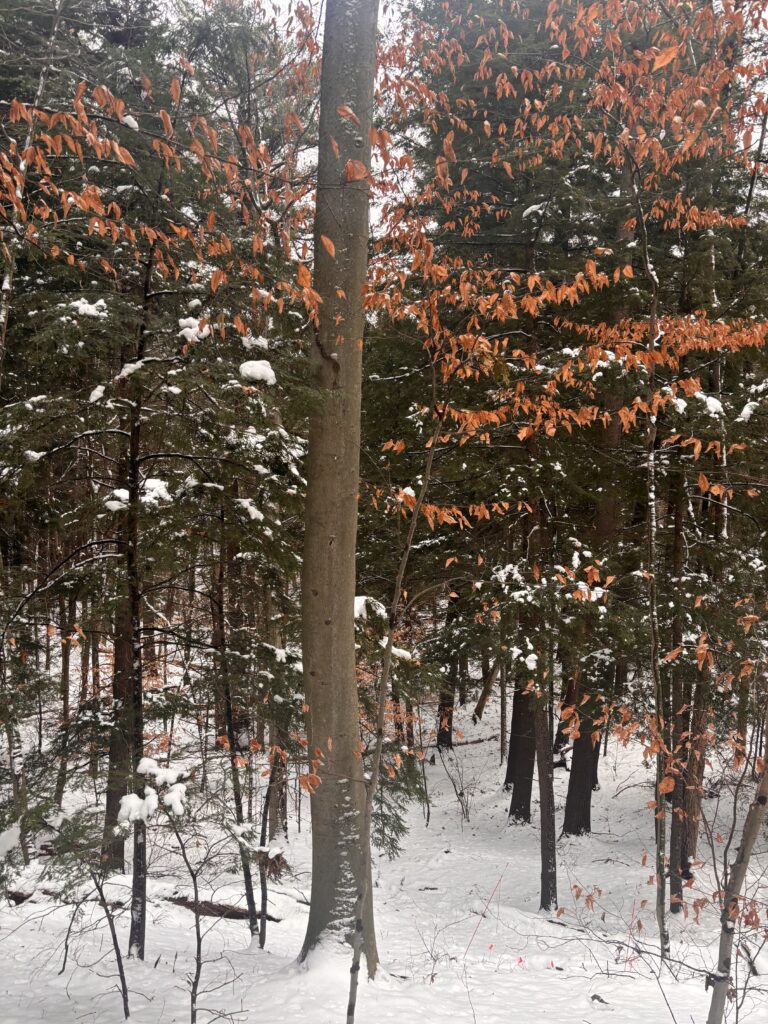
…In most deciduous trees, leaves from the previous growing season are shed as winter approaches. Leaves are no longer adding energy production, so they are shed from the trees. When day length shortens and temperatures drop, trees form an abscission layer of specialized cells at the base of the leaf, cutting off the supply of water and nutrients and allowing it to drop from the tree. However, in species that retain their dead leaves throughout the winter, this abscission layer is delayed or only partially forms, allowing leaves to remain for a while longer. Marcescence tends to be more prominent in juvenile trees or on lower branches of mature trees. This pattern has led scientists to speculate about its adaptive significance. Beech trees (in the Family Fagaceae) commonly show this marcescence.
The retention of leaves acts as a protective barrier for the tree’s buds. In winter, the delicate buds of new growth are particularly vulnerable to extreme cold, desiccation and frost damage. Dead leaves may serve as a physical barrier, shielding buds from drying winds while preserving moisture. In especially windy landscapes or where trees are exposed, like a savanna, this feature of protecting future growth would be critical to long-term survival and reproduction.
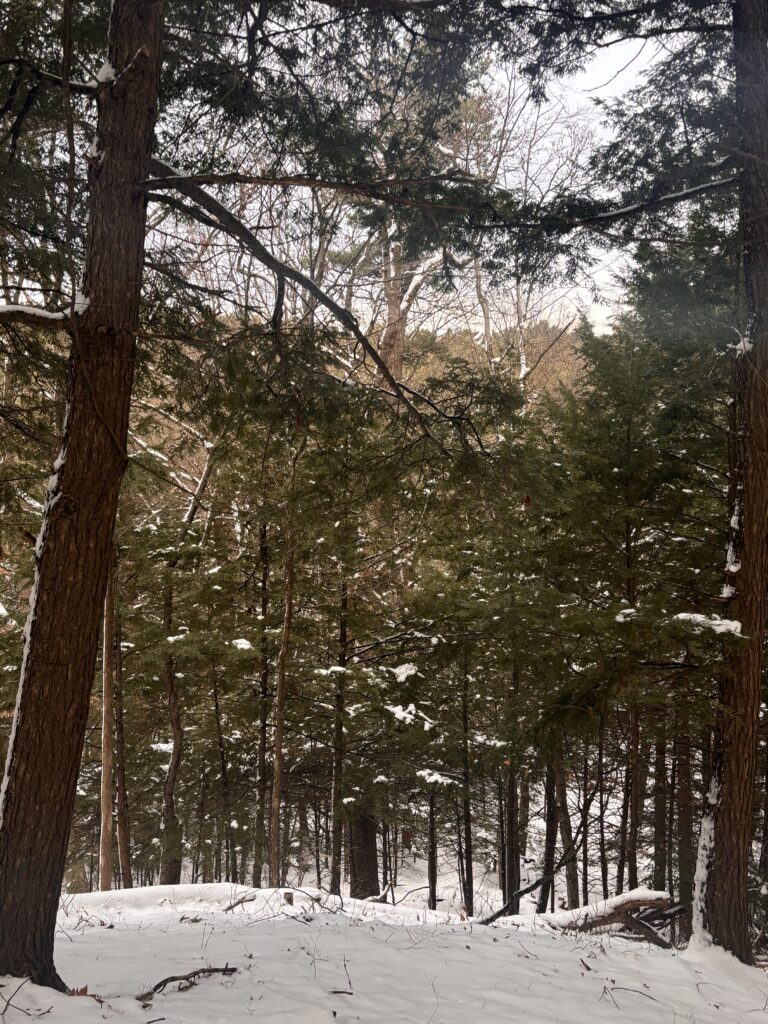
The hemlocks and pines are still standing strong, their evergreen needles make for a nice and pretty contrast to the white snow that covers the ground now. These evergreens dominate the winter landscape adding life and pretty forest green colors when most of the rest of the forest have gone a little dormant.
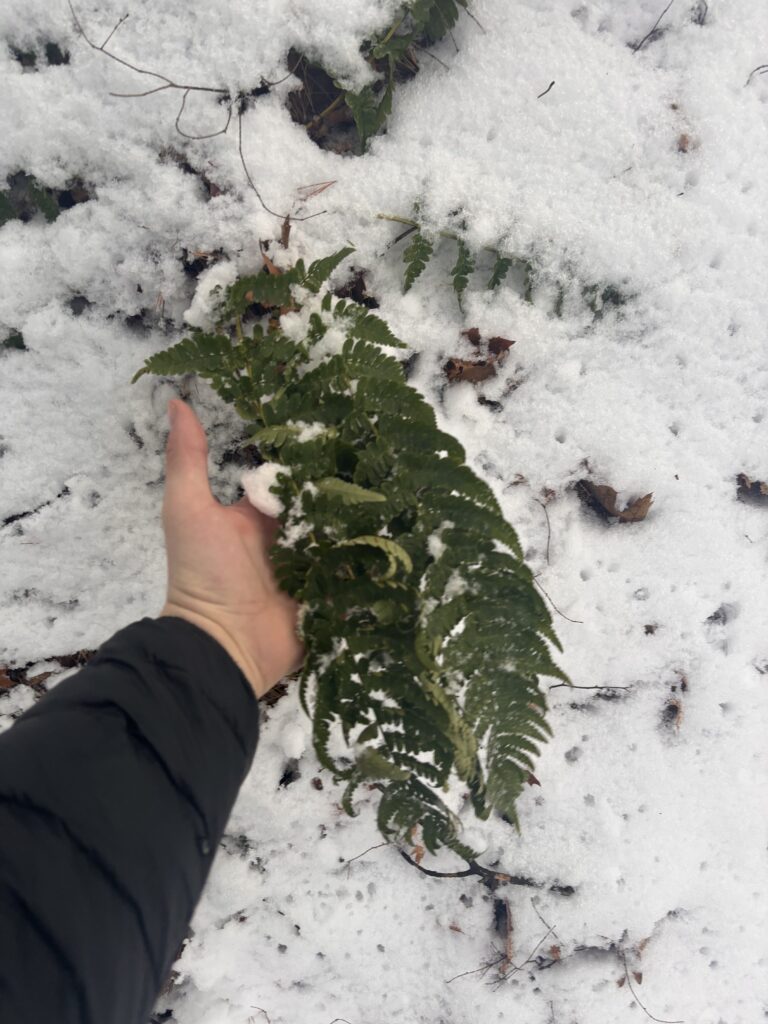
Right beneath the soft snow, I notice a few wood ferns with their fronds peeking out, the ferns are pressed flat under the snow, almost looking like they’re taking a nap or hibernating for the winter.
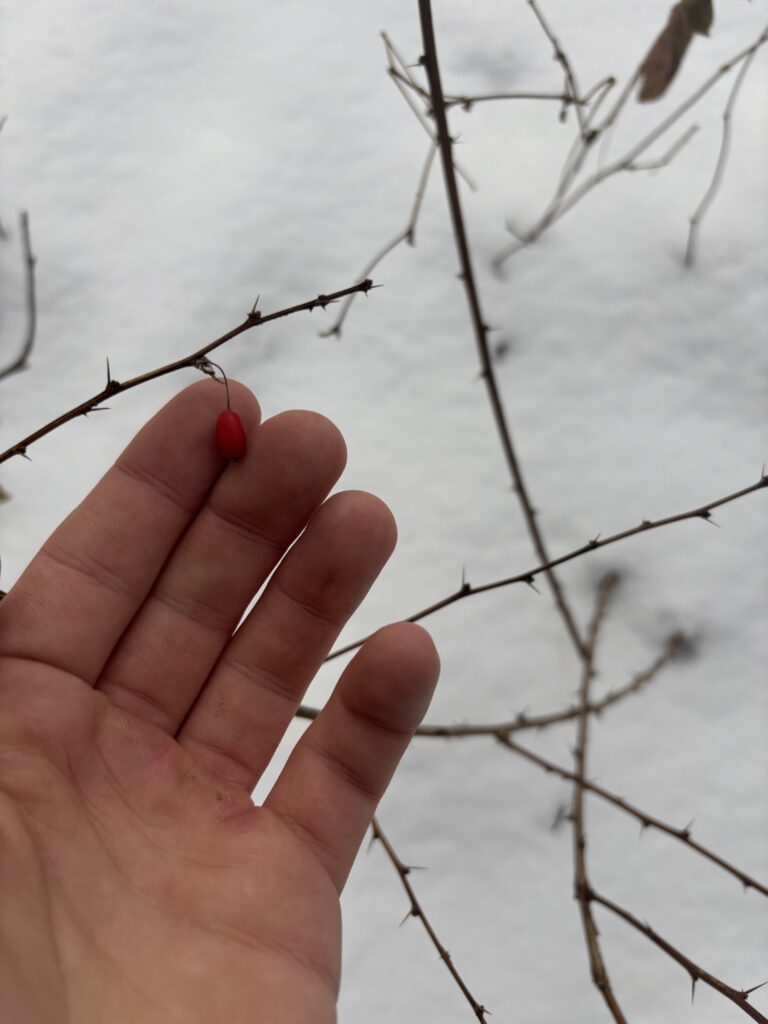
And also nearby a barberry bush catches my eye with its thorny branches. It’s almost entirely empty but it holds on to a single bright red berry, standing out like a small survivor left to shine brighter against the white snow.
This diverse mix of bare trees, evergreens, and surviving vegetation remind me how special these woods are especially in the winter months, when the forest is going through change. It’s a more empty and quiet time, but there’s still so much to notice and appreciate about the life that continues to thrive here…
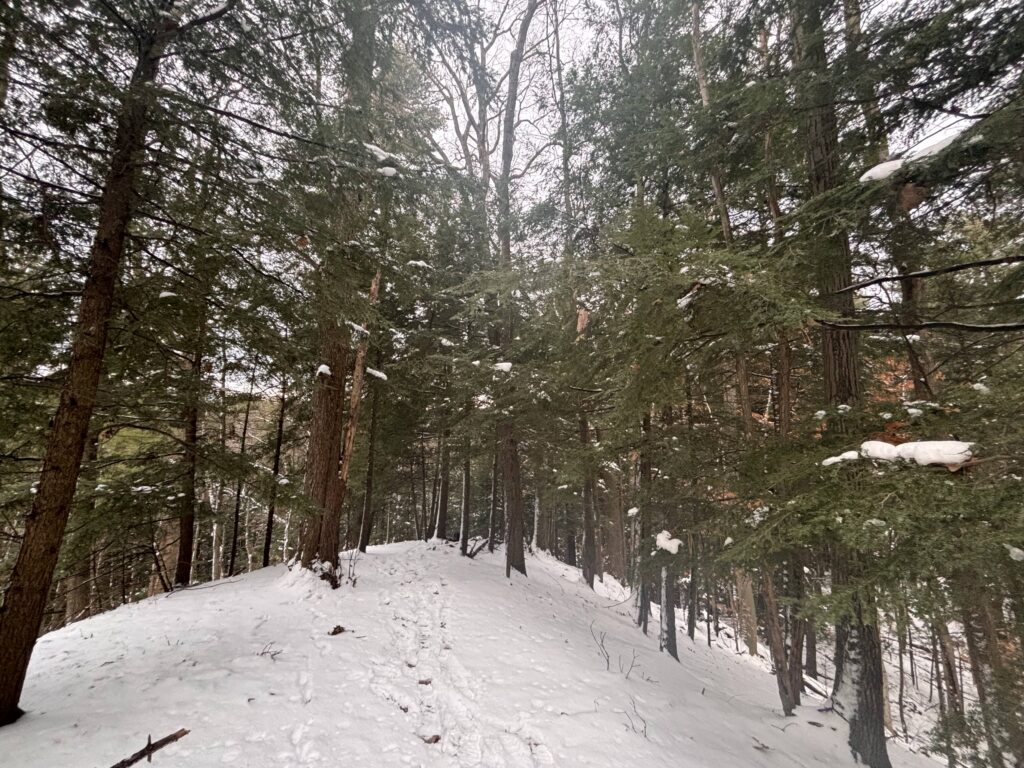
signs of life in Centennial Woods 12/8/2024
During my visit to the woods I did not actually spot any animals from my snowy ridge, but I heard the calls of a few birds in the distance which brought some life into the quiet woods. I think the bird I may have heard was a chickadee because the call it made sounded like someone whistling “hey phebee.” I tried to get a voice memo of the bird call after I heard this but it must have gotten camera shy because the woods remained very quiet the rest of my time I spent in my phenology spot today.
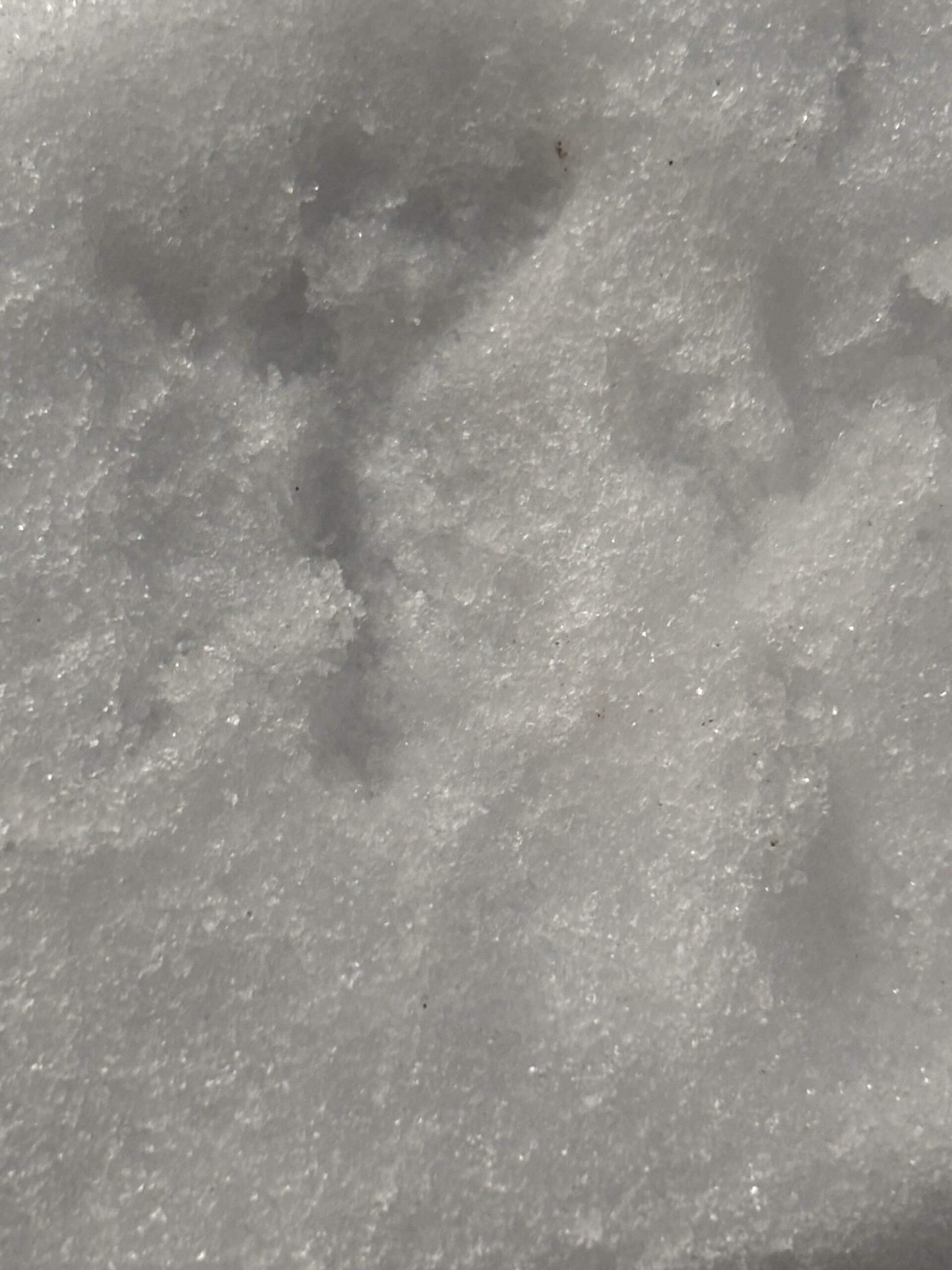
I also may have seen what looked like the mark of a birds feet in the snow…
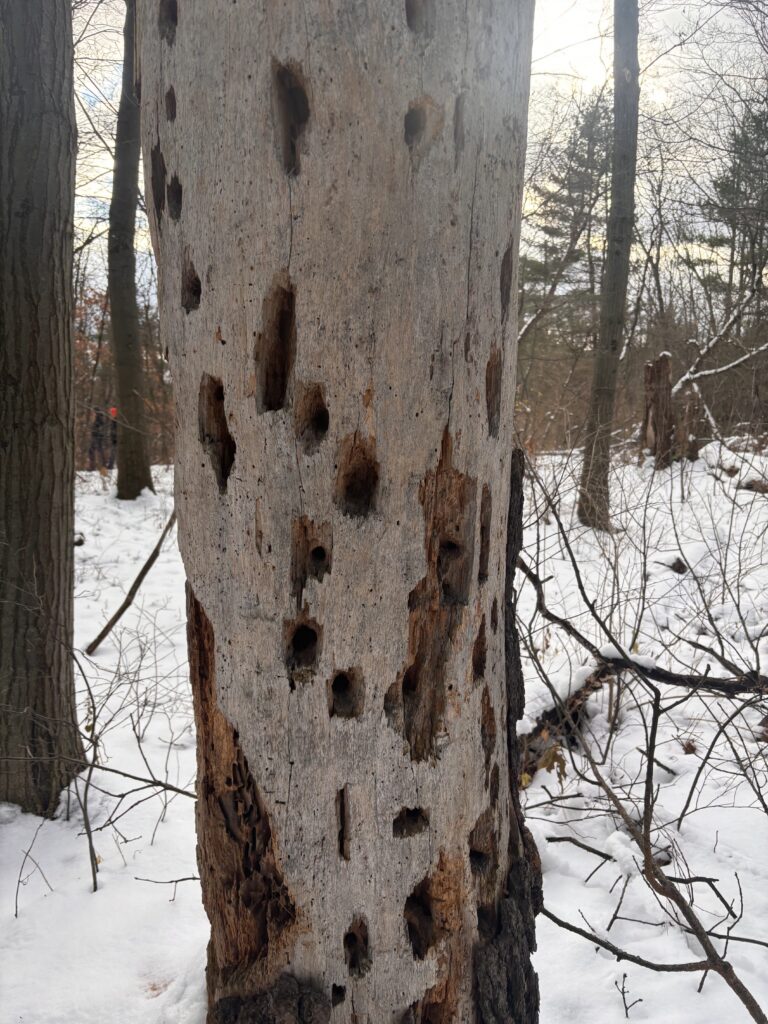
One really interesting find today was a dead tree with lots of big holes, at first my thought process was this must have been a gigantic woodpecker searching for insects or some other larger animal trying to do the same thing, but more likely than a huge woodpecker this is because the tree had some kind of disease.
Animals that live in Centennial Woods, like chickadees, woodpeckers, and squirrels, are a lot less active in the cold. Birds like to cuddle and only go out to search for food while squirrels and chipmunks relax and rely on food they have stored. Compared to earlier visits, I never really saw too many animals during my phenology trips here but there’s definitely less activity at least for the bird noises I would hear, but the tracks, calls, and tree markings show that life in the forest continues, just a little more reserved and quieter.
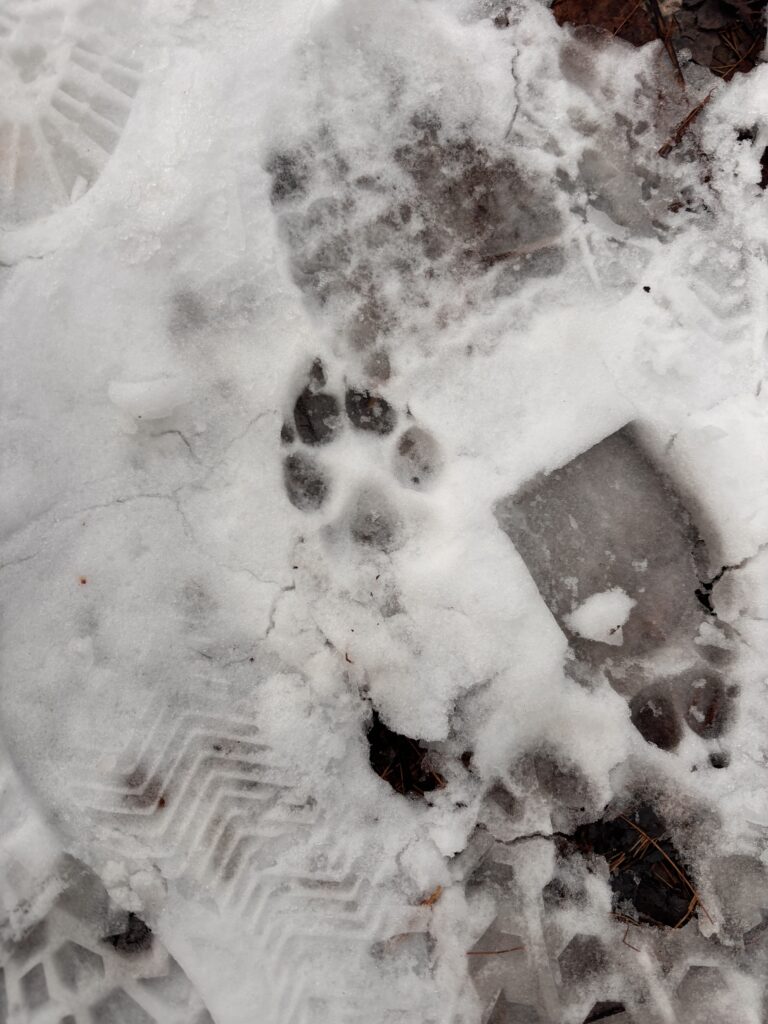
there was a Canis lupus familiaris in these woods…
Changes in the Leaf Layer
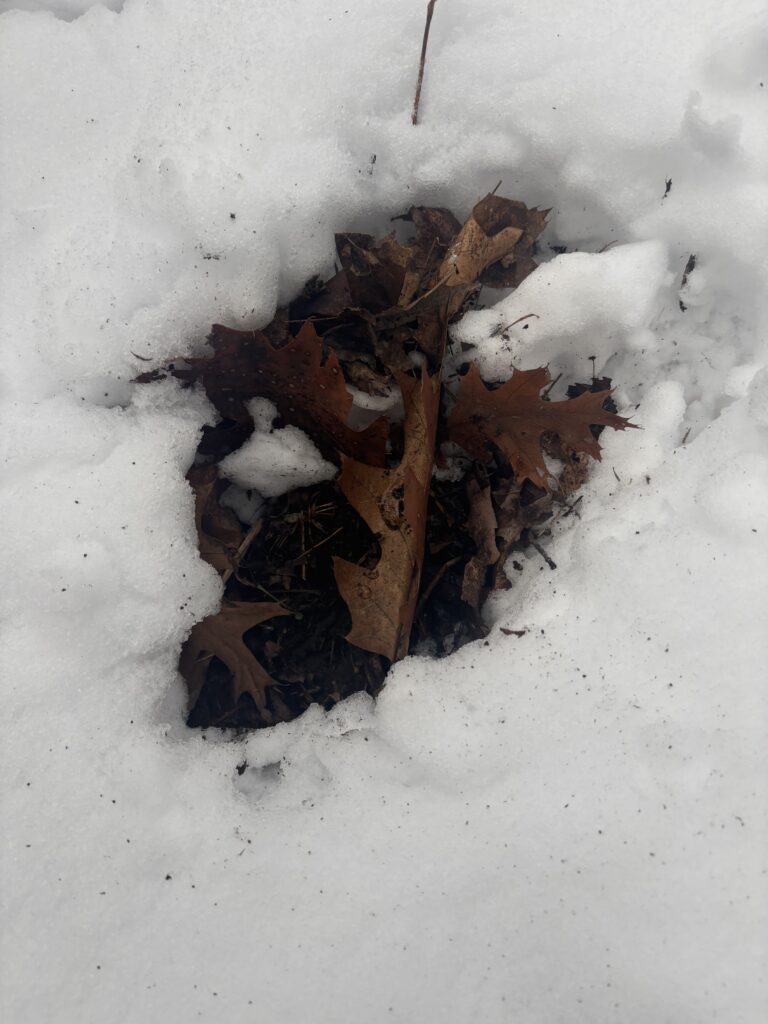
The leaf litter in Centennial Woods looks a bit different than it did earlier this year. The colorful leaves from months ago have now fallen and are dark, and brittle and today they are compacted under the snow. In some spots where the snow melted or is cleared the leaves look wet and are starting to break down and become more like part of the soil.
Decomposers
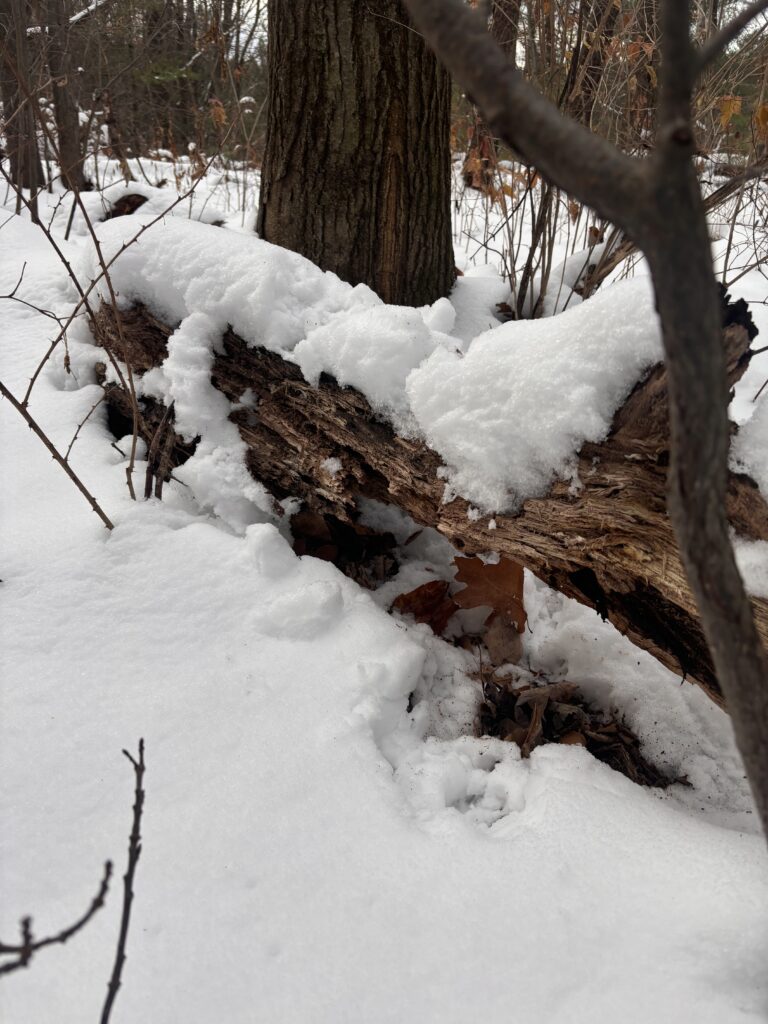
I think I noticed a few signs of decomposition around the forest. I saw a couple logs and fallen trees that were starting to rot, and it looked like there were fungi growing on some of the logs and mold on the wet and cold leaves. I only saw 1 bug making their way across the snowy land but you can tell more have been there because decomposers are slowly breaking everything down and returning nutrients to the soil.
What aspects of your phenology place do you enjoy the most?
What I loved most about my phenology spot and this assignment, in general, was the relaxation and appreciation for nature it gave me. When I sat down in those woods and just looked at and listened to nature it was an escape from most of the stress in my life. It was really fascinating to see the seasonal changes in this forest, I felt like an invisible spectator when I sat down on that ridge and just watched and documented all the trees plants and sounds, seeing the changes throughout my visits. I also loved that over Thanksgiving break I was given a chance to reflect on and gain a deeper connection with a local place I already felt connected to. During Thanksgiving break, I had the chance to reconnect with a local spot: Lake Artemesia. I went there with my friend Liam on Friday, and we spent some time walking around and enjoying the views. I’ve loved this place since 2022, and I used to go there a lot to fish and just relax by the water. The lake is full of fish, ducks, turtles, and even ospreys, which made it such a great spot to hang out and connect with nature. Even though it’s near my hometown city of DC, its a quiet place and not too crowded, which I really like. This visit reminded me why it was one of my favorite places, and it was nice to spend time there and appreciate it again, and without this assignment I don’t think I would have remembered. I really appreciate how this assignment gave me a chance to slow down and connect with nature, especially during a busy semester. This assignment helped my sense of place at home and in the Burlington area and made me feel more connected, at least to the natural areas there. I will definitely come back to visit my spot in the awesome Centennial Woods.
Hi, this is a comment.
To get started with moderating, editing, and deleting comments, please visit the Comments screen in the dashboard.
Commenter avatars come from Gravatar.