
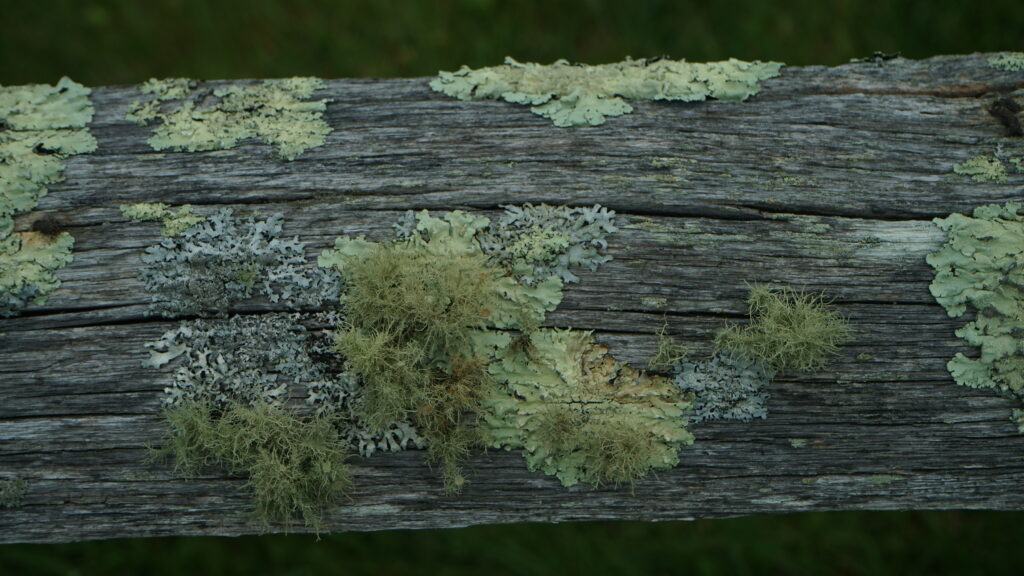
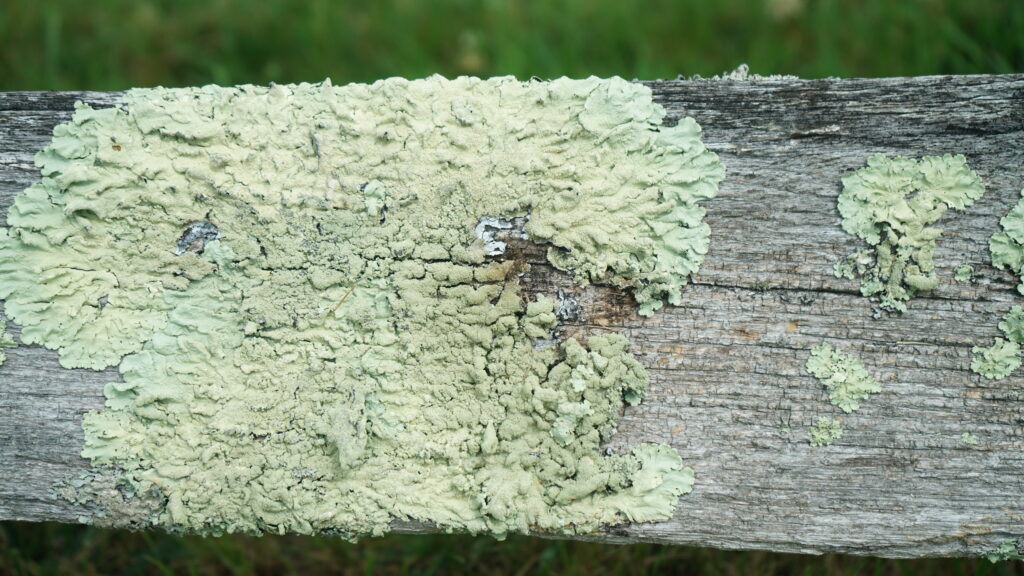
Greenshield lichen Flavoparmelia caperata
How to ID
- Pale yellow green color when dry
- Lobes are rounded, 3-8mm wide and wrinkled
Greenshield lichen grows on bark and rocks. I found it on an old wooden fence. It prefers clean, moist environments and can be used to monitor air quality.
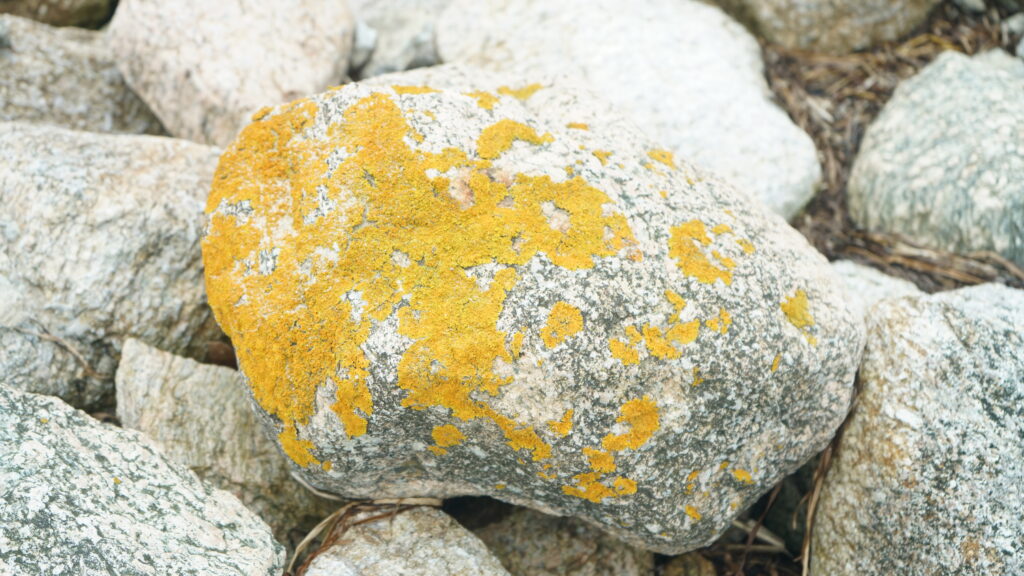
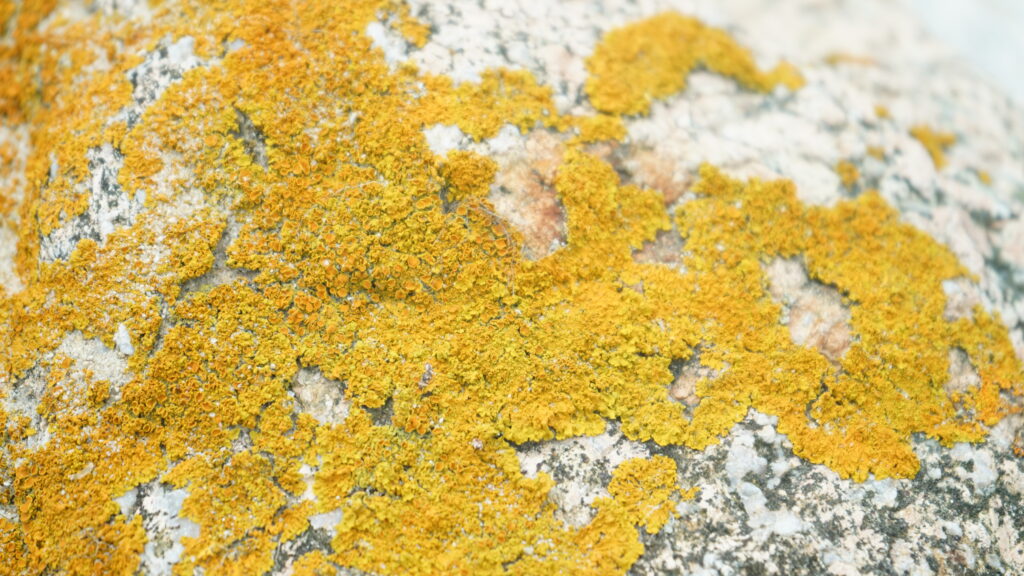
Maritime Sunburst lichen Xanthoria parietina
How to ID:
- Crusty, bright yellow to orange
- Grows in small, overlapping scales orioles, often forming rounded patches
- Commonly found in sunny areas
Sunburst lichen thrive in nitrogen rich environments. Bird feces is high in nitrogen which explains why I found it here, where the geese poop.
Black-eyed Susan Rudbeckia hirta
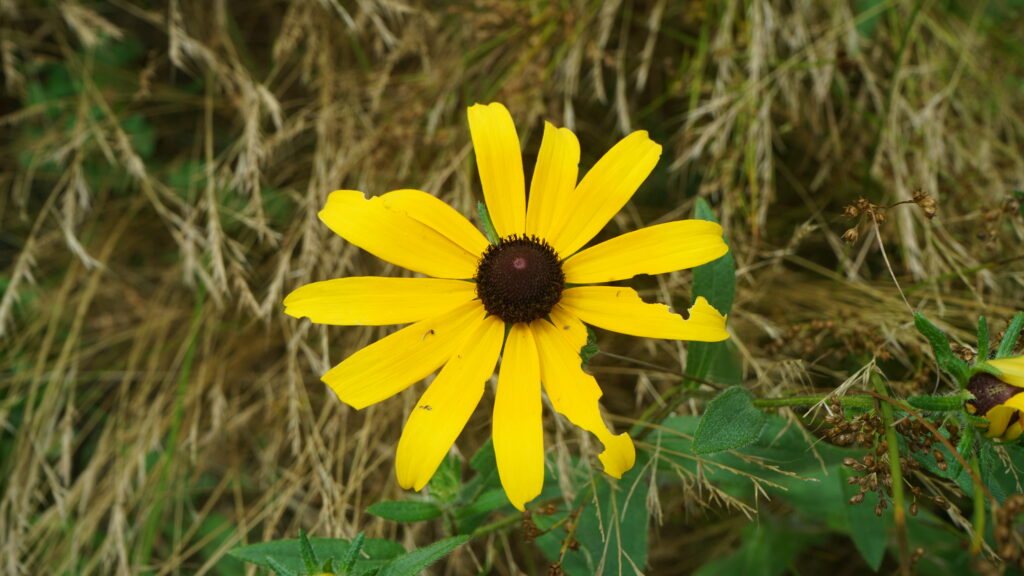
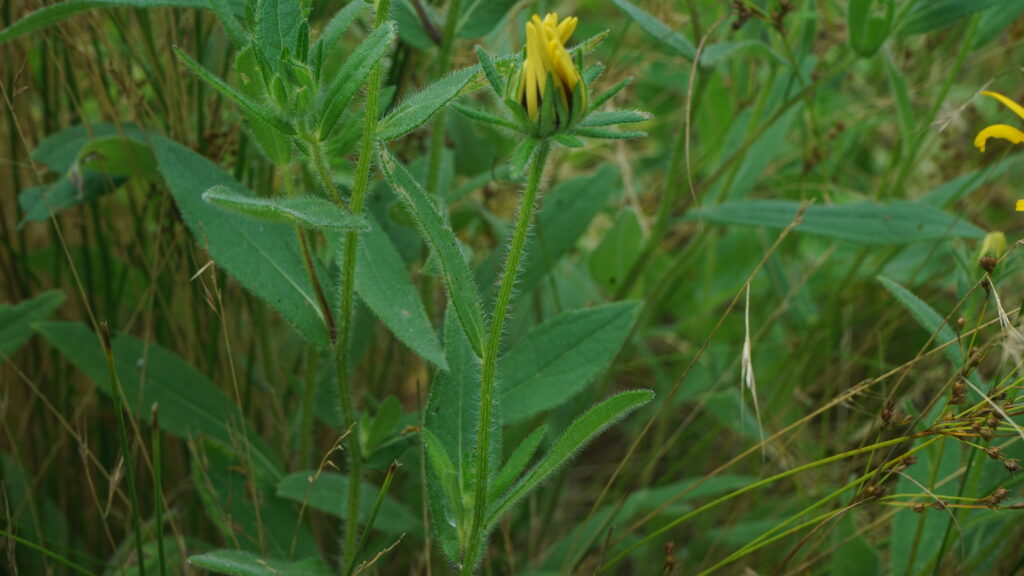
How to ID
- Up to 3 ft tall
- Daisy-like yellow or orange flowers that are up to 3 inches diameter
- Coarse, hairy lance shaped leaves
St. Johnswort Hypericum perforatum
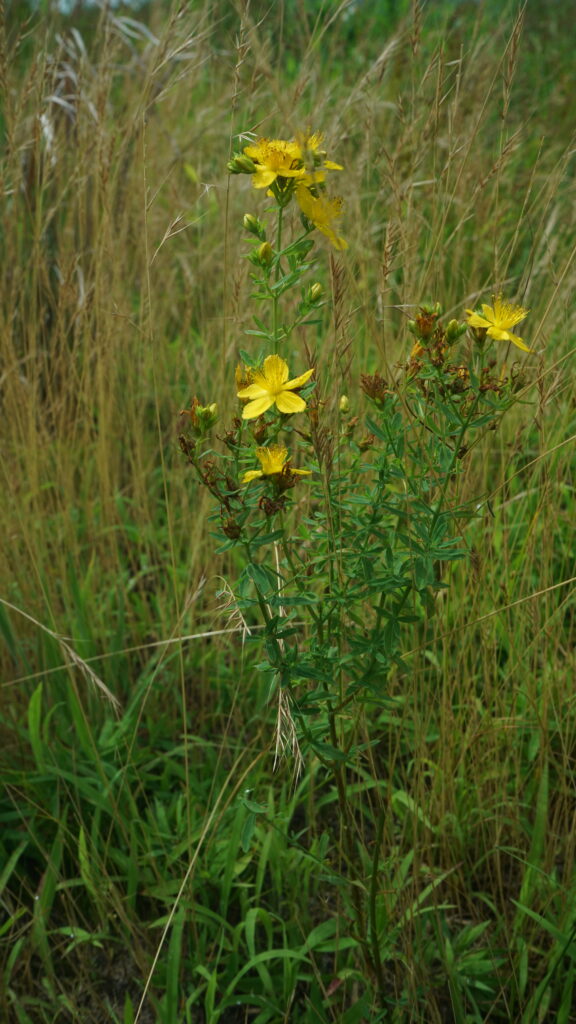
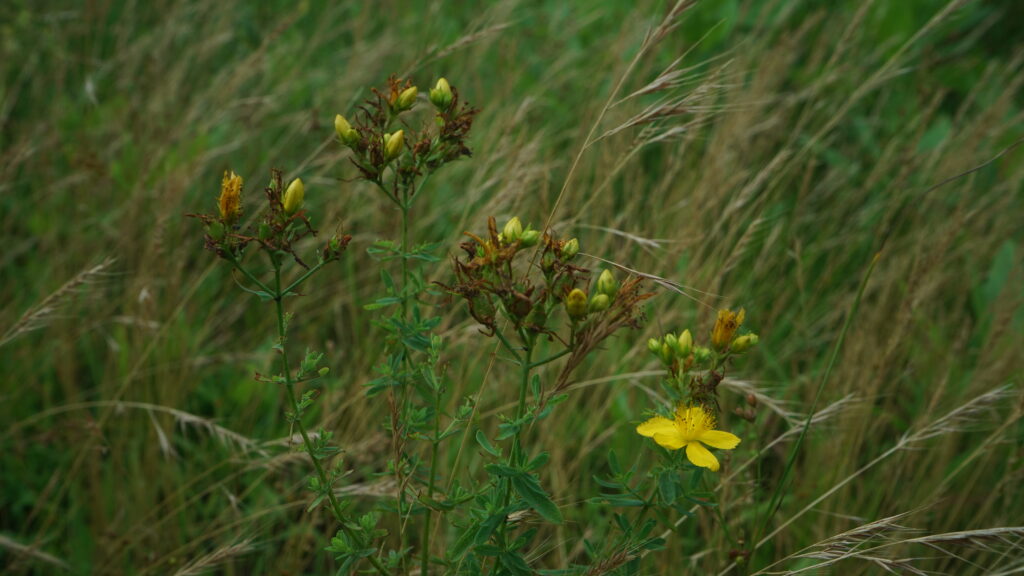
How to ID
- Stems are reddish and woody at the base
- Flowers are up about 1″ across with five bright yellow petals
- Seed pods are sticky, 3-sectioned capsules that turn deep reddish brown
I created a mini field guide to some plants and lichen I found at my site. Prior to this class, I had no experience or knowledge around plant identification. I’m not fully confident I could identify a maple tree and I am half Canadian. Creating this field guide pushed me out of my comfort zone significantly. I am an avid videographer and landscape photographer, occasionally dabbling in portraits but have never really taken portraits of plants. I had to adjust my process to capture both details and get a picture of what the whole plant looks like. I realized that the photos I automatically want to take, that fit my style of framing and such, are not the best photos of highlighting the unique features of a plant. Of the 8 plants I studied, taking photos, samples and notes in the field, I am confident in my identification of these four plants.
Sources:
The Natural Web. (2019, August 17). Shrubby St. Johnswort. Retrieved from https://the-natural-web.org/2019/08/17/shrubby-st-johnswort/
Lady Bird Johnson Wildflower Center. (n.d.). Hypericum prolificum (Shrubby St. John’s wort). Retrieved from https://www.wildflower.org/plants/result.php?id_plant=ruhi2
Wikipedia. (n.d.). Xanthoria parietina. In Wikipedia. Retrieved from https://en.wikipedia.org/wiki/Xanthoria_parietina
National Park Service. (n.d.). Lichens. Retrieved from https://www.nps.gov/bela/learn/nature/lichens.htm#:~:text=Lichens%20in%20the%20genus%20Xanthoria,birds%20of%20prey%20hang%20out
Missouri Botanical Garden. (n.d.). Hypericum prolificum (Shrubby St. John’s wort). Retrieved from https://www.missouribotanicalgarden.org/PlantFinder/PlantFinderDetails.aspx?taxonid=277225
U.S. Department of Agriculture. (n.d.). Hypericum prolificum. Retrieved from https://plants.usda.gov/DocumentLibrary/factsheet/pdf/fs_hype.pdf
Missouri Department of Conservation. (n.d.). Common greenshield lichen. Retrieved from https://mdc.mo.gov/discover-nature/field-guide/common-greenshield-lichen
Hi, this is a comment.
To get started with moderating, editing, and deleting comments, please visit the Comments screen in the dashboard.
Commenter avatars come from Gravatar.