Posts

Featured

Final Post Semester 1

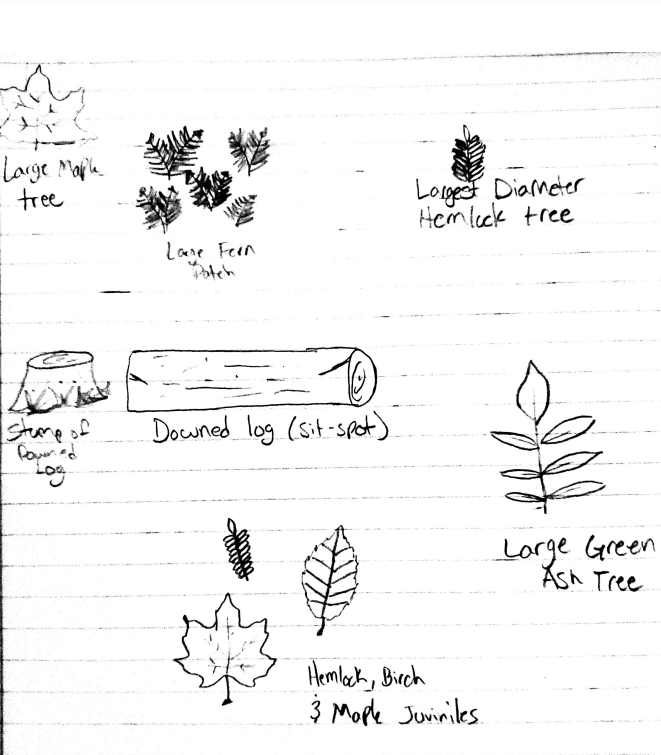
How has my spot changed, quite a lot actually from my first sit there. The leaves changed and fell, the ground cover went from green to brown and dead. My spot used to be very green and lush but now, in the later months of the fall and early months of winter it has become brown and mostly colorless. All the leaves are off the trees now except for a beach tree outside the circle of my spot. As I said in the first post my spot is a circle with a 40 yard diameter around where I sit, the beach tree with the leaves still on is outside that circle but still visible from my spot. Based on what I’ve learned about the native tree species the leaves on that beach tree should remain most of the way through the winter. The ground clutter is mostly brown now with almost all of the lush fern undergrowth having died or is on its way to death. The leaves have been wet for sometime and although you can still see individual leaves they are starting to compost and become the next layer of topsoil. For the first time in my sits I saw signs of animals other than the birds flying overhead. I saw a single Red Squirrel that was spending time in the trees, it spent most of its time outside the circle but did traverse the tree limbs and make its way into my circle. It spent maybe 3 or 4 minutes in my circle before hopping out of sight. Before he left though he did pose long enough for a quick picture.
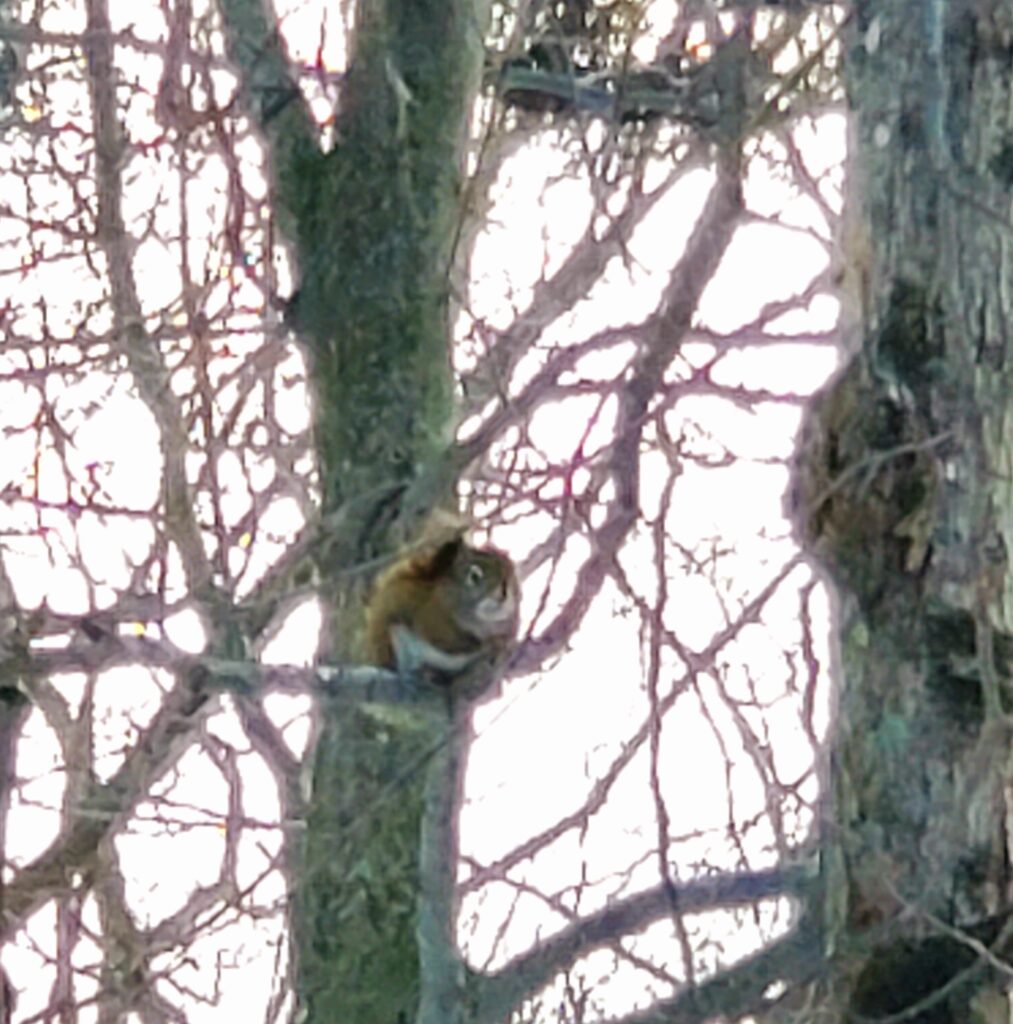
Red Squirrel Chilling on a Branch

The aspect of my phenology spot that I enjoyed the most wasn’t a physical thing, it was the ability and excuse to go and spend time in the woods and just sit and observe. I found it to be a fairly therapeutic experience and something I will continue to do even though the assignment has concluded for the semester. If I had to choose a physical thing that I enjoyed it would be the fern patch. I was drawn to it from the first sit there and I enjoyed watching it progress through the time spent sitting there and in labs when I saw it passing through.
Featured

Second Sit Spot

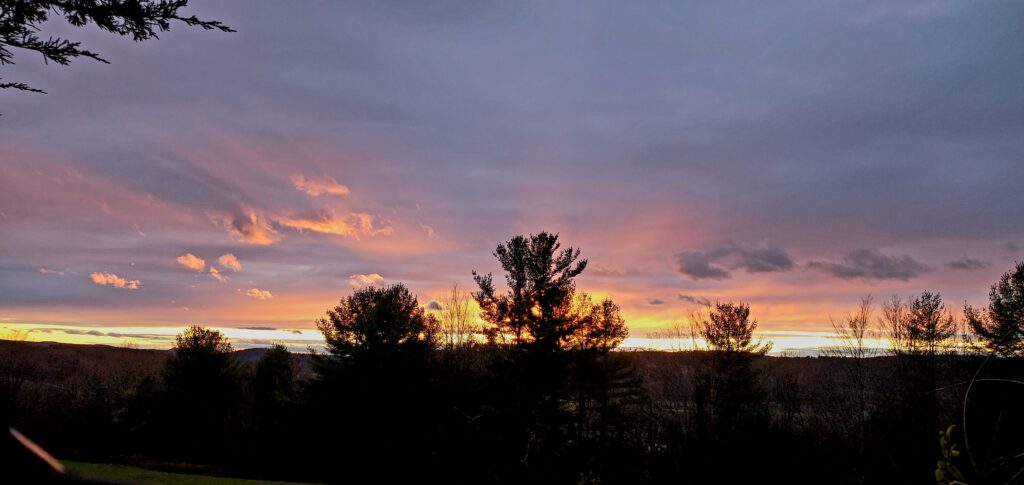
My second sit spot is beneath a giant pair of twin oak trees along an old stone wall. It is actually in a mature oak stand with lots of huge old oaks along the area. you can also see into the fields surrounding which makes for some very pretty views. Here’s on of a sunset from my spot.

The ecology of this area is very different from my sit spot in Burlington because it is far more open and has a smaller variety of trees with almost all of the trees being mature red and white oaks, with white oaks being the predominate species. My spot here also has far more animal sightings as in the four or five hours I sat here over the school break I saw, 17 grey squirrels, 4 red squirrels, 4 white tale deer, a porcupine, and around 30 turkeys. I believe this to be due to the abundance of acorns as will as the close proximity to corn fields as well as hay fields.

Featured

Second Sit

My second sit took place on November 5th. The air had gotten cooler and the day I sat was windy. It wasn’t necessarily cold but it was cooler than the last time I was there. Some of the changes that I noticed were less leaves on the trees. The past week as been fairly windy with a little rain which knocked most of the leaves down. Most of the leaves had also lost their fall colors and transitioned into a variety of browns. Most of the green ground clutter around had also started to brown or at least lose their vibrance. There was also far more sun hitting the forest floor as a lot of the sun that had been blocked by leaves was now unobstructed. I still haven’t seen any animals in my spot other than the rare raven or crow passing by overhead.

Final Post Semester 2 Pt.2

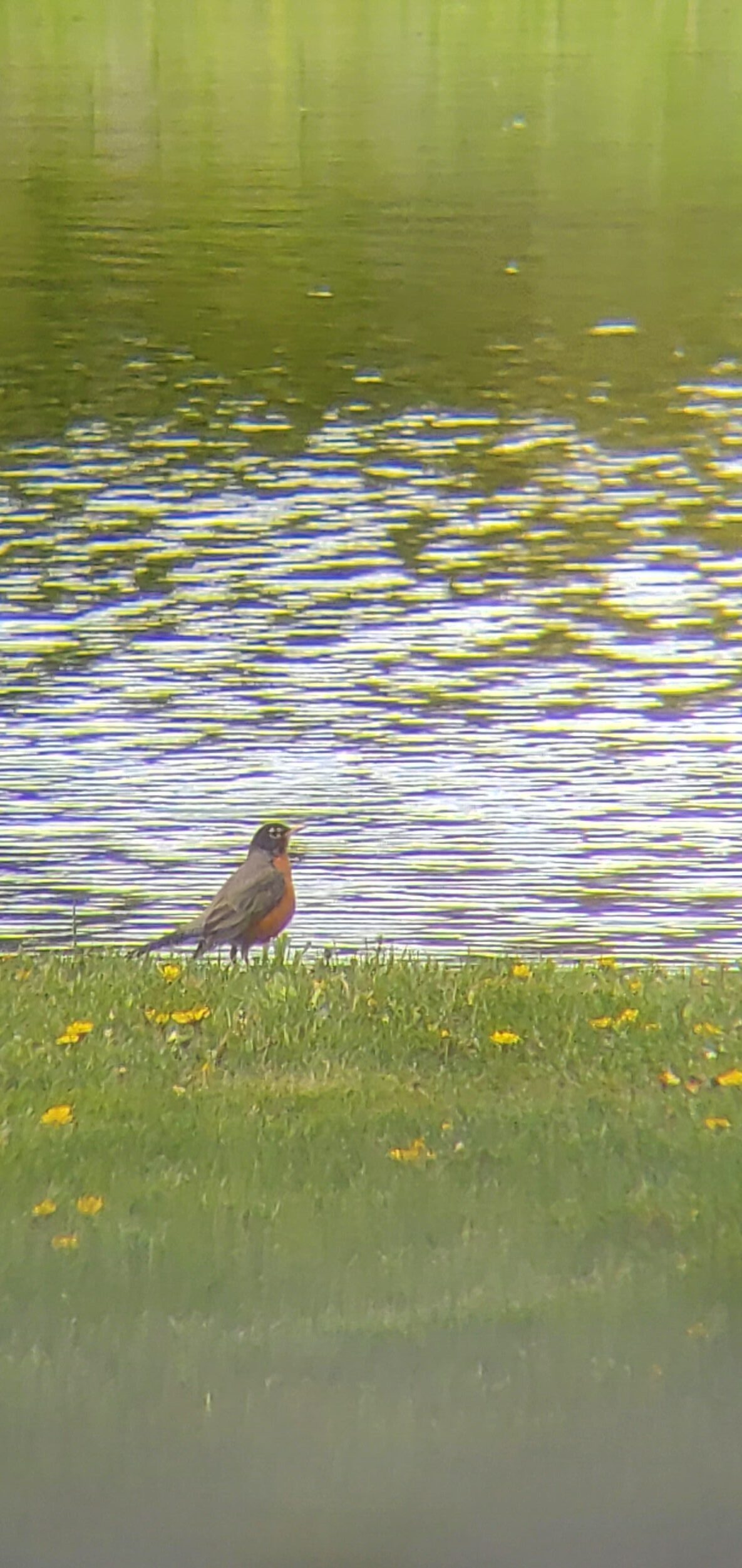
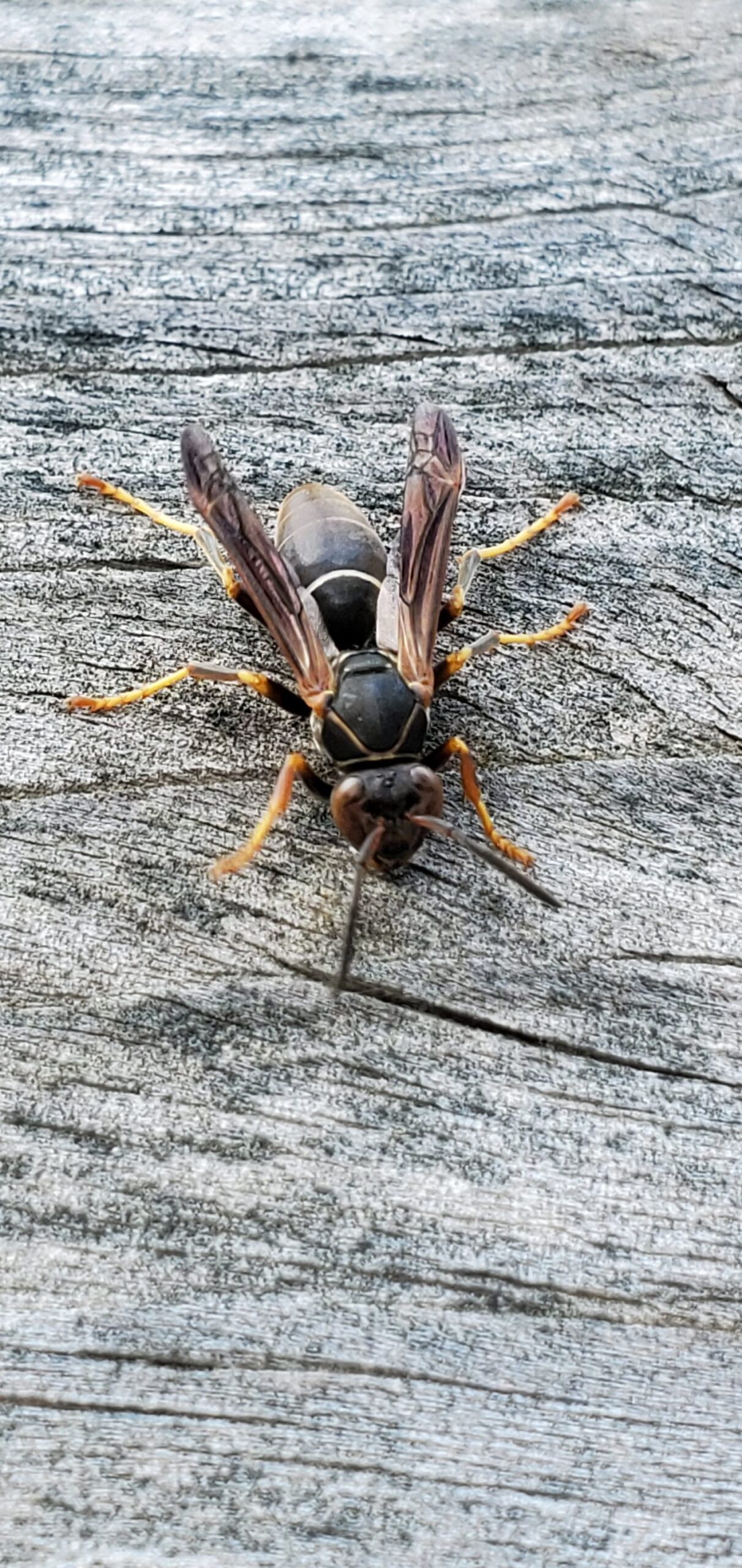
I was able to explore most of Centennial woods on a very nice walk. I saw a bunch of wildlife and a number of different species of plants, animals and fungi. I took a bunch of pictures but these two are my favorites. One is a Dark Paper Wasp which is very common in Vermont, and the other is a Robin.

My experience using iNaturalist was good, I didn’t use it as much as I should have but it was very enjoyable and a pleasant experience overall. I only used it once or twice to help me identify but every time that I used it, it worked well and gave me accurate results. For me personally I found the amount of different species reported in NYC surprising. I tend to think of cities as mostly devoid of species diversity and just seeing how many different species were in NYC surprised me the most. As well as the postings from Ukraine. Seeing as they are currently engaged in conflict I wouldn’t have assumed that they would be participating in work like this.

Final Post Semester 2

In terms of change, outside of weathering and the occasional animal my site has changed very little. The trees are fairly similar, there have been no major trees falling, no large shifts in land or water. The biggest changes have been the phenological changes. Things like leaves falling to the ground as fall and winter set in, the snow in the winder that fell and covered everything. There buds now reforming and starting bloom on the bushes and shrubs on the way into my site. The most profound way that nature and culture intertwine is the hiking trail that passes by. Through my sits I have seen a number of people walking by, mostly in the fall when the weather was still enjoyable. I have come to view myself as a part of my site. Through my interactions and my sits I have come to know my site really well and through that feel that I have become a part of it. I know the trees and the land and I have watched as the plants got their fall colors, the lost their leaves and prepared for winter, and now finally seeing the re-emergence of their buds. I have seen very little wildlife during my time at my site, but it has come to be something I accept. I realized that through this pattern animals are unlikely to pass through.

Revisiting the Tree #2

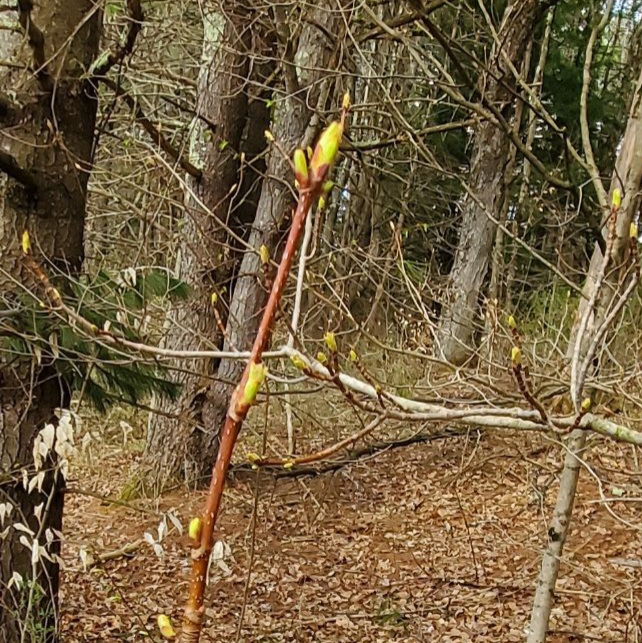
This time that I revisited the tree there was a lot more green showing from the actual leave poking out, you could very easily tell that it would be blooming into actual leaves soon enough. I think that within the next 2 or so weeks that this will be fully bloomed, as long as the weather stays warm and sunny with maybe some rain in the mix as well. On this trip I sadly did not see any birds or larger animals but I did see a grey squirrel along the way on the edge of the woods near the entrance to centennial woods. I also found some trash near the entrance that I picked up and brought back to campus to dispose of correctly so as to not litter.

Revisit to Tree #1

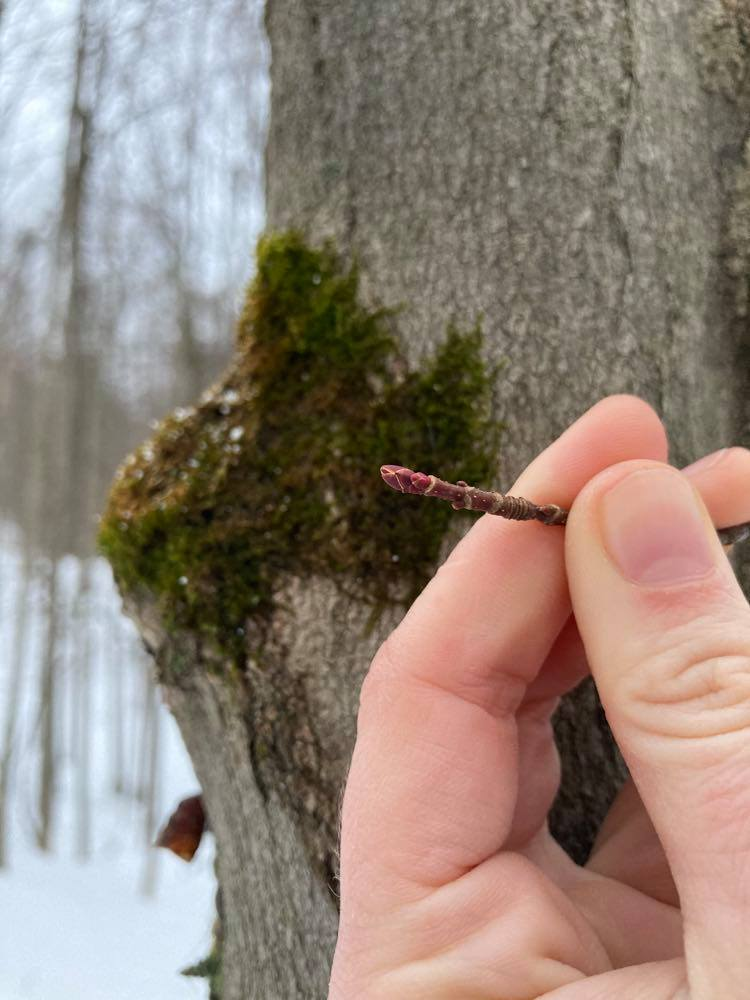
This is from the first time I revisited the Red maple that I went to the first trip to this tree. The main differences is that the buds were no longer fully closed and that there was some green starting to show through the red coverings of the bud. I saw a few small birds along the way, they were far off and moved quickly so sadly I was unable to ID them. Based on the area that I saw them in, and the small nature of the bird, I would assume that it was a chickadee or some other small wintertime bird, but my main guess is that it was a chickadee. Most of the trees at this time were still mostly buds but some other ones were also starting to show some green like the one in the red maple above.

Spring Bud Post 1

Red Maple Bud

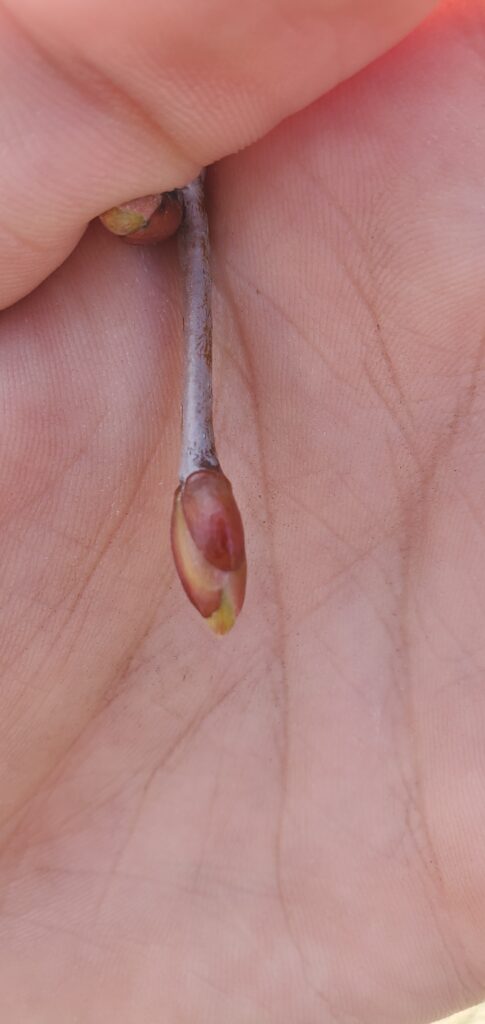
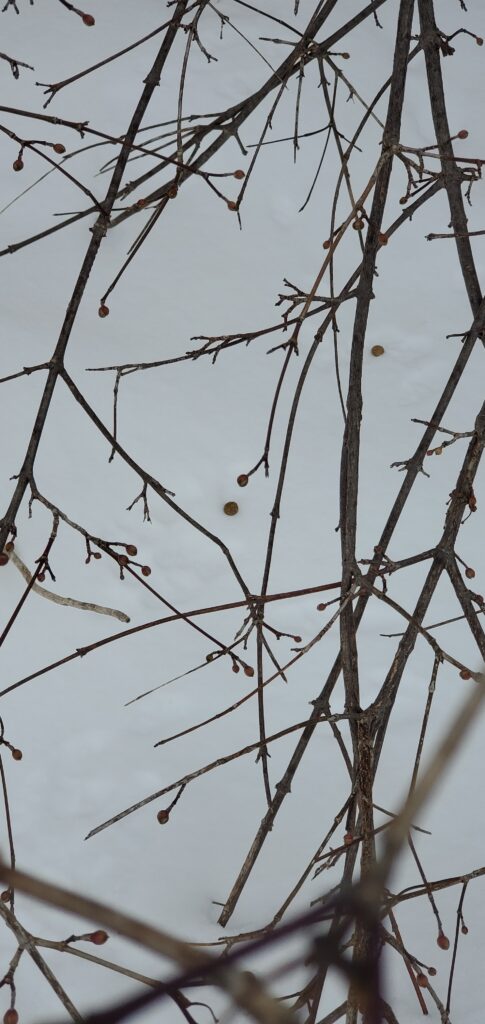
This is a Red Maple Bud, I used the trees bark as well as the buds to identify this tree. The bark of Red Maples is often a very light grey, with small random ridges running vertically along the tree. This was one of the most helpful ways to identify this tree. The buds were the way that I confirmed it was red maple though. The way that I identified this bud was by comparing to other pictures and looking for the dark red coloration of the bud, as well as the blunt round shape. It also had some scales which is very characteristic of Red Maple.

iNaturalist Challenge

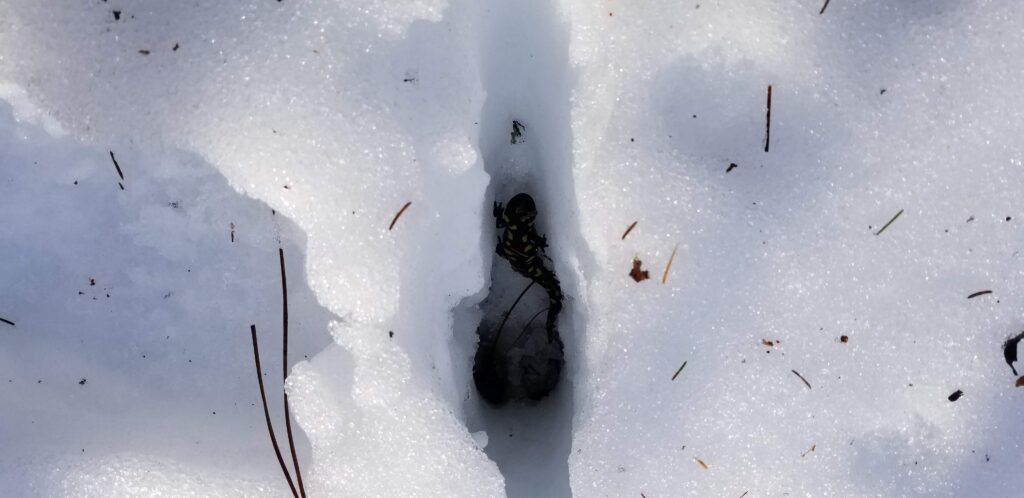
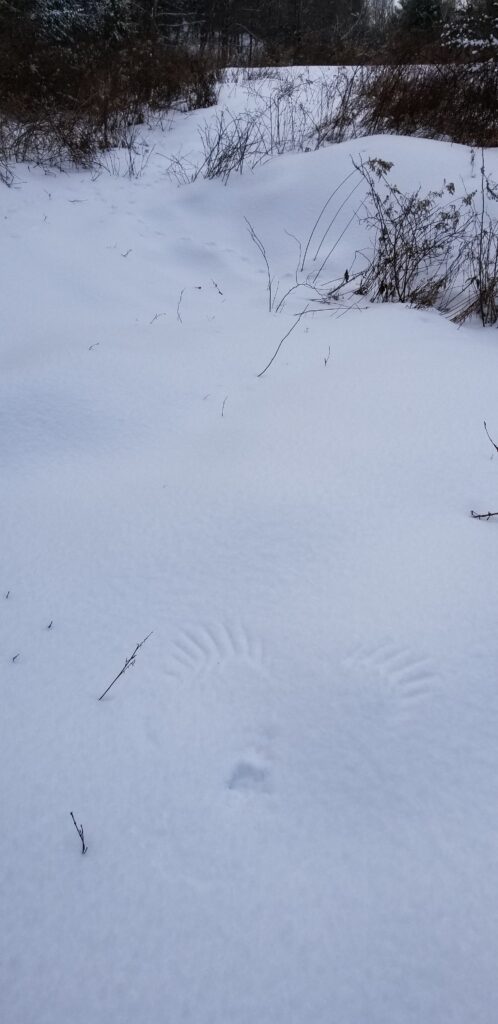
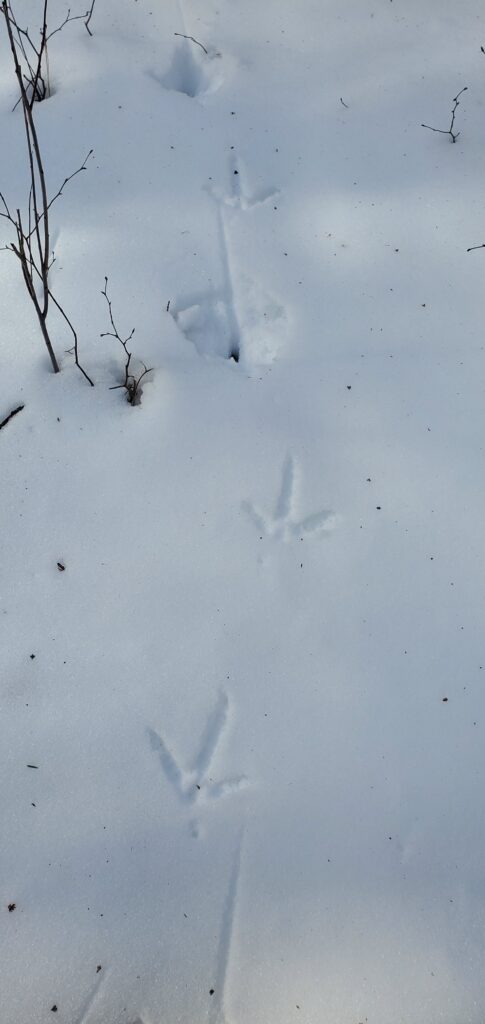
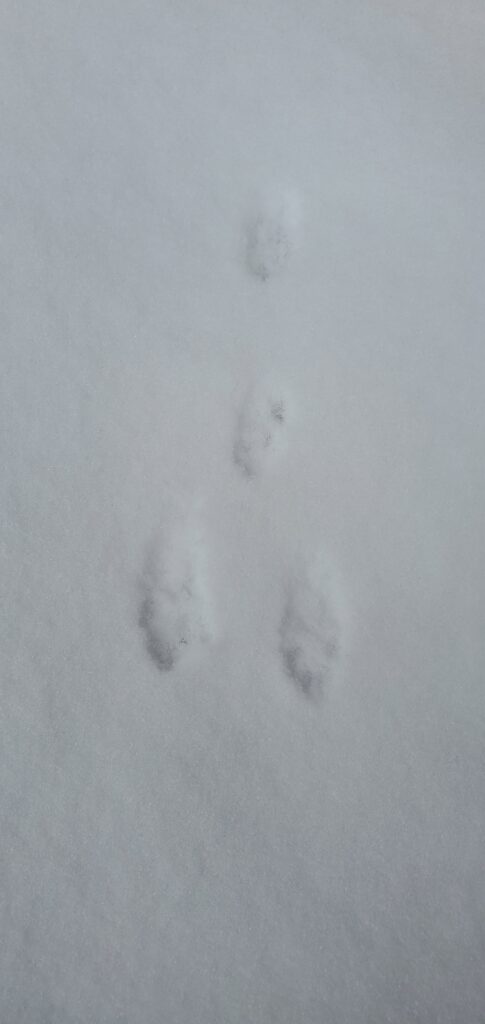
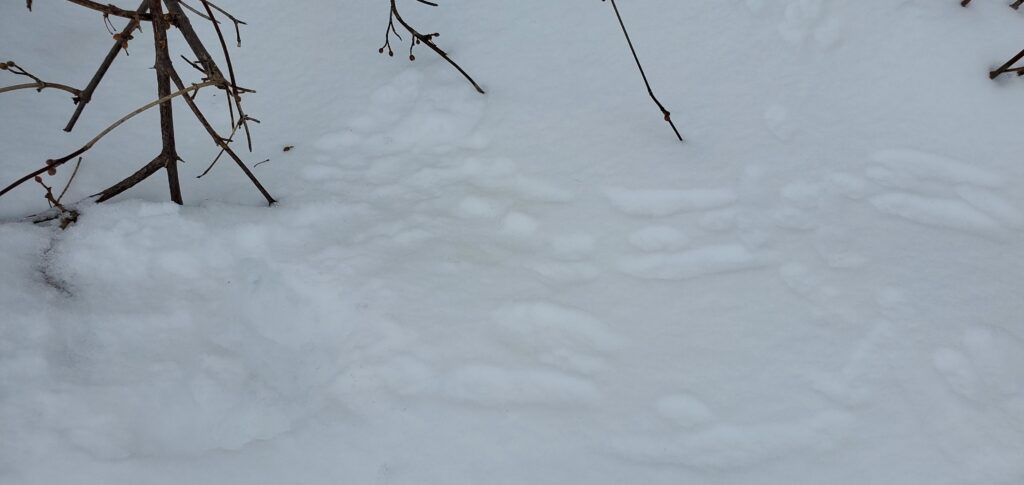
During the week of February 11 – 19th myself and others went out in a variety of different areas and uploaded pictures and hypotheses of different animals and animal sign. For me personally I went during the weekend at my home farm in Vermont. During my wanders I found wild turkey tracks as well as deer tracks. I also observed where a predatory bird, I am assuming some type of raptor, landed then took off from an area in the snow. Sadly I experience technical issues when uploading my images to iNaturalist but I have the pictures I took posted here instead.

I saw a deer track which is on the far left. you can tell it is a deer because of the hoof print as well as the size of the track. The size is a little tricky to tell in the picture but it was about 3 inches long which could only be deer. The next picture is the bird landing, which I believe to be a raptor based on where it is as well as the wing tips. The final picture is turkey tracks, which has to be turkey based on the size and step length. I am completely sure of the turkey and the deer tracks but the bird print is less certain. I know its a bird and probably a raptor but I am not 100% sure.

First Post Semester 2

On my most recent trip to my sight I went on Sunday, January 29th just after noon. When there I saw very few animal tracks outside of domestic dogs on the trails. I did happen to see some small squirrel track though, presumably that belong to the red squirrel that I spotted in my last post, titled “Final Post Semester 1”. Other than the squirrel tracks there was little to no wildlife activity in my spot. This lack of animal disturbances seems to be a trend in my spot as I have seen very little animal sign through my time here. On the way into my spot, on the side of the trail in the bushes, I did happen to spot what I believe to be rabbit tracks and skat. The tracks were under some brush, which is characteristic of rabbit activity. The tracks were a little small but that could also be attributed to a younger rabbit.

My spot has changed very little since the last time I have visited with the exception of lots more snow. The last time I sat there was little to no snow and now there is snow everywhere. The ground was entirely white, the hemlock trees had a good bit of snow on them, though it wasn’t much. There was almost no brown at my spot outside of large woody plants. There were almost no other changes. It was a lot colder out than the last time I visited and it started to rain/snow on my way back. Overall it was good to be back at my spot and making observations and just enjoying the outdoors.

Skip to toolbar