Posts

5/6/23

During this years bio blitz, my friends from NR2 and I explored downtown Burlington. We encountered many animal species such as: Eastern gray squirrels, Black-Capped Chickadees, European Starlings, Seagulls, Mourning Doves, American Crow, Robins, Goldfinch, and even a rabbit. As for plant species we also observed many such as Sugar Maple, Dandelions, Eastern White pines, Red Maple, Norway Spruce, Honeysuckle, Apple trees, Stag-horn Sumac, and white oak.

As with my experience with inaturalist, I still don’t fully understand how to use the app but I know a lot more about it then I did in the beginning of the semester.

I thought it was interesting that even though many cities had more sitings than us, Burlington had more sighting per capita than many of the other cities.

Overall, It was really fun to get outside with my friends and explore Burlington in this unique way.

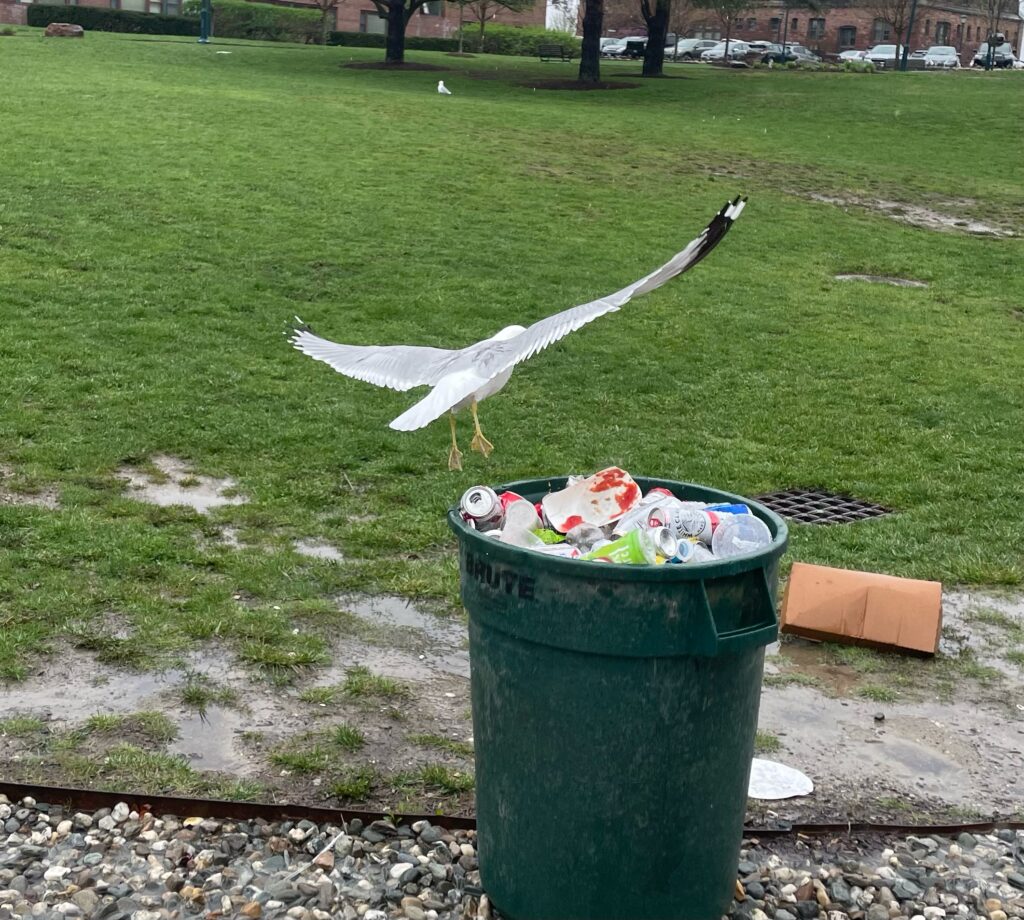
Here is a picture of a seagull that I observed this weekend.
4/22/23 Last Visit

I visited my phenology spot last Saturday, 4/23, around 2pm. The weather was in the mid 60s, humid, and slightly cloudy. It has been really interesting seeing how much a place changes over the course of 8 months. I was able to see the leaves turn bright shades of red, yellow, and orange then fall off the trees. I was able to see the landscape covered in a thick layer of snow and ice, almost unrecognizable from what it looked like a few months before. Now, I am able to see the earth re-emerge from the icy grip of winter and leaves return to the trees. I am also starting to see bird species that I haven’t seen since the fall return to the land. One of these species is the red-winged blackbird.

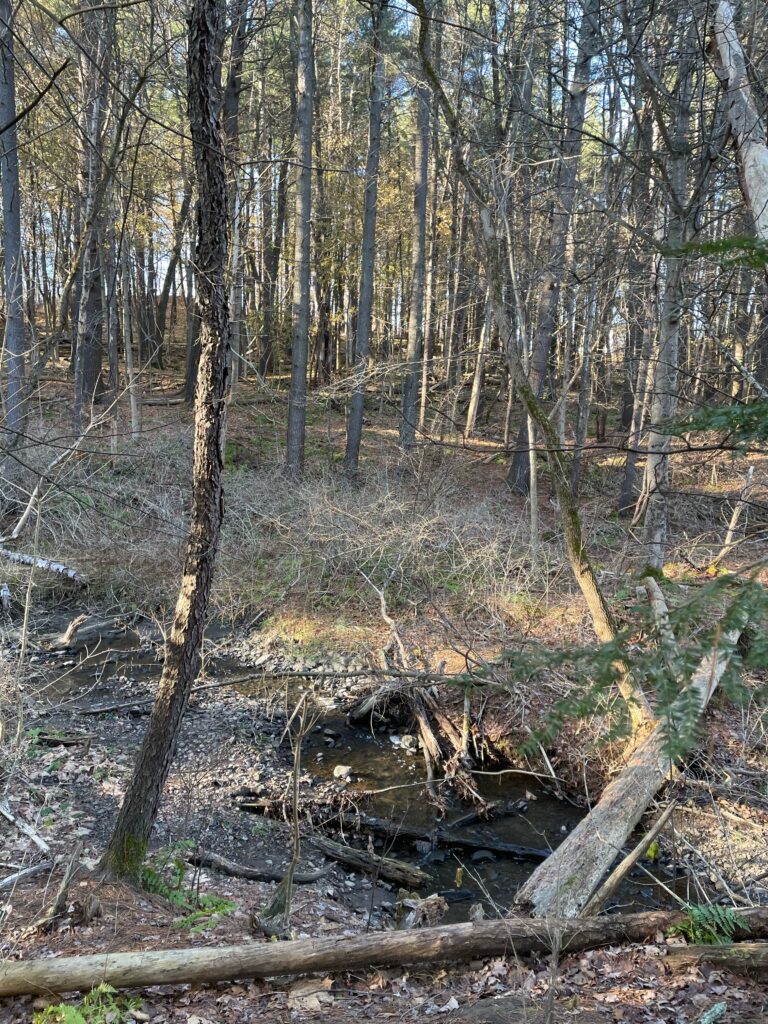
When compared to the photos of my spot from September, I noticed that there is considerably more debris and sticks in the stream. This could be from storms. The curves of the stream seem to have also slightly shifted.

There has been a curved black cherry tree growing toward the left side of my site. Throughout the months it has become a landmark for me and its scaly burnt potato chip-like bark has stayed a constant even when every other aspect of my spot seemed to change so much.

My spot, and centennial woods as a whole, really does show how intertwined nature and culture really are. People have been using this land for centuries, from indegenous land, to farm land, to eventually being owned by UVM and used for research purposes or as hiking trails for the community.

I do think that I consider myself part of this place. This place has been a constant throughout my first year here at UVM. Visiting it has been a relaxing escape from the busy life of college. Because of this, I feel a connection to this land and I even plan on visiting after NR2 is over.

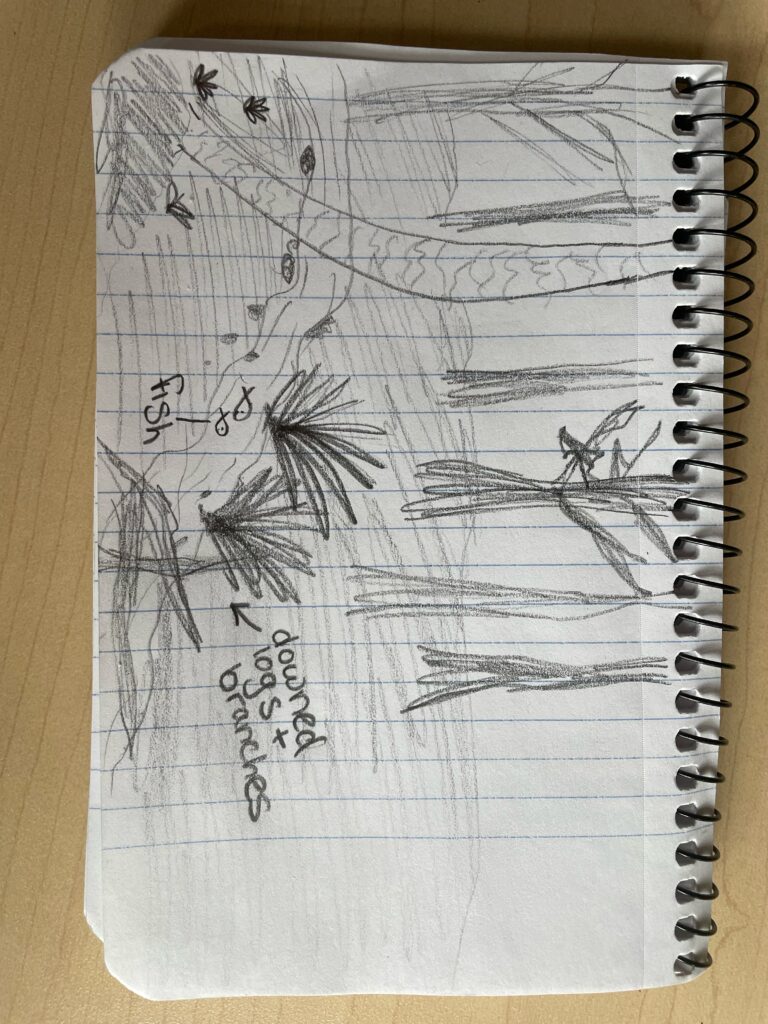
I sat and drew this photo of my spot.

4/7/23

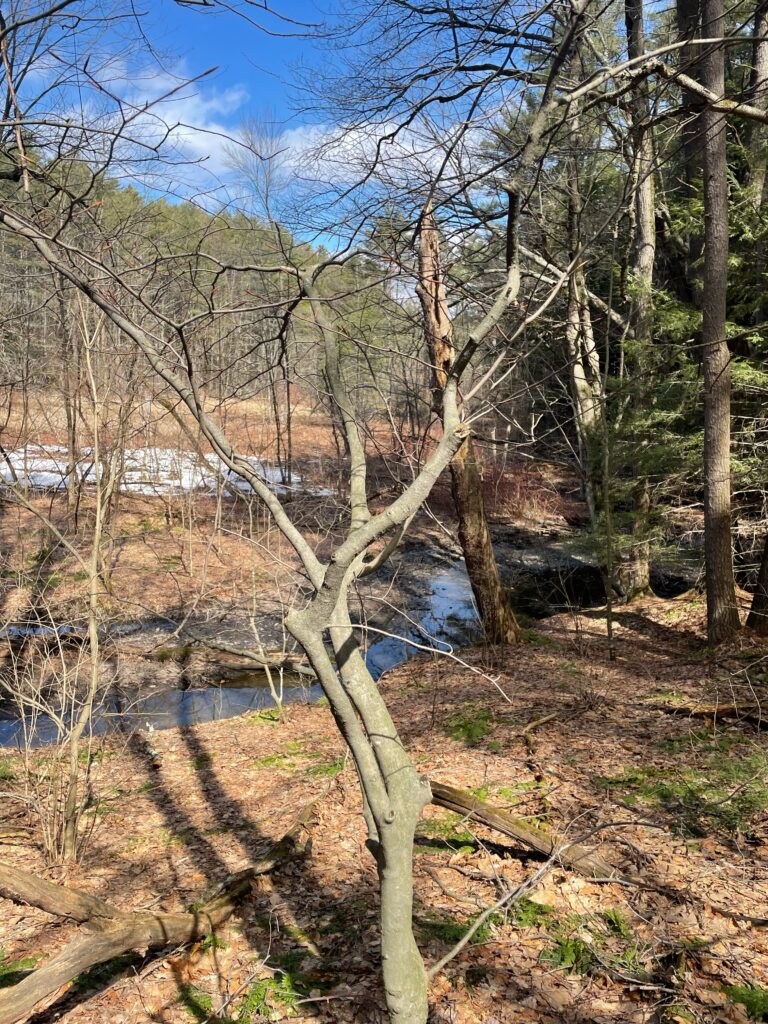
I visited my phenology spot last friday, 4/7, around noon. The weather was sunny, windy, and 45 degrees. The tree that I have been visting these past few weeks didn’t show many phenological changes since the last visit. After closer inspection of previous photos, the buds may have been a little bit bigger than the last visit.

3/24/23

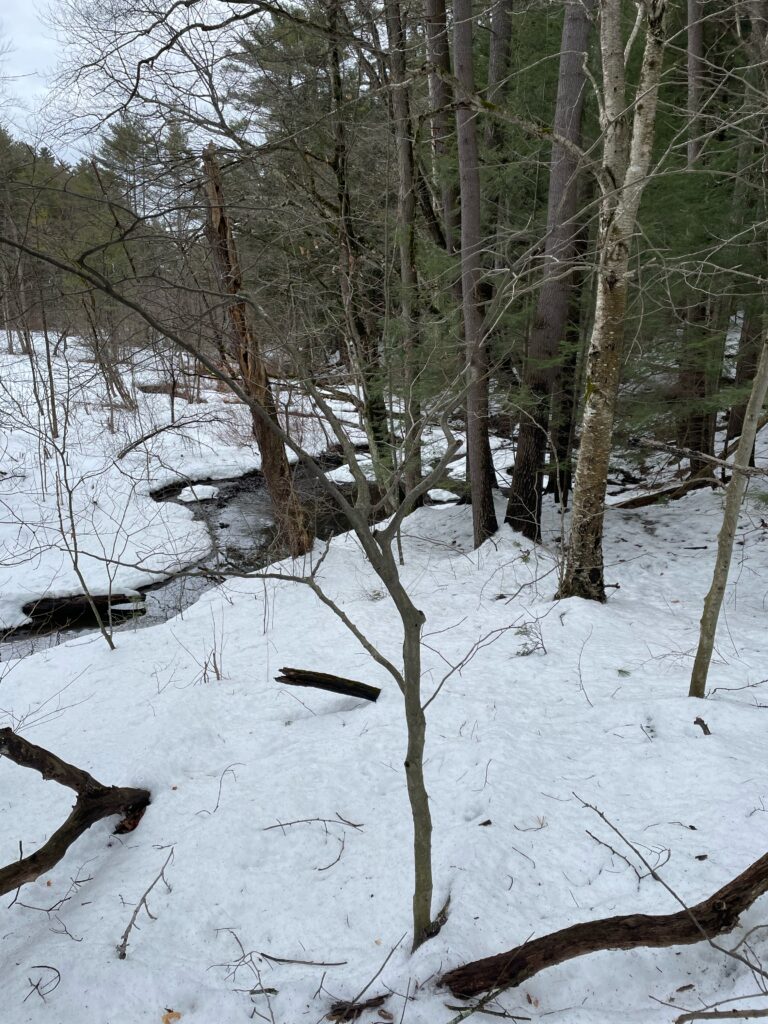
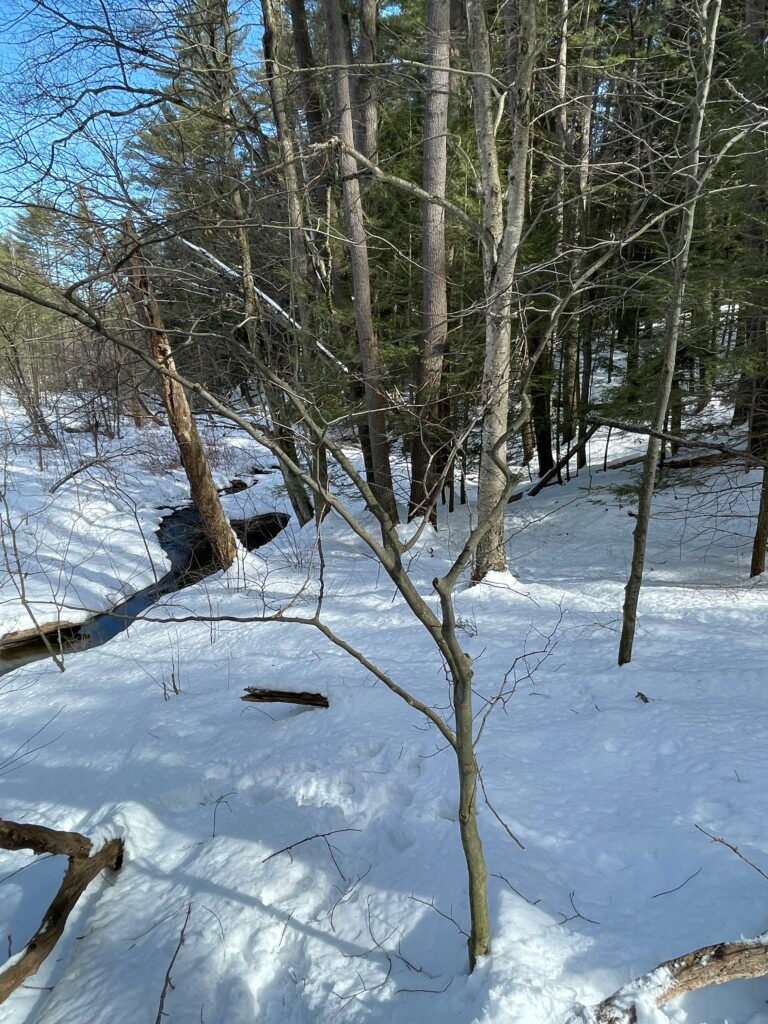
I visited my tree again this Friday around 11am. It had gotten quite warm the day before then fell below freezing again that night which made for a treacherous walk down since the trail was ice. There wasnt much noticible difference in the leaf buds. The one thing is that when compared to the photos takes a few weeks ago, the buds look slighltly wider and a bit bigger overall.

3/11/23

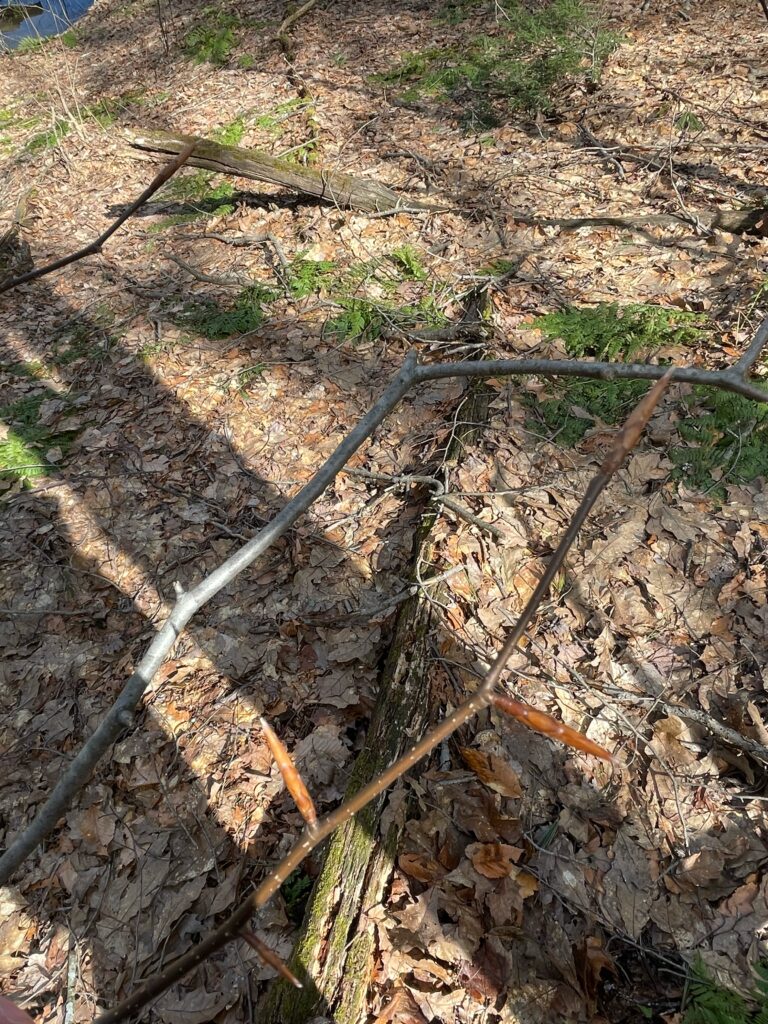
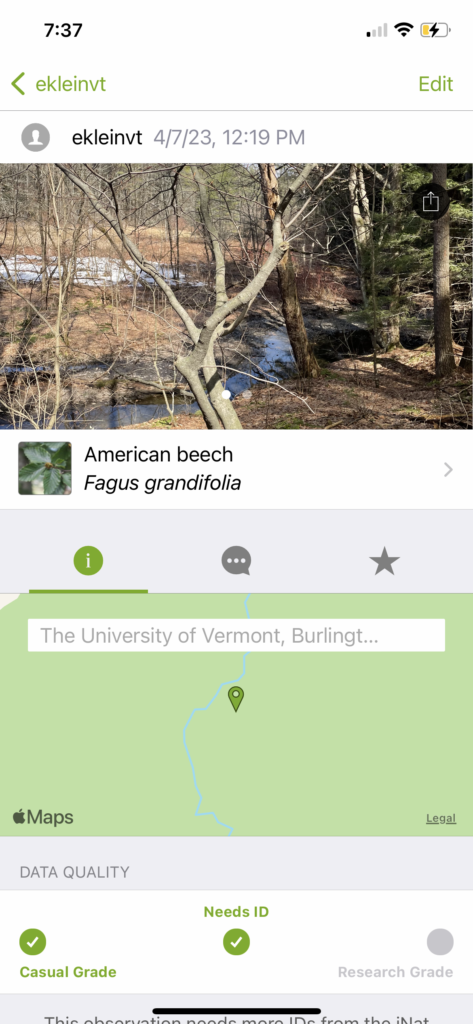
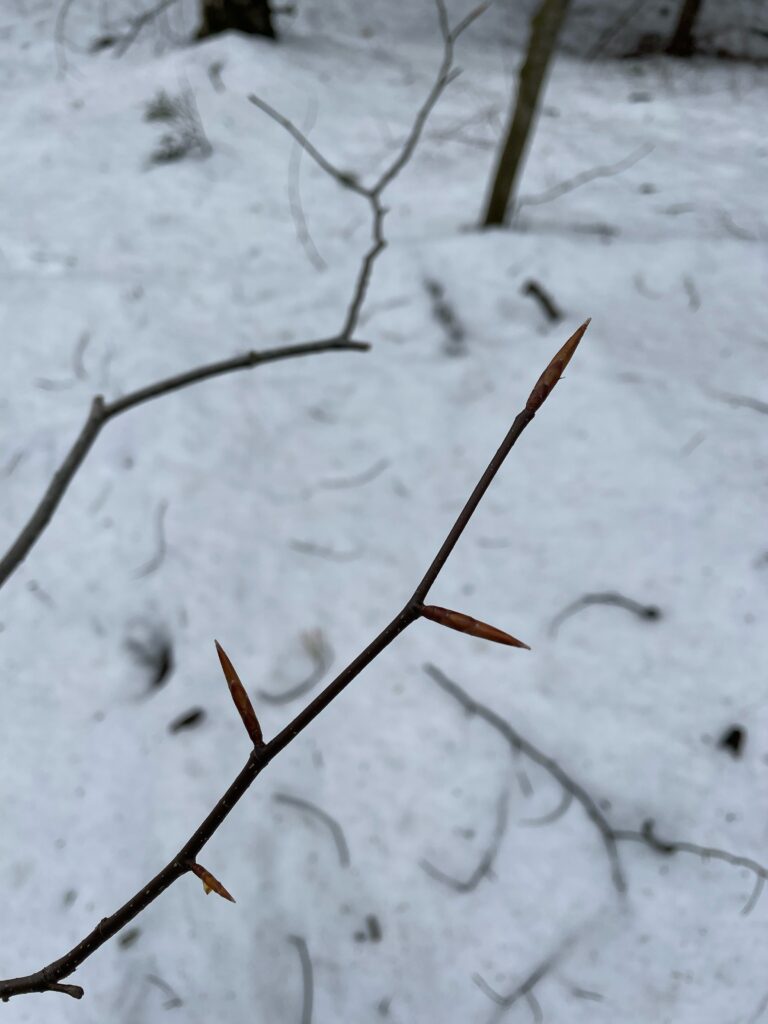
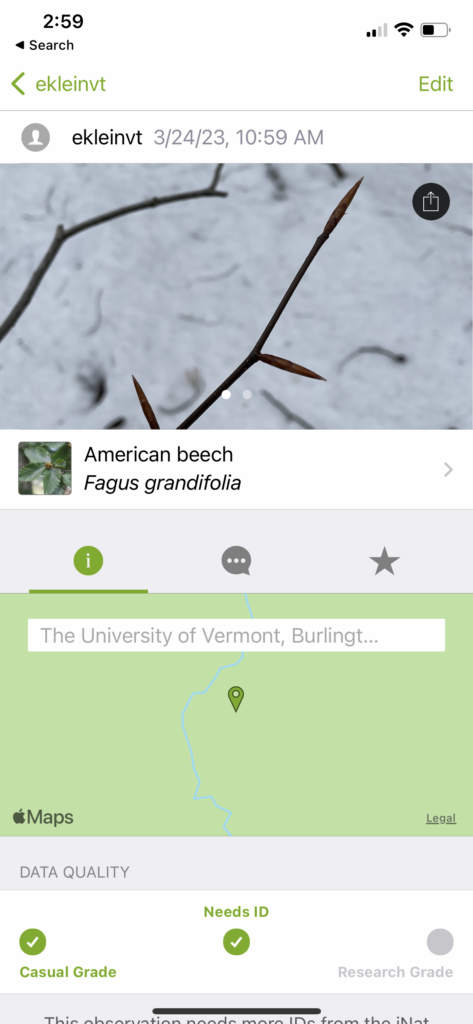
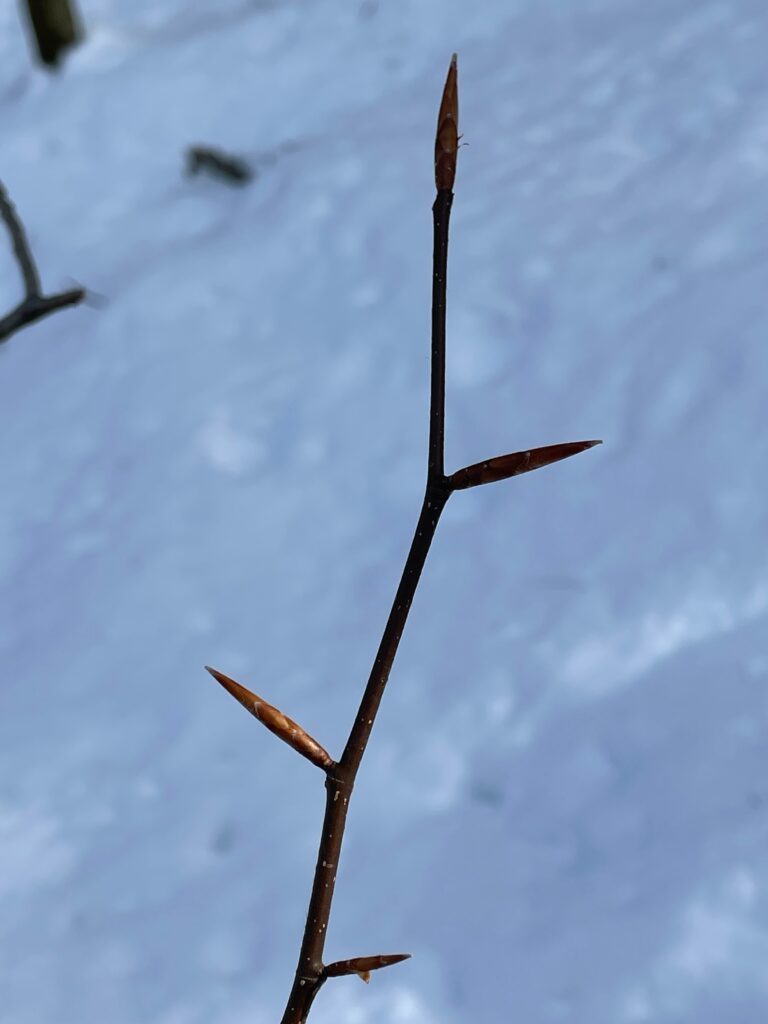
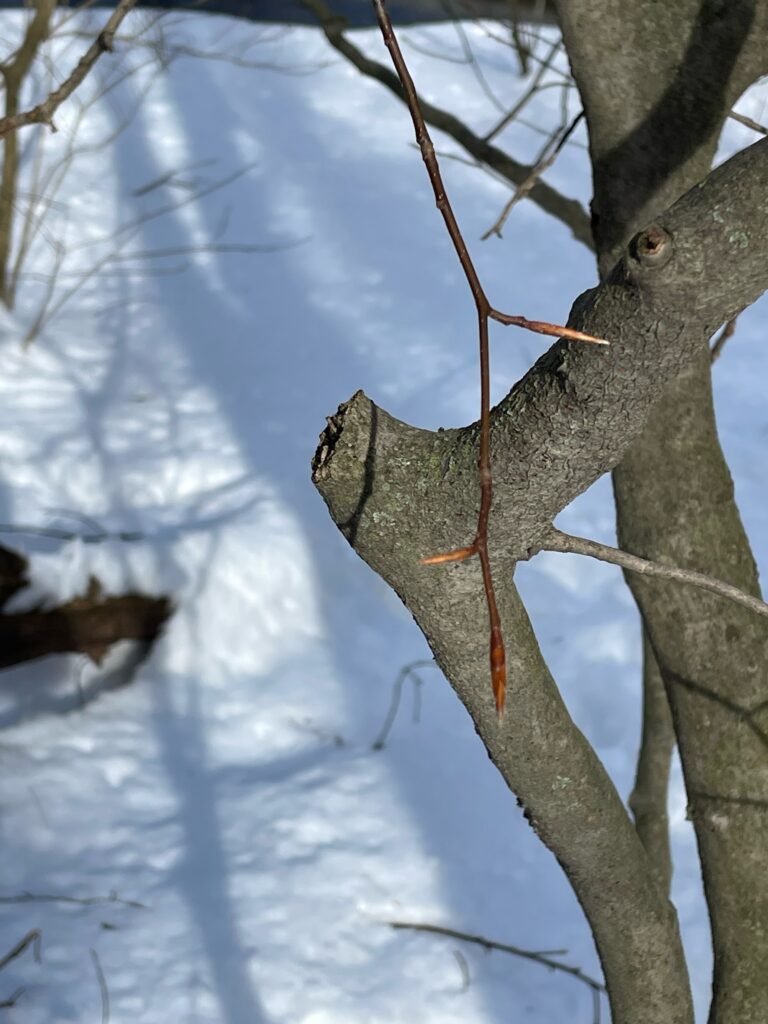
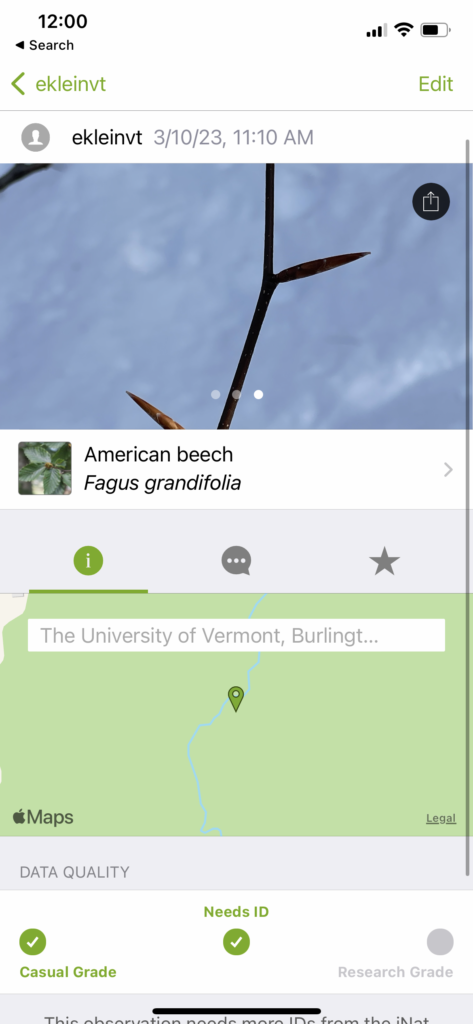
I visited my phenology spot in centennial woods today around 11am. It was a beautiful and sunny 31 degrees. My specific phenology site had no red maple, red oak, paper birch, or American beech trees with accessible buds/branches so I had to venture up the hill a bit until I found some. I soon came across a small American beech tree with many accessible branches. On these branches were many slender “cigar-shaped,”sharp pointed buds. They were about 1/2 to 3/4 inches long, brown and scaly in appearance, and were in an alternate pattern along the branch. The bark was smooth and pale gray in color. These characteristics are how one can identify an American beech during winter. There was no evidence of flowering yet.

January 30th- First visit after winter break

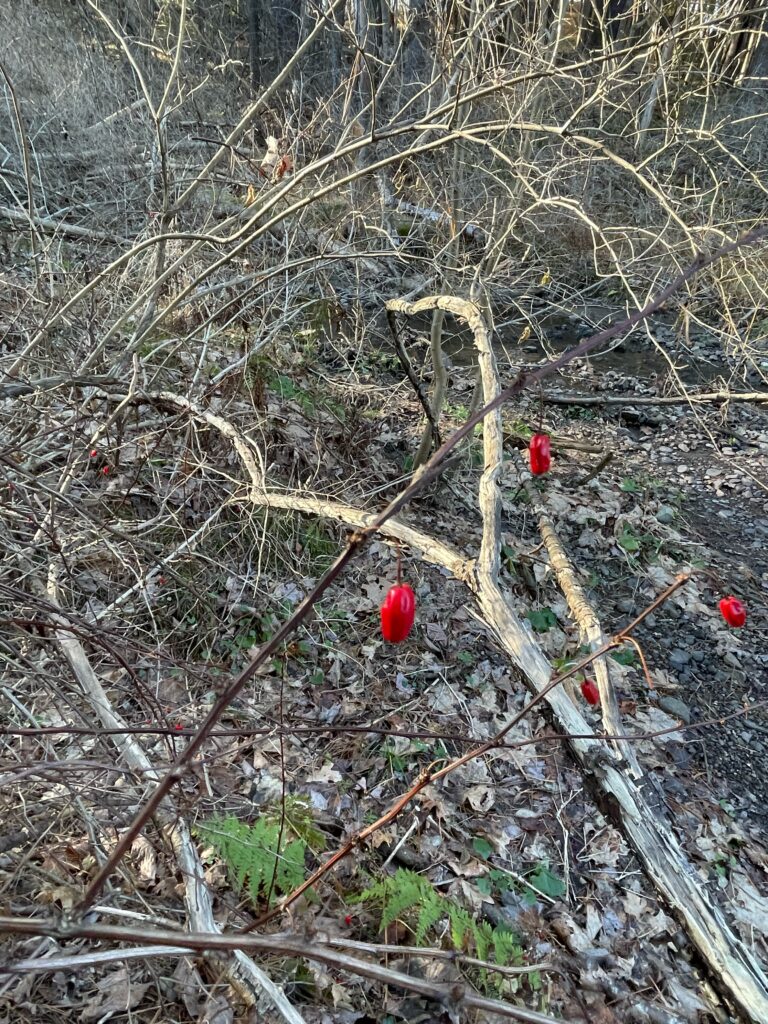
This was my first visit to my phenology site this semester. The most noticble difference that I observed since my last visit is that there is now snow (and since I chose to visit the day after a storm there was a lot of it.) I also noticed that the red berries shown in my last post were no longer there, and there were also fewer dead leaves on the trees.

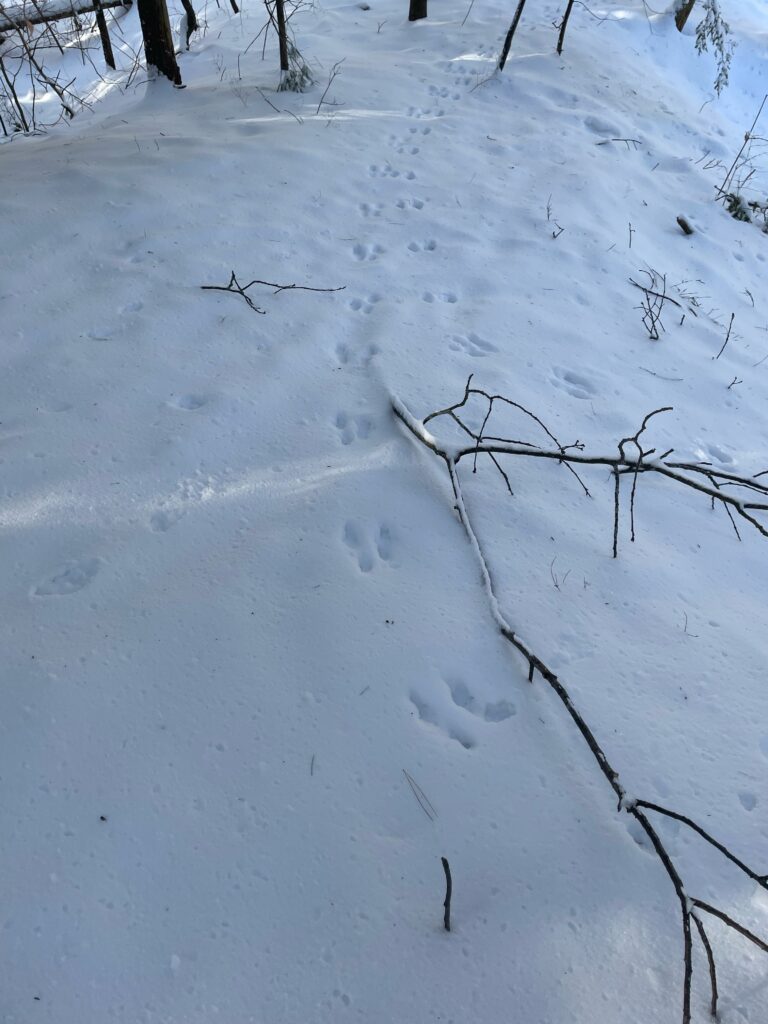
As for signs of mammals in the area, I saw this set of tracks that upon further inspection seemed to come from a squirrel.

iNaturalist project 2/20/23

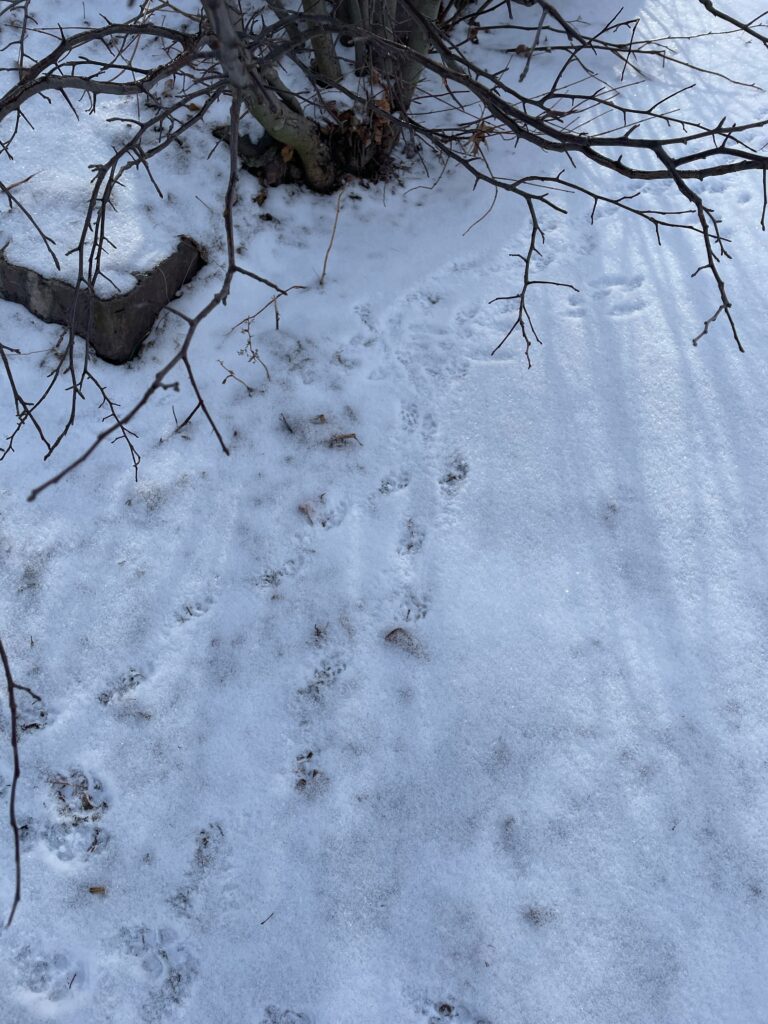
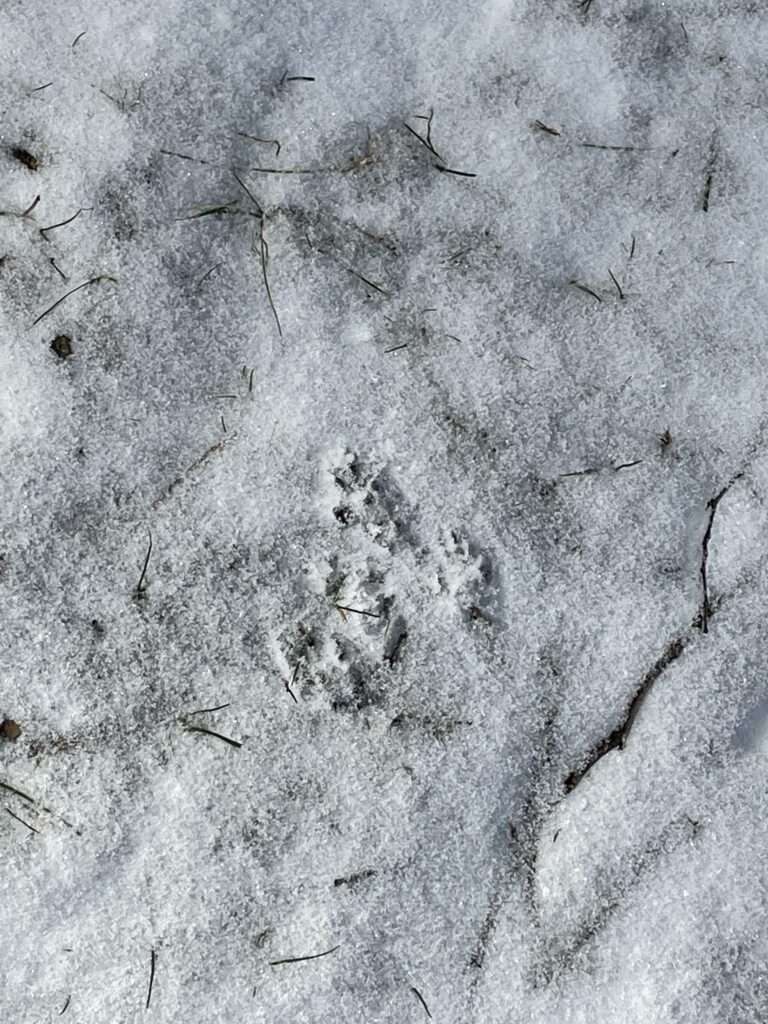
On Saturday, around noon time, I ventured down to Burlington’s waterfront park in search of wildlife signs. The weather was about 35 degrees and mostly sunny. One difficulty I encountered was that most of the snow had melted earlier in the week so it was harder to find tracks. As I walked around the park I saw many domesticated dogs, some seagulls, chickadees, and eastern gray squirrels. Pictured below are eastern gray squirrel tracks (along with some domesticated dog tracks that were next to the tracks) I know these tracks were made by an eastern gray squirrel since they fit the size and description illustrated In the red track guide book. I also saw the squirrel that made these trails. Unfortunately it scurried away before I could get a picture of it. It was interesting searching for wildlife signs in such an urban area. My phenology spot is located deep within centennial woods so there is always much more signs of wildlife there. Even in the urban area that I explored on Saturday I could still find signs of wildlife which really shows how connected we are to nature.

12/9/22

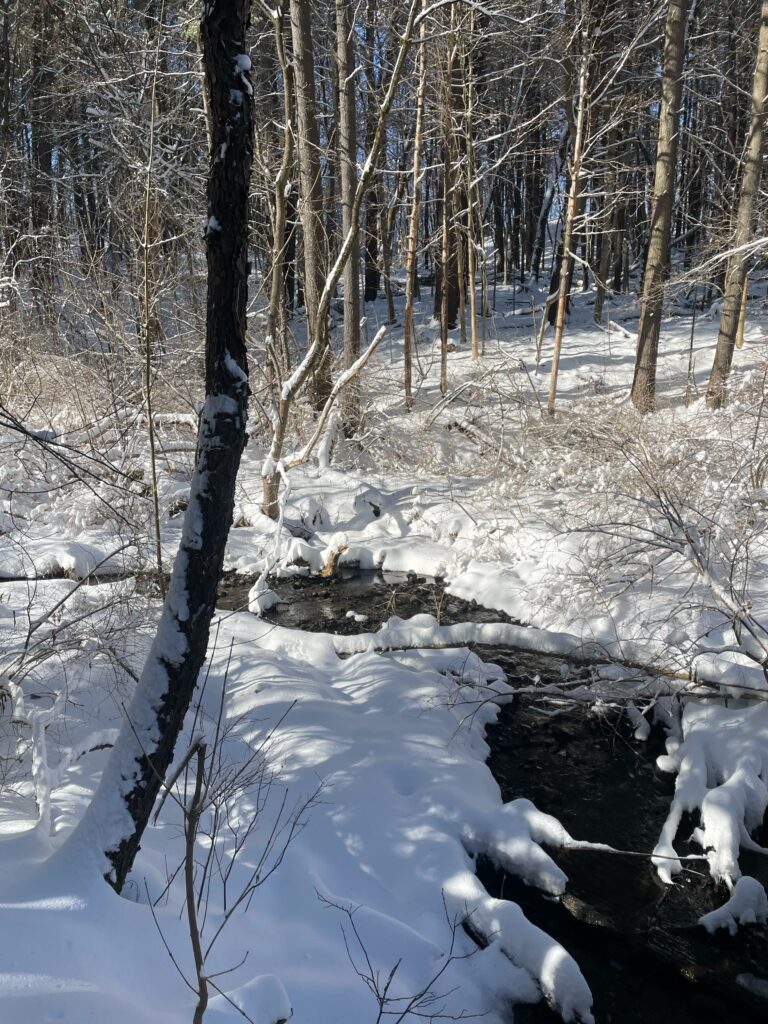
I visited my phenology spot around noon today, the weather was 30F and Sunny. One of the biggest differences I noticed since my last visit here in November was the level of the stream. A month ago, the water level was low and most of the rocks on the stream floor were exposed. Today the stream level was much higher, it was babbling, and the entire stream floor was covered with water. My phenology spot doesn’t have much leaf litter, so I didn’t notice much of a difference in the leaf litter decomposition, however, this was also the first time I visited my phenology spot and the ground was frozen.

All the leaves had fallen off the deciduous trees, except for a few dead beach leaves still hanging on. There were also still some red berries on a bush, and the ferns were still green. As for signs of animals, there weren’t any except for some woodpecker holes in a dead tree that have been there since starting this project.

11/28/22 Thanksgiving Break

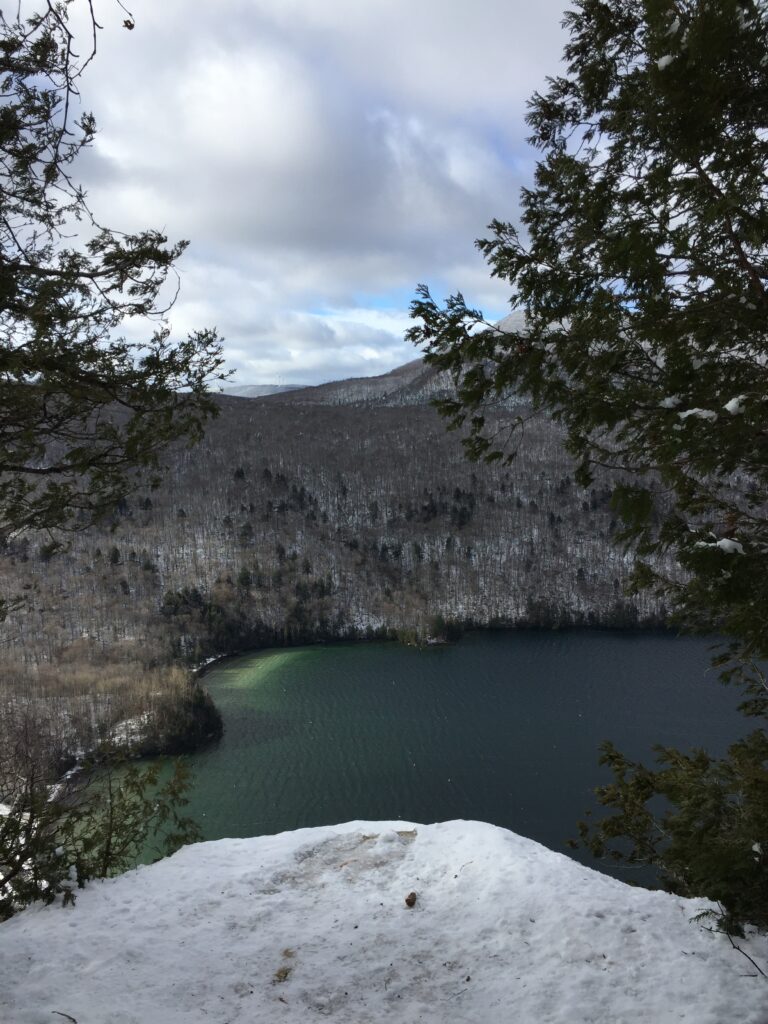
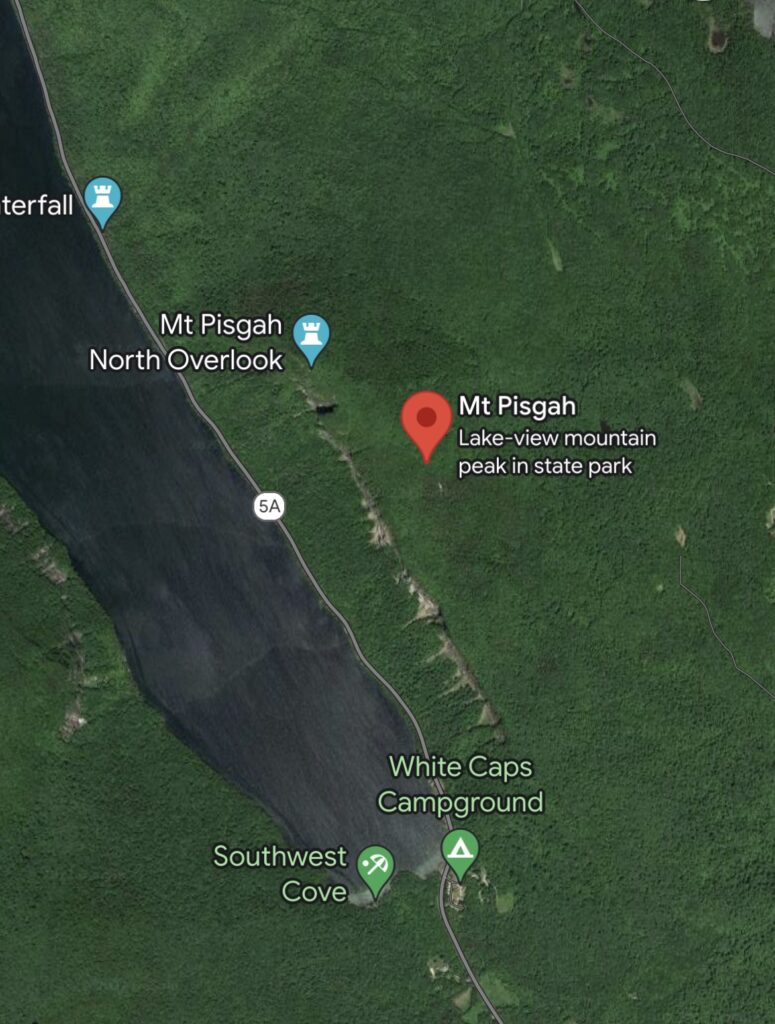
Over Thanksgiving break I decided to to hike Mount Pisgah, a popular hiking spot in Westmore, VT, about half an hour from my house. This is one of my favorite spots to visit, especially in the summer, but this was the first time I hiked the mountain during the colder months. The further up the mountain I got, the snowier and icier the terrain was. This was much different than my phenology spot back in Burlington that still has no snow. The trees here were also predominately evergreen, with very few deciduous species especially as I neared the summit.

View overlooking Lake Willoughby from 1/4 way up the mountain
Location of phenology Spot

November 7th 2022

I visited my phenology spot around noon today. The weather was a humid 73 degrees and very cloudy. As I sat, observing my phenology spot, I noticed a lot had changed since my last visit. The majority of the deciduous trees had lost their leaves, and the green that remained was from the evergreens. Another thing I noticed was that the stream seemed lower than it did last time.

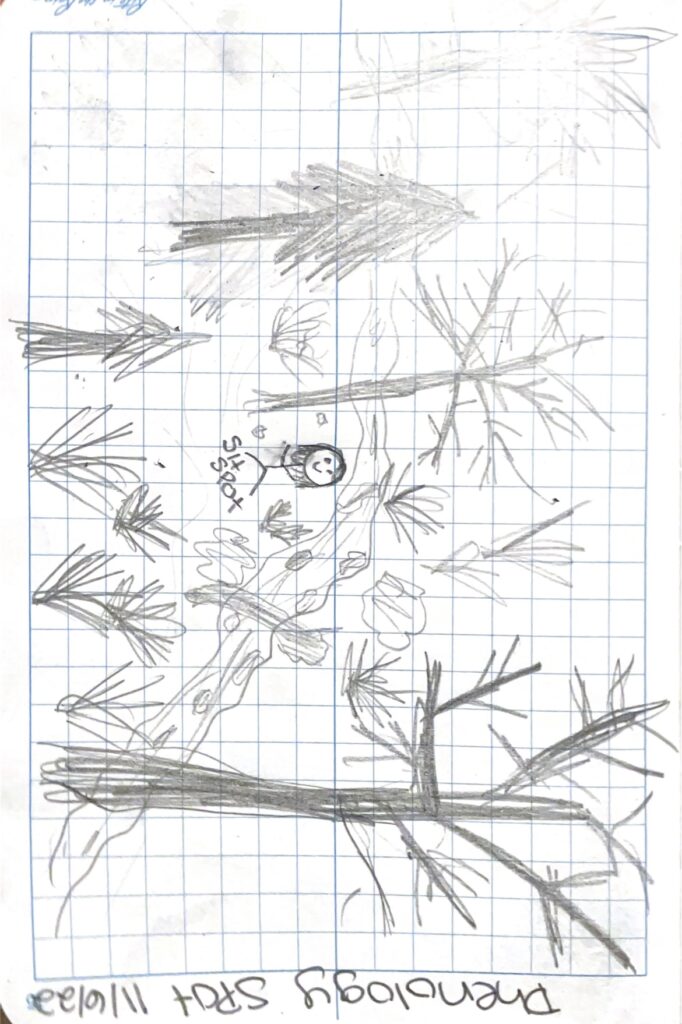
I have included a birds-eye drawing of my sit spot where I sat and observed these changes.

(bird’s eye view of my sit spot)
Skip to toolbar