Posts

Wonderblog Mini-project

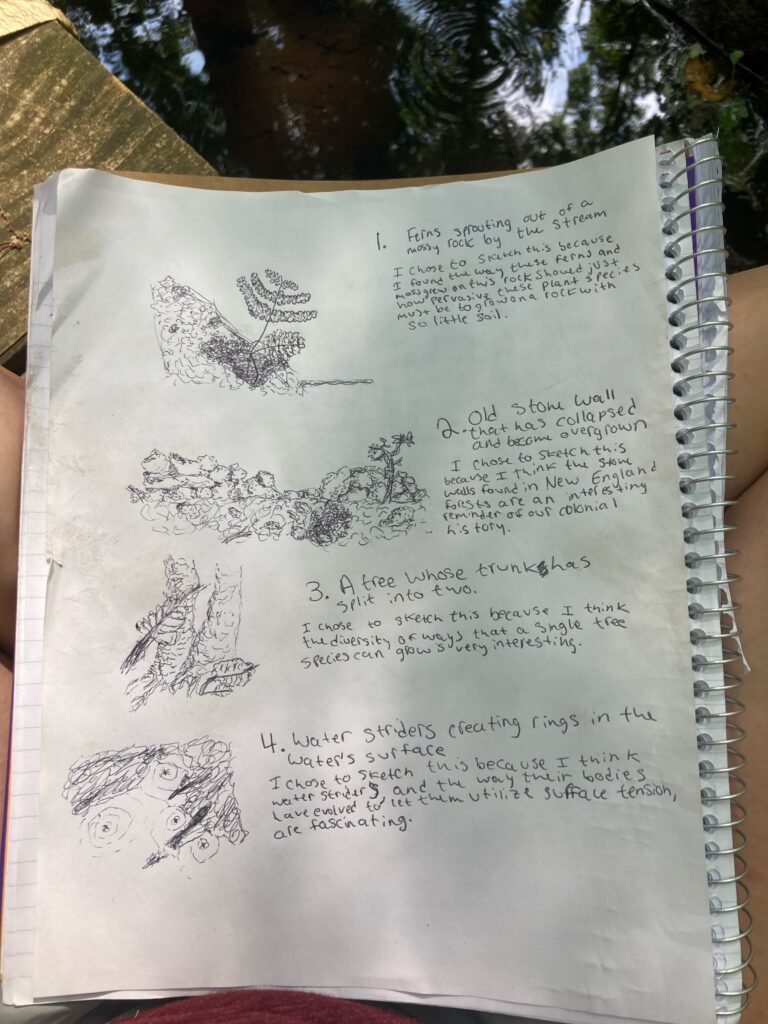
For my mini-project, I chose to sketch a broader area of my site and study many different aspects of the environment. My sketch was of the area surrounding the old stone wall that piqued my interest ever since my first visit. Doing this sketch really deepened my connection with my surroundings; I had to spend about an hour just doing the sketch, not including my time walking out there. Though I love spending time outside, I usually don’t spend that long just studying what’s around me in such depth. This broader sketch allowed me to see more about how all the different aspects of the environment worked together.

Something I will certainly be taking away from the entire wonder blog experience is how much I enjoy sketching. Before this miniproject, I would have certainly said sketching nature (and just drawing in general) as out of my comfort zone. I have never thought of myself as very artistic in that way. But thanks to the wonder blog, I now know how much deep connection stems from me sketching my surroundings. Both times I went out to sketch, I found myself really swept up in the activity, and unable to stop until I felt all the details looked right.
Entry #3- Brook Hollow trail July 4

General Information

I visited the Brook Hollow trail at around 3:30 on July 4th. The weather was very warm, in the mid/high eighties, and sunny.

Exploration

As soon as I arrived at the trail, I knew I wanted to head for the stream, as it was so rich with life and interesting scenes during my last trip. On my way there, though, a large ant hill I hadn’t noticed before by the trail caught my eye. It was immediately obvious that this colony was teeming with activity; I could see a steady flow of ants entering and exiting the mound. I crouched down on the trail to watch the ants for a bit, noticing the morsels of food many of them were carrying and wondering what they had found. If it weren’t for the rich vegetation (including poison ivy!), I would have loved to follow a few and try to uncover the colony’s food sources.

How are plants able to thrive growing from rocks?

It has always amazed me to see so many plant species happily growing tall out of a rock. How can they grow with little to no soil? This phenomena is very present on the Brook Hollow trail. My research on this has told me that many plant species, notably mosses and lichen, are able to grow from leeching minerals out of the surface of solid rock, so they don’t need any soil at all.

Photos

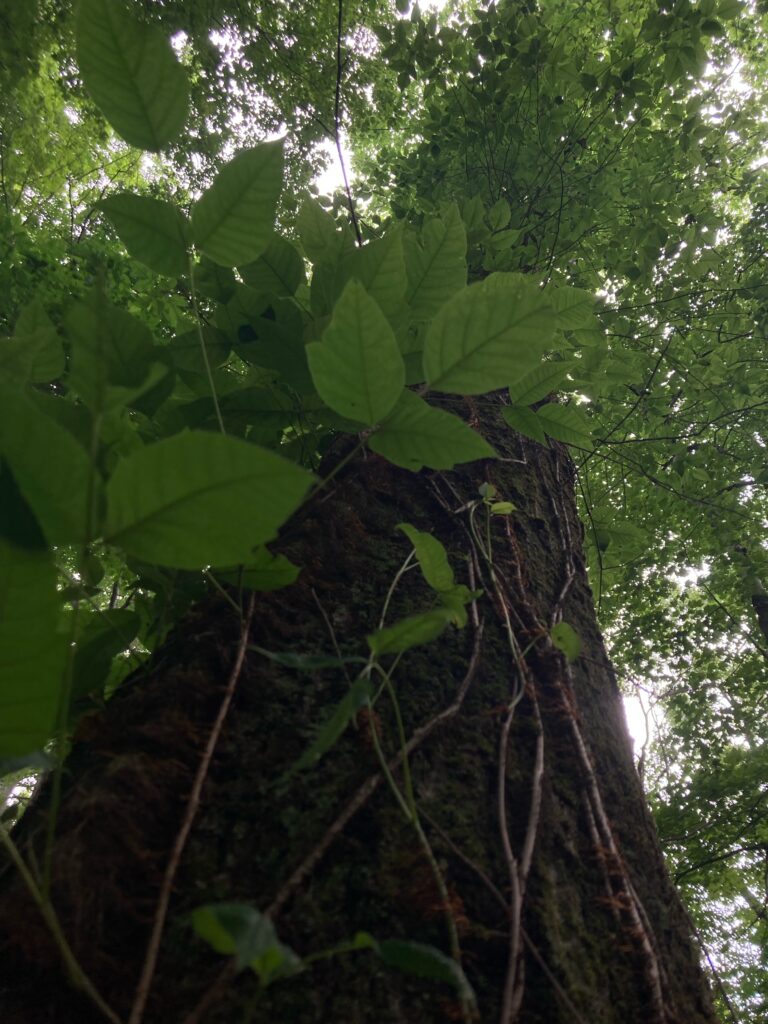
vines growing up a tree. I chose this subject because I thought photographing it from underneath the leaves was an interesting perspective.
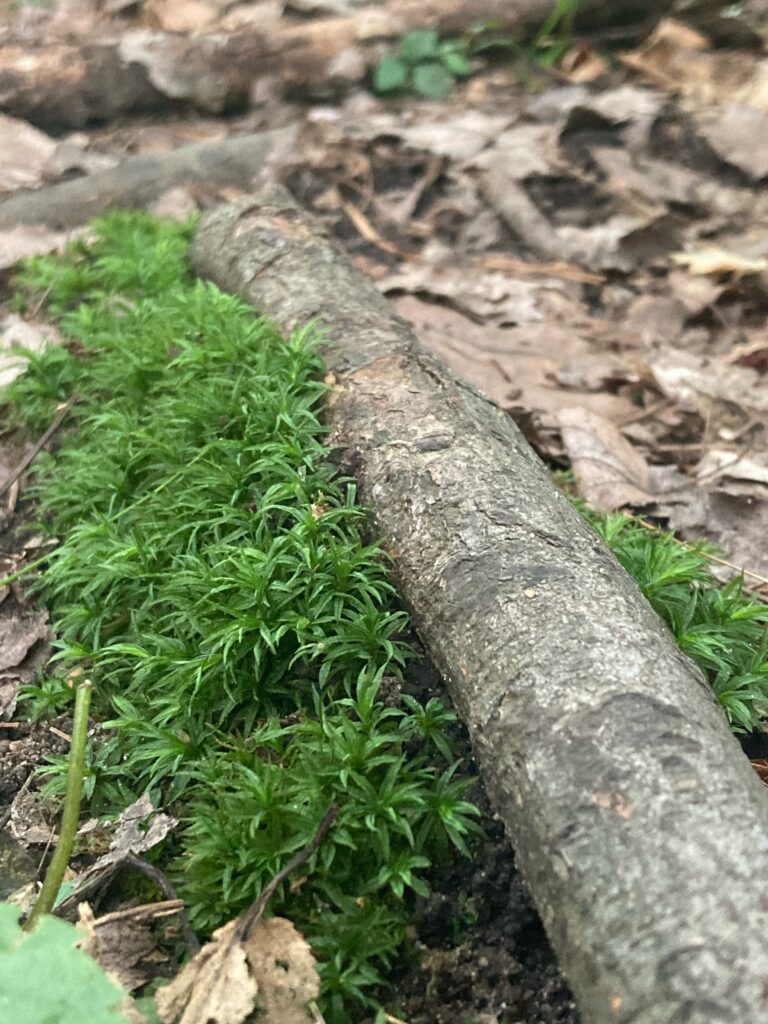
Moss sprouting around a tree root. I chose this subject because I found the contrast of the green moss and the brown ground/root to be fascinating.
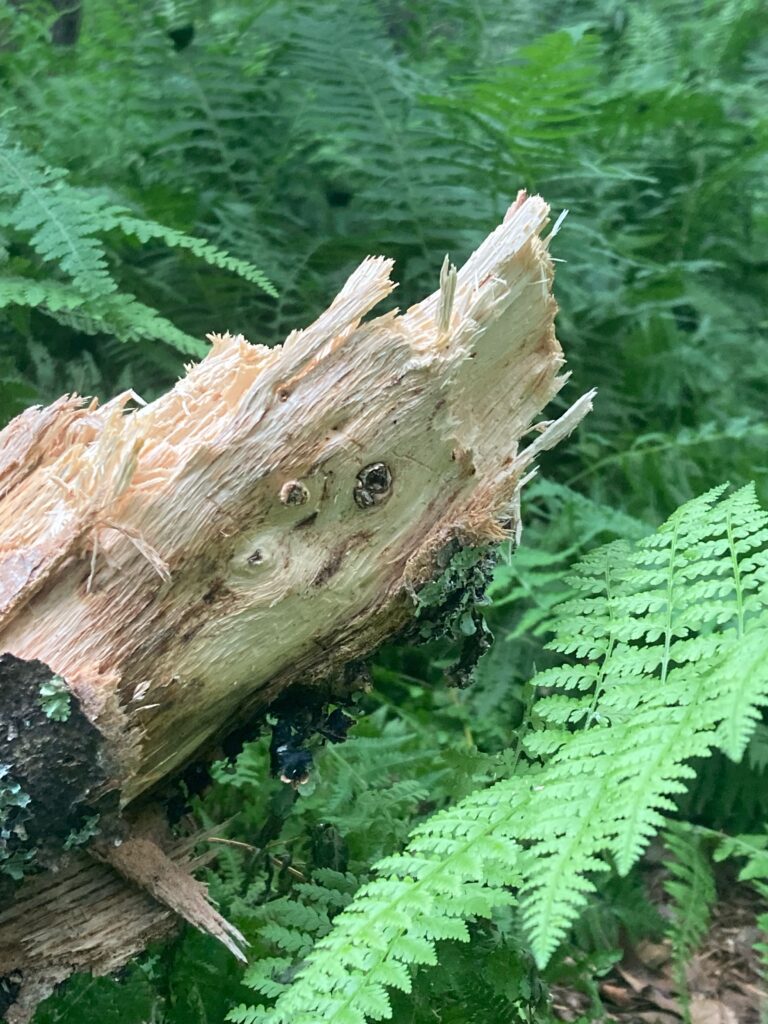
Fallen tree among ferns. I chose this subject for kind of the inverse reason as the last; the broken and dead nature of the tree contrasts the lush ferns nicely.
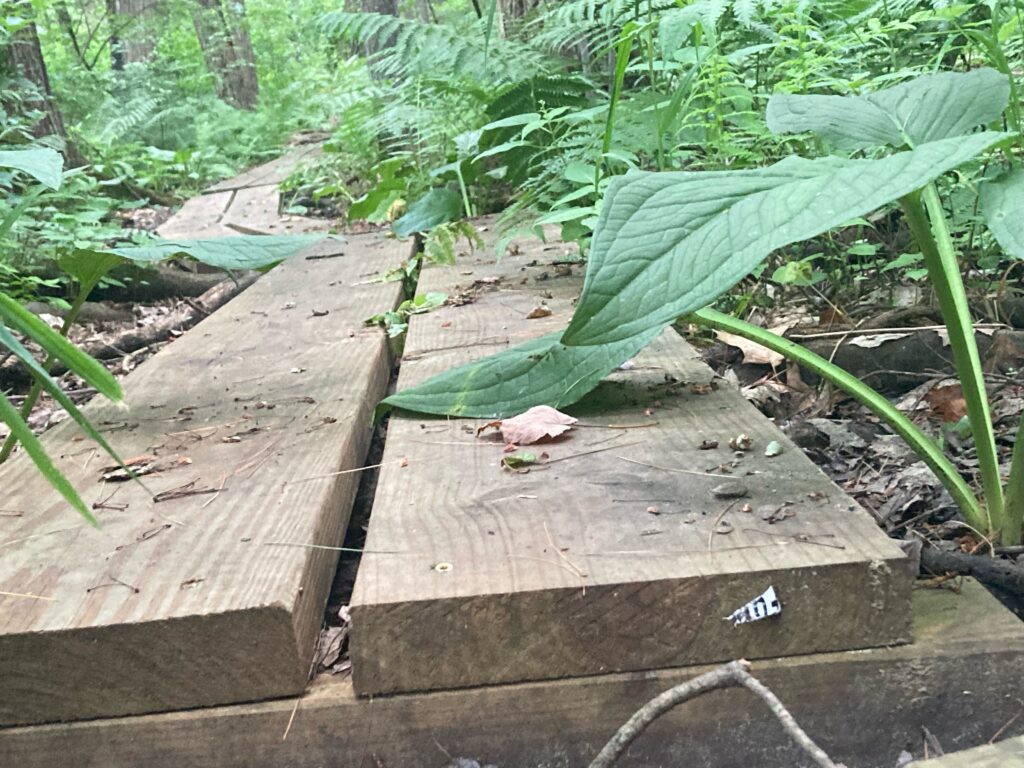
Wooden bridge over mud on the trail. I chose this subject because I loved how the man-made bridge stands out and makes a path through the untamed wilderness around it.
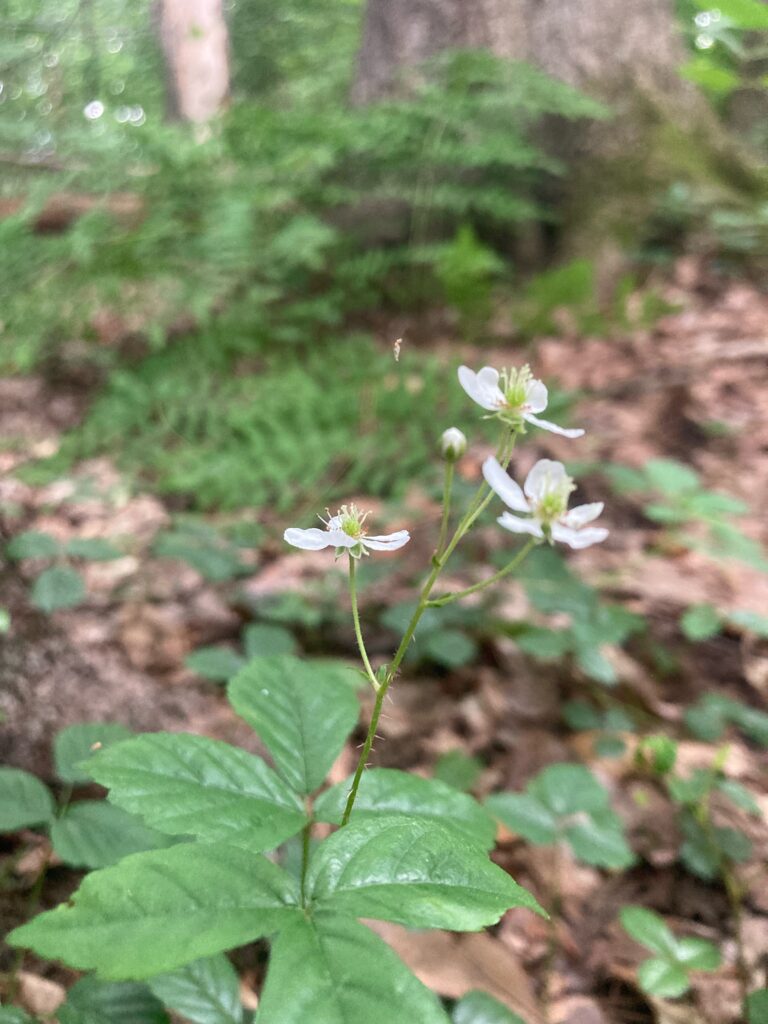
White flowers next to the trail. I chose this subject because there aren’t many flowers this small and delicate along the trail and I found it fascinating to focus on their small details amongst all that’s happening around them.

Conclusion

I really enjoyed the experience of taking photos of my site. I felt that it forced me to focus on small details, and on the significance of everything around me to locate subjects. It didn’t make me hone in as much as sketching did, but it was similar. One thing that was different with this was having to consider what angle photograph from. All and all, I had a very lovely and peaceful visit. I hope to see more wildlife on my next one.

Entry #2- Brook Hollow trail July 2

General Information

I visited the trail at around 3:30 PM. It was 86º F and sunny when I arrived; during my time there it became a bit more cloudy.

Exploration

Upon entering the forest, I knew I wanted to further investigate the stream a little ways in. During my last visit, I didn’t look too closely at that area, but it’s a place I’ve enjoyed walking to for many years. I decided to stray from the trail a bit to follow the stream. The first thing that struck me was the water level. There was less water in the stream than I had seen in any of my previous visits to the trail. I noticed that while walking along the water, there were many more small insects than there were elsewhere in the forest. During my walk to and time at the stream, I noted hearing a variety of bird calls. I also heard the soft trickle of the stream’s water. There was a very large amount of greenery and vegetation by the water, as well as many moss-covered rocks. Just standing in one spot on the stream, I observed beech, oak, and pine trees. As I walked, I watched multiple frogs jump into the water at the sound of my steps.

Species Identification

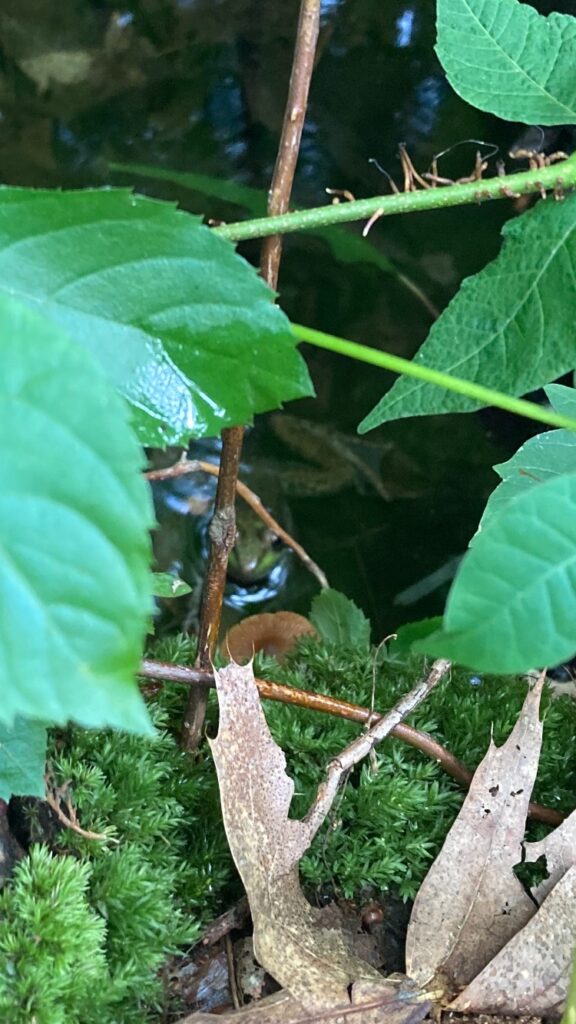
The species I identified which I was unfamiliar with was the green frog, or Lithobates clamitan. As I was walking along the stream, I observed many frogs. With this one, I was able to get close enough to have a good look at its features and take a photo for reference; I was very curious what species was hanging around the stream. Using Mass Audubon’s list of native frog species in Massachusetts, I was able to compare my photo to many different species and conclude that it was a green frog. Through my research, I learned that the green frog will eat pretty much anything they can swallow: they’re not picky!

Sketches

Conclusion

I had a really incredible experience with sketching. Generally, I don’t consider myself an artist, and I was a bit nervous to do this activity due to my artistic abilities. But once I was in the field and determined to capture each of my scenes, I got really into sketching! I noticed so many little details and interactions I never would’ve without making my sketches. Even just looking for things to sketch made me connect more with and think deeper about my surroundings. Next visit I think I’d like to look more into the frogs at the stream, and maybe see if I can spot other species.

Entry #1- Brook Hollow Trail June 24 

On June 24, I visited the Brook Hollow trail in my hometown of Hopkinton, Massachusetts. I went at around 3 PM; it was very warm, 74 degrees Fahrenheit, and sunny.

Site Description

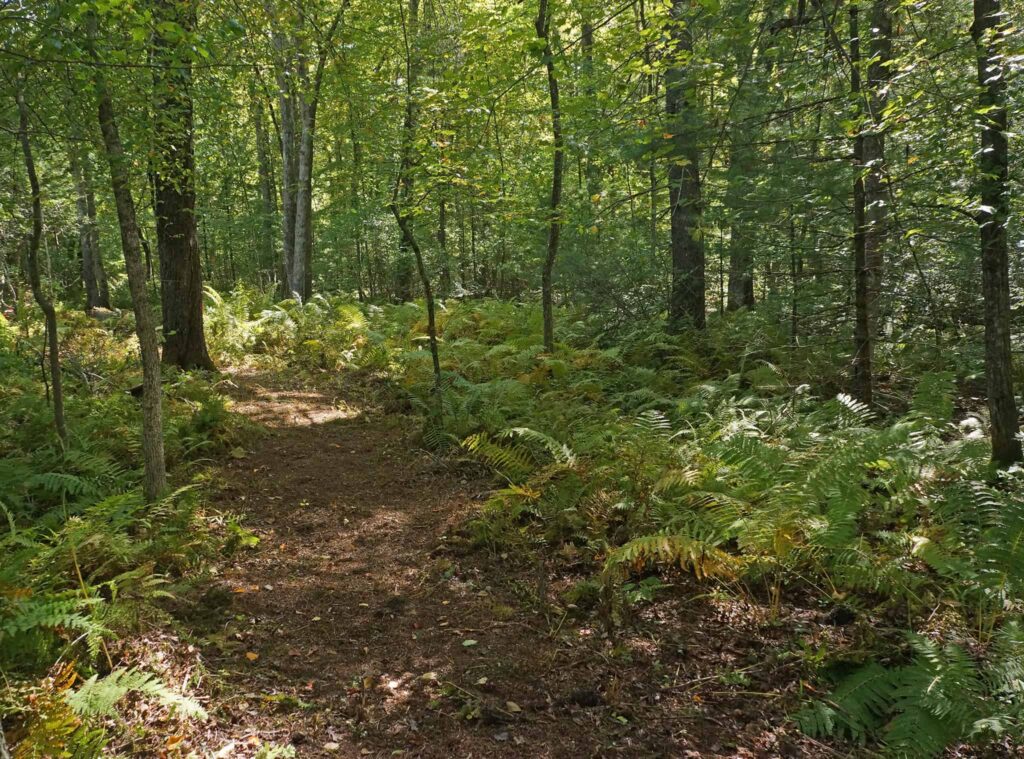
Brook Hollow trail is a natural area off of a rather remote road right by my house. Almost immediately upon entering the trail, I felt like I was totally surrounded by nature. Human activity can’t be seen or heard as far as I’m aware, and I can hear significantly more bird songs in the trees. There’s a large variety of plant types around. The forest floor is crowded with ferns and sprouting trees. The trees are both coniferous and broadleaf. I can see many small animals, such as squirrels, chipmunks, and frogs darting about. There’s a slow-moving stream nearby that I could vaguely hear. The air feels rich and moist, significantly more so than it did on the road just a short walk away. There are rocks of various sizes across the ground, all with moss and lichen coatings. When I crouched down to get a better look at the ferns, I found an abundance of mushrooms in the shade of their leaves.

When were the stone walls in the forest built?

As it turns out, the stone walls that I observed while on this trail are a common sight in rural New England. These walls were built by settlers in and surrounding their farms. According to atlas obscura, by the middle of the 19th century, more than 70% of New England was deforested by those who settled there. So, these mysterious, overgrown stone walls are remnants of Massachusetts’ colonial agricultural economy. These farms are largely overgrown now due to the rise of industrial farming. (https://www.atlasobscura.com/articles/new-england-stone-walls)

Concluding Thoughts

I really enjoyed my trip to Brook Hollow trail. I often visit, but I don’t often take the time to observe my surroundings in such depth and ask so many questions. Though I only researched one questions, the process of coming up with my list has sparked a new and deeper interest in the smaller details of my familiar forest trail. The part of my area that most sparked my interest for next time was the stream. There’s a place a little ways down the trail with a bridge going over the stream where it can be easily observed. I’d love to observe more of how plant and wildlife species differ near the water versus further away in the forest.

Skip to toolbar