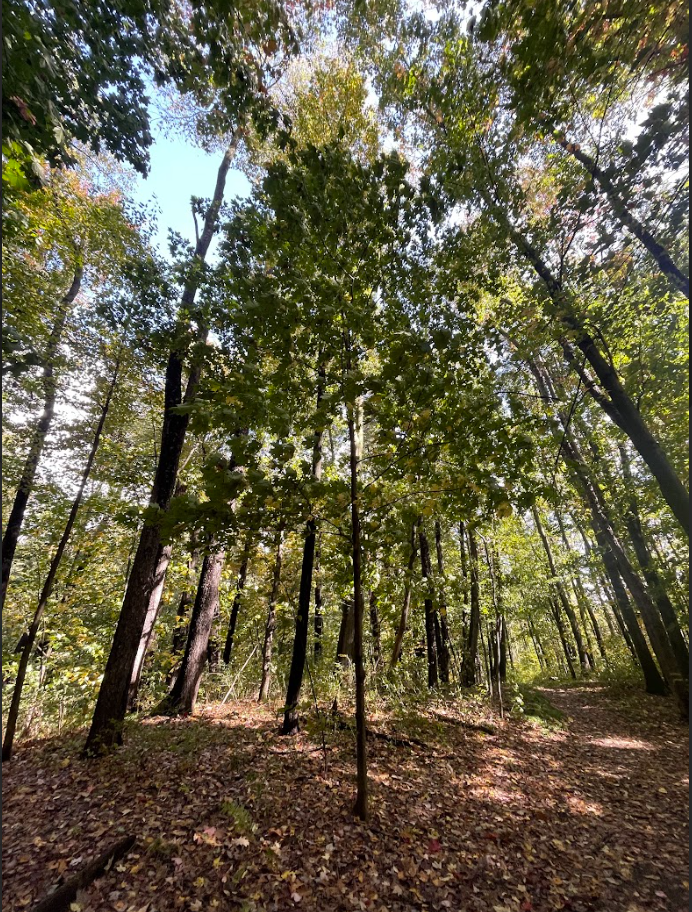
There were many different changes in Centennial Woods since the last time I was there: all of the trees’ leaves had completely changed to their fall colors and the leaves had begun to fall more. Some of the trees were starting to become completely barren of their leaves which was a complete difference from my previous visit when some trees were still completely green.
15 minutes of Observation
While sitting in Centennial Woods, I observed a number of different animals. There were several squirrels, chipmunks, and different types of birds. There were several hikers and families walking in Centennial Woods enjoying their Saturday morning, but other than that there weren’t many people and it was a really relaxing experience. Overall it was very quiet the loudest things would be Birds and the occasional car horn, but other than that it was rather quiet.
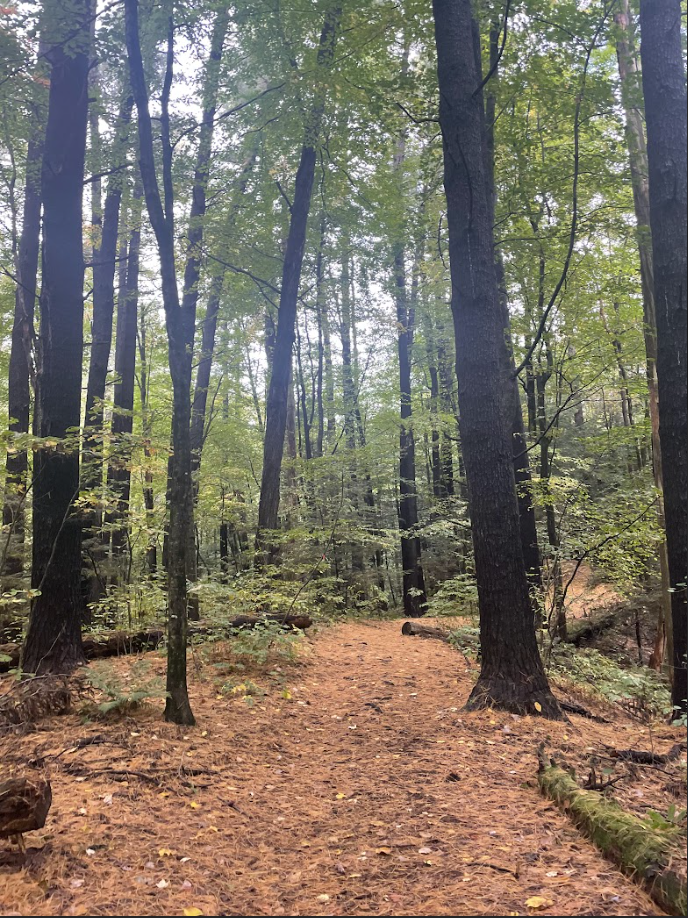
The Woody Plants of Centennial Woods!
Centennial Woods has a vast number of different woody plants. Some of these include native plants like the Eastern White Pine, Sugar Maple, White Oak, and Northern Red Oak. However, there are also several glossy and common buckthorns and barberry trees that are invasive to the Vermont ecosystem.
What Type of Vegetation can be Found in Centennial Woods?
In Centennial Woods, many different types of vegetation can be found. Native trees such as White Oak and different types of maples can be found. In addition to that, invasive species like buckthorn and barberry trees can be found. Lower to the ground, different types of ferns and shrubs can be found. These are found at the base of trees and along the bank of the brook. In some areas, smaller ground ferns can be found on small islands in the middle of the Centennial Brook. There are also areas in Centennial Woods where poison ivy grows in large patches.
How to get to Centennial Woods?
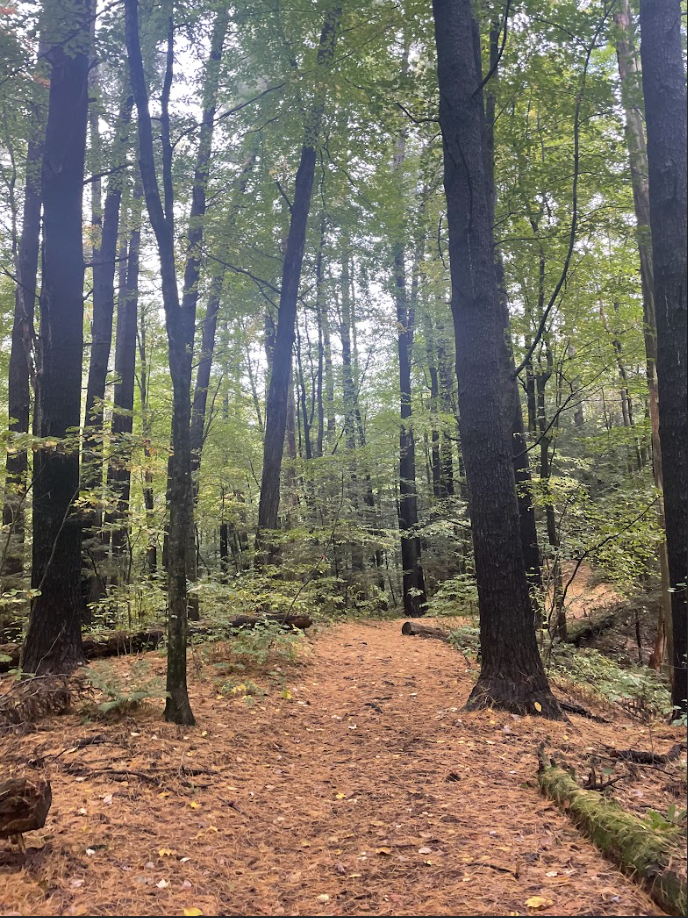
To get to Centennial Woods from the Aiken Center or the Davis Center, you will want to walk past the greenhouse and through the parking lot outside of the Davis Center. Then, when you get to the parking lot, walk down Carrigan Drive, which then turns into Catamount Drive, towards the police station. Passing the police station, there will be a sign that says UVM Centennial Woods and that is the trailhead.
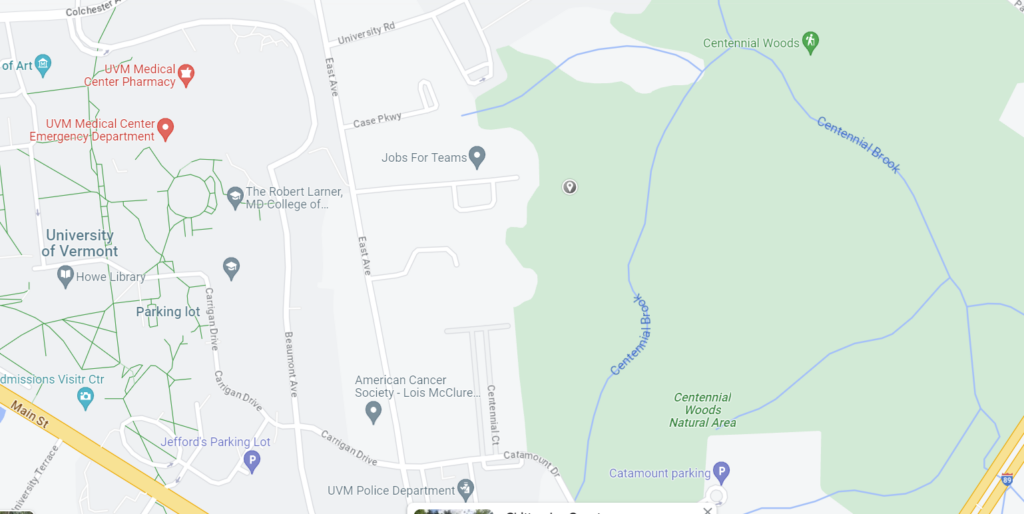
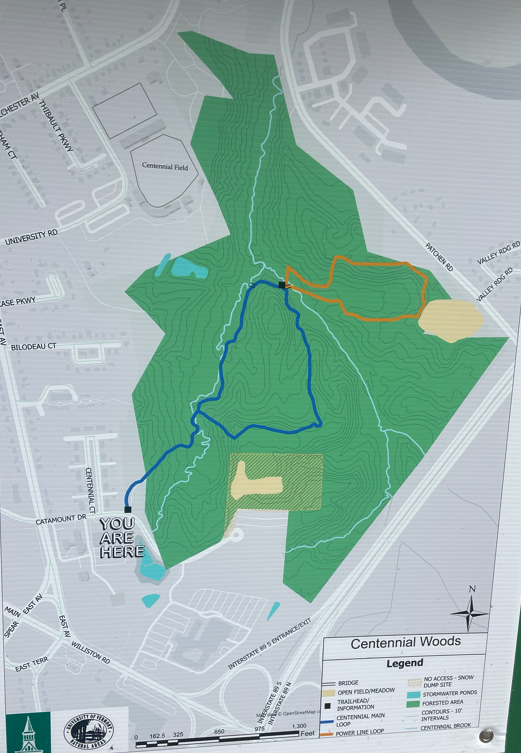
So… what is Centennial Woods, and why did I choose it?
Centennial Woods is an example of an urban wild., which is a natural ecosystem that is located in an urban area. Located near the UVM campus, Centennial Woods offers a place for students and Burlington residents to explore this area. Dozens of different species of flora and fauna call this place home. There is lots to explore in Centennial Woods, with many different paths to hike, a small brook running through it, and places just to sit and relax.
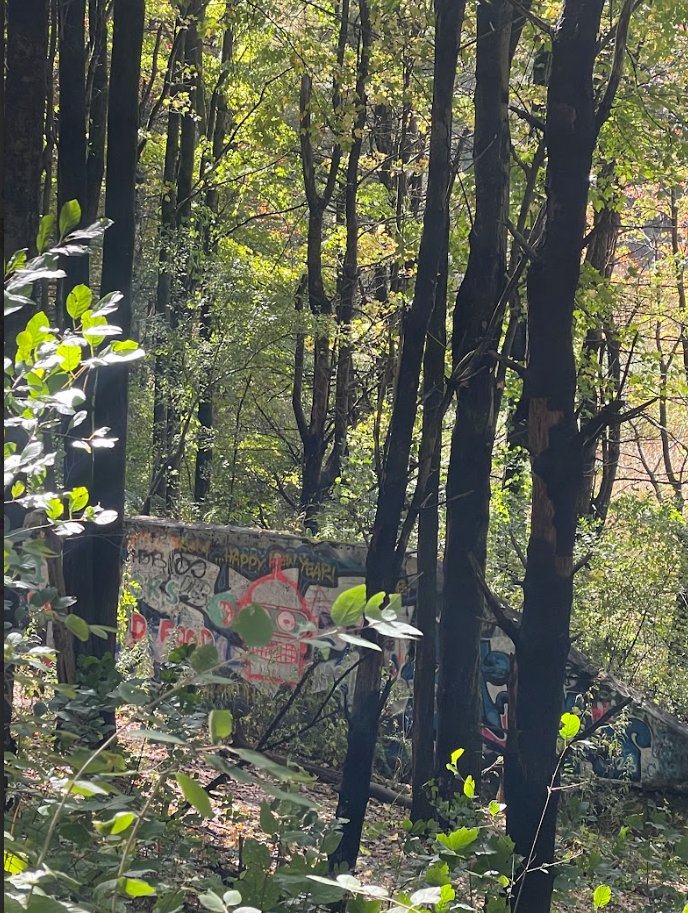
With all of this being said, Centennial Woods is also a great place to explore and study. Every time I have been there, I have discovered a new biological feature to study. Furthermore, the biological components of the woods change over the seasons, leading to potential interesting observations of what changes phenologically in Centennial Woods.