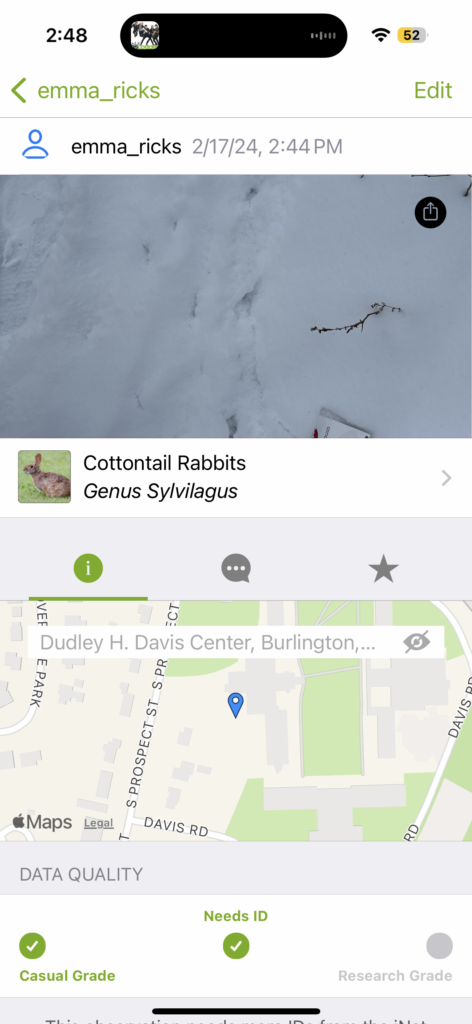
Using the iNaturalist app is a relatively easy task. I enjoyed the process and I liked being able to see what my peers have posted and observed around Burlington. I also liked how the app is easily accessible for posting observations right as they are seen.
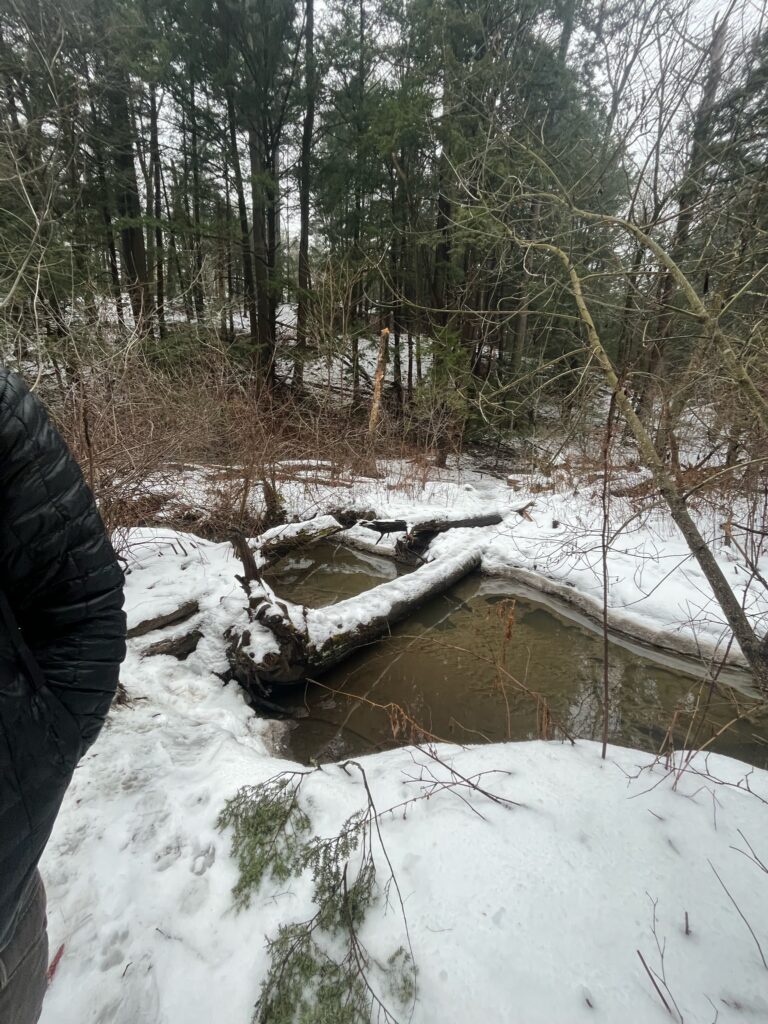
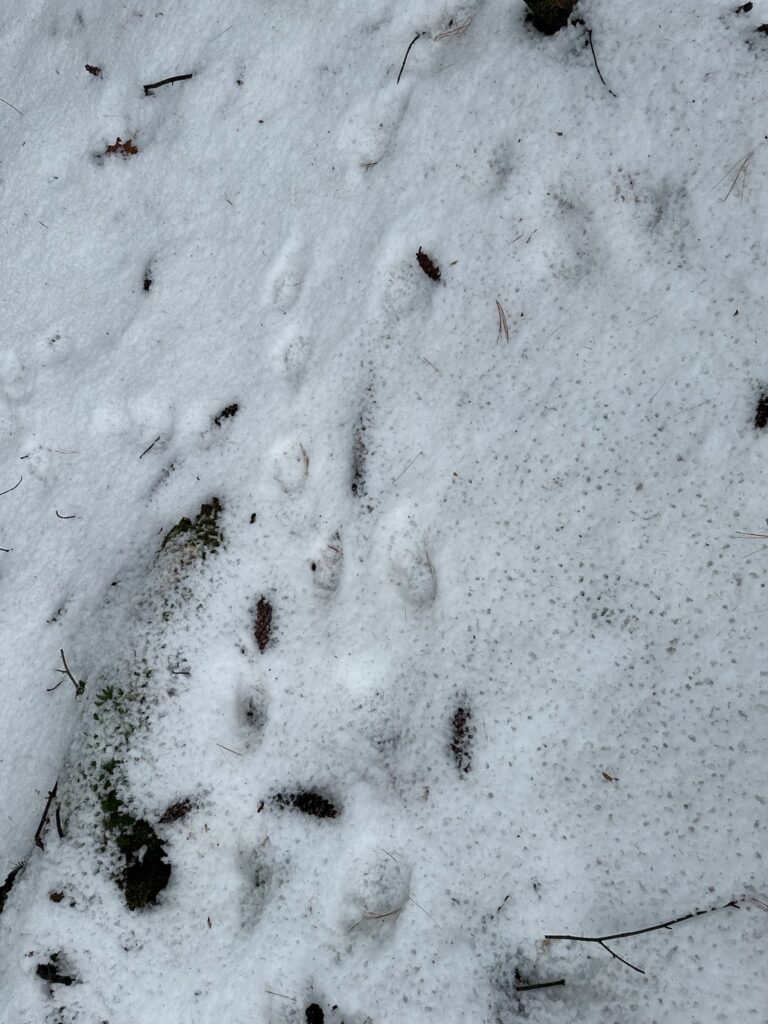
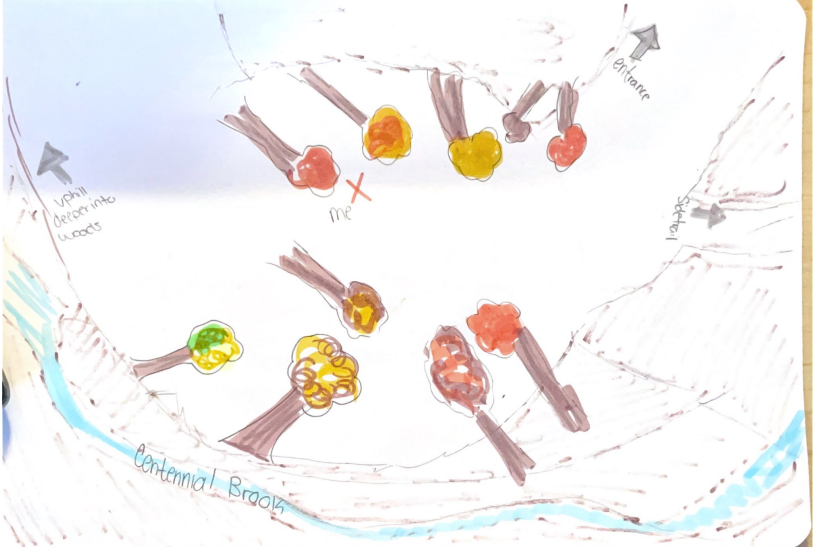
In Centennial Woods, there are significant changes from the fall. For example, there is no more leaf litter on the ground and it is mainly ice and snow. Today there was less snow due to the recent rain, but it still has more snow than there was last semester. Additionally, all of the trees, with the exception of the Evergreens, have lost their leaves. There is ice along the banks of the creek that flows through Centennial Woods and the ground was harder than it was last semester. Additionally, in the fall you could hear squirrels in the trees and birds making their calls, and as I wandered around Centennial Woods, I noticed a significantly less amount of animal activity.
I enjoy how accessible Centennial Woods is to campus and how easy it is to have a natural area to enjoy so close to my dorm. Additionally, I like that Centennial Woods is a good place to both go alone and enjoy and go with friends. There are also many different variations of trails you can take to explore. To conclude, I most enjoy having a good natural place to go with friends that is easily accessible.
I have not observed much animal activity aside from the occasional squirrel or bird, but the one thing I did notice is recently there has been an increase in crows around Centennial Woods and the surrounding areas. Other than the increase in crow activity I have not noticed a change in the amount of animal activity.
I have noticed the eastern white pine and Norway Maple keeping their leaves, but other than that most of the trees have lost their leaves fully. In addition to the lack of leaves, there is a lack of fruit and vegetation on the trees, but rather on the ground decomposing. There is less leaf litter and what is remaining has begun to turn more brown and is slowly decomposing. There is significantly less than there was for phenology number 3. Other than the decreasing amount of leaf litter there aren’t many signs of decomposers.
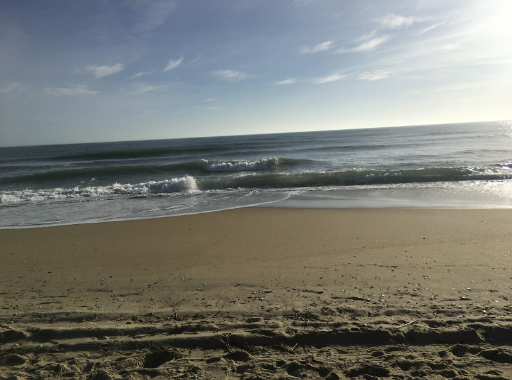
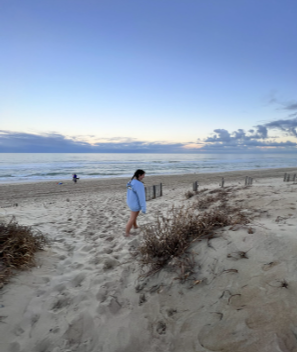
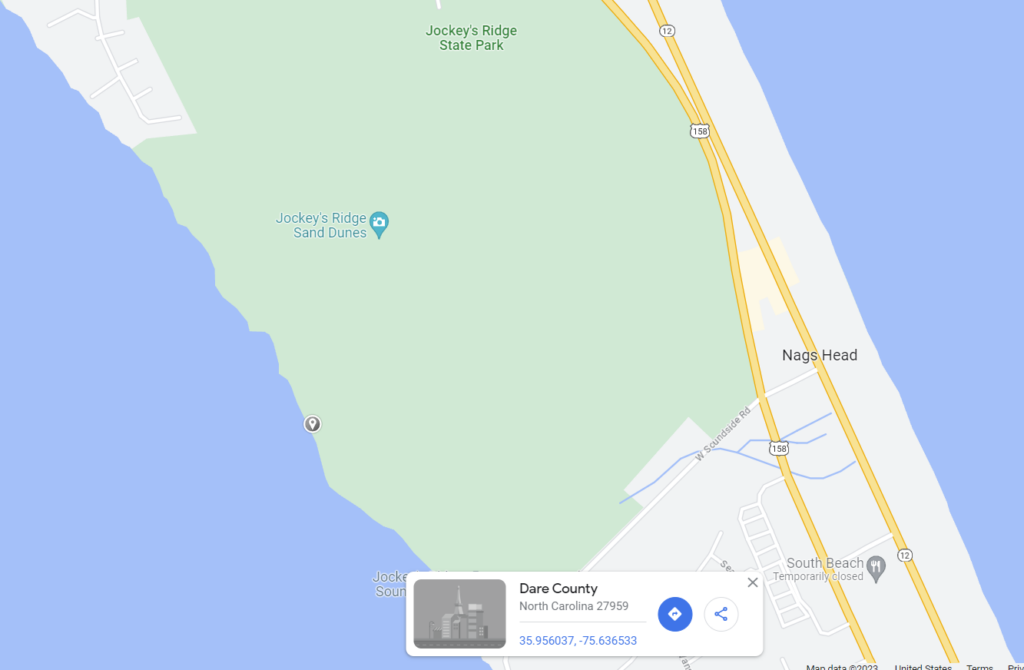
For Thanksgiving, I spent time in Jockey’s Ridge State Park on the Outer Banks in North Carolina. Jockey’s Ridge is a good place to hike on the sand dunes and go to the beach, which is exactly what my friends and I did.
The beach at Jockey’s Ridge State Park could not be more different than Centennial Wood. While both are right on the edge of busy areas and surrounded by a neighborhood, Jockey’s Ridge has wide sand dunes and few trees. It also opens up to the Albemarle Sound instead of a small creek like Centennial Brook. Where Centennial Brook is a freshwater environment with little to no wildlife, the Albemarle Sound is a saltwater environment home to sharks, dolphins, many different species of fish, and occasionally manatees in the winter. Jockey’s Ridge is also home to many different bird species, similar to Centennial Woods, but there is not much wildlife as most of the wildlife lives in the woods surrounding the Sand Dunes. Finally, Jockey’s Ridge’s landscape is often changing based on different storms and how they shift the dunes.