A UVM blog Wonder Blog

Posts

Wonder Blog Mini Project, Joppa Hill Loop Trail, July 12th

Monday, July 12th, 1:15 pm. Today the temperature outside is 87 at the time of observation. It is hot and humid with partly cloudy skies, a slight breeze, and a chance of thunderstorms later in the day (4-7pm).

Wonder Blog Mini Project:

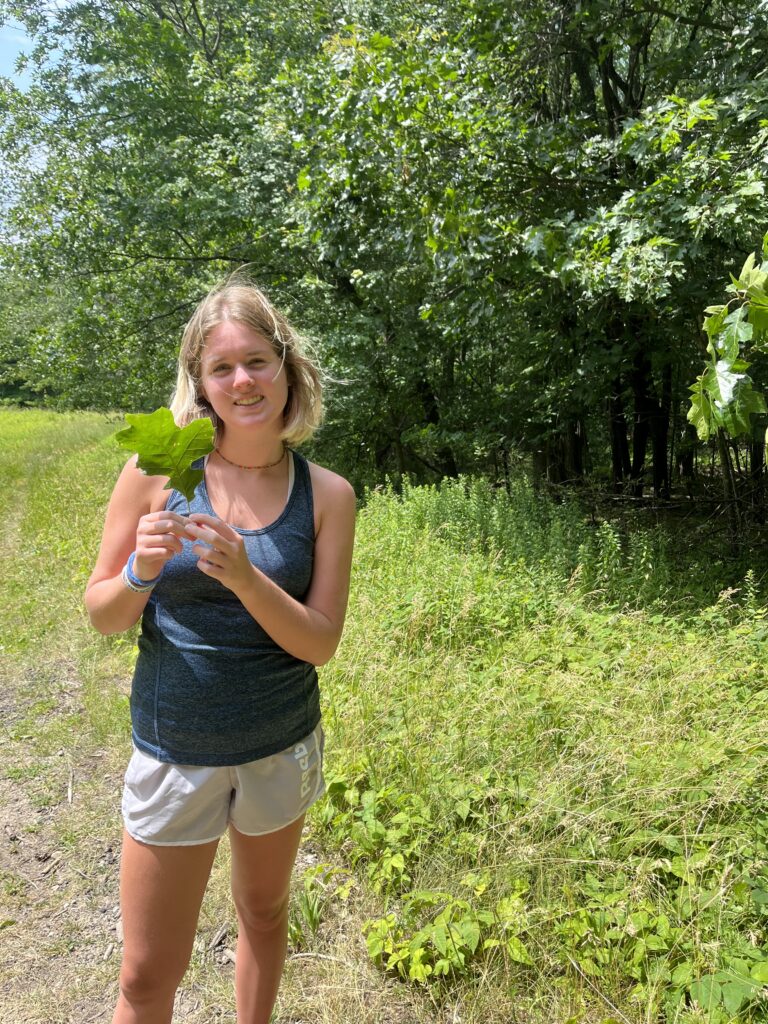
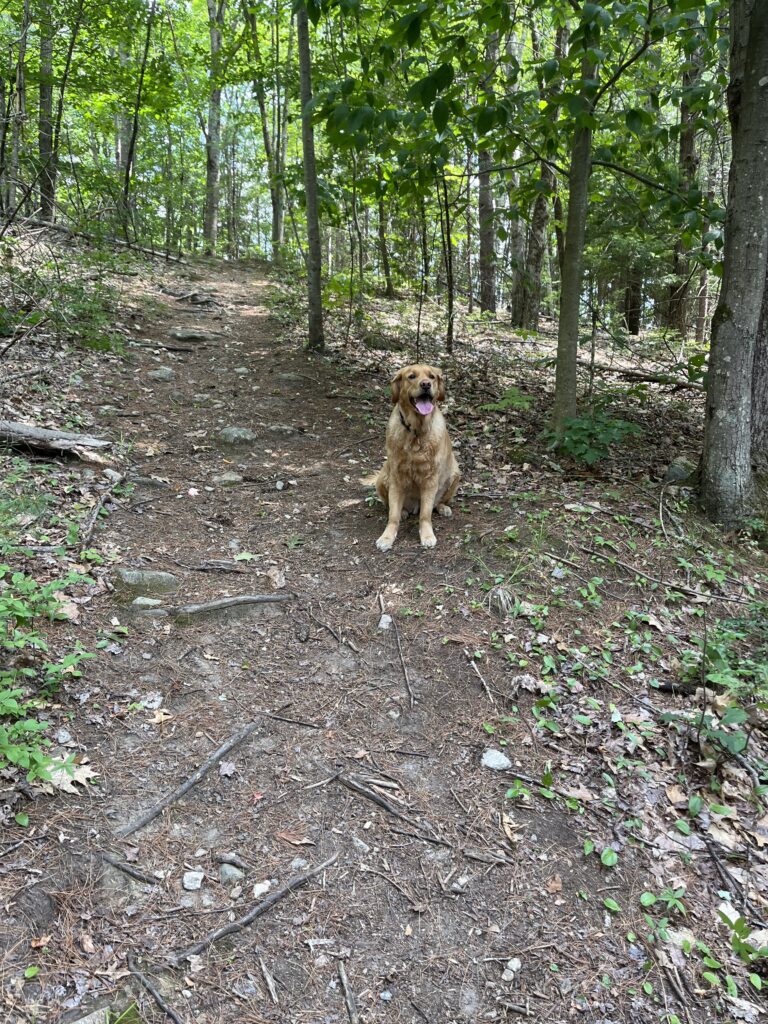
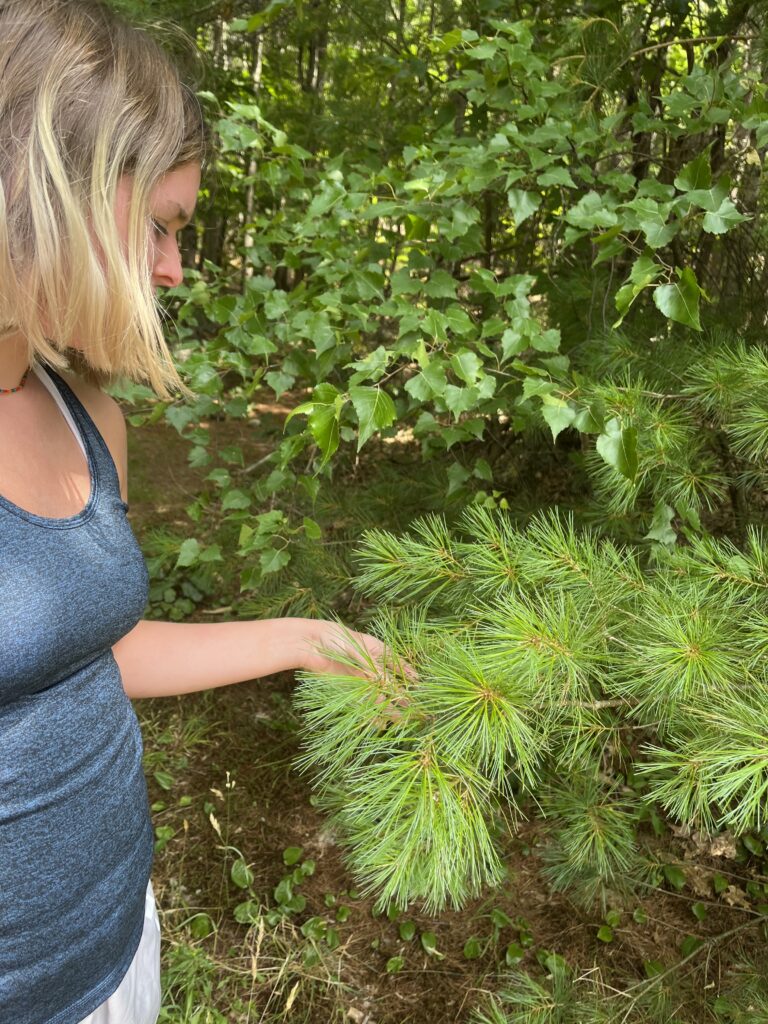
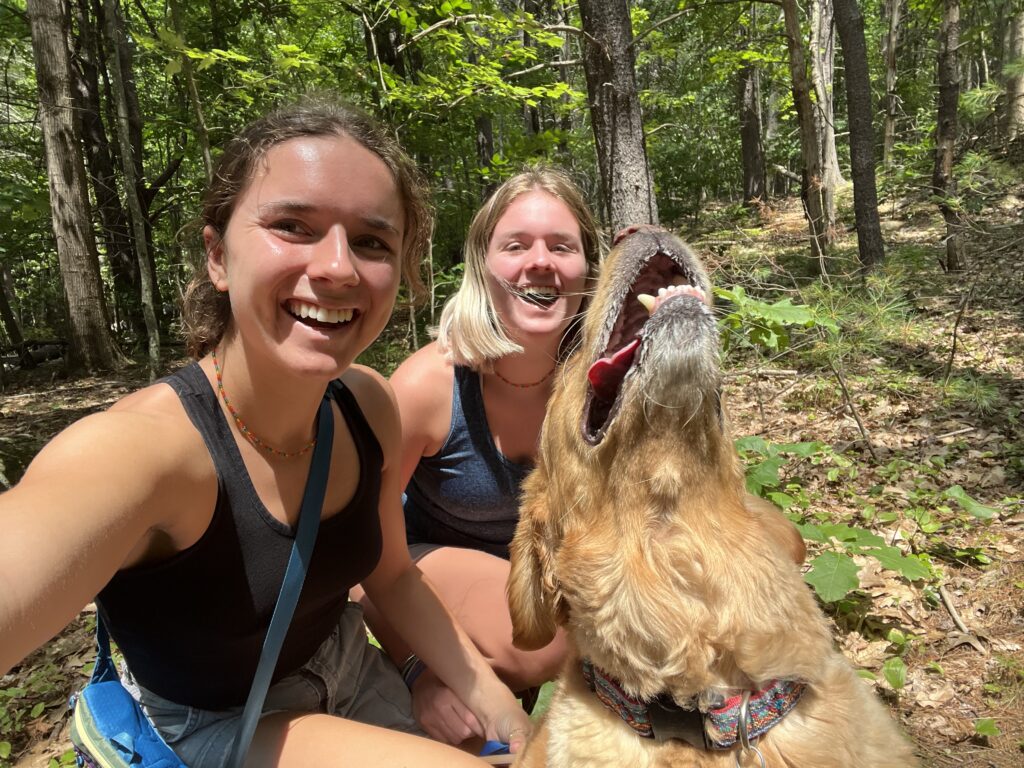
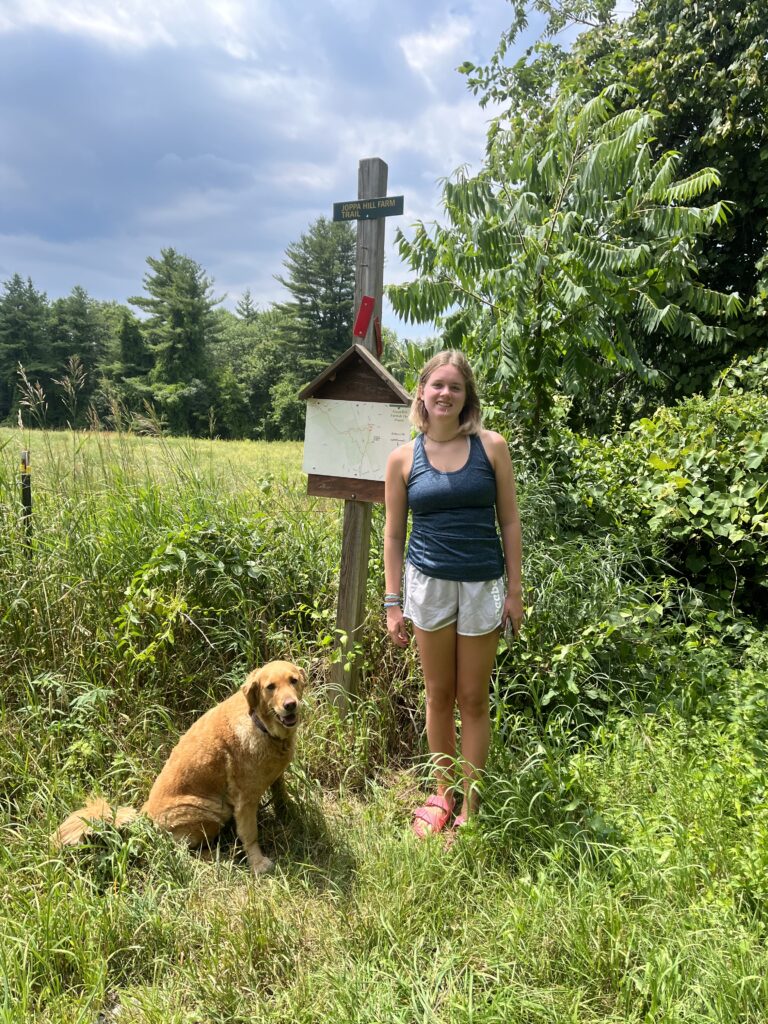
For my Mini Project, I wanted to share my site and all the knowledge I gained over the past few weeks with someone important to me. This week I took my little sister (Aly) and dog (Bailey) on the Joppa Hill Loop Trail. When we arrived I asked Aly to do exactly what I had been doing for the past 3 weeks. I told her to be curious about everything. While at my site, I was able to help Aly identify a few different plants. We found some wild blueberry shrubs, an area of Eastern White Pine saplings, and a beautiful Black Oak tree with some massive leaves.

Being able to bring my sister and dog to my Wonder Site, definitely deepened my relationship with this area. After spending the past couple of weeks here, I now feel like I’m a little bit of an expert. So when I could share my knowledge about my site with a new person, it gave me this new sense of connection to the area that I’d never experienced before.

Each week when I went to my site, I tried to challenge myself with something new and out of my comfort zone, whether that be asking questions about things that confused me or trying to identify as many tree species as I possibly could. Each week was a new adventure. On this final visit, I decided to put all that to the test and see how much knowledge I could share with another person. Through challenging myself I was able to learn so much, which ultimately led me to have the confidence to share knowledge about my site with Aly (and Bailey).

Throughout my Wonder Blog, I have developed a relationship with this small area in my hometown. When I started, the Joppa Hill Loop Trail was somewhere that was meaningful to me, but now it has so much more significance. The Joppa Hill Loop Trail is not only a place where I can enjoy the beautiful trails, but it is also a place where I learned so much about things that truly interest me and I’m passionate about.

Photos:
Massive Black Oak leaf
Happy pup out on the trail
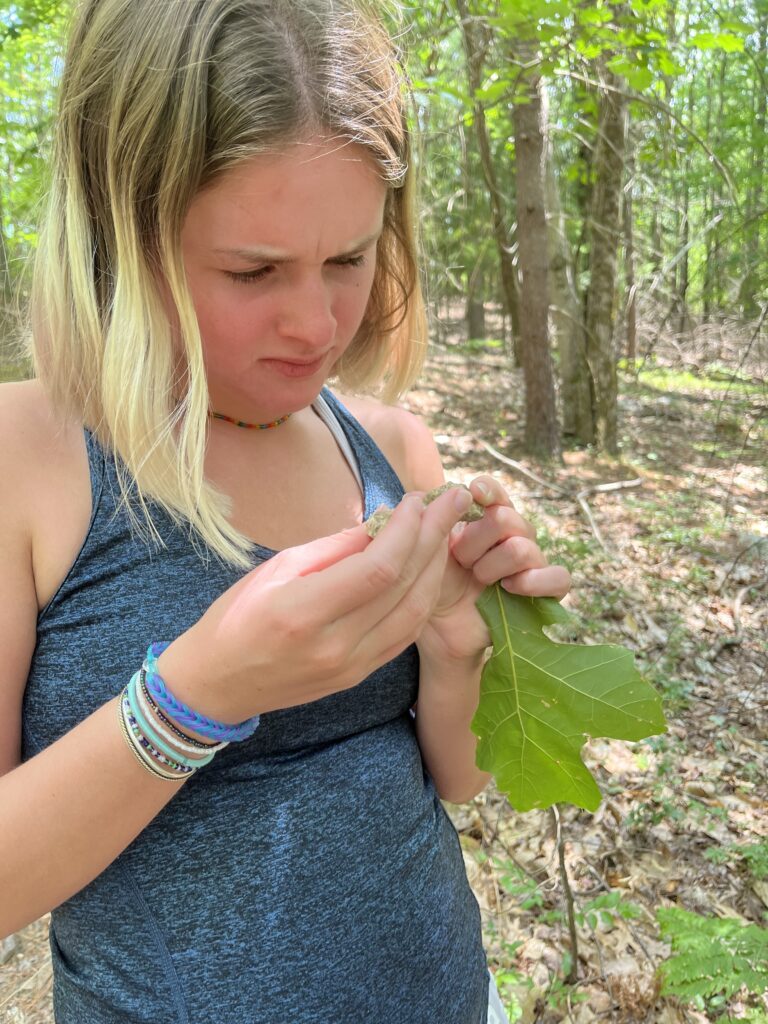
Aly trying her hand at rock ID
Checking out an Eastern White Pine

Wonder Blog Entry #3, Joppa Hill Loop Trail, July 5th

Part 1:

Monday, July 5th, 11:30 pm. Today the temperature outside is around 76 at the time of observation, with cloudy skies, no wind, and a slight chance of rain later in the day.

Part 2:

When I arrived, I decided to take a closer look at the nonliving things that make up my site. I feel like for the past couple of weeks I’ve been focusing on the trees/other plants and animals that live in this particular area. Today, I decided to be a little bit more curious about the dead wood and organic decaying matter around my site. The first thing I noticed was that there weren’t a lot of large fallen trees or branches in this area. Joppa Hill Farm is used for educational purposes, so it is very evident that they manage this area well. With that being said, there were quite a few rotting stumps on my site. My guess is that these were either trees that were harvested for wood or cut down to prevent a hazard. Other than that, there were smaller branches but nothing too substantial in size. As for the decaying matter, it was pretty typical of what you’d see in any New England Forest (lots of leaves and pine needles/cones).

Part 3:

Something I found intriguing about my site and something I’ve noticed all across the state of New Hampshire is how many stone wall structures we have. All across the Joppa Hill Loop Trails, there are stone walls. I’ve become super accustomed to seeing them and stepping over them while hiking, but I’ve never really stopped to think about why they are there and where they came from. When I got home from visiting my site, I did a little bit of research. I figured out that the stone walls were often used as property lines or to keep farmers’ animals in/other harmful pray out. They also served a dual purpose because when farmers plowed their lands, they took all the rocks and constructed these stone walls. For many, it probably seems so simple, but to me, I find it so fascinating how these walls have survived for hundreds of years. It is wild how I can be walking deep in a forest and all of a sudden come across a stone wall. Imagining that at one point the land where I’m standing was not heavily populated with huge trees, instead, it was a big open field used for farming.

Part 4:

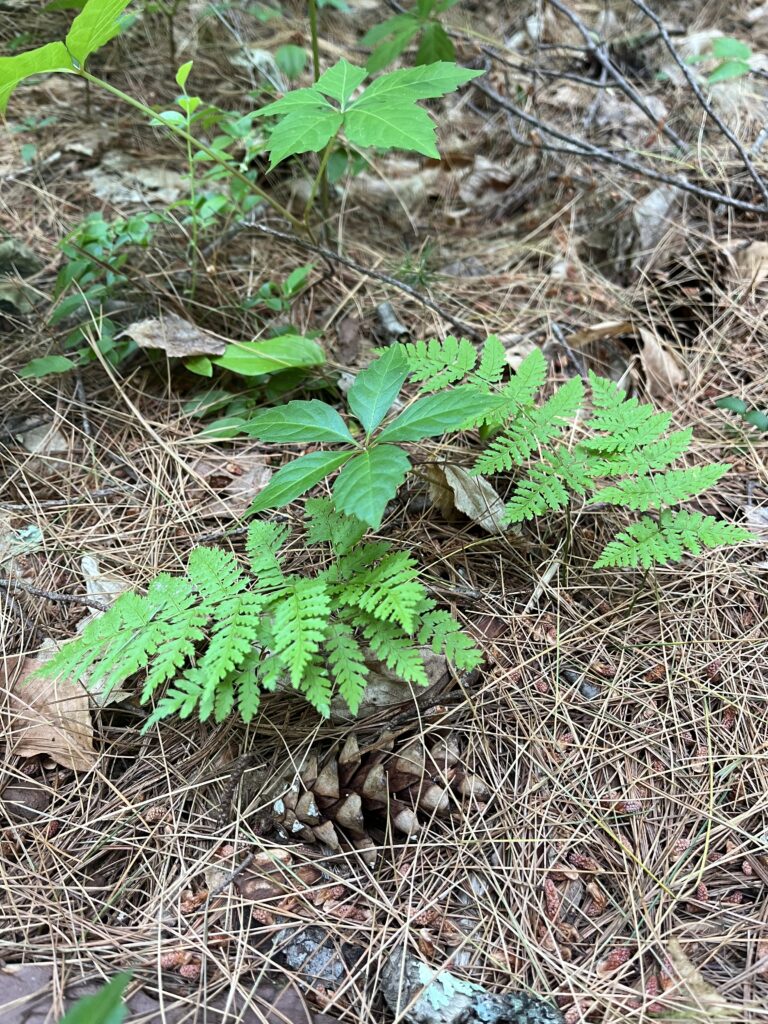
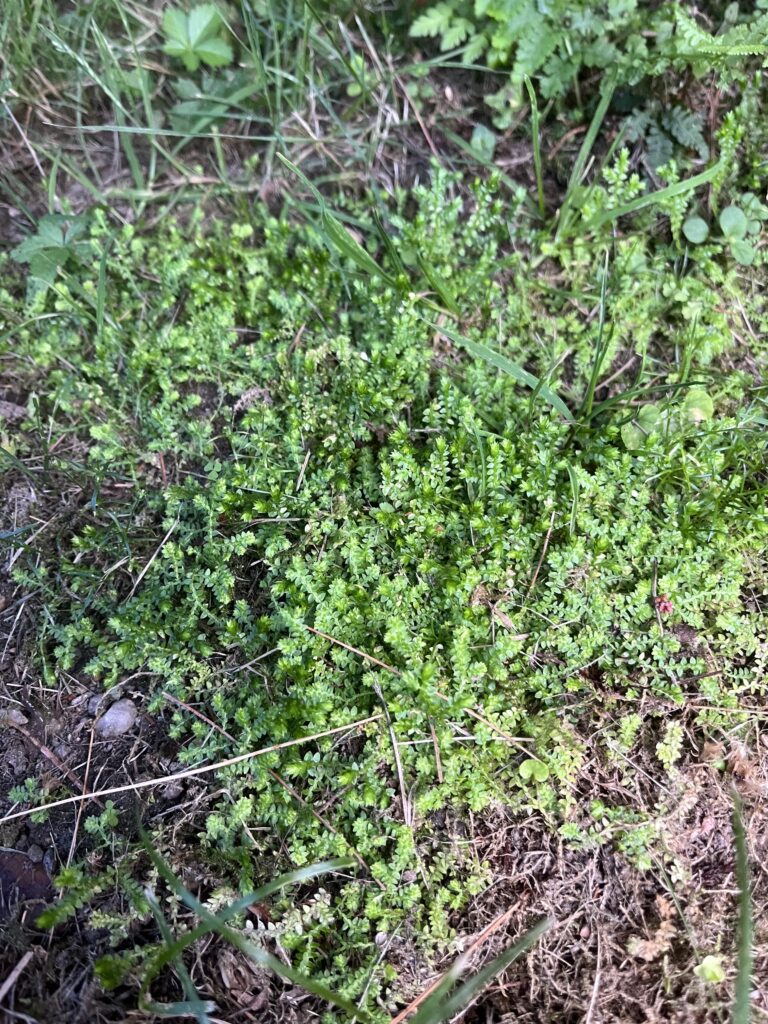
My first image has a few little tiny baby ferns, a pine cone, and another small plant sprouting. I decided to photograph this because normally I’m looking at the larger plant species in the area and not zooming in on the little things that are just starting their life.
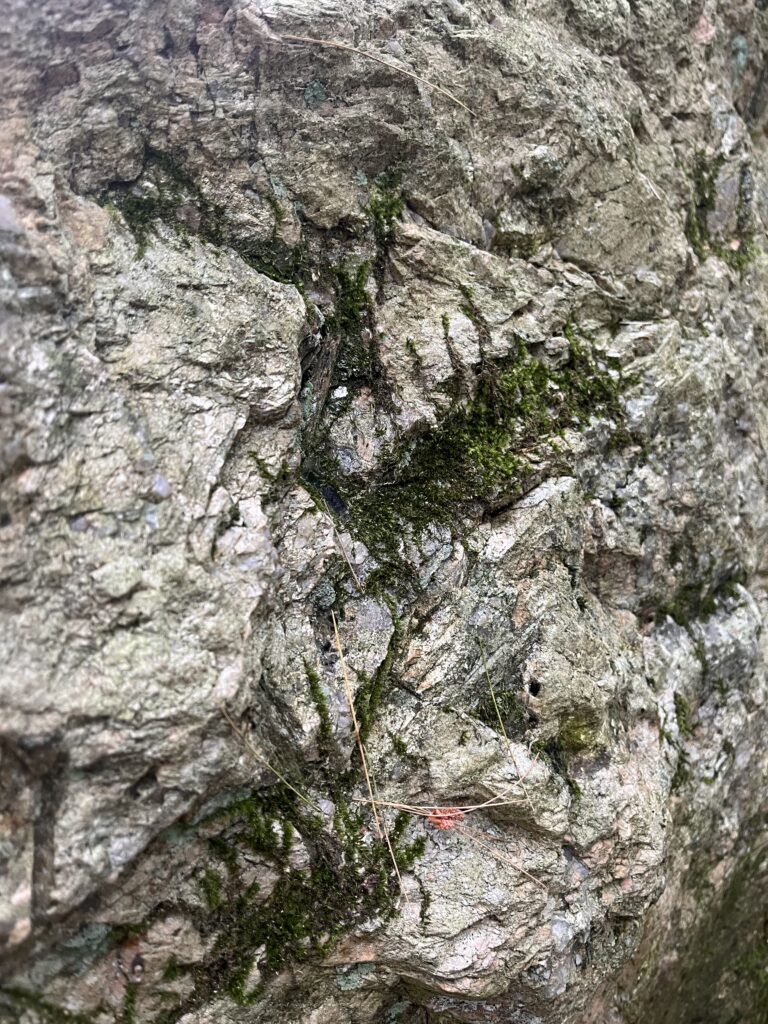
My second image is of a rock, and I’m fairly certain that this is a piece of granite, which would mean that it’s an igneous rock. Also, if you look very closely you can see some small pieces of mica scattered throughout the rock, which is what caught my attention and why I decided to photograph it.
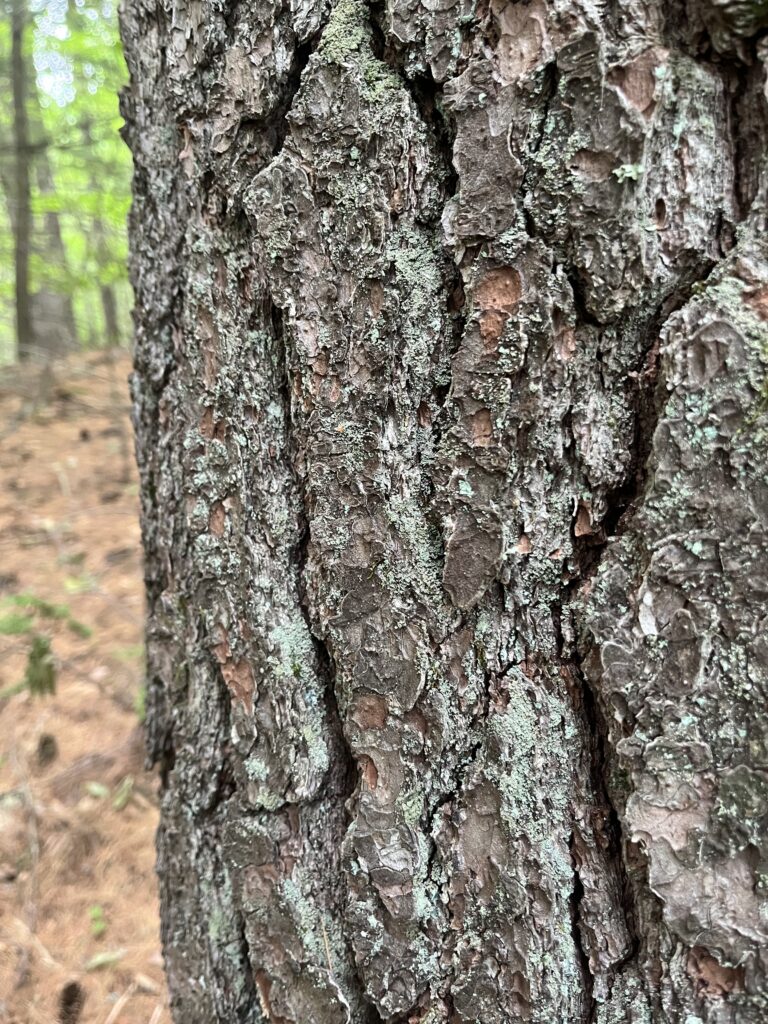
Next, I decided to photograph the trunk of a tree, and this tree caught my eye because it was beautifully speckled with lichen. I know very little about lichens, but I do know that it’s not technically a moss, although it does kind of look like that ( I’m fairly certain that it’s categorized as more of an algae/fungi). And in most cases, lichens are not harmful to the trees they grow on.
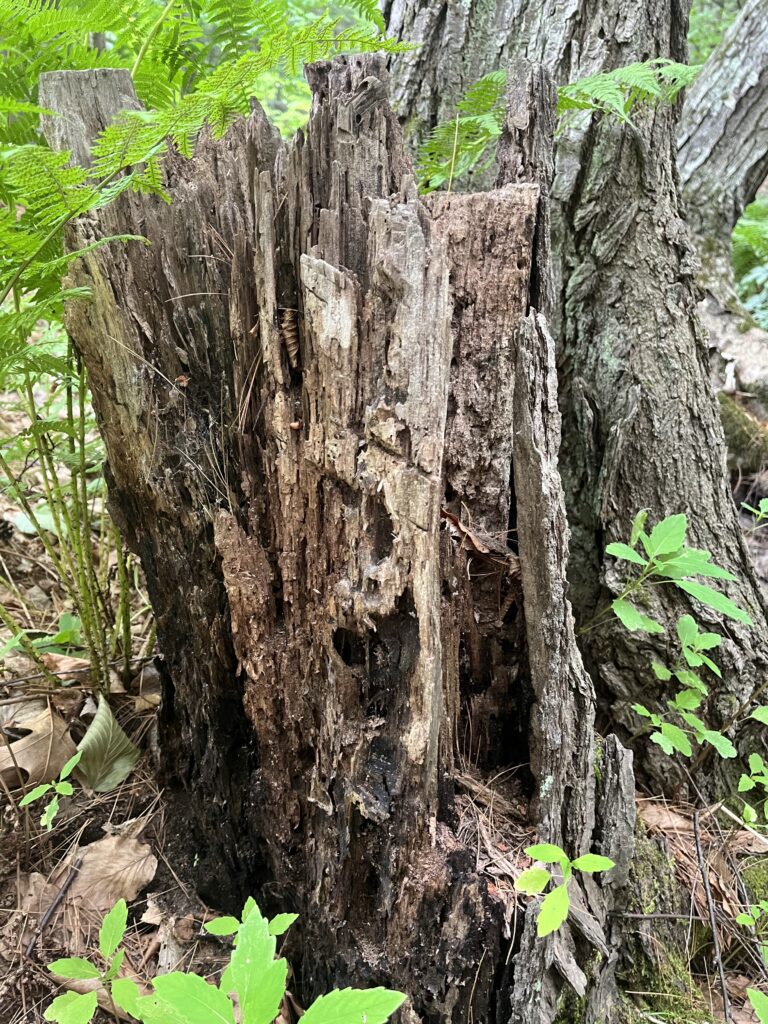
This next image is of a rotting tree base. This is one of the trees that I don’t think was cut down. I think it fell naturally. It also looks like it has been inhabited by some sort of small animal. It looks as if there’s a perfect circular entrance hole in this dead tree trunk.

Conclusion:

Photographing images while at my site had a similar effect to last week when I sketched certain objects. I do feel as if sketching made me find objects that were relevant to this area where I’ve been making observations and not completely impossible for me to sketch. While photographing, I noticed myself taking a lot more pictures, just because it was super easy to click a button and be done. So although photographing still helped me slow down a little bit. I think sketching made me stop and think about my area much more.

Wonder Blog Entry #2, Joppa Hill Loop Trail, July 2nd

Part 1:

Saturday, July 2nd, 3 pm. Today the temperature outside is around 4 at the time of observation,  it is humid with partly cloudy skies and no wind.

Part 2:

Today when I arrived at my site, I decided I wanted to play a little game with myself. My goal was to see how many different tree species I could identify by their characteristics such as bark, leaves, and anything else that could help me. As a forestry major, who has yet to take dendrology my tree identification skills are still pretty limited. With that being said, in about 10 minutes I was able to confidently identify quite a few trees in the area. The first tree identified was a Sugar Maple. The sugar maple is an iconic tree of the Northeast. I was able to confidently identify this tree by the five-lobed leaves and by the fact that it has five veins. The next tree I identified in the area was a Balsam Fir tree, which is also a very iconic Northeast tree. Balsam Fir trees are easily identified by their bark which is often smooth and grayish in color with blisters that seep sap. Then I identified an Eastern Hemlock and this one was a little bit tricky because it looks fairly similar to a Balsam Fir tree, but they have softer needles that are not as “sharp”. The last tree I was able to identify was the American beech tree. I find this tree very easy to identify because they have this smooth grayish silver bark. In the short amount of time, I was out in the field, I felt that I was able to accurately identify a lot of trees. This is something that made me extremely excited, and I’m hoping that every time I go I can learn more about the species in the area.

Part 3:

When I was trying to identify as many tree species as I could in my area I came across one which I was unfamiliar with. At first, I thought it was a Sugar Maple as the leaves looked very similar but instead of five lobes, this species only had three. I took a leaf home and did a little bit of research and found out that the tree that I had stumbled upon was a Black Maple (Acer Nigrum). I was able to figure out what species I had here with a quick Google search. I typed in “what species looks like a sugar maple but only has three lobes” with that Google search I found an image that looked identical to the leaf that I brought back home and concluded that the tree is a Black Maple. One thing I learned about the sugar maple is that historically it had always been considered its separate species, but it is now considered a subspecies of the Sugar Maple. A fun fact is that Black Maples are highly prized in the timber industry and are used to make furniture, musical instruments, paper, and baseball bats.

Part 5:

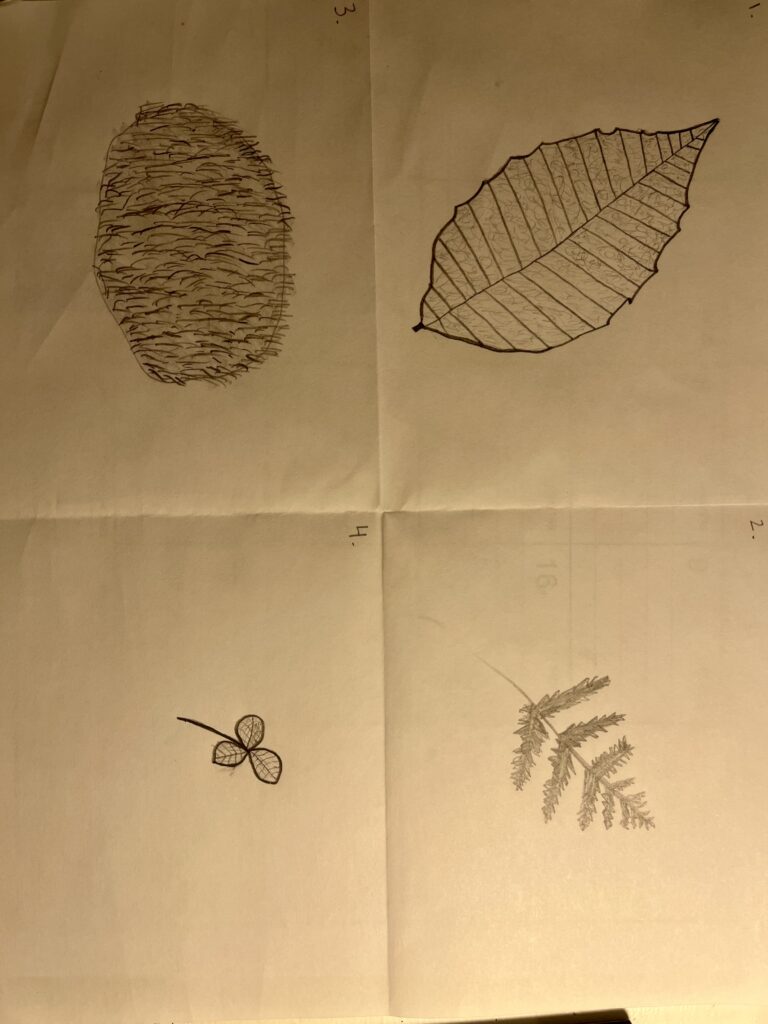
1. My first sketch was of a Beech tree leaf. I gathered it when I was trying to identify as many tree species as I could. One thing that I tried to focus on in this sketch was the veins in the leaf. I sketched the back side where they were more prominent and easier to identify.

2. My second sketch was of a fern.  I chose to sketch a fern because they’re very abundant in this area of the trail that I’ve been looking at.  The fern was definitely by far the hardest to sketch because there are so many little details.

3. Next I found a little chunk of moss on the ground. The moss was shaped in a perfect little circular blob and it looked almost as if a rock had grown hair. For this sketch, I tried to make sure that I was getting all of those little hair-like moss pieces.

4. For my final sketch, I drew a clover, and although a clover is extremely simplistic looking when I did my sketch I tried to get all the details I could and focus on coloration and the veins. 

Conclusion:

The process of sketching was challenging for me. I have never been super artistic, but of course, I wanted to make my sketches look as best as I possibly could. By doing this, I felt like that took away from my overall experience. I love being out in nature and the Joppa Hill loop trail is one of my favorite spots in my hometown, but I’ve never been out there and also had to deal with the frustration of doing something that challenges me. 

This week I noticed myself focusing on a lot of bigger elements of this area, such as the tree species that populate it. Next time I go to my site, I’m going to try to zoom in and take in more of the small details that make my site what it is.

Wonder Blog Entry #1, Joppa Hill Farms Loop Trail, June 23rd

Part 1: Date, Time, & Weather

Friday, June 23rd at 1:15pm. Weather was fairly clear skies, with a temperature of 74°.

Part 2: Site Description

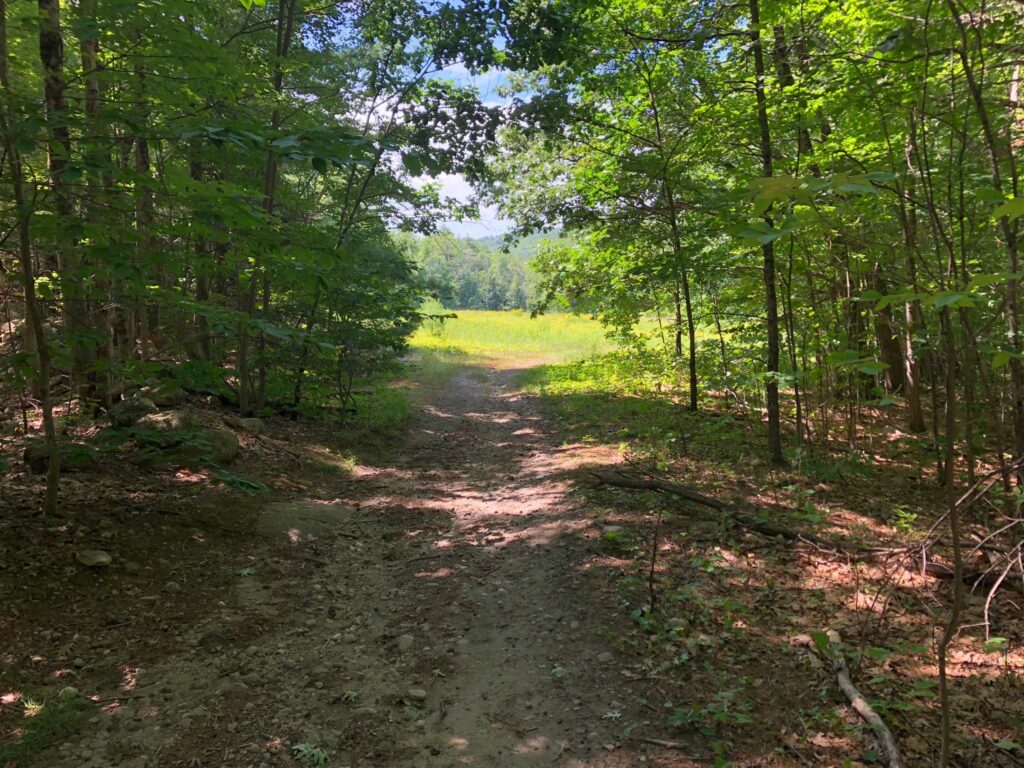
My site is located relatively close to the Joppa Hill Farm loop trailhead. I decided to make my observations in the forested area right before you get to a large opening. This trail is about a five-minute drive from my house and somewhere I’m a frequent visitor. While I was here I heard and saw numerous birds and lots of chipmunks and squirrels rustling in the trees. I of course had to bring my dog along for my observations today; she smelled a lot more than I did. The main smell I had while observing was of cow manure which was not the most pleasant, but the trail starts right by the farm. Some tree species I saw included Sugar Maple, Elm, Beech, Pine, Birch, etc. The trail has a bit of erosion due to use and is mainly dirt gravel and larger chunks of rock. Some interesting things I saw also include some mushrooms and a lady slipper plant.

Part 3

Part 4: Question Marathon

  1. What is the most abundant tree species in this area? 
  2. What sort of invasive species are in this area? 
  3. What is the most harmful invasive in this area?
  4. Who manages the invasive species?
  5. Who manages these trails? 
  6. What sort of impact are humans having on this land?
  7. What tree species thrive in this area? 
  8. What sort of local predators live in this area?
  9. Are graze species (deer) impacting this land? 
  10. What sort of forest management practices happen here?
  11. How is this area being affected by the changing climate?
  12. How is human hiking changing the ecosystem? 
  13. What animal species are most abundant? 
  14. What is the soil quality like? 
  15. What rock type is most abundant? 
  16. Where is the nearest water source?
  17. What is the largest animal that lives in this area? 
  18. What are the smallest animals that live in this area? 
  19. Are humans or animals having a bigger impact on this area of land? 
  20. How does being so close to a farm change the land (if at all)?
  21. Is this an old or new forest?
  22. Would a forester consider this a “healthy” and well-managed forest?
  23. What type of wildflowers can be found in this area?
  24. What birds live in this area?
  25. How can this area be better conserved/protected?
  26. When was the last large forest damaging event in this area?

Part 5: Who manages the Joppa Hill Loop Trail?

Joppa Hill Loop Trail is 120 acres which are located in and owned by the Town of Amherst and is under the management of the Amherst Conservation Commission. The Amherst Conservation Commission was established in 1968 under Chapter 36-A of the New Hampshire revised statutes “for the proper utilization and protection of the natural resources and for the protection of watershed resources” in the Town of Amherst. (“Conservation Commission | Town of Amherst NH.” www.amherstnh.gov, www.amherstnh.gov/conservation-commission. Accessed 23 June 2022.)

Part 6: Final Paragraph

After my first Wonder Blog entry, I had a few things spark my interest that I want to keep observing for the next couple of weeks. I’ve always been interested in invasive species and the management of those species. So going into the next couple of weeks I’m going to try to take a closer look at those species and the people in my community that help to manage and control them.

Skip to toolbar