Final Visit to Centennial

05/05/24 10:00am 55 degrees F

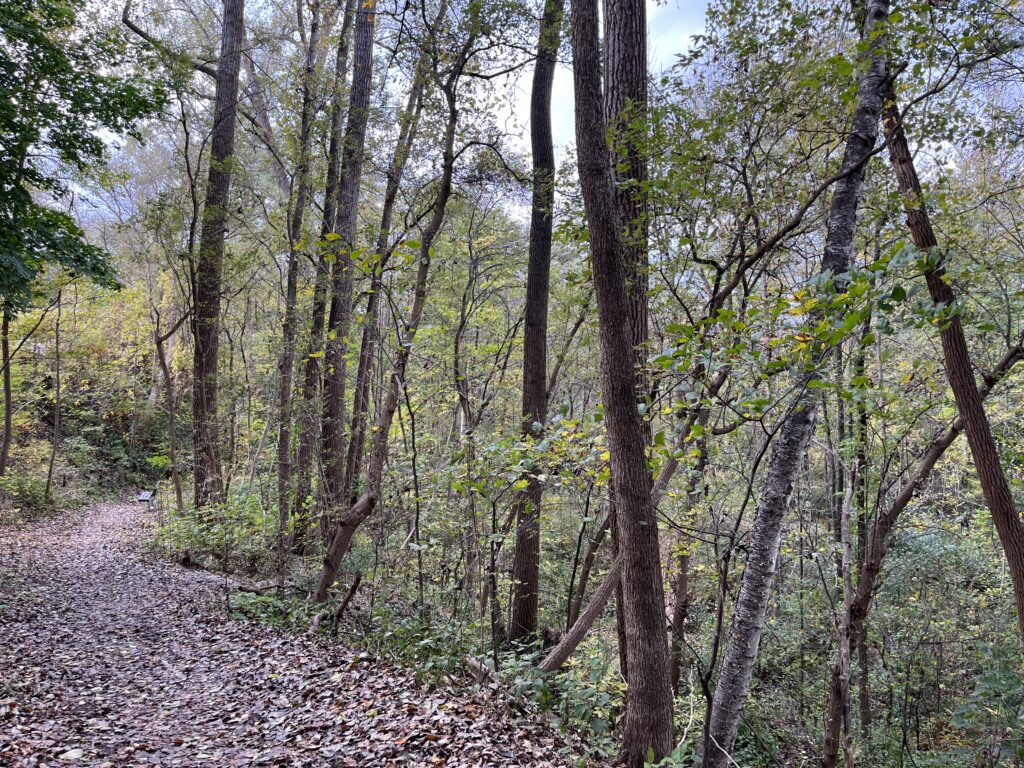
I made my last visit to my phenology spot for the year on this rainy but warm morning. This area has gone through many phenological changes over the last few months.
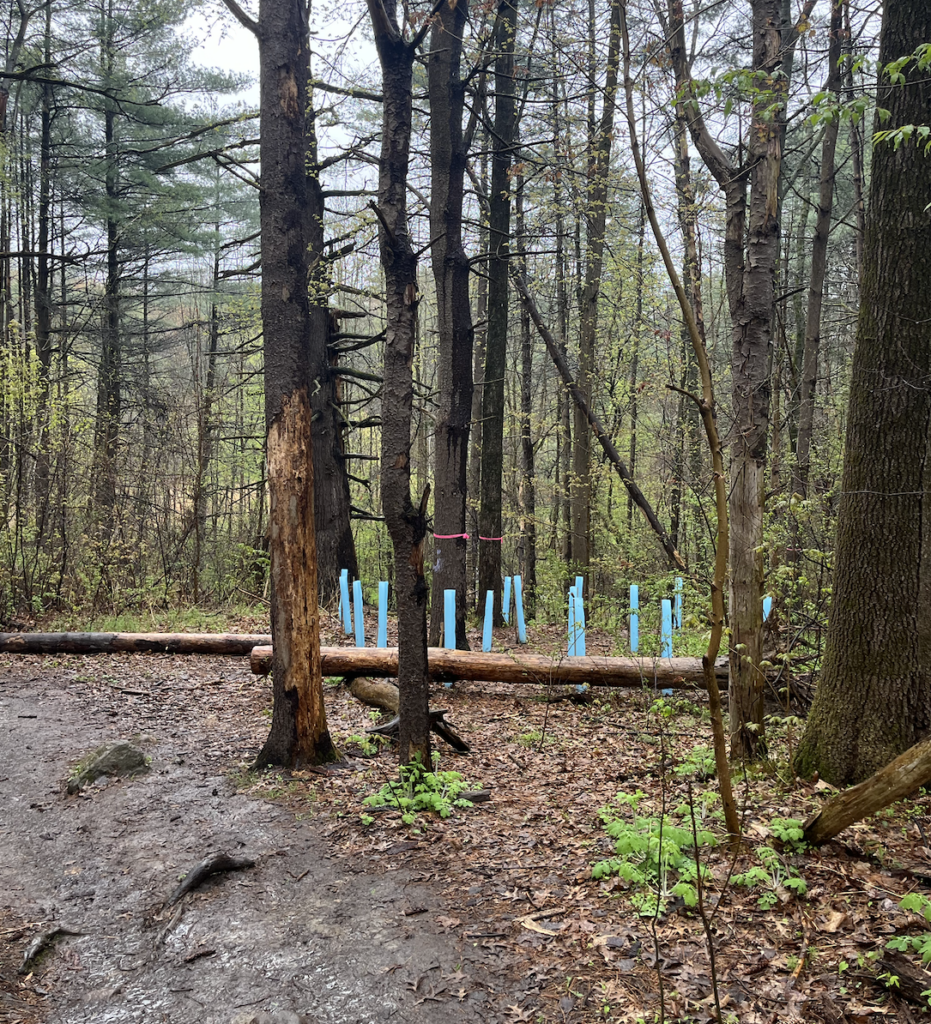
In terms of wildlife, during the first winter months, the best clue to finding out what had been passing through the area was through tracking. In spring, especially during a rain shower, that becomes more difficult. Luckily, more bird song can be heard now. I used the Merlin ID app to identify Black-Capped Chickadee and White Throated Sparrow. Although neither are completely migratory, they seemed to be more noticeable in spring, wether that be because they are more vocal at this time or because there are more in the area.
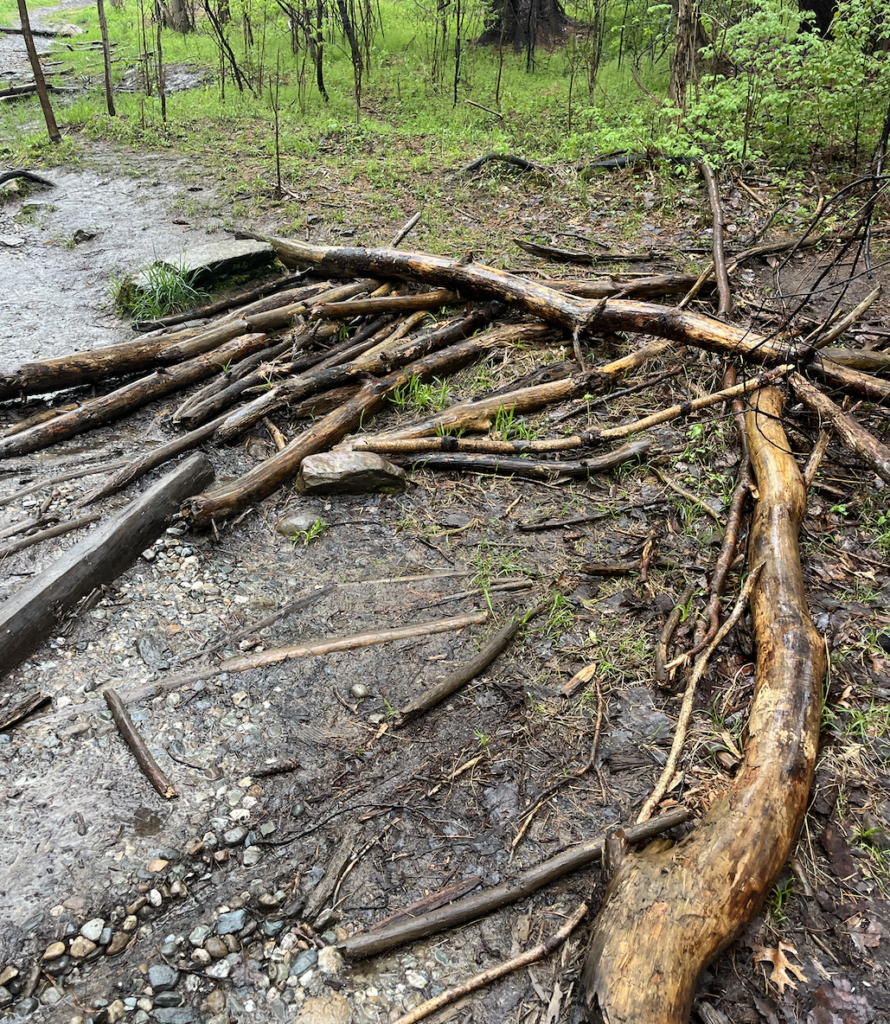
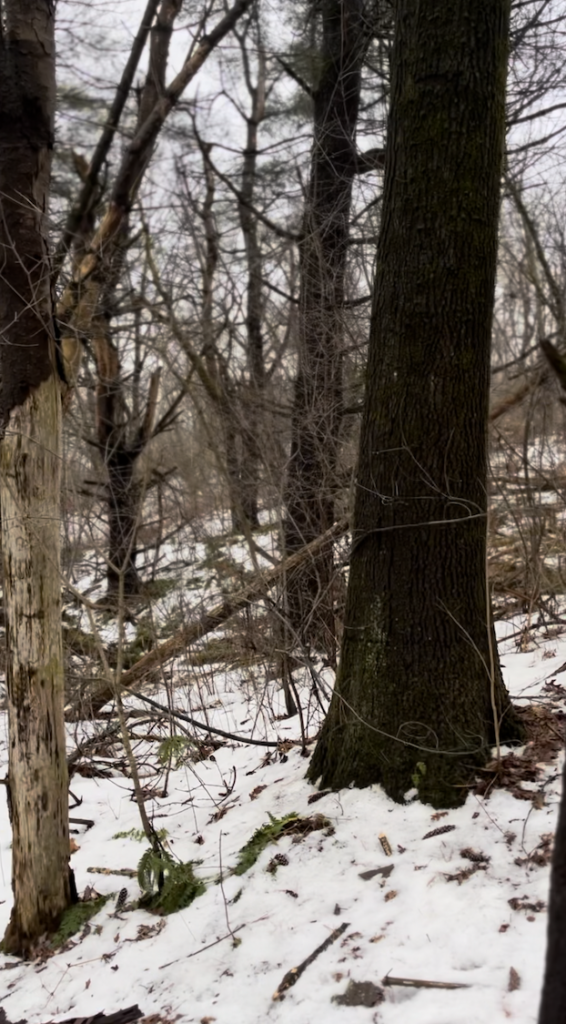
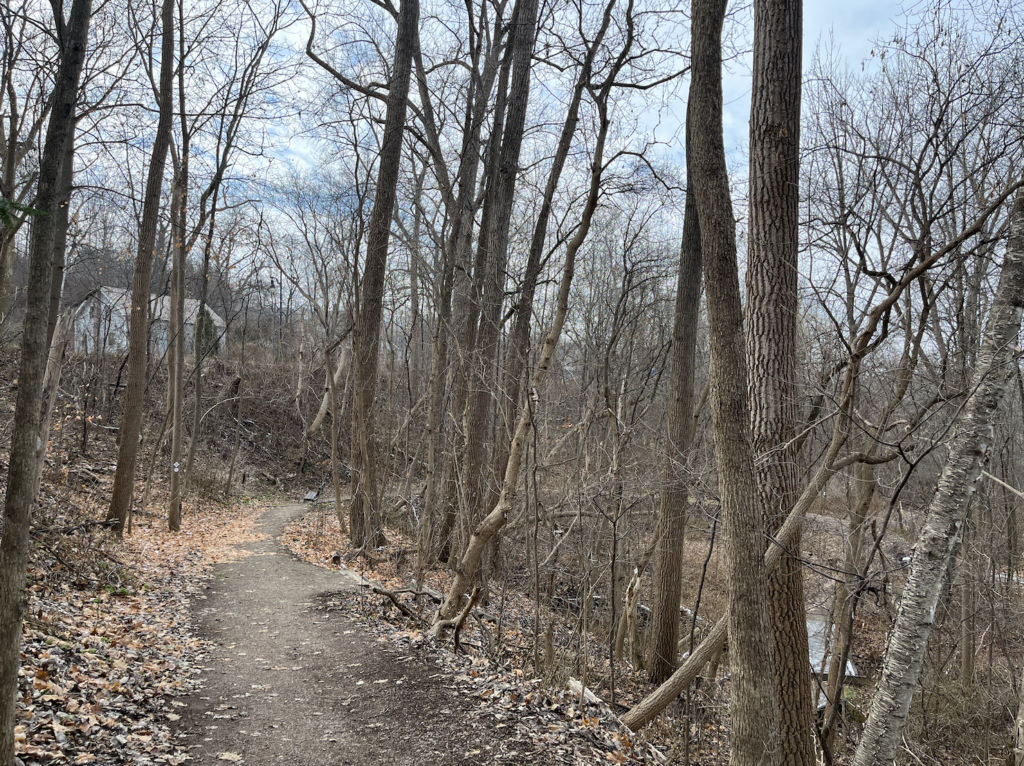
The flora of this area has gone through changes through this year so far. Not only phenologically, but also in terms of how many trees are present. When I visited my site today, it looked like a lot of branches and even some small trees had been knocked over by recent storms. Piles of wood were found along the trail. Also, it looked like some very young trees had been manually planted in the area. They were protected by “grow tubes”. I was unaware of any kind of replanting project underway in Centennial before my visit. I had become familiar with the previously clear patch of land that these saplings had been planted as a landmark of my site.
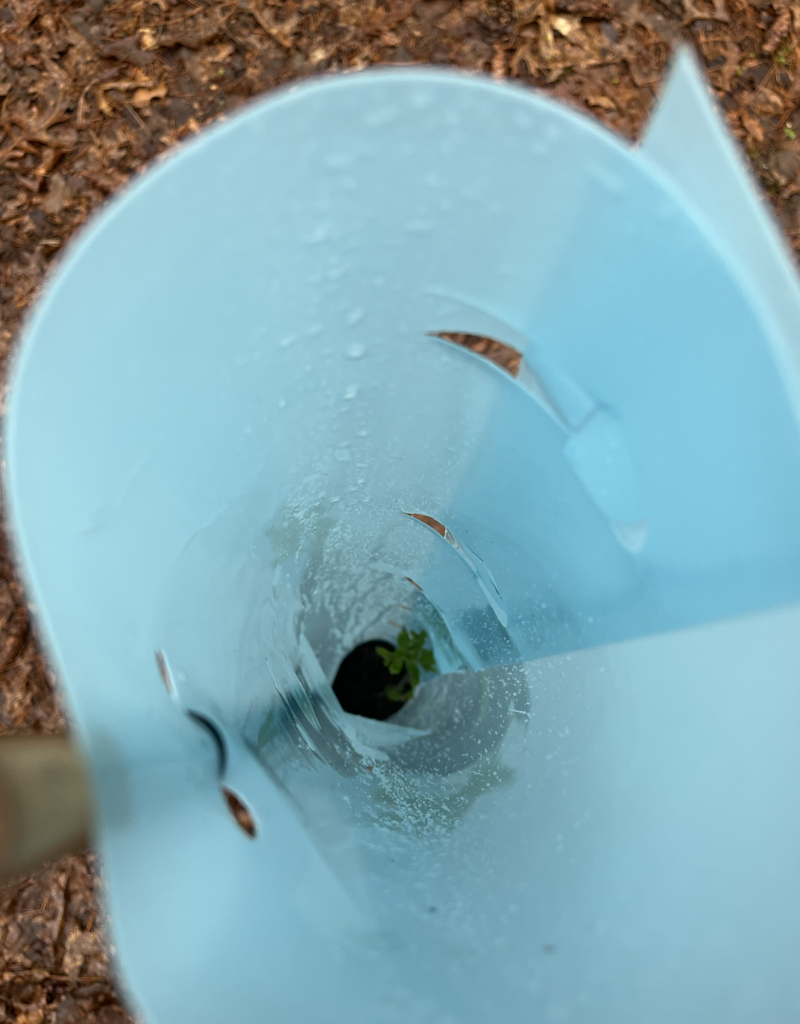
I think the manual planting of saplings shows a positive human-environmental interaction taking place. Adding native trees to the environment is beneficial to the habitat, and can help educate those who are doing the planting on environmental processes.

I would say I consider myself part of this specific place the same way I consider myself to be part of nature as a whole. I think that human beings are inherently a part of nature because we are living beings that impact and are impacted by the natural forces of the world. I believe that in general, we are too disconnected from nature, and that is part of the problem because it is harder to take care of something that you do not feel a close connection too. This is a reason why accessibility is an important part of environmental work.
Burlington Bioblitz!

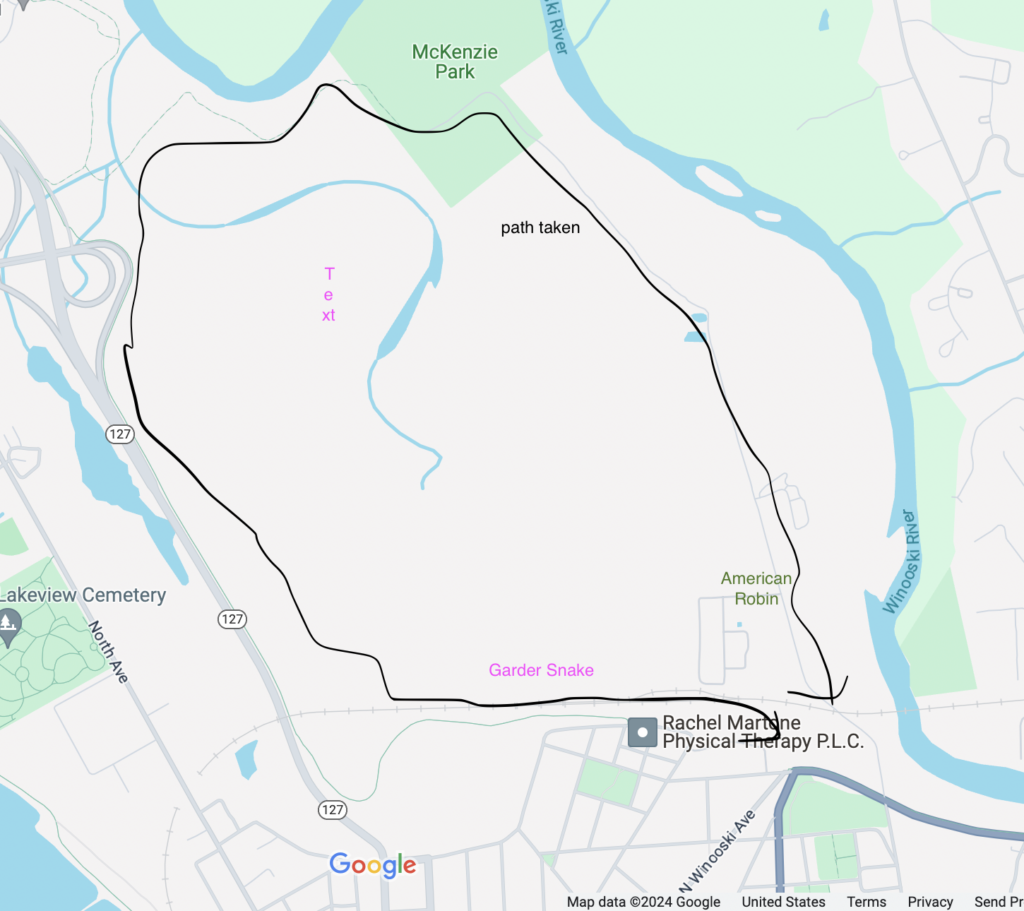
The main area I explored when participating in the Bioblitz was the Interval area. I had actually never been here before and was excited to see it since it’s such a large natural area close by. I went on a run with some friends through it over the weekend and made sure to pay special attention to the flora and fauna.

The first thing I noticed was an American robin near the start of the recreation trail. The Robin was hopping along the ground near the visitor center. This was my first identification.

Further along the trail, it turned into a sort of road that took us up to the main Burlington residential area. Along this road, there were a couple snakes, or so I thought. Upon closer inspection, they both looked to have been run over by the various vehicles that used this part of the trail. Just a couple yards away, however, there was a living snake. I am pretty familiar with the Common Garter Snakes, as they exist in large numbers in my hometown, so I felt comfortable in my ability to identify them.

Although I logged these sitings a couple days late, I had been familiarized with the iNaturalist app from a local activity in my area from a couple years ago. My mom and I took part in the “Urban Candid Project”, which was an effort from the University of Wisconsin to track red foxes and coyotes. We used iNaturalist to record our sightings of the foxes that periodically were seen in our neighborhood. The functions and usefulness of the app came back quickly to me after downloading it for this BioBlitz.

When looking at the findings globally within iNaturalist, I thought it was interesting to see what species showed up the most on such a wide scale. The Mallard looked to be the #1 most bio blitzed species overall, and Common Yarrow was the most blitzed plant. This is inspiring because I had a general idea that both of these species had quite a wide range.

Visiting Centennial near the Vernal Equinox

03/24/2024

When revisiting the glade I have been studying throughout this semester, there were clear signs of spring life that have been absent over the past few months. Throughout the forest, snow is falling of trees andstarting to melt, since it is 33 degrees out.

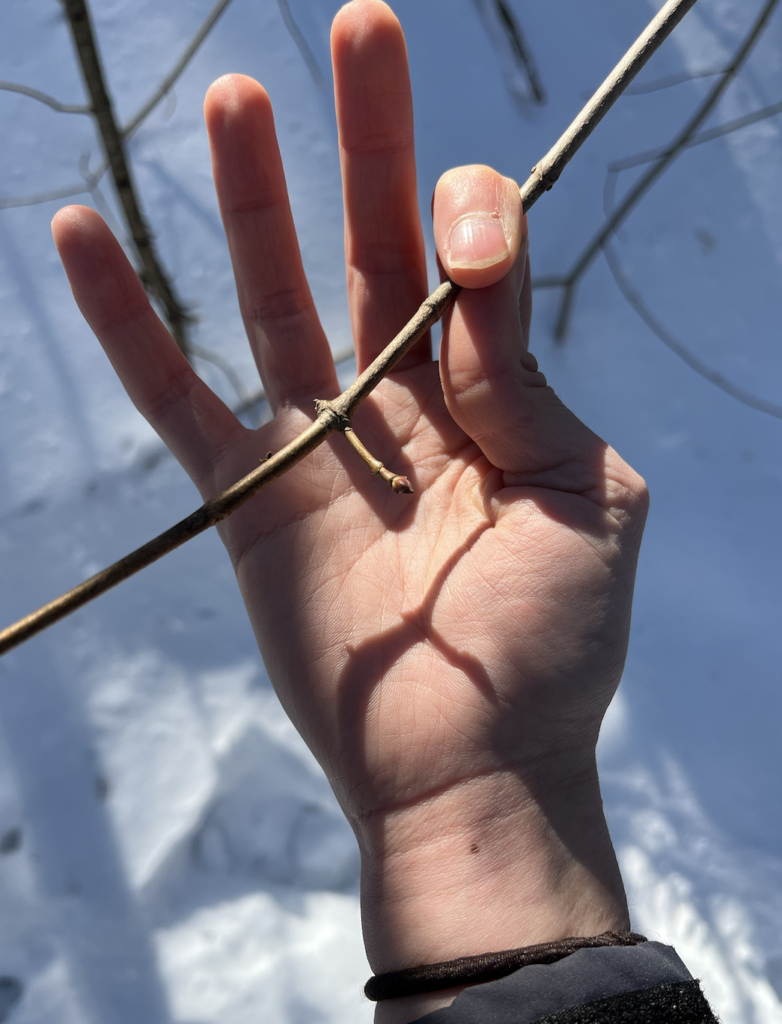
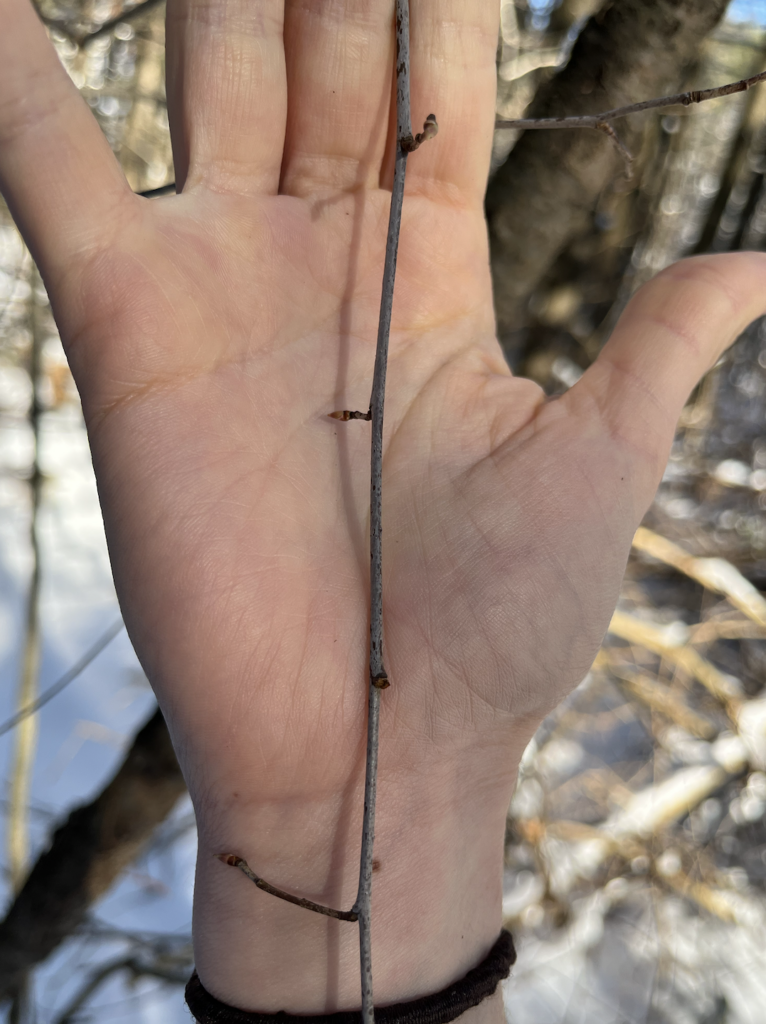
Most trees in the area are Red Pines that extended into the overstory and have not changed much in appearance aside from having more or less snow on their branches over the months. Scattered throughout are a few deciduous trees, many just starting to produce buds. I found what I think are the beginnings of Yellow Birch and Norway Maple buds.

I can also hear bird calls. I am not familiar with them all yet, but I can tell there are several different species, including a woodpecker pecking at a tree somewhere. I use the app “Merlin Bird ID” on my phone to help me identify what species I am hearing. I learn that what I am hearing are Black Capped Chickadees, American Crows, and Northern Cardinals. None of these species are totally migratory, but is still nice to hear their presence in the woods. The only tracks I noticed were of humans and domestic dogs. Overall, I noticed signs of spring in the budding trees and flowing water, if not yet in the species I saw or heard.

Wildlife Tracking in Burlington

North Beach and Centennial Woods

This week for our phenology project, I expanded my exploration beyond my established phenology site of Centennial Woods. Looking for any signs of animal life that could be used for tracking, I thought it would be best to visit more than one place, especially since recent snowfall made conditions different on Sunday.

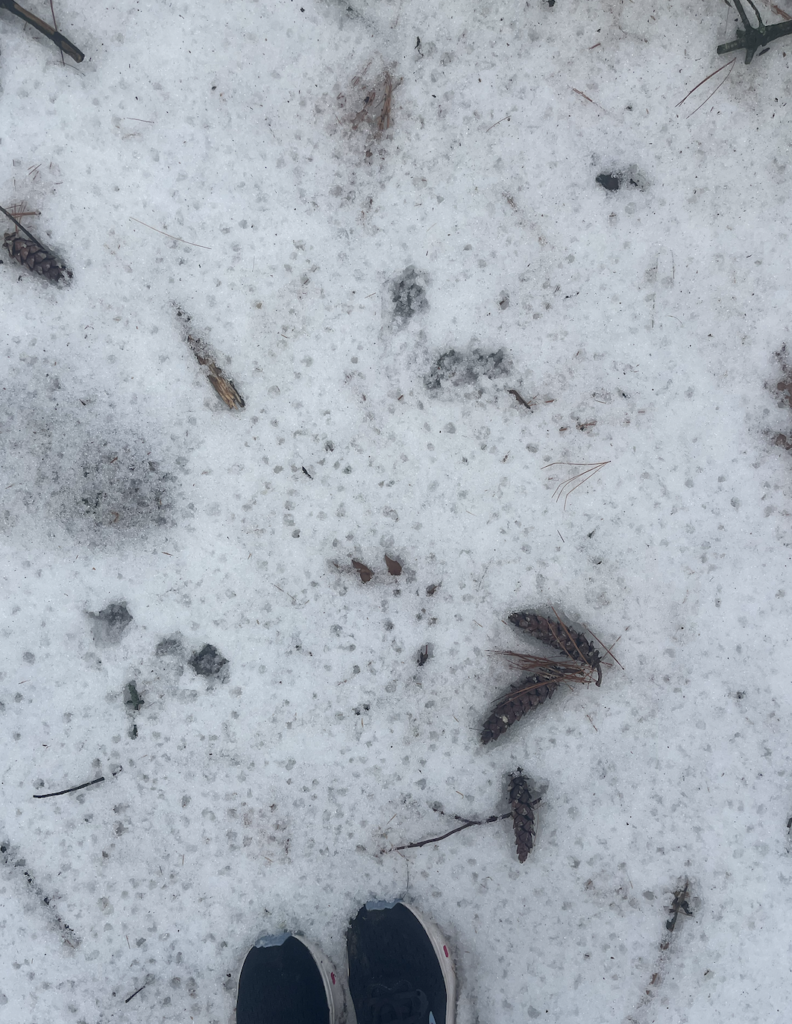
The first place I went was back to my “home base”, since I was curious if I would be able to find any animal tracks that missed on my other visits, or were more fresh. As I walked in, there were a couple leashed dogs being walked through the trail. They left some prints of their own I could take a look at but may have scared off other animals. I did not see any other ones in person. I did however, see signs. Prints of what I think is likely a gray squirrel scattered my phenology spot as they did last time. The tracks looked like they were those of a bounder, suggesting possibly squirrel or rabbit based on their small size. The straddle was about 5 inches, and the tracks continued to an oak tree where they disappeared. These signs point to gray squirrel.

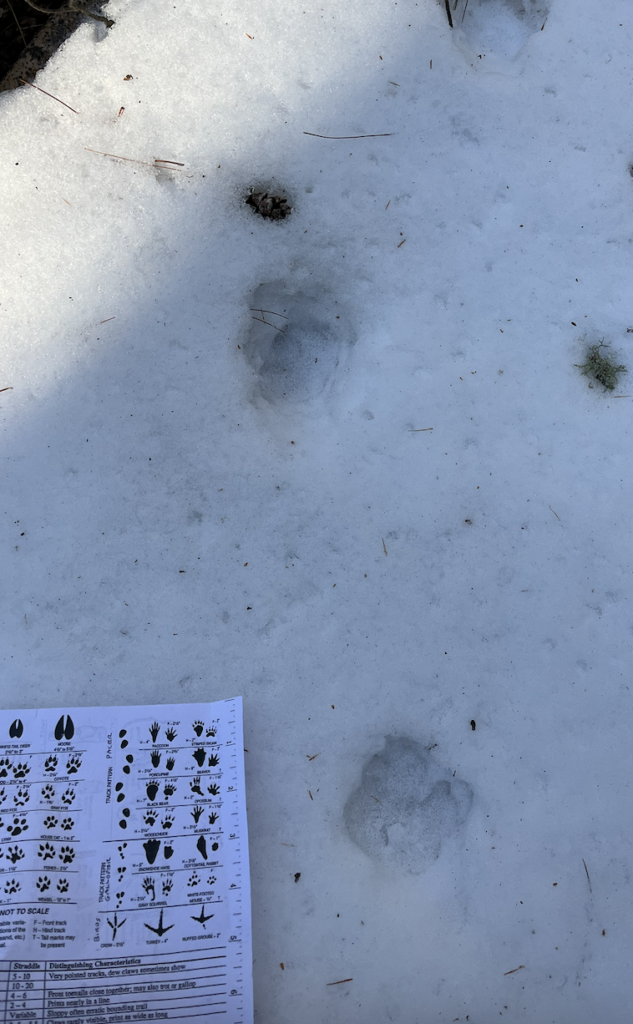
I also found myself at North Beach that weekend. I actually did not intent it to be a tracking expedition, but I was on a run and decided to look around a little bit on one of my stops. I am glad I did so, because I found some pretty clear prints, and the backpack I brought had my tracking guide in it! The toes all pointed in the same direction and the path was linear, making a domestic dog an unlikely source for the tracks. At first they looked pretty large, but excluding the melted area around them, I think they must have been a little less than 3 inches long, and looked to diagonal walk. These facts make me think the prints were left from a red fox.

At first the iNaturalist app was having problems connecting, which was more likely an issue with my data plan then anything else, but eventually I got it to work. I used the app at home to take part in an “Urban Canine Project” where people documented signs of foxes and coyotes around Madison Wisconsin. I think it is a very useful tool to have for this class.

New Semester, New Location

01/27/24 2:00pm 35 degrees F

Centennial Woods

For this new year, I wanted to change up the location of my phenology site so I could gain a wider understanding of the natural areas of Burlington. For how close Centennial Woods is, I realized I had only been there maybe twice before, so I liked the idea of exploring this land that I felt I have under appreciated.

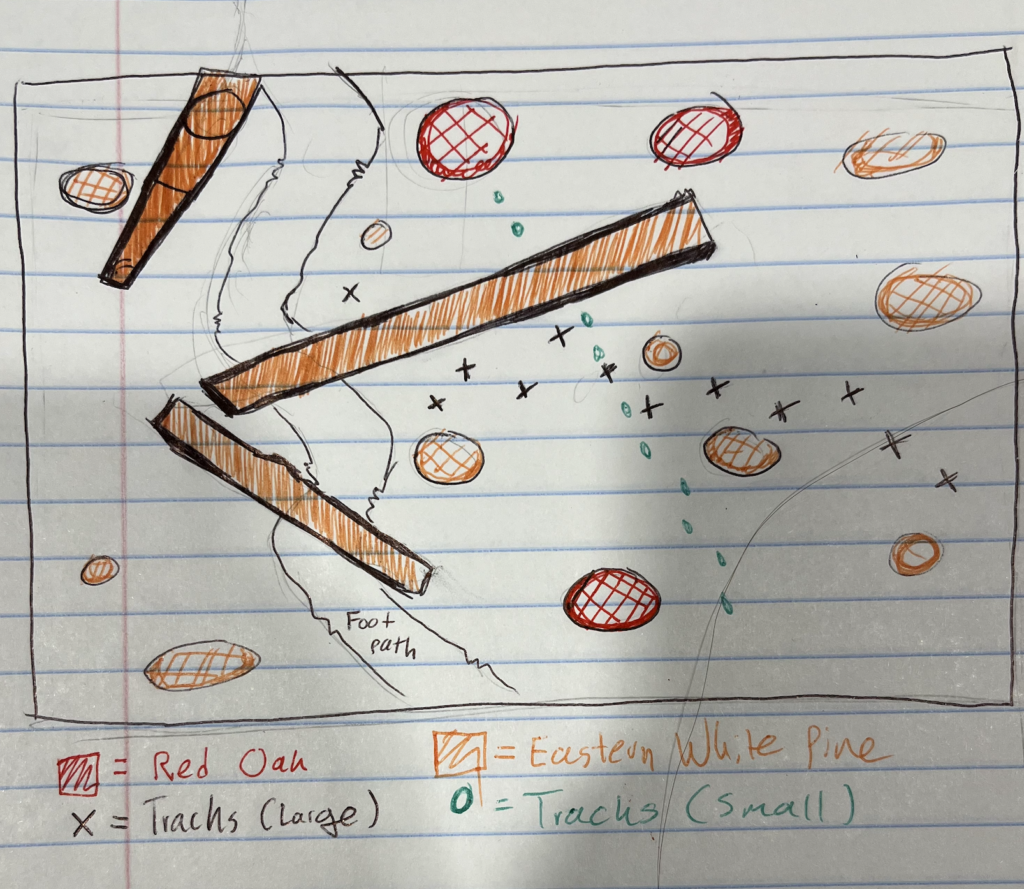
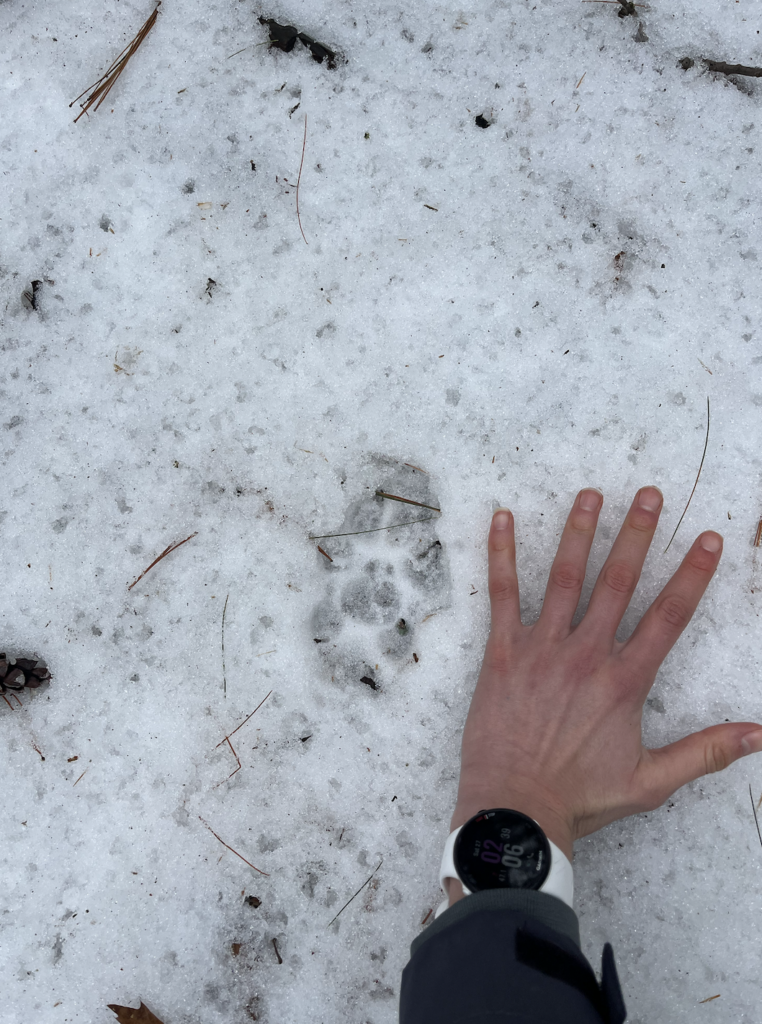
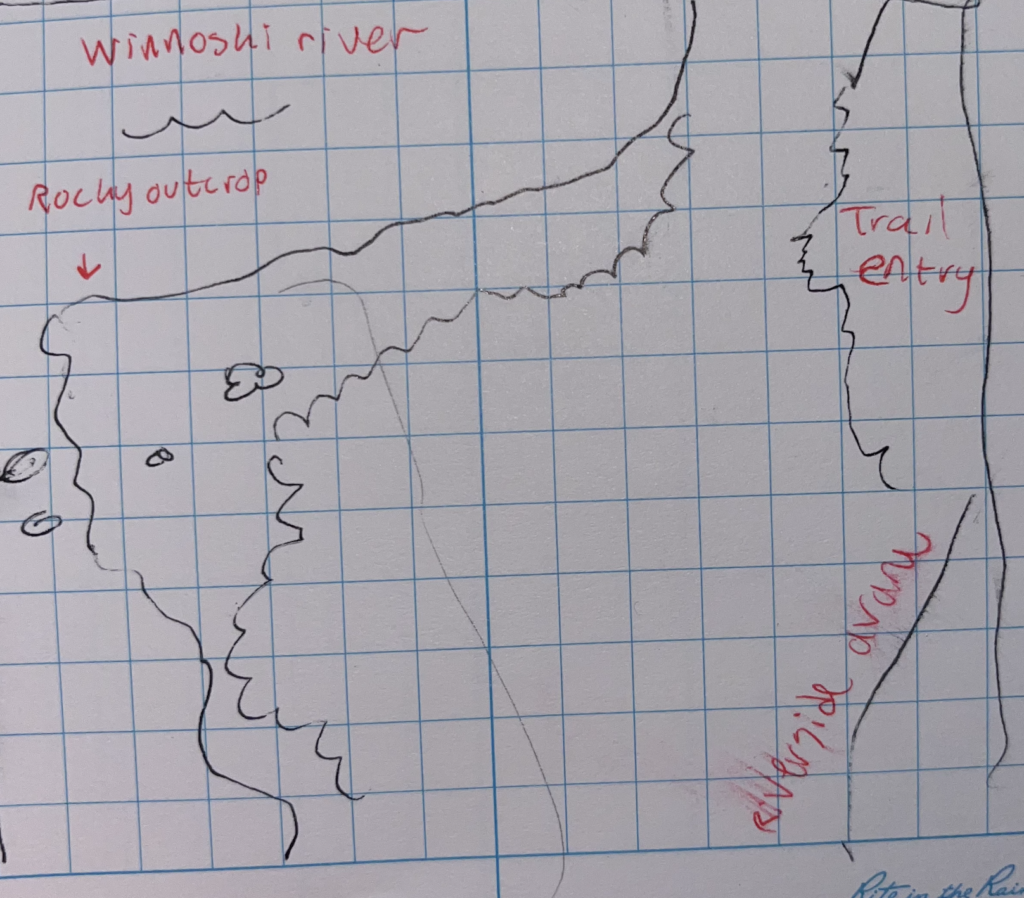
On the walk through Centennial I was met with a very icy path. This made it a bit difficult to navigate my way down the trail. Next time I visit I’ll put in my hiking boots rather than sneakers. After a couple minutes of walking I came to a stop, noticing some animal tracks that stood out. I wanted to try and figure out what they were, and as I looked around I thought it was quite a nice area I had found, dominated by some Red oaks and Eastern White pine. There was snow but it was patchy from the rain we have had in the last 24 hours. There were a few fallen Eastern white pines in the area, which are shown on the map as they cross the path. I did draw them in a way that makes them look larger then they are in reality.

After consulting my handheld guide, I thought the tracks might belong to a coyote given the size, shape, and lack of human footprints in the area aside from my own.

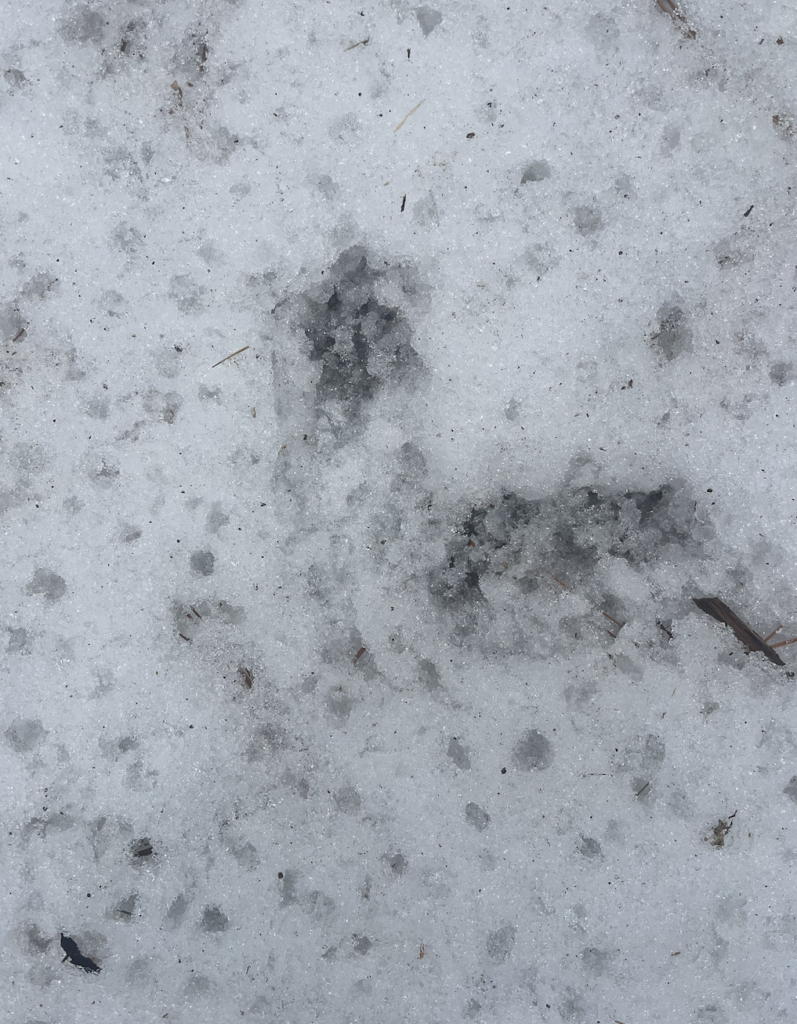
I found some smaller tracks in the process of mapping out the layout of the trees. These were smaller and more difficult to identify, since the print was less defined. My best guess is that they are from a gray squirrel.

Last Visit of the Year

12/08/2023

1:30pm / Cloudy, 29 degrees F

Salmon Hole, Burlington VT

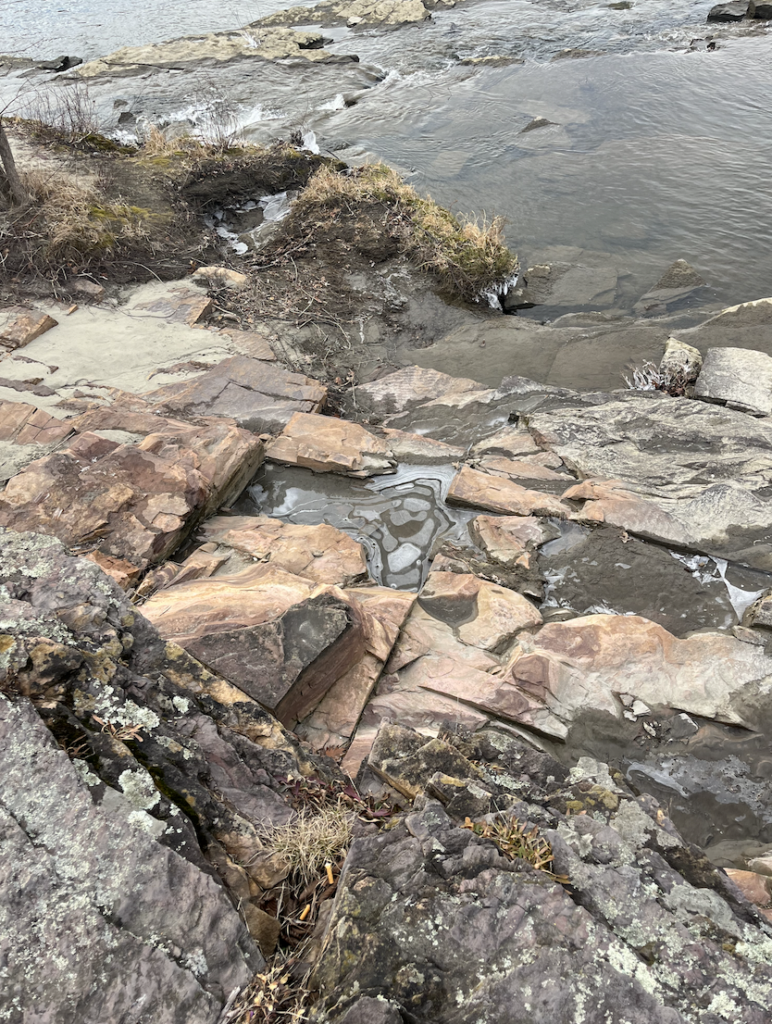
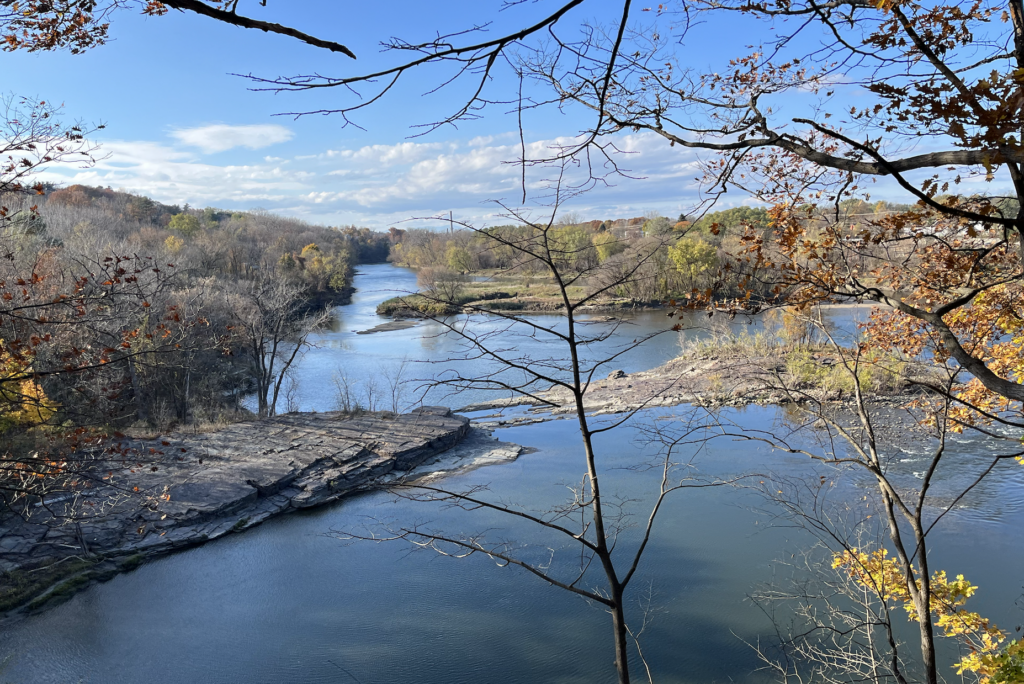
On my last visit to Salmon Hole this semester, I noticed immediately the difference in the weather compared to the past couple times I have been here. The temperature was around 10 degrees colder than last time, and at this point in the year, the area has gone through a few freezes. It was not cold enough for the Winooski river to be frozen over, but small puddles on the rocky shore had a thin ice covering.

Frozen puddles

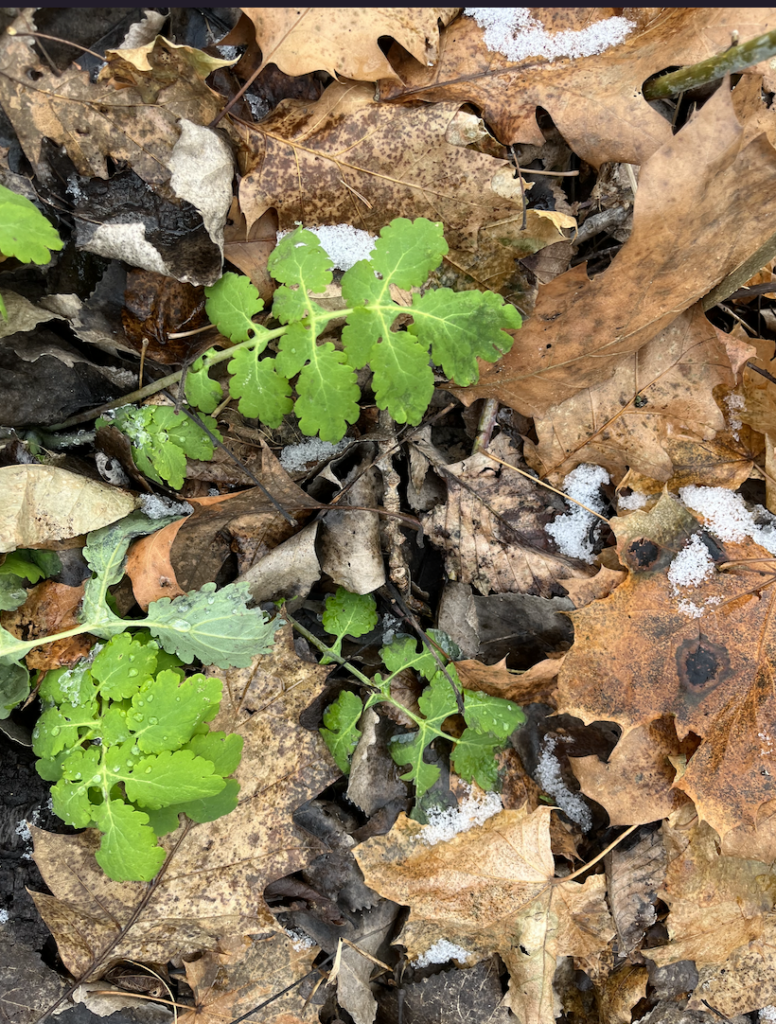
Celandines (?)

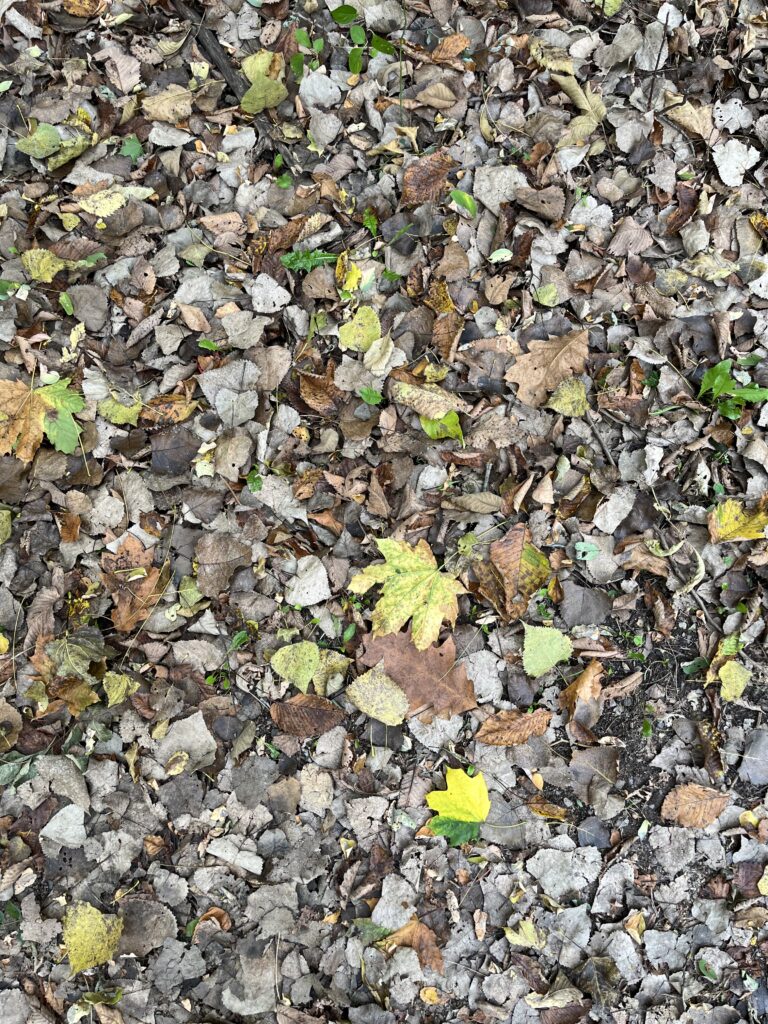
In terms of tree cover, it is close to completely gone. The only cover that remains comes from a few scattered Eastern Hemlock. All deciduous trees in the area, mainly red oaks and sugar/red maples, have dropped their leaves to the ground. The color has been lost, making for a gray and brown forest cover. One exception is a small plant known as “celandines” as far as I could tell using iNaturalist. These were the only vibrant plant on the ground.

No animal activity was obviously present. The rocky terrain and lack of snow made looking for any tracks difficult. I did not see any birds at the site, unlike my other visits, and I also noticed less human activity. In past visits, there were consistently other people walking, exploring, and fishing, but me and my friend were the only ones at the site today.

Somewhere New

11/21/2023

2:50pm / Sunny, 40 degrees F

Aldo Leopold Nature Center, Monona WI

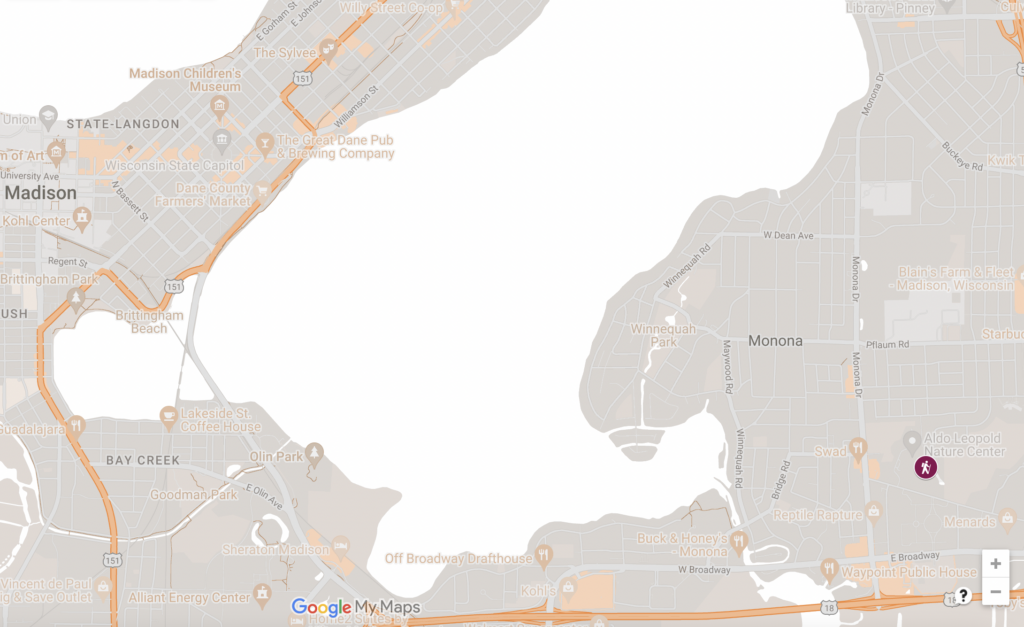
Map Link

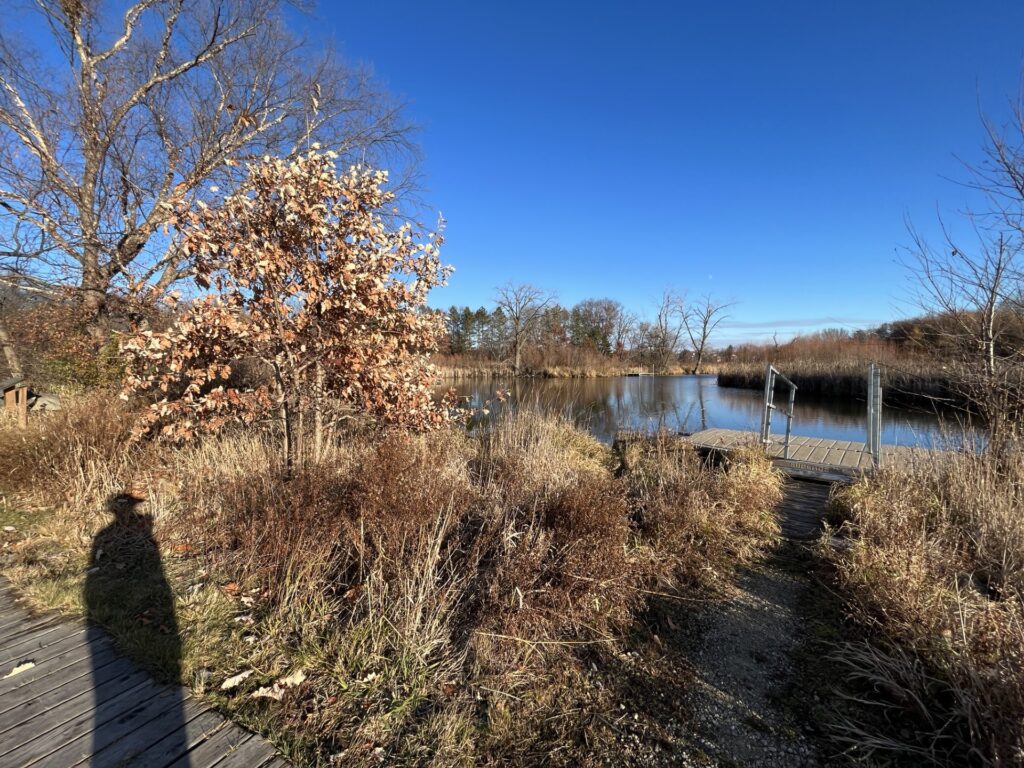
I chose to visit this place because it is close to home, and very familiar to me. Aldo Leopold Nature Center is a nature preserve that is surrounded by suburbs and a few miles away from the city of Madison. It serves as a refuge for wild plants and animals, education, and recreation.

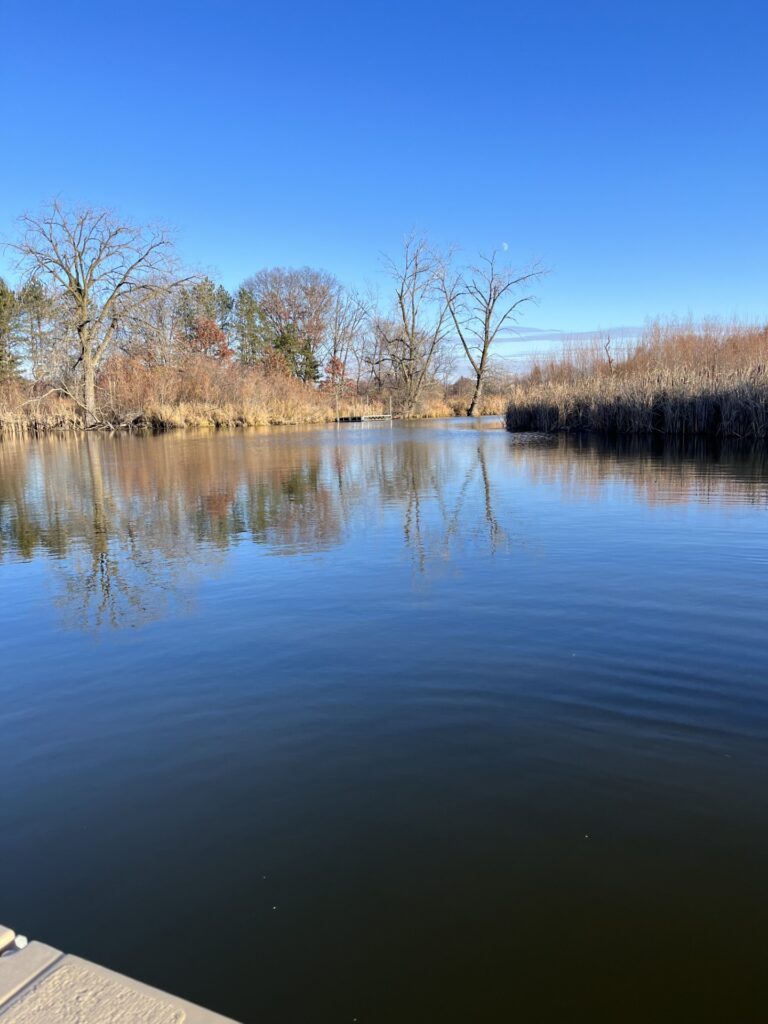
The specific location within the property was a dock by a pond. The nature center has two ponds and a bit of swamp, as well as basswood forest, oak Savannah, and some pines. I know the naturalists work to protect native species here.

One difference I noticed about this area compared to Salmon Hold back in Vermont is the difference in trees. There were definitely red and white oak back in Vermont, but they didn’t have the dominance that they do here. I know this part of the Midwest was primarily oak savannah before it was developed. This oak savvanah remains up until you hit the pond, where you can find many cattails and red-wing blackbirds. Both locations I visit are near water, but Salmon Hole is slowing water with a rocky shore, while the pond at ALNC is still water surrounded by vegetation.

While both ALNC and Salmon Hole are set aside as natural areas with public access, the nature of Aldo Leopold being further away from busy roads makes it a quieter place. I could hear songbirds here, and I could not in Salmon Hole.

Birds-eye View

11/05/2023

Today at Salmon Hole natural area it was a nice sunny day. At 46 degrees this afternoon, it was cool but not uncomfortable. I could tell some time had passed since my last visit when I sat down to observe for fifteen minutes. The trees were mostly but not completely bare, but. overall there was significantly less foliage then in October. The birch trees in the area seemed to be the most bare, while some ash still featured yellow or green leaves. It was relatively windy out, and I observed leaves being blown off trees and the ground and into the water.

It was quiet down by the water, with the noise from the river itself being easier to focus on then the sound of cars by the nearby road. This is likely just the nature of visiting at an earlier time today, while last visit featured the sounds of rush hour traffic.

I didn’t observe any wildlife on this visit, but I did notice two people fishing on the opposite side of the Winooski from me.

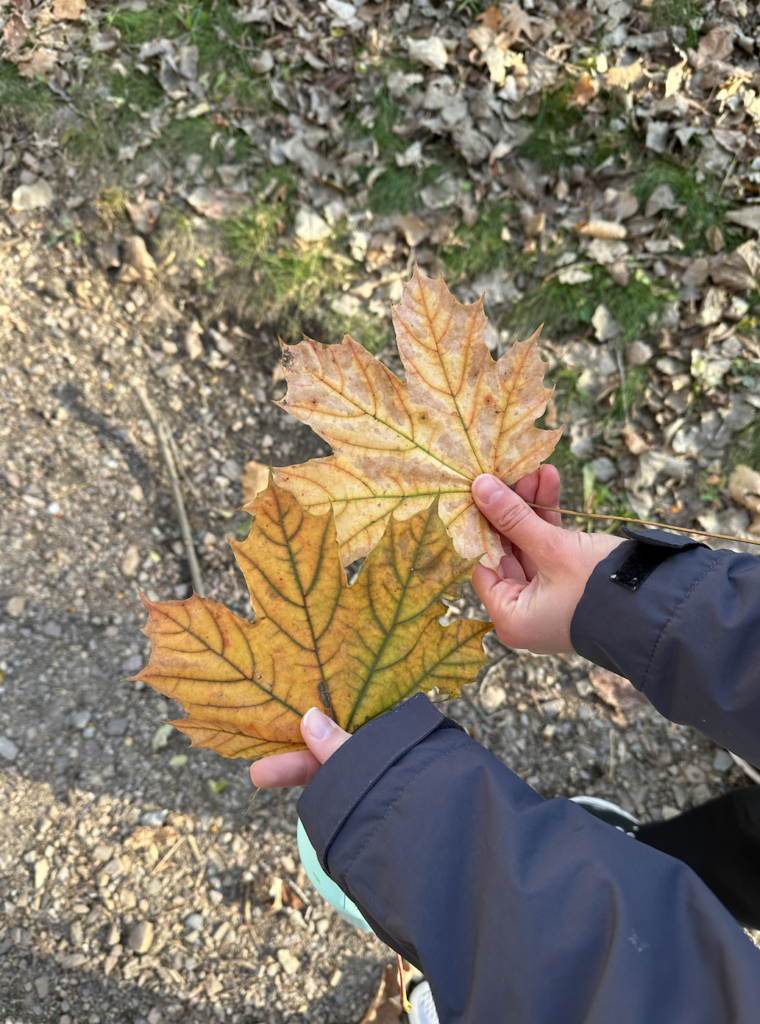
My roommate and I both chose Salmon Hole as our phenology spot, and as we wrapped up our observations on separate parts of the outcropping, we found some Norway Maple leaves we thought looked very pretty.

Introductory visit

10/16/2023

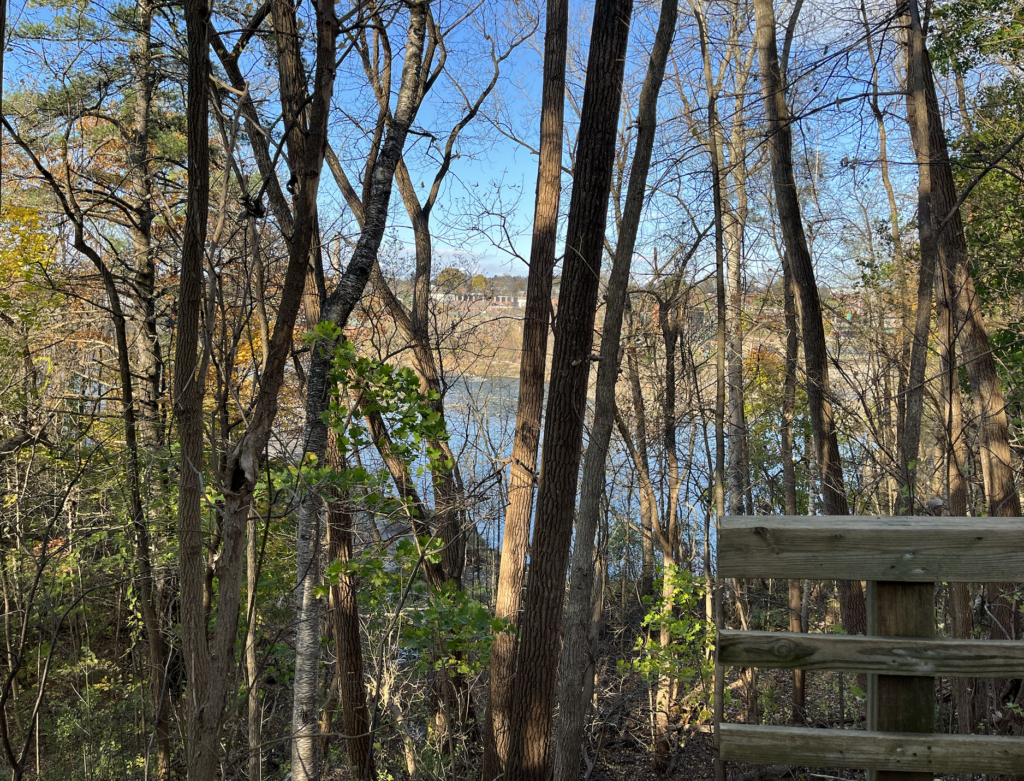
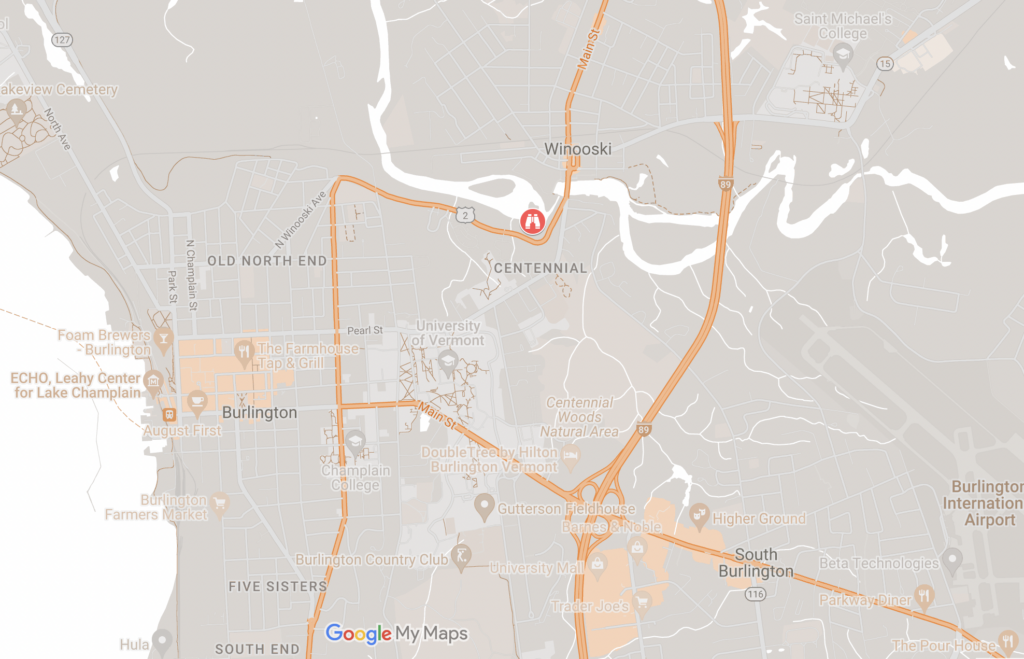
Salmon hole is a small natural area nestled away with the riverside between Winooski and Burlington. It is in close proximity to Main Street, and it is at a lower elevation than the surrounding urban area, which may be sources of runoff to consider when examining the human impact of this area. Upstream, highway 89 also crosses the Winooski river.

I chose this place as my location to study phenology because it is the first natural area I saw near Burlington. When me and my roommate first met, we went on a run around Burlington and stopped to take a detour into Salmon Hole because it looked interesting. I think it will be interesting to keep track of vegetation, wildlife, and the state of the river as seasons change.

When I arrived to take notes on the state of Salmon Hole on October 15th, I wasnt able to get all the way down to the riverbank. I was warned by a woman coming from the opposite direction that there was “some guy who looks like he’s on something throwing rocks around.”. The drug problem in Burlington is sad to witness and impacts people a lot more then disrupting their NR lab, but today I decided was not the day to go explore the river. From my vantage point at the top of the trails I would get a good idea of the vegetation in this area.

The over story was dominated by red oak, and also featured lots of green ash, red maple, and some eastern hemlock and paper birch. The understory also had lots of red oak as well as poison ivy and basswood.

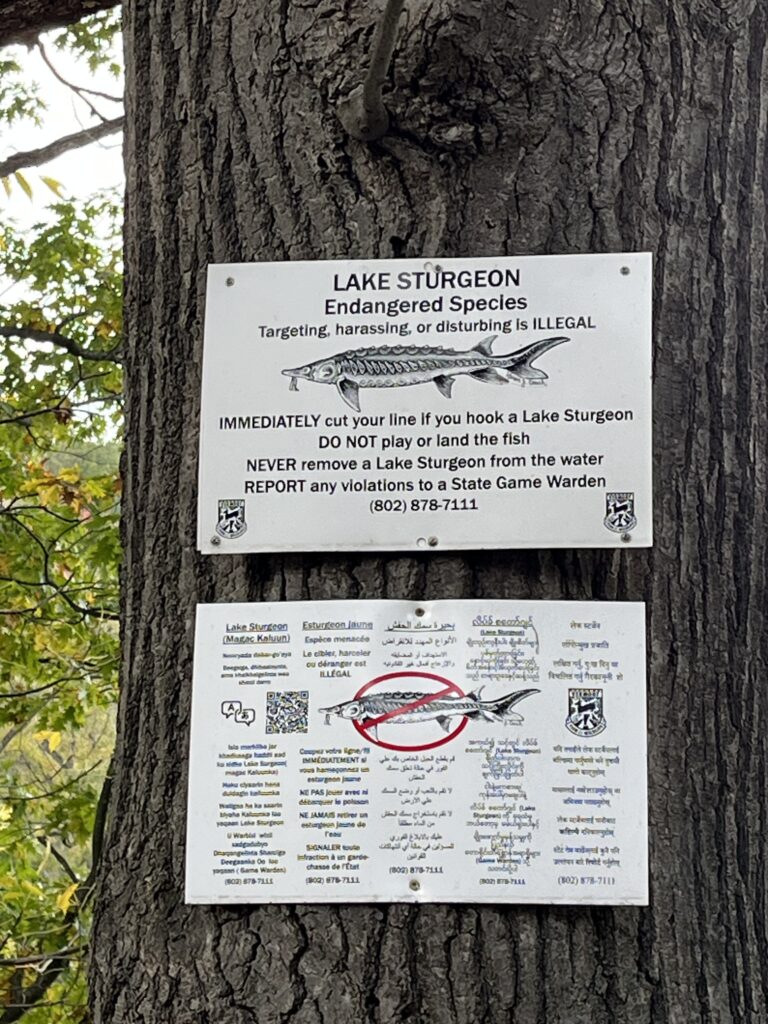
Other featured I noticed relating to the health of this environment and how it is treated came from a couple signs I saw. One indicated that lake sturgeon were present in the waters, and that they were an endangered species. Another sign warned against fishing from the dates of May 16- May 32 in light of that being spawning season for many fish.

The trees in the area were all in very different stages of preparing for winter. Some were still bright green and others had lost all their leaves.

I noticed there was a fair amount of sound pollution from the surrounding roads, as well as some litter by the sidewalks.