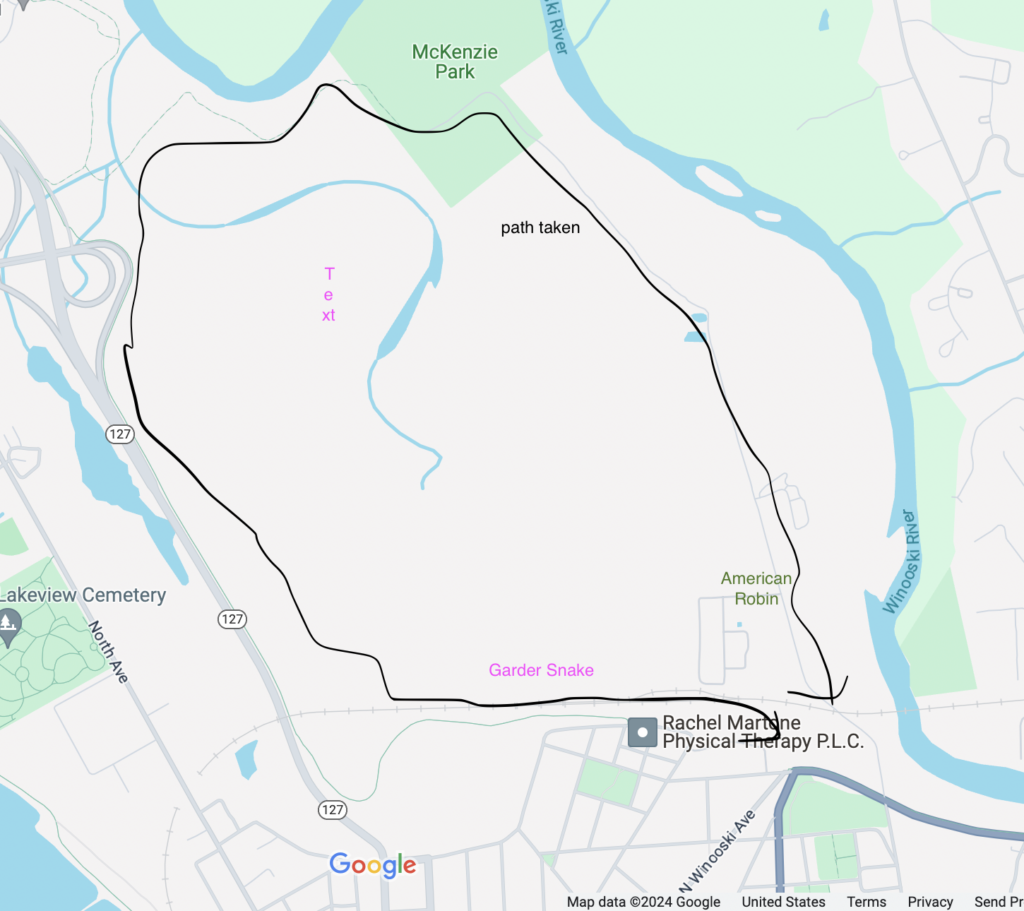
The main area I explored when participating in the Bioblitz was the Interval area. I had actually never been here before and was excited to see it since it’s such a large natural area close by. I went on a run with some friends through it over the weekend and made sure to pay special attention to the flora and fauna.
The first thing I noticed was an American robin near the start of the recreation trail. The Robin was hopping along the ground near the visitor center. This was my first identification.
Further along the trail, it turned into a sort of road that took us up to the main Burlington residential area. Along this road, there were a couple snakes, or so I thought. Upon closer inspection, they both looked to have been run over by the various vehicles that used this part of the trail. Just a couple yards away, however, there was a living snake. I am pretty familiar with the Common Garter Snakes, as they exist in large numbers in my hometown, so I felt comfortable in my ability to identify them.
Although I logged these sitings a couple days late, I had been familiarized with the iNaturalist app from a local activity in my area from a couple years ago. My mom and I took part in the “Urban Candid Project”, which was an effort from the University of Wisconsin to track red foxes and coyotes. We used iNaturalist to record our sightings of the foxes that periodically were seen in our neighborhood. The functions and usefulness of the app came back quickly to me after downloading it for this BioBlitz.
When looking at the findings globally within iNaturalist, I thought it was interesting to see what species showed up the most on such a wide scale. The Mallard looked to be the #1 most bio blitzed species overall, and Common Yarrow was the most blitzed plant. This is inspiring because I had a general idea that both of these species had quite a wide range.