Posts

The last visit to the Log Cross in Centennial Woods

Just as spring is breathing life into the world, the semester is coming to a close. This means that I had to make my last visit to Centennial Woods for this school year.

Last Check In

In early May, the Log Cross is coming back to life—bright green buds are emerging on trees, and patches of fresh grass and ferns are beginning to break through the needle-covered ground. Birds have returned, filling the woods with their calls, specifically a great crested fly-catcher. The stream flows freely now, a oerfect breeding spot for amphibians (although I did not see any 😔). All of this new life brings a sense of energy and renewal to the entire site.

How has the site changed over time?

Over time, the Log Cross in Centennial Woods has transformed over the course of the school year. These major changes have flowed with the seasons, the spot morphing from a vibrant autumn landscape full of color and activity in the fall, to a quiet snow-covered winter refuge in the winter, and now into a lively spring scene awakening with new life. Each season brought distinct shifts—fall’s colorful canopy and full understory and fern-filled ground cover gave way to bare branches, quiet stillness, and prints in the fresh snow. Its now replaced by budding leaves, returning birds, and signs of fresh growth. The natural world continuously renews itself, reminding me that change is inevitable… but also beautiful.

The most significant landmark of the log cross is the log cross itself. In the fall, it was covered in moss, then covered in snow over the winter, and now it’s covered in moss again. As long as I’m wearing good, waterproof pants, all of these options provide a comfortable seat and place to meditate.

Culture and Nature

At the Log Cross, nature and culture mix in cool ways—students study soil, friends hang out by the stream, and I’ve used the spot for grounding meditations. Even though I use my phone for things like iNaturalist or listening to nature podcasts, it still feels like a break from technology and a chance to reconnect. It’s a reminder that while we live in a digital world, we’re still part of nature’s flow.

Am I a part of the log cross?

I don’t consider myself a part of the Log Cross specifically, even though I am undeniably a part of nature as a whole. This spot feels more like a place I visit and observe, rather than somewhere I truly belong. I haven’t shaped it in any meaningful way, and it continues its seasonal rhythms whether I’m there or not. Still, being in this space reminds me that I’m part of the larger natural world, even if I’m just a temporary guest in this particular corner of it. I hope to continue carving out time to go and rest in centennial woods next semester, as this sense of belonging (without responsibility in being a part of it) brings me so much peace.

Well, thats all folks!
City Nature Challange!

As part of NR1020, we were expected to participate in the City Nature Challenge iNaturalist BioBlitz. To be completely honest, I forgot about it and had calculus and chemistry assignments I had to do this weekend. But I still locked in and got some data while I was out doing the tree data collection and grabbing brunch with my friends after church!

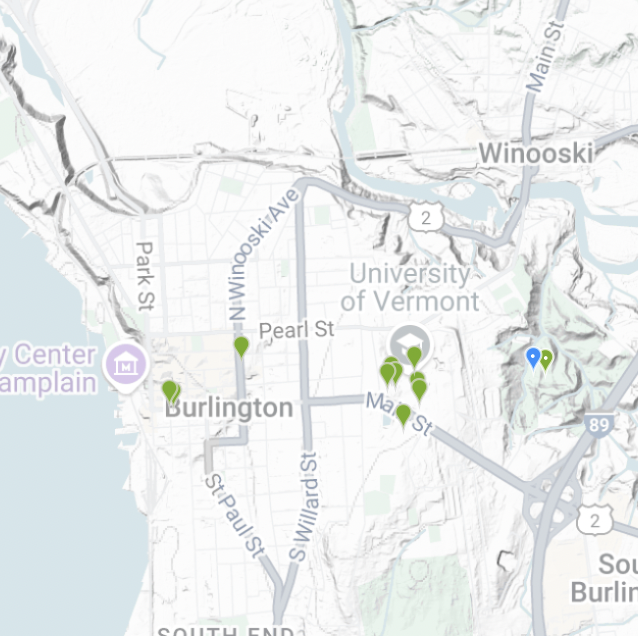
Most of my data was on campus, or downtown between church street and the waterfront.

Here is a map of my data:

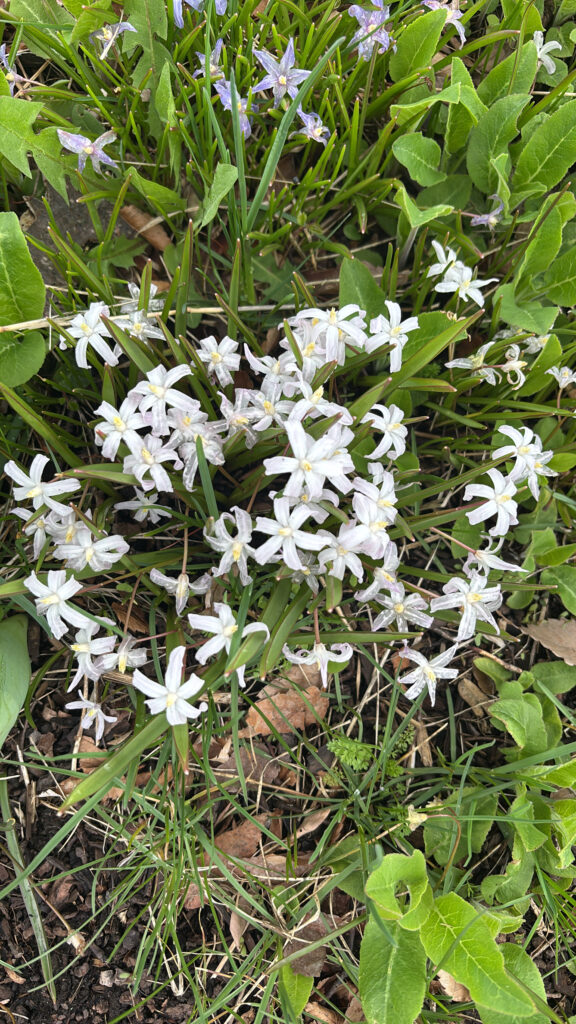
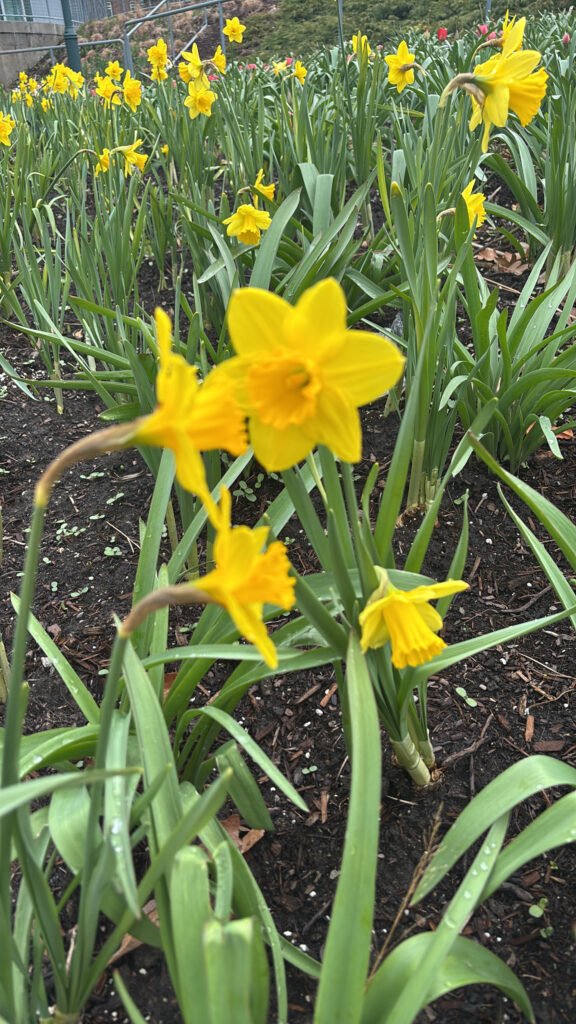
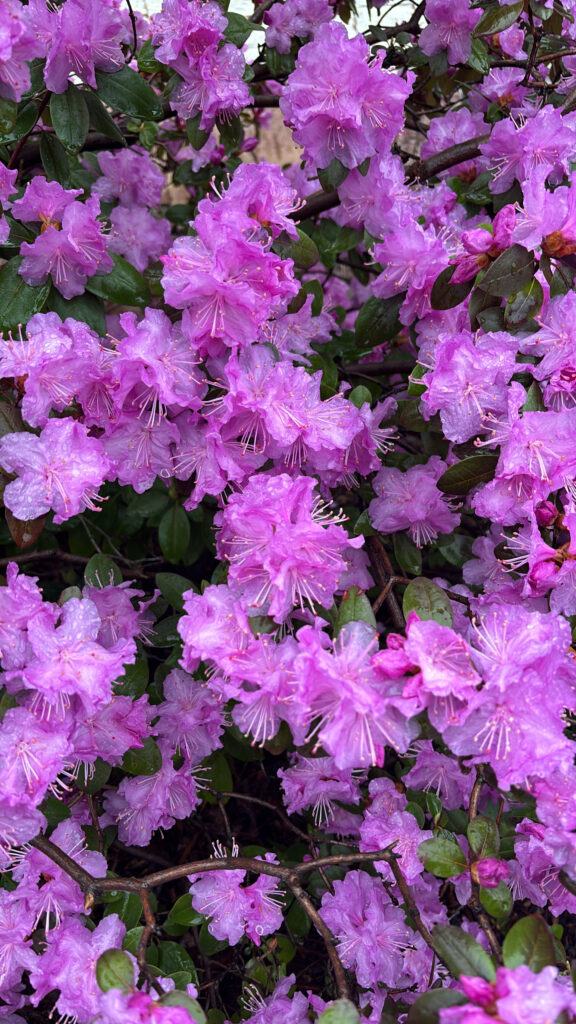
I logged a total of 14 observations. There were some trees, but my favorite part of the BioBlitz was seeing so many beautiful flowers!

I was kind of confused as to why we had to get the new iNaturalist app, but I found it fairly easy to use. It did not auto-save the location for each post, so I had to manually add it later. I never had that issue with the last app, but maybe it was just my phone not having service.

Here is my profile if you care to snoop on my observations: https://www.inaturalist.org/people/ejbritt

I cannot believe there are over 2,000,000 observations right now! Insane! i love how everyone is coming together and celebrating and logging phenology right now. Also very interesting that San Antonio is in one of the top spots, I have ALOT of family there and they are definitely not participating, although I should’ve asked them to. Next year!

We are back! (and so is Spring)

On April 26th, I set out on campus to collect data on a few trees.

Things seemed pretty on track for a beautiful spring and summer… just after I leave campus 😂

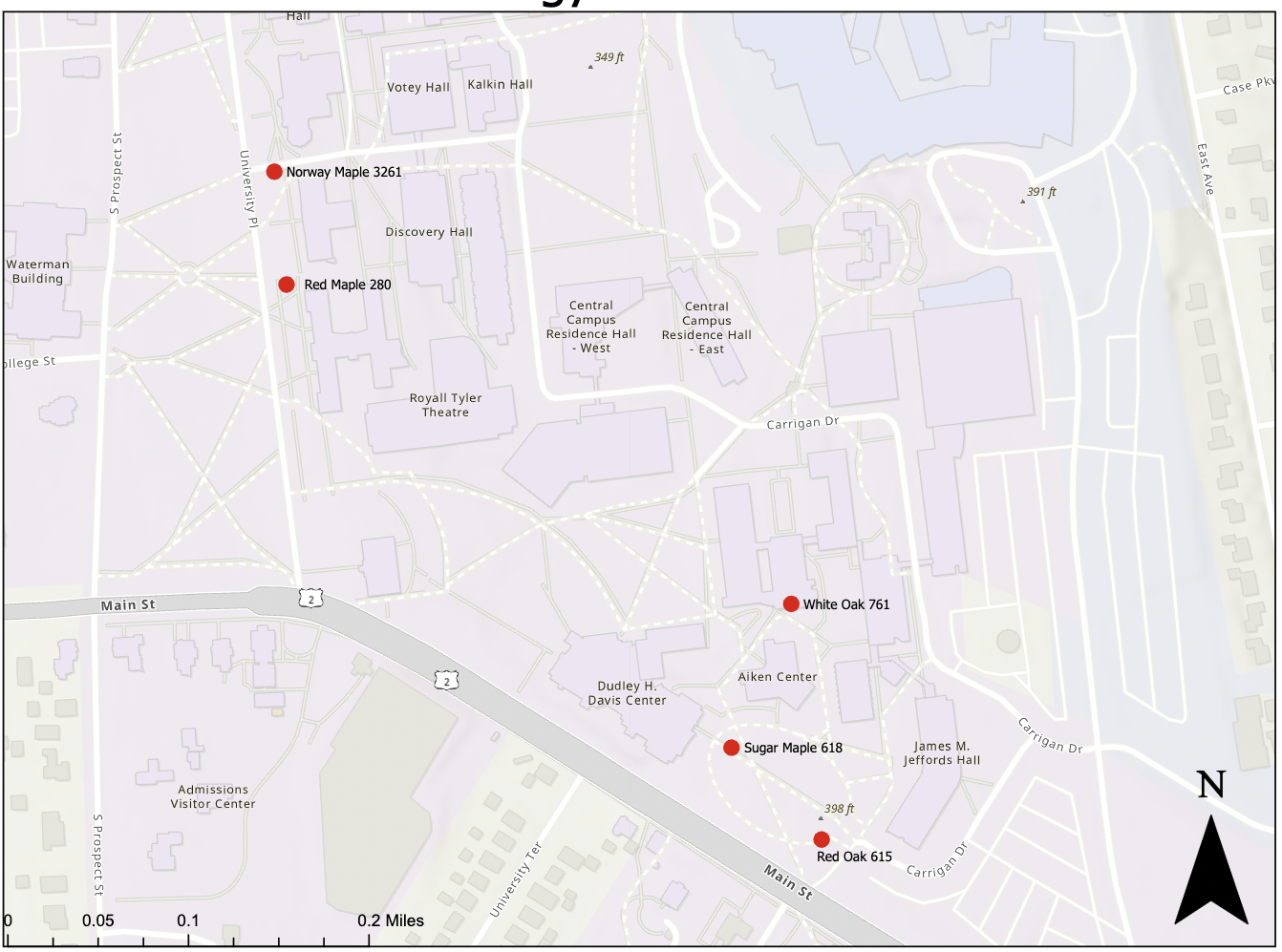
Heres a map marking the 5 trees:

There were no new leaves on the trees, but the abundance of buds and flowers assures me that there will be some soon. I didn’t notice much pollen, but I’m sure there was some, especially on the maple trees, as these had the most flowers. The oaks seemed to be struggling to catch up with spring. They still had some leaves left from last fall! I also had trouble finding any buds or signs of spring at all!

I wonder why the maples are quicker to spring back to life compared to the oaks… could it be because of age? (The oaks looked much younger and less established compared to the maples) Or location on campus? (The maples were near academic buildings like Old Mill and Innovation/Discovery, but the oaks were closer to the Davis Center and main street) Or just the type of tree itself?

Even with my remaining questions, I liked this assignment, walking around campus and getting a little nature in on a Saturday.

After finishing the data collection, I explored the NPN’s website, specifically the News & Publications page and the status of spring map , and I noticed some interesting things. Across the country, there was banding. It was very noticeable in the spring first leaf index map, which records how early the first leaf appears. In the very southern part of the country (lower Texas, Florida, etc.), the leaves came 10-20 days late. Once you reached northern Texas and the south through the top of North Carolina, the leaves were 10-20 days early. This pattern continues, switching again around Washington DC and New Hampshire, ending in 20 days late around Vermont and Maine. This was super interesting to me because, based on the other maps, the leaves changed gradually, starting in the south and moving upward. What previous data is there that this is late/early for some places? As for Vermont, the trees are leafing relatively late and aren’t expected to get leaves until early/mid-May. This checks out! As I said before, the trees had buds and flowers, but no leaves (except for the old ones on the oaks). I’ve never had a spring in Vermont before, so. I cannot say whether this feels late for the leaves in Vermont (as the map said), but it feels late for me, coming from the south!

A change of Scenery: Rock Point

Hello! For this phenology post we are straying from the tried and true Centennial Woods Log Cross and venturing closer to the lake a a little bit north to Rock Point.

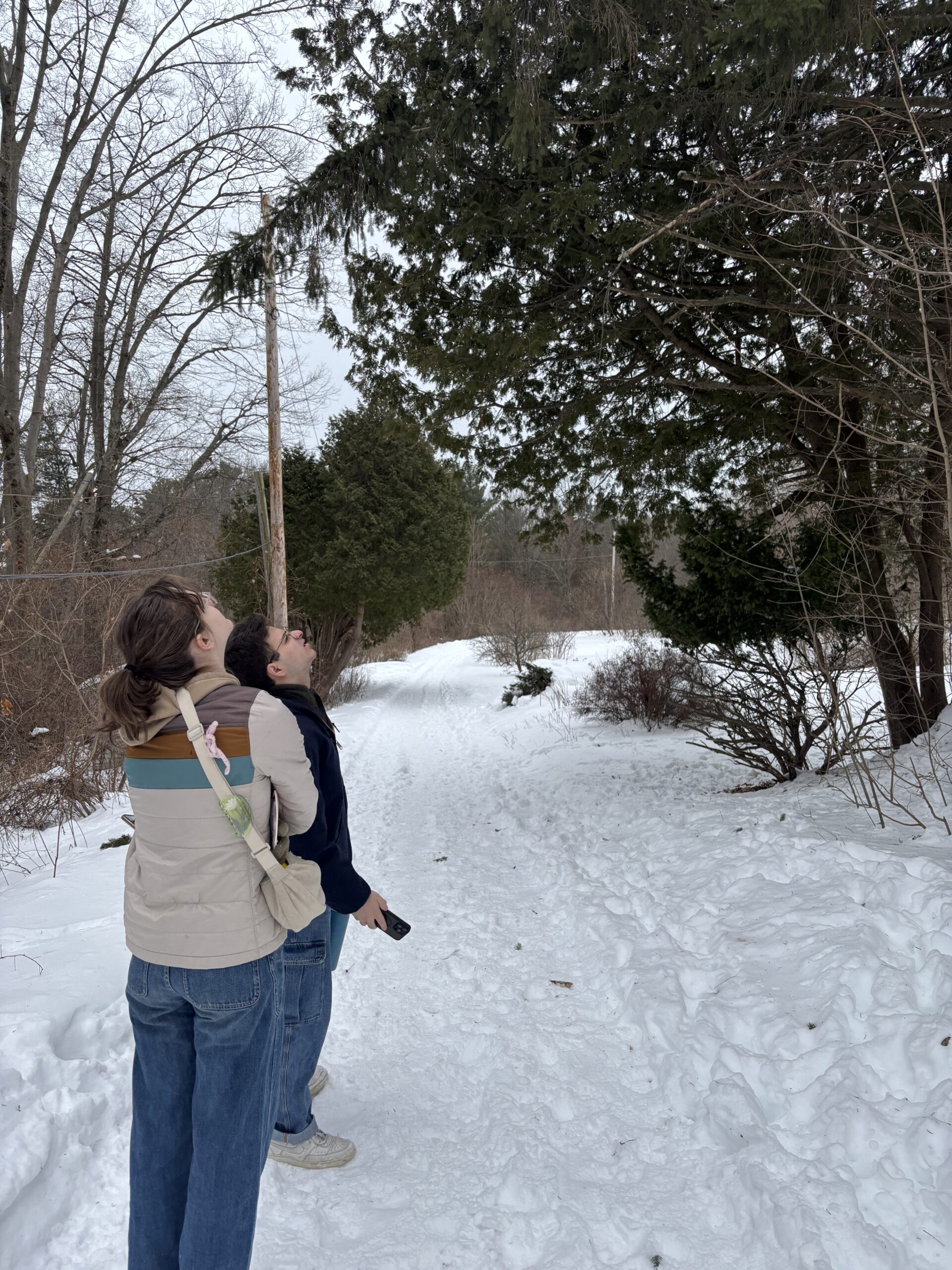
Inspired by last semesters labs, and a desire to see the landscape covered in snow, me and my three NR friends went to rock point. We followed the trail to the waters edge.

Along the way we found a bunch of birds. Chickadees and a red-bellied woodpecker, and a robin! Unfortunately I could not get a good shot of any of them… as soon as I zoomed in enough they scattered. Here’s a clip of some bird chirps though:

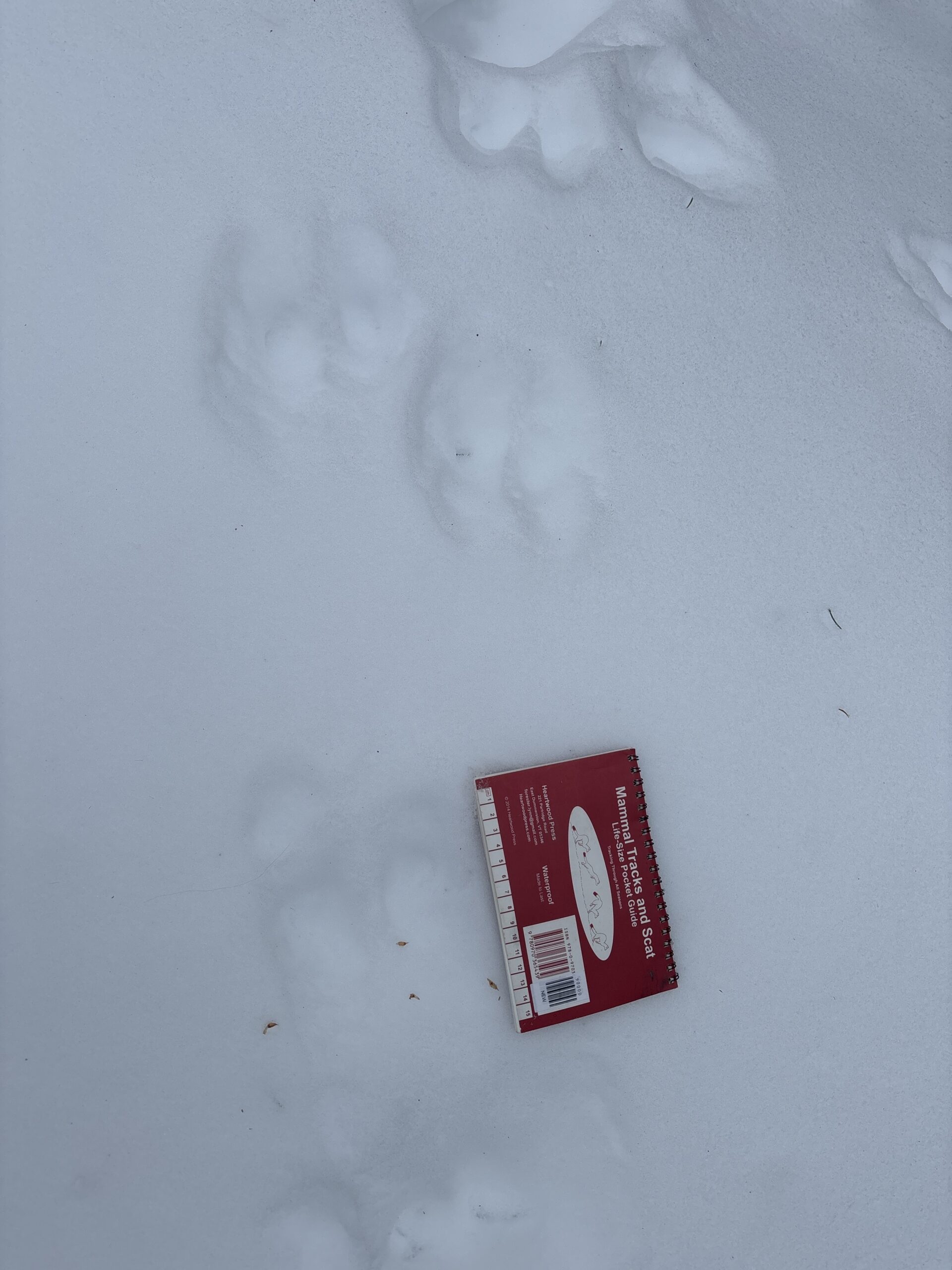
We also came across many tracks. I’m fairly certain that these are deer because of the split teardrop shape, size and walking pattern. if I’m right, this would be my first ever deer track sighting!!!

I also came across these cottontail rabbit tracks. This is just one section, as there were a BUNCH of these all along the path.

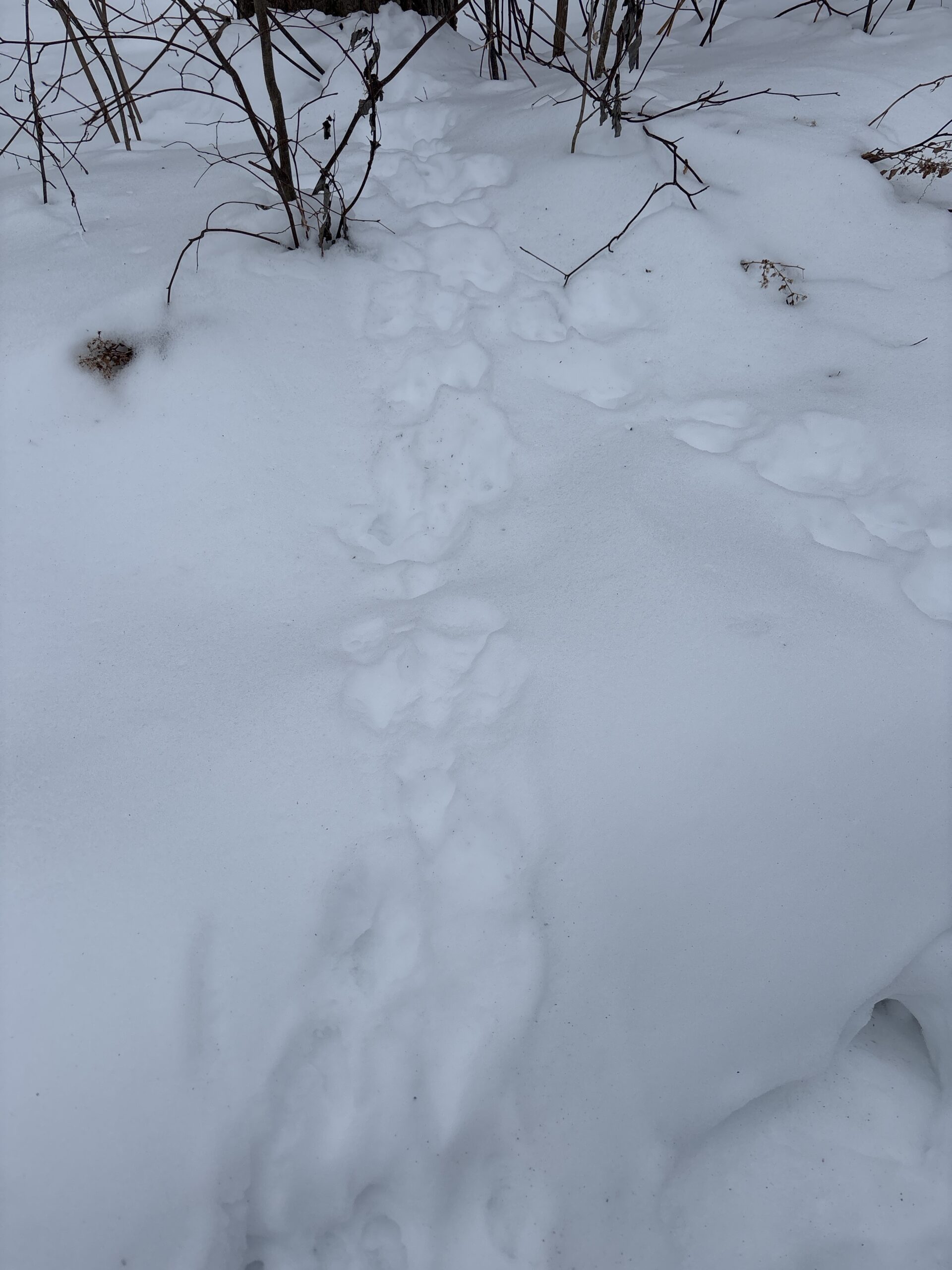
Lastly we saw these… I’m not positive what they were. It seemed like they were a little older as they were slightly messy. Also the critter must’ve been in a hurry, and scurried up the tree nearby because the tracks stopped abruptly at the base of the tree nearby. I’m think they are grey squirrel just because of the size and general shape. Not positive though.

It was so much fun finding tracks in a different space, I’ll be coming back for another winter walk!

The return to the log cross after winter break

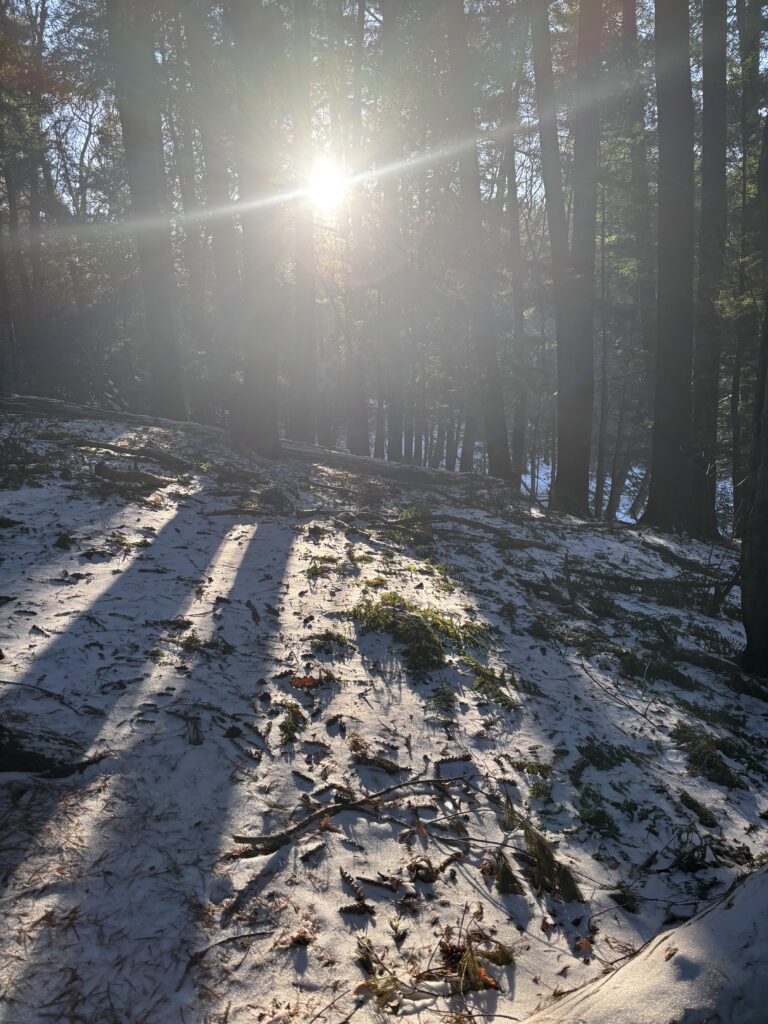
After a warm break in North Carolina, I adventured out into the cold to check on my spot. As I walked, I noticed the beautiful crystalized stream and clear blue, unobstructed by leaves, sky above me. It felt good to return back to the log cross, this time with a new appreciation for the snow… and the prints left behind in it.

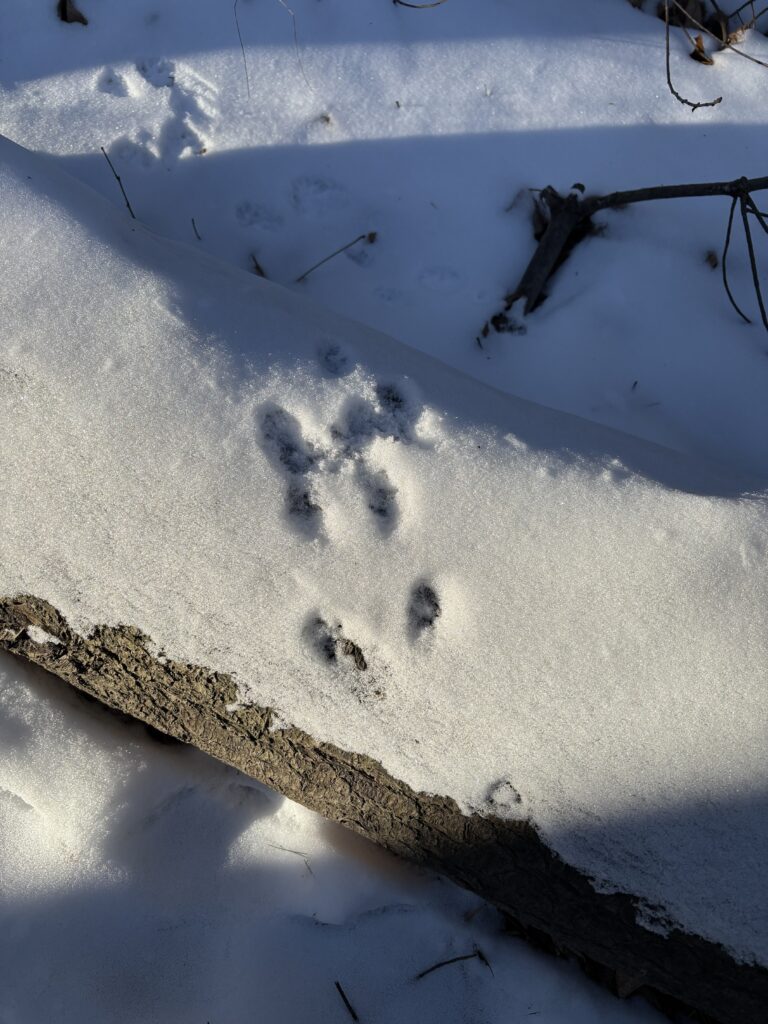
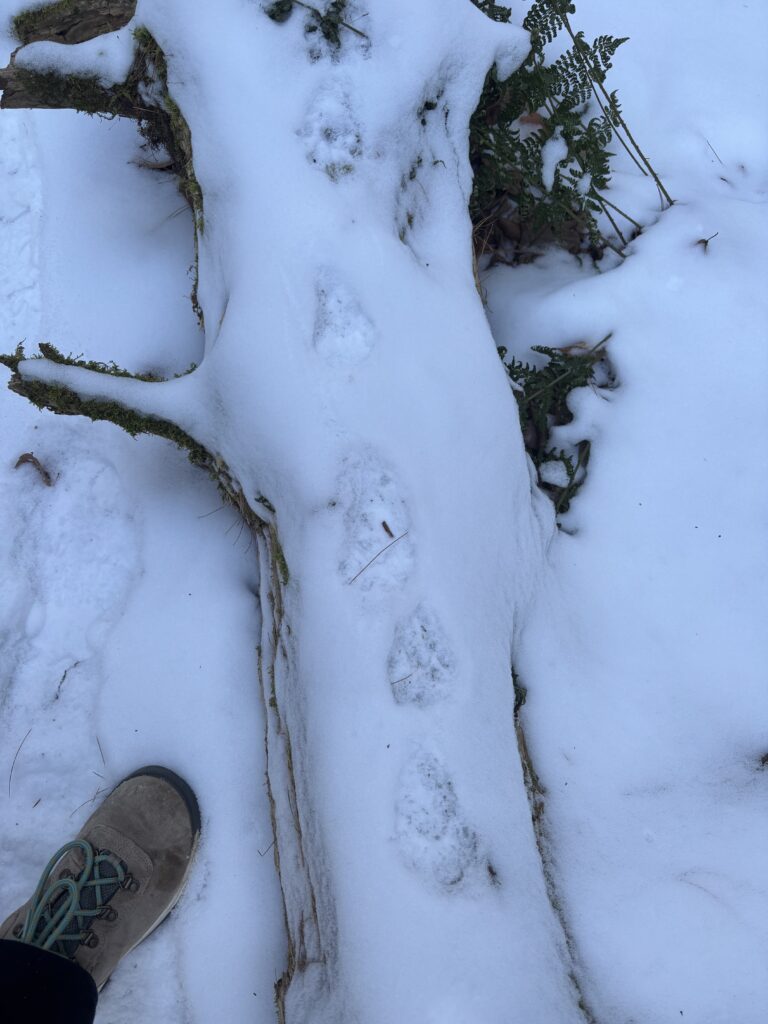
The first tracks I came upon were these cutie little Grey Squirrel (Im fairly sure about that) tracks on the log. Unfortunately we couldn’t follow these very far as they disappeared on the ground.

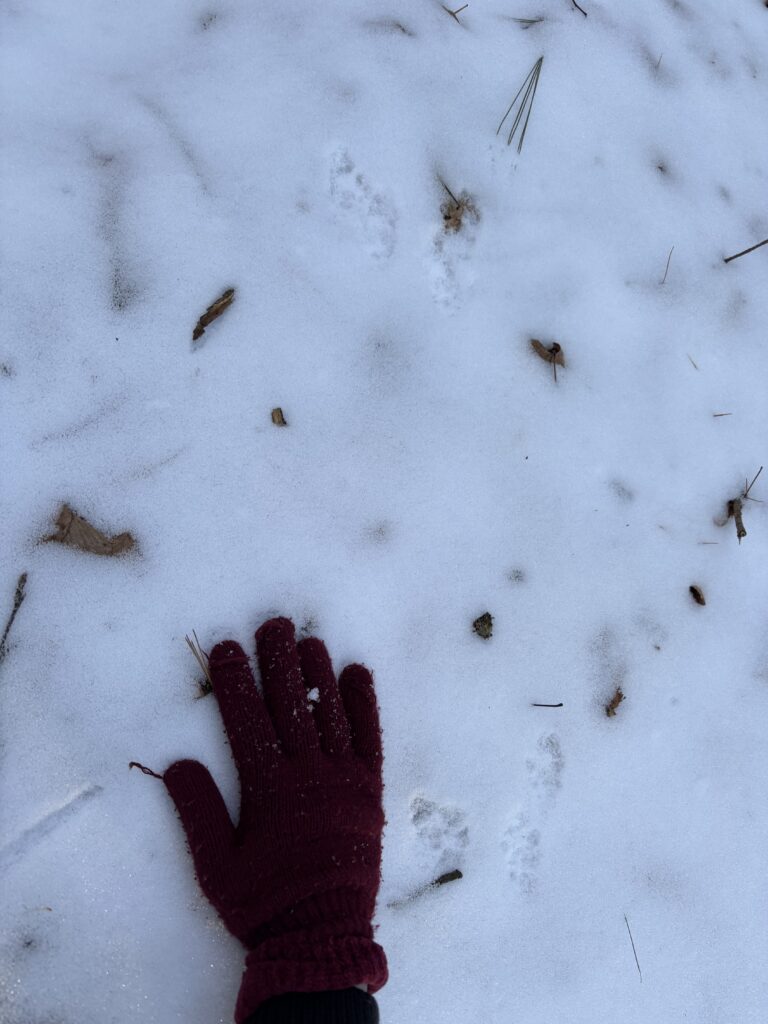
Next, just to the left of the log cross were these tracks, which I believe belong to a Cottontail Rabbit, according to my tracks and scat guide. This bunny hopped all over the place!

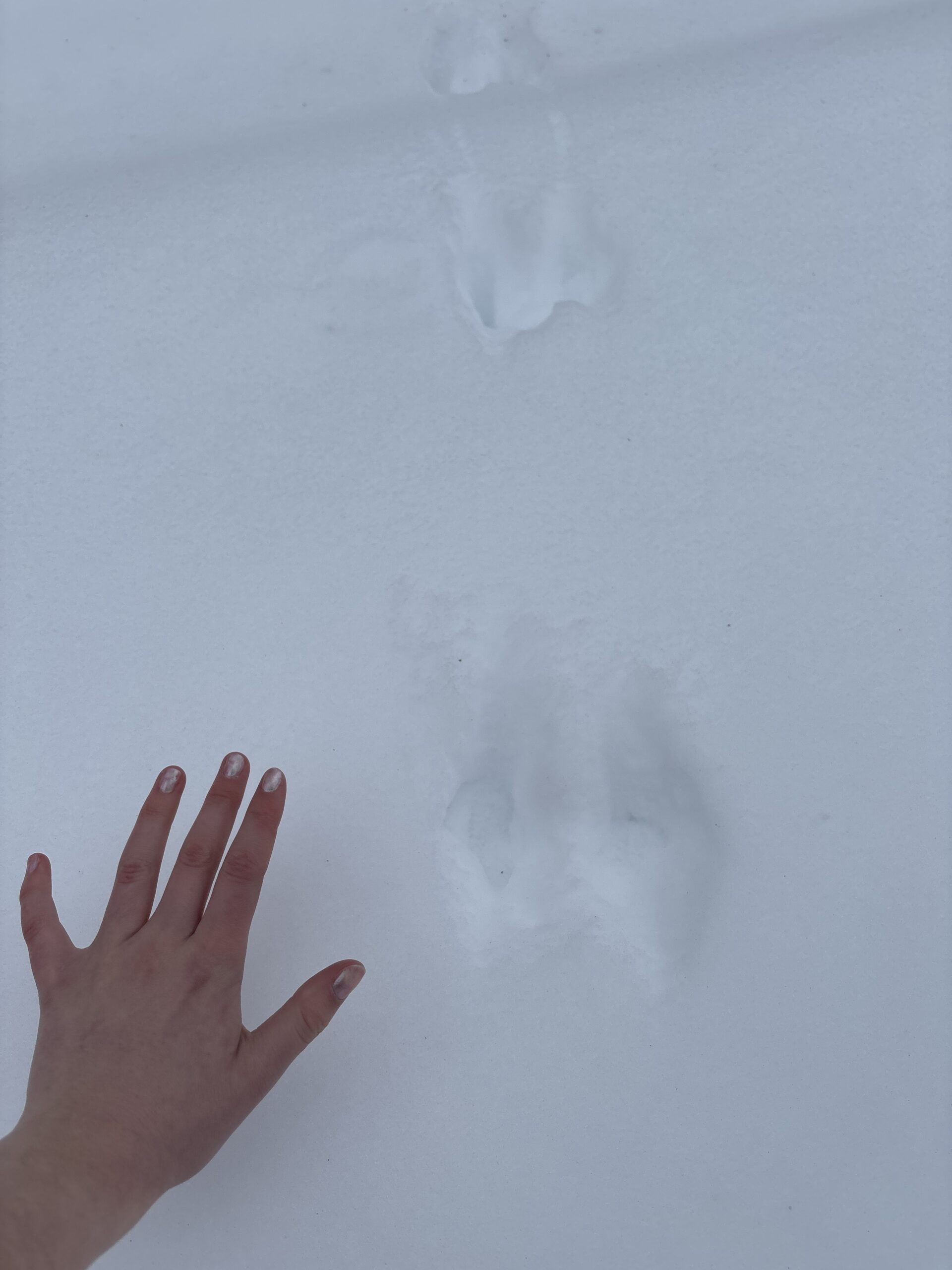
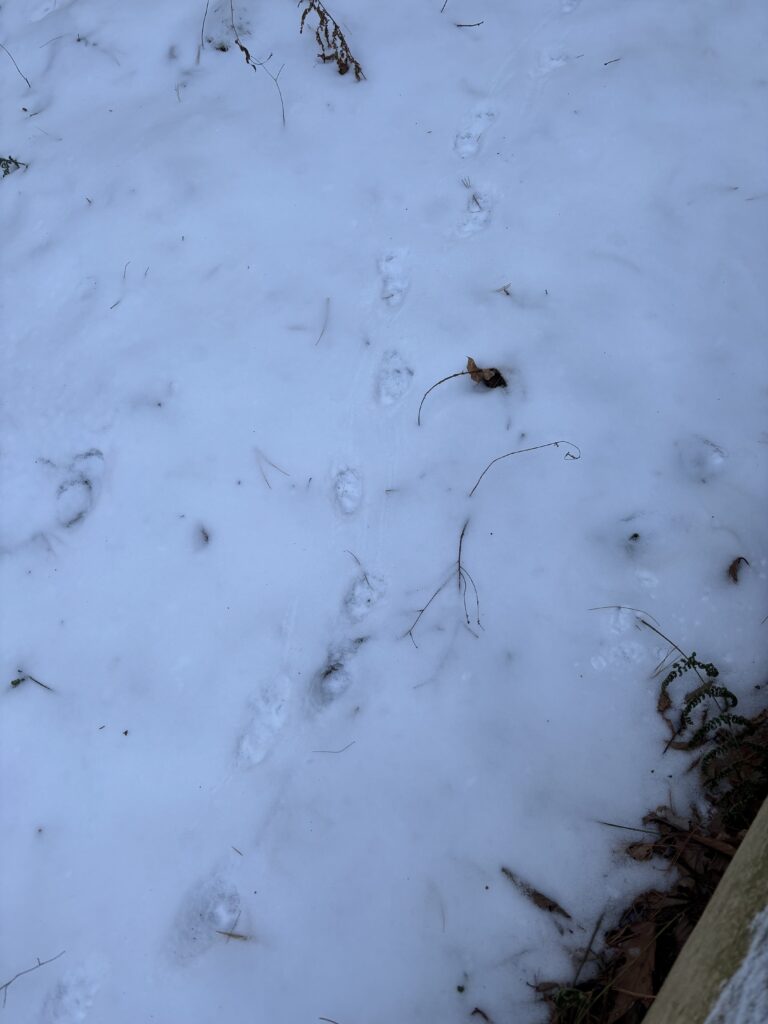
Lastly were these two dog prints, one small and one big, very fresh. They did a great job of confusing me! On my way back im pretty sure I got to meet the pups who made them. A sweet black lab made the larger ones, and a mini poodle mix made the itty bitties.

Last visit to the Log Cross this semester

Hi all! Thank you for following the changes of the log cross with me throughout this semester. I’ve thoroughly enjoyed my time spent at Centennial Woods, feeling more refreshed, calm, and connected to nature after every visit. There have been many changes since I went before Thanksgiving break.

New Ground Cover

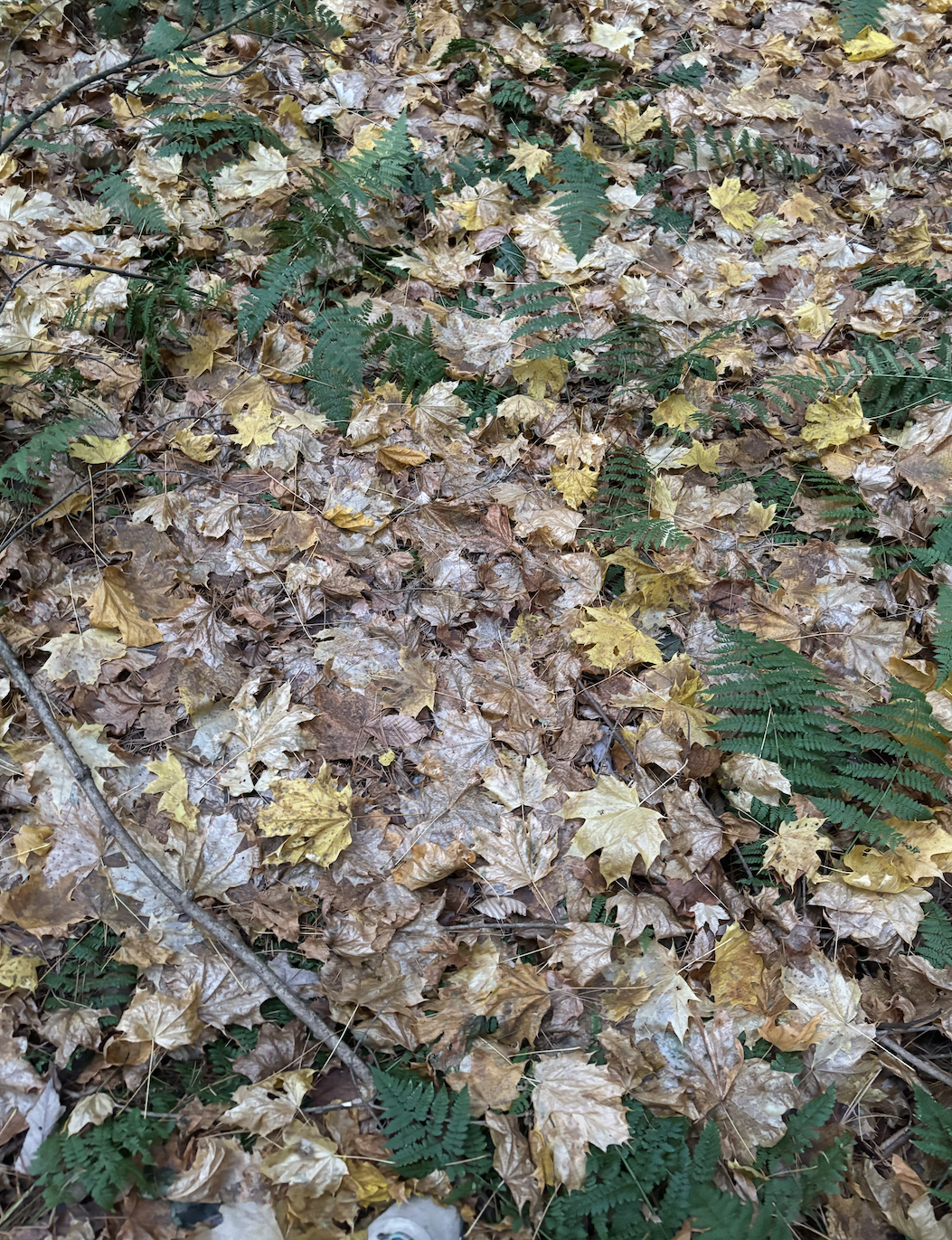
Instead of the ground being obscured by ferns, it was covered with maple leaves and a few pine needles.

Leafless trees

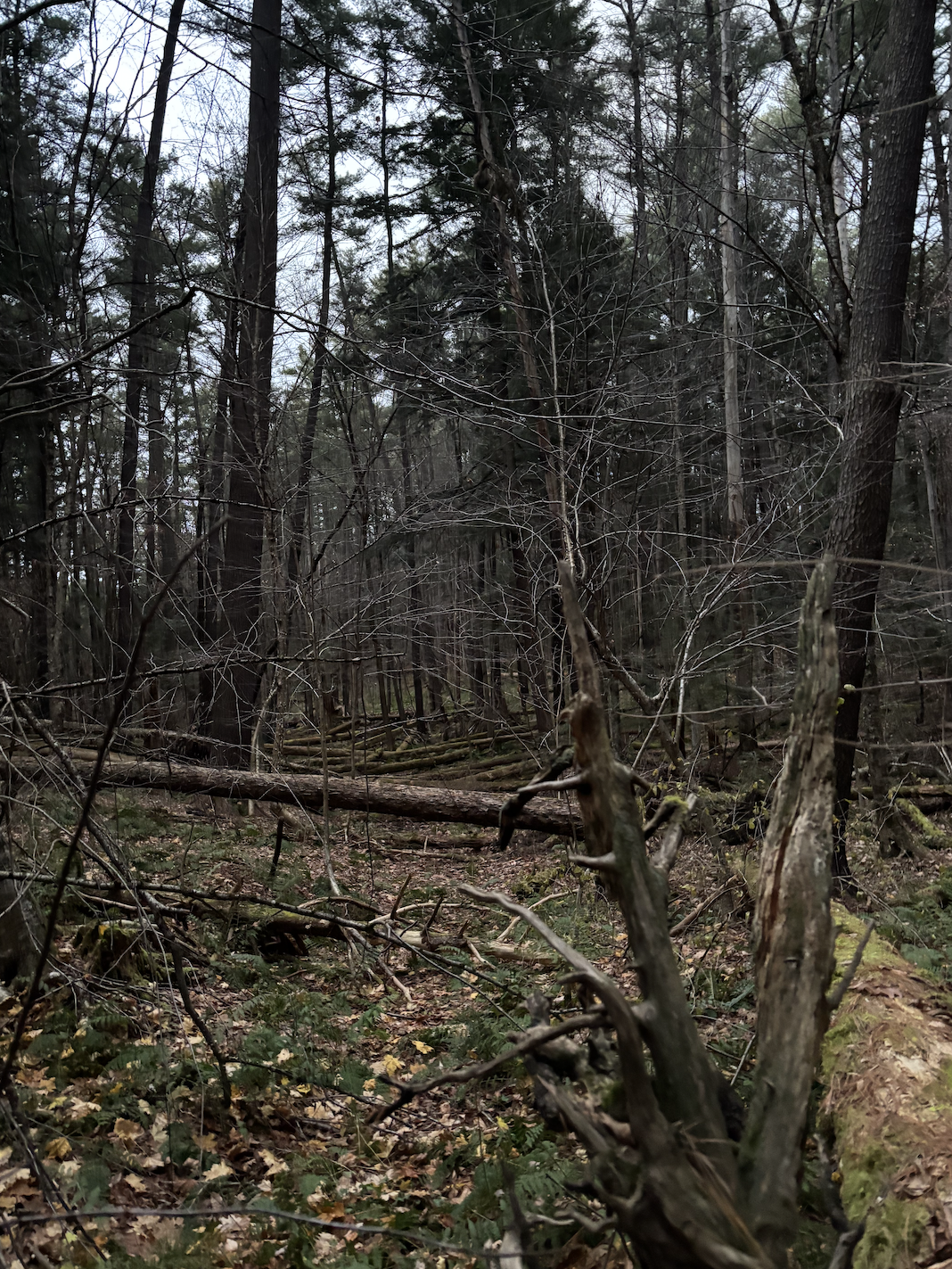
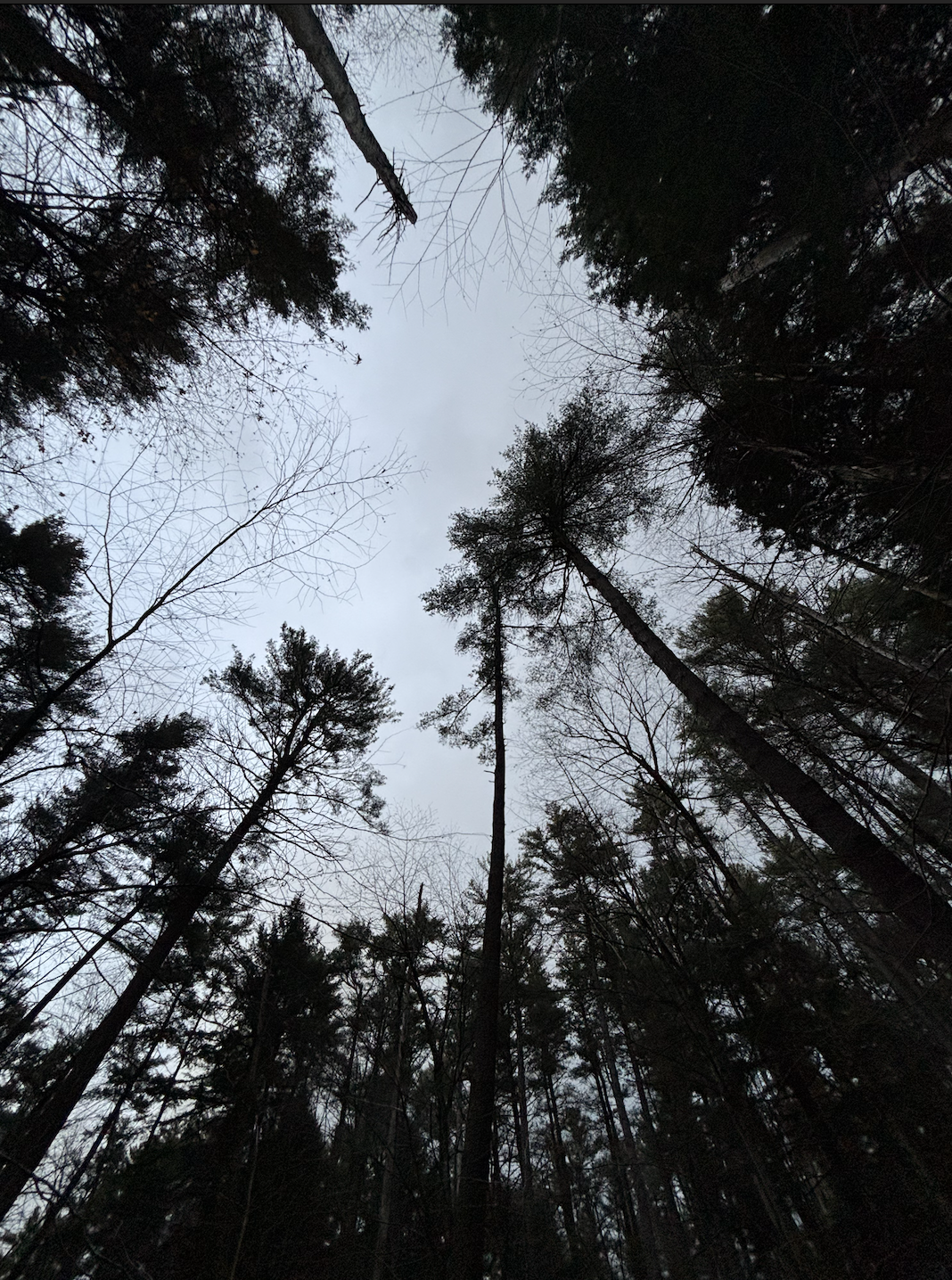
As you might expect, the trees were barren, except for the towering pines and a few cedars. Without the insulation of the foliage, I could hear the cars on the road much more loudly. The planes flying above were also much more audible. I’m not sure if it was because they were being drowned out, or if they have all migrated or started their winter survival plans, but I did not hear any animal noises.

Here’s a clip I got of the buzz from the road and a plane flying overhead.

For my last visit before the break, I followed a guided meditation from one of my favorite podcasts “Listen to Sleep” from Erik Ireland.

Link to the meditation

This was my view as I meditated, fish posing over my favorite log in the cross.

With the stress of finals, it’s been hard to focus on the bigger picture, on how we are all just another moving part of nature, that ebbs and flows and changes with the seasons. I touched on this idea in one of my reflections from NR 1050. Heres an excerpt:

“At our core, human nature still rules our lives. Our survival instincts – our drive for food, water, and shelter- have evolved along with society to become a drive for wealth and stability. Our need for connection has grown to allow for Facetime and videos to count towards our physical needs, for Instagram reels and TikTok to begin to satisfy our need for interaction. But are these changes natural? Or is it a course of human – just another animal- progression? Or is our screen dependence starting to stray far enough away from our primal nature, leading us to become unnatural? It doesn’t feel natural. Our descent into a depressed and anxious society, with newer generations having problems socializing in person (Novak, A. [2024, September 4]. Vermont Schools Are Banning Smartphones to Limit Distractions. Seven Days) that due to our deepening dependence on screens does not feel natural or meant to be.
Most of the time it feels like there’s nothing that we can do about this. The world we live in requires us to be well-versed in screens. Push notifications are the most reliable way to get news, the culture has shifted to pop culture references being required to fit in, and most jobs expect technological knowledge. You can’t function as a part of society without being well-oriented with your screen. Even here at UVM, you can’t leave your floor without your phone, as you won’t be able to get back in. You can’t go to your phenology spot without logging your finds on iNaturalist. You can’t truly unplug because the systems in place are enabling a screen dependency.
I hope that one day, we Rubenstein students -so dedicated to the natural world- will fight for a more nature oriented world, for large scale systemic change to free us from our screens, truly dedicating our lives to nature.”

Even though I still took pictures on my phone, used my phone for the meditation, and walked there and back with it safely tucked into my pocket, I felt free from the constraints of technology, connected to the natural world. The log cross has reminded me to step back from my little life, the hold that my technology has on me, and the stress of finals and going home. I should be relishing in the fact that although humans are often seen as separate from nature, we are still animals deeply woven into the cycles of the earth, changing with the seasons just as all living things do—our bodies, minds, and spirits shifting with the rhythm of the world. We are fortunate to have created shelters and systems that protect us, yet we remain part of the vast, interconnected flow of life, and should never feel stuck in those systems. I feel so grateful for my place within nature’s ever-turning wheel.

A change of pace: Lake Lewisville

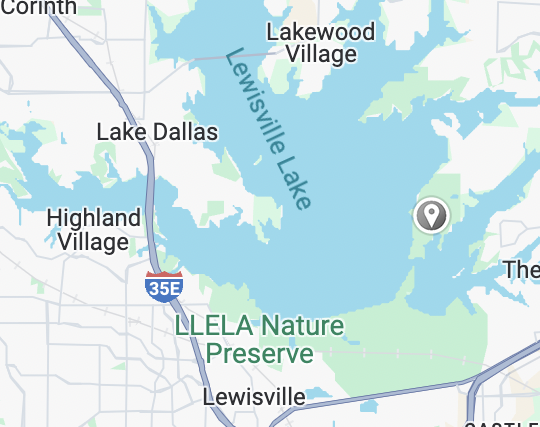
On my Thanksgiving break, my family headed south to Texas to visit my Grandma Betty in Dallas. In order to make this a more holiday/thanksgiving feel, we decided to rent a little house on Lake Lewisville, where my dad used to fish when he was in high school.

In the subdivision, we stayed at there was a trail that spat me out near Wynwood park, where I wandered upon another trail until I found a nice spot in the woods.

https://maps.app.goo.gl/Nh7brF3hnEhEhFbr8

I felt the soil, and it seemed pretty clay-ey. I used my phone to identify the trees, most of which were Bur Oak, American Elm, Cedar Elm, Pecan, and Sugar Hackberry. They all had MANY more leaves than the trees back, in Vermont.

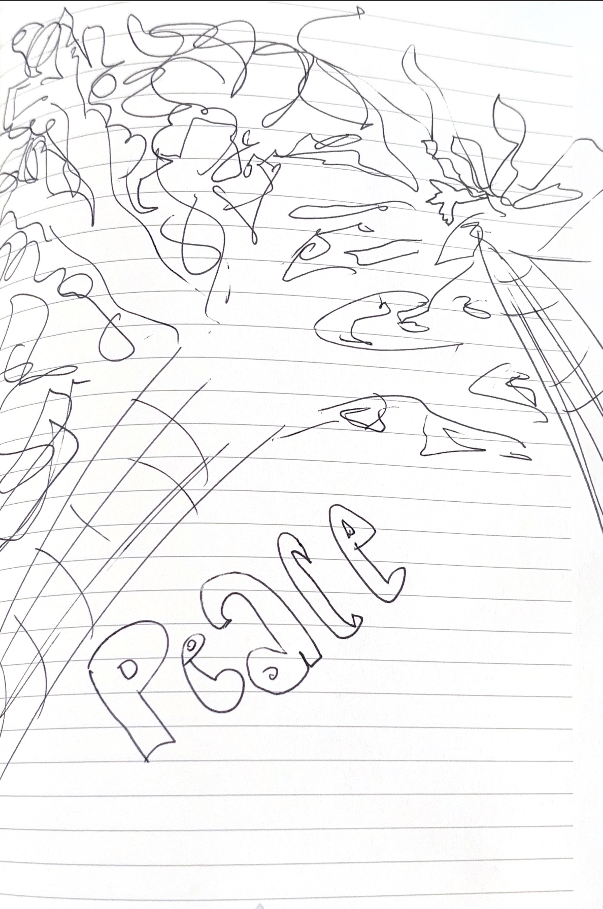
I enjoyed the quiet of the forest, as Dallas has been very hectic with lots of noise pollution. I spend most of my time in the woods lying down on my backpack, staring at the blue-bell sky through the leaves. I’ve attached a VERY abstract sketch of my view.

I’m so glad I was able to get out of the house and the city, finding some peace in nature.

Log Cross Update, November 3rd 2024

Hi all!

As we progress through fall, the world around us starts to get ready for rest. At the Log Cross in Centennial Woods, these changes are very noticable.

November 3rd Visit observations:

There were a lot of bird noises over head, although I didn’t see any birds and am not familiar enough with bird calls to identify them, I could hear them. This is likely due to the migration of many species at this time. Ill record a clip next time!

Many of the leaves on the trees have fallen off. There were still a few Sugar Maples that were full of bright yellow leaves, as well as the hemlocks. I noticed way more pine needles covering the ground.

This time I sat in my regular spot, as there was no soil testing going on near my site. I noticed more moss along the logs.

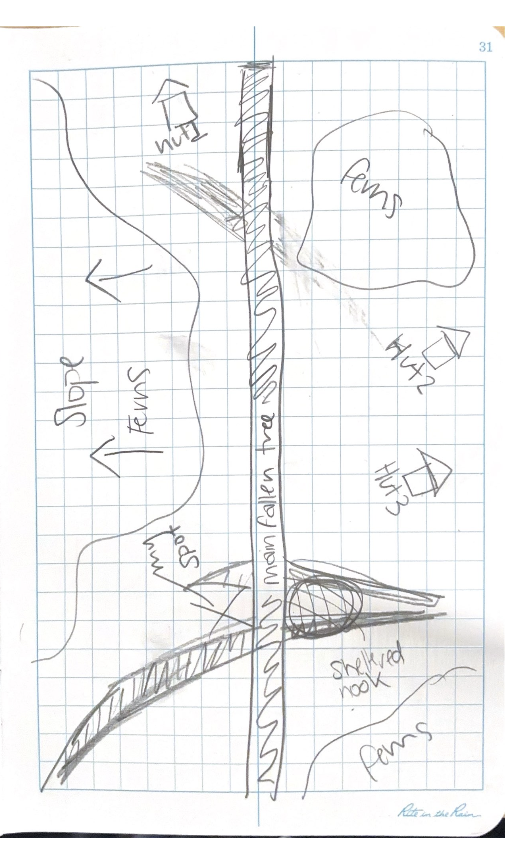
Hut Update: No new huts, but the ones that were there last time seem to have grown!

Map of the log cross:

Thats all for now, more fall/winter updates to come!

Hello Centennial Woods!

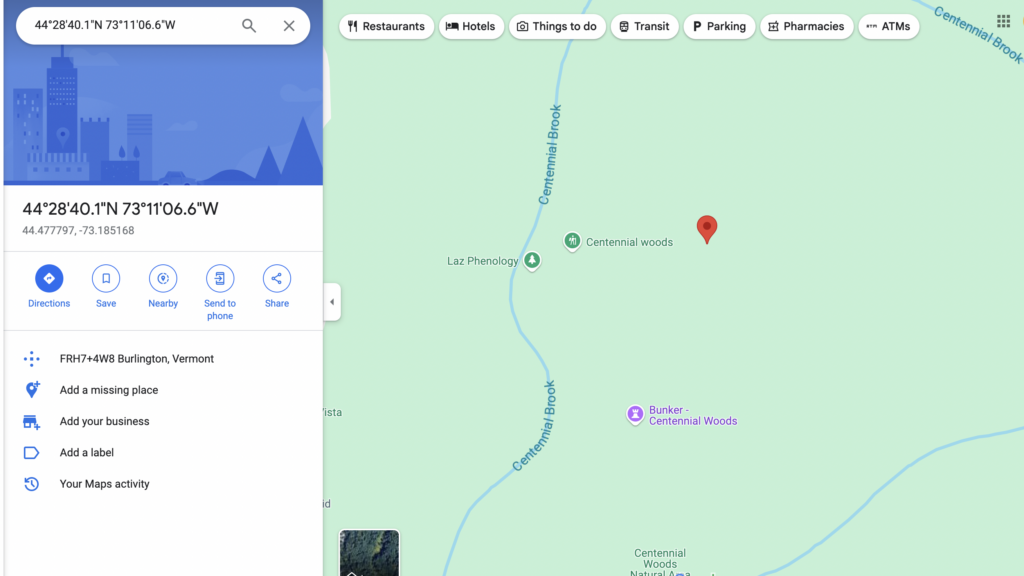
Deep in Centennial Woods, past the stream, near the growing hut population (last week there was 1... now there are 3!) lies the Centennial woods log cross AKA my phenology spot. I chose this spot because of how close it was to campus, because my friends have spots along the stream, and because the logs provide an ideal spot to sit and do a nature grounding meditation. 
On my most recent visit, i realized that I wasn't the only one who liked the log cross. There was another -higher level- NR class studying the soil composition right by my spot. To avoid getting in their way, i decided to explore the greater area around the log cross, logging the trees and vegetation into iNaturalist. 

What kindof plant life is there at the log cross?

Trees

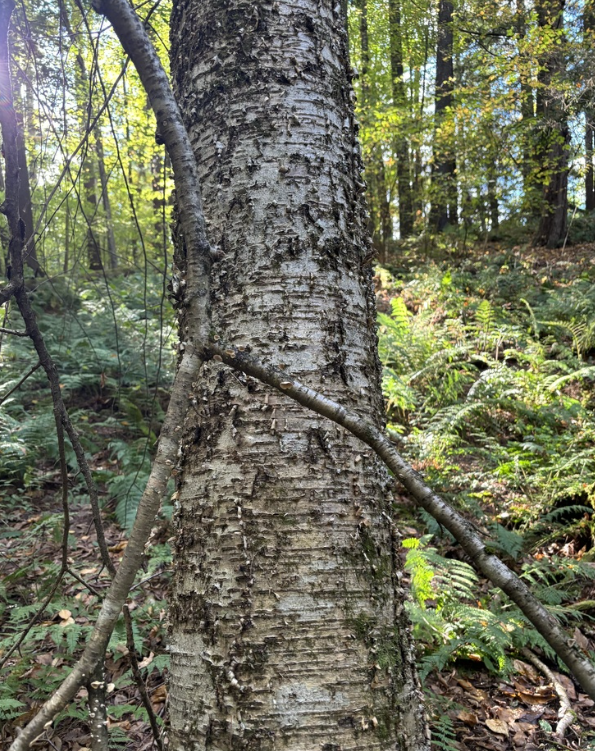
This trip I focused on logging the different birches, including paper and yellow birch. These are thin hardwood trees with peeled looking bark.

https://www.inaturalist.org/observations/246831803

BIRCHES

Ground Cover

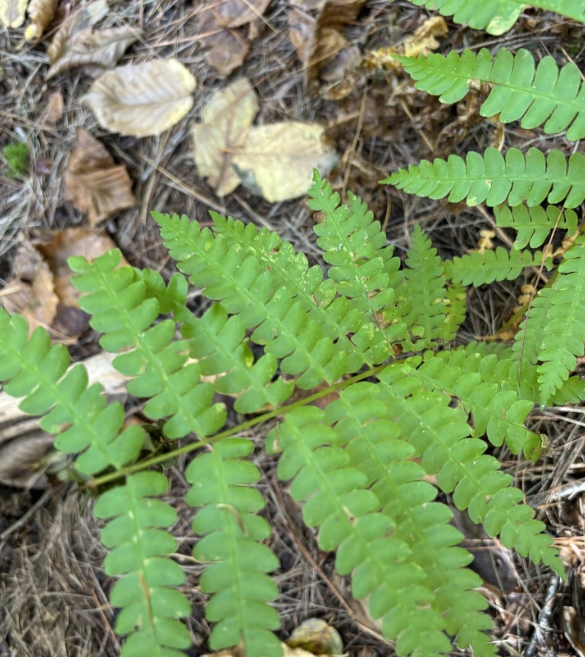
To make this simple, i once again foused on a specific type of plant. I saw lots of ferns, Im pretty sure there was a wood fern and a cinnamon fern, and iNaturalist is supporting this thought.

https://www.inaturalist.org/observations/246833298

https://www.inaturalist.org/observations/246831832

Skip to toolbar