
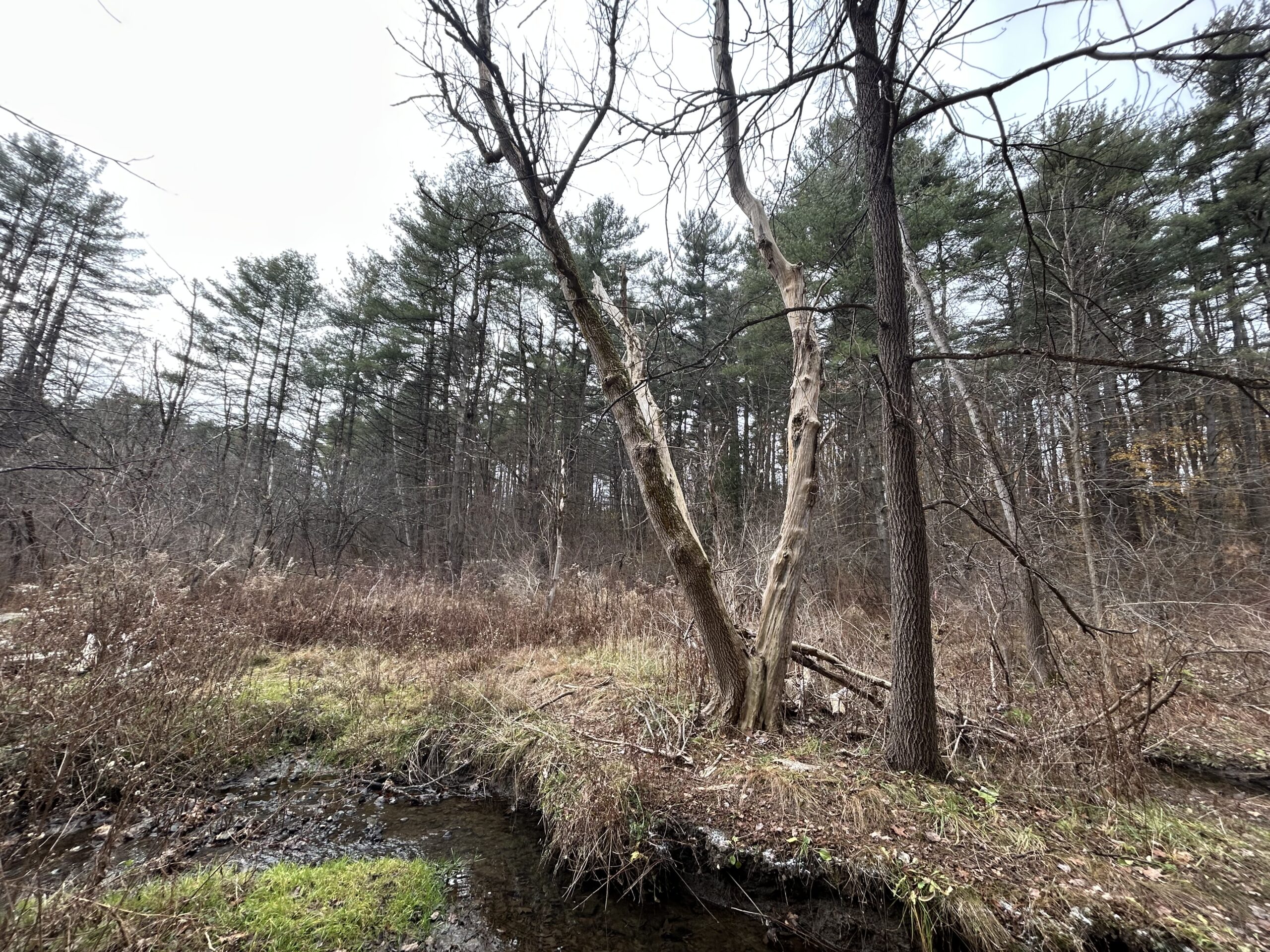
December in Centennial Woods
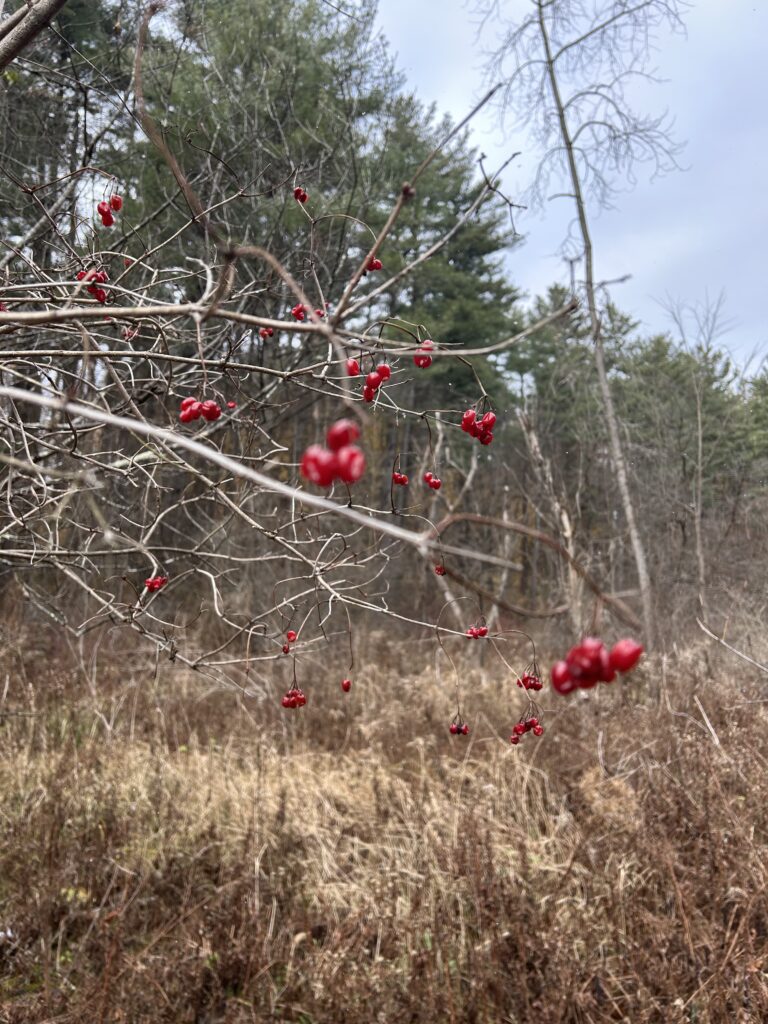
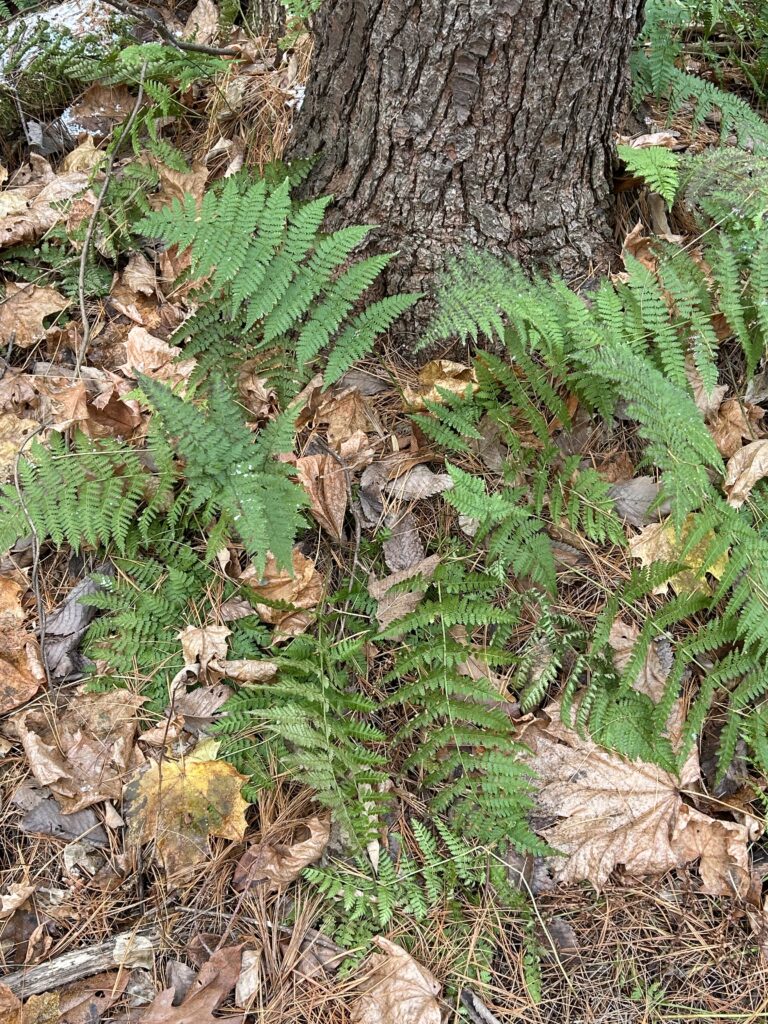
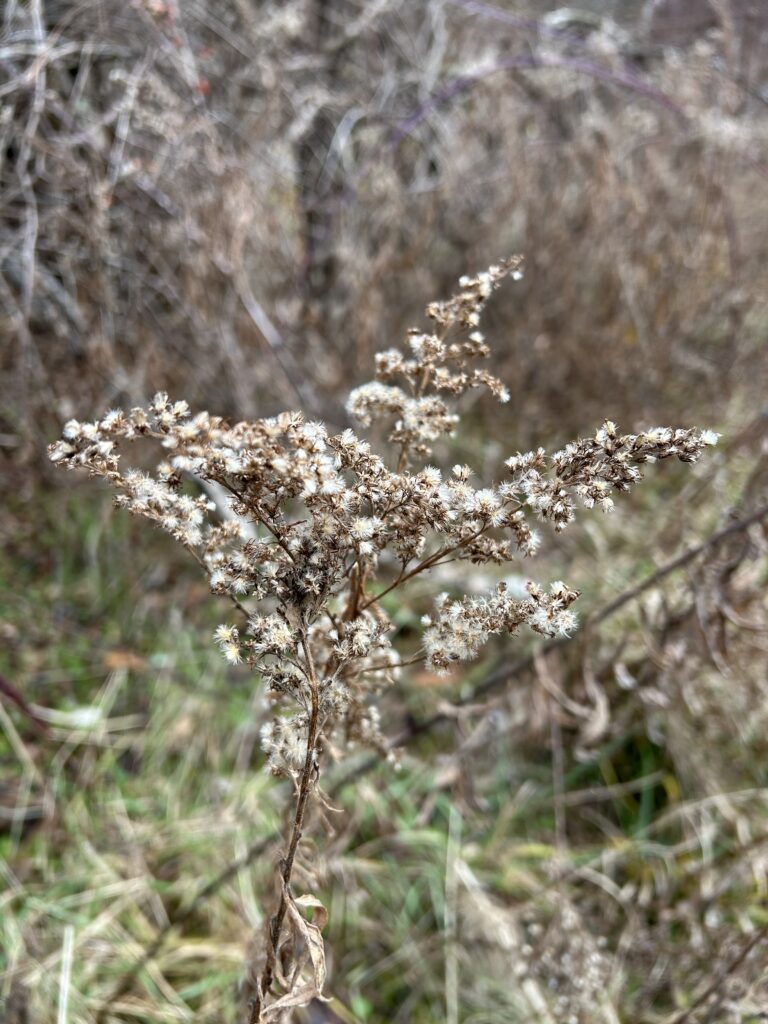
It was about 27° F and snow was lightly falling as I returned to Centennial Woods for a final visit this year. The only foliage in sight is on the needles of Eastern White Pine and ferns, moss, and grasses in the understory. I also found some small, bright red Rose Hips berries as seen in Naturally Curious. White Oak and Norway Maple appear to be the most recent leaves to have fallen, making up the freshest layer of leaf matter. The leaf litter has begun to decompose at an accelerated rate along the brook’s bank. Like in Naturally Curious, there was no sign of amphibians or small mammals like mice and chipmunks, as they are now in hibernation or dormant. In the beginning, I heard a bit of birdsong from a Tufted Titmouse as well as a goose call. By the time I left though, the forest was so silent that I could hear the sounds of falling snow hitting the ground.
Signs of Life
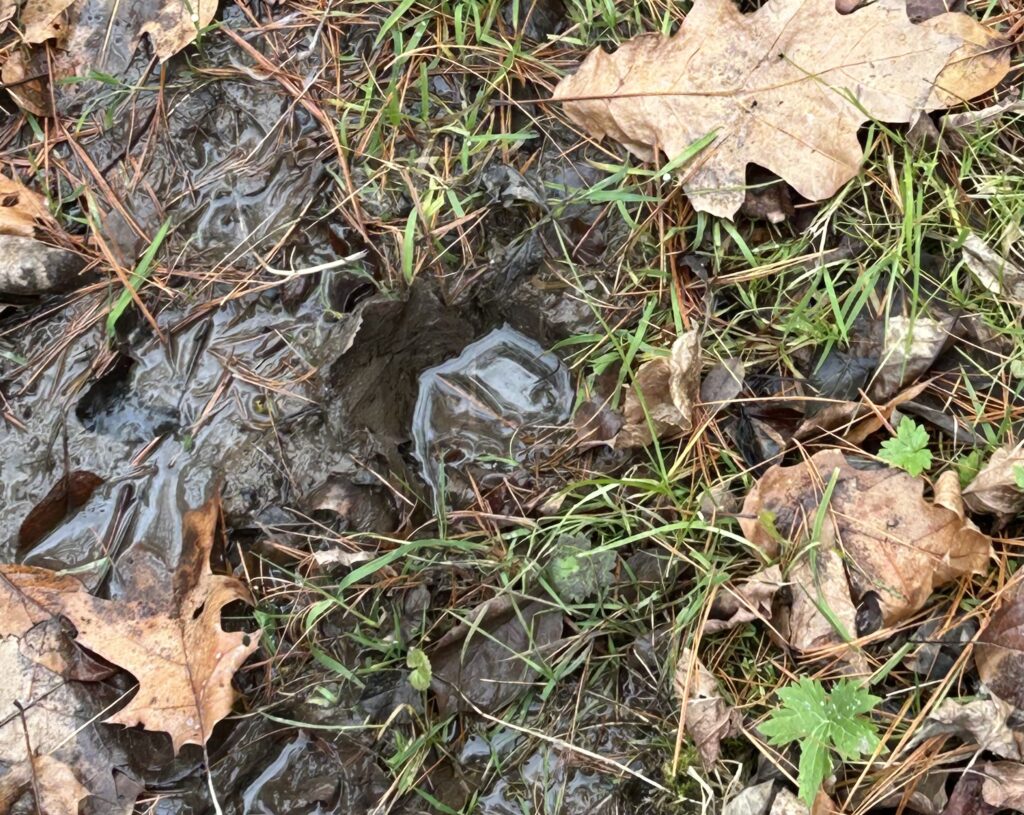
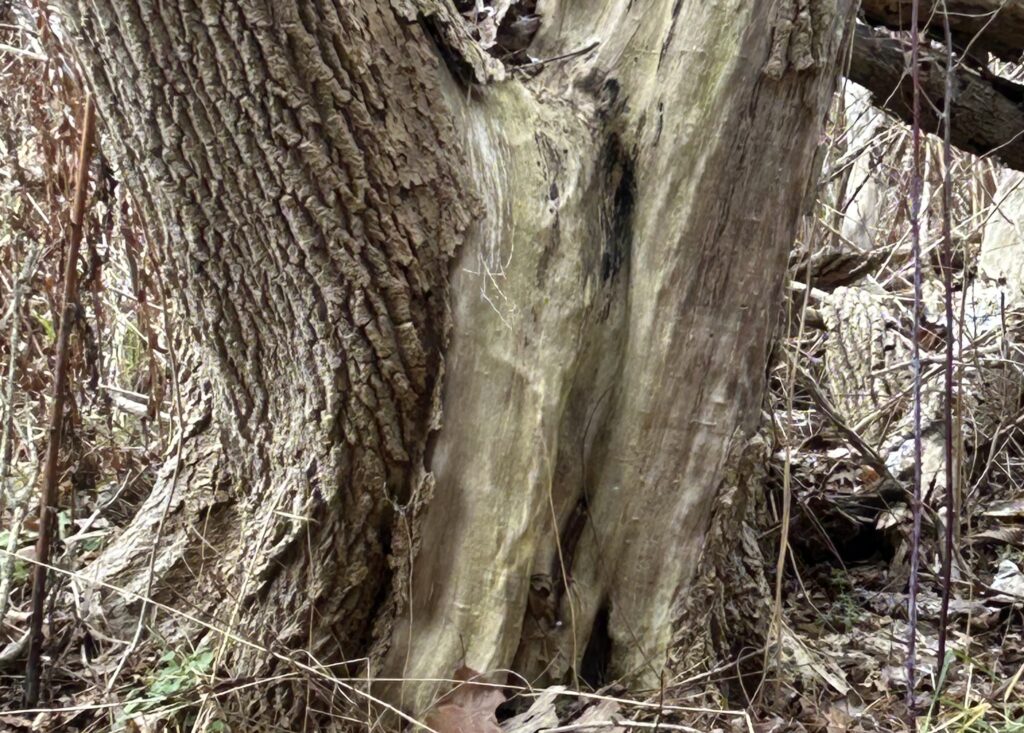
The forest was mostly absent of signs of animal life, however, I did find a few indentations along the muddy bank of the brook. At this point, there is little to no accumulation of snow on the forest floor. This made it difficult for me to observe solid tracks and determine their identity. The first track I found was small and round with a slight divot in the middle, like a deer track. The second sign of life I saw was bark removed from the lower segment of an ash.
In reflection, I found that I enjoy this spot in Centennial Woods because it reminds me, in so many ways, of the park near my home. The prevalence of northern red oak, white oak, and pines are found all over my home, and I have enjoyed observing how these same species function in wildly different climates and ecosystems.