Posts

Centennial Woods: Final Thoughts

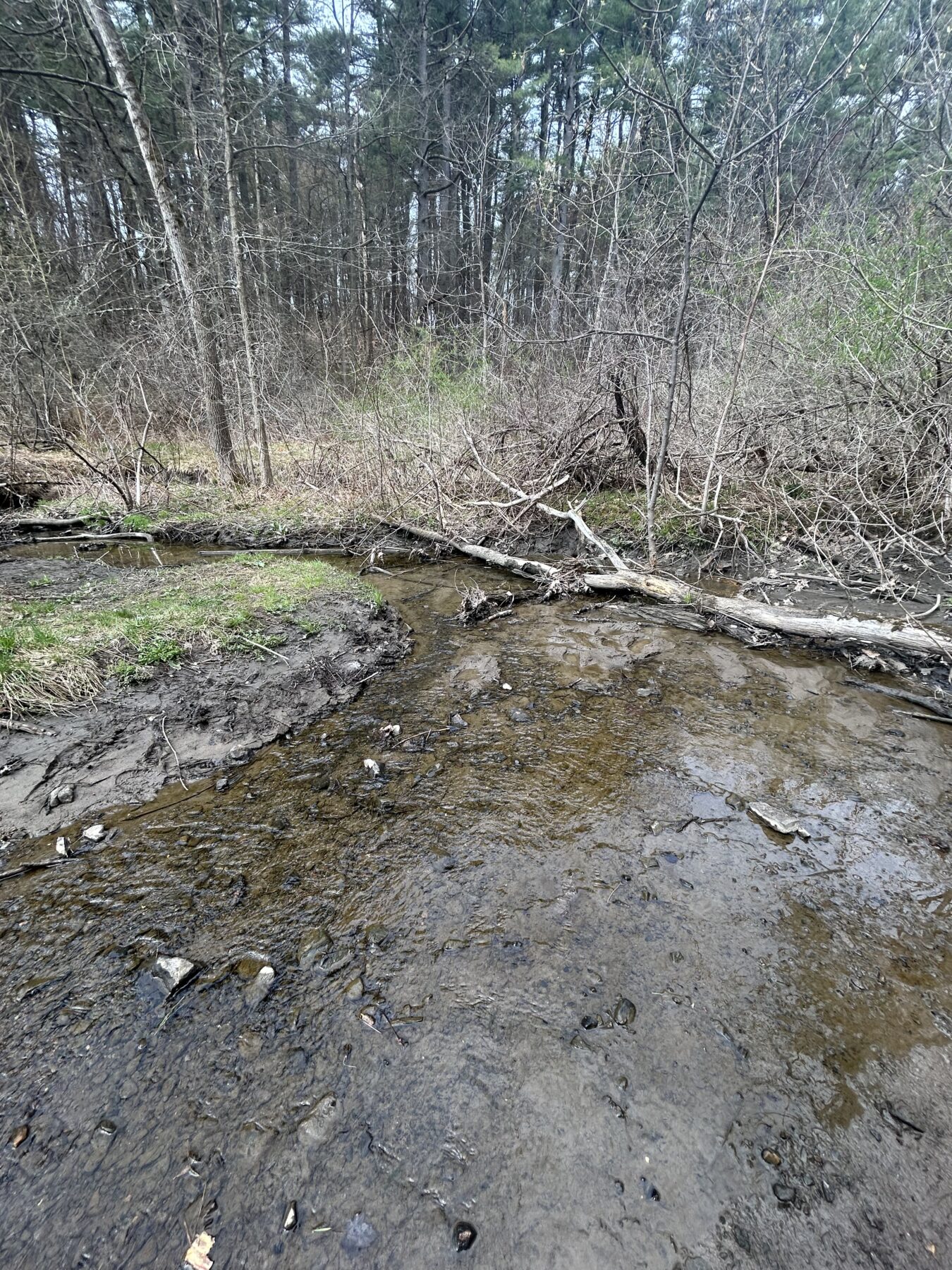
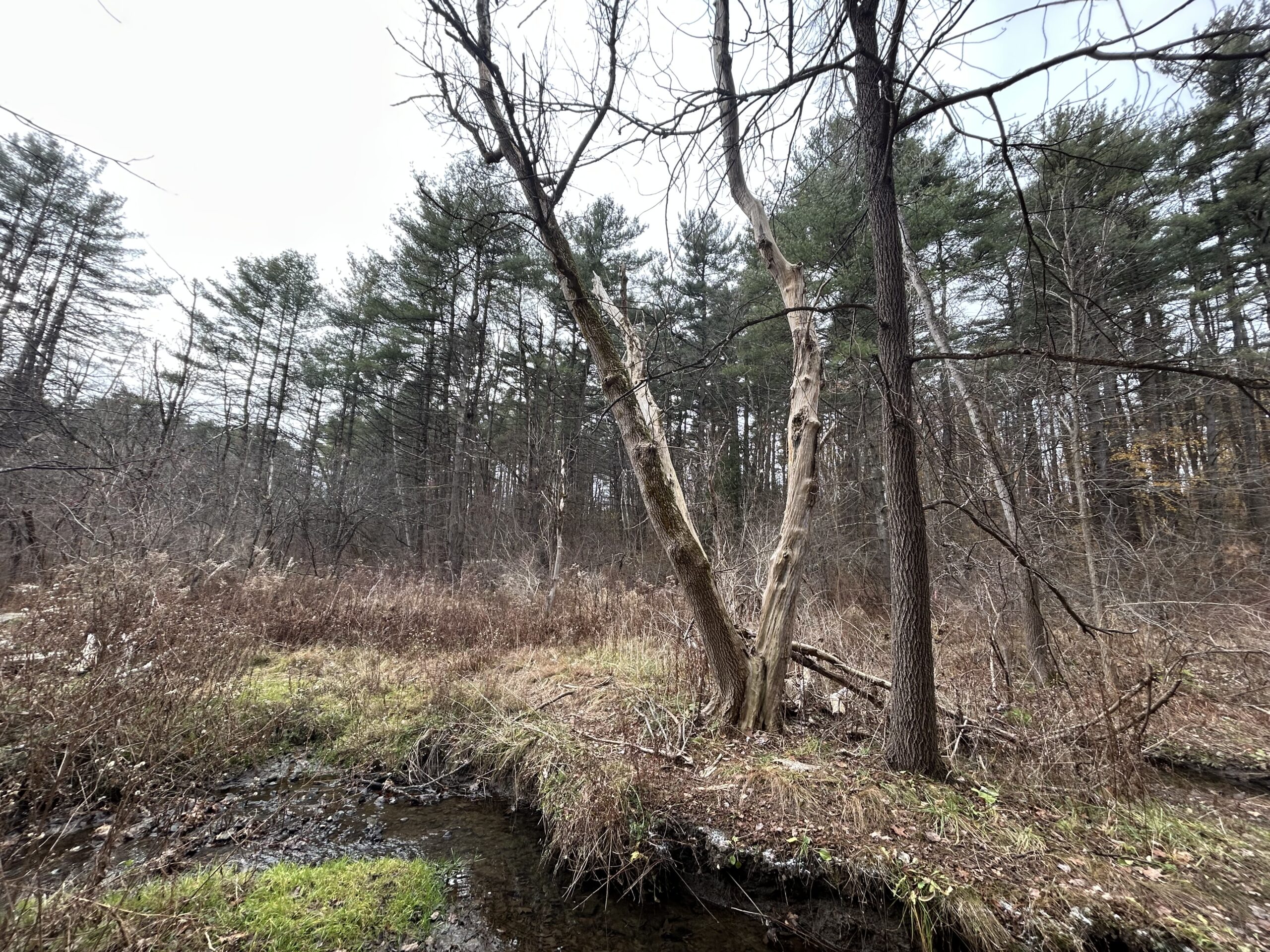
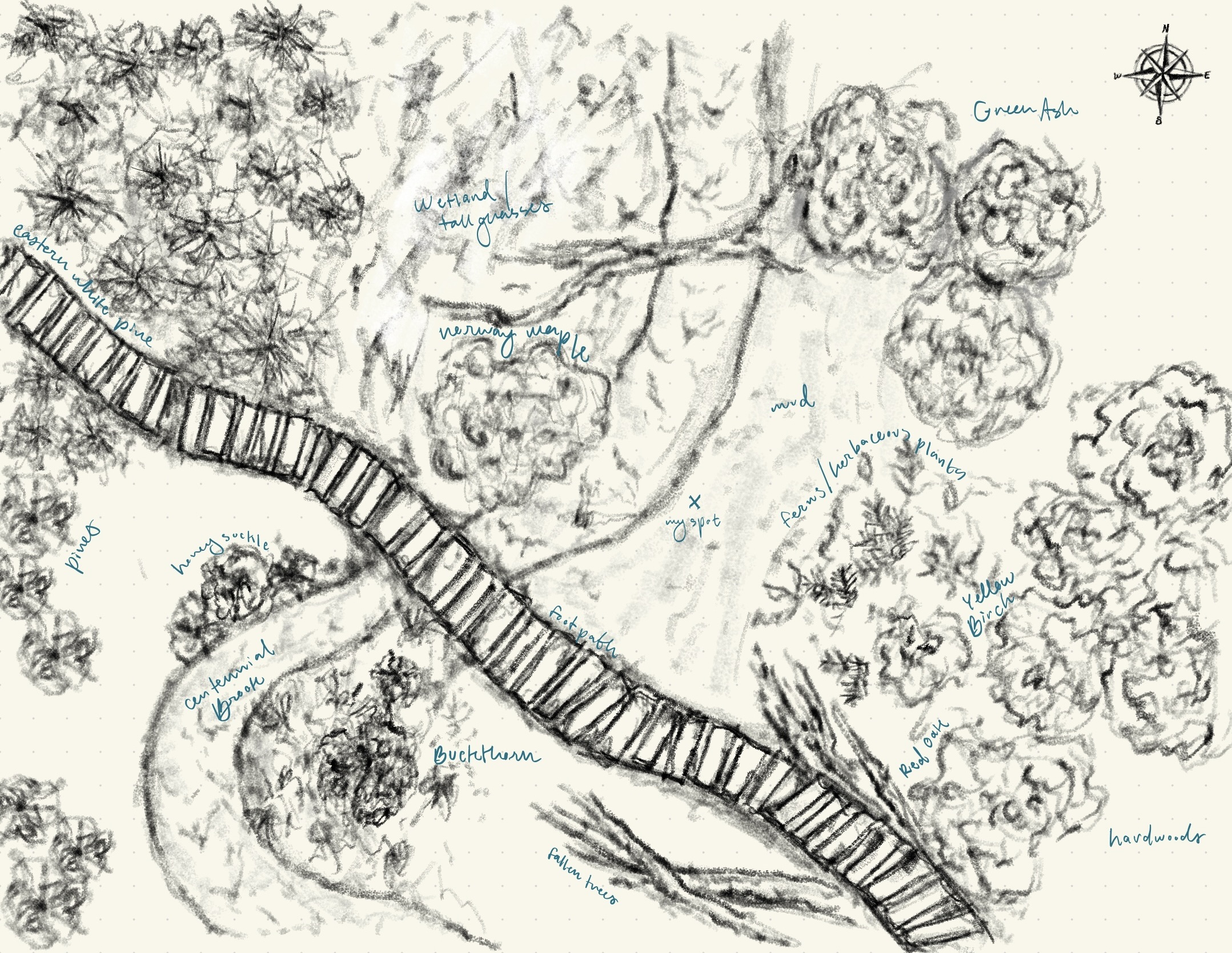
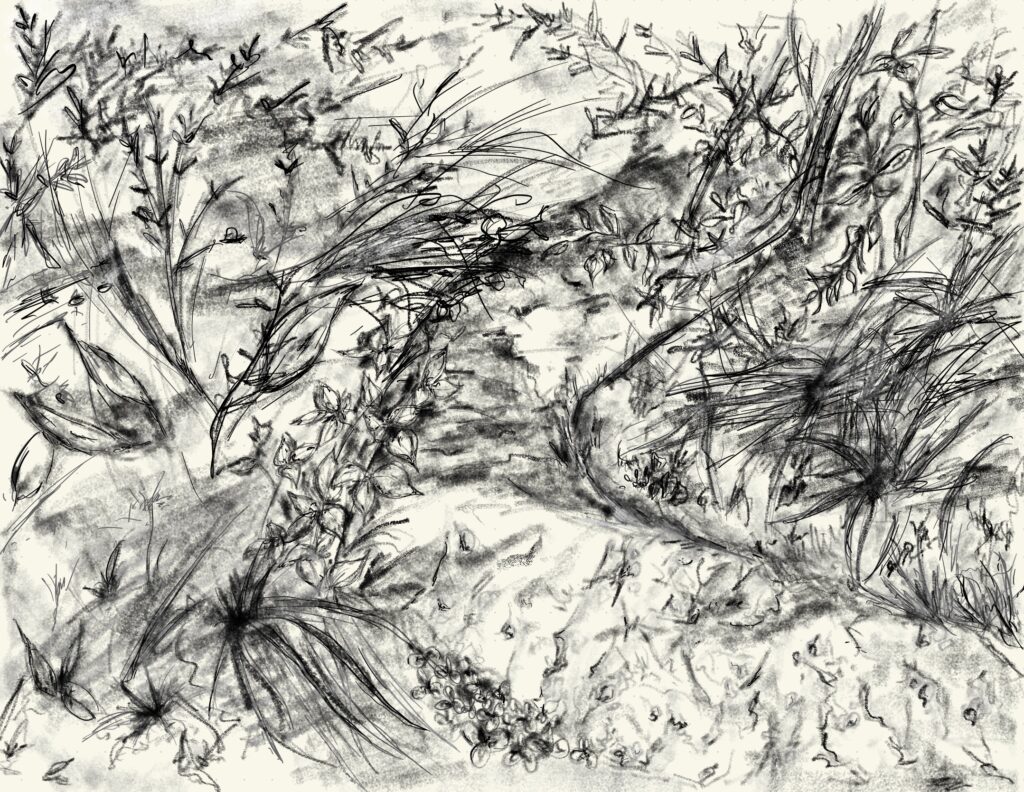
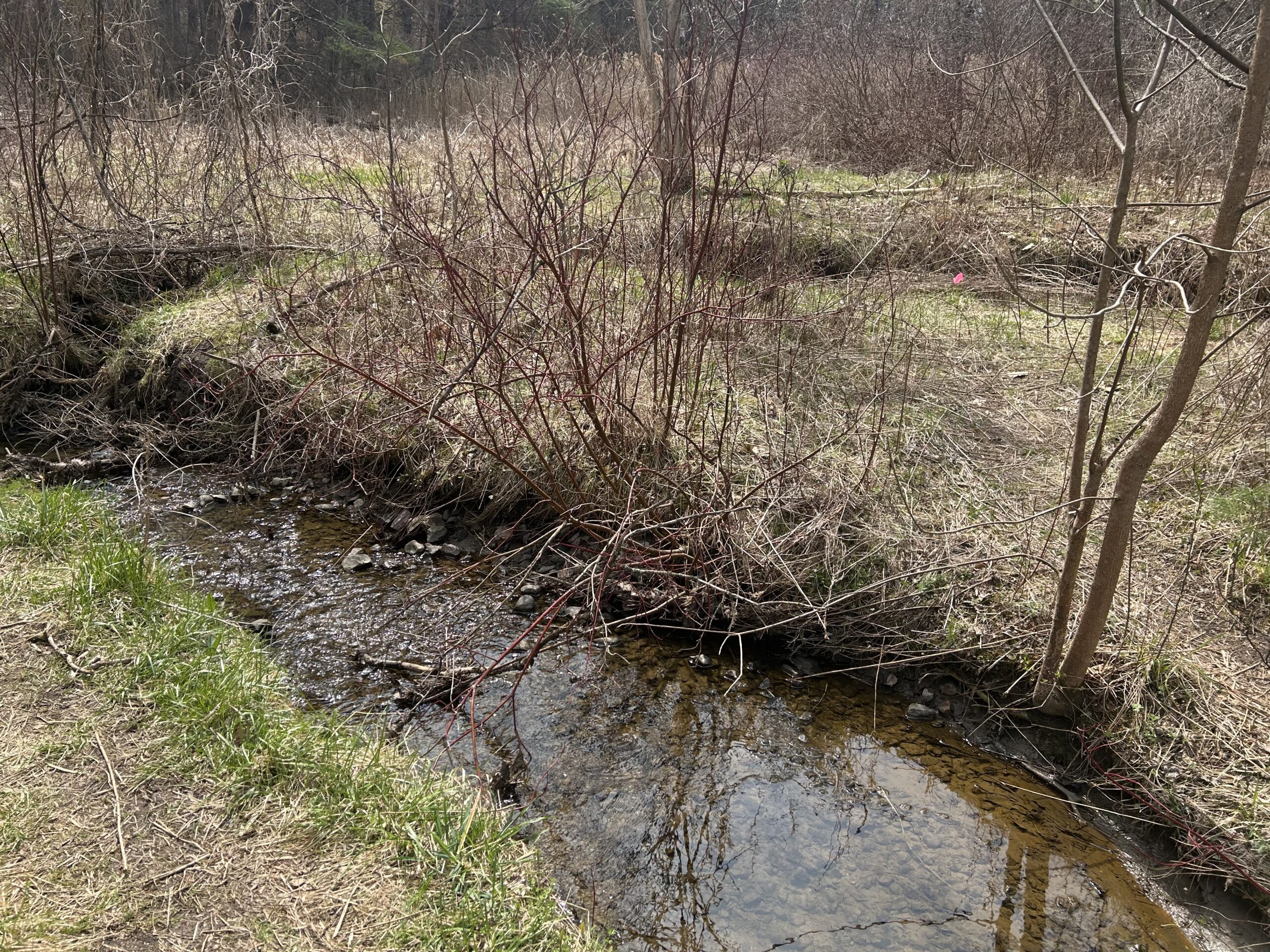
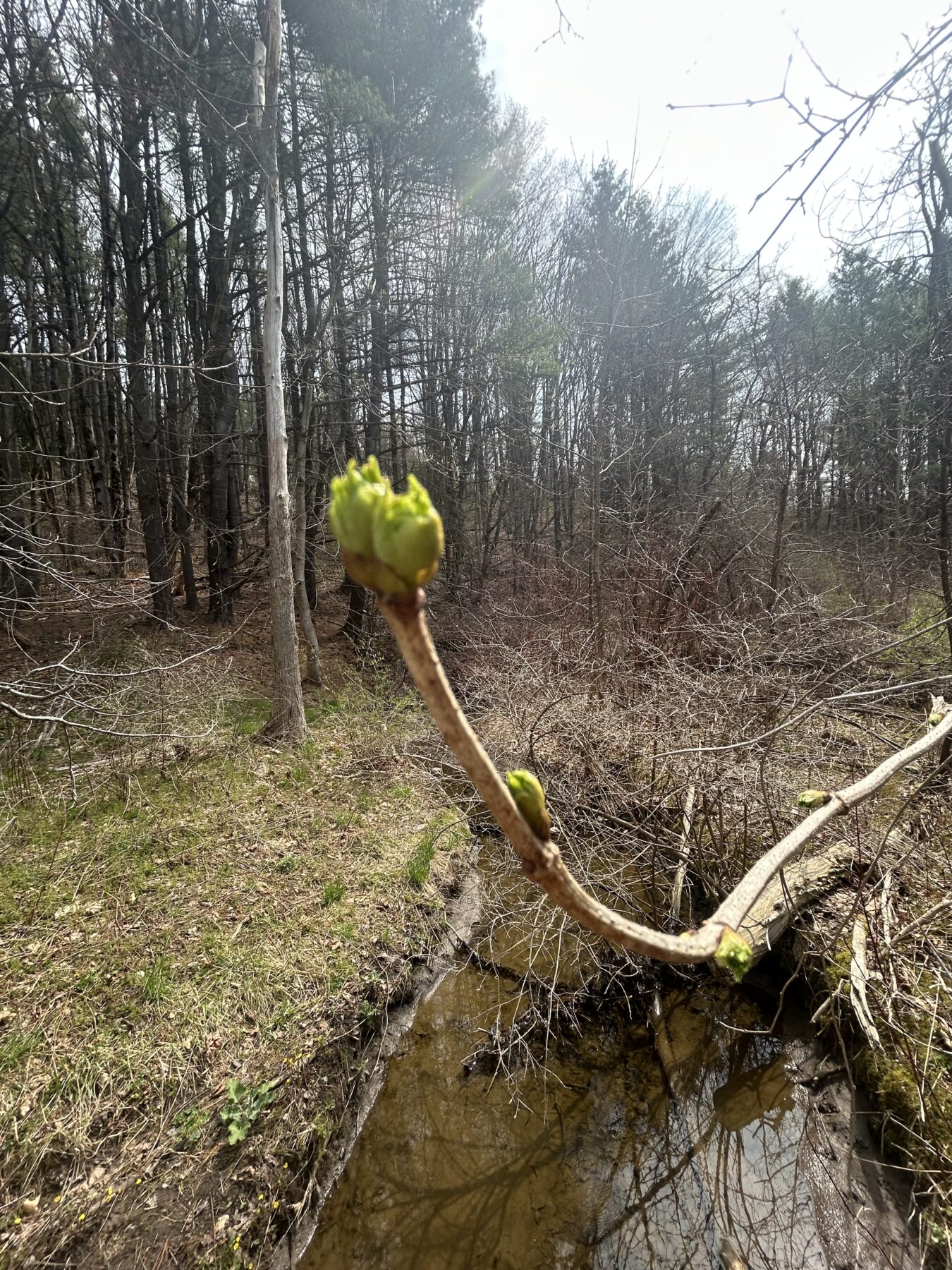
On May 1st, I returned to my phenology spot in Centennial Woods for the final time, to find it looking exactly as I remember but with signs of rebirth. The site holds onto the vestiges of dormancy from the winter, but with the beginnings of spring in leaf buds, wildflowers, and flowing water. Throughout the year, I have become particularly fond of observing the evolution of the brook and the path it follows throughout Centennial Woods. It is the major landmark that ties my whole spot together. Some other minor landmarks I used to orient myself are the cluster of pines to the West and a patch of Green Ash to the East, just across the brook.
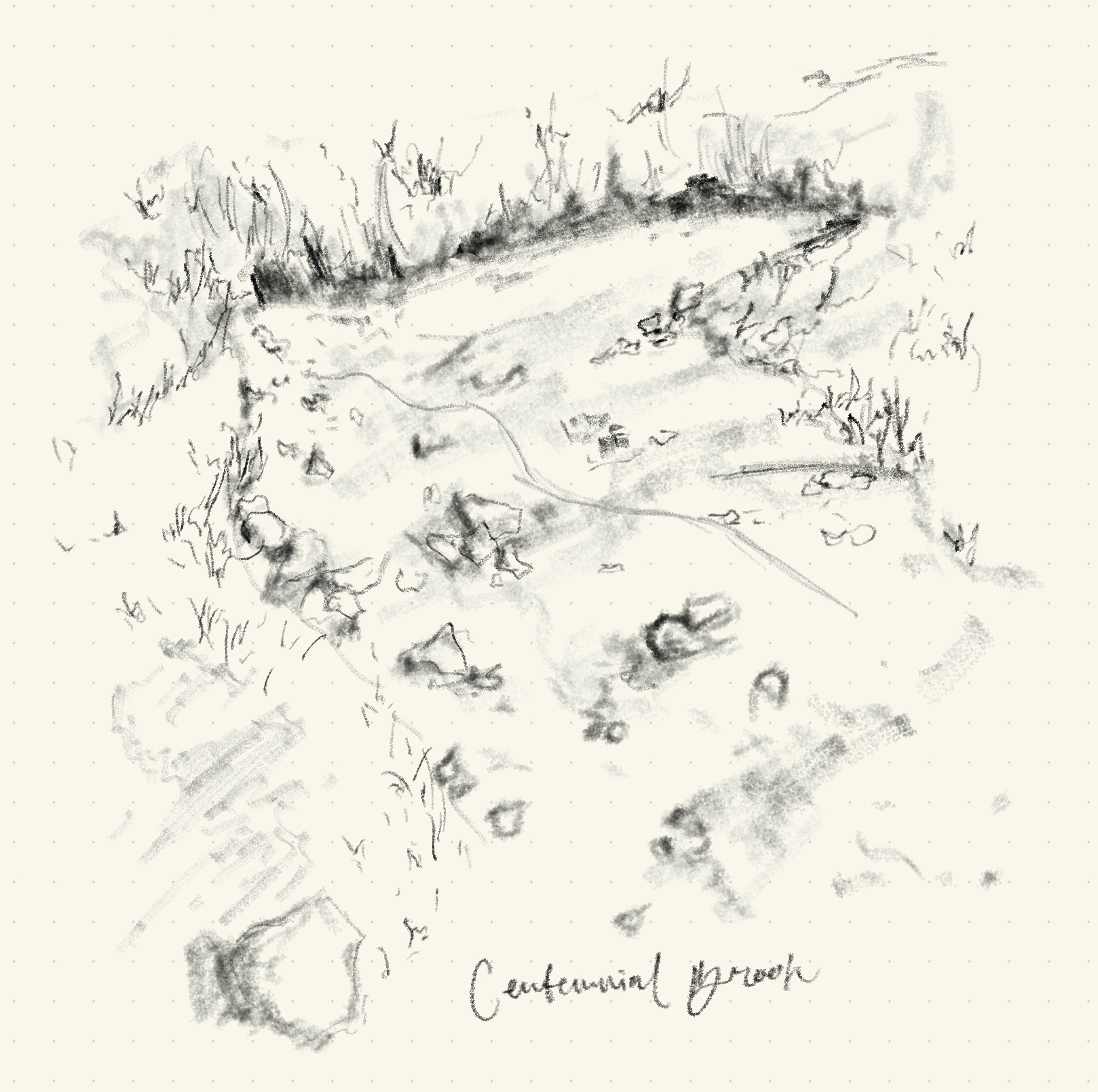
Thinking about the relationship between humans and nature, I have come to view Centennial Woods as a biodiverse gem in the center of Burlington. This space provides solace and recreation for the community while also providing research and learning opportunities for students at UVM. I consider myself a part of this place because it is an environment where I feel comfortable and at peace. To be a part of a place, I feel it is important to understand everything that lives and grows there from the ground up. My time spent on this project has truly immersed me in knowledge of the growth and evolution of a forest throughout the seasons, providing me with massive appreciation for the struggle to survive in such a challenging environment.
City Nature Challenge

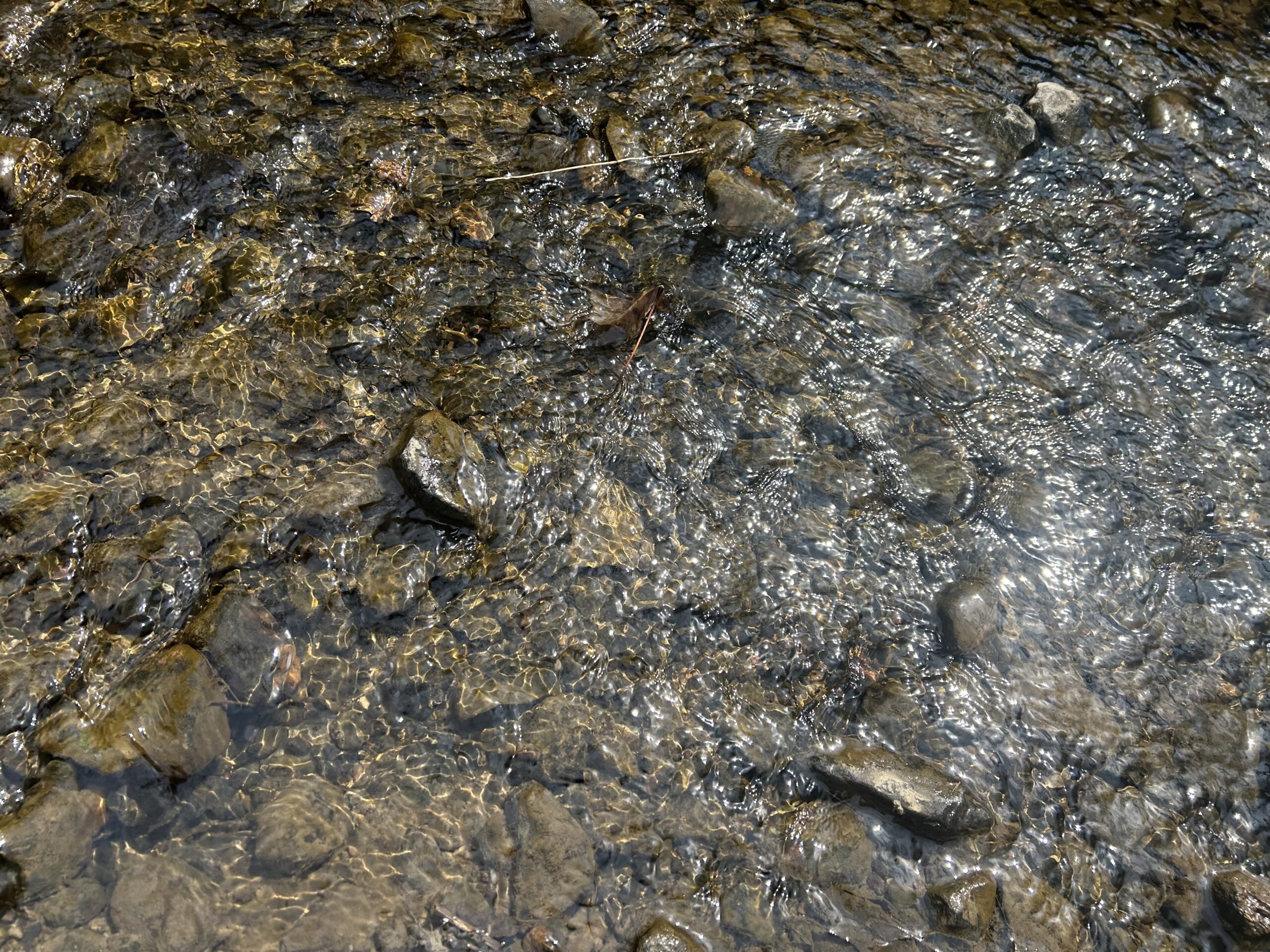
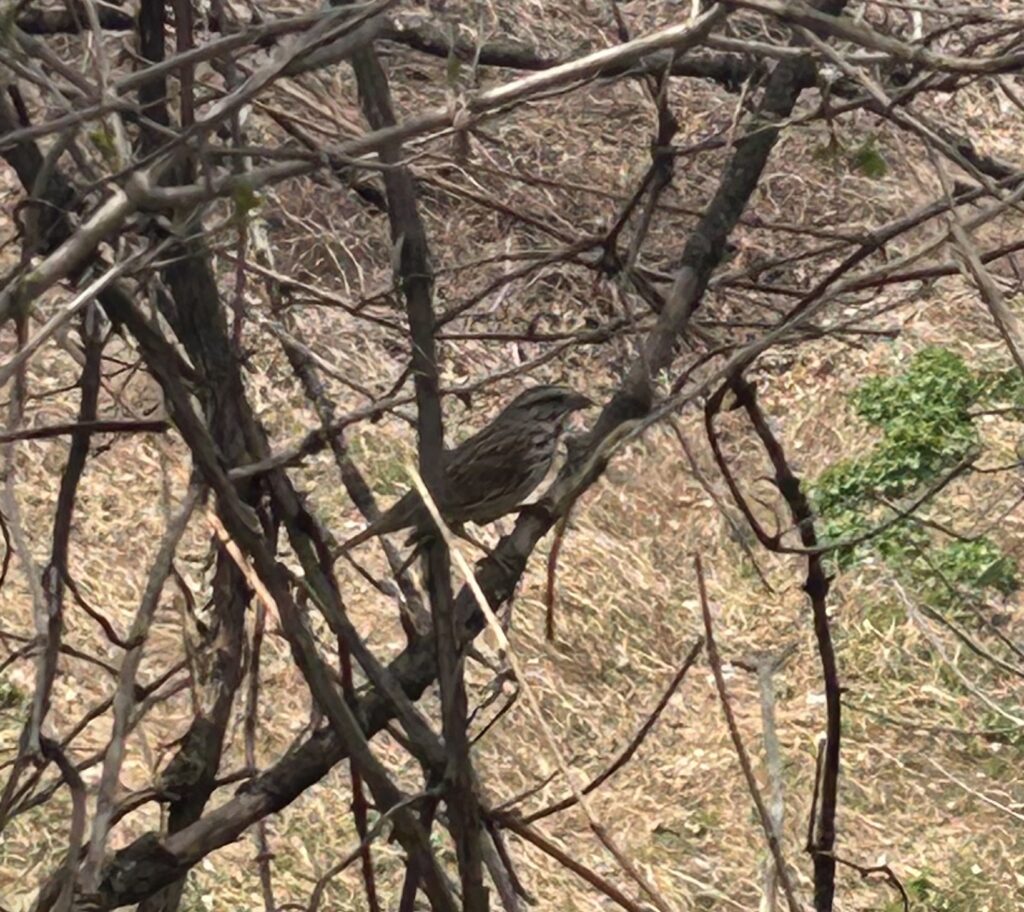
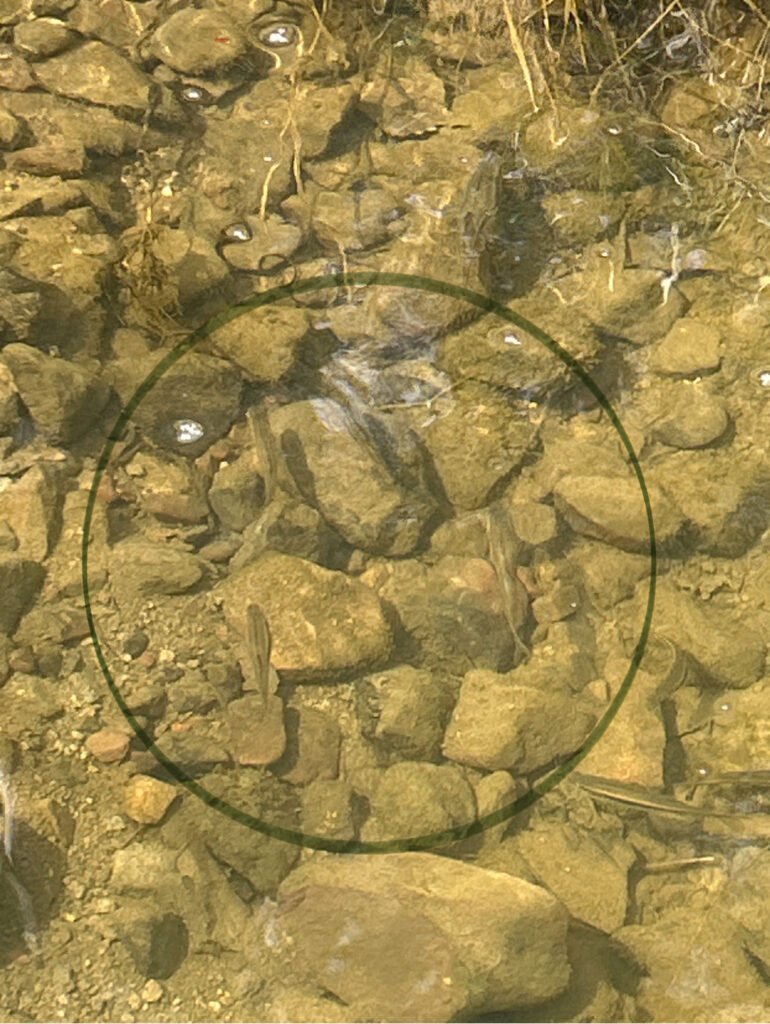
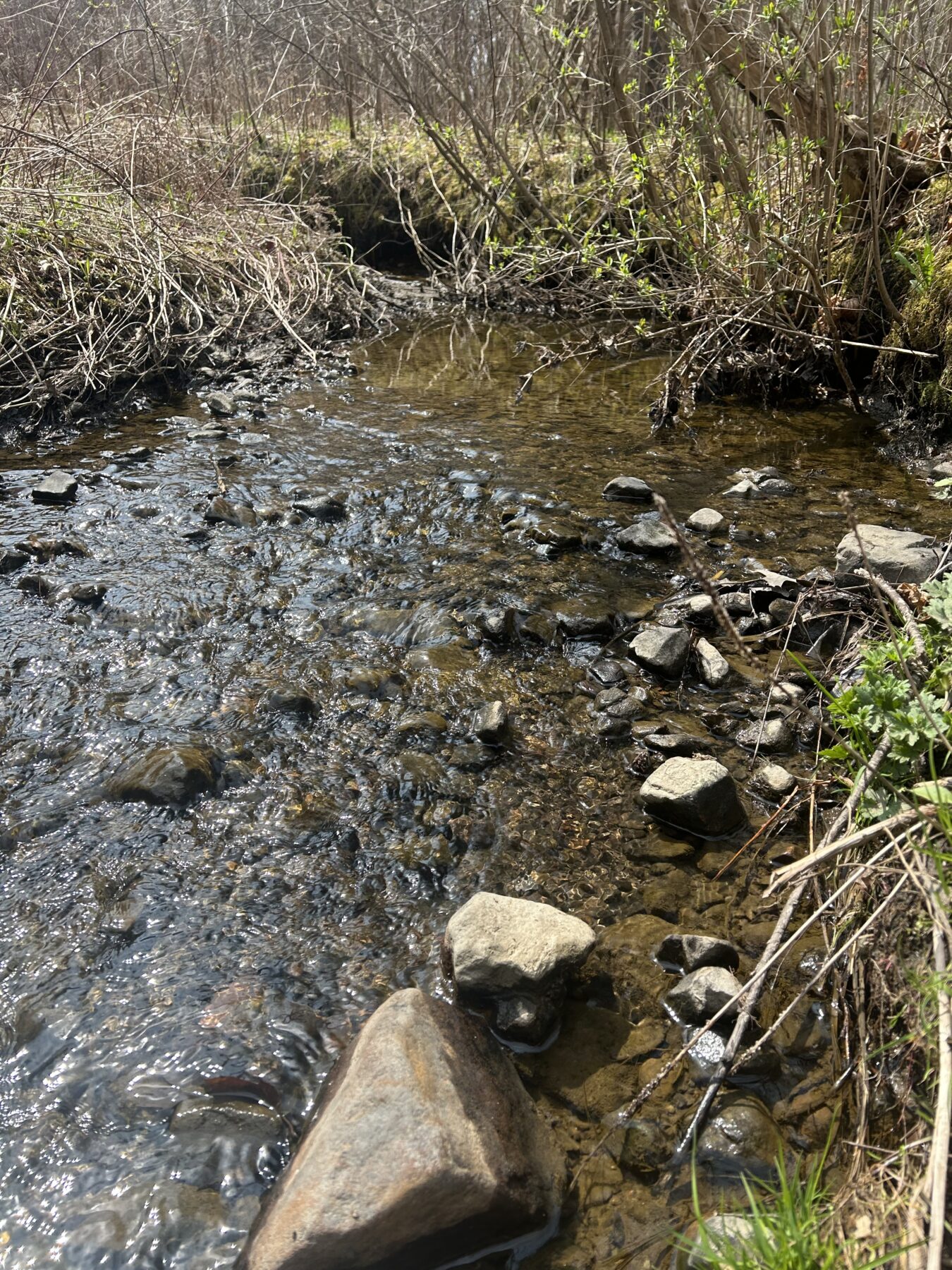
For this year’s City Nature Challenge iNaturalist BioBlitz, I travelled around campus and into Centennial Woods in search of wildlife. While entering Centennial Woods, the forest was full of birdsong and new leaves were beginning to develop in much of the understory. Through iNaturalist, I captured several sparrows, European Starlings, and heard various Chickadee and Woodpecker calls. Approaching the bank of the brook, I discovered several water striders and some small fish hiding in the shadows.

Overall, I captured 13 different species, ranging from wildlife to understory growth. After participation in the City Nature Challenge in Burlington, Vermont, I can see now why cities like Cape Town collect so much more data. At this time in late April, trees and plants are just beginning to leaf out in Vermont, and birds are beginning to return from their winter migration locations, as opposed to more southern cities where spring is already in full bloom.

A Spring Phenology Walk

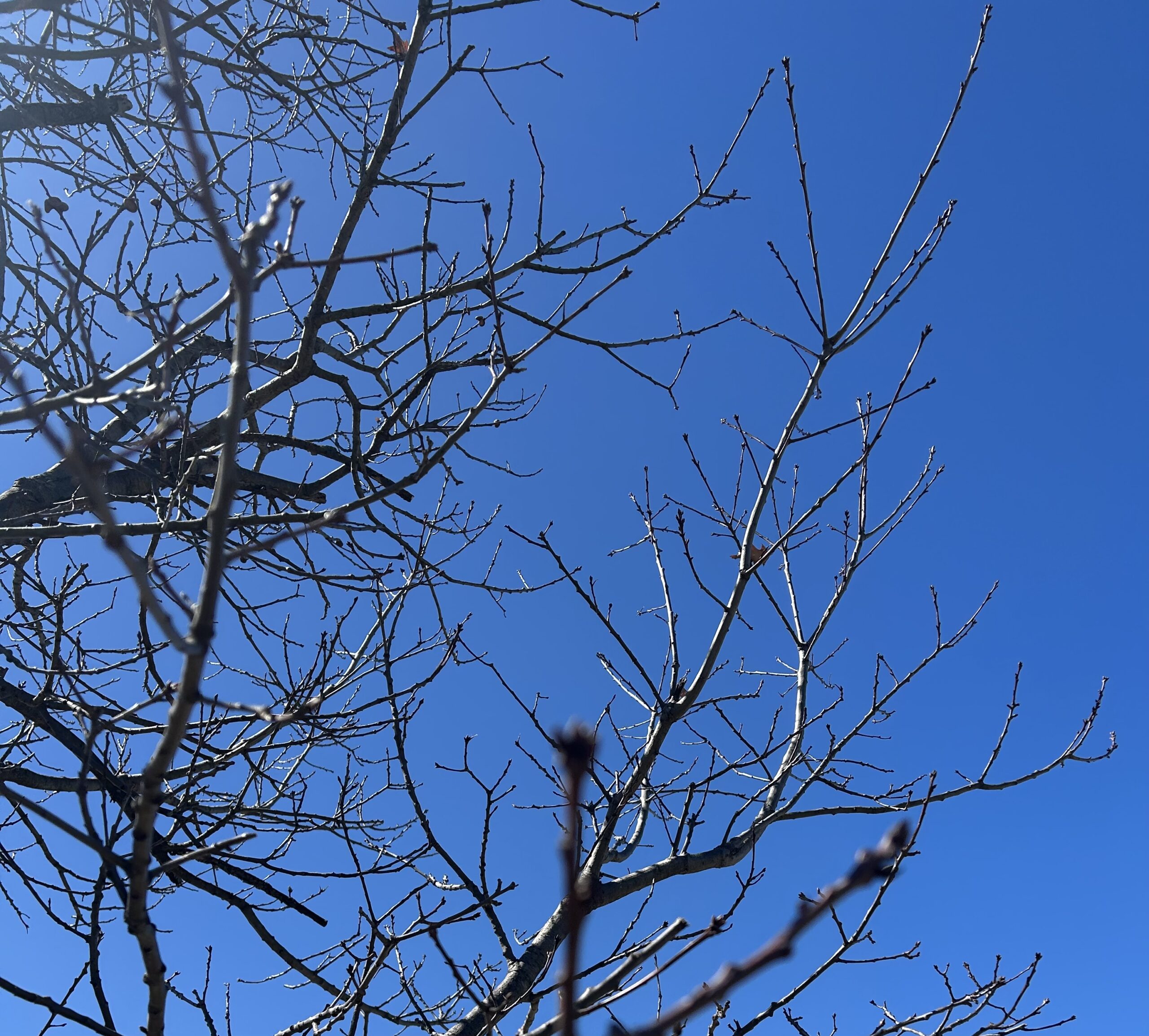
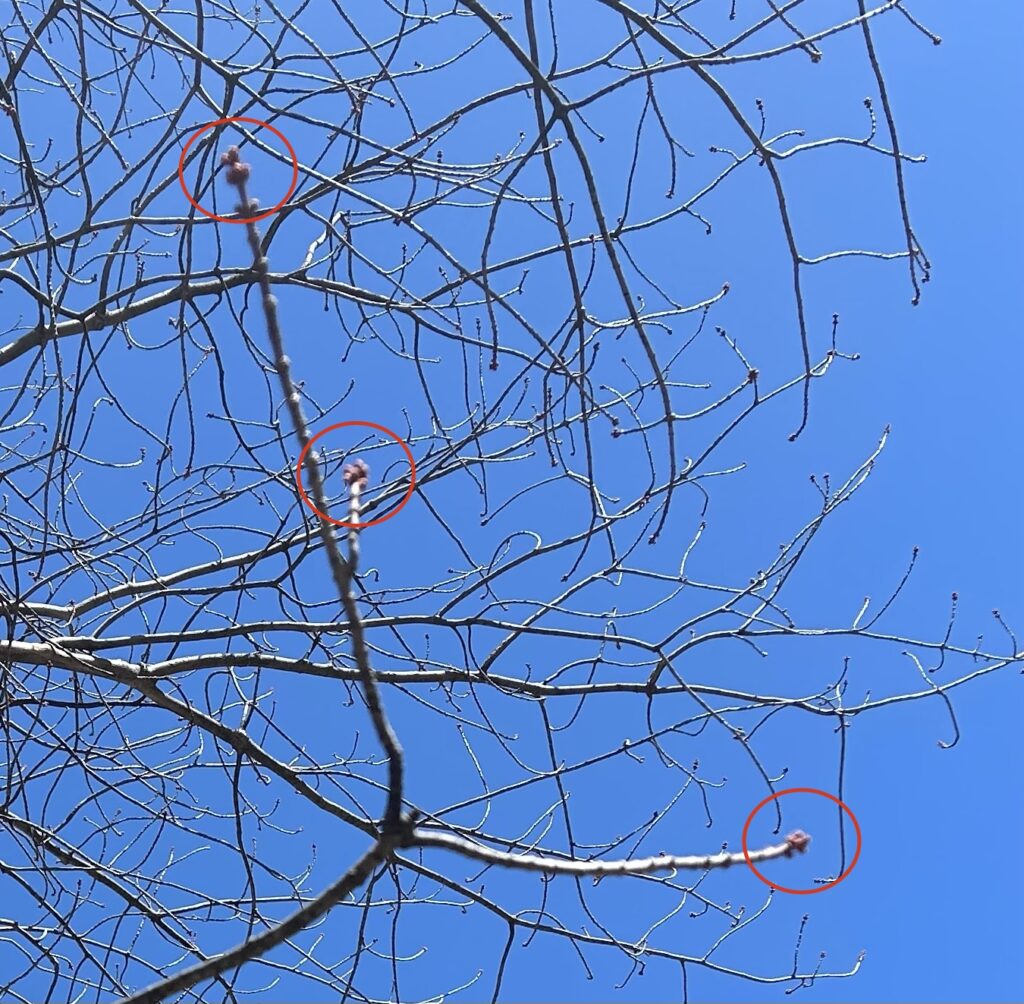
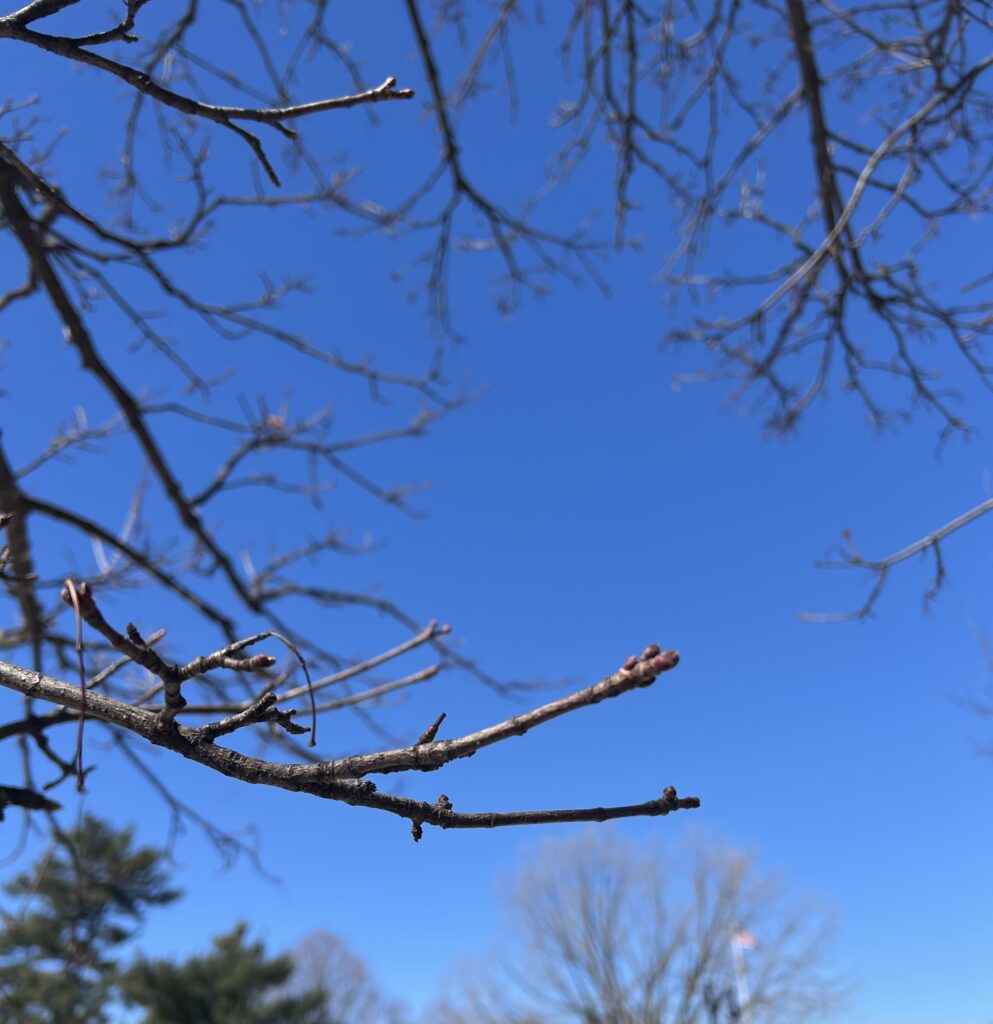
On March 27th, I went on a phenology walk through UVM’s campus. I examined five trees: Red Oak, White Oak, Sugar Maple, Red Maple, and Norway Maple, and discovered that all showed signs of breaking leaf buds. The Red Oak was the only tree with a recent seed drop. However, all trees appeared to be in about the same phenophase, except the Sugar Maple, which seemed a bit ahead of the game with signs of flower buds. I noticed that none of the trees had new leaf growth except for the White Oak, which had lots of dried out, brown leaves that had survived from the past year.

While exploring the National Phenology Network site, I discovered that the data on signs of first leaves or flowers collected during my phenology walk is vital to determining spring’s arrival relative to previous years. Using the Spring Leaf Index and the Spring Bloom Index, we can create maps that display when conditions associated with spring are met and at what time (National Phenology Network, 2025).

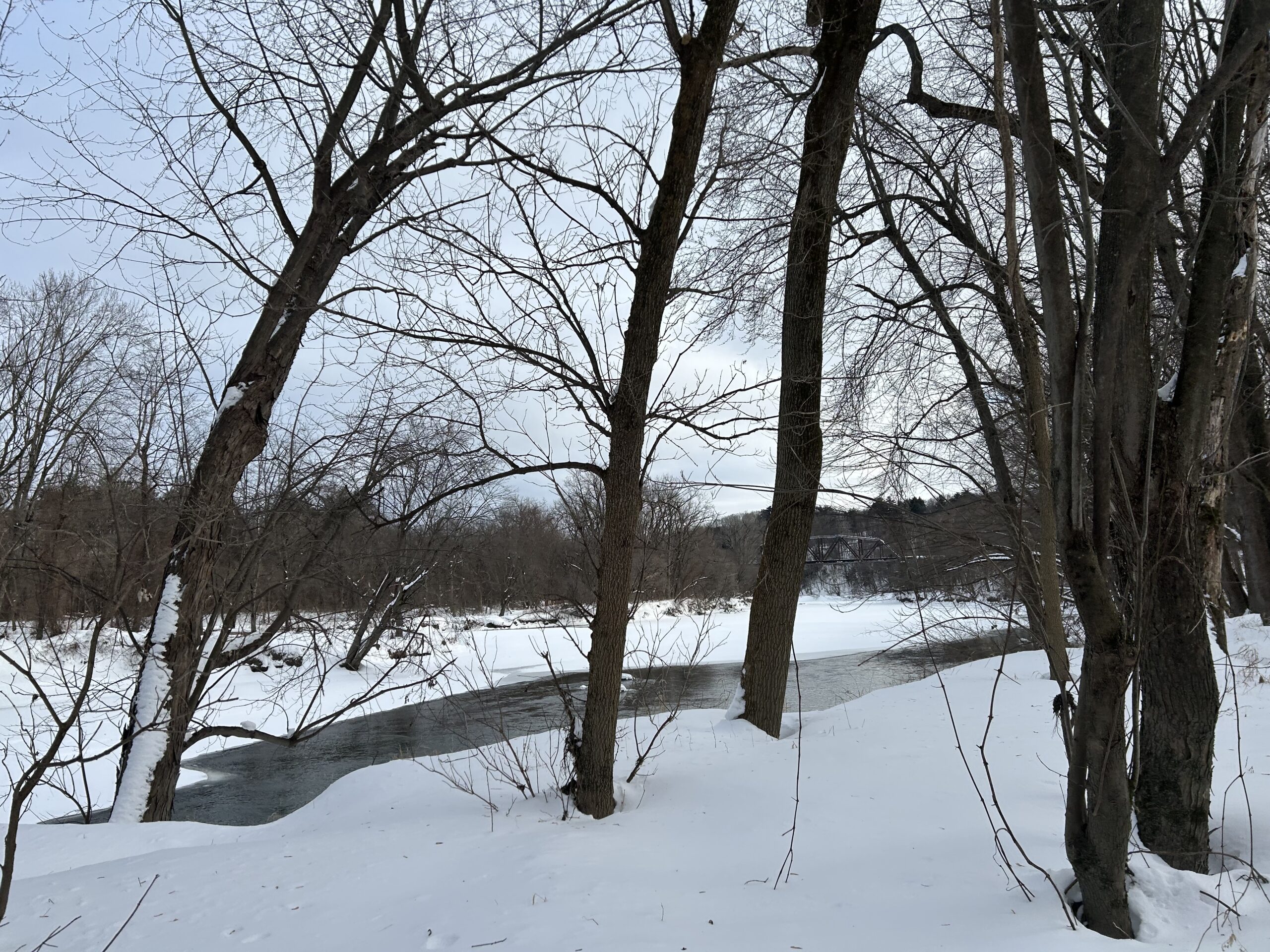
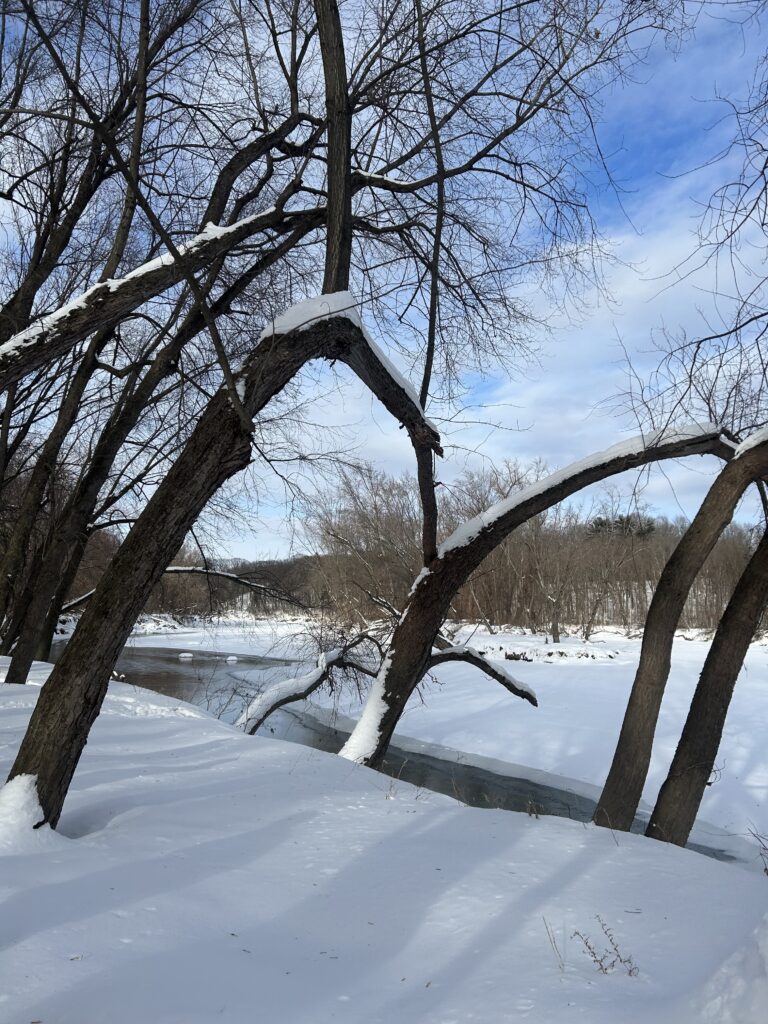
On this snowy day of February 20th, a few friends and I returned to the Intervale to explore the winter ecology and search for tracks. We decided to hike through the trail towards the river, where we hoped to find signs of beaver chews or tracks. We found that most of the area was covered in boot prints, probably from lab earlier that week and we were only able to find a single track. However, seeing the part-frozen river was super cool and we spent some time looking at the makeup of the forest. We found that most of the trees were red and silver maples, with some ash and boxelder sprinkled in.

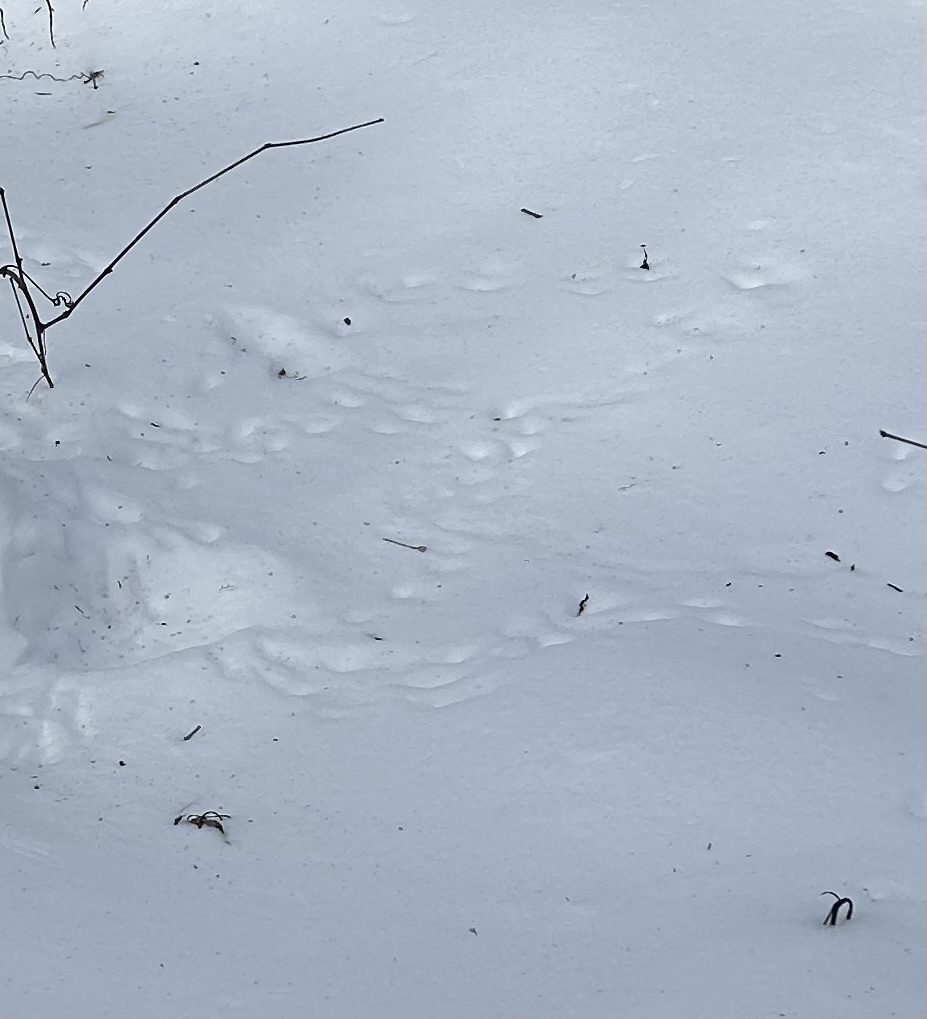
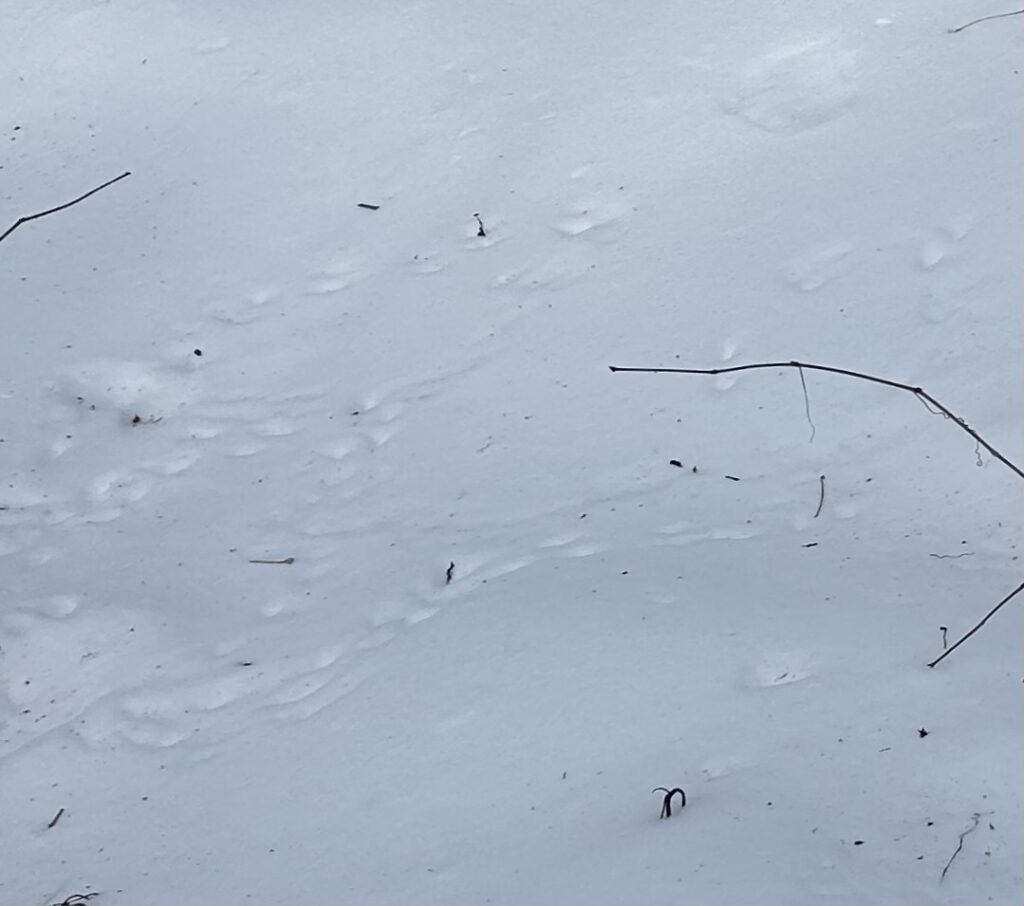
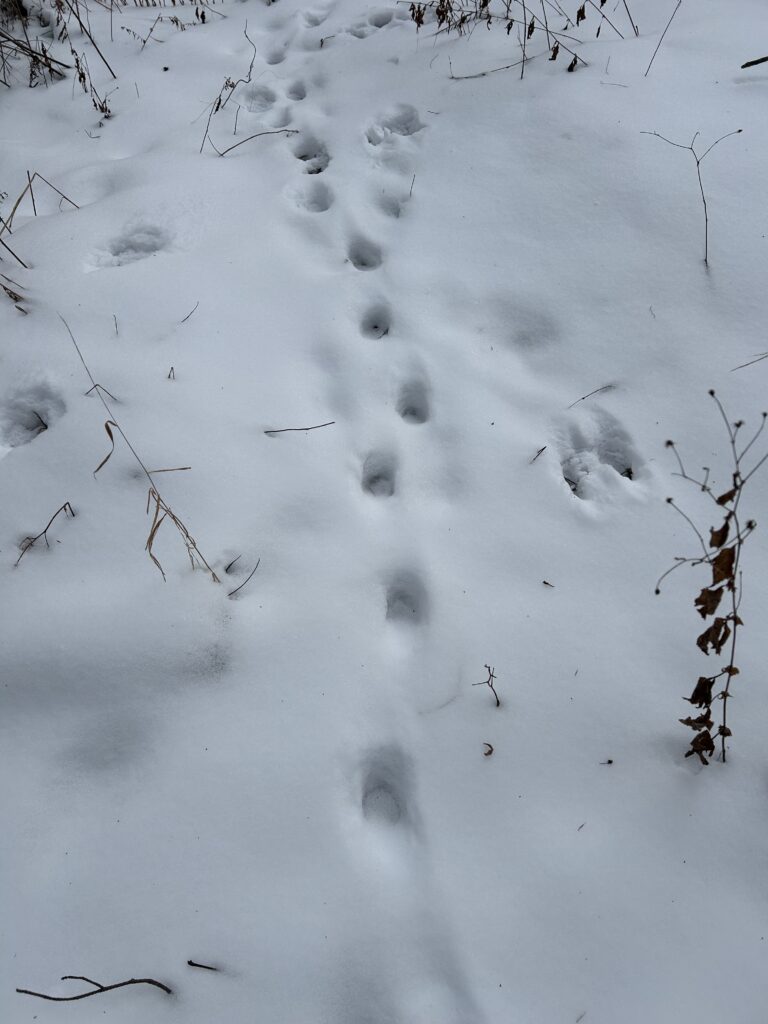
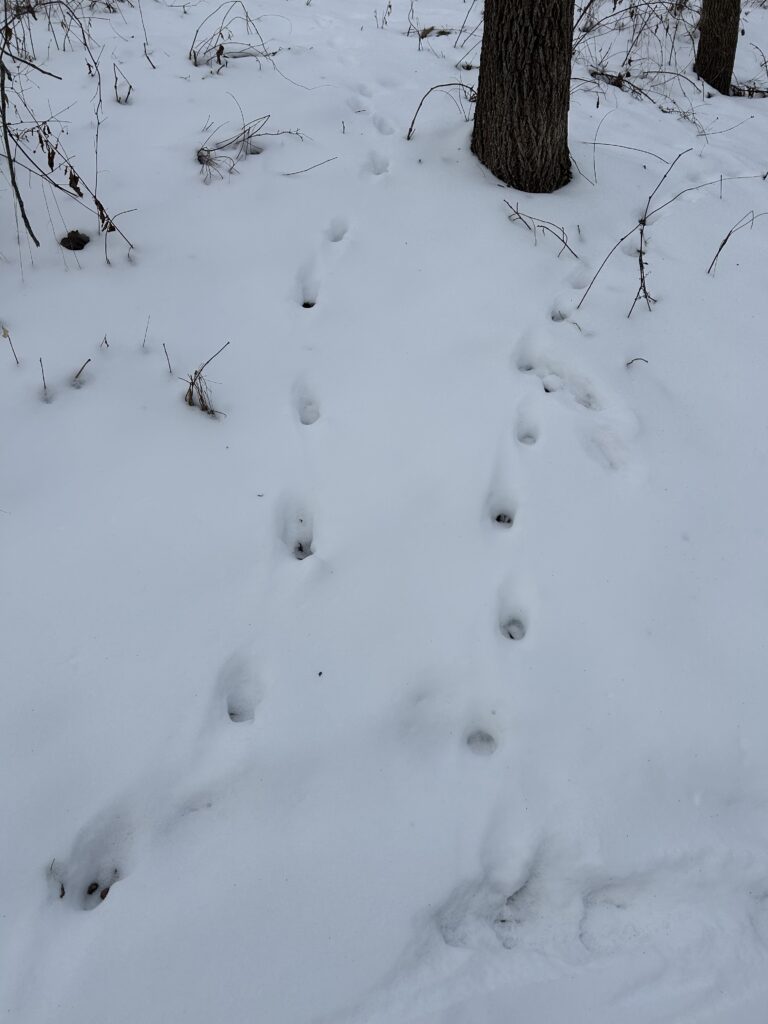
We encountered a track that was hard to get close to due to the depth of the snow, but it resembled 4 tiny tracks with about a 4 cm straddle and two larger hind feet. Based on our tracking guide, we guessed this to be a mouse! We used the iNaturalist app to capture the tracks and the app also guessed either a mouse or fisher.

Winter Descends

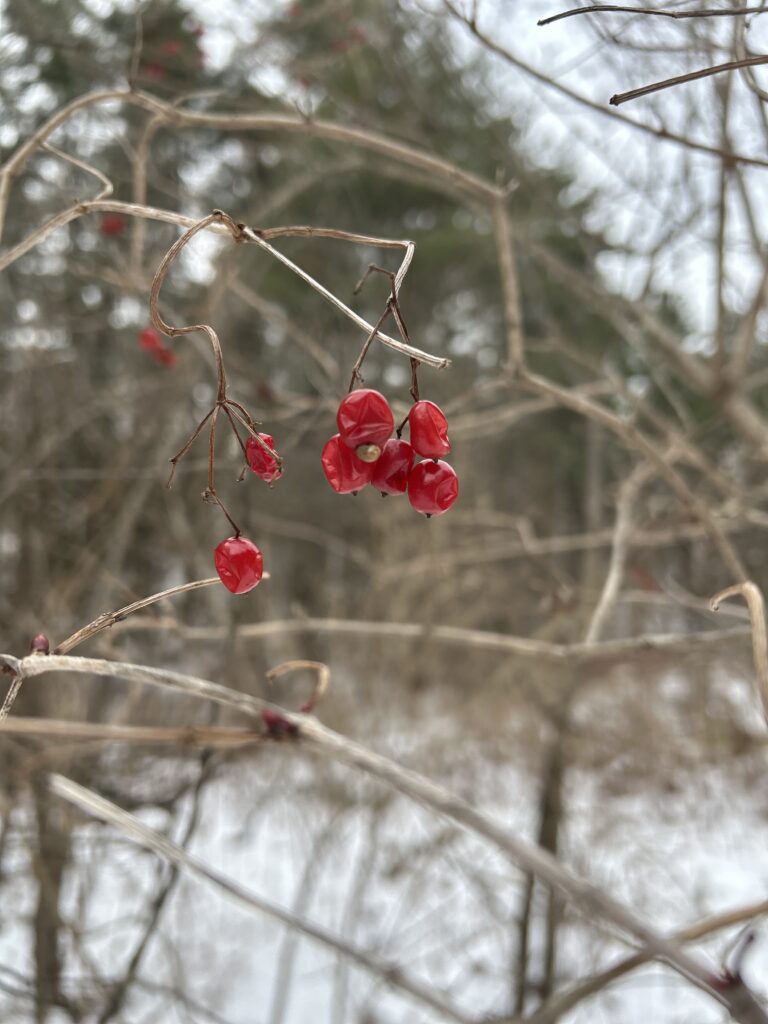
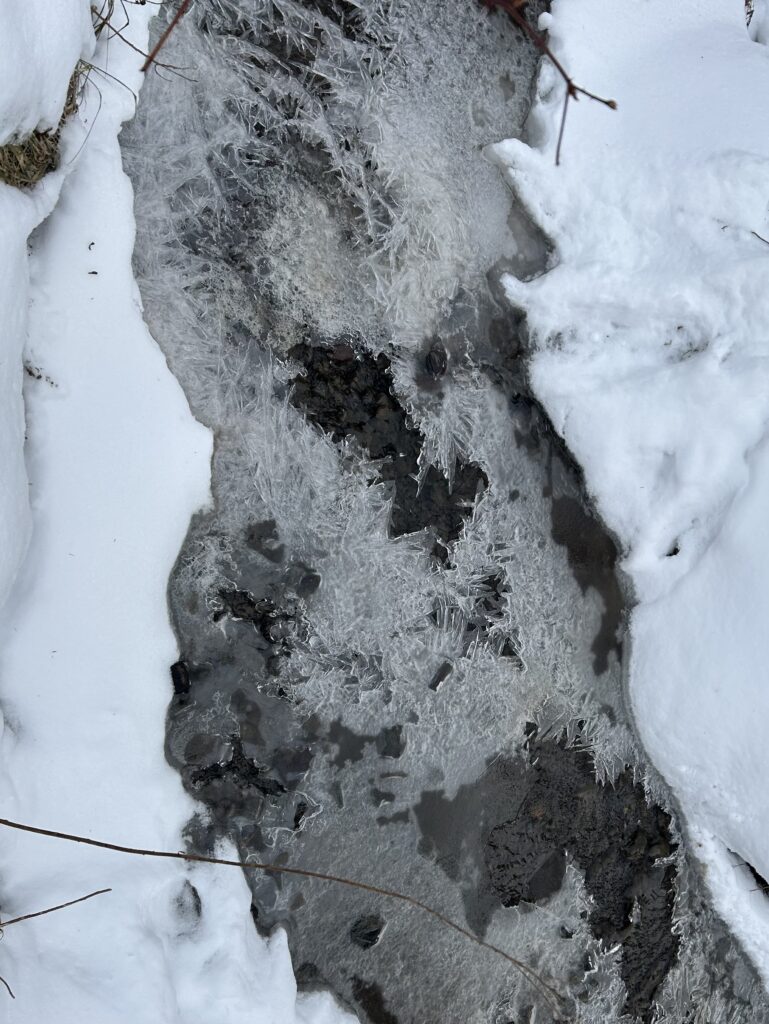
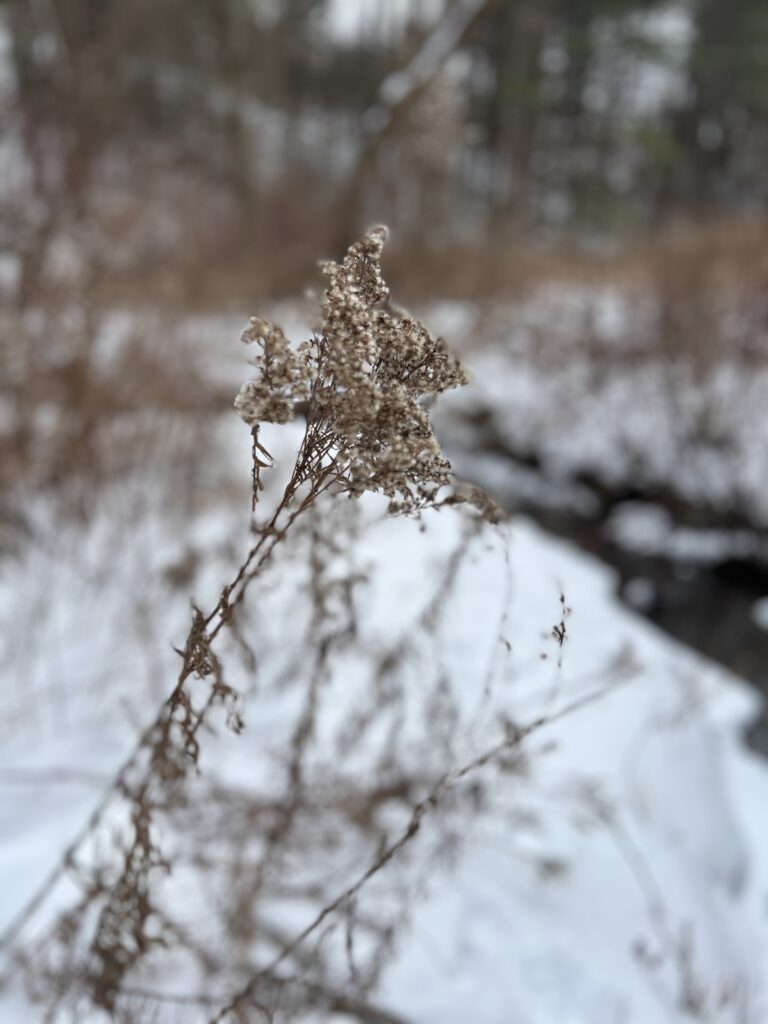
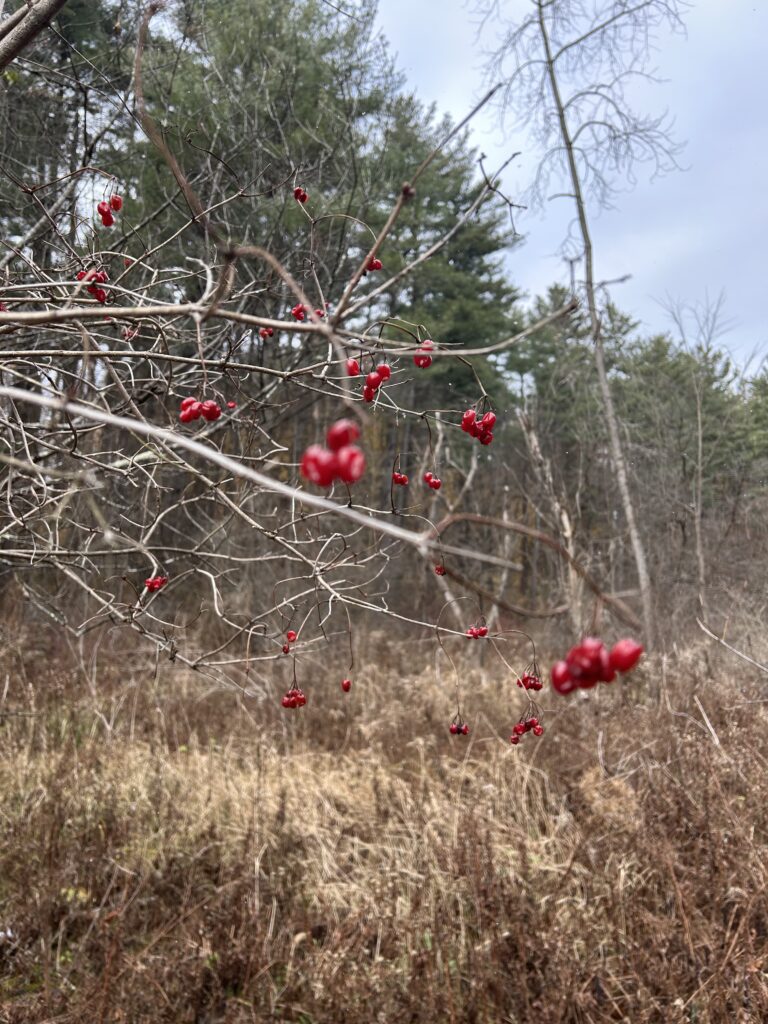
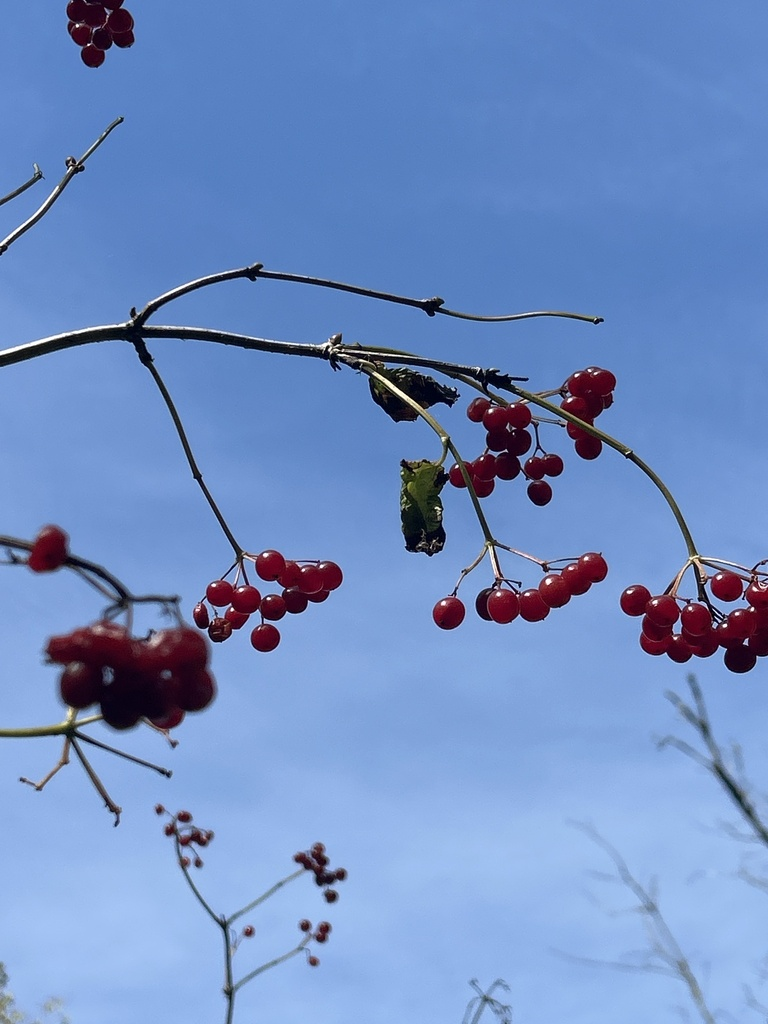
It is January 23rd and about 20º F in my spot in Centennial Woods. In December, when I was here last, there was only a light dusting of snow, the Brook still ran, and much of the plant life around the Brook was still green. Now, about 3 inches of snow coats the forest floor, yet most of the upper canopy remains unburdened by the snow. The forest is silent except for the occasional birdcall. Centennial Brook has almost completely frozen over, leaving a pattern of intricate ice layering. The only signs of life are the berries and the occasional wildlife track in the snow.

Animal Tracks

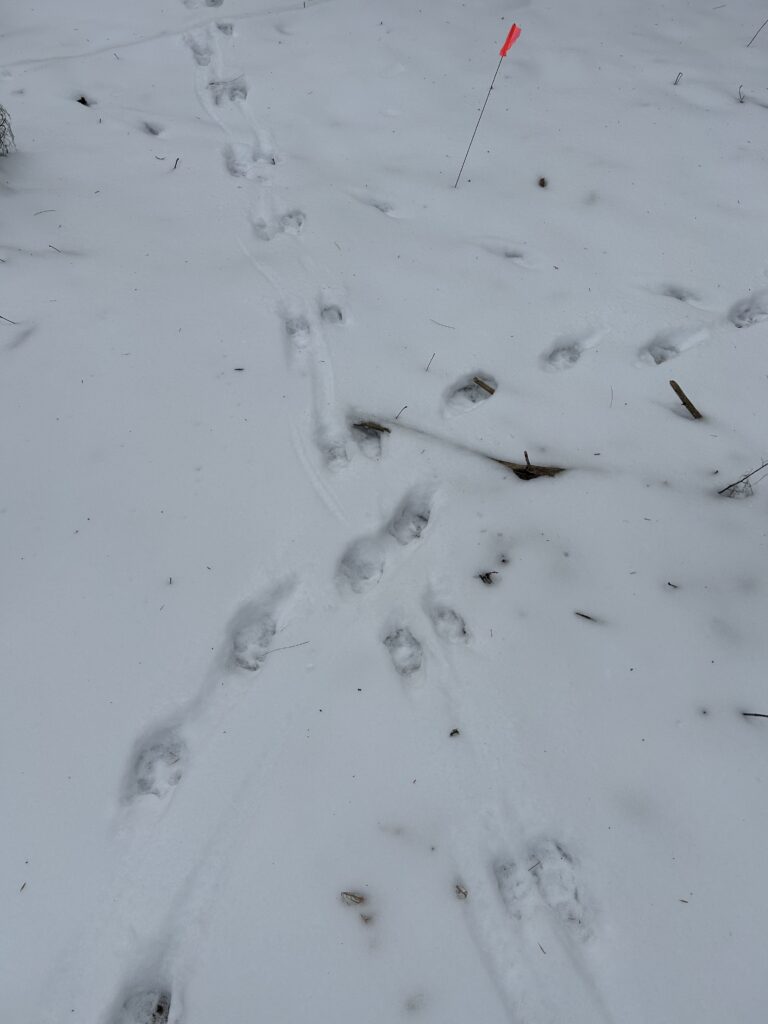
Though most of the tracks I observed were human or dog, I was able to find a few rounded, almost hoof-like tracks perhaps belonging to deer. I also found several tracks including long swishes in the snow like a tail. These tracks were perfectly even and direct, as though the wildlife was trying to save energy.

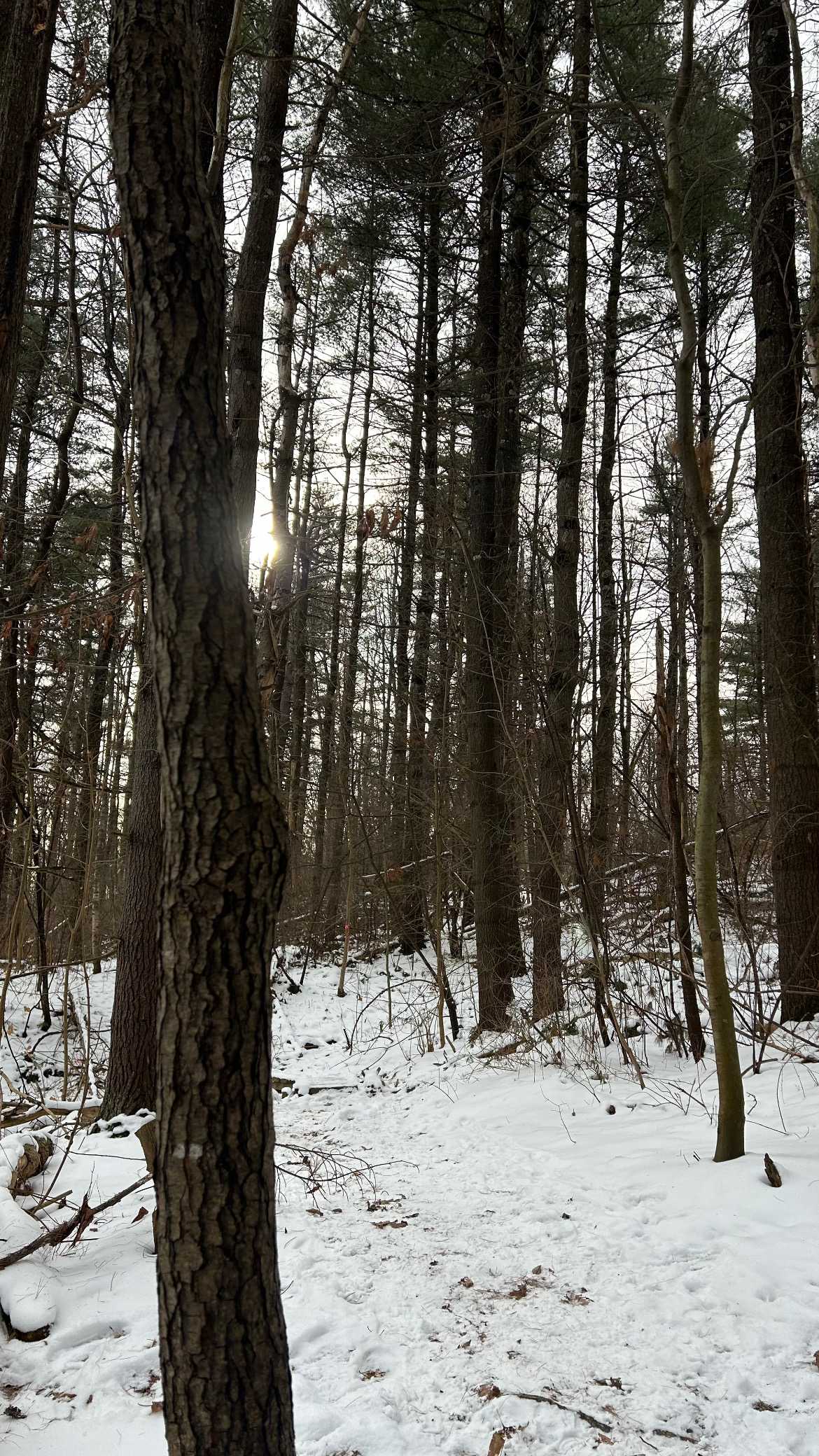
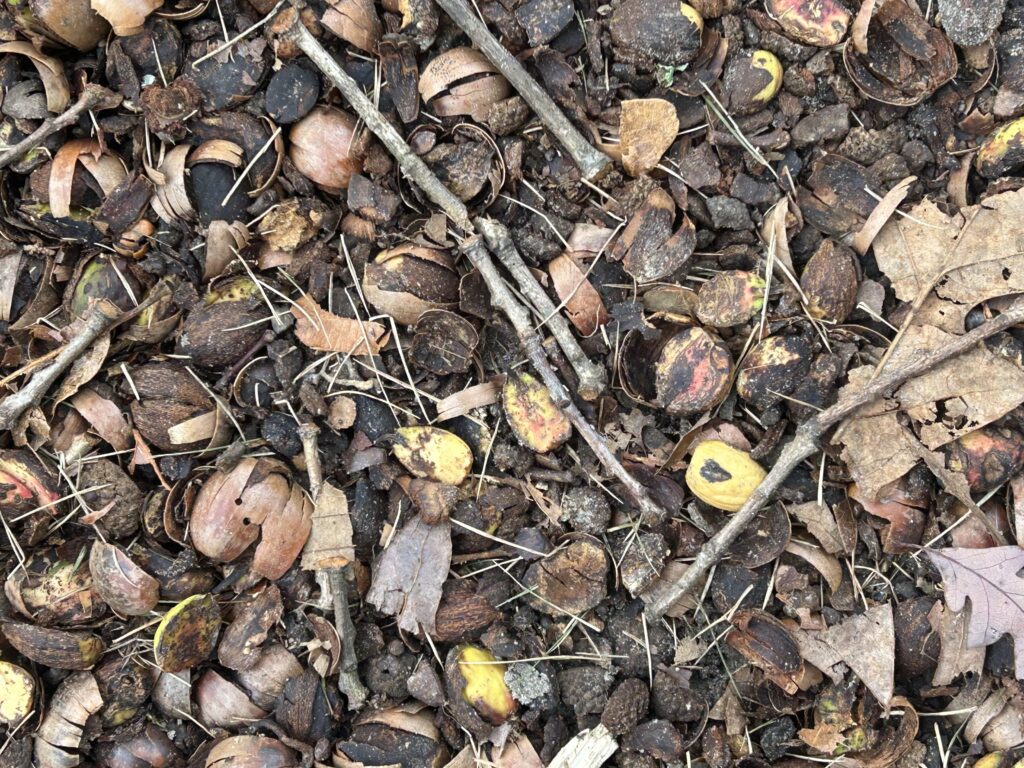
It was about 27° F and snow was lightly falling as I returned to Centennial Woods for a final visit this year. The only foliage in sight is on the needles of Eastern White Pine and ferns, moss, and grasses in the understory. I also found some small, bright red Rose Hips berries as seen in Naturally Curious. White Oak and Norway Maple appear to be the most recent leaves to have fallen, making up the freshest layer of leaf matter. The leaf litter has begun to decompose at an accelerated rate along the brook’s bank. Like in Naturally Curious, there was no sign of amphibians or small mammals like mice and chipmunks, as they are now in hibernation or dormant. In the beginning, I heard a bit of birdsong from a Tufted Titmouse as well as a goose call. By the time I left though, the forest was so silent that I could hear the sounds of falling snow hitting the ground.
Signs of Life

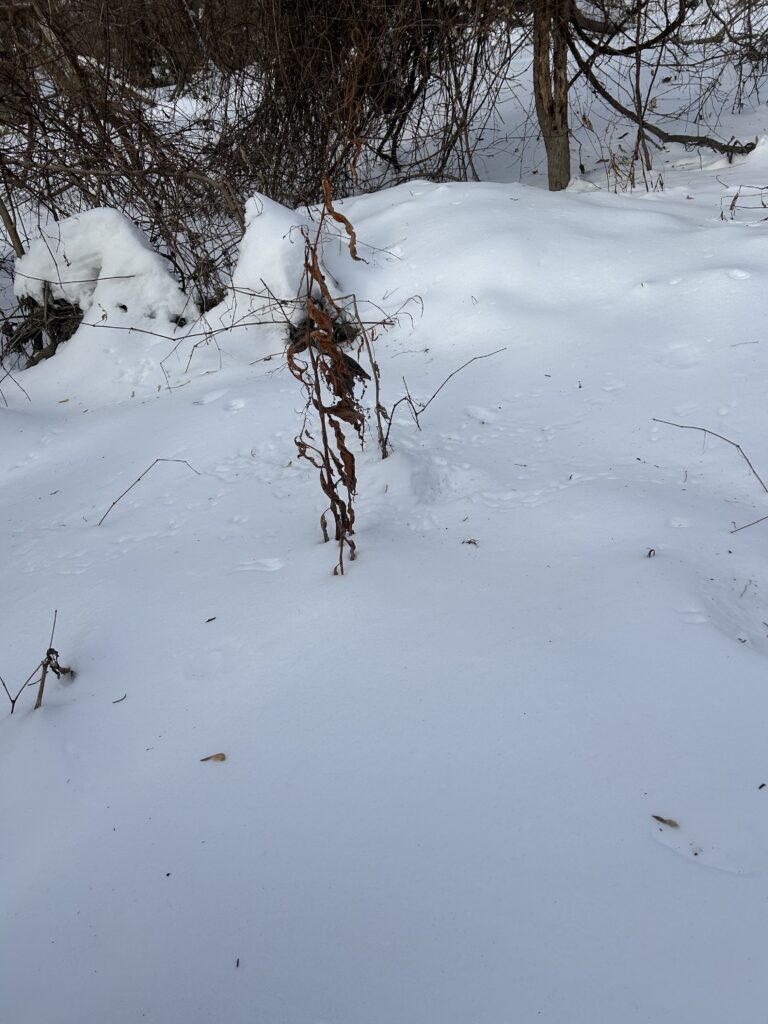
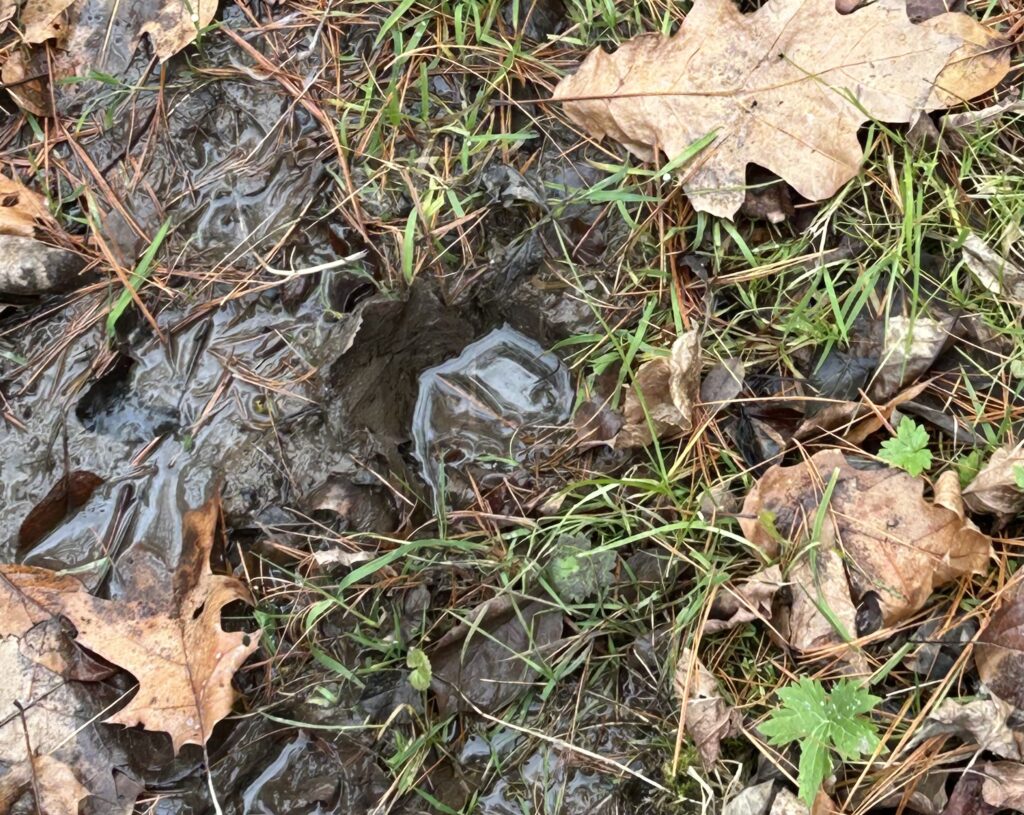
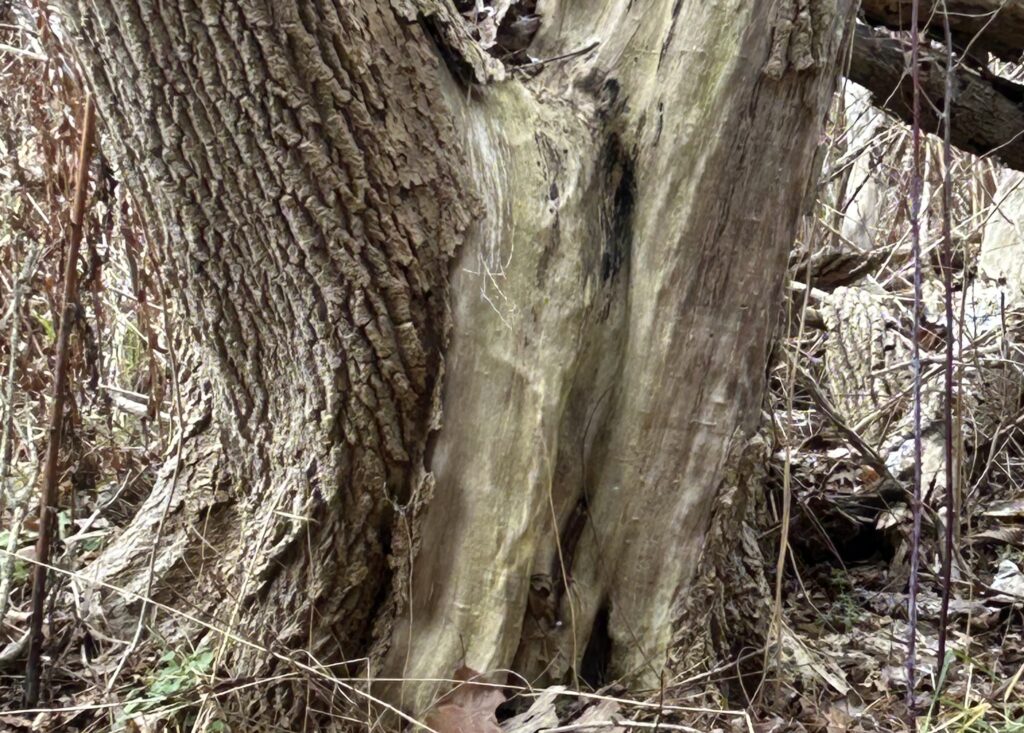
The forest was mostly absent of signs of animal life, however, I did find a few indentations along the muddy bank of the brook. At this point, there is little to no accumulation of snow on the forest floor. This made it difficult for me to observe solid tracks and determine their identity. The first track I found was small and round with a slight divot in the middle, like a deer track. The second sign of life I saw was bark removed from the lower segment of an ash.

In reflection, I found that I enjoy this spot in Centennial Woods because it reminds me, in so many ways, of the park near my home. The prevalence of northern red oak, white oak, and pines are found all over my home, and I have enjoyed observing how these same species function in wildly different climates and ecosystems.

City of Oaks

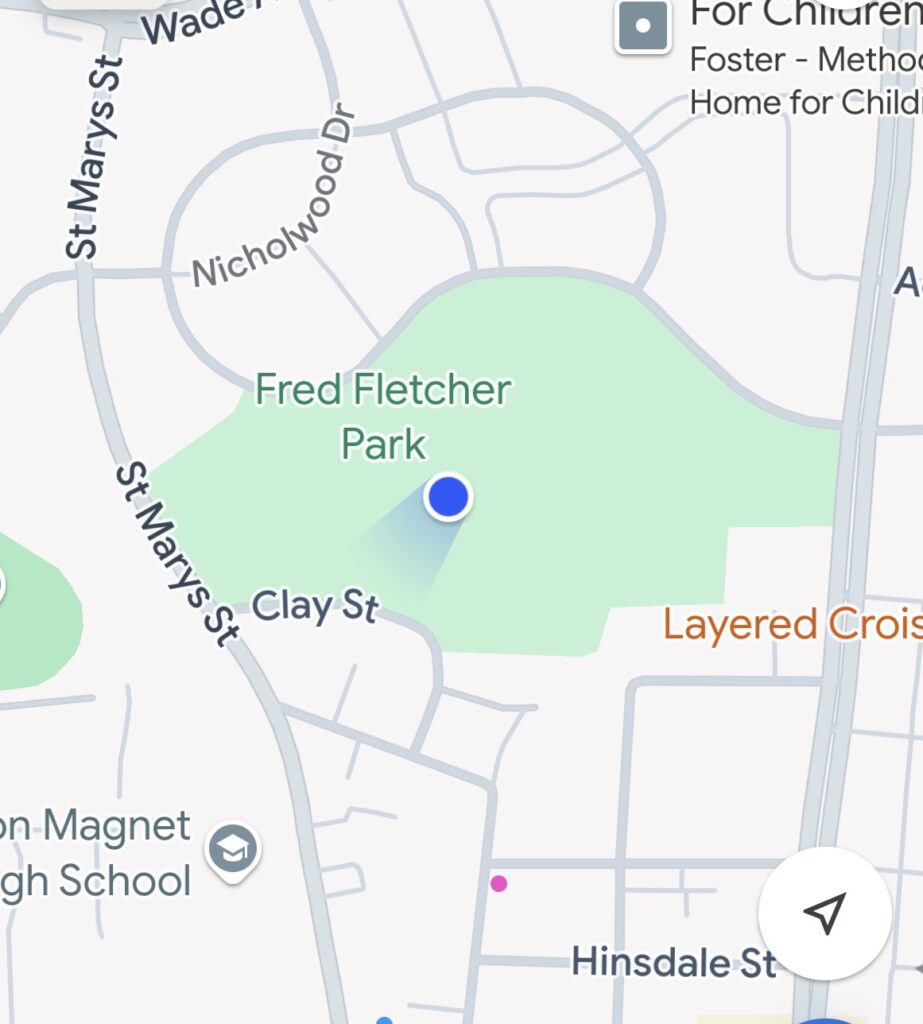
Fred Fletcher Park: Raleigh, NC

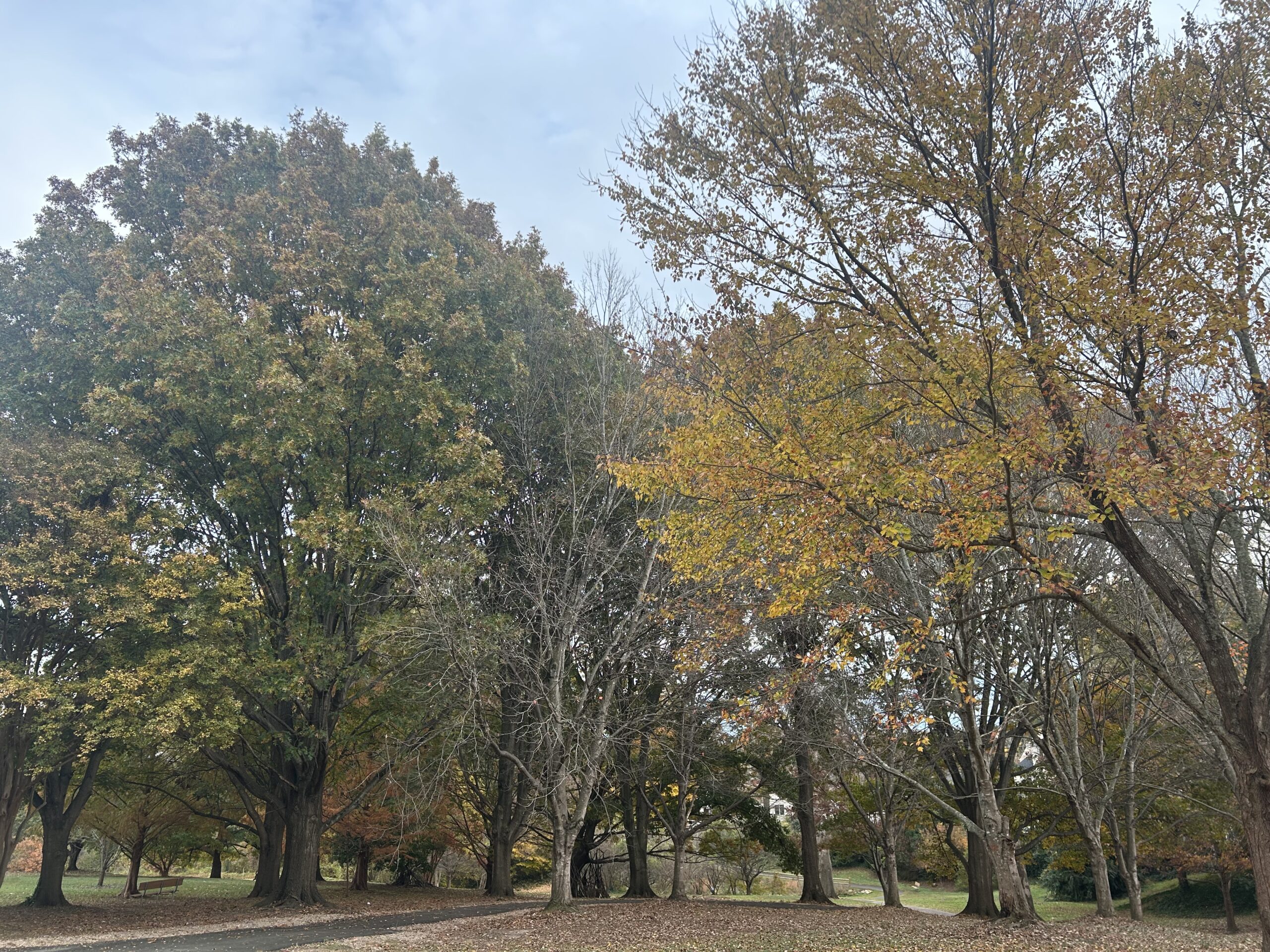
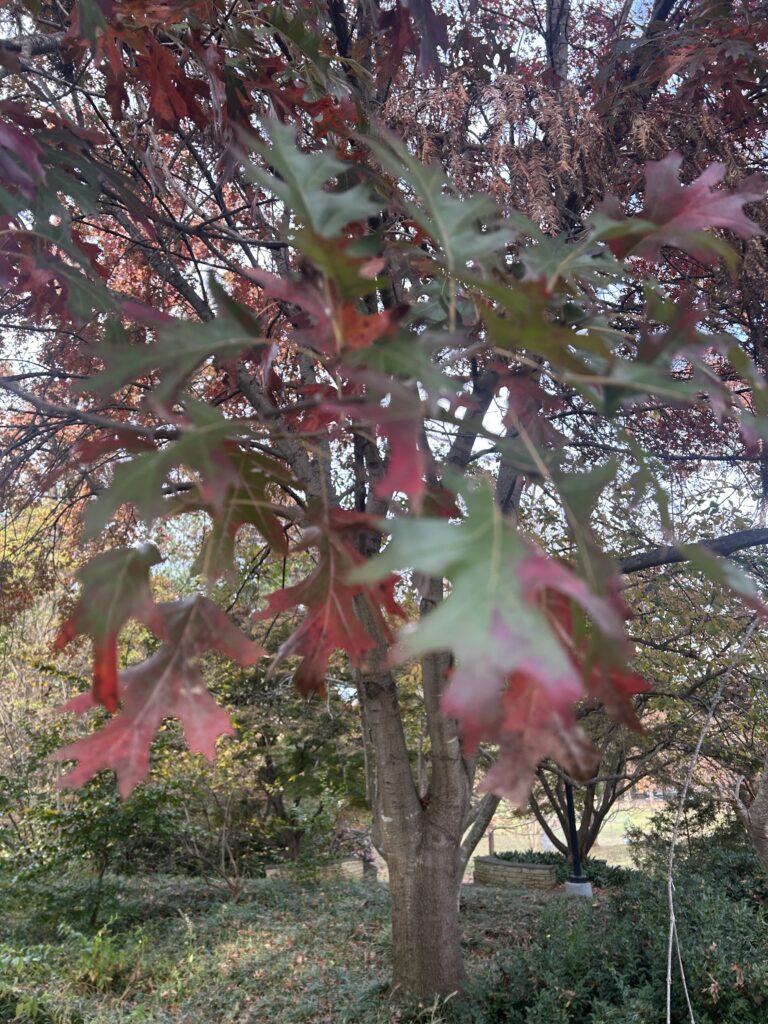
This park is probably one of my favorite places, and I am lucky enough to live about 5 minutes away. I spent my childhood here walking my dog, Beau, at birthday parties, and exploring with my family. It reminds me of my phenology spot in Centennial Woods, which also has rich biodiversity and clear phenological changes. Walking around, the first thing I noticed is that autumn is in full bloom. In Vermont, all the leaves have fallen and we have already felt the beginnings of winter, but here, the oaks and maples are the most beautiful shade of red, and the eastern grey squirrels are still busy storing away the acorns of white oaks for winter. Autumn is warm here and it is about 60 degrees.

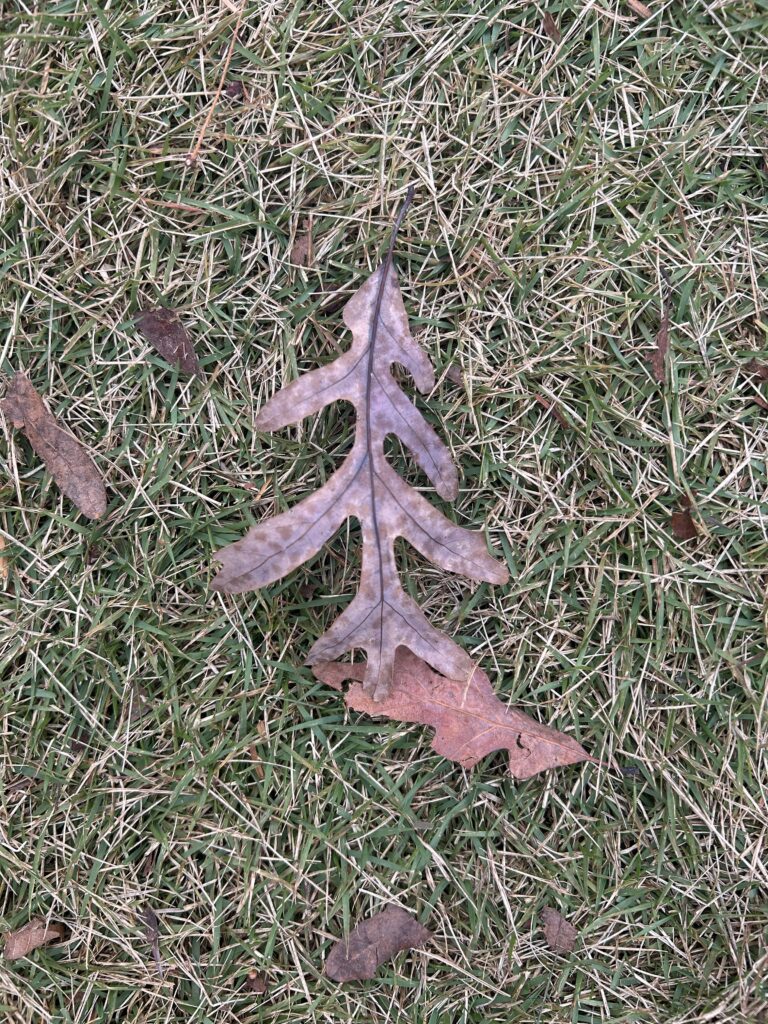
Northern Red Oak
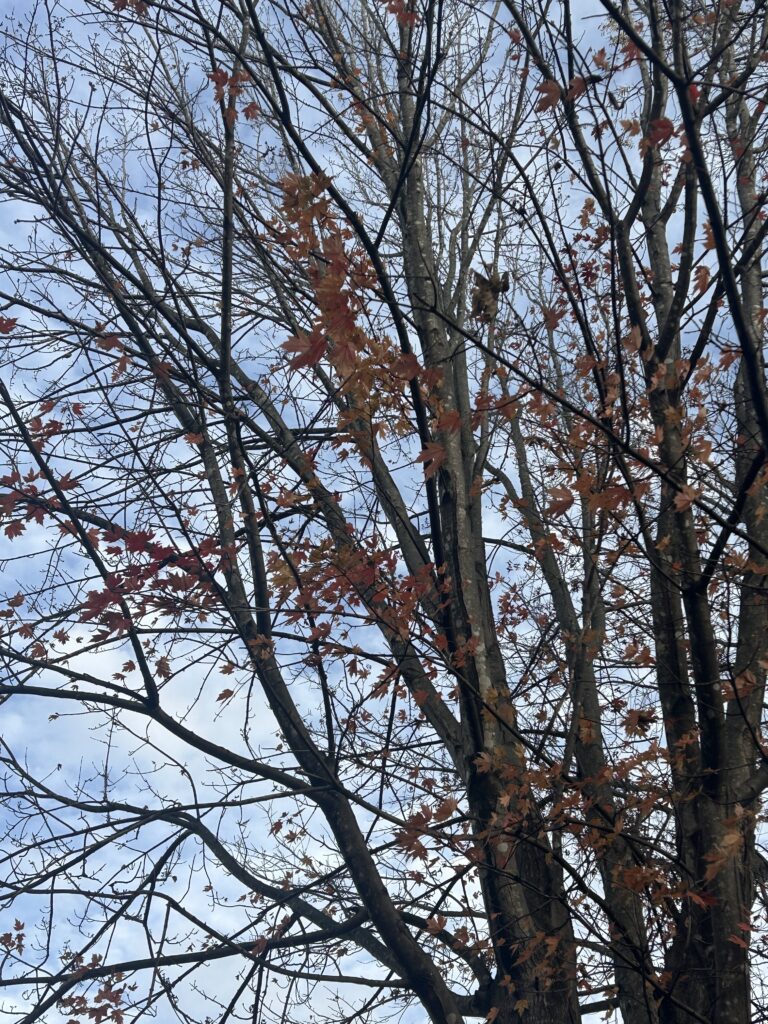
Red Maple
White Oak and acorns

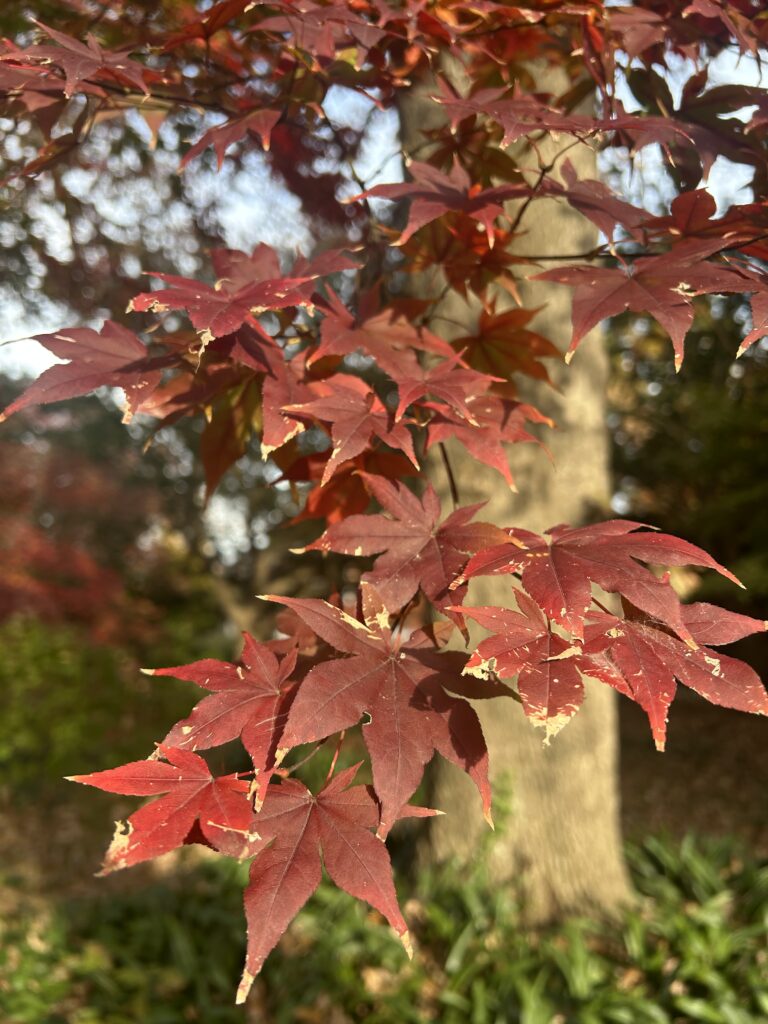
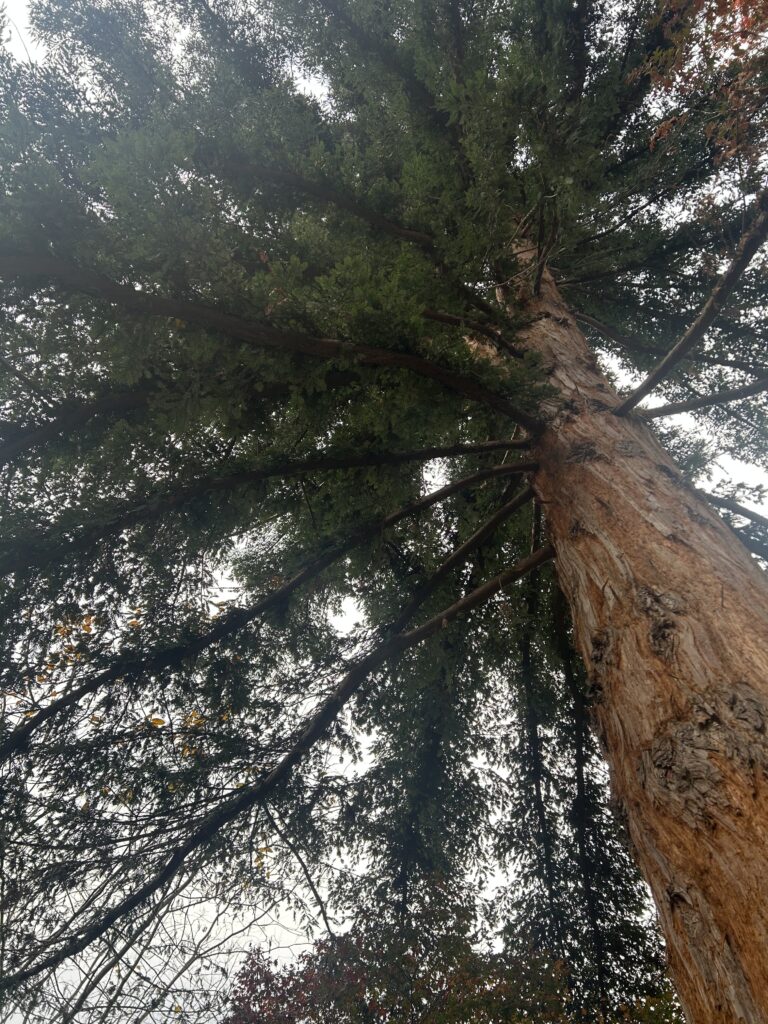
Known as the City of Oaks, Raleigh is packed to the brim with Red, White, and Willow oaks. These species of oaks are also prevalent in Centennial Woods. However, Fletcher Park contains different varieties of the native species we have studied in Burlington. Japanese Maple, Red Cedar, and Loblolly pine replace the Sugar Maple, Eastern White Cedar, and Eastern White pine traditionally found in Vermont. The park resembles the phenological state of Centennial Woods during my last visit in early November. Winters are mild here, so many of our birds remain, and the gray squirrels do not yet have the thick winter coats that they would in Vermont.
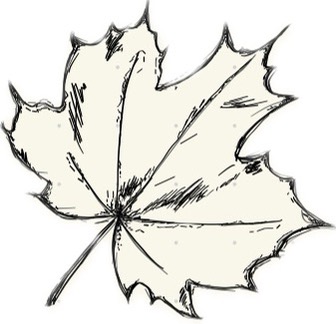
Japanese Maple
Red Cedar
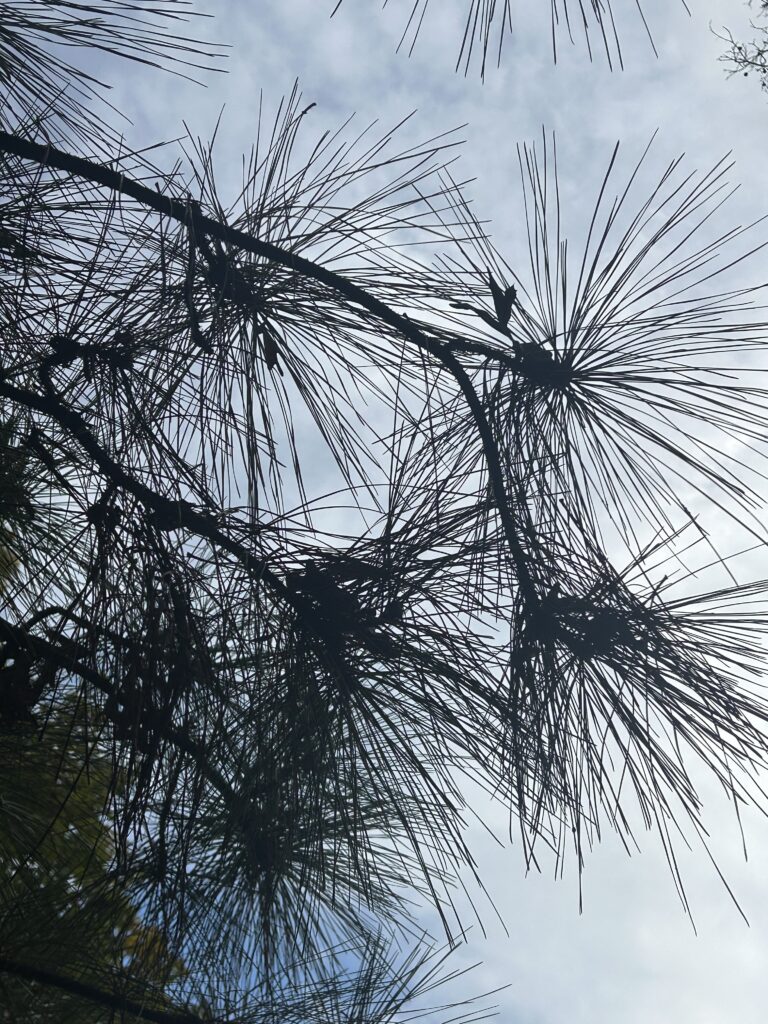
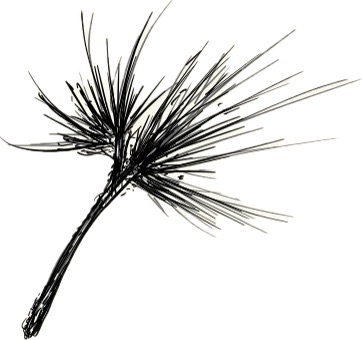
Loblolly Pine

Honorable Harvest

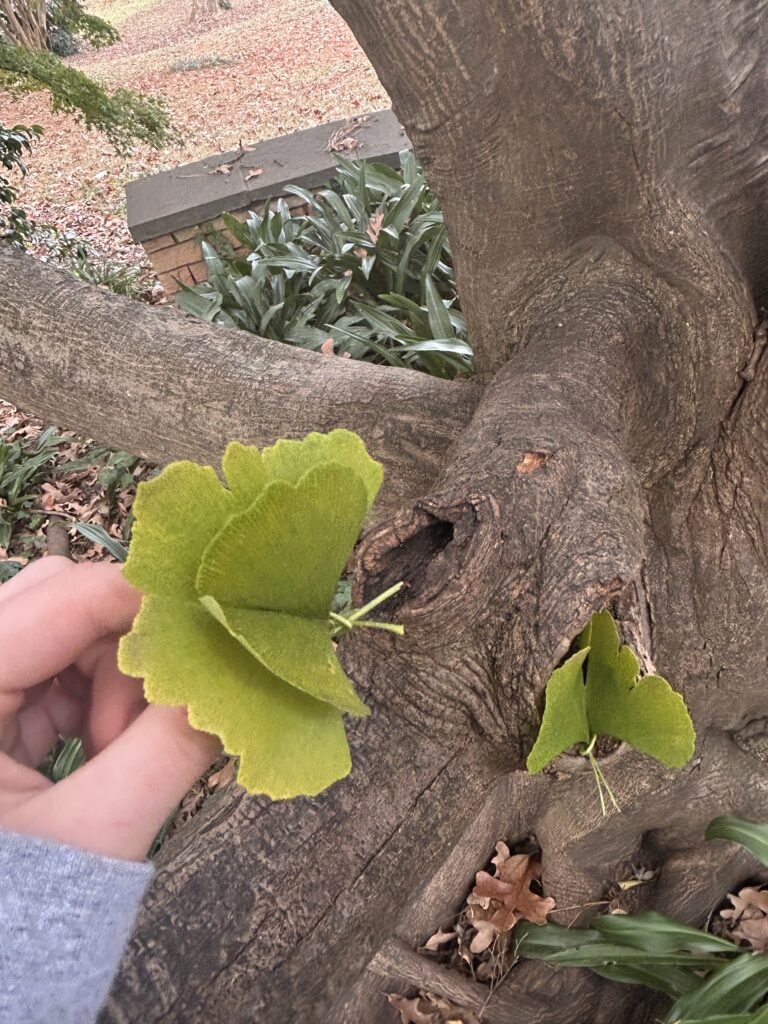
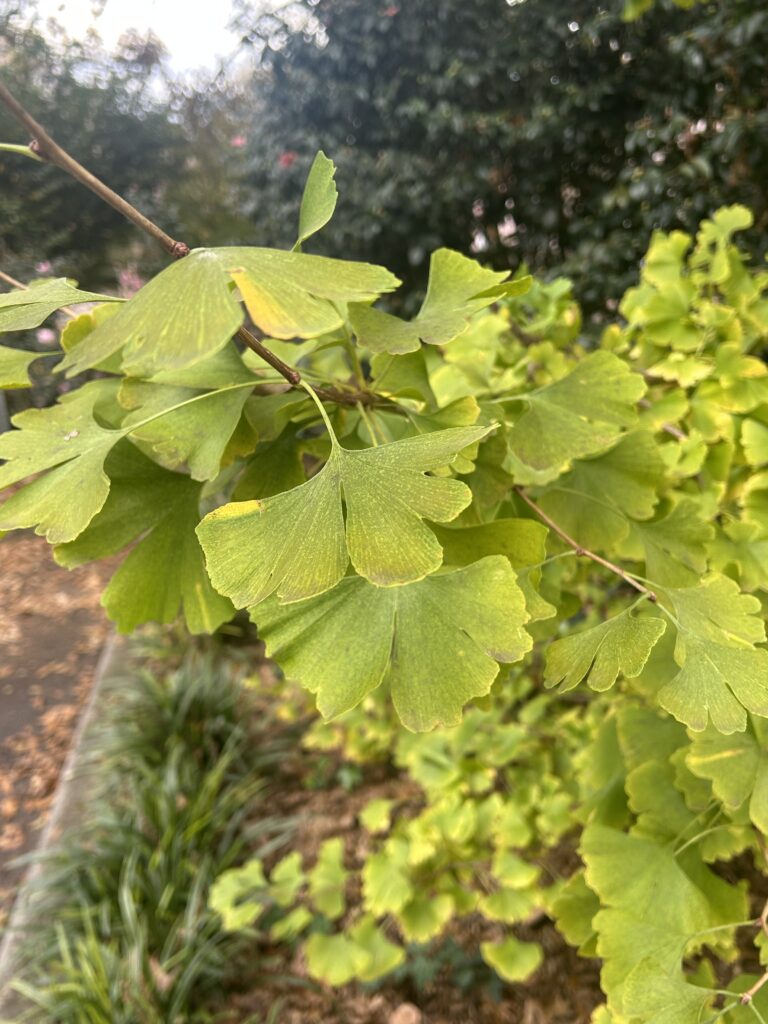
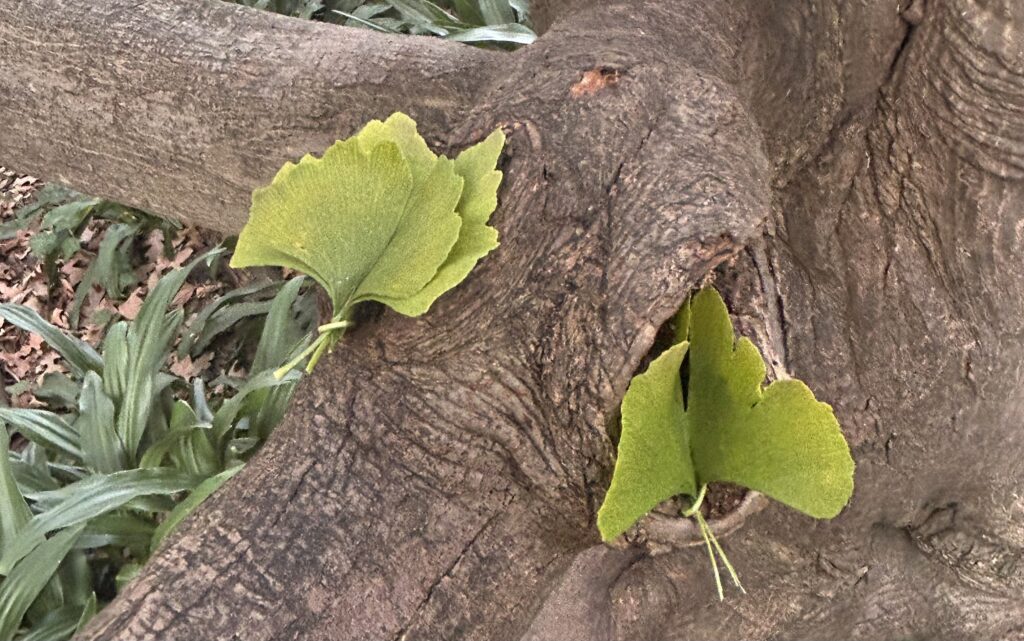
After reading Robin Wall Kimmerer’s chapter on the honorable harvest from Braiding Sweetgrass, I decided to show my appreciation for this park by turning the fallen leaves of my favorite tree, the Ginkgo, into art. I liked the idea of giving the leaves a second life, and I left the two butterflies to rest in a nearby Japanese Maple as I left the park.

Autumnal

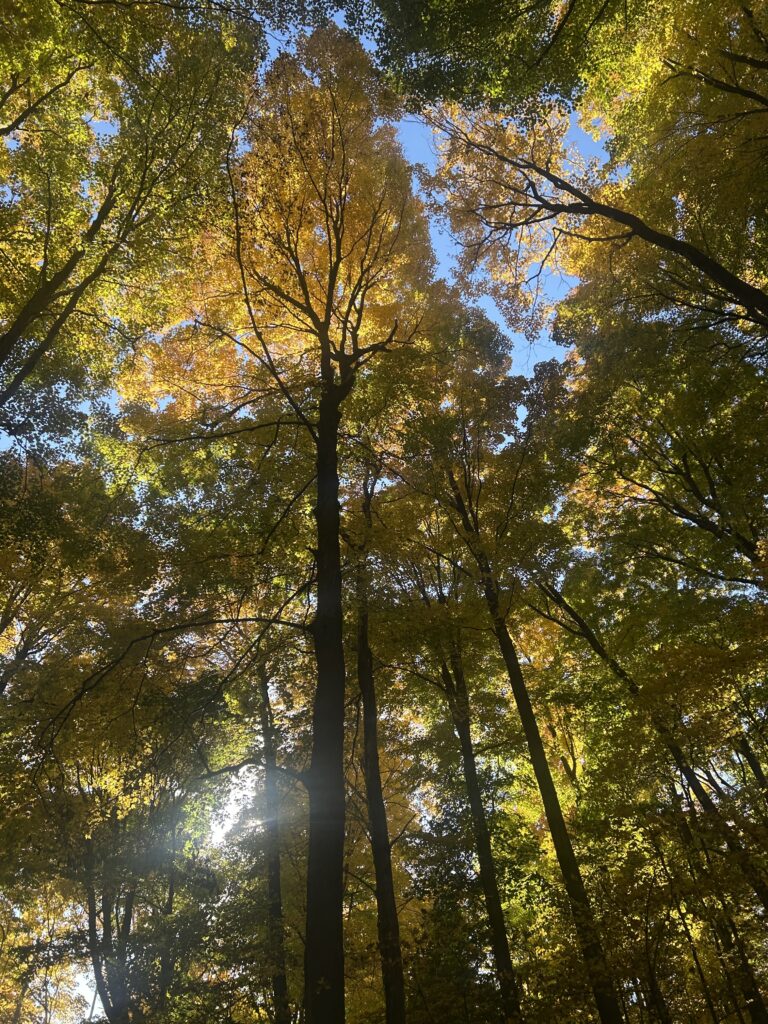
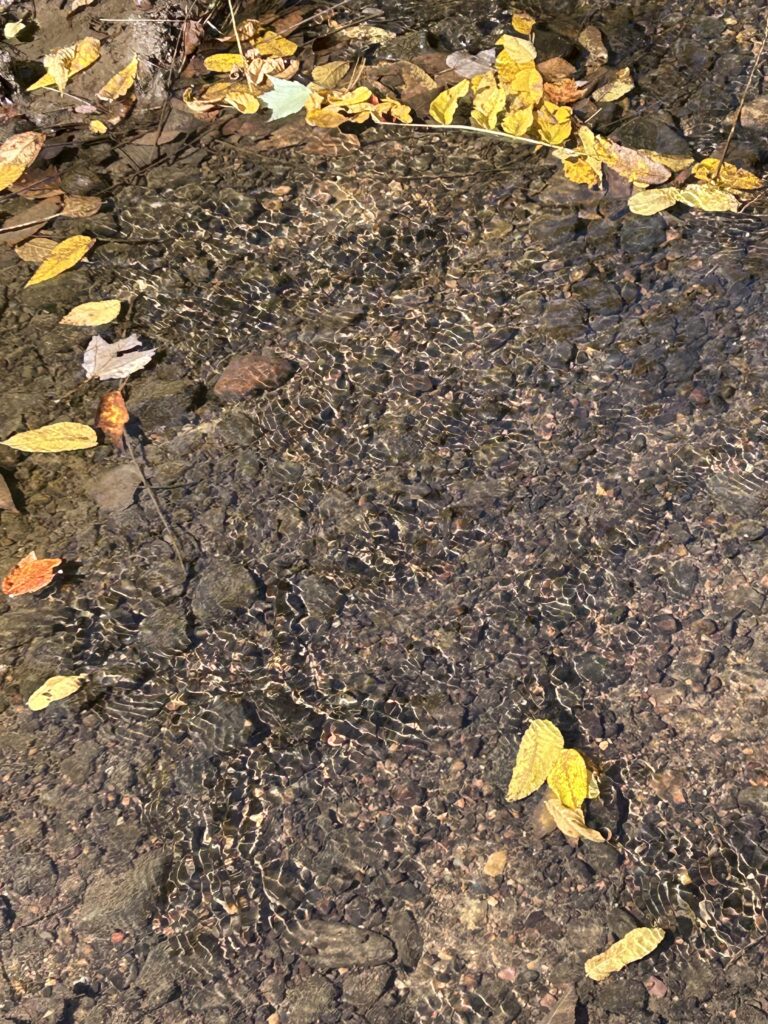
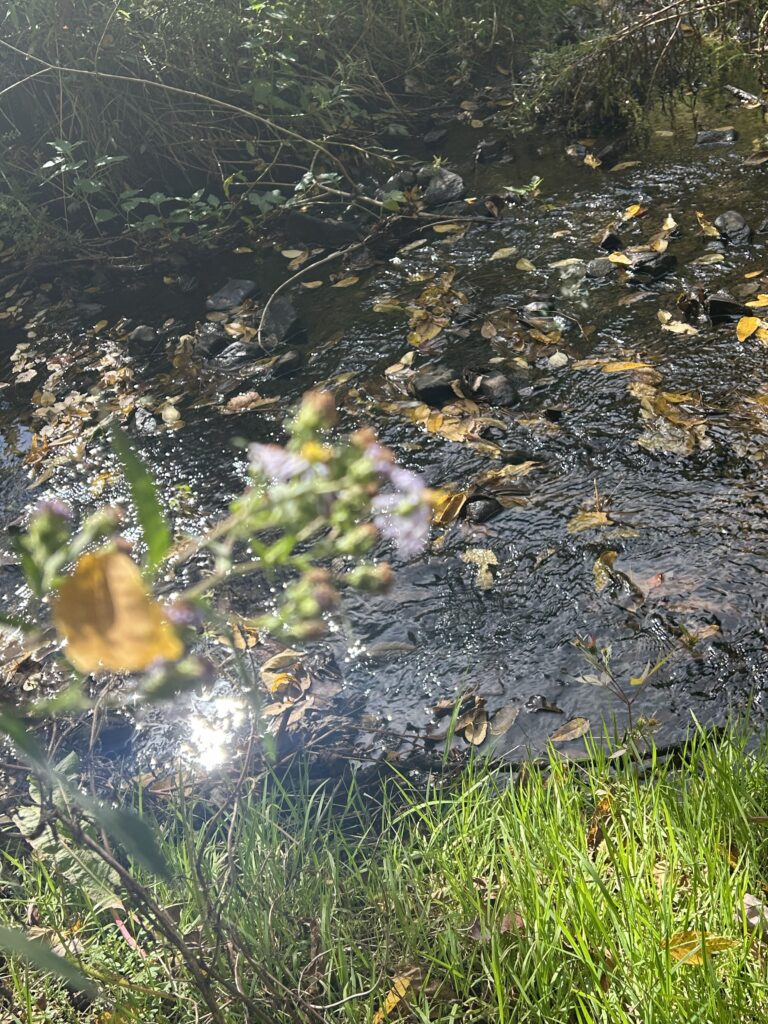
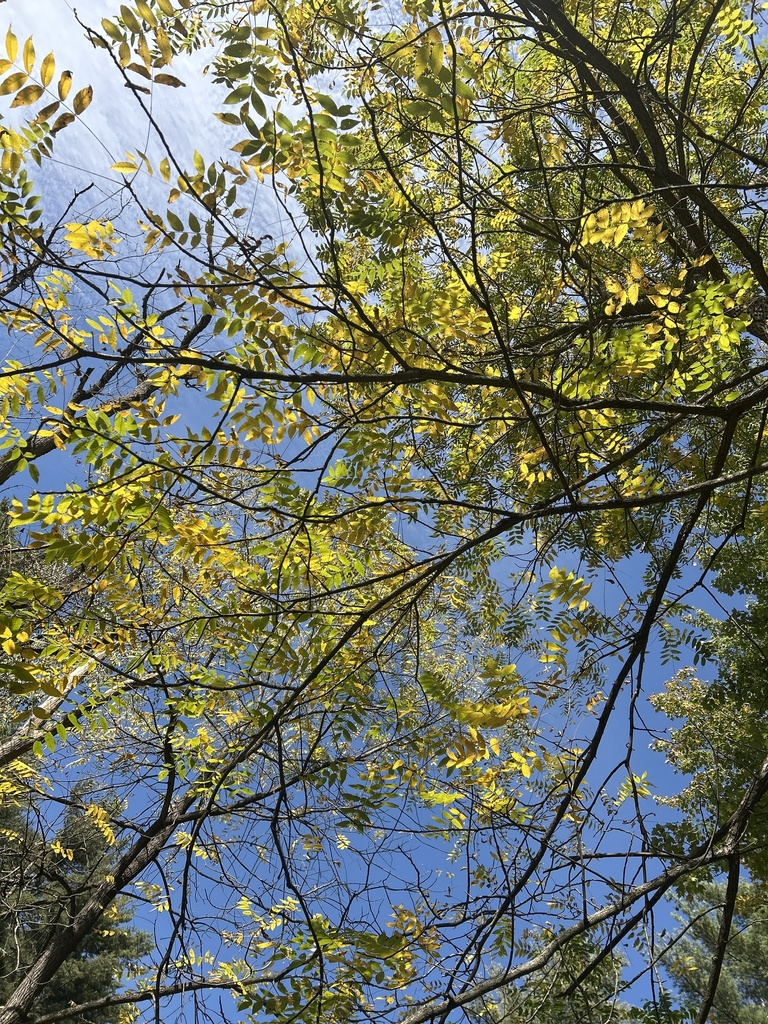
My spot is centered on the bank of Centennial Brook, which is covered in mud, smoothed stones, and grasses. As I sat there, I first observed the changing colors of the leaves. The ground and water were mostly yellow from the falling leaves of Green Ashes and birches. As the leaves built up, I noticed they created a new layer of organic matter atop the mud at the brook’s bank. Watching the wildlife, I noticed the preparations being made for the coming winter months. There was less birdsong and I saw a grey squirrel burying food; it’s thicker winter coat developing. The wind was extremely strong during this visit, and I watched it pull lots of leaves off the hardwoods and onto the surrounding forest floor and brook.

to the right of my spot: hardwoods changing color
directly in front of my spot: centennial brook with fallen ashe leaves
looking south from my spot: centennial brook deeper into marsh area

Brookside

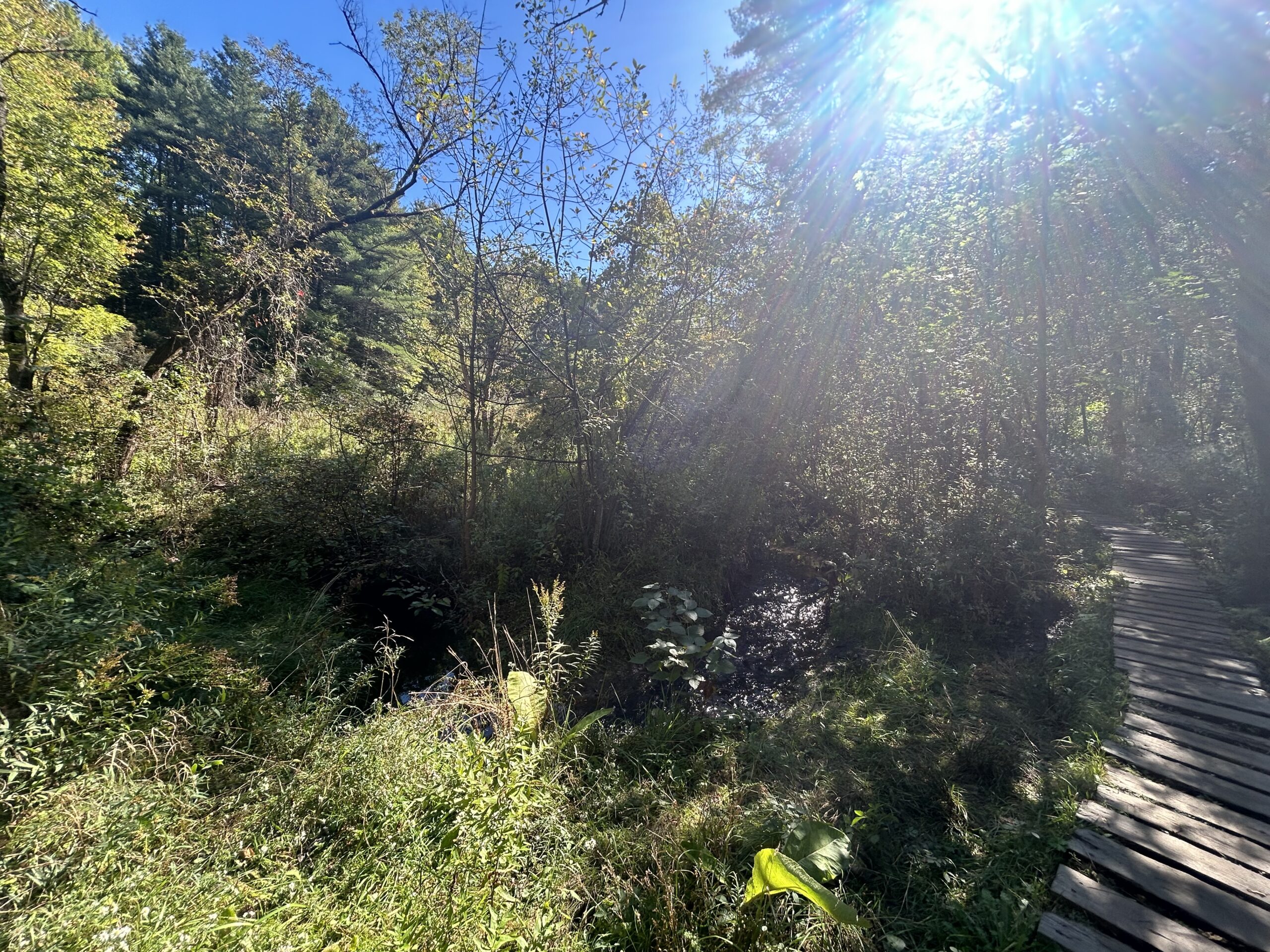
I loved this spot in Centennial Woods from the first moment I saw it on our first lab because of the sound of the brook flowing across the landscape. It was nostalgic of the park near my house which had a small wetland area surrounded by trees. I knew I wanted to focus on the brook, so I chose the area of land immediately in contact with the water on both sides. To get there, I walked about 10 minutes down the trail (entering from Carrigan Dr.). My chosen area begins just past the first footbridge and occupies the land surrounding and crossing the brook. With the interactions of the brook and aquatic life in addition to the forest surrounding it, this area will be fascinating to study as the seasons change.

Google Maps Location

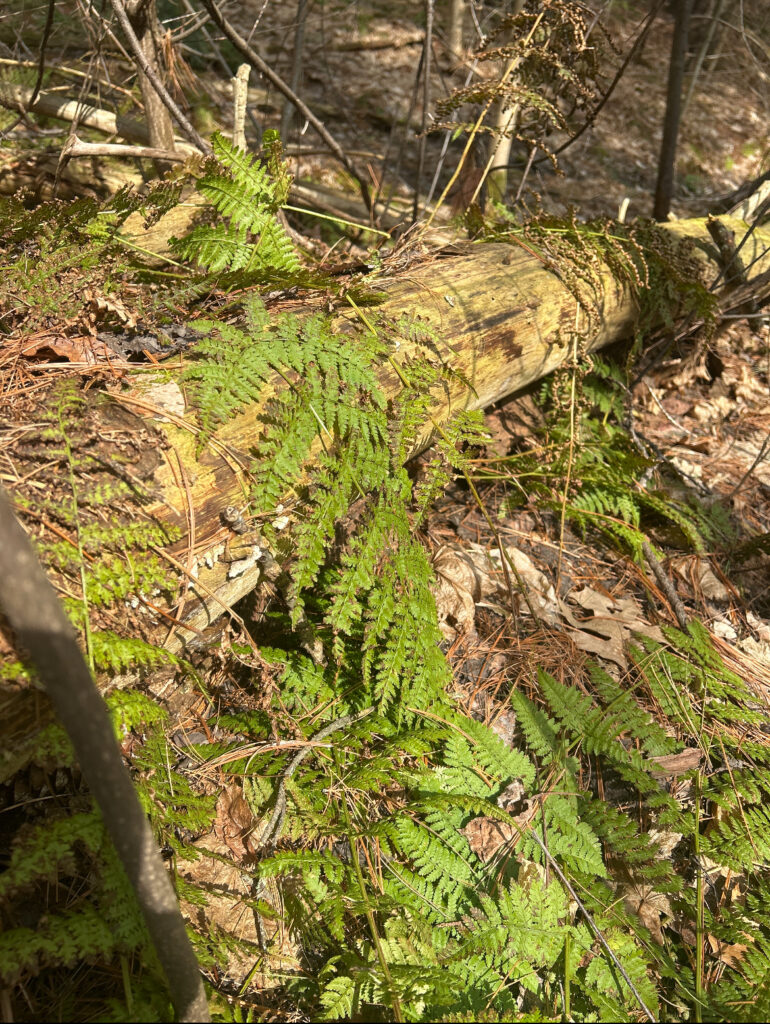
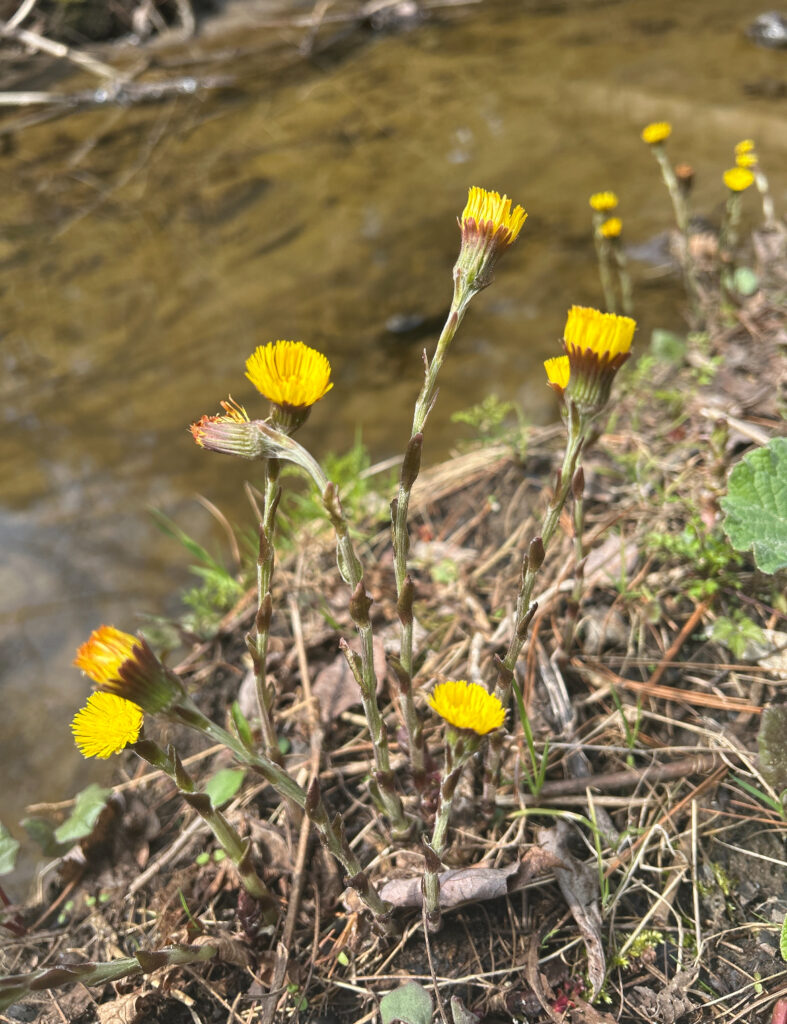
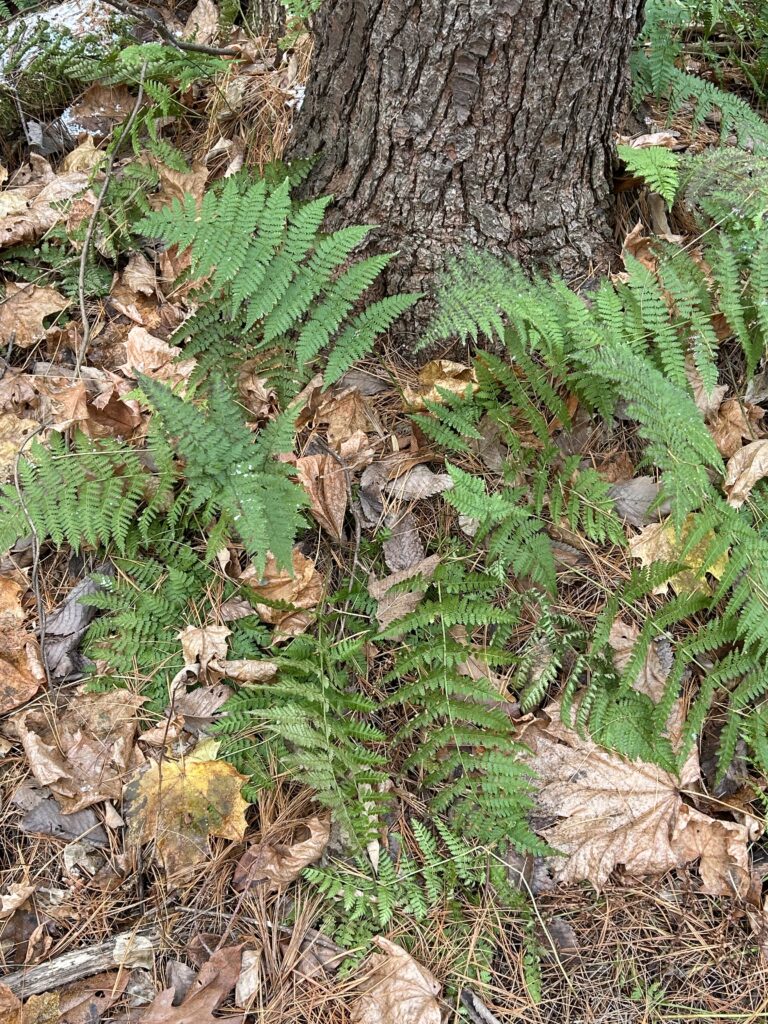
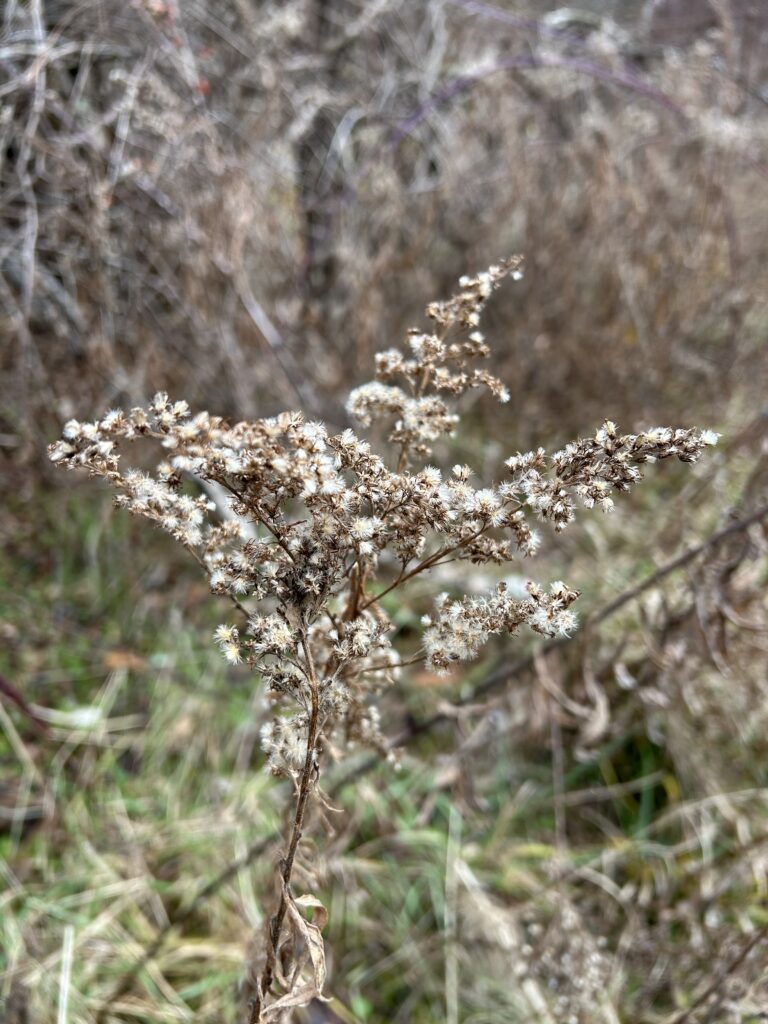
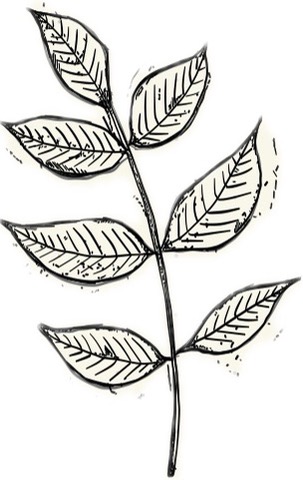
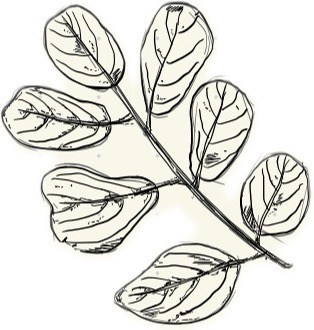
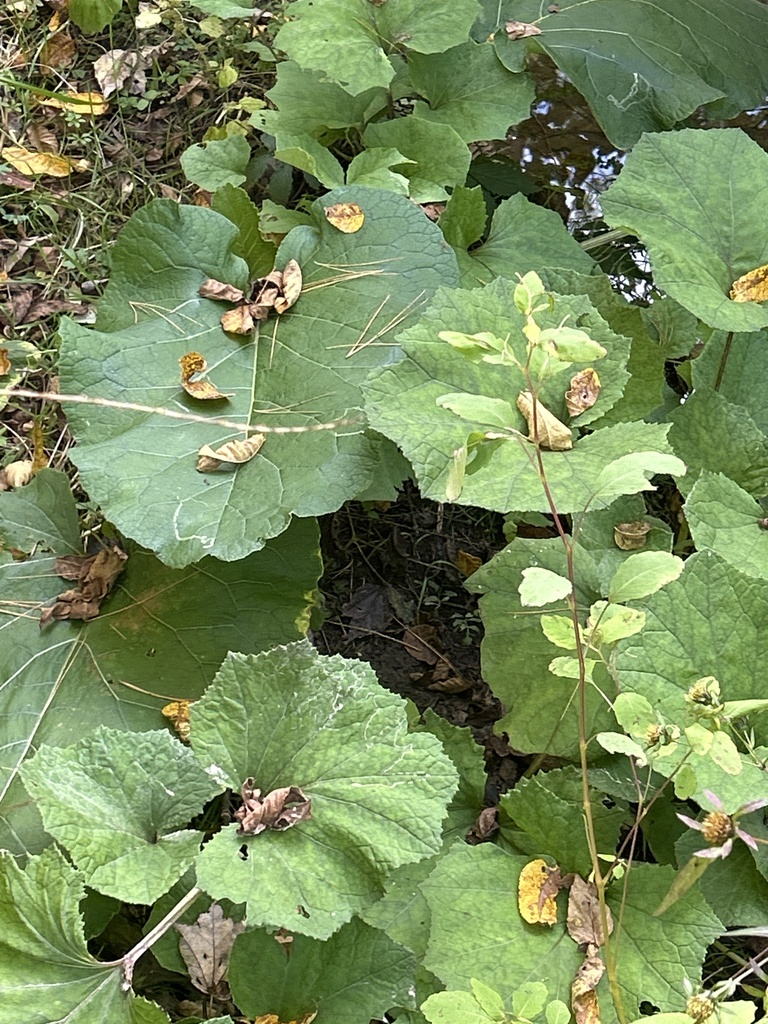
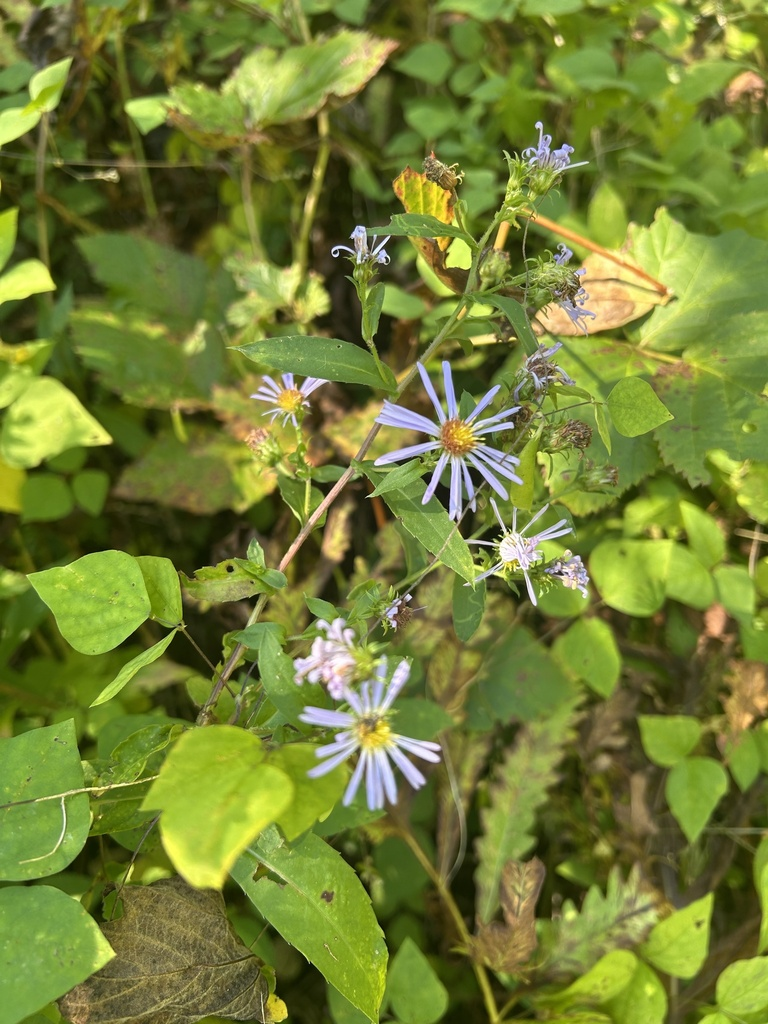
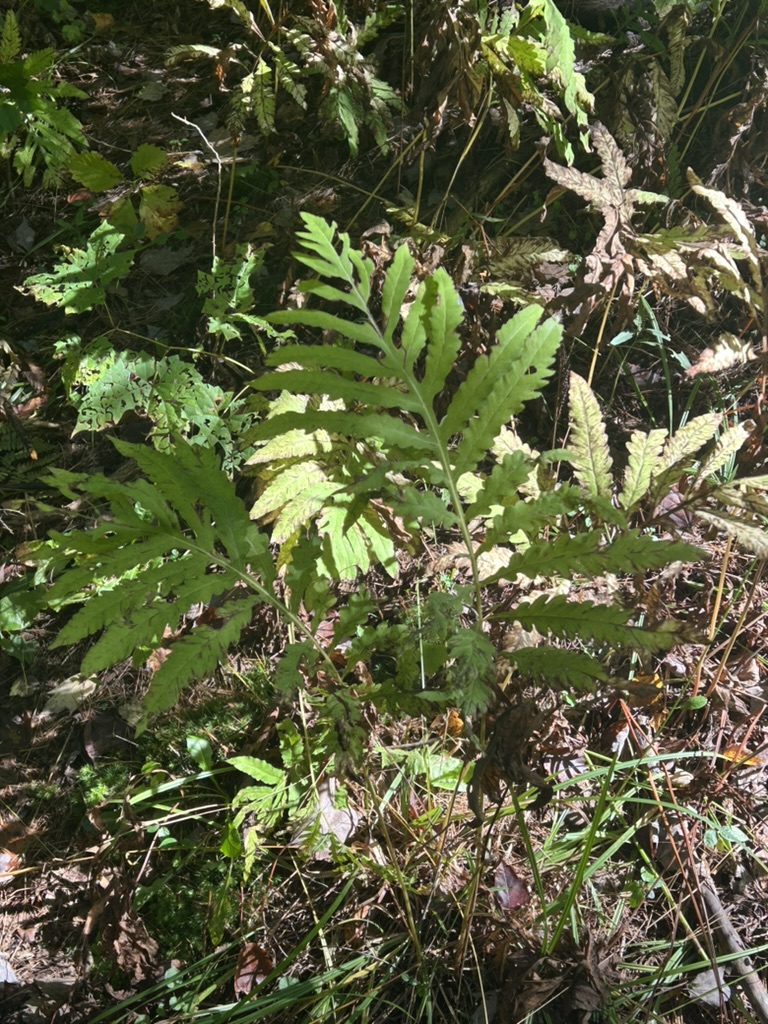
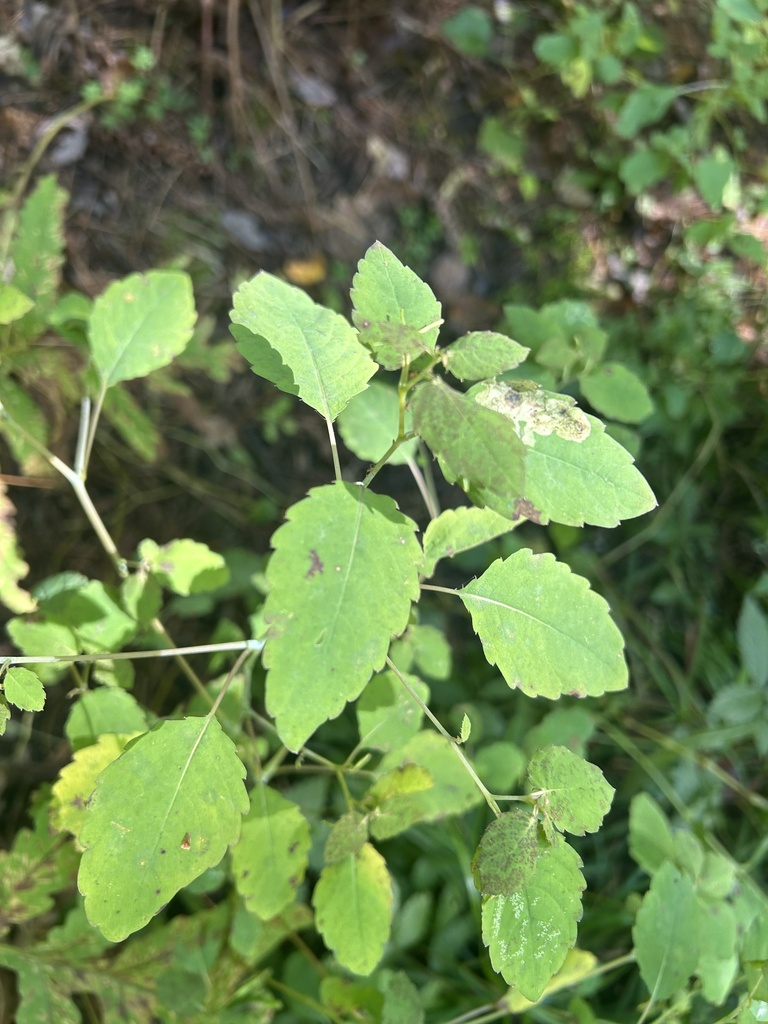
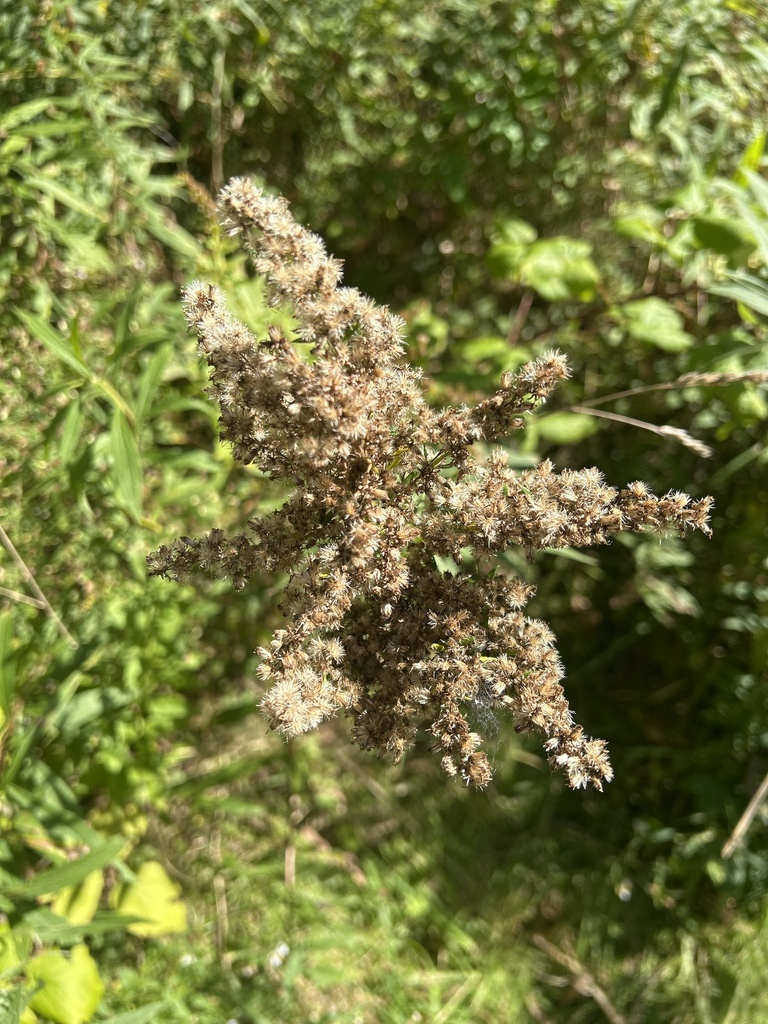
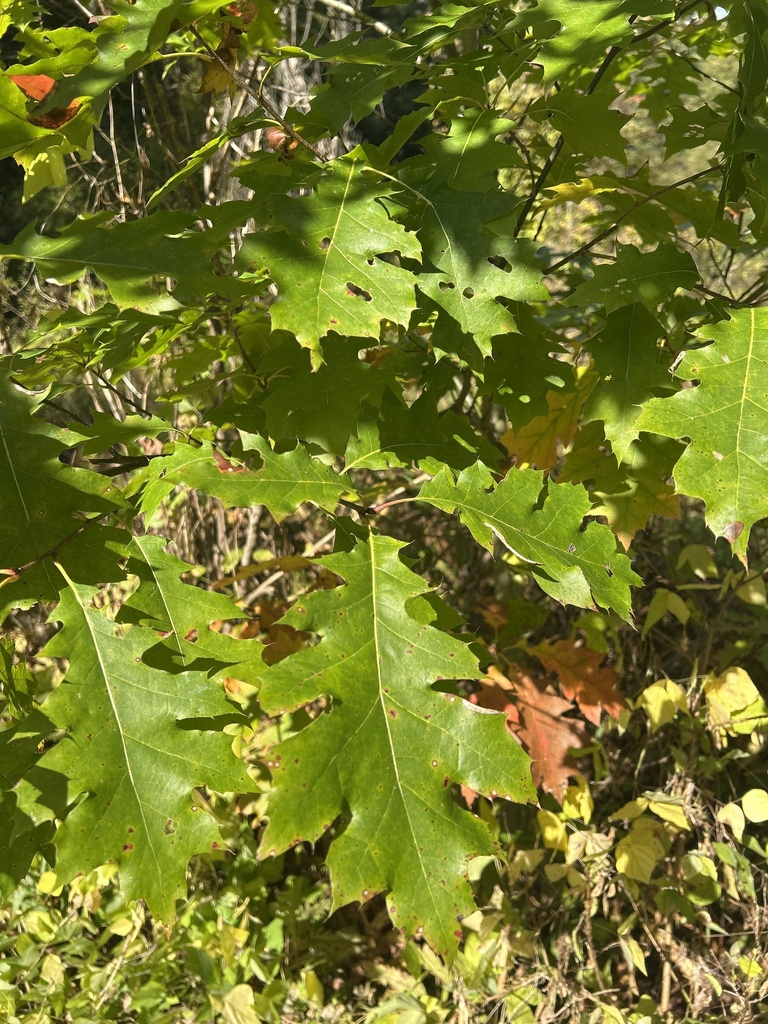
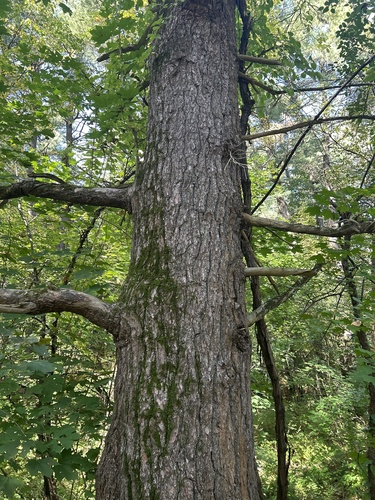
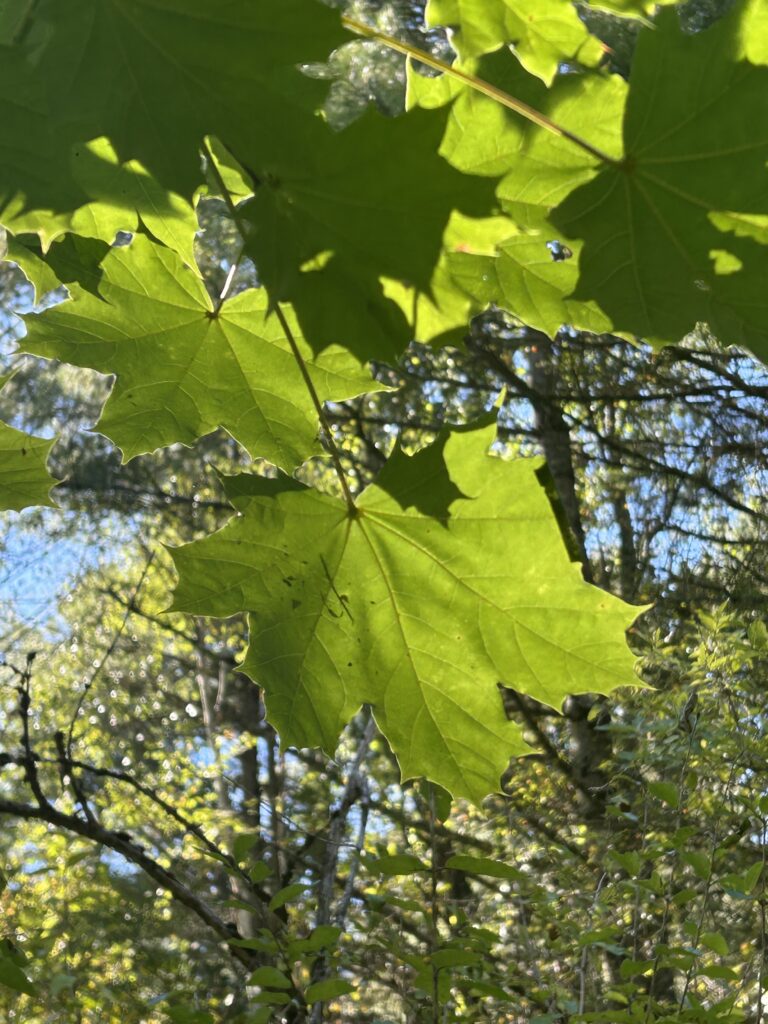
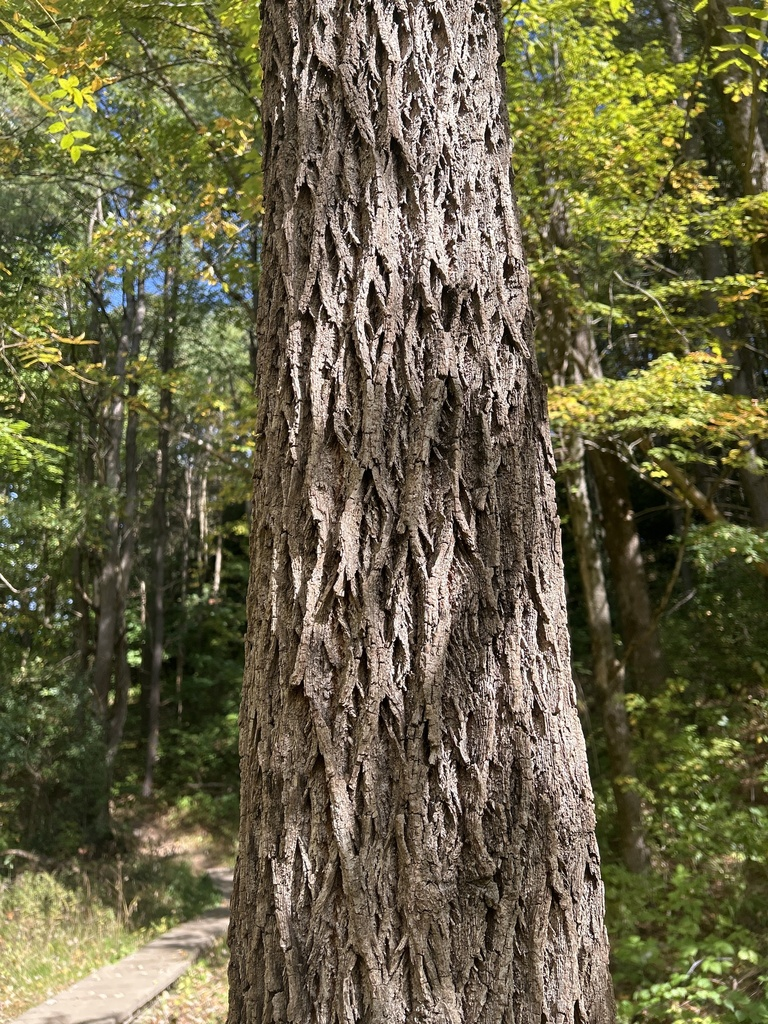
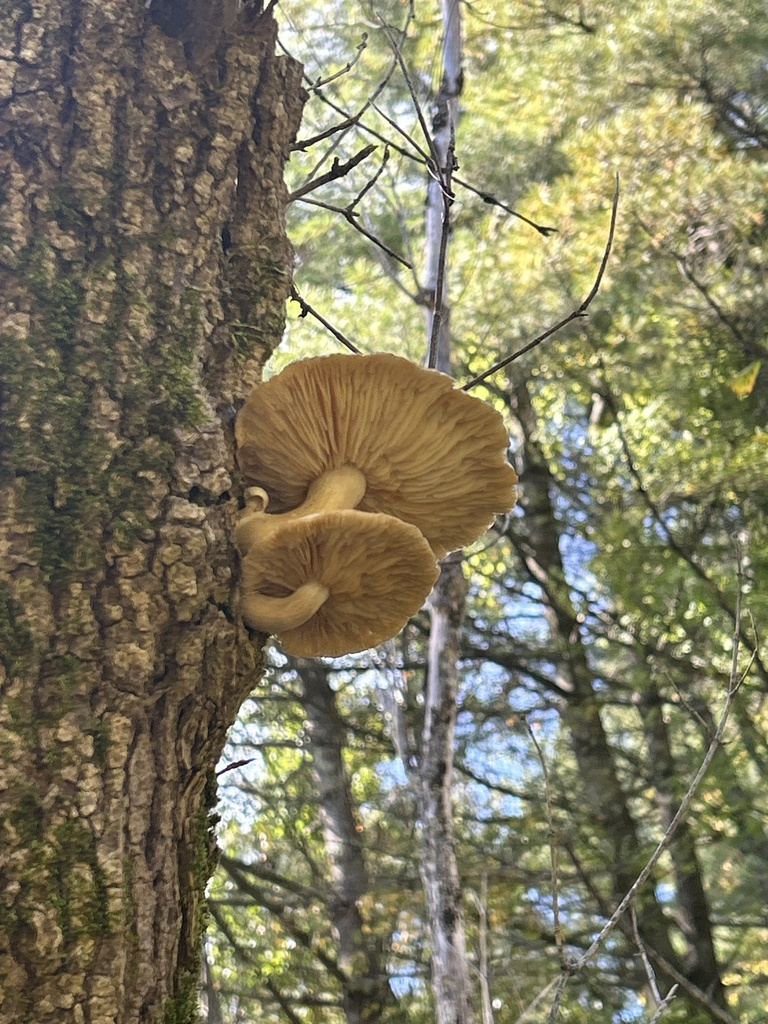
The most common woody plants I observed on the outskirts of my area were Eastern White Pine and Green Ash. Northern Red Oak, Buckthorn, and Norway Maple were in the center, mostly near and around the Brook. I was excited to find a few last remnants of summer florals such as Goldenrod and American Aster. The areas near the pines also had a prolific understory featuring Sensitive and Wood Ferns. Right up against the water I found lots of Jewelweed and Colt’s Foot.

Understory Vegetation

Woody Plants

Centennial Brook (facing South)

Flora & Fauna

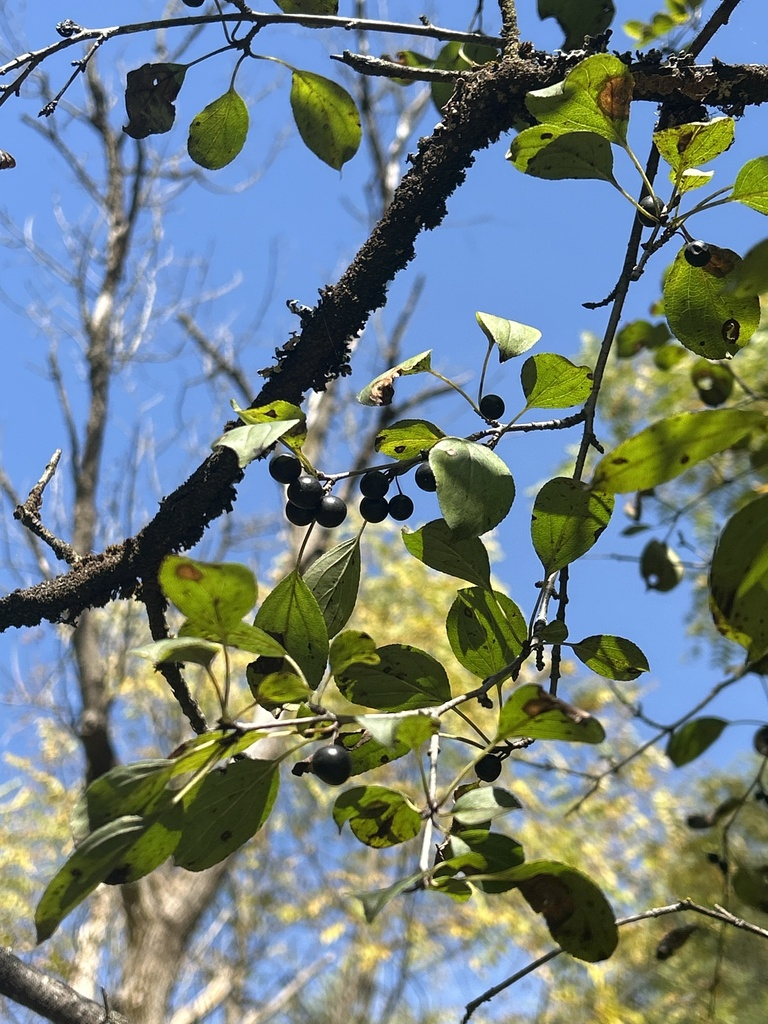
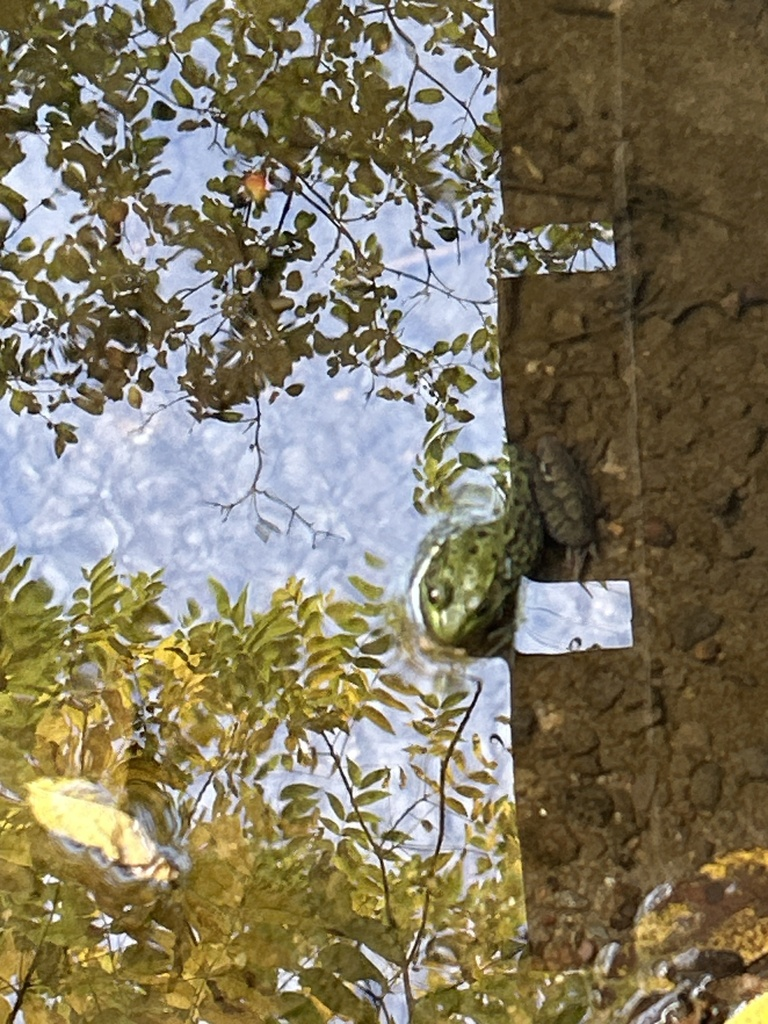
I noticed many different kinds of berries on the trees surrounding my area, some black from Honeysuckle and Buckthorn, and others red from the Chokeberry trees. I was also lucky enough to spot a large Green Frog in Centennial Brook before it hopped away!

Skip to toolbar