Location: Rachel Carson Salt Pond Preserve, New Harbor, ME
Date: Monday 7/3/23, 1:00pm
Weather: It is overcast with some light rain on and off, but still warm. There was a heavy rainstorm last night, so the ground and trees are noticeably wet still.
Today, I set out with the intention of observing how the area had been affected by the heavy rain yesterday. At the entrance of the trail, there’s a small bridge that crosses what is usually a muddy ditch along the roadside. When I arrived today, there were several inches of water in the ditch, covering the bases of the plants that grow here. Continuing along the trail, I could see signs of the past storm in the soil and trees. All of the exposed soil along the trail was saturated and muddy. The leaves and needles of the trees held droplets of water, and I also noticed some spiderwebs highlighted by the presence of raindrops. Eventually, my goal shifted from an observation of the weather impacts to a search for interesting fungi after I noticed how many there were along the trail. They seemed to be thriving in the rainy conditions we’ve had lately, and I was able to find seven different species and a range of bright colors. I’ve included some photographs below.
My fungi search led me to my natural history mystery for today’s blog: how has the extremely and unusually rainy weather this summer impacted the plants and other organisms in this forest? The Portland Press Herald reports that mid-coast Maine got 5.68 inches of rain this June, compared to an average of 3.77 inches. Rainy early summer weather isn’t very uncommon here, though, and there were comparable June precipitation levels most recently in 2019. An article from the Bowdoin Magazine explains that cool and rainy weather can cause fungi to fruit in the summer instead of in the fall, when they normally fruit. Another interesting impact of the rainy weather and fungus is that the browntail moth populations appear to be lower this year (Maine Public Radio). The rainy conditions that are ideal for fungus growth support a specific fungus that kills browntail caterpillars.
https://www.pressherald.com/2023/07/01/june-saw-significantly-more-rain-than-average-in-maine/
https://www.bowdoin.edu/news/2021/11/mainely-mushrooms.html
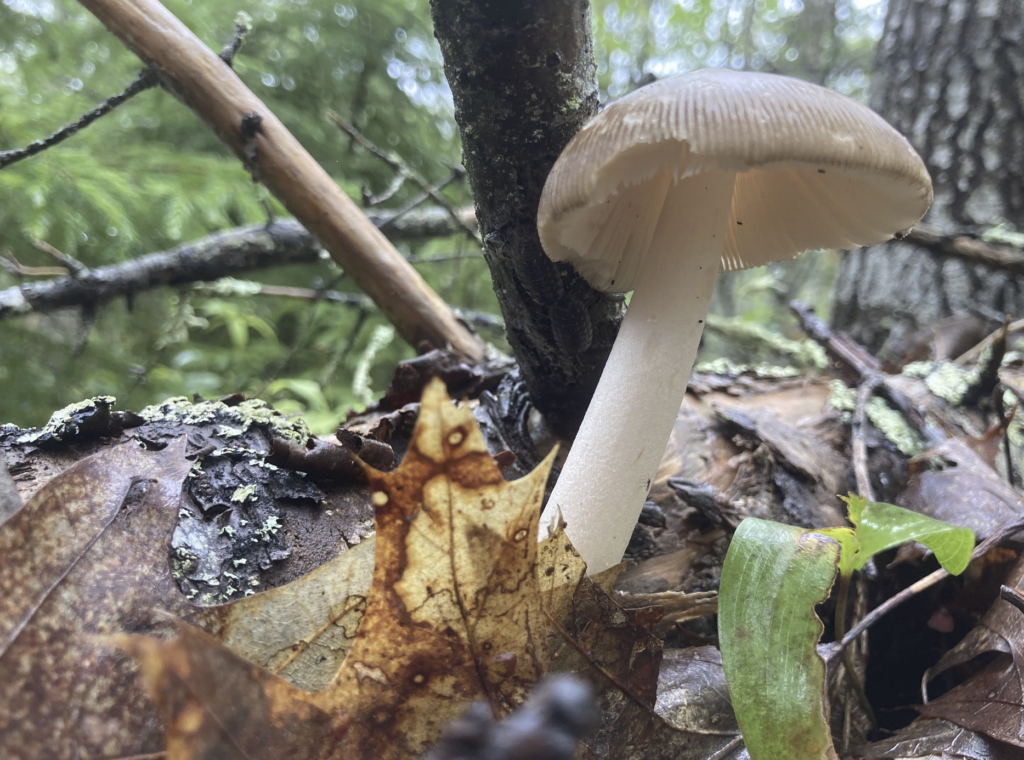
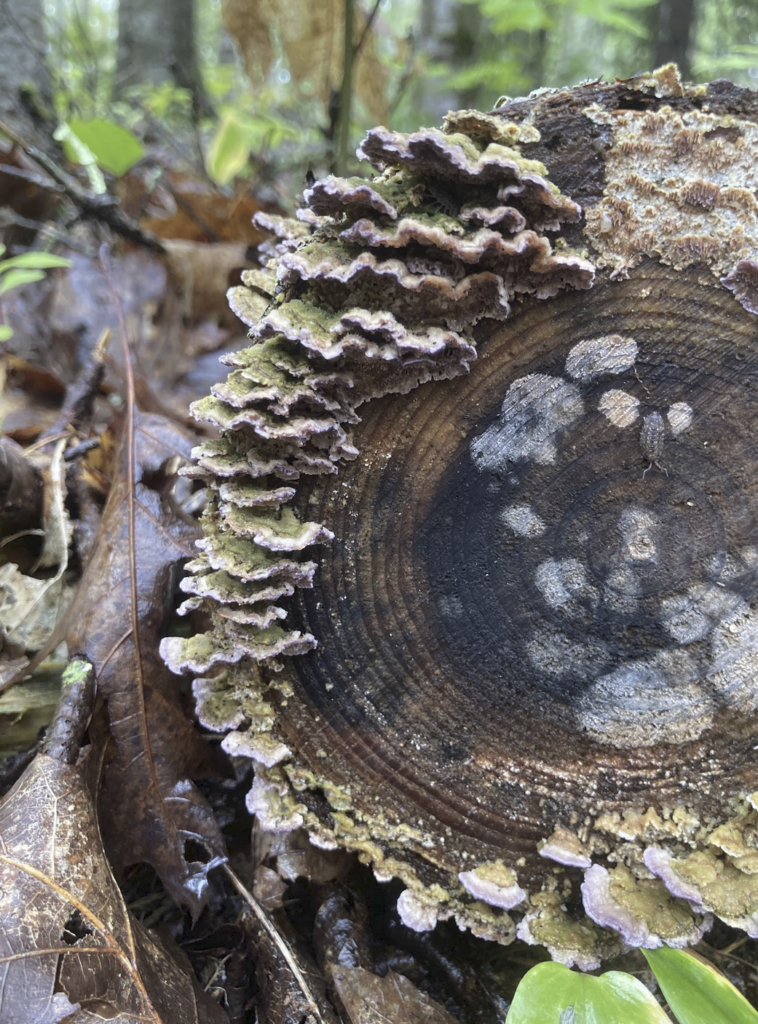
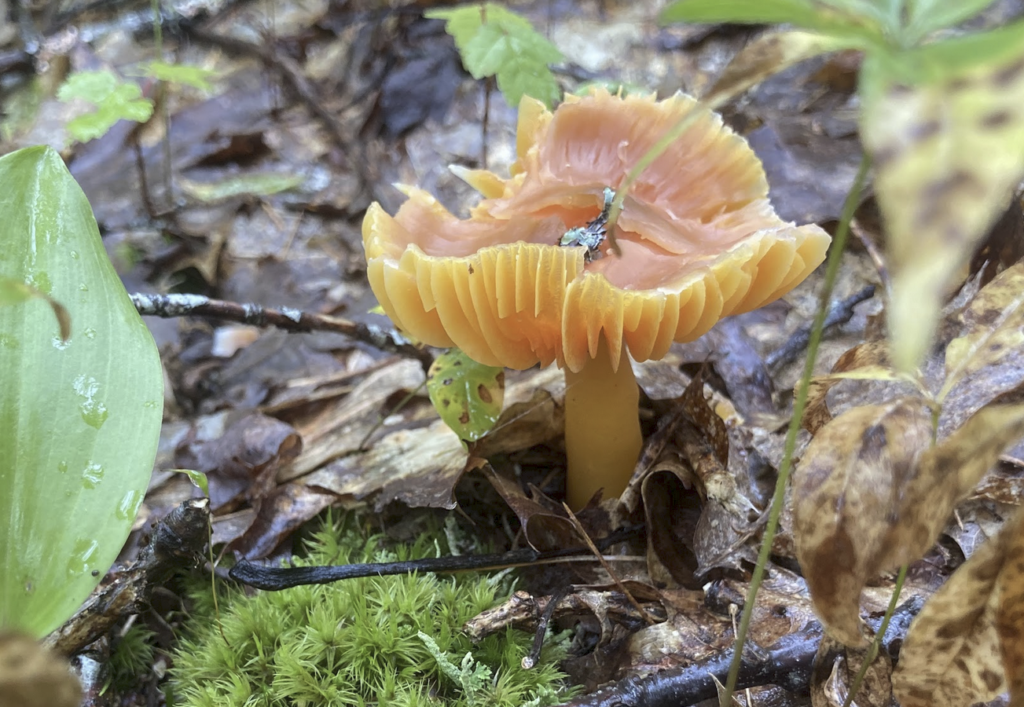
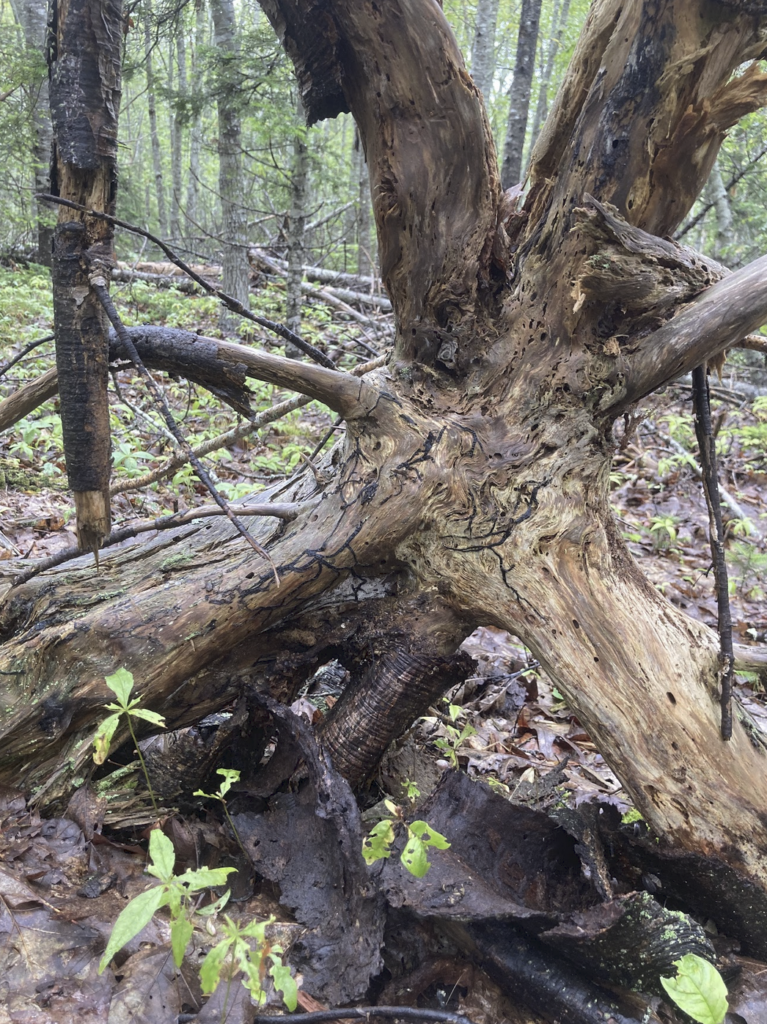
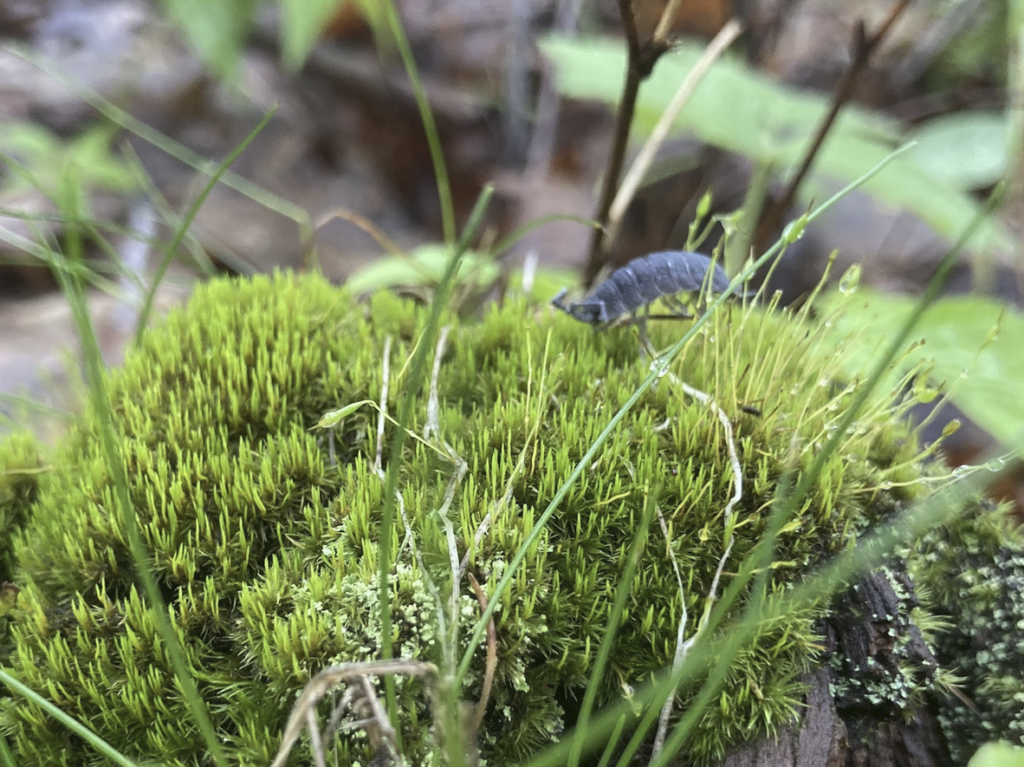
I enjoyed the photography exercise for this week’s blog. It was more challenging than I expected to take good photographs of my site, but I think it made me focus more on the small details of the area while I was searching for good subjects to photograph. I’m not sure I would have noticed all of the mushrooms if I hadn’t been paying attention to my surroundings in this way.
It was also interesting to revisit the subjects that I had already photographed for previous blog posts, and consider how I might have taken different photos now. While I didn’t end up using any of these for this blog post, it was a good opportunity to reflect on areas of my site that I’ve learned more about throughout the process of visiting and researching.