Location: Rachel Carson Salt Pond Preserve, New Harbor, ME
Date: Sunday 6/25/23, 1:45pm
Weather: Today’s weather is warm and sunny with many small clouds in the sky.
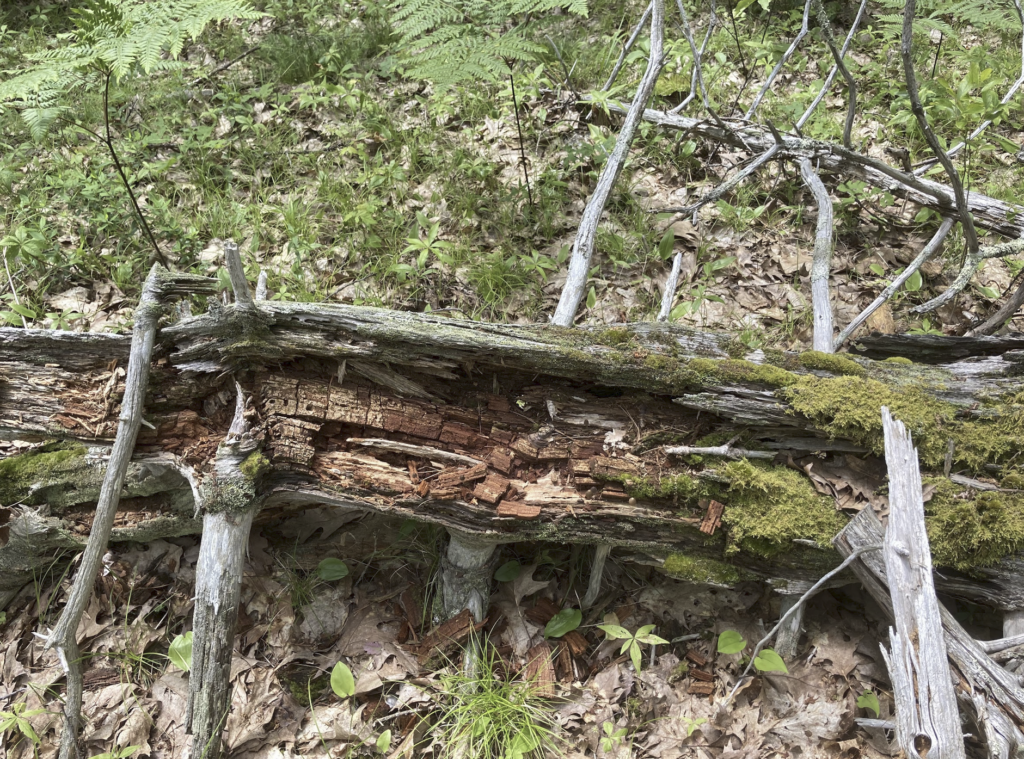
Today, I spent some time observing this decaying log. Based on the way the remaining branches are placed around the trunk and the surrounding forest composition, I’m guessing this is a white pine. In our reading this week, we learned about how coniferous trees tend to rot slowly from the inside out, growing thick mosses on top, and this tree was a perfect example of that. The trunk is very decayed, and is indistinguishable from the similarly moss-covered forest floor in places. The mossy log is supporting a wide variety of plants, fungi, and animals. I noticed moss, lichen, ferns, mushrooms, and ants all utilizing the log for resources and habitat. As I was walking away, I startled this well-camouflaged frog.
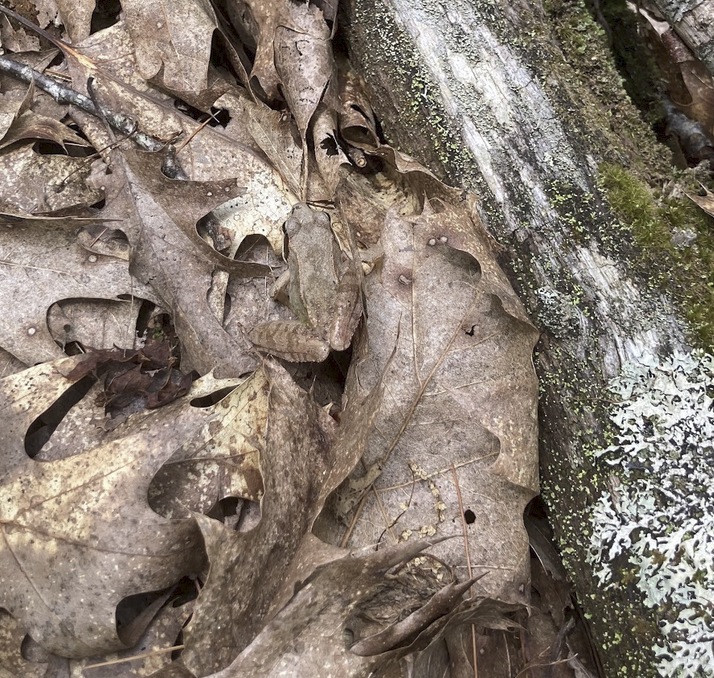
A New Species:
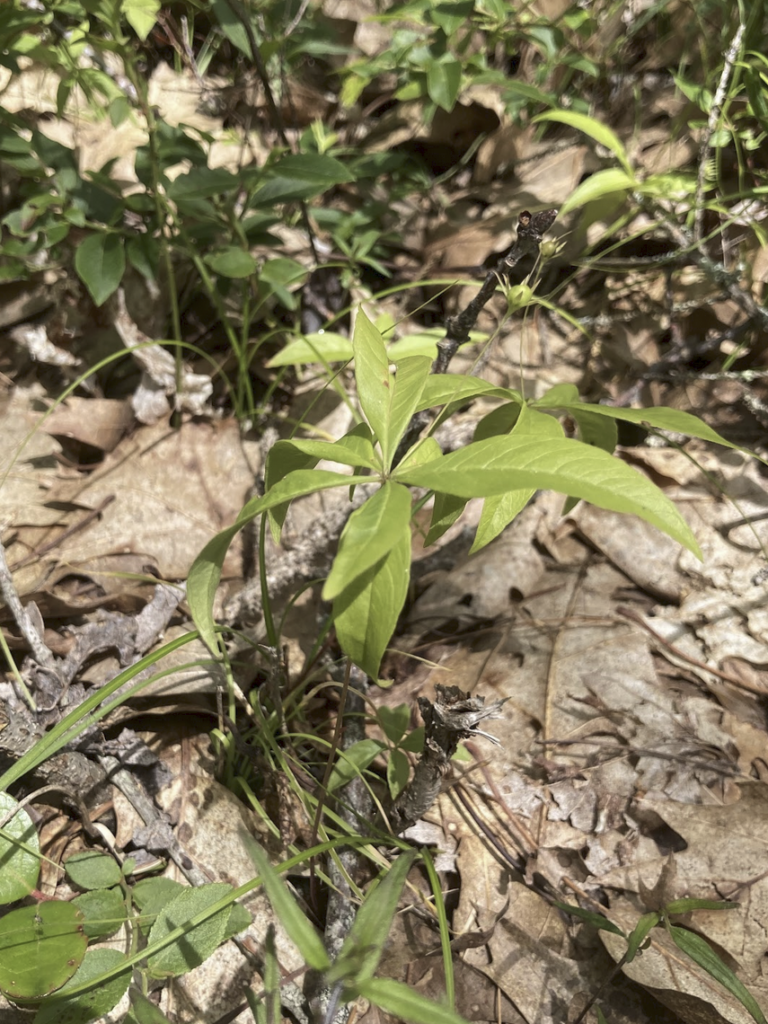
I decided to learn more about one of the small plants that made up a lot of the undergrowth. I used the Go Botany database from the Native Plant Trust to identify this plant as Lysimachia borealis (also known as Trientalis borealis), with the common name starflower. Helpful characteristics in identifying this plant were the whorled pattern of the leaves and its ability to grow in the partly shady to shady forest undergrowth. Using the characteristics search from the database and comparing photos from the database with photos I took at my site, I was able to identify the species. A fun fact about the starflower is that when it flowers, it usually has seven petals, which is an uncommon occurrence.
Sketches:
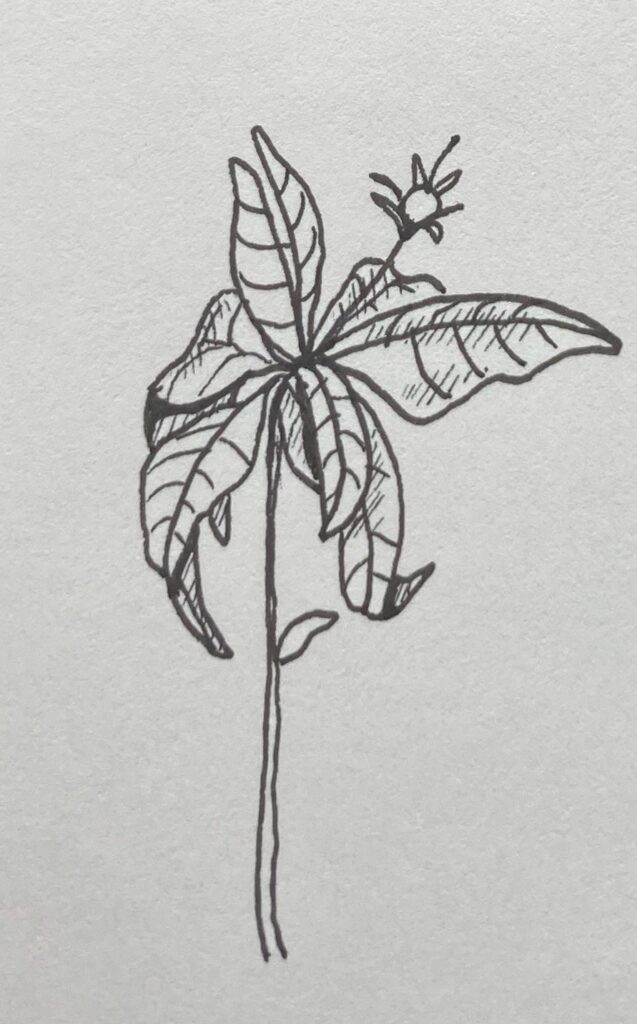
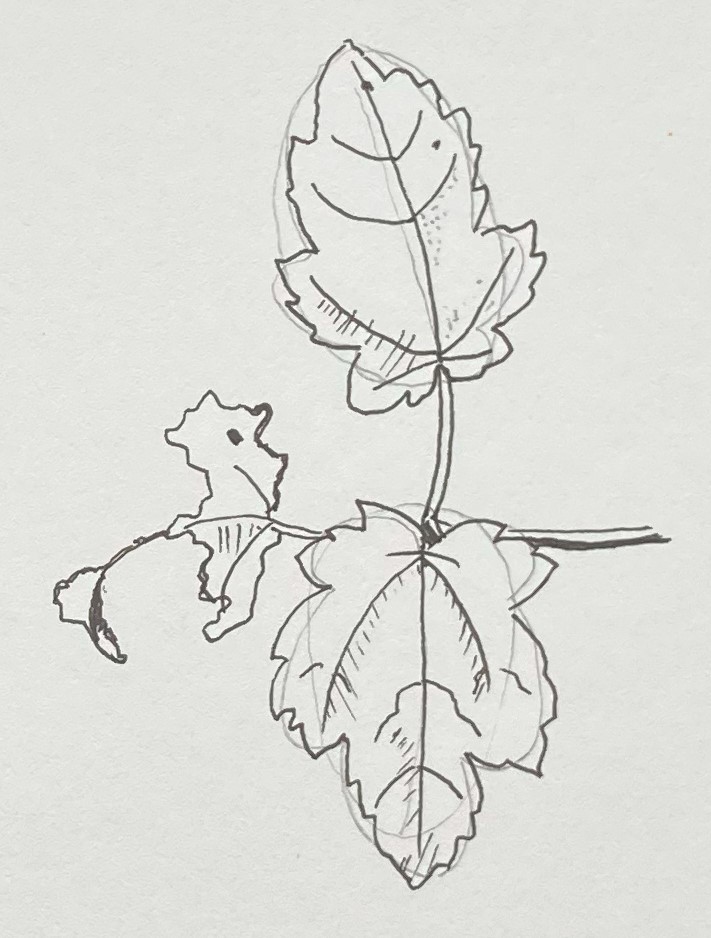
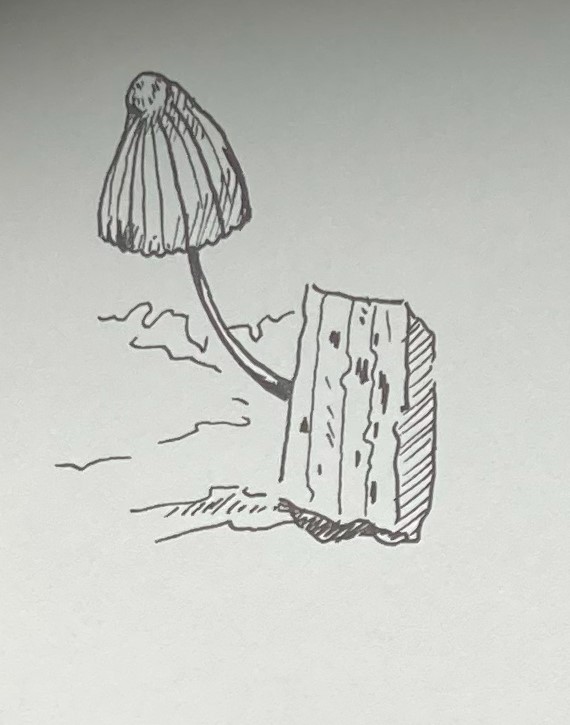
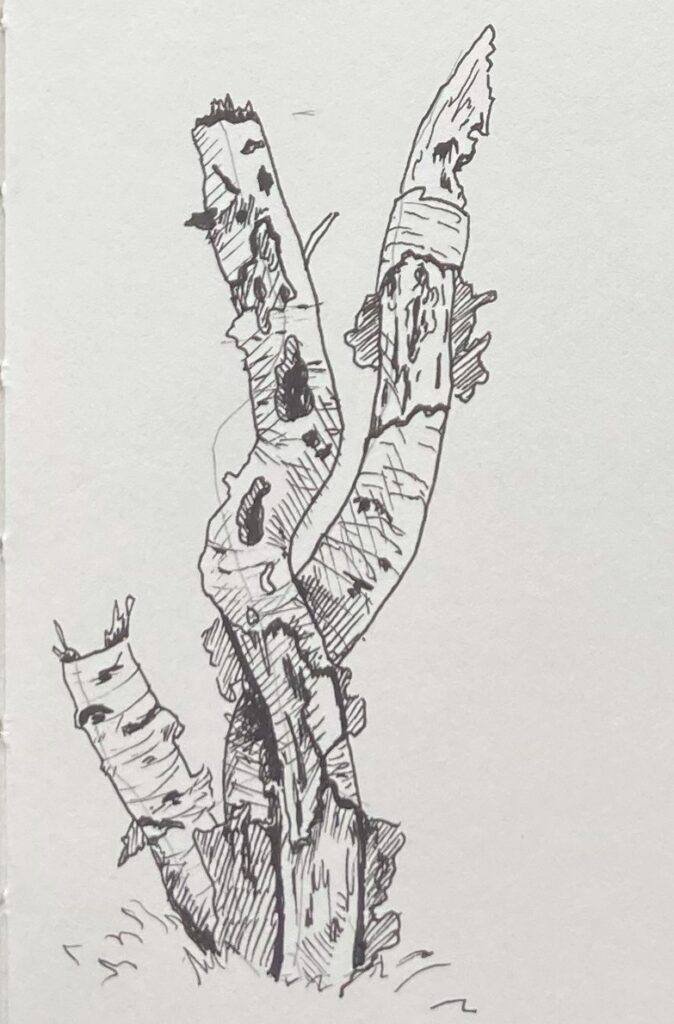
I really enjoyed sketching for this blog entry. I enjoy drawing, but I don’t normally do much sketching in the field. I found it interesting how I noticed different characteristics of the subjects I was sketching. I’ve been taught in art classes to try to forget the expectations I already had about what I was drawing and focus on the shapes of what I’m looking at. This was really helpful in noticing details that I might not normally have noticed. For example, while I was sketching the starflower sample, I noticed that the horizontal veins on the leaves alternated rather than both sides matching up, which ended up being helpful in identifying the plant later.
Something I’m interested in investigating next week is plants which may be indicators of the site conditions of the preserve. While I was researching the starflower, I learned that it usually grows in moist, acidic soil, so I’m curious if I can find other indicators of these conditions.