Location: Rachel Carson Salt Pond Preserve, New Harbor, ME,
Date: Wednesday 6/21/23, 4:00pm
Weather: It has been raining here nearly all week, but today was warm and sunny, with a few clouds and a slight breeze.
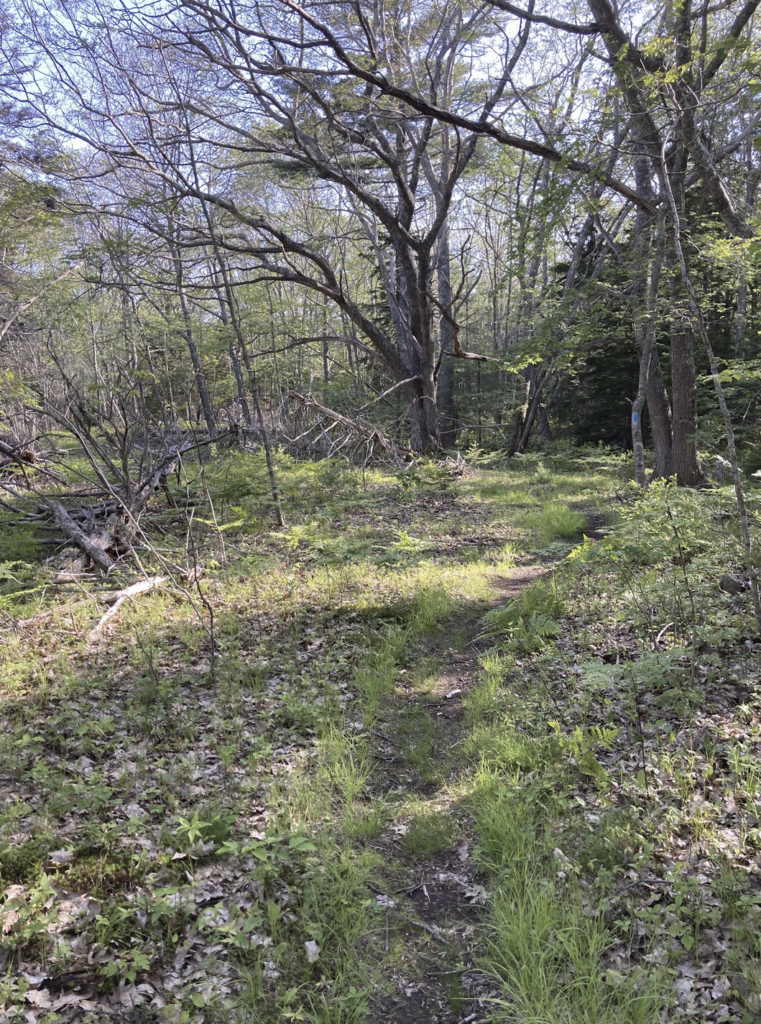
The Preserve: The Salt Pond Preserve trail begins at a large, rocky tide pool, but if you continue in the other direction, there is a trail about a mile long through the woods, which I chose as my site for this Wonder Blog project. The trail begins up a steep slope, then flattens out as you progress through the trees. Starting out, the forest was made up of mainly large oak trees, with smaller conifers scattered below. Something I notice here is that the trees are very widely spaced, letting light reach the forest floor. There are many smaller plants growing between the trees, including grasses, thick patches of moss, and wild strawberries.There’s also several old stone walls that run through the woods. While I didn’t see many birds during my visit, I could hear a wide variety of bird calls.
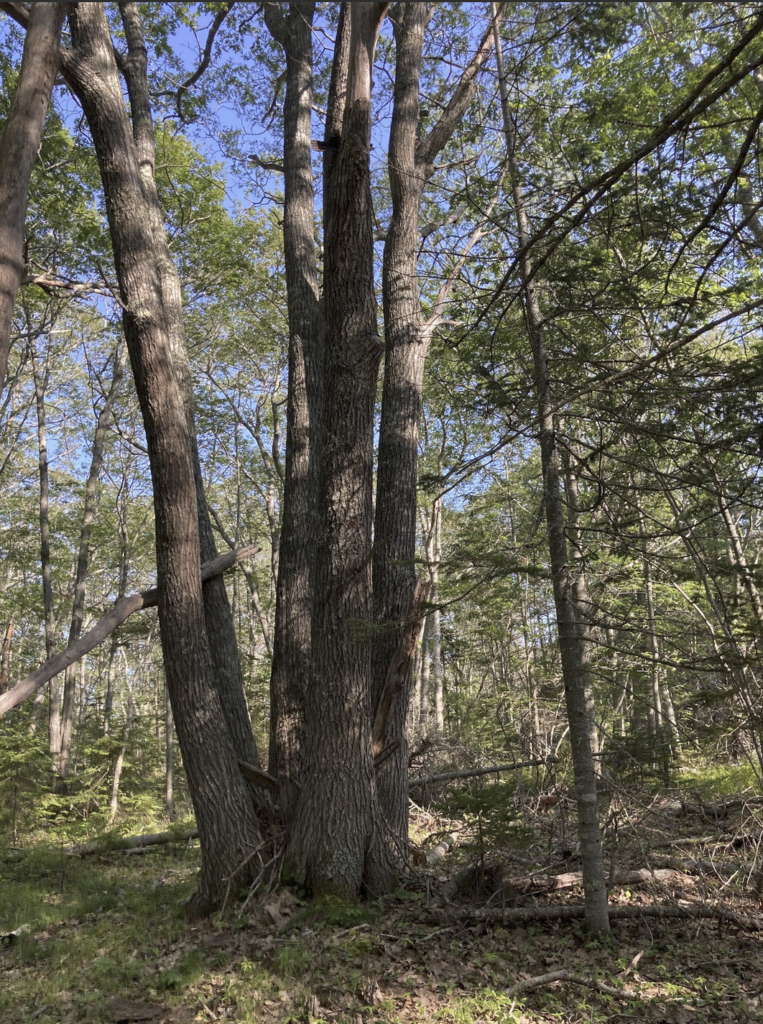
I paused for a while to look at this large tree a few feet off the trail. The way the trunk splits into five right at the base drew my interest. This was one of the tallest trees in the area, and each trunk is about eighteen inches in diameter. Most of the tree is healthy, but one large branch at the top has died, and large pieces of bark have fallen to the ground. Looking underneath them, I found many insects hiding in the dark, wet area created by the bark.
As I continued along the trail, I was surprised to see the types of trees change significantly over small areas. There were places that were largely dominated by oak trees, others that had mainly coniferous trees, and some with primarily maple and birch.
Question Marathon:
- Why are the trees spaced so far apart here?
- Are there different animal species present due to the spaced out trees and plants growing?
- Why are the deciduous trees in this area so much taller than the conifers?
- How does the nearby ocean affect this forest?
- How do seabirds, such as gulls, interact with the ecosystem here?
- What kinds of organisms live in these thick mosses?
- What is the purpose of the tall tendrils growing from the moss?
- Why did this tree grow apart into several trunks?
- What caused the large branch to die?
- Why was the rest of this tree able to survive?
- Why is moss only growing on one of the five trunks?
- What kinds of insects live in the environment created by fallen bark pieces?
- How has the frequent rain affected the plants in this area?
- What insect created all of the holes in these leaves?
- Is it a native or invasive species?
- Will these trees survive with this damage to their leaves?
- What was this land used for when these stone walls were built?
- How long ago was the land developed? And how long has it been regrowing?
- How is the forest different because of its prior use?
- How does trail maintenance change this place?
- Why is there so much variation of dominant tree species within a small area?
- How do these patches affect animal biodiversity here?
- What caused the burls to grow on this tree?
- How does this slope impact the types of plants growing here?
- What caused the high number of fallen trees?
Answer to Questions 17 & 19:
I found an article from The Nature Conservancy, who maintain the Salt Pond Preserve, about what characteristics of a forest can reveal about past land use. The stone walls that I found likely indicate that the land was once used for agriculture. Many forests in New England were cleared in the 1800s so the land could be used for pastures or growing crops, but many of these fields have now been abandoned, allowing for forest regrowth. The article states that a stone wall with mainly large stones, like the one I found, most often bordered a pasture. Forests on lands that were previously pasture have different characteristics than other forests. One example mentioned in the article is wolf trees. These trees are left to grow in pastures, so they grow more spread out, with more branches growing lower on the trunk. While trees that grow in a forest mainly grow branches at the top of the trunk, where they can reach light, wolf trees grow in pastures where light is highly accessible. They can remain in forests after they regrow, and provide habitats for many bird and mammal species.
Source: Hausheer, J. E. (2020). A Walk in the Woods: Reading New England’s Forests. The Nature Conservancy. https://blog.nature.org/2020/01/13/a-walk-in-the-woods-reading-new-englands-forests/
During this visit, I was interested to see the ways that the forest changed as I walked along the trail. I would like to spend more time at my next visit looking into some of the differences in the land that might have caused the trees and vegetation to grow in this way. I notice that there are changes in slope and exposure to the coast, and I’m curious if I can find any patterns between the vegetation and conditions like these.