Posts

City Nature Challenge

  • I explored parts around campus, Centennial Woods, and Old North End
  • iNaturalist is pretty self-explanatory and easy to use. I found it very accessible
  • I encountered lots of species of trees, although not that many animal species
  • I was surprised that Ukraine had so many observations since they’re in the midst of a war. I’m surprised that so many cities from around the world participated, I wonder how CNC was advertised in these places and what kinds of people participated
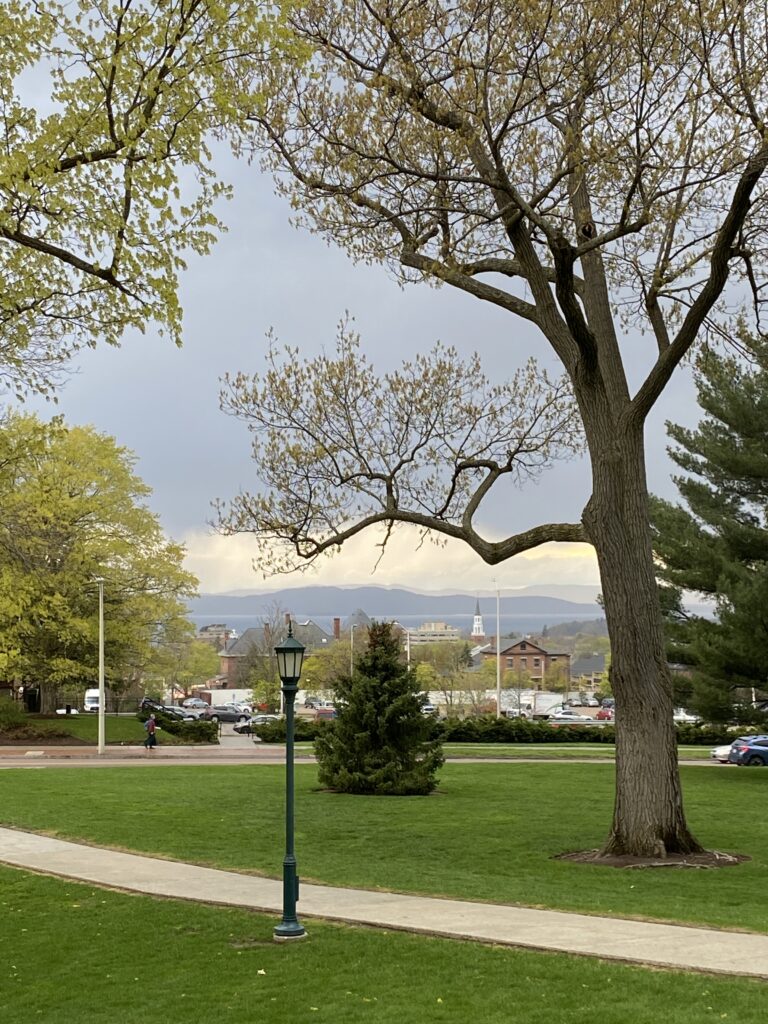
April 28th – Last visit to my site

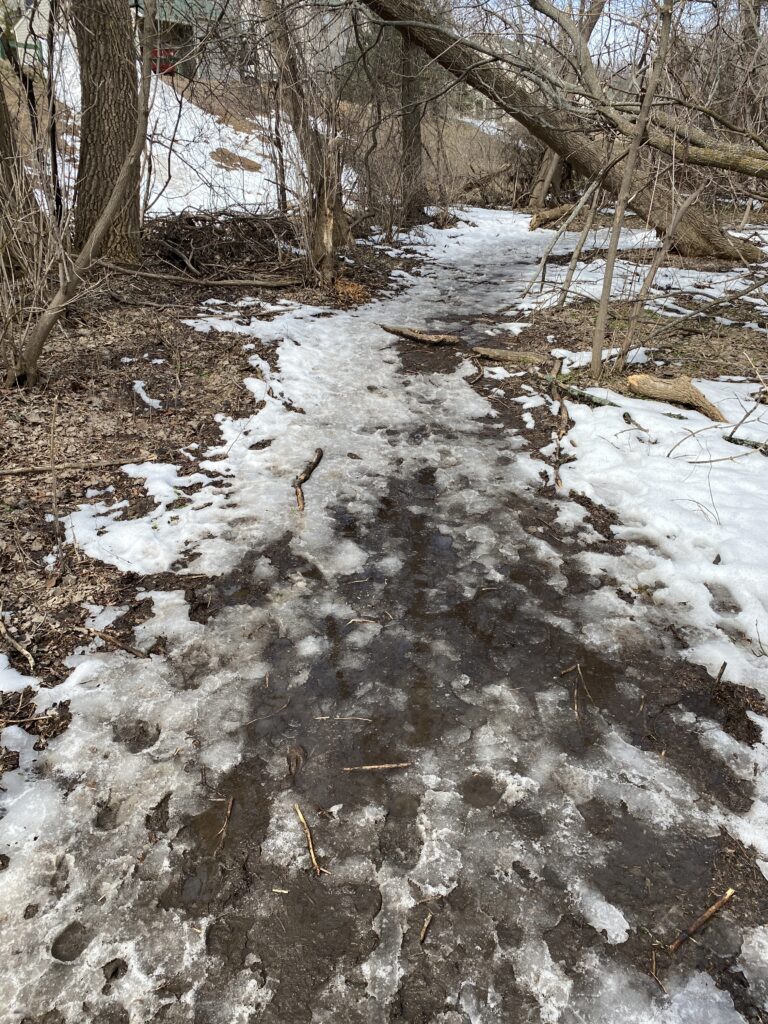
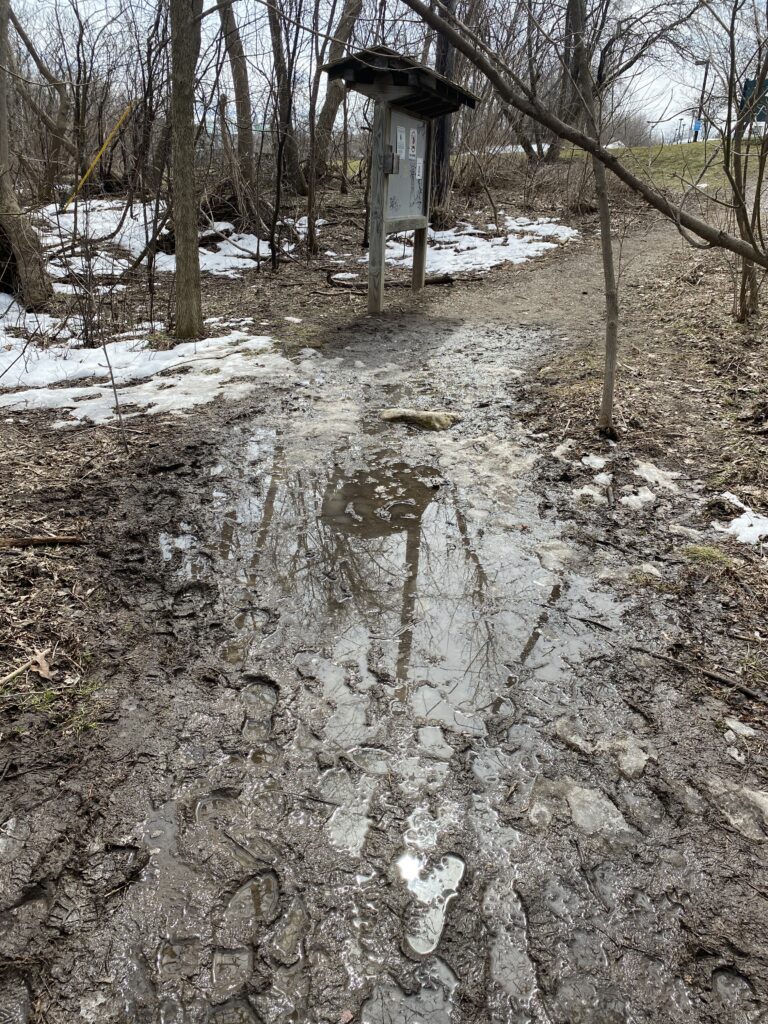
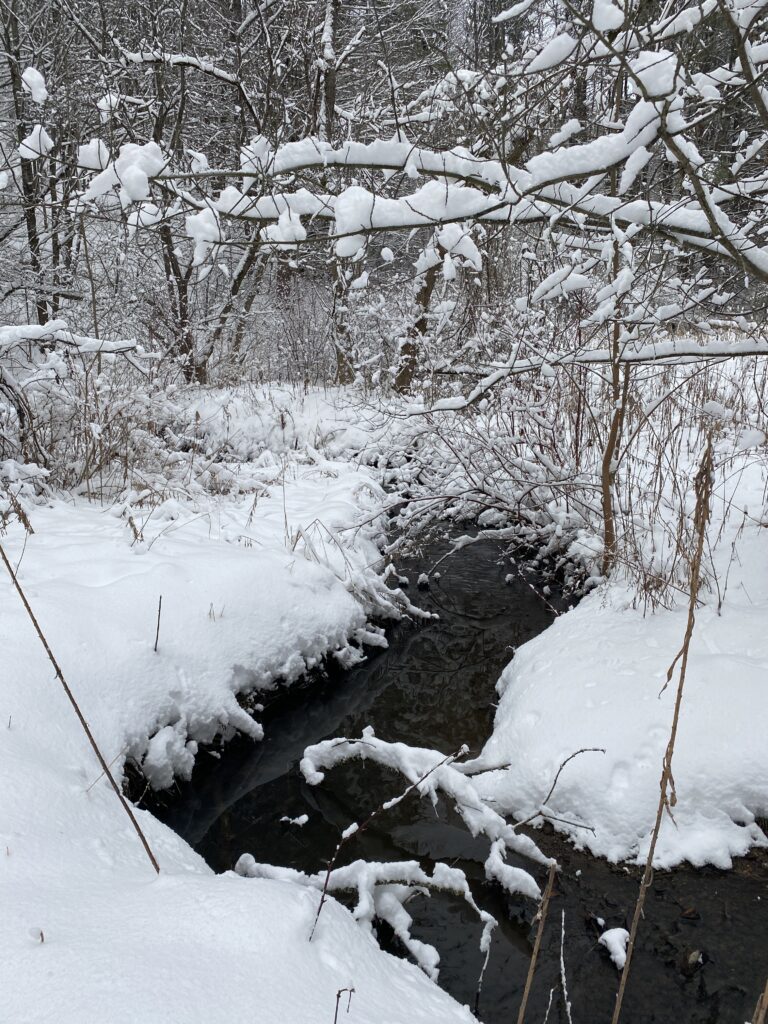
How my site has changed over time – In the winter my site used to be dead quiet, there was lots of snow on the ground and it overall felt very dormant. Now, everything is beginning to bloom and come back to life, the birds are chirping and the stream is babbling. The winter storms probably caused some trees to fall down or their branches to break. The spring rain has also affected the landscape by making everything muddy and making the stream have a higher flow.

Landmarks I’ve become familiar with – the stream, the path and platforms on it, the hill and the way the path slopes up and down the landscape, the feeling of being at the bottom of the valley

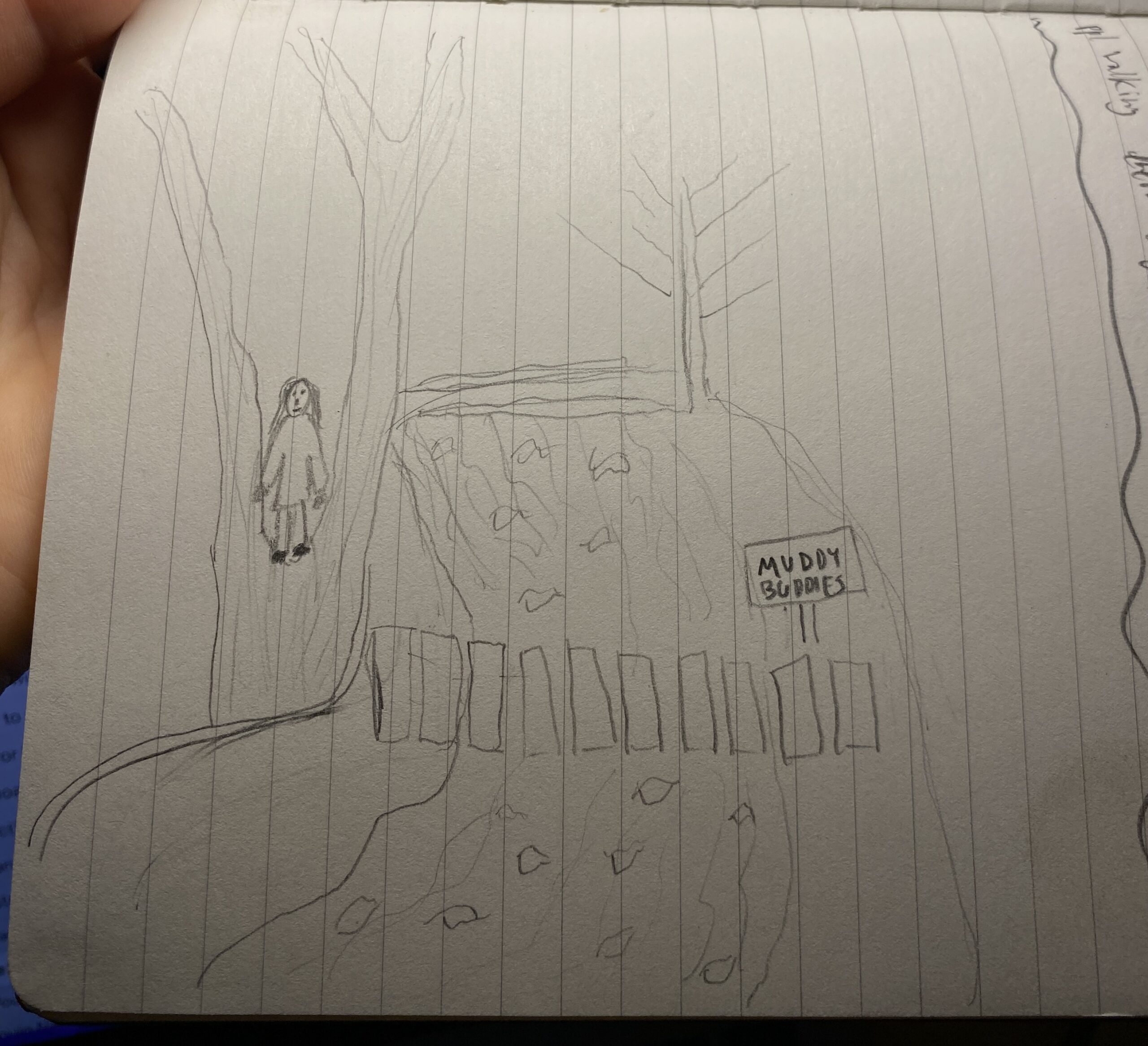
Ways that nature and culture intertwine – the people who walk by leave their mark on the environment. People walk their dogs here, some group/organization put up these platforms to help humans traverse the landscape easily while avoiding the mud. This is a space where people come to run, children play freely and make rock stacks. The muddy buddies sign is a sign that children use this space.

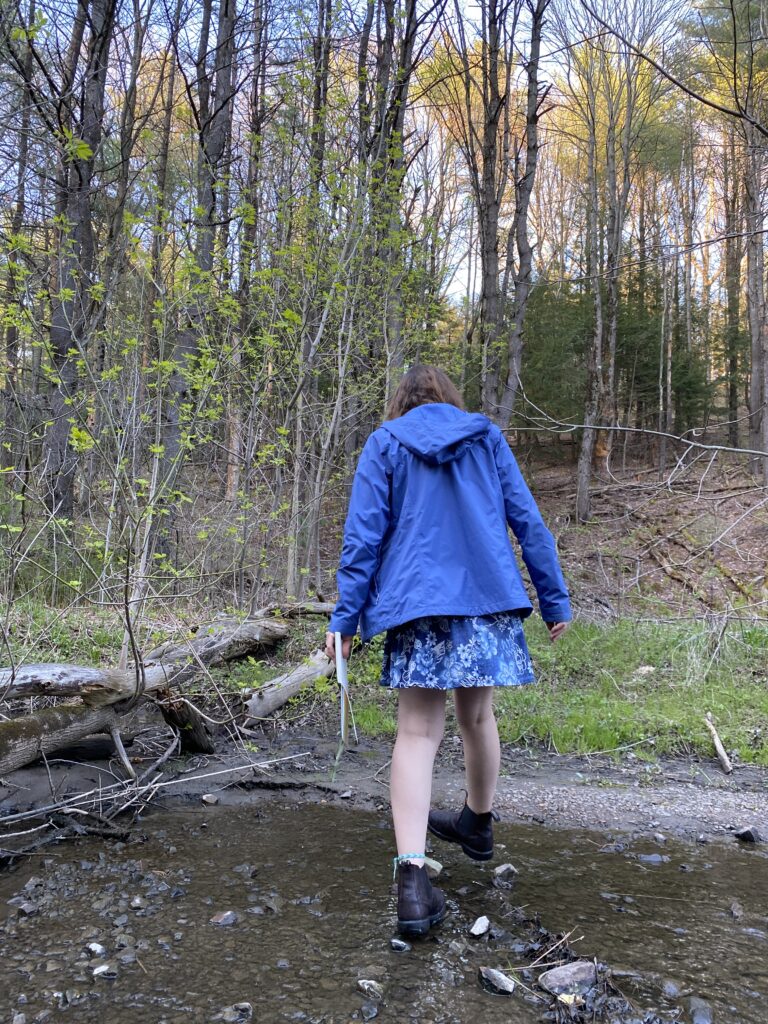
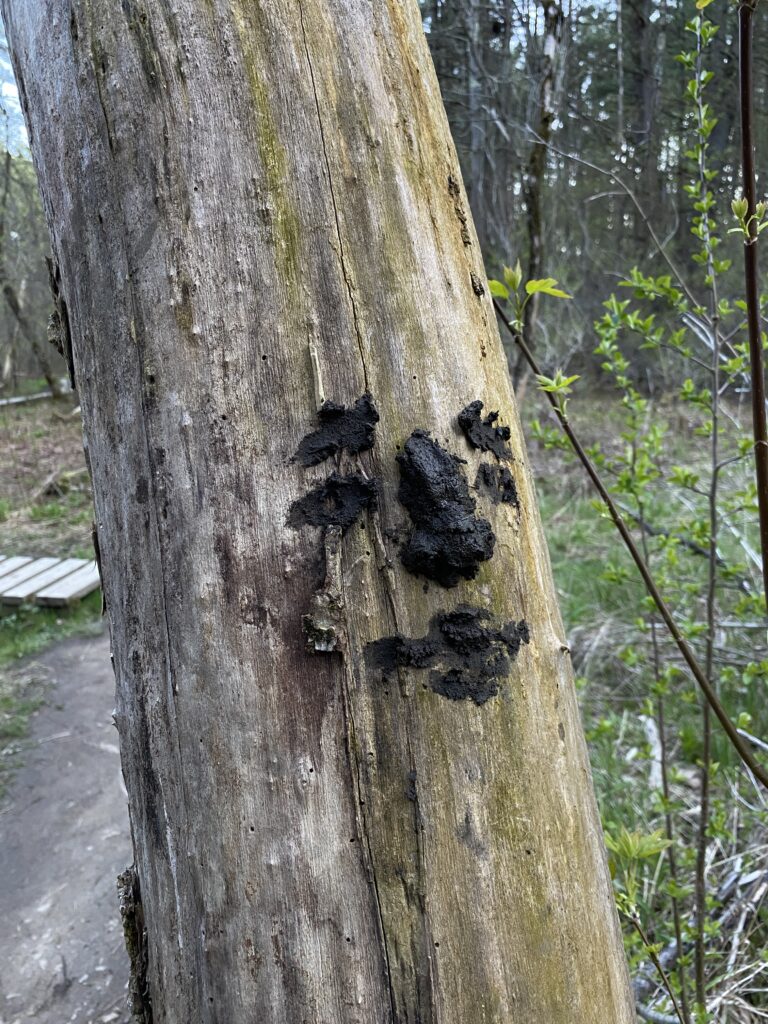
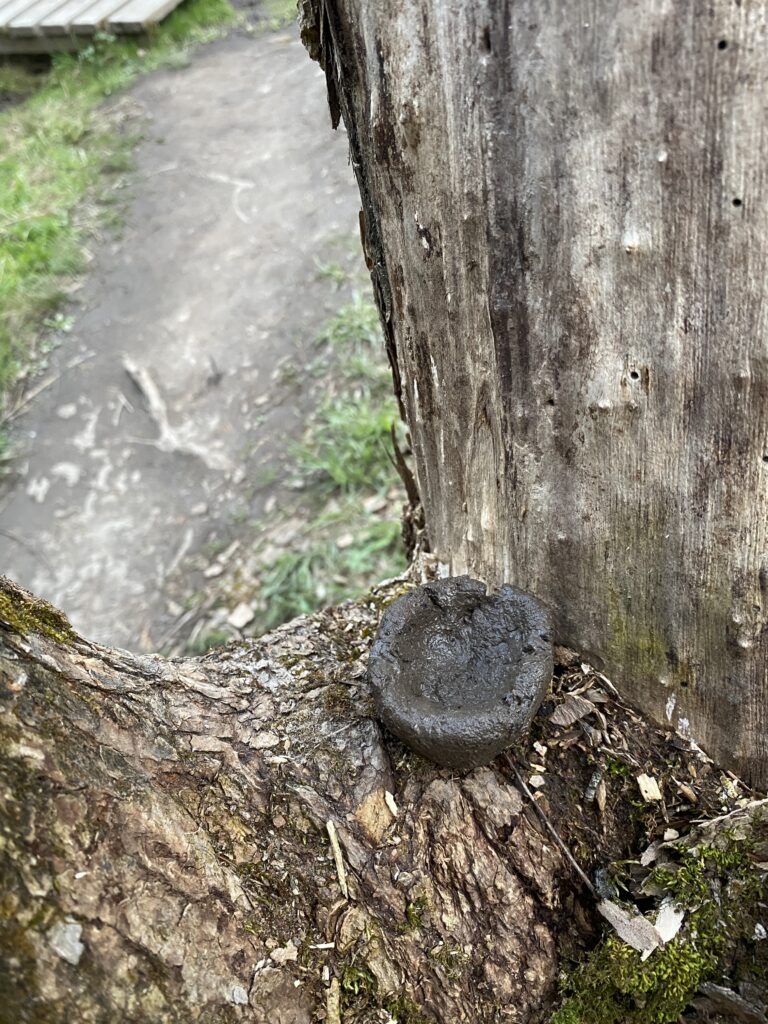
I do consider myself a part of my place because I feel really connected to the nature there. I felt very comfortable walking in the stream and squelching my boots in the mud. My friend came with me and she made a mud face on a tree trunk (pictured below) and was running her hands through the water. Centennial Woods feels very welcoming and safe to me, which might also be because it’s owned by UVM and we’ve learned so much about it during NR 1 and 2.

sit sketch

April 10th – Last check-in with my oak :/

Changes I observed:

  • No more snow on the ground!!
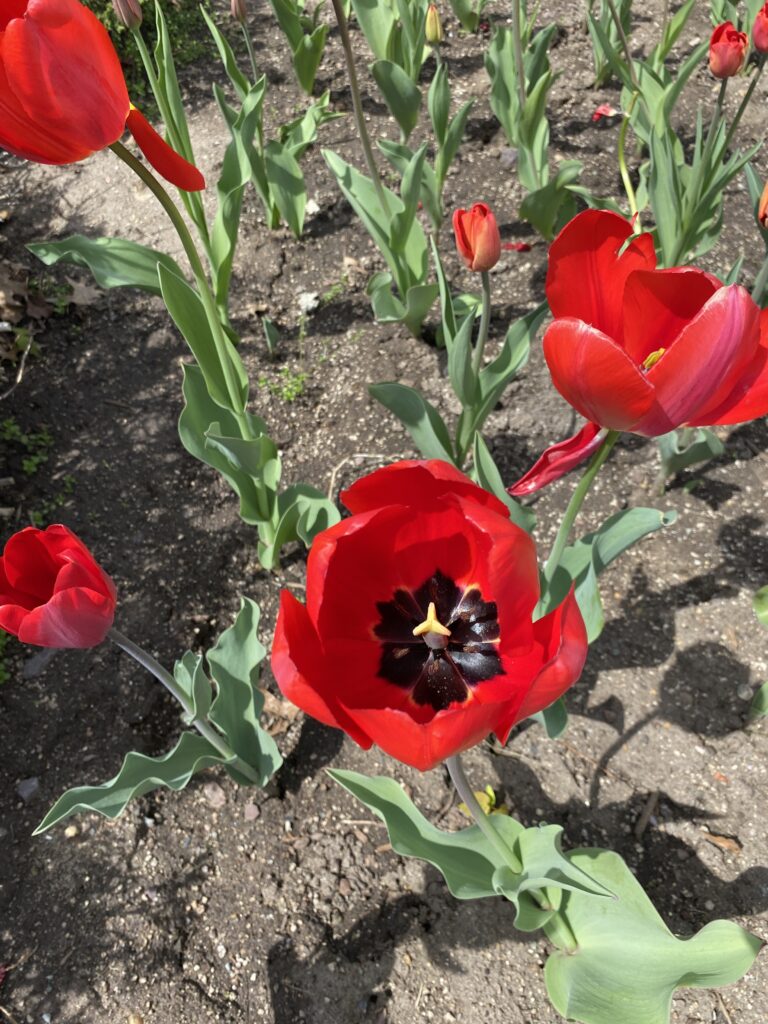
  • Spring is springing! 💐🌱🌷
  • The ground wasn’t muddy anymore
  • There weren’t as many signs of spring as I expected, such as flowers blooming, but I think that I’m just not used to spring coming later in Vermont, since it is a pretty different climate than my home state (DC)
  • The weather is even nicer than it was at the end of March 🙂
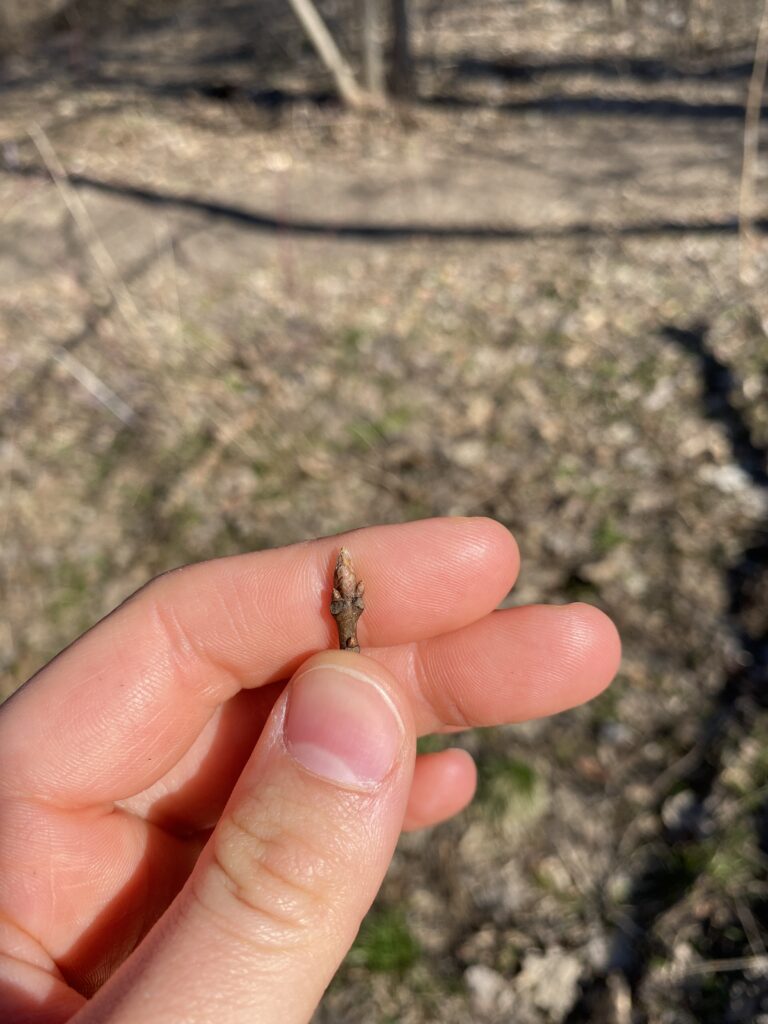
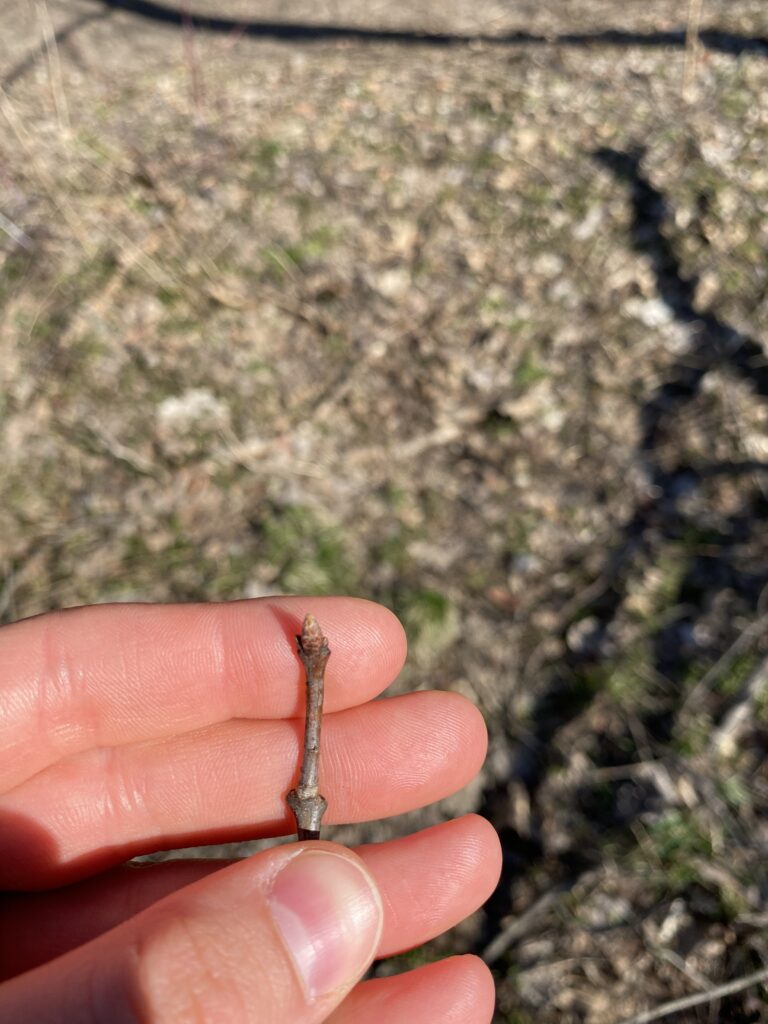
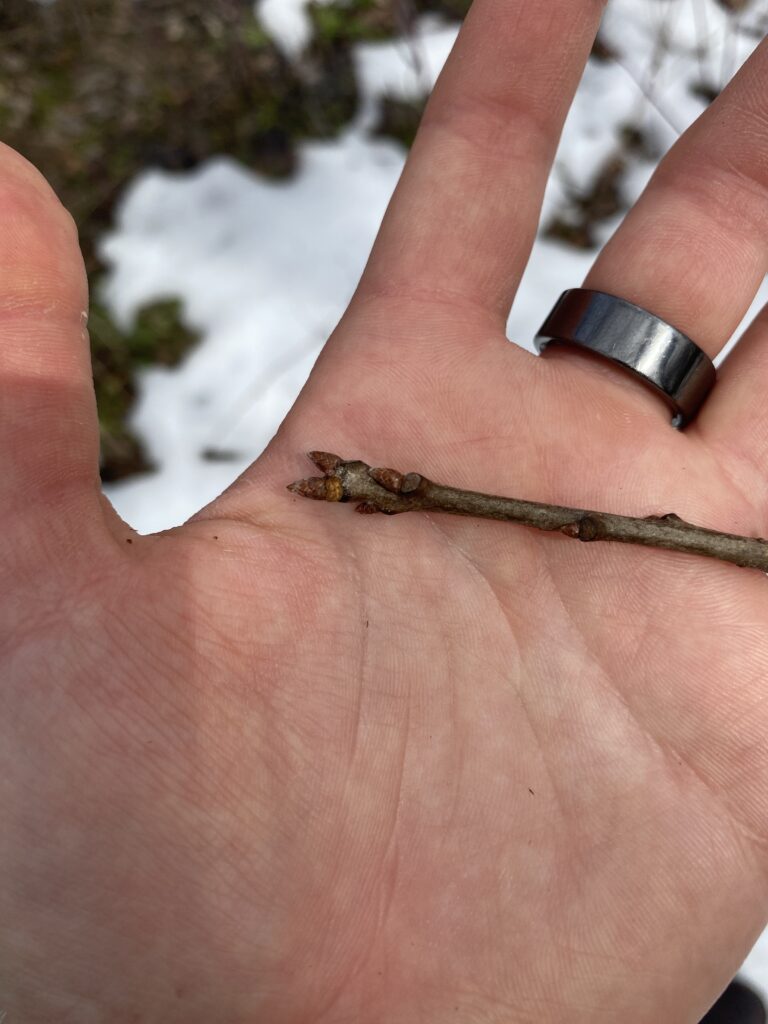
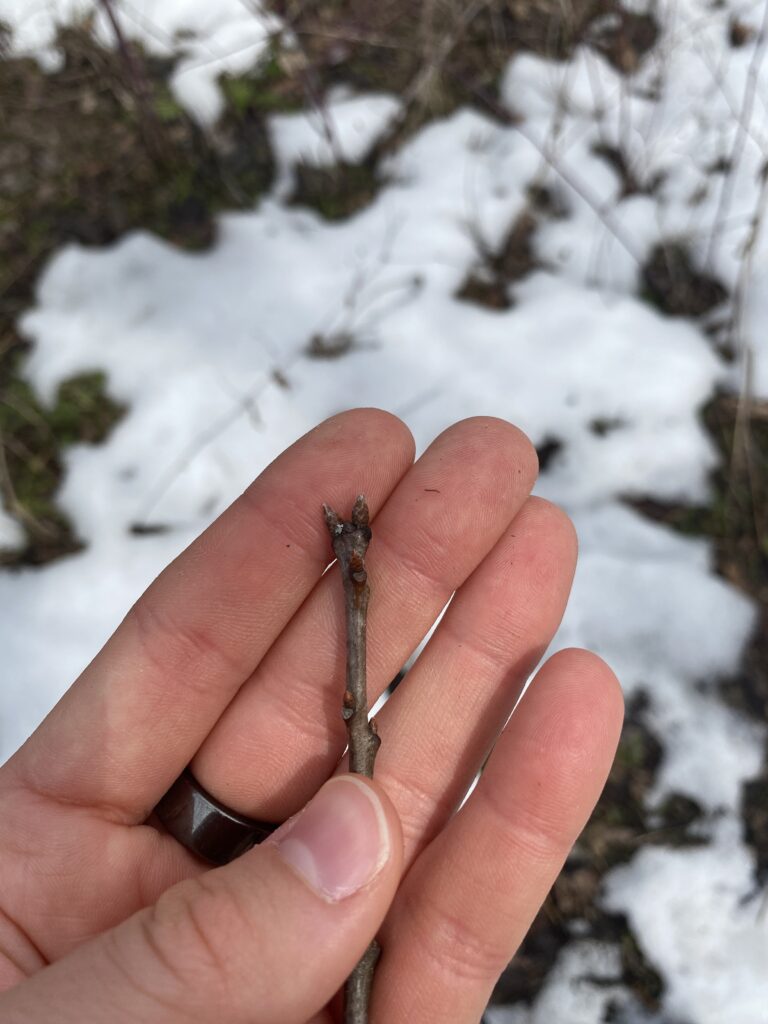
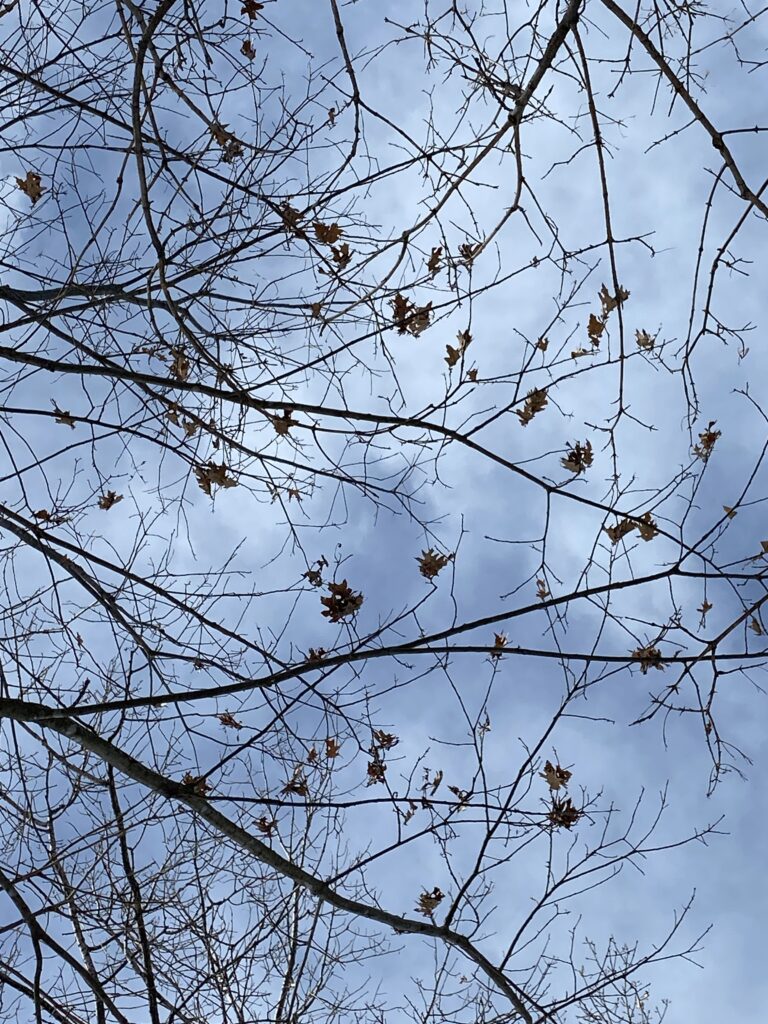
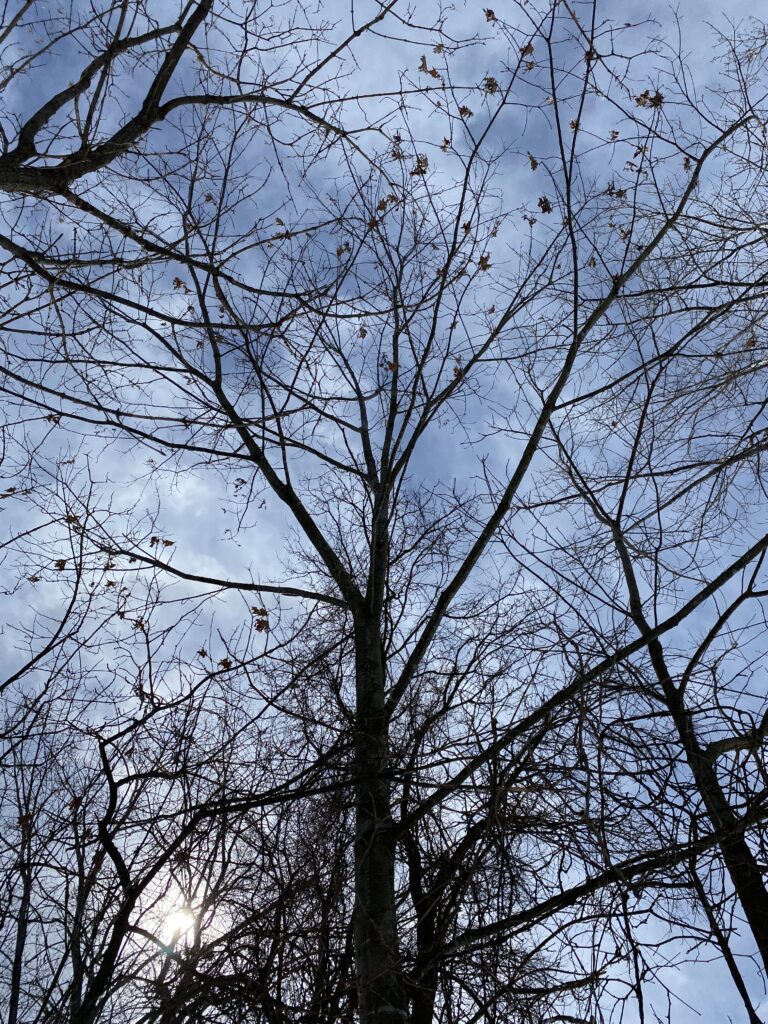
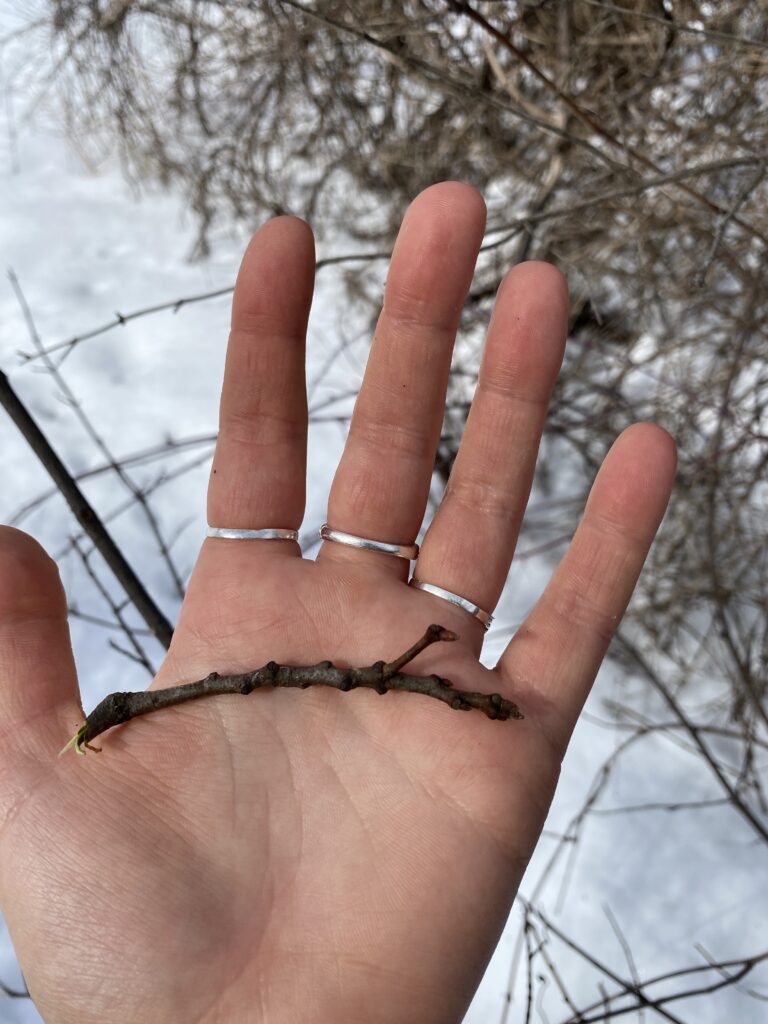
  • My tree doesn’t seem to have changed very much, the buds have not developed much at all, which feels kind of strange to me
  • The buds seem to be of a lighter color, before they were more of a dark red, and now they look more light brown
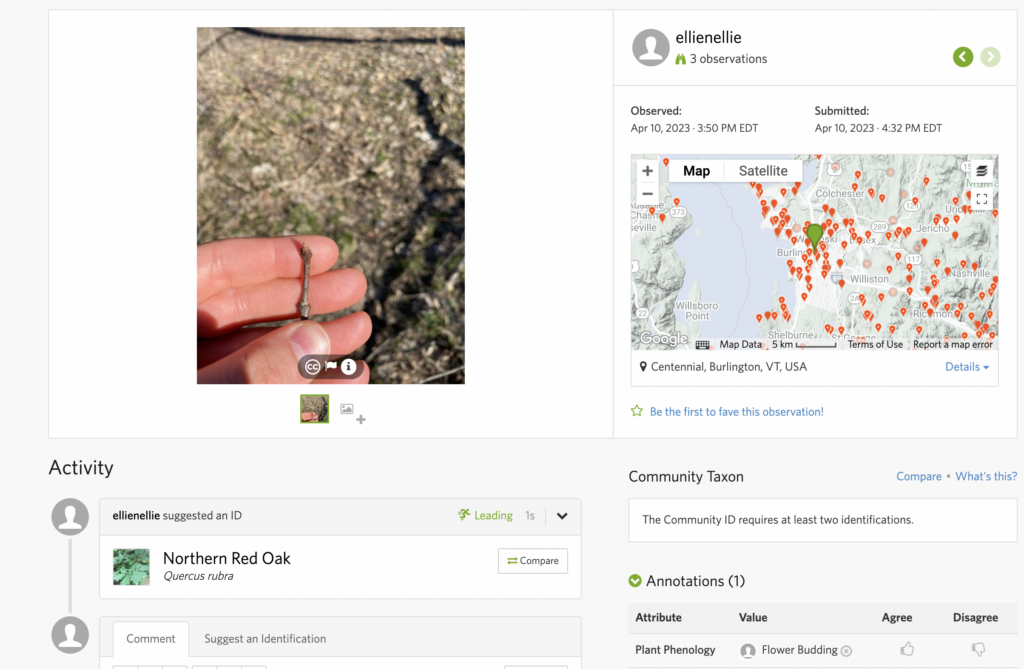
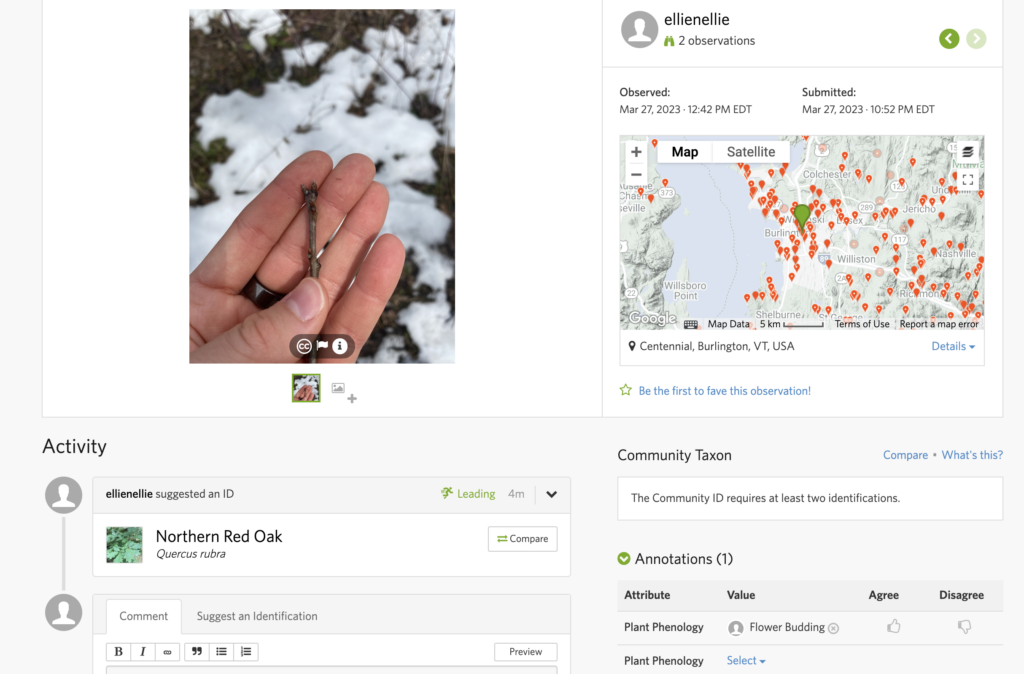
iNaturalist Screenshot

Monday, March 27th – Update on my oak!

Changes I observed

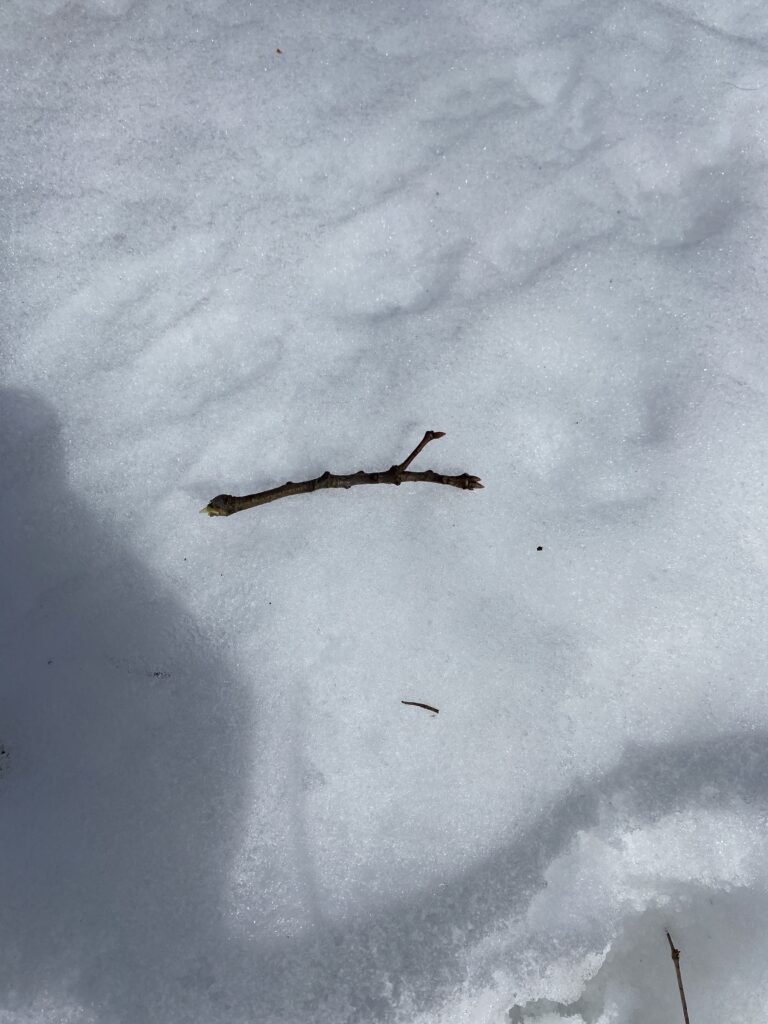
  • You can definitely see the new growth on the twig, which is really exciting!
  • Centennial was super muddy and slushy, as all the snow is slowly melting
  • The lack of snow makes the landscape feel and look very different
  • My tree looked pretty much the same, except for how the bud changed of course
  • There are still some leaves on my tree
  • It’s a lot warmer out now, which is really nice!

Friday, March 10th – Northern Red Oak!

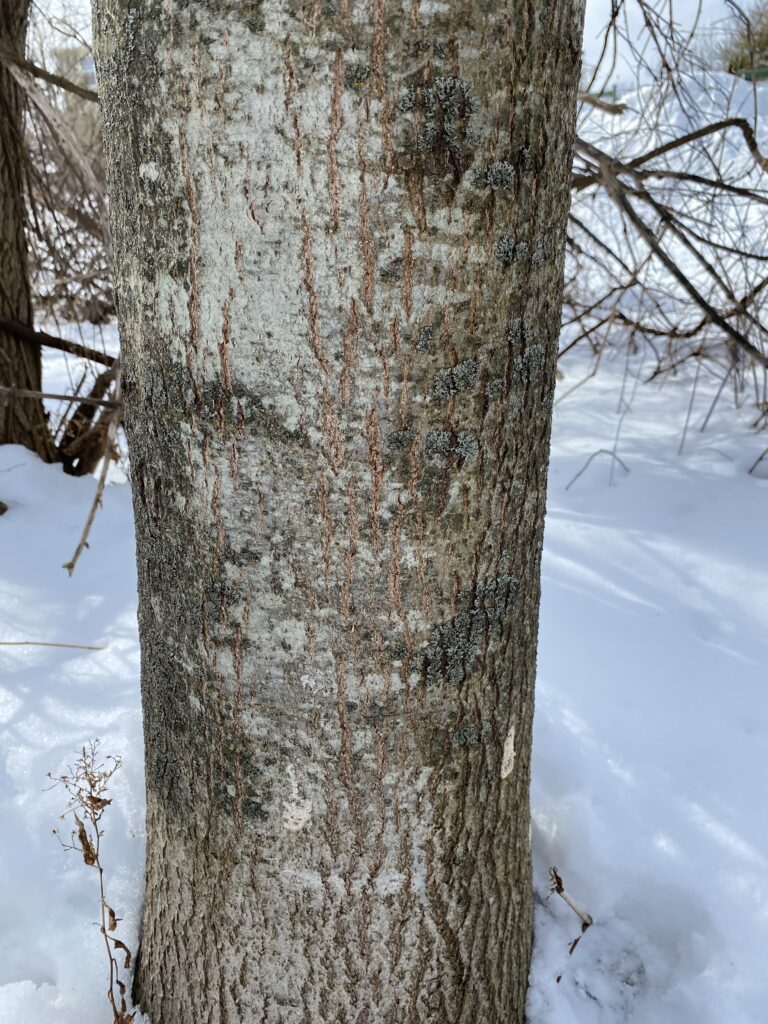
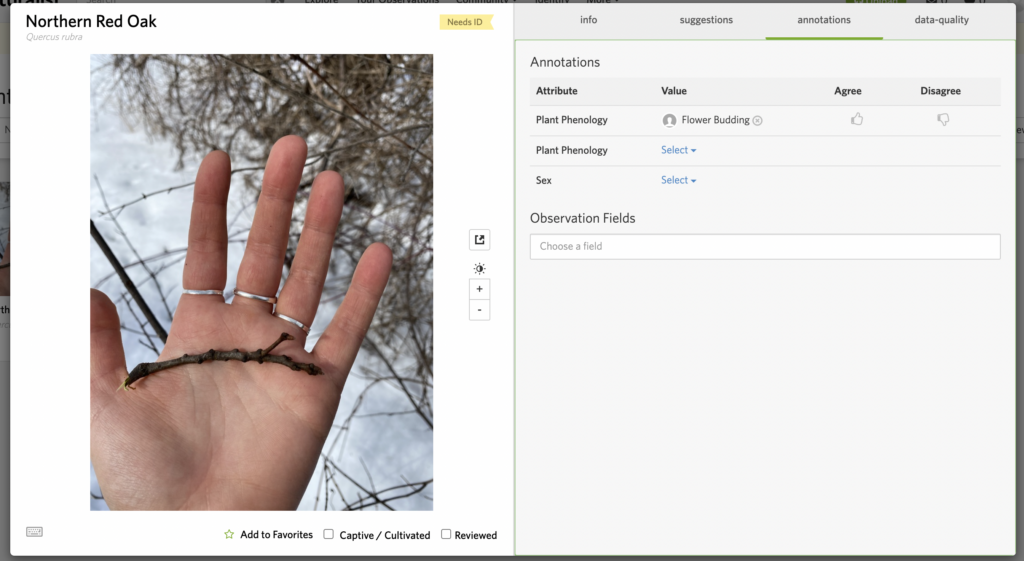
Why it’s actually a northern red oak:

I distinguished this tree from being a white oak because it has pointed, rather than round, lobes. It is not a maple because its leaves are too long and narrow. It’s not a cottonwood because they have very different shaped leaves and when the two are compared one can see that this is clearly not a cottonwood.

Identification:

It was very easy to identify this tree because of its leaves. Oaks have very distinctive leaves.

Location:

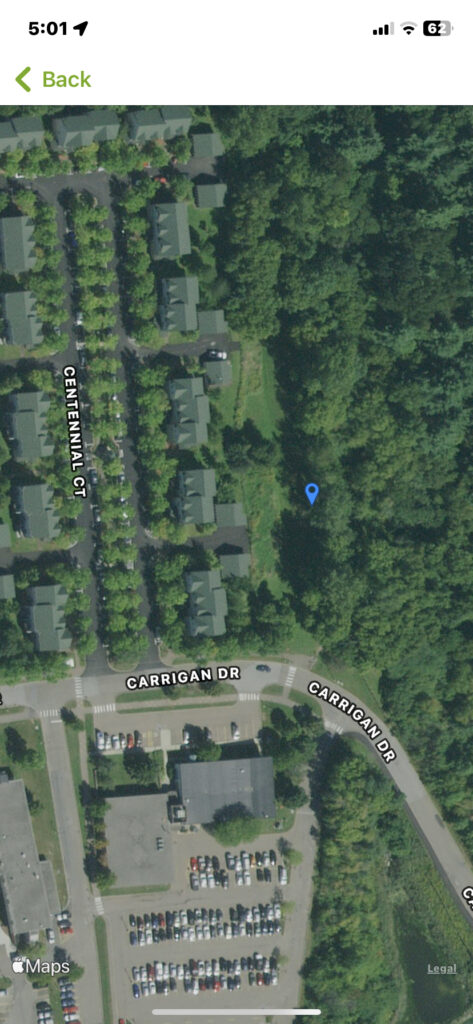
My usual spot is in Centennial Woods, but I went a little bit up the hill from there to find this tree 🙂

iNaturalist screenshot
screenshot of my location in Centennial Woods

February 20th – Second Post of the Semester!

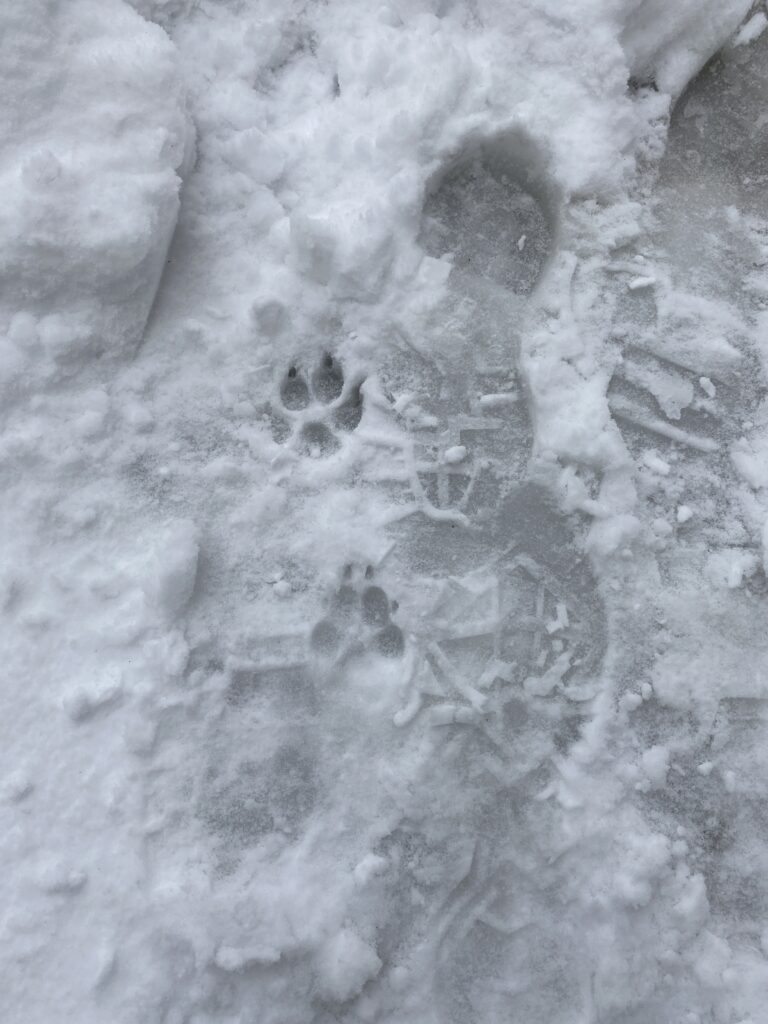
I visited Centennial Woods and I took photos of any tracks I saw during my day to day on campus. Using the iNaturalist app was fairly easy and self-explanatory. I like that we are forced to use iNaturalist because I don’t think I would otherwise have participated in the City Nature Challenge, which I think is a really cool project. Unfortunately, I didn’t see a bunch of exciting tracks, which I think is mainly due to the lack of snow recently and the fact that everything is so muddy.
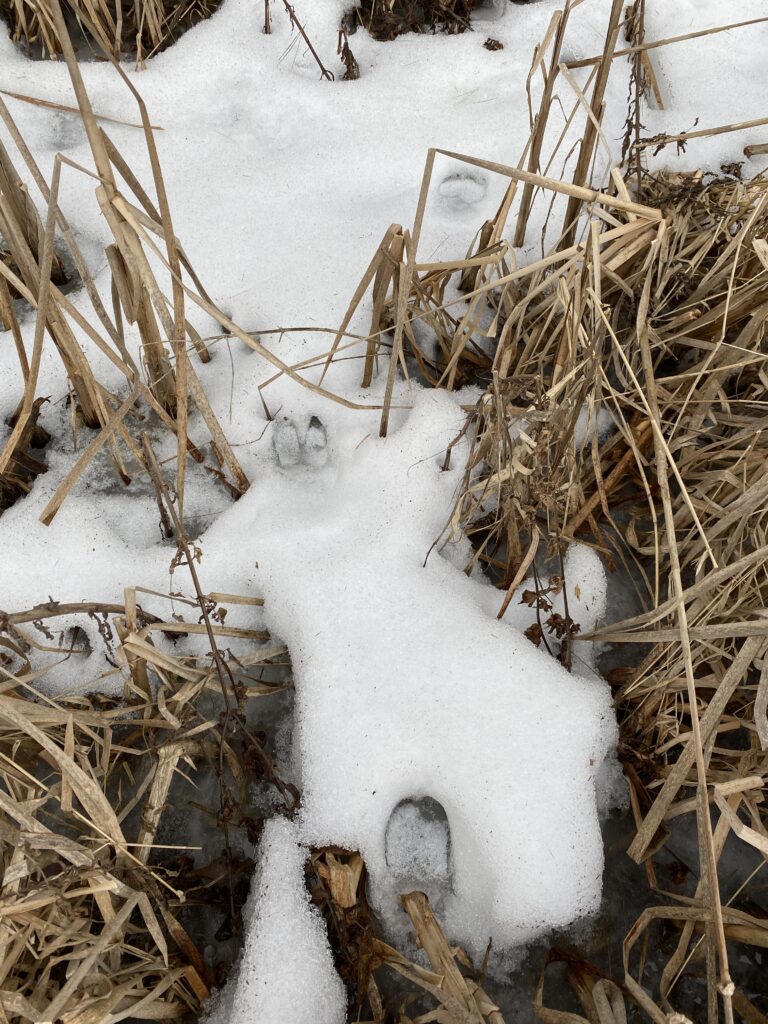
What I found:

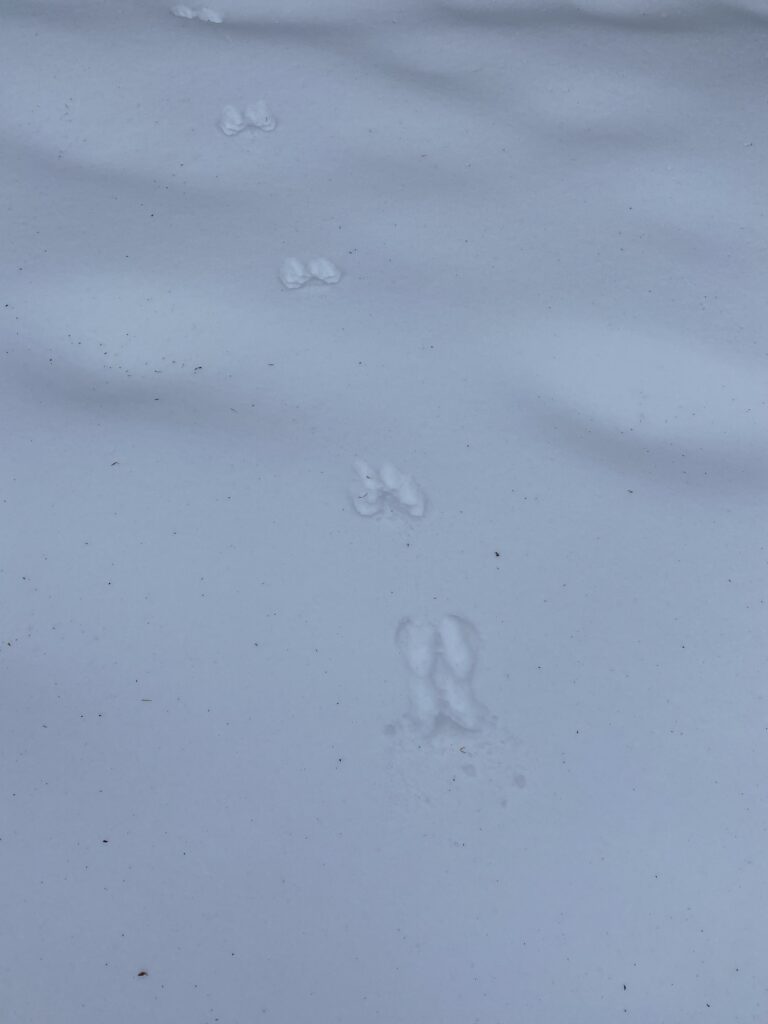
  • I’m not completely sure what species the first set of tracks below belong to. It appears that the animal is a bounder, but the tracks don’t strongly resemble any of the animals in the bounder category. They most closely resemble the tracks of a weasel, but I’m not completely sure. I feel like they could be rabbit tracks instead, although the track pattern doesn’t really seem to match.
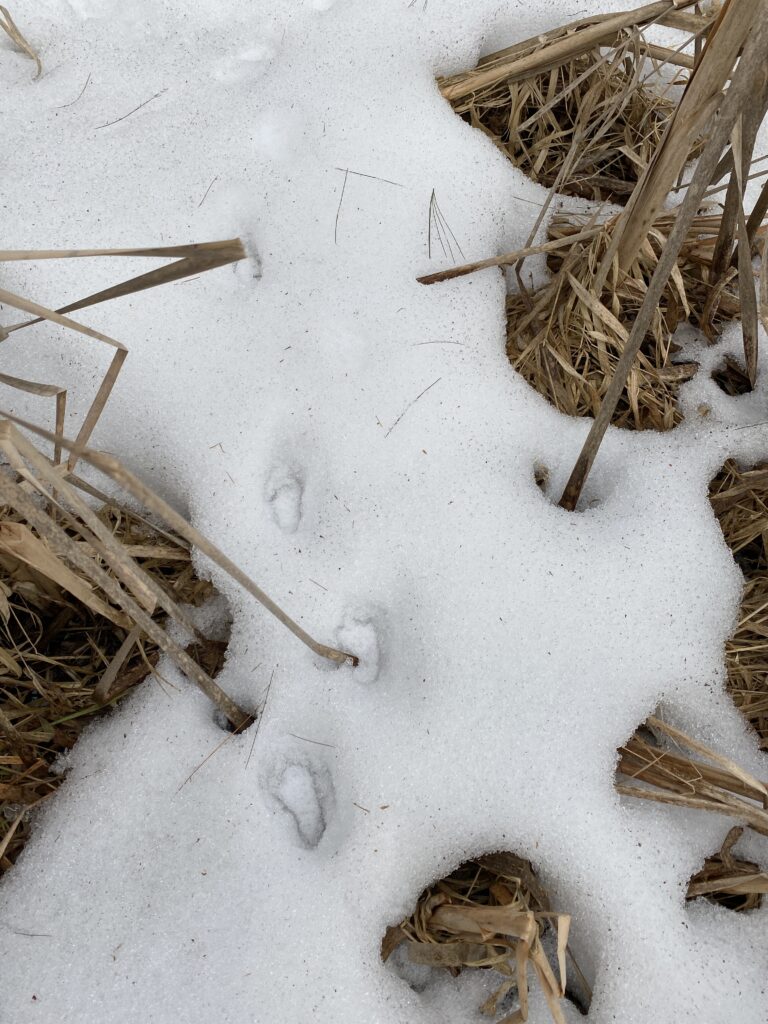
  • The cottontail rabbit tracks I saw resemble the tracks of a snowshoe hare, but after looking at the guide I realized that they are definitely too small to be snowshoe hare tracks.
  • The white-tail deer was really easy to identify because they have really recognizable tracks and the tracks were really clear because they had frozen into ice.
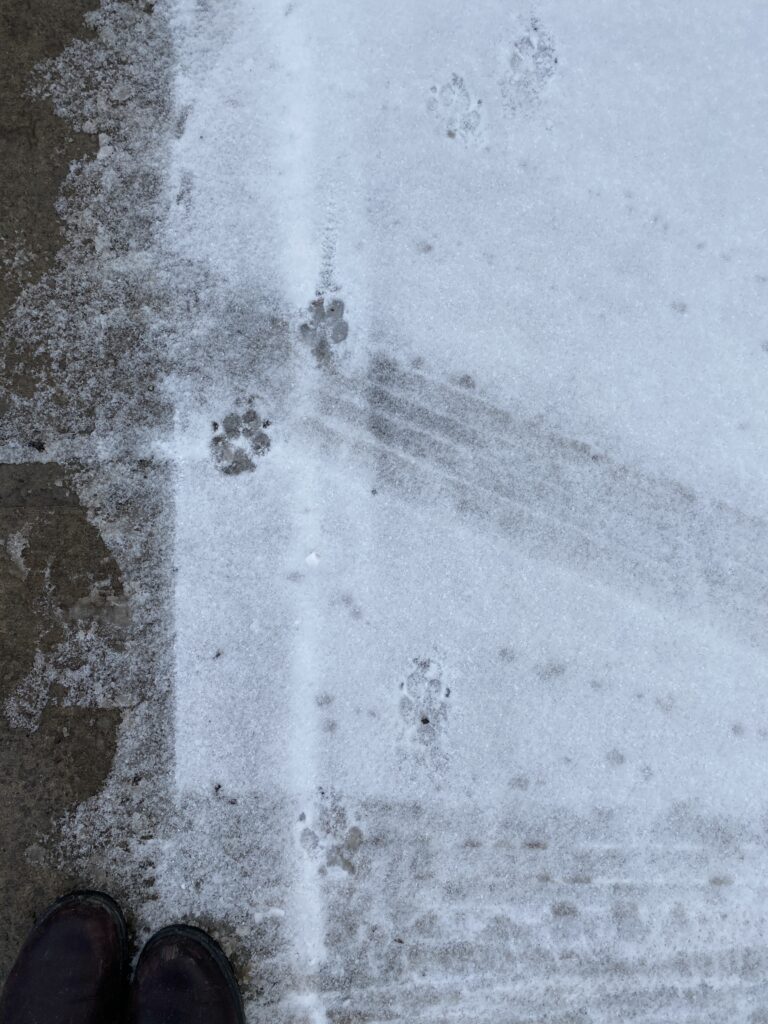
  • The dog tracks that I saw look like they could be coyote tracks, but since I found them so close to campus and where people regularly walk their dogs, I figured it is a dog track.

First Blog Post of Spring Semester!! – NEW SPOT!

Wildlife observations:

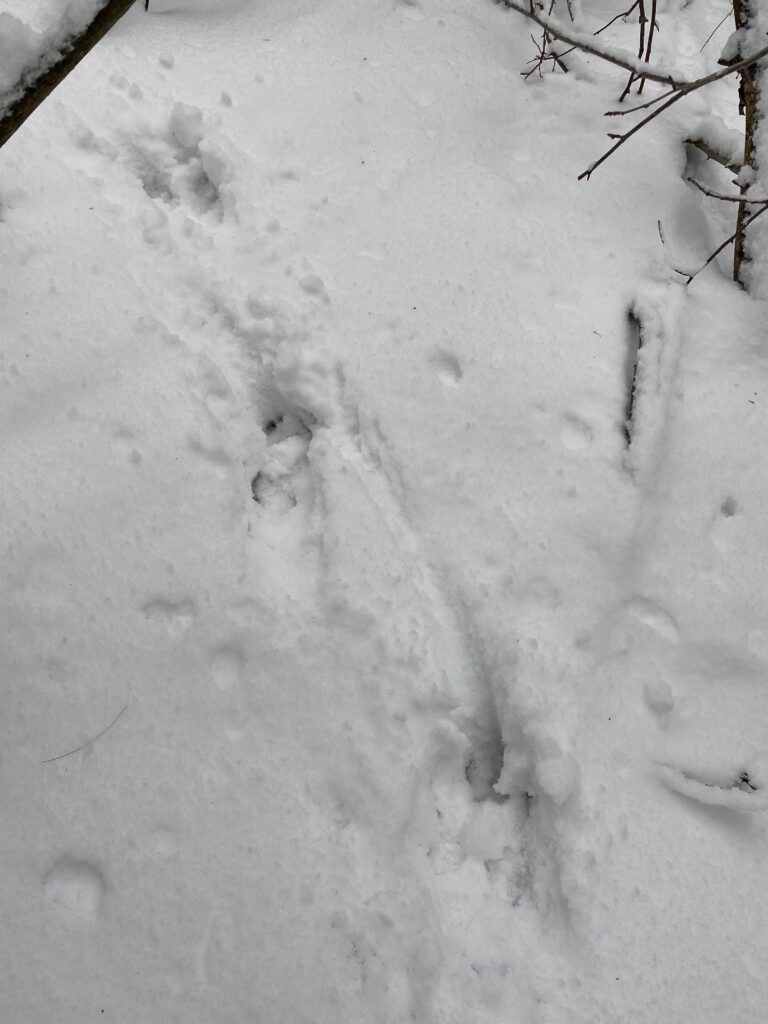
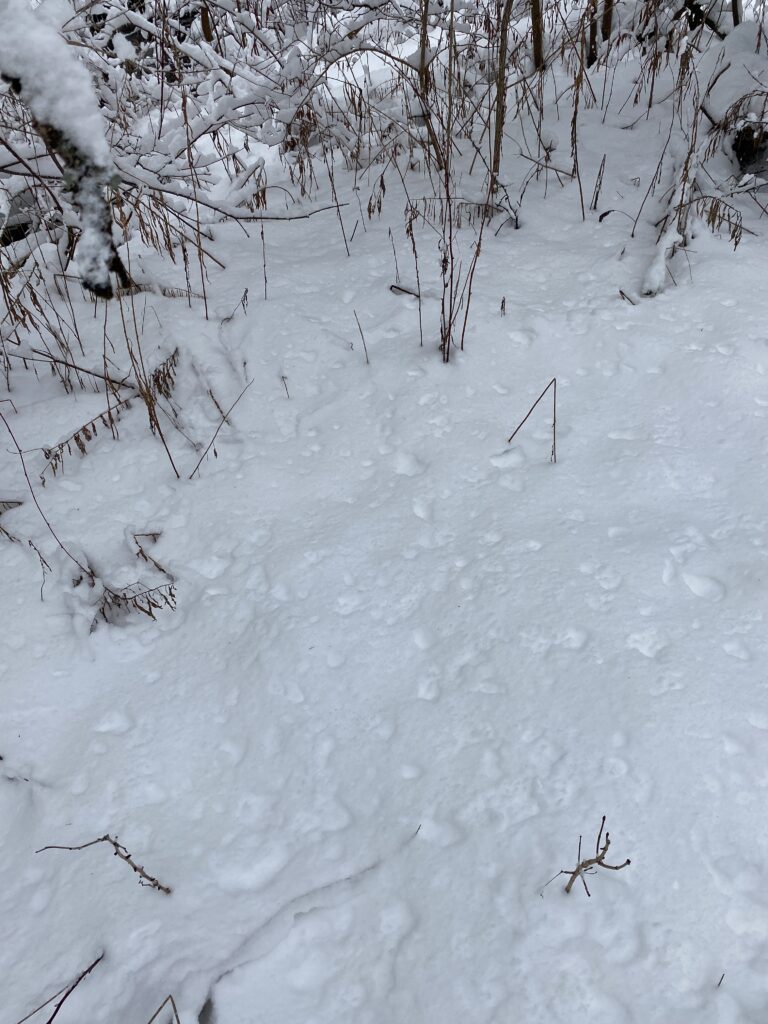
It was pretty hard to spot wildlife activity because it has been snowing on and off for the last couple of days and the wind has been blowing the snow around, covering up places where animal tracks might be. I did find a lot of dog tracks, since I think Centennial Woods is a popular place for people to walk their dogs. I also observed some other marks in the snow that look like they could be deer maybe? It was pretty hard to tell because the snow has blown over everything and blurred the tracks. The photos below shows what look like deer hooves, with the two halves. I was also thinking these could be rabbit tracks because they’re in a pretty straight line, which would indicate a jumping animal, rather than deer, which walk more staggered like humans do. Other than that, I didn’t notice many other signs of wildlife, the area was pretty quiet; I couldn’t even hear any birds chirping.

How to get to my new spot:

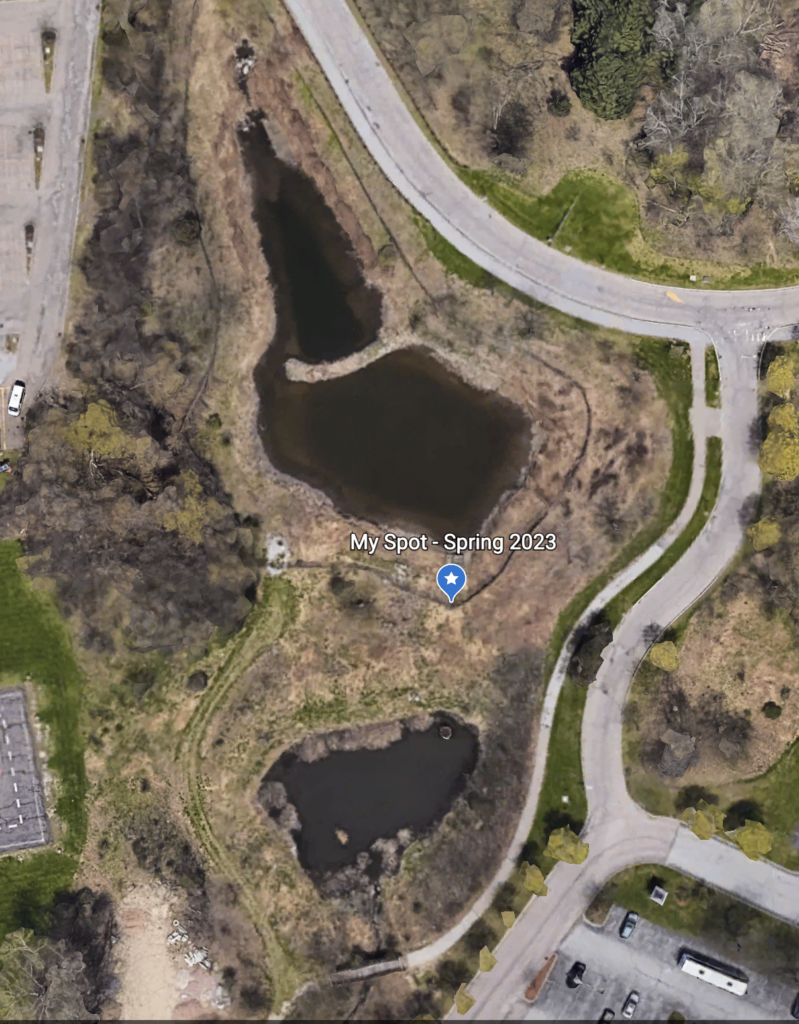
I like to cut across the Jeffords parking lot, eventually ending up on Carrigan Drive. Then, I walk past the UVM Police Department and a little further down and on the left is the entrance to Centennial Woods. From there, I walk for about ten minutes until I hit the stream at the bottom of the hill. This is my spot.

google earth screenshot of my new spot

December 10th – Last blog post for the semester :((

How my spot has changed since November 7th:

  • There are some marks in the tree bark, definitely from woodpeckers
  • There are a lot less bird sounds, likely because many bird species have migrated south
  • The animal activity seems pretty dormant, I didn’t really notice anything in particular. I could hear some birds but I think most other animals aren’t very active because this area can be highly trafficked by humans, who likely scare away the animals
  • There is definitely a considerable amount of deer scat in this area, which I was able to identify using Naturally Curious
  • There are no noticeable animal tracks, I wish there were snow on the ground and then maybe I could see some cool animal tracks :((
  • The trees are essentially barren at this point, except, of course, for the evergreens, such as the Eastern White Pine. The only thing you can see beside the thin, dead-looking branches are the intricate-looking birds nests
  • There isn’t really any persistent vegetation or fruit
  • I didn’t realize how much more leaf litter would be on the ground because the trees already looked pretty barren before my November 7th blog post. Now, the trees are completely barren and it’s very obvious. The leaf litter on the ground is definitely starting to decompose

What I enjoy most about my spot:

I like that this area feels very cozy but also vast. It’s situated just before the tip of Rock Point, where Lake Champlain meets the land, so it feels a bit sheltered, but you can also tell that you’re right on the edge of something bigger. I don’t love having to plan ahead because Rock Point is pretty far from Redstone, but it’s worth it because this place is so beautiful. I also appreciate that it forces me to get outside and break up my college routine a little.
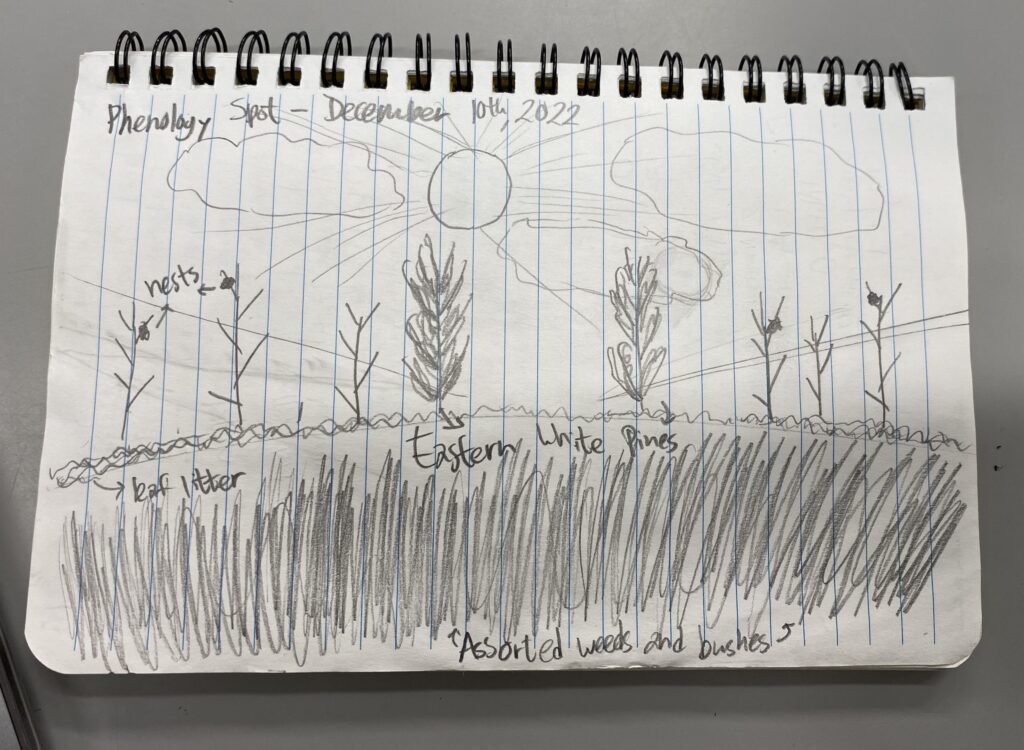
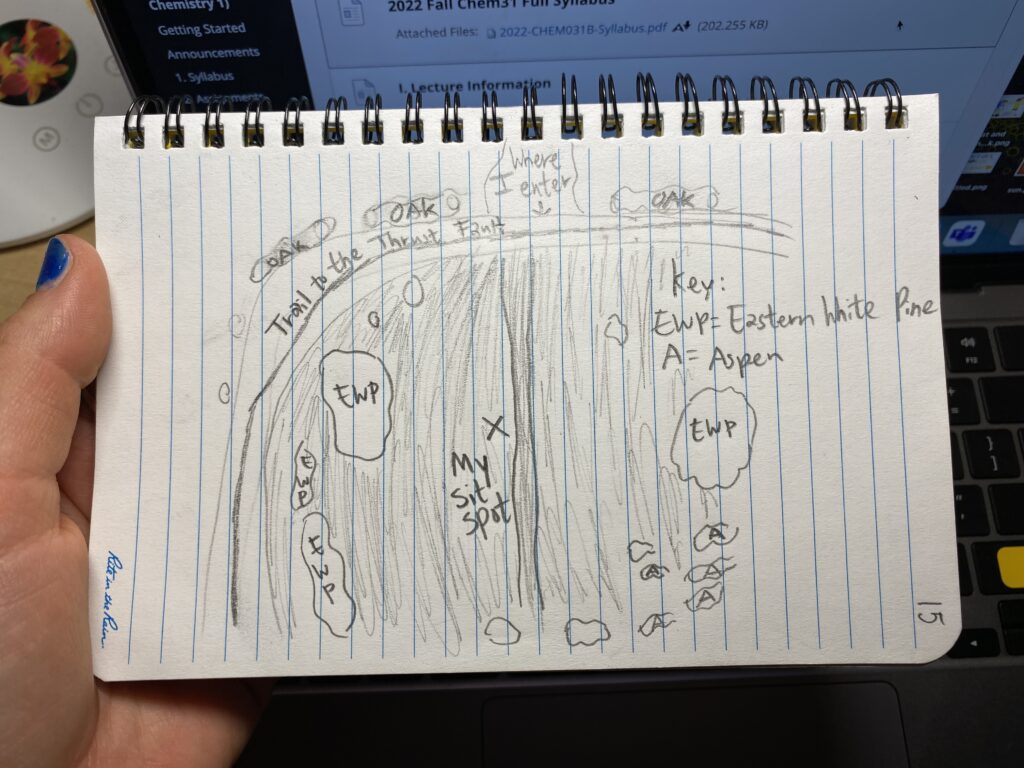
My phone died so I wasn’t able to capture any photos, so please excuse this mediocre sketch :))
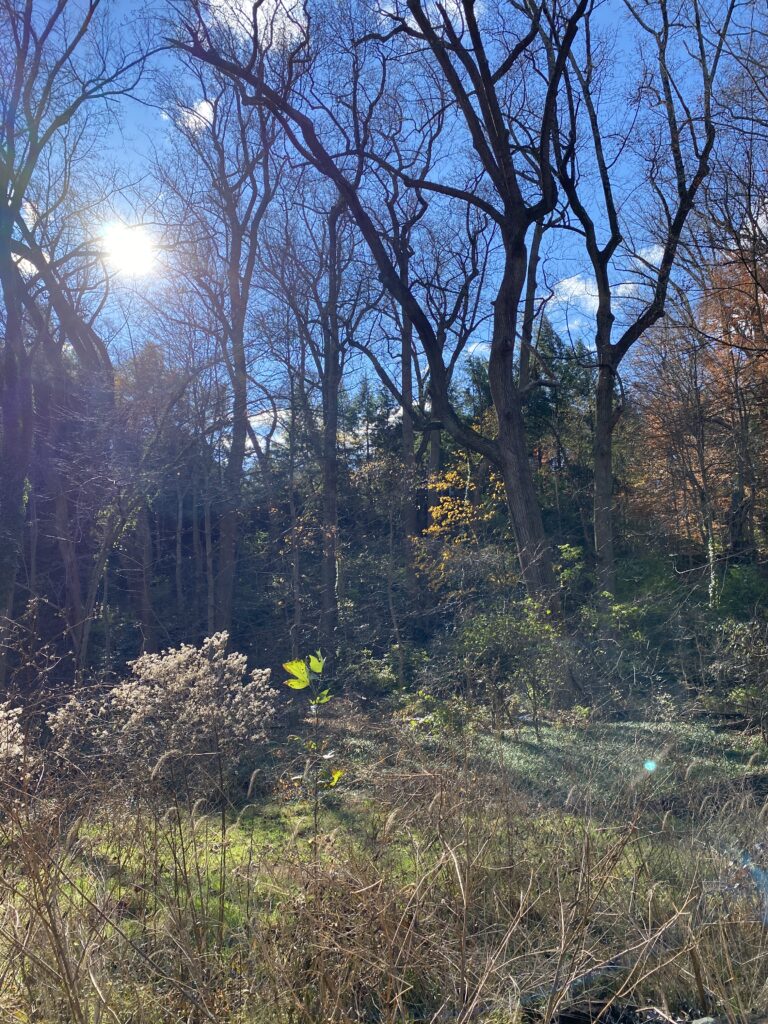
November 28th – Dumbarton Oaks Park

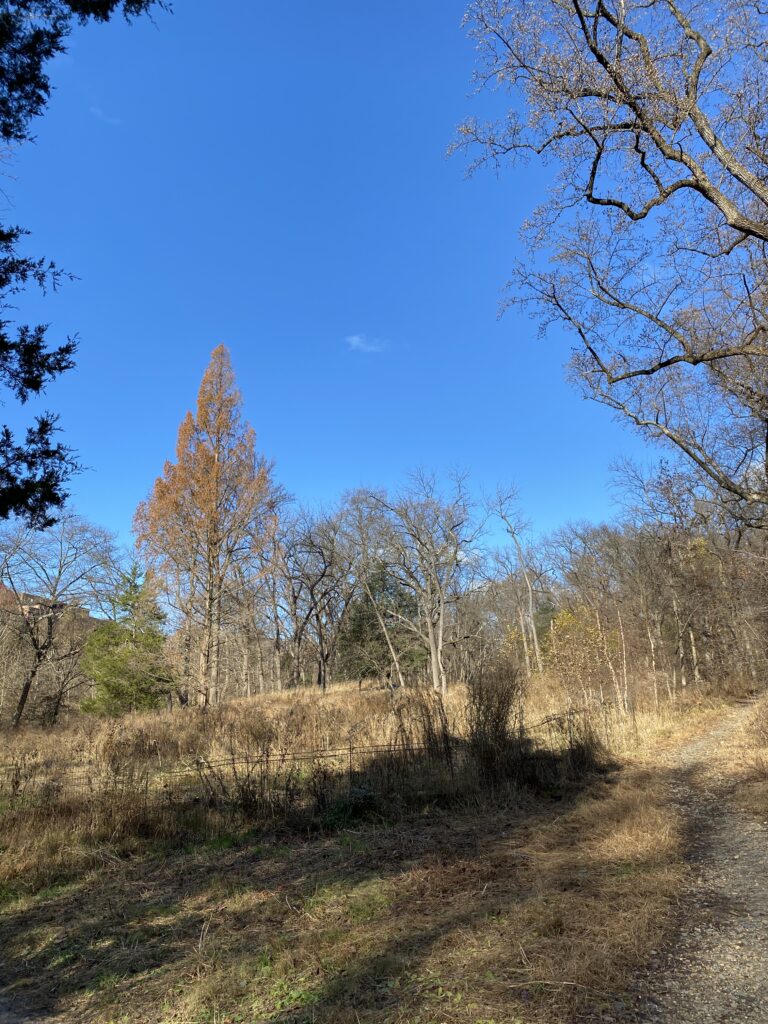
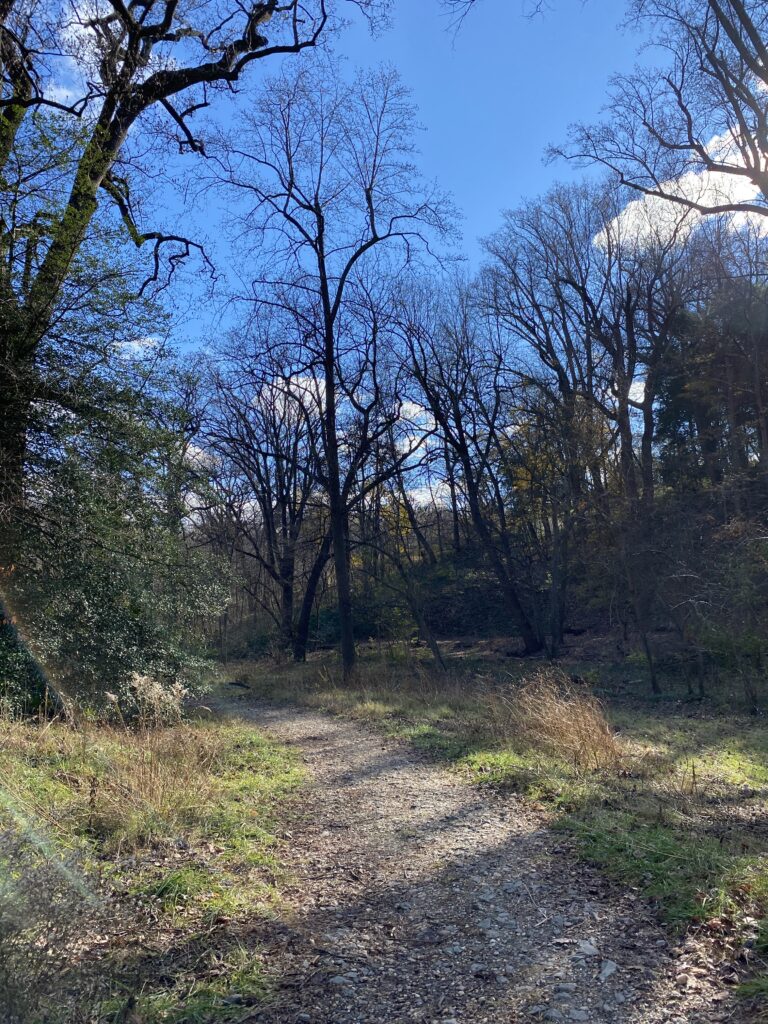
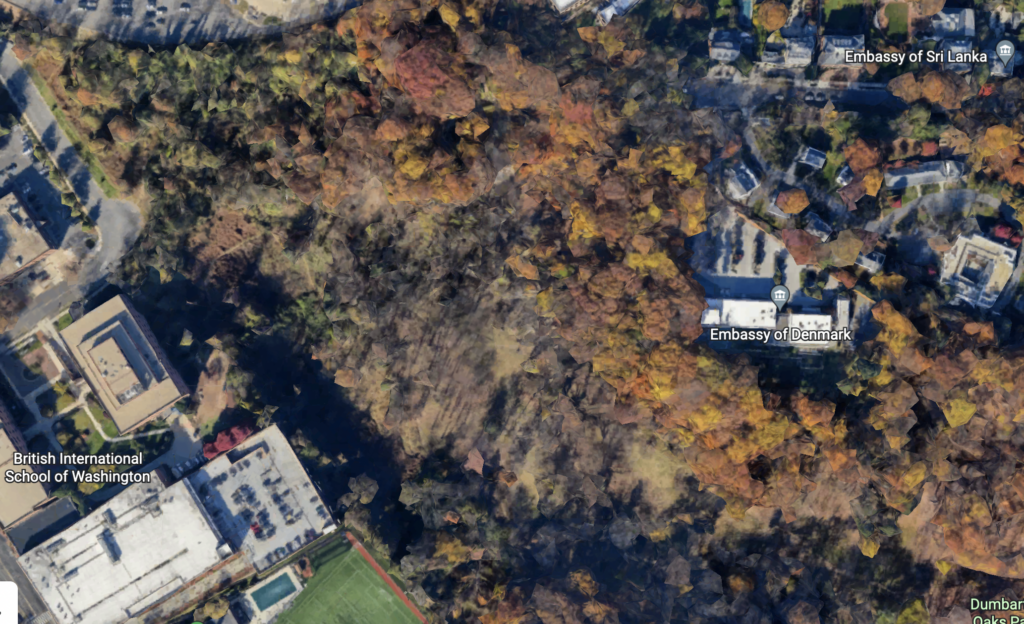
This place is special because it’s in a pretty busy and high-traffic part of DC, yet you can’t hear much of the human world when you’re in the woods. You can occasionally hear some planes and today I heard some construction going on in the distance, but for the most part, you can’t hear cars or other noises that tend to disrupt nature. I can hear the wind blowing and the birds chirping. This park serves as an oasis away from the hustle and bustle of the city.
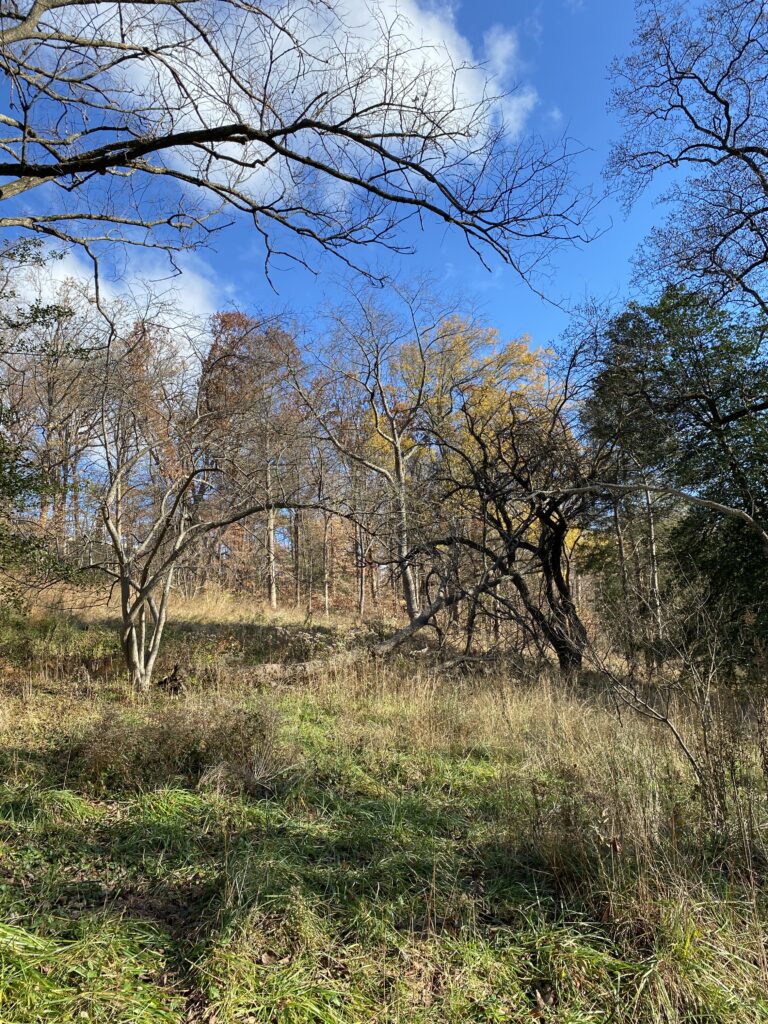
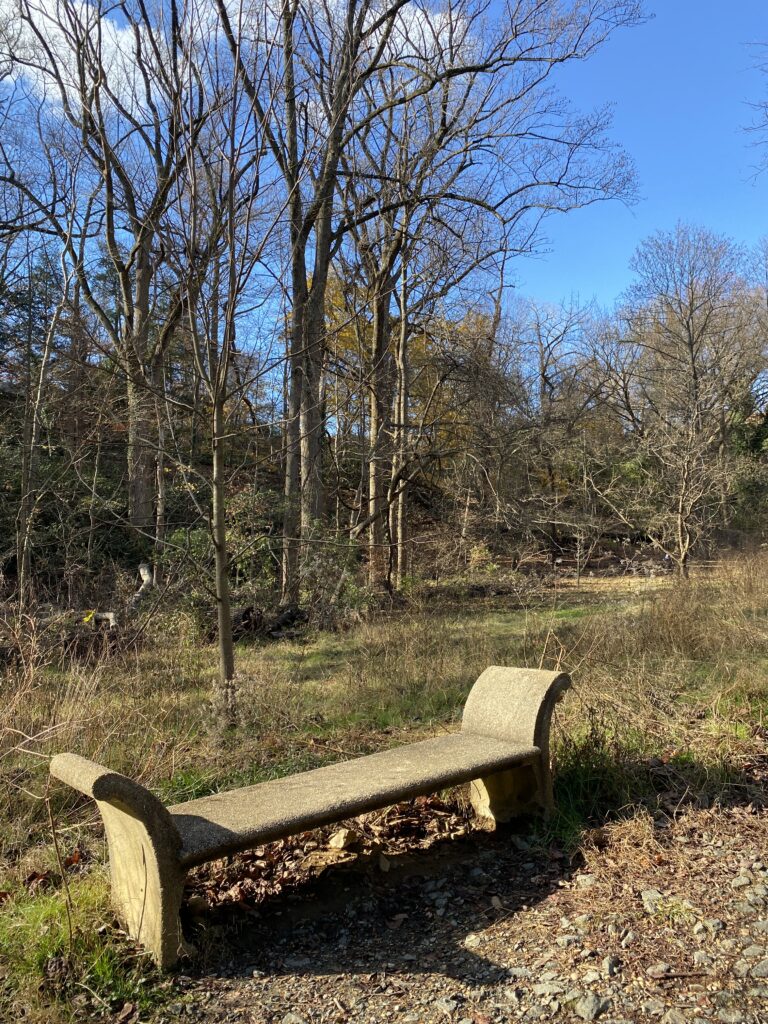
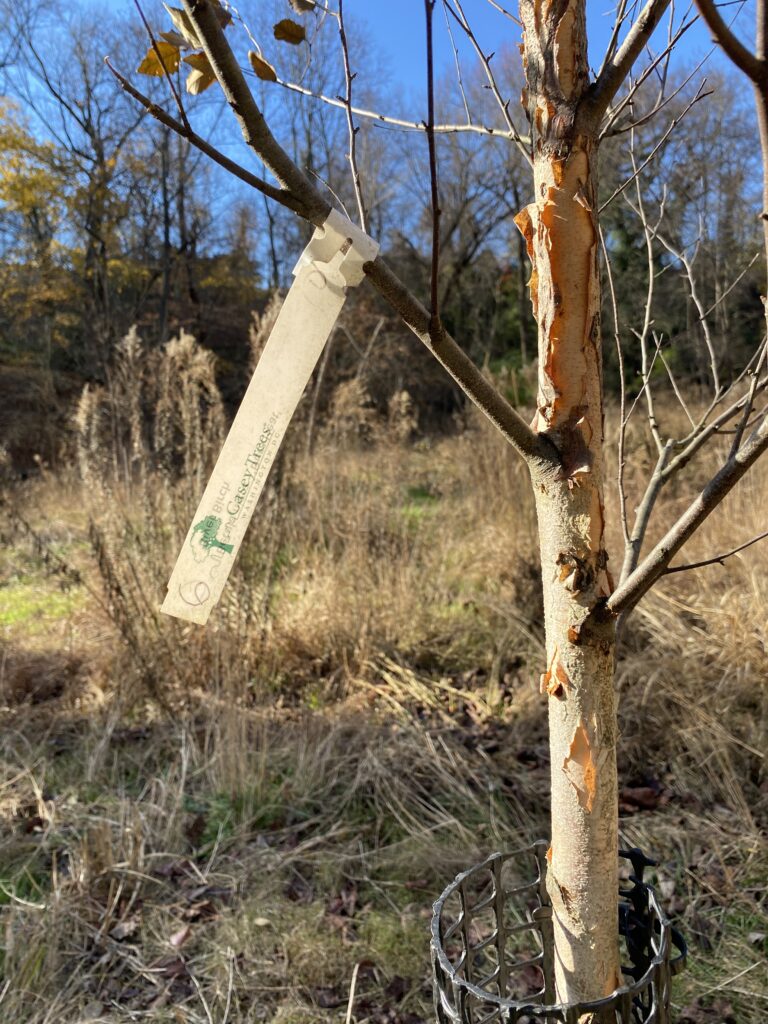
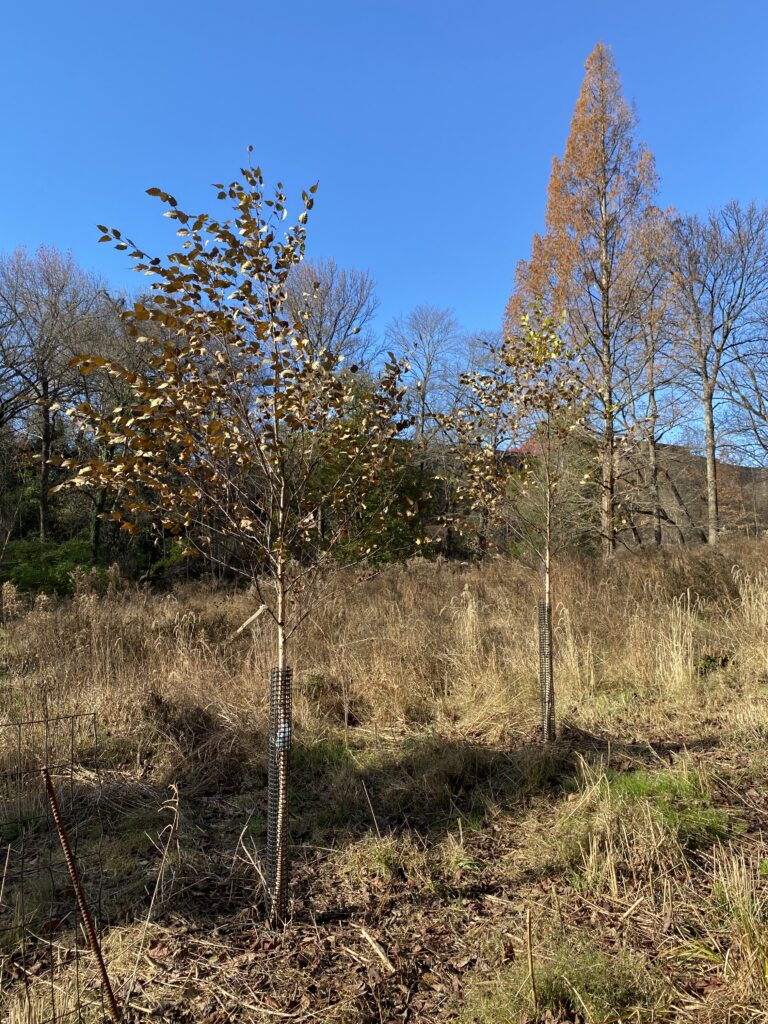
Since Washington, DC is not as far North as Burlington, some trees, namely red oaks, still have leaves on them and the area looks more alive than my spot at Rock Point. There is also a wider variety of trees, such as large holly trees, a hackberry tree, and a few tulip trees. The park is in a kind of valley where a hill drains to, thus the soil here is moist. Overall, this place looks a lot less grey and winter-y as my spot back in Burlington. In terms of similarities, the understory looks pretty similar here to the one in Rock Point, there is a lot of boneset/thoroughwort. Like Rock Point, this area is dedicated to serving the public, with many trails and even benches for people to rest, like the one that I sat on, pictured below. I also noticed that the company Casey Trees, which is a well-known non-profit dedicated to increasing green space in DC, has planted some river birches in this area, likely to help make this area even greener.

Google Earth screenshot

November 7th – Second Blog Post

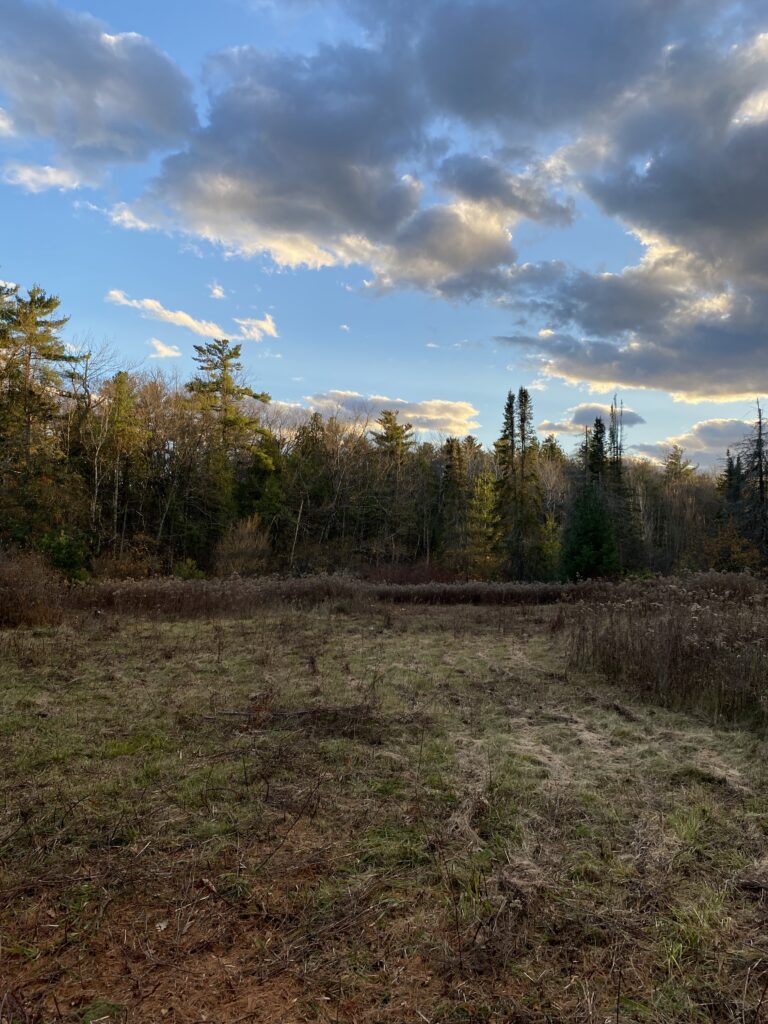
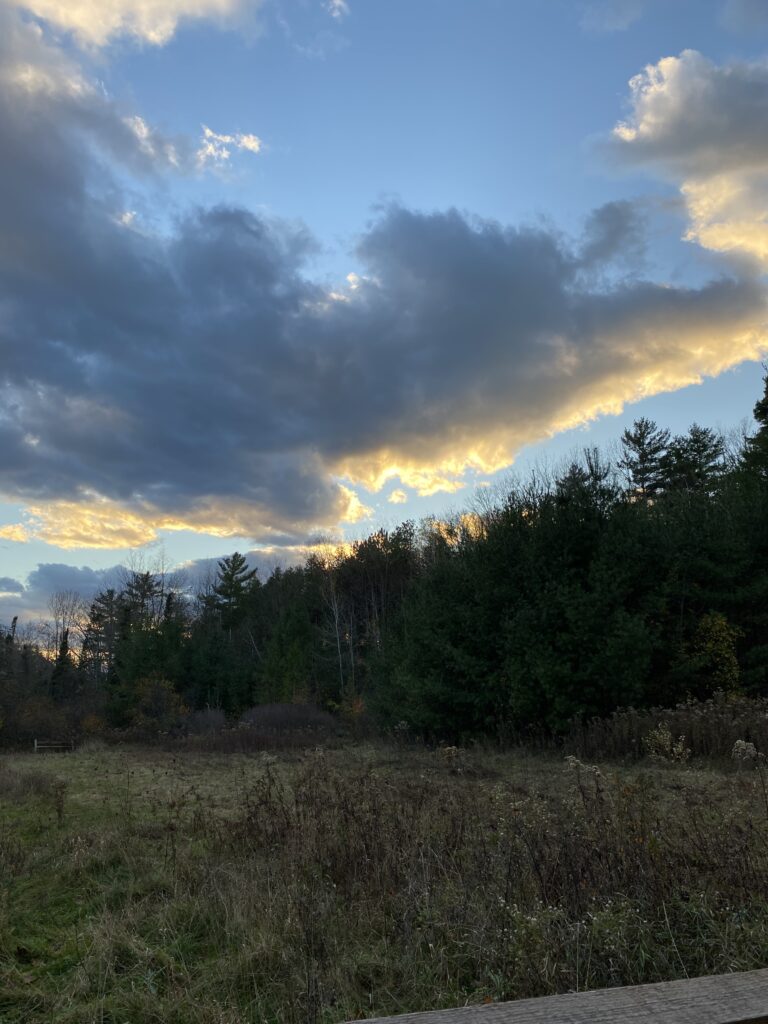
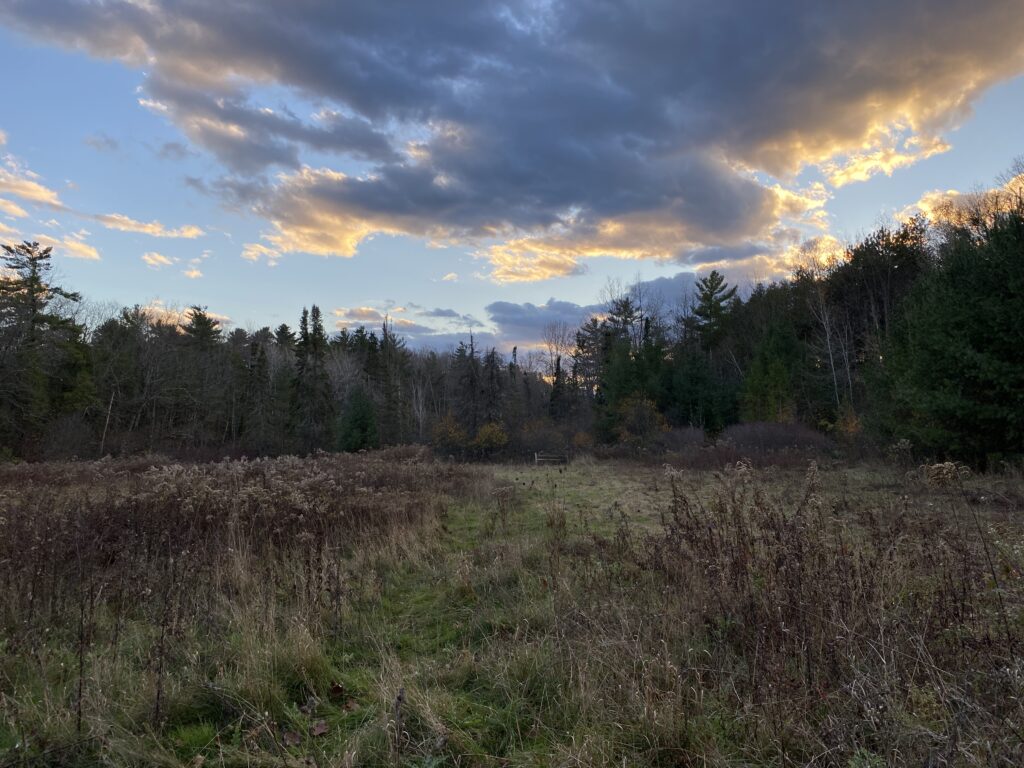
Observations during my fifteen minutes of silence:

  • The trees are swaying lightly in the wind 
  • The sky is a light blue and the clouds are moving pretty fast 
  • I can see the sun through the trees
  • The ground under me feels cold and the dead grass feels rough against my legs
  • I can hear the wind in the distance and the birds chirping nearby 
  • I can smell the dead leaves

Comparing this visit to my last visit:

  • Everything looks a lot more gray and brown this time around
  • Everything feels much more still than it did before
  • All the trees are leafless except for the evergreens
  • A lot of the tall grass on the left side looks like it has been cut or flattened 
  • I’m realizing that this is probably the last time I’ll get to come here on my bike
  • Overall, the area feels a lot less lively, although there are still some signs of life
Bird’s eye map
Skip to toolbar