
Centennial Woods visit 12/11/21
I was absolutely stunned by the beauty that had struck my phenology spot this past week the morning after a snowfall! I bundled up significantly more than I ever had before a venture through the woods, and boy, was I glad I did. The ground that was once covered in vibrant red and orange leaves, white pine needles, and bushels of ferns was coated in a blanket of snow.

The understory in my phenology spot is much made up of ferns, which appear to die back under the frost of the cold Vermont winters, but will grow back and thrive in the spring when the weather warms once again. Ferns are perennials, so they will live for many years, crumpling down under the layers of snow in the winter, and growing back strong and sturdy in the spring. It was nice to see the little spurts of green life underneath the snow, to show the resilience and strength held in such a tiny life form.
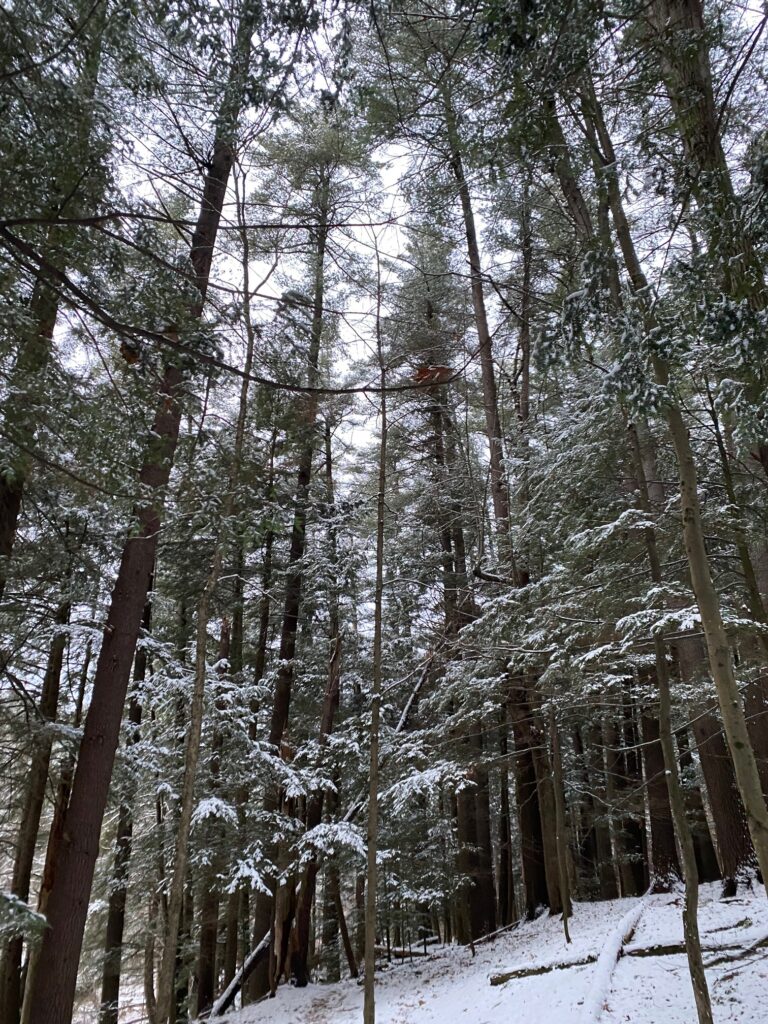
My phenology spot is made up of an Eastern Hemlock and White Pine grove, with the scattered Red Oak and Sugar Maple. Considering the majority of the trees in the area are classified as evergreen, they are resilient to the cold and snow fall and keep their needles year round. The area also appeared increasingly darker than it had been in the past times I had payed it a visit, even though I was there during daylight. The hemlock trees are clearly very shade tolerant. The Eastern Hemlock may be a great provider of winter shelter for any wildlife that remains in the area. On my recent visit, I heard little to no bird calls, signifying a significant migration of the birds who’s songs filled the area the first couple of times I ventured into the woods to my recurring spot. I saw minimal squirrels as well, which were usually more populated in the earlier, warmer months of the school year.
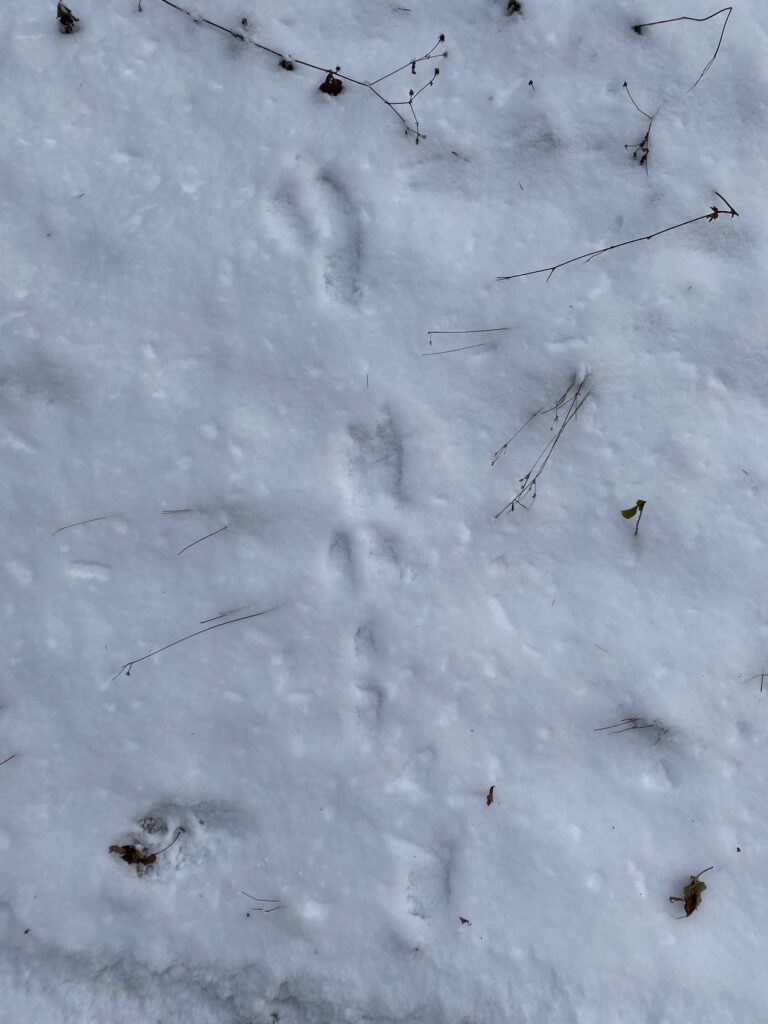
Speaking of wildlife, these are tracks I came upon just on the outskirts of my designated phenology spot. They appear to be rabbit tracks, with two small paw prints, and then larger back feet prints as they bound along. Small branches, twigs, and bark are still of availability to rabbits in Centennial woods to snack on throughout the winter. Their warm pelts keep them somewhat cozy during the winter months, and they may reside either in burrows, or warm spaces such as logs. They try to not move around too much as to conserve their energy to stay warm.
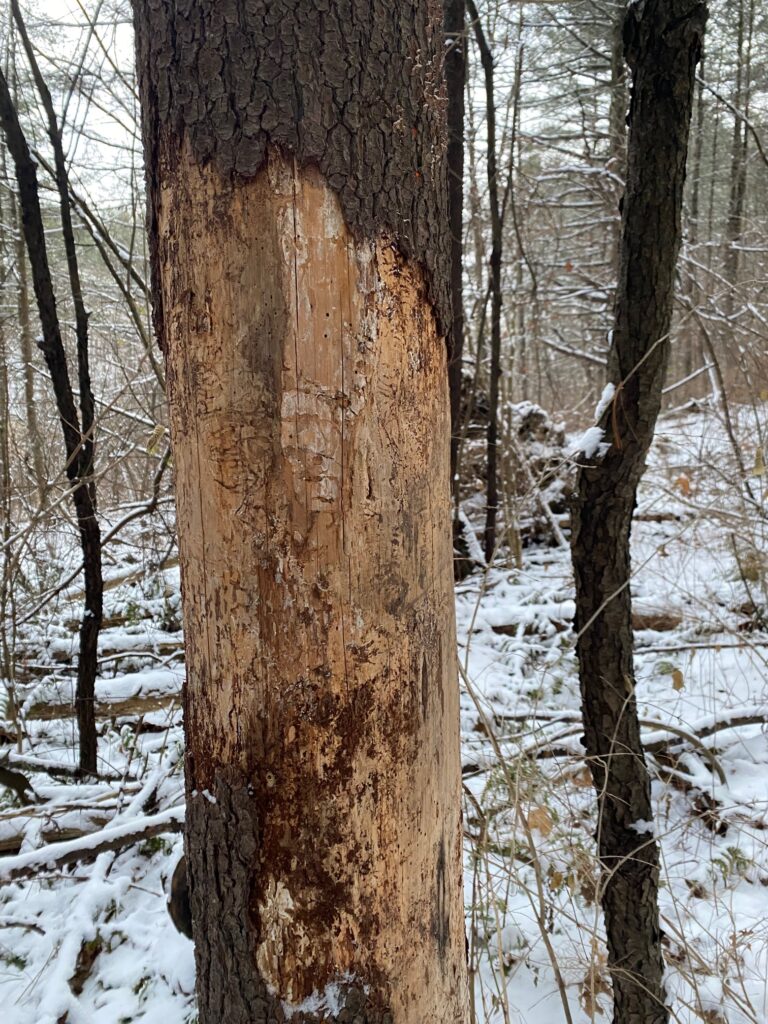
On another note not necessarily related to the recent freezing temperatures, I’ve noticed that there are quite a lot of rotting trees in and around my specific phenology area, as well as other spots throughout Centennial woods. Some trees have fallen from halfway up, and are now hollow, simply standing around, waiting for the rest of it’s demise. On some of these trunks, insect and woodpecker holes line the sides.
My phenology spot has brought me great pleasure to visit consistently this semester, and I will absolutely continue to go back to it. I love how easy it is to walk from my dorm straight into the heart of these woods, and take a breather for a bit while pondering the natural systems and cycles of the area.
Thank you for a great semester!
Dani S