
This week’s visit to my focal phenology spot 11/1/21 🙂
I visited my focal phenology spot on an absolutely perfect day this week. It was chilly but incredibly sunny, and I sat down in a patch of sun by a stream bank on the edge of the general area I’ve been observing. Here, I sat still and did a little mindfulness exercise: find 3 things you can touch, 3 things you can hear, 3 things you can smell, and 3 things you can see. This helped me feel more connected with my area when I immersed myself in the natural systems that would be occurring whether I was there or not. I enjoyed listening to the bird calls above my head, which reinforced my desire to gain knowledge of different bird sounds, because I would’ve loved to have been able to identify what species were flying around my area. I admired the sun’s reflection on the glistening stream, and sat and listened to it burble rapidly downstream.
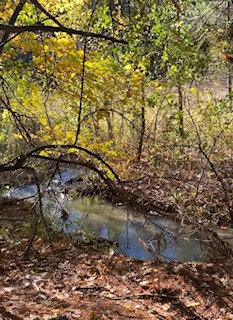
I observed some minimal seasonal changes in my focal spot since I had last visited. The most prominent of such was the first layer of fallen leaves on the ground, which had initially just been scattered white pine and hemlock needles. This week, I observed a significantly higher amount of fallen red oak and sugar maple leaves on the ground, which indicates that more leaves from the less populated non-evergreen trees in my area have been dying and falling off. On the trees, the leaves that were green and yellow last week were now leaning more towards yellowish-brown, with holes and brown spots. Any leaves that were still green were very light and basically yellow, one the same path towards turning brown and falling. The most noteworthy tree species in my area, the Eastern Hemlock and Northern White Pines, faced little to no change due to their classification as evergreen trees, which means their foliage is likely to remain green throughout the year. However, there were many more pinecones on the ground.
If I remember correctly, the velocity of the stream at the base of my area had increased pretty significantly since I was there last week. This is likely due to the recent consistent precipitation events over the weekend before I visited my area, which filled up the stream from what I observed to be a relatively low and maybe even dry area last week. I can infer that there was not as much rain in the week leading up to my first visit to my spot, making for a less filled stream.
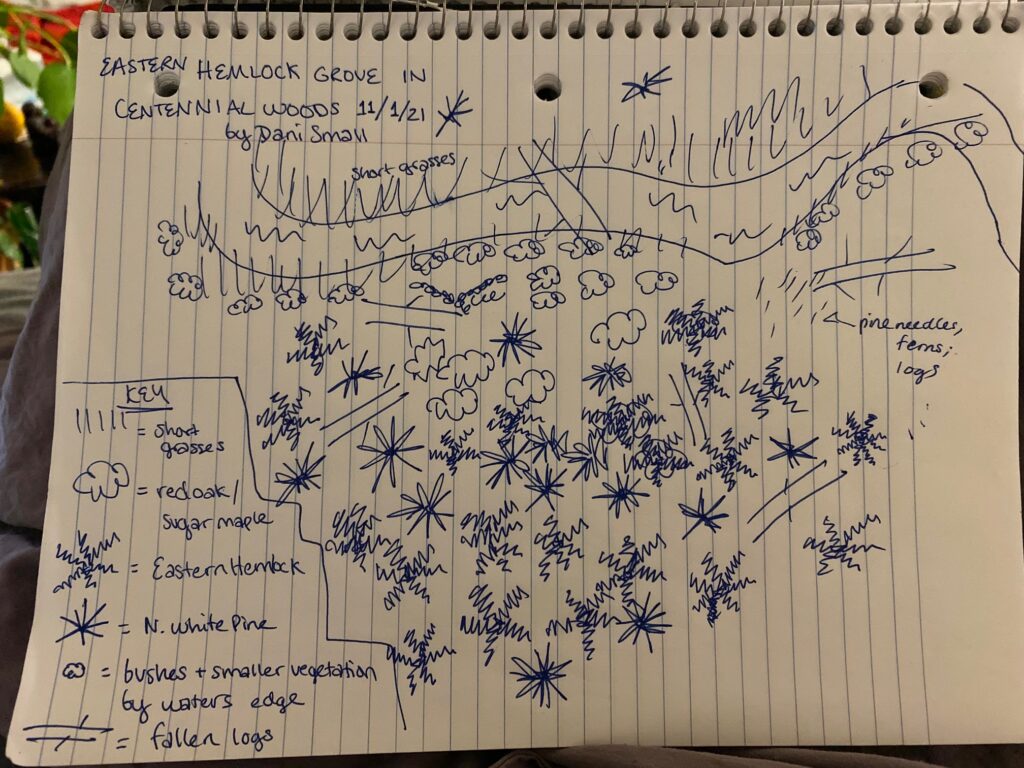
As you can see, evergreens mainly dominate my area with more maple and oak trees growing closer to the water source. I observed some holes that I assume were made by woodpeckers in the sides of a couple of trees, as well as the occasional squirrel scurrying up a tree. I heard many bird calls that I will be working towards identifying as the year goes on.
This week’s visit to my phenology spot was very relaxing and lovely, and I enjoyed the opportunity to take a breather and familiarize myself with the surroundings that I will be continuing to spend a lot of time in over the course of the year!
-Dani