
Entry #1 – 10/15/2022
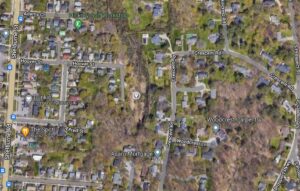
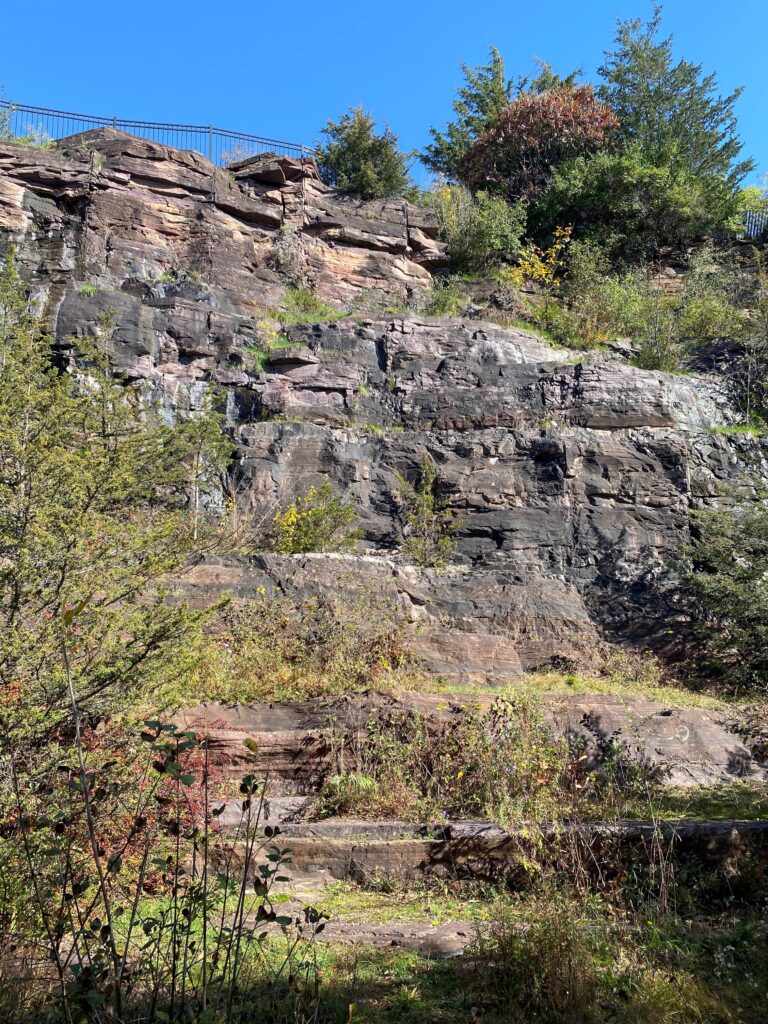
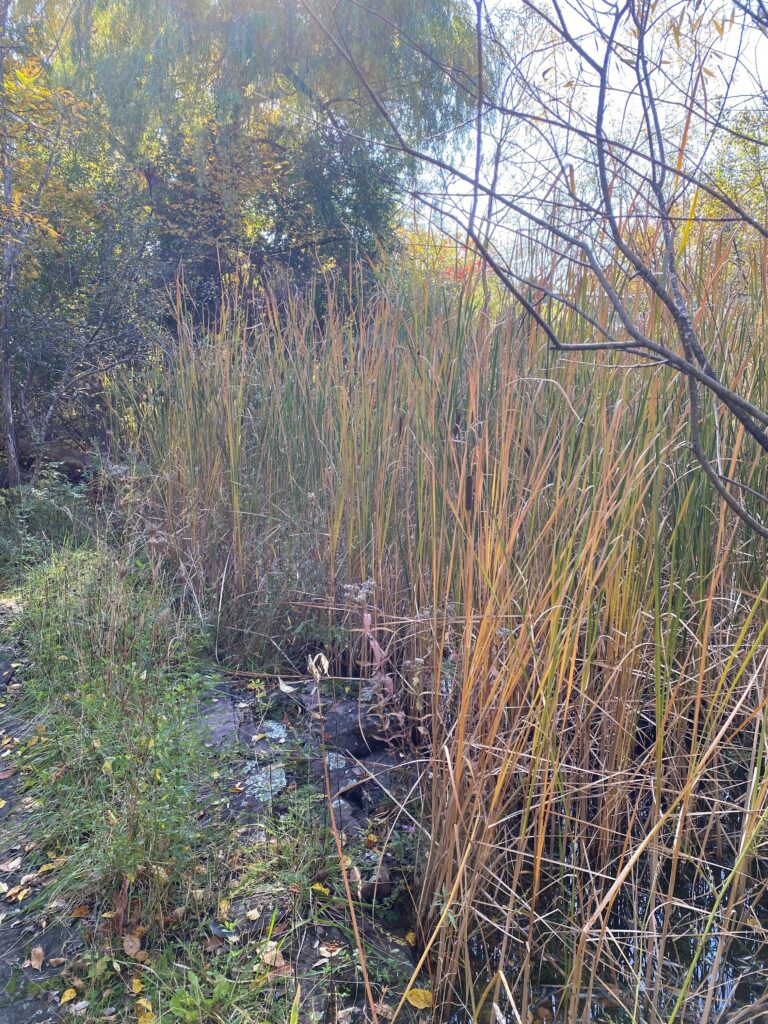
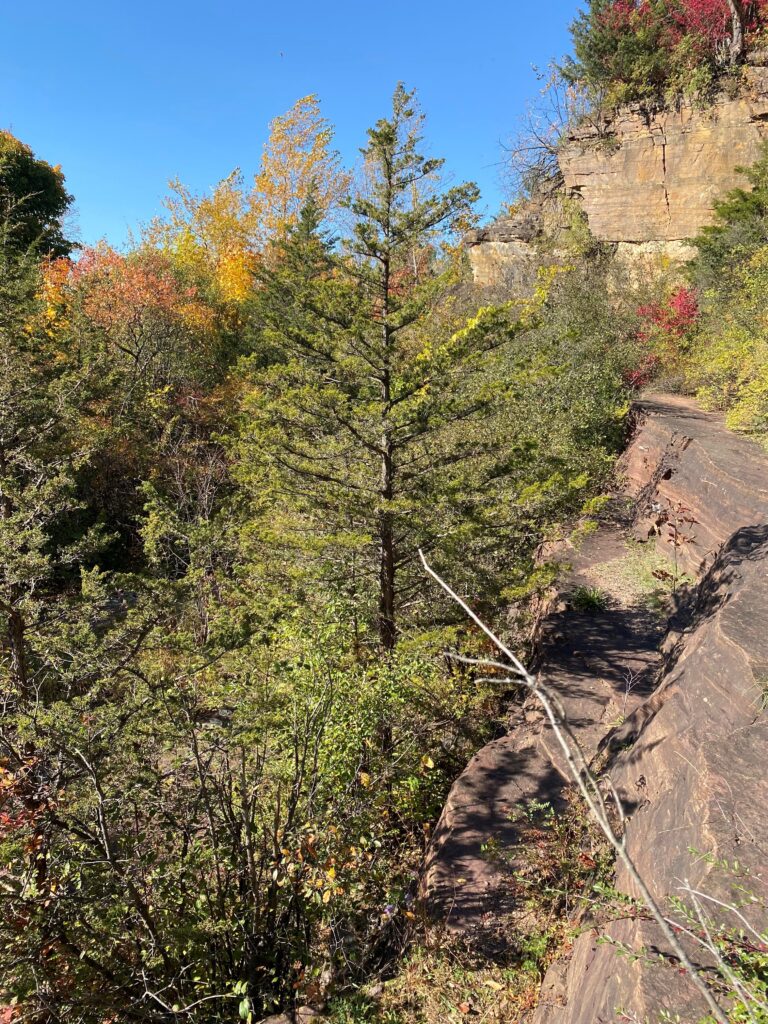
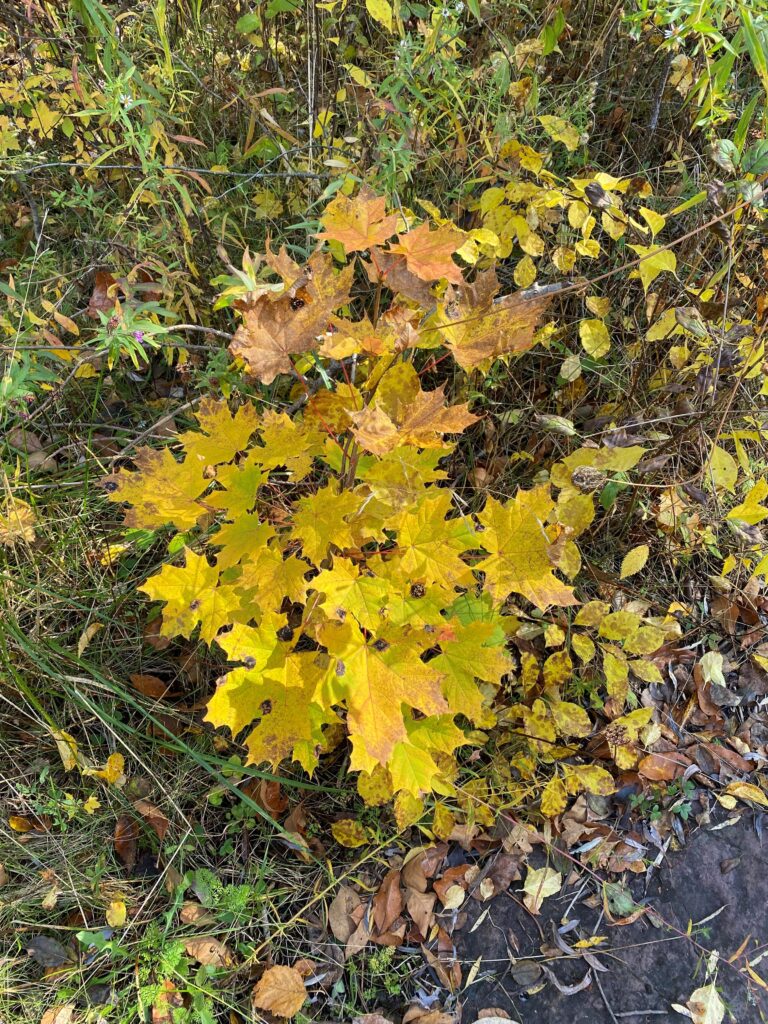
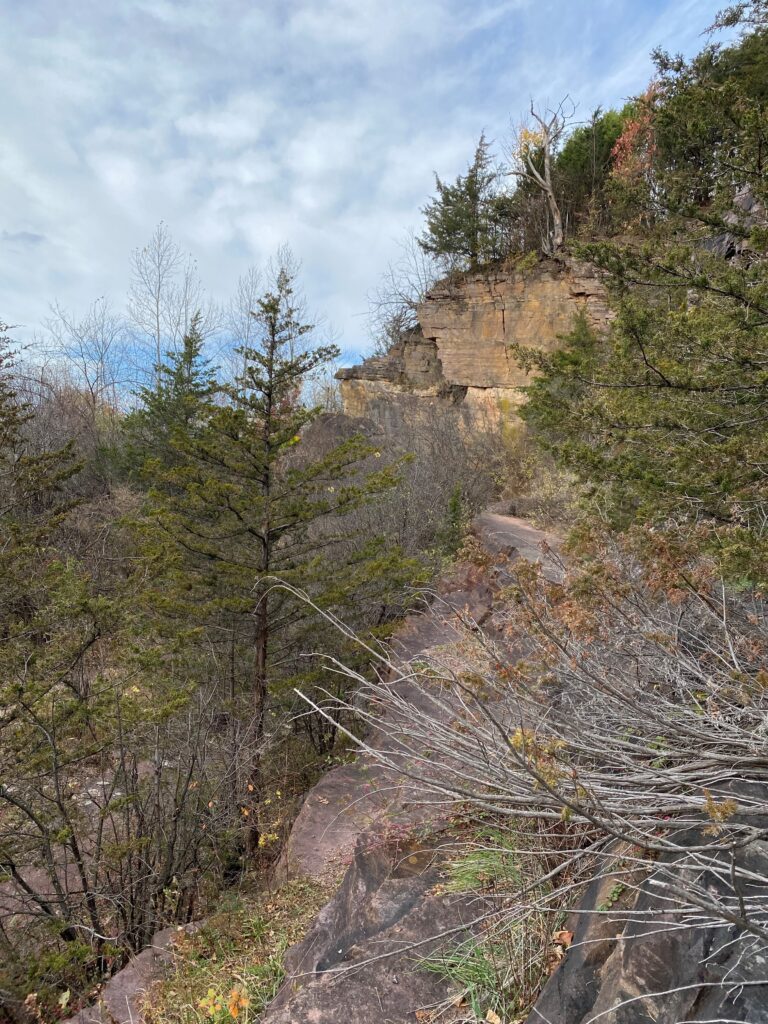
This is my first entry for this phenology site during the fall season. The foliage was very colorful today and the weather was great with around 62 degrees Fahrenheit and partly cloudy but mostly sunny. it had also just rained before so the rocks were a little wet and the lower parts of the area were flooded. My location is just off route 7 about a mile south of the University of Vermont. It contains lots of trees, rocky cliffs, and a wetland area. Among these trees, I was able to identify some common buckthorn, northern white cedars, Norway maples, and sugar maples. Furthermore, I was able to also find cat tails, onion grass, various species of flowers, and lots of moss and lichen on the rocks.
Entry #2 – 11/5/2022
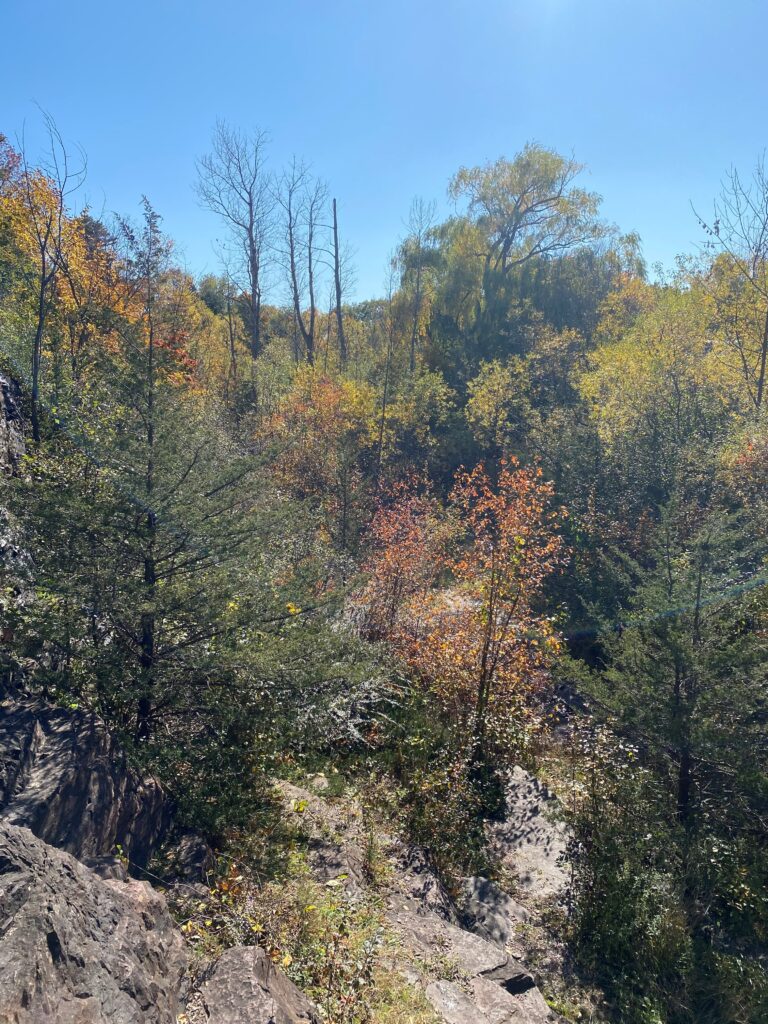
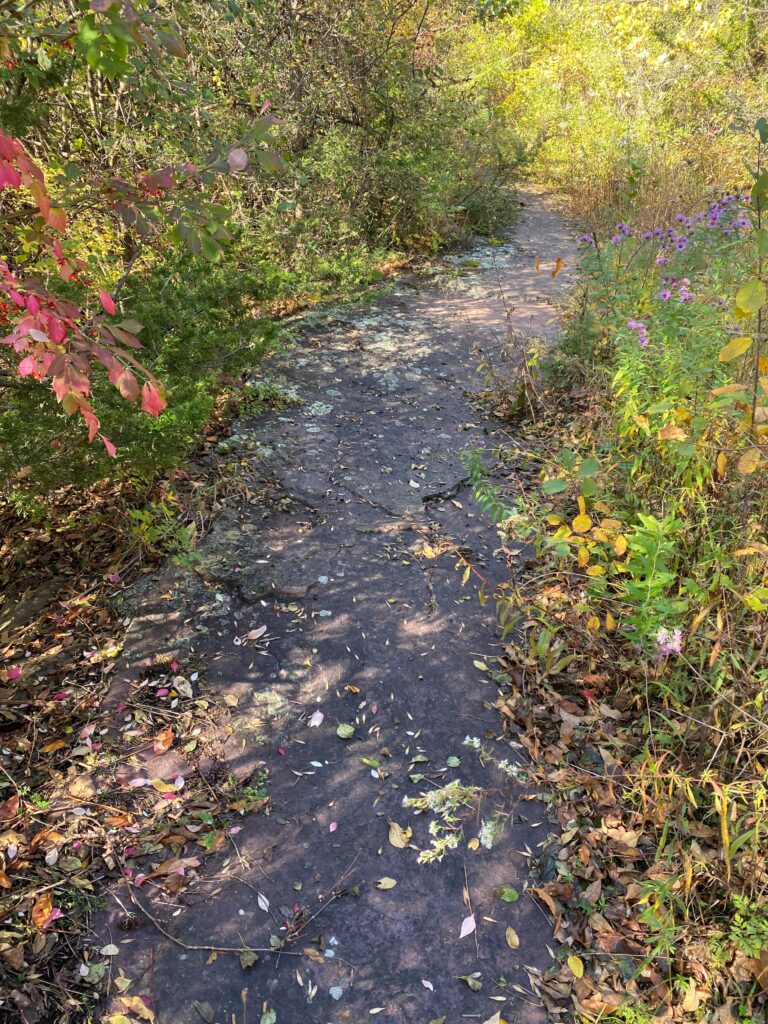
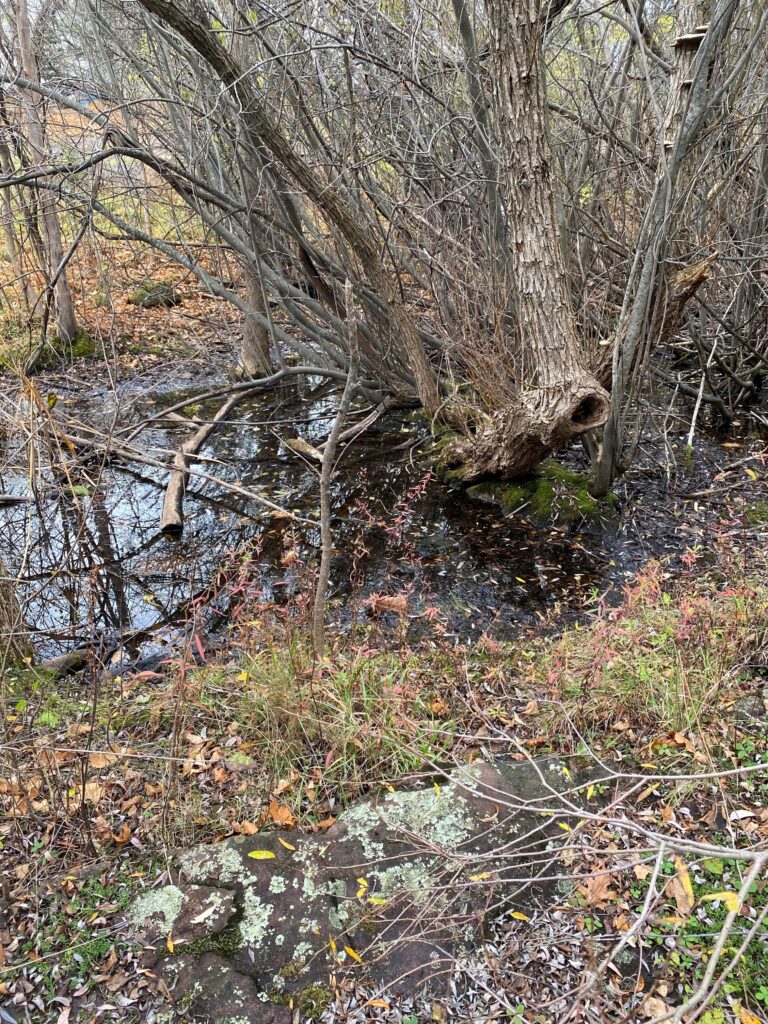
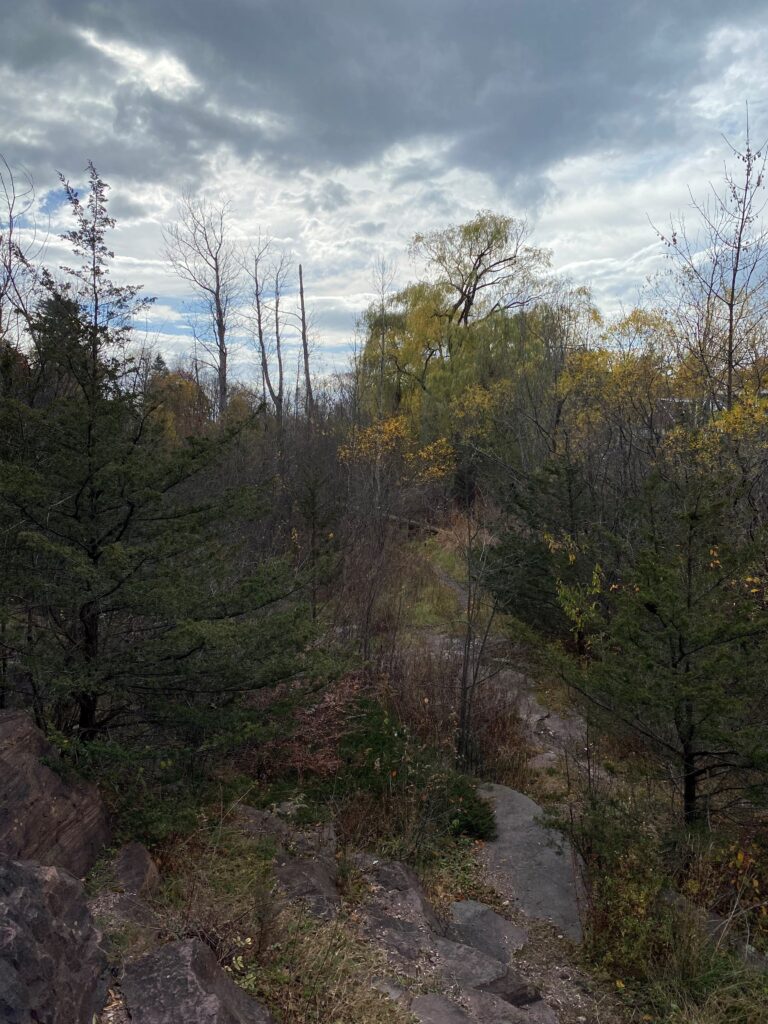
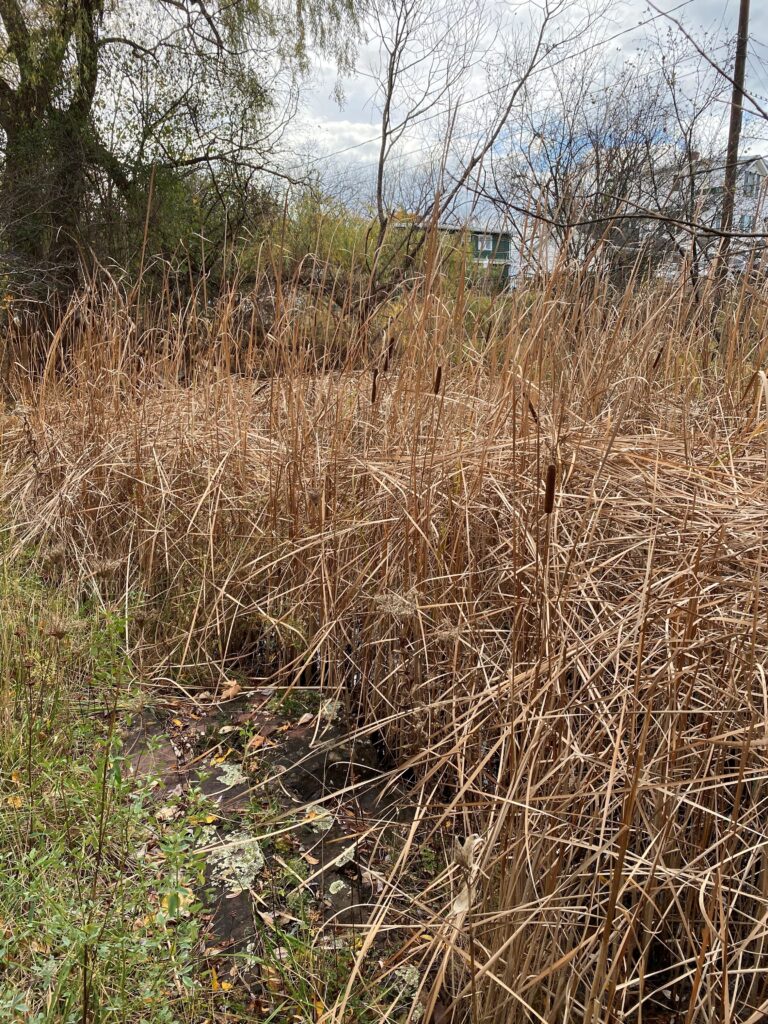
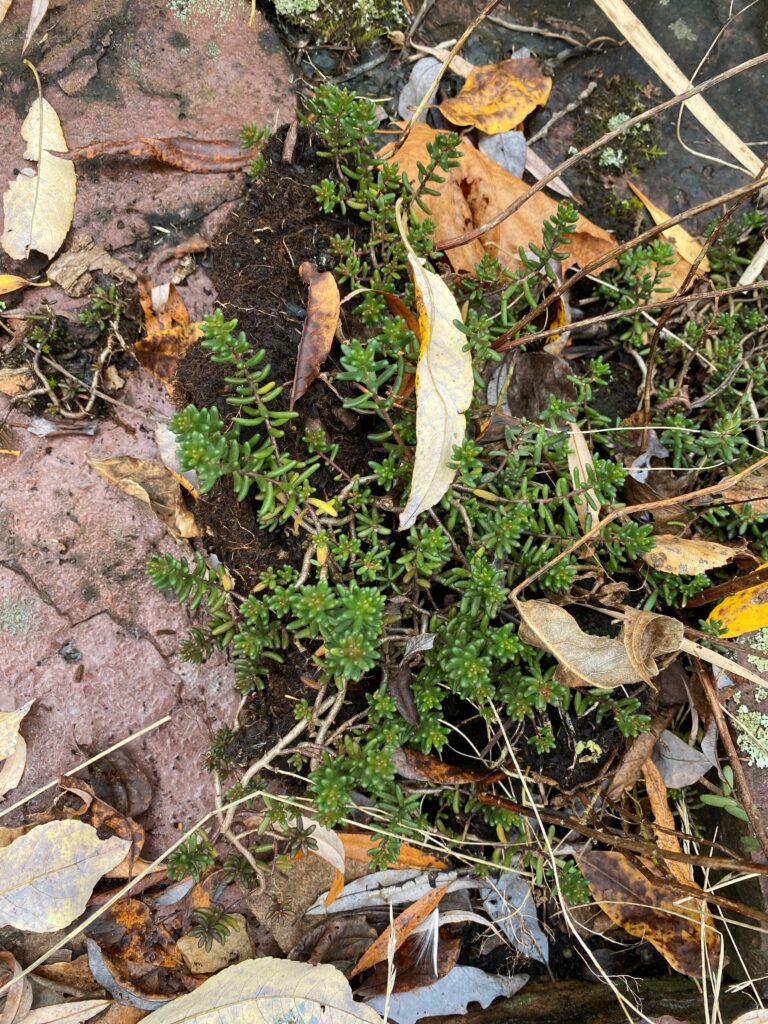
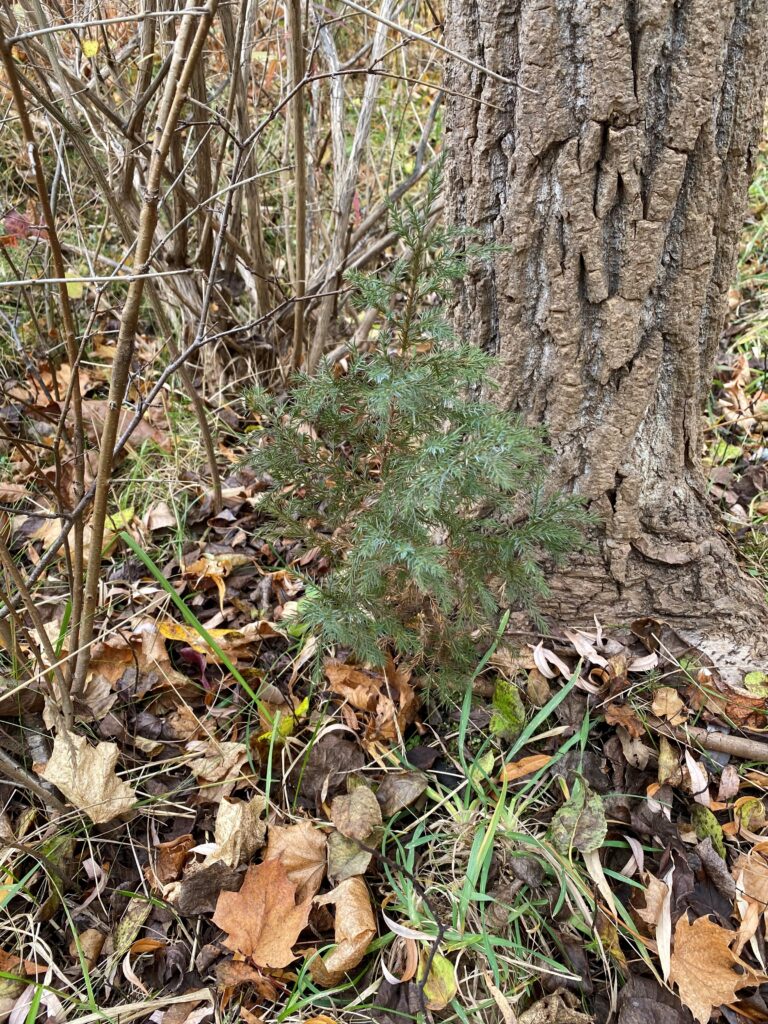
This is my second entry for my phenology season during this fall season. A lot of the foliage that I previously observed mainly had fallen to the ground by now with the exception of a handful of trees. The weather today was abnormally warm for this time of year with temperatures reaching up to 71 degrees fahrenheit that day lots of overcast with the sun occasionally peeking through. A lot of the cat tails I observed the first appear to have died and I noticed on campus that they cut down the cat tails that were on campus nearby my dorm. The little wetland area was more shallow this time around and filled with more debris. I was able to see a lot more o the landscape without moving too much because of the less leaves. Still, the northern white cedars persevered with their stubby scaly needles which will last through the winter as well. The rocks generally look the same which probably will be the trend for a while until the winter. There were a lot fewer animals to look at this time around with crows being the only activity I was able to hear or see at this spot. However, I did find some new plants such as this soft succulent-like plant and some coniferous tree saplings that I was unable to more specifically identify.
Entry #3 – 11/26/2022
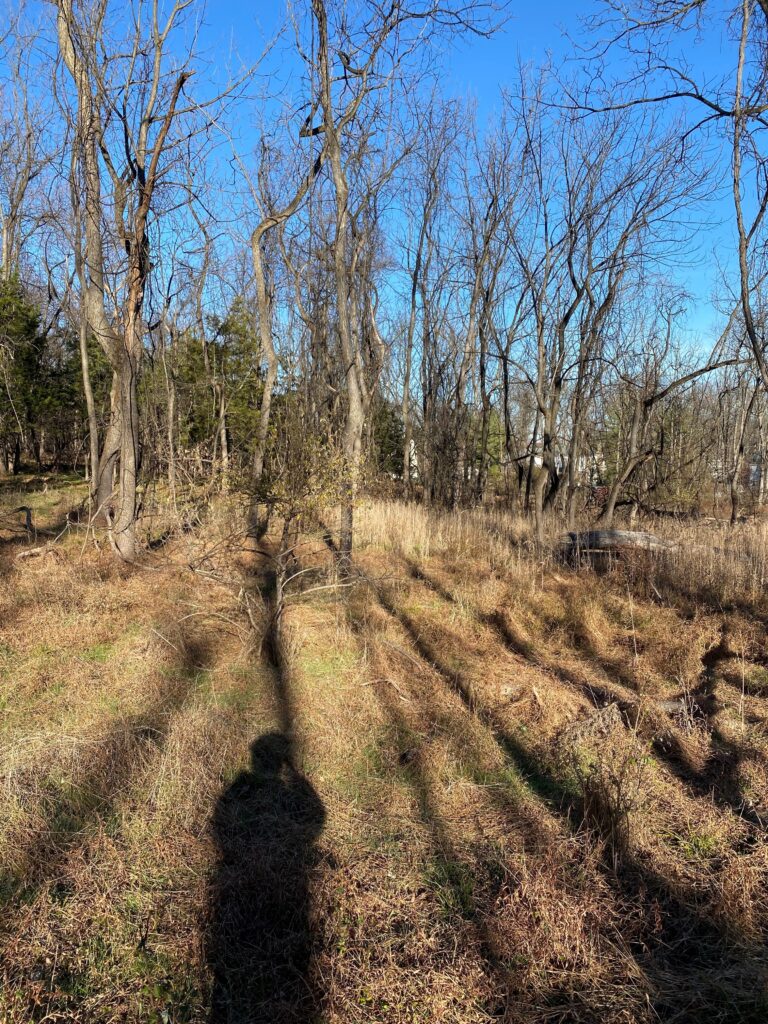
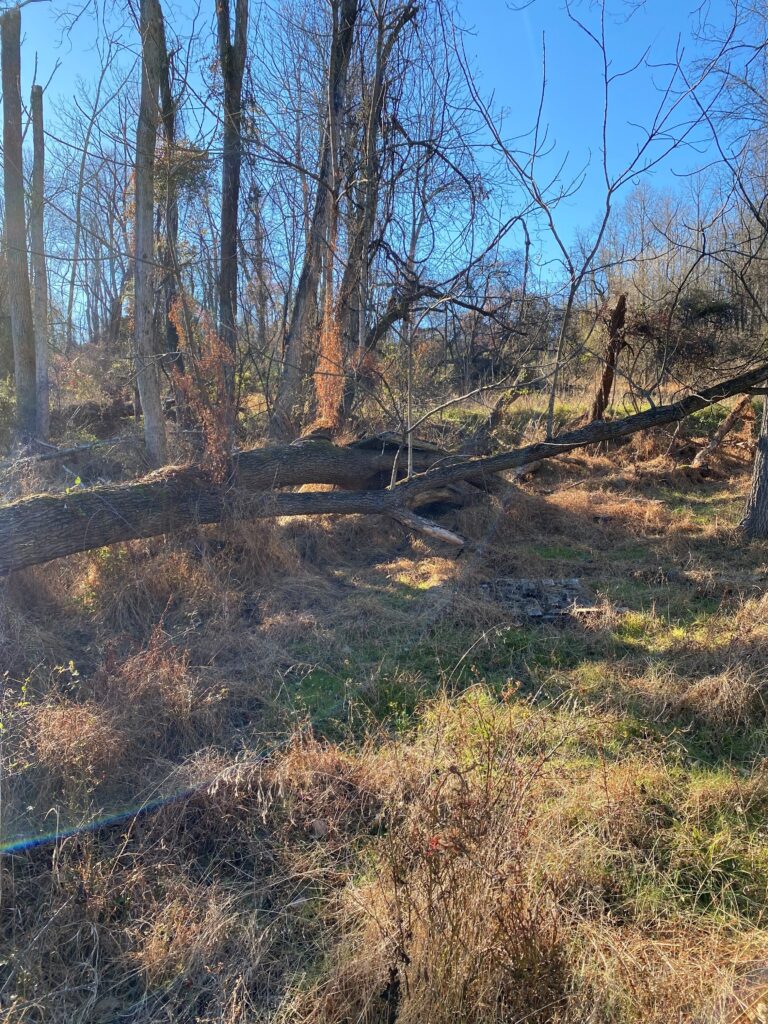
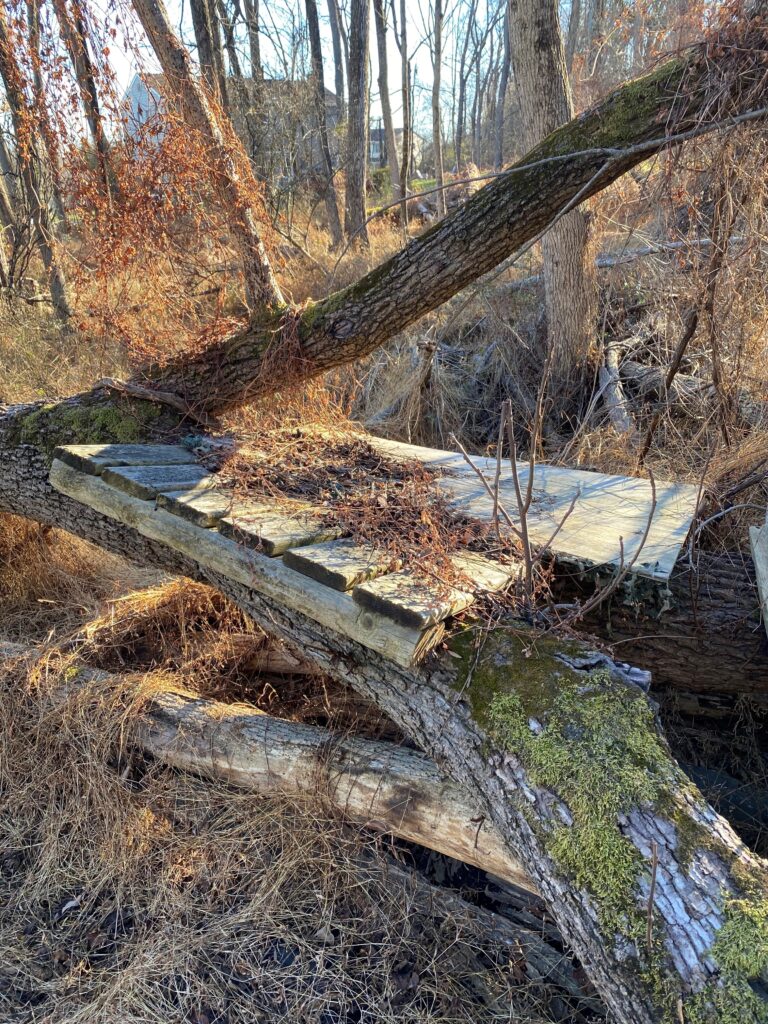
For my third entry into my phenology blog, I visited a local nature spot in my backyard. With just a short walk into the woods behind me and my neighbor’s house, there is a group of fallen trees with three wooden pallets placed in the branches. When Hurricane Sandy hit New Jersey a while back we lost all of our power and there was major flooding and destruction caused in the environment around us. My neighbor, my brother, and I decided to explore the woods behind us to see what had changed. We came across one large sugar maple that had fallen over. It had two large trunks laying on the ground with a third one sticking up in the air. As we climbed around it for the afternoon we knew we wanted to come back to it. The next summer we grabbed a few wooden pallets from some litter piles in the woods and developed some platforms on the tree for us to hang out on. Almost every single day that summer we went to the fallen tree, riding our bikes through the woods carrying snacks and drinks to make sure we could stay for a while. So when I was tasked with finding a phenology spot back home, this came right to mind.
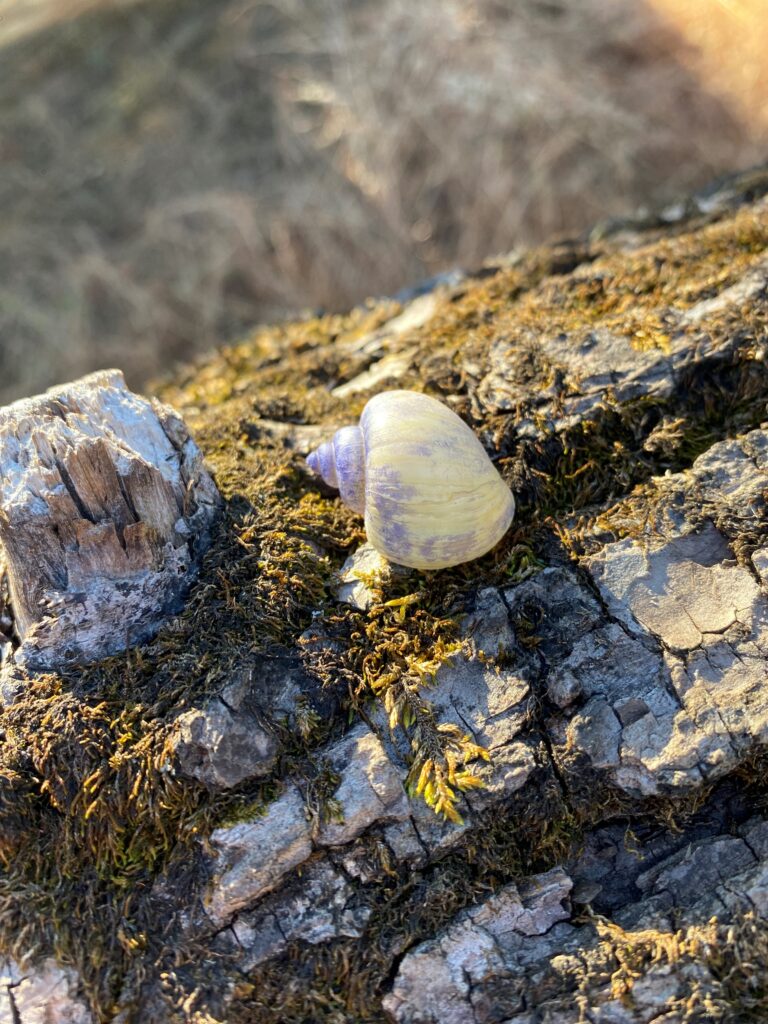
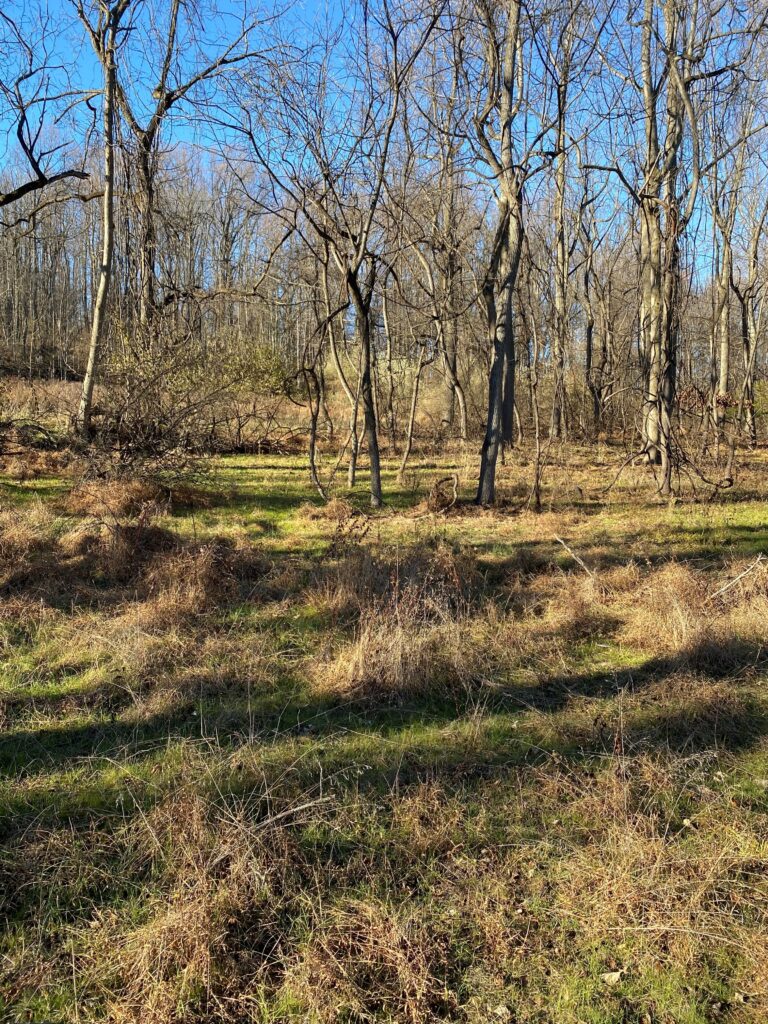
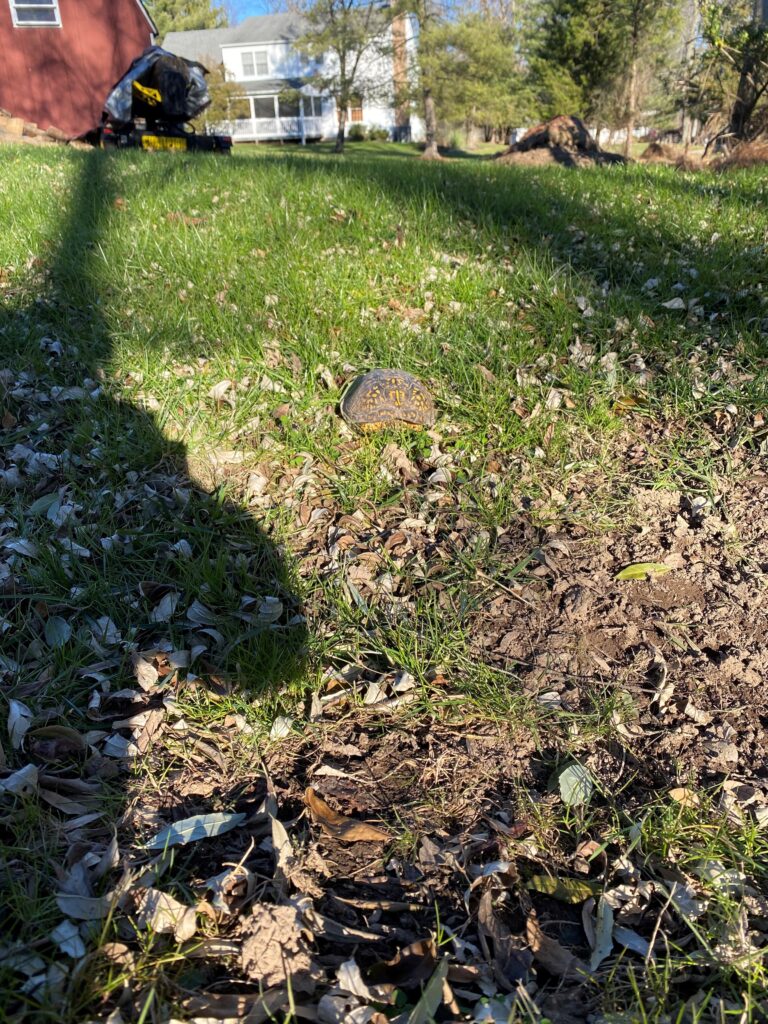
The location of my spot back home is quite similar to the one in Burlington. They are both located in a suburban area with residential houses within eyesight of the spot. They both have similar tree species as well. Although mostly dominated by sugar maples there is also a group of northern white cedars and a few eastern white pines nearby my home spot as well. Specifically, northern white cedar was a unique species located in my Burlington spot. There were a lot of squirrels around my home spot compared to my Burlington location and I even saw a small group of deer which I am yet to see in Vermont. Although no nearby my spot, I found a box turtle on the way there. In my home spot, almost all of the trees have lost their leaves and most of the tall grasses have died as well. And at this spot, I left a snail shell from one of my pet snails that I had just before I left for college.
Entry #4 – 12/12/2022
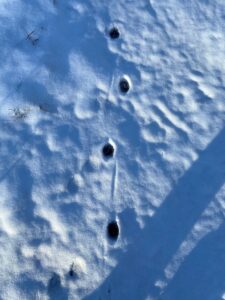
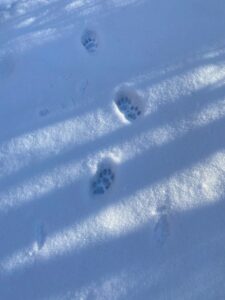
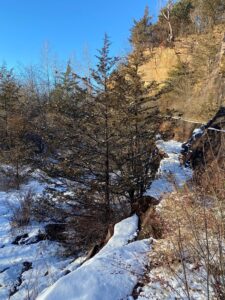
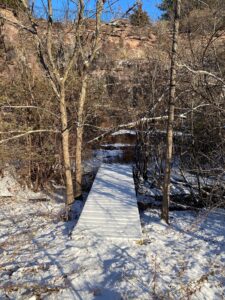
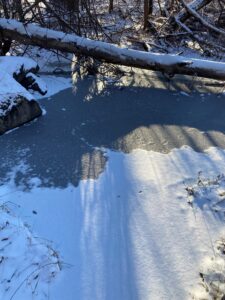
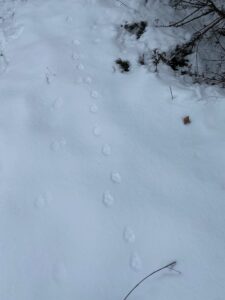
For my fourth entry for my blog, I headed back over to my phenology spot on a brisk 23 degrees fahrenheit Monday just after it snowed the day before. There were about 1-2 inches of snow on the ground along with several frozen puddles, ponds, and shallow creeks throughout the vicinity. There are no more leaves left on any of the trees except for the confierous needles of the northern white cedars shown below. However, to my surprise, there were still some leftover cattails around the perimeter of the pond. I was unable to get an accurate assessment of the leaf litter on the ground since it was covered in snow but I would assume most of the leaves would be quite frail and almost all brown at this point in the season. I was able to find two different sets of animal tracks at my spot which I think are a deer and a stray cat or raccoon. This seems to show that this spot still remains pretty active even in the winter.
What aspects of your phenology place do you enjoy the most?
What I enjoy most about my phenology spot is the diversity. You can find bare rock cliffs, deciduous and confierous trees, shrubs, cattails, small ponds, and creeks all within your eyesight. There is also a lot of fo diversity in the wildlife there as well. I have found squirrels, crows, chipmunks, frogs, and traces of deer and potentially raccoons.
Entry #5 – 1/30/2023
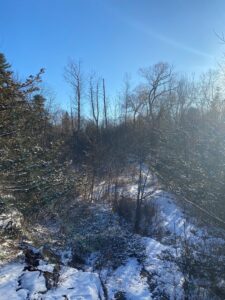
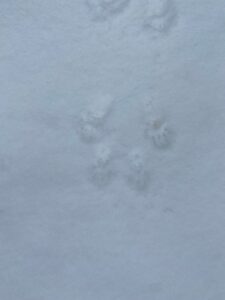
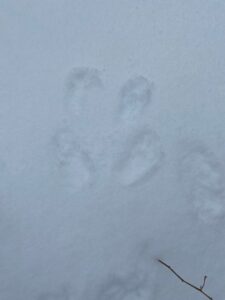
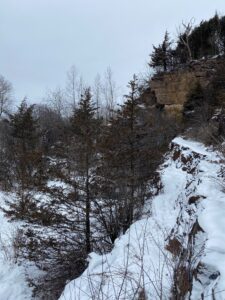
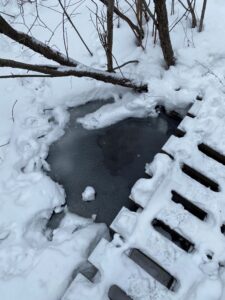
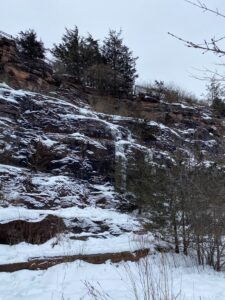
Today I revisited my phenology spot for the first time this year. Although there was some snow the last time I was at there, there were still a lot of changes. Lots of large ice structures covered the cliffside and little to no plant life was to be seen. The creek and small pond running through the area had completely frozen over. I saw lots of cat and dog tracks through the spot as well as either rabbit or squirrel tracks in the forested areas within the area. The weather today was cloudy and snowing and was a frigid 20 degrees Fahrenheit.
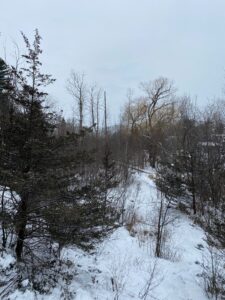
Entry #6 – 3/5/2023
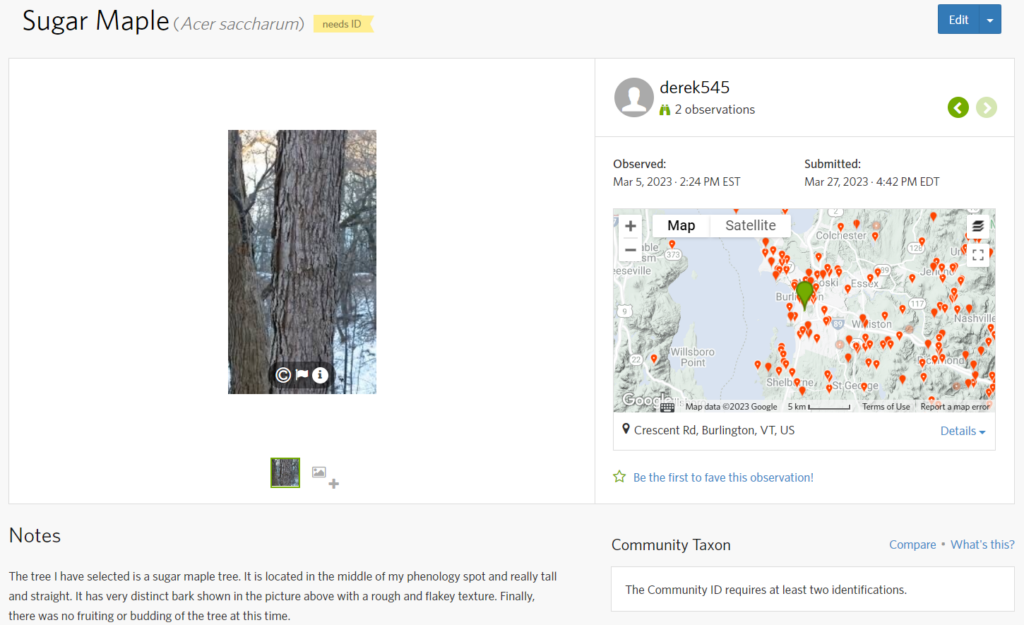
Entry #7 – 3/27/2023
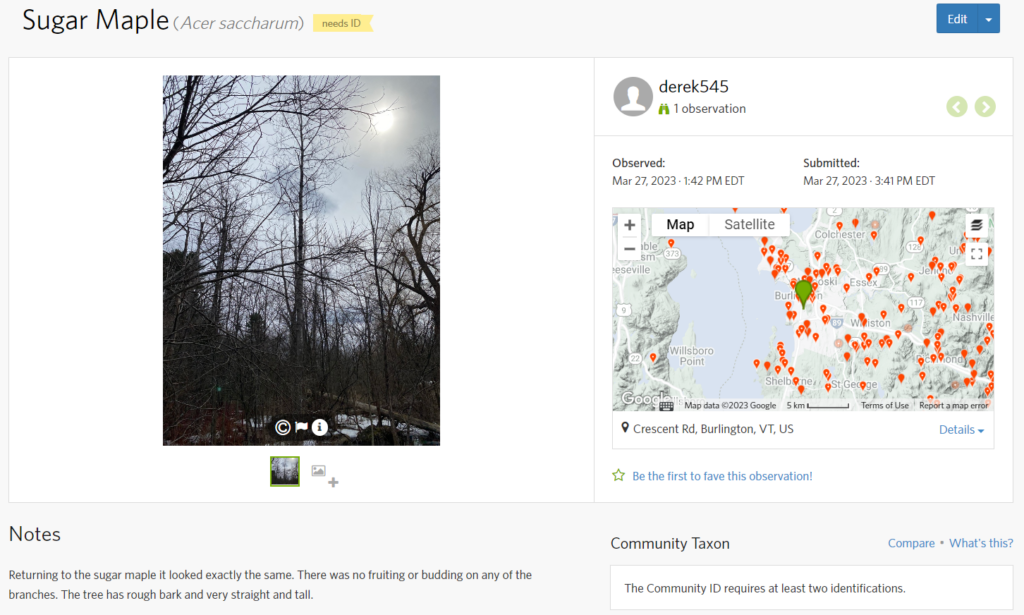
Entry #8 – 4/10/2023
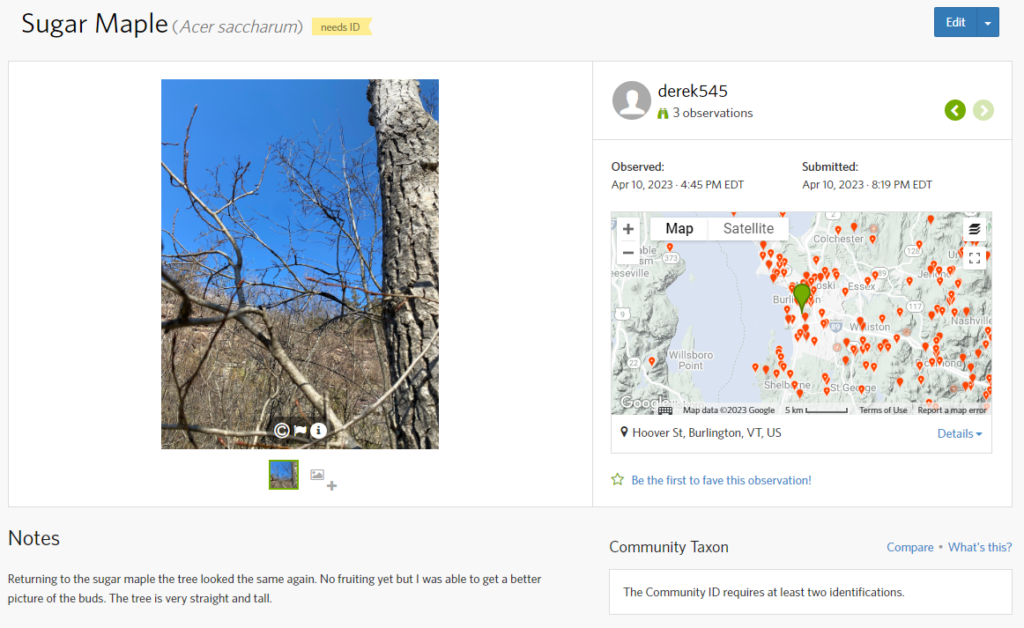
Entry #9 – 4/23/2023
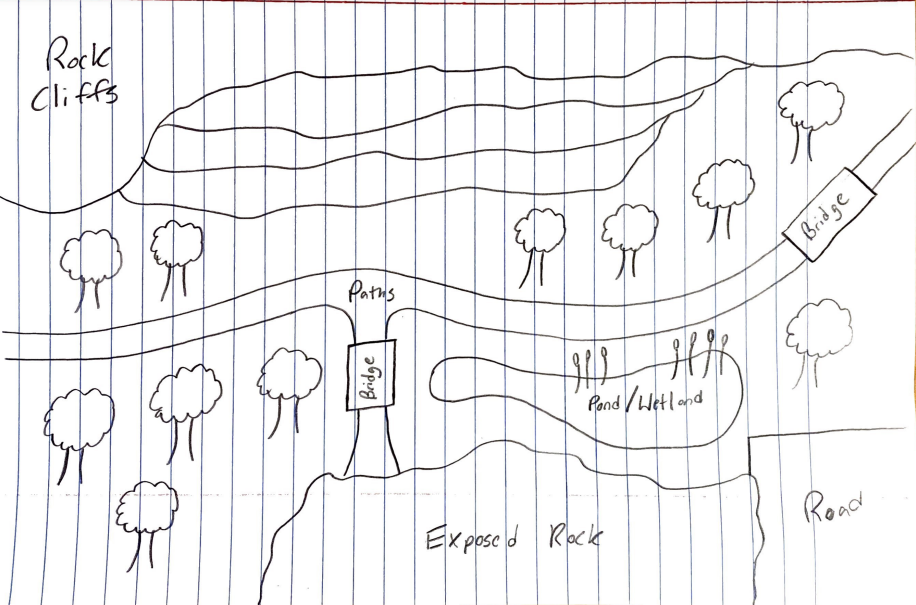
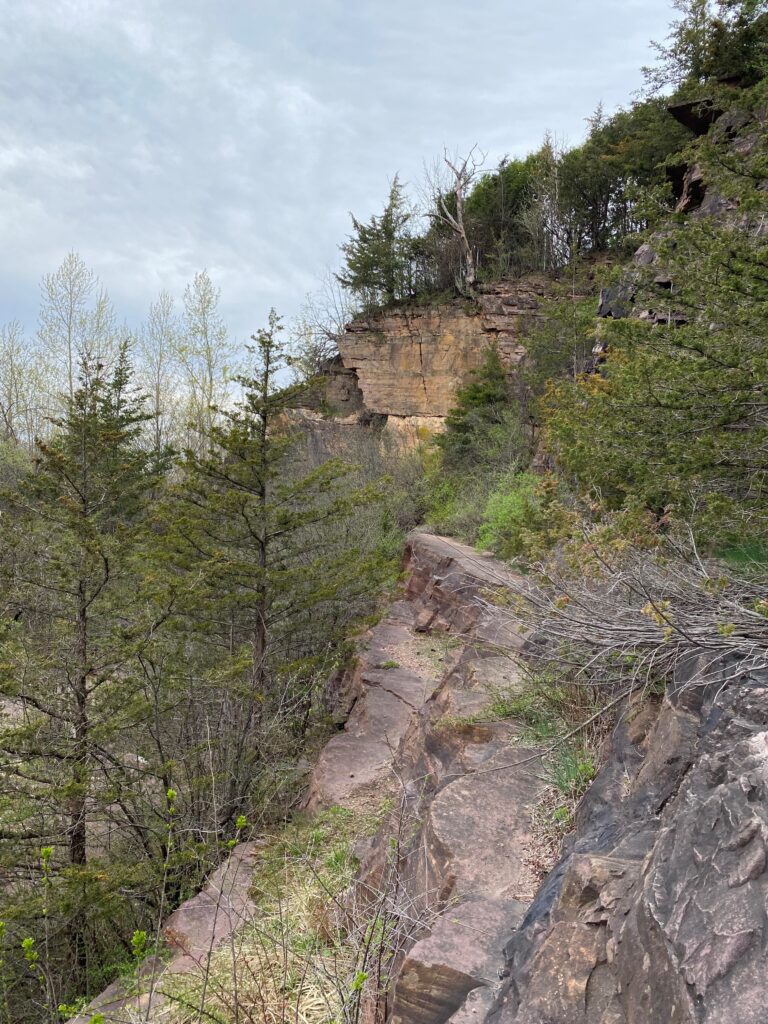
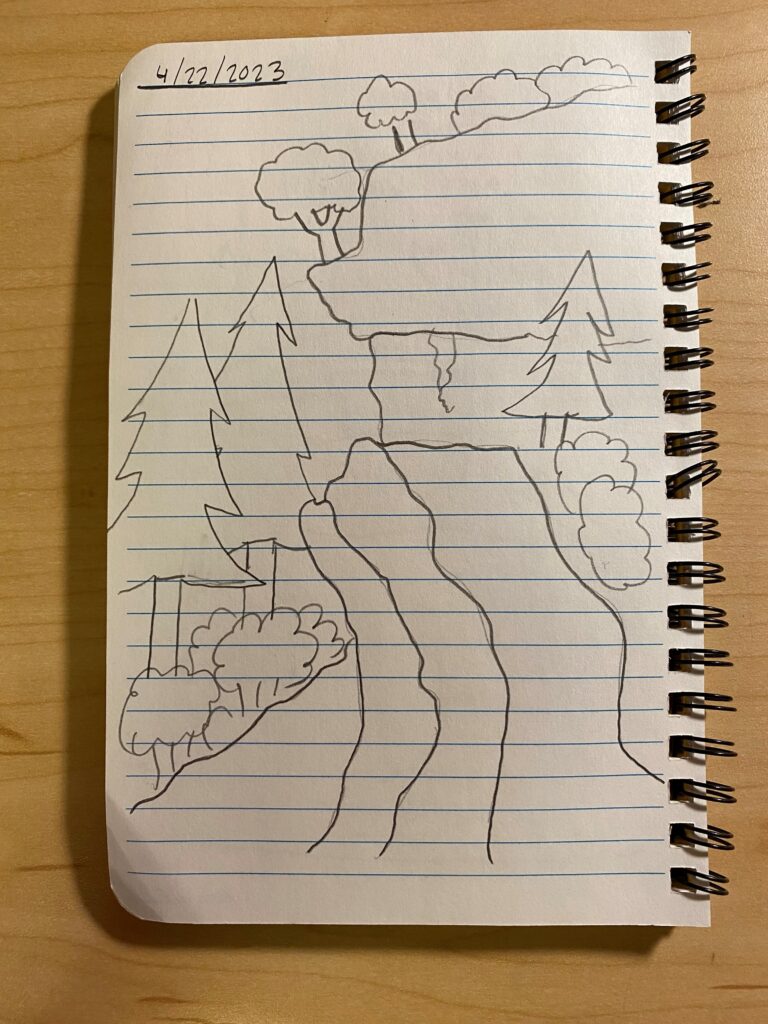
During my last visit to my phenology spot, spring has definitely sprung. Over the past month of visits to the spot I haven’t seen any growth on the plants and there was still some snow at times on the ground. However, yesterday the trees were budding and the small plants were growing. I saw a lot of frogs and a turtle in the pond further south. One of the major landmarks I became familiar with is this set of three rock ledges that I sit on to take pictures. I also have become familiar with these two northern white cedars that I take pictures of and the wetland/pond area that runs through the spot. Culture and nature do not intertwine too much here but the neighborhoods nearby the spot give easy access to kids and families to explore the rocks. The quarry has grown on me and I would consider it to be a part of my place. It was really cool to see how it has changed over the seasons and watch other physical changes in the spot. I have also brought my friends to go and do my phenology posts with me and explore the area. It is fun to share our liking for the rocks and cool areas within the spot. Below I have my 15-minute sketch and the scene I based it on.
Entry #10 (Final Entry) – 5/3/2023
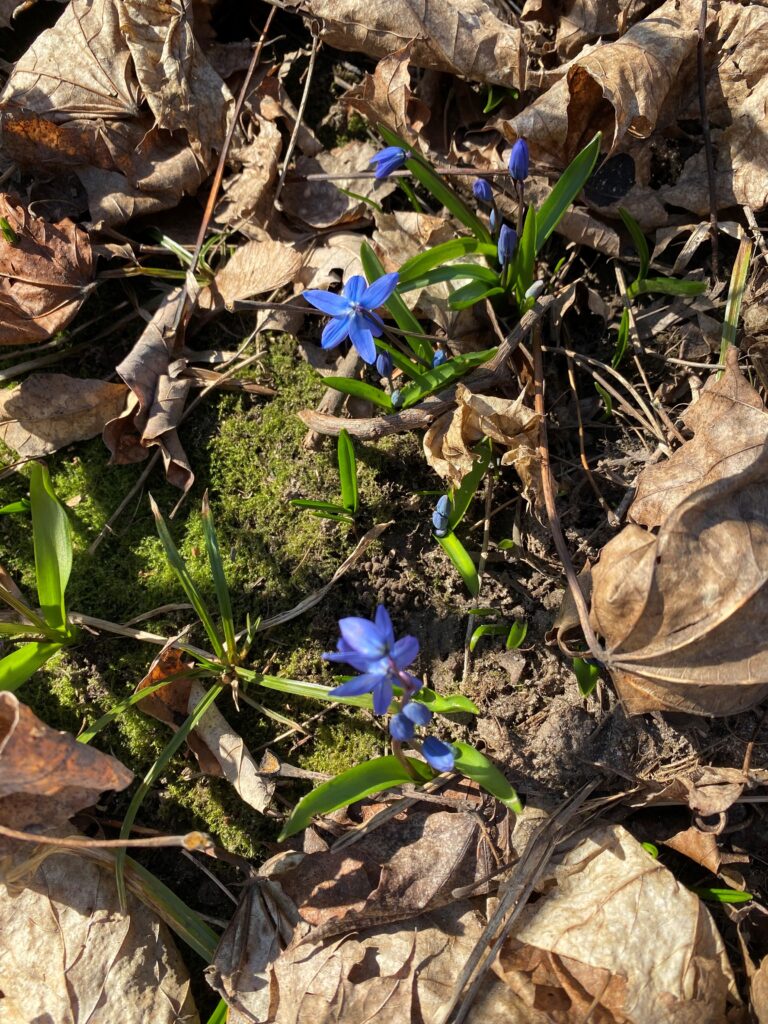
During the BioBlitz I went to Mckenzie Park to observe some species. I rode my bike from campus all the way down into the park and rode it along the dirt trails alongside the river. I saw various plants and a few animals but my most notable findings were a pileated woodpecker, a mallard duck, and a small patch of Siberian squills. I wasn’t quick enough to get a picture of the duck and the woodpecker but I was able to get a close-up picture of a Siberian squill which I have below. Looking into the City Nature Challenge I looked at the findings within Burlington, Capetown, and Dallas. Burlington had a lot of birds such as eagles, hawks, and a lot of seagull sightings. Capetown was very similar and had an even mix of birds and insects and then a large section of various aquatic organisms as well. I finally looked into Dallas because I was curious as to how they have such a large number of findings despite being in Texas which I believed didn’t have much biodiversity. However, almost all of the recent recordings in Dallas were insects and not always repeats of insects but a wide variety as well.
Hi, this is a comment.
To get started with moderating, editing, and deleting comments, please visit the Comments screen in the dashboard.
Commenter avatars come from Gravatar.