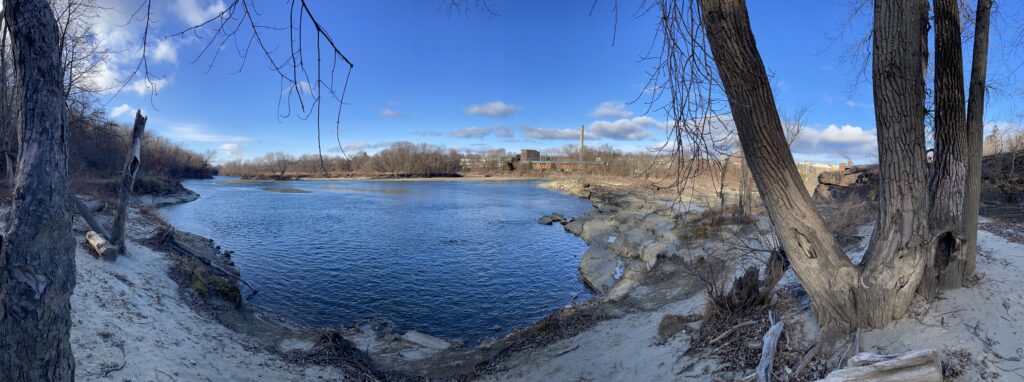
Brrr! It was a chilly one at Salmon Hole today! With winter break coming up, and my first semester at college coming to a close, this is my last post of the year.
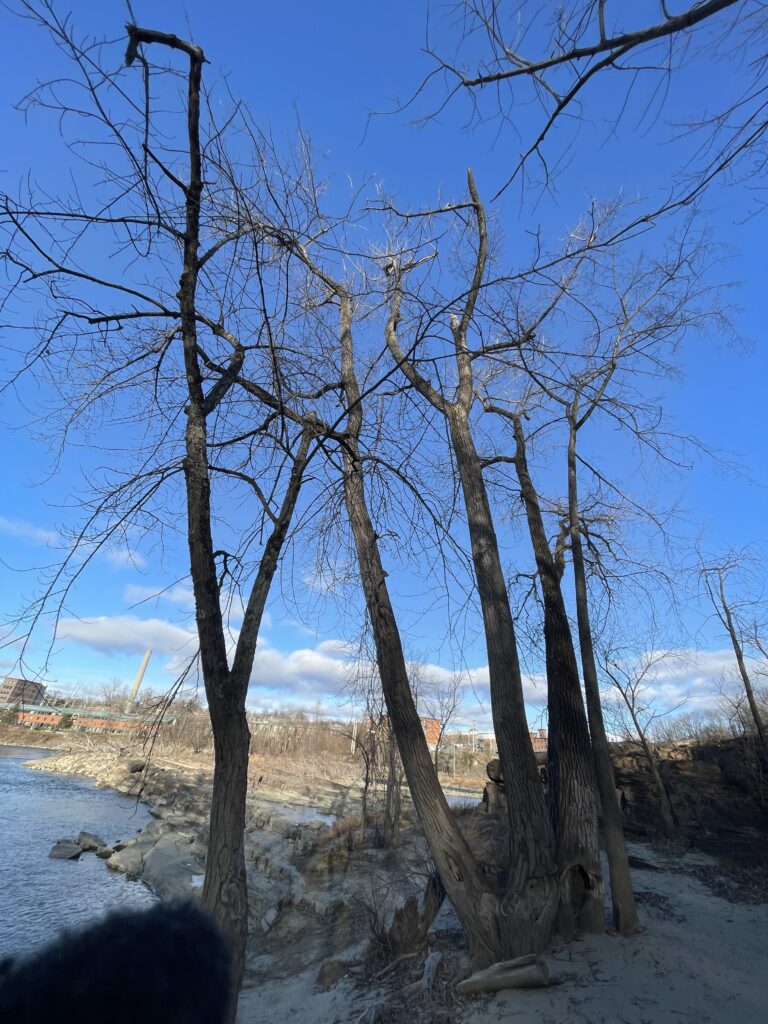
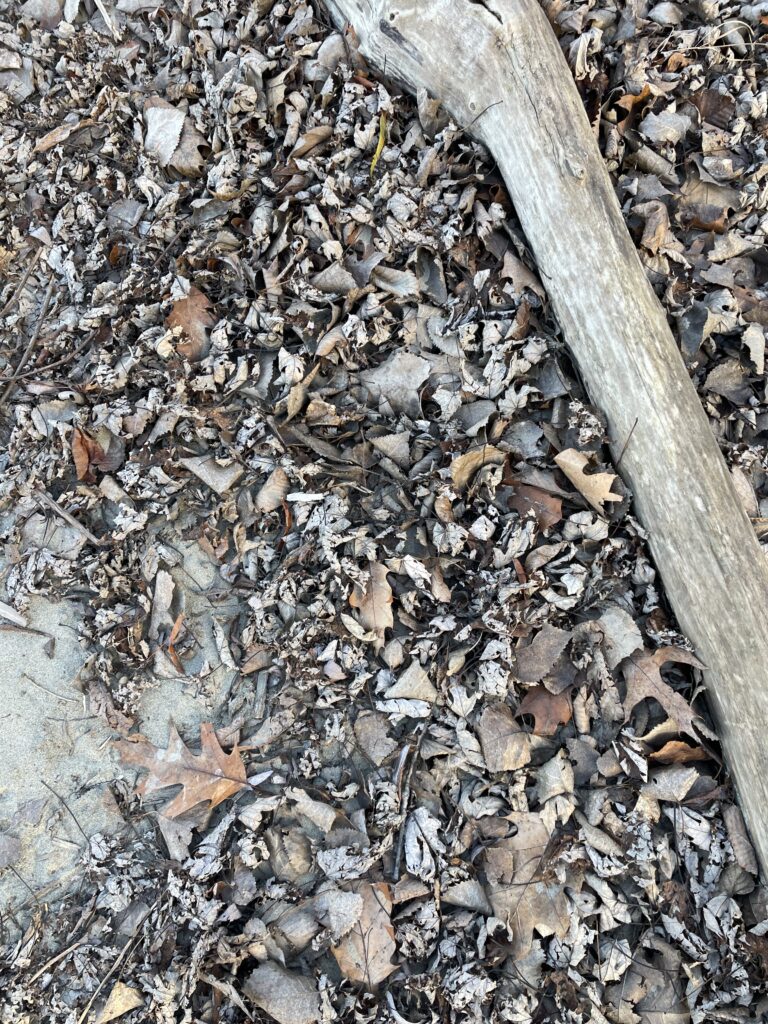
Since my last visit, the last of the leaves have fallen. The leaf litter covering the ground looks to be in the beginning stages of decomposition. While there are still some whole leaves, most are sort of crumpled up and shredded. I noticed that many of the leaves had holes in them. While I was not able to observe any, this could likely be from insects such as beetles or caterpillars chewing through the leaves.
Again, I was unable to find any signs of wildlife. The only tracks in the sand were human footprints and the imprints of dog paws. I believe the lack of wildlife at my spot is due to its proximity to a busy road. Perhaps the noise of cars and visitors scares away most wildlife.
The Oriental Bittersweet I noticed on my last visit is still there, although there seem to be a lot less berries. I noticed the yellow shells of many of the berries had fallen off. It was difficult to tell if there was actually less of the plant at my spot this time, or if the vine was just harder to notice without the bright berries. Regardless, the bittersweet that I did notice did not appear to be cut or managed by humans at all, leading me to believe that this invasive is not being actively managed by the Winooski Parks Department.
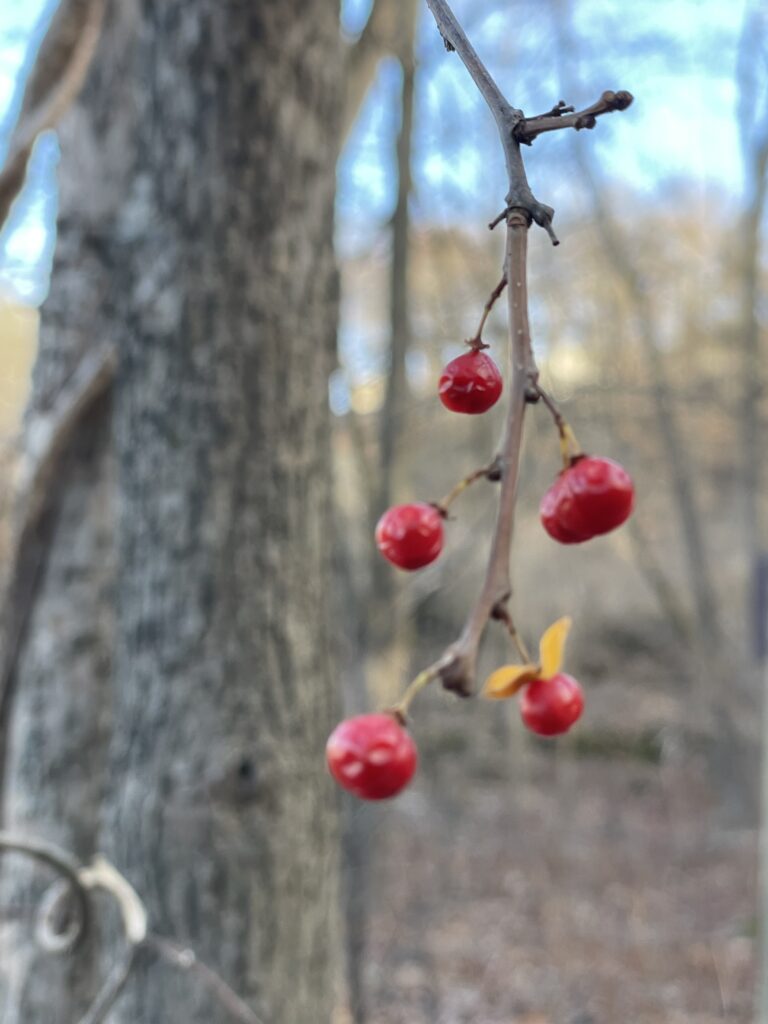
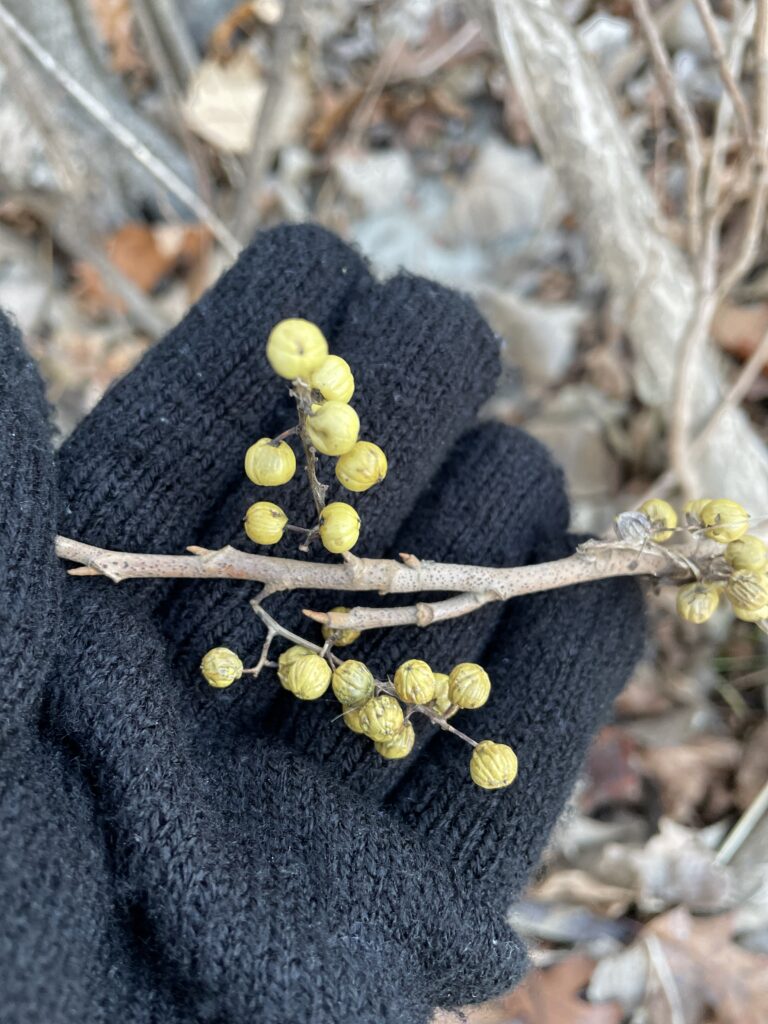
Uh oh… upon a quick Google image search, the first word of every possible identification of this plant is “poison”. These seem to be the berries of either poison oak, ivy, or sumac; although sumac is the least likely of these options as it does not usually grow this far north in Vermont.
I also noticed a plant I hadn’t seen at Salmon Hole before. These red leaves seem to belong to the Japanese Barberry plant. Japanese Barberry is non-native and invasive.

One of my favorite things about Salmon Hole is the amount of things you can observe there. You can watch the Winooski River rush and flow, observe the geology of the large expanse of rock there, or acquaint yourself with the trees and vegetation that grow along the shore. While my project has mostly focused on trees and plants, I am very interested in exploring and learning more about the aquatic life in the river as well as the geologic history of the big, flat rocks.