Residents of Costa Rica’s Osa Peninsula have many ways to make a living. From agricultural products to tourism, there is a wide range of products that originate from this peninsula and are sold both locally and in global markets. This post will discuss five of these products.
Tourism

The Osa Peninsula juts out from the west coast of Costa Rica. It houses over 2.5% of the world’s biodiversity, a large percentage considering how small the land area is. This incredible plant and animal life attracts tourists from all over the world. This vast tourist base can generate income for the locals, but comes at a cost for the ecosystems that people travel to see. A solution to this is ecotourism, a more sustainable form that promotes sustainable practices and environmental awareness. Ecolodges are a component of ecotourism that host visitors to remote natural areas with sustainability as their top priority. There are multiple ecolodges on Osa, including Bosque Del Cabo, El Remanso, and Lapa Rios. The lodges provide access to nature and revenue to the local community.
Palm Oil

Costa Rica was the 14th largest exporter of palm oil in the world in 2014, exporting $214 million worth of the product. Oil palms, originating in Africa, are grown in monocultures. After three years of growing the trees produce mature fruits. These fruits are then harvested with a sickle or chisel and sent to be processed in a mill. A quarter of the palm oil generated in Costa Rica is exported to the Netherlands, with other large percentages being sent to Mexico and Spain. United Fruit Company initiated the industry in the 1940s, providing the impetus for a global demand for palm oil as a cheap substitute for other oils such as cocoa butter.
Cacao
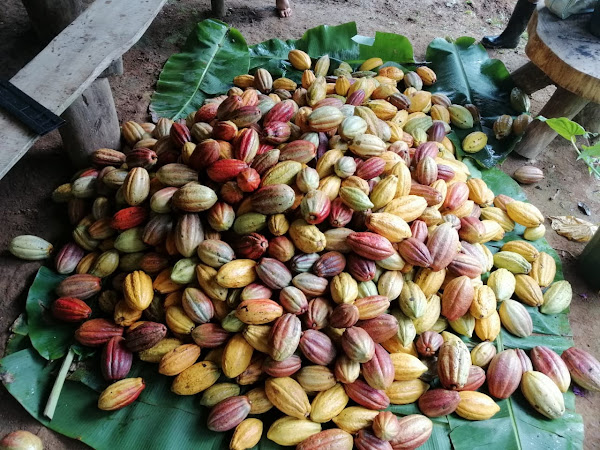
Cacao spread to Costa Rica through Spanish colonization. It has been used by Indigenous peoples for sustenance as well as medicinal and ceremonial purposes, and small farms have used traditional cacao growing practices since the plant was introduced. More sustainable forms of farming such as agroforestry have recently become popularized in the Osa Peninsula. The process of “sowing, tending, harvesting, fermenting, drying, sorting, roasting, and producing” the cacao beans is often carried out within one facility, like at Osa Cacao. Finca Kobo, where we will be staying, grows their cacao along with other fruits and vegetables and produce for the family’s needs as well as their visitors’.
Gold

Gold mining has occurred in Costa Rica since pre-Colombian times. Before it became a national park, Corcovado was a major source of gold mining. Many people illegally mined the substance regardless of regulations. Today, gold miners known as “Oreros” left behind by the United Fruit Company have largely been ousted by the government, but those that remain find gold nuggets in the rivers that still contain the scars from the intense mining of the past. Tourism is woven into the gold industry, providing revenue to Osa from tourists who want to learn about the history of mining in the region.
Sugarcane

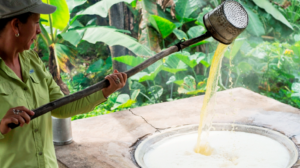
Sugarcane is grown throughout Costa Rica, as the fertile soil, bright sun, and wet climate provide the perfect environment for it. Small farms offer tours of their facilities, the traditional ones boasting mills that use oxen and horses to produce the sugar products. One such farm is called Trapiche Don Carmen, which sells their products such as tapa dulce, dulce líquido and sobao to the tourists.
Sources
“Agriculture at Finca Kobo.” Finca Kobo, 2007, www.fincakobo.com/finca_agri.html.
“Costa Rica Is the Main Exporter of Palm Oil in 2020.” Q COSTA RICA, 18 Sept. 2021, qcostarica.com/costa-rica-is-the-main-exporter-of-palm-oil-in-2020/.
“Ecotourism – Osa Peninsula Tourism Center.” Osa Tourism, 23 Oct. 2023, www.osatourism.com/costa-rica-ecotourism/.
“Osa Peninsula Chocolate – Tourism Information Center.” Osa Tourism, 2 Oct. 2023, www.osatourism.com/osa-peninsula-chocolate/.
“Osacacao.” OsaCacao, osacacao.com/.
Sharma, Devane. “From Seed to Harvest: How Oil Palm Is Grown.” Musim Mas, 1 Dec. 2023, www.musimmas.com/from-seed-to-harvest-how-oil-palm-is-grown/.
“Striking Gold: Cultural History of the Osa Peninsula – Crocodile Bay.” Crocodile Bay Resort, Crocodile Bay Resort Https://Www.Crocodilebay.Com/Wp-Content/Uploads/2019/07/CBR-Logo-Trans-White.Png, 16 Aug. 2018, www.crocodilebay.com/gold-mining-osa-peninsula/.
“Turismo Rural Comunitario Osa.” Trapiche Don Carmen, Rancho Quemado, Inter-American Development Bank, www.gobiernolocalosa.go.cr/turismo/info.php?item=36.
Hi, this is a comment.
To get started with moderating, editing, and deleting comments, please visit the Comments screen in the dashboard.
Commenter avatars come from Gravatar.