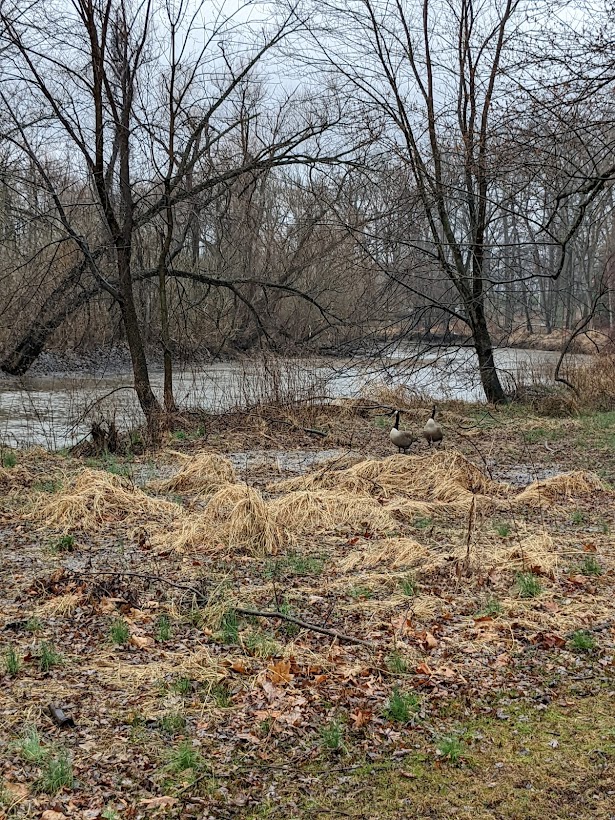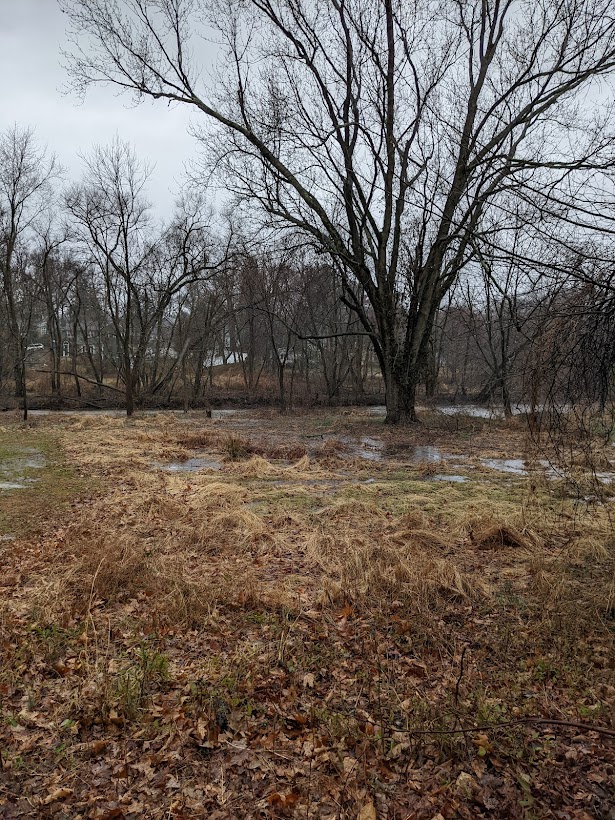
For this phenology assignment, I visited Pennypacker Park in Haddonfield, NJ. This park is one of many in the area that surrounds the Cooper River. The park is considered a historical landmark because of a dinosaur skeleton that was discovered there in 1858. This section of the park that I visited was only 30 feet or so from a major road and a paved bike path, so it is well traveled. Over the years, the Cooper River has had issues with runoff pollution, including road salts and animal waste (especially from the geese who love this spot).
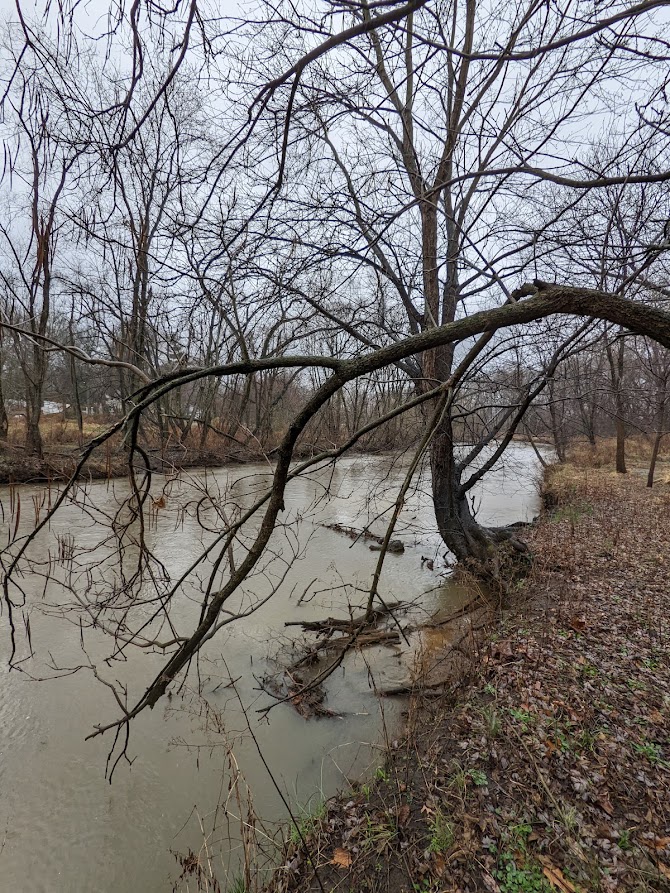
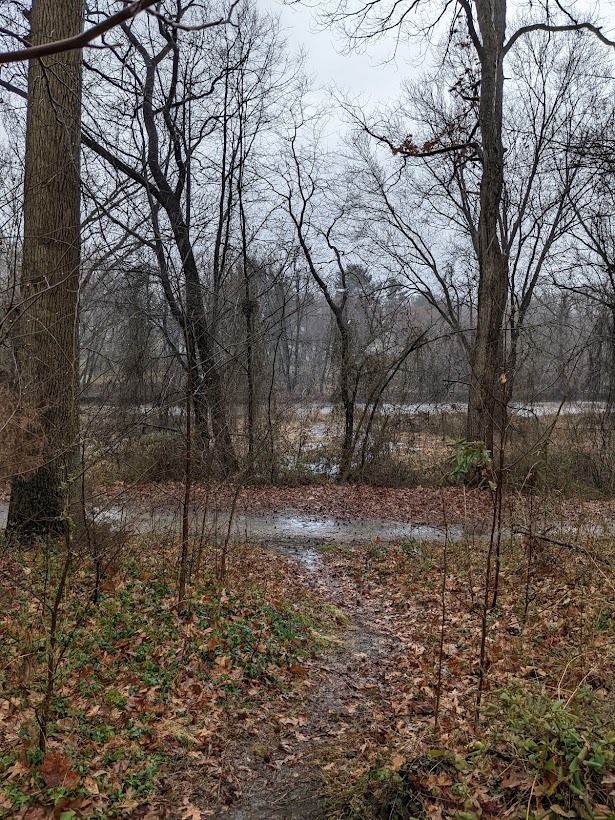

The trees in this park are mainly a variety of oaks and maples. The birds I was able to spot were American Robins and Canada Geese. It was raining pretty hard, so wildlife was hard to find. The park was very muddy and will continue to be as the snow ends for the year. The Norway Maples are starting to have bright red buds, which signals it will soon be time for them to bloom.
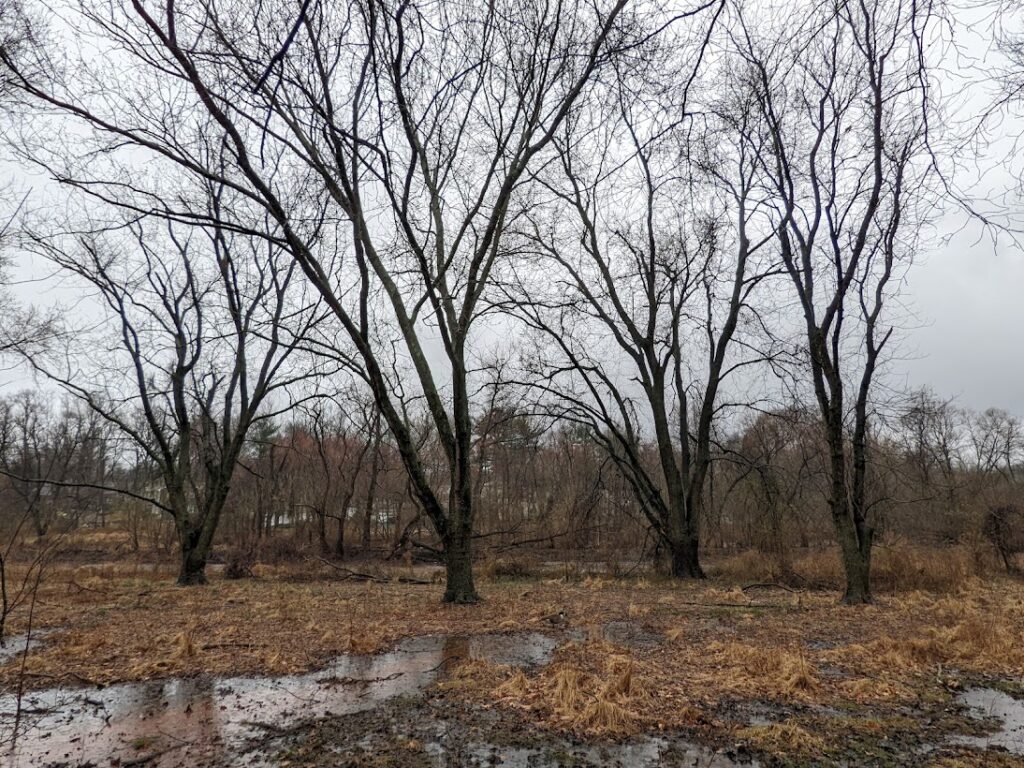
The rain made me notice how important this landscape is for collecting stormwater. Since the wetlands are adjacent to multiple major roads, it is important that they stay healthy to control flooding and filter pollutants from the river. Plus, this provides plenty of habitat for many species. This park is similar to my usually site, Centennial Woods, in that they are both a natural area in the middle of a densely developed area. Both sites provide recreation for people and important ecological services which serve the community.