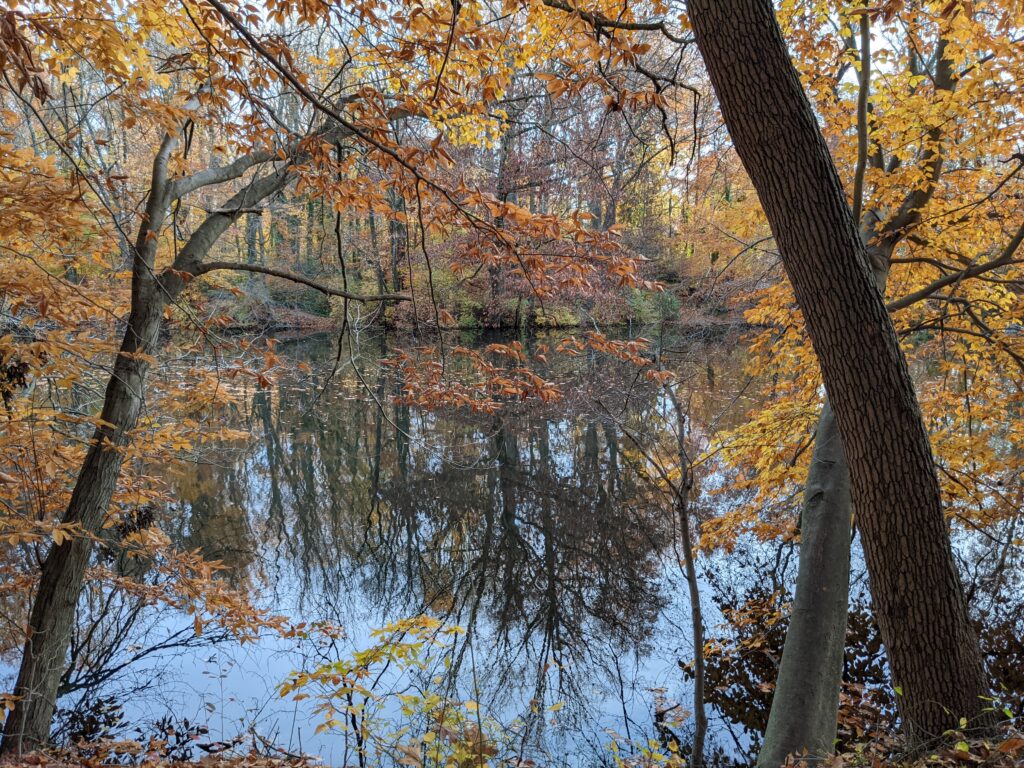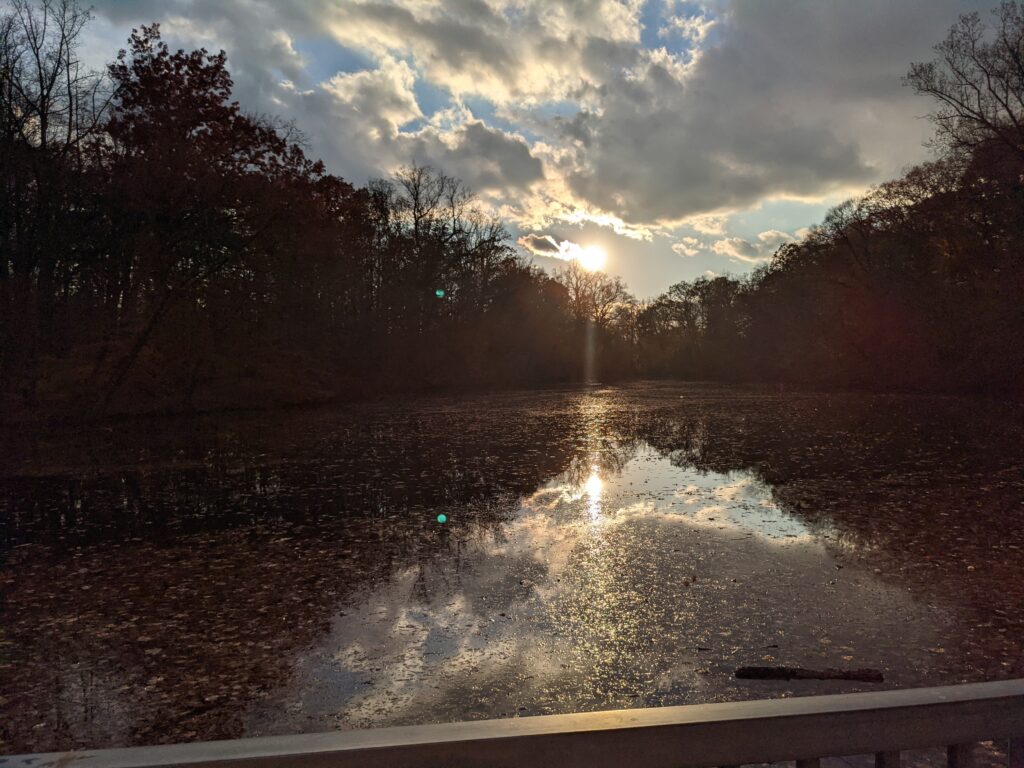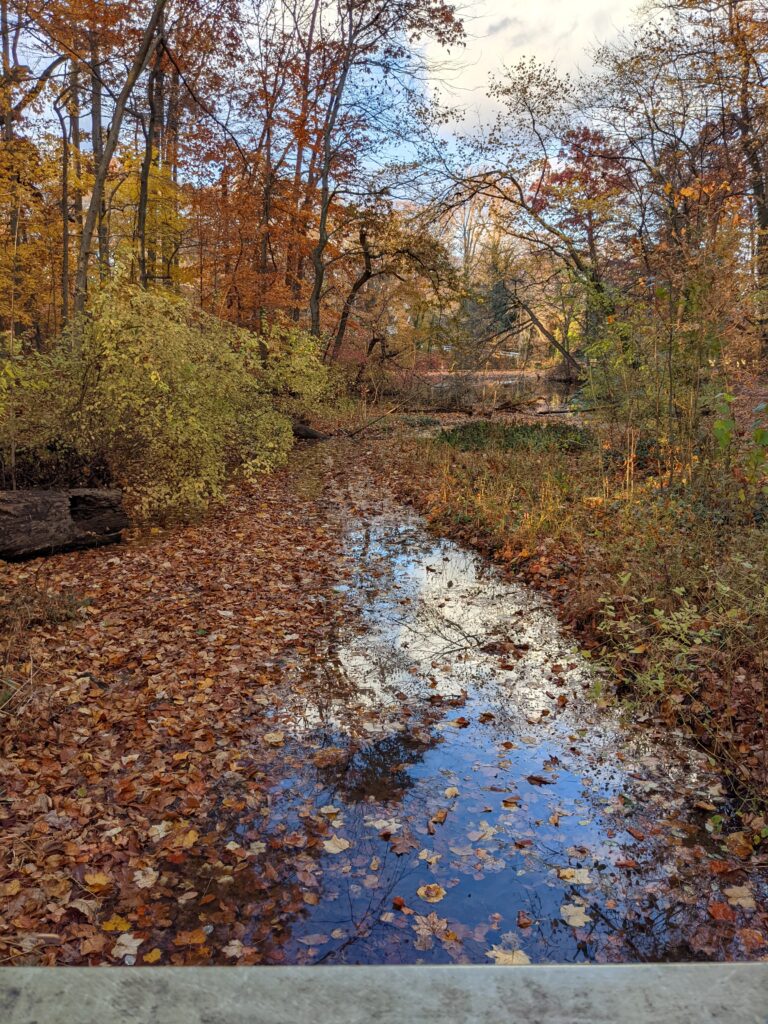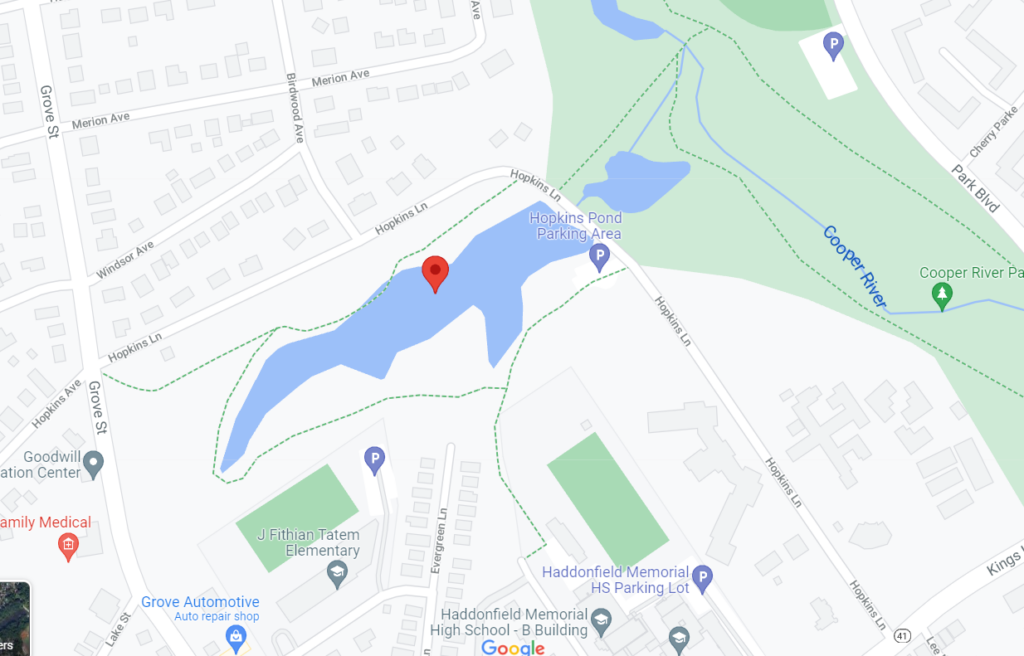
For my Thanksgiving break phenology place, I visited Hopkins Pond and the surrounding park in Haddonfield, New Jersey. This is a special place to me because it is directly next to my elementary and high schools, so I’ve spent lots of time walking around it.
About half the trees I was able to identify were similar to those found in Burlington:
- American Beech
- Northern Red Oak
- White Oak
- Norway Maple
- Red Maple
I also found some trees that I haven’t seen in Burlington:
- Tulip Poplar
- Sassafras
- American Holly
- Southern Red Oak
This spot is very different from my usual phenology spot, Lone Rock Point. The only tree these two spots have in common is the American Beech, which makes sense because both spots have fairly sandy soil, which beeches like. Hopkin Pond also has a lot of English Ivy, which makes up the majority of the understory vegetation, while Rock Point has more ferns. Hopkins Pond park has more foot traffic than Rock Point since it is in the middle of the neighborhood. Because it is easily accessible, lots of people walk through it with their kids or their dogs, or people cut through the park to get to the schools. It is also managed by the town, so the vegetation is controlled to allow for easy access and recreation, including open spaces of mowed grass. Another reason it is different from Rock Point is the difference in climate. Especially this time of year, New Jersey is warmer than Vermont, so the trees here still have most of their leaves. Also, the Red Maples at Hopkins Pond are much smaller and less abundant than ones in Burlington, which could be because of the climate or just because they are outcompeted by other species in this spot. A similarity between the two spots is that both Lake Champlain and Hopkins Pond have blue-green algae. Both are surrounded by developed areas, so they have similar problems with runoff and pollution. However, there are no agricultural areas adjacent to Hopkins Pond, so the eutrophication has a slightly different cause.