
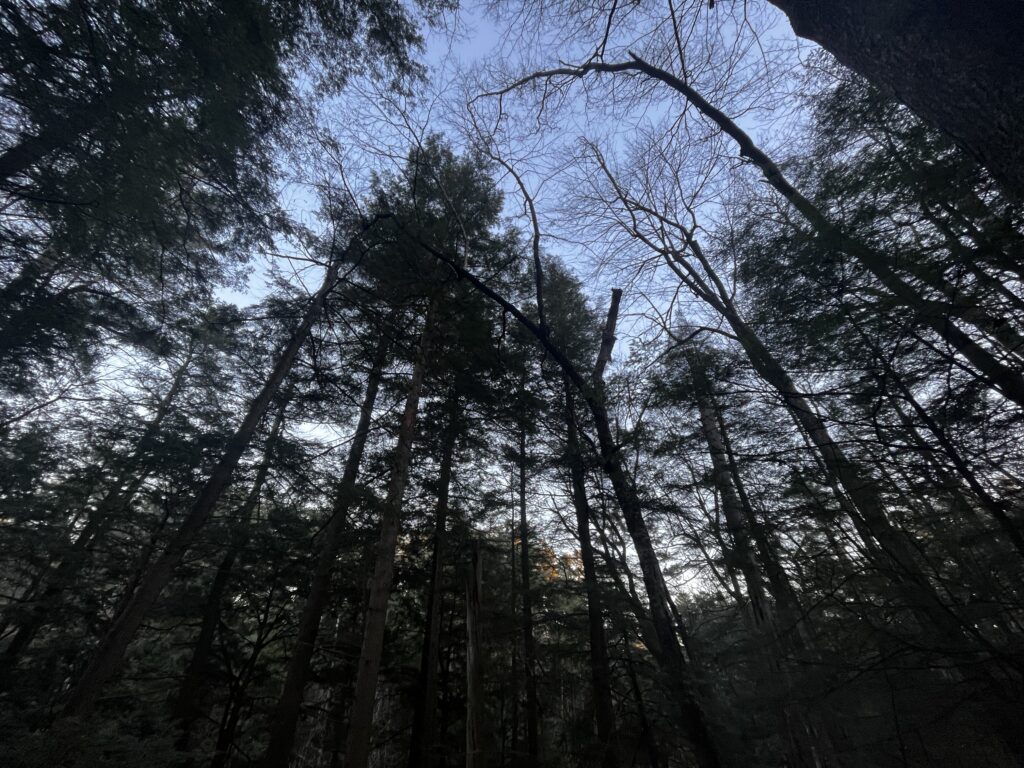
All deciduous trees have lost their leaves. Eastern hemlocks are the persistent vegetation species since they are dominating the area. Their needles are easily visible and intact on the trees. Cars driving by the main road that is close to Centennial Woods is the only sound I could hear.
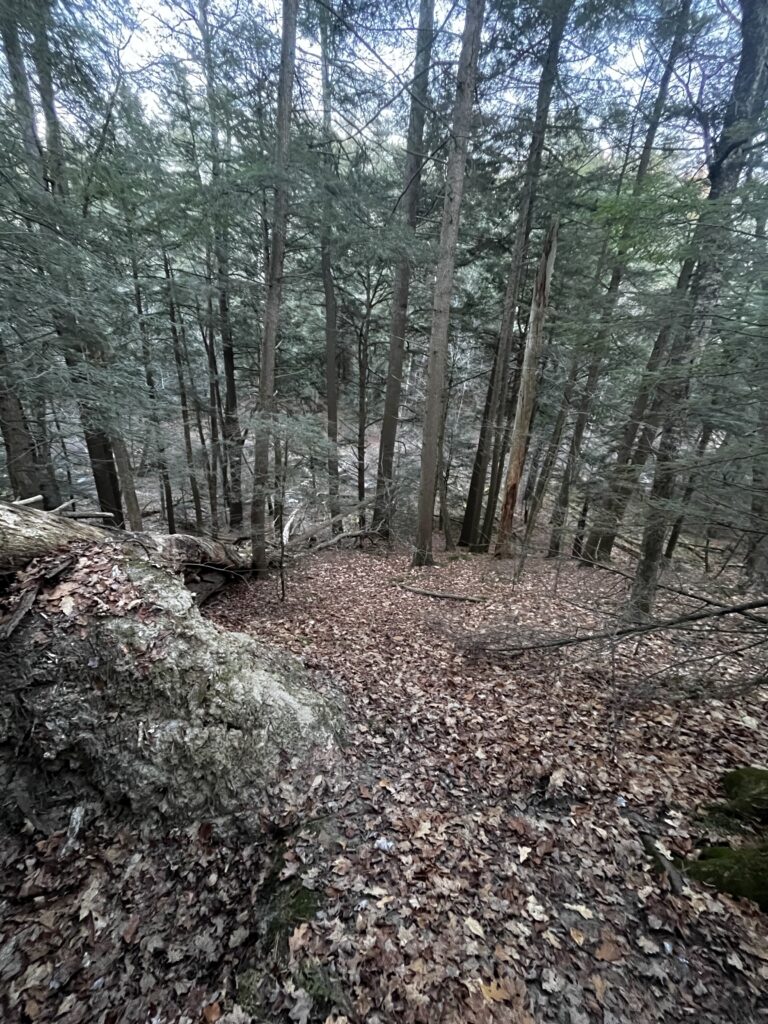
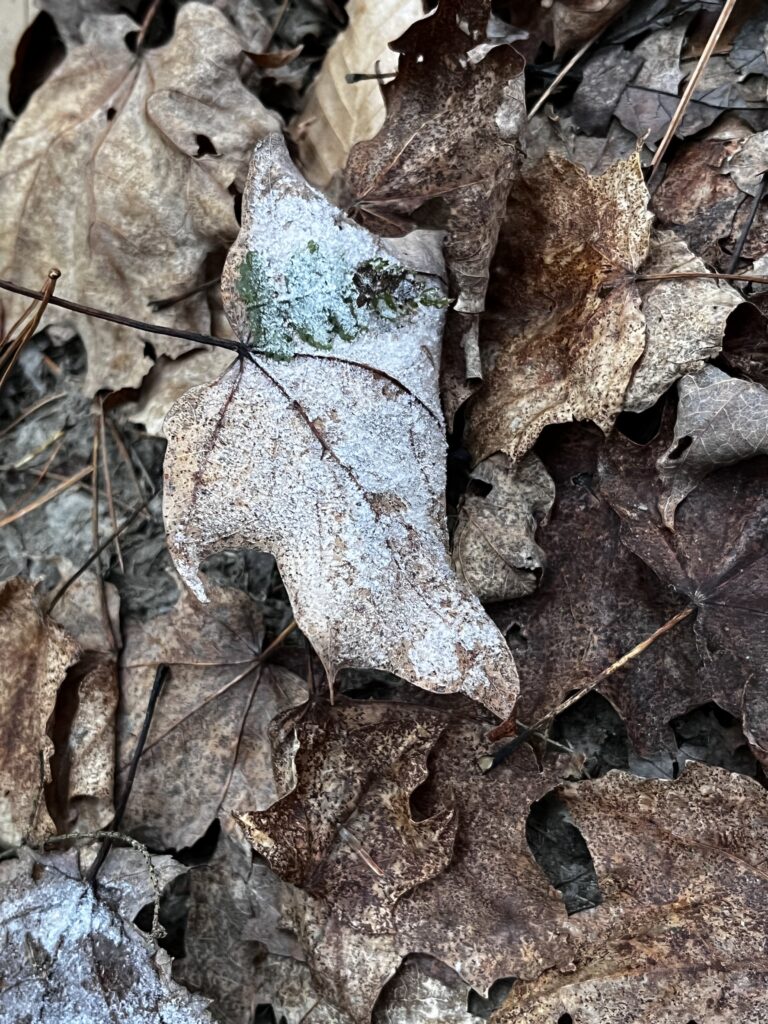
The leaf litter on the ground is brown and crinkled. Some needles have fallen, which are also brown. Leaves and needles are brown because they lost chlorophyll, which gives them their color and keeps them in place on the trees. The leaf and needle litter are adding acidity to the top layer of soil since they are organic matter. Organic matter lowers soil pH because hydrogen ions that are involved in topsoil and leaf litter are released. Frost is on the ground, which occurs when water vapor cools past the dew point. Frost may also be increasing the acidity of the soil since hydrogen ions are being extracted. There are no traces of animals being present, such as scat or nests, however, there are signs of decomposition: fungi.
Fungi
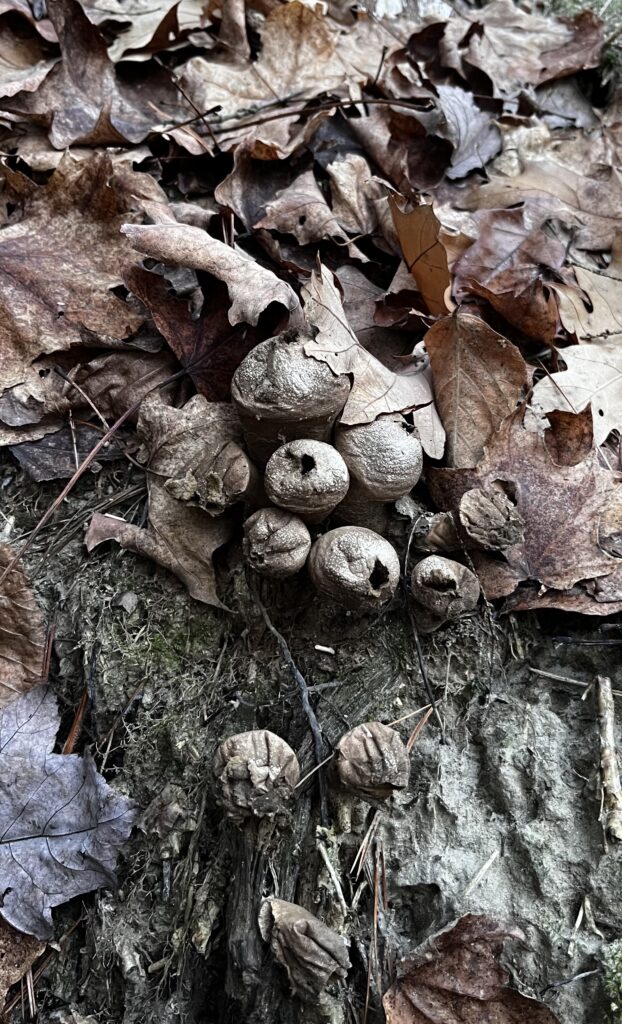
Agaricus fungi are growing on a fallen, decomposing eastern hemlock. Agaricus fungi are a type of mushroom. They are in their early stage of development in the mushroom life cycle. The caps of the fungi are sagging and closing up, which implies that they do not have sufficient nutrients to be fully developed. The lack of nutrients could be a result of temperatures dropping in the ecosystem as the winter season progresses.
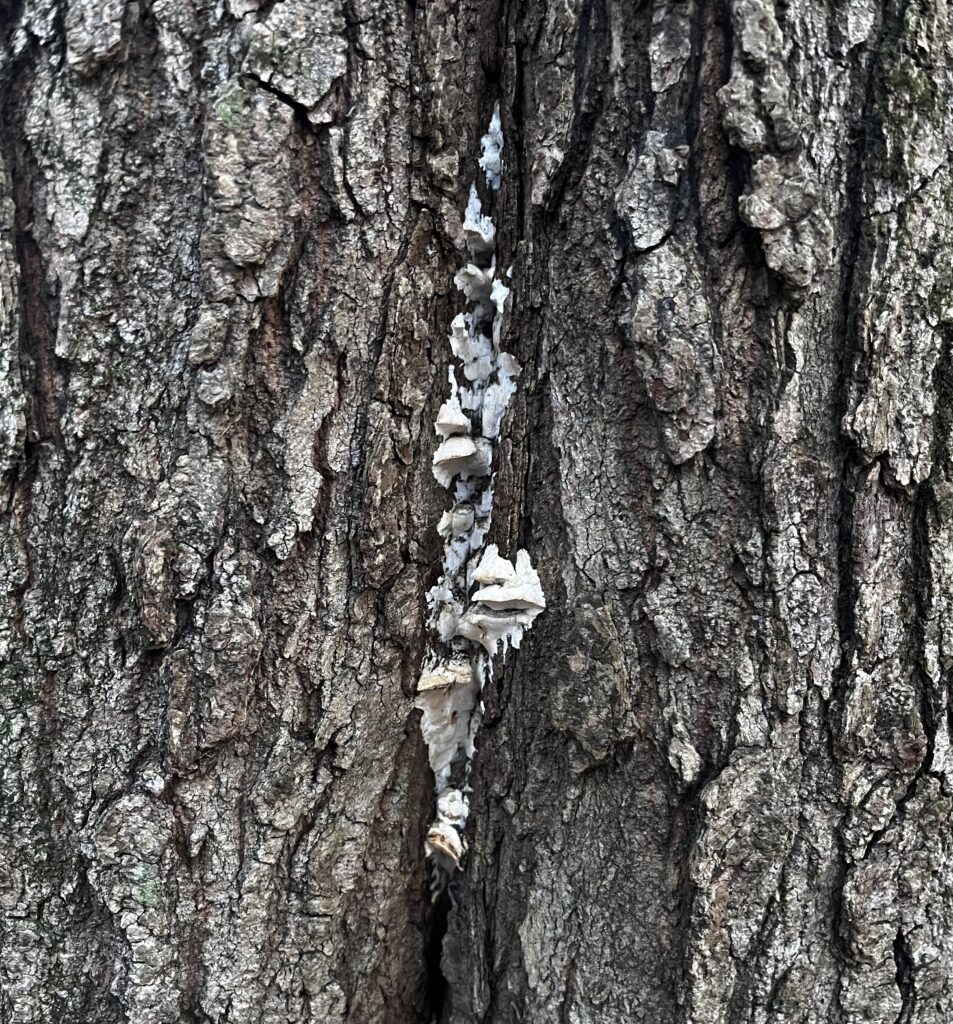
The Schizophyllaceae fungi growing on the eastern hemlock has lost its vibrancy and yellow hue that was present in October; it is now pale and white. What is interesting is that this tree is not dead, because it is still standing, however, there is still fungus growing on it. The presence of the fungi implies that the wood in the cleft of the tree is rotting. Schizophyllaceae grow by absorbing the moisture that could not easily dry out since this type of fungi thrives in these conditions.
Favorite Aspects of Phenology Spot
I enjoy observing the different types of fungi and how they adapt to the ecosystem of Centennial Woods. I think it is exciting to observe the components that go into forest regeneration. Observing the change in the foliage from deciduous trees, such as sugar maples and black cherries, and being aware of how many eastern hemlocks make up the spot was also enjoyable because now I have an understanding of the ecosystem.