Archive for the ‘Uncategorized’ Category

Final Phenology Visit (for real this time) :(

I’ve seen my site green with life, frozen over, and thawed out with the first signs of spring popping up all around me. My favorite has been recently – I just really enjoy spring and being outside after such a long winter. I love winter in New England, and my spot was beautiful when covered in ice and snow. However, it’s much more lovely with ferns popping up, frogs jumping around, and birds singing above.

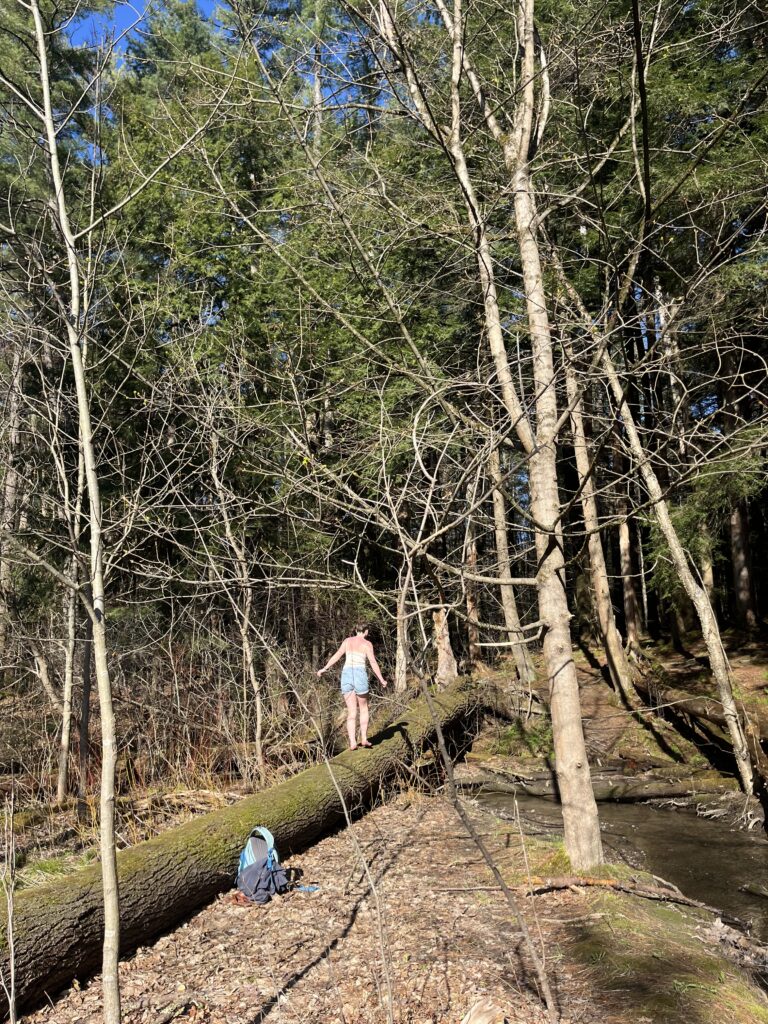
My favorite way to get to my spot is to walk across a log over the brook, then along the pebbles and mud down to where there’s a little island in the center. That’s where the sketch below was done from. That spot is my favorite. It’s surrounded by running water, and there’s plenty of young plant life. From my observations and also weather patterns in Vermont, I’d guess that the little island floods often, triggering a sort of succession with the smallest plants. I like that it showcases a lot of the concepts we talk about in lecture and lab.

Nature and culture intertwine at my spot in a way that creates community. My spot is pretty close to the trails in Centennial Woods, so I always see people walking and running by. Some have their dogs, some are chatting with friends, and some are just observing a beautiful area for some peace and quiet. My spot is at the center of a place where people come to connect with both each other and nature, forming a culture that appreciates what Earth provides for us and that wants to preserve it.

I don’t consider myself a part of my place. I don’t have much of an impact on it. It will still be there whether or not I continue to go back. I have an emotional attachment to it, but not so much that I can’t imagine myself without it. I appreciate that it’s given me so much to learn from and a place to escape to when I want to be alone. I hope that my spot remains a place for people to love and feel at peace in.

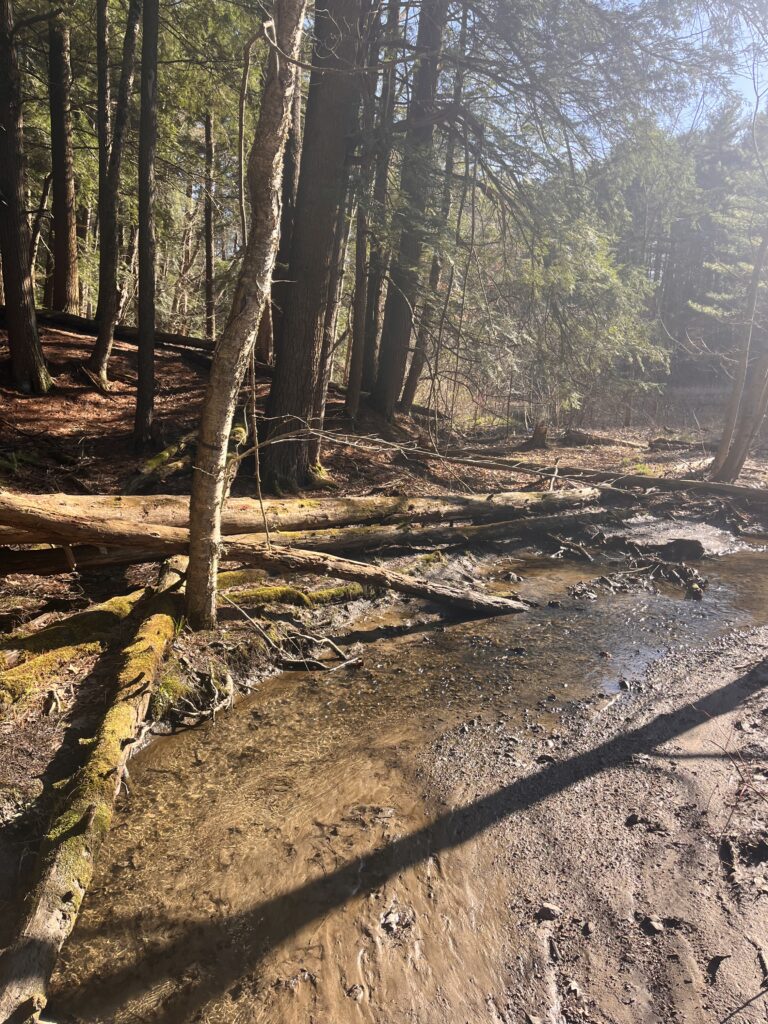
Pictures from my last visit:
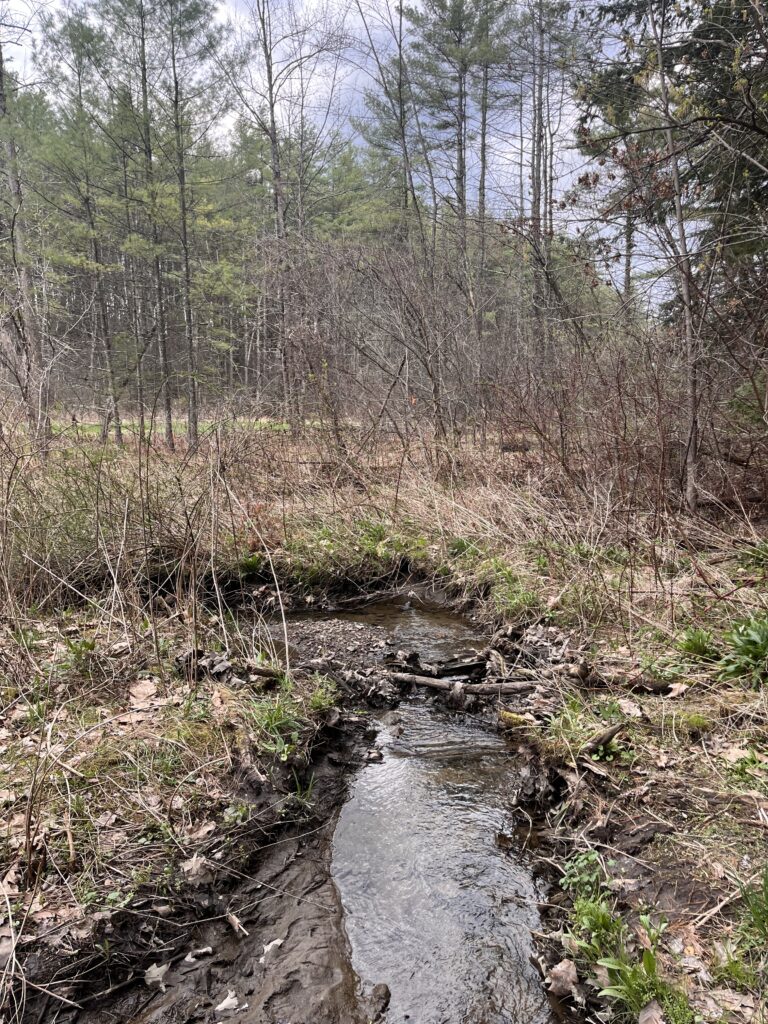
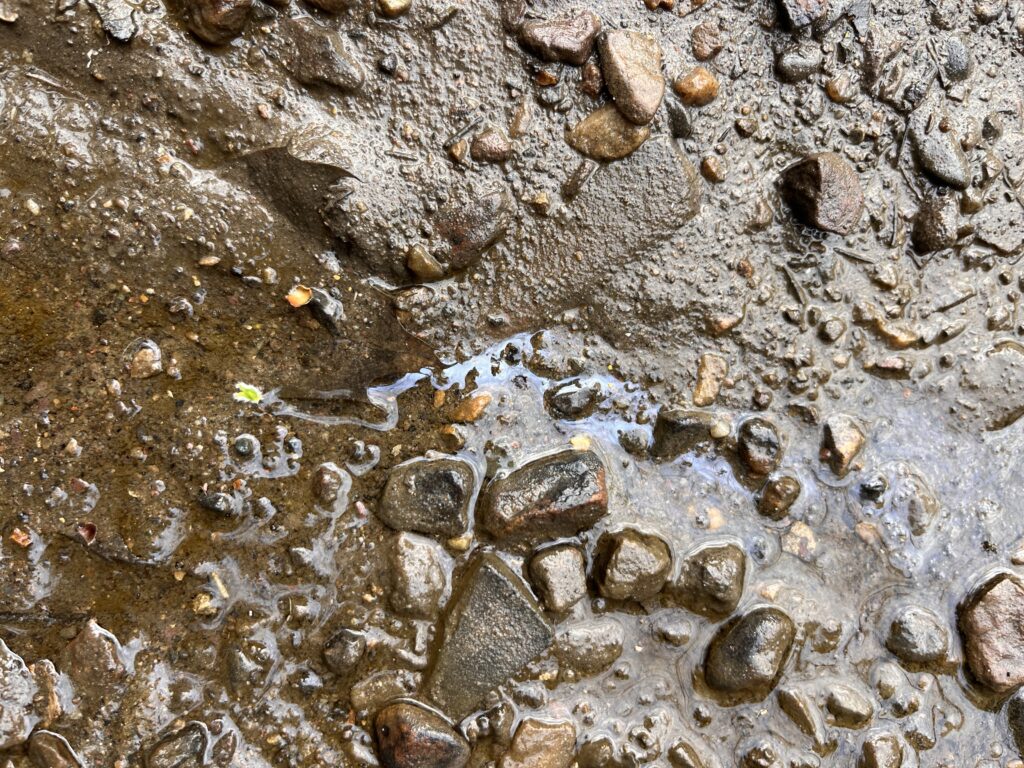
^ a little bit of oil in the mud/water 🙁
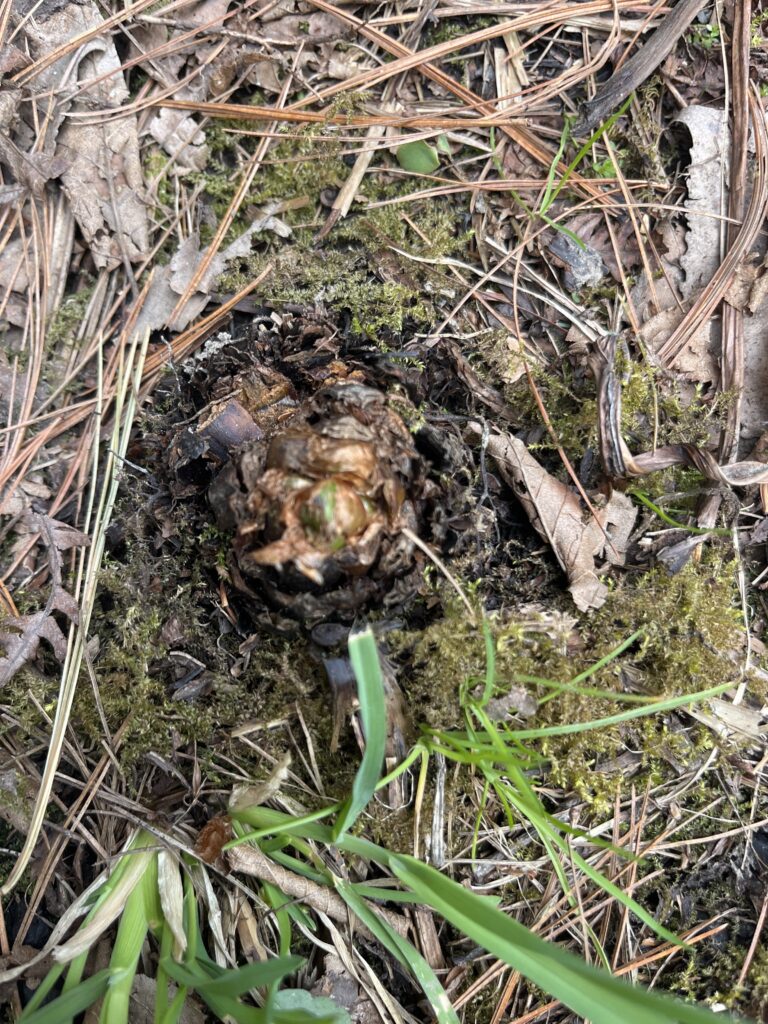
City Nature Challenge!!

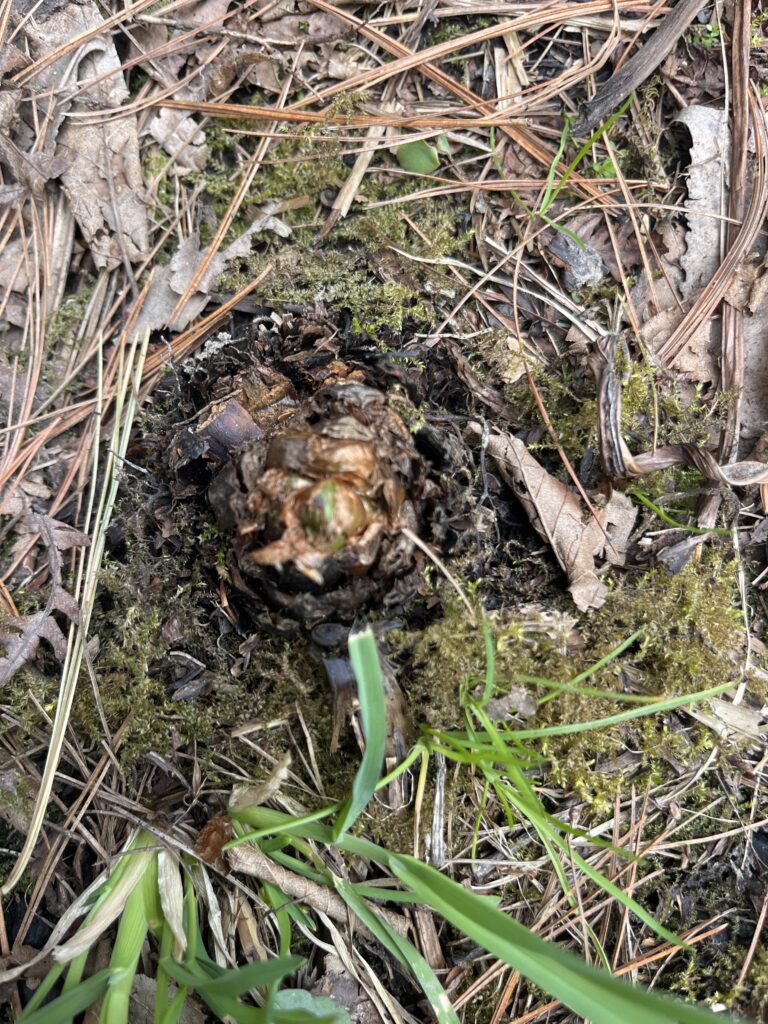
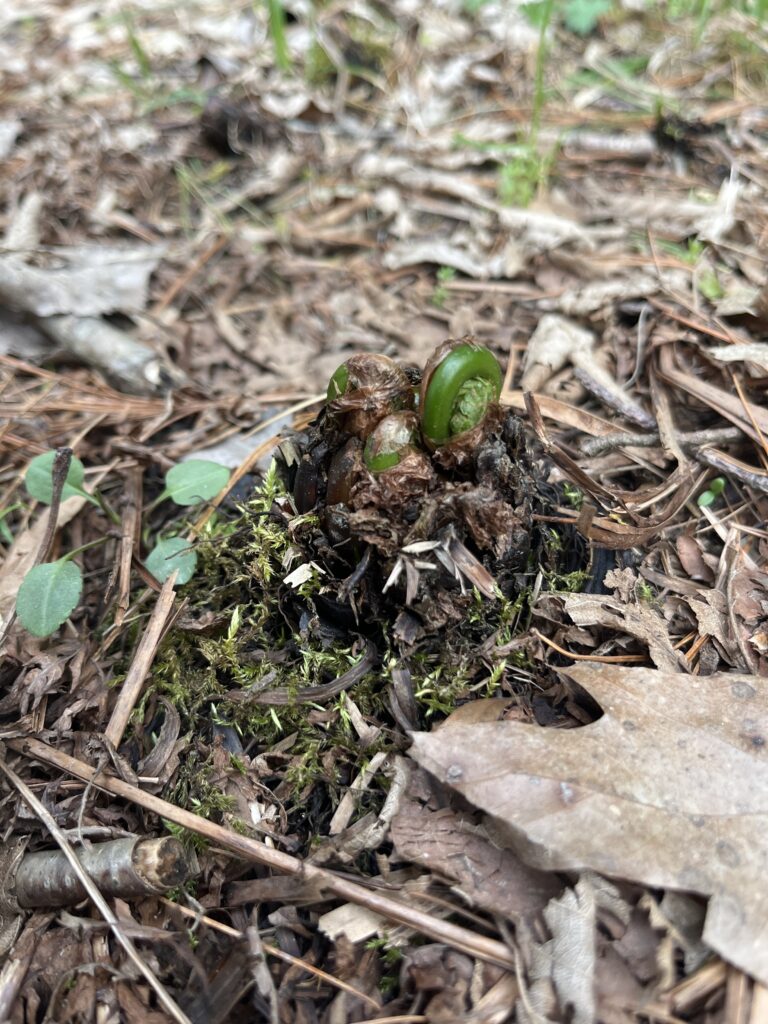
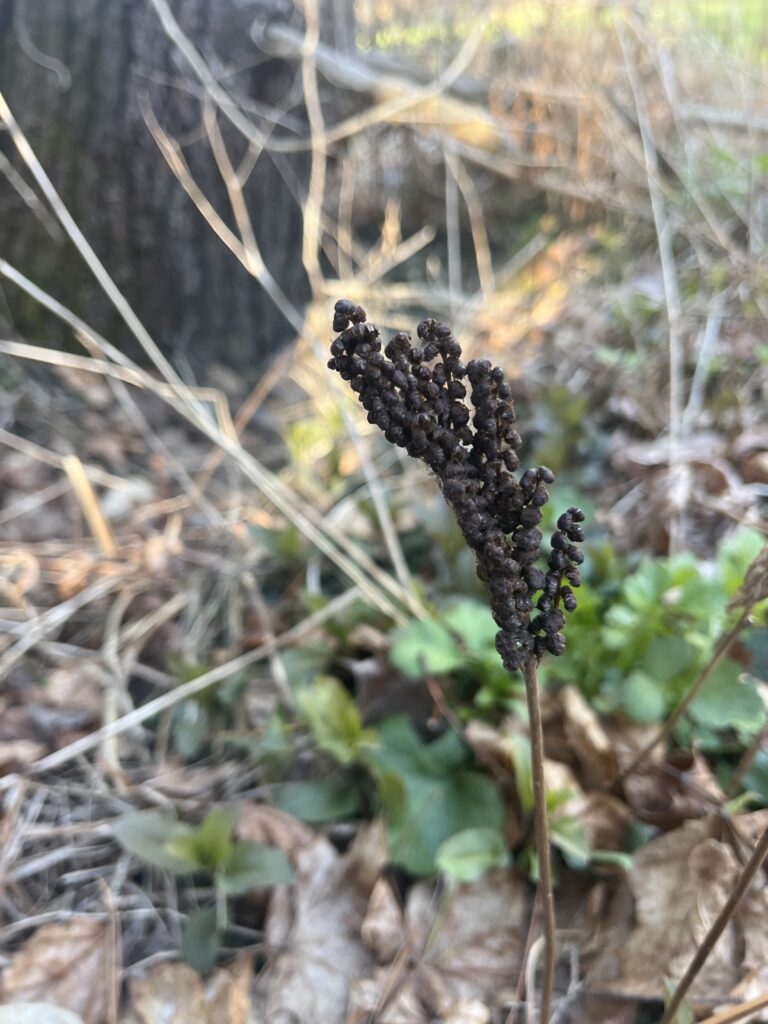
For the bioblitz this past weekend, I explored Centennial Woods, the brook, and the campus. Using iNaturalist can be a little tricky when trying to get a good photo of the species, but this weekend it all went pretty smoothly. I was able to join the project and find plenty of species to share. I encountered a lot of plant life – the most interesting were the ostrich ferns just sprouting from the ground.

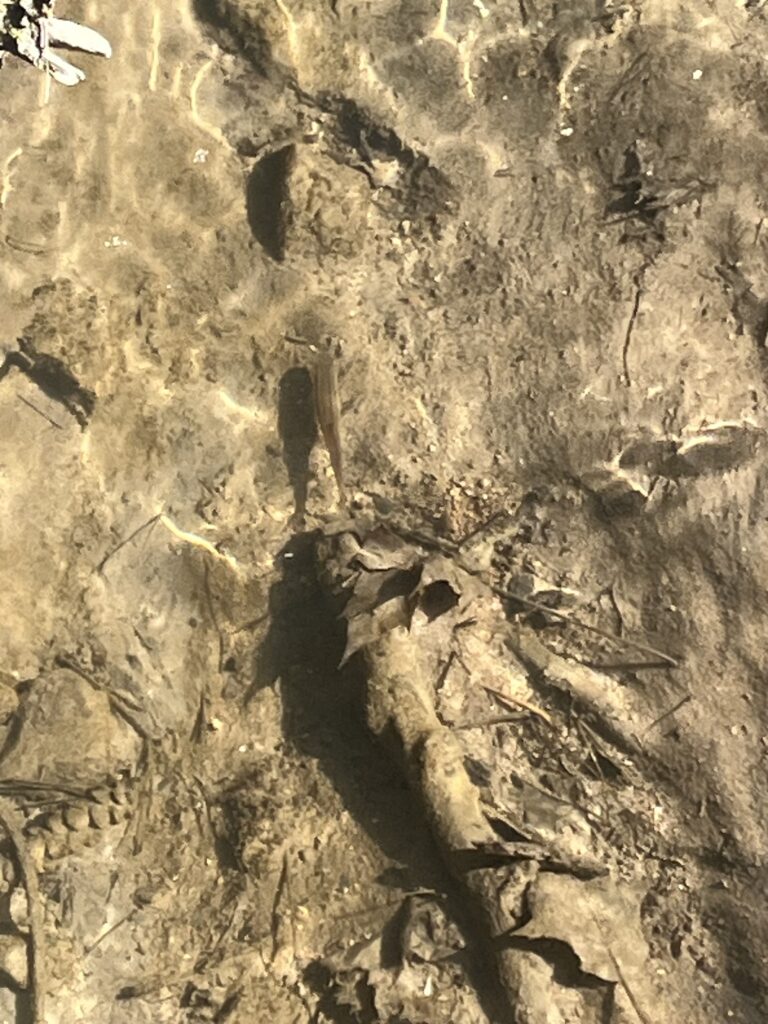
I also saw frogs and some fish in Centennial Brook. I especially enjoyed sitting by the brook in the few sunny moments this weekend.

It was really interesting to see the species from around the world when scrolling through the challenge on iNaturalist. I liked the pricklypear borers from San Antonio and the tulip tree in the Washington DC Metro Area – two species I didn’t know existed until now.

Below are just a few other pictures from my BioBlitz time:

Phenology Walk 4.15.25

I did my phenology walk on April 15th. I started at Billings Library and worked my way up to the green in front of Aiken and the Davis Center. Some of the trees were pretty hard to find, as they were not where they were marked to be on the map. There were very few leaf buds on the trees and no leaves. However, I observed plenty of flower buds and some flowers. I couldn’t easily tell if the trees were producing pollen yet, so I left that section as unknown. This information tells me most of the trees were in similar phenophases at the time. The Norway Maple we observed did seem to have more leaf buds than the other trees, so perhaps it was slightly ahead of the game.

I found it especially interesting to learn how the NPN controls data quality and what they use that data for. With information coming from all kinds of people, including researchers, students, children, and pretty much anyone in the general public, I imagine there is plenty of possibility for error. But the NPN puts each piece of data through a screening process to make sure it is accurate, neat, and easily accessible. They then use this data to predict the phenological patterns during spring each year and track trends in climate shifts. It’s used to predict how to time agricultural events best as well as when certain populations will likely be at peak and might need extra protection in parks or other areas.

Phenology in New Places

This past week we went to the Intervale for NR1020 lab, part of which gave us the opportunity to track and explore the surrounding trails. We sat in one spot for a while and watched a woodpecker, and I also decided it would be a good time to observe for my phenology project.

The spot we sat in was right on the edge of the river and on the side of a trail. We watched a Pileated Woodpecker peck at a tree for bugs. There were already several holes in different spots on the tree from the bird hacking away at it before. The way it hopped around the side of the tree was kind of funny but also impressive. Its talons must be sharp and strong.

We also observed some ducks swimming by up the river. For a while the ducks were just sitting on the edge of the ice, watching the water go by. Then one by one they climbed in and swam upstream.

There were also some mouse tracks(not in the picture below) around a pile of metal scraps nearby. The pile of metal seemed strange, so I asked about it. I learned that Intervale used to be a junkyard before it was turned back into a farm – which I thought was an interesting step in its history. It certainly contradicts what the land represents today and provokes some thought about how and why land use shifts.

Spring Semester Phenology Visit 1

There is snow on the ground! Some of it has melted since it fell, but this was the first time I had seen my site with snow on it, so I’m excited. I saw human and dog tracks, but no wild tracks. I saw birds flying overhead and perched in barren trees. There was no more sound of running water. I could only hear birds chirping and cars off in the distance.

The ‘valley’ area had kind of flooded. The area of forzen river was much greater than the area of river I remember from my last visit. The ice was thick enough to stand on, and only cracked in a few spots. I could see footprints, leaves, sticks, and other organic material frozen below the ice. It seemed as though the river froze, material fell on it and people walked on it in the snow, and then more water came and it froze over all that activity. The idea that those moments are frozen in time for a bit is pretty cool to me. I like thinking about that.

The ice also made this cool geometric pattern in a lot of places. I love the patterns ice makes in different places in the winter. So cool.

Final Phenology Entry (12/6)

Since visiting my site last, all the leaves have dropped to the ground, except for the Eastern Hemlock and Northern White Pine’s needles. The bittersweet still clings to its bright red berries, standing out among all the gray and brown surrounding them (as pictured below). The ferns also stay bright green, as predicted by December’s chapter in ‘Naturally Curious’.

Bittersweet’s bright red berries.
Ferns still intact.

The brook has frozen completely in the small offshoots, stopping the flow of water in those small areas and increasing the flow in the brook. The edges of the main brook had thinly frozen as well. The foamy bubbles the small waterfalls created have frozen, forming a cool formation.

Piece of ice from edge of the brook.
Frozen edges of brook
Frozen foam/bubbles

More logs and leaves had fallen into the brook and dammed it. At first glance, I thought it was a beaver dam, but the brook is much too shallow for a beaver, and the pile was too unorganized. Though it was cool to see how that had shifted the flow of the brook.

And here are some more pictures I took that I just like:

Phenology at Home

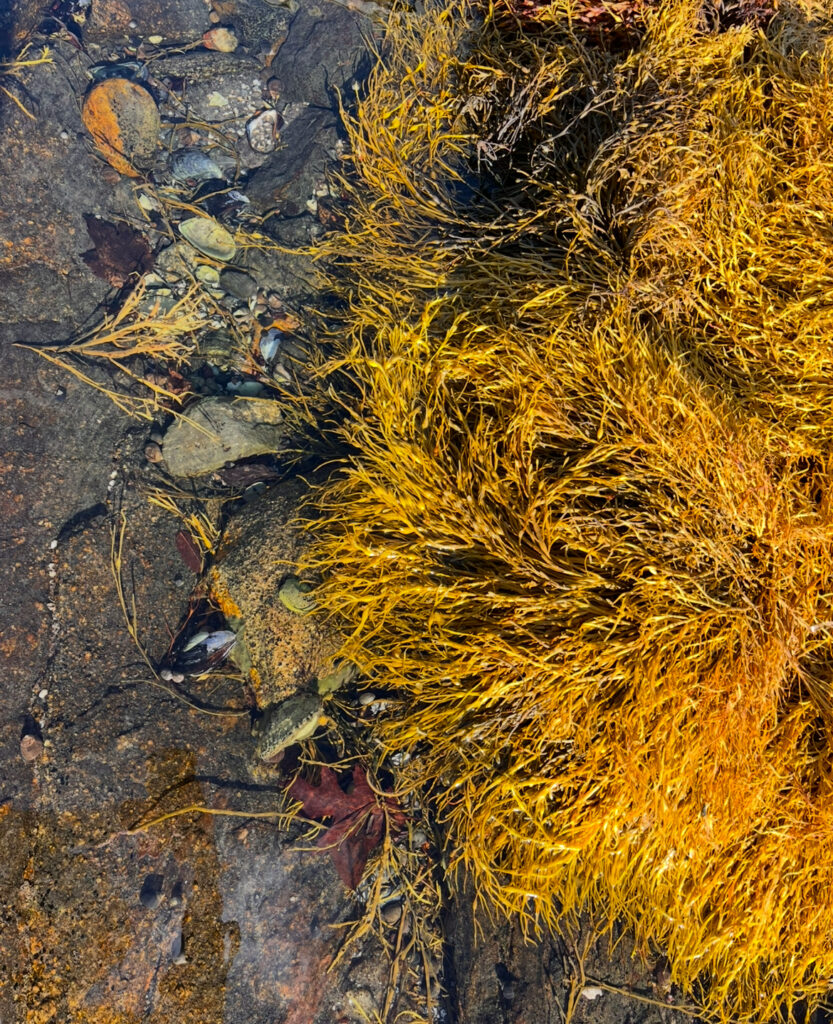
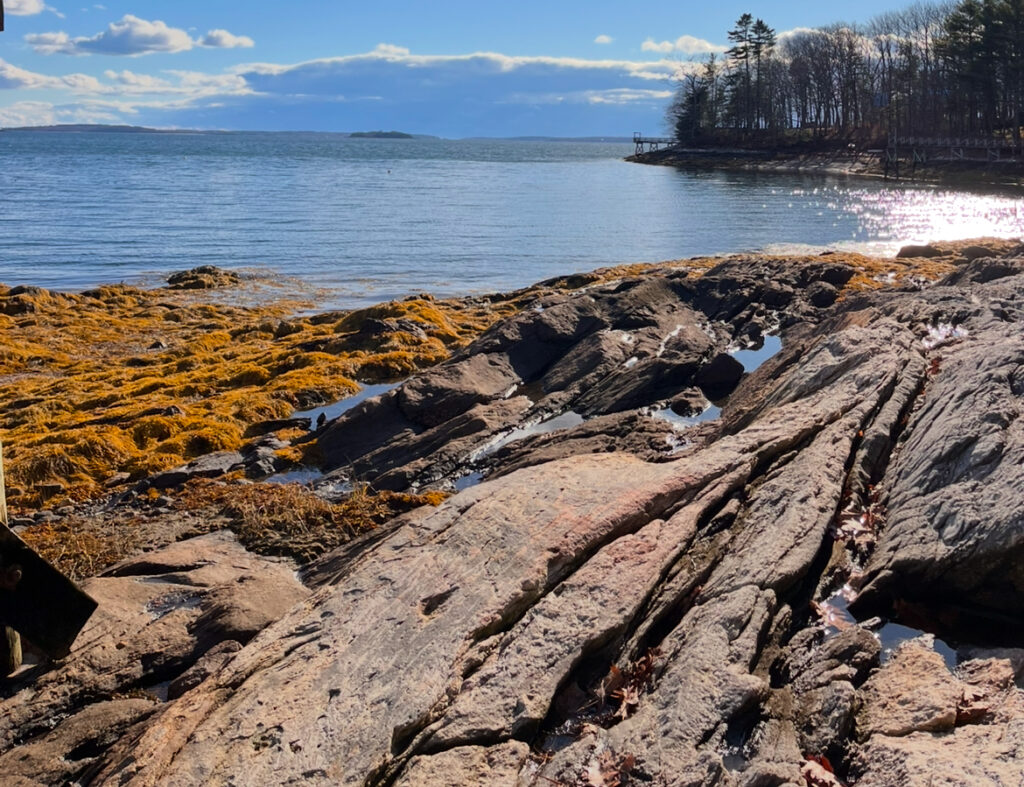
Visiting home this week, I found a place to observe and compare to my spot in Centennial Woods. I live on the coast of Maine, so I picked a stretch of rocky coastline along Casco Bay as my spot. There are tide pools, an abundance of seaweed, shelves of jagged rock, and various items that have drifted in from the sea. Where the rocks meet dirt and grass, there are oak and maple trees, shrubs, and plenty of noisy squirrels and birds. Geese and seagulls fly over the bay, and seals pop out of the water occasionally. The tide pools house likely hundreds of periwinkles, mussels, and other small shellfish among the Knotted Wreck seaweed that is a staple on the Maine coast. This is very different from my spot in Burlington. While both have water as a key part of the area, the life and systems are extremely different. My spot at home is salt water instead of fresh, and that brings a very different set of wildlife and plant life with it. It sounds very different as well. Instead of a bubbly creek and chirping birds, I hear waves crashing gently and the squawks and honks of seagulls and geese.

Location on Google Maps zoomed-in
Location on Google Maps large-scale

Birds-Eye Map and Phenology Updates

On November 2, I went to my spot in Centennial Woods, sat down on a log, and took in my surroundings. It was sunny but chilly with a light breeze, and everything was slightly damp from rain the night before. I sat down on a log, and began my observations.

The leaves had all fallen off the tops of the Red Maple and Northern Red Oak trees, but some were still clinging on lower down. The Eastern White Pines remained unchanged, as expected. The buckthorn and dogwood had lost some leaves and the colors of the leaves had changed. A few of the barberry had developed berries. The leaves, logs, and branches that had fallen in the brook had gathered at a point and were acting kind of like a dam. They created a little pool and a small waterfall/rapids section of the brook. It was very calming to watch the water flow by and babble down the different little waterfalls that had been created. It was nice to be able to notice how the place had changed so much in less than a month. I didn’t see any frogs and I heard very few birds.

October 14 – Phenology Entry #1

My phenology spot is right by the creek in Centennial Woods. Once you reach the pine clearing, you take the fork in the middle that is slightly hidden and go toward the creek and marsh area. About 100 feet down the path, veer off to the left down the hill and you’ll end up in kind of a ditch. The creek runs right through here and forks in a couple places. You can see sandy deposits above the water level from where it has flooded in the past and the sandy, pebbly bottom of the stream.
The vegetation is strong along the banks of the creek. The floor consists of small herbaceous plants, seedlings, and shrubs. There are a few trees in the overstory in my spot, but there are a good number in the understory. I noticed a lot of similar shrubs in clumps along the bank.

Common Woody Plants


Skip to toolbar