

This Spring Break, a week-long vacation of relaxation and hot tea back home in Massachusetts, I was lucky enough to get the opportunity to travel to Waterville Valley, NH to visit my sister and my brother-in-law. Like Vermont, WVV is heavily snowed and slushed, and the winter is definitely no joke.
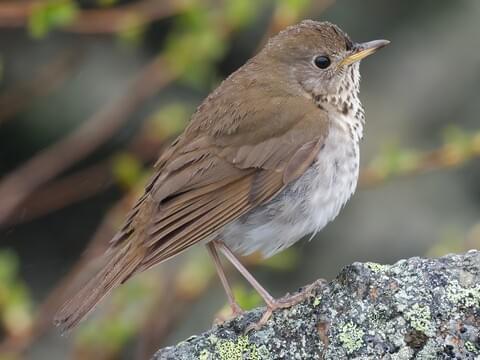
Waterville Valley takes great pride in conserving their Bicknell Thrush songbird populations, and this was proven to me while I was visiting as I saw one on the bridge across from my sister’s cabin. Sadly, I was unable to get a picture but I will post one below for visual reference.
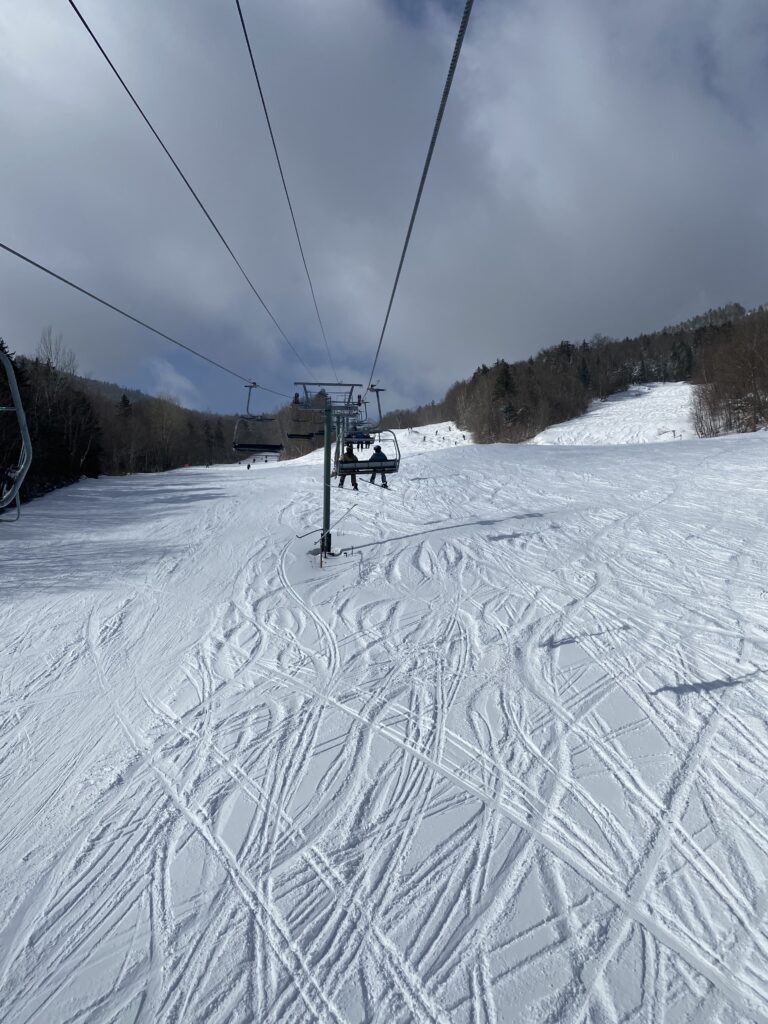
Due to the intense storms that came with the winter, along with a snow squall while I was visiting, the woody trees and shrubs handle a great toll in the winter months, but they most certainly know how to flourish regardless of the weather. I was able to see the vast blend of pines, ash, maples, and birch trees on my lift up to the top of the mountain while I was out snowboarding. Despite the deforestation and tourism that WVV is a culprit of, the woody species that remain continue to do very well in their environment, and WVV has a great range of diversity within its ecosystem.

Waterville Valley is a place that my family visits frequently, and I am now more interested to see the changes in the environment over the next few years. I now have a base to play off of in terms of environmental change, and I am excited to learn more about the ecosystem of Waterville Valley, NH.