Posts

My Final Phenology Spot Visit

We have reached a very bittersweet day, folks.

After 9 months of making observations, taking photos, and enjoying the privilege of Centennial Woods, I have finally made it to my very last post.

Reflecting on these past 9 months, I am able to appreciate Centennial Woods to its full extent as I was able to experience the birth and death of life in the area. While the Winter brought barren trees and muddy paths, the Spring has brought a whole new season of life full of bright colors, chirping birds, and (of course) the smell of nature growing around me.

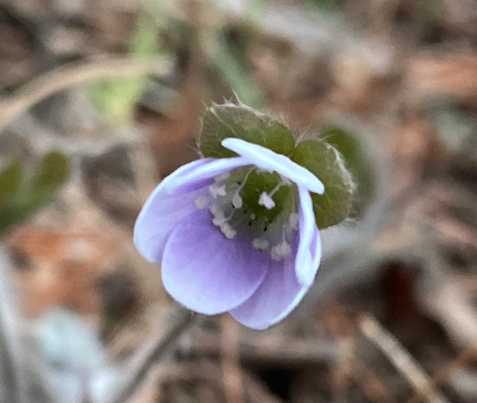
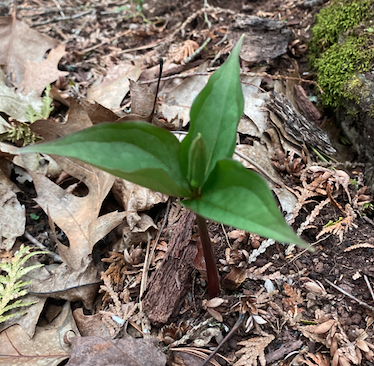
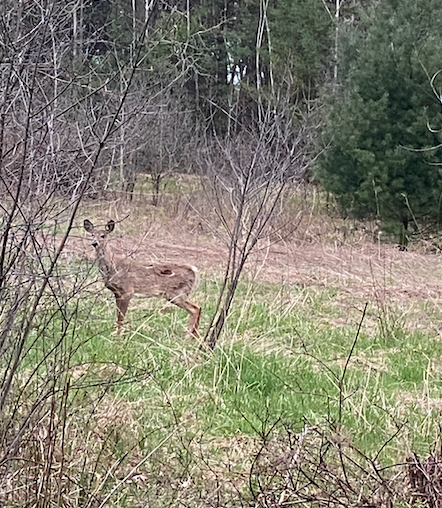
Today on my visit, I was able to capture images of new life in Centennial Woods with the Spring’s return and used iNaturalist to identify each species that I came across. Some of my favorites included…

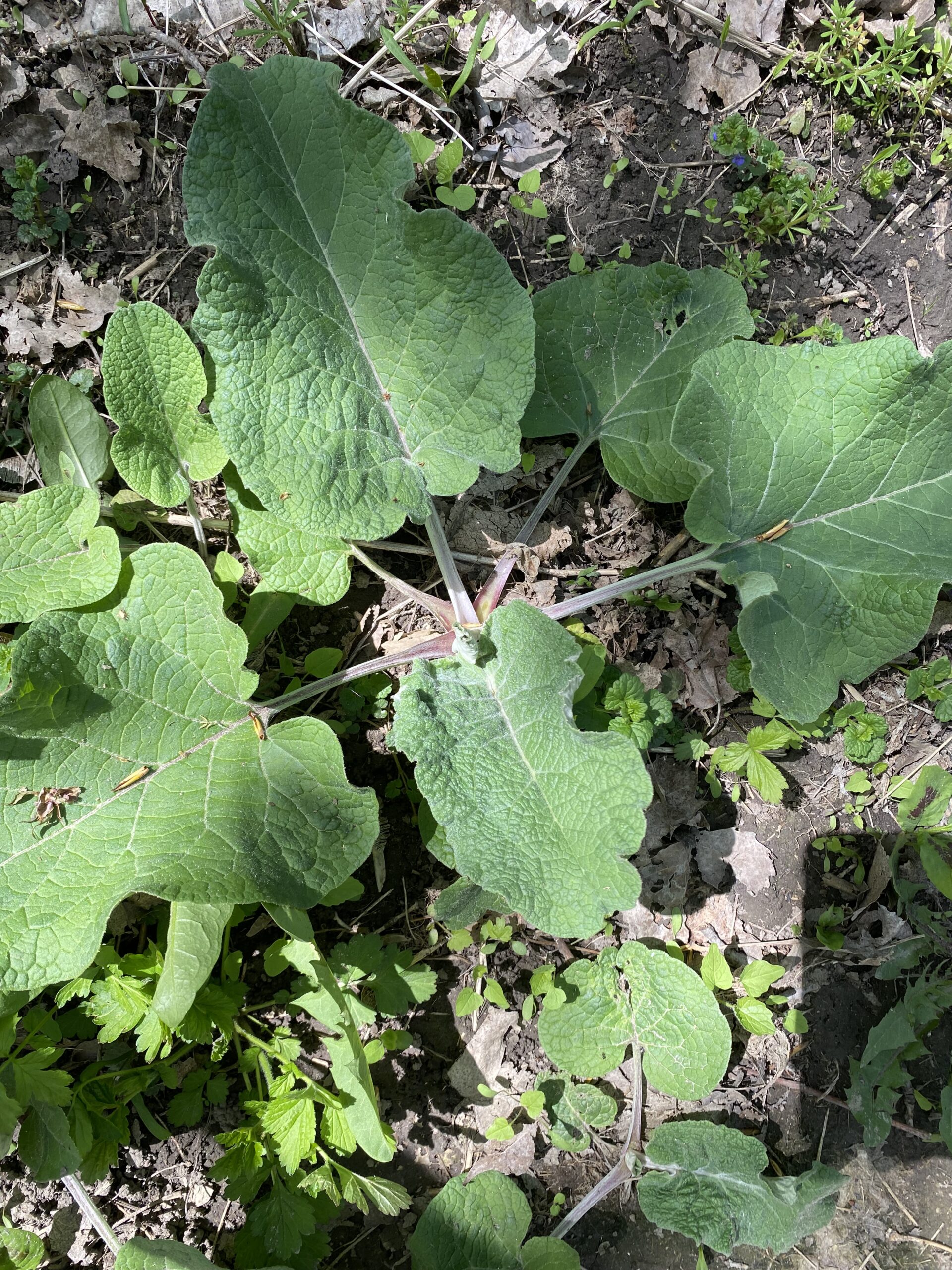
I was now able to see the rebirth of life in Centennial Woods and was able to envision the life cycles that the natural world in Burlington experiences.

Below, I have inserted a Species Interaction Diagram pertaining to Centennial Woods and some of its most common species:
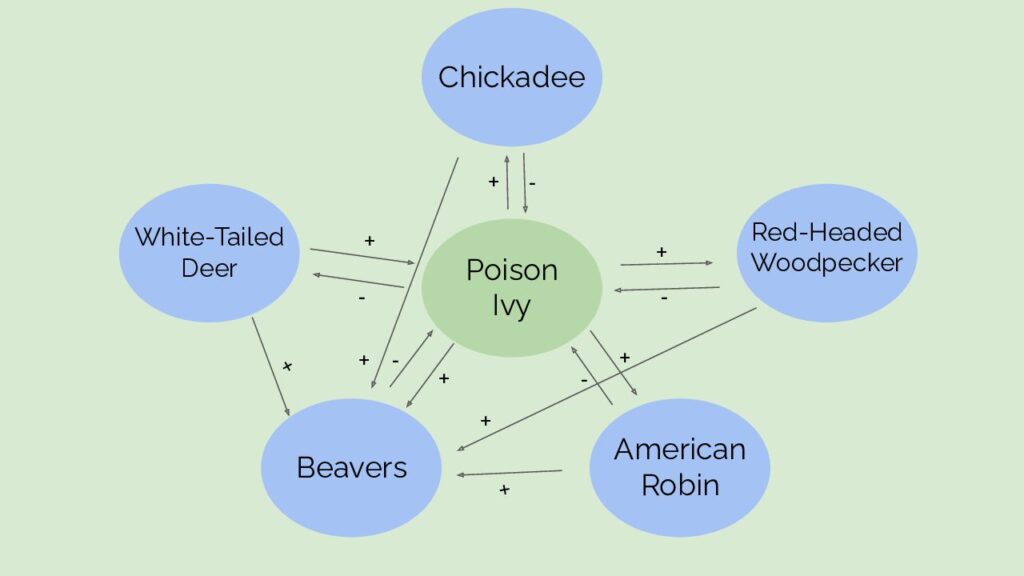
After reflecting on Centennial Woods this past 9 months, along with the rest of learning that I have been privileged enough to learn in Rubenstein this past year, I think that it is important to remember the cultural role that nature has with human life. Traditional Indigenous practices, along with current day Indigenous practices, incorporate nature as an entity with which humans live to respect and treat as sacred, and I think that this should stand true today as stewards to the environment. I feel at the beginning of the year that I was nothing more than a human standing in a foreign space, but after these past 9 months I feel that I have been able to become a part of the natural world that surrounds me when I step foot in Centennial Woods. I think that it is important to remember, though, that this land does not belong to me – as it belongs to Indigenous Abenaki people and the natural world that lived and lives here – which means that I will never truly be a part of the land but rather a steward to the land in my pursuit of environmental justice and studies.

Centennial Woods has allowed me to become closer to the natural world that is just down the street from my home, and I am incredibly grateful to have had the privilege to explore this land. I hope to be back in the Fall.

Thank you all for following my journey this past year as I made my way through my first year of college – a year of exploration and reflection. I am hopeful that I will be able to continue on with this journey in the Fall.

Bioblitz!

For the four day urban BioBlitz, I chose to adventure to the forested area long the trail to Rock Point from North Beach. I went with a couple of my friends and we enjoyed the cloudy day to the fullest as the temperature was quite nice.

Using iNaturalist in this location was very helpful as I was able to identify many different species throughout the forest during the Spring season. I was able to identify about a half a dozen different species on my walk, with my most exciting being the three-leaf goldthread as the one that we found had FOUR leaves!

Three-Leaf Goldthread ft. Izzy’s hand and AN EXTRA LEAF

We also saw many other species including…

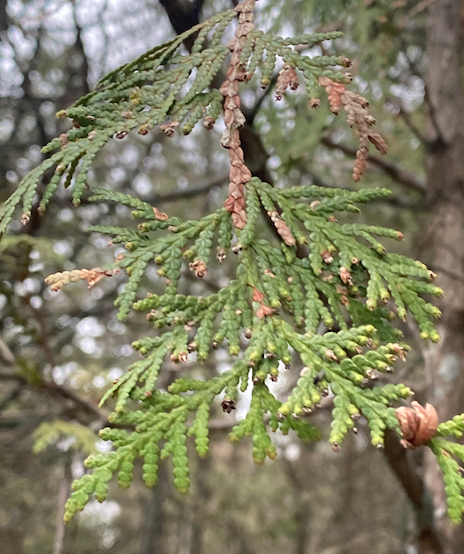
  • Northern White Cedar
  • Hepaticas
  • Large White Trillium
  • and… a White Tailed Deer

Overall my experience with iNaturalist was very positive and productive. I was able to identify species that I did not recognize while logging them for future reference which I find to be very helpful! I found the diversity in species globally to be fascinating as well. I tend to forget that Vermont and Northern new England as a whole has a very niche climate which then leads to a niche localization of species biodiversity, so I was very interested to see how incredibly different the iNaturalist BioBlitz went for others globally.

I am incredibly intrigued to now continue on using iNaturalist to identify unknown species and hold myself accountable to further my education on the land and ecosystem that surrounds me.

Waterville Valley, NH – Spring Break 2022

Getting Here — Waterville Valley Resort
Map of Waterville Valley Ski Resort

This Spring Break, a week-long vacation of relaxation and hot tea back home in Massachusetts, I was lucky enough to get the opportunity to travel to Waterville Valley, NH to visit my sister and my brother-in-law. Like Vermont, WVV is heavily snowed and slushed, and the winter is definitely no joke.

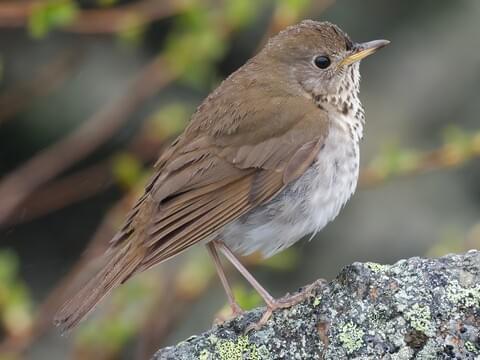
Waterville Valley takes great pride in conserving their Bicknell Thrush songbird populations, and this was proven to me while I was visiting as I saw one on the bridge across from my sister’s cabin. Sadly, I was unable to get a picture but I will post one below for visual reference.

Bicknell's Thrush Identification, All About Birds, Cornell Lab of  Ornithology
Bicknell Thrush Songbird

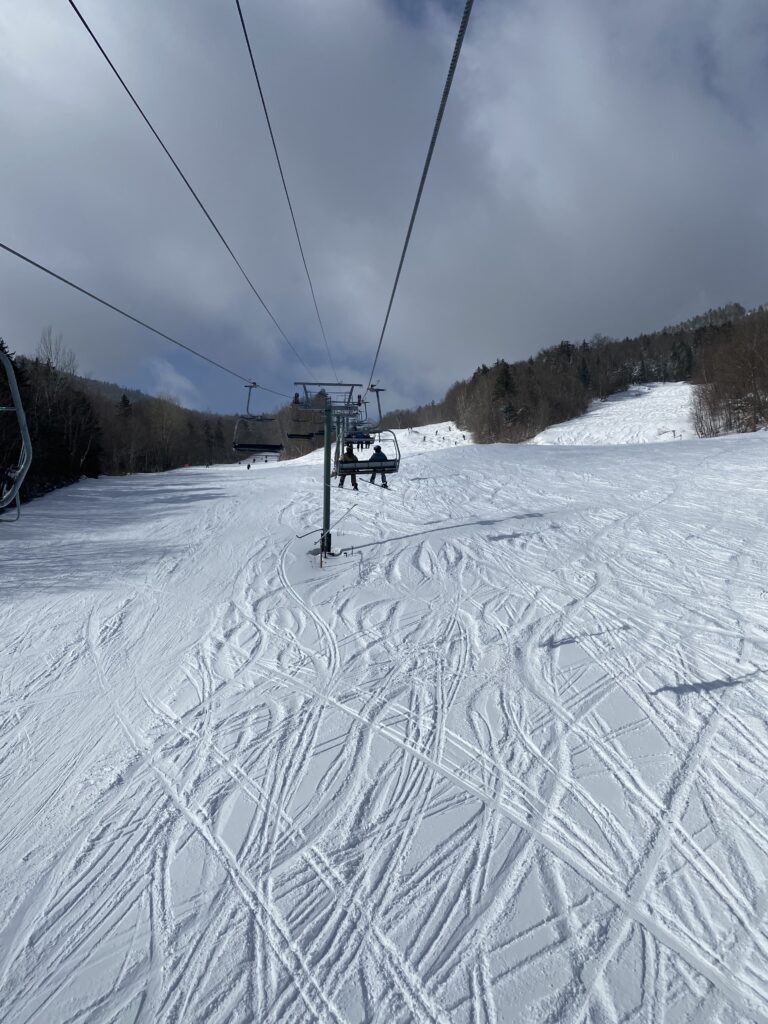
Due to the intense storms that came with the winter, along with a snow squall while I was visiting, the woody trees and shrubs handle a great toll in the winter months, but they most certainly know how to flourish regardless of the weather. I was able to see the vast blend of pines, ash, maples, and birch trees on my lift up to the top of the mountain while I was out snowboarding. Despite the deforestation and tourism that WVV is a culprit of, the woody species that remain continue to do very well in their environment, and WVV has a great range of diversity within its ecosystem.

Ski Lift at WVV Ski Resort – Right down the street form my sister’s house!
Me and my girlfriend snowboarding!

Waterville Valley is a place that my family visits frequently, and I am now more interested to see the changes in the environment over the next few years. I now have a base to play off of in terms of environmental change, and I am excited to learn more about the ecosystem of Waterville Valley, NH.

February Phenology Discoveries – 2022

Hello, all! I am happy to announce that I have begun my adventures throughout Centennial Woods once again for the Spring semester!

This week, I chose to endeavor through the first strip of Centennial Woods until the hemlock stand (my phenology spot for last semester). I chose to broaden my range for my phenology spot which will allow me to discover and analyze much more than last semester! I began at the entrance to Centennial Woods on Spear Street up until the hemlock stand (approx. a 5-10 minute walk)

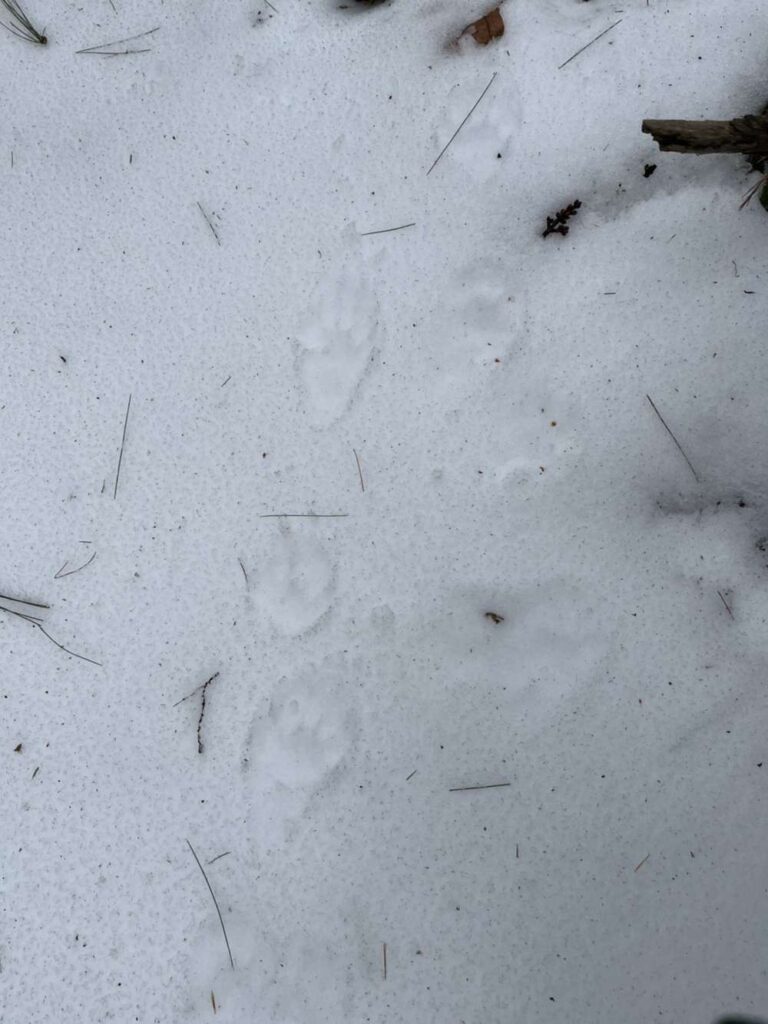
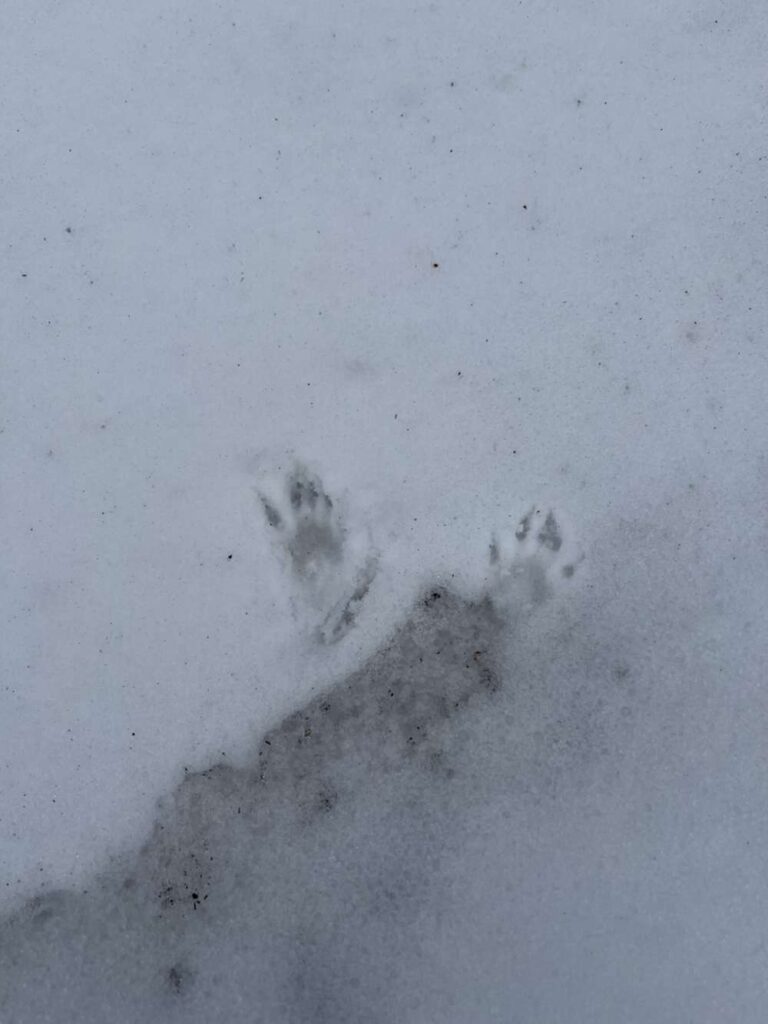
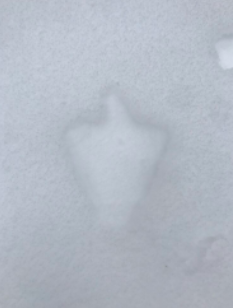
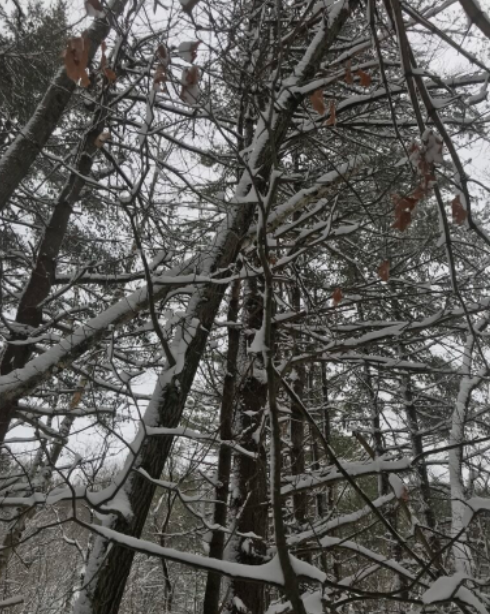
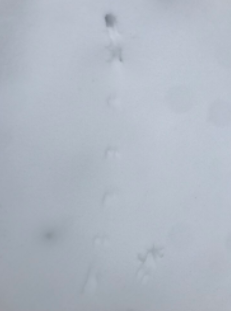
Throughout my journey, I encountered a winter wonderland compared to my previous visits. The trees were frosted over and brushed with snow, as the ground was icy and crunchy when I took each step. Due to the snow, I was also able to encounter many animal tracks on the ground – something that I had a hard time finding in the warmer seasons.

Through the usage of iNaturalist, I was able to confidently identity the tracks that I came across and can assume that the tracks shown above belong to a local raccoon in Burlington, VT. The app was easy to navigate and gave me many references to point me in the direction of my final identification theory. I believe that is is safe to say that due to the size and point shape to the tracks, as well as the length of the toes and paw pads, that these tracks definitely belong to a RACCOON.

My 2022 Phenology Spot!

Hello, all! I am excited to share that I will be venturing to Centennial Woods once again this semester as my location for my Phenology research!

To recap:

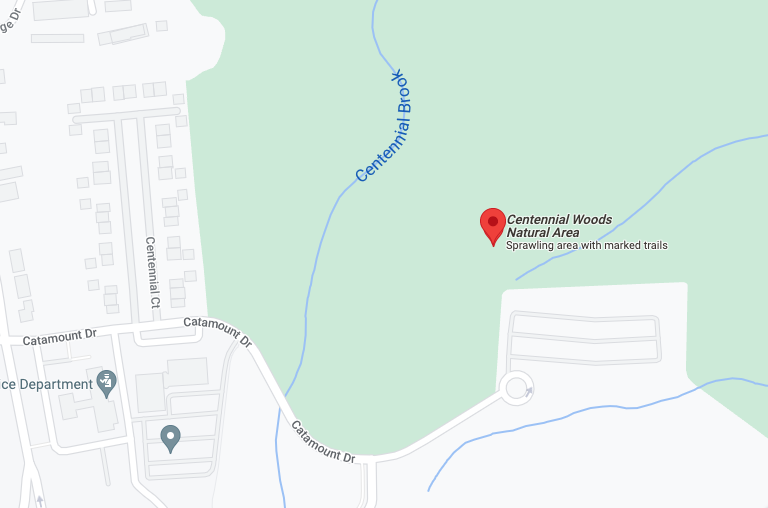
Centennial Woods is a nature preserve located down the road from the UVM Police Station on Catamount Drive coming from Carrigan Drive in Burlington, VT.

I was able to capture a few images on my adventure back to Centennial Woods that I felt showed the true nature of January in Vermont.

It is clear to see that there is quite a bit of wildlife activity incorporated within Centennial Woods in the coldest month of the year which goes to show how fascinating nature in Vermont Winters truly can be!

Last time I visited the scenery was quite different as it was much warmer (as in 30F compared to 0F) and the Fall was coming to an end. Now, in the heat of winter – no pun intended – the frigid winds and frozen snow banks make for a much more different Centennial Woods.

Last semester I was able to watch the forest become dormant as it lost its liveliness and now I wait here for the birds to chirp again and for the plants to rebirth in Centennial Woods.

Skip to toolbar