Come join us!
Come join us!
After a successful first year in 2024-5, the UVM CBR Lab is back! We’ve got plans, so mark your calendars. Once again, all lab events will take place in Billings Library, Marsh Room, thanks to our co-conspirator Prudence Doherty from the Jack and Shirley Silver Special Collections Library.
We will kick off the year with a hands-on Introduction to Comics-Based Research Workshop led by me. You will learn and draw! Friday September 12, 4-5:30pm in the Marsh Room. If you’re new to this, this is a great place to start, and it is open to all. We will provide everything you need. Please RSVP by Thursday, Sept. 11 to me at lvivanco@uvm.edu so we have a head count and bring sufficient supplies.
Last year, our Working Wednesdays were a hit. These are occasions for informal and convivial “plorking” (play and work). Open to all, no RSVP required. Try out the Petting Zoo, our double-decker rolling bag of comics tools, with some exciting new additions for this year. These will be from 12-1pm in the Marsh Room on these days:
Wed. Sept. 17, Wed. Oct. 8, Wed. Oct. 29, Wed. Nov. 19
“Destress With Comics,” our final exam respite time for quiet drawing and looking at comics, will take place on Mon. Dec. 8, 11-1 in the Marsh Room.
I am working on other events and activities to-be-announced, but if you have any ideas for guest speakers, workshops, fieldtrips, etc. please reach out to lvivanco@uvm.edu.
We launched in Fall 2024 and saw interest grow dramatically over the academic year, and have even continued into the months of Summer 2025. Here are some of our accomplishments:
We organized and hosted 19 lab events, with a total attendance of 293. These activities include Working Wednesdays (AKA Drop-in-and-Draw), ‘De-stress with Comics’ during final exams, hands-on workshops with professional creators, and public lectures with scholars and creators. Participants have come from every UVM college and school!
We conducted 7 in-class hands-on workshops introducing the basics of creating research-based comics, engaging 121 undergraduate students in learning how to connect their research with comics storytelling.
In the spirit of public service, we created a library research guide on the topic of “Comics-Based Research and Comics Studies.” It includes original comics created by our lab research assistant, Sophie Hood (Class of 2025), who was our lead on this project.
We also started a listserv that now has 90+ people. Want to be on that listserv? Email Luis (lvivanco@uvm.edu).
We have received strong financial support from the Office for the Vice President for Research, the Humanities Center, the College of Arts and Sciences Deans Office, and the Anthropology Department. And we could not have done any of this without the ongoing support of the Silver Special Collections Library.
But perhaps best of all, CBR Lab has created convivial spaces where faculty, staff, post-docs, graduate students, and undergrads come together can learn, draw, and support each other.
In the era of AI robots being deployed by the White House to root out apparent travesties like being respectful of people, cultural diversity, the environment, and a collective future, zines are roaring back as a mode of cultural expression and politics. Passing from hand to hand and often free for the taking, zines are a powerful mode of people-to-people exchange, information sharing, and organizing.
This was a theme at our zine workshop, which CBR Lab co-hosted with graduating senior Morgan Doersch, who has been doing an independent study on zine-making and exploring their relationship with environmental activist culture and politics. Morgan is working on creating a campus zine library–for details stay tuned.
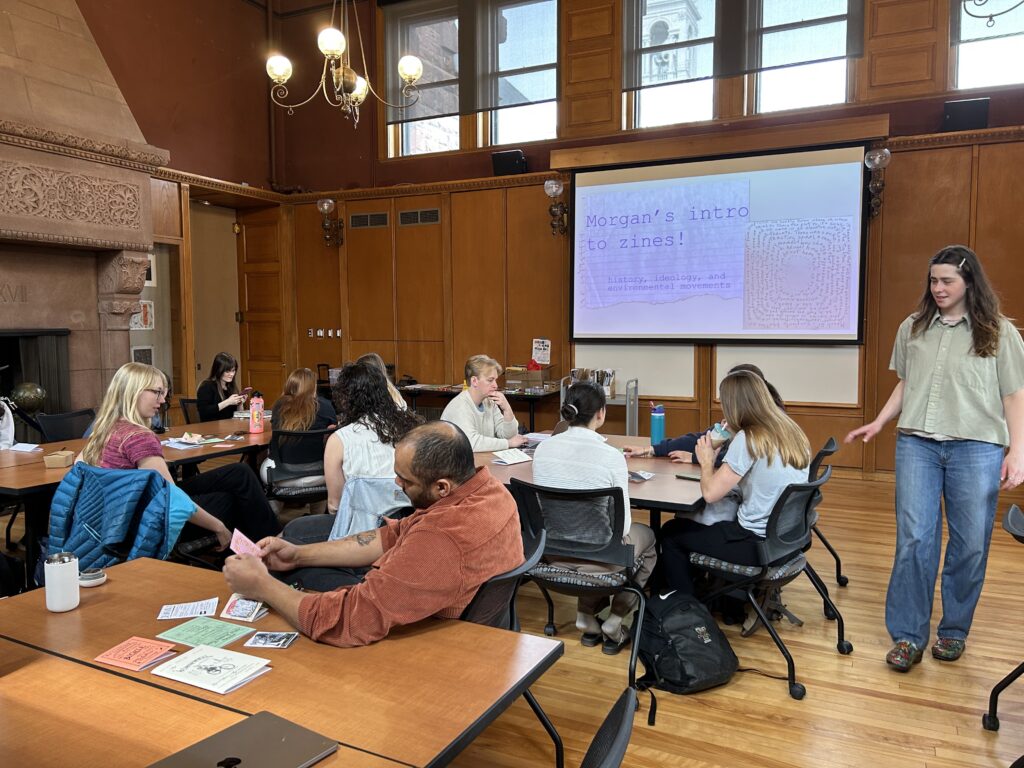
We had a strong turnout of industrious students, faculty, and staff. After a short overview of the history of zines, the sound of snipping paper, pencils traversing paper, rulers slapping the table, and bone folders sliding along the edge of paper took over our august, wood-panelled and high-ceilinged headquarters.
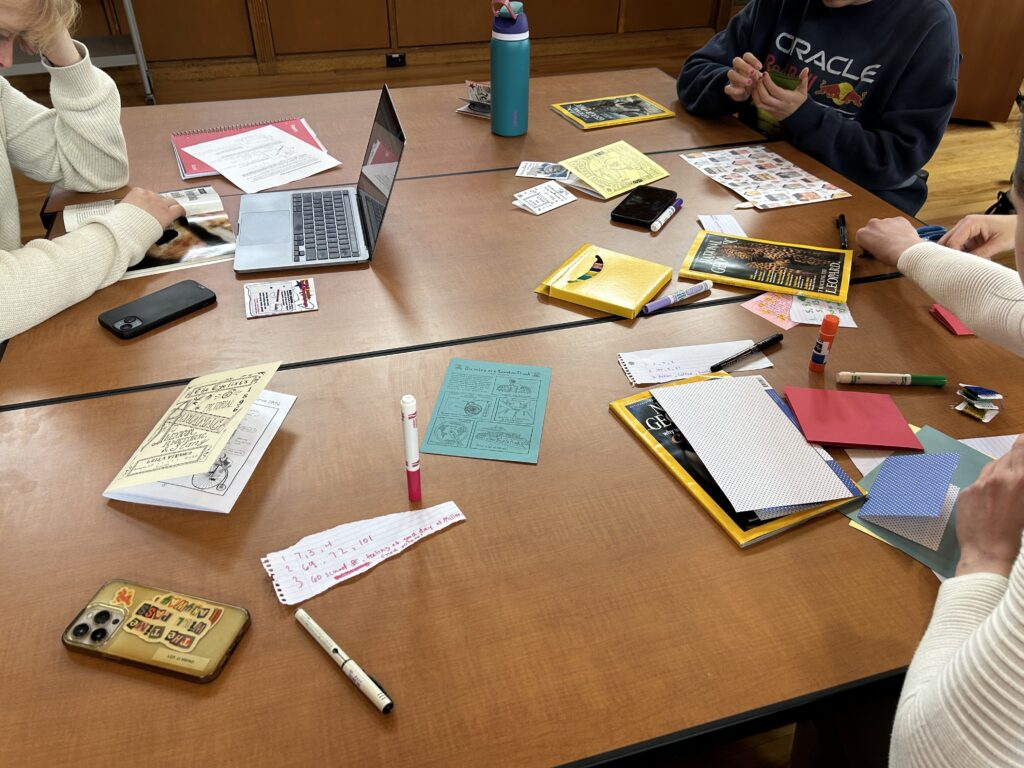
Honestly, there are few better ways to spend a lunch hour…
CBR Lab took the Petting Zoo (our rolling bag full of comics supplies) on the road for a special workshop with UVM’s Anthropology Club. (“On the road” might be a tad exaggerated…we met just down the hall from my office…). Our task was to create a four-panel comic from a short 1887 newspaper article about an idyllic picnic along the shores of Lake Champlain interrupted by a sighting of the “Lake Champlain Sea Serpent” (who today we could call “Champ”). Here is my effort:
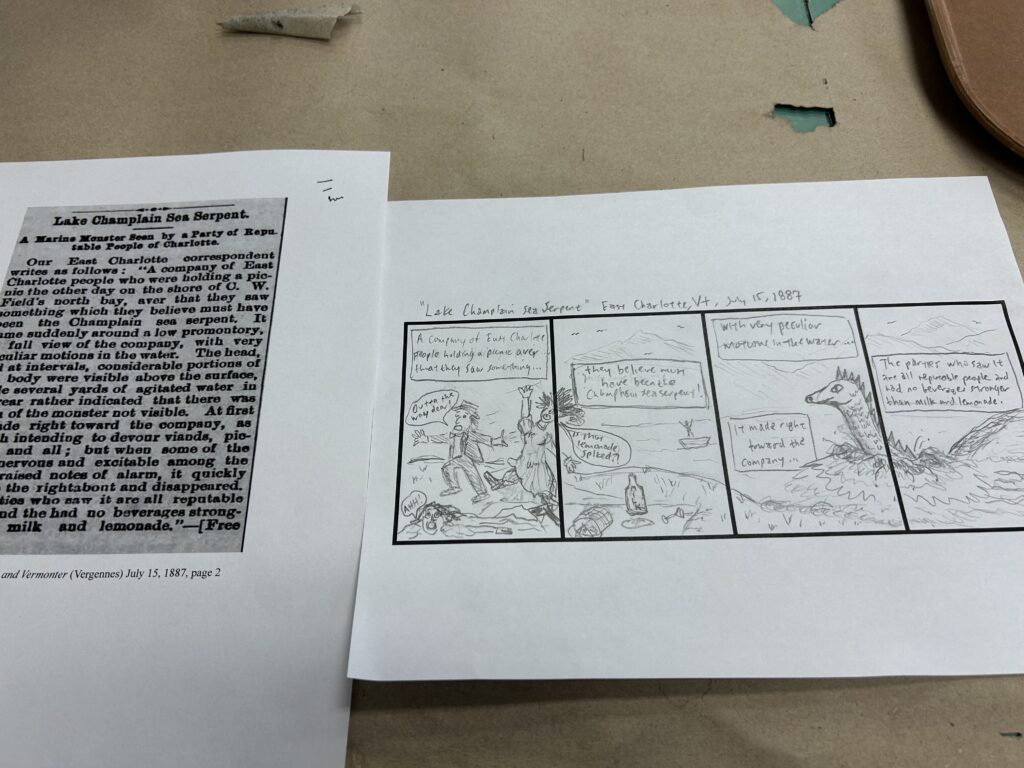
It’s a really simple exercise, taking a short newspaper article and converting it into a four-panel comic. The text can become captions, or phrases from the text can become word bubbles–or both. There are no rules here! It really gets you thinking visually and in terms of sequential narrative. And it’s fun to do in a group, especially when the language or theme of the article itself invites humor or things-out-of-the-ordinary. In this article, we all got a kick out of its description of the witnesses, emphasizing that they were all “reputable” individuals who had “had no beverages stronger than milk and lemonade.”
In April, we ran a new workshop!
“Creating a Research Paper Abstract…as a Comic.”
Is it possible to communicate the findings, methods, and depth of a scholarly article while making it more engaging and accessible? Yes, it is! Many academic journals now accept or require graphical abstracts for this very reason. In this workshop, we explored the rise of graphical abstracts, examined how you can construct an abstract as a comic, looked at some examples drawn from ‘the wild,’ and then we tried our hand at it ourselves. Participants brought their own journal article abstracts to work with. This was a practice session!
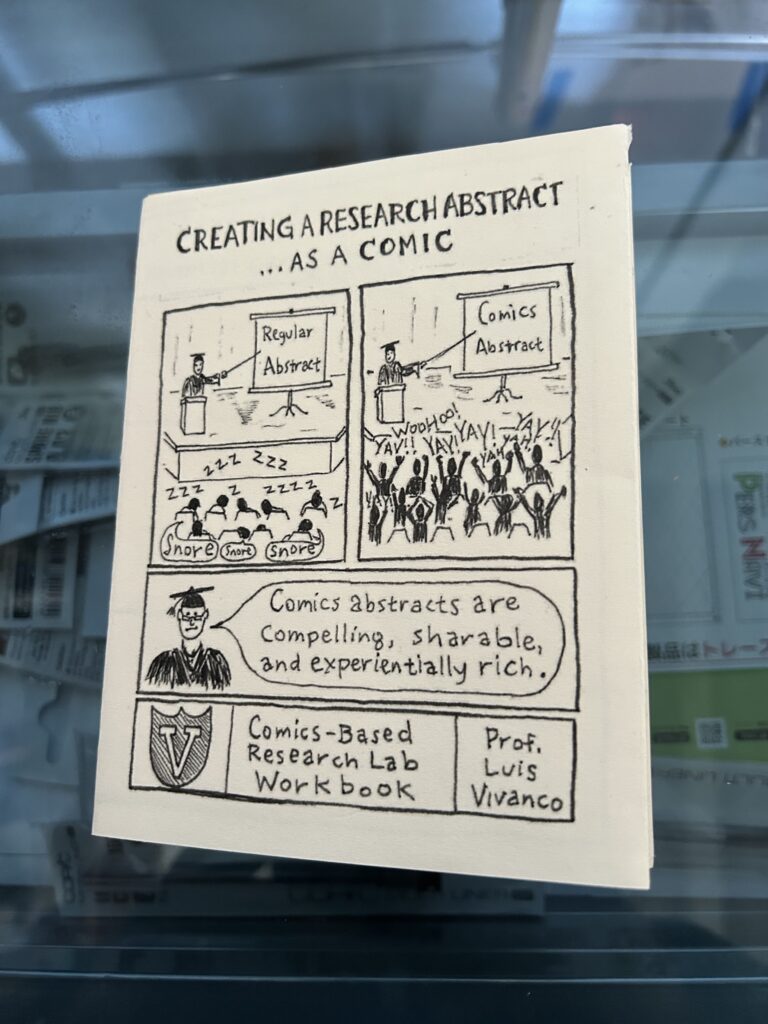
We created a zine workbook for workshop participants, that has a mix of notes and resources about abstracts, comics, etc., and it also has workspace to process an abstract into story and then craft an actual abstract. Here are a few images of that little zine:
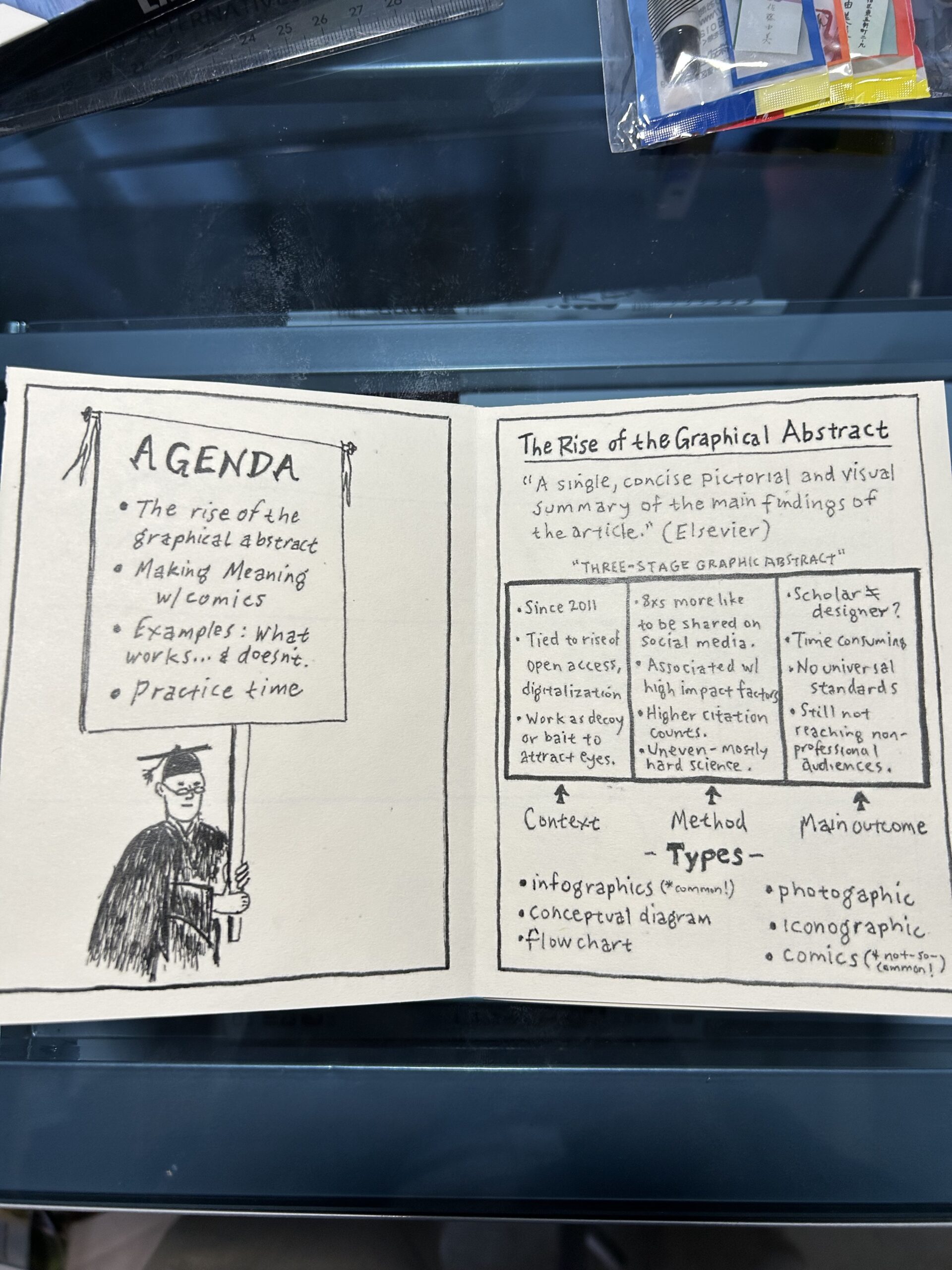
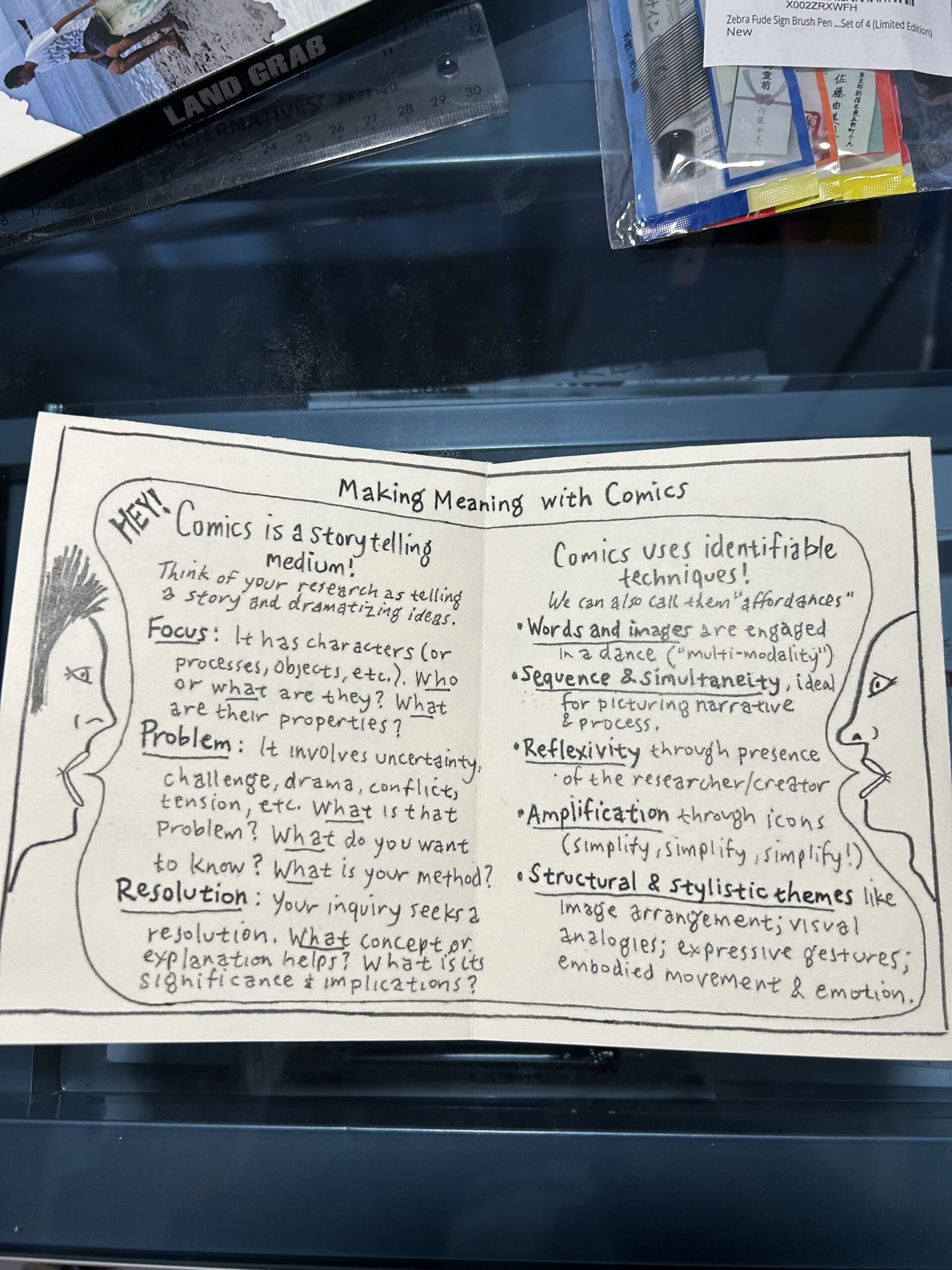
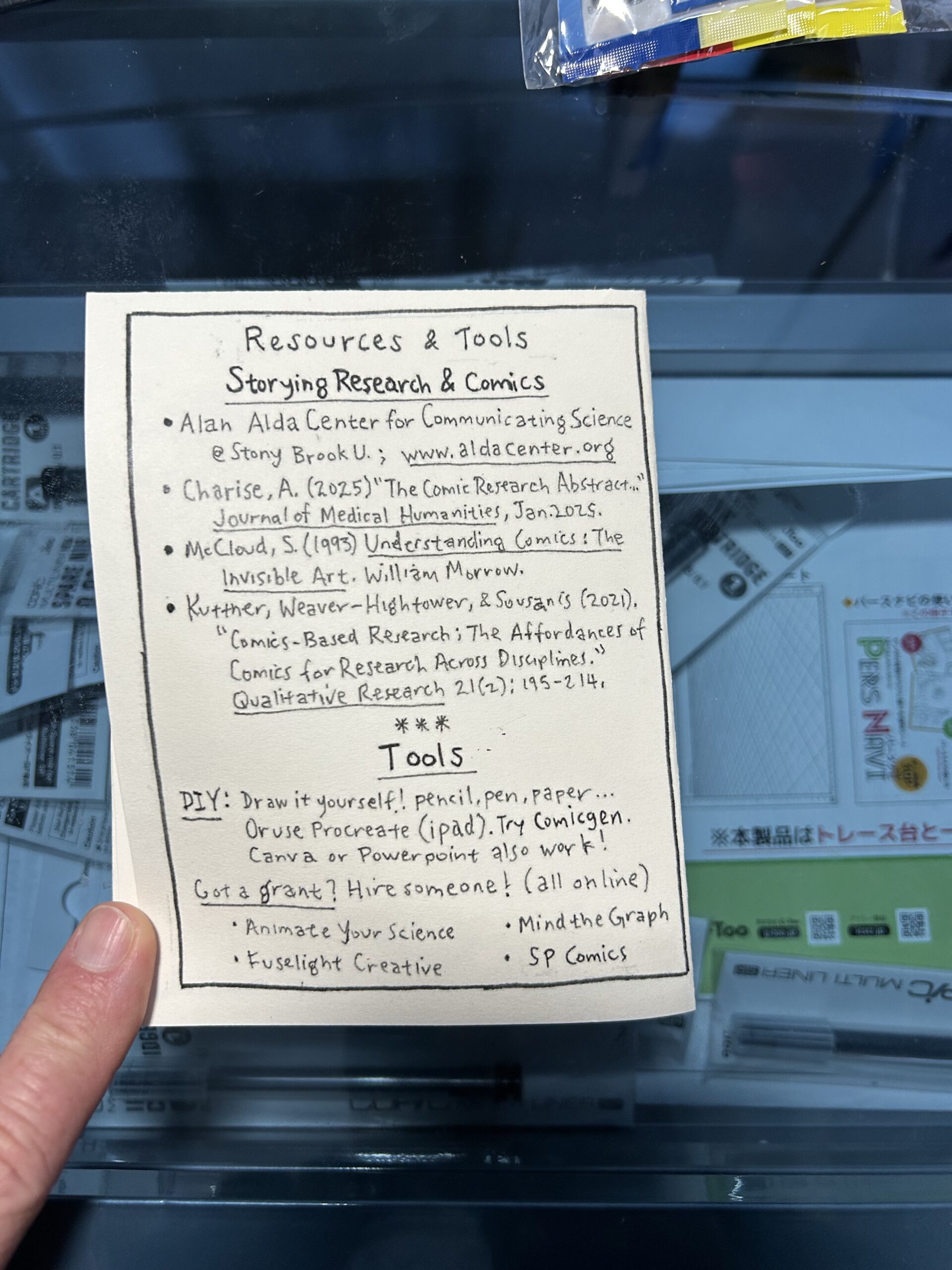
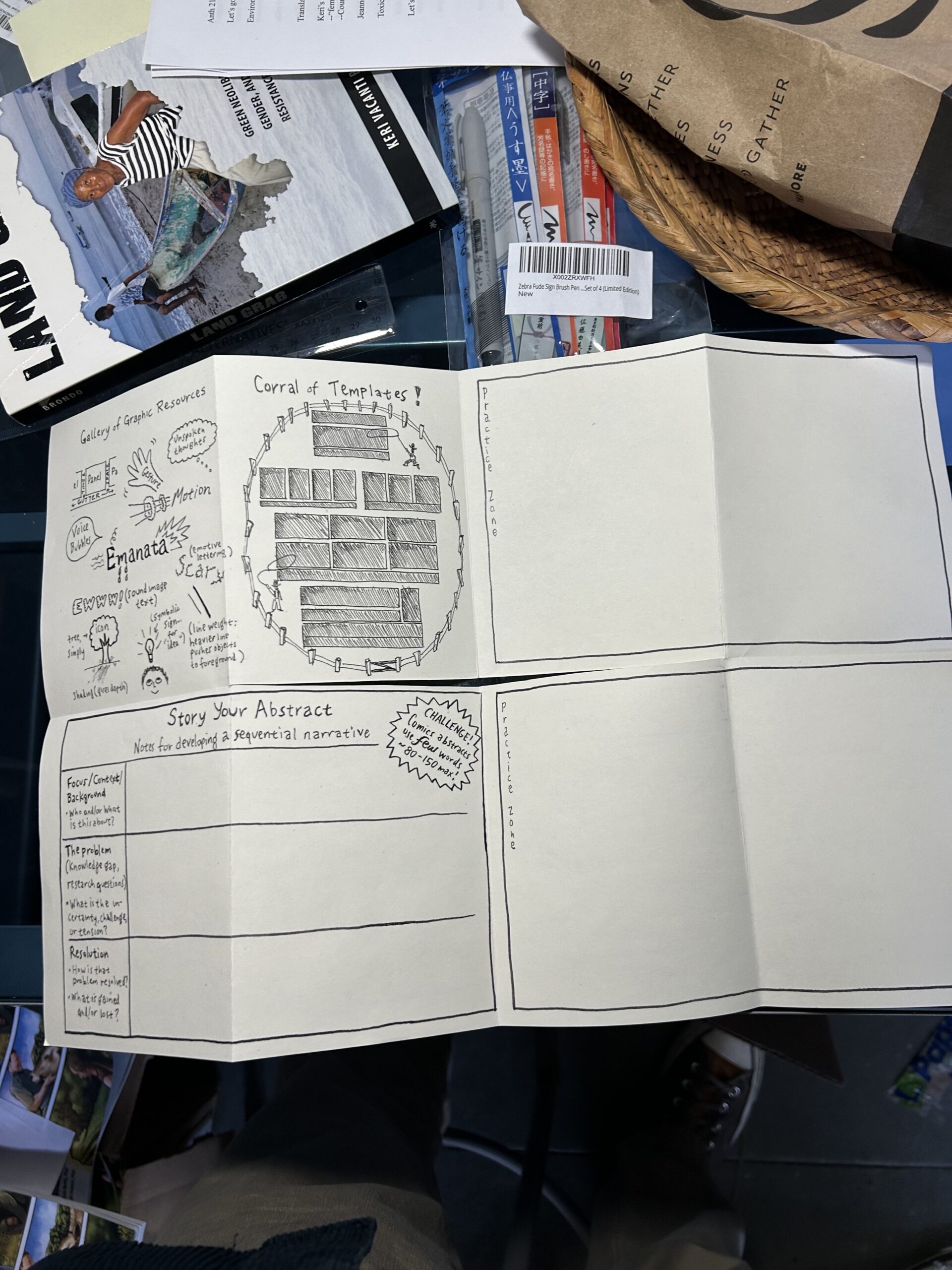
We all learned a lot. And it was a fun mix of participants–scientific researchers, humanities folks, and social scientists, students, faculty, post-docs, even a professional comics creator–all finding connections with each other across this large university, and enjoying the collaborative challenge of converting work into comics form.
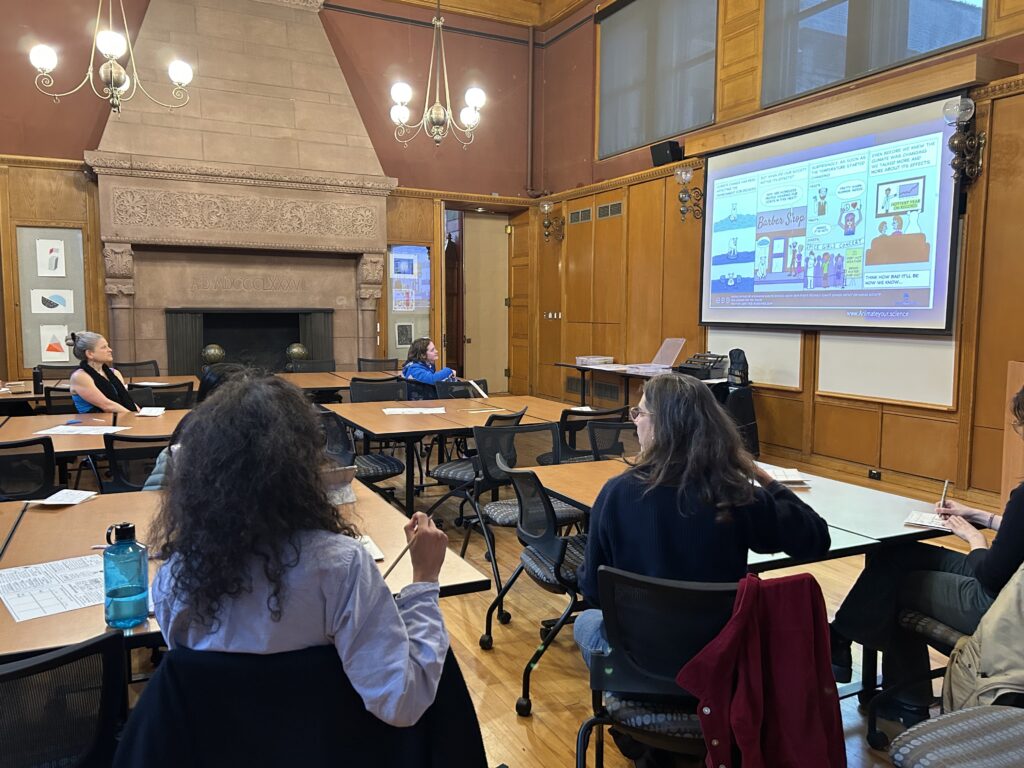
Distinguished comics creator and Burlington resident Glynnis Fawkes joined us in March to discuss elements of comics visual storytelling, including dramatizations, maps, data visualization, and how they intersect with research. She then led us through a hands-on drawing workshop where we tried to put some of our own experiences and observations into visual sequence.
The afternoon started with a compelling talk in which Glynnis showed us her process for adapting text into the language of comics, from thumbnail drawings to final pages, highlighting her recent collaboration with Eric H. Cline on the graphic book 1177 B.C.: A Graphic History of the Year Civilization Collapsed (Princeton University Press).
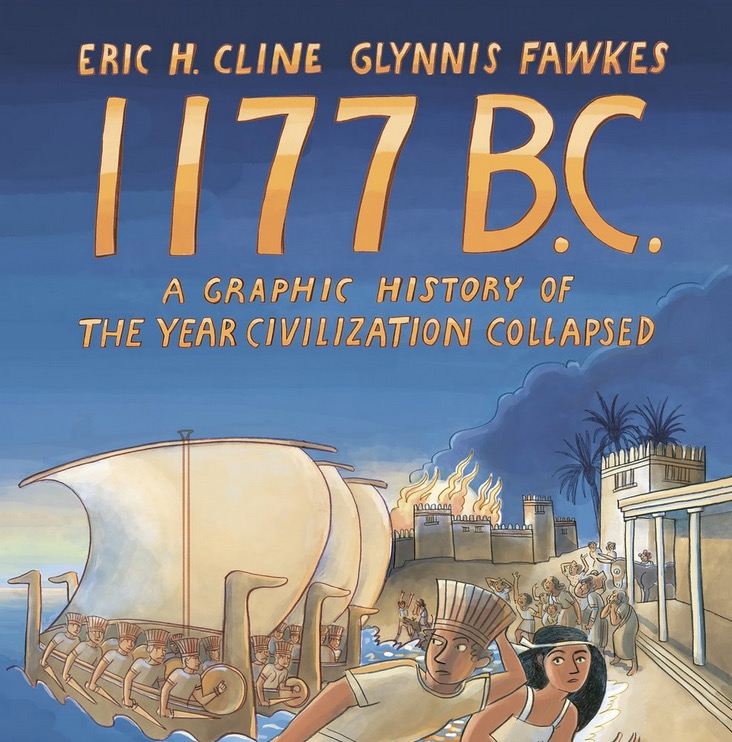
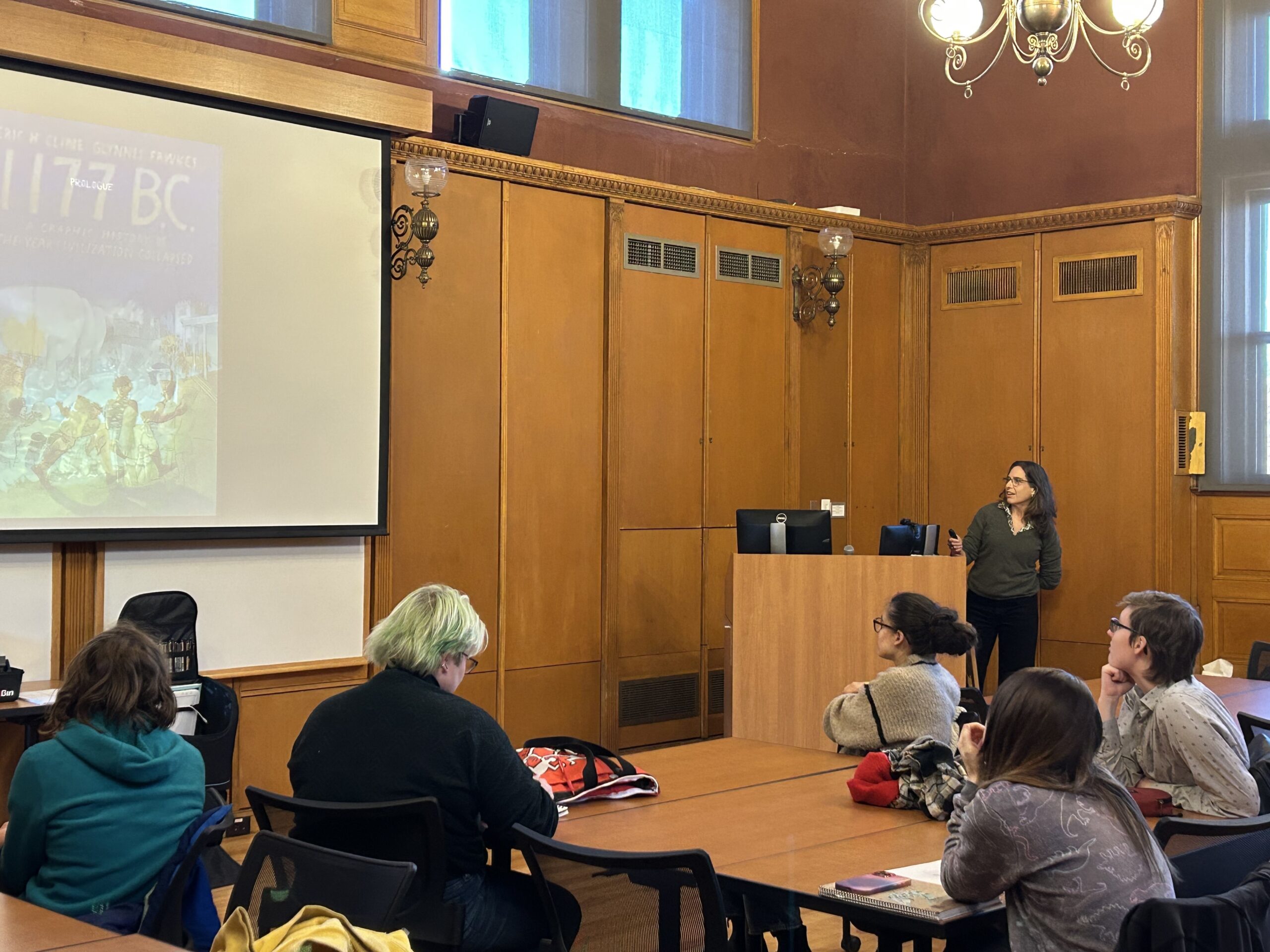
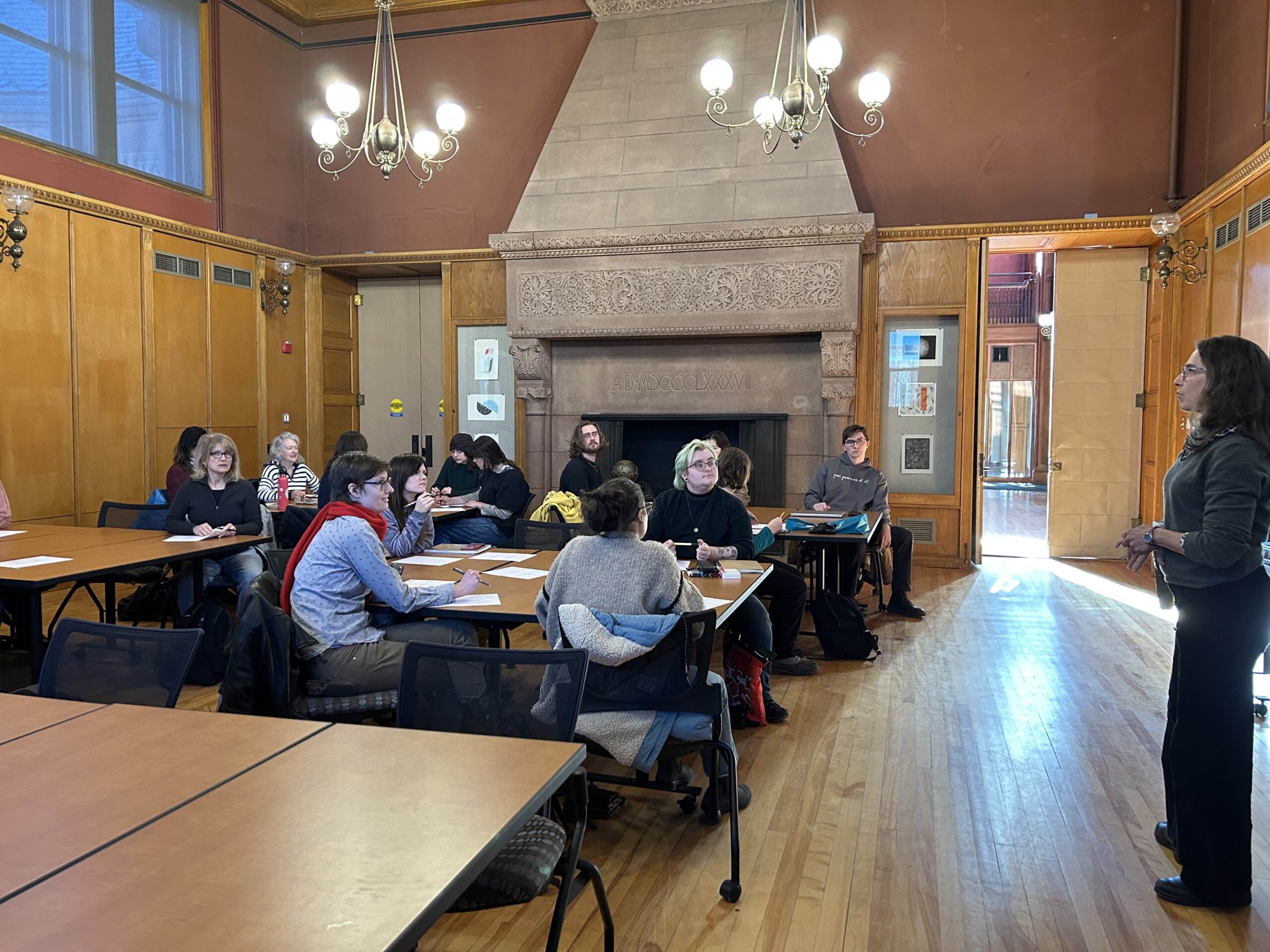
This presentation helped us understand better how the sausage, er comic, is made. When approaching Eric’s original book 1177 B.C.: The Year Civilization Collapsed, Glynnis explained that she did not view the adaptation as attempting to directly translate Eric’s text into graphic form. Rather, she carefully went through the book line by line and gave deep consideration to how its narrative, characters, and historical details would translate into the comics medium where words and images work together to tell the story. Drawing inspiration from archaeological illustrators she admires, her own background as an archaeological illustrator, and a lot of research on the Ancient Mediterranean that she has been building on for years, Glynnis developed scenes, characters, scripts, and thumbnails to tell the story of Eric’s book. But what’s cool is that the new graphic book is both loyal to and more than the original, because Glynnis’ expertise, creativity, and drawings brought new elements, visual and textual, to the graphic version of the book that are not present in the original text.
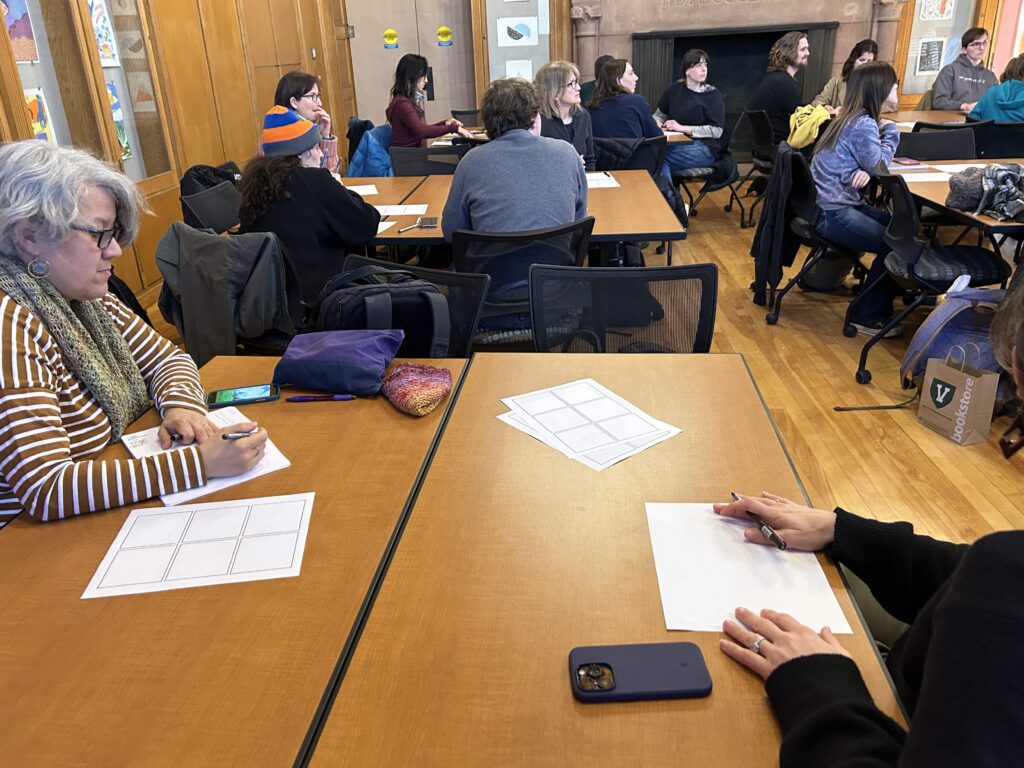
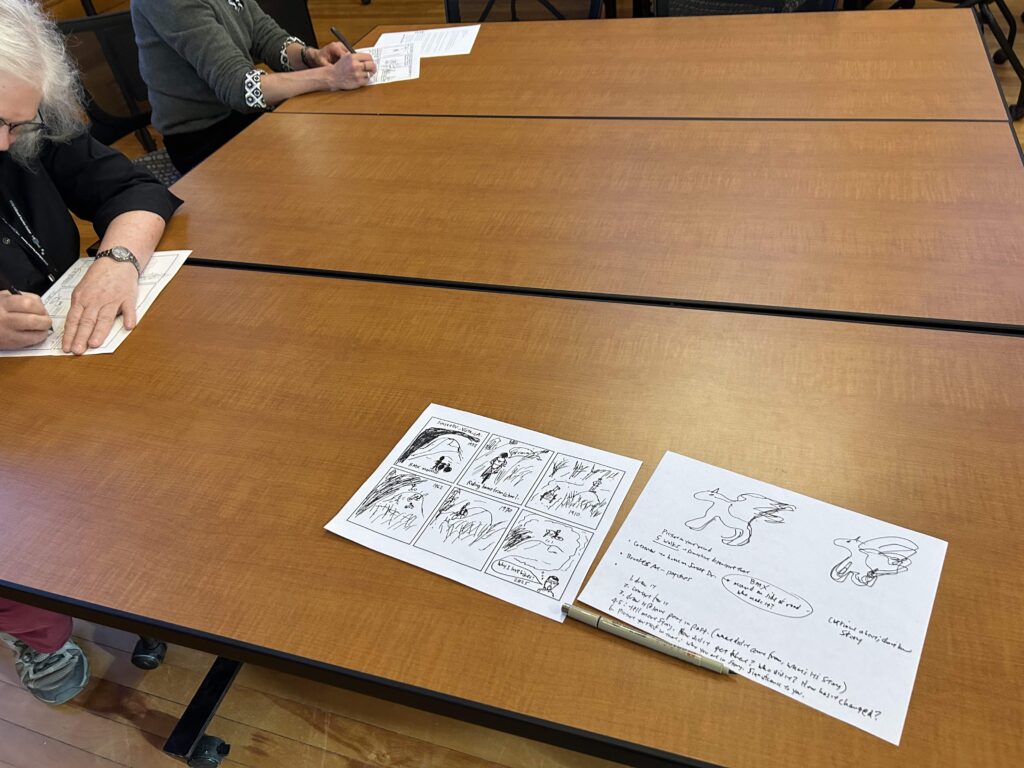
All warmed up and excited to have a hand at such matters ourselves, Glynnis then walked us through drawing exercises and a workshop to help us represent, with words and images, our memories of a place that we’re connected to but also curious about.
I gave it my best shot…
Check out UVM Research News, which has published an article about our efforts to foment comics-based research on campus and community. I’m grateful to the Office of the Vice President for Research, who put out this story and which has generously supported CBR Lab through its Faculty Activity Network program. CBR Lab held a FAN event that brought together over 20 faculty from across the university to explore how comics could play a role in their labs, field studies, science communications, and teaching. At UVM, I don’t often find myself sitting together with faculty from the medical school, Extension office, College of Education, and others…but there we were, brought together by a shared curiosity about how to push our research forward in innovative ways.
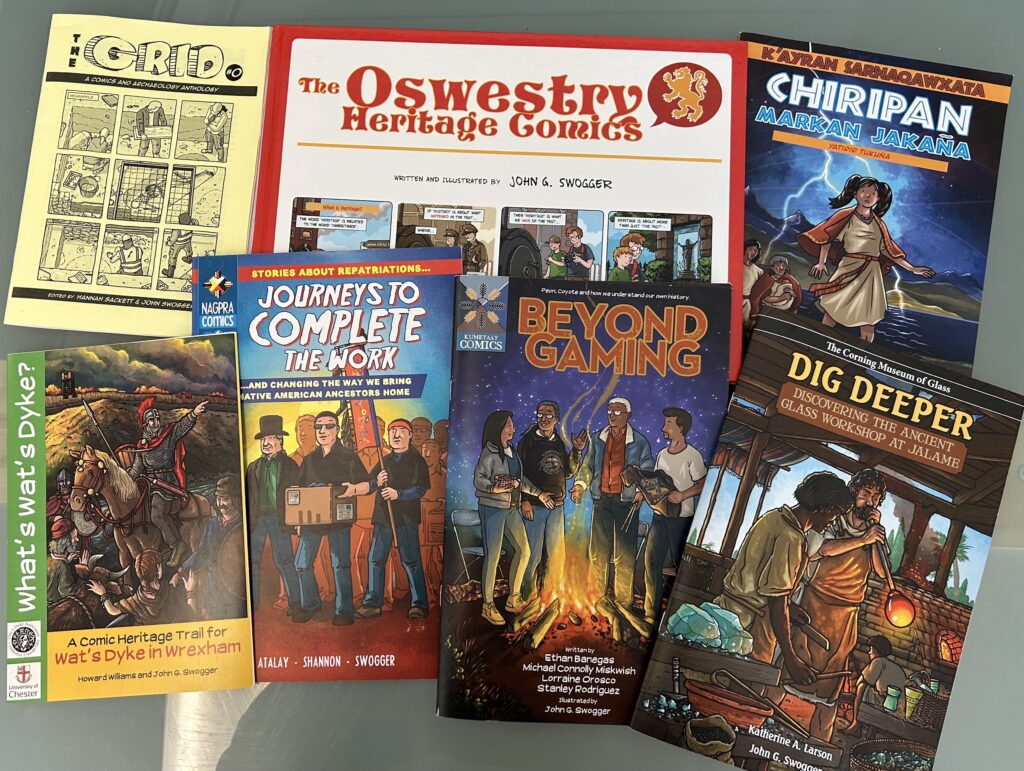
We were lucky to host Archaeologist-Comics Creator John Swogger last week at CBR Lab. John is spending a year as an Applied Comics Fellow at the Center for Cartoon Studies down the road in White River, Junction. With a professional background as an archaeological illustrator, John’s work combines precision about historical artifacts and processes with a visual panache reminiscent of Tin-Tin. His work not only teaches matters about archaeological findings in an incredibly accessible way, but also tells the stories of archaeologists themselves and how they come to know what they know.
John is one of the creators of the NAGPRA comics series, which is how he first got our attention here at UVM. That series is deeply collaborative with Indigenous communities and has spun off other collaborative comics creation with American Indian tribes, including most recently the Kumeyaay. Along with academy-based collaborators like Jen Shannon and Sonia Atalay, John has been developing interesting and important new approaches to community-engaged comics. It was very inspirational for us here at UVM to learn about this work.