The Urge to Zine is Strong

In the era of AI robots being deployed by the White House to root out apparent travesties like being respectful of people, cultural diversity, the environment, and a collective future, zines are roaring back as a mode of cultural expression and politics. Passing from hand to hand and often free for the taking, zines are a powerful mode of people-to-people exchange, information sharing, and organizing.

This was a theme at our zine workshop, which CBR Lab co-hosted with graduating senior Morgan Doersch, who has been doing an independent study on zine-making and exploring their relationship with environmental activist culture and politics. Morgan is working on creating a campus zine library–for details stay tuned.
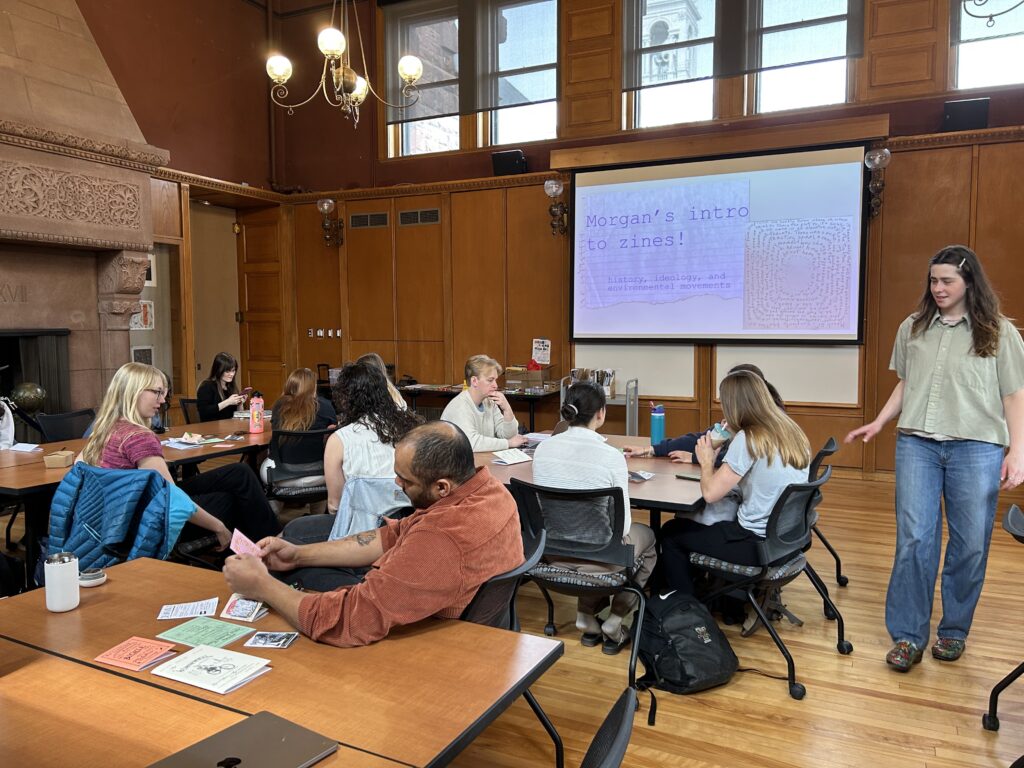
We had a strong turnout of industrious students, faculty, and staff. After a short overview of the history of zines, the sound of snipping paper, pencils traversing paper, rulers slapping the table, and bone folders sliding along the edge of paper took over our august, wood-panelled and high-ceilinged headquarters.
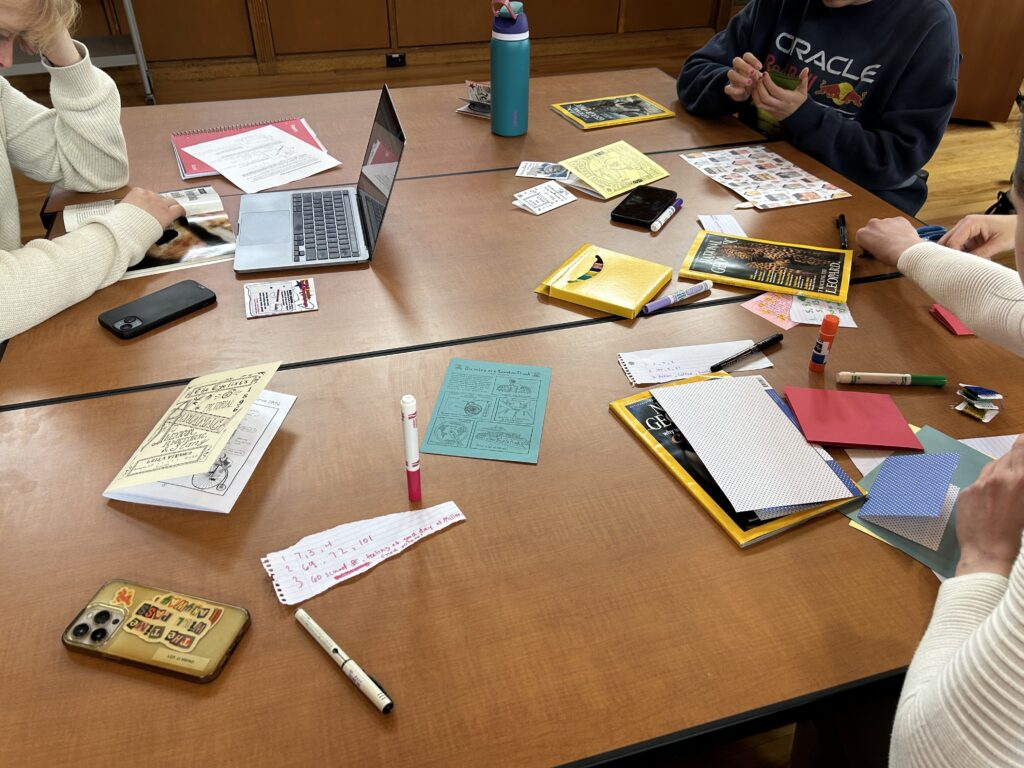
Honestly, there are few better ways to spend a lunch hour…
Anthropology Club Visit!

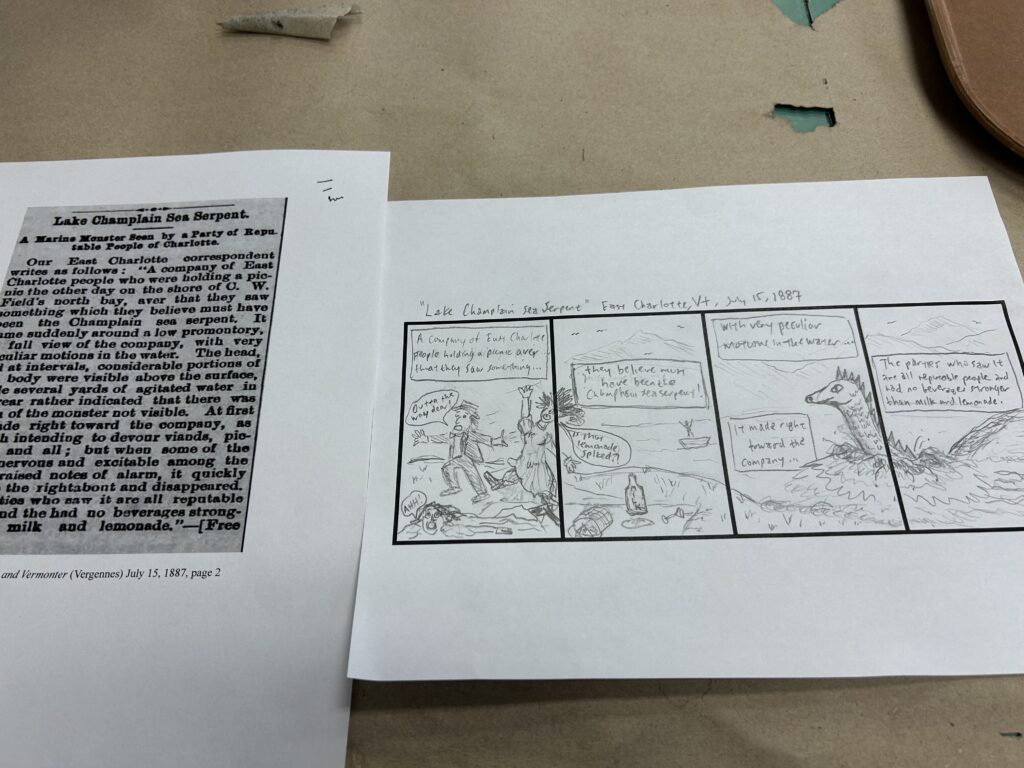
CBR Lab took the Petting Zoo (our rolling bag full of comics supplies) on the road for a special workshop with UVM’s Anthropology Club. (“On the road” might be a tad exaggerated…we met just down the hall from my office…). Our task was to create a four-panel comic from a short 1887 newspaper article about an idyllic picnic along the shores of Lake Champlain interrupted by a sighting of the “Lake Champlain Sea Serpent” (who today we could call “Champ”). Here is my effort:

It’s a really simple exercise, taking a short newspaper article and converting it into a four-panel comic. The text can become captions, or phrases from the text can become word bubbles–or both. There are no rules here! It really gets you thinking visually and in terms of sequential narrative. And it’s fun to do in a group, especially when the language or theme of the article itself invites humor or things-out-of-the-ordinary. In this article, we all got a kick out of its description of the witnesses, emphasizing that they were all “reputable” individuals who had “had no beverages stronger than milk and lemonade.”

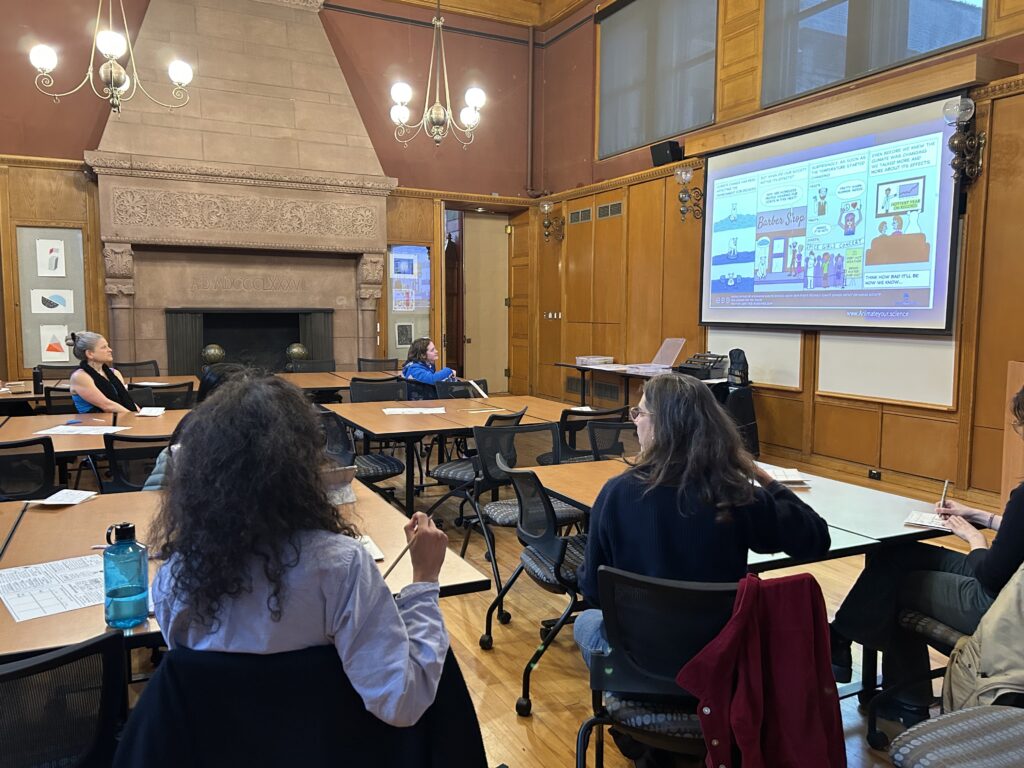
Comics Abstracts Workshop

In April, we ran a new workshop!

“Creating a Research Paper Abstract…as a Comic.”

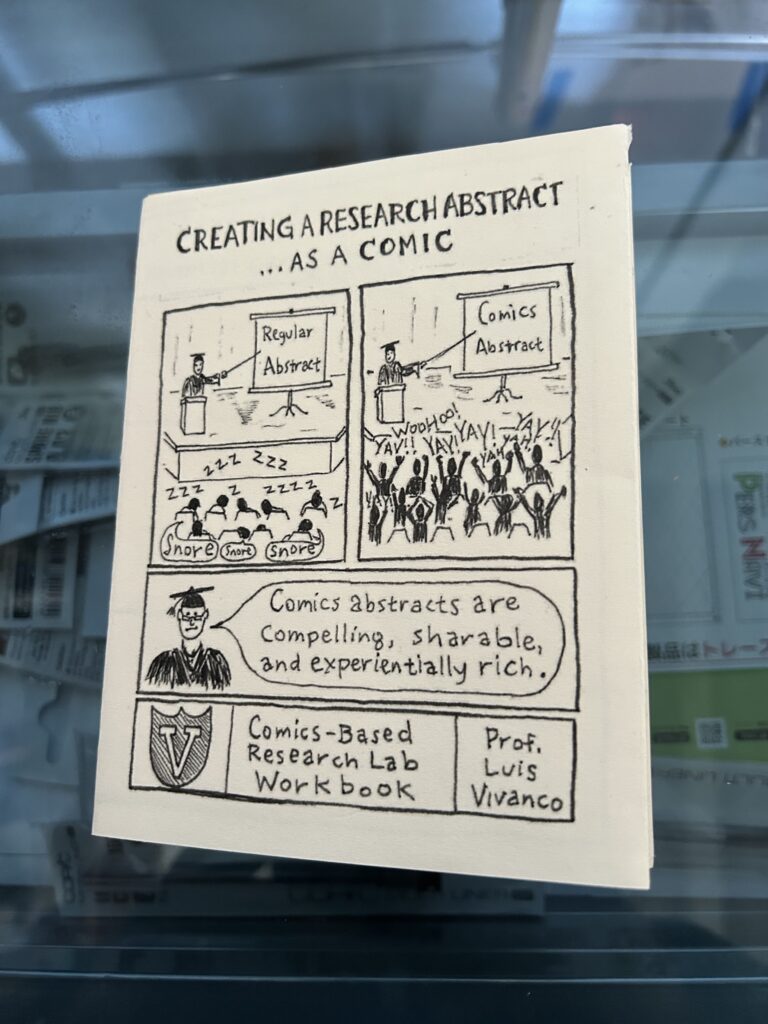
Is it possible to communicate the findings, methods, and depth of a scholarly article while making it more engaging and accessible? Yes, it is! Many academic journals now accept or require graphical abstracts for this very reason. In this workshop, we explored the rise of graphical abstracts, examined how you can construct an abstract as a comic, looked at some examples drawn from ‘the wild,’ and then we tried our hand at it ourselves. Participants brought their own journal article abstracts to work with. This was a practice session!

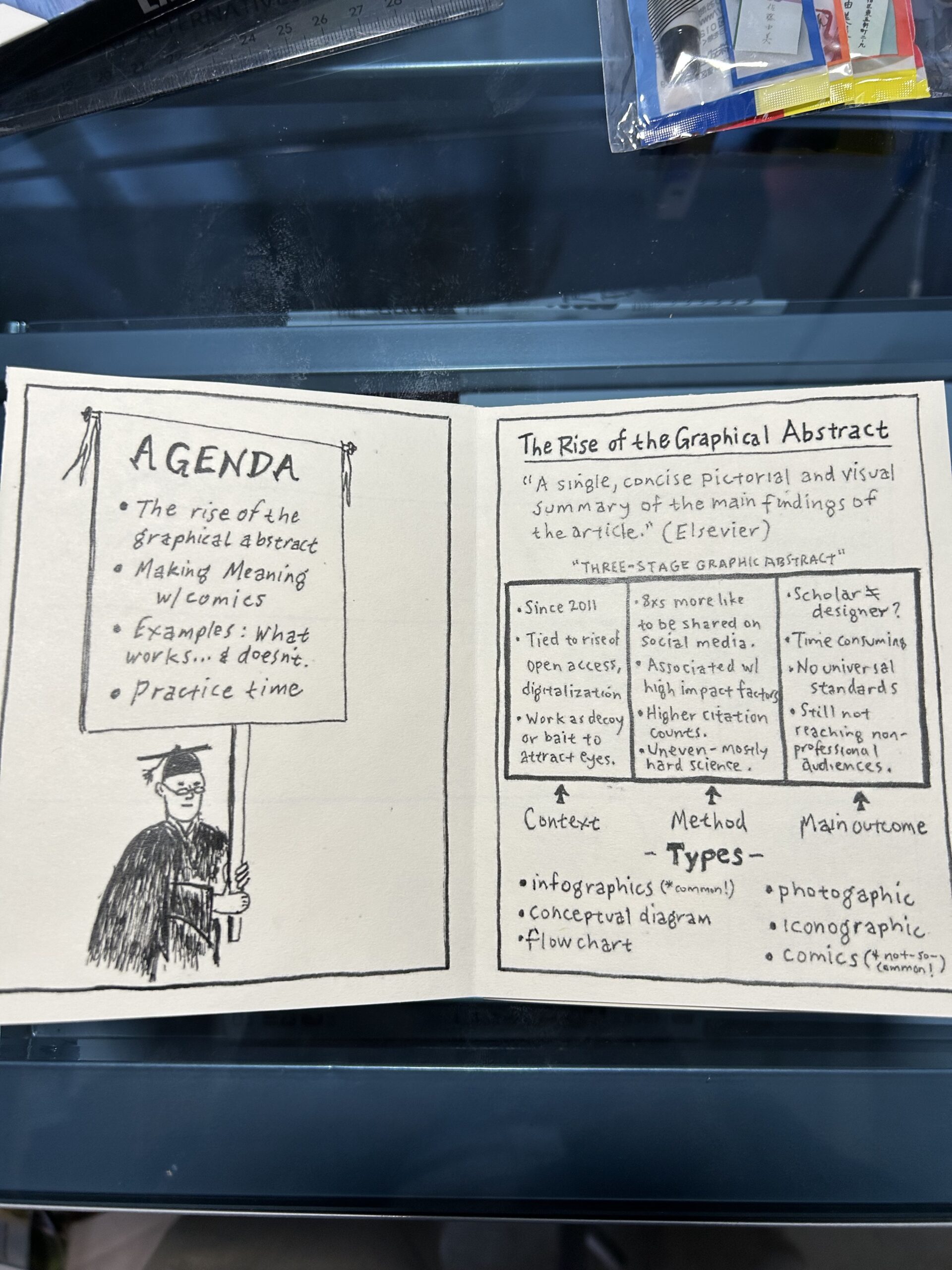
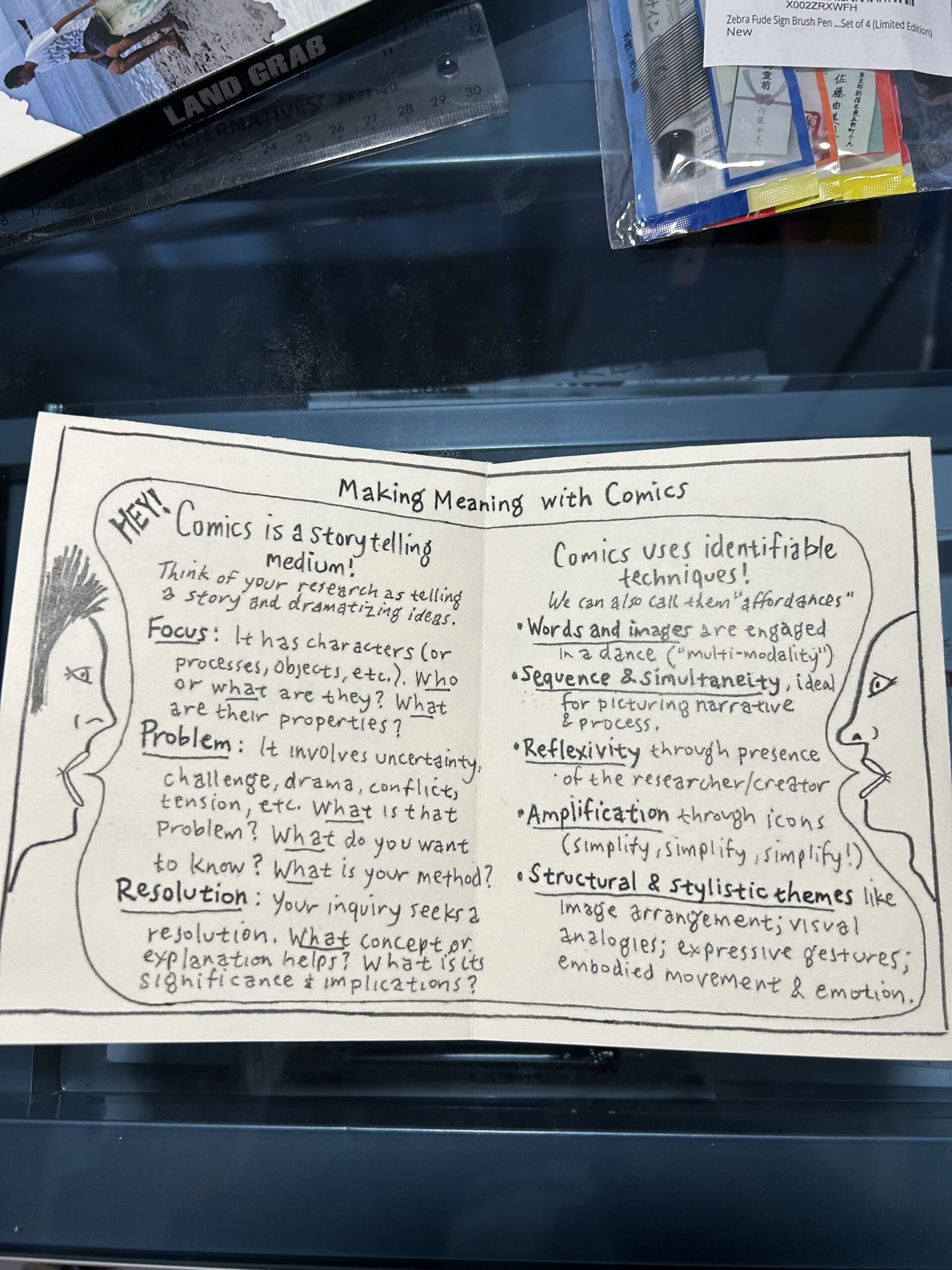
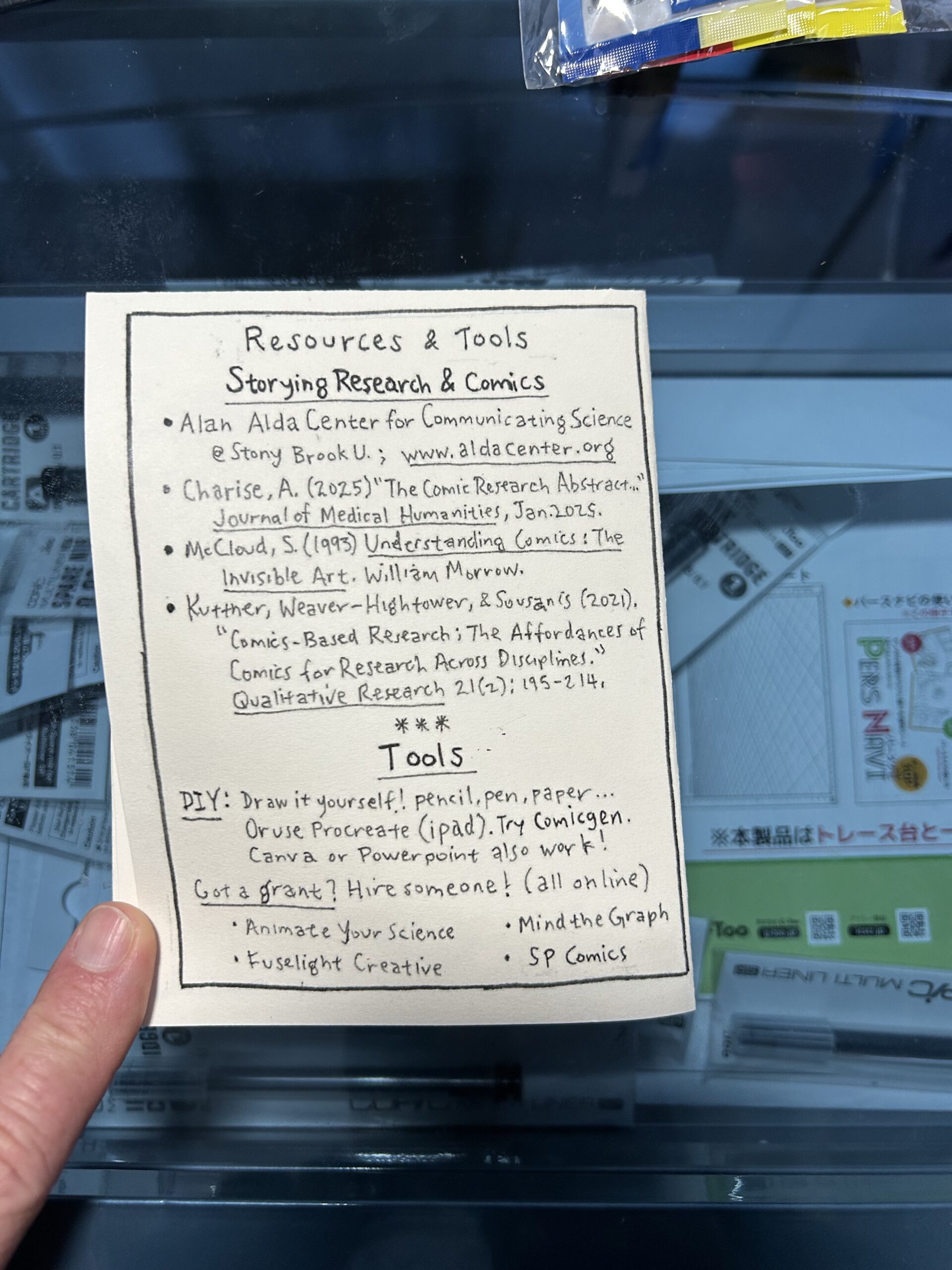
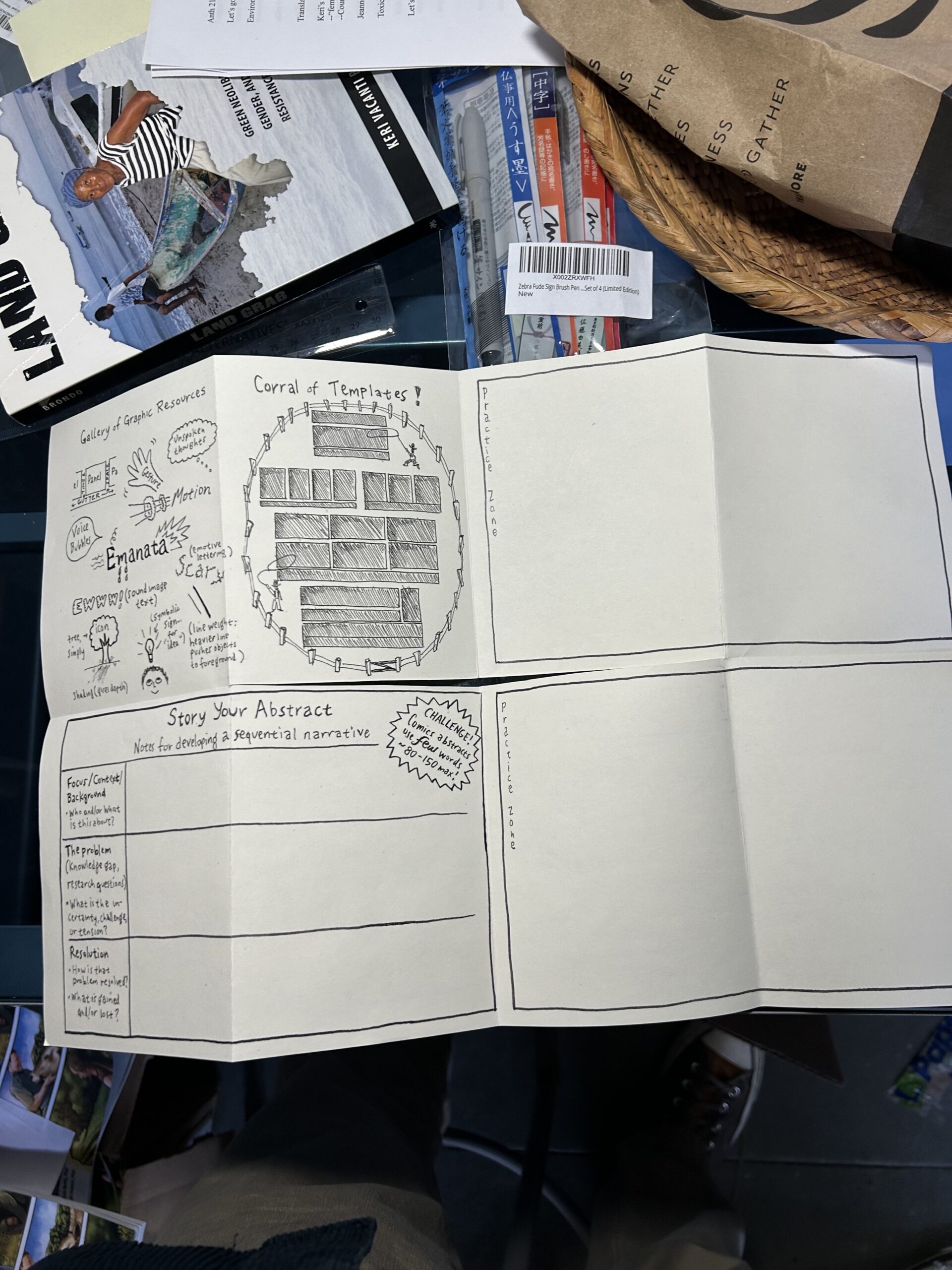
We created a zine workbook for workshop participants, that has a mix of notes and resources about abstracts, comics, etc., and it also has workspace to process an abstract into story and then craft an actual abstract. Here are a few images of that little zine:

We all learned a lot. And it was a fun mix of participants–scientific researchers, humanities folks, and social scientists, students, faculty, post-docs, even a professional comics creator–all finding connections with each other across this large university, and enjoying the collaborative challenge of converting work into comics form.