
Wonder Blog Post 2
Cranford, NJ
1 July 2021
The day is Thursday, July 1 at 6:00 at night. There have been scattered thunderstorms the past two days and extreme humidity and heat. At the time of this blog entry, it is raining with light neighborly flooding. To make observations today, I had to use an umbrella and work simultaneously. The rain this week altered the environment compared to last week.
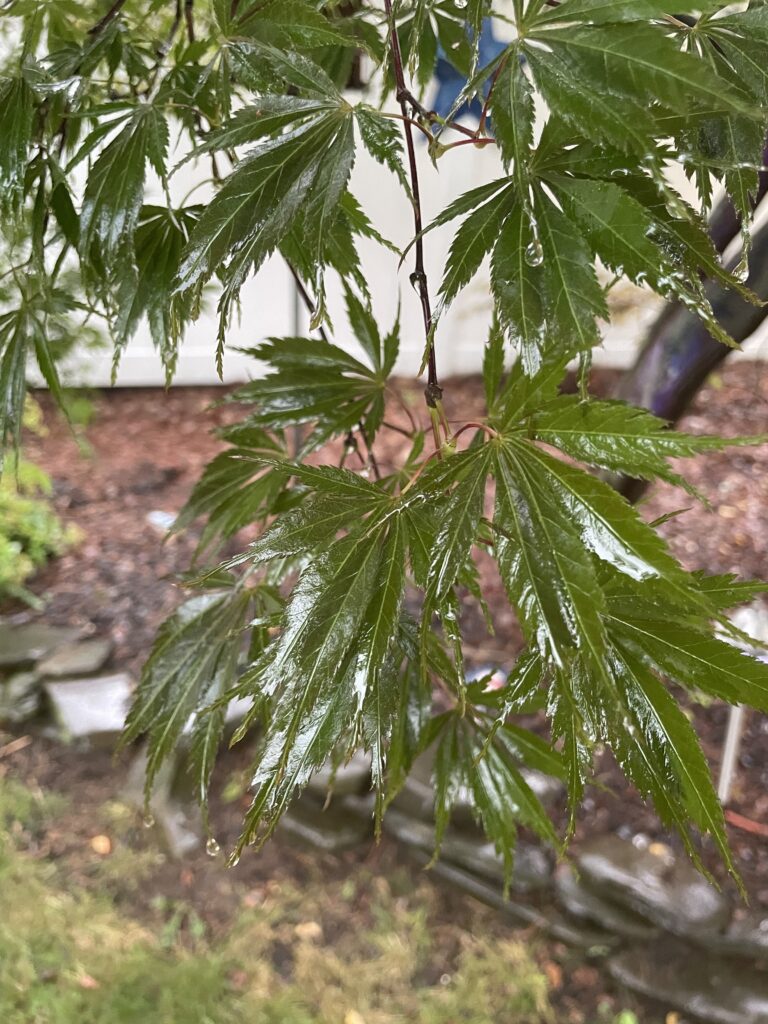
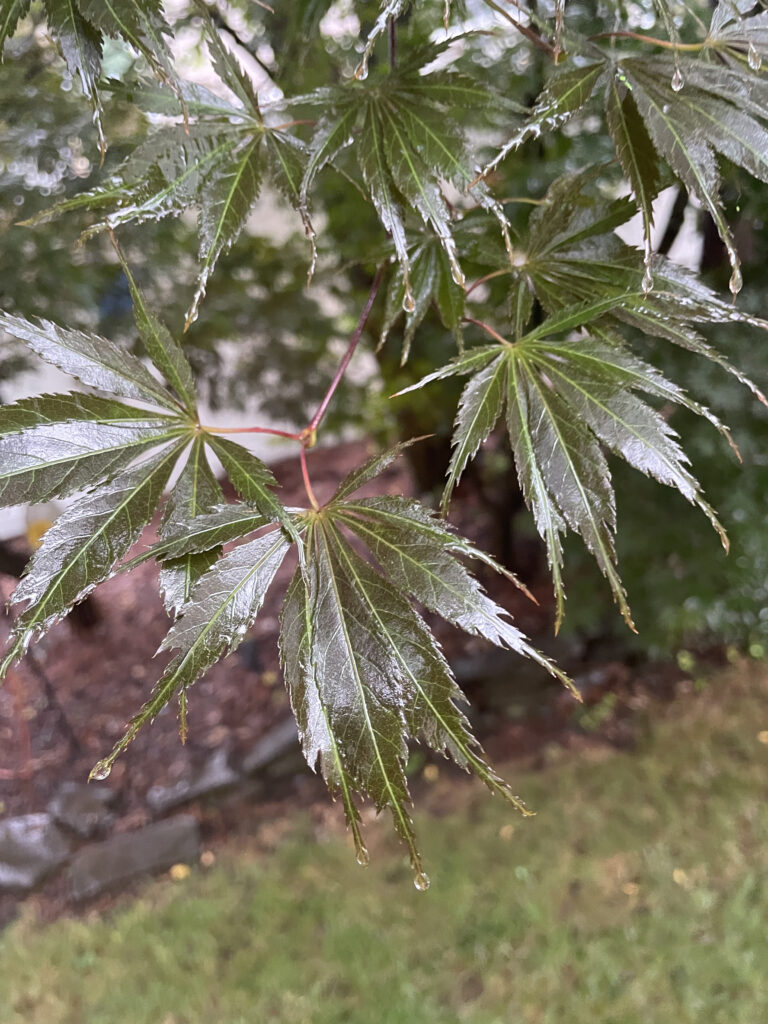
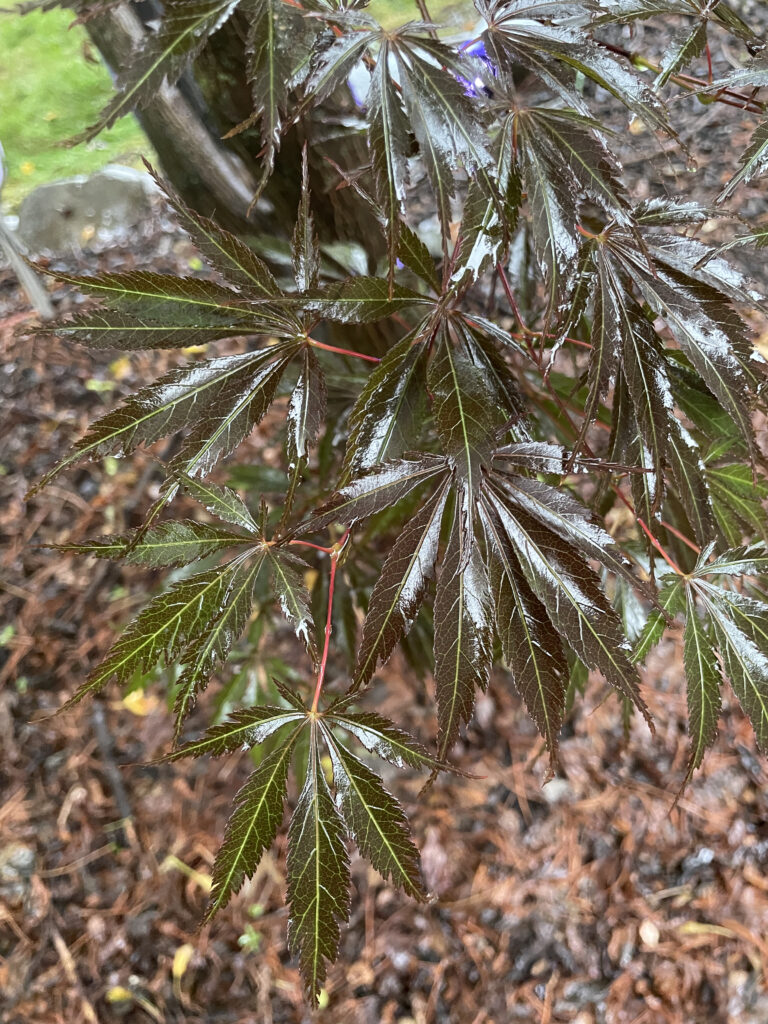
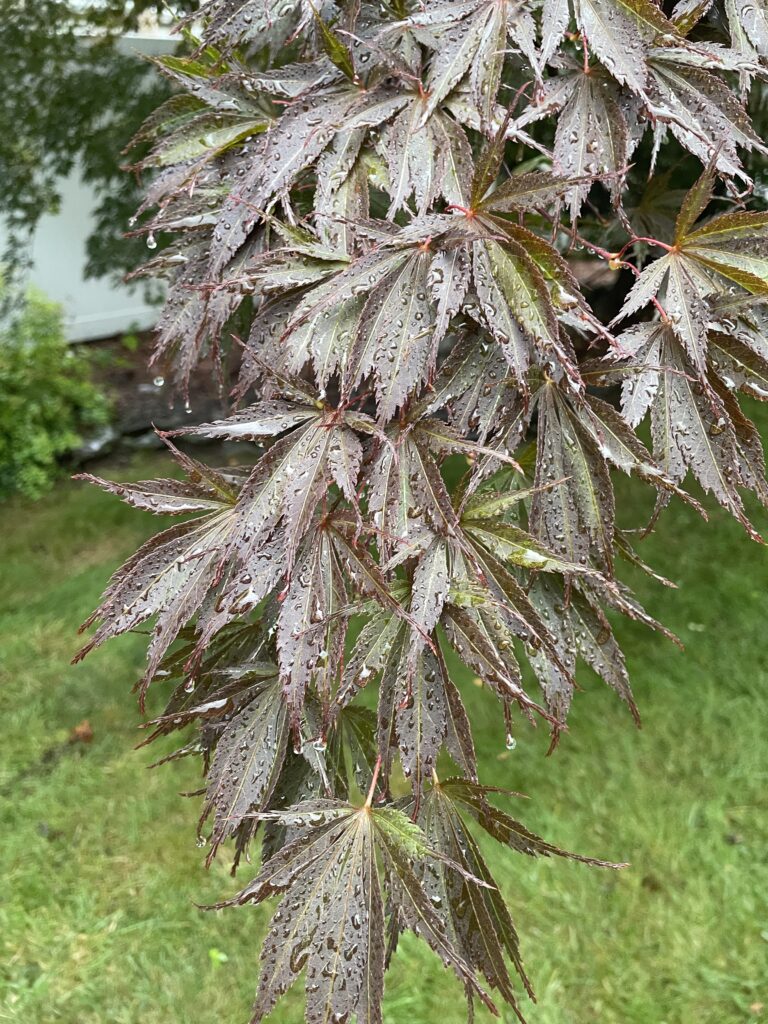
Coming back to the same spot as last week, I noticed some new things about the environment, specifically the trees. For example, I noticed discoloration in the leaves of the Japanese Maple tree. In some areas, the leaves were a bright green, whereas in other areas the leaves were a purple-ish red. Without investigating in detail, I tried to think of reasons as to why there were different colors; the conclusion I came to is new growth alters the colors of leaves. Matured leaves, like the ones stretching far out into my yard, are the dark purple. Newer leaves, like the ones first sprouting, are green. However, there are leaves that shows signs of maturity that are green. A possible conclusion here is that these leaves do not see as much sunlight as the leaves that reach further into the yard.
There was much fewer wildlife outside this week than last week. The birds, whose songs could be heard as soon as I stepped outside, were silent and hiding in any nearby dry spots. The robin who has a nest in the trees of my backyard jumped around underneath some trees to find food for their babies. The mourning dove sat tightly on her nest that was protected from the rain.
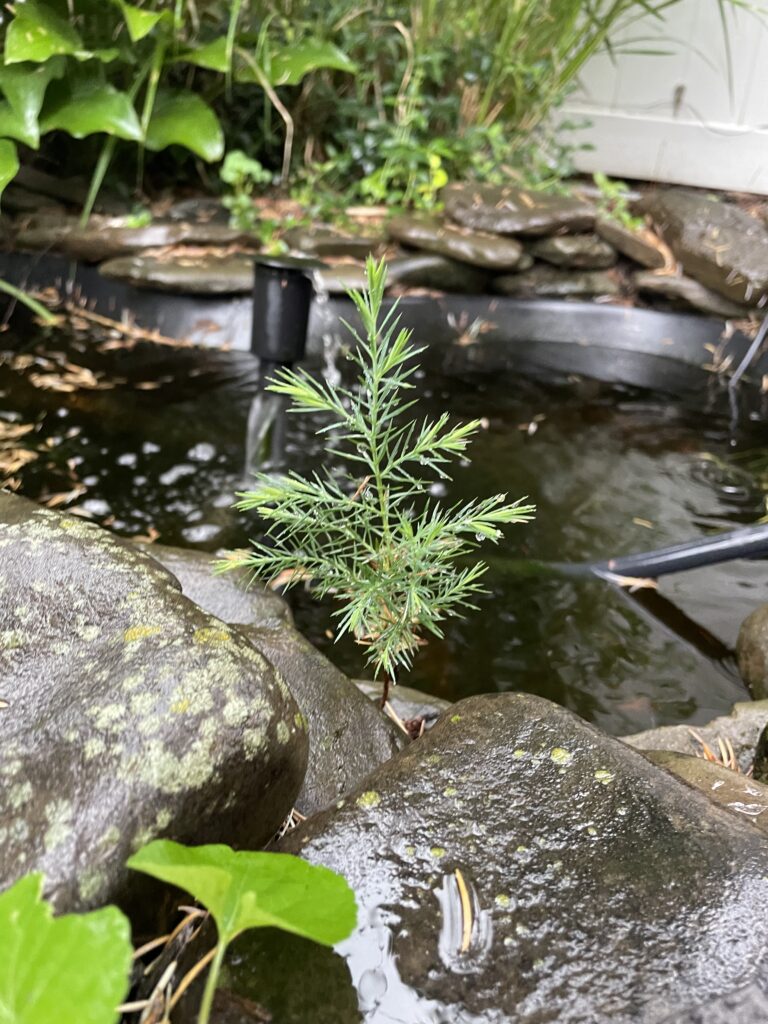
I discovered this sapling last week near the small pond in my yard. Using my resources, I tried to identify it. The websites classify this tree as a Bald Cypress. While they look almost identical, the Bald Cypress is the rarest native tree in New Jersey. It is possible that this small plant is the Bald Cypress, but also unlikely. It is obviously some kind of conifer, but I’m unsure of which one because of how small it is. There are a few other conifers in my yard that it may turn out to be like the Blue Spruce or another Evergreen. My best guess, however, is that it is a Scrub Pine, also known as a Jack Pine. New Jersey is famous for the Pine Barrens as it is home to so many different pine trees. Thus, it is likely that this small sapling is a Jack Pine.
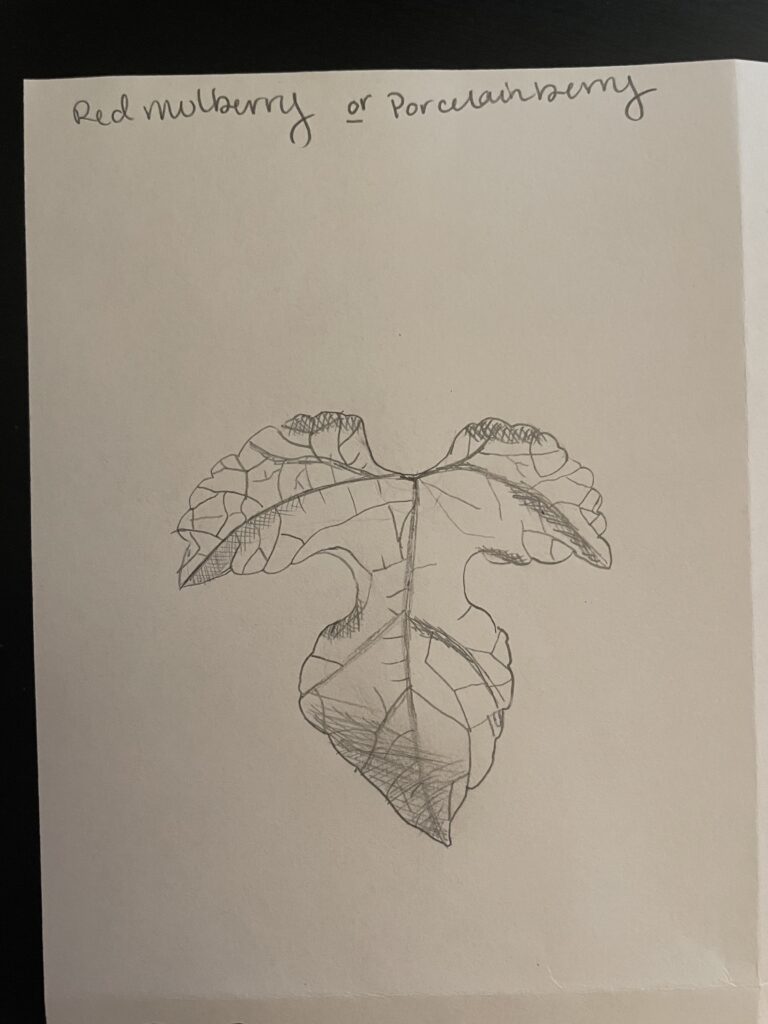
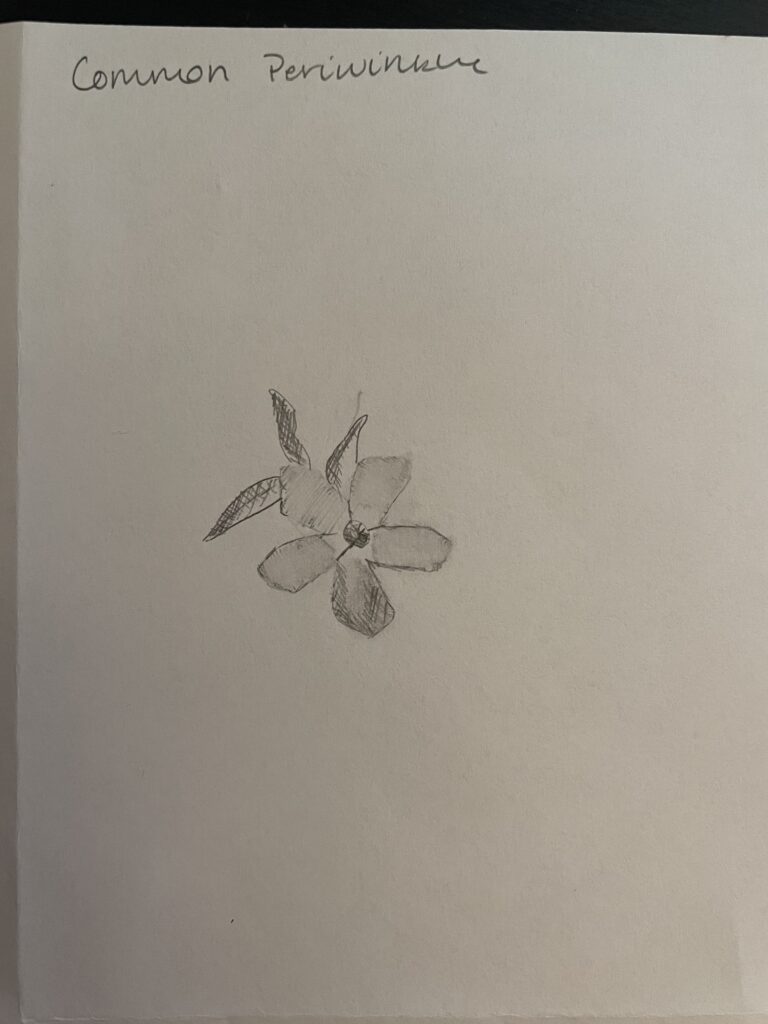
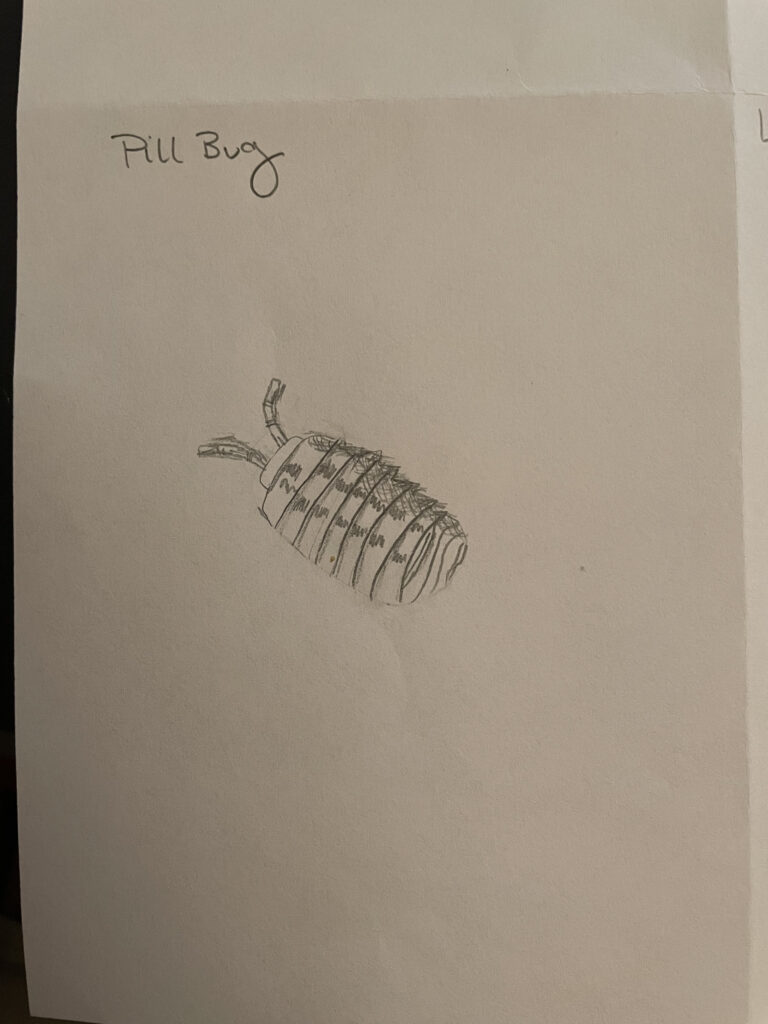
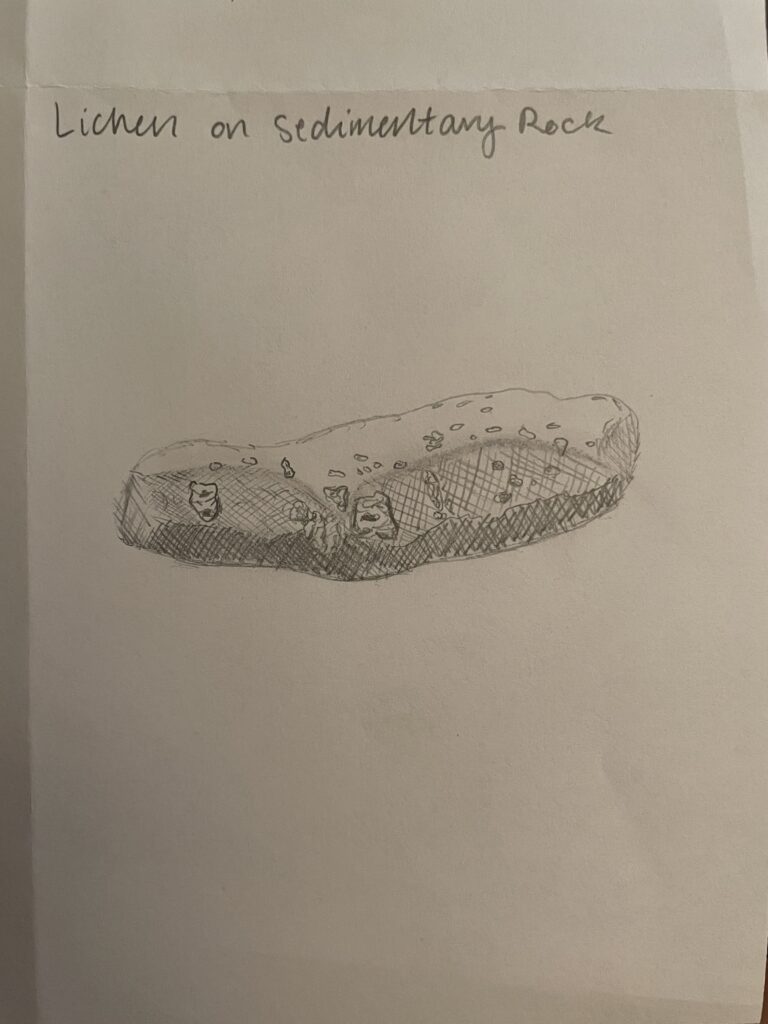
Sketching natural objects without being able to really inspect by breaking it off or holding it in one place proved to be difficult. Sketching the pill bug was a combination of memory sketching, sight sketching, and snapping a few photos for close-up details. Sketching in nature is something I am unfamiliar with, but it is a good process to connect with nature and really see the fine details. Though each sketch may not look completely like the natural object, there are both artistic and scientific elements that allow for the sketch to become whole. I look forward to noticing more patterns in tree leaves as well as identification of trees.